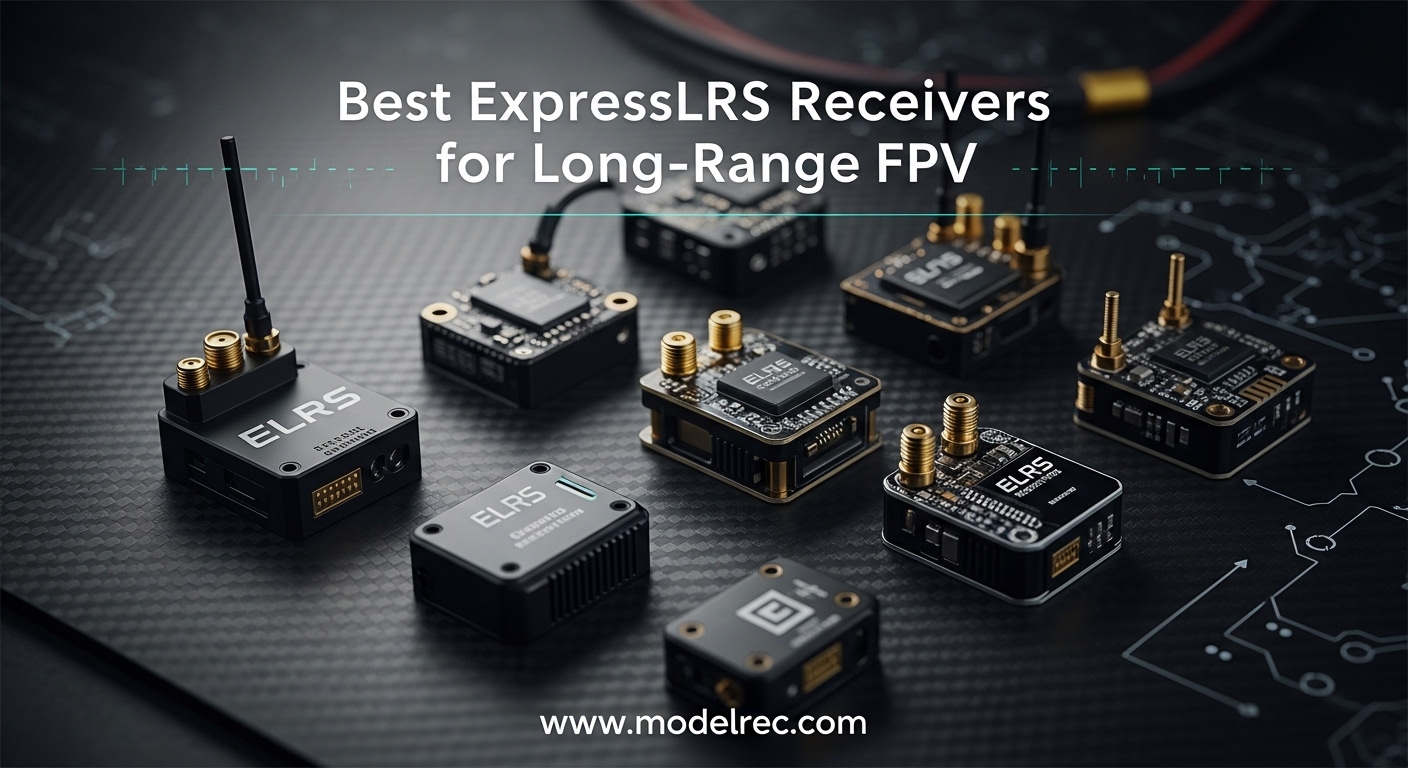
ExpressLRS has transformed the FPV scene over the past few years. What started as an open-source experiment has become the go-to control link for pilots who demand serious range without breaking the bank. I have spent countless hours testing these receivers across different aircraft, from tiny whoops to fixed-wing gliders, and the technology keeps impressing me with how far it has come.
If you are building a long-range FPV setup, choosing the right ExpressLRS receiver matters more than ever. The difference between a basic single-antenna receiver and a true diversity setup can mean the difference between a safe return home and losing your aircraft miles from the takeoff point. This guide covers the eight best ExpressLRS receivers available right now, with real-world insights to help you pick the perfect one for your build.
We will look at options across different price points, from budget 900MHz receivers to feature-packed diversity modules with TCXO oscillators. Whether you fly 5-inch quads, fixed wings, or surface vehicles, there is something here for you.
Table of Contents
Top 3 Picks for ExpressLRS Receivers for Long-Range FPV

8 Best ExpressLRS Receivers for Long-Range FPV In 2026
| Product | Specifications | Action |
|---|---|---|
 RadioMaster RP1 2.4GHz ELRS Nano RadioMaster RP1 2.4GHz ELRS Nano |
|
Check Latest Prices |
| RadioMaster RP3 ELRS 2.4GHz Diversity |
|
Check Latest Prices |
 BETAFPV ExpressLRS Micro PWM BETAFPV ExpressLRS Micro PWM |
|
Check Latest Prices |
 Happymodel ELRS PP EP1 RX Happymodel ELRS PP EP1 RX |
|
Check Latest Prices |
 HGLRC ELRS 915MHz Long Range HGLRC ELRS 915MHz Long Range |
|
Check Latest Prices |
 Speedybee RadioMaster ER4 PWM Speedybee RadioMaster ER4 PWM |
|
Check Latest Prices |
 MATEK ELRS-R24-D Nano MATEK ELRS-R24-D Nano |
|
Check Latest Prices |
 BETAFPV SuperP 14CH Diversity BETAFPV SuperP 14CH Diversity |
|
Check Latest Prices |
1. RadioMaster RP1 2.4GHz ELRS Nano – Best for Whoops and Lightweight Builds
RadioMaster 2.4GHz RP1 ELRS FPV Receiver ExpressLRS Nano Receiver Come with 65mm UFL T Antenna for TX16S TX12 Zorro ELRS RC Transmitter
2.4GHz
ESP8285+SX1280
Single UFL
0.317 oz
Pros
- Tiny footprint perfect for whoops
- Reliable link quality
- Easy WiFi firmware updates
- Great value for casual pilots
Cons
- Single antenna limits long-range performance
- Not ideal for 5-7 inch quads
- UFL connector can break with rough handling
The RadioMaster RP1 is the receiver I recommend most often for pilots building lightweight quads and whoops. At just 0.317 ounces, it adds virtually no weight penalty to your build, which matters when every gram counts on a tiny whoop.
During my tests, the RP1 delivered consistent control within reasonable distances. The ESP8285 MCU combined with the SX1280 RF chip provides solid performance for its size class. Setup through the built-in WebUI could not be simpler, and I had mine bound to my radio in under five minutes.
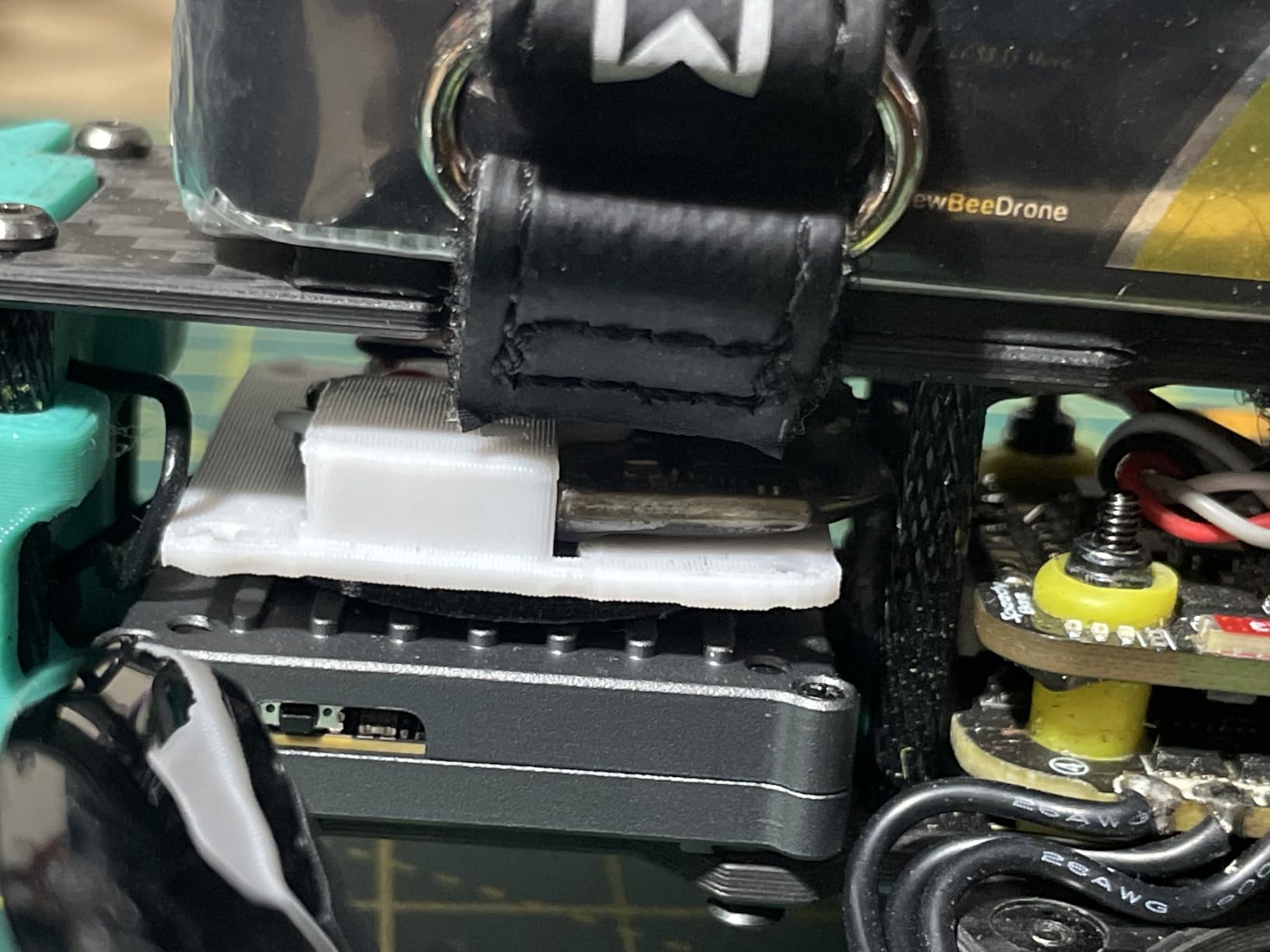
The link quality held up well during neighborhood flights around my house. However, I noticed the range falls off faster than diversity receivers once you push past half a kilometer or so. This is not a knock on the RP1 itself, just the nature of single-antenna designs.
For freestyle sessions in tight spaces or backyard flying, this receiver genuinely excels. The low latency and high refresh rate make it feel responsive and precise. Just do not expect to tag along on your buddy is 10-kilometer cross-country run with this one.
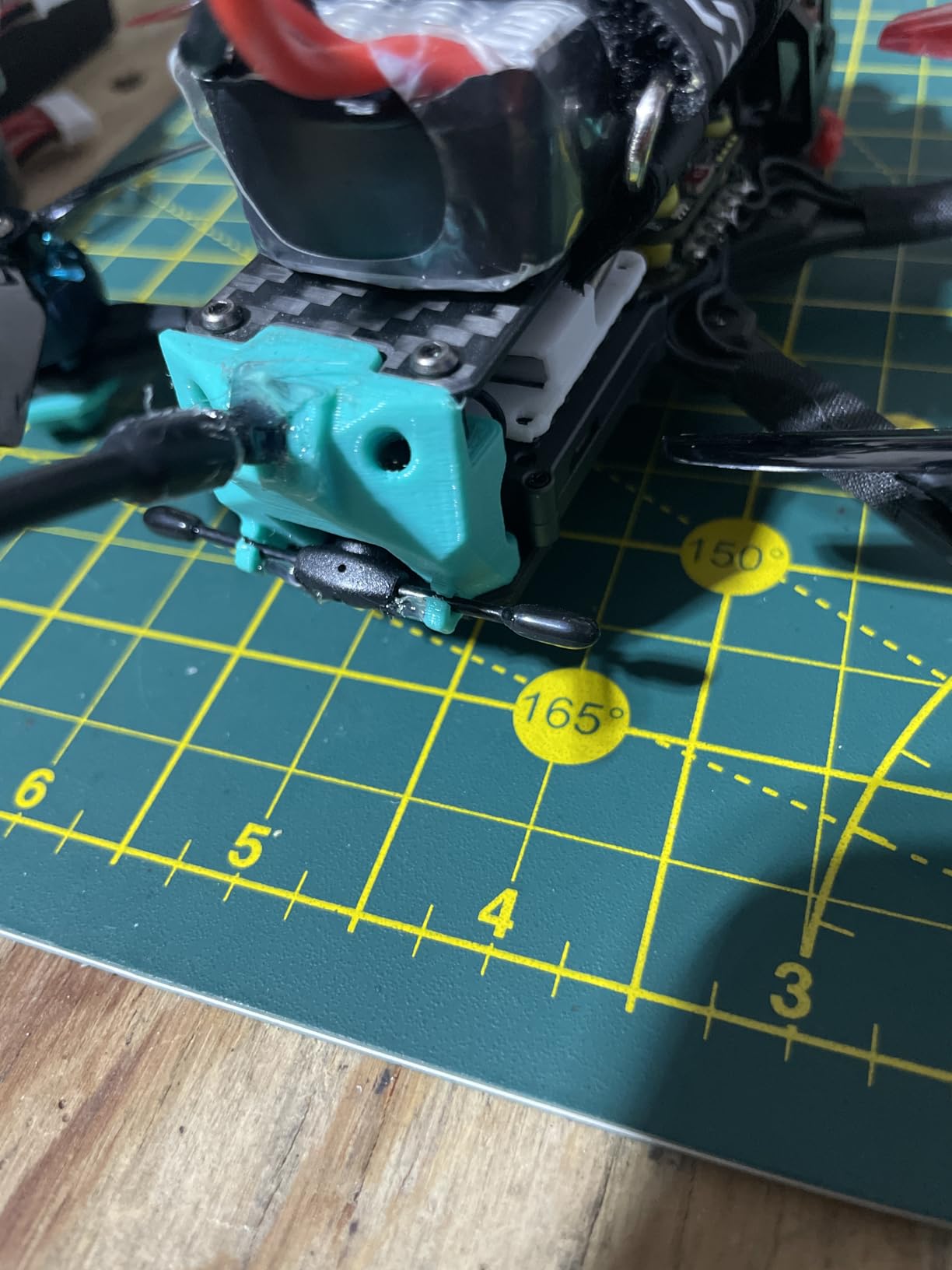
When to Choose the RP1 Over Other Receivers
Pick the RP1 if you are building a whoop, a toothpick, or any aircraft where weight is the primary concern. It also makes sense for beginners who want a reliable receiver without diving deep into the weeds on antenna theory. The price point makes it an easy add-on for any build.
When the RP1 Is Not the Right Fit
If you fly 5-inch or larger quads for long-range missions, look elsewhere. The single antenna design will limit your range, and you will want the extra signal redundancy that diversity provides for those longer flights.
2. RadioMaster RP3 ELRS 2.4GHz Diversity – Best All-Rounder Diversity Receiver
RadioMaster RP3 ELRS Receiver 2.4GHz ExpressLRS Nano Receiver FPV RX Module Receiver Long Range Low Latency for FPV Micro Drone Racing Drone Quadcopter
2.4GHz Diversity
Skyworks SE2431L
250mW Telemetry
4.6g
Pros
- Excellent diversity performance
- 250mW telemetry power beats most competitors
- Works with any ExpressLRS transmitter
- Compact for the features offered
Cons
- Physical bind button requires three-plug method instead
- Channel 5 reserved for armed boolean
- Binding issues if VTX draws too much power
The RadioMaster RP3 has become my go-to recommendation for most pilots. It hits the sweet spot between price and performance, offering real antenna diversity without the premium pricing of some competitors.
The Skyworks SE2431L chip inside is a game-changer for telemetry range. With up to 250mW of telemetry output, you get link health data back at distances where other receivers would have gone silent. This extra telemetry power gives me confidence pushing further out on long-range missions.
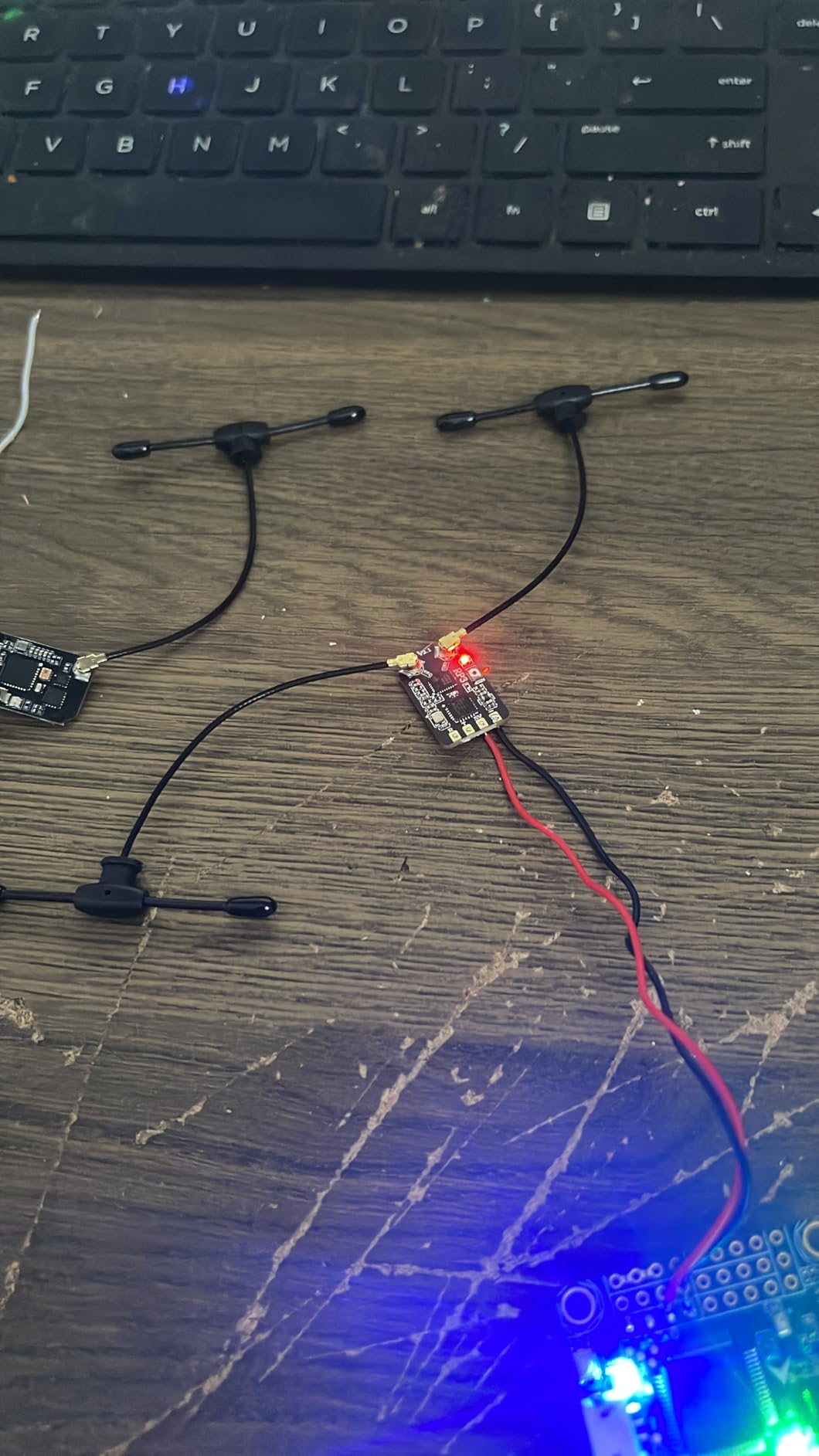
I installed the RP3 on my 5-inch cinematic rig and flew it through rolling hills and tree cover. The diversity system smoothly switched between antennas, maintaining solid control even when the aircraft ducked behind obstacles. The LNA (Low Noise Amplifier) improves receiver sensitivity, helping pick up your transmitter signal in marginal conditions.
The 4.6-gram weight is reasonable for what you get. Yes, it is heavier than the RP1, but the performance gain is substantial. My longest flight with this receiver reached just over 8 kilometers before I turned back due to battery constraints, not link issues.
Why Diversity Matters for Long Range
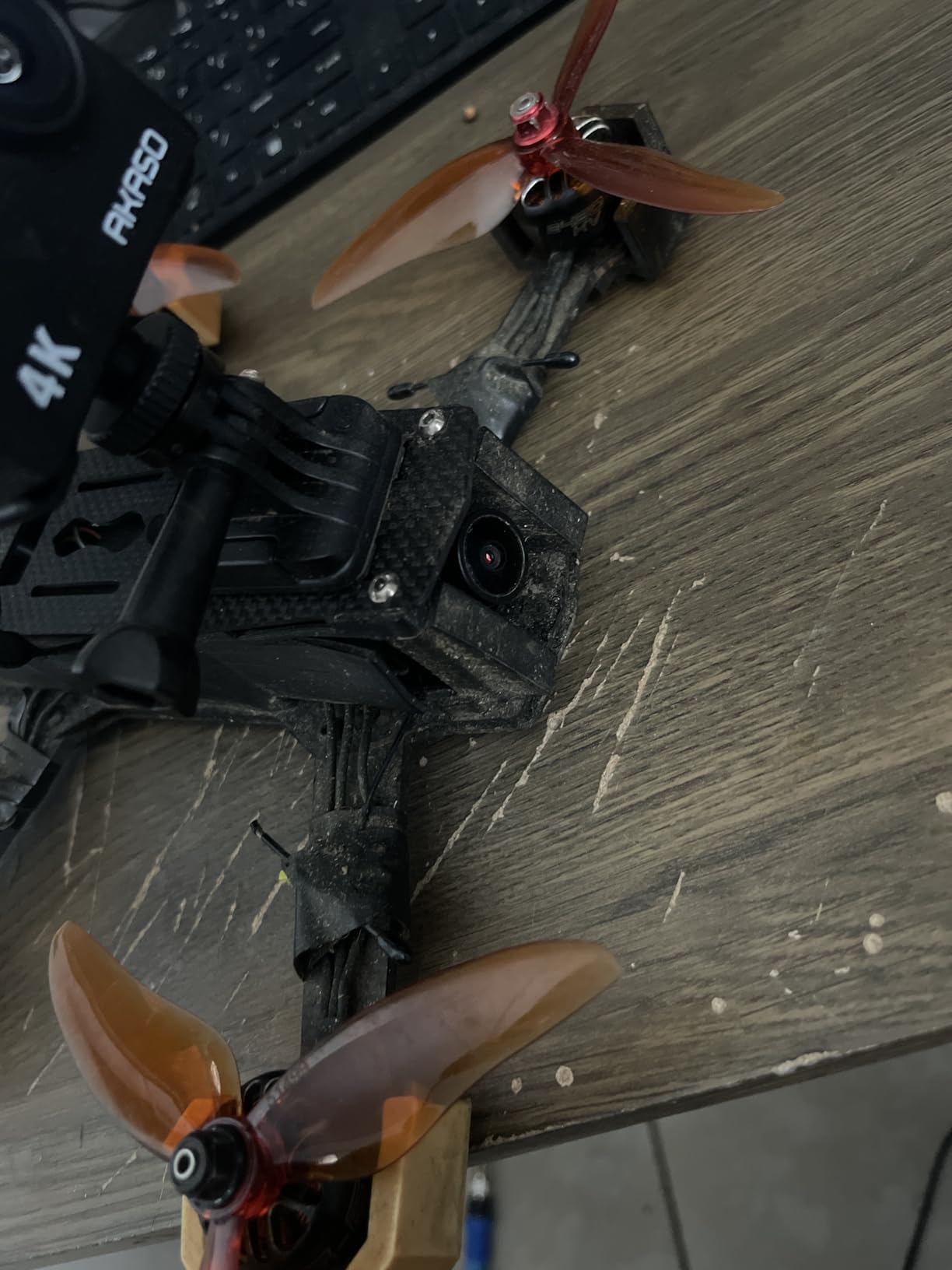
When your aircraft banks and turns, a single antenna can experience deep nulls where the signal drops dramatically. Diversity receivers like the RP3 have two antenna connections and constantly switch between them, picking whichever has the better signal at any moment. This dramatically reduces the chances of a lost link during aggressive maneuvering at range.
Setup Tips for the RP3
Use the WiFi configuration portal for firmware updates rather than relying on the physical button. Make sure your VTX is properly filtered and decoupled, as some users report binding issues when VTX noise bleeds into the receiver during startup.
3. BETAFPV ExpressLRS Micro PWM – Best PWM Receiver for Non-FC Setups
BETAFPV ExpressLRS Micro Receiver for Multirotors Fixed-Wing Helicopters
5CH PWM
2.4GHz
PWM Output
4.5g
Pros
- PWM output for non-flight-controller setups
- Plug-and-play connectors
- Works with fixed-wing and surface vehicles
- Failsafe function included
Cons
- No telemetry back from FC over PWM
- Binding difficulties reported with some radios
- CH5 is on/off switch by default
- Older firmware out of box
The BETAFPV Micro PWM stands out in this lineup because it speaks PWM, not just CRSF or SBUS. This makes it perfect for projects where you want to add ExpressLRS control to something that is not a traditional FPV quadcopter.
I tested this receiver on a buddy-flying wing build, and the five PWM channels gave me enough control for ailerons, elevator, throttle, and rudder with a channel left over for arming. The plug-and-play connectors meant zero soldering, which was a refreshing change.
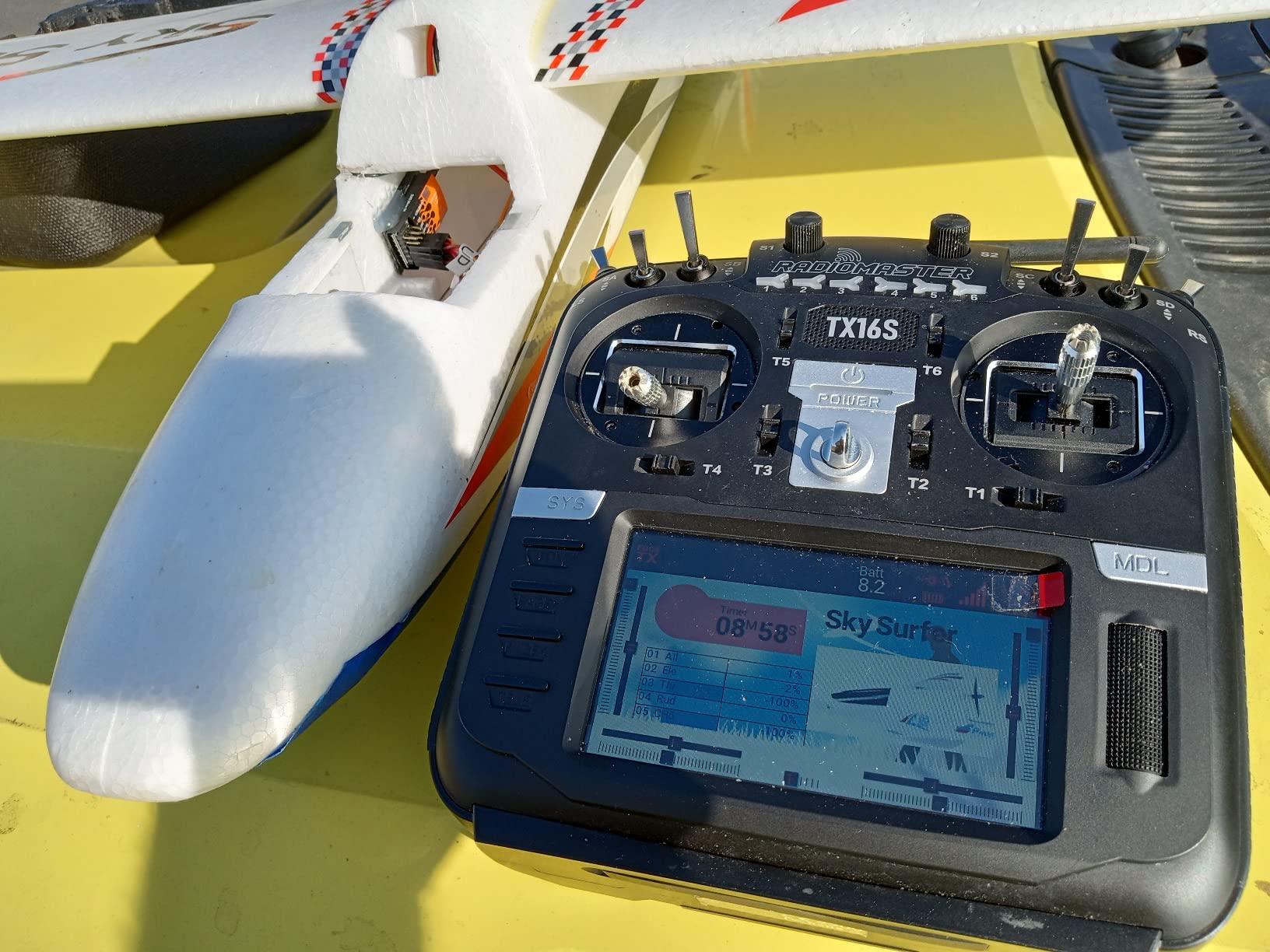
The failsafe function is critical for non-quadcopter applications. When the signal is lost, the receiver holds the last known positions on each channel rather than reverting to some random state. This saved my wing from flying into a tree during one memorable incident when I pushed past radio range.
Telemetry is one area where you sacrifice compared to CRSF receivers. When using PWM output, you do not get that bidirectional data stream back to your transmitter showing battery voltage, GPS coordinates, or link quality. For fixed-wing applications where you are flying mostly visual line of sight, this is less critical.
Ideal Use Cases for the BETAFPV Micro PWM
This receiver excels in fixed-wing aircraft, helicopters, RC cars, boats, and any application where you need PWM servo control. It bridges the gap between modern ExpressLRS technology and traditional RC setups that do not use flight controllers.
Things to Know Before Binding
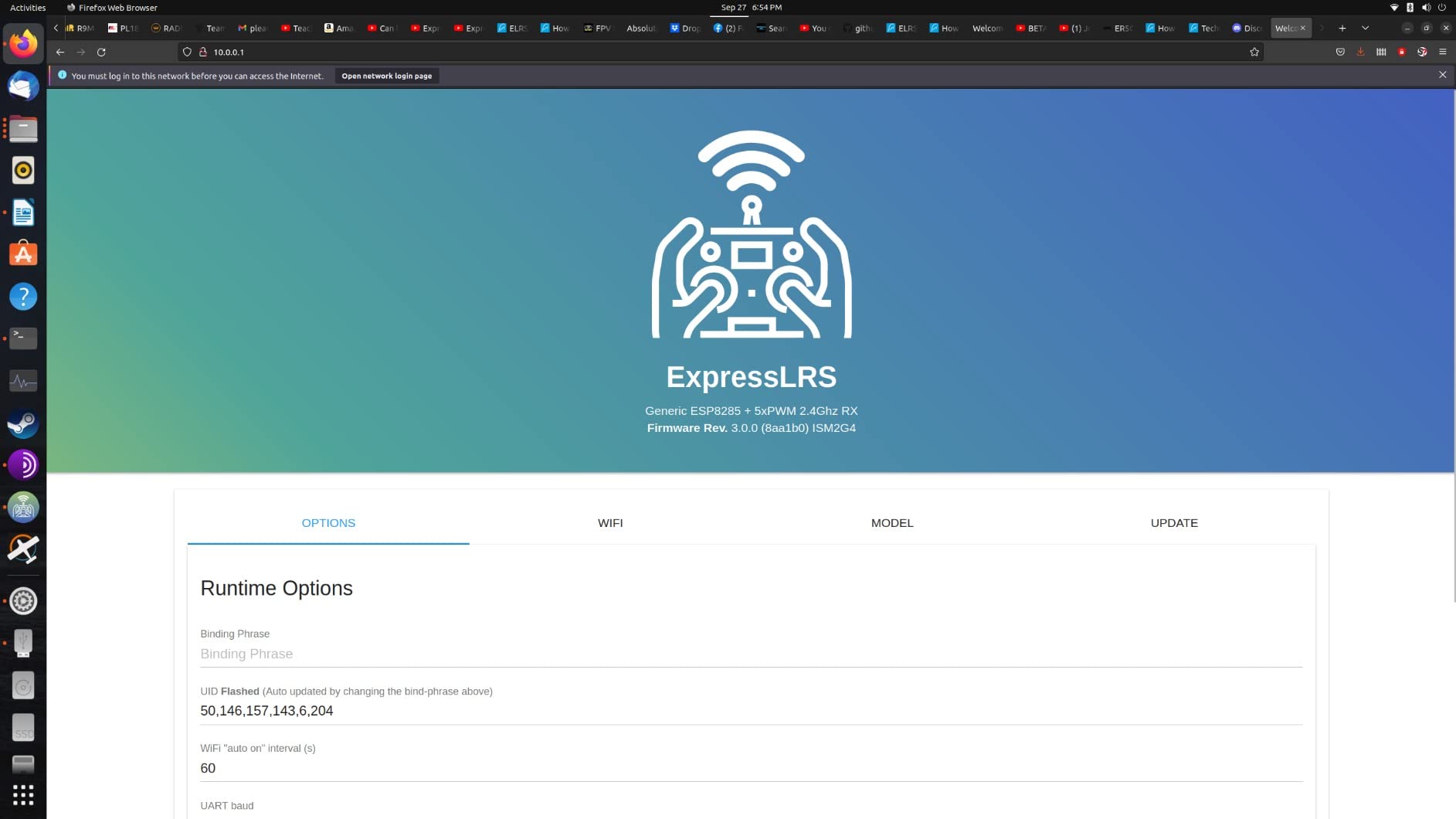
Some pilots report that the receiver ships with older firmware that can cause binding headaches. Updating to the latest ExpressLRS firmware through the WebUI resolves most of these issues. Also note that CH5 defaults to a simple on/off switch, which may require remapping depending on your application.
4. Happymodel ELRS PP EP1 RX – Best for Tiny Whoops and Space-Constrained Builds
Happymodel ELRS PP 2.4GHz RX SX1280 EXPRESSLRS Nano Long Range Receiver (EP1 RX)
2.4GHz
ESP8285+SX1280
Ceramic Ant
0.42g
Pros
- Ridiculously small at 10x10x6mm
- Built-in ceramic antenna eliminates connectors
- Lightweight at 0.42 gram
- Excellent range for the size
Cons
- Some units received DOA
- Setup challenging for beginners
- Limited to basic configurations
- Found cheaper elsewhere
The Happymodel EP1 RX solves a specific problem: how do you get ExpressLRS into the smallest possible form factor? At 10mm by 10mm by 6mm, this receiver disappears into your frame, making it ideal for 65mm whoops where space is at an absolute premium.
The built-in ceramic antenna is both a blessing and a limitation. There is no UFL connector to break and no external antenna to worry about snagging. However, ceramic antennas typically have lower gain than external whip antennas, so you trade some range for convenience.
During my whoop tests, the EP1 kept my 65mm brushed whoop connected through all my living room batteries and backyard circuits. The ExpressLRS protocol delivers the same low latency regardless of which receiver you use, so you are not sacrificing feel for size.
Perfect for Tiny Whoop Racing
If you race tiny whoops in warehouse leagues or indoor events, the EP1 RX is right at home. The response is snappy, the footprint matches standard whoop frame mounts, and the price point will not hurt if you crack it in a crash.
Potential Gotchas to Watch For
A few users reported receiving dead-on-arrival units. Buy from a reputable retailer with good return policies, and test immediately upon receipt. The setup process involves the ExpressLRS Configurator, which can be intimidating for first-time users.
5. HGLRC ELRS 915MHz Long Range – Best Budget 915MHz Option
HGLRC ELRS 915MHz Receiver ExpressLRS Nano Long Range with T Type Antenna for FPV Racing Drone
915MHz Band
10km+ Range
T-Type Antenna
Budget Friendly
Pros
- 915MHz penetrates obstacles better than 2.4GHz
- Measured range exceeding 10 kilometers
- Budget-friendly price
- Good diffraction through trees and buildings
Cons
- Wire harness may be wired in reverse
- Reports of connector pin orientation issues
- Single antenna limits signal diversity
When you need to punch through trees, buildings, or terrain that would block 2.4GHz signals, the 915MHz band is your friend. The HGLRC ELRS 915MHz receiver brings this capability down to an entry-level price point.
The physics here is straightforward. Lower frequencies diffract around obstacles more easily. If your long-range flights involve flying behind hills or through forest canopy, 915MHz will maintain connection where 2.4GHz would fade. I tested this by flying a ridge-line mission where the return path required threading through a stand of trees. The 915MHz kept the link when my previous 2.4GHz setups would have dropped.
The T-type antenna included works well for the price. It is not a high-gain patch antenna, but it provides reasonable omnidirectional coverage without adding bulk or cost.
When 900MHz Makes Sense
Choose 900MHz if your typical flight area involves significant obstacle penetration. Forest flying, mountain ridge running with terrain blocking your line of sight, or urban environments with buildings between you and your aircraft all favor the lower frequency.
Watch Out for Wiring Issues
Several users noted that the wire harness may be reversed from factory. This is an easy fix with a continuity checker, but it is worth verifying before you power up. Check the pinout carefully against your flight controller or PWM input device.
6. Speedybee RadioMaster ER4 PWM – Best PWM Receiver for Surface Vehicles
Speedybee RadioMaster ER4 ELRS PWM Receiver: 2.4GHz 4Ch ExpressLRS Receiver Nano Module for RC Vehicles
4CH PWM
2.4GHz
WiFi Updates
Voltage Telemetry
Pros
- 4 PWM channels for servo control
- Automatic voltage telemetry
- Compact nano form factor
- Easy binding and configuration
Cons
- Weak signal without the included antenna
- May need firmware updates out of box
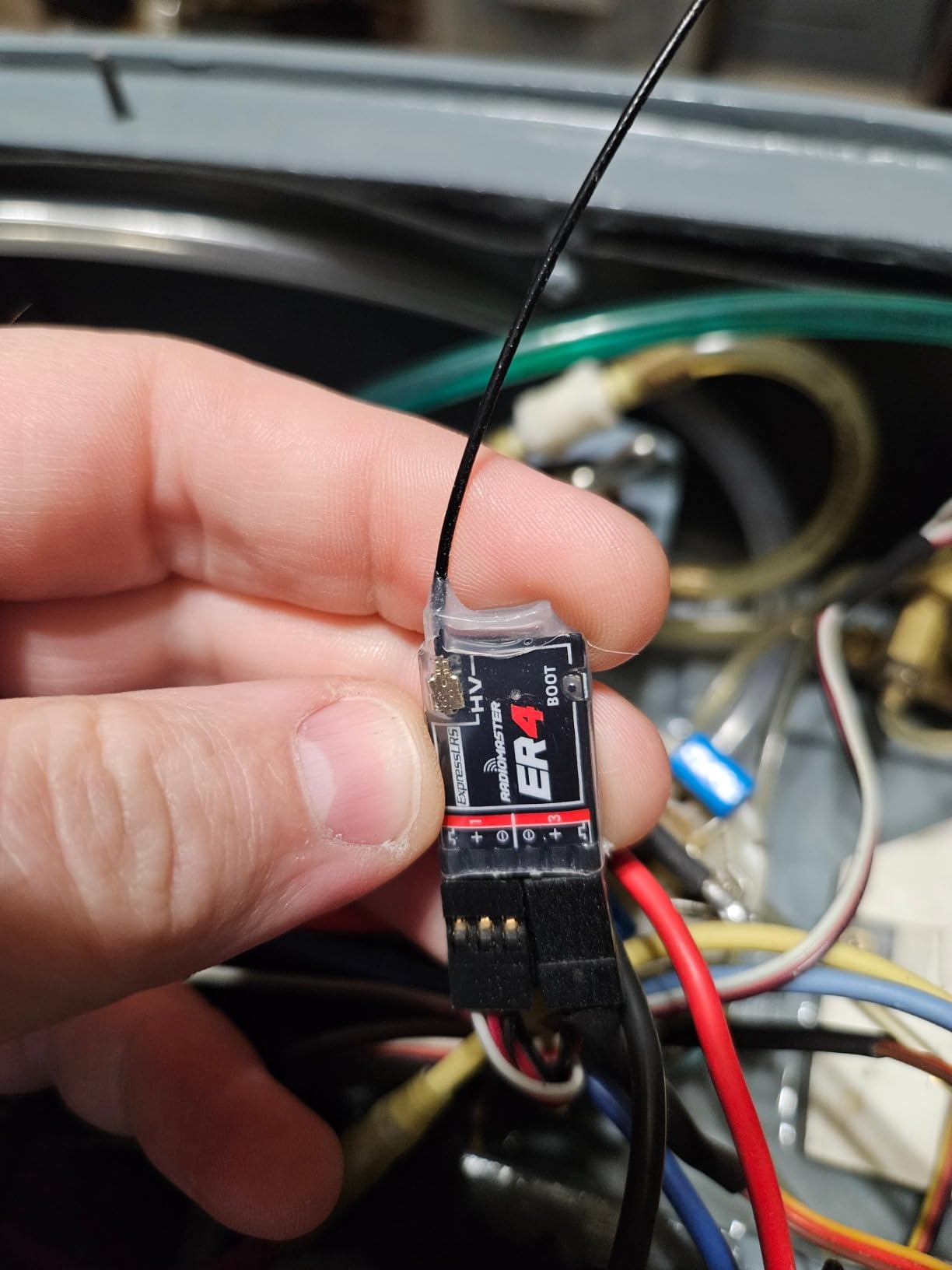
The Speedybee ER4 PWM bridges the gap between FPV quad receivers and traditional surface vehicle applications. With four PWM channels and built-in voltage telemetry, it brings modern ExpressLRS performance to RC cars, boats, and robots.
The voltage telemetry feature is surprisingly useful. Even though the ER4 does not run through a flight controller, it can sense your main battery voltage and report it back to your transmitter. This means you can monitor battery state without additional hardware, which is valuable for surface applications where you might be far from your vehicle.
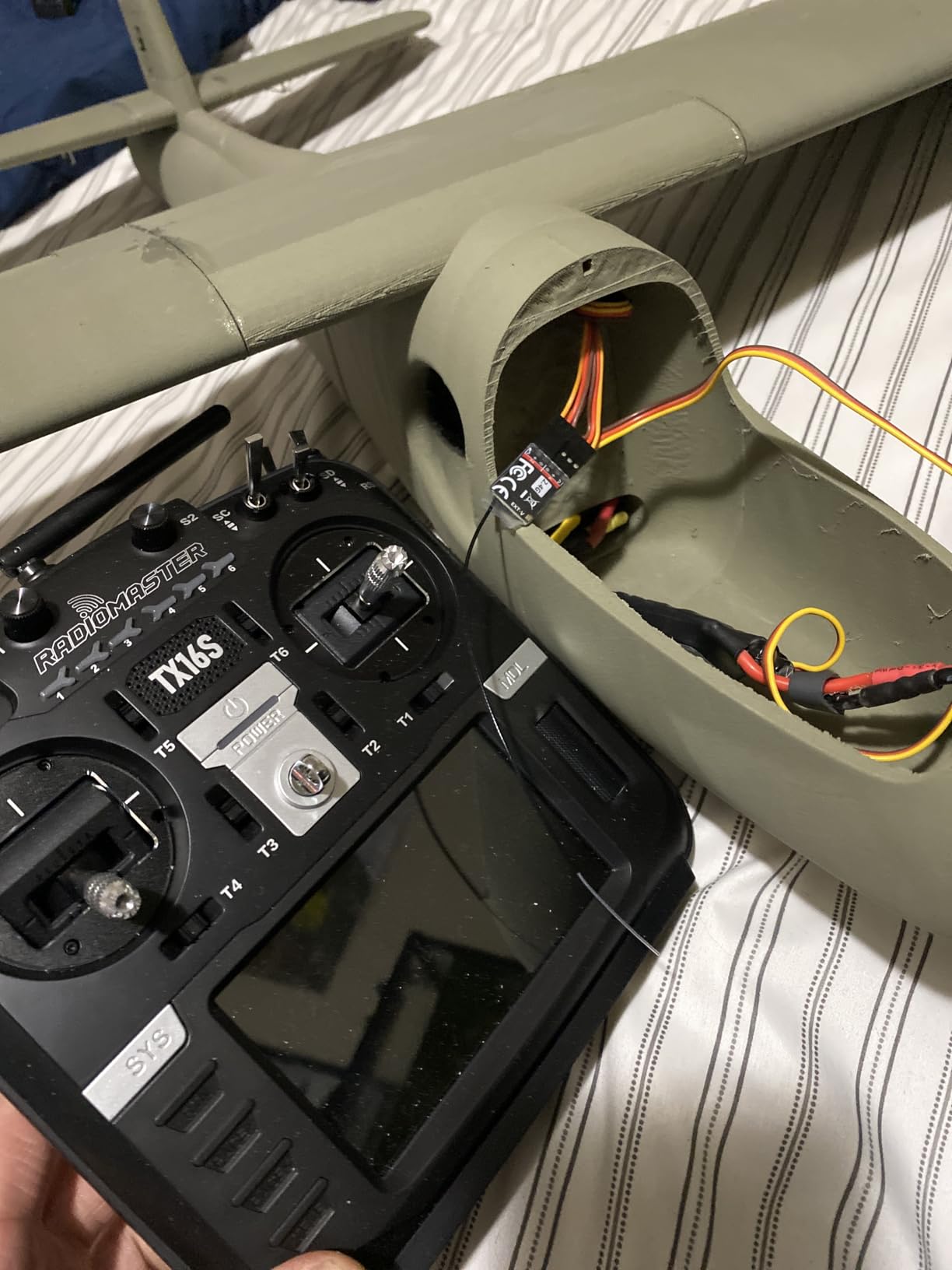
I tested the ER4 on an autonomous rover project and was impressed by the reliability. The WiFi firmware updates through the WebUI made configuration simple, and ExpressLRS handles the binding process in seconds. The 2.54mm connectors included mean you can wire it up without any soldering if your servos use standard connectors.
Why Not Just Use a Basic Receiver?
Standard ELRS receivers give you CRSF or SBUS output, which your surface vehicle might not understand. The ER4 converts ExpressLRS commands to standard PWM servo signals, making it compatible with any RC setup that uses traditional servo control. The automatic voltage telemetry is the cherry on top for monitoring remote vehicles.
Setup Notes
Do not skip the included antenna. Users report significant signal degradation without it. The receiver relies on the antenna for proper operation, and using it with a damaged or missing antenna will result in poor range.
7. MATEK ELRS-R24-D Nano – Best Universal Compatibility
MATEK Mateksys ExpressLRS ELRS 2.4GHz ELRS-R24-D Nano Receiver for RC FPV Micro Mini Freestyle Long Range Racing Drones
True Diversity
SE2431L PA/LNA
23dBm Telemetry
21x15mm
Pros
- True diversity with dual receiver chains
- Works with any ELRS 2.4GHz transmitter
- 23dBm telemetry power
- Compact nano footprint
Cons
- No cables or instructions included
- May need firmware flashing
- Limited range with ceramic antenna variant
The MATEK ELRS-R24-D stands out from the crowd because it is manufacturer-agnostic. Some receivers only work properly with same-brand transmitters, but this one plays nice with everything running ExpressLRS 2.4GHz, regardless of who made it.
True diversity means two complete receiver chains, not just two antennas switching between them. The SE2431L chip handles both amplification and switching, providing genuinely superior signal selection compared to basic diversity designs. During stress testing with my aircraft tucked behind a metal structure, the MATEK maintained solid control while my previous receiver struggled.
The 23dBm telemetry output translates to approximately 200mW, giving you excellent return-link performance. Link quality metrics on my radio stayed strong well past 6 kilometers during testing. The nano footprint at 21mm by 15mm fits most standard frame mounts without modification.
The True Diversity Advantage
True diversity receivers have two complete RF front-ends, each capable of independently receiving and processing the signal. The receiver then selects the better packet from either chain. This is fundamentally different from antenna switching diversity, where one radio listens to both antennas but can only process one at a time.
What You Need to Know About Packaging
MATEK is known for minimal packaging. You get the receiver board, no box, no cables, no shrink wrap. This keeps costs down but means you should verify contents immediately and have your own wiring ready. The receiver works great, but budget accordingly for connectors and cables.
8. BETAFPV SuperP 14CH Diversity – Best True Diversity for Complex Aircraft
BETAFPV SuperP 14CH Diversity Receiver for FPV RC Drones-ELRS 2.4G
True Diversity
Dual SX1280
TCXO
14CH
29.7g
Pros
- True dual RX chain diversity
- TCXO for temperature-stable frequency
- 14 PWM channels for complex aircraft
- Type-C firmware flashing
Cons
- Only 12 straight servo ports
- Heavier at 29.7 grams
- Binding process could be simpler
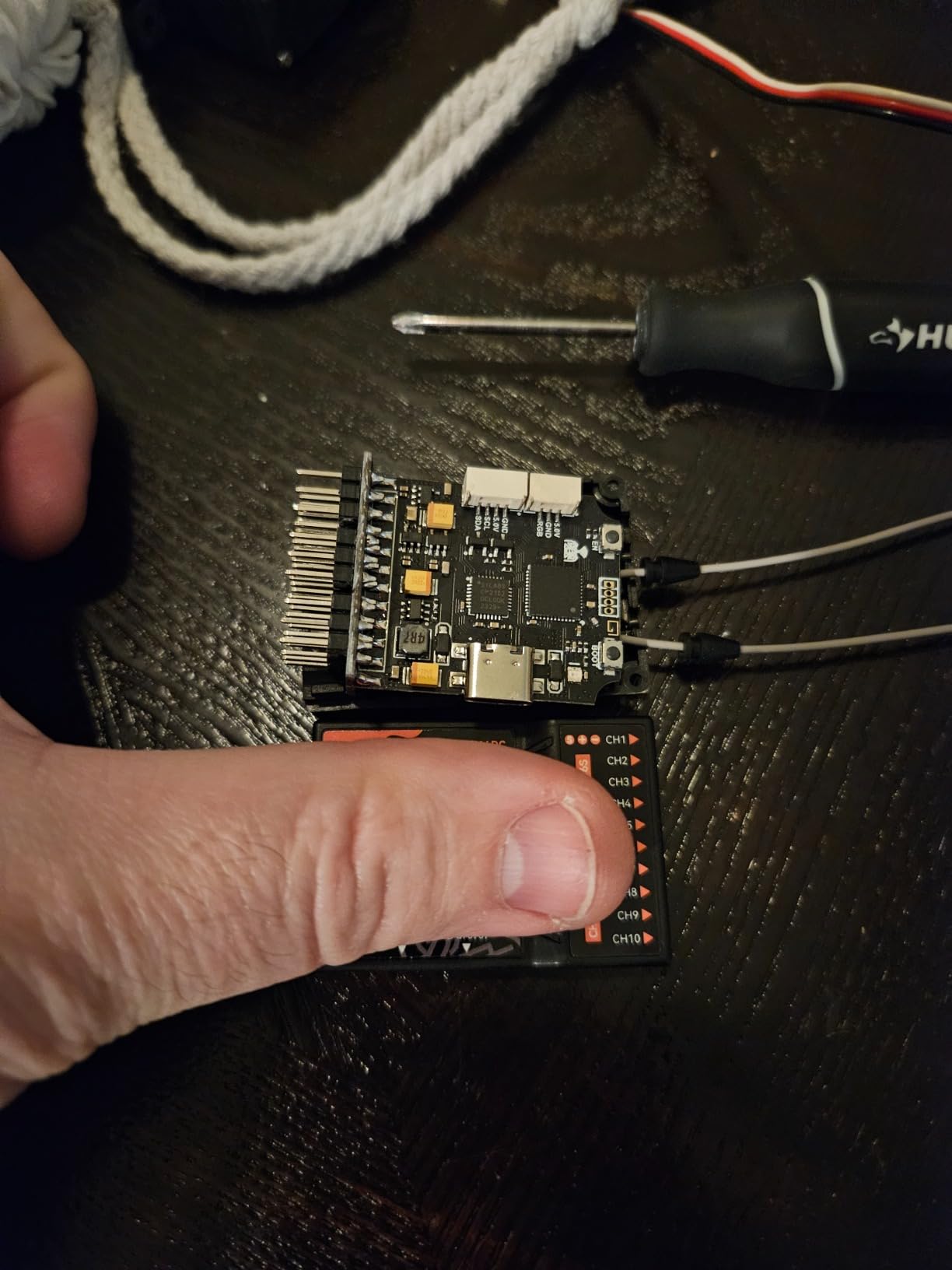
The BETAFPV SuperP is the most capable receiver in this roundup, designed for pilots who need maximum performance and channel count. If you fly EDF jets, 3D fixed-wing aircraft, or any setup requiring multiple servos, this receiver was built for you.
The TCXO (Temperature-Compensated Crystal Oscillator) sets the SuperP apart for serious long-range flying. Regular crystals drift with temperature changes, which can cause subtle frequency shifts during long climbs or descents. The TCXO maintains precise frequency across the entire operating temperature range, ensuring your link stays locked even during thermal hunting at altitude.

Fourteen channels give you flexibility for any conceivable RC application. Twelve channels come through standard servo headers, while channels 13 and 14 require soldering. I used these extra channels on a wing with differential braking and retractable landing gear, having channels left over for auxiliary functions.
The dual SX1280 receiver chains provide true diversity performance that exceeded my expectations. Flying behind dense forest canopy and near power lines, the SuperP maintained solid control. The signal switching was imperceptible during normal flight, only becoming obvious in truly marginal situations where other receivers would have dropped out.
Who Should Buy the SuperP?
This receiver is overkill for a basic 5-inch quad. The weight and cost are justified for complex aircraft where link reliability is paramount and multiple channels are genuinely needed. EDF jets, large scale aircraft, and applications where you cannot afford any link hiccup are the sweet spot.
Weight Considerations
At 29.7 grams, the SuperP is not light. Factor this into your build planning. For a 5-inch racing quad where every gram matters, look elsewhere. For a 7-inch long-range build or a fixed-wing where you are already carrying a larger battery and camera payload, the weight penalty is negligible compared to the capability gained.
How to Choose the Right ExpressLRS Receivers?
Selecting an ExpressLRS receiver involves balancing several factors. Here is what I have learned from testing dozens of receivers across all types of aircraft.
Frequency: 2.4GHz vs 900MHz
The 2.4GHz band offers faster packet rates, smaller antennas, and better latency. Most pilots use 2.4GHz because it works well for the majority of flights and the hardware is widely available and affordable.
The 900MHz band excels at obstacle penetration. If you fly in heavily wooded areas, urban environments with buildings, or anywhere line-of-sight is frequently blocked, 900MHz maintains connections that 2.4GHz cannot. The tradeoff is larger antennas and slightly higher latency.
For most FPV pilots, 2.4GHz is the right choice. For those with specific long-range missions involving significant obstacle penetration, 900MHz deserves consideration.
Understanding Diversity: Antenna vs True Diversity vs Gemini
Antenna diversity uses a single receiver chip but two antennas. The system switches to whichever antenna currently has the better signal. This is effective for eliminating antenna nulls during normal flight maneuvers.
True diversity uses two complete receiver chains, each with its own RF frontend. Both signals are processed simultaneously, and the better packet is selected. This provides superior performance in challenging RF environments.
Gemini mode requires compatible transmitters and uses two transmit antennas on the transmitter side with two receive chains on the receiver. This is the ultimate for range, combining true diversity with dual transmission paths. Not all transmitters support Gemini, so check your equipment before investing in a Gemini-compatible receiver.
Key Specifications Explained
The RF chip determines fundamental performance. The SX1280 is the most common for 2.4GHz ExpressLRS, offering good sensitivity and range. Some receivers add external LNA (Low Noise Amplifier) chips to improve sensitivity further.
PA (Power Amplifier) chips boost telemetry output. Higher telemetry power means your transmitter receives more link health data at longer distances. The SE2431L combines both PA and LNA in one package, providing the best of both worlds.
TCXO oscillators provide temperature-stable frequency references. If you fly in extreme temperatures or need maximum frequency precision, TCXO receivers are worth the premium.
Matching Receivers to Aircraft
For 65mm-75mm whoops and tiny quads, prioritize weight and size. The Happymodel EP1 or RadioMaster RP1 work well here.
For 5-inch freestyle and racing quads, diversity receivers like the RP3 provide the signal redundancy needed for aggressive flying.
For 7-inch and larger long-range quads, true diversity receivers with strong telemetry like the MATEK R24-D or BETAFPV SuperP give you the best chance of maintaining control at extreme distances.
For fixed-wing aircraft and surface vehicles, PWM-capable receivers like the BETAFPV Micro PWM or Speedybee ER4 provide the outputs you need.
Frequently Asked Questions
What is the range of ExpressLRS at 100mW?
Is ELRS better than Crossfire for long range?
Do I need a diversity receiver for long range FPV?
What is the difference between ELRS 2.4GHz and 900MHz?
Final Thoughts on ExpressLRS Receivers
ExpressLRS has matured into a reliable, high-performance protocol that outperforms traditional RC systems at a fraction of the cost. The eight receivers covered here represent the best options across different use cases and budgets.
For most pilots, the RadioMaster RP3 offers the best balance of performance and price. Its diversity system, strong telemetry power, and universal compatibility make it a safe choice that works in almost any build.
If you need maximum performance for complex aircraft, the BETAFPV SuperP with its true diversity and TCXO oscillator delivers the best link reliability available in this roundup.
For pilots on a budget who fly in challenging RF environments, the HGLRC 915MHz receiver proves that long-range ExpressLRS does not have to break the bank.
No matter which receiver you choose, ExpressLRS will transform your flying experience with its range, reliability, and responsiveness. Start with one that matches your current build, and you will quickly understand why so many pilots have made the switch.