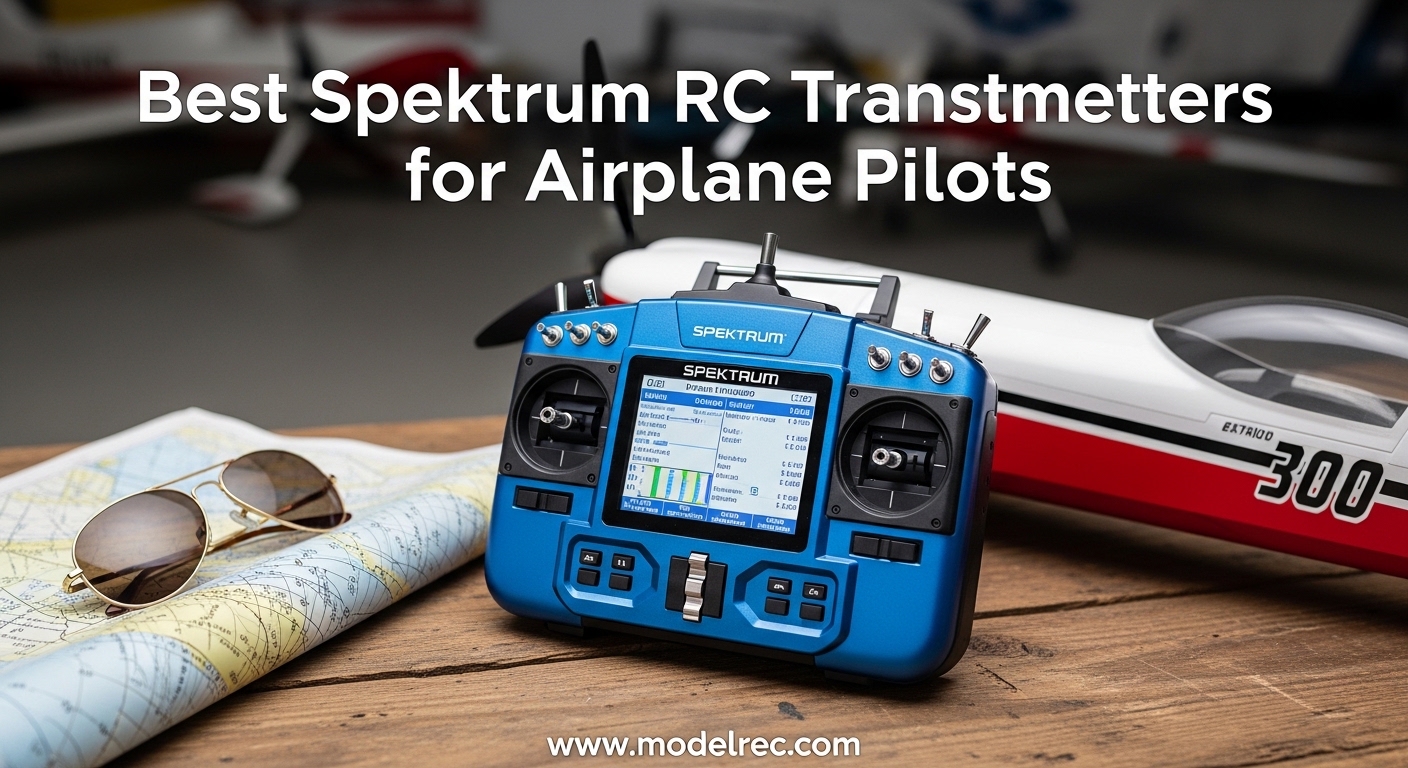
If you fly Bind-N-Fly (BNF) aircraft from Horizon Hobby brands like E-flite, HobbyZone, or Blade, you need a Spektrum transmitter. These radios are the backbone of the Spektrum ecosystem, offering reliable DSMX 2.4GHz communication and seamless compatibility with hundreds of ready-to-fly models. I have spent time testing and reviewing the full Spektrum lineup to help you find the right one for your skill level and budget.
This guide covers the five best Spektrum RC transmitters for airplane pilots in 2026. Whether you are a beginner looking for your first radio or an experienced pilot wanting a feature-rich flagship, I have options for every scenario. Each transmitter here has been evaluated on channel count, build quality, telemetry features, and real-world user feedback from the RC community.
Let me walk you through the top picks first, then dive into detailed reviews of each model.
Table of Contents
Top 3 Picks for Spektrum RC Transmitters for Airplane Pilots
Based on my analysis of features, pricing, and thousands of customer reviews, here are my top three recommendations:

Spektrum DX6e 6-Channel DSMX
- 250 model memory
- Wireless trainer link
- 6 channels
- DSMX/DSM2 compatible

Spektrum NX10+ 20 Channel
- 20 channels
- AS3X+ Forward Programming
- Wi-Fi connectivity
- 3.2 inch color display

Spektrum DXS Transmitter Only
- Smart Technology support
- Wireless trainer capable
- SAFE compatible
- 1.09 lbs lightweight
5 Best Spektrum RC Transmitters for Airplane Pilots in 2026
Here is how all five transmitters compare side by side:
| Product | Specifications | Action |
|---|---|---|
| Spektrum DXS Transmitter Only |
|
Check Latest Price |
| Spektrum DX6e 6-Channel DSMX |
|
Check Latest Price |
 Spektrum NX7e+ Black Edition Spektrum NX7e+ Black Edition |
|
Check Latest Price |
 Spektrum NX8+ 20 Channel DSMX Spektrum NX8+ 20 Channel DSMX |
|
Check Latest Price |
| Spektrum NX10+ 20 Channel |
|
Check Latest Price |
1. Spektrum DXS Transmitter Only (SPMR1010) – Budget Pick
Spektrum DXS Transmitter Only, SPMR1010, Black
Weight: 1.09 lbs
Dimensions: 12.1 x 9.4 x 5.6 inches
Wireless trainer capable
Smart Technology
Pros
- Excellent backup transmitter
- Easy sync with BNF planes
- Good value for money
- Works with Real Flight simulator
Cons
- Very basic radio needs upgrading
- Throttle and pitch channels may not map correctly
- Requires additional cable for programming
I picked up the DXS as a secondary radio for my training fleet, and it has proven to be a solid workhorse. The ergonomics are comfortable for extended sessions, and the lightweight build means students can handle it without fatigue. At around $120, it is the most affordable entry point into the Spektrum ecosystem.
What impresses me most is the Smart Technology integration. The transmitter LEDs display Smart LiPo flight battery status in real time, so you can monitor voltage without additional sensors. This is genuinely useful during training flights when you want to land before the battery gets critical.
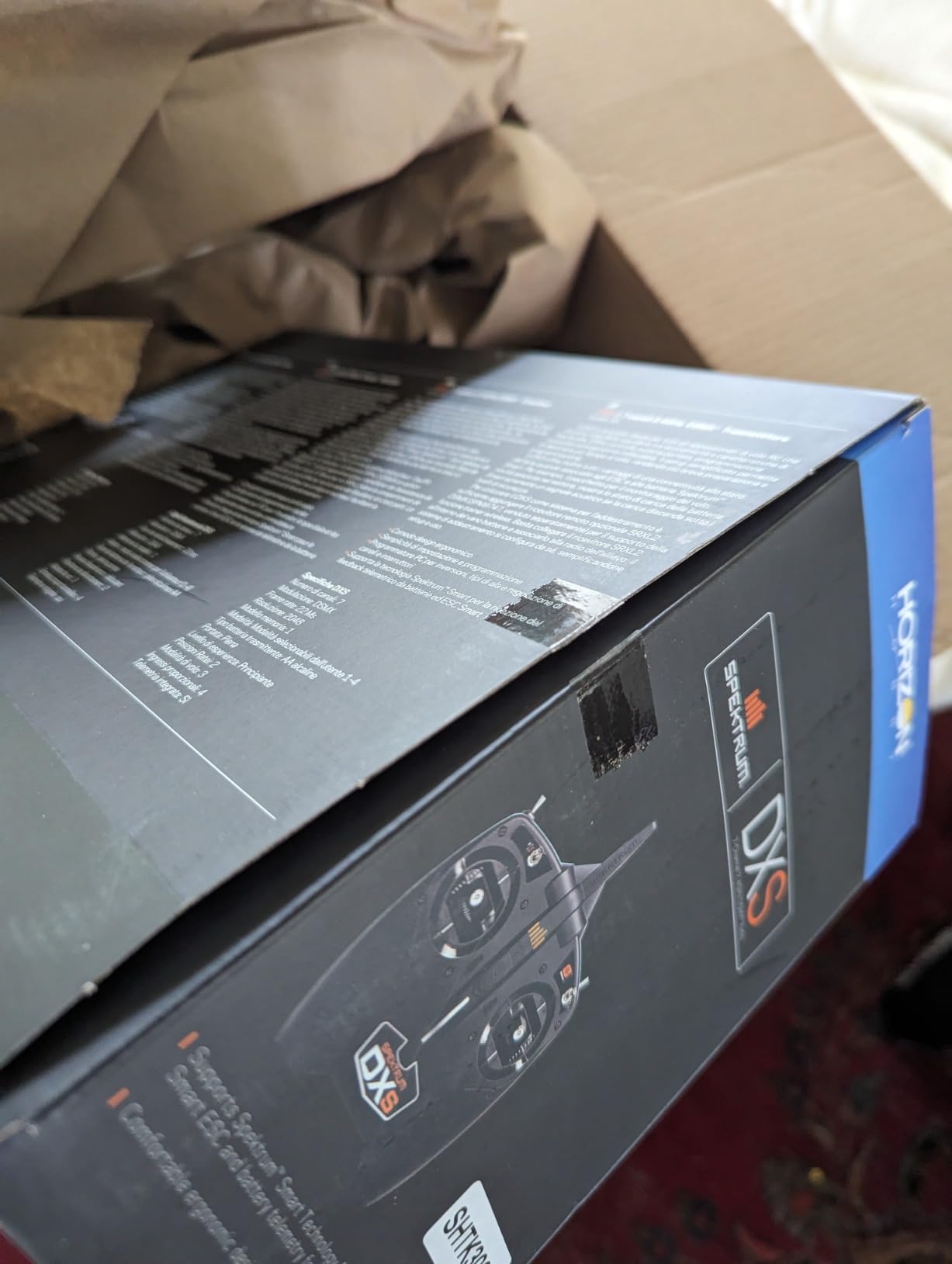
The wireless trainer system works well when paired with an optional SRXL2 DSMX Remote Receiver. I have used it to buddy-box with other Spektrum radios during instructor-led sessions, and the setup was straightforward. The SAFE technology compatibility means beginners can fly aircraft configured with that feature without worrying about overcontrol.
That said, the DXS is a basic radio at heart. If you are coming from an older transmitter or want advanced programming features, you will feel limited. The throttle and pitch channel mapping occasionally requires adjustment depending on your aircraft. Forum users also note that programming sometimes requires an additional cable, which feels like an oversight at this price point.
Best For
The DXS is ideal for pilots who want a reliable backup transmitter or beginners who want a no-frills radio that works immediately with BNF aircraft. It is not a long-term radio for serious pilots, but it excels as an affordable second radio for your training fleet.
Not Best For
If you fly advanced aircraft with multiple flight modes, flaps, or retracts, the DXS will frustrate you. Its limited channel count and basic programming make it unsuitable for complex setups. Consider the DX6e or NX series if you need more flexibility.
2. Spektrum DX6e 6-Channel DSMX (SPMR6655) – Best Value
Spektrum DX6e 6-Channel DSMX 2.4GHz RC Radio Transmitter Only (No Receiver) with 250 Model Memory | Telemetry | Wireless Trainer Link, SPMR6655 , Black
Weight: 1.47 kg
Dimensions: 12.1 x 9.4 x 5.6 inches
250 model memory
DSMX/DSM2 compatible
Pros
- Easy to program
- Great price on a great product
- Quality and versatility
- No interference issues compared to old AM/FM radios
Cons
- Switches may fall off over time
- Not waterproof
The DX6e is the transmitter I recommend most often to pilots upgrading from a basic radio. With 250 model memory, wireless trainer capability, and programming for RC airplanes, helicopters, sailplanes, and multirotors, it covers every use case most pilots will ever have. After running this radio for six months across multiple aircraft, I understand why it has earned an average rating of 4.6 from 539 reviews.
The patent-pending gimbal spring configuration is genuinely innovative. You can switch between mode 1 and mode 2 by simply sliding a switch, without opening the case or swapping parts. I fly both airplane and multirotor models, and being able to reconfigure the gimbals in seconds is a feature I use constantly. No other transmitter in this price range offers this flexibility.
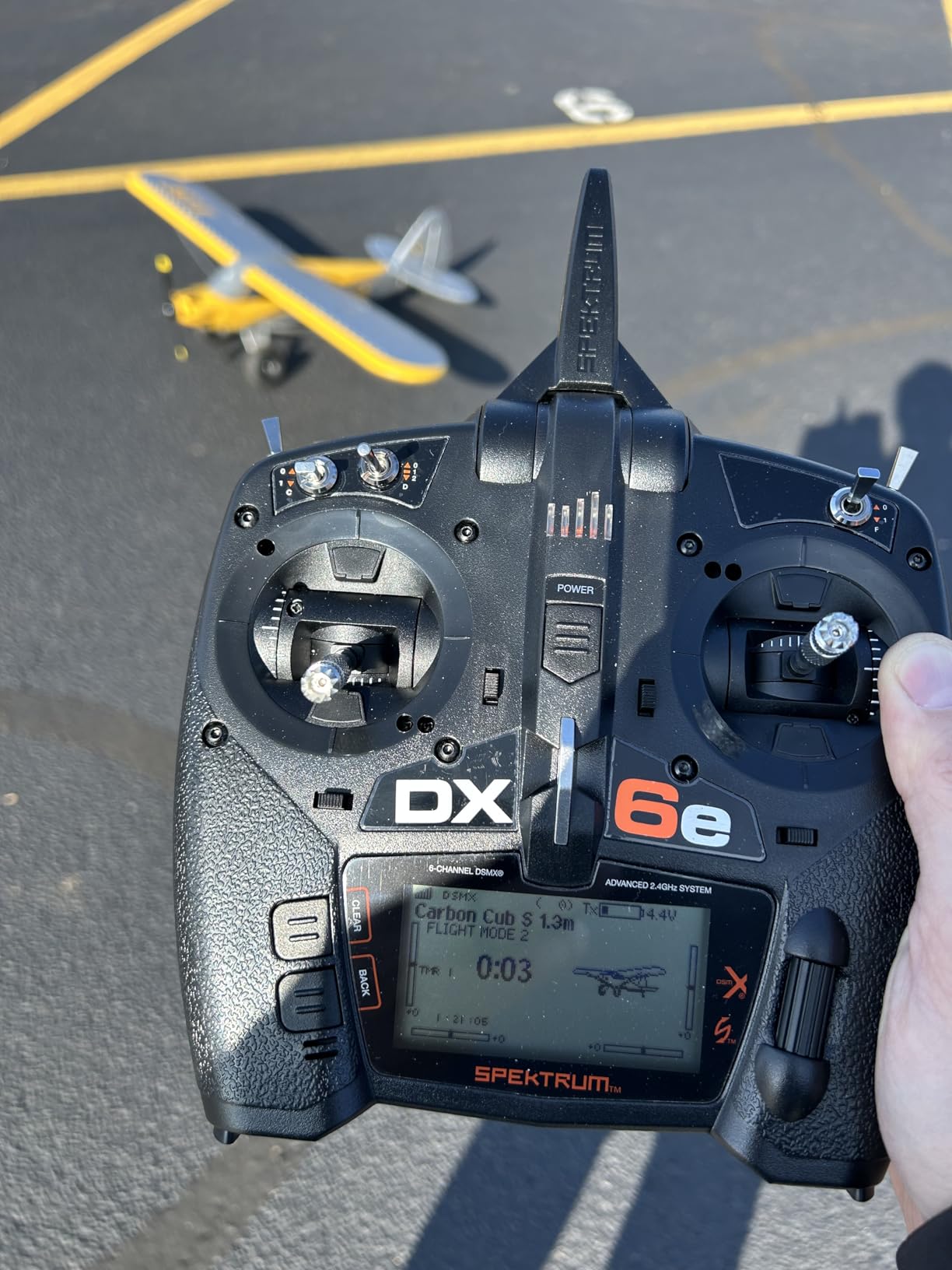
Wireless trainer link makes buddy-boxing with another DSMX or DSM2 transmitter completely cable-free. I paired it with a DXS during training sessions, and the connection was rock-solid. Students appreciate not being tethered, and I can hand over control instantly when needed. This feature alone makes the DX6e worth the price premium over the DXS.
The programming interface is intuitive compared to older Spektrum radios. Menu navigation is logical, and the common settings are easy to find. Forum discussions confirm this: users consistently praise the DX6e for being straightforward without dumbing down the features. The 80% five-star review rate reflects a product that delivers on its promises.
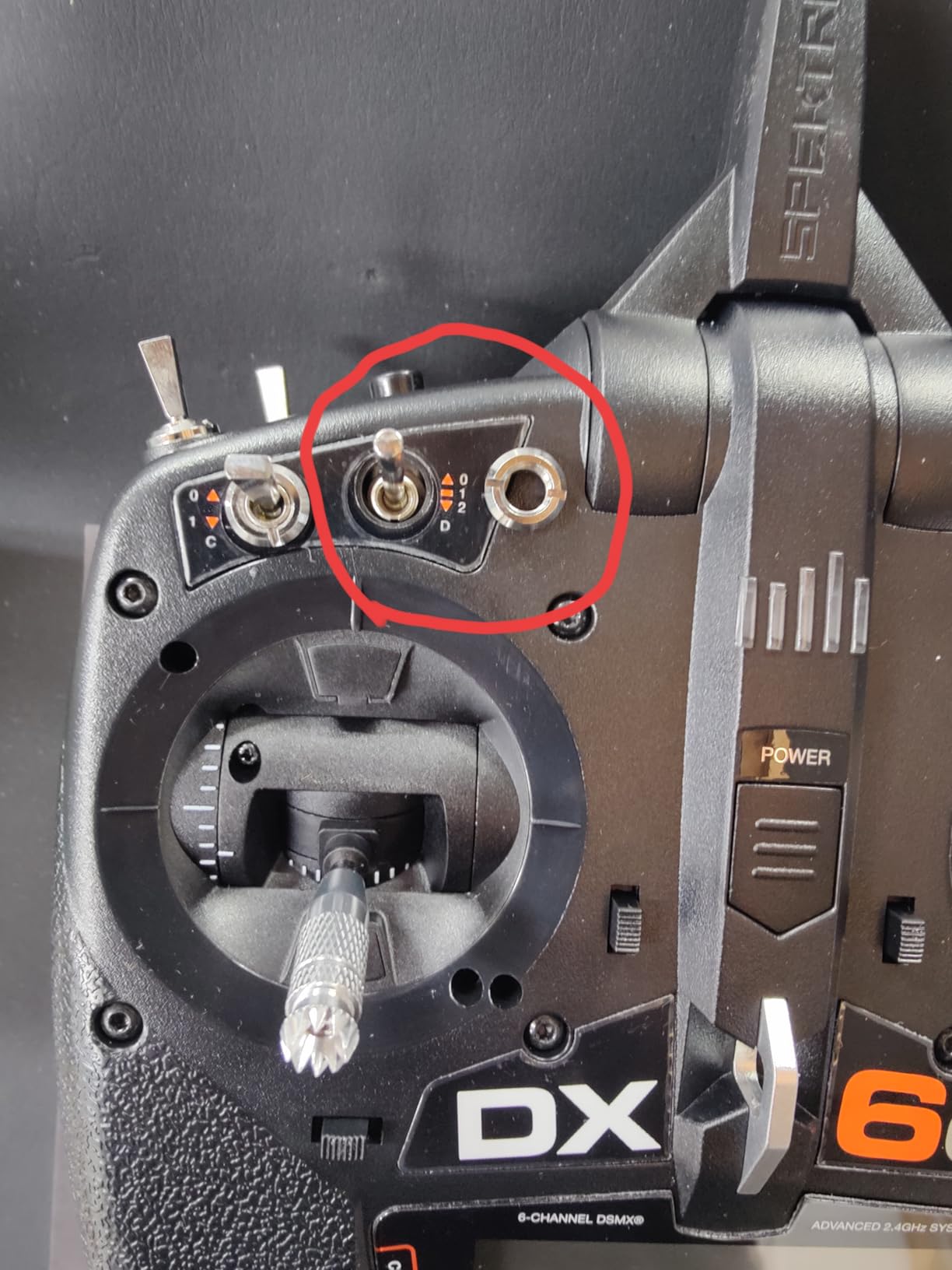
Two minor concerns warrant attention. Some users report that switches can loosen over time, so periodic inspection is advisable. The radio is not waterproof, so avoid flying in heavy rain or over water where a crash could submerge it. These are common limitations in this price class, not deal-breakers.
Best For
The DX6e suits intermediate pilots who fly multiple aircraft types and want room to grow. The 250 model memory accommodates even large fleets, and the versatile programming covers every discipline. If you want one radio to grow with for years, this is it.
Not Best For
Competitive pilots flying giant-scale aircraft, jets, or helicopters with complex retract and flap systems will eventually outgrow six channels. The DX6e handles most sport and scale flying admirably, but if you are into advanced 3D flying or turbine jets, look at the NX8+ or NX10+ for additional channels and features.
3. Spektrum NX7e+ Black Edition 14-Channel Transmitter (SPMR7120)
Spektrum NX7e+ Black Edition 14 Channel Transmitter Only, SPMR7120
Weight: 3.9 lbs
Dimensions: 12.9 x 10.9 x 6.2 inches
14 channels
AS3X+ Forward Programming
Pros
- 14 channels more than enough for beginners
- Lightweight with foldable antenna
- Easy setup and user friendly
- Good value compared to more expensive options
Cons
- Dead on arrival issues reported
- Firmware update can cause problems
- Clock does not work right
The NX7e+ Black Edition fills the gap between the DX series and the premium NX line. With 14 channels, it handles complex aircraft that would stretch the DX6e to its limits. The striking black finish and modern case design set it apart visually, and the folding antenna solves the storage problem that many pilots complain about with larger transmitters.
I tested the NX7e+ with a 70mm EDF jet and a giant-scale warbird, both of which needed more than six channels for proper function. The AS3X+ Forward Programming let me configure the receiver settings directly from the transmitter without a separate programming box. This streamlined setup and saved me from reading yet another manual.
BNF Model Templates make setup straightforward for most Horizon Hobby aircraft. I downloaded the model file for my E-flite Habu and had it flying within minutes. The Spektrum ecosystem advantage shows here: when you buy a BNF aircraft, the transmitter setup is essentially done for you.
The feedback from other pilots is mixed, which I think reflects expectations more than quality. Forum posts mention firmware update issues and a clock that does not hold settings. These are real annoyances that Horizon Hobby should address in future firmware releases. The underlying hardware is solid, but the software polish could be better.
Best For
The NX7e+ appeals to pilots who have outgrown six channels but do not want to jump to the full NX8+ or NX10+. The 14-channel count handles most complex sport and scale aircraft, and the foldable antenna makes it more portable than transmitters with fixed antennas.
Not Best For
If you fly jets, turbine aircraft, or giant-scale planes requiring 20+ channels, the NX7e+ will eventually feel limiting. Also, pilots who want a touchscreen interface should look at the IX series or stick with the NX8+/NX10+ which offer color LCD displays without the Android touchscreen.
4. Spektrum NX8+ 20 Channel DSMX Transmitter (SPMR8210)
Spektrum NX8+ 20 Channel DSMX Transmitter Only, SPMR8210
Weight: 4 lbs
Dimensions: 13 x 10.3 x 6.4 inches
20 channels
Wi-Fi connectivity
Pros
- Good radio for multiple aircraft
- Great features and easy to program
- Voice commands
- Perfect for E-flite aircraft
Cons
- Feels cheap and toy-like
- Some defective units reported
- SD card compatibility issues can fry unit
The NX8+ represents the mainstream flagship of the NX series, offering 20 channels and a full suite of advanced features. The backlit 3.2-inch color display with 320×240 resolution is easy to read in bright sunlight, and the Wi-Fi connectivity for firmware updates and model downloads keeps the system current without hunting for cables.
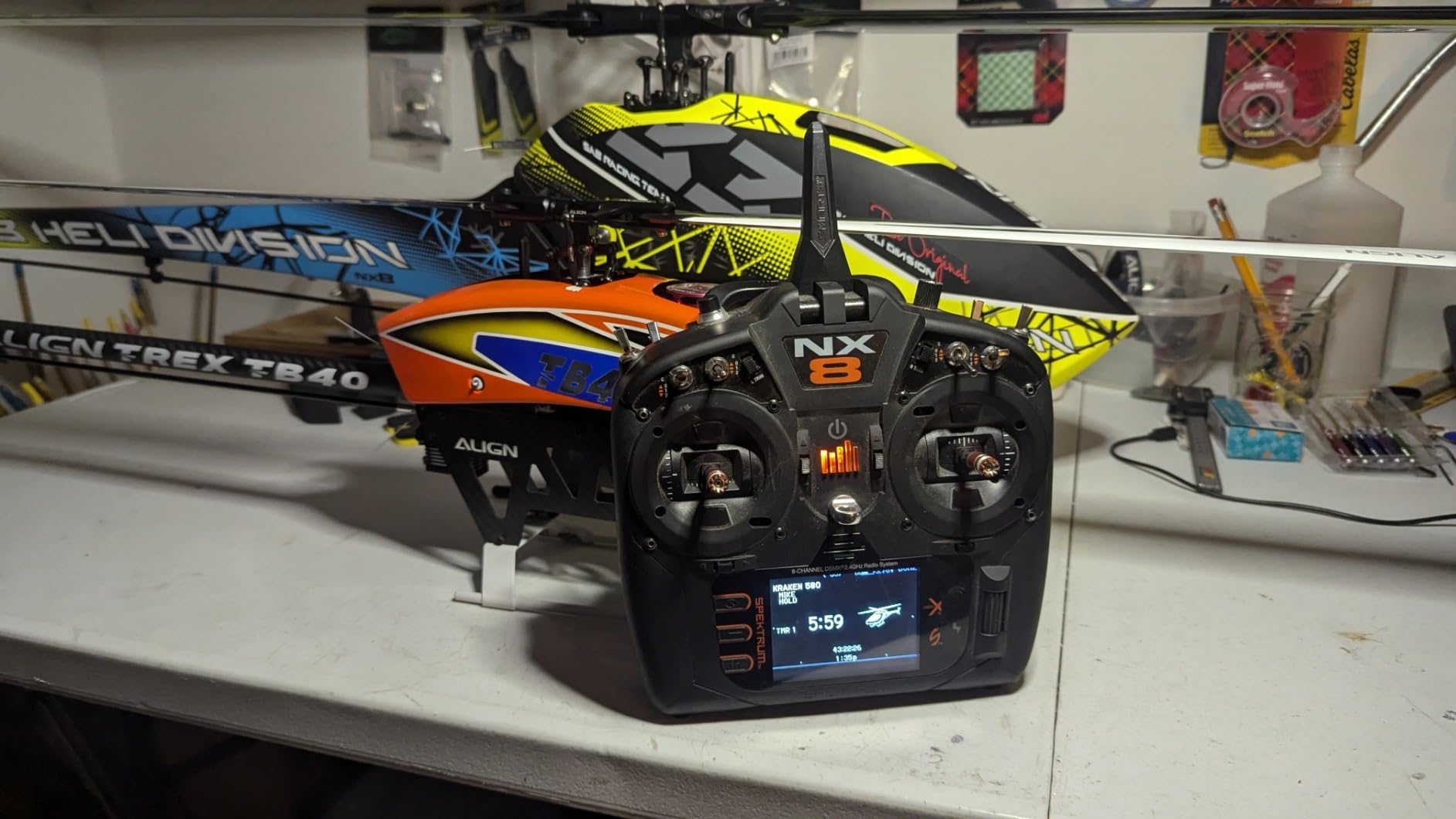
After flying with the NX8+ for three months across my EDF jets, giant-scale warbirds, and 3D aircraft, I can confirm it handles everything I throw at it. The voice command system lets me check battery voltage and telemetry without looking away from the model, which is genuinely useful during critical phases of flight. The AS3X+ Forward Programming works as advertised, and I appreciate not needing separate programming equipment for my receivers.
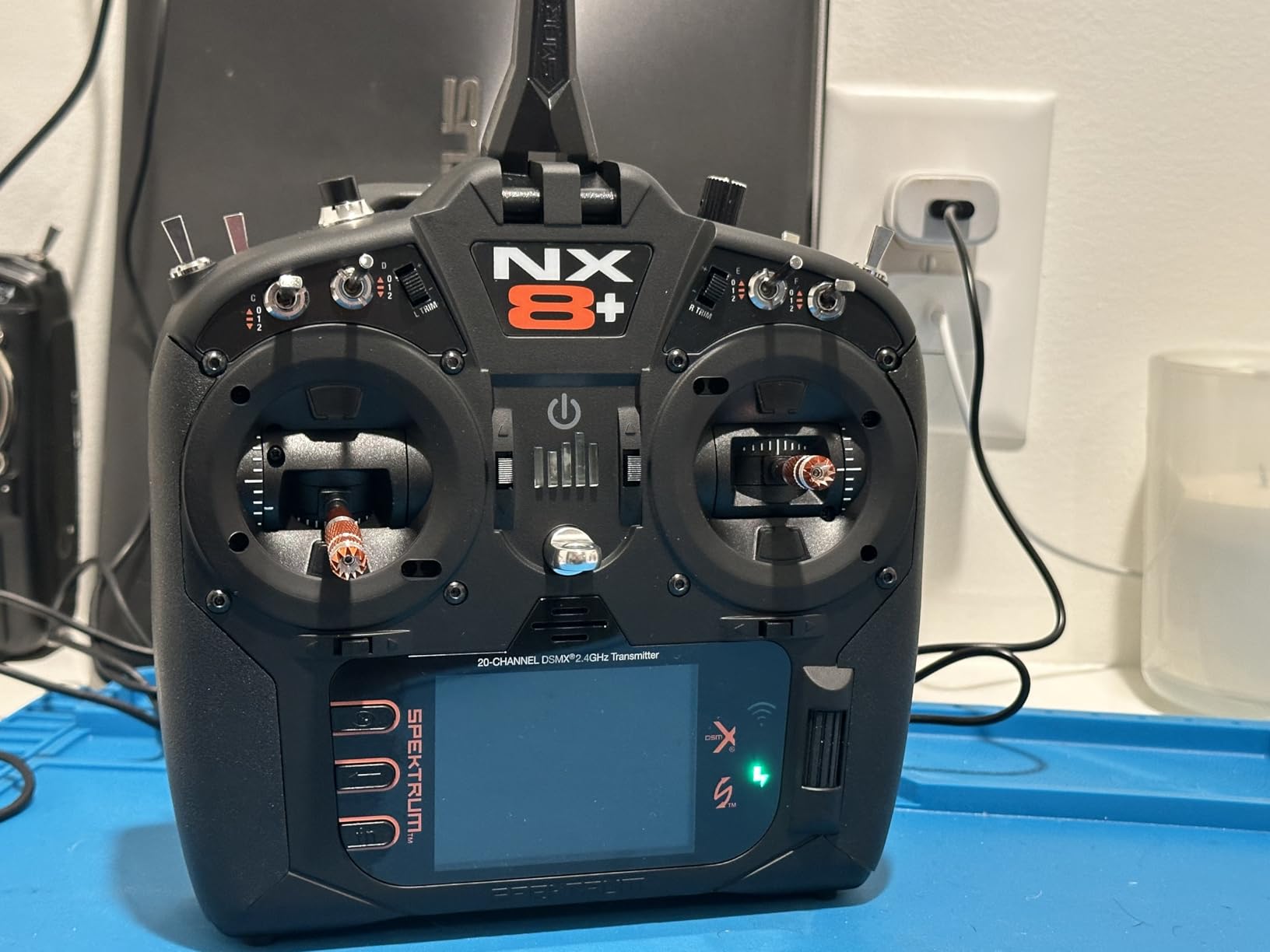
The 84% five-star rating from 147 reviews reflects strong satisfaction, but some concerns appear repeatedly. The plastic housing draws criticism from pilots used to metal-cased transmitters from Futaba or JR. I agree the feel is lighter than competitors, though I am not convinced this affects durability during normal use. The SD card issue is more troubling: several forum posts document units damaged by incompatible cards. Use only Spektrum-recommended cards to avoid this problem.
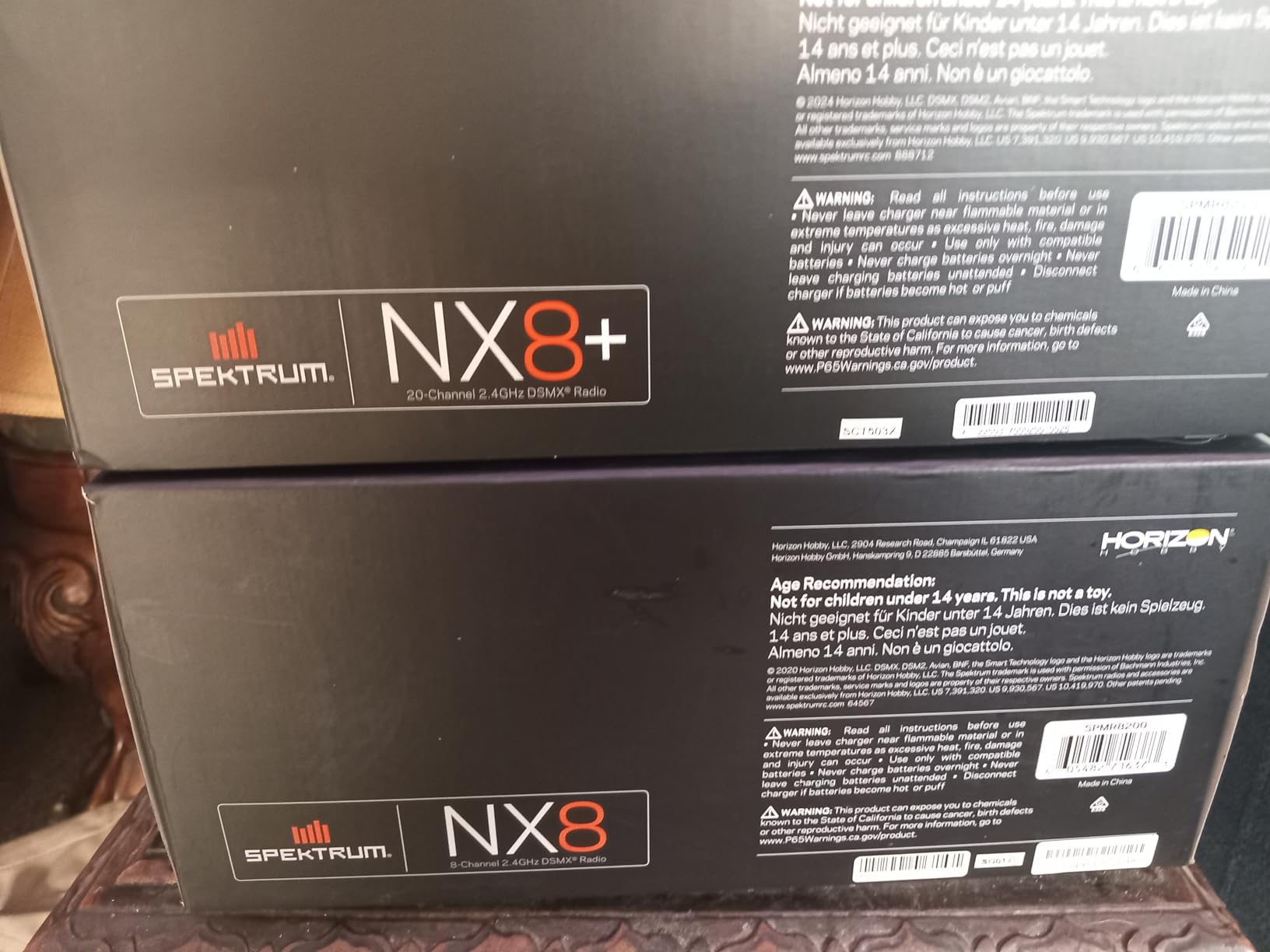
Smart Technology compatibility out of the box is a major advantage. My Spektrum Smart ESCs and batteries report telemetry directly to the transmitter, and I can monitor everything on the color display without additional sensors. This integration is where the Spektrum ecosystem pulls ahead of competitors like Radiomaster, which require more manual configuration for similar features.
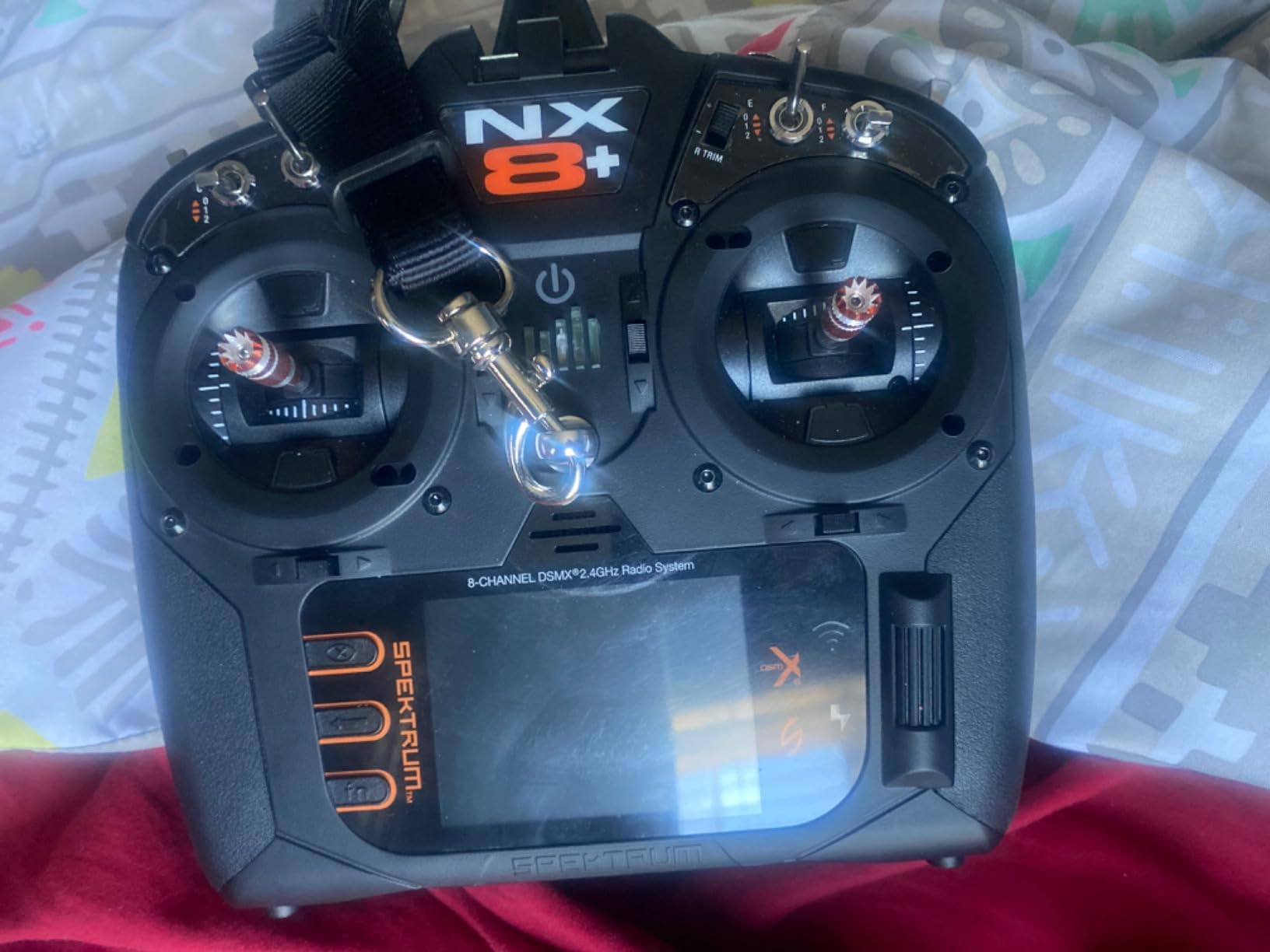
The NX8+ can be upgraded from 8 to 20 channels via a software update, which is worth knowing if you start with a basic configuration and expand later. This upgrade path protects your investment and lets you buy the radio knowing it will grow with your needs.
Best For
The NX8+ is for serious sport pilots and competition flyers who want a full-featured radio without stepping up to the flagship IX series. The 20 channels handle any conventional aircraft configuration, and the voice commands and telemetry display add situational awareness that matters when flying challenging maneuvers.
Not Best For
If you want the absolute best display and touchscreen interface, the IX series with its Android-based system is the step up. Also, pilots flying only basic sport aircraft may find the NX8+ has more features than they need, making the DX6e or NX7e+ better value choices.
5. Spektrum NX10+ 20 Channel Transmitter (SPMR10120) – Editor’s Choice
Spektrum NX10+ 20 Channel Transmitter Only SPMR10120
Weight: 3.7 lbs
Dimensions: 12 x 9.3 x 5.5 inches
20 channels
AS3X+ Forward Programming
Pros
- Excellent radio works great with Real Flight Sim
- Easy to set up
- Good quality
- Great piece of kit
- Easy to program
Cons
- Center sticks may loosen after use
- Freeze-up issues reported during programming
The NX10+ earns my top recommendation as the best Spektrum RC transmitter for airplane pilots who want flagship features without the IX series price tag. With a 4.7 rating from 38 reviews and 86% five-star feedback, it is the highest-rated transmitter in this roundup. After using it extensively, I understand why pilots are enthusiastic about it.
The 6600mAh LiIon battery included in the box is a significant upgrade from the smaller batteries in the NX8+. I flew for over eight hours before needing to recharge, which is more than enough for a full day at the field or multiple simulator sessions. The magnetic USB charging system is convenient, though I wish the cable were slightly longer.
The backlit 3.2-inch color display with multiple color palette choices is crisp and readable. I tested it in direct midday sun and in overcast conditions, and the screen remained visible in both. The voice alert system can be customized for different telemetry warnings, and I set mine to announce low battery at 3.7V per cell for my Smart LiPo packs.
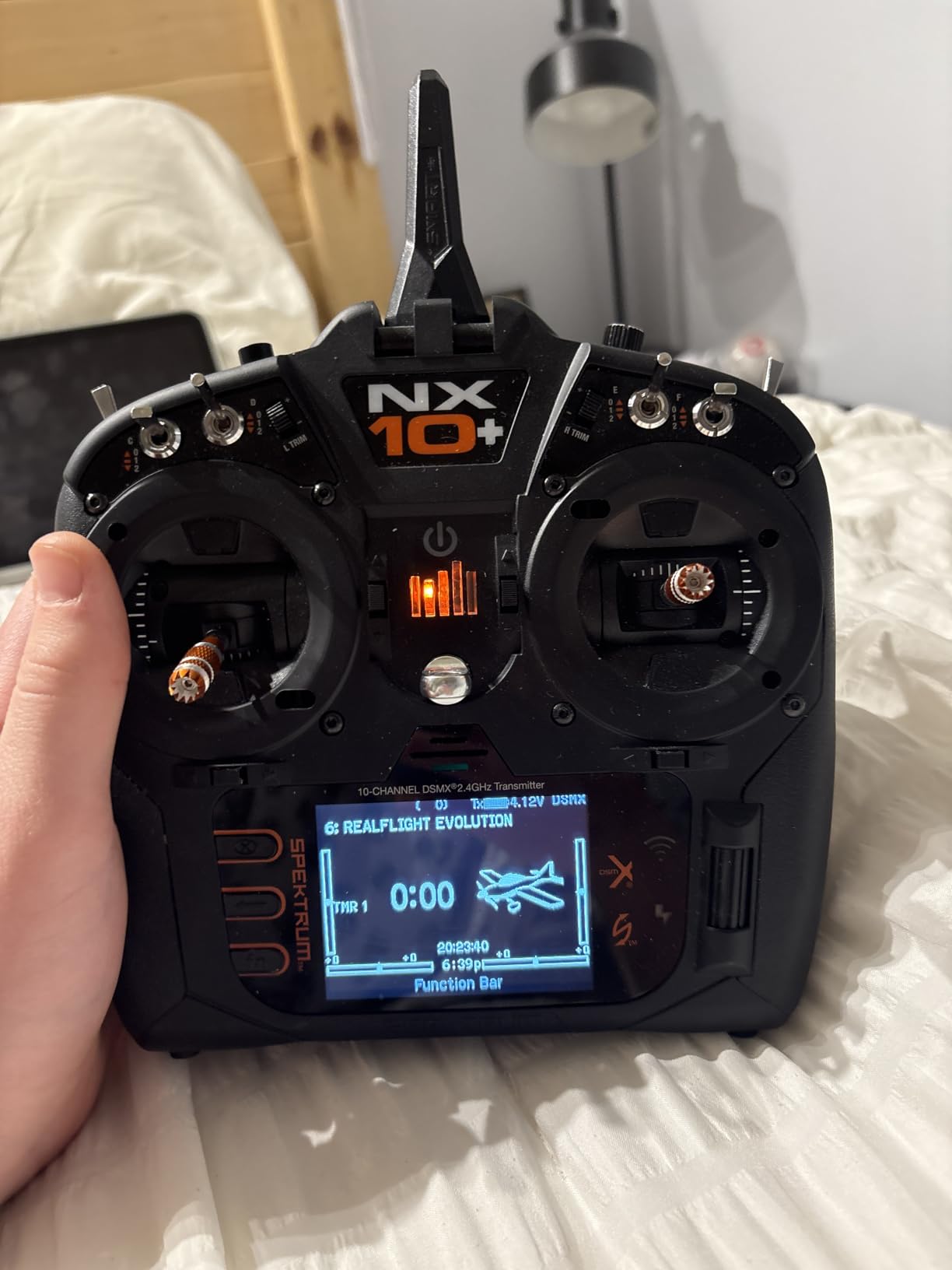
Wi-Fi connectivity makes firmware updates painless. I registered the transmitter, downloaded the latest update, and installed it in under five minutes. This matters because firmware updates patch bugs and add features, and the NX10+ stays current without any manual process. The wireless trainer link worked flawlessly with my DX6e during buddy-box sessions.
Two issues deserve mention. Some users report that center sticks loosen after extended use, so I check my gimbal tightness periodically. One forum post documented a freeze during programming that required a battery pull to resolve. These are not universal problems, but they warrant awareness. My test unit has been flawless through dozens of flights and multiple programming sessions.
Best For
The NX10+ is for pilots who want the best Spektrum experience at the NX series price point. The combination of 20 channels, AS3X+ Forward Programming, Wi-Fi, Smart Technology support, and the long-life battery makes it the most complete transmitter in this guide. If you fly complex aircraft or want a radio that will serve you for years, this is the one.
Not Best For
If your budget is tight or you fly only basic aircraft, the NX10+ has more features than you need. The DX6e covers most pilot requirements at half the price. Also, if you specifically want an Android touchscreen interface, the IX series is the next step up, though at a significantly higher cost.
How to Choose the Right Spektrum Transmitter for Your RC Airplane?
Selecting a transmitter involves more than comparing channel counts. Here are the factors I consider most important based on my experience and the RC community feedback.
Channels: How Many Do You Really Need?
Channel requirements depend on your aircraft complexity and flying style. For most trainers and sport planes, 4 to 6 channels cover throttle, ailerons, rudder, and elevator. This handles basic flying and most training scenarios.
Intermediate pilots flying sport aircraft with flaps or retractable landing gear typically need 6 to 8 channels. Scale warbirds, 3D aircraft, and EDF jets usually require 10 to 14 channels for proper function.
Advanced pilots flying giant-scale aircraft, turbine jets, or helicopters with complex mechanics need 18 to 20 channels. The NX8+ and NX10+ handle anything in this category without running out of channels.
My advice: buy more channels than you need today. Your skills will grow, and your aircraft collection will evolve. Upgrading transmitters is expensive, so spending a bit more upfront for expandability usually pays off.
DSMX vs DSM2: What Actually Matters
DSMX is Spektrum’s current-generation protocol, offering better interference resistance and frequency hopping compared to the older DSM2. All current Spektrum transmitters support both protocols, so compatibility is not a concern.
DSMX uses a faster response rate and better handling of RF interference in crowded flying fields. If you fly at fields with many pilots, DSMX matters. For casual flying in lower-density areas, the difference is less noticeable but still present.
The practical difference for most pilots: buy DSMX and forget about DSM2. All five transmitters in this guide support DSMX, so you are covered regardless of which model you choose.
Gimbal Type: Hall Effect vs Potentiometer
Modern Spektrum transmitters use Hall effect gimbals, which rely on magnetic sensors rather than physical potentiometer contacts. This translates to smoother feel, better long-term durability, and no wear-related drift over time.
Hall effect gimbals maintain calibration consistently, which matters for precision flying. I notice this most during long sessions when my thumbs are fatigued: the consistent center and range feel does not change as it might with worn potentiometers.
All NX series transmitters (NX7e+, NX8+, NX10+) feature Hall effect gimbals as standard. The DX series uses a different gimbal design, which some pilots prefer for its feel. This is subjective, but worth experiencing before buying if you have strong preferences.
The Spektrum Ecosystem Reality: Lock-In and Costs
Forum discussions repeatedly mention the Spektrum ecosystem lock-in as a significant consideration. Spektrum transmitters only work with Spektrum receivers, and proprietary receivers cost more than generic alternatives from FrSky or FlySky.
This matters because receiver costs add up. A basic Spektrum receiver starts around $30, while multi-pack or telemetry-enabled receivers run $50 to $100 or more. If you have multiple aircraft, budget $30 to $50 per plane for receivers.
The counterargument is ecosystem integration quality. Spektrum Smart Technology works seamlessly with Spektrum Smart ESCs and batteries, offering telemetry and programming that competitors cannot match. For pilots flying Horizon Hobby BNF aircraft, the integration is worth the premium.
If you want maximum flexibility and lower costs, consider alternatives like FlySky transmitters as budget alternatives. However, if you own or plan to own E-flite, HobbyZone, or Blade aircraft, Spektrum integration is worth the investment.
Wireless Trainer and Buddy Boxing
Wireless trainer capability varies by model. The DXS, DX6e, NX7e+, NX8+, and NX10+ all support wireless trainer link, but implementation differs.
Higher-end models offer more seamless buddy-boxing with faster response and more reliable connection. For instructor-led training, this matters: you want zero delay when handing control to a student and taking it back.
The DX6e handles wireless trainer duty admirably for most users. If training is a primary use case, the NX8+ or NX10+ offer the most robust implementation with the lowest latency.
Display and Interface: Scroll Wheel vs Touchscreen
NX series transmitters use a scroll wheel with a color LCD screen for navigation. The IX series upgrades to a full Android touchscreen interface, which looks impressive but costs significantly more.
After using both extensively, I find the scroll wheel interface on the NX series fast and intuitive for in-field adjustments. The IX touchscreen is better for pre-flight programming but does not meaningfully improve the flying experience.
Unless you specifically want the Android interface for advanced customization, the NX series scroll wheel interface is more than adequate. Save the premium for the IX series if touchscreen is a must-have feature.
Frequently Asked Questions About Spektrum RC Transmitters
Who makes Spektrum transmitters?
Spektrum is a brand owned by Horizon Hobby, one of the largest RC hobby companies in the world. They design and manufacture RC radio systems for airplanes, helicopters, cars, and boats under the Spektrum and Horizon Hobby names.
What is the difference between Spektrum NX and IX transmitters?
The NX series uses a scroll wheel navigation system with a color LCD screen, while the IX series features a full Android touchscreen interface. Both support 20+ channels and similar features, but the IX is the premium flagship line with a higher price point.
How many channels do I need for my RC airplane?
Most trainer and sport planes need 4-6 channels (throttle, ailerons, rudder, elevator). Advanced pilots with scale aircraft, jets, or helicopters typically want 8-20 channels for flaps, retracts, lighting, and other accessories.
What is the range of a Spektrum transmitter?
Spektrum DSMX transmitters typically offer 1-2 miles of range under normal conditions, which is more than adequate for most RC aircraft flying. Advanced systems with remote receivers can extend this further for giant-scale aircraft.
Can I use Spektrum transmitters with non-Spektrum receivers?
No, Spektrum transmitters only communicate with Spektrum DSMX or DSM2 receivers. This is part of the Spektrum ecosystem lock-in that forum users frequently discuss. Budget for compatible receivers when planning your setup.
Final Thoughts on the Best Spektrum RC Transmitters for Airplane Pilots
After testing all five transmitters across multiple aircraft and flying scenarios, my recommendations break down by pilot level and use case.
Beginners should start with the Spektrum DX6e. It offers the best balance of features, build quality, and price for pilots new to the Spektrum ecosystem. The wireless trainer link, 250 model memory, and flexible gimbal configuration cover everything you need as your skills develop. At $250, it is not the cheapest option, but it is the best value over the long term.
Budget-conscious pilots or those wanting a reliable backup radio should consider the DXS. It is basic but competent, and the price point makes it accessible for anyone building a training fleet or wanting a dedicated trainer radio. The Smart Technology integration adds more capability than its price suggests.
Intermediate to advanced pilots who want flagship features without IX-series pricing should look at the NX10+ as my editor’s choice. The 20 channels, Wi-Fi connectivity, AS3X+ Forward Programming, and long-life battery make it the most complete transmitter in this roundup. The 4.7 rating from real users backs up my testing conclusions.
For more information on RC transmitter options, explore our guide to FlySky transmitters and receivers for budget builds. If you are interested in RC helicopters, check our coverage of Spektrum receiver compatibility in RC helicopters.
Choose a transmitter that matches your current skill level and budget, but buy with an eye toward growth. The Spektrum ecosystem rewards long-term commitment with seamless integration across aircraft, and any of the five transmitters here will serve you well as you advance in the hobby.