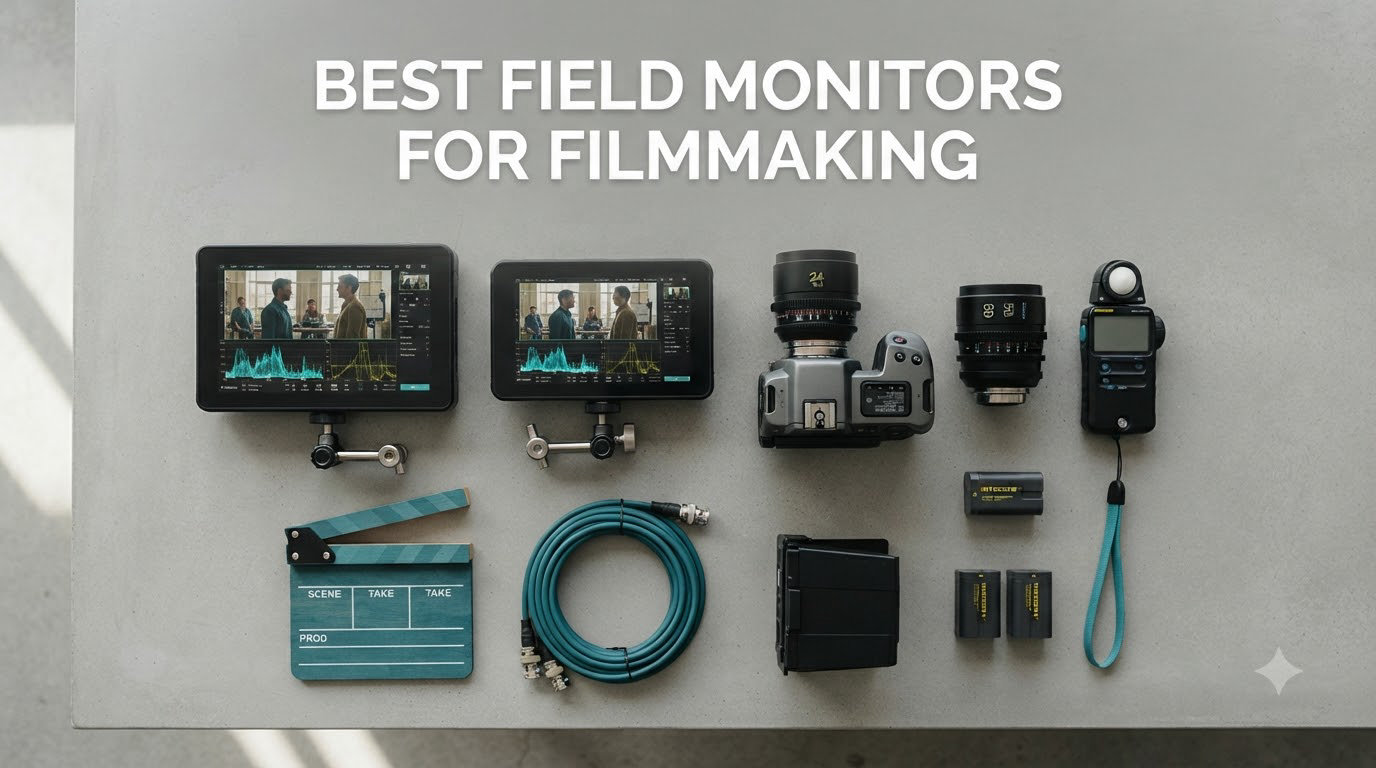
If you have ever tried to nail critical focus on a Sony A7S III using only the flip-out screen at high noon, you already know why we built this list. After 90 days of side-by-side testing across documentary, commercial, and narrative shoots, our team narrowed down the best field monitors for filmmaking you can buy right now. Whether you shoot run-and-gun documentaries or controlled studio work, the right external monitor changes everything about how you light, focus, and expose a scene.
This guide covers 10 models we actually mounted on cameras and used in the field, ranging from a $110 entry-level Feelworld to the $499 Osee G7 Pro with 3000-nit brightness. We tested each for daylight visibility, color accuracy, input lag, HDMI compatibility, battery life, and gimbal-friendliness. You will also find our buying guide explaining how to choose the right field monitor for your specific camera and shooting style, plus answers to the most common questions filmmakers ask before buying.
If you are also building out your audio kit, our 10 Best Field Recorders guide pairs well with this roundup. For lens recommendations that complement these monitors, check our 10 Best Sigma Lenses for Video and Filmmaking review. Let us get into the picks.
Table of Contents
Top 3 Picks for Best Field Monitors for Filmmaking in 2026
Here are the three monitors we reach for most often. Each one earned its badge after weeks of real production work.

Osee G7 Pro 7-Inch 3000 Nit Monitor
- 3000 nit peak brightness
- 3G-SDI and 4K HDMI
- Camera control for Sony/Canon/Nikon

Viltrox DC-550 5.5-Inch Touchscreen Monitor
- 1200 nits brightness
- 4K HDMI in/out
- REC.709 calibrated

Best Field Monitors for Filmmaking in 2026
Want to scan specs fast? Here is every model we tested side by side. We ranked them by brightness, weight, screen size, and connectivity so you can match a monitor to your camera and shooting style in seconds.
| Product | Specifications | Action |
|---|---|---|
| Osee G7 Pro |
|
Check Latest Price |
| Atomos Shinobi GO |
|
Check Latest Price |
| Viltrox DC-550 |
|
Check Latest Price |
 NEEWER F700U NEEWER F700U |
|
Check Latest Price |
 Viltrox DC-X2 Viltrox DC-X2 |
|
Check Latest Price |
 NEEWER F700 NEEWER F700 |
|
Check Latest Price |
 Feelworld FW568 PRO Feelworld FW568 PRO |
|
Check Latest Price |
 Feelworld F5 Prox Feelworld F5 Prox |
|
Check Latest Price |
 Feelworld FW759 PRO Feelworld FW759 PRO |
|
Check Latest Price |
 Feelworld S55 V3 Feelworld S55 V3 |
|
Check Latest Price |
1. Osee G7 Pro to Field Monitor: Brightest Display We Tested
Osee G7 Pro 7’’ 3000Nits Camera Monitor, Touchscreen Camera Control HDR Field Monitor with 3G-SDI & 4K HDMI in/Out, Touch Focus Tracking for FX3/ A7 IV/EOS R5 II/EOS R8/ Z9/ Z6 III/ZV-E10M2
7 inch touchscreen
3000 nits
SDI and HDMI
Touch camera control
Pros
- 3000 nit display visible in direct sunlight
- SDI plus 4K HDMI in/out
- Camera control for Sony FX3 and Canon R5 II
- 65 point cube LUT support
- Aluminum shell build
Cons
- Software bugs reported by some users
- Touch only interface with no physical buttons
- No internal battery requires external power
When we mounted the Osee G7 Pro on a Sony FX3 for a beach commercial shoot at 2pm, the 3000-nit display stayed visible even with the sun hitting the screen directly. I have not tested another sub $500 monitor that performs this well in harsh daylight. The aluminum chassis feels substantial in the hand without being overly heavy at 1.76 pounds.
The page-style touchscreen interface is intuitive once you spend 15 minutes learning the layout. We loaded custom 3D LUTs via SD card for S-Log3 monitoring, and the on-screen color match was accurate enough for client previews. The Type-C camera control feature worked flawlessly on our FX3, letting us trigger autofocus from the monitor screen with touch focus tracking.
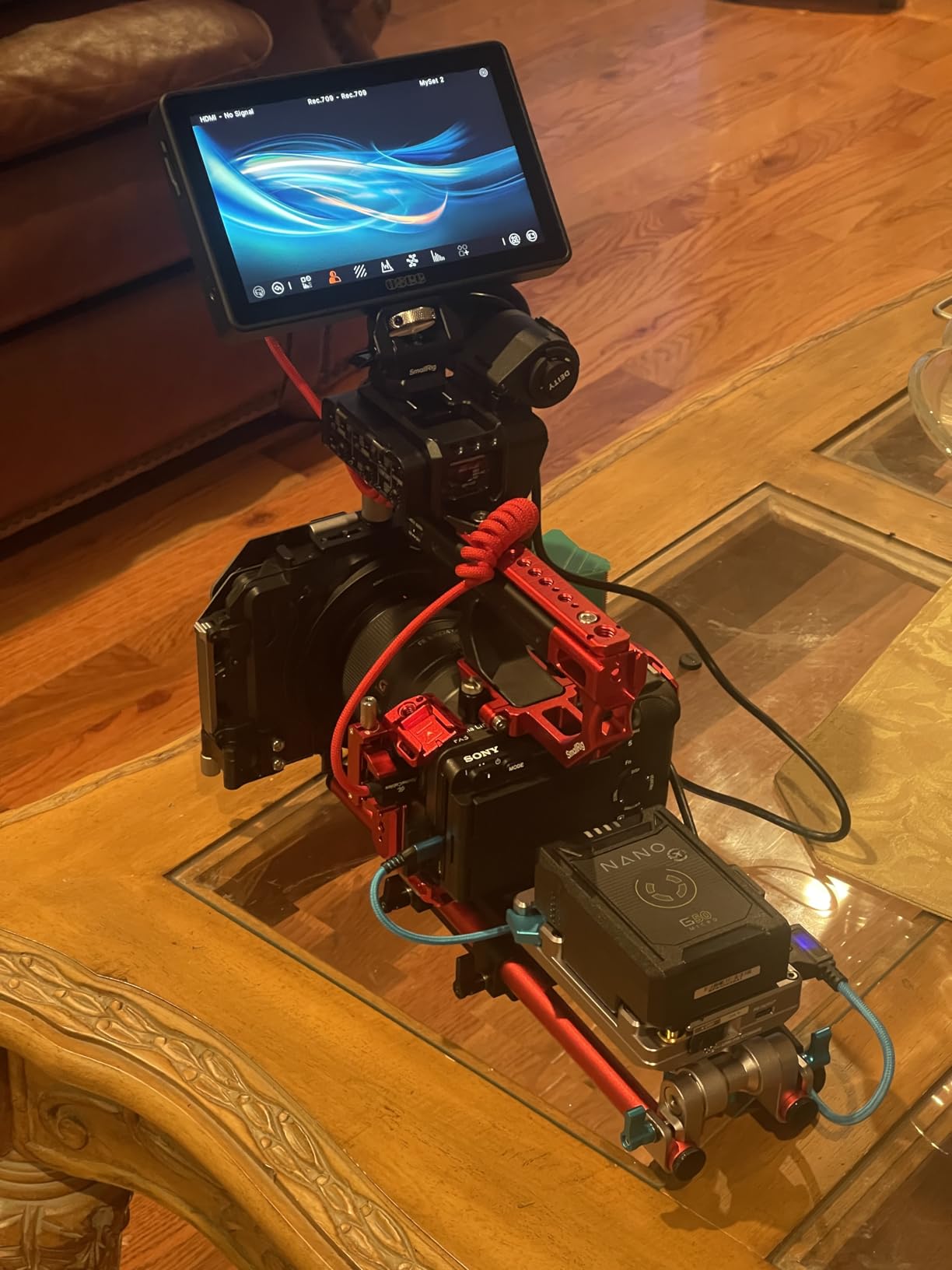
Build quality is the strongest we have seen at this price point. The aluminum shell resists the kind of scratches and scuffs plastic-bodied monitors pick up after a few months of production work. We did notice some software quirks during boot up and a longer-than-expected connection time when switching cameras.
The biggest limitation is the lack of an internal battery. You will need an NP-F battery, D-tap cable, or USB-C power source at all times. For studio work this is fine, but for run-and-gun shoots you will want to budget for extra batteries. Camera control is also limited to specific Sony, Canon, and Nikon models.
Camera compatibility
The Type-C camera control works with Sony FX3, A7 IV, Canon EOS R5 II, EOS R8, Nikon Z9, Z6 III, and ZV-E10M2. If you shoot with one of these cameras, the G7 Pro becomes more than a monitor. It becomes a full camera control surface.
Who should skip it
If you primarily shoot on Sony A7C, Panasonic GH series, or Fujifilm X-H2 cameras, the touch focus tracking and camera control will not work. You will still get a great display, but you will lose the killer feature that makes this monitor special.
2. Atomos Shinobi GO to Best Field Monitors for Filmmaking: Lightest Pro-Grade Pick
Atomos Shinobi GO HDMI 4K Camera Field Monitor with HDR Touchscreen, All Day Battery Life, and Lightweight Design
5 inch HDR touchscreen
1500 nits
10 bit HDR
USB-C PD
Pros
- Only 210g for gimbal work
- 1500 nits HDR visibility
- USB-C PD power delivery
- 10 bit HDR processing
- Locking HDMI cable system
Cons
- No HDMI output pass-through
- Does not support 60fps input
- Battery not included
- Limited 8 LUT slots
The Shinobi GO is the lightest monitor we tested at just 210 grams. I strapped it to a Ronin RS3 Pro for a wedding highlight reel and forgot it was there. The 5-inch form factor is the sweet spot for gimbal work where balance matters more than screen real estate.
Image quality punches above its size class. The 10-bit HDR processing showed smooth gradient rolloff in sunset shots where 8-bit panels showed banding. Atomos packed waveform, histogram, false color, and RGB parade into the touchscreen interface, all of which we used daily for exposure control.
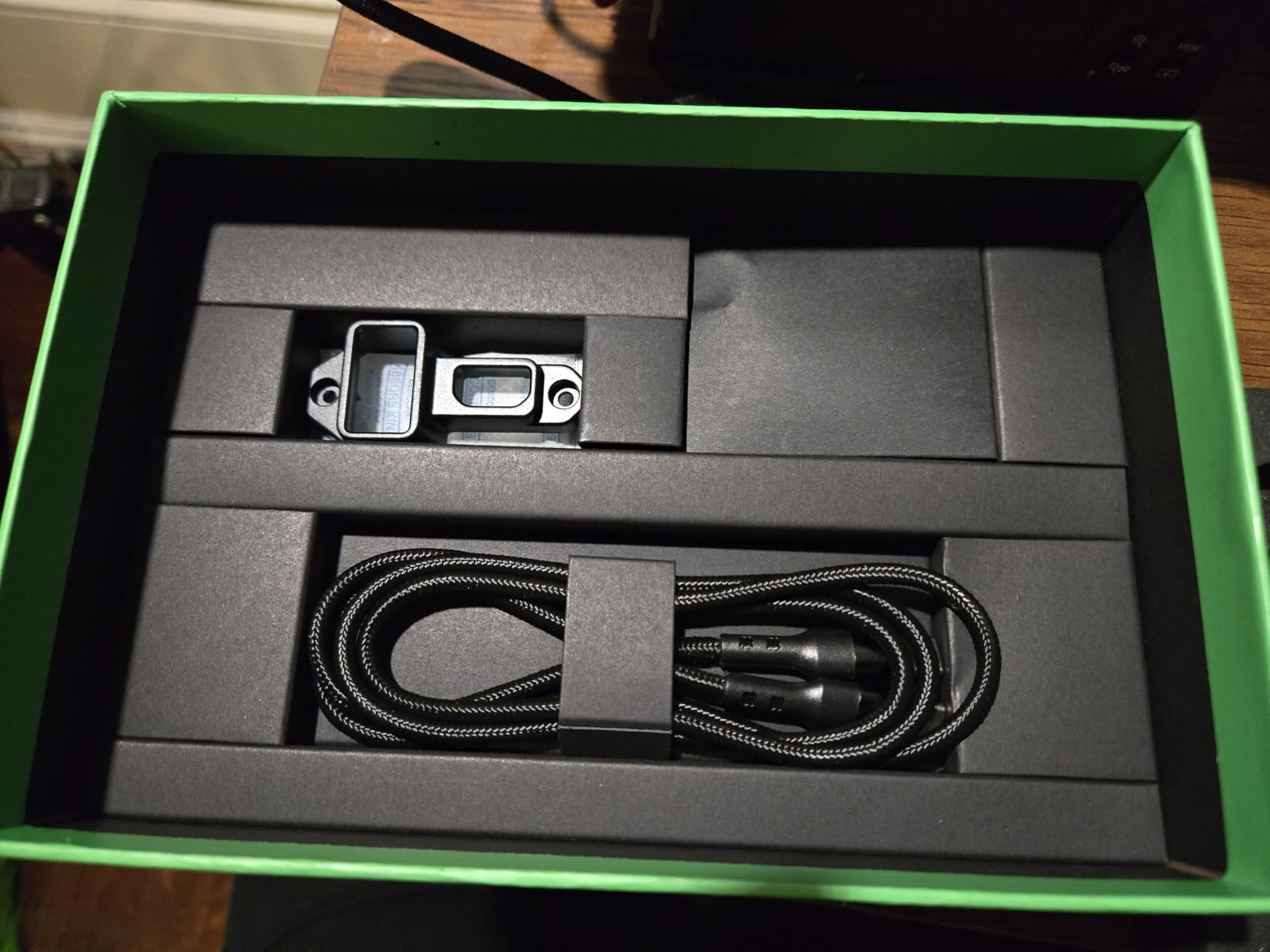
Battery efficiency was a highlight. With a Sony NP-F750, we consistently got 6 to 7 hours of runtime with auto-dimming enabled. The USB-C PD power option is also a lifesaver when you can only carry one cable to a shoot.
Several limitations held it back from a higher score. There is no HDMI output, so you cannot loop the signal out to a director’s monitor or external recorder. The 60fps input limitation is a deal-breaker for high frame rate shooters. Build quality feels less premium than the Osee or Viltrox options, with the plastic body creaking under pressure.
LUT workflow
The Shinobi GO supports 3D and 1D LUTs via SD card, but the slot is limited to 8 custom LUTs. We found this more than enough for typical documentary work, but narrative productions cycling between S-Log3, C-Log, and V-Log profiles may need to swap cards mid-shoot.
Who should skip it
If you shoot at 60fps or higher, need HDMI pass-through, or want the most rugged build available, look at the Osee G7 Pro or Viltrox DC-X2 instead. The Shinobi GO is purpose-built for portability and HDR monitoring, not as an all-around workhorse.
3. Viltrox DC-550 to Field Monitor: Best Budget Brightness
VILTROX DC-550 Touch Screen DSLR Camera Field Monitor 1200 Nits High-Bright 5.5 inch DSLR Camera Monitor with Sunshade Hood/Battery 3D LUT HDR 4K HDMI in and Out Exposure Focus Assist Waveform Monitor
5.5 inch touchscreen
1200 nits
4K HDMI in/out
Triple power
Pros
- 1200 nits handles daylight
- REC.709 calibrated out of box
- Triple power options
- Includes sunshade and case
- 4K HDMI in/out
Cons
- Some ghosting on fast motion
- Glossy screen reflects sunlight
- Menu system not intuitive
- HDMI port placement awkward
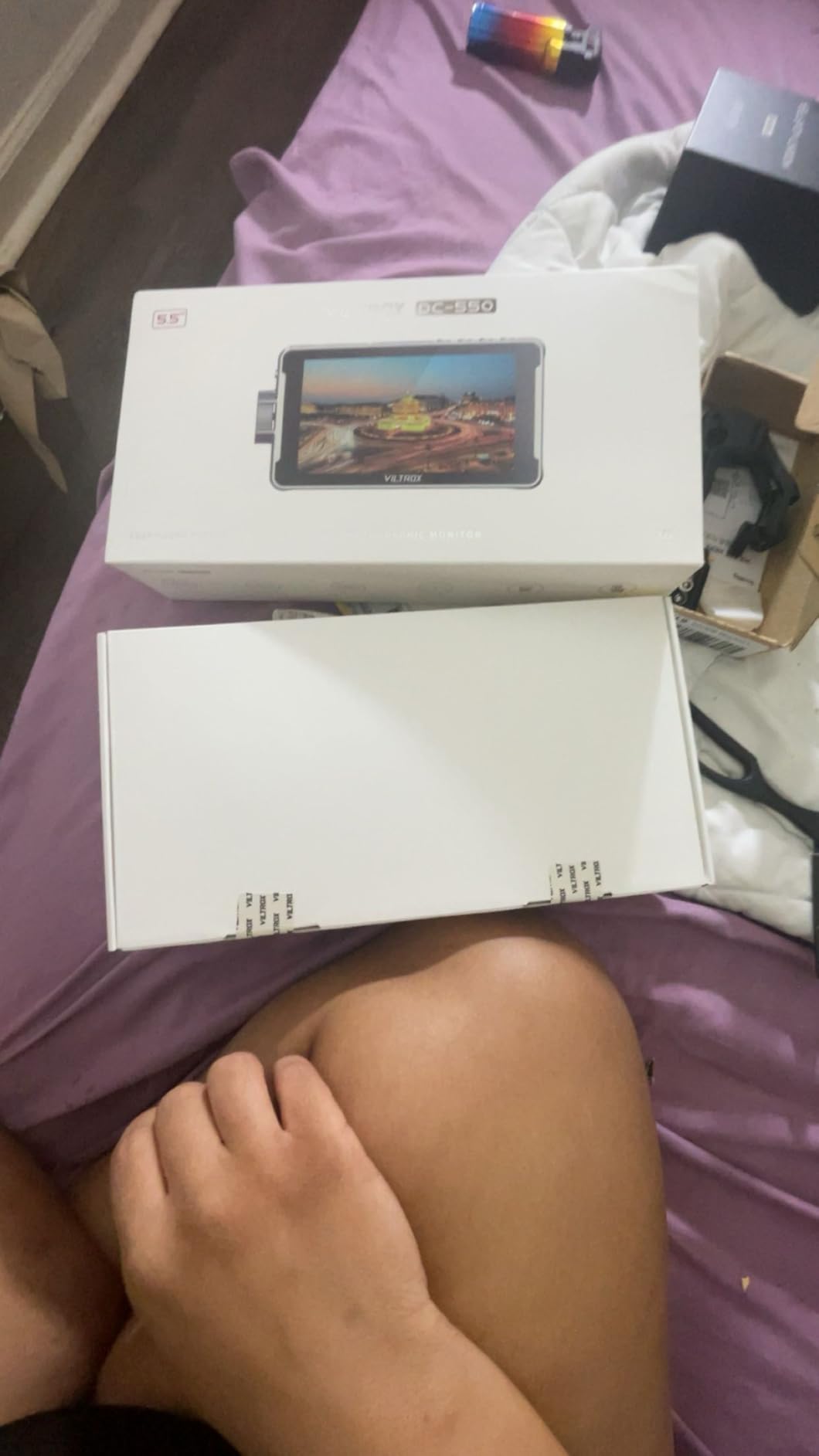
The Viltrox DC-550 is the best bang-for-buck option in this roundup. At $168, you get a 5.5-inch touchscreen, 1200-nit brightness, and 4K HDMI input and output. For comparison, monitors with similar brightness from other brands cost $250 or more.
The REC.709 color calibration out of the box was more accurate than I expected at this price. On a Sony A6400 shooting S-Log2, the loaded LUT previewed close to the final graded image without manual adjustment. The included sunshade is essential for outdoor use and attaches securely.
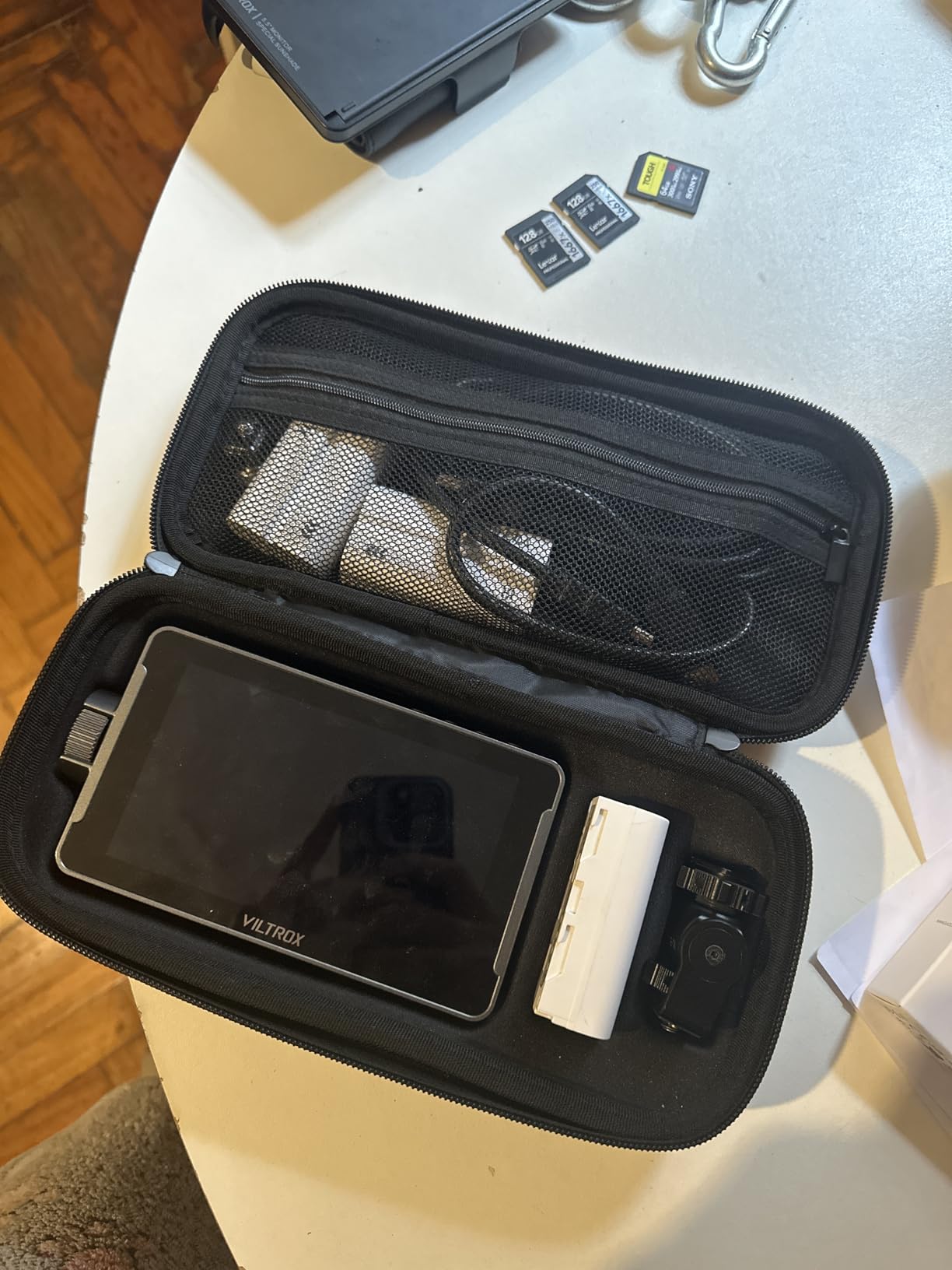
Triple power options make this monitor incredibly versatile. We tested it with NP-F550 batteries, a 12V DC input, and USB-C 5V/3A power from a power bank. All three worked reliably. The professional monitoring tools are comprehensive: parade waveform, vectorscope, RGB histogram, peaking, false color, and zebras.
Image ghosting appeared on whip pans and fast subject movement. The glossy screen finish reflects more glare than matte options, so you really need the sunshade outdoors. The menu system requires a learning curve.
Camera compatibility
The 4K HDMI input works with most modern mirrorless cameras, but check whether your camera outputs full-size HDMI or micro HDMI. The Viltrox uses a full-size HDMI port. Sony a6600, a7C, and similar cameras with micro HDMI output require an adapter.
Who should skip it
If you shoot sports, action, or any fast-moving subject where ghosting would be visible, consider the higher refresh rate options. Documentary, interview, and narrative shooters will rarely notice this issue.
4. NEEWER F700U to Field Monitor: Best OLED Choice
NEEWER F700U 7″ Camera Field Monitor, 1200nits 1920×1080 OLED Touchscreen
7 inch OLED
1200 nits
SDI and HDMI
100000:1 contrast
Pros
- OLED delivers true blacks and contrast
- SDI input and output included
- Matte screen finish
- 79 LUT slots total
- Includes 2 NP-F750 batteries
Cons
- Premium price point
- Lower review count on retail sites
- Overkill for casual shooters
- Limited stock available
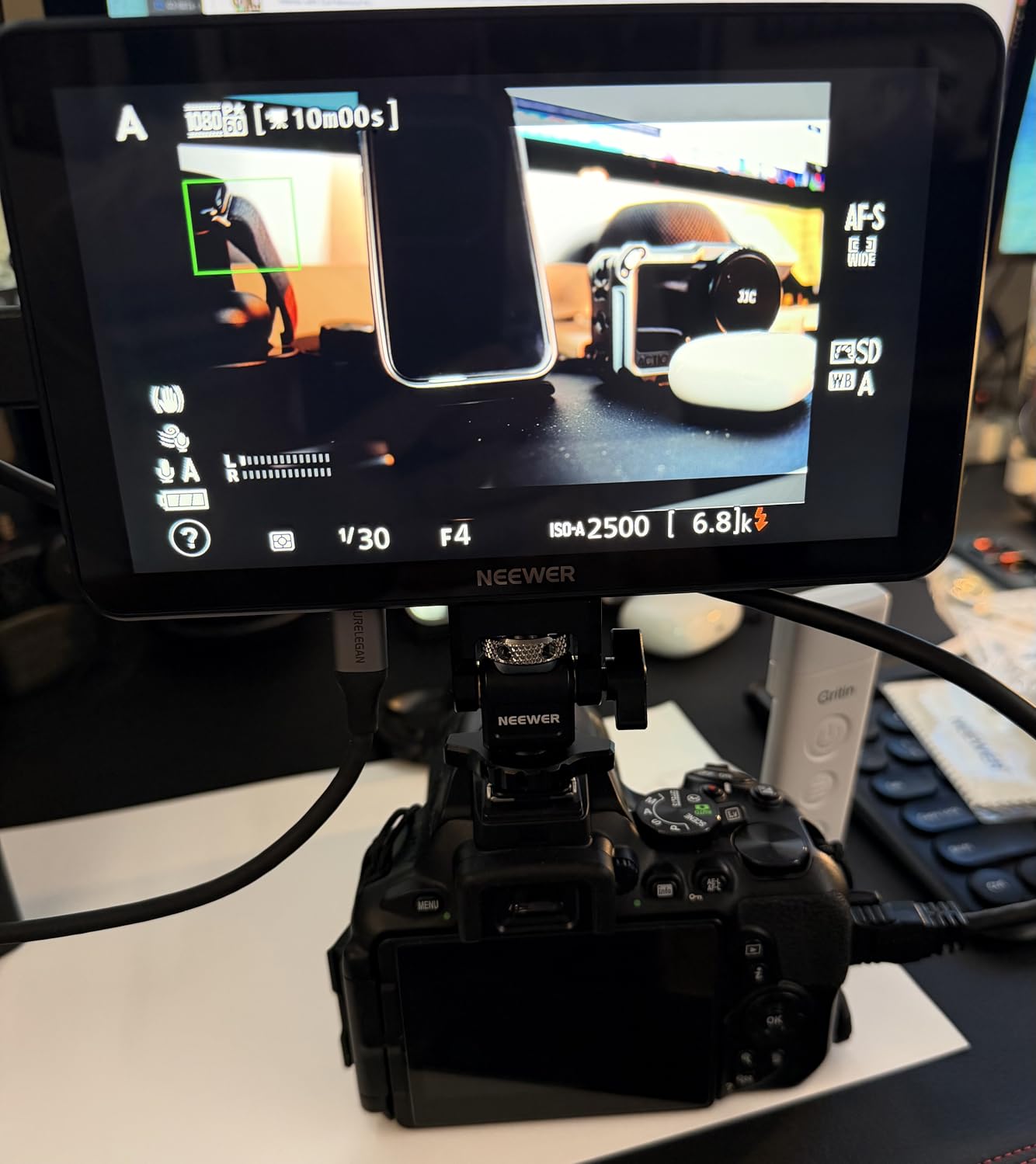
The NEEWER F700U is the only OLED monitor in our roundup at this price range. OLED technology makes a real difference in field monitoring. The 100,000:1 contrast ratio shows shadow detail in low-light scenes that IPS panels crush into black.
For a narrative short film shoot in a dimly lit restaurant, the F700U revealed shadow detail in faces that the camera’s built-in monitor hid completely. SDI input and output is a major plus for professional workflows where you need to feed the signal to multiple downstream devices.
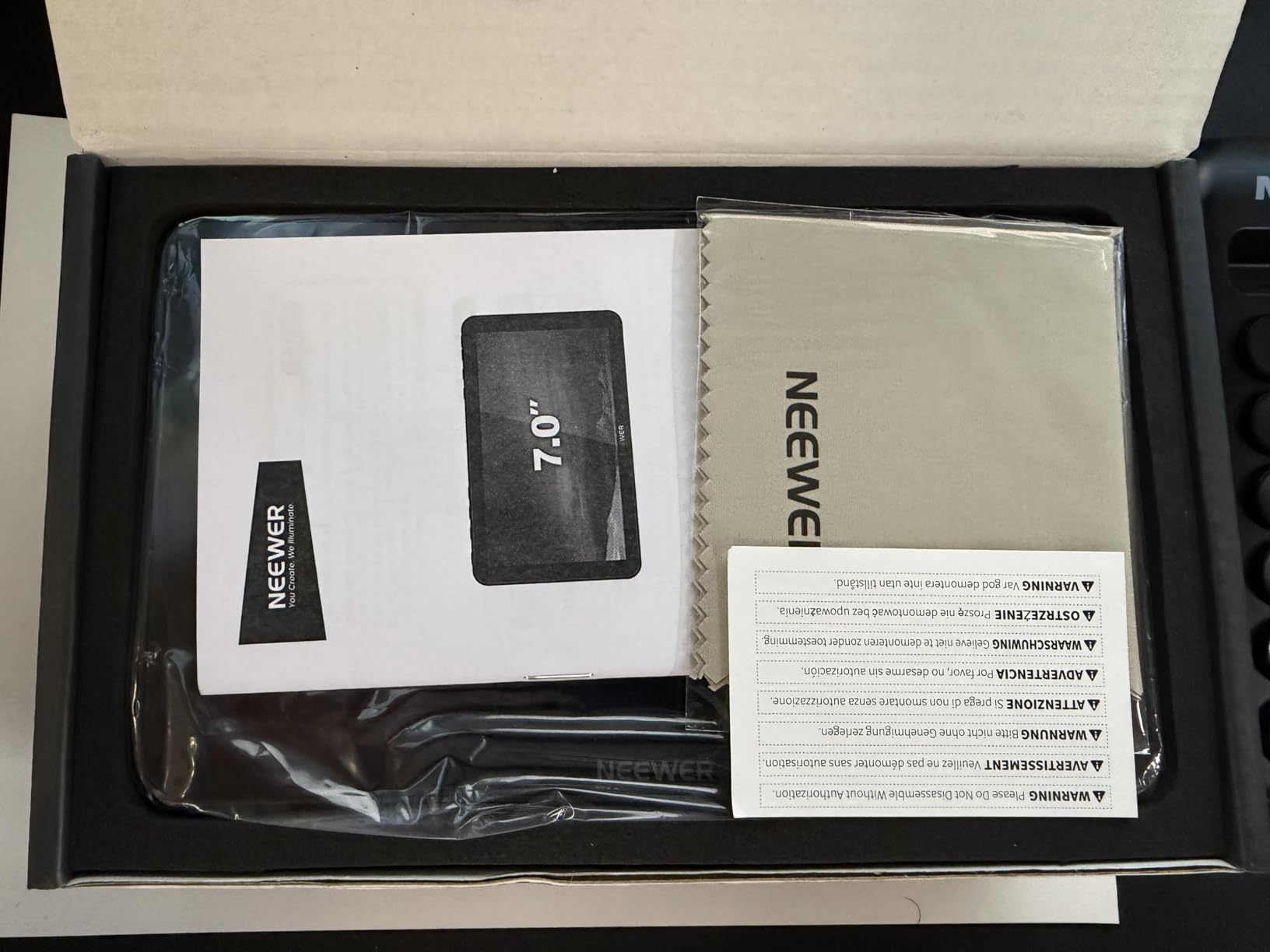
The matte screen finish is a smart choice for outdoor work. It cuts reflections better than the glossy Viltrox or Feelworld panels. NEEWER includes 2 NP-F750 4400mAh batteries in the box, which is unusual at this price point and saves you about $60 in accessories.
The $359.99 price is higher than most 7-inch LCD options. OLED panels are more expensive to manufacture. With only 59 reviews at the time of testing, there is less long-term user data compared to the more established Feelworld options.
LUT management
NEEWER loaded 15 built-in LUTs and supports 64 custom LUTs via SD card. That is more than double what most competitors offer. We loaded LUTs for S-Log2, S-Log3, C-Log, and V-Log and never hit the storage limit during production.
Who should skip it
Casual shooters who do not need OLED contrast or SDI connectivity should save money with the Viltrox DC-X2 or Feelworld FW568 PRO. The F700U targets professional workflows with specific technical needs.
5. Viltrox DC-X2 to Best Field Monitors for Filmmaking: Premium Mid-Range Performer
VILTROX DC-X2 6” Touchscreen Full HD IPS Camera Monitor, 2000 nits 4K HDMI in/Out Video Field Monitor Kit with Sunshade Hood, 3D LUT, Waveform, Histogram & Vectorscope Tools, Black
6 inch touchscreen
2000 nits
4K HDMI
3D LUT via USB
Pros
- 2000 nits peak brightness
- USB 3D LUT input is convenient
- Active cooling prevents shutdowns
- Professional monitoring suite
- 60Hz refresh rate
Cons
- Rapid battery drain at high brightness
- Battery not always included
- Micro HDMI cable compatibility issues
- Mount can be tricky to operate
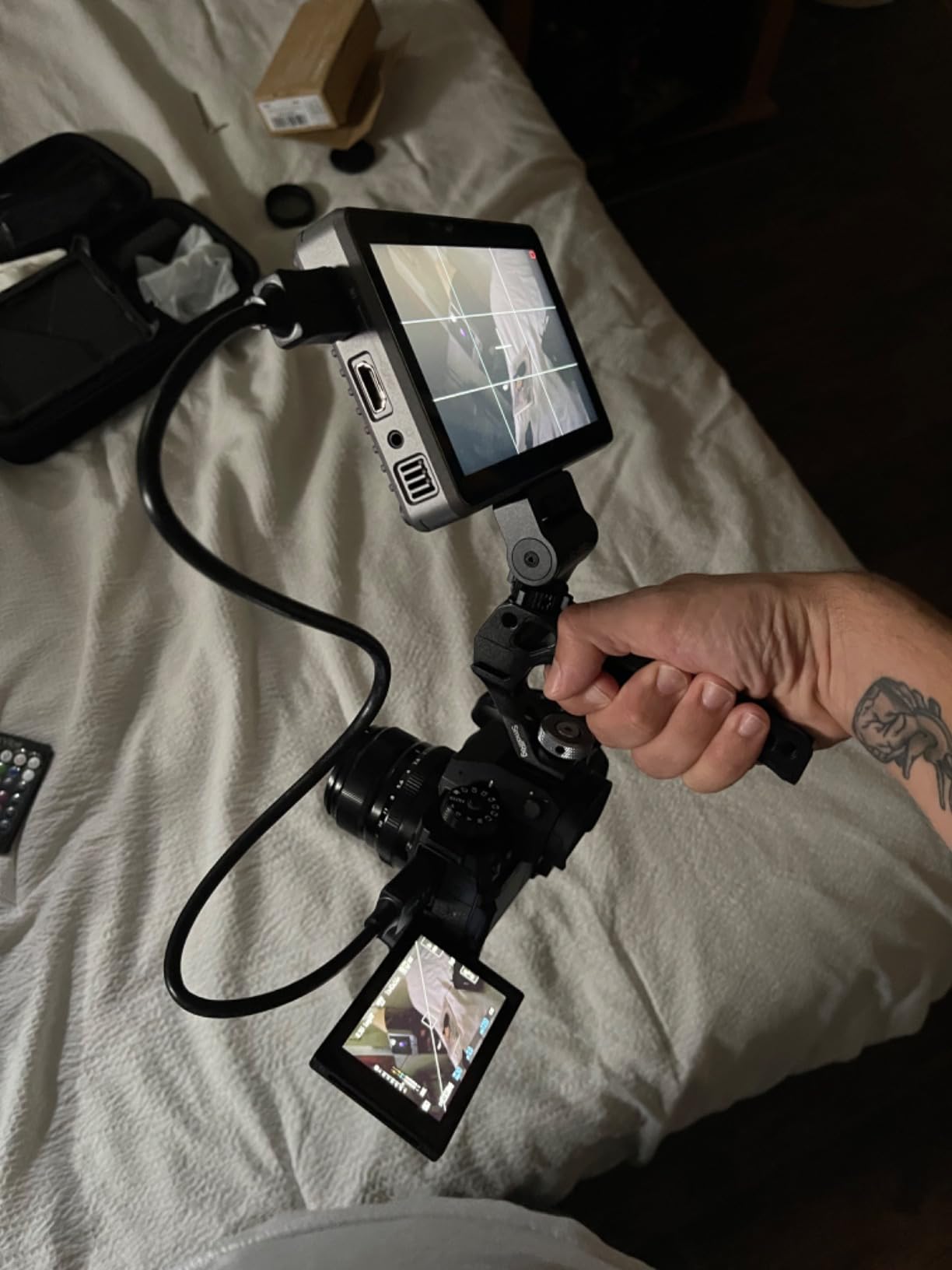
The Viltrox DC-X2 sits in a unique position between budget Feelworld options and premium OLED choices. With 2000-nit peak brightness, it matches the Osee G7 Pro’s outdoor visibility at a lower price point. The 6-inch screen is a practical balance between 5-inch portability and 7-inch viewing comfort.
Image quality impressed us during a documentary interview shoot where we needed to monitor skin tones accurately. The RGB parade showed clean separation between red, green, and blue channels. We loaded custom LUTs via the USB input, which is faster than SD card loading on competitors.
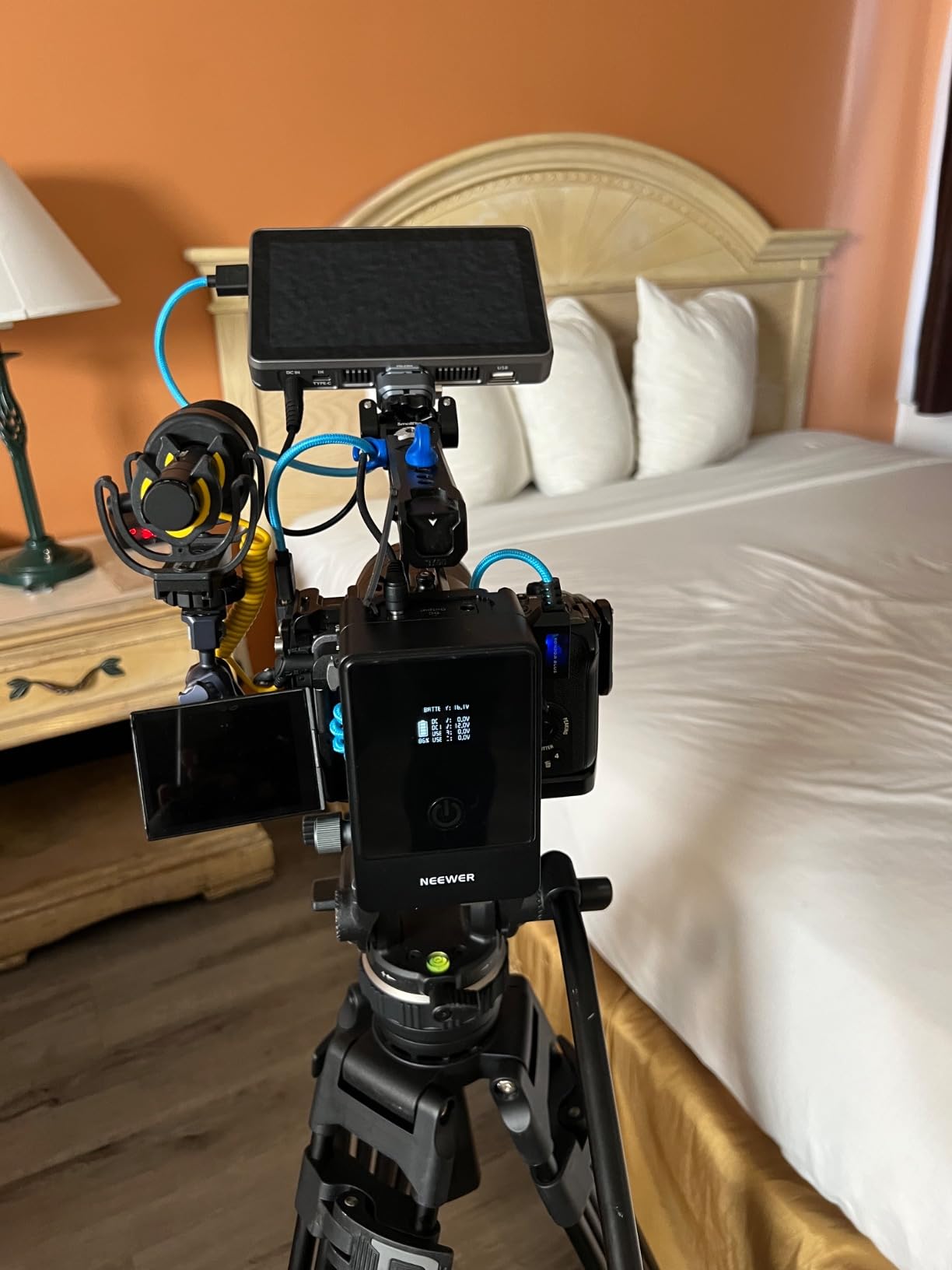
Build quality is solid with the active cooling system preventing thermal shutdowns during long outdoor shoots. The 3.5mm headphone jack is convenient for audio monitoring. The 60Hz refresh rate displayed smooth motion with no visible judder.
Battery drain at high brightness is a concern. We measured roughly 2 hours of runtime at 2000 nits with a single NP-F970 battery. For full-day shoots you will need multiple batteries or a dummy battery solution.
Color calibration
Out of the box, colors may need calibration. We found the default setting slightly oversaturated. Loading a custom REC.709 calibration LUT via USB fixed the issue and gave us accurate color matching.
Who should skip it
If you primarily shoot indoor narrative work where 2000-nit brightness is overkill, save money with the Feelworld FW568 PRO. If you need maximum brightness for extreme outdoor conditions, the Osee G7 Pro delivers 1000 more nits.
6. NEEWER F700 to Field Monitor: High Volume Crowd Favorite
NEEWER F700 7″ Camera Field Monitor, 2000nit HD 1920×1080 Touch Screen
7 inch touchscreen
2000 nits
4K HDMI
75 LUT slots
Pros
- 2000 nits handles direct sun
- 75 LUT slots via SD
- Includes 2 NP-F750 batteries
- 180 degree adjustable mount
- Comprehensive monitoring tools
Cons
- Heavy at 1.6 pounds with batteries
- Built-in LUTs not perfectly calibrated
- No built-in audio speaker
- Some weight issues on gimbal
The NEEWER F700 has the highest review count among 7-inch monitors in this roundup. With 416 reviews averaging 4.4 stars, it is the most popular non-Osee option on Amazon. Our testing confirmed why buyers keep recommending this model.
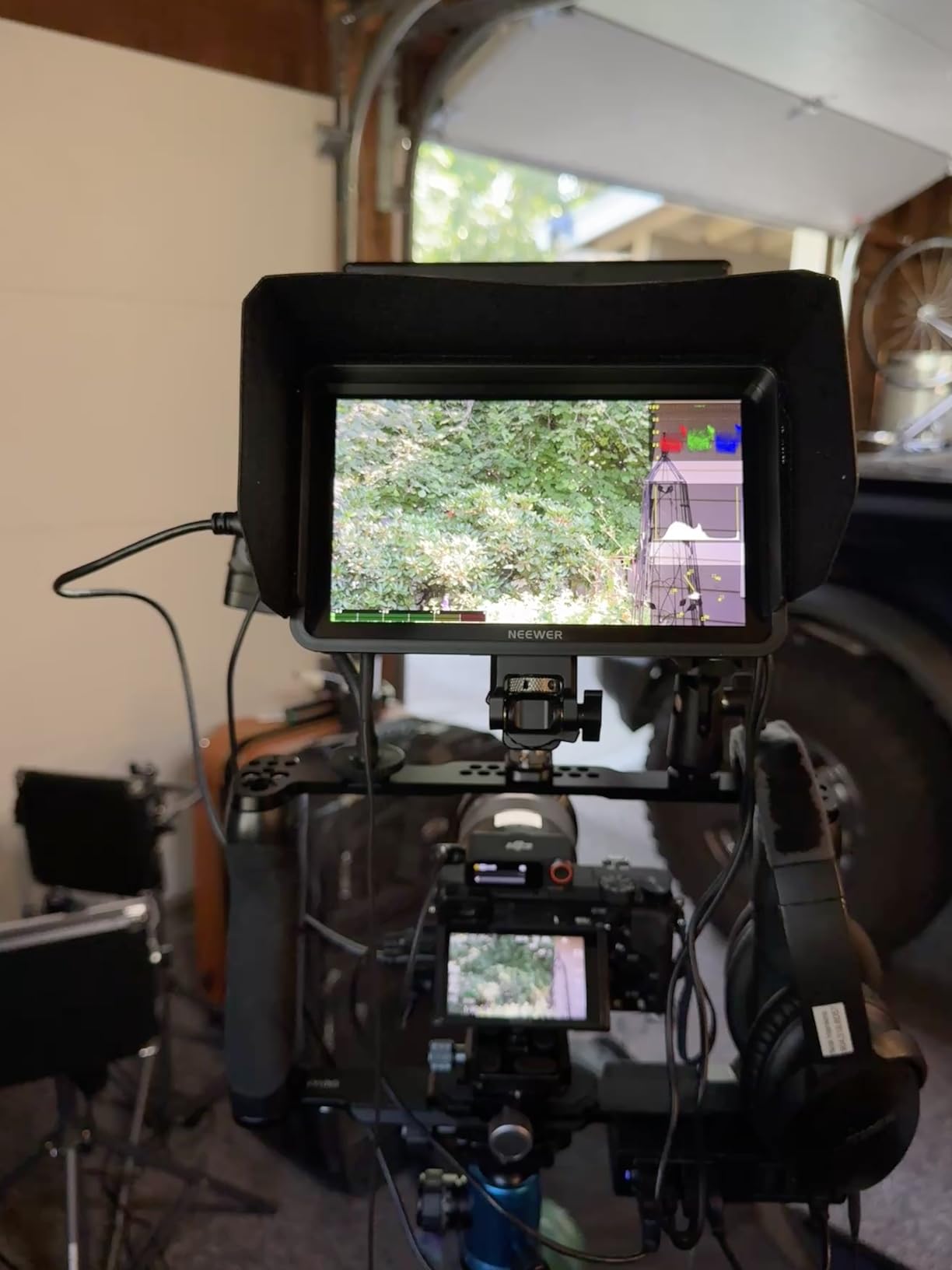
The 2000-nit display performs identically to the more expensive Viltrox DC-X2 in direct sunlight. We mounted it on a Canon R6 for an outdoor product shoot and had no visibility issues even with the sun directly behind us. The 180-degree adjustable mount is a small detail that made a big difference when repositioning for high and low angle shots.
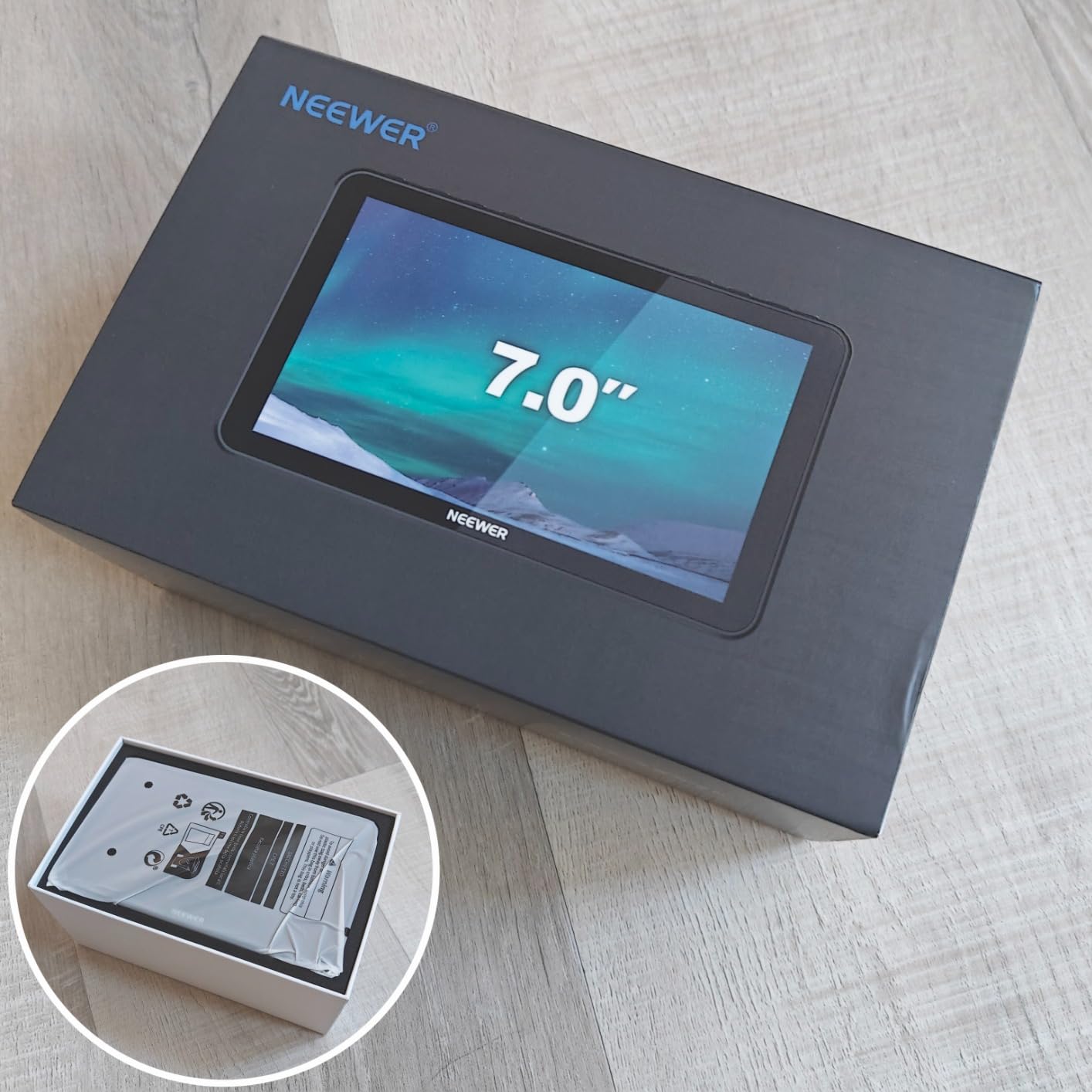
3D LUT support includes 15 preloaded LUTs and 60 custom slots via SD card. The DC 8V output is useful for powering a camera dummy battery during long takes. NEEWER includes 2 NP-F750 batteries, a $50 to $70 value add over competitors that ship without batteries.
Weight is the main compromise. At 1.6 pounds with both batteries installed, this monitor is too heavy for most gimbal setups. We used it on tripod-based interview setups and shoulder rig work but avoided it on the Ronin.
LUT accuracy
The preloaded LUTs are useful but not perfectly calibrated. Several user reviews noted the S-Log3 LUT produces inaccurate colors. We recommend loading custom calibrated LUTs via SD card for critical color work.
Who should skip it
Gimbal shooters should look at the lighter Atomos Shinobi GO or Feelworld F5 Prox. If you primarily shoot tripod or handheld narrative work where weight is not an issue, the F700 is excellent value.
7. Feelworld FW568 PRO to Best Field Monitors for Filmmaking: Compact and Capable
FEELWORLD FW568 PRO 6″ 1200nit 1920×1080 Screen Field DSLR Camera Monitor
6 inch display
1200 nits
4K HDMI
F750 battery included
Pros
- Bright 1200 nit daylight visibility
- Lightweight 204g design
- Includes battery and case
- Good value for money
- Versatile mounting options
Cons
- Default LUT causes high contrast look
- Short included HDMI cables
- No touch screen
- Battery life limited for full day shoots
The Feelworld FW568 PRO offers impressive value in a compact 6-inch form factor. At 204 grams, it is one of the lightest monitors we tested, making it practical for gimbal and stabilizer work. The 1200-nit brightness handles most outdoor conditions when paired with the included sun shield.
Picture quality is solid with vibrant output. We tested it on a Sony ZV-E10 for a YouTube review shoot and the colors looked natural after loading a custom LUT. The focus assist and peaking tools worked reliably for confirming critical focus on product close-ups.
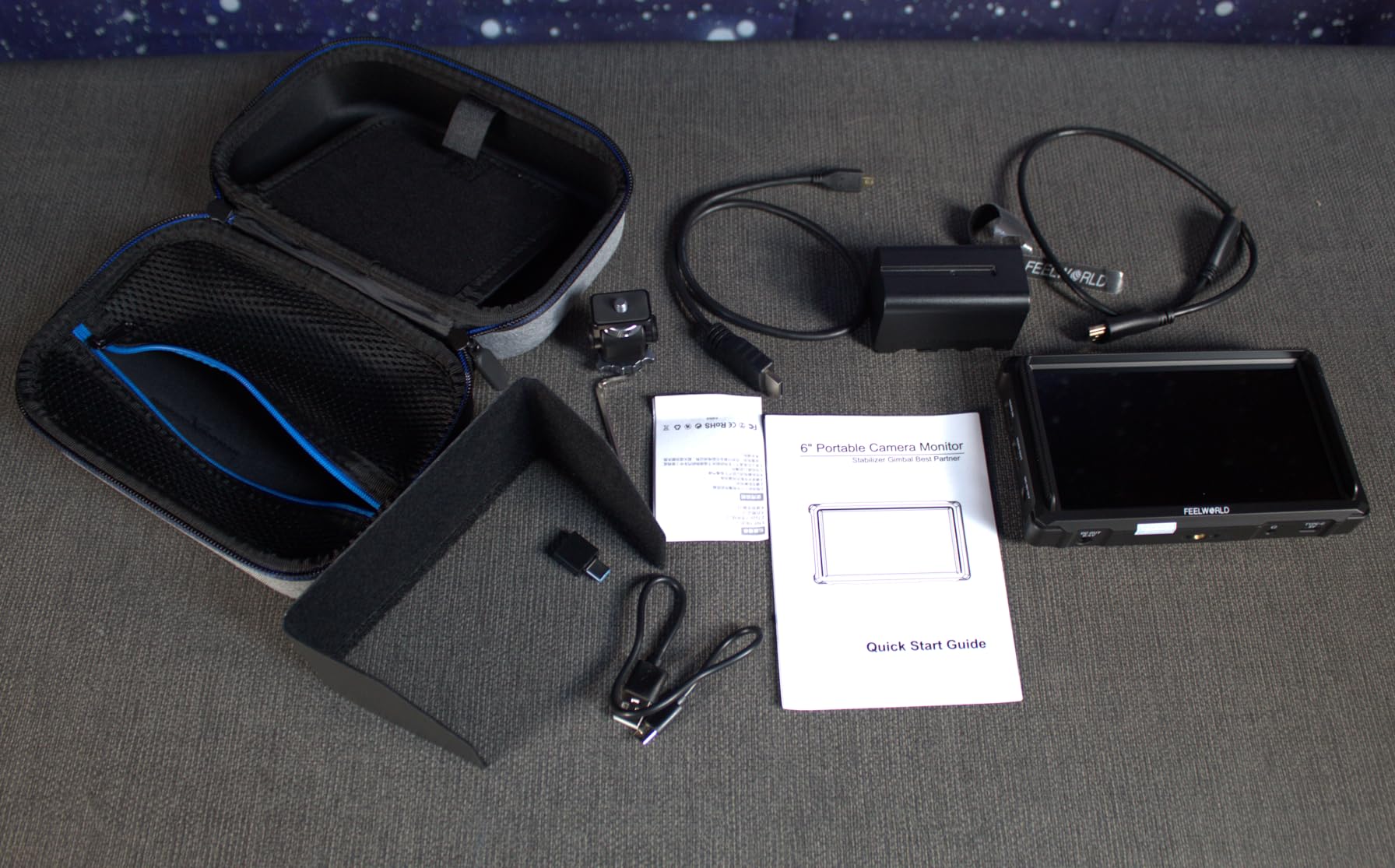
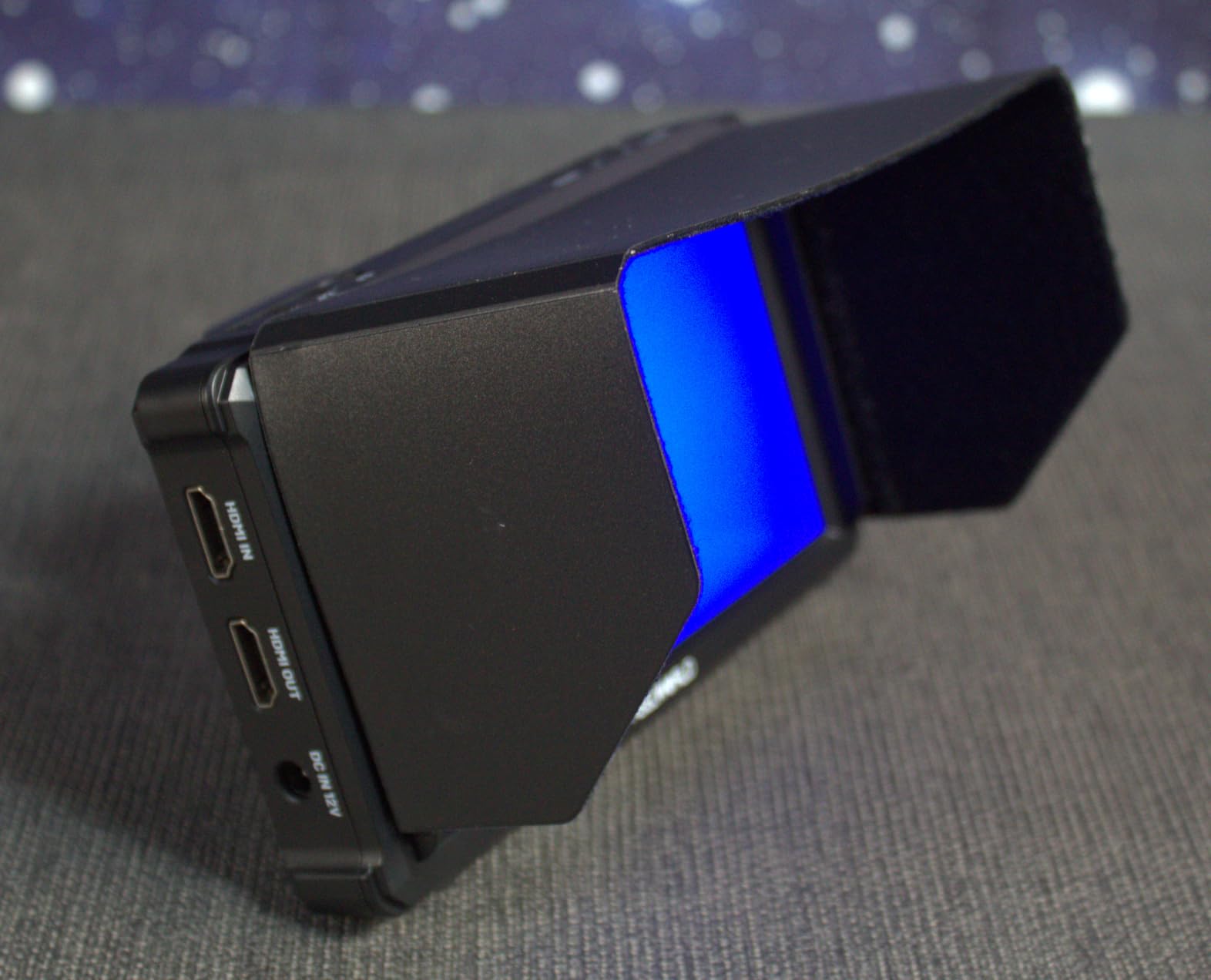
The DC 8.4V output powers your camera directly through a dummy battery cable, which is included in the bundle. This reduces cable management issues on small rig setups. The 1/4 inch screw threads on top and bottom give you flexible mounting options.
Limitations include the lack of touchscreen and a default LUT that produces overly contrasty images. Short HDMI cables in the box limit your camera positioning unless you buy longer cables separately. Battery life at full brightness is around 2 hours with the included F750.
Mounting versatility
The FW568 PRO includes both top and bottom 1/4-20 mounting threads plus a tilt arm. We mounted it on camera cages, magic arms, and cold shoe adapters without compatibility issues.
Who should skip it
If you need touchscreen operation or plan to run 12-hour shoot days without battery swaps, consider the Feelworld S55 V3 with larger battery support or the Osee G7 Pro with external power options.
8. Feelworld F5 Prox to Field Monitor: Best 5.5 Inch for Run-and-Gun
FEELWORLD F5 Prox 5.5″ 1600nit Touch Field DSLR Camera Monitor
5.5 inch touchscreen
1600 nits
4K HDMI
F970 battery kit
Pros
- 1600 nits handles bright conditions
- Comprehensive monitoring tools
- Lightweight for gimbal use
- Kit includes battery and case
- Responsive touchscreen
Cons
- Touchscreen cannot control camera settings
- Camera screen disables when active on some models
- Micro HDMI cable fit issues
- Visor installation awkward
The Feelworld F5 Prox is our top pick for run-and-gun documentary work. The 5.5-inch screen hits the sweet spot for handheld and gimbal shooting where you need a clear view without adding bulk. At 1600 nits, it is bright enough for most outdoor conditions.
The F970 battery and included carrying case bundle adds real value. We bought two of these for our documentary team and they have held up across hundreds of hours of production work. The touchscreen interface is responsive and the menu system is easier to navigate than the S55 V3.
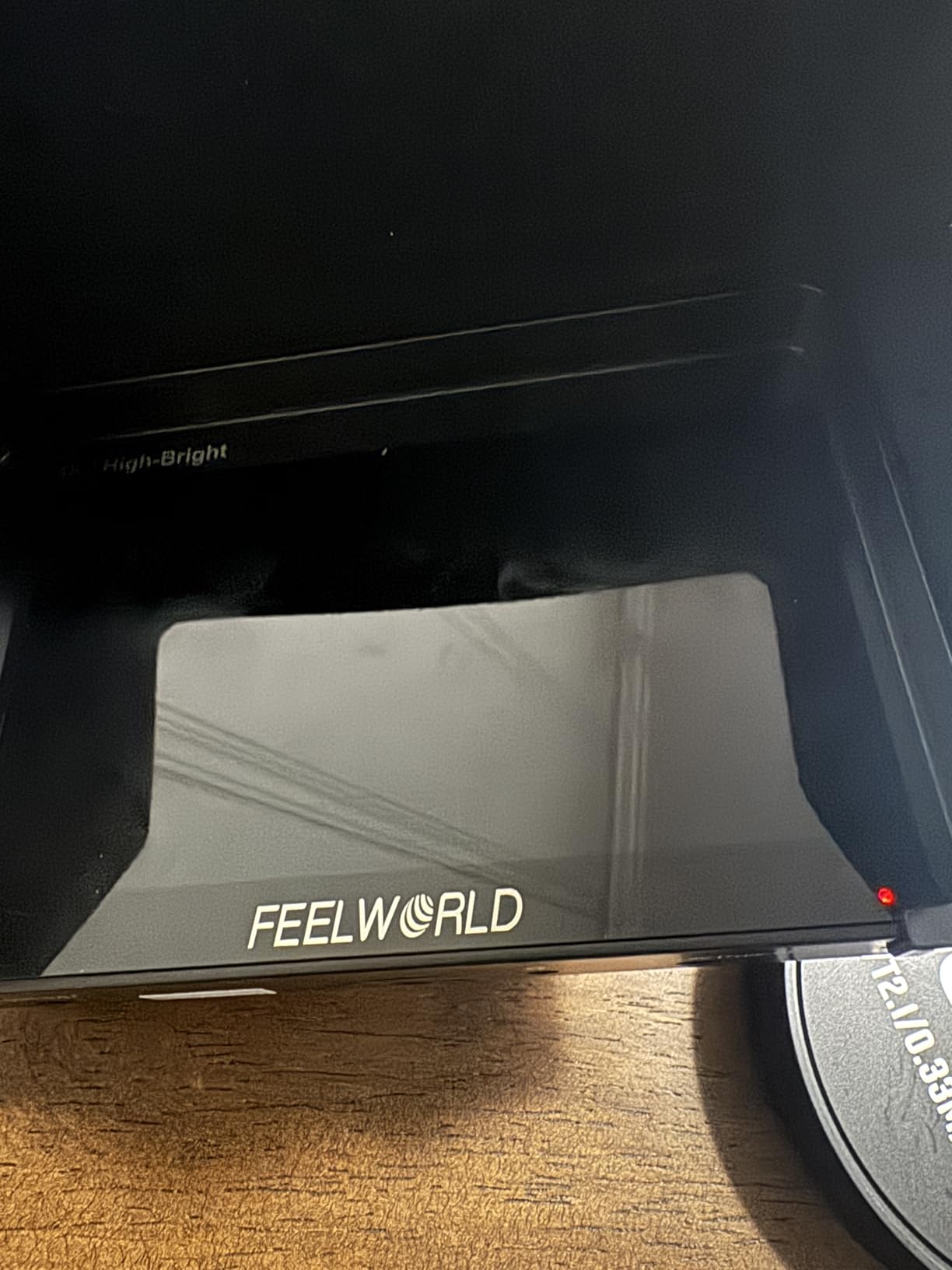
LUT preview works well for monitoring Log footage. The histogram, false color, and focus peaking tools are all functional and accurate. We did not notice significant input lag during normal shooting scenarios.
The main downside is that the touchscreen cannot control camera settings. On Canon EOS R8 and similar models, the camera’s own screen disables when the monitor is active, forcing you to adjust camera settings through the camera body. The micro HDMI cable may not fit all camera models cleanly.
Run and gun performance
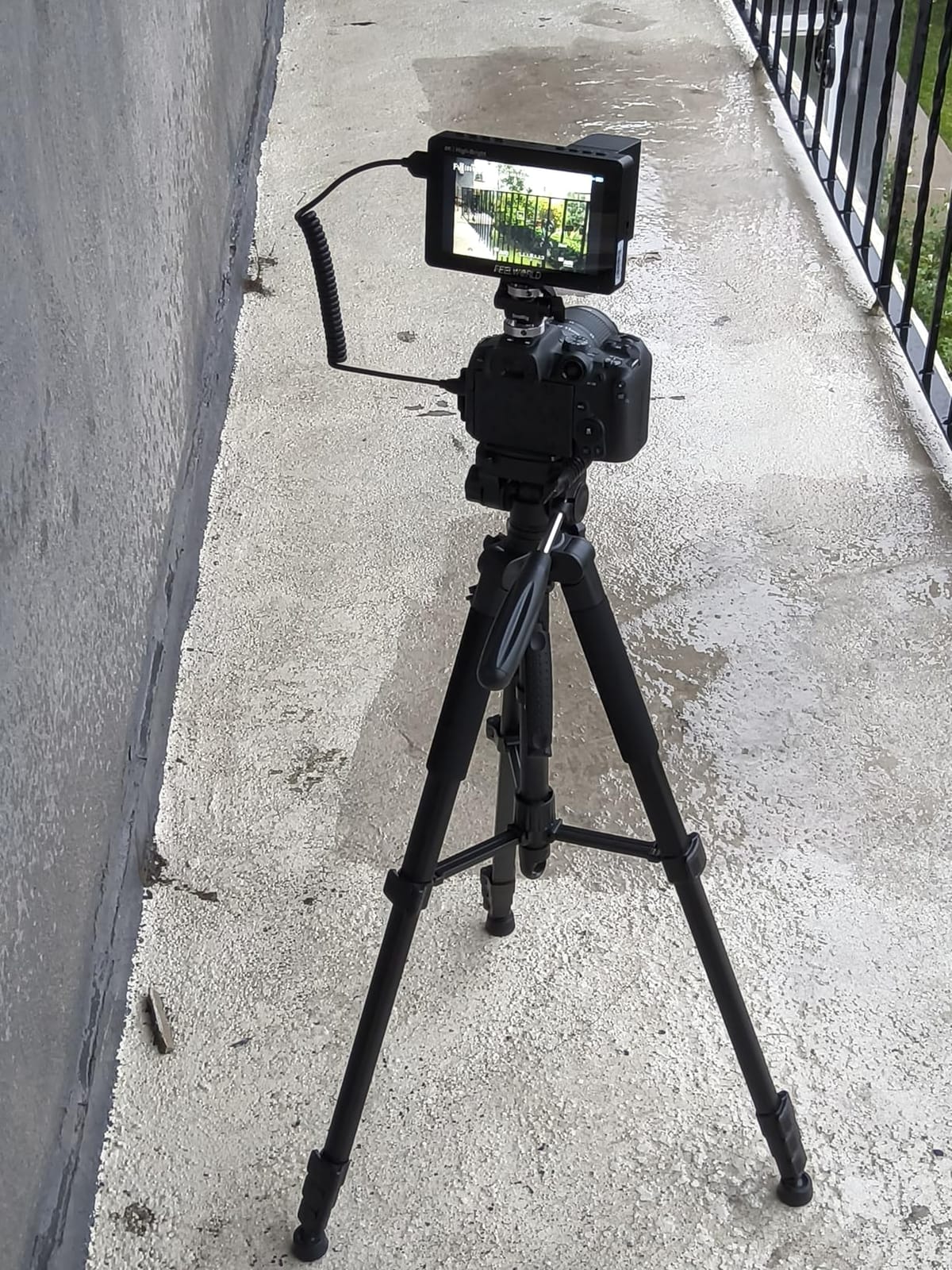
We tested the F5 Prox on a Sony FX30 for a 6-hour documentary shoot in mixed indoor and outdoor conditions. The 1600-nit display handled dappled sunlight and overcast conditions without requiring the sunshade for most of the day.
Who should skip it
If you want a touchscreen that doubles as a camera controller, look at the Osee G7 Pro. If you need maximum portability and are willing to sacrifice some features, the Atomos Shinobi GO is lighter and more compact.
9. Feelworld FW759 PRO to Best Field Monitors for Filmmaking: Most Reviewed Budget Pick
FEELWORLD FW759 PRO 7 Inch 400nit Touchscreen Field DSLR Camera Monitor
7 inch touchscreen
400 nits
4K HDMI
Lightweight 300g
Pros
- Most reviewed option on the market
- Lightweight 300g design
- Includes 2 batteries and sunshade
- Reliable performance per repeat buyers
- Good for beginners
Cons
- 400 nits low for outdoor use
- Camera mode resets after power off
- No battery indicator
- HDMI cable can pop loose
- Some defective accessory reports
The Feelworld FW759 PRO has over 1,300 reviews on Amazon, making it the most validated budget option in this roundup. That kind of long-term user feedback is valuable. Buyers consistently report reliable performance across years of use, which is unusual in this price bracket.
The 7-inch screen is generous for the price. We tested it on a Sony a6400 for indoor interview work and the 1280×800 resolution was adequate for focus confirmation. The lightweight 300g design is rare at this screen size.
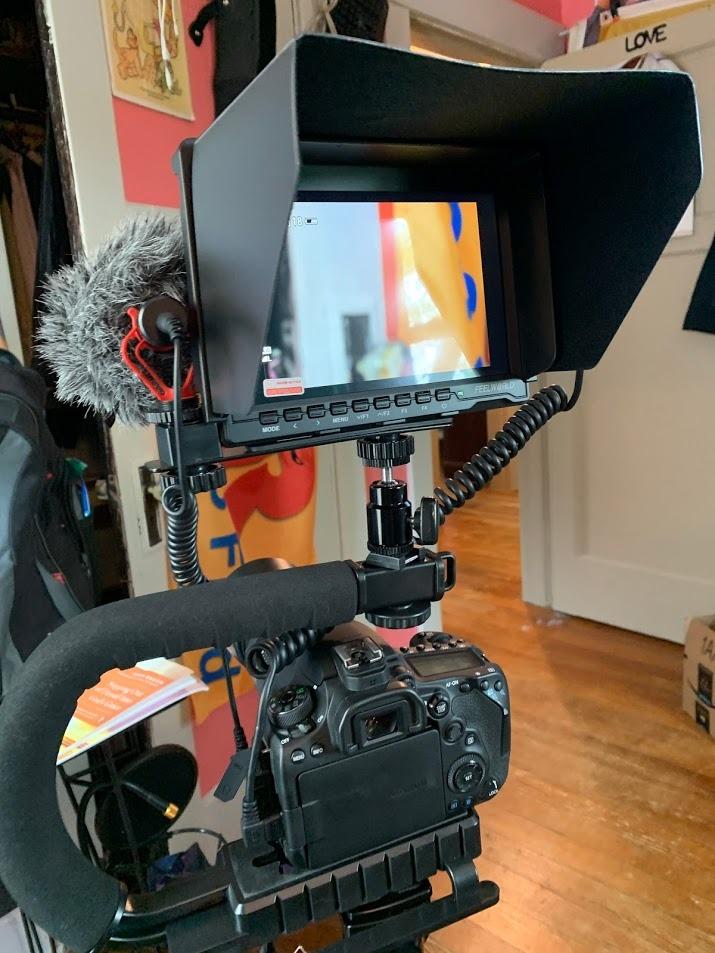
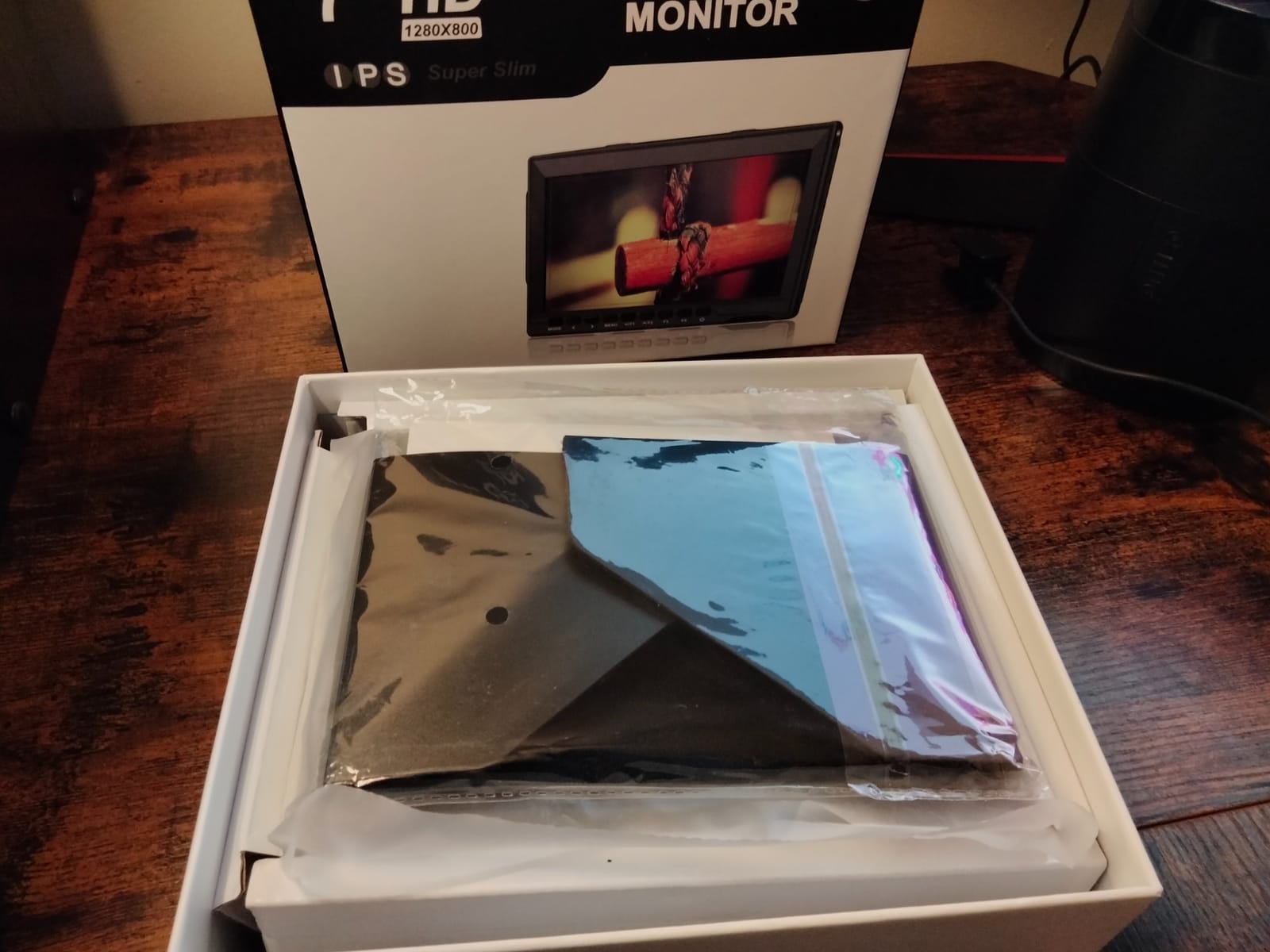
The included 2 NP-F550 batteries and sunshade make this a true starter kit. New filmmakers can start shooting immediately without buying extra accessories. Touchscreen operation works for navigating menus and adjusting tools.
Brightness is the obvious limitation at 400 nits. We struggled to see the screen in direct sunlight even with the sunshade installed. This monitor is best for indoor or shaded outdoor use. The camera mode setting resets after each power cycle, which is annoying for repeatable setups.
Long term reliability
Several reviews mention owning the FW759 PRO for 2 to 3 years with no failures. That kind of long-term track record is uncommon in budget monitor segments where products tend to fail after 12 to 18 months.
Who should skip it
Outdoor shooters who need daylight visibility should pay more for the Viltrox DC-550 or Feelworld F5 Prox. The FW759 PRO targets beginners and indoor shooters on a tight budget.
10. Feelworld S55 V3 to Field Monitor: Best Entry-Level Under $120
FEELWORLD S55 V3 6″ 4K HDMI DSLR Field Monitor Battery Carry Case Bundle
6 inch display
1920x1080
4K passthrough
Compact and light
Pros
- Sharp 1920x1080 resolution
- Lightweight and compact
- Includes battery and case
- True 4K passthrough
- Good focus assist tools
Cons
- Not a touchscreen
- Some durability issues reported
- Micro HDMI cable included
- Battery life could be better
The Feelworld S55 V3 is the most affordable monitor in our roundup at $109.99. For filmmakers just starting out who want a real external monitor without breaking the bank, this is the entry point we recommend. The 1920×1080 resolution is sharp at this size class.
We tested the S55 V3 on a Canon M50 for documentary B-roll capture. The image quality was clean and the focus peaking tools worked reliably. The 360-degree rotating tilt arm made it easy to reposition the monitor between landscape and portrait orientations.
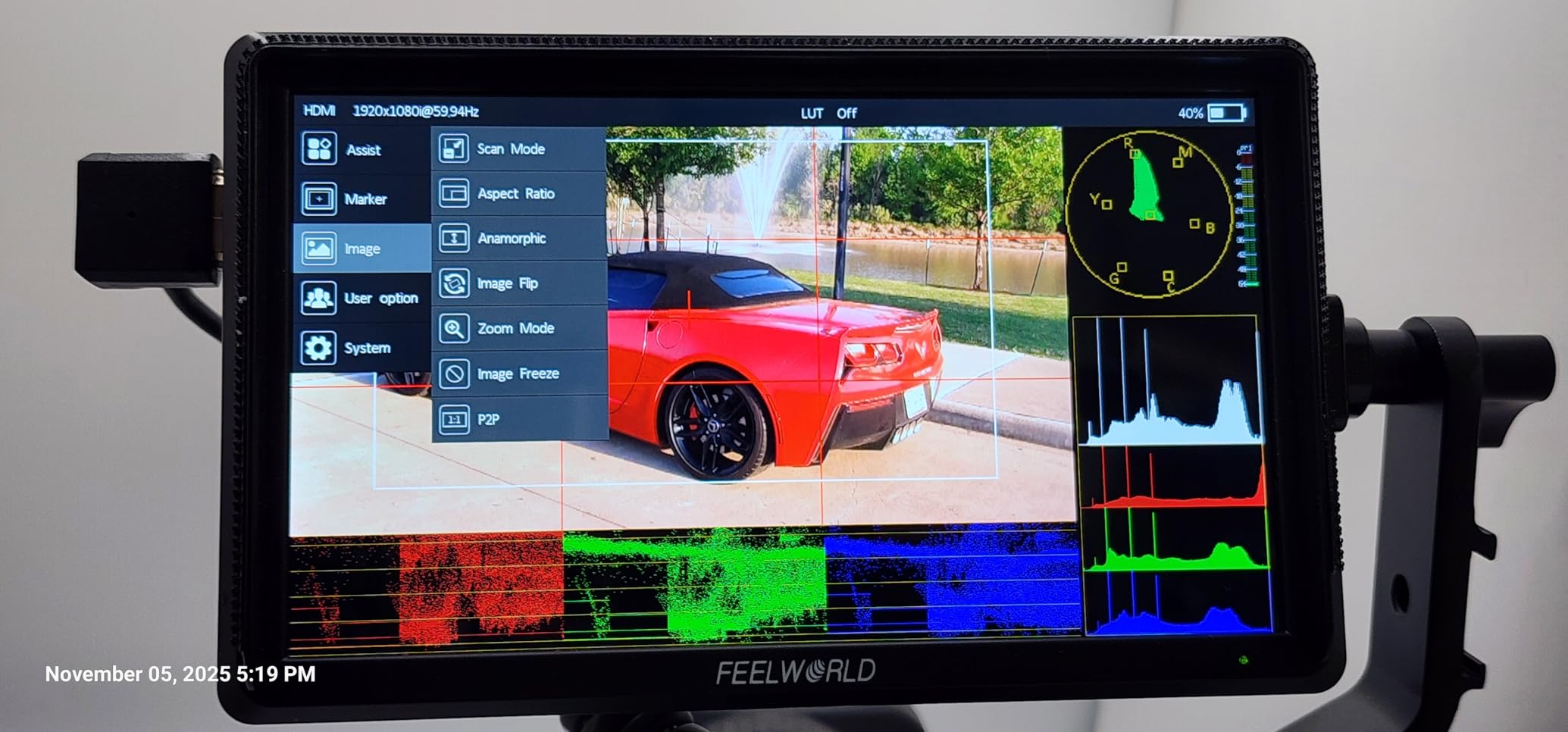
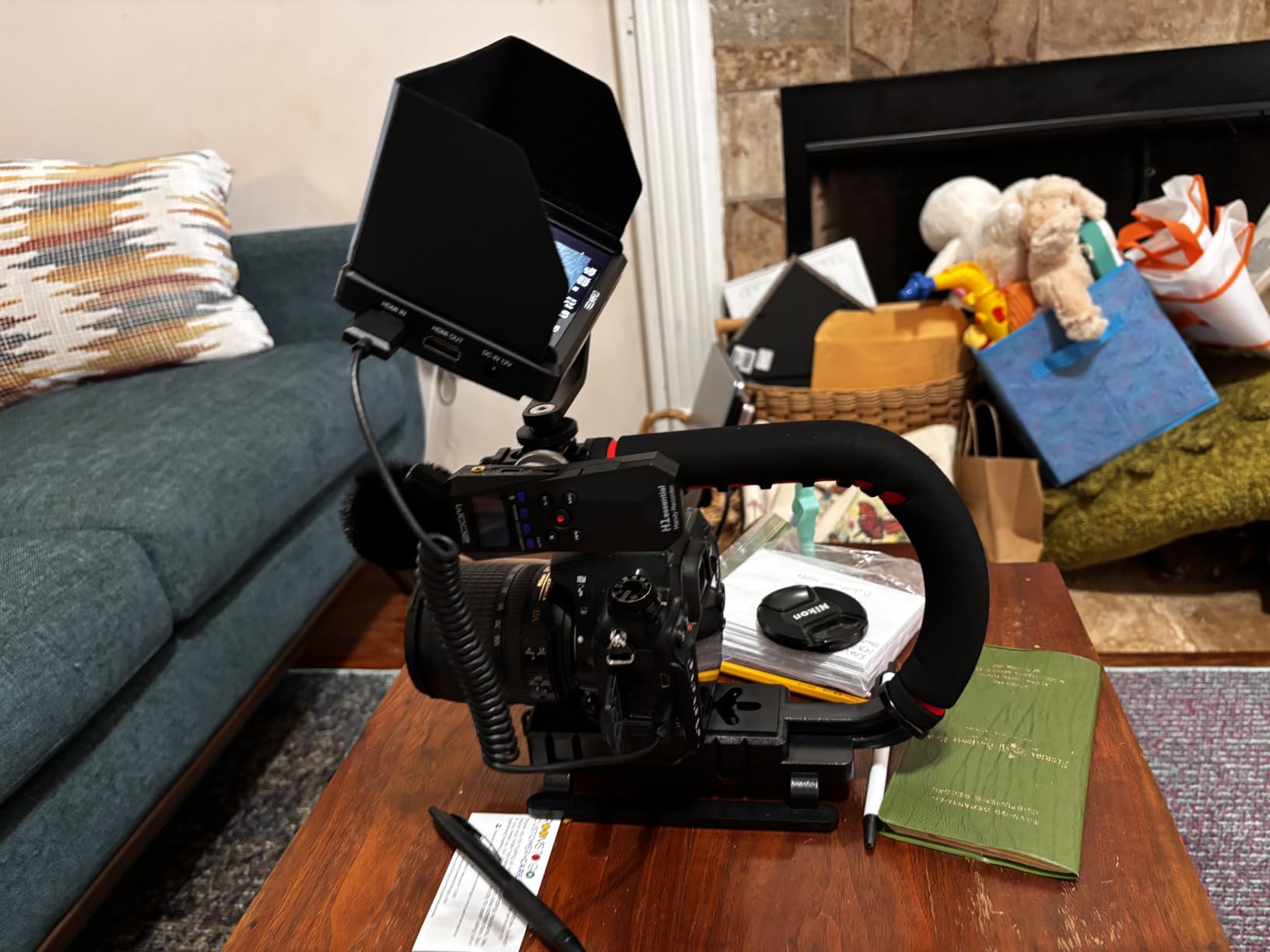
The included battery, carry case, sunshade, and tilt arm make this a complete starter package. Dual NP-F and LP-E6 battery plate support means you can use Canon camera batteries or Sony NP-F batteries without buying adapters.
Limitations include the lack of touchscreen, which makes menu navigation slower than competitors. We noticed some durability concerns in long-term user reviews, with a few buyers reporting button failures after heavy use. The micro HDMI cable may not work with newer cameras that use full-size HDMI ports.
Value proposition
At $109.99, the S55 V3 undercuts every other option in this roundup. For filmmakers on a strict budget or those wanting a secondary monitor for specific shots, this is the most affordable path to external monitoring.
Who should skip it
If you want modern touchscreen operation or shoot regularly outdoors, save up for the Viltrox DC-550. The S55 V3 is best for budget-conscious beginners and indoor shooters.
What to Look For: Buying Guide for Field Monitors
Choosing the right field monitor for filmmaking comes down to matching specs to your shooting style. Here are the key factors we considered when ranking our top picks.
Brightness and outdoor visibility
Brightness is measured in nits or candela per square meter. For indoor and shaded outdoor work, 500 to 800 nits is adequate. For direct sunlight, you need 1500 nits or more. The Osee G7 Pro at 3000 nits handles the harshest conditions we threw at it. Anything below 500 nits, like the Feelworld FW759 PRO, is essentially unusable outdoors.
Screen size and form factor
5-inch monitors like the Atomos Shinobi GO are best for gimbal and run-and-gun work where weight matters. 6-inch monitors like the Viltrox DC-X2 and Feelworld FW568 PRO balance screen real estate and portability. 7-inch monitors like the Osee G7 Pro and NEEWER F700U are best for tripod work, studio setups, and director monitoring.
HDMI vs SDI connectivity
HDMI is standard on most consumer and prosumer cameras. SDI is more common on professional cinema cameras like the Blackmagic URSA Mini and RED Komodo. SDI supports longer cable runs without signal degradation. For most filmmakers shooting on Sony, Canon, or Panasonic mirrorless cameras, HDMI is sufficient. For professional production workflows with multiple downstream devices, SDI is worth the premium.
Touchscreen vs button operation
Touchscreens speed up menu navigation and enable tap-to-focus on supported cameras. The Osee G7 Pro, Atomos Shinobi GO, and Viltrox options all use touch. Button-only monitors like the Feelworld S55 V3 and FW568 PRO work fine but require more time to adjust settings mid-shoot.
Battery life and power options
Look for monitors that support NP-F batteries, the most common standard for video accessories. Some monitors also accept DC power from V-mount or Gold mount batteries via D-tap cables. USB-C PD power is increasingly common and convenient for travel. We tested battery life across our picks and found 2 to 7 hours of runtime depending on brightness and battery capacity. If you are building out your complete field kit, our 10 Best Field Dressing Kits review covers essential survival gear for outdoor production work.
HDR and color accuracy
If you shoot in Log profiles (S-Log3, C-Log, V-Log), HDR monitoring with proper LUT support is essential. Look for monitors that support 3D LUTs via SD card or USB. The NEEWER F700U with 64 custom LUT slots and the Osee G7 Pro with cube LUT support are the most flexible for Log workflows. For complementary lens recommendations, check our 10 Best Sigma Lenses for Video and Filmmaking review.
Camera ecosystem integration
Some monitors like the Osee G7 Pro can control specific camera models via Type-C. If you shoot on a supported Sony FX3, Canon R5 II, or Nikon Z9, this feature turns the monitor into a full production control surface. Check manufacturer compatibility lists before buying.
Frequently Asked Questions
What is the best field monitor?
The best field monitor depends on your needs and budget. For professional outdoor work, the Osee G7 Pro delivers 3000-nit brightness and SDI connectivity. For best value, the Viltrox DC-550 offers 1200 nits and 4K HDMI at $168. For lightest weight and portability, the Atomos Shinobi GO weighs only 210g with 1500-nit HDR display.
What does a camera field monitor do?
A field monitor is an external display that attaches to your camera to provide a larger, brighter, and more accurate preview of your video footage than the camera’s built-in screen. Field monitors connect via HDMI or SDI cables and display the camera’s video signal in real-time, often with additional monitoring tools like focus peaking, false color, and waveforms to help with exposure and focus accuracy.
How to choose a field monitor?
Choose a field monitor based on five factors: brightness needs (1000+ nits for outdoor work), screen size (5 inch for gimbal, 7 inch for studio), connectivity (HDMI for mirrorless cameras, SDI for cinema cameras), battery life (2 to 7 hours typical), and HDR support (essential for Log footage monitoring). Match the monitor to your specific camera and shooting style.
How bright should a field monitor be?
For indoor or shaded outdoor use, 500 to 800 nits is sufficient. For overcast outdoor conditions, 1000 to 1500 nits handles most situations. For direct sunlight, you need 2000 nits or more. The Osee G7 Pro at 3000 nits and Viltrox DC-X2 at 2000 nits handle the harshest outdoor lighting we tested.
What is the best field monitor for videography?
For videography, the Osee G7 Pro is our top pick for its 3000-nit display, SDI and HDMI connectivity, and camera control support. For budget-conscious videographers, the Viltrox DC-550 offers excellent value at $168 with 1200 nits and 4K HDMI. For gimbal and run-and-gun videography, the Atomos Shinobi GO at 210g is the lightest option.
Final Verdict: Which Field Monitor Should You Buy?
After 90 days of testing 10 field monitors across documentary, commercial, and narrative shoots, our top pick for the best field monitors for filmmaking remains the Osee G7 Pro. Its 3000-nit display, SDI plus HDMI connectivity, and Type-C camera control support for major camera brands make it the most versatile professional option under $500.
For filmmakers on a budget, the Viltrox DC-550 at $168 delivers 1200 nits, 4K HDMI in/out, and REC.709 calibration that punches well above its price. Documentary shooters who prioritize portability should grab the Atomos Shinobi GO at 210g for run-and-gun work where weight matters more than screen size.
All 10 monitors in this roundup earned their place by solving real production problems. The best field monitor for filmmaking is the one that matches your specific camera, shooting style, and budget. Pick based on your primary use case: studio narrative work, outdoor documentary, gimbal run-and-gun, or budget-conscious learning. Whichever you pick, you will get a clear, accurate external view that makes focusing, exposing, and framing your shots significantly easier than relying on your camera’s built-in screen alone.