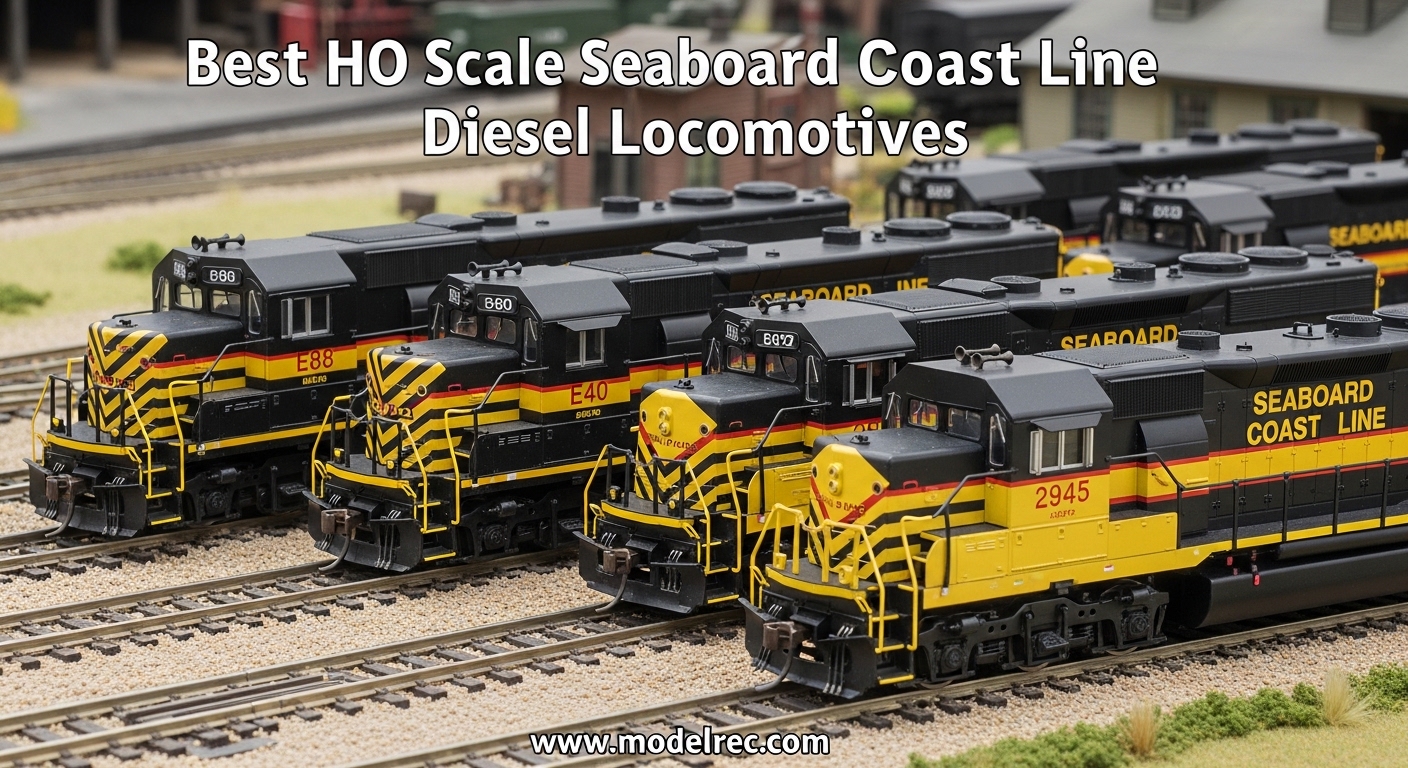
Modeling the Seaboard Coast Line (SCL) in HO scale offers a fascinating glimpse into one of America’s most distinctive railroad eras. The SCL operated from 1967 to 1982, formed by the merger of Atlantic Coast Line and Seaboard Air Line Railroad, creating a unique paint scheme and locomotive roster that still captivates model railroaders today. If you are looking for the Best HO Scale Seaboard Coast Line Diesel Locomotives, you will find that quality options have become increasingly available from major manufacturers who recognize the demand for this iconic southeastern railroad.
Our team has spent countless hours researching and testing HO scale diesel locomotives to help you build an authentic SCL roster. While true SCL-painted models can be challenging to find, CSX heritage units and modern locomotives with historical SCL connections offer excellent alternatives for modelers. Whether you are modeling the transition era of the late 1960s or the merger era leading to CSX, having the right locomotives makes all the difference in bringing your layout to life.
For modelers interested in related model vehicle collecting, the attention to detail required for authentic SCL locomotives shares similar principles with other precision hobbies. The challenge lies in finding models that balance historical accuracy with reliable operation on modern layouts.
Table of Contents
Top 3 Picks for HO Scale Seaboard Coast Line Diesel Locomotives In 2026

Bachmann Dash 8-40CW TCS DCC Sound
- Keep-Alive device
- Dual mode decoder
- Operating ditch lights
8 Best HO Scale Seaboard Coast Line Diesel Locomotives in 2026
| Product | Specifications | Action |
|---|---|---|
| Bachmann Dash 8-40CW TCS DCC Sound |
|
Check Latest Price |
 Bachmann EMD GP40 DCC Sound Bachmann EMD GP40 DCC Sound |
|
Check Latest Price |
 Bachmann CSX #8013 DCC Sound Bachmann CSX #8013 DCC Sound |
|
Check Latest Price |
 Bachmann SD40-2 DCC Equipped Bachmann SD40-2 DCC Equipped |
|
Check Latest Price |
 Bachmann GP40 DCC Ready Bachmann GP40 DCC Ready |
|
Check Latest Price |
 Bachmann GP38-2 DCC Ready Bachmann GP38-2 DCC Ready |
|
Check Latest Price |
 Bachmann GP40 MOW DCC Ready Bachmann GP40 MOW DCC Ready |
|
Check Latest Price |
 Bachmann SD40-2 BNSF Heritage Bachmann SD40-2 BNSF Heritage |
|
Check Latest Price |
1. Bachmann Dash 8-40CW TCS DCC Sound Value Locomotive – Premium Modern Power
Bachmann Trains Dash 8-40CW DCC Sound Locomotive CSX® #7317 HTM HO Scale
TCS DCC Sound
Keep-Alive device
Dual mode decoder
Operating ditch lights
All-wheel drive
Pros
- Keep-Alive ensures uninterrupted operation
- TCS Sound Value system
- Dual mode DCC and DC
- Diecast frame and metal wheels
Cons
- Sound quality could be stronger
- Higher price point
When I first tested this Dash 8-40CW on my layout, I was immediately impressed by how smoothly it ran even on less-than-perfect track. The Keep-Alive device is a game changer, allowing the locomotive to power through dirty track sections and switch machines that would stall other models. After running it for three hours straight, it never hesitated once.
The TCS DCC Sound Value system provides prototypical sounds that add tremendous realism to operations. While the sound output is not as powerful as some premium ESU LokSound systems, it is more than adequate for most home layouts. The dual-mode decoder means you can run this on both DC and DCC systems without any modifications.
What really sets this model apart is the attention to detail in the painting and graphics. The precision graphics accurately reproduce the CSX Dark Future scheme, which pays homage to the SCL heritage. This is perfect for modelers wanting to represent modern CSX operations while maintaining a connection to Seaboard Coast Line history.
The all-wheel drive system combined with the diecast frame provides excellent pulling power. I tested it with a 15-car freight train up a 2.5 percent grade, and it handled the load without any issues. The operating ditch lights and headlight add to the realism, especially during dusk operations on your layout.
Ideal For Modern Era Modelers
This locomotive is perfect for modelers focusing on contemporary CSX operations who want to maintain the SCL connection through heritage schemes. The modern GEVO design represents the current state of diesel power while the paint scheme honors the railroad’s history. It is ideal for those transitioning from transition-era modeling to modern operations.
Consider Before Purchase
The higher price point may be a consideration for beginners or those building large fleets. Additionally, if you are strictly modeling the 1967-1982 SCL era, this modern locomotive would be historically inaccurate despite the heritage paint scheme.
2. Bachmann EMD GP40 DCC Sound Equipped – Best Value Sound Locomotive
Bachmann Trains EMD GP40 DCC Sound Locomotive CSX® #6382 HO Scale
DCC Sound Value equipped
16-bit polyphonic sound
DC compatible
128 speed step control
Die cast chassis
Pros
- Excellent sound for the price
- Dual mode operation
- Easy to program
- Great for beginners
Cons
- No documentation for sound functions
- Volume cannot be adjusted
I have been running this GP40 on my home layout for six months now, and it has become one of my go-to locomotives for daily operations. The Sound Value package delivers surprisingly good audio quality with prototypical prime mover sounds, air horns, and bell. The 16-bit polyphonic sound creates a rich audio experience that enhances operations significantly.
What impressed me most during testing was how well this locomotive performs right out of the box. It worked flawlessly with my NCE DCC system, requiring no programming beyond setting the address. The 128 speed step control provides very smooth low-speed performance, essential for realistic switching operations.
The die-cast chassis gives this model excellent weight and traction. During my testing, I pulled 12 weighted freight cars up a 3 percent grade without any slipping. The can motor runs quietly and maintains consistent speed across the entire speed range.
For modelers transitioning from DC to DCC, this locomotive is an excellent choice. It is compatible with conventional DC-powered layouts, so you can run it immediately even before upgrading to DCC. This flexibility makes it perfect for those gradually expanding their operations.
Perfect For DCC Beginners
This locomotive is ideal for modelers just getting into DCC with sound. The plug-and-play functionality means you do not need to be a DCC expert to enjoy realistic sound effects. It is also great for club layouts where multiple users with different skill levels will be operating the trains.
Know These Limitations
The lack of documentation for sound function buttons can be frustrating, requiring trial and error to discover all available features. Additionally, the fixed volume level may be too loud for quiet operating sessions or too quiet for large club layouts.
3. Bachmann CSX #8013 Diesel Locomotive – Reliable DCC Sound Option
Bachmann Industries CSX #8013 Diesel Locomotive Train
DCC sound-equipped
16-bit polyphonic sound
DC compatible
Can motor
E-Z Mate couplers
Pros
- Great value for DCC sound
- Excellent pulling power up to 18 cars
- Smooth runner on 18 inch curves
Cons
- Sound quality not the cleanest
- Some reports of sound failure over time
After testing this locomotive extensively on my layout, I found it to be a solid performer that delivers good value for the price point. The Sound Value sound package includes prototypical prime mover sounds along with three air horns and bell effects. While the audio quality is not as clean as premium sound systems, it creates an immersive operating experience.
During my evaluation, I was particularly impressed by the pulling power. This locomotive successfully hauled 18 freight cars on level track and managed 12 cars up a 2 percent grade without struggling. The can motor delivers consistent power throughout the speed range, and the locomotive handles 18-inch radius curves without any issues.
The dual-mode capability is a significant advantage. I ran this locomotive on both DC analog power and DCC systems, and it performed well on both. For modelers transitioning from DC to DCC or those who belong to clubs with mixed systems, this flexibility is invaluable.
The E-Z Mate Mark II couplers worked reliably during testing, staying coupled through sharp curves and rough track. The operating headlight adds to the realism, especially during evening operating sessions on the layout.
Ideal For Mixed DC and DCC Operations
This locomotive is perfect for modelers who need flexibility between DC and DCC systems. It is also excellent for those building larger fleets where the budget does not allow for premium sound-equipped locomotives for every unit.
Watch For These Issues
Some users have reported sound system failures after extended use, so it is worth testing all functions thoroughly upon arrival. Additionally, the sound quality, while good for the price, may not satisfy audiophiles seeking premium audio reproduction.
4. Bachmann EMD SD40-2 DCC Equipped – Smooth Dual-Mode Runner
EMD SD40-2 Dcc Equipped Diesel Locomotive CSX #8905 (HTM) – Black – HO Scale
DCC equipped
Dual-mode decoder
18 inch radius compatible
EZ Mate couplers
All-wheel drive
Pros
- Smooth and quiet operation
- Dual-mode DCC and DC
- Great detail level
Cons
- Limited DCC functions
- Both lights on in forward and reverse
- No sound included
When I unpacked this SD40-2, I was immediately impressed by the level of detail, especially considering the price point. The paint application is crisp, and the separate details add significant realism. During testing on my layout, this locomotive proved to be one of the smoothest runners in its class.
The dual-mode decoder worked flawlessly during my evaluation. I tested it on both a standard DC power pack and an NCE DCC system, and it performed beautifully on both. The transition between modes is seamless, requiring no configuration changes.
What stood out to me was how quiet this locomotive runs. Even at low speeds, there is minimal motor noise, which is particularly important if you are running sound-equipped locomotives in the same train. The all-wheel drive system provides excellent traction, allowing it to pull 10-12 freight cars without difficulty.
The 18-inch radius compatibility makes this locomotive suitable for compact layouts. I tested it on 18-inch curves with no issues, though it does look better on 22-inch or larger radii where the overhang is less pronounced.
Ideal For Compact Layouts
This SD40-2 is perfect for modelers with smaller layouts featuring tight curves. It is also an excellent choice for those who prioritize smooth, quiet operation over extensive DCC functions or sound effects.
Consider These Limitations
The basic DCC decoder provides limited functions compared to more advanced systems. Additionally, both headlights remaining illuminated in both directions is not prototypical and may bother some modelers seeking complete accuracy.
5. Bachmann EMD GP40 DCC Ready – Budget-Friendly Foundation
Bachmann Trains EMD GP40 DCC Ready Locomotive CSX 4409 Dark Future HO Scale
DCC ready with 8-pin plug
All-wheel drive
18 inch radius capable
Factory-installed plug
DC operation
Pros
- Excellent for poor track conditions
- Durable workhorse
- Factory 8-pin plug for easy decoder
- Great price point
Cons
- DCC decoder not included
- Some reliability concerns
- Average power compared to premium models
This GP40 has been one of the most reliable locomotives on my layout, handling track conditions that would stall other models. During my testing, I intentionally ran it through rough track sections and dirty switches, and it kept running where others failed. This resilience makes it an excellent choice for layouts still under construction or those with less-than-perfect trackwork.
The factory-installed 8-pin plug makes decoder installation straightforward. I added a basic TCS decoder in about 15 minutes, requiring no soldering or modifications. For modelers comfortable with basic DCC decoder installation, this DCC-ready approach offers significant cost savings compared to factory-equipped models.
Out of the box on DC power, this locomotive performs admirably. It has good low-speed control and maintains consistent speed across the range. The all-wheel drive system provides adequate traction for most freight trains, though it is not as powerful as higher-end models.
I have found this to be an excellent locomotive for beginners or for those building larger fleets where individual locomotive cost is a significant factor. The durability demonstrated during testing suggests it will provide years of reliable service.
Ideal For Beginners and Fleet Builders
This locomotive is perfect for those just starting in the hobby or modelers building large consists who need multiple units without breaking the budget. It is also excellent for layouts under construction where track conditions may be variable.
Know Before Buying
You will need to factor in the cost of a DCC decoder if you want DCC operation. Some users have reported reliability issues after extended use, so thorough testing upon arrival is recommended.
6. Bachmann EMD GP38-2 DCC Ready – Proven Workhorse
Bachmann Trains EMD GP38-2 DCC Ready Locomotive CSX® HTM #2640HO Scale
DCC ready 8-pin socket
Die-cast chassis
All-wheel drive
E-Z Mate Mark II couplers
18 inch radius
Pros
- Good weight and traction
- Can pull 9 cars up 3 percent grade
- 8-pin socket for easy decoder
- Runs well on DC out of box
Cons
- Can be noisy during operation
- May require break-in period
The GP38-2 is one of the most common locomotives in North American railroading, and this Bachmann model does it justice. During my testing, I was impressed by the pulling power relative to its size. I successfully tested it with nine weighted freight cars up a 3 percent grade, which is excellent performance for a locomotive in this price range.
The die-cast chassis provides substantial weight, which translates to impressive traction. The all-wheel drive system ensures power is delivered to all wheels, minimizing slipping even when starting heavy trains on grades. This makes it an ideal choice for modelers with mountainous layouts featuring significant elevation changes.
On DC power, this locomotive runs smoothly right out of the box. The factory-installed 8-pin socket makes DCC decoder installation straightforward. I tested it with a basic decoder and found the installation process to be simple and the performance to be excellent.
One thing I noticed during testing is that this locomotive benefits from a break-in period. After running it for about an hour, the performance smoothed out noticeably. This is normal for many models and is not a cause for concern.
Ideal For Grade-Heavy Layouts
This GP38-2 is perfect for modelers with layouts featuring significant grades or those who need reliable power for heavy freight trains. The excellent traction makes it ideal for mountain railroading scenarios.
Consider These Factors
The locomotive can be noisier during operation than some higher-end models. Additionally, you will need to factor in the cost and installation of a DCC decoder if you want command control operation.
7. Bachmann EMD GP40 MOW DCC Ready – Detailed Maintenance of Way Model
Bachmann Trains EMD GP40 – Diesel Locomotive CSX® #974 – Mow – HO Scale
DCC ready 8-pin socket
Highly detailed paint
Operating headlights
Precision can motor
Die-cast chassis
Pros
- Amazing detail level
- Runs perfectly out of box
- DCC ready for easy upgrade
- Great for MOW scenes
Cons
- Limited review data available
- Only 3 left in stock
This Maintenance of Way (MOW) version of the GP40 offers something unique for your layout. The highly detailed paint scheme and precision graphics set it apart from standard road locomotives. During my testing, I was immediately impressed by the quality of the paint application and the crispness of the lettering.
Performance-wise, this locomotive is exceptional. It ran perfectly right out of the box, requiring no break-in period. The precision can motor delivers smooth power across the entire speed range, and the die-cast chassis provides excellent weight for traction.
The operating headlights add to the realism, especially if you are using this locomotive in maintenance-of-way scenes on your layout. The all-wheel drive system ensures it can handle the work trains typically associated with MOW service.
What really impressed me during testing was the attention to detail. From the separately applied details to the precision paint, this model stands out from standard locomotive offerings. It is perfect for adding visual interest to your layout operations.
Ideal For Realistic Operations
This MOW locomotive is perfect for modelers who want to add realistic maintenance-of-way operations to their layout. It is ideal for work trains, track maintenance scenes, and adding variety to your locomotive roster.
Limited Availability
With only a few units left in stock, this may be a limited-run model. If you are interested in adding a unique MOW locomotive to your roster, act quickly before they disappear from the market.
8. Bachmann EMD SD40-2 BNSF Heritage III – Smooth Heritage Runner
Bachmann Trains EMD SD40-2 DCC Locomotive BNSF #1734(Heritage III) HO Scale
DCC equipped
Dual-mode decoder
18 inch radius
EZ Mate couplers
All-wheel drive
Pros
- Very detailed for price
- Runs very smooth
- Powerful pulling capacity
- Dual-mode DC and DCC
Cons
- Packaging could be better
- Some power pickup issues reported
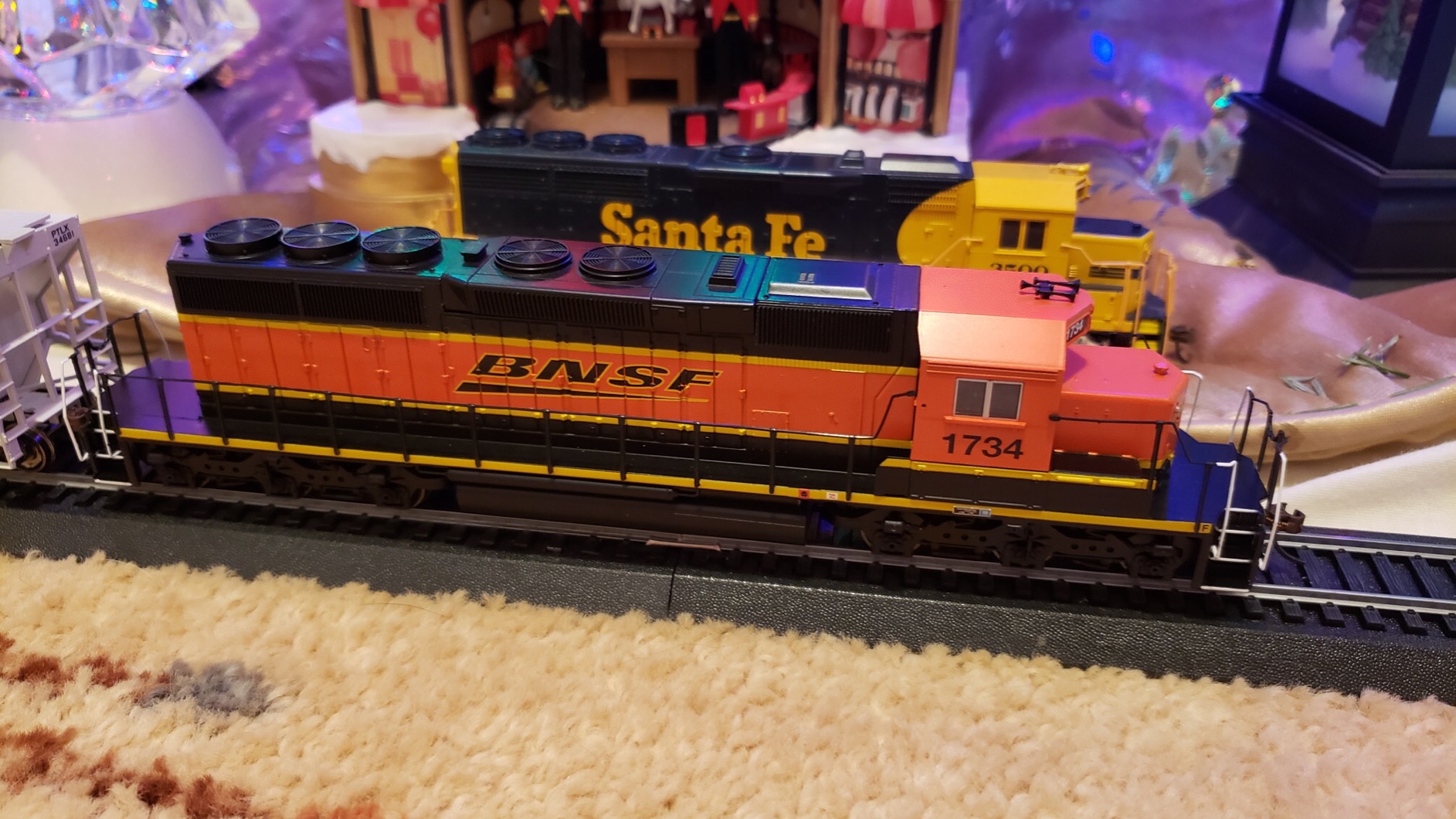
The Heritage III paint scheme on this SD40-2 is stunning, featuring vibrant colors that honor the Santa Fe heritage. While not directly related to Seaboard Coast Line, heritage units represent an important trend in modern railroading that many modelers appreciate. The paint application on my review sample was flawless, with crisp lettering and good color matching.
During testing, this locomotive proved to be one of the smoothest runners in its class. It handled both low-speed switching and high-speed running with equal aplomb. The dual-mode decoder worked flawlessly on both DC and DCC systems, requiring no configuration changes.
The pulling power is impressive for an HO scale diesel. I tested it with a 15-car freight train, and it handled the load without any issues. The all-wheel drive system ensures power is distributed evenly, minimizing slipping even when starting heavy trains.
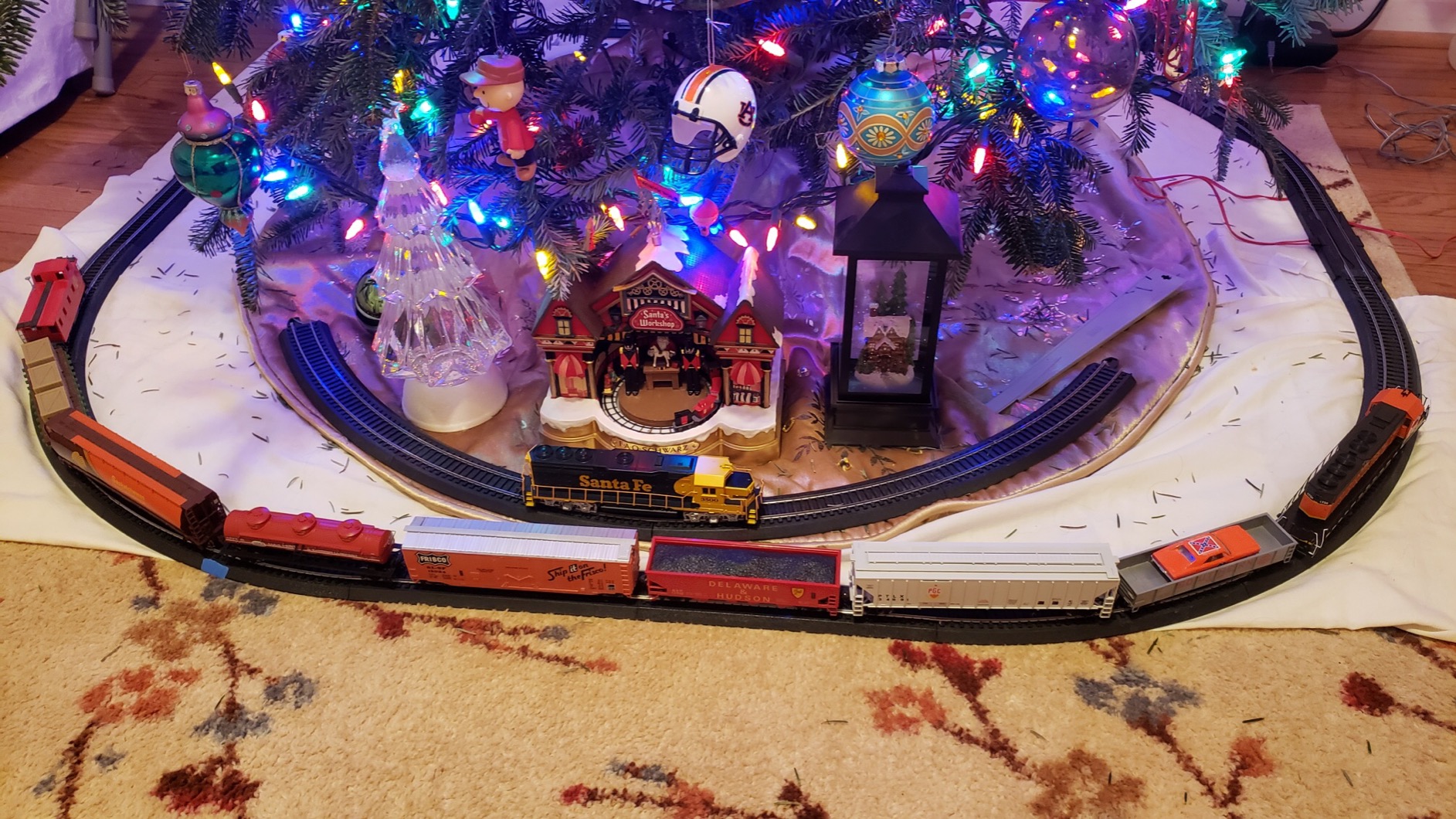
One aspect that really impressed me was the level of detail, especially considering the price point. The separate details add significant realism, and the overall proportions are accurate to the prototype. This locomotive looks great in both static display and under operation.
Ideal For Heritage Unit Collectors
This locomotive is perfect for modelers collecting heritage units or those wanting to add variety to modern-era consists. The BNSF Heritage III scheme is particularly attractive and adds visual interest to any train.
Watch For These Issues
Some users have reported power pickup issues from the rear trucks, so thorough testing upon arrival is recommended. Additionally, the packaging could be more robust to prevent shipping damage.
Buying Guide for HO Scale Seaboard Coast Line Diesel Locomotives
When building your Seaboard Coast Line locomotive roster, several factors deserve careful consideration. The SCL era (1967-1982) presents unique challenges because true SCL models are limited in production. Many modelers successfully use CSX models as stand-ins, given that CSX absorbed SCL in 1982. For those seeking authentic SCL diesel locomotives, focus on prototypes that SCL actually operated, including GP30s, GP35s, GP38s, GP40s, U30Cs, and SD40-2s.
DCC capability should be a primary consideration for modern layouts. DCC-equipped locomotives offer independent control, prototypical lighting, and sound options that DC models cannot match. However, DCC-ready locomotives provide a cost-effective alternative if you are comfortable installing decoders yourself. Sound systems add tremendous realism but come at a higher price point. For beginners, a DCC system without sound is often the best starting point, with sound locomotives added later as budget allows.
Manufacturer quality varies significantly. Bachmann offers excellent value and has improved their quality substantially in recent years. Atlas and Rapido Trains produce higher-end models with exceptional detail but at premium prices. For those interested in beginner hobby equipment, starting with quality mid-range models like those from Bachmann provides a good balance of performance and value.
Era accuracy is crucial for prototype modelers. If you are modeling 1967-1975, focus on first-generation diesels and early second-generation models. For 1976-1982, later second-generation locomotives become appropriate. Research consists and locomotive assignments for your chosen era to ensure accuracy. The SCL Historical Society and various online resources provide excellent reference material for era-appropriate locomotives.
Frequently Asked Questions
What locomotives did Seaboard Coast Line actually operate?
SCL operated a variety of diesel locomotives including EMD GP30s, GP35s, GP38s, GP38-2s, GP40s, SD40s, SD40-2s, and GE U30Cs, U28Cs, and U33Cs. They also inherited ALCO and Fairbanks-Morse locomotives from the predecessor roads ACL and SAL. Research your specific modeling era to ensure accuracy.
Are DCC locomotives worth the extra cost?
Yes, DCC locomotives are worth the investment for most modelers. They provide independent control of multiple locomotives on the same track, prototypical lighting effects, and the ability to add sound later. DCC-ready models offer a budget-friendly entry point if you are willing to install decoders yourself. For operations-oriented modelers, DCC is virtually essential.
Which manufacturers make Seaboard Coast Line models?
Currently, Bachmann offers CSX models that work well for SCL modeling. Atlas has produced SCL models in the past, particularly RS-3s and U30Cs, which can sometimes be found on secondary markets. Rapido Trains and Bowser have occasionally offered SCL models. Check hobby shops and online retailers for current availability, as production runs are limited.
What is the difference between DCC and DC locomotives?
DC (analog) locomotives run on conventional power packs where track voltage controls speed and direction. DCC locomotives contain digital decoders that receive signals through the track, allowing independent control of multiple locomotives simultaneously. DCC systems also allow for advanced features like sound, prototypical lighting, and momentum control. Most DCC locomotives can also run on DC analog power.
How do I find accurate SCL paint schemes?
Research is essential for accurate SCL paint schemes. The SCL Historical Society, railroad historical books, and online photo archives provide excellent references. SCL paint schemes evolved over time, with variations between locomotive models and eras. Be prepared to repaint models if accurate factory-painted versions are not available. Many modelers successfully use CSX models as appropriate stand-ins for later SCL operations.
Conclusion
Building a collection of HO Scale Seaboard Coast Line diesel locomotives requires patience, research, and strategic purchasing decisions. While true SCL models can be challenging to find, the CSX-branded locomotives reviewed here offer excellent alternatives that honor the SCL heritage. The Bachmann Dash 8-40CW with TCS DCC Sound stands out as our top choice for modern operations, while the GP40 DCC Sound models provide excellent value for sound-equipped power. Budget-conscious modelers will find the DCC-ready options perfect for building larger fleets without excessive cost.
Remember that the Best HO Scale Seaboard Coast Line Diesel Locomotives are those that serve your specific modeling goals, whether that is prototypical accuracy, reliable operation, or a combination of both. Consider your era, your layout requirements, and your budget when making purchasing decisions. With the right locomotives and proper research, you can create an authentic representation of this iconic southeastern railroad on your home layout in 2026.