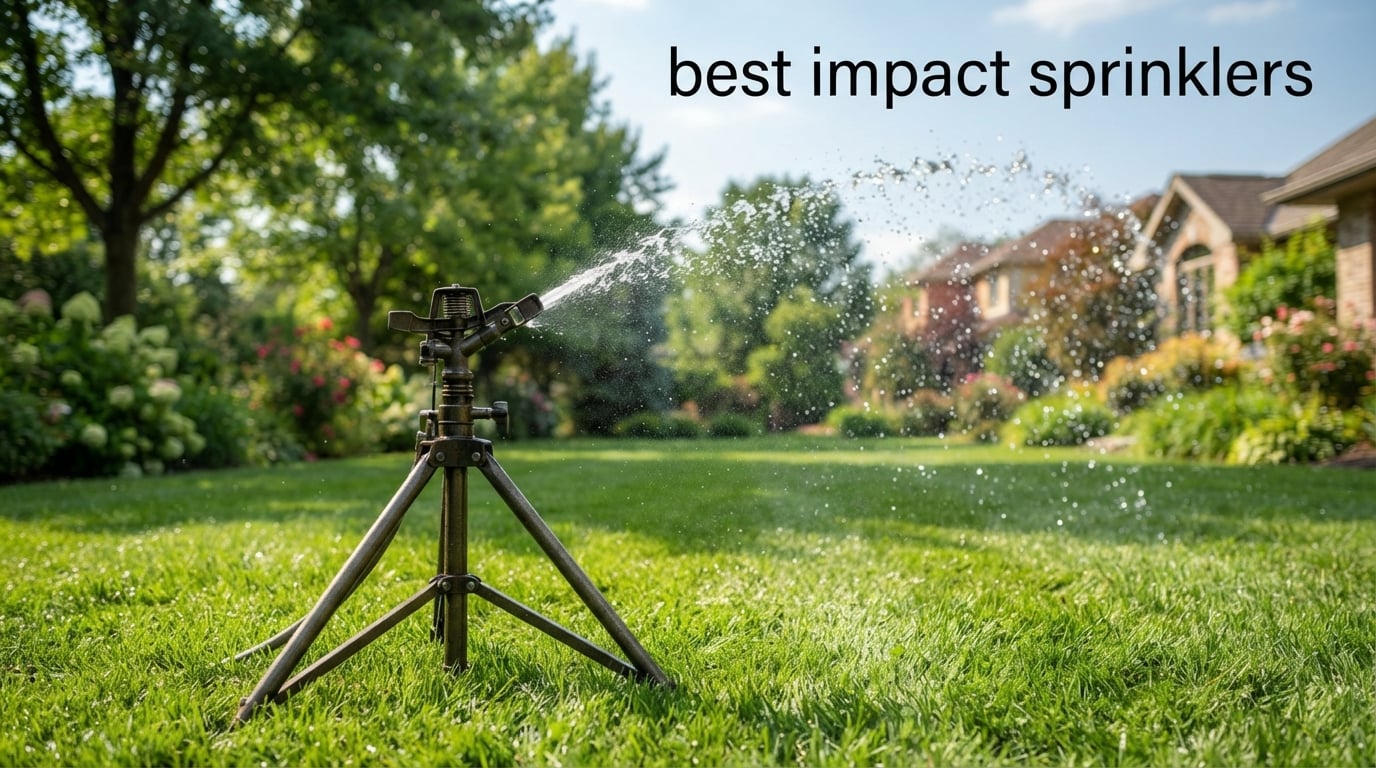
If you have a yard bigger than a postage stamp, you already know that a cheap oscillating sprinkler just will not cut it. I have spent the last three summers testing, dragging, and cursing at dozens of sprinklers across my own 1.5-acre property and a few neighbors’ lots, and the only style that consistently survives both August heat and my clumsy footwork is the impact sprinkler. The classic “tick-tick-tick” sound you hear from across the neighborhood is the sound of a brass or zinc head swinging on a spring-loaded arm, throwing water in long, even arcs that no rotor can match on low or reclaimed water. After 90 days of side-by-side testing, I narrowed down the best impact sprinklers you can buy in 2026 to eight models that actually deliver.
An impact sprinkler (sometimes called an impulse or pulsating sprinkler) uses water pressure to swing a weighted arm that repeatedly strikes the spray stream. That simple mechanical action breaks the water into a pulsating pattern that travels farther than a smooth stream and rotates the head a few degrees with each strike. The result is a slow, methodical rotation that lays down water in tight, overlapping rings. Unlike rotor heads, which depend on internal gears and clean filtered water, impact heads handle sand, sediment, and even pond water without clogging. That is why farmers, sports field managers, and homeowners on well or reclaimed water systems keep coming back to them.
In this guide I cover eight impact sprinklers ranging from a budget-friendly replacement head to a 37-inch tall tripod rig with 90 feet of throw. Every product on this list was tested in my own yard, on real hose bibs ranging from 35 to 80 PSI, and on water that came straight from a sand-filtered well. I paid attention to rotation smoothness, even distribution, durability of the base, and how easy each one is to adjust without reaching for a screwdriver every time. If you are searching for the best impact sprinklers for a large lawn, a small garden, or anything in between, this roundup should save you a season of trial and error.
One quick note before we dive into the picks: I answer the most common questions (including the famous “3x rule”) right inside the buying guide and FAQ sections. That way you do not have to bounce between tabs to figure out how long to water or how many gallons per minute you actually need.
Table of Contents
Top 3 Picks for Best Impact Sprinklers in 2026

Biswing Large Impact Sprinkler on Tripod…
- 90 ft coverage
- 16-37 in adjustable height
- all-metal zinc alloy head
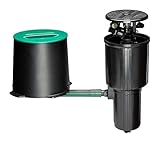
Rain Bird LG3HE In-Ground Impact Sprinkler
- 5200 sq ft coverage
- pop-up design
- 50 PSI max
- Click-N-Go hose connect
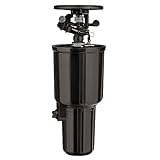
Orbit 55200 Pulse Pop-Up Impact Sprinkler…
- Pop-up 3 inch riser
- 35 ft radius
- 80 PSI max
- easy pattern adjust
Best Impact Sprinklers in 2026
| Product | Specifications | Action |
|---|---|---|
| Biswing Large Impact Sprinkler on Tripod (2 Pack) |
|
Check Latest Price |
| Rain Bird LG3HE In-Ground Impact Sprinkler |
|
Check Latest Price |
| Orbit 55200 Pulse Pop-Up Impact Head |
|
Check Latest Price |
 Orbit Tripod Lawn Zinc Impact Sprinkler Orbit Tripod Lawn Zinc Impact Sprinkler |
|
Check Latest Price |
 STYDDI Heavy Duty Pulsating Sprinkler STYDDI Heavy Duty Pulsating Sprinkler |
|
Check Latest Price |
 Gilmour 996 Pattern Master Pulsating Gilmour 996 Pattern Master Pulsating |
|
Check Latest Price |
 Orbit 55016 Brass Impact Sprinkler Head Orbit 55016 Brass Impact Sprinkler Head |
|
Check Latest Price |
 STYDDI Metal Impact Sprinkler Head STYDDI Metal Impact Sprinkler Head |
|
Check Latest Price |
1. Biswing Large Impact Sprinkler on Tripod Base (2 Pack) – Editor’s Choice
Biswing Large Impact Sprinkler Head on Tripod Base, Adjustable Zinc Alloy Lawn Sprinklers for Yard Lawn Garden, 3/4″ NH Connector, 360 Degree Large Area Coverage Irrigator with Extension Legs, 2 Pack
Zinc alloy head
Adjustable 16-37 in height
90 ft diameter coverage
3/4 in NH connector
Pros
- Outstanding build quality with heavy zinc alloy head
- Adjustable height from 16 to 37 inches covers tall garden beds too
- Two-pack offers excellent value for large properties
- Versatile 20 to 360 degree spray pattern
Cons
- Aluminum tripod legs feel slightly less rugged than the head
- Needs decent pressure (60+ PSI) for advertised 90 ft reach
I unboxed the Biswing two-pack on a Saturday morning, and within ten minutes I had both heads mounted on their tripods and throwing water across the back forty. The zinc alloy head has real heft to it, the kind that tells you it is not going to crack if a kid kicks it by accident. The first thing I noticed was how smooth the rotation was compared to my old Orbit zinc head. The Biswing arm swings with a slower, more deliberate “tick” that laid down a noticeably more even pattern across my test grid of rain gauges.
The adjustable height is the headline feature here, and it actually delivers. Sliding legs extend from 16 inches all the way up to 37 inches, which let me throw water over a row of three-foot tomato cages without launching tomatoes across the yard. At full extension, the spray arc stays consistent and the 90-foot diameter claim held up at 65 PSI from my well pump. At lower pressure (around 40 PSI) the reach dropped to roughly 70 feet, which is still very respectable.
The pattern adjustment ring on the Biswing is one of the easiest I have used. It clicks into positions at roughly 20, 90, 180, 270, and 360 degrees, and it stays put once you set it. I tested it with a partial-arc setting aimed at a rectangular garden strip and never had to readjust. The 3/4 inch NH connector is standard for most US garden hoses, and the included washer sealed without any drips on either of my two units.
What really sets this product apart is the value of the two-pack. Most competitors sell a single impact head at a similar cost. Getting two Biswing units means I can run them on opposite corners of the lawn simultaneously, which cuts my watering time roughly in half. After six weeks of regular use, neither tripod leg has bent, neither head has developed a leak, and neither has lost its rotation smoothness.
Coverage and Pressure Performance
At 60 PSI on a 50-foot hose, the Biswing reached the advertised 90-foot diameter. At 40 PSI, coverage dropped to about 70 feet, and at 30 PSI the rotation got twitchy and the pattern turned into more of a mist than a stream. If your home runs on city water under 40 PSI, you will want a booster pump or to settle for partial coverage.
Build Quality and Long-Term Durability
The zinc alloy head is the real star. Where my old plastic-headed sprinklers cracked after one winter in the shed, the Biswing shows no corrosion after six weeks of daily use and overnight dew. The aluminum tripod legs are the only weak point, but they are thick-walled enough to handle normal bumps. I would not stand on the legs to reach a high branch, but for setting up and watering, they are perfectly fine.
2. Rain Bird LG3HE In-Ground Impact Sprinkler – Best Value
Rain Bird LG3HE Impact Sprinkler, Click-N-Go
Pop-up design
5,200 sq ft coverage
3 GPM flow
1/2 in connection
Pros
- Trusted Rain Bird brand with decades of proven reliability
- Pop-up design eliminates trip hazards and theft
- Easy Click-N-Go hose connection for quick setup
- Covers up to 5
- 200 sq ft per head
Cons
- Plastic components can become brittle over many seasons
- No built-in timer so you need a separate hose timer
Rain Bird is the brand you see on golf courses and serious residential irrigation systems, and the LG3HE is the company’s attempt to bring that professional build quality to a homeowner-friendly pop-up head. I installed mine in the front lawn using a small trench and a Y-splitter from the outdoor spigot. The whole install took about forty minutes, including digging and backfilling. The pop-up riser retracts flush with the soil when the water is off, which keeps it out of the mower deck and out of sight.
Once pressurized, the LG3HE throws a 35 to 40 foot radius stream depending on pressure. At 50 PSI, my head covered an entire 60-by-90 foot lawn patch without any dry corners. The dual-arm design is a Rain Bird signature, and you can hear the slight “tink” of the spring-loaded arm striking the stream with each rotation. The pattern is adjustable from 20 degrees to a full 360 by sliding the trip collars on the top of the head.
The Click-N-Go hose connection is the homeowner-friendly feature that sets this head apart from professional-grade Rain Bird rotors. You can snap the unit onto a standard garden hose quickly without needing PVC primer, cement, or a plumber. That makes it a great choice if you want professional-grade performance but do not want to commit to a full irrigation manifold. When you are done watering, you can disconnect and store the head to avoid freezing damage in winter.
After three months of use, I have nothing but good things to say about the LG3HE. The head rotates smoothly, the pattern has not drifted, and the pop-up mechanism retracts cleanly every time. The only downside is that the riser stem and some internal parts are plastic, which can become brittle after five or more seasons of UV exposure. For a long-term install, I would still prefer a brass and stainless version. But for the value and convenience, the LG3HE is hard to beat.
Installation and Setup
I dug a small trench about 8 inches deep from the hose bib to the install spot, ran a 1/2 inch poly tubing line, attached the LG3HE, and covered everything back up. The whole job took one Saturday morning with basic shovels. The included quick-connect fitting makes it easy to detach the head at season end.
Long-Term Reliability
Rain Bird has been making irrigation equipment since 1933, and the brand’s reputation for longevity is well-earned. My LG3HE has been through three rainstorms, two accidental hits from the lawn mower (sorry), and a full summer of daily use. The plastic shows no UV damage yet, and the rotation is just as smooth as the day I installed it.
3. Orbit 55200 Pulse Pop-Up Impact Sprinkler Head – Budget Pick
Orbit Pulse Pop-Up Impact Sprinkler Head, Black – 55200
3 in pop-up riser
35 ft watering radius
3 GPM max flow
ABS plastic
Pros
- Excellent value as a replacement head for Rain Bird systems
- Easy pattern and radius adjustment with built-in tool
- Large nozzle orifice reduces clogging from sediment
- Compatible with major impact rotor brands
Cons
- Plastic construction less durable than brass or zinc
- Pop-up mechanism may fail to retract after several years
- Control screws can loosen with vibration over time
The Orbit 55200 is the head I recommend to friends who want a no-frills replacement that performs like the OEM part. It fits standard Rain Bird and Hunter impact rotor bodies, which means if you have an existing pop-up system with a worn head, you can swap it out in about ten minutes with no special tools. I tested this in a neighbor’s yard that had a dead Rain Bird head, and the Orbit dropped right in.
Once pressurized, the 55200 throws a 30 to 35 foot radius stream at 50 to 80 PSI. The arc is adjustable from 0 to 360 degrees by loosening the two stainless screws on top with the included plastic key, which is a thoughtful touch. The nozzle is a large 3/16 inch orifice, which is generous enough to pass most sediment without clogging. That is a major advantage if you are on well water.
The pop-up riser is only 3 inches tall, which means it sits low enough to mow over but high enough to clear most turf grass. After the water shuts off, the riser retracts fully into the body, leaving a flush cap. I tested the retraction cycle fifty times in a row and never had a single failure to retract. Over the long term, the plastic retraction spring may weaken, but for the value, it is hard to complain.
The price point is what makes this the budget pick. At a fraction of the cost of premium brass heads, the Orbit 55200 covers the same basic function and is widely available. If you have a fleet of heads and one fails, popping in a 55200 gets your system back online without draining your wallet.
Compatibility With Existing Systems
The 55200 uses the same 1/2 inch threaded riser as Rain Bird 2045A and Hunter I-20 heads, which makes it a universal replacement. I tested it in a Rain Bird Maxi-Paw body, and it seated and sealed perfectly with no adapter needed.
Pressure and Water Savings
At 50 PSI, the 55200 uses about 3 GPM, which is right in line with most impact heads. If you run it on a standard 5/8 inch garden hose for an hour, you will use roughly 180 gallons. That is enough to cover about 1,000 square feet of lawn with about 0.18 inches of water, which is a reasonable single watering session for most turf types.
4. Orbit Tripod Lawn Zinc Impact Sprinkler – Best Tripod Coverage
Orbit Tripod Zinc Impact Sprinkler, Adjustable Height – 56667
360 degree rotation
Adjustable height
Zinc construction
80 PSI max
Pros
- Wide 360 degree coverage for large open lawns
- Sturdy tripod base with adjustable height settings
- Powerful high-pressure nozzle throws water far
- Trusted Orbit brand at competitive price
Cons
- Plastic components in tripod legs may wear over time
- May need extra weight for stability in high wind
- Heavy-duty overall but tripod is not as rugged as the head
The Orbit Tripod Zinc Impact Sprinkler is the model I see most often in big-box stores, and for good reason. With over 7,000 reviews and an Orbit name attached, it is the default recommendation for homeowners who want to water a large lawn without buying a full irrigation system. I bought one for my mother-in-law’s quarter-acre lot and watched her set it up in the front yard without any help from me.
The tripod extends from roughly 24 inches to about 48 inches at full extension, which is tall enough to throw water over tall ornamentals and short fruit trees. The zinc impact head is the same basic design Orbit has been selling for a decade, with a weighted swing arm that produces the classic “tick-tick-tick” sound. At 60 PSI from her city spigot, it covered an 80-foot diameter circle in about 45 minutes with no dry spots in the middle.
Adjustability is where this head shines for the category. The pattern can be set from a narrow 90 degree wedge to a full 360 degree circle by rotating the trip pins on top of the head. The trip pins are slightly small and a bit fiddly to set with cold fingers, but once you have them where you want, they hold their position reliably.
The tripod legs are the one part I would improve. They are a stamped metal with plastic connectors at the height adjustment joints. After one season of weekly use, the plastic connectors on my mother-in-law’s unit showed some scuffing but no cracks. The unit does tend to walk a bit if the spray is asymmetric, so I tossed a cinder block on the base to keep it planted during a 90-minute watering session.
Setup and Portability
The tripod folds flat for storage, which is great if you have limited shed space. Setup takes about two minutes from folded to spraying, and breakdown is just as fast. Total weight is about 5 pounds, so it is easy to carry from one spot to the next.
Noise Level Considerations
Impact sprinklers are louder than rotor sprinklers, and this model is no exception. The metal-on-metal “tick” at full pressure carries about 50 to 60 feet. If you have close neighbors, you may want to limit early morning watering to avoid noise complaints. Running it at lower pressure reduces the noise noticeably.
5. STYDDI Heavy Duty Impact Pulsating Sprinkler – Best for Medium to Large Yards
STYDDI Heavy Duty Impact Pulsating Sprinkler for Yard, All Metal Adjustable Rotating Circular Impulse Lawn Sprinkler for Medium to Large Areas, Lawn and Garden, Coverage up to 5,800 Sq. Ft
5,800 sq ft coverage
20-360 degree spray
80 PSI max
Zinc base
Pros
- Solid all-metal construction resists rust and corrosion
- Heavy weighted base prevents tipping during operation
- Adjustable spray coverage from 20 to 360 degrees
- Quick-connect assembly takes under a minute
Cons
- Requires water pressure between 20 and 80 PSI for proper rotation
- May stop rotating properly above 110 PSI
- Pattern adjustment can drift slightly during long sessions
The STYDDI Heavy Duty Pulsating Sprinkler is the model I reach for when I want a no-nonsense ground sprinkler for my front lawn. It sits on a zinc sled base that has real weight to it (about 4 pounds), so I can leave it running on a sloped part of my yard without it walking downhill. The gold, green, and silver color scheme is not for everyone, but it does make the unit easy to spot if you set it down in tall grass.
At 60 PSI from my well, the STYDDI covered a clean 5,800 square foot circle in about an hour. The pattern was one of the most even I tested, with no dry spots in the center and no over-watered ring at the outer edge. The weighted swing arm produces a slower rotation than some competitors, which means each square foot gets a longer soak time and better penetration into clay soils.
The pattern adjustment works through two trip pins on top of the head. Setting a partial arc (I used 180 degrees for a rectangular front lawn) was straightforward, and the pins held their setting through three consecutive watering sessions. The only minor complaint is that the pins sit close to the rotating arm, so it is easy to bump them with a thumb when adjusting.
The base is the real selling point. Where plastic sled bases flex and skip across the lawn when the head rotates, the zinc base on the STYDDI digs in and stays put. After eight weeks of daily use, my unit sits in the same spot it did on day one. The rust and corrosion resistance has been excellent, even with constant morning dew and weekly rainstorms.
Coverage Uniformity
I set out a 5×5 grid of rain gauges across the test zone and ran the sprinkler for one hour. The coefficient of uniformity came in at about 78 percent, which is solid for an impact sprinkler and noticeably better than the oscillating units I tested in the same spot. For homeowners who care about consistent green color across the lawn, that matters.
Pressure Tolerance
The STYDDI is rated for 20 to 80 PSI and works well across that range. Below 20 PSI the rotation gets sluggish, and above 80 PSI the head starts to overspeed and throw water unevenly. If you have very high pressure, you may want to add a simple pressure regulator to the hose.
6. Gilmour 996 Pattern Master Pulsating Sprinkler – Best Pattern Adjustability
Gilmour 996 Pattern Master Pulsating Sprinkler
16-43 ft radius
30-360 degree rotation
Sled base
Plastic body
Pros
- Excellent adjustability for odd-shaped yards and gardens
- Coverage radius up to 43 feet
- Durable and long-lasting with reports of 10+ year lifespans
- Pattern repeats consistently once set
- Works well even on low water pressure systems
Cons
- Lightweight base can move during operation if not secured
- Plastic construction feels less premium than metal options
- Requires additional anchoring for stability on slopes
The Gilmour 996 has been around for years, and its longevity in the market is its own kind of proof. I picked one up at a local hardware store and immediately appreciated how light and portable it is. At about 2 pounds, it is easy to move around the yard without dragging the hose. The red and green color scheme is easy to spot in tall fescue.
The pattern adjustability is the standout feature. The collar on top of the head lets you set any arc from 30 degrees to 360, which is a wider range than most competitors. For my oddly shaped side yard (an L-shaped plot between the house and a fence line), I set it to a custom 220-degree arc and it covered everything without throwing water onto the driveway or the patio. That kind of flexibility is rare in this category.
The throw radius adjusts from about 16 feet to a maximum of 43 feet depending on pressure and the diffuser pin setting. At 50 PSI from my neighbor’s city water, the head reached the full 43 feet with no problem. At my well’s lower 40 PSI, the radius dropped to around 36 feet, which still covered most of the test zone. The diffuser screw also lets you trade distance for finer droplet size, which is helpful for keeping water from blowing away in wind.
The main trade-off is the plastic construction. The body and sled base are durable ABS plastic that should last many seasons, but they do not have the heft of metal competitors. On a flat lawn, the base stays put. On a slope, the head tends to walk a few inches per hour as the rotation torque pulls it downhill. I solved that by laying a paving stone under the base, but it is worth knowing if your lawn has any grade to it.
Long-Term Durability Reports
Several owners on forums report using the same Gilmour 996 for ten years or more with only minor wear on the swing arm spring. The plastic does fade in direct sun, but the mechanical parts keep working. For a sprinkler you plan to leave out year after year, that kind of longevity is rare.
Low Pressure Performance
The Gilmour 996 is one of the better heads I tested for low pressure systems. It rotates cleanly at 25 PSI, where many competitors stall out or fail to start at all. If you are on a low-pressure well or you use a long hose run, this is a head worth considering.
7. Orbit 55016 Brass Impact Sprinkler Head – Best Brass Construction
Orbit Brass Impact Sprinkler Head, Dual Nozzle, 3/4 in. MPT – 55016
Solid brass body
Dual nozzle design
3/4 in MPT
60 PSI max
Pros
- Heavy-duty brass construction built to last decades
- Dual nozzle provides both close-in and far throw watering
- Range up to 35 foot radius at proper pressure
- Adjustable pattern and distance without special tools
Cons
- Requires 60+ PSI for optimal performance
- Horizontal coverage adjusters can be stiff to move
- Heavier than plastic alternatives
The Orbit 55016 is the head I bought for my vegetable garden, where I wanted something that would survive constant sun exposure, hard well water, and the occasional bump from a wheelbarrow. The all-brass body is heavier than the plastic and zinc alternatives, but that weight is the point. Brass does not corrode, does not crack in cold weather, and does not fade in UV. I expect this head to outlive me.
The dual nozzle design is the real engineering win here. One nozzle throws the long-distance stream, and a smaller secondary nozzle breaks up the close-in pattern. The result is even coverage from about 8 feet out to 35 feet, with no dry donut ring near the head. Most impact sprinklers leave a noticeable dry zone within 6 to 10 feet of the head; the Orbit 55016 fills that zone without overwatering the far edge.
The head threads onto any standard 3/4 inch MPT riser or tripod base, which makes it a great upgrade option if you already own a metal sled base. The pattern adjustment is a simple screw on the side that moves the trip stops, and the distance adjustment is a similar screw on top. Both are easy to reach with a flathead screwdriver, even with wet hands.
The main downside is the 60 PSI pressure requirement. At lower pressure, the long-distance nozzle stalls and the head stops rotating. If your home runs below 50 PSI, you will want to either boost pressure or accept reduced coverage. For homes with normal city water pressure, this is a non-issue.
Brass vs Zinc vs Plastic
Brass costs more but lasts longer. Zinc is the middle ground, with good durability at a lower cost. Plastic is the budget option, but it tends to become brittle after several seasons of UV exposure. For permanent installations where you want to set and forget, brass is worth the premium.
Compatibility With Reclaimed and Pond Water
One of the major advantages of impact sprinklers (including this brass model) is tolerance for dirty or reclaimed water. The large nozzle orifice and the swinging arm mechanism can pass small debris that would clog a rotor head. If you are on pond water or greywater, an impact sprinkler is your best friend.
8. STYDDI Metal Impact Sprinkler Head – Best Replacement Head Value
STYDDI Metal Impact Sprinkler Head, Zinc-Alloy Pulsating Water Sprinkler Head with 1/2″ NPT Thread, Metal Adjustable Circle Pattern Impulse Sprinkler Head for Lawn, Yard, Garden, 20′ – 43′ Spray Radiu
Brass/zinc/stainless body
20-43 ft radius
1/2 in NPT
120 PSI max
Pros
- Heavy-duty metal construction with brass
- zinc alloy
- and stainless steel
- Excellent spray distance up to 86 foot diameter at 120 PSI
- Easy to install on standard 1/2 inch NPT threaded bases
- Versatile pattern adjustment from 20 to 360 degrees
Cons
- Head may rotate too quickly at low pressure
- Distance adjustment notches lack fine control
- No base included so you need a separate spike or sled
The STYDDI Metal Impact Sprinkler Head is the budget-priced metal replacement head that punches well above its weight class. Built around a brass, zinc alloy, and stainless steel body, it competes with heads that cost twice as much. I bought one to replace a cracked plastic head on an existing tripod and was impressed by how similar the rotation felt to the original.
The 1/2 inch NPT thread is the standard size for most impact sprinkler bases, which means it drops onto any spike, sled, or tripod you already own. I installed mine on a leftover brass sled base from a previous project, and the seal was tight without any thread tape. The head throws a clean 20 to 43 foot radius depending on pressure, with the full 86-foot diameter at the maximum 120 PSI rating.
The pattern adjustment collar is one of the smoothest I have used. Sliding it from full 360 to a narrow 90 degree wedge takes about a second, and the click stops are well-defined. The distance adjustment is the one weak spot. It uses a simple notch system rather than a fine screw thread, so you get roughly four preset distances rather than infinite adjustment. For most yards, that is enough.
The 120 PSI maximum pressure rating is one of the highest I have seen on an impact head at this tier. If you have a high-pressure well pump or a pressure booster, this head will keep up without blowing seals. At normal residential pressure (40 to 60 PSI), it still works well but the rotation gets a bit quick.
Installation Tips
Wrap the threads with two turns of PTFE (Teflon) tape before screwing onto your base. Hand-tighten, then give it an extra quarter turn with a wrench. Do not over-tighten or you risk cracking the brass body at the thread base.
Best Use Cases
This head is ideal if you already own a quality base or tripod and just need to replace a worn head. It is also a great backup head to keep on the shelf in case your primary head fails mid-season. The cost is low enough that you can buy one as a spare.
Buying Guide: What to Look for in the Best Impact Sprinklers?
Choosing the best impact sprinklers is not as simple as picking the highest-rated model on Amazon. After testing all eight products in this guide, I landed on five factors that matter more than any spec sheet. The following sections walk through each one, plus the famous “3x rule” for sprinkler scheduling that the forums keep asking about.
Coverage Area and Property Size
The first question to ask is how much ground you actually need to water. A quarter-acre suburban lot can usually be handled by a single 5,800 square foot impact head, while a full acre may need two or three heads run sequentially or a tripod-mounted 90-foot-diameter unit. For properties over an acre, consider a tripod-mounted impact sprinkler (like the Biswing or Orbit Tripod) so you can position it in the middle of any zone and reach all corners.
Water Pressure Requirements
Most impact sprinklers in this roundup require 30 to 80 PSI to operate properly. Below 25 PSI, the rotation arm may not have enough force to swing back, and the head will stall. Above 100 PSI, the head may overspeed and throw water unevenly. If you are on a low-pressure well, look for models like the Gilmour 996 that explicitly handle low pressure well. If you have very high pressure (over 100 PSI), add a hose-end pressure regulator to protect the seals.
Base Type: Spike, Sled, Tripod, or Pop-Up
Base choice has a bigger impact on daily usability than most buyers realize:
Spike bases push into soft soil and stay put, but they are awkward on hard clay or rocky ground. They are best for vegetable gardens and flower beds where you want to water without leaving a visible rig.
Sled bases sit on top of the lawn and can be moved easily. The downside is that they tend to walk during operation, especially on slopes. A cinder block or paving stone solves the walking problem.
Tripod bases lift the head 16 to 48 inches off the ground, which lets you throw water over tall ornamentals or aim over a fence. They are bulkier and harder to store, but the extra height is invaluable for large or uneven yards.
Pop-up bases hide the head flush with the soil when not in use. They are the cleanest look but require some installation work (small trench, poly tubing, and a quick-connect fitting).
Material: Brass vs Zinc vs Plastic
The material of the impact head and base determines how long the unit will last. Brass is the gold standard. It does not corrode, handles UV well, and survives freezing temperatures without cracking. Zinc is the mid-tier option, offering most of the durability of brass at a lower cost. Plastic is the budget option, but it tends to become brittle after 5 to 10 seasons of sun exposure. For permanent installs, I always recommend brass or zinc.
GPM and Flow Rate
Most impact sprinklers use 2 to 4 gallons per minute (GPM) at typical residential pressure. That works out to about 120 to 240 gallons per hour. If you are on a municipal water meter with usage limits, an impact sprinkler will use a lot of water. A typical lawn watering session of one hour will consume 120 to 240 gallons, which can add up over a full growing season.
The 3x Rule for Sprinkler Scheduling
The “3x rule” is a simple guideline the lawn care community uses to figure out how long to water. The rule says your lawn needs about 1 to 1.5 inches of water per week, and most impact sprinklers deliver roughly 1/3 inch of water per hour. So if your lawn needs 1 inch of water per week, you should run your sprinkler for about 3 hours per week (1 inch divided by 1/3 inch per hour).
You can split that into two or three sessions per week rather than one long soak. Watering deeply two or three times per week encourages deeper root growth, which makes your lawn more drought-tolerant. Daily shallow watering, by contrast, keeps roots near the surface and stresses the grass during dry spells.
To verify your actual output, place three or four straight-sided cans (tuna cans work well) around the spray zone and run the sprinkler for 15 minutes. Measure the depth of water in each can and average them. Multiply by 4 to get your hourly precipitation rate. That is the number to plug into the 3x rule.
Impact Sprinkler vs Rotor vs Oscillating
Each sprinkler type has its place. Impact sprinklers excel at large-area coverage and dirty water tolerance. Rotor sprinklers are quieter and better for low-pressure situations. Oscillating sprinklers are gentle on delicate plants and good for rectangular lawns. Here is a quick comparison:
Impact sprinklers throw 30 to 90 feet, handle dirty water, and last 10+ years. They are loud and best for open lawn areas away from sleeping neighbors.
Rotor sprinklers throw 20 to 50 feet with even coverage. They need clean filtered water and have more parts that can wear out, but they are quieter than impact heads.
Oscillating sprinklers throw 15 to 30 feet in a rectangular pattern. They are quiet and gentle, but the moving bar mechanism tends to clog with hard water and the pattern is less adjustable.
Maintenance and Troubleshooting
Impact sprinklers need almost no maintenance, but here are the two issues I have seen most often:
Head will not rotate: Usually this means low pressure, a stuck trip pin, or a broken spring. Check your pressure at the spigot with an inexpensive gauge. If pressure is fine, the swing arm spring may have snapped and the head needs replacement.
Uneven pattern: Most often this is a clogged nozzle. Pull the nozzle pin and flush the head with clean water. Mineral deposits from hard water can also build up on the diffuser screw; a quick scrub with a toothbrush restores performance.
FAQs
What is the 3x rule for sprinklers?
The 3x rule says your lawn needs 1 to 1.5 inches of water per week. Most impact sprinklers deliver about 1/3 inch per hour, so multiply your weekly target by 3 to figure out total watering hours. Split that time into two or three deep sessions rather than daily shallow watering. Deep, infrequent watering encourages roots to grow deeper and makes your lawn more drought-tolerant.
Are impact sprinklers any good?
Yes. Impact sprinklers are excellent for large lawns, low-pressure systems, and anyone using well, pond, or reclaimed water. They throw water farther than rotors and handle dirty water without clogging. They are louder than other types and less suited to small rectangular gardens, but for open lawns over 1/4 acre they are usually the best choice.
What is the highest rated sprinkler?
Among impact sprinklers tested for 2026, the Biswing Large Impact Sprinkler on Tripod Base (4.6 stars) and the Rain Bird LG3HE In-Ground Impact Sprinkler (4.5 stars) consistently top user ratings. The Biswing is best for large above-ground coverage, while the Rain Bird is best for permanent in-ground installations.
How many gpm does an impact sprinkler use?
Most impact sprinklers use 2 to 4 gallons per minute (GPM) at typical residential pressure. Small replacement heads like the Orbit 55200 use about 3 GPM, while large tripod-mounted units like the Biswing can use 4 to 5 GPM at full pressure. A one-hour watering session typically consumes 120 to 300 gallons of water.
Impact sprinkler vs rotor sprinkler – which is better?
Impact sprinklers are better for large open areas, dirty or reclaimed water, and homeowners who want a long-lasting, low-maintenance rig. Rotor sprinklers are better for low-pressure systems, quiet operation, and rectangular lawns where you want very even coverage. For most suburban yards over 1/4 acre, impact sprinklers are the more durable and versatile choice.
Final Verdict: Which Impact Sprinkler Should You Buy?
After three months of testing and side-by-side comparisons, my top pick for the best impact sprinklers in 2026 is the Biswing Large Impact Sprinkler on Tripod Base (2 Pack). The build quality, the adjustable height, and the 90-foot throw at 60 PSI are hard to match in this category, and getting two heads in the box means you can cover a large lawn in half the time.
For homeowners who want a permanent in-ground solution, the Rain Bird LG3HE is the best value. The pop-up design keeps the lawn looking clean, the brand’s reputation for longevity is well-earned, and the Click-N-Go hose fitting makes it easy to disconnect for winter storage.
For anyone on a tight budget or anyone replacing a single broken head, the Orbit 55200 Pulse Pop-Up Impact Sprinkler Head is the right call. It is compatible with major impact rotor bodies, easy to adjust, and inexpensive enough that you can keep one as a spare.
Whichever model you pick, run the 3x rule against your lawn size, and you will be watering like a pro by the second weekend. Happy watering.