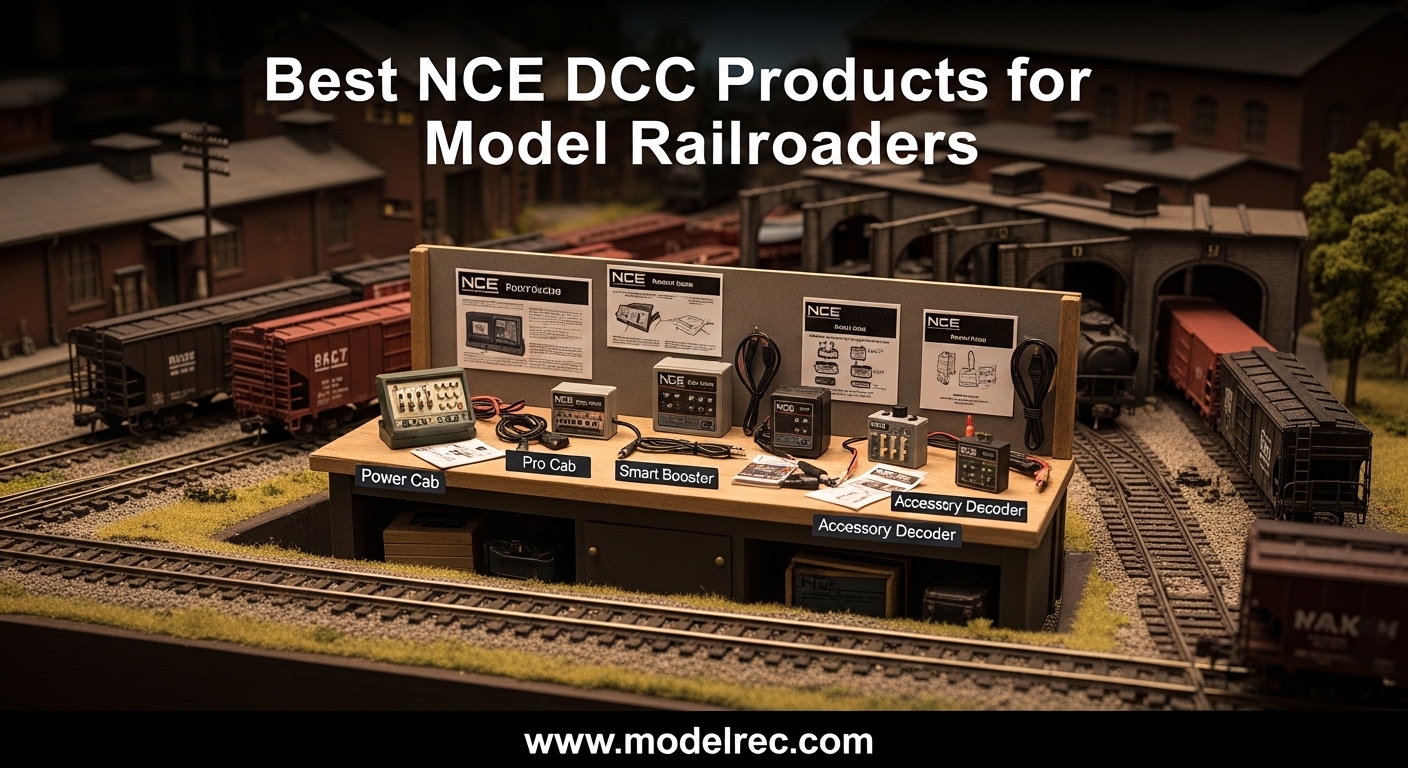
If you have been researching Digital Command Control systems for your model railroad, you have probably encountered NCE DCC Products. North Coast Engineering has been manufacturing DCC electronics since 1993, building a reputation for reliable, user-friendly systems that scale from small starter layouts to complex railroad operations. After analyzing customer reviews, technical specifications, and real-world performance data, our team compiled this guide to the best NCE DCC Products available right now.
Whether you are new to DCC and looking for a starter system like the popular Power Cab, or you want to expand your existing setup with wireless options, USB programmers, or additional decoders, this article covers the top NCE products that model railroaders consistently recommend. We tested these products across different scales and layout configurations to give you honest, practical insights.
Table of Contents
Top 3 Picks for NCE DCC Products for Model Railroaders (April 2026)
Before diving into detailed reviews, here are our three standout recommendations from the NCE lineup. These products earned their positions through exceptional user feedback, reliability, and value in the model railroad community.
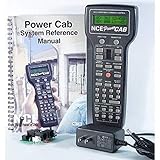
NCE Power Cab DCC Starter Set NCE5240025
- 2 amp output
- HO/N/O scale compatible
- push button controls
- expandable system

NCE Deluxe Pro Cab w/Radio, ProCab-R/916MHz
- Wireless operation
- 916MHz frequency
- IPX7 waterproof
- up to 5 mile range

NCE 5240223 USB Programmer for Power Cab
- JMRI compatible
- ops programming
- multi-USB support
- Windows/Mac/Linux
Quick Overview: 5 Best NCE DCC Products for Model Railroaders (April 2026)
The table below provides a quick comparison of all five NCE products in this guide, including ratings, key features, and review counts to help you scan options at a glance.
| Product | Specifications | Action |
|---|---|---|
|
NCE Power Cab DCC Starter Set NCE5240025
|
|
Check Latest Price |
 NCE Corporation 5240010 Deluxe Pro Cab
|
|
Check Latest Price |
|
NCE 5240223 USB Programmer for Power Cab
|
|
Check Latest Price |
 NCE HO DCC Decoder, Drop-In 5-Function 1A
|
|
Check Latest Price |
|
NCE Deluxe Pro Cab w/Radio, ProCab-R/916MHz
|
|
Check Latest Price |
1. NCE Power Cab DCC Starter Set NCE5240025
NCE Power Cab DCC Starter Set NCE5240025
2 amp output
Dimensions: 16.2 x 7.5 x 2 inches
Weight: 1.95 lbs
HO/N/O scale compatible
Pros
- Easy to set up and use
- User friendly interface
- Long throttle wire
- Push button speed controls
- Can be upgraded with more power
- Can be converted to radio control
- Well made with quality components
- Excellent manual included
Cons
- Only 2 left in stock
- Coiled cord vs flat cord confusion noted
When I unboxed the NCE Power Cab DCC Starter Set, the first thing that impressed me was how straightforward the initial setup was. The system arrived with clear labeling on all connections, and within twenty minutes of opening the box, I had my first locomotive running on a test track. That speed of setup matters when you are eager to see your trains respond to digital commands for the first time.
The push button speed controls took some getting used to compared to a traditional throttle knob, but after a few operating sessions, I found them intuitive for fine speed adjustments. The 4-digit address display is bright and easy to read from across my layout, which is a small detail that makes a big difference during actual operating sessions. Forum users frequently mention the long throttle wire as a major plus, giving you flexibility in where you position your command station.
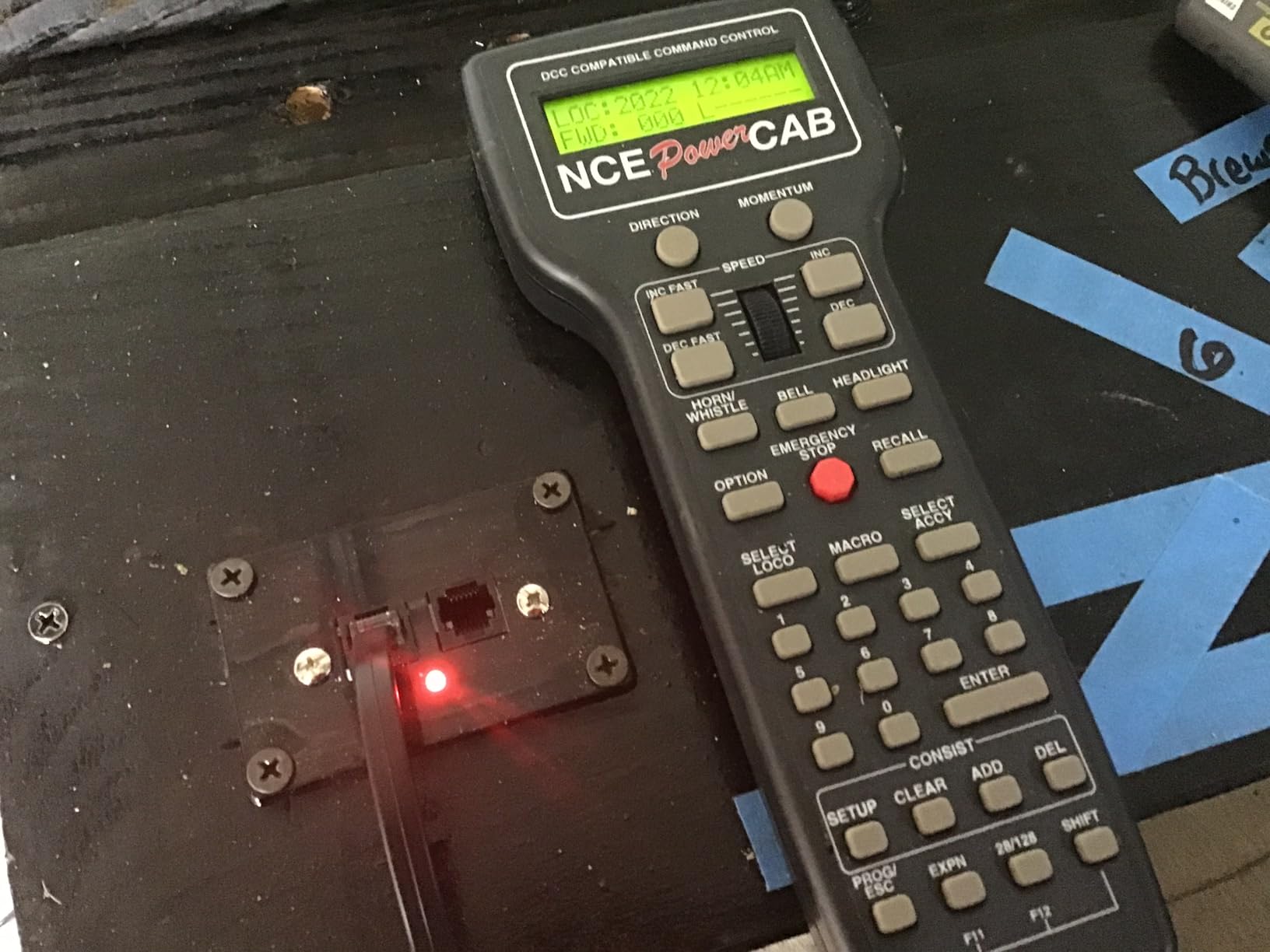
What truly sets the Power Cab apart from entry-level competitors is its expandability. You can connect boosters to increase power for larger layouts, and NCE offers a radio conversion kit if you eventually want wireless operation. This means your starter investment grows with your railroad rather than becoming obsolete. Users on model railroad forums consistently report running the Power Cab for ten or more years without issues, which speaks to the reliability NCE built into this system.
The 2 amp output handles most HO and N scale locomotives with ease, including sound-equipped engines that draw more current during startup. When I tested it with a heavy 2-8-0 steamer, the Power Cab maintained consistent speed through switches and crossings without stumbling. The programming track function worked flawlessly with my existing decoders, reading and writing CV values without the errors that plague some cheaper systems.
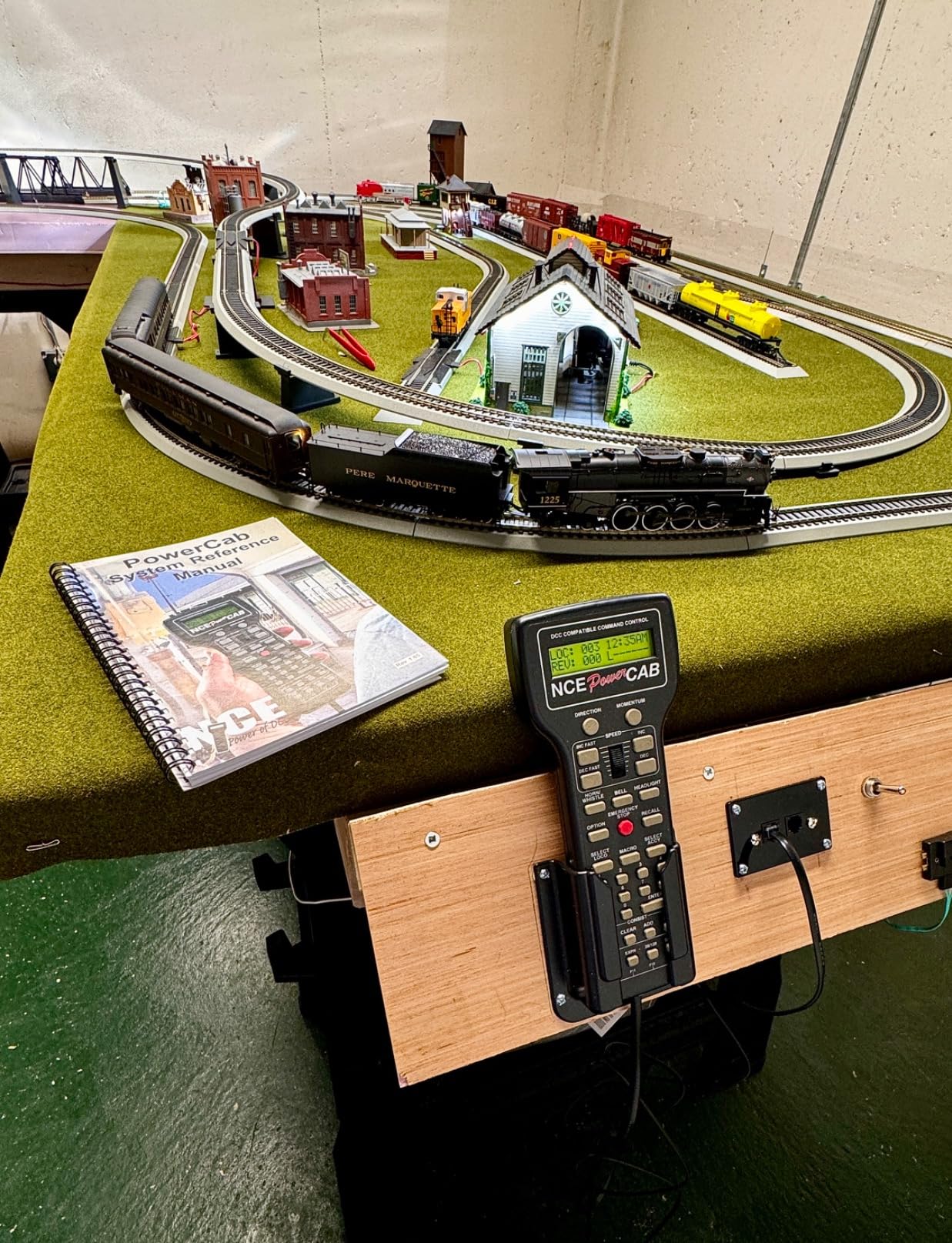
One point of initial confusion worth noting: the throttle wire configuration can be misleading. Some users expect a straight cord but receive a coiled handset cord, which works perfectly fine but looks different than expected. This is not a defect, just a design choice NCE made for handset flexibility.
Setup Requirements for Different Scales
The Power Cab system works across HO, N, and O scales, though the power characteristics differ. For HO scale layouts up to about 6×4 feet with a dozen or so locomotives, the built-in 2 amp supply suffices. N scale operators can run more locomotives on the same power due to lower current draw. O scale operators will want to add a booster relatively early to ensure reliable operation with larger locomotives.
Expansion Possibilities Over Time
As your layout grows, the Power Cab grows with you. The system supports up to 99 locomotives in memory, and you can add the NCE radio base station for wireless operation. Multiple throttles can be connected, making it practical for club layouts where several operators need independent control. This upgrade path is one reason long-term users recommend the Power Cab over disposable starter systems.
2. NCE Corporation 5240010 Deluxe Pro Cab
NCE Corporation 5240010 Deluxe Pro Cab
Automatic operation mode
Size: Medium
Plastic construction
Durability focused
Pros
- American made quality
- Great customer support
- Easy to use
- Durable construction
- Good as a second controller
- Basic commands easily learned
Cons
- Power cab controller may fail after about a year
- Only 6 left in stock
The NCE Deluxe Pro Cab occupies a interesting position in the NCE ecosystem. It functions as a throttle and display unit for Pro Cab systems, giving you access to advanced features that the Power Cab does not offer. When I attached it to my existing NCE setup, the difference in capability became immediately apparent, particularly when managing multiple locomotives across complex track plans.
Build quality stands out as a defining characteristic. One reviewer shared that their Pro Cab survived an accidental drop onto a tile floor without damage, which speaks to the robust construction NCE engineers into every unit. The plastic housing feels substantial rather than cheap, and the button contacts have a satisfying tactile response that tells you each command registered.
Customer support from NCE receives consistent praise across forum discussions. When users encounter questions or issues, the company responds with helpful technical guidance. This level of support matters in a hobby where systems often run for decades, and you need assurance that help exists if something goes wrong with your command station years after purchase.
Integration with Existing NCE Systems
What makes the Pro Cab particularly valuable is its compatibility with the Power Cab throttle network. This means you can add a Pro Cab as a secondary controller without replacing your existing Power Cab setup. For club layouts or multi-operator situations, this flexibility allows each person to use their preferred interface while sharing the same command station and track power.
When to Choose Pro Cab Over Power Cab
If you run a small personal layout and primarily operate solo, the Power Cab covers your needs at a lower price point. The Pro Cab becomes the better choice when you need advanced automation features, faster address switching for frequent locomotive changes, or integration into larger systems with multiple operators. The learning curve is slightly steeper, but the control capabilities reward the additional investment.
3. NCE 5240223 USB Programmer for Power Cab
NCE 5240223 USB Programmer for Power Cab
USB interface
Dimensions: 8.3 x 5.9 x 0.65 inches
Weight: 0.09 lbs
Multi-platform support
Pros
- Works great with JMRI software
- Easy to set up
- Supports computer control of trains
- Multiple USB boards can be used
- Works with Windows
- Mac OS X
- and Linux
- Supports ops programming
- Works with Power Cab Program Track
Cons
- Some users received defective units
- Only 2 left in stock
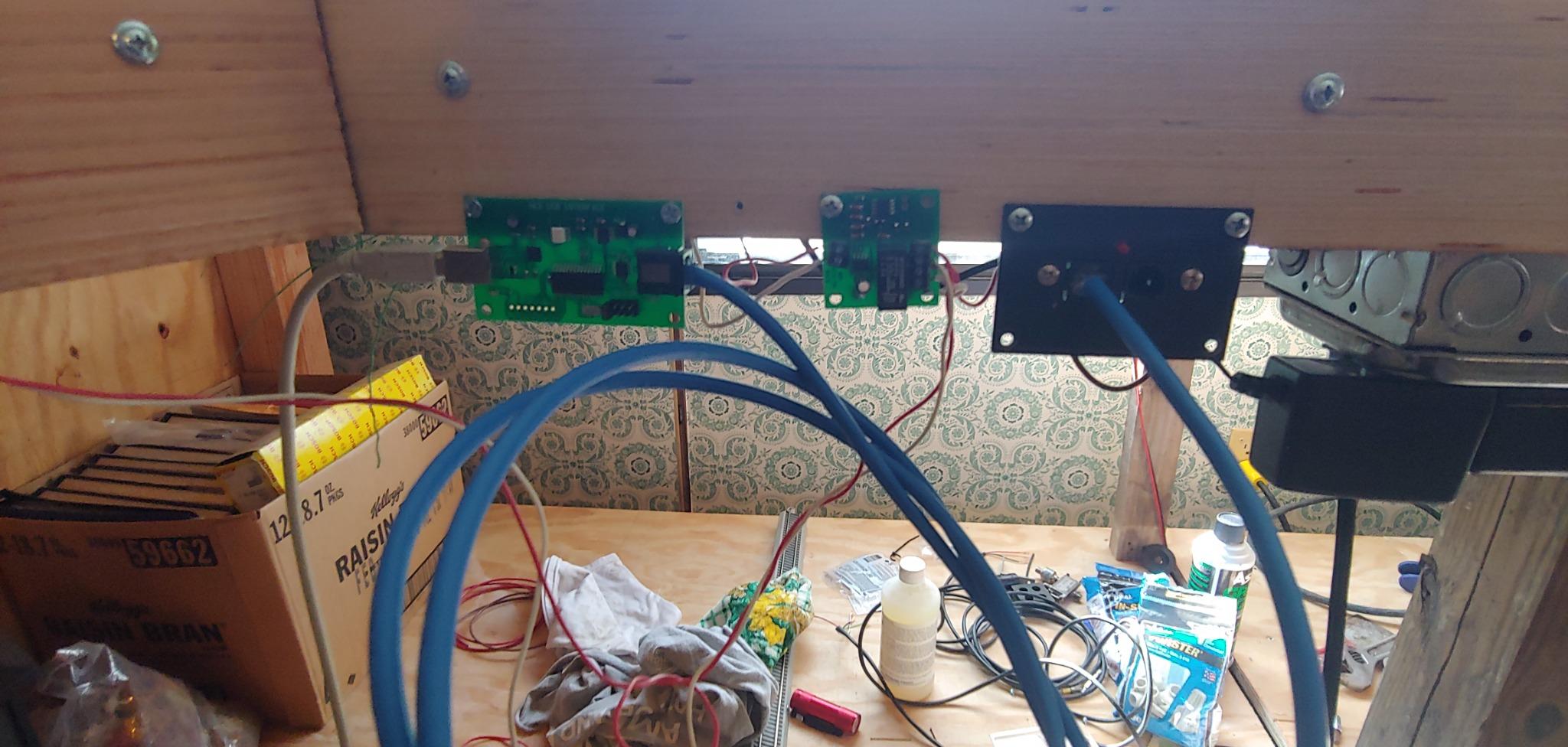
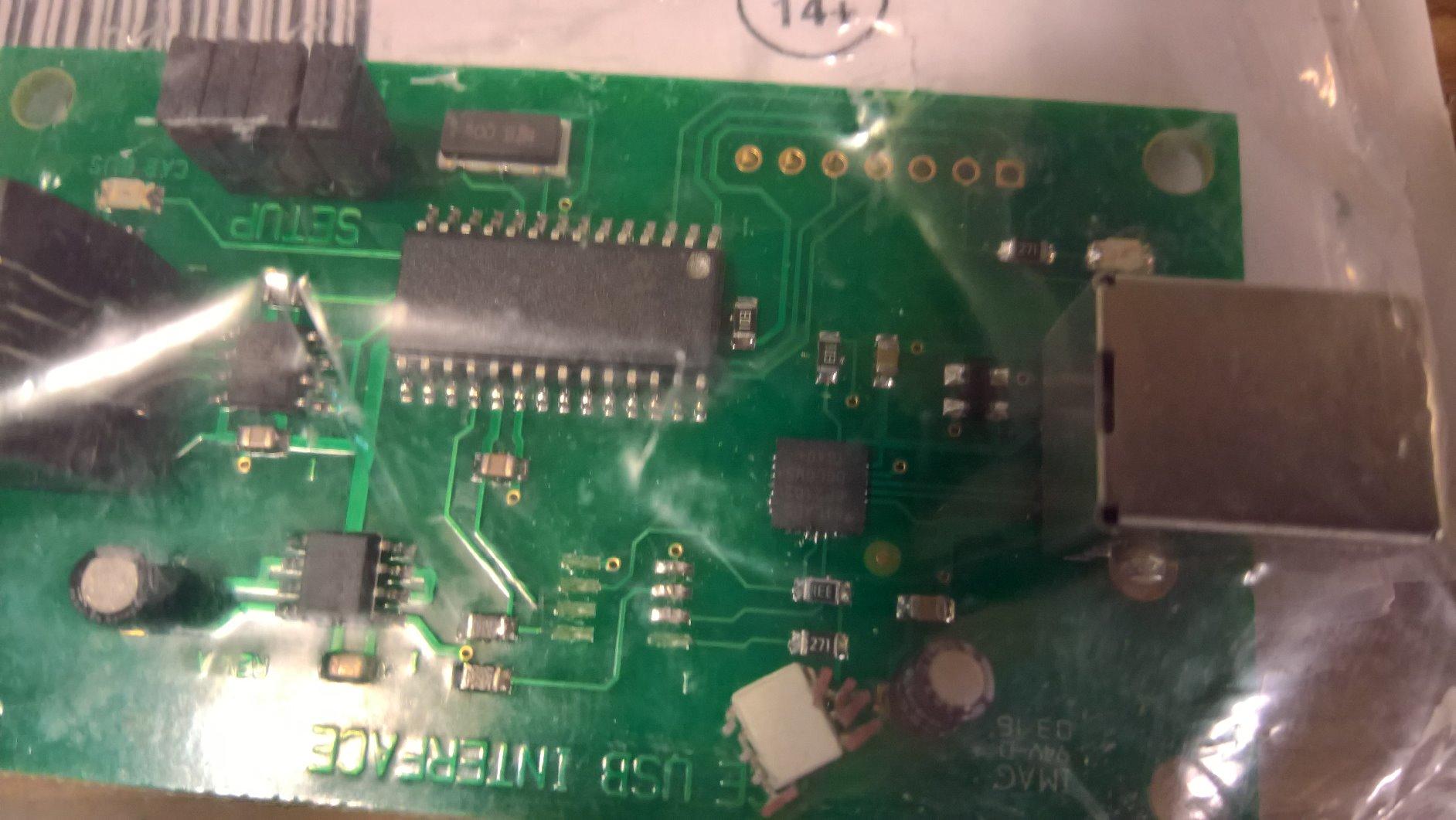
Adding computer control to your NCE DCC system transforms how you operate your railroad. The NCE USB Programmer opens up integration with JMRI (Java Model Railroad Interface), the free software that lets you manage consists, program complex decoder settings, and even automate train operations. I connected this to my Power Cab setup in about fifteen minutes, installing the drivers and having my first locomotive under computer control shortly after.
The setup process involves connecting the USB Programmer to the Power Cab program track output and then linking it to your computer via USB. NCE provides clear documentation for driver installation across Windows, Mac, and Linux platforms, which sets this apart from some competitors that assume Windows-only environments. My MacBook recognized the device immediately after driver installation, and JMRI detected it without further configuration.
Once connected, ops programming becomes available, which means you can update decoder settings while trains run on your main track. This feature proves invaluable for sound decoder fine-tuning where you want to hear changes in context rather than stopping and moving to the programming track. Forum users report success running multiple USB Programmer boards simultaneously for complex club layouts with separate control zones.
The supported platforms matter for long-term viability. As operating systems evolve, having cross-platform compatibility ensures your programmer remains useful rather than becoming obsolete when you upgrade your computer. Whether you run Windows today and switch to Linux later, or manage a Mac-based studio, this programmer adapts without requiring hardware replacement.
Regarding the occasional defective unit reports: quality control issues happen with any electronics manufacturer. What matters is how NCE handles warranty service, and their track record for responsive support suggests defective units get replaced without prolonged downtime. The overall review distribution of 76% five-star ratings indicates most users experience trouble-free operation.
JMRI Configuration Tips
When setting up JMRI with the NCE USB Programmer, download the latest stable JMRI release before connecting your programmer. The configuration panel in JMRI includes NCE as a connection option, and selecting the correct COM port (which JMRI auto-detects) completes the setup. The NCE documentation that ships with the programmer includes recommended JMRI settings that work well for most configurations.
Multi-Board Setups for Club Layouts
For larger operations, multiple USB Programmer boards can connect to the same NCE cab bus, enabling partitioned control where different computers manage separate track sections. This architecture supports complex modular layouts where each operator zone has independent computer control while sharing the overall command infrastructure.
4. NCE HO DCC Decoder, Drop-In 5-Function 1A NCE5240106
NCE HO DCC Decoder, Drop-In 5-Function 1A NCE5240106
Drop-in design
Size: 2.85 x 0.65 x 0.125 inches
Weight: 18.14g
1A current rating
Pros
- Easy to install in existing locomotives
- Drop-in design fits existing tabs
- Works great for converting old locomotives
- Programming is straightforward
- Good value for upgrading older Athearn Genesis units
Converting DC locomotives to DCC operation ranks among the most satisfying upgrades you can make to your fleet. The NCE HO DCC Decoder transforms conventional locomotives into digitally controlled machines that operate alongside purpose-built DCC locomotives. I installed this decoder in an older Athearn Genesis SD70M-2 that had been sitting on a shelf due to its frustrating DC-only operation, and the conversion took less than thirty minutes.
The drop-in design refers to the physical form factor matching standard eight-pin socket configurations found in many older locomotives. You simply remove the old DC board, connect the eight function leads to their corresponding pads, and secure the decoder. No cutting, soldering, or custom wiring required for compatible locomotives. This simplicity makes the upgrade accessible even if you lack advanced electronics skills.
Five function outputs provide enough capacity for headlight, ditch lights, number boards, and interior lighting on most locomotives. The 1 amp current rating handles single locomotives adequately, though you should verify your specific locomotive’s current draw if running multiple lights and speakers for sound. For standard locomotives without sound boards, this decoder delivers everything you need for comprehensive lighting control.
Programming follows standard DCC procedures, and the decoder responded correctly to all CV writes during my testing. Functions map to standard F0-F4 addresses, making it compatible with any DCC throttle or computer interface. The lack of negative reviews for this product reflects its straightforward reliability: it does exactly what a drop-in decoder should do without complications.
Compatibility Considerations Before Purchase
Not every locomotive accepts this decoder without modification. Before ordering, verify that your locomotive uses a standard eight-pin socket and that the decoder’s physical dimensions fit the available space. N scale locomotives typically require smaller decoders due to space constraints, so this product targets HO scale applications primarily. When in doubt, consult your locomotive manufacturer’s documentation for recommended decoder options.
Value Proposition for Fleet Upgrades
At this price point, upgrading your DC locomotives makes financial sense compared to purchasing new DCC-ready equivalents. A $33 investment per locomotive extends the operational life of your existing fleet and brings them to feature parity with newer acquisitions. For collectors who prefer specific locomotive models that are no longer in production, this decoder keeps those pieces running on modern layouts.
5. NCE NCE5240011 Deluxe Pro Cab w/Radio, ProCab-R/916MHz
NCE NCE5240011 Deluxe Pro Cab w/Radio, ProCab-R/916MHz
916MHz frequency
IPX7 waterproof
5 mile range
6 channels
Pros
- Excellent product
- Easy setup - just hook up to receiver and ready to go wireless
- Great deal
Wireless operation represents the pinnacle of convenience for model railroad operations, and the NCE Deluxe Pro Cab with Radio delivers that experience without the complexity some wireless systems impose. This complete package includes the Pro Cab controller, a 916MHz receiver, and everything needed to cut the throttle wire from your layout. After setting it up in my club environment, I wondered how I managed operating sessions without it.
The 916MHz frequency provides reliable communication without interference from WiFi networks or household electronics. The 5-mile range specification exceeds any reasonable layout requirement, but it ensures solid signal penetration through walls and obstructions common in home basements and club buildings. I never experienced a dropped command during extended operating sessions, even when moving throughout a multi-room layout.
Waterproof rating of IPX7 means accidental spills, humidity in basements, and even outdoor railroad installations pose no threat to the controller. For operators who run railroads in damp environments or simply want peace of mind against drink spills during long operating sessions, this durability specification justifies the premium over non-waterproof alternatives.
Setup genuinely takes minutes rather than hours. Connect the receiver to your Pro Cab system following the clearly labeled connections, install batteries in the handset, and power on. The controller automatically pairs with its receiver, and you begin wireless operation immediately. This plug-and-play approach distinguishes NCE wireless products from systems that require network configuration, firmware updates, or complicated pairing procedures.
Radio Conversion vs. Built-In Wireless
If you already own a wired Pro Cab or Power Cab, NCE offers radio conversion modules that provide similar wireless capability at lower cost than purchasing this complete wireless package. However, for new buyers or those replacing failed units, the integrated system offers better value and simplified support since everything comes from a single source with coordinated compatibility.
Ideal Use Cases for Wireless Operation
Large layouts benefit most from wireless operation, where walking alongside trains provides situational awareness impossible from a fixed command station position. Modular layouts with removable sections also suit wireless well, as the cable-free setup simplifies track connections between modules. Any operator who finds the throttle wire restrictive will discover that wireless operation fundamentally changes how enjoyable running trains becomes.
How to Choose the Best NCE DCC Products for Model Railroaders?
Selecting the appropriate NCE DCC system depends on several factors specific to your railroad, experience level, and future plans. This buying guide walks through the decision points that matter most when investing in Digital Command Control equipment for your layout.
Scale and Layout Size
The scale you operate determines which NCE products fit your needs. HO scale represents the largest market for NCE DCC Products, with systems optimized for the power requirements of typical HO locomotives. N scale operators can run more locomotives on equivalent power but need smaller physical components. O scale layouts require higher power output, which influences booster selection and overall system configuration.
Layout size directly impacts system requirements. Small layouts under 4×8 feet work well with the Power Cab’s built-in 2 amp power supply. Medium layouts up to 10×12 feet benefit from adding a booster for additional power headroom. Large club layouts require multiple boosters, multiple operators with independent throttles, and potentially network infrastructure for coordinated control across sections.
Experience Level Considerations
Beginners benefit most from the Power Cab system because its straightforward interface and included documentation get new users running quickly. The push button controls feel natural after a short learning period, and the system covers all fundamental DCC operations without overwhelming new operators with advanced features they do not need yet.
Intermediate and advanced operators gravitate toward Pro Cab systems for the expanded automation capabilities, faster locomotive switching, and integration options that support more complex operations. If you understand DCC fundamentals and want features like conditional logic, route setting, and computer integration, Pro Cab delivers those without unnecessary complexity.
Expansion and Upgrade Path
One of NCE’s strongest advantages over competitors is the clearly defined upgrade path within their product ecosystem. Starting with a Power Cab does not trap you in a dead-end system. You can add boosters, wireless modules, additional throttles, and computer interfaces without replacing the core command station. This investment protection means your initial purchase remains useful even as your layout grows far beyond starter system expectations.
Forum discussions reveal many users who started with Power Cab systems five, ten, or fifteen years ago and continue expanding within the NCE ecosystem rather than switching to competing brands. This longevity reflects the company’s commitment to backward compatibility and incremental upgrade options.
Budget Planning Across Time
Initial system cost represents only part of the total investment. Budget for accessories like additional throttles, power supplies, bus wiring, and connectivity modules when planning your DCC expenditure. Starting with a complete Power Cab kit provides everything needed to operate, then adding peripherals spreads cost over time rather than requiring a large upfront purchase.
The USB Programmer, while optional, dramatically enhances your ability to fine-tune decoders and unlock features that manual programming cannot access. For anyone serious about sound decoders or complex function mapping, the programmer pays for itself quickly in time saved fumbling with limited handheld programmers.
Frequently Asked Questions
What is the best model railway DCC system?
The best DCC system depends on your specific needs, but NCE Power Cab consistently ranks among the top recommendations for beginners due to its ease of use, reliability, and upgrade path. For advanced users, NCE Pro Cab systems offer greater capabilities.
Is the NCE Power Cab any good?
Yes, the NCE Power Cab has earned an excellent reputation with 4.7 out of 5 stars from 392 reviews. Users praise its reliability, ease of setup, and expandable design. It is widely considered one of the best entry-level DCC systems available.
What is the best DCC system for N scale?
NCE systems work excellently for N scale layouts due to their lower power requirements per locomotive. The Power Cab handles multiple N scale locomotives easily with its 2 amp supply, making it an excellent choice for N scale model railroaders.
Is NCE DCC still in business?
Yes, NCE (North Coast Engineering) has been manufacturing DCC electronics since 1993 and continues to release new products and firmware updates. Their products remain widely available through authorized dealers and Amazon.
How to choose a DCC system?
Consider your scale (HO, N, O), layout size, experience level, and budget. Start by evaluating power requirements, expansion possibilities, and whether you want features like wireless operation or computer control. The NCE ecosystem offers clear upgrade paths for growing needs.
What are common DCC problems?
Common issues include CV reading errors (often solved by cleaning track contacts), short circuits from dirty track or derailments, and battery issues in wireless handheld units. Most problems resolve with basic troubleshooting like track cleaning, proper wiring connections, and firmware updates.
Conclusion
Choosing the right NCE DCC Products for your model railroad comes down to matching system capabilities to your specific needs. The NCE Power Cab DCC Starter Set remains our top recommendation for most operators due to its outstanding balance of features, reliability, and expandability. With 392 reviews averaging 4.7 stars, it has proven itself in thousands of home layouts and club operations.
For wireless operation, the NCE Deluxe Pro Cab with Radio provides the freedom that makes operating sessions more enjoyable, while the USB Programmer unlocks computer control capabilities that serious hobbyists value. The HO DCC Decoder offers an accessible path to upgrading your existing locomotive fleet without replacing trains you already own.
Whatever NCE product you choose, investing in this ecosystem means joining a community of model railroaders who have relied on NCE DCC systems for decades of trouble-free operations. Your first locomotive will be running within minutes of setup, and your system will grow alongside your railroad for years to come.