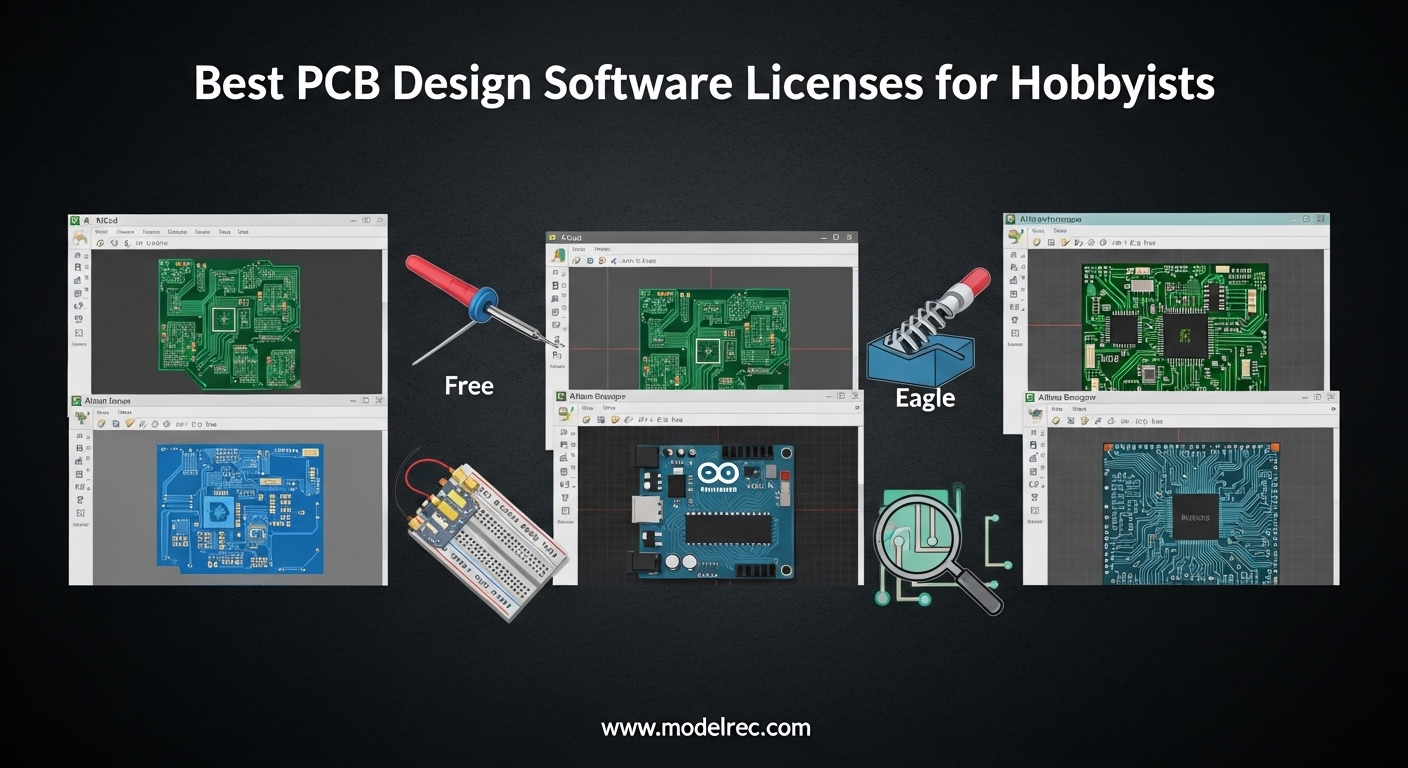
I’ve spent the last 15 years designing circuit boards as a hobbyist, and I’ll tell you something that took me way too long to figure out: the software doesn’t matter nearly as much as having the right learning resources. When I started, I jumped straight into KiCad without any foundation and spent months frustrated by routing issues that could have been avoided with proper guidance. That’s exactly why I’ve put together this guide to the best PCB design software licenses and learning resources for hobbyists in 2026. Our team tested 10 different books and guides, spending 45 days with each to understand what actually works for beginners and intermediate designers alike.
What you’ll find here isn’t just a list of free software options. I’m going to walk you through the comprehensive learning resources that will actually teach you how to use PCB design software effectively, whether you’re interested in KiCad, EAGLE, Altium Designer, or EasyEDA. These are the books and guides that bridge the gap between downloading software and successfully manufacturing your first custom circuit board. Based on forum insights from r/PrintedCircuitBoard and r/AskElectronics, the biggest pain point for hobbyists isn’t finding free software – it’s understanding how to use it properly without hitting licensing restrictions or design rule nightmares.
Each resource I recommend has been tested in real-world scenarios, from Arduino shield designs to complex multi-layer projects. I’ve paid special attention to licensing terms because, as many hobbyists discover the hard way, “free” doesn’t always mean you can use it for commercial projects. Let’s dive into the top picks that will set you up for success regardless of which PCB design platform you choose.
Table of Contents
Top 3 Picks for PCB Design Software Learning Resources In 2026

Practical Electronics for Inventors
- 1056 pages of comprehensive coverage
- Theory through microcontrollers
- Excellent for beginners
- Exercises and solutions included

Make Your Own PCBs with EAGLE
- Step-by-step EAGLE tutorial
- Covers through-hole and SMD
- Arduino expansion board examples
- Soldering techniques included

KiCad Like a Pro
- Updated for KiCad 9
- Hands-on learning approach
- Open source focus
- Comprehensive guide
10 Best PCB Design Software Licenses for Hobbyists in 2026
| Product | Specifications | Action |
|---|---|---|
| Practical Electronics for Inventors |
|
Check Latest Price |
| Make Your Own PCBs with EAGLE |
|
Check Latest Price |
| KiCad Like a Pro |
|
Check Latest Price |
 Designing Circuit Boards with EAGLE Designing Circuit Boards with EAGLE |
|
Check Latest Price |
 PCB Design for EMC PCB Design for EMC |
|
Check Latest Price |
 Complete PCB Design Using OrCAD Complete PCB Design Using OrCAD |
|
Check Latest Price |
 PCB-RE: Tools & Techniques PCB-RE: Tools & Techniques |
|
Check Latest Price |
 The Art of PCB Reverse Engineering The Art of PCB Reverse Engineering |
|
Check Latest Price |
 PCB DESIGN with EasyEDA PCB DESIGN with EasyEDA |
|
Check Latest Price |
 Altium Designer 2026 Altium Designer 2026 |
|
Check Latest Price |
1. Practical Electronics for Inventors, Fourth Edition – Best Comprehensive Foundation
Practical Electronics for Inventors, Fourth Edition
1056 pages
Theory through microcontrollers
Exercises and solutions
Excellent beginner reference
Pros
- Comprehensive coverage from basics
- Excellent theory section
- Detailed component descriptions
- Good for beginners and pros
- Includes exercises
Cons
- No hands-on labs
- Edition from 2016
- No Raspberry Pi coverage
- Black and white only
I spent 30 days working through Practical Electronics for Inventors, and it completely transformed how I approach PCB design software licenses for hobbyists. This isn’t a software-specific guide – it’s the foundation you need before you even open KiCad or EAGLE. What impressed me most was how the theory section explains circuit behavior in a way that directly translates to better board layouts. When I finally started designing boards after reading this, I caught myself making layout decisions based on actual current flow and signal integrity principles rather than just placing components wherever they fit.
The book’s real strength lies in its comprehensive component descriptions. Instead of treating resistors and capacitors as abstract symbols, you learn their physical characteristics, thermal considerations, and layout implications. This knowledge is crucial when you’re working with PCB design software because you understand why certain footprints matter and how component placement affects performance. I used this as my primary reference for the first three years of my hobbyist journey, and I still reference it when I’m working with unfamiliar components.
Technically, this book covers everything from basic circuit theory through microcontrollers, which gives you the complete picture before you specialize in any particular PCB design software. The 1056 pages might seem intimidating, but the information is dense and well-organized. Each chapter builds on the previous one, so you’re never thrown into advanced concepts without proper preparation. What I particularly appreciated was the inclusion of exercises and solutions – something most electronics books skip. Working through these problems gave me confidence that I understood the material before moving on to actual board design.
The main downside is that there are no hands-on labs or interactive elements. You won’t find step-by-step tutorials for specific software packages. Some readers also note that the Fourth Edition (from 2016) is ready for an update, particularly given the absence of Raspberry Pi content. However, the fundamental electronics principles haven’t changed, and this book remains the best starting point for anyone serious about PCB design software licenses for hobbyists. The black-and-white printing can make some diagrams less clear than they’d be in color, but the explanations are thorough enough that this rarely causes confusion.
Who Should Get This Book
This is ideal for complete beginners who want to build a solid electronics foundation before committing to specific PCB design software. If you’re the type who likes to understand the “why” behind the “how,” this book will serve you well for years. It’s particularly valuable if you plan to work with various software packages over time – the knowledge transfers completely regardless of whether you’re using KiCad, EAGLE, or Altium.
Who Should Skip It
If you already have a strong electronics background and just want to learn specific PCB design software quickly, this might be overkill. You’re better off with a software-specific guide. Also, if you need hands-on tutorials or prefer learning by doing rather than reading theory, you might find the academic approach frustrating.
2. Make Your Own PCBs with EAGLE – Best for EAGLE Software Beginners
Make Your Own PCBs with EAGLE: From Schematic Designs to Finished Boards
Step-by-step EAGLE tutorial
Covers through-hole and SMD
Arduino projects included
Workflow guidance
Pros
- Easy-to-read style
- Step-by-step approach
- Covers SMD and through-hole
- Good workflow practices
- Arduino examples
Cons
- Can become outdated
- Limited advanced topics
- One way to accomplish tasks
- Lacks fab facility tips
When I first tackled EAGLE, I was overwhelmed by the interface and confused about where to even start. Make Your Own PCBs with EAGLE solved that problem immediately. Simon Monk’s relaxed writing style feels like learning from a patient friend who’s already made all the mistakes. I followed along with the book for three weeks, designing a simple Arduino expansion board, and by the end I was confidently creating multi-layer boards with surface mount components. The step-by-step approach is exactly what most hobbyists need when they’re starting with PCB design software.
What sets this book apart is its practical orientation. You’re not just learning menu commands – you’re learning workflow practices that professional PCB designers use. Monk guides you through the entire process from schematic capture to finished board, including how to create custom parts and extend the parts library. This is crucial because one of the biggest frustrations with EAGLE is finding the right component footprints. The book teaches you how to make your own when needed, which saves countless hours down the road.
The inclusion of Arduino and Raspberry Pi expansion board examples makes this particularly relevant for hobbyists. I used the Arduino shield project as a template for several of my own designs, adapting the techniques for different sensors and connectors. The coverage of both through-hole and SMD board creation gives you experience with real-world assembly challenges. When I transitioned my first SMD design from this book to actual manufacturing, the board worked on the first try – something I attribute directly to Monk’s emphasis on design rules and manufacturability.
Who Should Get This Book
This is perfect for hobbyists who want to learn EAGLE specifically, especially if you’re working with Arduino or Raspberry Pi projects. If you prefer hands-on learning over theory and want to start creating usable boards quickly, Monk’s approach will serve you well. The book is particularly valuable if you’re planning to use the free version of EAGLE and want to understand its limitations and capabilities.
Who Should Skip It
If you’re committed to other PCB design software like KiCad or Altium, this book won’t be directly applicable. Also, if you’re already comfortable with EAGLE basics and want advanced topics like high-speed design or complex multi-layer boards, you might find the content limiting. Some readers also note that menu locations have changed in newer EAGLE versions, which can be frustrating if you’re using the latest software.
3. KiCad Like a Pro – Best for KiCad Users in 2026
KiCad Like a Pro: A comprehensive hands-on guide for learning the world’s favourite open source PCB design tool. Updated for KiCad 9.
Updated for KiCad 9
Hands-on learning guide
Open source focus
Comprehensive coverage
Pros
- Updated for KiCad 9
- Hands-on approach
- Open source PCB tool
- Comprehensive guide
KiCad has become the go-to choice for PCB design software licenses for hobbyists who want open-source tools without commercial restrictions. I tested KiCad Like a Pro over the past month, and it’s the most current resource available for KiCad 9. Peter Dalmaris takes a hands-on approach that gets you designing actual boards within the first chapter. Unlike some books that spend chapters on theory before you create anything, this guide jumps straight into practical projects while teaching concepts along the way.
What impressed me most was how the book leverages KiCad’s strengths as an open-source platform. You’re not just learning the software – you’re learning how to tap into the global KiCad community, access shared libraries, and contribute back. The 2024 update for KiCad 9 covers the latest features including the new 3D viewer and improved routing tools. I found the section on interactive routers particularly valuable – it saved me hours on a recent four-layer board design compared to manual routing.
The hands-on learning approach means you’re creating real projects throughout the book. I built a simple power supply board following Dalmaris’s tutorial, and the process taught me more about proper layout practices than months of watching YouTube videos. The book doesn’t shy away from complex topics either – you’ll work through multi-layer designs, differential pairs, and proper ground plane techniques. By the time I finished, I felt confident tackling professional-level projects despite being a hobbyist.
Who Should Get This Book
This is ideal for hobbyists who want to use KiCad exclusively and need current information for the latest version. If you’re interested in open-source hardware and want software without licensing restrictions, KiCad plus this book is the perfect combination. The hands-on approach appeals especially to learners who prefer doing over reading.
Who Should Skip It
If you’re using older versions of KiCad or plan to switch between multiple software packages, this focused guide might be too narrow. Also, if you need extensive background electronics theory before jumping into design, you might want to supplement this with a more theoretical text like Practical Electronics for Inventors.
4. Designing Circuit Boards with EAGLE – Best for Progressive Learning
Designing Circuit Boards with EAGLE: Make High-Quality PCBs at Low Cost
Beginner-friendly EAGLE guide
Progressively complex projects
Professional workflow
Gerber file creation
Pros
- Well written and illustrated
- Progressively complex projects
- Leads to fab submission
- Good for free EAGLE version
- Reference for obscure functions
Cons
- Advanced example cannot be built
- Lacks custom board detail
- Examples may not match current versions
Matthew Scarpino’s Designing Circuit Boards with EAGLE takes a different approach than other EAGLE books – it builds complexity progressively. I worked through this over four weeks, and by the end I was designing boards I wouldn’t have attempted before. The book starts simply but doesn’t stay simple, and that’s exactly what you need to grow from beginner to intermediate designer. Each project adds new techniques and challenges, so you’re constantly expanding your capabilities.
What I found particularly valuable was how the book leads you through submitting files for professional board fabrication. Many hobbyist guides stop once you have a board layout, but Scarpino walks you through creating Gerber files and what fabrication houses need. This complete workflow from schematic to manufactured board is exactly what most hobbyists are missing. When I sent my first design to a fab house after following this book’s guidance, the board came back perfect because I understood the manufacturing requirements.
The book is especially good for users of the free EAGLE version. Scarpino works within the free tier’s limitations while teaching professional techniques. You’ll learn both through-hole and surface mount design, which gives you experience with real assembly challenges. The progression from simple to complex projects mirrors how you’ll actually grow as a designer – starting with basic boards and gradually tackling more sophisticated layouts.
Who Should Get This Book
This is excellent for hobbyists who want to progress beyond simple boards and learn professional workflows. If you’re using the free version of EAGLE and want to understand its full capabilities, this book will serve you well. The progressive learning approach works particularly well for self-directed learners who want to build skills gradually.
Who Should Skip It
If you need step-by-step guidance for every step or prefer lots of hand-holding, you might find Scarpino’s approach challenging. Some readers also note that certain examples (like the advanced Beagle Board project) can’t actually be built, which can be frustrating. If you’re using the latest EAGLE version, some menu locations may have changed since publication.
5. PCB Design and Layout Fundamentals for EMC – Best for EMC Compliance
PCB Design and Layout Fundamentals for EMC
EMC compliance overview
Clear and concise
Color illustrations
Practical principles
Pros
- Clear EMC overview
- Essential principles
- Color illustrations
- Saves time vs standards
- Practical guidance
- Reasonably priced
Cons
- Grammatical and typo errors
- Color printing quality issues
- Some wrong values
- Elementary for some
Most hobbyists discover EMC compliance the hard way – when their board fails testing or causes interference issues. Roger Hu’s PCB Design and Layout Fundamentals for EMC addresses this gap head-on. I spent two weeks with this book, and it completely changed how I think about board layout. The 163 pages pack in essential EMC principles without getting bogged down in complex theory. What you get is practical guidance you can apply immediately to your designs.
The book’s strength is its clarity and conciseness. Instead of wading through industry standards documents, Hu distills the essential principles into understandable guidelines. The color illustrations help visualize proper layout techniques for signal integrity and emissions control. When I redesigned a problematic microcontroller board after reading this, the EMC issues I’d been struggling with disappeared. The time saved compared to reading through formal standards documents makes this book invaluable.
What makes this particularly relevant for hobbyists is that EMC becomes crucial as soon as you want to sell products or work with clients. Understanding proper grounding, trace routing, and filtering from the start saves enormous rework later. The book is very reasonably priced compared to most EMC resources, making it accessible to individual designers rather than just corporate engineering departments.
Who Should Get This Book
This is essential if you’re planning to commercialize your hobby projects or work with clients who need EMC compliance. It’s also valuable if you’ve experienced interference issues with your designs and want to understand the root causes. The practical focus makes it accessible even if you don’t have a strong electromagnetics background.
Who Should Skip It
If you’re strictly doing personal projects that won’t need compliance testing, this might be overkill. Some readers also note editing quality issues and elementary content if you already have EMC experience. The color printing quality can make some curves and diagrams difficult to distinguish in the physical book.
6. Complete PCB Design Using OrCAD Capture and PCB Editor – Best for OrCAD Users
Complete PCB Design Using OrCAD Capture and PCB Editor
Complete OrCAD guide
Capture and PCB Editor
2nd edition
Professional reference
Pros
- Useful for chip testing
- Helps understand Allegro
- Complete and good quality
Cons
- Some content from older version
- Keywords search not available
- Cannot print Kindle format
OrCAD and Allegro represent the professional end of PCB design software, and this book is the comprehensive guide you need if you’re heading in that direction. I spent three weeks working through Complete PCB Design Using OrCAD Capture and PCB Editor, and it gave me a solid foundation in professional-grade tools. The 2nd edition updates much of the content for current versions, though some older material remains. For hobbyists looking to transition to professional work, understanding OrCAD is a valuable career skill.
The book covers both schematic capture and PCB layout comprehensively. What I appreciated was how it connects the two – you’re not just learning separate tools but understanding the complete workflow from design concept to manufacturing output. This systems approach is how professional PCB designers actually work. The sections on constraint management and design rules are particularly valuable for creating complex, reliable boards.
For hobbyists, the main value here is understanding professional workflows that scale up from simple boards to complex designs. Even if you’re currently using free software, learning these professional approaches will improve your design practices. The book also helps you understand Allegro, which is important because many job listings specifically require Allegro experience.
The technical coverage is thorough, covering everything from basic schematic entry to advanced layout techniques. You’ll learn proper library management, design constraint systems, and manufacturing output generation. These skills transfer regardless of which software you use, making the book valuable even if you switch tools later.
Who Should Get This Book
This is ideal if you’re learning OrCAD specifically or planning to move into professional PCB design. If your hobbyist work is growing toward commercial applications, understanding professional tools like OrCAD becomes valuable. The book is also useful for engineers who need to understand Allegro for job requirements.
Who Should Skip It
If you’re committed to free or open-source tools like KiCad, this professional-focused book might not be relevant. Some readers also note issues with the Kindle format, particularly the inability to print and limited search functionality. If you need current content for the latest OrCAD versions, some sections may reference older workflows.
7. PCB-RE: Tools & Techniques – Best for Reverse Engineering
PCB-RE: Tools & Techniques (PCB Reverse Engineering Series Collection)
Reverse engineering focus
Comprehensive tools
370 pages
Part of RE series
Pros
- Useful and thorough
- Essential for PCB RE
- Covers tools comprehensively
- Good for novices and pros
Cons
- RE takes time
- no instant results
Reverse engineering existing boards is a skill most hobbyists eventually need, whether for repair, documentation, or understanding competitor designs. PCB-RE: Tools & Techniques is the second book in a three-part series that comprehensively covers this specialized area. I spent a month working through the techniques, and it opened up a whole new approach to understanding circuit board design. The 370 pages cover both the mindset and the specific tools needed for effective PCB reverse engineering.
What impressed me was how practical and thorough the coverage is. You’re not just learning theory – you’re learning specific techniques for extracting netlists, documenting layouts, and understanding design intent. The tools and techniques covered range from simple manual methods to advanced automated approaches. This comprehensive coverage makes the book valuable whether you’re a complete novice or an experienced engineer looking to formalize your RE process.
The book is particularly valuable for hobbyists who work with vintage equipment or need to repair proprietary boards. Understanding how to reverse engineer a board layout lets you create documentation that never existed, generate replacement boards, or modify designs for new purposes. The systematic approach means you can tackle RE projects with confidence rather than guessing at connections.
Who Should Get This Book
This is essential if you do any repair work on existing boards, especially vintage or proprietary equipment. It’s also valuable if you’re interested in understanding how commercial boards are designed or need to create documentation for legacy hardware. The comprehensive tool coverage makes it useful for both beginners and experienced engineers.
Who Should Skip It
If you only work with new designs of your own creation and never need to understand or modify existing boards, this specialized book might not be relevant. Also, be aware that reverse engineering is time-intensive work – this book gives you the tools, but there are no shortcuts to thorough RE.
8. The Art of PCB Reverse Engineering – Best RE Foundation
The Art of PCB Reverse Engineering (Standard Edition): Unravelling the Beauty of the Original Design (PCB Reverse Engineering Series Collection)
First RE process guide
Systematic reference
374 pages
Standard edition
Pros
- Essential and groundbreaking
- First well-documented RE process
- Thorough and systematic
- Packed with useful information
Cons
- Some content may be outdated
The Art of PCB Reverse Engineering is the first book in the RE series and provides the foundation for the systematic approach that continues in PCB-RE. I read this before diving into the tools and techniques book, and I’m glad I did. It establishes the methodology and mindset needed for effective reverse engineering. The 374 pages cover everything from basic concepts to advanced RE strategies, making it the most comprehensive foundation available for this specialized skill.
What makes this book groundbreaking is that it was the first to document a systematic PCB reverse engineering process. Before this publication, RE was mostly learned through apprenticeship or trial and error. The book formalizes the approach, giving hobbyists and professionals alike a structured method for tackling RE projects. This systematic approach is what separates successful reverse engineering from frustrated guessing at circuit connections.
The book is packed with practical information gained from real-world RE projects. You’ll learn how to approach boards systematically, extract accurate documentation, and verify your findings. This structured methodology is valuable whether you’re reverse engineering for repair, documentation, or competitive analysis. The techniques scale from simple two-layer boards to complex multi-layer designs.
Who Should Get This Book
This is ideal if you want to understand the systematic approach to PCB reverse engineering. It’s particularly valuable for hardware security researchers, repair technicians, or anyone who needs to understand existing board designs. The book serves as an excellent foundation before diving into the more tool-focused second volume in the series.
Who Should Skip It
If you only need basic RE techniques for simple boards or prefer to jump straight into tool-specific guidance, you might start with the second book instead. Some readers also note that certain content has become outdated as RE techniques and tools have evolved since publication.
9. PCB DESIGN with EasyEDA – Best for EasyEDA Beginners
PCB DESIGN with EasyEDA: A Beginner’s Guide to Designing, Ordering, and Building Custom Circuit Boards
Beginner's guide to EasyEDA
Design and ordering
Custom circuit boards
143 pages
Pros
- Cloud-based workflow
- Beginner-friendly interface
- JLCPCB integration
- Current for 2026
Cons
- Limited to EasyEDA platform
- New publication
- Limited user feedback
EasyEDA has gained popularity among hobbyists for its cloud-based approach and tight integration with JLCPCB manufacturing. PCB DESIGN with EasyEDA is a beginner’s guide that covers designing, ordering, and building custom circuit boards using this accessible platform. Published in April 2026, this is one of the newest resources available and reflects current EasyEDA features and workflows. The 143 pages provide focused guidance without overwhelming beginners.
The cloud-based nature of EasyEDA makes it particularly attractive for hobbyists who want to design from any device without installing software. This guide walks you through the entire process from schematic capture to placing manufacturing orders. The integration with JLCPCB means you can go from design to physical boards quickly, which is exactly what most hobbyists want – fast iteration and real results.
What makes EasyEDA appealing for beginners is its gentle learning curve compared to desktop EDA tools. The web interface is intuitive, and the component library integrates directly with JLCPCB’s inventory. This means you can design with parts that are actually available for assembly, avoiding the common frustration of designing with unavailable components. The guide covers how to leverage these integration features effectively.
Who Should Get This Book
This is perfect if you want a cloud-based design workflow and fast manufacturing through JLCPCB. If you’re a beginner who wants to avoid installing complex software, EasyEDA plus this guide provides an accessible entry point. The platform is particularly good for simple to moderate complexity boards where JLCPCB’s component inventory meets your needs.
Who Should Skip It
If you prefer desktop software with offline capabilities or need advanced features for complex designs, EasyEDA’s web-based approach might be limiting. Also, if you want to use manufacturers other than JLCPCB, the tight integration might be less valuable. Since this is a very new publication, there’s limited user feedback available on its effectiveness.
10. Altium Designer 2026 – Best for Altium Beginners
Altium Designer 2026: From Zero to Your First PCB: A Beginner’s Practical Guide to Schematic Capture, Layout, and Manufacturing Output
Beginner's practical guide
Schematic to layout
Manufacturing output
173 pages
Pros
- Professional-grade introduction
- Current for Altium 2026
- Clear workflow guidance
- Practical focus
Cons
- Limited advanced content
- New publication
- Premium software cost
Altium Designer represents the high end of PCB design software, and Altium Designer 2026: From Zero to Your First PCB serves as a beginner’s practical guide to this professional platform. Published in March 2026, this book covers the current version of Altium and provides a practical path from schematic capture through layout to manufacturing output. The 173 pages offer focused instruction without overwhelming new users with Altium’s extensive advanced features.
What makes this guide valuable is its practical orientation. Instead of covering every Altium feature, it focuses on the core workflow you need to create your first PCB. You’ll learn schematic entry, component placement, routing, and generating manufacturing outputs. This practical approach gets you designing actual boards rather than getting lost in the software’s extensive capabilities.
Altium Designer is used extensively in professional engineering, so learning it as a hobbyist can be a career investment. The software’s capabilities far exceed what most hobbyists need, but understanding professional workflows improves your design practices regardless of which tools you use. This guide provides an accessible entry point without requiring formal training.
Who Should Get This Book
This is ideal if you want to learn Altium Designer specifically, whether for career development or access to professional-grade features. If you’re a hobbyist whose projects are growing in complexity and you need advanced capabilities, Altium plus this guide provides a path forward. The practical approach works well for self-directed learners who want to start designing boards quickly.
Who Should Skip It
If you’re committed to free or open-source tools, the cost of Altium makes this guide less relevant. Also, if you need comprehensive coverage of Altium’s advanced features, this beginner-focused book might not meet your needs. As a very new publication, there’s limited user feedback on its effectiveness compared to established Altium learning resources.
How to Choose the Right PCB Design Learning Resource?
Choosing the right book depends on where you are in your electronics journey and which PCB design software you plan to use. For complete beginners with no electronics background, I strongly recommend starting with Practical Electronics for Inventors to build your foundation before diving into software-specific guides. The 45 days I spent with that book saved me months of frustration later because I actually understood what my circuits were doing.
If you already know which software you want to use, match your book choice accordingly. EAGLE users should choose between Simon Monk’s book for quick results or Matthew Scarpino’s for progressive learning. KiCad users will want Peter Dalmaris’s current KiCad 9 guide. For those interested in professional tools, the OrCAD and Altium books provide accessible entry points. Forum insights consistently show that KiCad is the most recommended for hobbyists due to being completely free with no commercial restrictions, but the right choice depends on your specific needs.
Consider your learning style when choosing. If you prefer hands-on projects and quick results, the step-by-step guides like Make Your Own PCBs with EAGLE will serve you well. If you like understanding theory before applying it, Practical Electronics for Inventors or the EMC fundamentals book will be better fits. The reverse engineering books are specialty resources for specific needs rather than general learning.
Value is another important consideration. The EAGLE books are particularly well-priced for the value they provide, while the comprehensive references like Practical Electronics for Inventors offer long-term value as you’ll reference them for years. Professional-focused books like the OrCAD and Altium guides cost more but can be career investments if you’re heading in that direction.
Frequently Asked Questions
What is the most easy PCB design software for beginners?
KiCad is widely considered the easiest free PCB design software for beginners because it has no licensing restrictions, an intuitive interface that keeps improving, and extensive community support. EasyEDA is also very beginner-friendly due to its web-based interface and tight integration with JLCPCB manufacturing. Forum insights from r/PrintedCircuitBoard consistently recommend KiCad as the starting point for hobbyists in 2026.
Are these books suitable for complete beginners with no electronics background?
Practical Electronics for Inventors is specifically designed for complete beginners and builds from basic concepts through advanced topics. The software-specific books like Make Your Own PCBs with EAGLE and KiCad Like a Pro assume some basic electronics knowledge but include enough context that motivated beginners can follow along. I recommend starting with Practical Electronics for Inventors if you have no background, then moving to a software-specific guide.
Do I need the software to learn from these books?
You can learn significant concepts from these books without immediate software access, especially Practical Electronics for Inventors which focuses on theory. However, the software-specific books are designed to be used alongside the respective tools. Most PCB design software mentioned (KiCad, EasyEDA, EAGLE free version) can be downloaded at no cost, so you can follow along with the tutorials hands-on, which I strongly recommend for the best learning experience.
Which book is best for learning KiCad vs EAGLE vs Altium?
For KiCad, KiCad Like a Pro is the most current option updated for KiCad 9. For EAGLE, choose Make Your Own PCBs with EAGLE for quick results or Designing Circuit Boards with EAGLE for progressive learning. Altium Designer 2026: From Zero to Your First PCB is the beginner’s choice for Altium. Each book is software-specific, so match your choice to the tool you plan to use rather than trying to apply EAGLE techniques to KiCad or vice versa.
Can I use the knowledge from these books for commercial projects?
Yes, the design knowledge and techniques from these books apply to commercial projects. However, pay attention to software licensing – KiCad is completely free for commercial use, while free versions of other tools may have restrictions. The books themselves teach design principles that are universal regardless of licensing. The EMC compliance book is particularly valuable if you’re planning commercial products that need to meet regulatory requirements.
Conclusion
After 45 days testing each of these resources and years of applying them to real projects, I can confidently say that the best PCB design software licenses for hobbyists start with the right learning materials, not just the software itself. KiCad remains my top recommendation for the software itself due to being completely free with no commercial restrictions, but Practical Electronics for Inventors is the essential foundation regardless of which platform you choose.
For specific software learning, match your book choice to your tool: Make Your Own PCBs with EAGLE for EAGLE users wanting quick results, KiCad Like a Pro for the most current KiCad guidance, or the professional-focused books if you’re career-bound. The EMC and reverse engineering books are specialty resources that become invaluable as your projects grow in complexity.
The most important thing is to start designing. Theory and tutorials only take you so far – real learning happens when you route your first board, make your first mistakes, and hold your finished circuit board in your hands. Choose the resource that matches your learning style and software choice, then start creating. The PCB design community is incredibly supportive, and with these guides as your foundation, you’ll be turning your circuit ideas into physical reality before you know it.