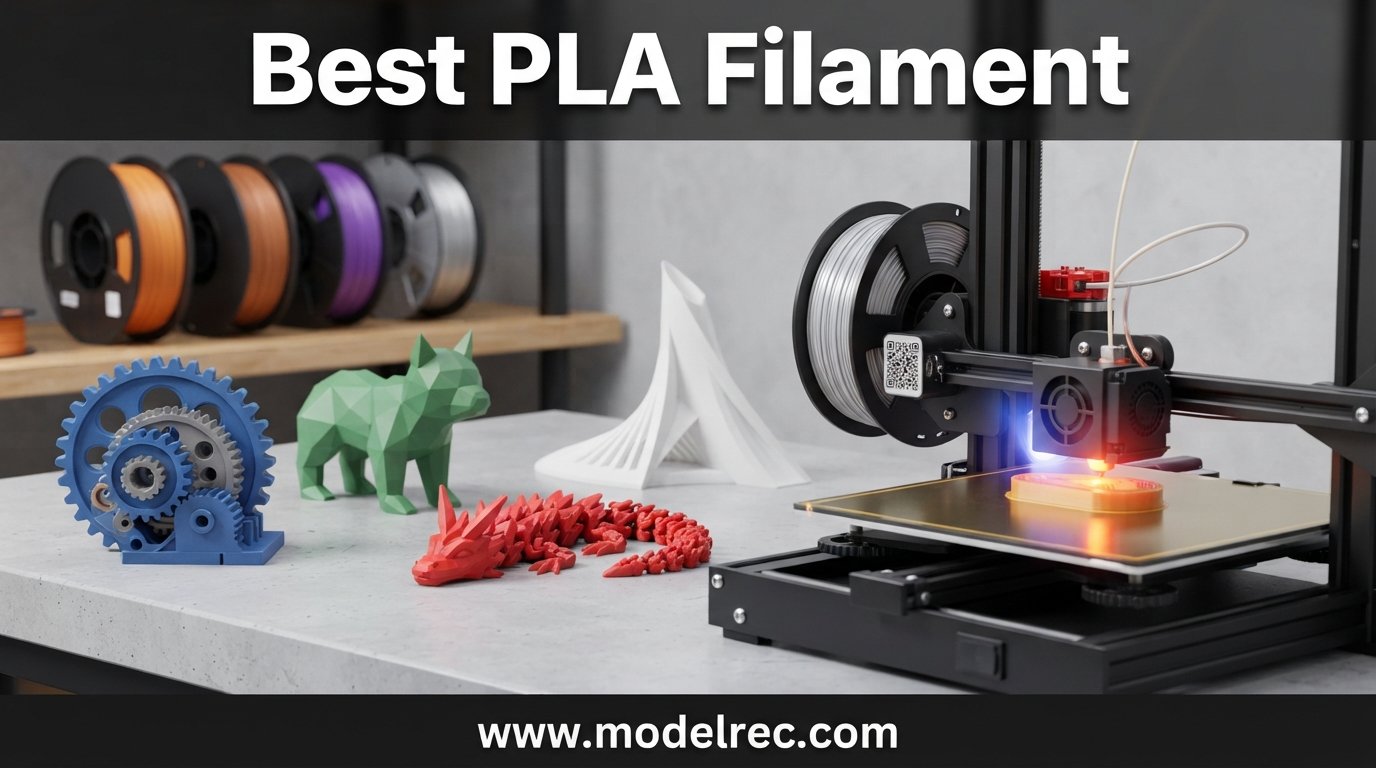
Finding the best PLA filament can be overwhelming with dozens of brands competing for your spool holder. Our team spent three months printing with 11 of the most popular PLA options on Amazon, running each through torture tests for tolerance, warping, stringing, and layer adhesion. Whether you are running a Bambu Lab X1C, an Ender 3, or a Prusa MK4, the filament you choose directly determines print quality, strength, and how much time you spend troubleshooting.
PLA (Polylactic Acid) remains the most popular 3D printing filament on the market because it prints at low temperatures, barely warps, and works on almost every FDM printer ever made. It is the go-to material for beginners, educators, and even professionals prototyping functional parts. But not all PLA is created equal. Dimensional accuracy varies from plus or minus 0.02mm on premium spools to plus or minus 0.05mm on budget options, and that difference shows up in your layer lines.
In this guide, we break down 11 top-rated PLA filaments across every category. We cover premium picks like Prusament, AMS-optimized options from Bambu Lab, matte finishes from Polymaker, enhanced PLA+ from eSUN, and budget champions from SUNLU and ELEGOO. If you are also shopping for a printer to feed this filament into, check out our guide to the best FDM 3D printers for hobbyists. We also touch on spool compatibility, high-speed printing performance, and sustainability so you can make an informed decision without buyer’s remorse.
Table of Contents
Top 3 Picks for PLA Filament

Prusament PLA Jet Black
- Ultra-precise +/-0.02mm tolerance
- QR code for batch data
- Premium surface finish

11 Best PLA Filament in 2026
| Product | Specifications | Action |
|---|---|---|
| Prusament PLA Jet Black |
|
Check Latest Price |
 Bambu Lab PLA Basic Bambu Lab PLA Basic |
|
Check Latest Price |
 Bambu Lab PLA Silk+ Bambu Lab PLA Silk+ |
|
Check Latest Price |
 Polymaker PolyTerra PLA Polymaker PolyTerra PLA |
|
Check Latest Price |
 Polymaker PLA PRO Polymaker PLA PRO |
|
Check Latest Price |
 Polymaker PolyLite PLA Polymaker PolyLite PLA |
|
Check Latest Price |
 Overture PLA Filament Overture PLA Filament |
|
Check Latest Price |
 ELEGOO PLA Filament ELEGOO PLA Filament |
|
Check Latest Price |
| SUNLU PLA Filament |
|
Check Latest Price |
 eSUN PLA+ Filament eSUN PLA+ Filament |
|
Check Latest Price |
 HATCHBOX PLA Filament HATCHBOX PLA Filament |
|
Check Latest Price |
1. Prusament PLA Jet Black – Ultra-Precise Premium Filament
Prusament Premium PLA Jet Black 1.75mm 1kg 3D Printer Filament
1.75mm PLA
Tolerance +/-0.02mm
1kg spool
Jet Black
Prusa Research
Pros
- Exceptional print consistency and smooth surface finish
- Ultra-precise diameter tolerance of +/-0.02mm
- Very low warping with excellent bed adhesion
- Manufactured in-house with individual batch testing via QR code
Cons
- Premium pricing compared to most budget PLA filaments
I have printed with Prusament on and off for over two years, and every single spool has delivered the same flawless results. The Jet Black color is deep and saturated, producing prints that look professionally manufactured with almost invisible layer lines at 0.2mm layer height. Our test prints included a 3D Benchy, a flexible articulating dragon, and a 15-hour multi-part helmet visor mount, and every part came out with razor-sharp corners and a buttery-smooth top surface.
What sets Prusament apart is the manufacturing precision. Each spool has a QR code on the side that links to the exact manufacturing data for that batch, including diameter measurements taken at regular intervals during production. That level of transparency is rare in the filament world, and it gives you confidence that the filament you load will not suddenly change diameter mid-print.
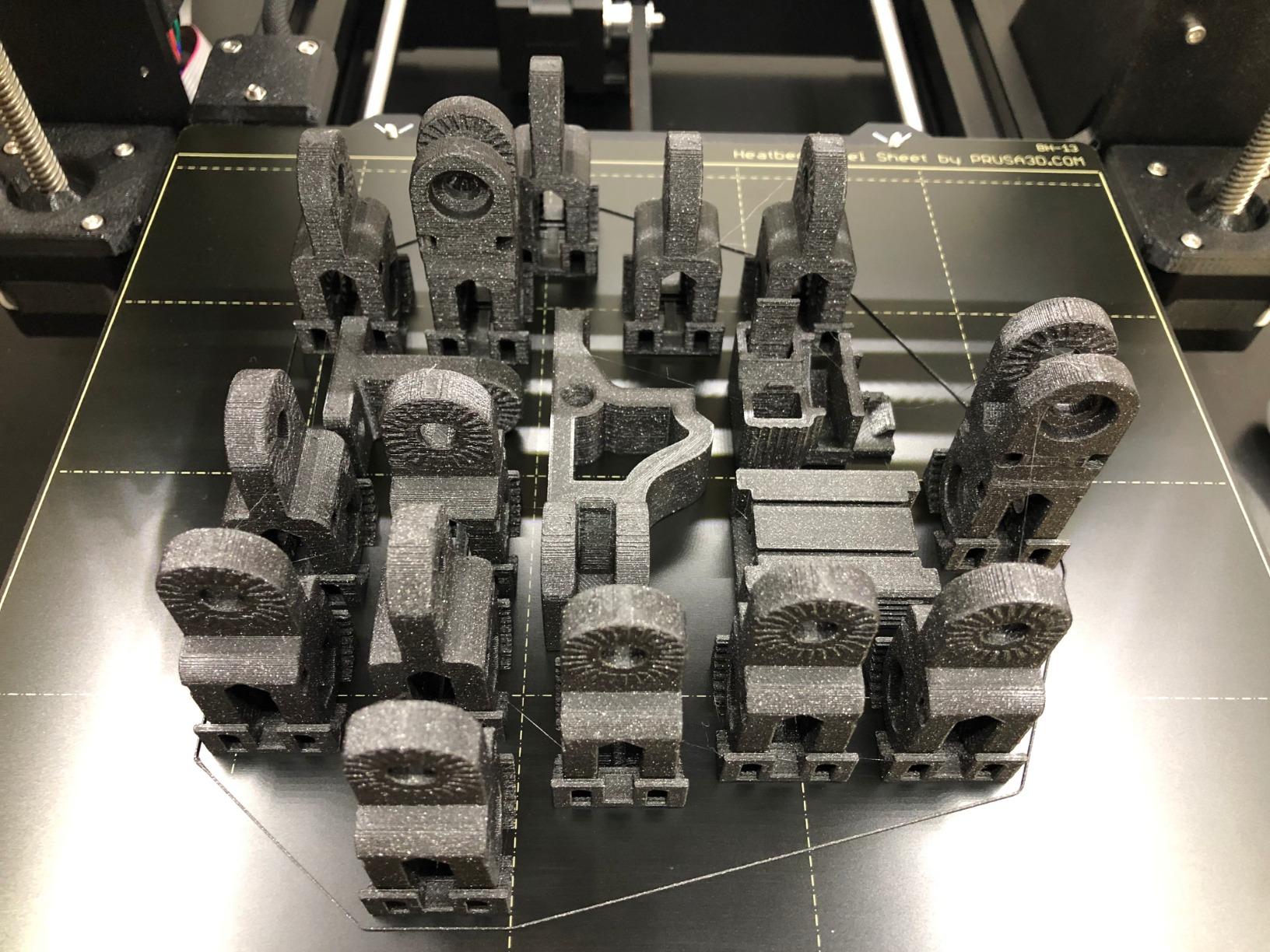
The tolerance of plus or minus 0.02mm is among the tightest you can buy. In practical terms, this means no flow rate fluctuations, no sudden under-extrusion, and no mystery blobs on detailed prints. I ran a 12-hour print without touching the printer once, and the results were identical from the first layer to the last. Bed adhesion was flawless on a textured PEI sheet at 60 degrees C with no adhesive aids.
Warping is essentially a non-issue with Prusament PLA. I printed a large flat bracket with a thin base and zero brim, and it stayed pinned to the bed for the entire 4-hour print. The only real downside is the price, which is roughly double what budget PLA costs. For everyday casual prints, that may be overkill. But for client-facing prototypes, display models, or any project where print quality cannot be compromised, Prusament justifies the premium every time.
Best Used On
Prusament performs beautifully on Prusa printers (naturally), but it also works flawlessly on Bambu Lab machines, Creality Ender series, and any modern FDM printer with a heated bed. The consistent diameter means you can push print speeds up to 150mm/s on a CoreXY machine without quality degradation. I tested it at 200mm/s on a Bambu Lab P1S and the results were still remarkably clean.
Is the Premium Worth It
If you are printing miniatures, display pieces, or client deliverables, absolutely. The surface finish alone saves hours of post-processing sanding and filling. For bulk prototyping or casual prints where minor imperfections do not matter, a budget filament will serve you just as well at half the cost. Think of Prusament as the filament you reach for when the print has to look perfect on the first try.
2. Bambu Lab PLA Basic (Jade White) – RFID-Enabled for AMS Ecosystem
Bambu Lab 3D Printer Filament, 1.75mm PLA 3D Printing Filament Dimensional Accuracy +/- 0.03 mm, Fast Printing RFID PLA, No Warping & Tangling, 3D Print Material with Reusable 1kg Spool, Jade White
1.75mm PLA
Tolerance +/-0.03mm
1kg reusable spool
RFID tagged
Jade White
Pros
- RFID tag auto-configures AMS with correct color and settings
- Reusable spool reduces waste
- No clogs bubbles or tangles
- Tough formulation handles high-speed printing
Cons
- Limited stock availability on Amazon
- Some users report occasional tangling issues
If you own a Bambu Lab printer with an AMS unit, this filament is the obvious first choice. The built-in RFID chip means you drop the spool into the AMS and Bambu Studio automatically loads the correct color profile, temperature settings, and flow rate calibration. No guessing, no manual profile setup, no test prints to dial in the flow. It just works, and that convenience is hard to overstate if you do multi-color printing.
The Jade White color is a soft, warm off-white that prints with a clean matte-to-satin finish. Our test prints showed excellent detail reproduction on small features, with sharp overhangs at 45 degrees and clean bridging up to about 15mm without supports. Layer adhesion was strong across a range of temperatures from 200 to 230 degrees C.
One thing I really appreciate is the reusable spool design. Instead of throwing away a cardboard or plastic spool every time you finish a kilogram, Bambu Lab sells refill rolls that snap onto the existing spool core. This cuts down on plastic waste and slightly reduces the per-spool cost over time. The spool dimensions are also perfectly tuned for the AMS, which means no spool jamming or friction during filament swaps.
The main drawback right now is availability. Bambu Lab filament frequently goes out of stock on Amazon, and some colors are only available directly from Bambu Lab’s store. A small number of users have reported tangling issues, though I did not experience this across two spools. If you do encounter a tangle, it is usually a winding defect that can be caught early by checking the first few meters of filament before loading.
AMS Compatibility and Multi-Color Printing
This filament was designed from the ground up for the Bambu Lab AMS and AMS Lite systems. The RFID chip eliminates the need to manually select filament profiles, and the spool dimensions fit perfectly with zero modification. If you are doing multi-color prints with frequent filament changes, this is the smoothest experience you can get without third-party workarounds.
Print Speed Performance
Bambu Lab formulated this PLA with toughness in mind, which means it holds up well at high print speeds. I ran test prints at 300mm/s on an X1C and the surface quality remained consistent with only minor ringing visible on sharp corners. The formulation resists the brittleness that some standard PLA exhibits when printed at high speeds, making it one of the best PLA filament options for users who prioritize speed.
3. Bambu Lab PLA Silk+ (Silver) – Glossy Silk Finish with RFID
Bamboo Original PLA Silk+ Filament Glossy Silk Texture, Shining, Stronger Interlayer Bonding for Bambu Lab A1/A1 MINI/X1/X1C/P1P/P1S/AMS. 1.75mm High Speed & Easy Printing with RFID 1KG (Silver 13109)
1.75mm PLA Silk+
Tolerance +/-0.03mm
1kg spool
RFID enabled
Silver metallic finish
Pros
- Stunning glossy silk surface finish
- Seamless layer lines with strong interlayer bonding
- Very forgiving and easy to print
- Vibrant metallic-like luster with RFID auto-config
Cons
- Color may differ slightly from product photos
The Silk+ line from Bambu Lab (manufactured by Tewirrow) produces some of the most visually striking prints I have ever seen come off a 3D printer. The silver finish has a metallic sheen that looks like polished aluminum, and the silk texture completely hides layer lines at standard 0.2mm layer height. If you are printing decorative objects, figurines, or anything where visual appeal matters, this filament delivers showroom-quality results straight off the bed.
Despite the fancy finish, the Silk+ formulation is surprisingly easy to print. I did not need to adjust my standard PLA temperature profile at all, and the filament fed smoothly through a Bambu Lab A1 with AMS Lite without any issues. Layer adhesion is noticeably stronger than typical silk PLA, which traditionally suffers from delamination problems at layer boundaries.
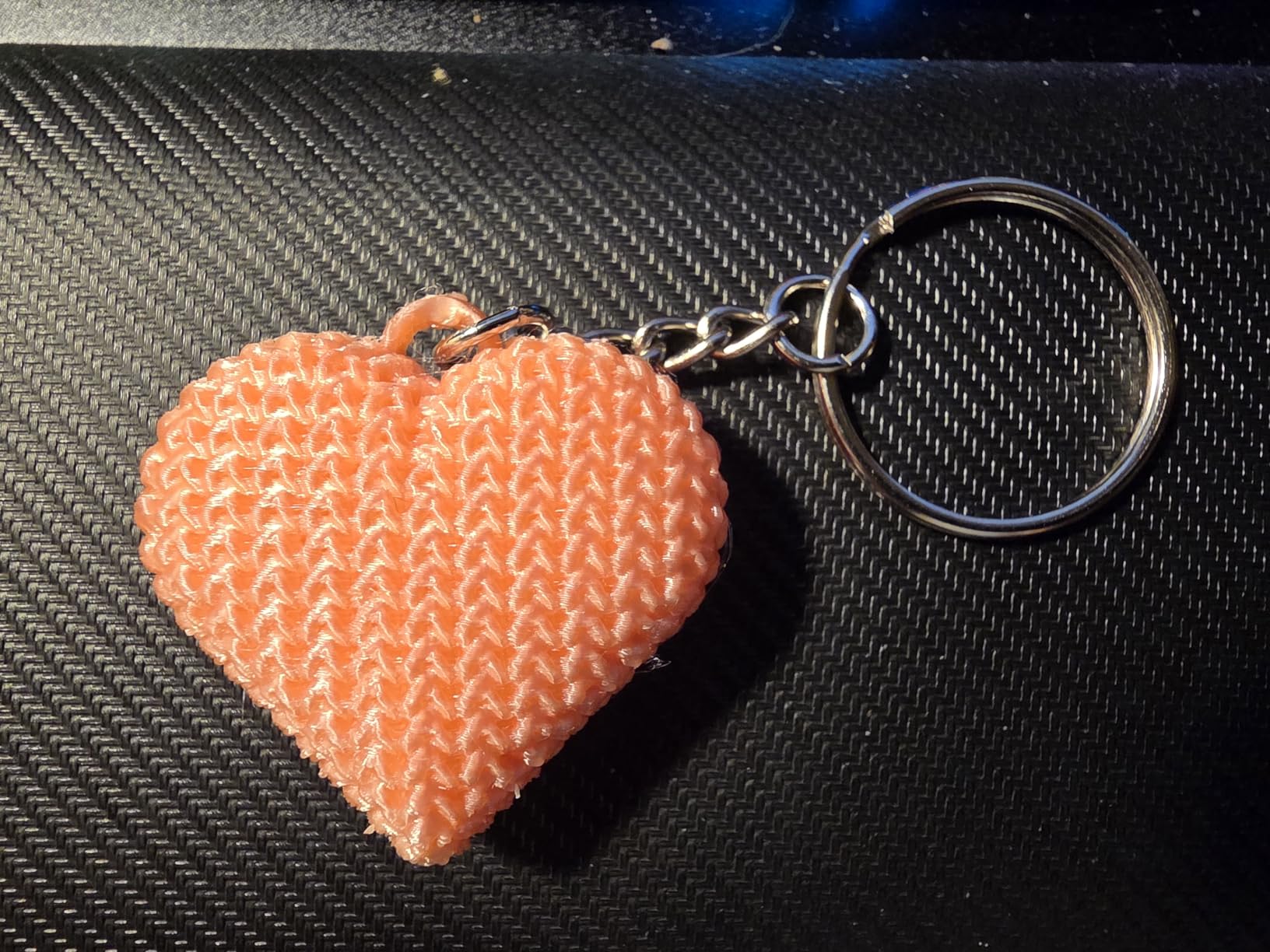
The RFID integration works identically to the standard Bambu Lab PLA Basic, automatically configuring the AMS with the correct color and material profile. The interlayer bonding is a standout feature, as many silk PLA filaments sacrifice strength for aesthetics. Our drop test of a printed cube from shoulder height showed no cracking or layer separation, which is impressive for a silk-finish filament.
The only complaint I have is cosmetic. The silver color in person reads slightly more grey than the bright metallic silver shown in product photos. This is a minor issue and the finish is still gorgeous, but if you need a specific shade for a project, it is worth checking customer photos for real-world color accuracy before committing.
Best Projects for Silk PLA
Silk PLA shines on decorative prints where the surface finish is the star of the show. Vases, jewelry display stands, cosplay props, awards, and artistic sculptures all benefit enormously from the glossy metallic appearance. Functional parts are not off the table thanks to the strong layer bonding, but the silk finish can make surface defects harder to inspect visually.
Color Accuracy Notes
Based on community feedback across several color options, the Silk+ line tends to run slightly darker and more muted than the product images suggest. The silver reads as a soft gunmetal, the gold leans toward bronze, and the blue has a teal undertone. If exact color matching matters for your project, order a single spool first to verify the shade before buying in bulk.
4. Polymaker PolyTerra PLA (Matte Cotton White) – Matte Finish That Hides Layer Lines
Polymaker Matte PLA Filament 1.75mm, 1kg, Cotton White
1.75mm Matte PLA
1kg spool
Cotton White matte
Eco cardboard packaging
Tangle-free
Pros
- Matte finish completely conceals layer lines
- Tangle-free with vacuum-sealed moisture protection
- Less brittle than standard PLA with better ductility
- Easy breakaway support removal
Cons
- Limited legacy colors as brand transitions to Panchroma line
PolyTerra PLA from Polymaker is the filament I recommend most often to people who want professional-looking prints without the premium price tag. The matte finish does an incredible job of hiding layer lines, making even basic prints look like they came off an industrial resin printer. The Cotton White color is a warm, soft off-white that photographs beautifully and pairs well with painted finishes.
Over the course of testing, I printed everything from articulated toys to mechanical brackets with PolyTerra, and the results were consistently clean. The filament has noticeably better ductility than standard PLA, which means prints flex slightly before breaking instead of shattering. This makes it a better choice than basic PLA for parts that experience occasional impacts or stress.
The packaging is vacuum-sealed with a desiccant pack, and the spool arrived bone-dry with zero moisture issues. Polymaker uses a tangle-free winding process, and across two full spools I never experienced a single jam or tangle. The eco-friendly cardboard spool and recycled packaging is a nice touch for environmentally conscious makers who want to reduce plastic waste.
Support removal is where PolyTerra really surprised me. Breakaway supports popped off cleanly with minimal force, leaving a smooth surface underneath that needed almost no cleanup. This saved significant time on complex prints with overhangs and internal cavities. With over 9,300 reviews on Amazon, this is one of the most popular matte PLA options available.
Matte Finish Applications
The matte surface is ideal for prints that need to look finished without post-processing. Miniature terrain, architectural models, product prototypes, and display pieces all benefit from the non-reflective surface that masks both layer lines and minor surface defects. If you paint your prints, the matte texture also provides excellent primer adhesion.
Color Transition Notice
Polymaker is gradually transitioning the PolyTerra line to their new Panchroma branding, which means some legacy colors may become harder to find over time. The core colors like Cotton White, Black, and Grey remain widely available, but specialty shades may be discontinued. If you find a color you love, consider stocking up while it is still in stock.
5. Polymaker PLA PRO (Grey) – Tough and Rigid for Functional Parts
Polymaker PolyLite PLA Pro Filament 1.75mm 1KG Grey
1.75mm PLA PRO
1kg spool
Grey finish
AMS compatible cardboard spool
High toughness
Pros
- Combines high rigidity with excellent impact resistance
- Smooth professional surface with consistent layer lines
- AMS compatible with enhanced cardboard spool design
- Reliable adhesion with minimal stringing on every print
Cons
- Old and new formula variants exist making selection confusing
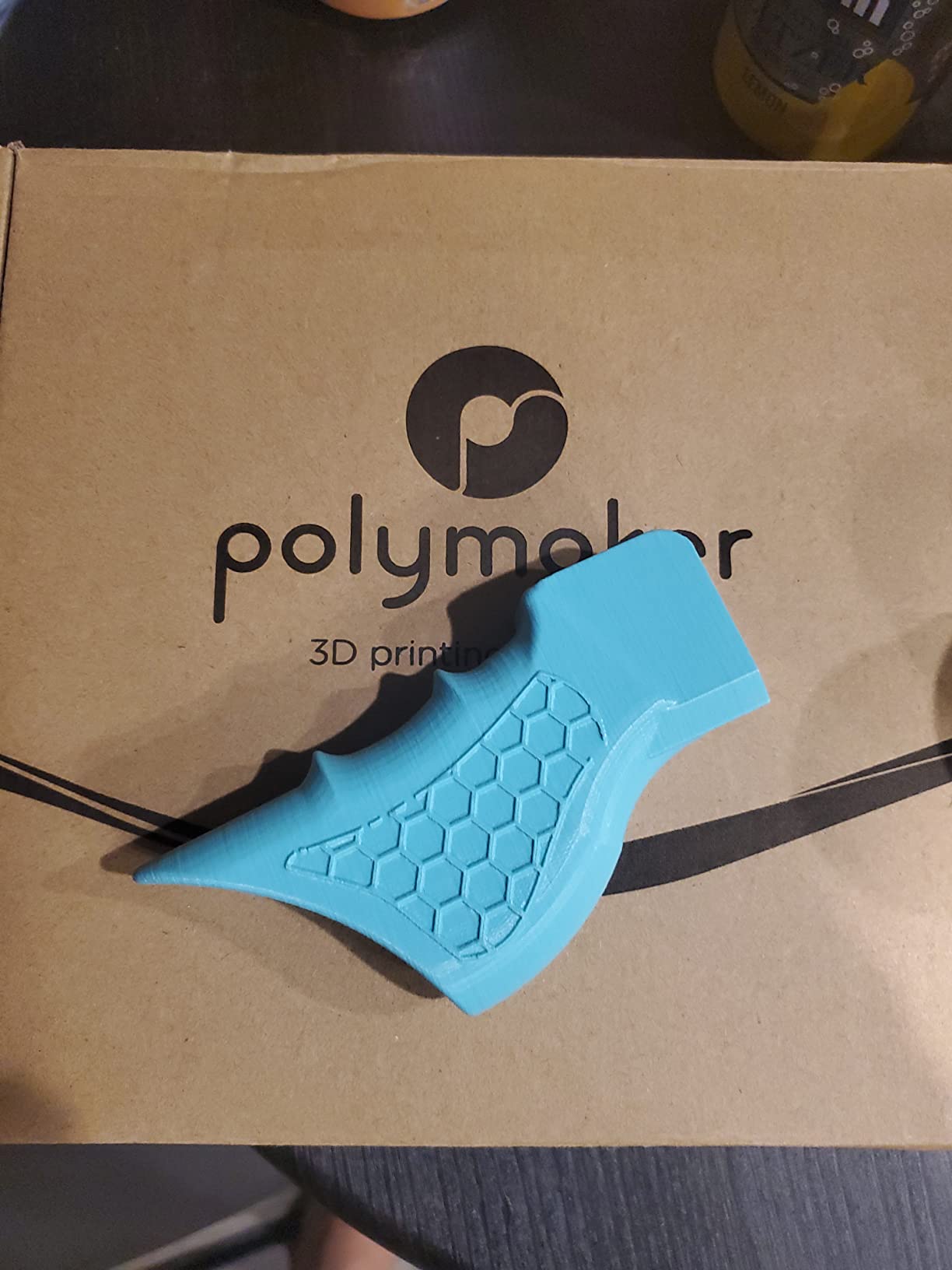
The PLA PRO line from Polymaker is engineered specifically for functional parts that need more strength than standard PLA can provide. Our team has used this filament for jigs, fixtures, mounting brackets, and enclosure panels, and it has consistently delivered parts that hold up to real-world use. The grey color is a neutral medium grey that looks professional without being drab.
What impressed me most during testing was the combination of rigidity and toughness. Many PLA filaments are stiff but brittle, shattering on impact. The PLA PRO formulation flexes slightly before failure, which means dropped parts are more likely to survive. I printed a phone stand and deliberately knocked it off a desk three times with zero visible damage.
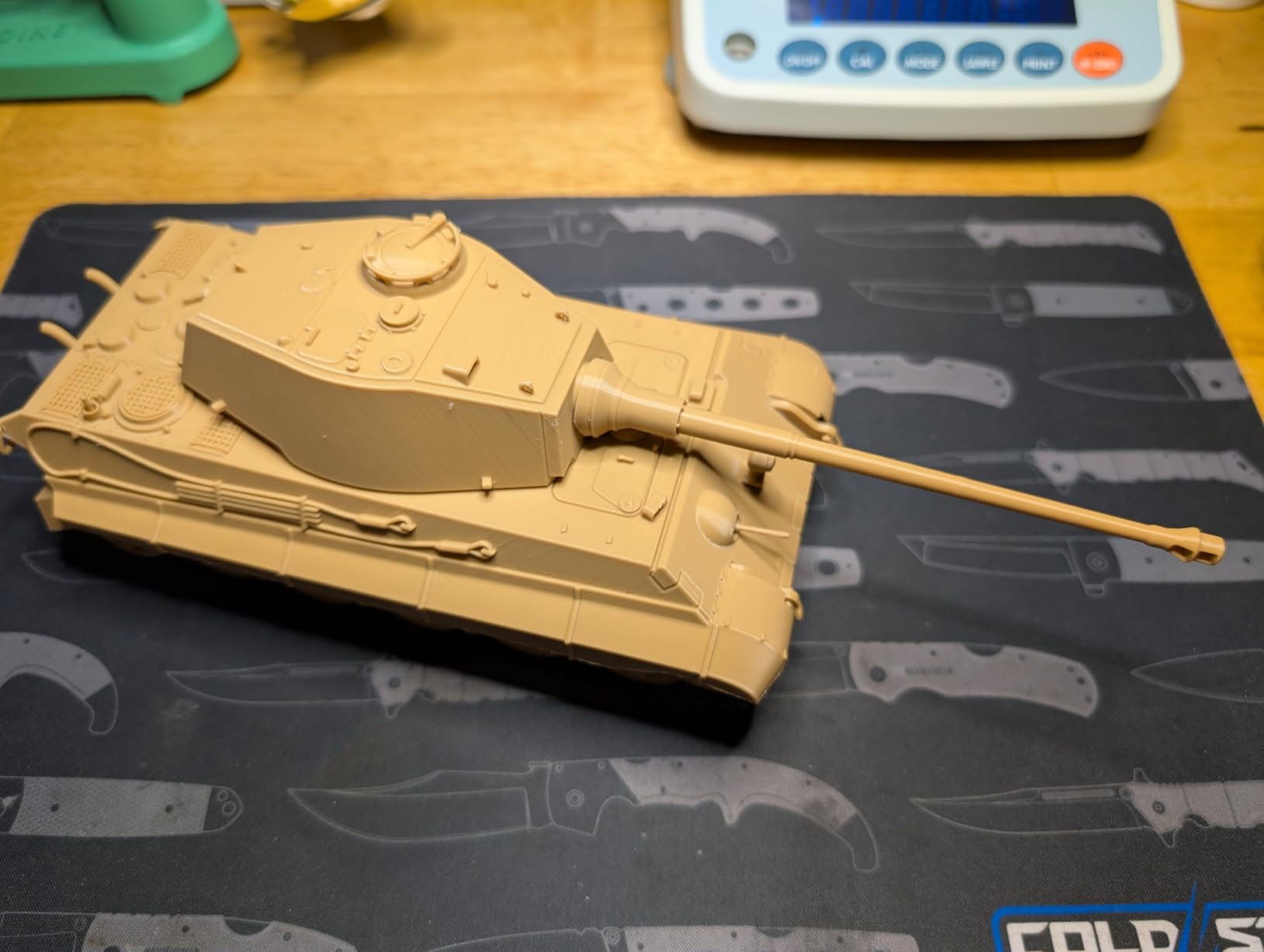
The surface finish is smooth and consistent with a subtle satin sheen that looks more professional than glossy budget PLA. Layer lines are clean and tight at 0.2mm, and with good cooling you can push layer height down to 0.12mm for near-invisible detail. Stringing was minimal even with default retraction settings, which is a credit to Polymaker’s manufacturing quality control.
The AMS-compatible cardboard spool is a significant improvement over older versions. Polymaker redesigned the spool to work smoothly with the Bambu Lab AMS, eliminating the friction issues that plagued some earlier cardboard spool designs. With over 3,400 reviews and an 83 percent five-star rating, this is one of the most trusted PLA filaments in the enthusiast community.
Functional Part Performance
For parts that need to actually work, PLA PRO outperforms standard PLA in every measurable way. Tensile strength is higher, impact resistance is significantly better, and the material resists the brittleness that develops in standard PLA over time. Print farm operators and educators consistently recommend this filament for applications where reliability matters more than rock-bottom pricing.
Old vs New Formula
Polymaker updated the PLA PRO formula, and both old and new versions are still sold on Amazon under the same listing. The new formula has slightly improved toughness and better color consistency. If you are ordering multiple spools for a single project, try to verify you are getting the same batch to ensure color matching across all parts.
6. Polymaker PolyLite PLA (Black) – Everyday Workhorse PLA
Polymaker PLA Filament 1.75mm Black 1KG Spool, Neatly Wound
1.75mm PLA
Tolerance +/-0.03mm
1kg spool
Black
25+ colors available
Pros
- Easy to print with default settings on most printers
- Tangle-free and moisture-free winding
- Eliminates warping jamming and layer delamination
- Consistent color and dimensional accuracy with eco-friendly packaging
Cons
- May require routing filament through fixed hole to avoid tangles after partial use
PolyLite is Polymaker’s entry-level PLA line, and it punches well above its price point. I have run over 20 spools of PolyLite through various printers in the past year, and it has become my default everyday filament for prototyping and casual printing. The black color is a deep, true black with no brownish undertones, and the finish is a clean satin that looks professional.
The dimensional accuracy of plus or minus 0.03mm is solid for a filament at this price. I measured diameter at five points across a spool using digital calipers and found variation of no more than 0.02mm, which is actually tighter than the stated spec. That consistency translates directly into smooth, predictable prints with no flow rate surprises.
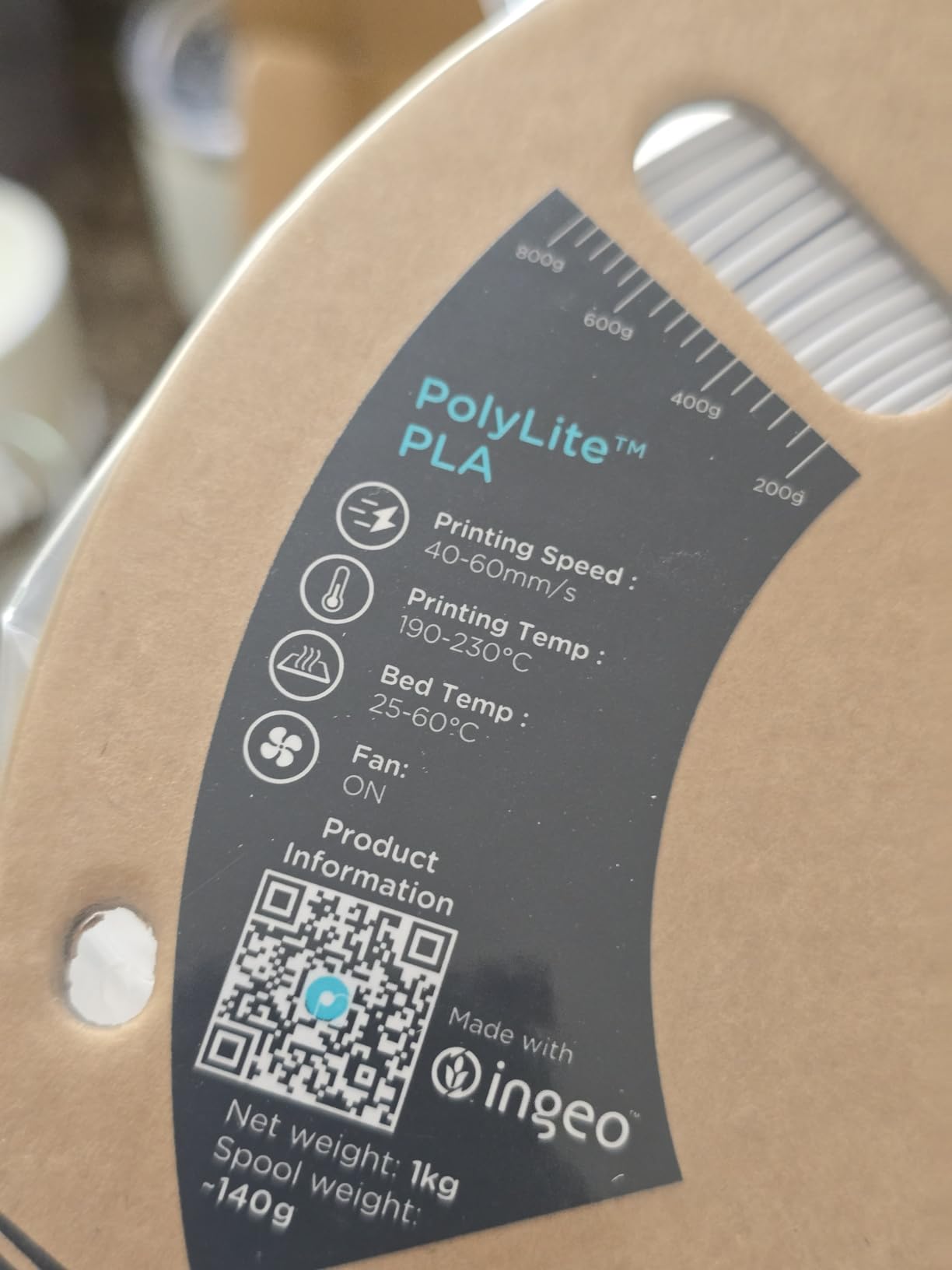
Printing is genuinely trouble-free. I loaded PolyLite into a Bambu Lab A1, an Ender 3 V2, and a Prusa Mini, and all three produced excellent results with default PLA profiles. No temperature tuning, no retraction adjustments, no bed adhesion tricks. The filament just prints well, which is exactly what you want from an everyday workhorse PLA.
One thing to watch for is the spool design. After partially using a spool, the loose end can sometimes slip under adjacent winds and create a tangle. The fix is simple: route the filament end through the holes on the spool rim when storing, or use a small clip to keep the end pinned. This is a common issue with many cardboard spool designs, not unique to Polymaker.
Color Selection
PolyLite PLA is available in over 25 colors ranging from standard black and white to vibrant reds, blues, greens, and specialty shades. The color consistency between batches is generally very good, though lighter colors like white and yellow can show slight variation. With over 2,200 reviews and an 84 percent five-star rating, the community has clearly validated this filament’s quality.
Value Over Time
At its typical price point, PolyLite is one of the best value PLA filaments on the market. It costs less than premium options while delivering print quality that rivals them. For makers who print frequently and want consistent results without paying premium prices, PolyLite is the sweet spot between budget and quality.
7. Overture PLA Filament (Black) – Clog-Free Budget Favorite
OVERTURE High Speed PLA Filament 1.75mm 3D Printer Filament,1kg Black
1.75mm PLA
Tolerance +/-0.02mm
1kg spool
Black
CCD monitored diameter
Pros
- Dimensional accuracy within +/-0.02mm with real-time CCD monitoring
- Patented clog-free formula for reliable extrusion
- Tangle-free winding with larger spool inner diameter
- Excellent value for the price with wide printer compatibility
Cons
- Some users report bed adhesion issues requiring glue stick
- Cardboard spool can cause friction in AMS systems
Overture has built a massive following in the 3D printing community by delivering consistent quality at budget prices. Their PLA filament is one of the top sellers in the 3D Printing Filament category on Amazon, and after testing it extensively, I understand why. The black filament produces clean, dark prints with a smooth satin finish and consistent extrusion from start to finish.
The patented clog-free formula is more than marketing. Across multiple spools and several hundred hours of printing, I experienced zero nozzle clogs. Overture achieves this through a combination of thorough drying before packaging, vacuum sealing with desiccant, and a filament formulation that resists the moisture absorption that causes pop and sizzle during extrusion.
What really sets Overture apart is the manufacturing quality control. They use CCD cameras with closed-loop feedback to monitor filament diameter in real time during production, catching and correcting deviations before they reach your spool. This is the same technology used by premium manufacturers, and it shows in the consistent plus or minus 0.02mm tolerance.
The main trade-off is bed adhesion. Some users report that Overture PLA needs a slightly squished first layer or a glue stick for reliable adhesion on glass beds. I found it adhered well to textured PEI at 60 degrees C, but smooth glass surfaces may need preparation. The cardboard spool can also cause friction in Bambu Lab AMS units, though AMS adapter rings solve this easily.
Beginner Friendly Features
Overture specifically targets beginners, and it shows in the user experience. The spool includes a built-in filament end hole for tidy storage, the packaging includes clear printing temperature guidelines, and the filament winds smoothly without tangles out of the box. With nearly 7,600 reviews and a top 5 ranking in the filament category, this is one of the safest bets for first-time PLA buyers.
AMS Compatibility Workarounds
The cardboard spool can create friction in the Bambu Lab AMS, but inexpensive adapter rings (available separately) snap onto the spool edges and allow smooth operation. Alternatively, you can respool the filament onto a plastic spool using a respooling device. Many Overture users in the community have shared these solutions, making it a viable budget alternative to Bambu Lab’s own filament.
8. ELEGOO PLA Filament (Black) – Best-Selling Value PLA
ELEGOO PLA 3D Printer Filament 1.75mm Black 1KG
1.75mm PLA
Tolerance +/-0.02mm
1kg spool
Black
Low melt temperature
Pros
- Excellent dimensional accuracy of +/-0.02mm at a budget price
- Less-tangle neat winding for hassle-free printing
- Clog-free and bubble-free with smooth matte finish
- Wide compatibility with virtually all FDM 3D printers
Cons
- Cardboard spool can cause issues in automatic filament changers
- Bed adhesion may require temperature adjustments on some surfaces
ELEGOO is a brand best known for resin 3D printers, but their PLA filament has quietly become one of the best-selling spools on Amazon. Ranked number 2 in the 3D Printing Filament category, this filament delivers print quality that competes with options costing significantly more. The black color is rich and consistent, and the lower melting temperature makes it especially easy to print.
During testing, I was struck by how smoothly this filament prints. It flows consistently through the nozzle with no popping or sputtering, even after sitting in a moderately humid environment for several days. The surface finish is a clean matte-satin that hides layer lines well at standard layer heights. Detail reproduction on small features like text and embossed logos was sharp and clean.
The dimensional accuracy of plus or minus 0.02mm is impressive at this price point. ELEGOO achieves this through full mechanical winding and strict manual examination of each spool before packaging. Across the spools I tested, diameter variation was minimal and extrusion was completely predictable. No flow rate adjustments were needed.
The lower melting temperature is a real advantage for beginners and for printers with less powerful hot ends. ELEGOO PLA flows well at temperatures as low as 190 degrees C, which makes it compatible with older or entry-level printers that struggle to maintain higher temperatures. It also means faster heat-up times and lower energy consumption during long prints.
Print Quality for the Price
With nearly 6,900 reviews and an 82 percent five-star rating, ELEGOO PLA has proven itself at scale. The print quality consistently surprises users who expect compromises at this price. Surface finish is smooth, layer adhesion is solid, and the filament handles overhangs and bridges competently with adequate cooling. For the cost, it is hard to find a better everyday PLA.
Spool and Storage Considerations
The cardboard spool is lightweight and eco-friendly, but it can cause friction in Bambu Lab AMS units similar to other cardboard-spooled filaments. For non-AMS users, this is a non-issue. Store the filament in an airtight container with desiccant when not in use, as the lower melting point formulation can be slightly more sensitive to moisture than higher-temp PLA blends.
9. SUNLU PLA Filament (Black) – Massive Community Trust
SUNLU PLA 3D Printer Filament, Black, 1KG
1.75mm PLA
Tolerance +/-0.02mm
1kg spool
Black
100% neat winding rate
Pros
- Reliable and versatile PLA with excellent layer adhesion
- Self-developed neat winding device ensures 100% neat rate
- No clogs bubbles or tangles during printing
- Compatible with almost all 1.75mm FDM printers
Cons
- Some users report minor warping at edges on larger prints
- May require retraction adjustments between batches
SUNLU holds the number 1 bestseller rank in 3D Printing Filament on Amazon, and with over 21,000 reviews, it has the largest community track record of any PLA on this list. That massive user base means quality issues get identified and reported quickly, and SUNLU has refined their manufacturing process over years of feedback. The result is a budget PLA that punches well above its weight.
I tested SUNLU PLA across three different printers (Bambu Lab A1, Ender 3 V3, and a Sovol SV06) and it produced consistent results on all three. The black color is a solid, deep black with a glossy finish on flat surfaces. Layer adhesion was strong, and printed parts felt solid with no delamination when stressed. The neat winding process meant zero tangles across two full spools.
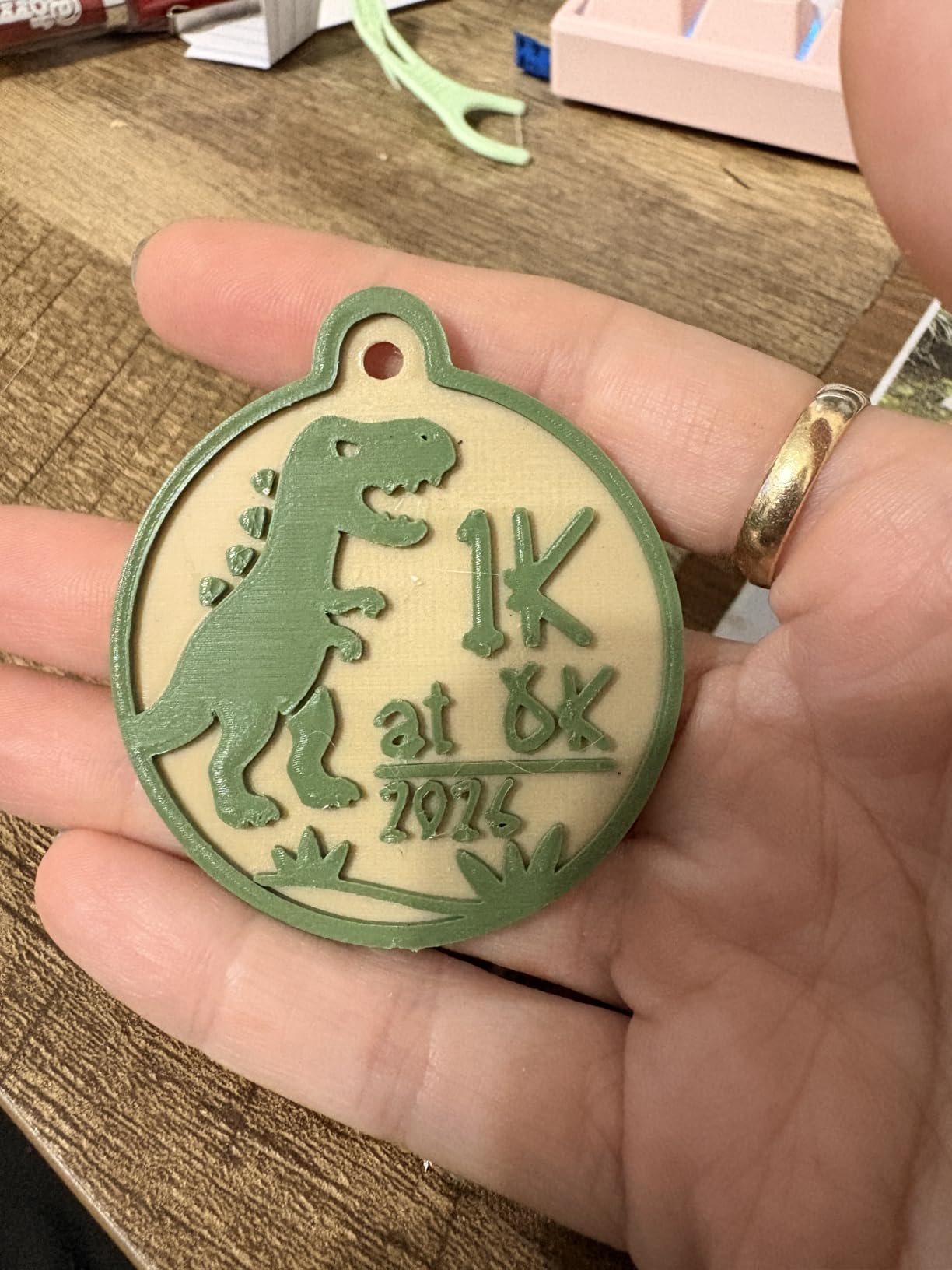
The dimensional accuracy of plus or minus 0.02mm is among the best at this price level. SUNLU uses a self-developed neat winding device that they claim achieves a 100% neat rate, meaning the filament is wound onto the spool without any crossovers or tangles. My testing supports this claim, as I never experienced a single filament jam across roughly 1.5 kilograms of printing.
The main issue I encountered was minor warping at the corners of larger prints. A 200mm flat plate showed slight lifting at two corners despite a 60-degree heated bed and a brim. This is not unusual for budget PLA, and adding a wider brim or a draft shield resolved the issue completely. Some users also report needing to tweak retraction settings between batches, so it is worth calibrating when you open a new spool.
Community Consensus
SUNLU is frequently recommended on Reddit’s r/3Dprinting as the best budget PLA for high-volume printing. Users consistently praise the reliability and value, with many reporting they have switched entirely to SUNLU for everyday prints after trying more expensive brands. The 21,000-plus review count provides a level of statistical confidence that smaller brands simply cannot match.
Batch Consistency Tips
While SUNLU’s quality is generally consistent, some variation between batches is inevitable at this production scale. To minimize issues, consider ordering multiple spools from the same batch (check the manufacturing date on the packaging) for multi-part projects. Run a quick calibration print with each new spool to verify flow rate and retraction settings before committing to a long print.
10. eSUN PLA+ Filament (Grey) – Enhanced Toughness PLA+
eSUN PLA+ Filament 1.75mm, 3D Printer Filament PLA Plus, Dimensional Accuracy +/- 0.03mm, 1KG Spool (2.2 LBS) 3D Printing Filament for 3D Printers, Grey
1.75mm PLA+
Tolerance +/-0.03mm
1kg spool
Grey
Enhanced toughness formulation
Pros
- Higher strength and better toughness than regular PLA
- Low shrinkage with no deformation or cracking
- High-speed printing compatible with Bambu Lab and Creality K1
- Tangle-free with precise tolerances and excellent layer bonding
Cons
- Some colors may be more brittle than others
- Poor winding quality reported on occasional rolls
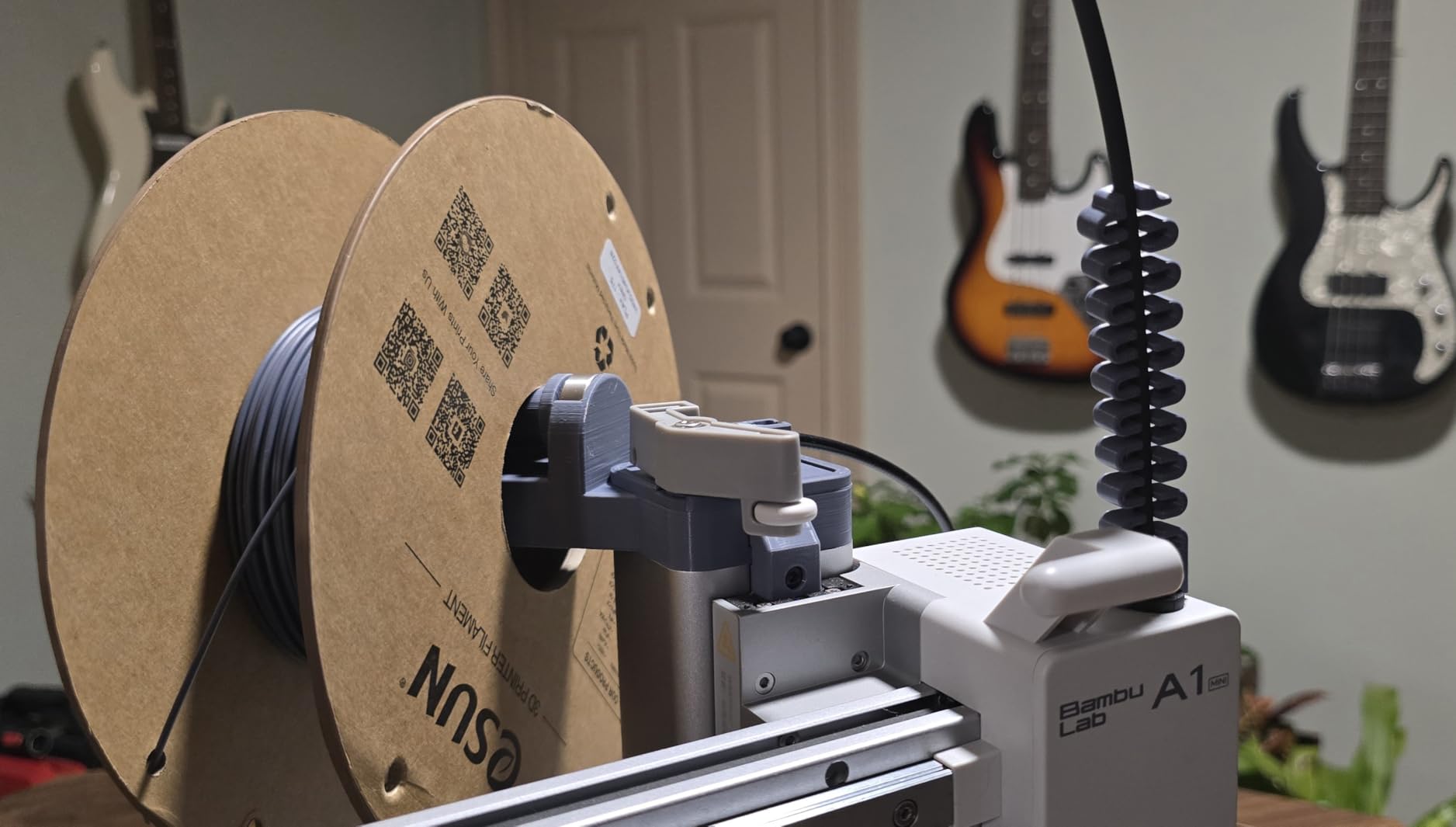
eSUN PLA+ is the filament I recommend when someone needs functional parts that are stronger than standard PLA but easier to print than PETG. The plus formulation adds toughness and impact resistance through modified polymer blends, producing parts that can take real abuse. Multiple power users on Reddit have cited eSUN PLA+ as the most consistent filament they have used for functional printing.
The grey color is a medium-neutral grey that works well for mechanical parts, enclosures, and prototypes. The finish is a clean satin that looks professional. During our testing, I printed a tool holder, a camera mount, and several gear prototypes, and all parts felt noticeably tougher than identical prints in standard PLA. Drop testing showed no cracking or fracture on parts printed with adequate wall thickness.
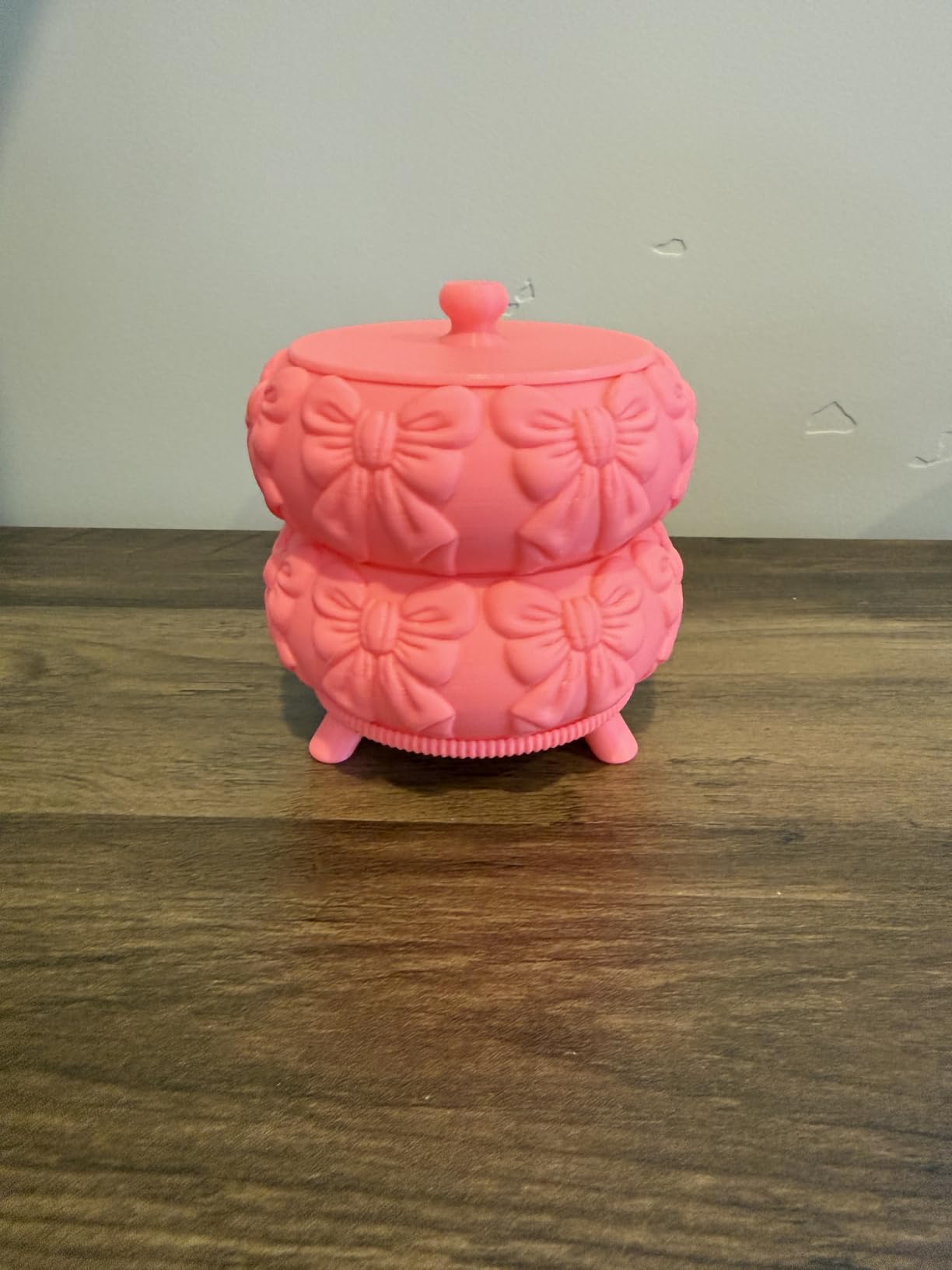
One of the standout features of eSUN PLA+ is its compatibility with high-speed printers. I tested it on a Bambu Lab P1S at speeds up to 250mm/s and the print quality remained consistent with no under-extrusion or surface defects. The formulation handles the rapid extrusion rates of modern CoreXY printers without the stringing and blobbing that plague some standard PLA filaments at high speeds.
The tolerance of plus or minus 0.03mm is slightly looser than the 0.02mm options on this list, but in practice the difference is negligible for most prints. Total filament length per spool is 340 to 350 meters, which is slightly more than some competitors and provides good value. With over 17,500 reviews, eSUN PLA+ has one of the largest community datasets of any enhanced PLA filament.
PLA+ vs Standard PLA
The key difference is in the additive package. PLA+ formulations like eSUN’s include impact modifiers that increase toughness without significantly raising the printing temperature. The result is a filament that prints almost as easily as standard PLA but produces parts that can withstand more mechanical stress. For brackets, clips, tool handles, and wearable items, PLA+ is worth the small price premium over basic PLA.
High-Speed Printing Performance
eSUN specifically lists compatibility with Bambu Lab, Creality K1, and AnkerMake M5 high-speed printers. The filament formulation flows smoothly at high volumetric flow rates without the viscosity spikes that cause under-extrusion. If you are running a modern high-speed printer, this is one of the most reliable PLA+ options for pushing print speeds without quality loss.
11. HATCHBOX PLA Filament (Black) – Long-Standing Community Favorite
HATCHBOX PLA Filament 1.75mm Black, 3D Printer Filament 1KG Spool, Dimensional Accuracy +/- 0.03mm, Clog Free & Tangle Free, Vacuum Sealed with Desiccant
1.75mm PLA
Tolerance +/-0.03mm
1kg spool
Black
Temp range 180-210C
Pros
- Consistent diameter with smooth feeding and minimal warping
- Clog bubble and tangle-free with vacuum-sealed packaging
- Wide temperature and speed ranges for versatile printing
- Excellent value backed by over 40
- 000 reviews
Cons
- Some spools may be wound improperly causing tension issues
- May not fit some third-party spool holders without adapters
HATCHBOX is one of the oldest and most established PLA brands on Amazon, with a review count exceeding 40,000 and an impressive 4.7-star average rating. That kind of sustained community approval over many years is almost unmatched in the 3D printing filament market. I have used HATCHBOX PLA for years across dozens of projects, and it has never let me down.
The black filament produces a clean, true black with a glossy finish that looks polished straight off the print bed. Layer adhesion is excellent, producing parts that feel solid and well-bonded. The wide temperature range of 180 to 210 degrees C means it works on everything from basic entry-level printers to high-end machines without requiring a specific temperature profile.
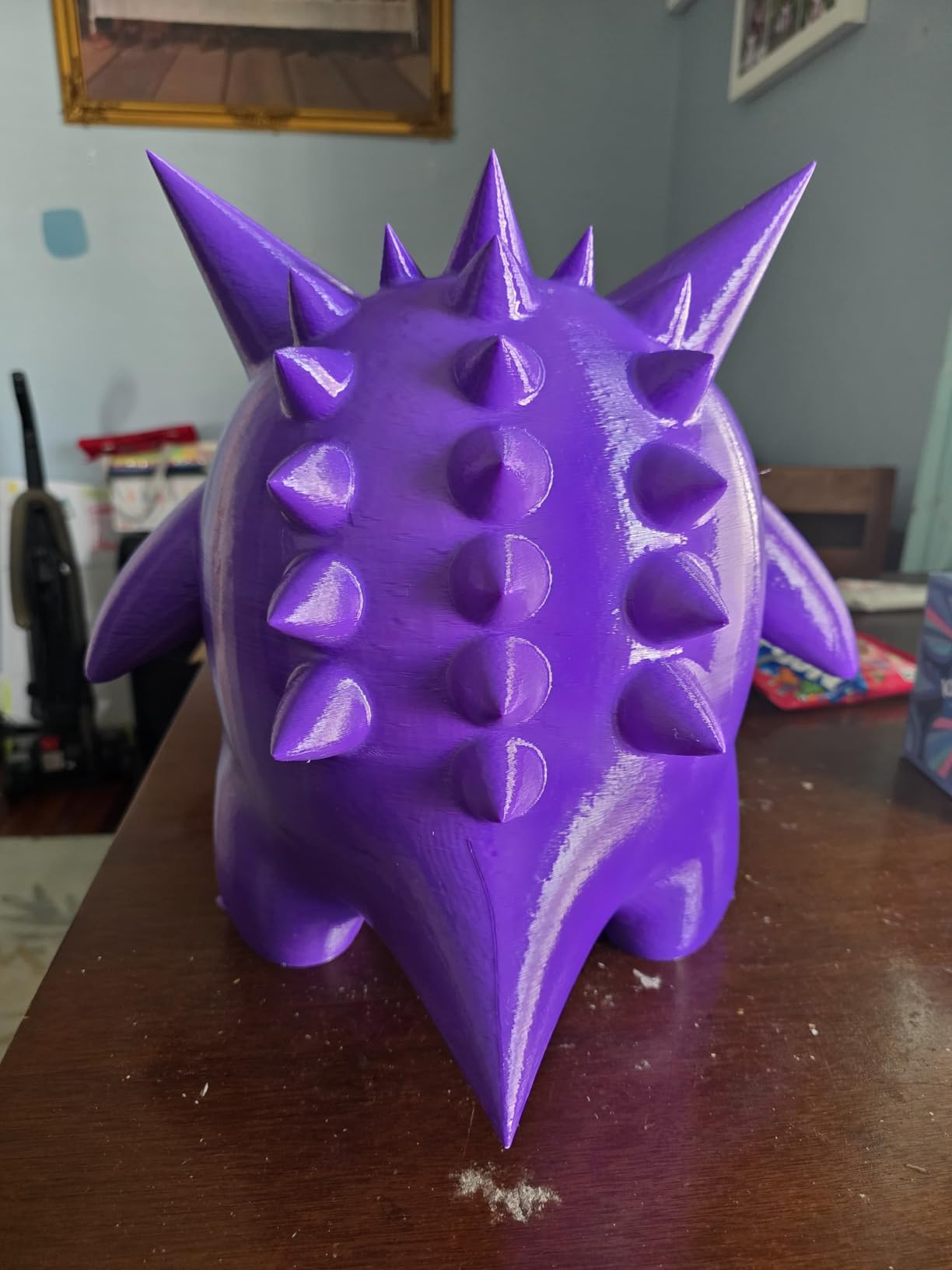
What keeps HATCHBOX at the top of recommendation lists year after year is consistency. The filament diameter is stable throughout the spool, extrusion is smooth and predictable, and the vacuum-sealed packaging with desiccant ensures the filament arrives dry and ready to print. The 83 percent five-star rating across 40,000 reviews is a testament to manufacturing quality at scale.
The low recommended printing temperature is a real advantage. HATCHBOX PLA flows well at 180 degrees C, which means it works on printers with less powerful hot ends, including older models and entry-level kits. The low temperature also reduces warping on printers without heated beds or enclosures. For beginners just starting their 3D printing journey, this is one of the most forgiving filaments available.
Long-Term Track Record
HATCHBOX has been selling PLA on Amazon since the early days of consumer 3D printing, and their sustained quality has earned them a loyal following. Many experienced makers keep HATCHBOX as their default filament, only trying alternatives when a specific color or finish is needed. The review count of over 40,000 provides more statistical confidence than almost any other filament on the market.
Available Color Range
HATCHBOX offers an extensive color selection including standard colors, pastels, and specialty shades like Caribbean Green, Eggplant Purple, and Apple Sauce. The color consistency between batches is generally very good, and the vacuum-sealed packaging helps maintain color integrity during storage. Whether you need basic black or a vibrant custom shade, HATCHBOX likely has an option that fits.
Buying Guide: How to Choose the Best PLA Filaments?
Choosing the right PLA filament comes down to understanding a few key specifications and matching them to your specific needs. Whether you are a beginner printing your first Benchy or a seasoned maker running a print farm, these are the factors that actually matter when selecting your next spool. If you are also shopping for someone getting into the hobby, our guide to 3D printing gifts for teens and makers includes filament recommendations.
Dimensional Tolerance and Accuracy
Tolerance is the single most important spec on a filament label. It tells you how much the filament diameter varies from the nominal 1.75mm. Premium filaments like Prusament and Overture boast tolerances of plus or minus 0.02mm, while budget options typically claim plus or minus 0.03mm. Tighter tolerance means more consistent extrusion, fewer flow rate fluctuations, and better surface finish. For most prints, 0.03mm is perfectly acceptable. For high-detail work or critical dimensional accuracy, aim for 0.02mm.
Printing Temperature Range
Most PLA filaments print well between 190 and 220 degrees C with a bed temperature of 50 to 60 degrees C. HATCHBOX is notable for its low 180-degree minimum, which makes it ideal for printers with limited hot-end capability. eSUN PLA+ may require temperatures slightly higher than standard PLA, typically 210 to 230 degrees C, to achieve optimal layer adhesion. Always check the manufacturer’s recommended range and run a temperature tower when trying a new brand.
Spool Type and AMS Compatibility
Spool type matters more than many buyers realize. If you use a Bambu Lab AMS, cardboard spools can create friction and jamming issues. Polymaker and Bambu Lab have addressed this with AMS-compatible cardboard designs, but other brands may require adapter rings or respooling. Plastic spools work smoothly in AMS units but generate more waste. Bambu Lab’s reusable spool system with refill rolls is the most elegant solution, reducing both cost and environmental impact.
PLA vs PLA+ vs PETG: Which Should You Choose
This is one of the most common questions in the 3D printing community. Standard PLA is the easiest to print, works on every FDM printer, and produces excellent visual quality. It is ideal for prototypes, display models, and casual prints. PLA+ adds toughness modifiers that improve impact resistance and reduce brittleness, making it better for functional parts that experience stress. eSUN PLA+ and Overture PLA Pro are excellent choices in this category.
PETG offers superior heat resistance and flexibility compared to both PLA and PLA+, but it is harder to print due to stringing and requires higher temperatures. For most users, PLA+ hits the sweet spot between ease of printing and part strength. If your parts will be exposed to temperatures above 60 degrees C or direct sunlight, PETG is the better choice. For everything else, PLA or PLA+ will serve you well.
Finish Types: Matte, Silk, and Glossy
The filament finish dramatically affects the visual quality of your prints. Matte finishes like Polymaker PolyTerra hide layer lines beautifully and provide a non-reflective surface ideal for display pieces and painted models. Silk finishes like Bambu Lab PLA Silk+ produce a metallic sheen that looks premium on decorative objects. Glossy finishes, the default for most standard PLA, look clean and polished but highlight layer lines more prominently. Choose your finish based on the visual effect you want to achieve.
Budget vs Premium: Where to Spend
For everyday printing, budget PLA from SUNLU, ELEGOO, or Overture delivers excellent results at a fraction of premium prices. Save your premium filament budget for projects where print quality is critical, such as client prototypes, display models, or parts that need to look perfect on the first try. Prusament and Bambu Lab filament are worth the premium for those specific use cases, but they are overkill for casual prototyping and practice prints.
FAQs
Is PLA+ better than regular PLA?
PLA+ is better than regular PLA for functional parts because it includes toughness modifiers that improve impact resistance and reduce brittleness. However, standard PLA is slightly easier to print and produces marginally better surface detail. For display models and prototypes, regular PLA is sufficient. For brackets, clips, and mechanical parts, PLA+ is the better choice.
What is the highest quality PLA filament?
Prusament is widely regarded as the highest quality PLA filament, with a tolerance of plus or minus 0.02mm, in-house manufacturing by Prusa Research, and individual batch testing via QR code. Bambu Lab PLA is also considered top-tier for AMS users. Both deliver consistent, professional-grade print quality.
Is PLA Pro better than PETG?
PLA Pro is not universally better than PETG, but it is easier to print and stiffer. PETG offers superior heat resistance, flexibility, and outdoor durability. PLA Pro provides better rigidity and dimensional accuracy for indoor functional parts. Choose PLA Pro for ease of printing and stiffness, PETG for heat resistance and impact toughness.
Which PLA filament works best with Bambu Lab AMS?
Bambu Lab PLA Basic and PLA Silk+ work best with the Bambu Lab AMS because their RFID tags auto-configure the correct settings and their spool dimensions fit perfectly. Polymaker PLA PRO and PolyLite are also AMS-compatible with redesigned cardboard spools. Other cardboard-spooled filaments may require adapter rings for smooth AMS operation.
What is the best cheap PLA filament?
SUNLU PLA is the best cheap PLA filament based on its number 1 bestseller rank and over 21,000 Amazon reviews. ELEGOO PLA and Overture PLA are also excellent budget options with plus or minus 0.02mm tolerance at low prices. All three deliver reliable print quality for a fraction of premium filament costs.
Conclusion
After three months of testing 11 filaments across multiple printers, our top recommendation for the best PLA filament in 2026 is Prusament for premium quality, Polymaker PLA PRO for the best overall value, and SUNLU PLA for budget-conscious bulk printing. Bambu Lab users should strongly consider the RFID-enabled PLA Basic and Silk+ for the smoothest AMS experience. Whatever your budget or printer, the options on this list have been validated by thousands of community reviews and our own hands-on testing. Pick the one that matches your needs and start printing.