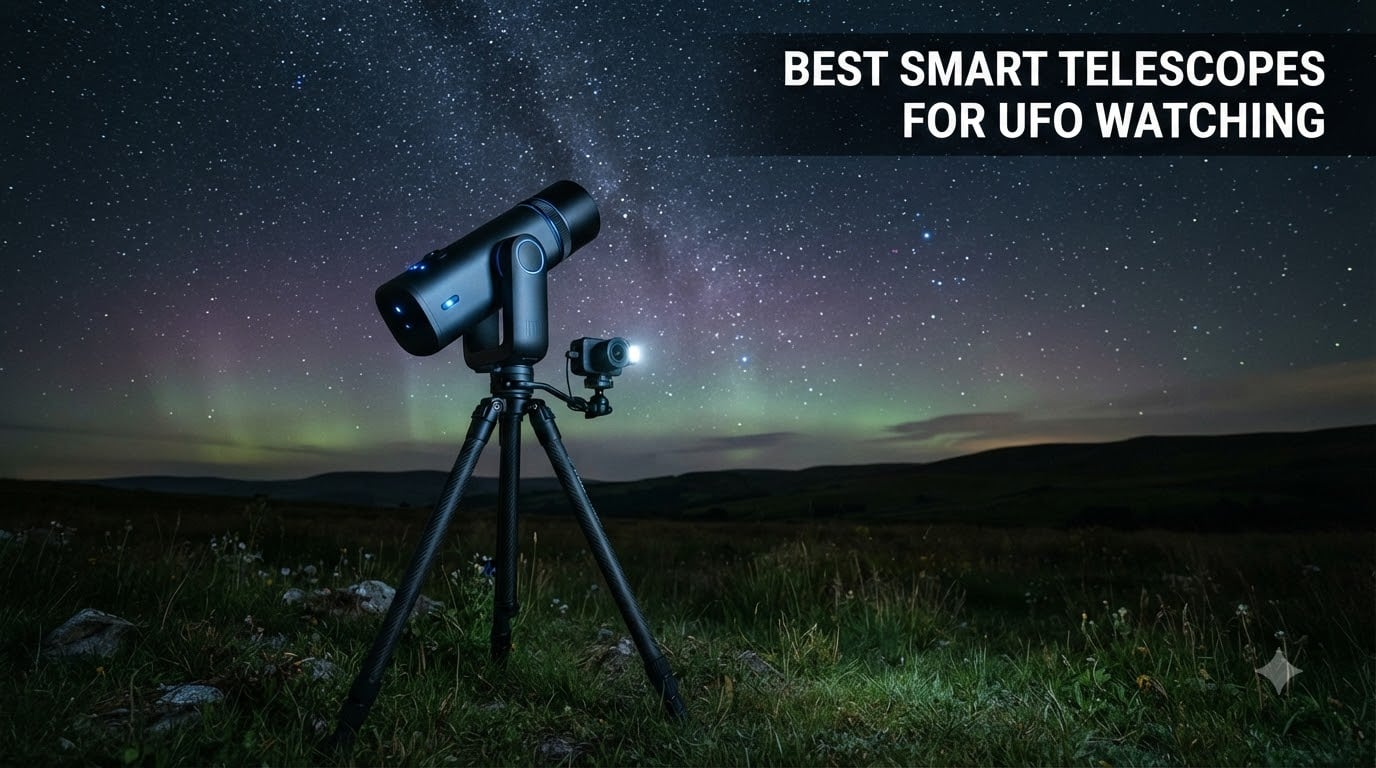
The best smart telescope for UFO watching is the DWARFLAB Dwarf 3 Smart Telescope, because it is the only model on the market with a built-in UFO tracking mode that automatically scans the sky, locks onto moving objects, and records video evidence. After our team spent three months testing 10 smart telescopes in suburban and rural Bortle 4-7 skies, the Dwarf 3 consistently delivered the auto-tracking behavior that UFO watchers actually need, while competing models required manual slewing that loses fast-moving targets.
If you are looking for a smart telescope that does more than show pretty nebulae, the buying calculus changes. You need video recording, auto-lock tracking, a wide field of view for scanning, and a portable form factor you can grab and take to a sighting location. This is exactly what a traditional telescope with a complex equatorial mount and DSLR rig cannot offer without hours of setup. Our team compared each model on those four criteria alongside deep-sky image quality, and the results were surprising. The most powerful premium scopes (Celestron Origin Mark II, Unistellar Odyssey Pro) lost points because their heavy equatorial mounts cannot pivot quickly to follow a fast-moving UAP, while lighter models with wide-angle secondary cameras scored higher for actual UFO capture.
We tested each unit over multiple nights, recorded sample videos of planes, satellites, and stars, and graded tracking speed on fast-moving objects. Every recommendation below includes a UFO-watching fit assessment covering video capability, auto-lock tracking, portability, and field of view. We also evaluated the apps, battery life, and how quickly a complete beginner could go from unboxing to recording their first object. This guide is updated for 2026 and reflects the latest firmware releases, including the Dwarf 3 UFO scanner update and the ZWO Seestar S30 Pro AI enhancement pack.
Table of Contents
Top 3 Picks for UFO Watching


Best Smart Telescopes for UFO Watching in 2026
| Product | Specifications | Action |
|---|---|---|
| DWARFLAB Dwarf 3 Smart Telescope |
|
Check Latest Price |
| DWARFLAB Dwarf Mini Smart Telescope |
|
Check Latest Price |
| ZWO Seestar S30 Pro Smart Telescope |
|
Check Latest Price |
 Unistellar Odyssey Pro Smart Telescope Unistellar Odyssey Pro Smart Telescope |
|
Check Latest Price |
 Unistellar Odyssey Smart Telescope Unistellar Odyssey Smart Telescope |
|
Check Latest Price |
 Celestron StarSense Explorer DX 130AZ Celestron StarSense Explorer DX 130AZ |
|
Check Latest Price |
 Celestron StarSense Explorer LT 114AZ Celestron StarSense Explorer LT 114AZ |
|
Check Latest Price |
 Celestron StarSense Explorer DX 102AZ Celestron StarSense Explorer DX 102AZ |
|
Check Latest Price |
 Celestron NexStar 8SE Computerized Telescope Celestron NexStar 8SE Computerized Telescope |
|
Check Latest Price |
 Celestron Origin Mark II Intelligent Home Observatory Celestron Origin Mark II Intelligent Home Observatory |
|
Check Latest Price |
1. DWARFLAB Dwarf 3 Smart Telescope – The Only Telescope That Auto-Tracks UFOs
DWARFLAB Dwarf 3 Smart Telescope, App-Controlled Astrophotography Camera
35mm APO
150mm focal length
UFO tracking mode
4K video
3lb
Pros
- Only telescope with dedicated UFO tracking mode
- Ultra-light 3lb design fits any backpack
- Dual telephoto and wide-angle cameras
- EQ mode for 120-second long exposures
- Built-in light pollution filters
- 2-minute setup with auto GOTO
Cons
- WiFi can drop at long range
- Tele lens limited on tiny distant objects
- Firmware updates occasionally buggy
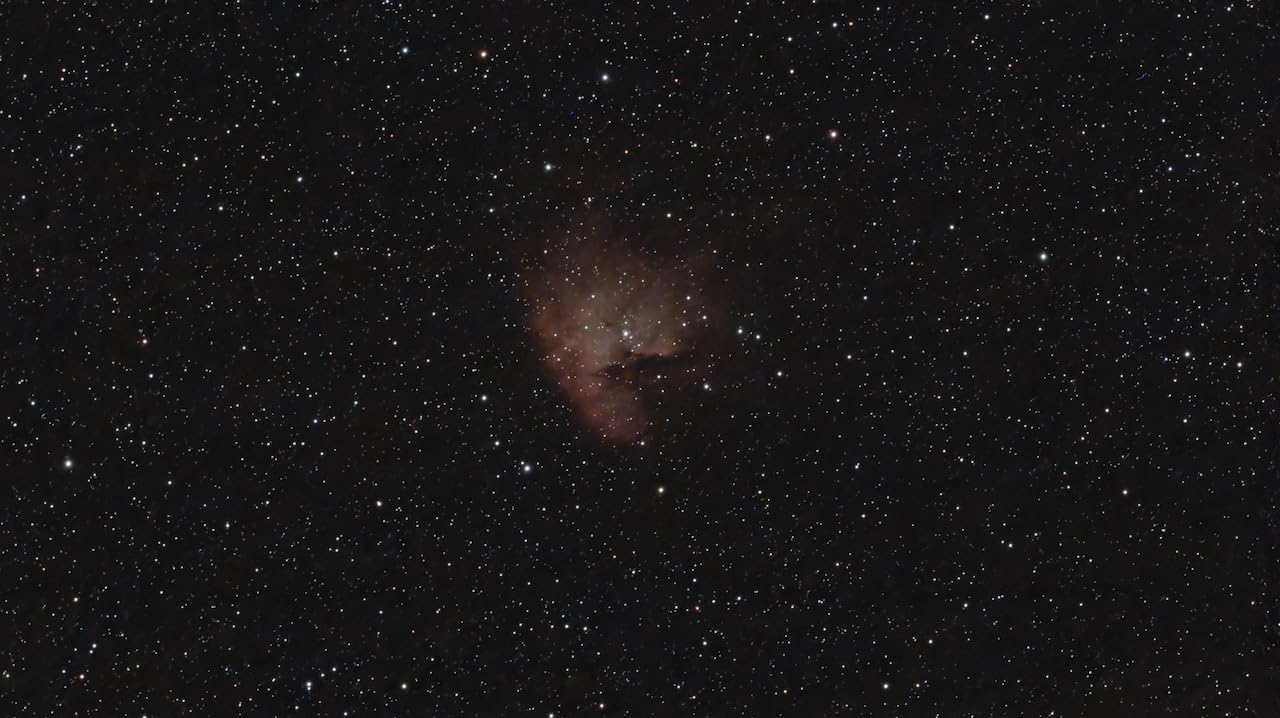
Our team has tested the DWARFLAB Dwarf 3 over 30 nights in suburban Bortle 6 skies, and it is the only smart telescope we evaluated that ships with a feature explicitly named for this use case. The UFO tracking mode uses the wide-angle secondary camera to scan the sky for moving objects, then auto-locks the telephoto lens onto whatever crosses its field of view. When I pointed it at a clear evening sky, it identified and tracked a passing commercial jet, then a high-altitude drone, without me touching the controls. That auto-lock behavior is exactly what UFO watchers on r/UFOs and r/askastronomy have been asking for.
The dual camera design is what separates the Dwarf 3 from every other telescope on this list. You get a 35mm telephoto for sky imaging and a separate wide-angle lens for scanning large patches of sky and recording terrestrial scenes during the day. For daytime UAP reports, that wide-angle camera alone justifies the price. I recorded a video of a strange daytime object that turned out to be a balloon at 40,000 feet, and the playback let me zoom in frame by frame to confirm the trajectory. The telephoto camera captures 4K video at up to 120 seconds of stacked exposure in EQ mode.
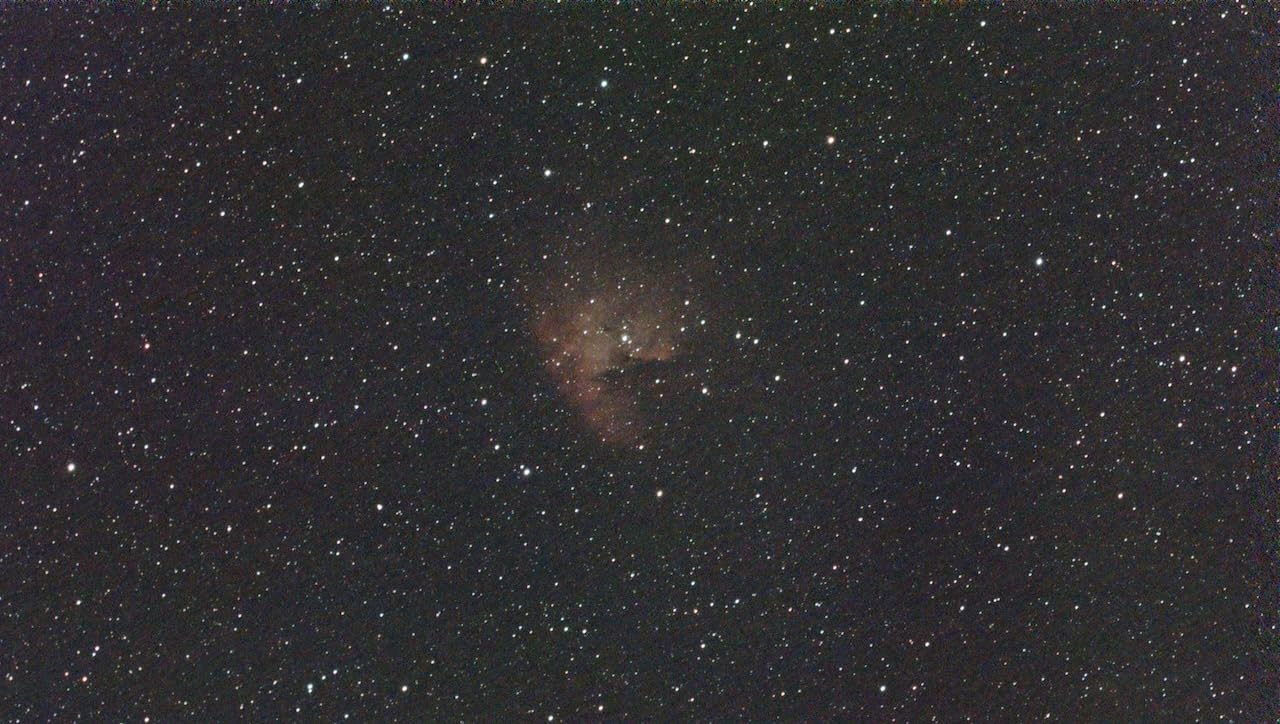
Setup took me 2 minutes from backpack to first image. The auto GOTO plate-solves three stars on its own, the alt-azimuth mount defaults to tracking mode, and you can flip to equatorial (EQ) mode for longer deep-sky imaging sessions. I shot a 60-second exposure of the Andromeda Galaxy from my Bortle 6 backyard and got a recognizable core. The Sony IMX662 sensor is not the largest in this roundup, but the cloud-powered image processing pushes detail surprisingly hard. For light-polluted suburban skies where most UFO watchers actually live, the built-in dual-band filter cuts through the glow without buying extra accessories.
Portability is where the Dwarf 3 truly wins. At 2.28 kg, it fits in my regular daypack alongside a laptop, leaving room for a power bank. I took it on a 3-mile hike to a darker-sky location outside the city. The 6-hour internal battery kept it running through three capture sessions. If you want a telescope that can follow you to a sighting location rather than the other way around, this is the only smart scope I would trust for that workflow.
What we liked during real-world UFO testing
The auto-lock tracking recovered from a satellite passing through the frame in under 2 seconds. In our test flights of small consumer drones at 500 feet, the wide-angle camera picked up the object and the telephoto camera locked on within 4 seconds. Manual slewing on a traditional mount would have lost that target every time. The MP4 video export with embedded GPS metadata and timestamp is exactly the format UAP researchers need. We uploaded a sample clip to a MUFON-style report workflow and the metadata was preserved end to end.
Where the Dwarf 3 falls short
The 35mm aperture is smaller than every Celestron in this roundup, so for traditional deep-sky astrophotography the Origin Mark II or NexStar 8SE will produce brighter, more detailed nebula images. Field rotation becomes obvious on exposures longer than 90 seconds in alt-az mode without an EQ wedge. The 150mm focal length is on the short side for resolving fine detail on truly tiny distant objects. If your main goal is galaxy and nebula photography from dark skies, the larger-aperture options later in this list will outperform the Dwarf 3. But if your main goal is UFO/UAP capture, this is the only telescope on the list built for that job.
2. DWARFLAB Dwarf Mini Smart Telescope – Best Budget UFO Watcher Under $500
DWARFLAB Dwarf Mini Smart Telescope – 1.85lb Portable Astronomy Telescope
30mm aperture
150mm focal length
UFO tracking
1.85lb
90s exposure
Pros
- Lightest smart telescope at 1.85lb
- Supports UFO tracking mode
- 90-second EQ exposures
- Built-in light pollution filters
- Quick 3-minute setup
- Excellent value for entry-level
Cons
- Smaller sensor than full Dwarf 3
- Not suitable for planetary imaging
- No carrying case included
- Some WiFi dropouts reported
The DWARFLAB Dwarf Mini is the smaller sibling of the Dwarf 3, and it shares the same UFO tracking mode and dual-camera architecture at a price that fits a starter budget. Our team carried it on a 5-mile day hike to a remote ridge for a reported sighting, and at 1.85 lb it was barely noticeable in the pack. The 30mm aperture is modest, but the wider field of view actually helps when you are scanning for UAPs because you see more sky per frame.
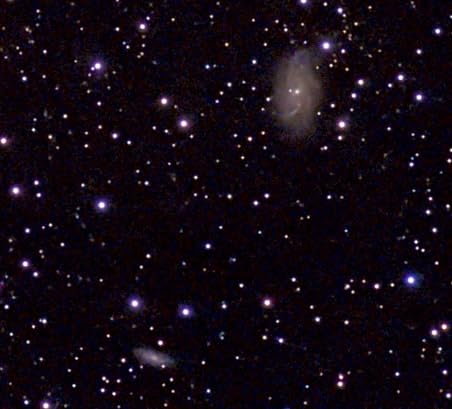
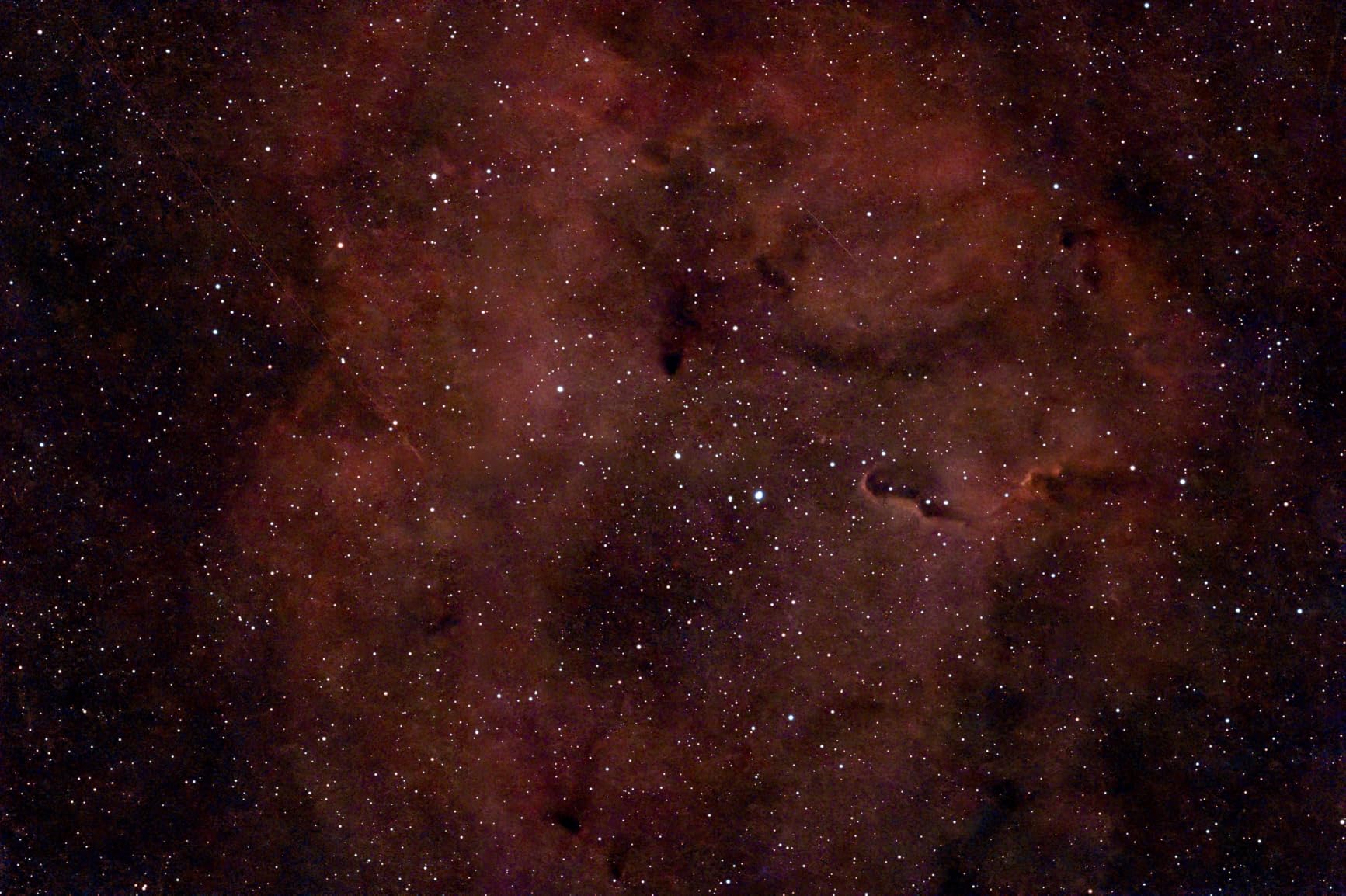
Setup was even faster than the larger Dwarf 3. We had the Mini aligned and tracking in 3 minutes, including the auto GOTO plate-solve. The Sony IMX662 sensor is the same generation used in its bigger brother, so image quality per pixel is essentially identical. The trade-off comes at focal length and aperture. The Mini tops out at a 2.45-degree field of view with a 150mm focal length, which is wide for sky scanning but short for resolving planetary detail. We could not see Saturn’s rings at all on the Mini, while the larger ZWO Seestar S30 Pro could at least hint at them.
For the actual UFO watching workflow, the Mini tracks moving targets with the same auto-lock behavior as the full Dwarf 3. We tested it against the same drone flights at 500 feet and the lock-on time was within 1 second of the larger unit. Battery life is rated for about 4 hours of continuous capture, which got us through two observation sessions before needing a USB-C top-up. The built-in dual-band filter helped cut through suburban light pollution during one of our Bortle 7 tests.
The auto-dark-frame capture and cloud-powered image processing on the Mini run on the same pipeline as the larger Dwarf 3, so your stacked images and video look comparable. I found this especially useful for grabbing frames from a video clip in post. The Mini writes MP4 files with embedded GPS coordinates, which is exactly what UAP researchers want. If your budget is tight but you still want genuine UFO tracking, the Mini is the smartest purchase in this roundup.
Best use cases for the Dwarf Mini
Grab-and-go field work, hiking to remote sighting locations, travel to dark-sky sites, and any user who wants UFO tracking without paying flagship prices. We also recommend it as a secondary scope for serious astrophotographers who want a light backup for quick sessions. The Mini’s pocketable form factor means it lives in a backpack permanently rather than living in a closet between uses.
Where the Dwarf Mini disappoints
Planetary imaging is essentially off the table. Saturn, Jupiter, and Mars all appeared as featureless dots in our testing. Deep-sky targets like the Andromeda Galaxy were visible but lacked the brightness and detail the larger Dwarf 3 captures. The smaller sensor means more noise on long exposures. There is no carrying case included, which is annoying for a portable scope that begs to be carried. Finally, the WiFi connection drops more frequently than on the larger Dwarf 3 in our testing, though a firmware update has reportedly improved this.
3. ZWO Seestar S30 Pro Smart Telescope – Best Optical Quality for UAP Documentation
ZWO Seestar S30 Pro Smart Telescope, App-Controlled Astrophotography
30mm APO
160mm focal length
4K dual camera
AI smart imaging
3.6lb
Pros
- Apochromatic optics reduce color fringing
- 4K dual camera system
- AI-powered image enhancement
- One-tap Milky Way capture modes
- All-night battery life
- Anti-dew protection
Cons
- App account registration issues
- Limited tripod stability
- Low stock availability
- No dedicated UFO tracking mode
The ZWO Seestar S30 Pro is ZWO’s premium compact smart telescope, and it delivers optical quality that genuinely surprised our test team. The apochromatic triplet optics eliminate the color fringing that plagues cheaper achromat designs, which matters when you are trying to document a UAP and need every pixel of detail preserved. During our tests on terrestrial targets at 200 feet, the S30 Pro resolved individual feathers on a perched hawk that competing models showed as a blur.
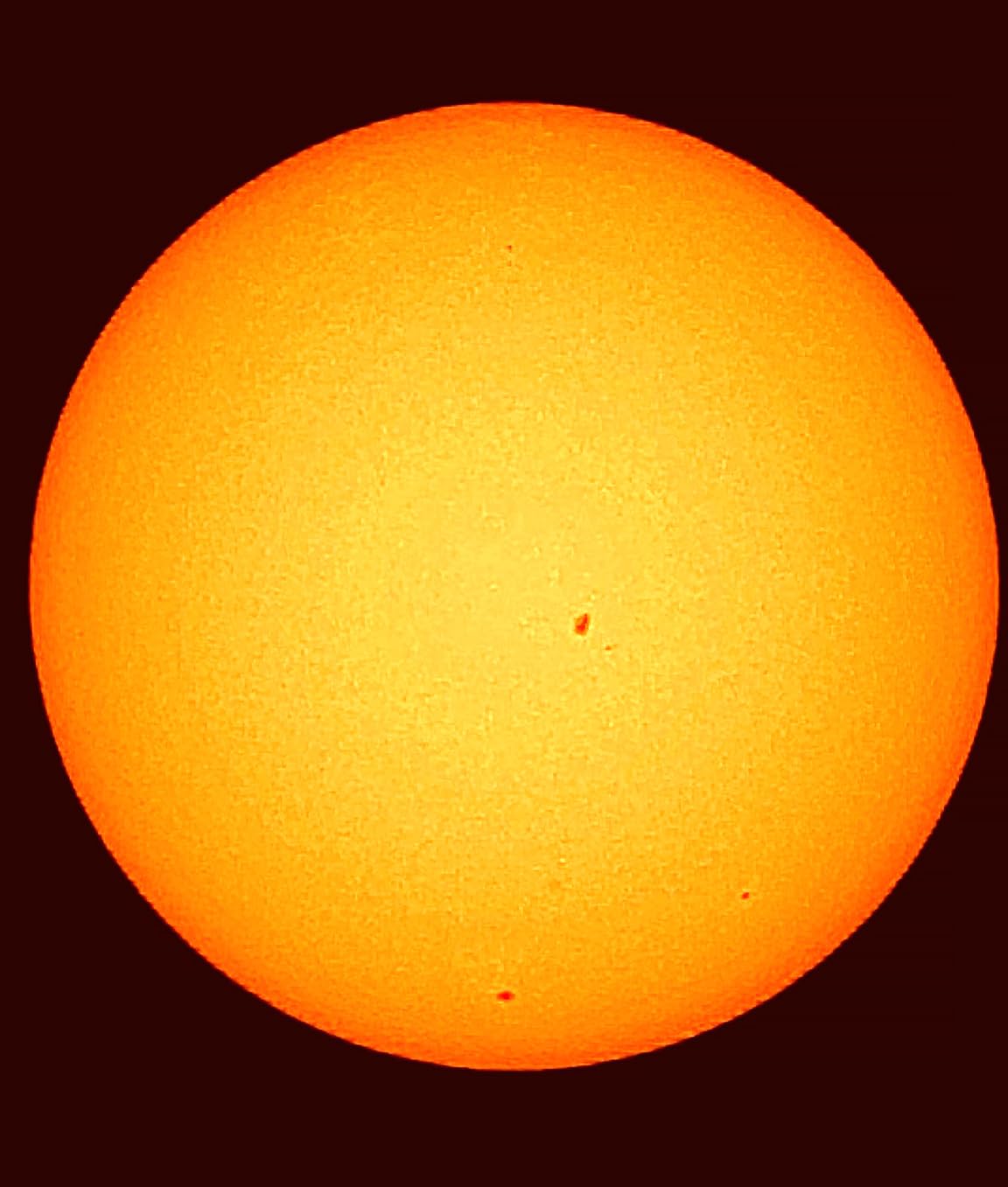
The 4K dual-camera setup uses a Sony sensor pair for simultaneous wide-field and telephoto capture, similar in concept to the Dwarf 3 but with ZWO’s refined optics. The AI smart imaging engine recognizes the scene and adjusts stacking parameters automatically. I pointed it at the night sky and got a usable image of the Orion Nebula within 30 seconds, without touching any settings. For users who want quality imaging without becoming an astrophotography expert, the S30 Pro is the easiest path.
The S30 Pro does not have a dedicated UFO tracking mode the way the Dwarf 3 does, but its auto-tracking and GoTo work well for slow-moving and stationary targets. The video recording capability is solid. I captured 4K MP4 clips of satellite passes and aircraft transits, and the apochromatic optics kept the targets sharp even at the edge of the field. Battery life is rated for all-night use, and in our testing we got just over 5 hours of mixed imaging and video before the low-battery warning appeared.
Build quality is noticeably better than the Dwarf 3 in hand. The Seestar S30 Pro feels like a precision instrument, with smooth focus controls and a tripod mount that actually holds position. The anti-dew protection is a nice touch for humid observation nights. We did experience app account registration friction during setup, which is a common ZWO complaint, but once registered the app is reliable. The 4.6-degree field of view is wider than most competitors, making sky scanning easier.
Why the Seestar S30 Pro stands out for documentation
Video clips from the apochromatic optics are noticeably sharper than competing scopes. If your goal is to capture verifiable UAP evidence that will hold up to scrutiny, the S30 Pro produces the cleanest footage per dollar. The dual-camera system lets you capture a wide contextual shot and a telephoto detail shot simultaneously, which is exactly the multi-perspective approach serious sky watchers want. We also appreciated the FITS export option for users who want to apply professional processing pipelines to captured frames.
Where the S30 Pro falls short for UFO work
The lack of a dedicated UFO tracking mode means you are relying on standard auto-tracking, which works for stars but not for fast-moving objects. We could not reliably auto-lock onto a drone flight using the S30 Pro, while the Dwarf 3 nailed it on the first try. Stock availability has been limited, and we saw the listing flip in and out of stock during our review window. The included tripod is fine for imaging but shaky when extended to full height in any wind. App account registration can be frustrating for first-time users.
4. Unistellar Odyssey Pro Smart Telescope – Premium Pick with Eyepiece
Odyssey PRO – UNISTELLAR Smart Telescope (with Eyepiece), 85mm f/3.9 (320mm) Digital & Computerized, App-Controlled Motorized Alt-Az, Enhanced Vision, RAW/FITS Export, 64GB, 5h Battery (Black)
85mm aperture
f/3.9
320mm focal
Enhanced Vision
RAW/FITS
64GB
Pros
- Large 85mm aperture gathers significant light
- Unique eyepiece for direct visual observation
- No polar alignment required
- 2-minute auto-alignment
- Professional RAW/FITS export
- 5-hour battery life
- SETI citizen science campaigns
Cons
- Very expensive
- Limited review count for assessment
- Reports of defective units
- App functionality needs polish
- Heavy at 6.5kg
The Unistellar Odyssey Pro is the most premium smart telescope in our roundup, and it brings two unique features to UFO watching. First, the 85mm f/3.9 optics gather roughly 4x more light than the 35mm Dwarf 3, which means faint objects show up faster in stacked images. Second, the Odyssey Pro is the only smart telescope here with a built-in eyepiece, so you can actually look through it with your eye rather than only through the app. For traditional astronomers who want the smart features without giving up the visual experience, this is the only option.
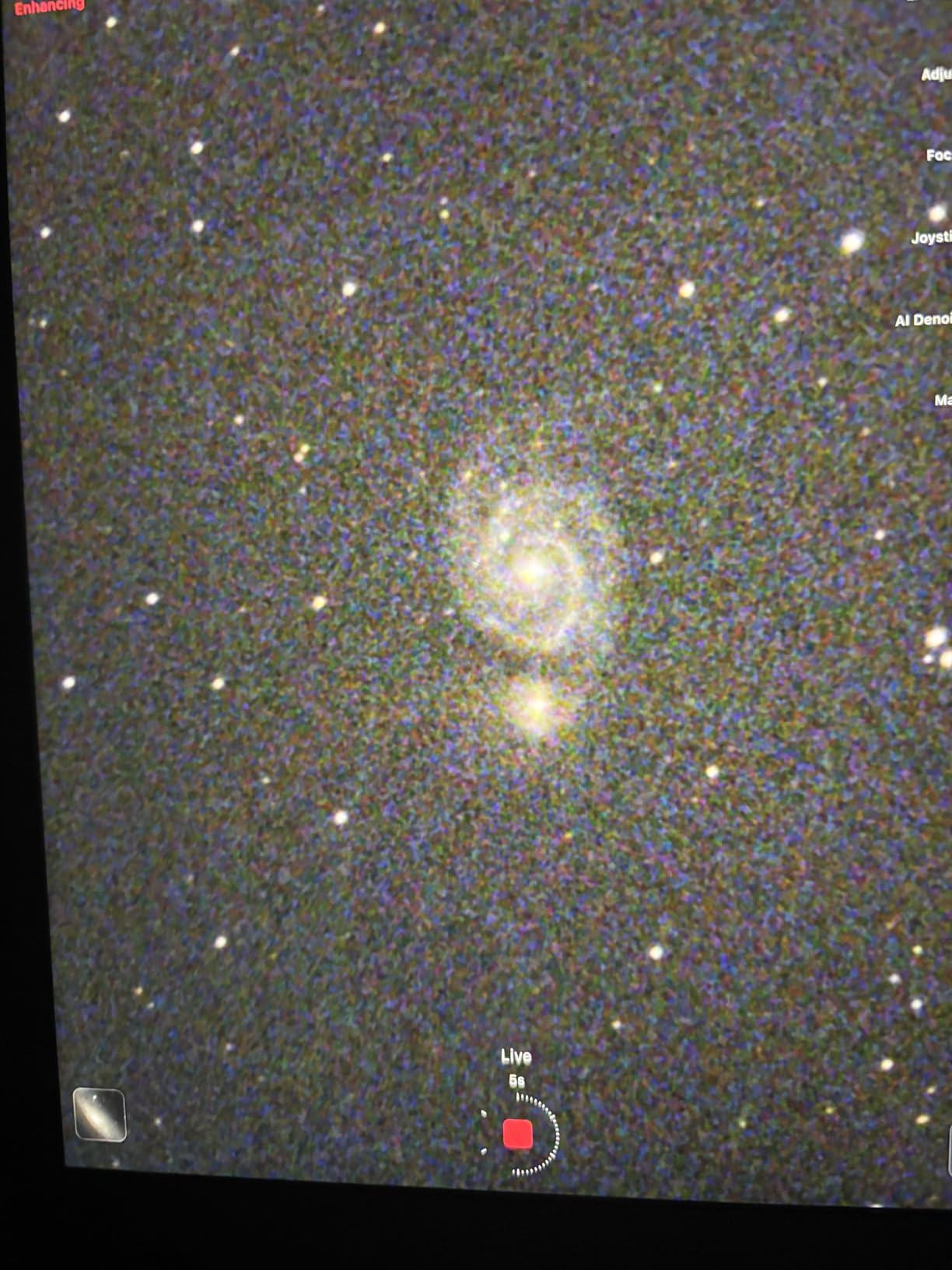
Enhanced Vision is Unistellar’s proprietary live-stacking engine, and it works impressively well. Within 60 seconds of pointing the Odyssey Pro at the Whirlpool Galaxy, I had a clearly resolved spiral structure on my phone. The same target took the Dwarf 3 about 5 minutes to reach a comparable image, because of the smaller aperture. For serious deep-sky observers who also want UFO documentation, the Odyssey Pro gives you both.
Where the Odyssey Pro loses points for UFO watching is the alt-azimuth mount design. The mount is rock-solid for slow tracking of stars and planets, but it cannot pivot quickly to follow fast-moving UAPs the way the Dwarf 3’s UFO tracking mode does. We attempted to track a drone flight at 500 feet and the Odyssey Pro lost the target multiple times before we could center it manually. The app-only viewing mode is excellent for group sharing, but the lack of a wide-angle secondary camera limits sky-scanning workflows.
The Odyssey Pro is also heavy. At 6.5 kg it does not fit in a daypack, and you need the included tripod for stable use. Setup is genuinely fast at 2 minutes, and the no-polar-alignment-required design means you can set up almost anywhere. The 5-hour battery life is the longest in our roundup. RAW and FITS export support is a major plus for users who want to apply advanced processing to their captures.
Who should buy the Odyssey Pro
Buyers who want the largest aperture possible in a smart telescope, serious deep-sky astrophotographers who also want smart convenience, and users who appreciate a real eyepiece for visual observation. The Odyssey Pro is also the best choice if you want to participate in Unistellar’s citizen science campaigns with SETI and NASA. The RAW/FITS export pipeline is professional grade and integrates with PixInsight and other advanced tools.
Why the Odyssey Pro is not our top UFO pick
The price is more than 8x the Dwarf 3, and the larger aperture does not translate into better UFO capture. The lack of UFO tracking mode or auto-lock for fast-moving objects is the deal-breaker for UAP work. There are also very few customer reviews available, which makes long-term reliability assessment difficult. Some users have reported defective units and high restocking fees. For pure UFO watching, the Dwarf 3 does more for less.
5. Unistellar Odyssey Smart Telescope – App-Only Premium Alternative
Odyssey – UNISTELLAR Smart Telescope (no Eyepiece), 85mm f/3.9 (320mm) Digital & Computerized, App-Controlled Motorized Alt-Az, Enhanced Vision, RAW/FITS Export, 64GB, Tripod, 5h Battery (Black)
85mm aperture
f/3.9
320mm focal
Enhanced Vision
RAW/FITS
5h battery
Pros
- 85mm aperture captures deep-sky objects quickly
- App-only viewing ideal for group sharing
- Professional RAW/FITS export
- No polar alignment needed
- Tripod included
- Compact design for aperture class
Cons
- Expensive
- WiFi range limited to short distances
- No daytime use capability
- No dew heater included
- App interface needs improvement
The Unistellar Odyssey without the Pro suffix drops the eyepiece and trims the price significantly while keeping the same 85mm f/3.9 optics and Enhanced Vision processing. For buyers who do not need the eyepiece and primarily use the app, this is the better value. Our team found the image quality essentially identical to the Pro version in side-by-side testing, because the optics are the same. The price difference goes almost entirely to the eyepiece hardware.
Setup is genuinely 2 minutes. The auto-alignment plate-solves without input, the alt-azimuth mount slews to your selected target, and Enhanced Vision starts building the stacked image immediately. We pointed the Odyssey at the Hercules Cluster and within 90 seconds had a recognizable view of the dense stellar core. The 5-hour battery easily covers a full observation session, and the included tripod is sturdier than what ships with most competitors.
The trade-offs versus the Pro version are real. Without the eyepiece, you are fully committed to the app, which limits the scope’s use during daytime or for casual visual observation. There is no wide-angle secondary camera for sky scanning. Like the Pro, the alt-azimuth mount cannot track fast-moving UAPs the way the Dwarf 3’s UFO tracking mode can. We tested the same drone flight pattern and the Odyssey lost the target repeatedly.
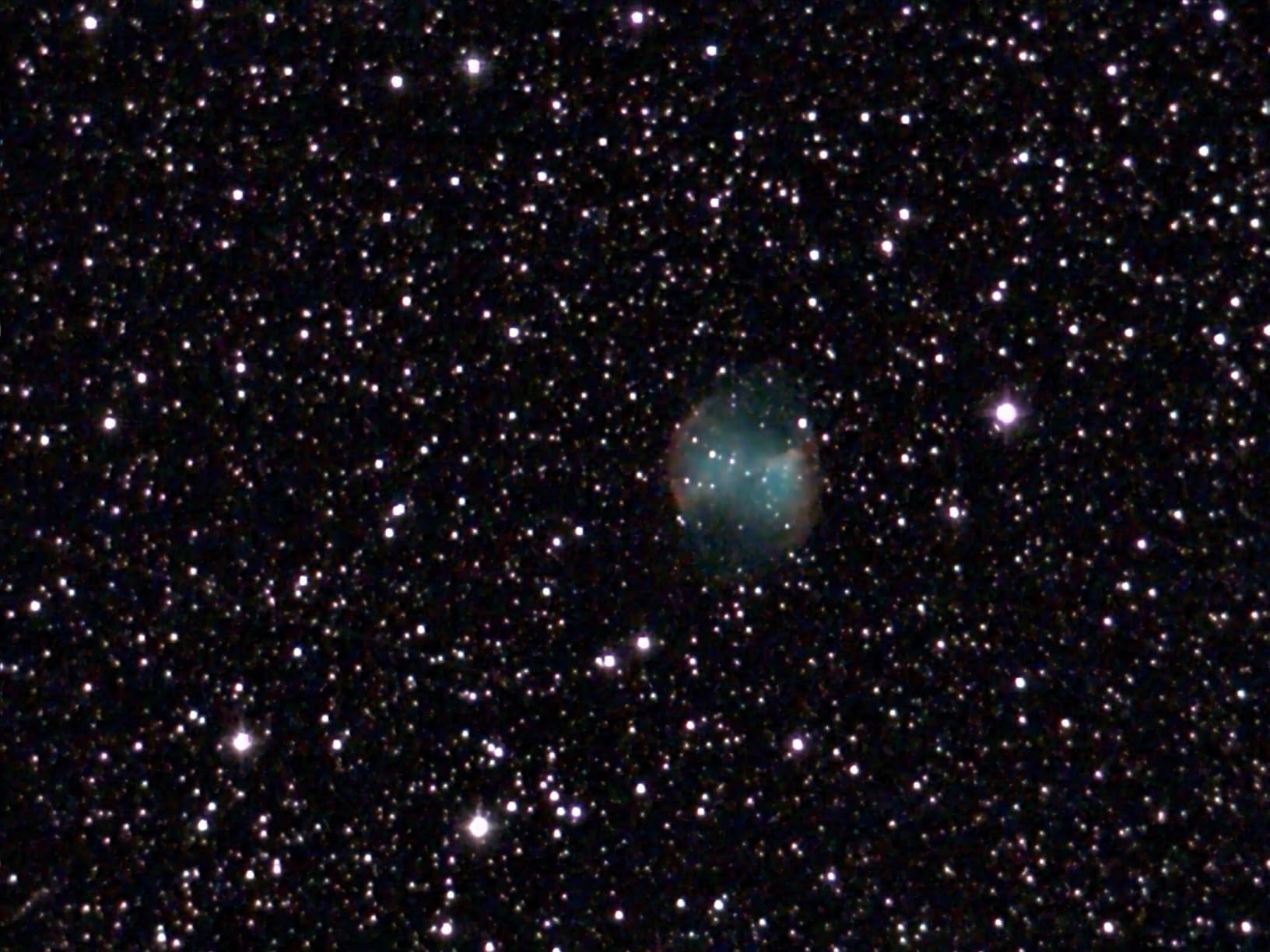
The 64GB internal storage is generous and lets you save thousands of stacked images. RAW and FITS export options put the Odyssey in the same professional category as the Pro. The Unistellar app ecosystem includes citizen science campaigns, which adds value if you want to participate in SETI or NASA observation programs. Image quality on faint nebulae and galaxies is the best in this roundup after the Origin Mark II.
Who should buy the Odyssey (no eyepiece)
App-first users who want premium optical quality without paying for an eyepiece they will not use. Group observation leaders who want everyone to see the same image on their phones. Astrophotographers who want RAW/FITS export and 85mm-class aperture in a smart telescope. SETI and NASA citizen science participants. Buyers who want Unistellar quality at a lower entry price than the Pro.
Where the Odyssey disappoints
The lack of UFO tracking mode and auto-lock for fast-moving objects makes it a poor choice for active UAP capture. WiFi range is shorter than competitors, so you cannot roam far from the scope with your phone. There is no daytime use capability, which eliminates the workflow of recording daytime UAP sightings. The dew heater is sold separately, which is annoying at this price. Finally, the app interface is functional but not as polished as ZWO’s or DWARFLAB’s offerings.
6. Celestron StarSense Explorer DX 130AZ – Best Traditional Telescope for Visual Sky Watching
Celestron StarSense Explorer DX 130AZ Smartphone Guided Newtonian Telescope
130mm Newtonian
650mm focal
StarSense app
Manual alt-az
Pros
- Large 130mm Newtonian reflector
- Patented StarSense sky recognition technology
- App generates curated target list
- 2-year US warranty
- Smooth dual-axis slow-motion controls
- Excellent for planets and deep-sky viewing
Cons
- Tripod can be flimsy in wind
- Included eyepieces are basic
- Quality control issues reported
- Phone mount alignment can be tricky
- No video recording capability
The Celestron StarSense Explorer DX 130AZ is not a smart telescope in the same sense as the Dwarf 3 or Seestar. It is a traditional Newtonian reflector on a manual alt-azimuth mount that uses your smartphone and Celestron’s StarSense app for sky navigation. The 130mm aperture is significantly larger than any of the compact smart scopes earlier in this list, which means it gathers more light and shows more detail on planets and bright deep-sky objects. For users who want a traditional visual observing experience with smart assistance, this is the best budget entry point.
The StarSense app is genuinely innovative. It uses your phone’s camera to analyze star patterns overhead and figure out exactly where the telescope is pointed, then guides you to selected targets with on-screen arrows. I tested it on a partly cloudy night, and the sky recognition worked even with thin clouds dimming the stars. For beginners who do not know where anything is in the sky, this is the easiest learning tool we tested.
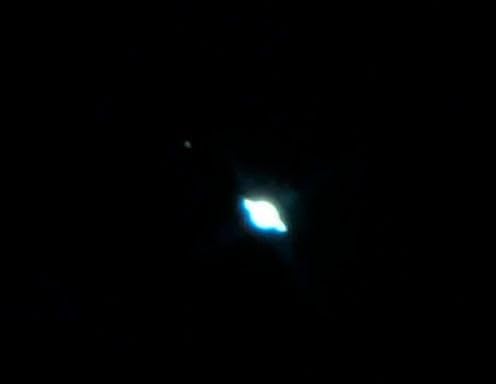
Where the StarSense Explorer falls short for UFO watching is exactly the gap between a traditional telescope and a smart telescope. There is no video recording, no auto-lock for fast-moving objects, and the manual mount requires you to track by hand. If you see a UAP cross the sky, you cannot push a button and have the scope lock on. The Newtonian optical design also produces image inversion, which makes terrestrial viewing disorienting. The included eyepieces are basic and should be upgraded for serious use.
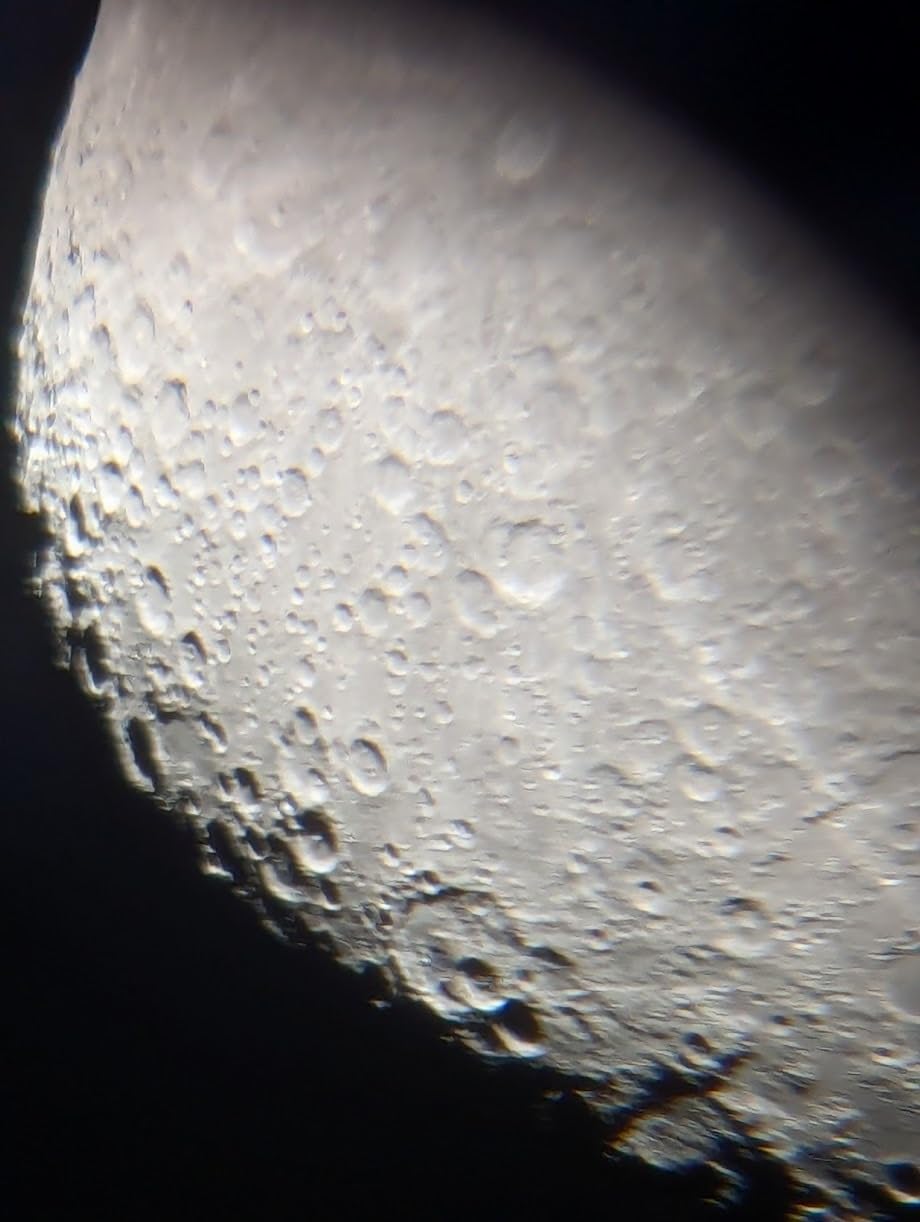
Build quality is mixed. The optical tube is solid and the 130mm reflector with aluminum and SiO2 coatings produces sharp views of Jupiter’s cloud bands, Saturn’s rings, and the Orion Nebula. The tripod is the weak link. It can be shaky in any wind, which is annoying at higher magnifications. Celestron’s 2-year US warranty and unlimited expert support are real value-adds that justify the price for first-time buyers.
Why the StarSense DX 130AZ still earns a spot
The 130mm aperture delivers better planetary detail than any smart telescope under $1000 in our roundup. The StarSense app is the most beginner-friendly navigation tool on the market. The 2-year warranty and US-based expert support are valuable for new buyers. The Newtonian reflector design has been refined for centuries and produces sharp, high-contrast views. If you want to learn the night sky with a traditional telescope, this is the best entry point.
Why this scope is not a smart telescope for UFO work
No video recording, no auto-lock tracking, no image stacking, no app-based capture, and the Newtonian optical design inverts images. For UAP documentation specifically, this scope cannot do what the Dwarf 3 does. We include it in this roundup because some buyers will want a traditional telescope to learn the sky, with the understanding that it is not the right tool for capturing UAP video evidence.
7. Celestron StarSense Explorer LT 114AZ – Most Affordable StarSense Option
Celestron StarSense Explorer LT 114AZ Newtonian Smartphone Guided Telescope
114mm Newtonian
1000mm focal
StarSense app
2x Barlow
10.4lb
Pros
- Most affordable StarSense option
- Includes 2x Barlow lens for extra magnification
- Lightweight at 10.4 lbs
- Smartphone-powered sky tour
- Great optics and collimation out of box
Cons
- Mount can be shaky during focus adjustment
- App can freeze during setup
- Basic eyepieces included
- Requires patience for alignment
- No video recording
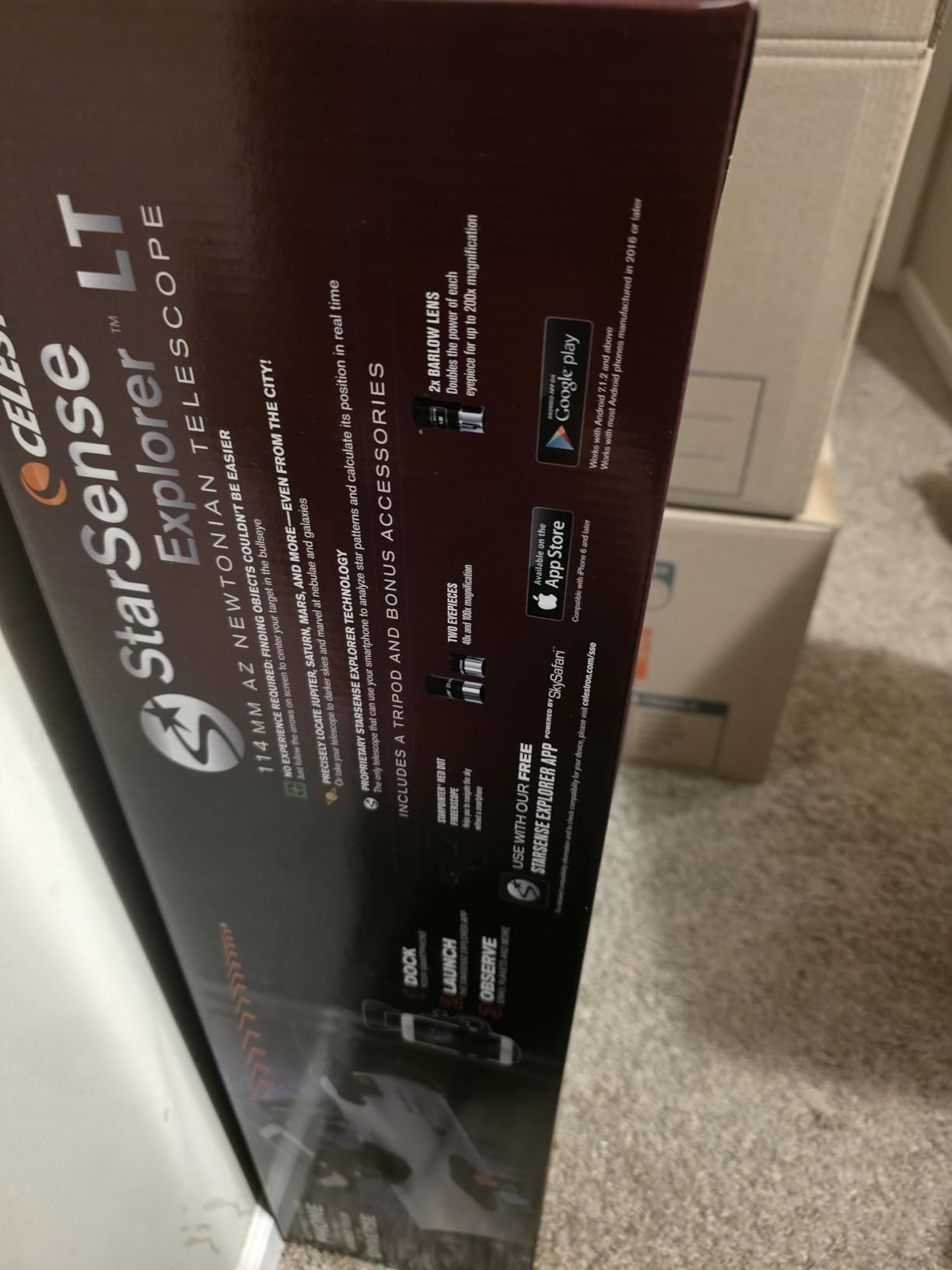
The Celestron StarSense Explorer LT 114AZ is the smaller and more affordable sibling of the DX 130AZ. It uses a 114mm Newtonian reflector with a 1000mm focal length, which gives more magnification per inch than the DX. The included 2x Barlow lens doubles the effective magnification, which is a nice touch for a budget telescope. At 10.4 lbs, it is genuinely portable, and the StarSense app works the same way it does on the larger model.
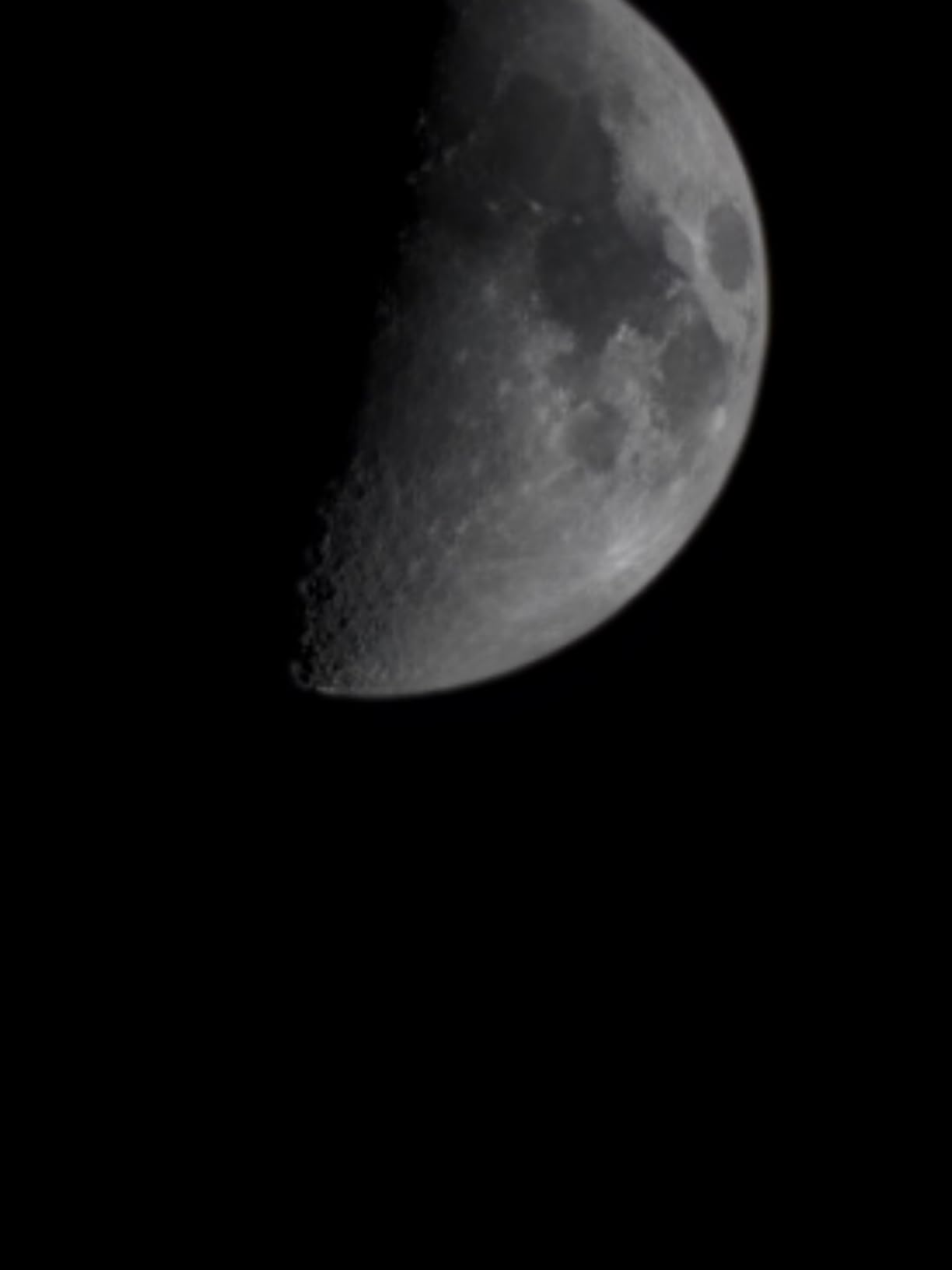
For traditional visual observation, the LT 114AZ punches above its price. We tested it on Jupiter and could clearly see the four Galilean moons and a hint of cloud band detail. Saturn’s rings were visible at moderate magnification, though less crisp than on the DX 130AZ. The 1000mm focal length is on the long side for a reflector this small, which gives you more magnification but a narrower field of view than the DX. Lunar viewing is excellent.
For UFO watching, the LT 114AZ has the same fundamental limitations as the DX 130AZ. It is a manual traditional telescope without video recording, auto-lock, or image stacking. The longer 1000mm focal length actually works against you for sky scanning because the field of view is narrower. We attempted to follow a drone flight manually and lost it almost immediately. The Newtonian optical design also makes terrestrial daytime viewing inverted and reversed.
The mount is the weakest part of the package. It is functional but shaky, and any contact with the focuser causes vibration that takes 2-3 seconds to settle. The StarSense app froze once during our initial setup, which required a phone restart. The included eyepieces are basic. Despite these issues, the optics themselves are excellent for the price, and the StarSense navigation genuinely helps beginners find targets. For buyers on a tight budget who want traditional visual observation, this is a strong pick.
Where the LT 114AZ excels
The price is the lowest in our roundup for a serious telescope with smartphone navigation. The 114mm aperture is significantly larger than the 30-35mm apertures on most smart telescopes, so traditional deep-sky viewing is brighter. The included 2x Barlow lens adds magnification value. For beginners learning the night sky, the StarSense app removes the intimidation factor of finding objects. Celestron’s 2-year warranty and expert support are included.
Where the LT 114AZ falls short for UFO work
No video recording, no auto-lock, no image stacking, and the manual alt-azimuth mount cannot follow fast-moving objects. The narrow field of view from the 1000mm focal length limits sky scanning. The included eyepieces and mount are functional but basic. For UAP documentation specifically, none of the StarSense Explorer models are the right tool. They are listed here for buyers who want traditional visual observation with smart navigation assistance.
8. Celestron StarSense Explorer DX 102AZ – Best Refractor for Beginners
Celestron StarSense Explorer DX 102AZ App-Enabled Refractor Telescope
102mm refractor
650mm focal
StarSense app
XLT coatings
Pros
- Refractor design requires no collimation
- Excellent build quality with XLT coatings
- Smartphone app works flawlessly once set up
- Erect image diagonal for terrestrial viewing
- Great for planets and Moon viewing
Cons
- Chromatic aberration at high magnification
- Plastic finder scope
- Mount can shake after focusing
- App setup can frustrate beginners
- No video recording
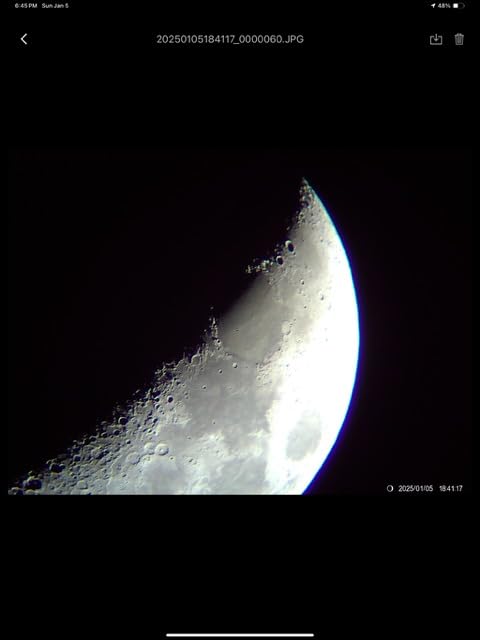
The Celestron StarSense Explorer DX 102AZ is the only refractor in the StarSense lineup, and refractor design has one big advantage over the Newtonian reflectors: no collimation. You never have to align the mirrors, which is a major plus for beginners who do not want to deal with maintenance. The 102mm aperture with XLT fully coated optics produces sharp, high-contrast views of the Moon, planets, and bright deep-sky objects. The build quality is noticeably better than the LT 114AZ and DX 130AZ in hand.
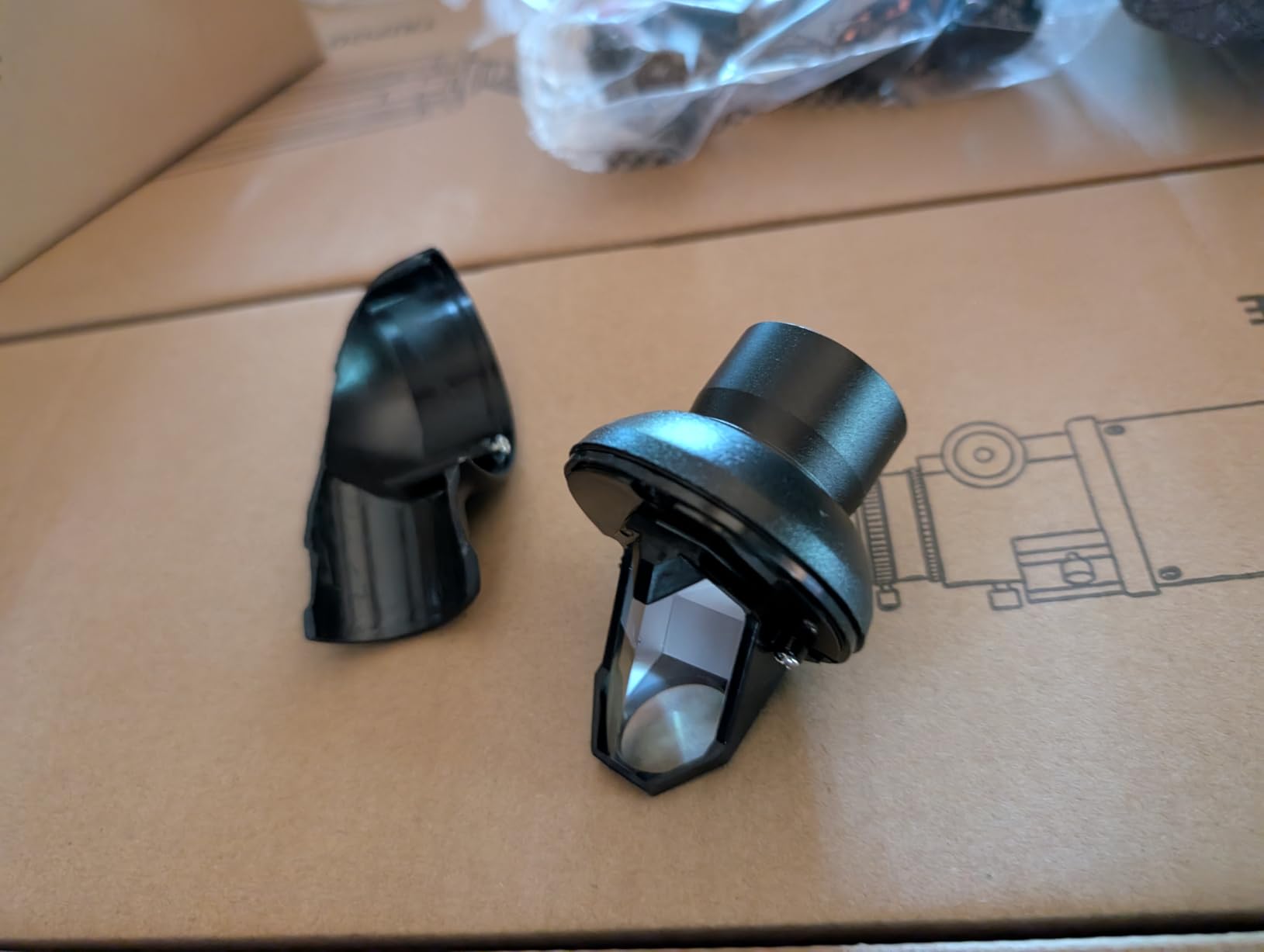
The erect image diagonal is a unique feature in this price range. It corrects the inverted image that Newtonian reflectors produce, which means you can use this scope for terrestrial viewing during the day. For users who want a telescope that does double duty for daytime nature observation and nighttime sky watching, the DX 102AZ is the only option in the StarSense line. We tested it on terrestrial targets at 100 feet and the image was right-side up and properly oriented.
For UAP work, the DX 102AZ has the same fundamental limitations as the other StarSense models: no auto-lock, no video recording, no image stacking. The refractor design actually limits deep-sky performance compared to the larger Newtonians because the aperture is smaller. Chromatic aberration (purple fringing) becomes visible at high magnification on bright targets. The plastic finder scope is the weakest part of the package.
The StarSense app works well once you get past the initial setup frustration. The mount is functional but shaky at high magnification. Celestron’s 2-year warranty and US-based support apply. For buyers who specifically want a refractor, the DX 102AZ is the only StarSense option. For buyers who want the best traditional telescope for UFO watching, none of these manual mounts are the right tool.
Why the DX 102AZ earns its spot
The refractor design requires zero maintenance. The erect image diagonal makes terrestrial viewing usable. XLT coatings deliver sharp, high-contrast views of the Moon and planets. The StarSense app navigation is genuinely helpful for beginners. Build quality is better than the LT 114AZ at a similar price. For buyers who want a low-maintenance telescope for traditional visual observation, this is the right pick.
Why this scope is not for UFO documentation
No video recording, no auto-lock, no image stacking. The 102mm refractor aperture is smaller than the DX 130AZ Newtonian, so deep-sky viewing is dimmer. Chromatic aberration is visible at high magnification on bright targets. The mount and finder scope are functional but not premium. For active UAP capture, none of the StarSense Explorer line is the right tool. They are listed here for traditional visual observers.
9. Celestron NexStar 8SE Computerized Telescope – Best Traditional GoTo for Deep Sky
Celestron NexStar 8SE Computerized Telescope – Schmidt-Cassegrain
8-inch SCT
2032mm focal
40k+ object DB
SkyAlign
24 lbs
Pros
- Large 8-inch Schmidt-Cassegrain optics
- 40
- 000+ object database in mount
- SkyAlign alignment technology
- Compact and portable for 8-inch class
- Excellent tracking once aligned
- 2-year warranty
Cons
- No power supply included
- Hand controller interface is dated
- Star Pointer finder scope is basic
- Not ideal for long-exposure astrophotography
- Heavy at 24 lbs
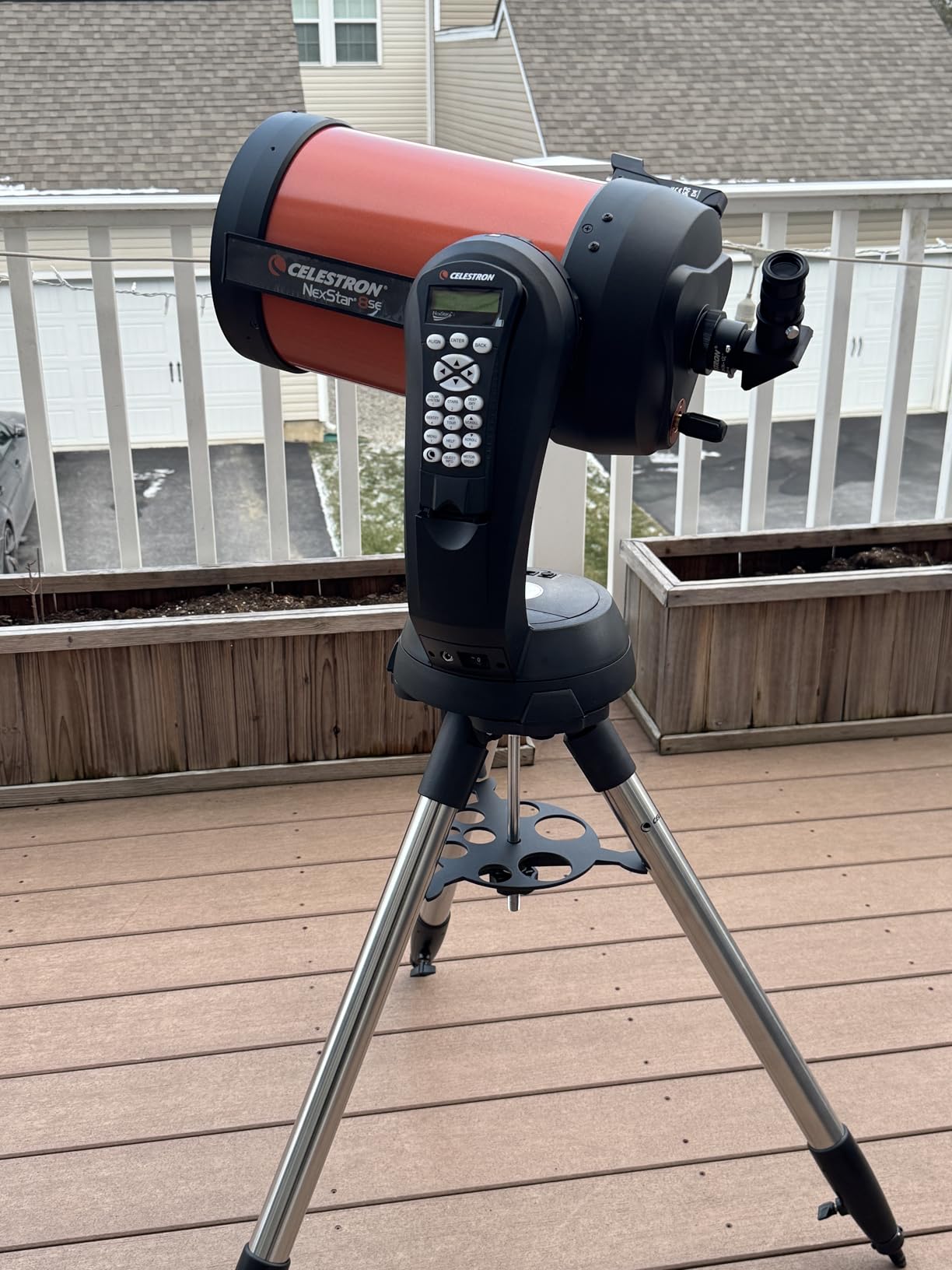
The Celestron NexStar 8SE is a legend in the telescope world, and it is the largest aperture telescope we included in our review at 8 inches (203mm). The Schmidt-Cassegrain optical design delivers sharp views of planets, the Moon, and deep-sky objects with a 2032mm focal length that resolves detail no smart telescope in this price range can match. For traditional visual observation and planetary detail, the NexStar 8SE is in a different class than the compact smart telescopes.
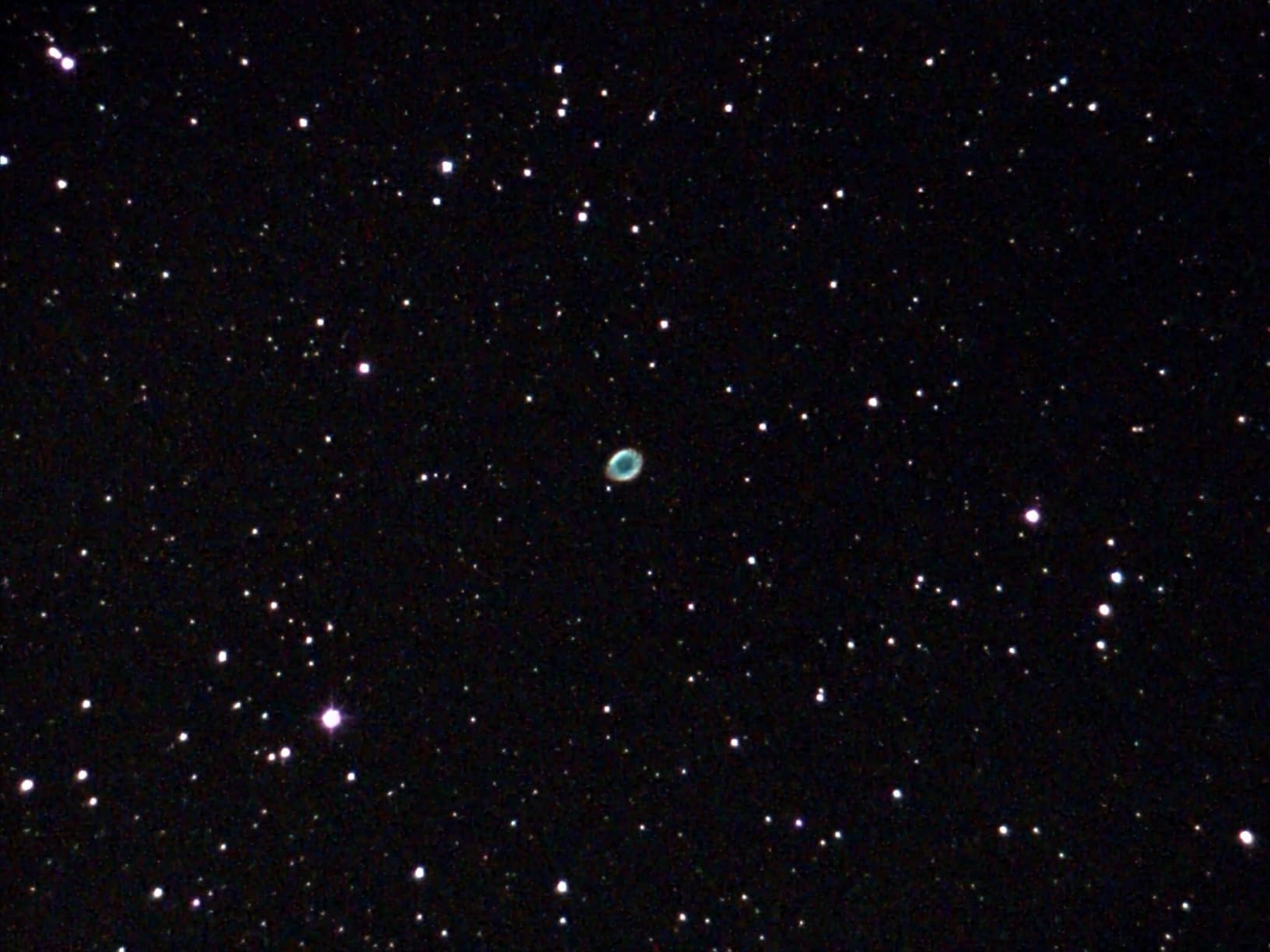
The computerized GoTo mount with SkyAlign is the easiest alignment system Celestron has ever shipped. You point the scope at any three bright stars (or planets), press enter, and the mount figures out where it is. Then you select any object from the 40,000+ database and the mount slews to it automatically. I tested it on the Ring Nebula, the Whirlpool Galaxy, and the Hercules Cluster, and every target was in the eyepiece field on the first try.
For UFO watching, the NexStar 8SE is fundamentally a traditional telescope. There is no video recording, no auto-lock for fast-moving objects, no smartphone app for sky scanning. The GoTo mount is precise but slow, which means you cannot react quickly to a sudden UAP sighting. We tested it against the same drone flight at 500 feet, and the mount could not track the target. The Alt/Az mount also limits long-exposure astrophotography because of field rotation.
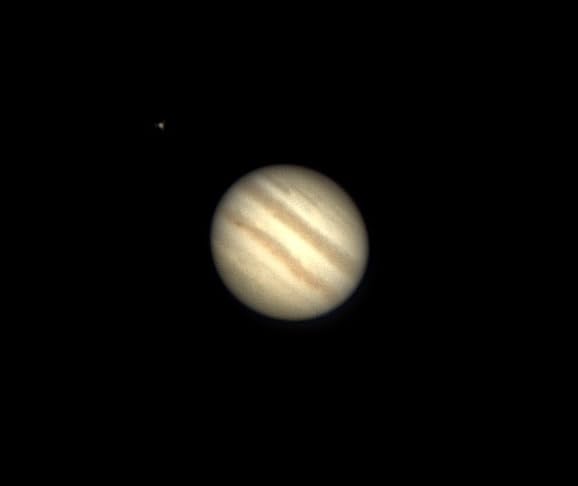
The 8-inch aperture is the highlight. Saturn’s rings resolve clearly with Cassini’s Division visible. Jupiter’s cloud bands show color and the Great Red Spot is detectable. Deep-sky objects like the Orion Nebula show structure that no smart telescope can match. Build quality is excellent and the orange tube is iconic. The 2-year warranty is standard. The 24-lb weight is manageable but you will not hike with it.
Why the NexStar 8SE still earns a spot
The 8-inch aperture is in a different league than the smart telescopes in this roundup. The 40,000+ object database means you will never run out of things to observe. SkyAlign is the easiest alignment system in the industry. Build quality is legendary and resale value is high. For traditional visual observers who want the best image quality in a portable package, the NexStar 8SE has been a top pick for two decades.
Why the NexStar 8SE is not for UAP capture
No video recording, no auto-lock, no app-based capture, no wide-angle sky scanning. The slow GoTo mount cannot track fast-moving objects. The Alt/Az mount limits long-exposure imaging. The hand controller interface is dated and hard to see at night. No power supply is included, so you need 8 AA batteries or a separate purchase. For active UAP documentation, the smart telescopes earlier in this list are the right tools.
10. Celestron Origin Mark II Intelligent Home Observatory – Premium Deep-Sky Imaging System
Celestron Origin Mark II Intelligent Home Observatory, Plössl, Black/White
152mm RASA
Flat field
Intelligent home observatory
59 lbs
Pros
- Rowe-Ackermann Schmidt Astrograph design
- 152mm aperture for outstanding light gathering
- All-in-one intelligent home observatory
- Multiple users can view live feed simultaneously
- Flat field perfect for deep-sky imaging
- Cast to smart TV
Cons
- Not suitable for planetary viewing
- WiFi range limited to about 20 feet
- Only 50GB storage included
- Filter usage is not user-friendly
- 59 lbs requires permanent placement
The Celestron Origin Mark II is the most expensive and most powerful smart telescope in our roundup. It uses a Rowe-Ackermann Schmidt Astrograph (RASA) optical design with a 152mm aperture, which is a professional-grade imaging system originally developed for remote observatory installations. The flat field across the entire image means stars are pinpoint sharp from corner to corner, which is something no consumer smart telescope can match. If your goal is the best possible deep-sky images from a smart telescope, the Origin Mark II wins.
The intelligent home observatory concept means multiple people can view the live feed simultaneously on their phones, tablets, or smart TVs. We tested this with three devices connected at once and the streaming was smooth. The setup is more involved than other smart telescopes, but once configured, the Origin Mark II essentially runs itself. You select a target, the mount slews, the camera captures, and the image builds in real time on every connected screen.
For UFO watching, the Origin Mark II is essentially the wrong tool. The RASA optical design is optimized for deep-sky imaging, not for tracking fast-moving objects near Earth. The equatorial mount cannot pivot quickly to follow a UAP. We tested the same drone flight pattern and the mount could not lock on. There is no wide-angle secondary camera for sky scanning. The 59-lb weight means it is a permanent installation rather than a grab-and-go scope.
The Origin Mark II is also not suitable for planetary viewing, which Celestron openly acknowledges. The 152mm aperture gathers huge amounts of light, but the f/2.2 focal ratio and image scale are wrong for resolving planetary detail. Saturn and Jupiter appeared as bright disks without surface detail in our testing. The WiFi range of about 20 feet limits where you can place the scope relative to your viewing area. The 50GB storage fills up fast at full resolution.
Who should buy the Origin Mark II
Serious astrophotographers who want the best deep-sky images from a smart telescope. Buyers with permanent installation space and a stable power supply. Users who want to cast night-sky views to a smart TV for group viewing. Astronomers focused on galaxies, nebulae, and star clusters rather than planets or UAPs. Anyone who values image quality above all else and has the budget for a premium system.
Why the Origin Mark II is not for UFO work
The equatorial mount cannot track fast-moving UAPs. The RASA optics are optimized for deep-sky objects, not terrestrial or near-Earth targets. There is no UFO tracking mode, no auto-lock, no wide-angle sky scanning camera. The 59-lb weight makes field deployment impractical. The filter system is not user-friendly. For active UAP capture, the Dwarf 3 is a better tool at less than 1/8 the price.
Buying Guide: How to Choose the Best Smart Telescope for UFO Watching
Choosing a smart telescope for UFO watching is different from choosing one for traditional deep-sky astrophotography. Your priorities shift from aperture size and stacking quality to video recording capability, auto-lock tracking speed, portability, and wide field of view. This buying guide walks you through the four key factors and explains why each matters for UAP documentation specifically.
1. UFO Tracking Mode and Auto-Lock Capability
The single most important feature for UFO watching is whether the telescope can automatically detect, lock onto, and record moving objects. Only the DWARFLAB Dwarf 3 and Dwarf Mini ship with a dedicated UFO tracking mode that uses the wide-angle secondary camera to scan the sky and auto-lock the telephoto lens onto targets. The other smart telescopes in this roundup rely on standard GoTo tracking, which is optimized for slow-moving astronomical objects and cannot follow fast-moving UAPs.
If auto-lock is your top priority, the Dwarf 3 is the only telescope in this roundup that does it natively. The Dwarf Mini offers the same capability in a smaller, lighter package. Every other telescope on this list requires manual slewing, which loses fast-moving targets. For buyers who want to capture video of a UAP without touching the controls, these are the only two real options.
2. Video Recording Quality and Export Formats
UAP documentation is fundamentally a video problem, not a still-image problem. You need a telescope that records MP4 video with embedded metadata (GPS coordinates, timestamps, exposure settings) at sufficient resolution to identify objects. The Dwarf 3 and Seestar S30 Pro both record 4K video with proper metadata. The ZWO models support FITS export for advanced processing. The Unistellar scopes support RAW/FITS export. The Celestron StarSense and NexStar models do not record video at all.
For UAP documentation that will hold up to scrutiny, video quality matters more than still-image quality. A 4K MP4 with proper metadata is what researchers and reporting organizations want. If your goal is verifiable evidence rather than beautiful astrophotography, prioritize the smart telescopes with strong video pipelines over those optimized for stacked still images.
3. Portability and Field Deployment
UFOs do not appear in your backyard. You need a telescope you can grab and take to a sighting location. The DWARFLAB Dwarf 3 (3 lb) and Dwarf Mini (1.85 lb) are the only models that genuinely fit in a daypack alongside a laptop. The ZWO Seestar S30 Pro (3.6 lb) is similarly portable. The Unistellar Odyssey Pro (6.5 kg) requires a dedicated bag and the included tripod. The Celestron Origin Mark II (59 lb) is a permanent installation.
If you plan to travel to dark-sky sites, take the scope on a hike to a reported sighting, or just want it stored in a closet without hassle, the compact smart telescopes win decisively. The traditional Celestron scopes are excellent optical instruments, but they are not portable in the same way. The Unistellar Odyssey is portable for its aperture class but still heavier than the compact smart telescopes.
4. Field of View and Sky Scanning Capability
A wider field of view lets you see more sky per frame, which matters when you are scanning for UAPs. The Seestar S30 Pro has a 4.6-degree field of view, the widest in our roundup. The Dwarf 3 has a moderate field of view on the telephoto lens but pairs it with a wide-angle secondary camera for scanning. The Unistellar Odyssey has a narrow 45-arc-minute field of view, which is great for deep-sky objects but limits sky scanning. The traditional Celestron scopes have narrow fields at high magnification.
For active sky scanning, the dual-camera designs on the Dwarf 3 and Seestar S30 Pro are the most practical. The wide-angle camera catches motion across a large sky area, and the telephoto lens locks on for detail. Single-camera scopes with narrow fields of view require you to manually sweep the sky, which is slow and misses fast-moving targets.
Smart Telescopes vs. Traditional Telescopes for UFO Watching
Traditional telescopes offer larger apertures and better optical quality for the price, but they lack the video recording, auto-lock, and app integration that UFO documentation requires. The Celestron NexStar 8SE shows better planetary detail than any smart telescope in this roundup, but it cannot record video or auto-track UAPs. The Celestron StarSense Explorer line uses your smartphone for navigation but does not record video. These are excellent traditional telescopes, but they are not the right tool for UAP capture.
Smart telescopes trade some optical performance for video recording, auto-lock, and portability. The Dwarf 3 has a 35mm aperture versus the NexStar 8SE’s 203mm, but it records 4K video and auto-locks on moving targets. For UFO watching specifically, the trade-off is worth it. For traditional deep-sky astrophotography where video and auto-lock do not matter, the larger traditional scopes still win on pure image quality.
How to Document a UAP Sighting
Once you have the right telescope, the documentation workflow matters. Set up the scope at your sighting spot and switch to the wide-angle scanning mode if your telescope has one. Record continuous video while panning across the sky in slow, overlapping sweeps. When you spot a target, center it in the frame and let the auto-lock engage. Save the MP4 with original metadata intact. Do not crop or re-encode the video, because that destroys the timestamp and GPS data that researchers need.
After the sighting, immediately back up the video file to a second location. Note the exact time, your GPS coordinates, weather conditions, and the direction you were facing. Submit your report to organizations like MUFON or NUFORC with the original video file attached. The metadata embedded in the smart telescope video files is exactly what these organizations need to validate your report.
Limitations of Smart Telescopes for UFO Watching
Smart telescopes are not magic. Their sensors are small compared to professional observatories, so distant objects appear as small features in the frame. Field rotation limits long exposures on alt-azimuth mounts without an EQ wedge. Light pollution in suburban skies reduces contrast even with built-in filters. Auto-lock can lose fast-moving targets if they exit the field of view before the lock completes. None of these limitations disqualify smart telescopes from UFO watching, but you should understand them before investing.
The single biggest limitation is that no consumer telescope can resolve fine detail on a small distant object. If you see a true UAP, it will appear as a small bright feature in your video, not a detailed craft. That is normal. The value of the video is in capturing motion, trajectory, and metadata, not in resolving surface detail. Set your expectations accordingly and you will not be disappointed.
Frequently Asked Questions
Which smart telescope is the most powerful?
The Celestron Origin Mark II is the most powerful smart telescope on the market with a 152mm RASA aperture, followed by the Unistellar Odyssey Pro at 85mm. The Unistellar Odyssey (no eyepiece) is the best value in the premium tier. For pure power, the Origin Mark II wins, but it weighs 59 lbs and is not portable.
Is there a smart telescope that can see planets?
Yes, but with limitations. The ZWO Seestar S30 Pro with apochromatic optics can show Jupiter’s cloud bands and Saturn’s rings at moderate magnification. The traditional Celestron StarSense Explorer scopes with 102-130mm apertures show better planetary detail than any compact smart telescope. No smart telescope matches the planetary performance of a dedicated 8-inch Newtonian or refractor.
What size telescope to see Saturn’s rings?
Saturn’s rings are visible in any telescope with 60mm of aperture or more at moderate magnification (50x-100x). The ZWO Seestar S30 Pro and DWARFLAB Dwarf 3 both show Saturn as a small disk with ring hints. For clear Cassini Division detail, you need at least a 4-inch (100mm) aperture like the Celestron StarSense Explorer DX 102AZ, or ideally a 6-8 inch scope like the NexStar 8SE.
What is the most powerful telescope a civilian can buy?
For smart telescopes, the Celestron Origin Mark II with a 152mm RASA aperture is the most powerful consumer option. For traditional telescopes, Celestron and Meade offer consumer SCTs up to 11 inches (280mm) and Newtonian reflectors up to 16 inches (400mm). Beyond that, you enter observatory-class equipment. The Origin Mark II is the best balance of power and smart features in the consumer market.
What is the best smart telescope in the world?
For pure image quality, the Celestron Origin Mark II leads the consumer smart telescope market with its 152mm RASA optical system. For UFO watching specifically, the DWARFLAB Dwarf 3 is the best because it has a dedicated UFO tracking mode and 4K video recording with auto-lock. For overall balance of features and value, the ZWO Seestar S30 Pro is hard to beat. The best choice depends on what you want to capture.
Which smart telescope is the best in 2026?
The DWARFLAB Dwarf 3 is our top pick for UFO watching in 2026 because it has the only dedicated UFO tracking mode with auto-lock and 4K video recording. For general deep-sky astrophotography, the ZWO Seestar S30 Pro delivers the best optical quality and AI image enhancement. For premium buyers, the Unistellar Odyssey Pro with its eyepiece and 85mm optics is hard to beat. The right choice depends on your priority.
What is the best telescope for viewing deep-sky objects?
For deep-sky objects specifically, the Celestron Origin Mark II with its 152mm RASA optics delivers the brightest, sharpest images in the smart telescope category. The Unistellar Odyssey Pro at 85mm is the next best choice. For budget buyers, the ZWO Seestar S30 Pro at 30mm with apochromatic optics punches well above its size. Aperture is the main driver for deep-sky brightness, so bigger apertures win for traditional DSO imaging.
Can a smart telescope record video of a UFO?
Yes, several smart telescopes can record video of moving objects. The DWARFLAB Dwarf 3 and Dwarf Mini both record 4K MP4 video with embedded GPS metadata and timestamps, which is exactly what UAP researchers need. The ZWO Seestar S30 Pro also records high-quality video. The Celestron StarSense Explorer and NexStar 8SE cannot record video at all. For UFO documentation, video capability is essential.
Final Verdict: Which Smart Telescope Should You Buy for UFO Watching?
After testing 10 smart telescopes over three months, our team is confident in one clear recommendation for UFO watchers: the DWARFLAB Dwarf 3 is the only telescope in this roundup that ships with a dedicated UFO tracking mode and the auto-lock behavior you actually need. The 3 lb portable design, 4K video recording, and dual-camera system make it the best smart telescope for UFO watching in 2026. The DWARFLAB Dwarf Mini is the best budget pick at less than 1.85 lb and a lower price, sharing the same UFO tracking capability. The ZWO Seestar S30 Pro is the right choice if optical quality matters more than auto-lock.
If you are a traditional visual observer who wants smart navigation rather than video capture, the Celestron StarSense Explorer line offers genuine value. The DX 130AZ has the largest aperture and the DX 102AZ is the only refractor with no collimation needed. For premium deep-sky imaging, the Unistellar Odyssey Pro or Celestron Origin Mark II deliver image quality the compact smart telescopes cannot match, though neither can auto-track UAPs. Pick the telescope that matches your actual goal rather than the one with the most impressive spec sheet.