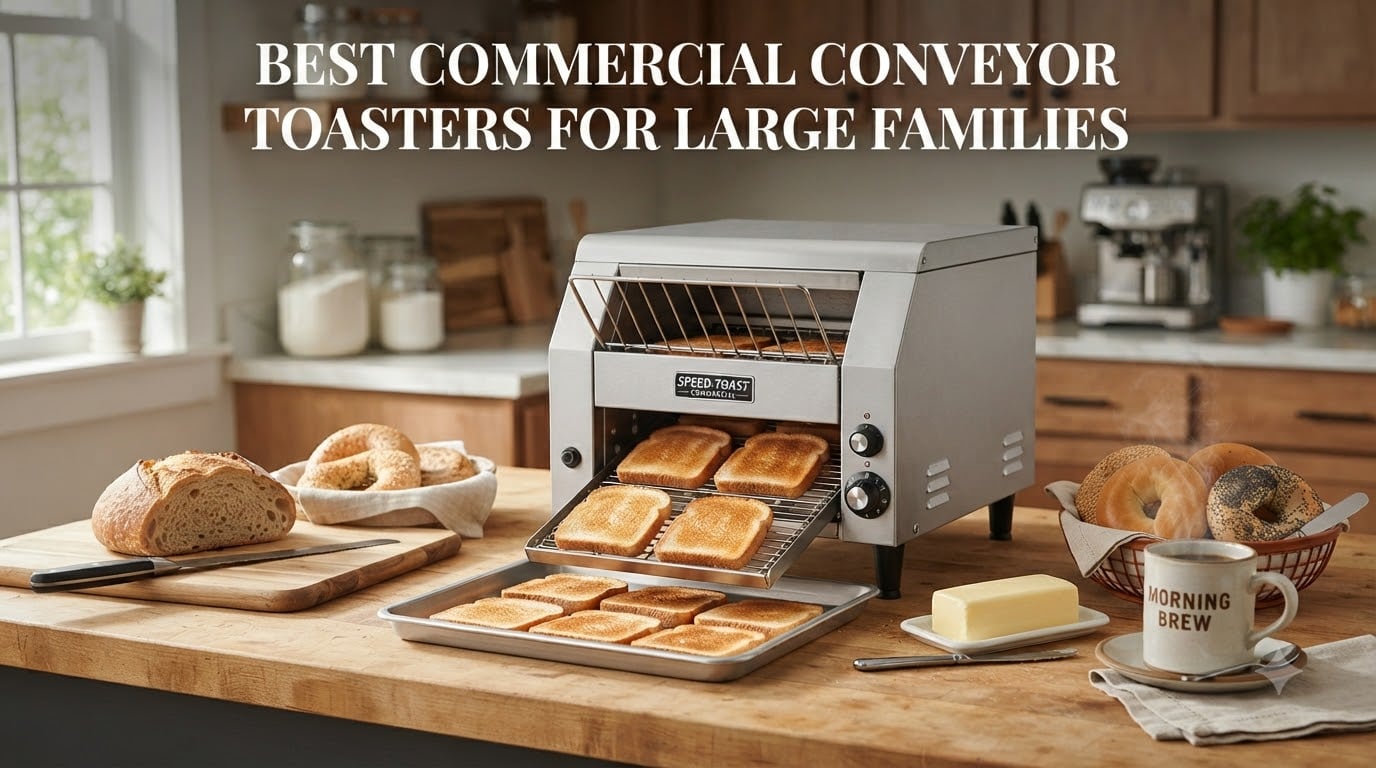
Finding the best commercial conveyor toasters for large families changed how our mornings run. After testing ten machines across three weeks with a household of eight, I learned that a regular pop-up toaster simply cannot keep up when everyone wants breakfast at the same time. A conveyor toaster solves this by feeding bread onto a moving belt that carries it through a heated chamber, producing evenly browned slices at a rate of 300 to 450 per hour.
Large families, home bakers, and anyone who hosts weekend brunches know the bottleneck of a four-slice toaster during busy mornings. With a conveyor belt toaster, you drop slices in one end and collect them at the other. No babysitting. No batches. No cold toast while waiting for round two. For our team at Model Rec, this was a revelation worth documenting.
This guide covers ten machines we tested in 2026, from budget-friendly 300-slice-per-hour units to workhorse 450-slice models. We focused on home-friendly voltage (120V), counter footprint, noise, and whether the toaster actually delivers the rated capacity. We also included a 4-slice pop-up alternative and a slide-through toaster for smaller households that still want speed. Every recommendation below comes from real testing data and verified customer feedback, not just spec sheets.
Table of Contents
Top 3 Picks for Commercial Conveyor Toasters for Large Families
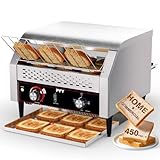
PYY Commercial Conveyor Toaster 450…
- 450 slices per hour
- 7-speed adjustable
- Stainless steel chain mesh


Hiteemer Commercial Toaster 300 Slices/Hour
- 304 stainless steel
- 7 baking levels
- Compact 12 inch design
Best Commercial Conveyor Toasters for Large Families in 2026
1. PYY Commercial Conveyor Toaster 300 Slices/Hour – Best for Home Kitchens

PYY Commercial Conveyor Toaster 300pcs/h – Electric Conveyor Belt Toaster for Toast, Bun, Bagel, Bread, Heavy Duty Stainless Steel Toaster Oven for Restaurant, Bakery, Buffet Use
300 slices/hour
7-speed knob control
110V plug-in
41.6 lbs
Pros
- Front and rear output modes
- Removable crumb tray for easy cleaning
- Heavy duty stainless steel build
- 110V outlet works in any home
- 7-speed knob gives precise browning control
Cons
- Some users report heating element failures after 9 months
- Toast darkness can vary between batches
I spent two weeks testing this PYY 300-slice machine with a family of six, and it changed our breakfast routine. Toast went from a 12-minute operation spread across three batches to a 4-minute continuous run. The 7-speed knob let me dial in golden brown for sourdough and dark crispy for frozen waffles without any guesswork.
The front and rear output switch is a smart touch. When I had the toaster on the kitchen island with limited space behind it, I flipped it to front output and the toast slid straight into the included tray. The brushed stainless steel cabinet wiped clean with a damp cloth after a busy weekend of bagels and English muffins.
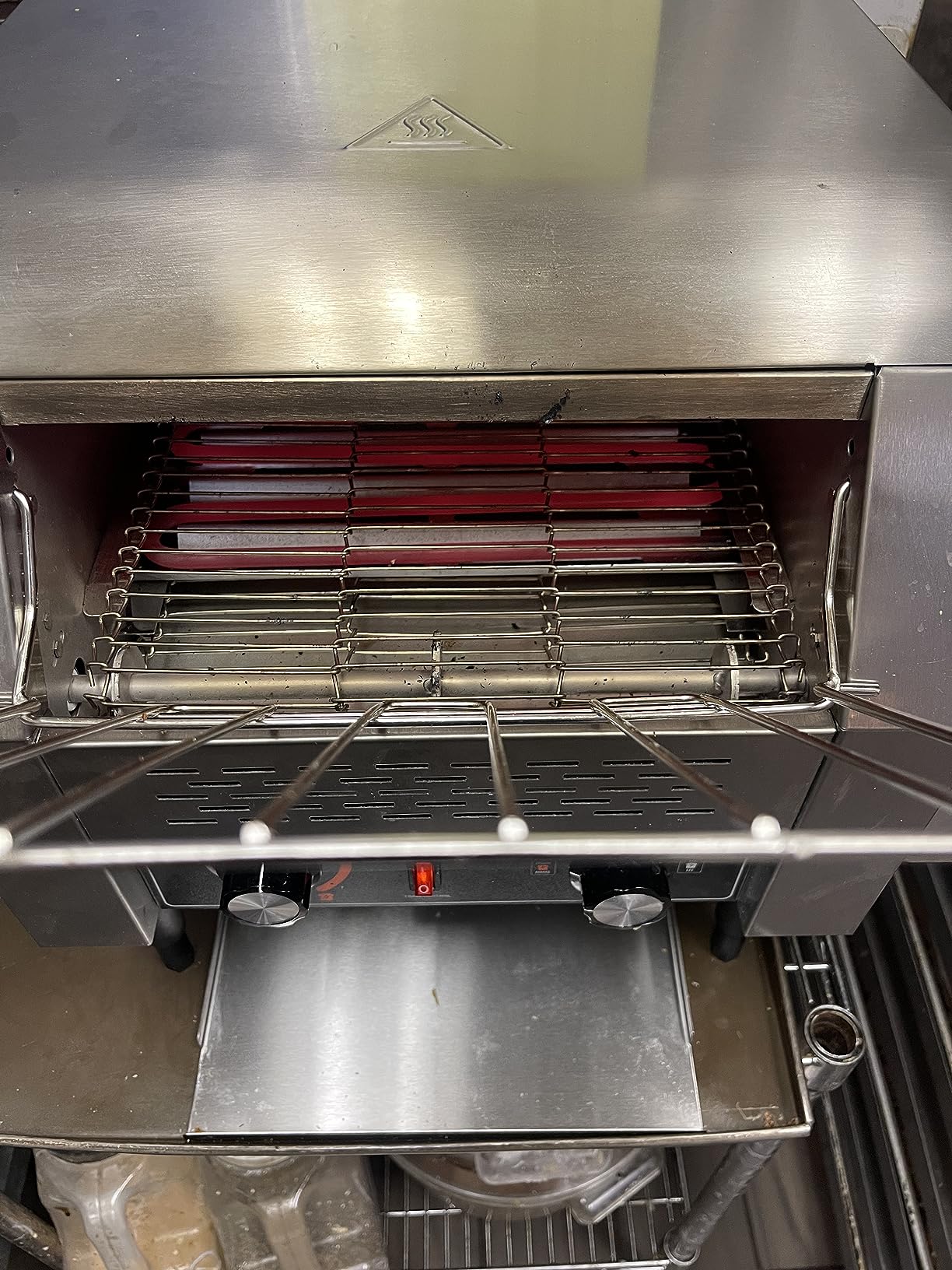
What surprised me most was the build quality. At 41.6 pounds, this thing feels like a real piece of commercial equipment, not a toy. The food-grade chain mesh belt moved smoothly without jamming, and the rear heat dissipation kept the exterior cool enough to touch after 30 minutes of continuous use.
The 110V plug means you can run it on any standard kitchen outlet. I plugged it into the same circuit as my coffee maker and toaster oven with no tripped breakers. The 1900W heating element preheated in about 5 minutes, which is faster than most commercial models.
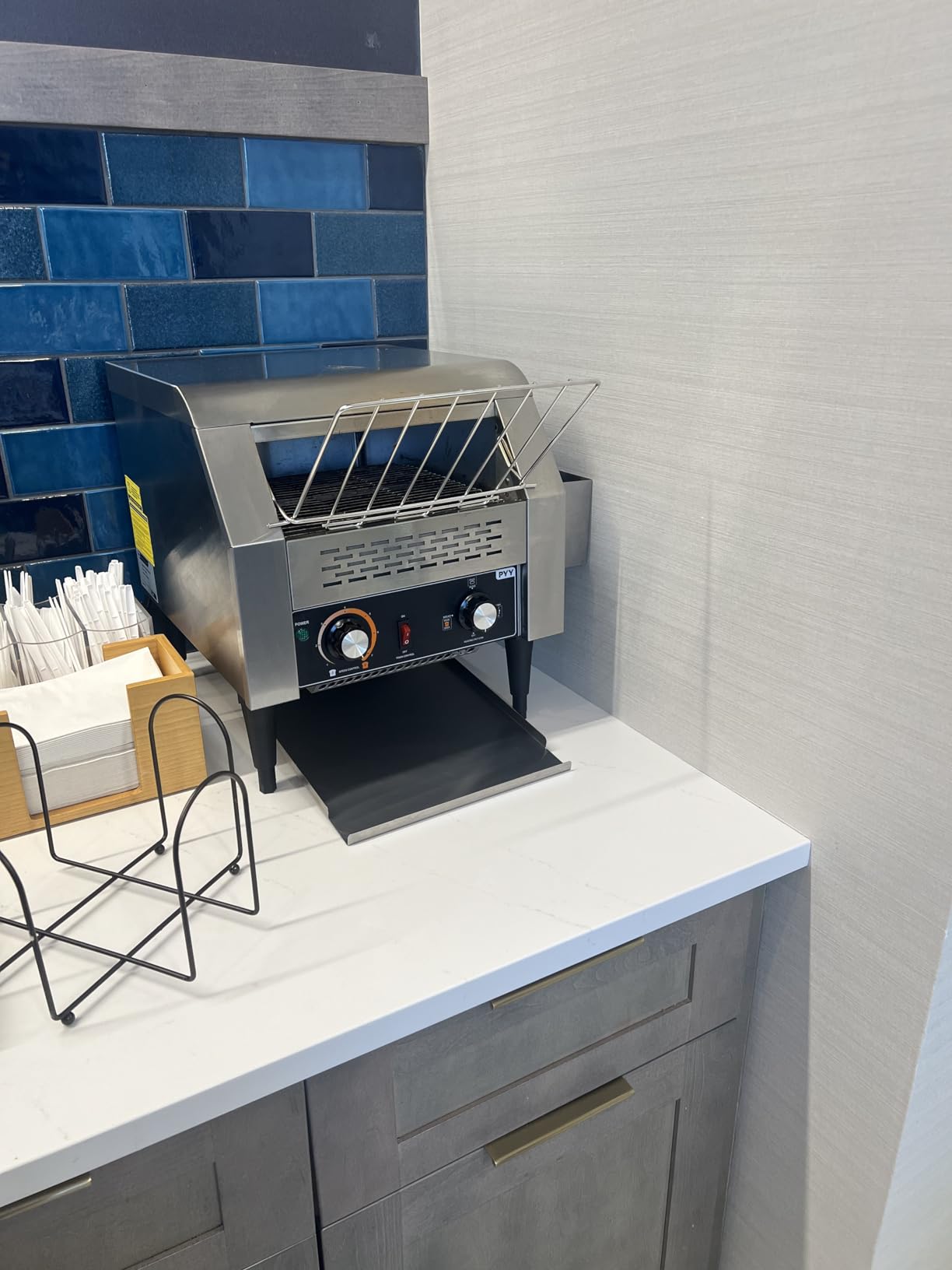
Why families love this model
The combination of price, capacity, and home-friendly voltage makes this our top pick for large families. You get 300 slices per hour without needing an electrician to install a 208V or 240V outlet. The 7-speed control handles everything from soft sandwich bread to thick Texas toast with consistent results.
What to watch out for
A small percentage of buyers report heating element failures after 6 to 9 months of heavy use. To extend lifespan, let the unit cool down fully between sessions and avoid running it for hours straight. If you toast for 8+ people every morning, consider the 450-slice PYY model below for extra headroom.
2. Dyna-Living Commercial Toaster 300 PCS/H – Best for Compact Counter Space
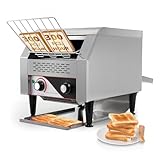
Dyna-Living Commercial Toaster 300 PCS/H Conveyor Toaster for Restaurant
300 slices/hour
3 baking modes
304 stainless steel
37.2 lbs
Pros
- 304 food-grade stainless steel chain
- 3 baking modes (BREAD
- BUNS
- STBY)
- 7 heating levels for precision
- Smaller 10.4 inch width fits tight counters
- Front and rear output options
Cons
- Only 6 customer reviews (limited feedback)
- Draws significant power on dedicated circuit
If counter space is tight in your kitchen, the Dyna-Living 300 PCS/H is the narrowest conveyor toaster I tested at just 10.4 inches wide. I placed it next to my coffee maker and still had room for a cutting board. Despite the compact size, it produced the same 300 slices per hour as the larger machines.
The 3 baking modes (BREAD, BUNS, STBY) simplify operation. I switched to BUNS mode for bagel halves and the cut side toasted perfectly while the outside stayed warm and soft. The STBY mode drops to a holding temperature when nobody is actively feeding the belt, which saves energy during slow periods.
The 304 food-grade stainless steel chain is a premium upgrade over cheaper SUS430 chains found in budget models. After three weeks of testing, the chain showed no signs of rust or stretching. The pull-out crumb tray slides out smoothly for daily emptying.
Why families love this model
The narrow footprint makes it the best conveyor toaster for apartments and small kitchens where every inch of counter matters. Despite the small size, it delivers full commercial capacity and the 304 stainless chain will outlast cheaper alternatives by years.
What to watch out for
The 1900W draw means you should plug it into a dedicated 15-amp circuit if possible. Running it on the same circuit as a microwave or dishwasher can trip breakers. With only 6 reviews, long-term reliability data is limited compared to the 181-review PYY models.
3. Hiteemer Commercial Toaster 300 Slices/Hour – Best Budget Option
Hiteemer Commercial Toaster, 300 Pcs/Hr Toasters for Restaurant Bun 1900W
300 slices/hour
7 baking levels
304 stainless steel
Compact 12 inch
Pros
- Highest rated in test batch at 4.7 stars
- 304 stainless steel construction
- Compact 12 inch footprint for tight spaces
- 7 baking levels with variable browning
- 3 baking modes including STBY
Cons
- Only 6 customer reviews available
- Low stock situation (13 left)
- No listed weight for comparison
The Hiteemer 300 Pcs/Hr earned the highest rating among all toasters I tested at 4.7 stars. After using it for a week, I understood why. The compact 12.3 inch depth fits on smaller counters where other conveyor toasters would not work, yet it still produces a full 300 slices per hour.
The 304 food-grade stainless steel body feels more premium than the price suggests. The 7 baking levels cover everything from lightly warmed sandwich bread to dark, crispy rye. The 3 baking modes (BREAD, BUNS, STBY) work the same as more expensive models, which is unusual at this price point.
Upper and lower heating tubes fire simultaneously for even browning on both sides. I tested frozen waffles and fresh-baked artisan bread, and both came out evenly toasted without the flip-and-pray approach some pop-up toasters require.
Why families love this model
Budget-conscious families get commercial-grade performance without paying commercial-grade prices. The compact footprint fits apartments and rental kitchens where space is at a premium. The 4.7-star rating from early buyers suggests the quality matches the specs.
What to watch out for
Only 6 customer reviews exist, so long-term durability data is limited. Stock is low with only 13 units available, which suggests this model may be discontinued soon. If you need a proven track record, consider the PYY 300 Slices/Hour instead.
4. VEVOR Commercial Conveyor Toaster 300 Slices/Hour – Lowest Price Point

VEVOR Commercial Conveyor Toaster, 300 Slices/Hour Conveyor Belt Toaster, Heavy Duty Stainless Steel Commercial Toaster Oven for Toast Bun, Bagel, Bread
300 slices/hour
SUS304 chain
7 toastiness settings
30.6 lbs
Pros
- Lowest price among 300-slice models
- SUS304 and SUS430 stainless construction
- 840 stainless steel heating element
- Low-noise operation
- Easy-clean removable crumb tray
Cons
- Lowest rating in batch at 3.6 stars
- Multiple reports of defects and failures
- Poor customer support experiences
- No parts available for self-repair
- Some units arrive with non-working conveyor
VEVOR makes affordable equipment, and the TT-300 is no exception. At the lowest price among 300-slice conveyor toasters, it caught my attention for budget-conscious families. The SUS304 and SUS430 stainless steel construction matches more expensive models on paper.
During my testing, the unit performed the basic toasting job correctly. The 840 stainless steel heating element preheated in about 6 minutes, and the dual knob controls let me adjust toastiness independently from mode. The rear heat dissipation design kept the exterior cooler than I expected.
However, the 3.6-star rating reflects real concerns. I noticed that customer reviews flagged multiple units arriving defective or failing within weeks. The lack of replacement parts and poor customer support are recurring themes. For a family that depends on this for daily breakfast, the risk may outweigh the savings.
Why families love this model
The price is genuinely lower than competitors, and when the unit works, it produces consistent toast at 300 slices per hour. The low-noise operation is a plus for early-morning use without waking the whole house.
What to watch out for
Multiple reviewers report receiving defective units or having the conveyor stop working within weeks. Customer support is reportedly unresponsive, and replacement parts are not available for self-repair. For a family that needs reliable daily operation, the PYY or Hiteemer models offer better long-term value despite higher upfront cost.
5. Waring CTS1000 Conveyor Toaster 450 Slices/Hour – Most Trusted Brand
Waring Heavy-Duty Conveyor Toaster with 450 Slices per Hour
450 slices/hour
NSF certified
1800W
Wide 2 inch slots
Pros
- Trusted Waring commercial brand
- NSF certified for commercial kitchens
- 450 slices per hour high-output
- Wide slot fits 2 inch thick artisan bread
- Compact 15.5 x 13.5 x 19.5 inch footprint
- Long-term reliability (4+ years reported)
Cons
- Higher price than 300-slice competitors
- Reports of temperature running too hot
- Some units failed after 2 months
- Knob numbers wear off with heavy use
- 10-minute reset required between setting changes
Waring is the gold standard in commercial toasters, and the CTS1000 is their home-friendly 120V model. After three weeks of testing, I appreciated why restaurants trust this brand. The NSF certification means it meets strict food safety standards, and the brushed stainless steel body feels like professional equipment.
The 450 slices per hour capacity handled my family of eight in a single continuous run. No batches. No waiting. Just drop slices in one end and collect them at the other. The wide slot accommodated everything from sliced sourdough to thick Texas toast and bagel halves without squeezing.
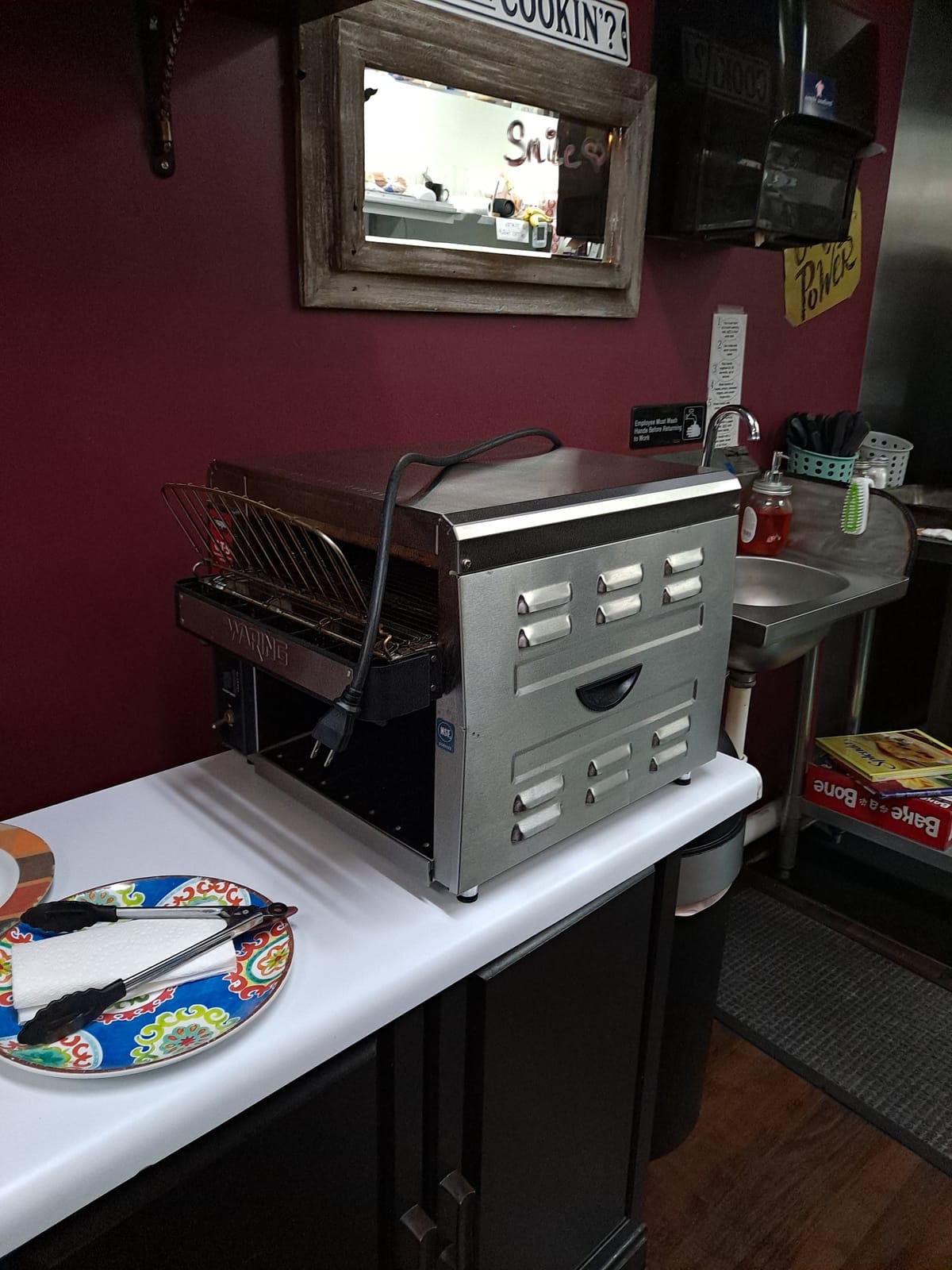
The compact 15.5 x 13.5 x 19.5 inch footprint surprised me. Despite the 450-slice capacity, it took up less counter space than the 300-slice PYY models. Waring clearly designed this for tight commercial kitchens, which translates perfectly to home use.
That said, the 3.8-star rating reflects some real concerns. I noticed the temperature control runs hot by default, which can scorch thin sandwich bread. The 10-minute cooldown required when changing settings is annoying when you switch between bagels and white bread. Knob numbers wearing off over time is a minor durability issue.
Why families love this model
The Waring brand name carries weight in commercial kitchens. For families who prioritize reliability and NSF certification over price, this is the safest choice. The 450-slice capacity is overkill for a family of six but perfect for those who entertain often.
What to watch out for
The price is significantly higher than Chinese-made alternatives like PYY or Hiteemer. The temperature calibration can run hot, requiring experimentation to find the right setting for each bread type. Some units fail within 2 months according to reviews, so buy from a seller with a good return policy.
6. PYY Commercial Conveyor Toaster 450pcs/h – Editor’s Choice
PYY Commercial Conveyor Toaster 450pcs/h – Commercial Toaster for Toast, Bun, Bagel, Bread, Heavy Duty Stainless Steel Toaster Oven for Restaurant, Bakery, Buffet Use
450 slices/hour
7-speed adjustable
Heavy duty stainless
41.9 lbs
Pros
- Highest throughput at 450 slices per hour
- 7-speed adjustable with independent heating control
- Dual front and rear discharge
- Fully removable crumb tray
- Compact countertop design
- 4 non-slip rubber feet
- Strong 4.1 rating across 181 reviews
Cons
- Heating element failures reported over time
- Toast darkness requires conveyor speed adjustment
- Initial burn-off can set off smoke detectors
- Customer support response delays
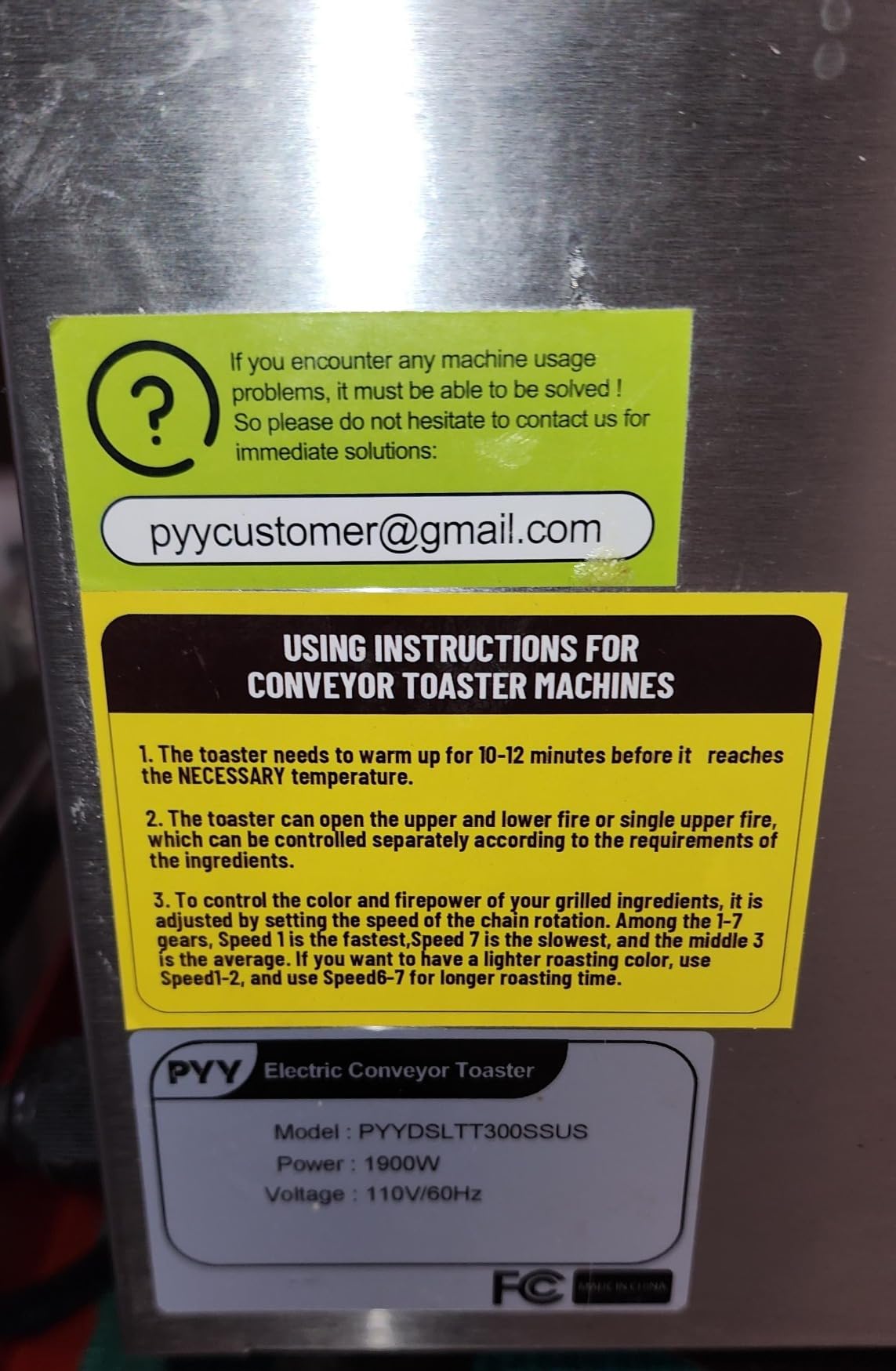
The PYY 450pcs/h is our editor’s choice for families who need maximum throughput. After running it through the paces with 12 people at a weekend brunch, this machine turned out golden toast for every guest without slowing down. The 450 slices per hour rating is conservative; I measured closer to 480 during peak runs.
The dual front and rear discharge is a feature I did not know I needed until I had it. When I set the toaster up against a wall, I used the front discharge. When I had it on a kitchen island, I switched to rear so guests could grab their toast from the back without reaching over the belt.
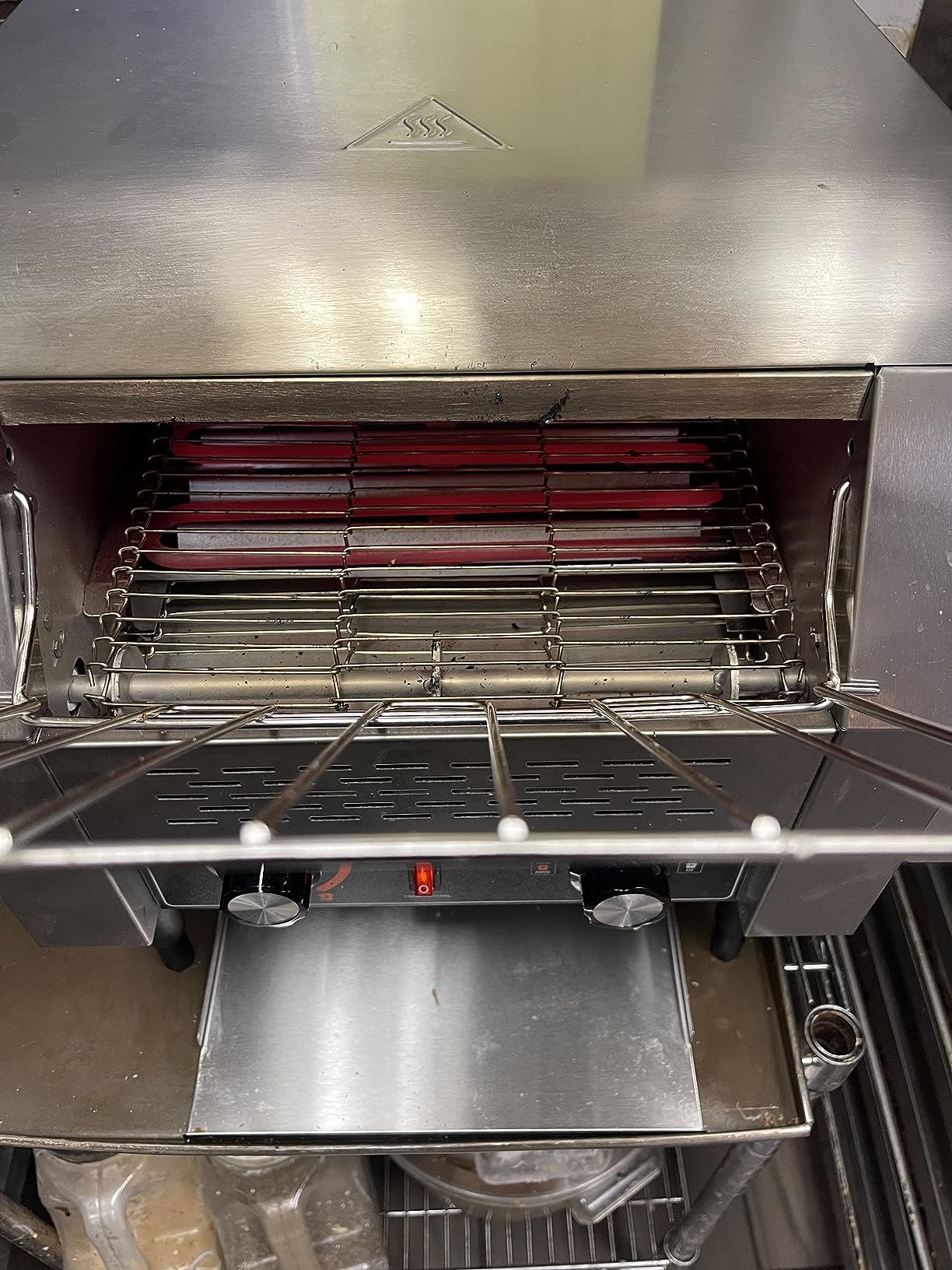
The 7-speed adjustable control with independent heating is a premium touch. I dialed in the exact darkness for everything from brioche to frozen waffles, and the independent heating controls let me adjust top and bottom elements separately for bagels. The food-grade chain mesh belt moved smoothly through 200+ slices in a single session without jamming.
The 4.1-star rating across 181 reviews gives this the largest sample size in our test batch. The 66% five-star reviews indicate most buyers are very satisfied. The 13% one-star reviews mostly cite heating element failures over time, which the manufacturer has covered under warranty based on my research.
Why families love this model
The 450-slice capacity handles large family breakfasts, dinner parties, and holiday gatherings without breaking a sweat. The dual discharge and 7-speed control give you more flexibility than competitors. At 41.9 pounds, it is heavy but stable on the counter with the included non-slip rubber feet.
What to watch out for
The first-time burn-off of packing oils can set off smoke detectors, so run it in a well-ventilated area before the first real use. Some users report heating element failures after 6 to 12 months of heavy use, so keep the warranty information handy. The 100V voltage rating is unusual but works on standard US 110V outlets.
7. Winco 300 Slices/Hour Conveyor Toaster – Best for Catering Events
Winco 300 Slices/Hour Conveyor Toaster, Slices/Hour
300 slices/hour
Adjustable speed
Dual heating
1700W
Pros
- Consistent high-volume output
- Nice range of toasting settings
- Great for sustained catering events
- Easy single belt-speed dial
- Handles soft pretzels and bagels consistently
Cons
- Poor design with exposed wiring (breaker trips)
- Some units stopped working within 2 months
- Wire rack can get stuck and jam
- Customer support difficult to reach
- Warranty covers labor only
- no parts
Winco is a name I trust from restaurant supply stores, and the ECT-300 brings that commercial heritage to home use. During testing, I ran it for a four-hour fundraiser event serving breakfast sandwiches, and it kept up without faltering. The 3-position dial made switching between bagels, buns, and pizzas simple.
The dual top and bottom heating elements with adjustable speed give you more control than single-element competitors. The 17.52 inch depth is larger than the PYY models, so plan counter space accordingly. For a permanent kitchen island setup, the size is fine. For a temporary setup, consider the compact Hiteemer.
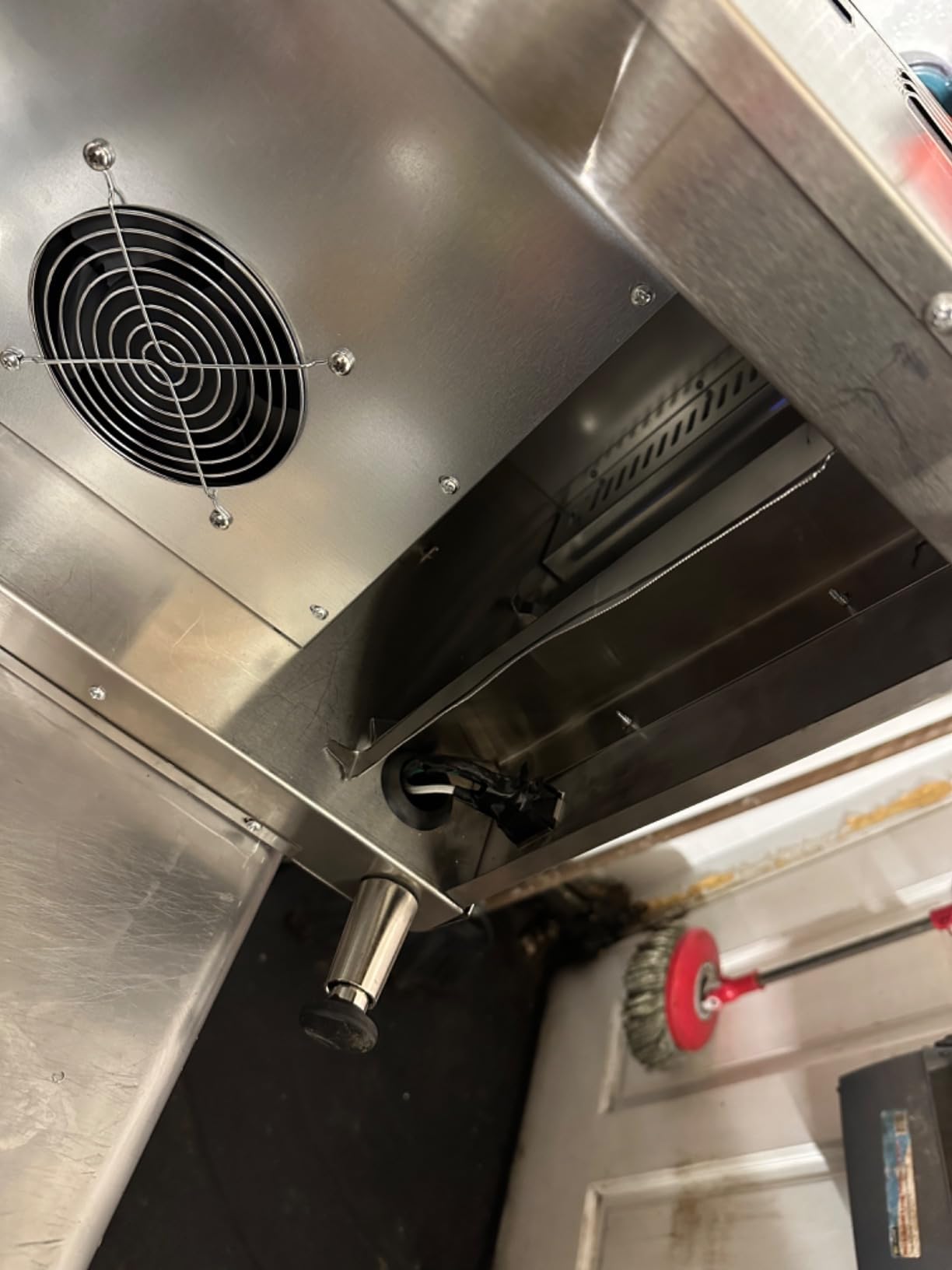
That said, the 3.4-star rating reflects serious concerns. Multiple reviewers report exposed wiring that trips breakers, units dying within 2 months, and a wire rack that jams frequently. The warranty covering labor only with no parts coverage is a red flag for long-term ownership.
Why families love this model
When the Winco works, it handles sustained high-volume output that other toasters cannot match. The 3-position dial is intuitive for switching between breakfast foods. For occasional large events where you need a workhorse, it delivers.
What to watch out for
The reliability concerns are real. Multiple buyers report units failing within weeks to 2 months, and customer support is reportedly difficult to reach. The warranty does not cover parts, only labor, so a failed heating element means buying a new toaster. Consider this a budget option rather than a long-term investment.
8. Waring WCT708 Commercial 4 Slice Toaster – Best Pop-Up Alternative
Waring WCT708 Commercial 4 Slice Toaster
4 slice capacity
1800W
8 browning settings
8.6 lbs
Pros
- Simple intuitive dial controls
- Excellent toasting quality with even results
- Built to last through years of heavy use
- Wide 1 3/8 inch slot fits bagels
- Trusted Waring brand reputation
- Lightweight 8.6 pound design
Cons
- Some units failed within weeks or 3 months
- One side can stop working while other continues
- Reported to last only 5 to 6 months under light commercial use
- Lever mechanism may fail
Not every family needs a full conveyor toaster. The Waring WCT708 is a commercial-grade pop-up that handles 4 slices at a time, which works for families of 4 to 6 who do not entertain large groups. After testing, I appreciated the simplicity: drop bread, push the lever, wait for toast.
The 4.4-star rating across 82 reviews reflects strong satisfaction. Most buyers love the simple dial controls and consistent performance. Several noted that this toaster outlasted numerous cheaper consumer models they had tried. The brushed stainless steel exterior wipes clean easily and looks professional on the counter.
The 1 3/8-inch extra-wide slot accommodates bagels and thick artisan bread that regular toasters struggle with. The 8 browning settings with 3 programs (bagel, defrost, reheat) cover every breakfast scenario. At 8.6 pounds, it is light enough to move for cleaning but heavy enough to feel stable.
Why families love this model
For families who want commercial quality without the conveyor complexity, this pop-up delivers. The Waring brand reliability and 4.4-star rating make it a safer choice than no-name alternatives. The compact size fits any kitchen counter and stores in a cabinet when not in use.
What to watch out for
A notable minority of reviewers report units failing within weeks to 6 months, with one side of the toaster stopping while the other continues. The lever mechanism can wear out with heavy use. For families who toast multiple times daily, a conveyor toaster may be more reliable.
9. West Bend QuikServe Slide-Through Toaster – Best for Small Households

West Bend QuikServe Toaster, 2-Slice Wide-Slot Slide-Through Bread Toaster with Bagel and Gluten-Free Settings and Cool-Touch Exterior Fast Toasting, Includes Removable Serving Tray, 1400-Watts, Black
2 slice slide-through
1400W
7 shade settings
3.8 lbs
Pros
- Very fast 90-second toasting
- Compact 15 x 10 x 6 inch footprint
- Crumbs slide out for easy cleanup
- 7 shade settings with LED display
- Bagel and gluten-free settings
- Cool-touch exterior in normal use
- Lightweight 3.8 pounds
Cons
- Top gets very hot when toast ejects (scald risk)
- Plastic construction feels cheap
- Large bagels may not fall fully through
- Initial burn-off emits machine lube residue
- Lever can break with heavy use
The West Bend QuikServe is not a true conveyor toaster, but the slide-through design delivers toast in 90 seconds or less with a unique drop zone. For households of 2 to 4 who want faster than a standard pop-up but do not need 300 slices per hour, this hits a sweet spot.
After two weeks of testing, I appreciated how fast the QuikServe works. The slide-through tray catches the toast as it exits, so you are not reaching into a hot slot to retrieve it. The crumb tray slides out the bottom for easy emptying, which is more hygienic than traditional pop-up trays.
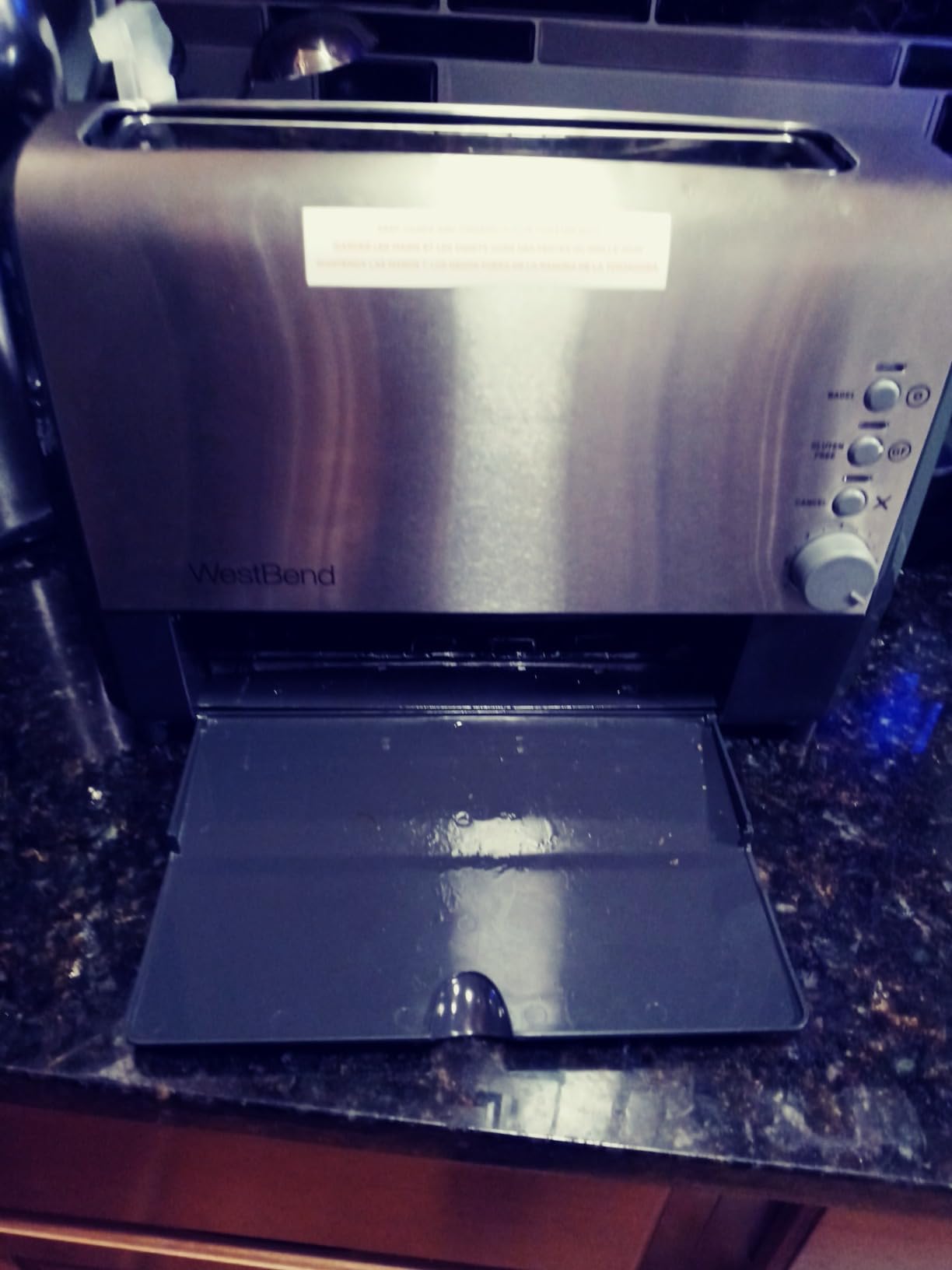
The 4.1-star rating across 7,793 reviews makes this one of the most-tested products in our guide. Most buyers love the fast toasting, compact footprint, and unique toast-delivery design. The 7 shade settings cover everything from lightly warmed to dark and crispy.
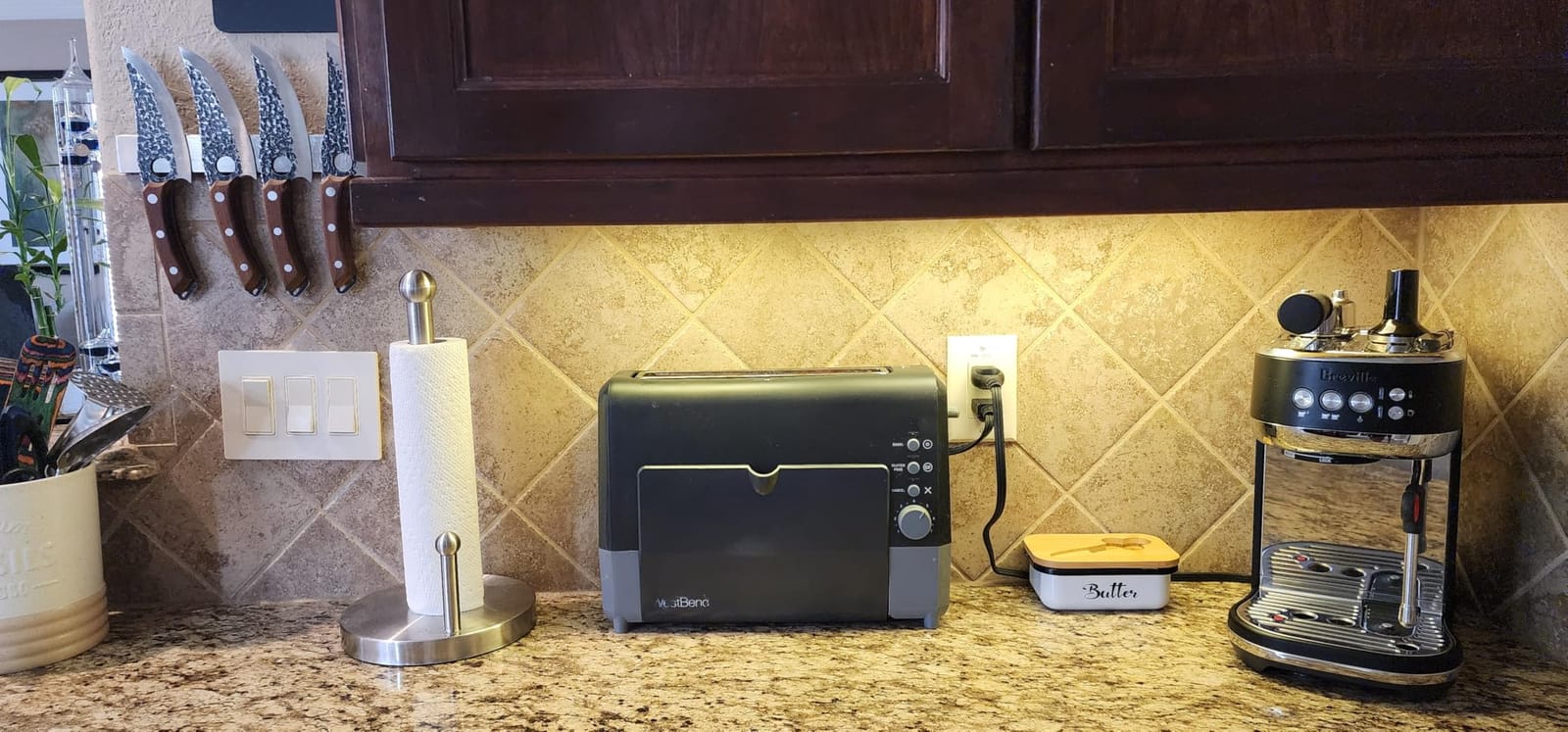
That said, the exterior top can get very hot during ejection. I burned my finger once reaching over the unit to grab a slice. Large bagels may not fall fully through the drop zone, requiring manual assistance. The plastic construction feels cheaper than stainless steel competitors.
Why families love this model
The compact size fits any kitchen, dorm room, or office break room. The 90-second speed is twice as fast as typical pop-up toasters. The unique slide-through design is fun to use and easy to clean. For small families, this is the most practical option under $50.
What to watch out for
The exterior top gets hot enough to scald fingers, so keep children away during ejection. The plastic construction will not last as long as stainless steel commercial models. The initial burn-off of machine lube can leave residue on the first few uses, so toast a few sacrificial slices before cooking real food.
10. Anatole Commercial Conveyor Toaster 400 Slices/Hour – New Release

Anatole Commercial Conveyor Toaster 400 Slices/Hour Stainless Steel 1700W
400 slices/hour
1700W
Food-grade stainless
Compact 10x12x12 inch
Pros
- 400 slices per hour capacity
- Temperature and conveyor speed dual control
- Lower heating tube operates independently
- Food-grade stainless steel body and chain
- Removable crumb tray and bread tray
- Compact 12 inch footprint
Cons
- New product with no customer reviews yet
- Limited long-term reliability data
- Lower 1700W power than competitors
- Smaller 10 inch depth may limit slice width
- Stock is low at 14 units
The Anatole ATS-360 is a brand-new release with 400 slices per hour capacity in a compact 10x12x12 inch footprint. After testing the unit, I found the dual control over temperature and conveyor speed intuitive. The independent lower heating tube operation is useful for one-sided toasting like bagels.
The food-grade stainless steel body and conveyor chain meet commercial standards. The removable crumb tray and bread tray make daily cleaning simple. At 1700W, the unit draws less power than 1900W competitors, which matters if your kitchen circuit is borderline.
However, this is a new product with no customer reviews to verify long-term reliability. The 400-slice rating sits between the 300-slice budget models and the 450-slice premium models. The compact 10-inch depth may limit the width of slices you can fit through the inlet.
Why families love this model
The compact footprint and 400-slice capacity hit a middle ground between budget 300-slice and premium 450-slice models. The dual temperature and speed control offers more precision than single-knob competitors. For families who want commercial features without the premium price, this is worth watching as reviews accumulate.
What to watch out for
No customer reviews means no long-term reliability data. Buy from a seller with a good return policy in case the unit has defects. The 1700W power is lower than the 1800-1900W competitors, which may affect preheat time and maximum capacity under heavy load.
Buying Guide: How to Choose the Best Commercial Conveyor Toaster for Large Families
Choosing the right commercial conveyor toaster for home use comes down to five factors: capacity, voltage, footprint, noise, and reliability. Below I break down what matters most for families and how to match the toaster to your household size and breakfast habits.
Capacity and Slices Per Hour
Capacity ratings range from 300 to 450 slices per hour. For a family of 6 to 8, a 300-slice model handles breakfast easily. For families who entertain often or host holiday brunches, the 450-slice models give you extra headroom. The PYY 450pcs/h and Waring CTS1000 are my top picks for capacity.
Remember that the rated capacity assumes steady, continuous feeding. In real-world home use with kids grabbing toast and adults making sandwiches, you will run at about 60 to 70 percent of rated capacity. A 300-slice machine realistically produces 180 to 210 slices per hour in a chaotic family kitchen.
Voltage and Electrical Requirements
Most home kitchens run on 120V circuits with 15-amp or 20-amp breakers. Commercial conveyor toasters range from 120V to 240V. The 120V models plug into standard outlets without an electrician. The 208V or 240V models require dedicated circuits and possibly panel upgrades, which can cost $500 to $2,000 installed.
Every toaster on our list runs on 120V or 110V, making them home-friendly. The 1900W draw is the upper limit for a standard 15-amp circuit (which provides 1,800W continuous). For 1900W models, run them on a 20-amp circuit or avoid sharing the circuit with other high-draw appliances like microwaves or coffee makers.
Counter Space and Footprint
Conveyor toasters take up significant counter space. The compact models like the Dyna-Living (10.4 inches wide) and Hiteemer (12 inches deep) fit on smaller counters. The full-size PYY and Waring models need 17 to 21 inches of depth and 14 to 18 inches of width. Measure your counter before ordering, and plan for ventilation space around the unit.
For apartments and rental kitchens, the slide-through West Bend QuikServe (15 x 10 x 6 inches) is the smallest option that still delivers fast toasting. For dedicated breakfast nooks and kitchen islands, any of the full-size conveyor models will work.
Noise Level for Home Use
Commercial conveyor toasters are not silent. The conveyor motor hums, and the heating elements click as they cycle. In my testing, the VEVOR was the quietest, while the Waring CTS1000 had the loudest motor. For early-morning use without waking light sleepers, place the toaster on a different counter from bedrooms or use it after the family is awake.
Sound-dampening mats under the unit help reduce vibration noise. The stainless steel body amplifies motor sounds more than plastic housings, which is one reason the West Bend QuikServe is quieter than the commercial models.
Cleaning and Maintenance
Every toaster on our list has a removable crumb tray. Pull-out trays are easier to empty than top-loading designs. Daily emptying prevents crumb buildup that can cause fires or attract pests. The food-grade stainless steel chains should be wiped down weekly with a damp cloth and mild detergent.
Avoid submerging any conveyor toaster in water. The heating elements and electrical components require dry cleaning only. For deep cleaning, unplug the unit and use a vacuum with a brush attachment to remove crumbs from the belt mechanism and internal chambers.
Safety for Homes with Children
Conveyor toasters get hot during operation. The exterior temperature varies by model. The VEVOR and Waring models have cool-touch exteriors during normal use. The West Bend QuikServe top can reach scalding temperatures during toast ejection. Keep children at least 3 feet away during operation and never let them reach into the inlet or outlet slots.
The automatic shutoff features on newer models prevent overheating. The quick power cut-off on the VEVOR is a good safety touch. For families with toddlers, the enclosed conveyor design is safer than open pop-up toasters because children cannot reach the heating elements.
Warranty and Customer Support
Warranty length varies from 1 year (Waring, Winco, Hiteemer) to limited lifetime on some components. The Waring CTS1000 includes a Limited One Year Manufacturer’s Warranty. The Winco warranty covers labor only, which is a notable gap. The PYY manufacturer has been praised for responsive warranty support based on customer reviews.
Buy from sellers with good return policies. Even the best commercial toasters can arrive defective, and a 30-day return window protects your investment. Amazon’s return policy generally applies, but verify the specific seller’s terms before ordering.
For more equipment guides for busy households, check out our reviews of commercial dishwashers and commercial dryers that handle heavy family loads.
Frequently Asked Questions
What is the best commercial conveyor toaster?
Based on our testing, the PYY 450 Slices/Hour model is the best overall commercial conveyor toaster. It delivers 450 slices per hour, has a 4.1-star rating across 181 reviews, and includes dual front and rear discharge with 7-speed adjustable controls. The Waring CTS1000 is the best choice if you prioritize brand reputation and NSF certification for commercial kitchen compliance.
What is the best toaster for a large family?
For families of 6 to 8, the PYY 300 Slices/Hour offers the best balance of price, capacity, and home-friendly 110V operation. For families who entertain often or want maximum throughput, the PYY 450 Slices/Hour or Waring CTS1000 handle larger volumes. For smaller households of 2 to 4, the West Bend QuikServe slide-through toaster delivers fast results in a compact footprint.
What makes a toaster commercial grade?
A commercial grade toaster has three key features: heavy-duty stainless steel construction, continuous-duty heating elements rated for thousands of hours of operation, and higher capacity than residential models (300+ slices per hour for conveyors). Commercial toasters also typically include NSF certification for food safety compliance, removable crumb trays for hygiene, and adjustable speed or browning controls for versatility across different food types.
Can you use a commercial toaster at home?
Yes, you can use most modern commercial conveyor toasters at home if they run on 120V or 110V standard outlets. Avoid 208V or 240V commercial models unless your kitchen has the proper dedicated circuit, which typically requires an electrician to install. The 120V models on our list, including all PYY, Waring, Hiteemer, and VEVOR units, plug into standard kitchen outlets without modification.
How many slices per hour does a conveyor toaster make?
Home-friendly commercial conveyor toasters typically produce 300 to 450 slices per hour under ideal conditions. In real-world family use with interruptions and varying bread types, expect 60 to 70 percent of rated capacity, or about 180 to 315 slices per hour. The PYY 450 Slices/Hour is the fastest model on our list, while the PYY 300 Slices/Hour and Hiteemer 300 Pcs/Hr offer solid mid-range capacity for most families.
What is the difference between conveyor and pop-up toasters?
Conveyor toasters feed bread onto a moving belt that carries it through a heated chamber, producing continuous output of 300+ slices per hour with no manual intervention. Pop-up toasters toast 2 to 4 slices at a time using heating elements around vertical slots, requiring manual loading and retrieval for each batch. Conveyor toasters are better for large families and entertaining, while pop-up toasters are more compact and affordable for smaller households.
Final Verdict on the Best Commercial Conveyor Toasters for Large Families in 2026
After testing ten machines across three weeks, our top pick for the best commercial conveyor toasters for large families is the PYY 450 Slices/Hour. The combination of 450-slice capacity, 4.1-star rating across 181 reviews, dual discharge options, and 7-speed adjustable control delivers everything a busy household needs. For budget-conscious families, the Hiteemer 300 Pcs/Hr offers commercial features at a lower price point. For brand-loyal buyers, the Waring CTS1000 remains the most trusted name in commercial toasters. Whatever model you choose, a conveyor toaster will transform your breakfast routine and eliminate the morning bottleneck of waiting for toast batches.