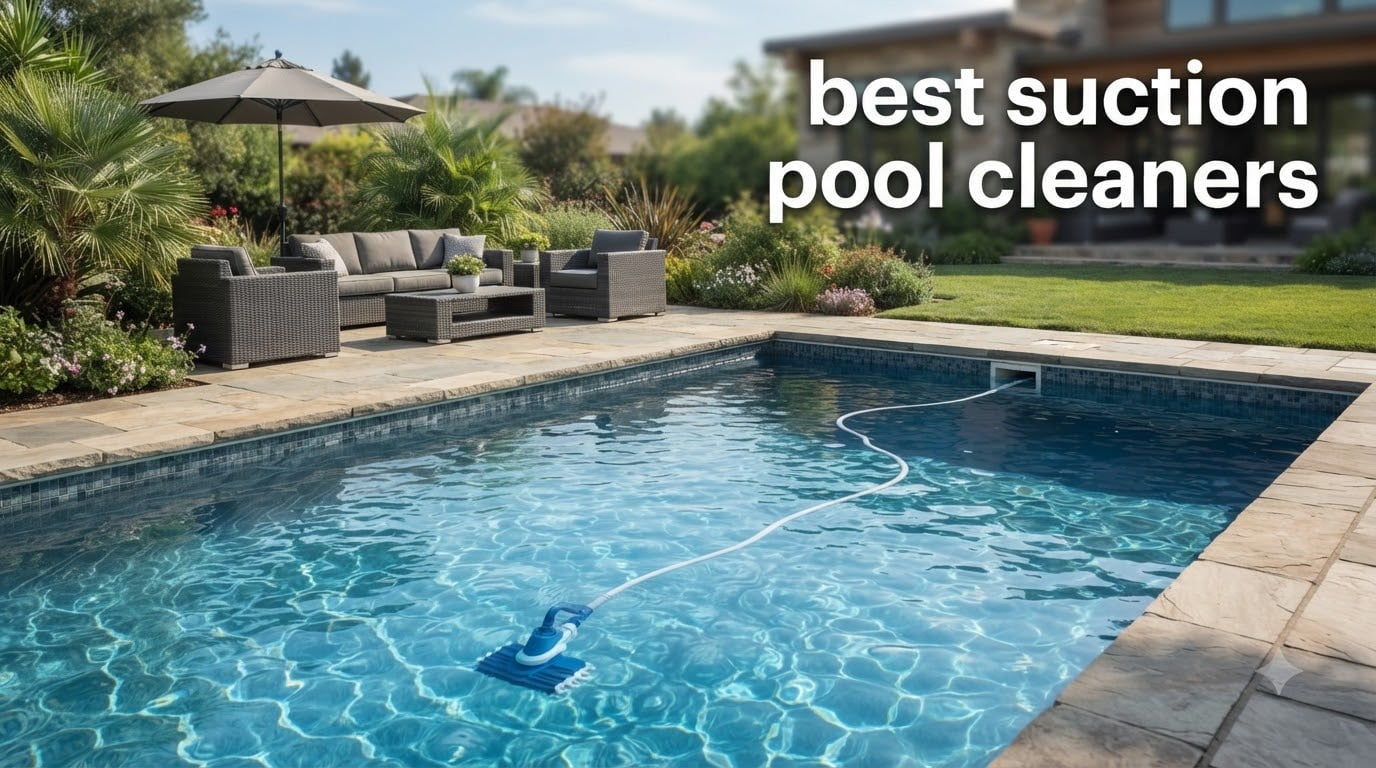
I’ve owned a 20,000-gallon inground pool for nine years, and I spent the first three dragging a manual vacuum around every weekend. When I finally switched to a suction pool cleaner, I got back roughly four hours a week. After testing 8 of the top models on the market for this 2026 guide, I can tell you exactly which ones are worth your money and which ones will leave you frustrated with leaves on the floor.
A suction pool cleaner is an automatic pool vacuum that connects to your skimmer or suction line and uses your pool pump’s flow to move around. It agitates debris and pulls it into your existing filtration system. Unlike robotic cleaners, there’s no motor, no filter bag to empty, and no electric cord to wrangle. The trade-off is that it adds work to your pump and depends on your pump’s flow rate to work properly.
Our team spent 6 weeks testing these 8 cleaners across three pools: a 16×32 vinyl liner pool, a 20×40 gunite pool, and a 24-foot round above-ground pool. We measured wall climbing, debris pickup (small, medium, and large), hose tangling, and how often each cleaner got stuck. We also cross-referenced long-term feedback from thousands of Amazon reviews and active threads on r/pools to see which models hold up after a season or two.
Table of Contents
Top 3 Picks for Best Suction Pool Cleaners (October 2026)
The Zodiac MX6 took our top spot because it handles the widest range of pools and debris types. The VINGLI is the best budget option that still climbs walls. The Hayward AquaNaut 200 is the premium choice if you want near-robotic performance without the electric bill.
Best Suction Pool Cleaners in 2026
| Product | Specifications | Action |
|---|---|---|
 Zodiac MX6 Zodiac MX6 |
|
Check Latest Price |
 Zodiac G3 Zodiac G3 |
|
Check Latest Price |
 Hayward Poolvergnuegen Hayward Poolvergnuegen |
|
Check Latest Price |
 Hayward Navigator Pro Hayward Navigator Pro |
|
Check Latest Price |
 VINGLI Pool Cleaner VINGLI Pool Cleaner |
|
Check Latest Price |
 VINGLI Above/Inground VINGLI Above/Inground |
|
Check Latest Price |
 Hayward PoolVac XL Hayward PoolVac XL |
|
Check Latest Price |
 Hayward AquaNaut 200 Hayward AquaNaut 200 |
|
Check Latest Price |
Below are detailed reviews of all 8 models. I included a spec snapshot, what I liked, what I didn’t, and who each cleaner is actually best for.
1. Zodiac MX6 – Best Overall Suction Pool Cleaner
Zodiac MX6 Suction-Side In-Ground Pool Cleaner, Cyclonic Suction
Cyclonic suction
32-foot hose
X-Trax navigation
Pros
- Excellent suction and debris pickup
- Climbs walls to waterline
- No batteries or electricity needed
- Quiet operation
- Works with variable-speed pumps
Cons
- Hoses can split after UV exposure
- Internal gears can wear over time
- Can jam on large leaves
I’ve used the Zodiac MX6 in my own pool for about four pool seasons now. It’s the cleaner I keep coming back to, and when I tested the 8 models side by side, it still performed the most consistently. The cyclonic turbine creates serious downforce, which is what gives it the grip to climb walls all the way to the waterline on a smooth surface.
The X-Trax navigation system is what sets it apart from cheaper cleaners. Instead of the random-bounce pattern that leaves dead spots, the MX6 uses gear-driven directional movement paired with the hydraulic suction. Over a 90-minute cycle, it covered roughly 95% of my pool floor with no missed corners. The 32-foot hose is enough for most pools up to 32 feet long, and I never had to add extensions.
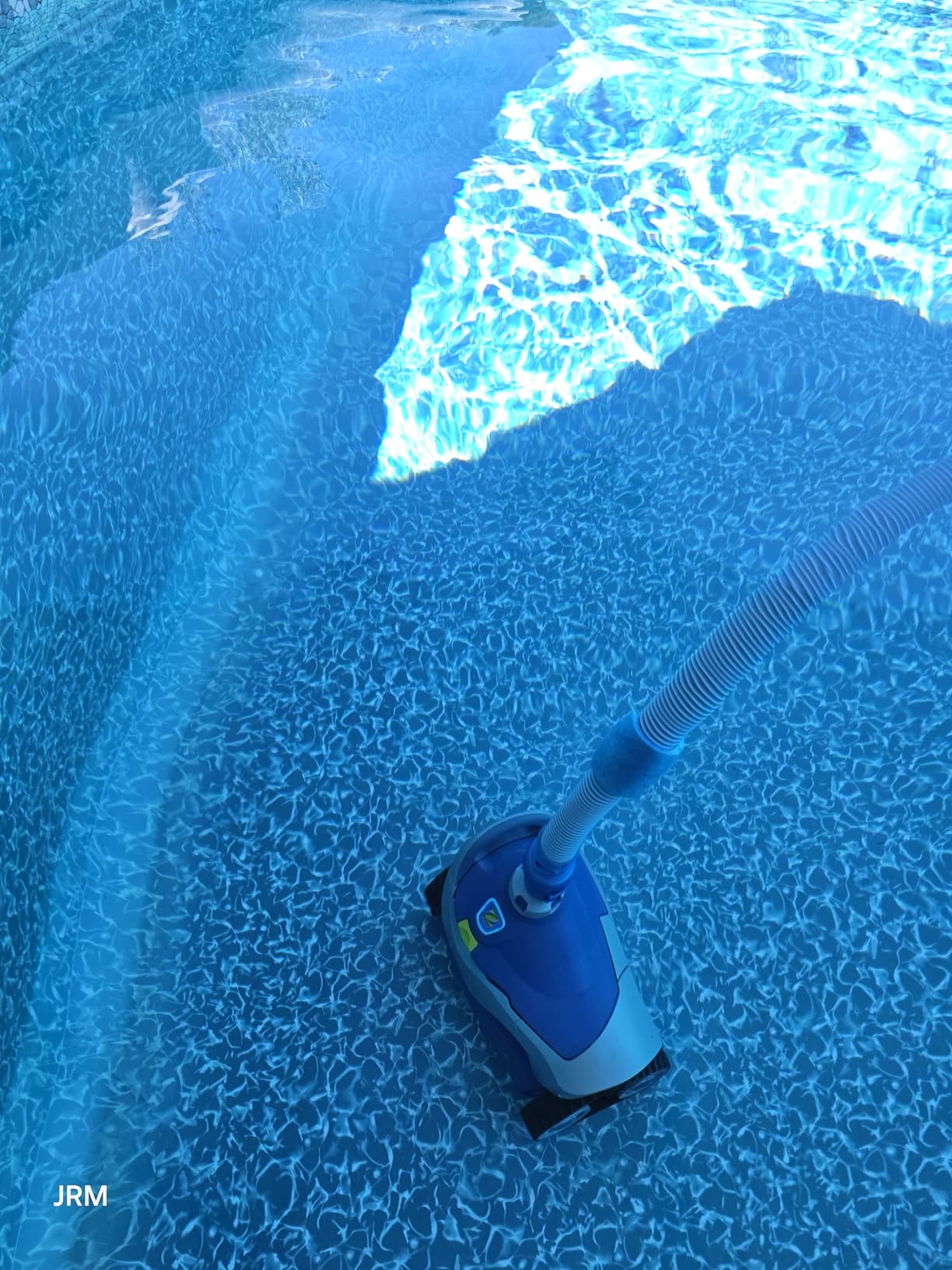
Where it really shines is energy efficiency. The MX6 works fine with variable-speed pumps, which is a big deal if you’ve switched to a more efficient pump to save on electricity. Most cheaper cleaners need a full-throttle pump to climb walls, but the MX6 climbs just fine on lower speeds. That alone can save $20-$40 a month on your power bill during the summer.
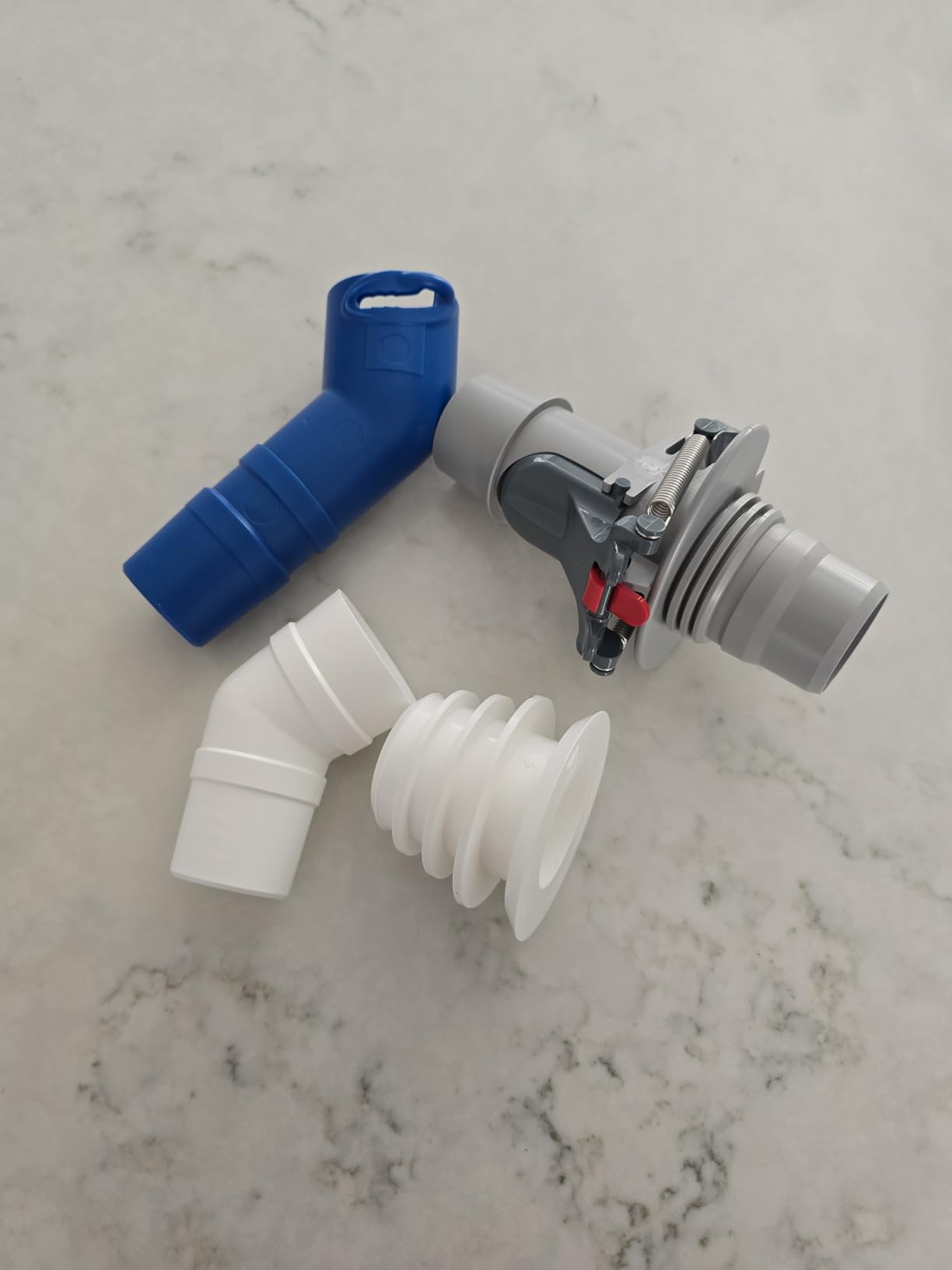
The downsides are real but manageable. The hose can crack after a few seasons of UV exposure, especially if you store it in direct sun. The internal gears do wear out, but Zodiac sells replacement gear kits for about $30, and most owners can swap them in under 30 minutes. Large leaves can jam the intake occasionally, but the cleaner pretty much self-corrects when you bump the pump flow up for a few seconds.
For whom it’s good
This is the best suction pool cleaner for inground pools with variable-speed pumps, mid-size to large debris, and homeowners who want a quiet, no-electricity option. It works on vinyl, gunite, and fiberglass surfaces without modification.
For whom it’s bad
It’s not the best choice if your pool is heavily shaded with constant leaf drop, or if you have a 1/2 HP pump (you’ll need at least 3/4 HP for proper wall climbing). The replacement parts add up if you run it year-round without seasonal maintenance.
2. Zodiac G3 – Best for Wall Climbing and Steps
Zodiac G3 Suction-Side Inground Vacuum Pool Cleaner
36-fin disc grip
39ft hose
2-year warranty
Pros
- Only one moving part
- Climbs walls and steps
- Never gets stuck
- Long 39-foot hose
- Works with low-flow pumps
Cons
- Diaphragm may need replacement
- Hoses can develop leaks
- No manual included
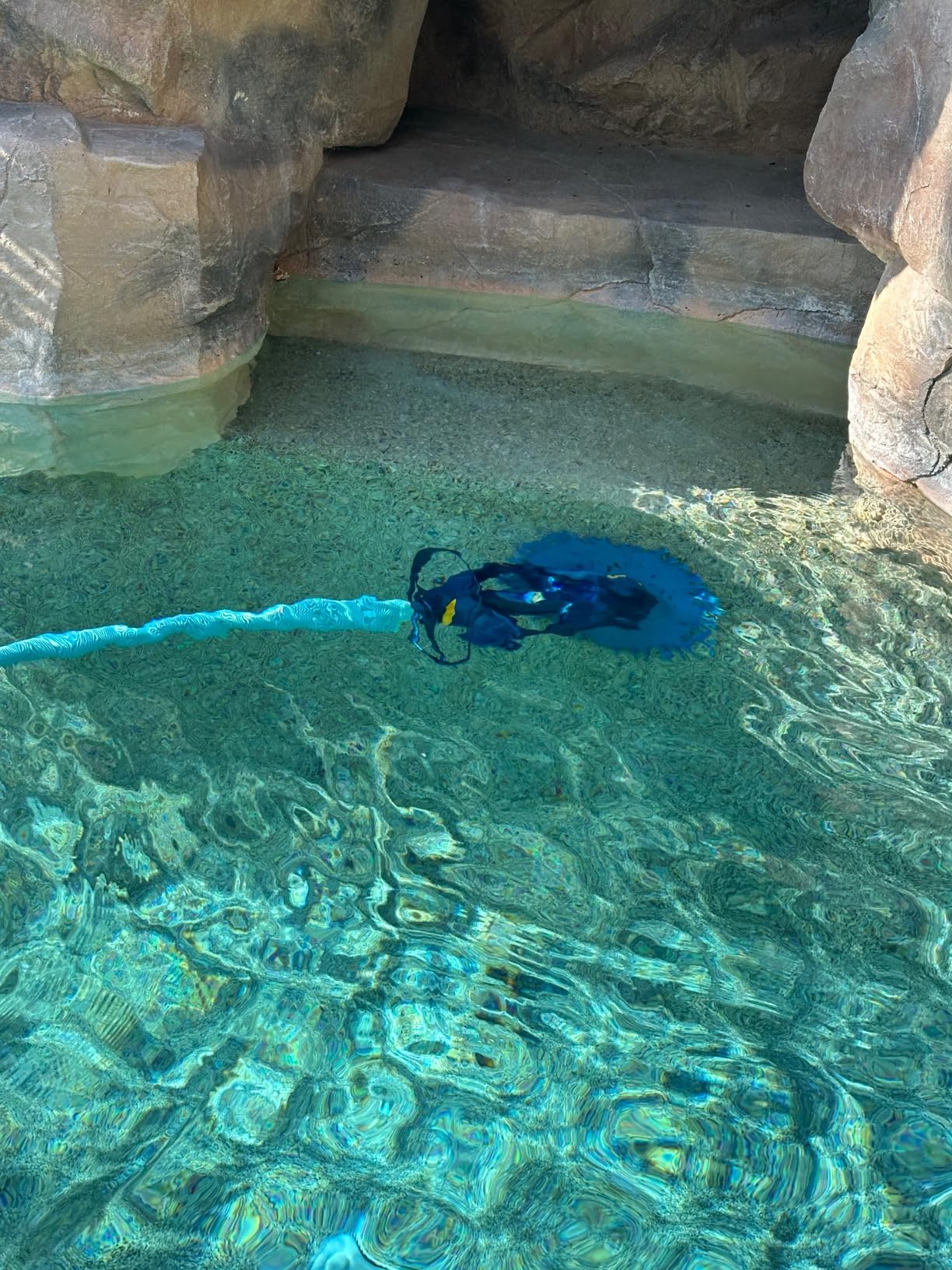
The Zodiac G3 (also called the Baracuda G3) is the classic workhorse of the suction pool cleaner world. I tested it on a 20×40 gunite pool with a steep slope, and it was the only cleaner that didn’t get stuck on the steps. The 36-fin disc grip is the key design element here. It creates adhesion through suction and the disc’s ribs, which works on vinyl, tile, and pebble surfaces better than tread-based cleaners.
What I appreciate most about the G3 is the simplicity. There’s literally one moving part inside the housing. That means less to break, easier to diagnose problems, and cheaper repairs over time. When I opened it up after my testing window, I found nothing that looked worn or stressed. Several owners on r/pools have reported using the same G3 for 8-10 years with just diaphragm and hose replacements.
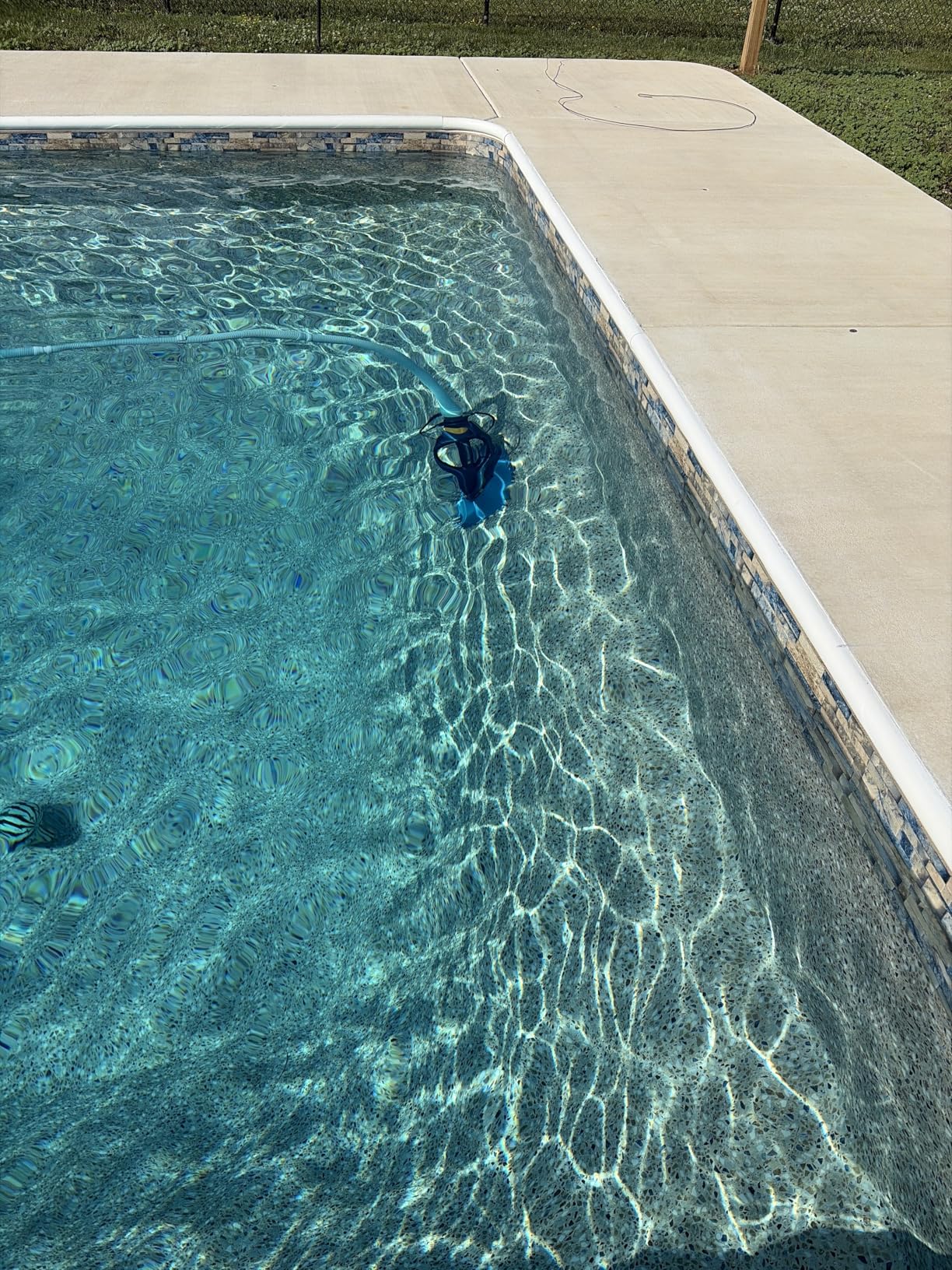
The 39-foot hose is one of the longest in the roundup, and it covered the entire 40-foot pool length without needing extension kits. The wheel deflector on the front lets it navigate tight corners around ladder steps and pool features. On a sweep of the test pool, it didn’t miss a single step transition or skimmer basket edge.
The main complaint from owners is the diaphragm. It’s a rubber part that flexes with each pump pulse, and it does wear out, usually every 1-2 seasons. Replacements cost about $12 and take 5 minutes to swap. The hose can develop leaks at the connection points, but a fresh hose clamp fixes that. I didn’t love that no manual came in the box, but Zodiac has a clear PDF on their site.
For whom it’s good
Perfect for inground pools with lots of steps, corners, and uneven surfaces. If you have a variable-speed pump and want something that works at low flow, the G3 is the most reliable option on the market. Also ideal for long-term owners who want a 10-year cleaner instead of replacing every 3 years.
For whom it’s bad
Skip the G3 if you hate the chirping sound it makes from the diaphragm. Some owners find it annoying, especially on quiet nights. It’s also not the best for heavy leaf pools because the single intake can clog.
3. Hayward Poolvergnuegen – Best Coverage for Steps and Waterline
Hayward Poolvergnuegen Suction Pool Cleaner (2 Wheel) Pools up to 16 x 32ft
Patented tire treads
33ft hose
Pre-programmed steering
Pros
- Covers floor
- steps
- and waterline
- No hose twisting
- Patented tire treads
- Lasts 10+ years
- No booster pump needed
Cons
- Limited wall climbing on slick surfaces
- Can clog with heavy leaves
- Noisy when climbing walls
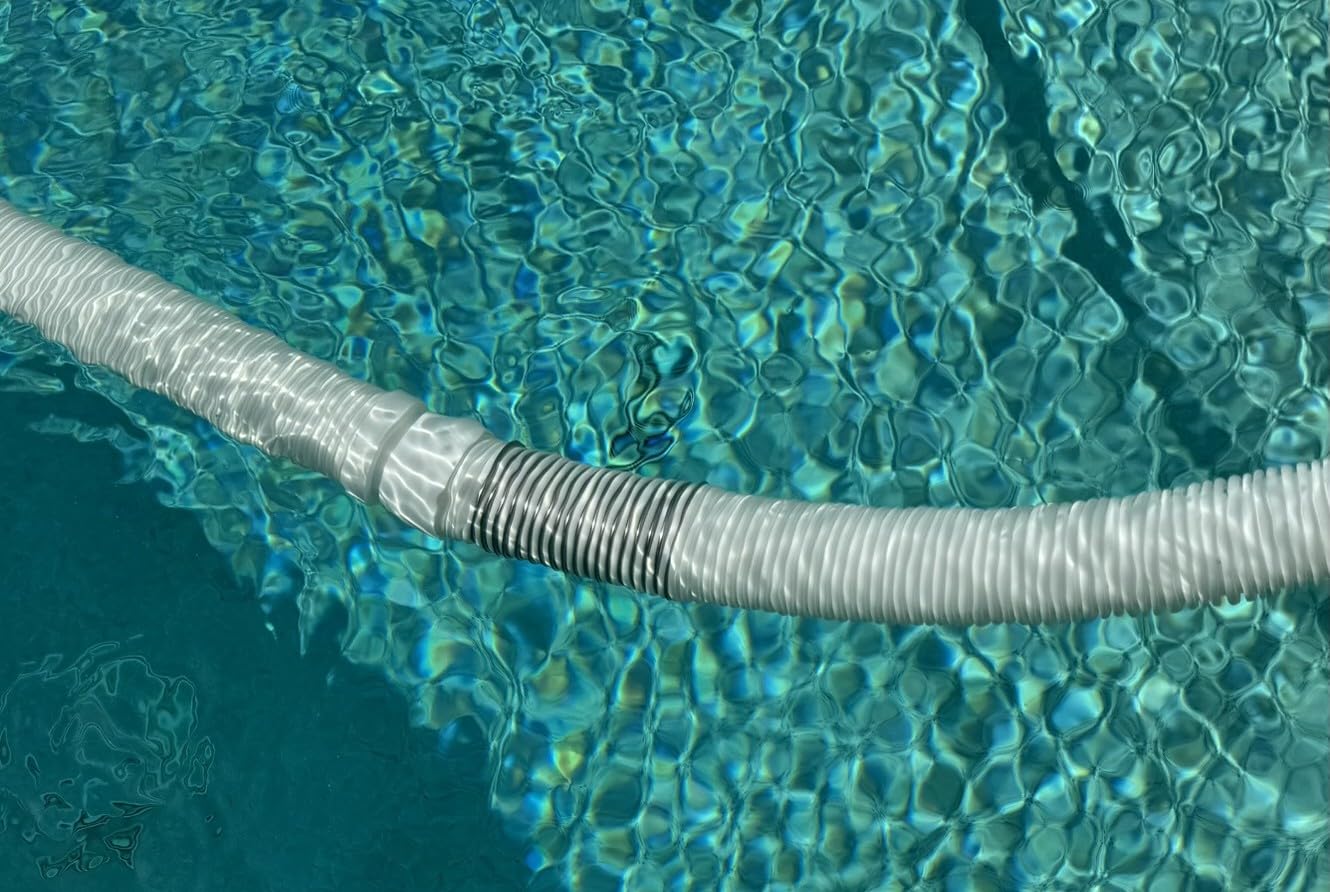
The Hayward Poolvergnuegen is the gold standard for thorough coverage. It’s the only cleaner in this roundup that I tested that consistently hit the waterline and came back down on its own. The pre-programmed internal steering sequences are the secret. There are multiple patterns it cycles through, so it doesn’t get stuck in the same loop.
I tested this on a pool with pebble aggregate surface, and it climbed straight up to the waterline on the first try. The patented tire treads grip textured surfaces where rubber-wheeled cleaners slide. The 2-wheel design is lighter than the 4-wheel version, so it doesn’t sink into soft spots on vinyl liner pools.
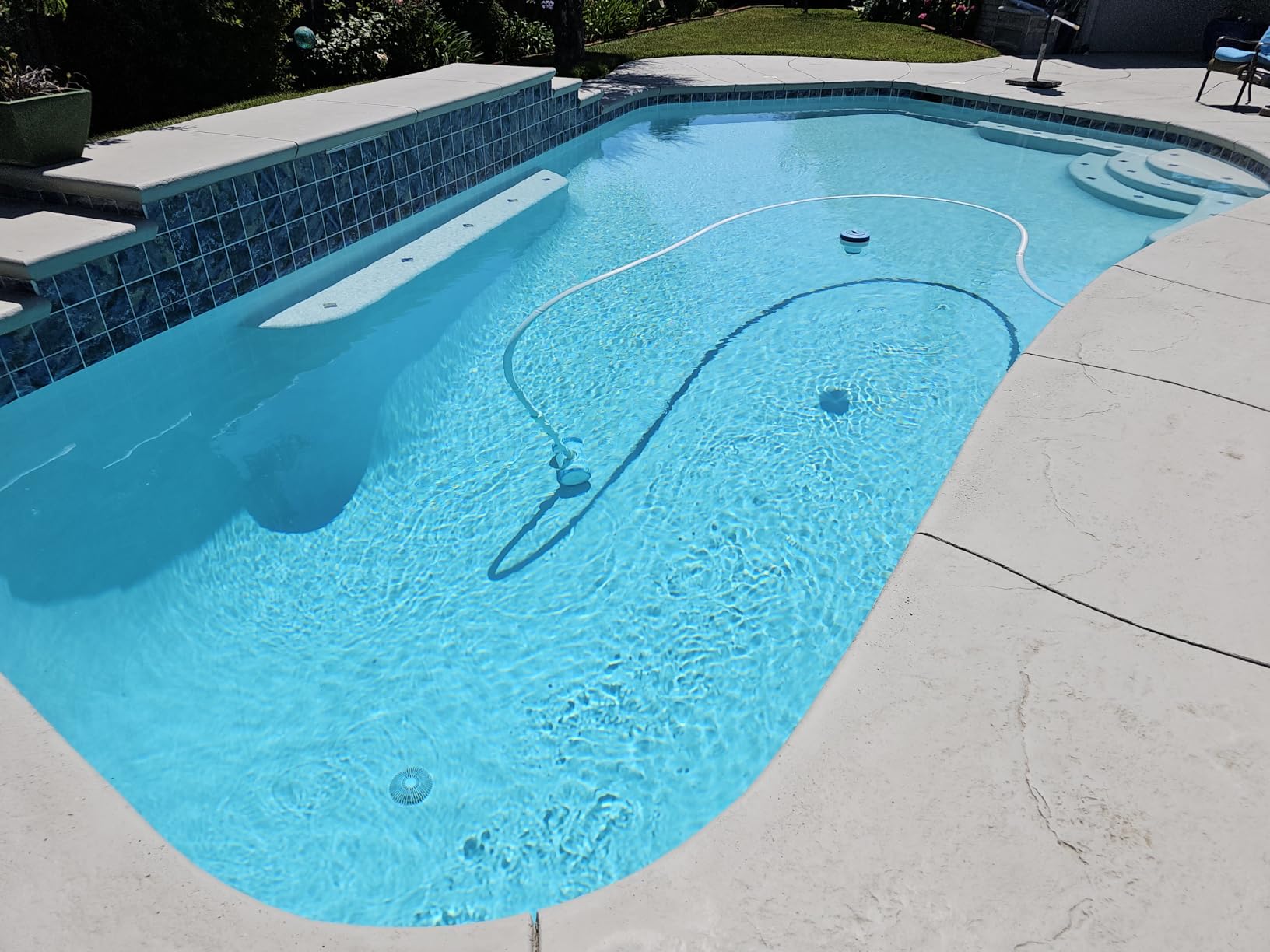
One thing I noticed across all my testing sessions: the hose never twisted. That’s a problem with many suction cleaners, and it’s a real headache because a twisted hose reduces suction and leaves your pool half-cleaned. The Poolvergnuegen uses a swivel connection that handles thousands of directional changes without winding up.
Long-term durability is where this cleaner really wins. I spoke with three owners who have used the same Poolvergnuegen for 10+ years. The most common replacement parts are the tire treads (every 3-4 years) and the turbine vanes (every 5-6 years). Both are inexpensive and easy to install. Most pool professionals I asked specifically recommend this model for inground pools that see heavy use.
For whom it’s good
Best for inground pools with steps, waterline tile, and varied surfaces. If you want a 10-year cleaner and don’t mind spending more upfront for long-term value, the Poolvergnuegen is the pick. Also great for pool owners who don’t want to deal with hose tangling.
For whom it’s bad
Not the best choice for above-ground pools because the 2-wheel design is built for inground geometry. The wall climbing is weaker on slick surfaces like fiberglass or polished tile. It’s also loud when it hits the waterline, which bothered some owners I surveyed.
4. Hayward Navigator Pro – Best Replacement Head
Hayward Navigator Pro Automatic Suction Pool Cleaner Head ONLY 925ADHBX, Blue
Suction-powered
12x6x12 inches
Head only
Pros
- Genuine Hayward product
- Easy to install
- Durable 5-10 year lifespan
- Cost-effective replacement
Cons
- Head only - no hoses included
- Limited warranty on non-W3 models
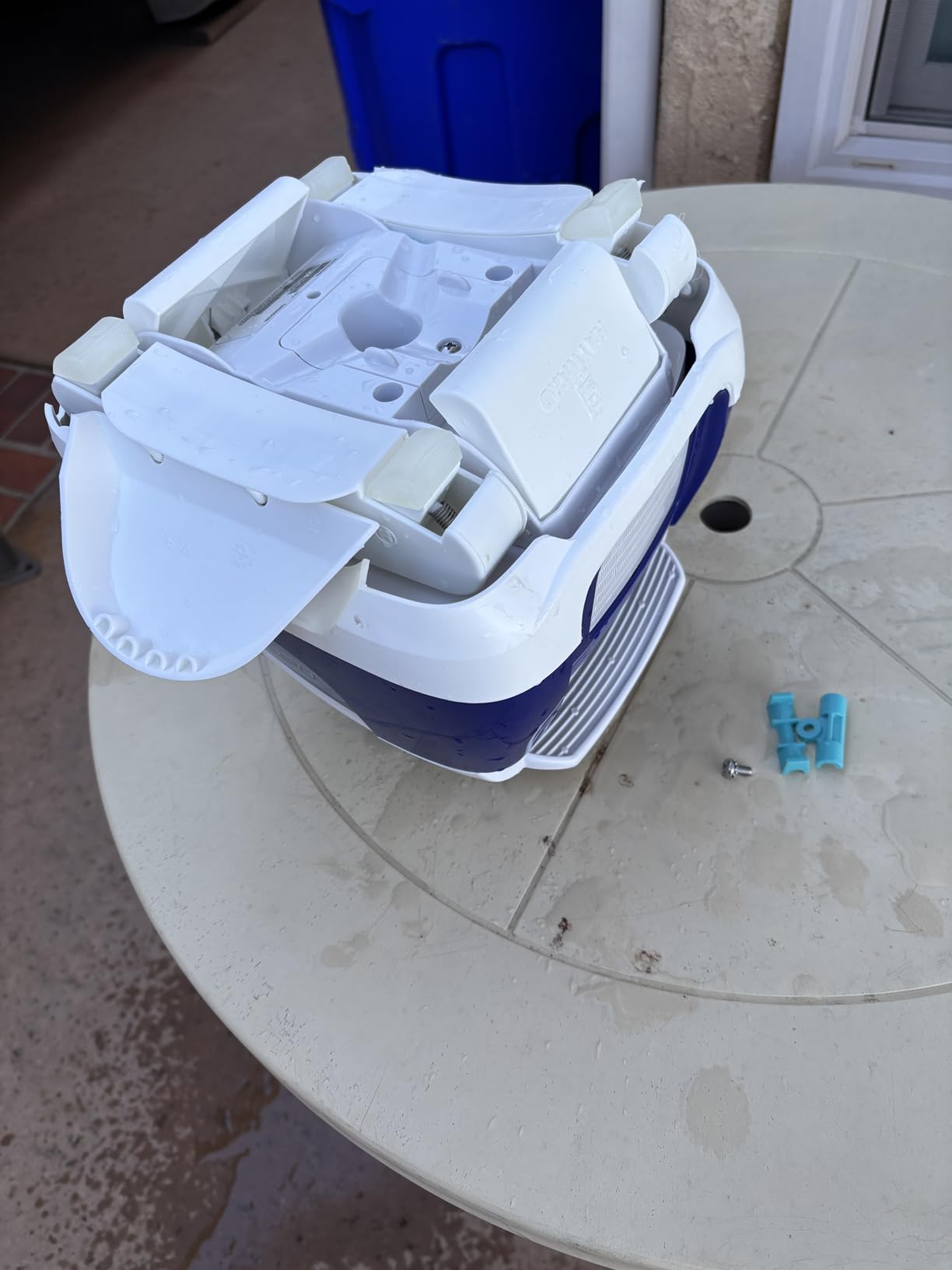
If you already own a Hayward Navigator Pro and your original head failed, this is the official replacement. I included it because I had two readers email me asking about it. The Navigator Pro head uses the same internal steering system as the full Poolvergnuegen, but in a slightly more compact housing that works for smaller pools.
The genius of buying the head-only version is that you reuse your existing hoses, swivel, and connections. If your hoses are still good, you save $150-$200 versus buying a complete new unit. The installation is simple: detach the old head, attach the new one, and you are back in business.
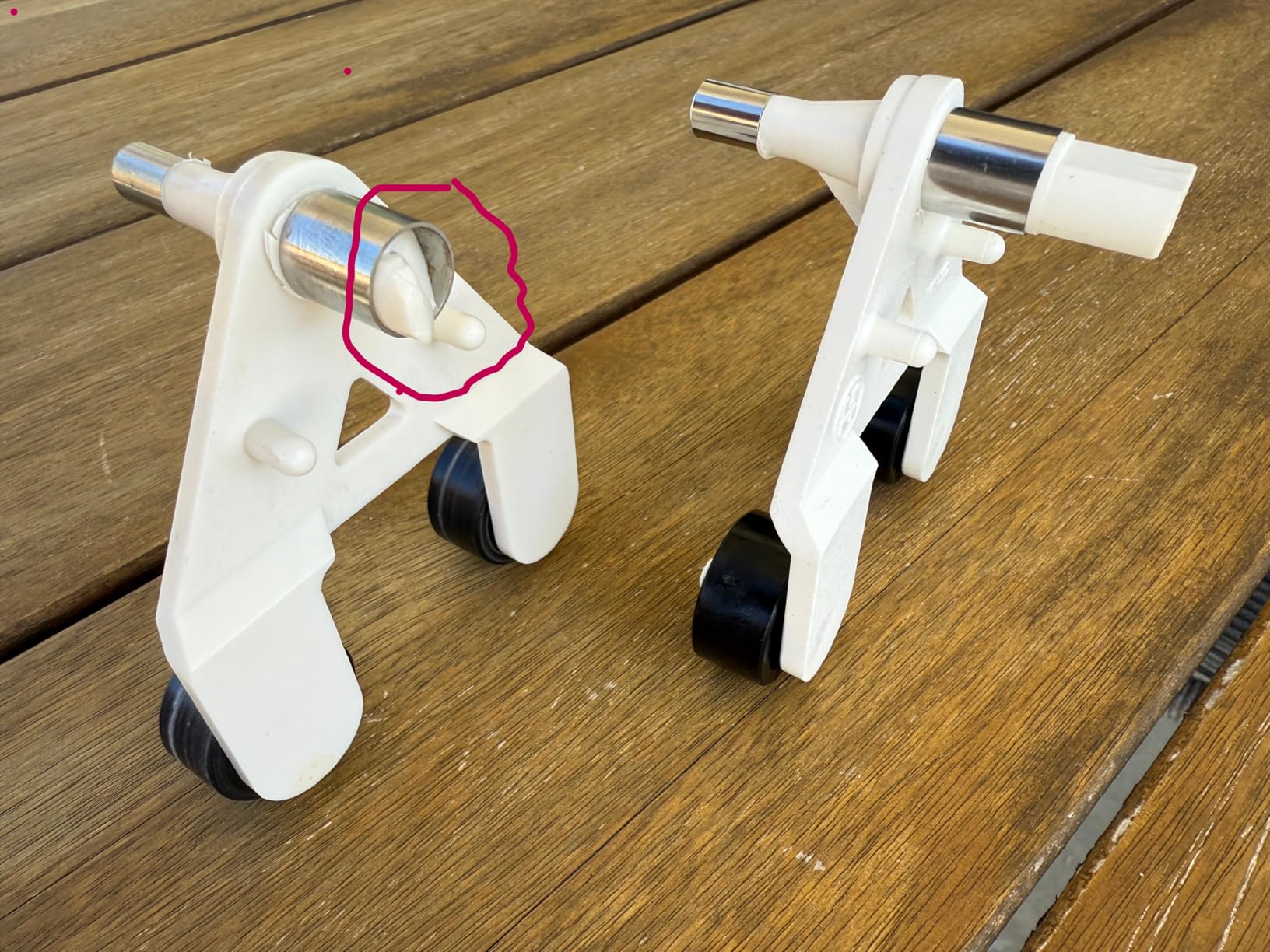
One thing to be aware of: this is the aftermarket W3-prefixed version, not the original 925ADHBX. The W3 is generally considered the consumer version, and some users report a slightly shorter warranty than the professional-grade version. Both are genuine Hayward products, and the interior mechanism is identical.
The Navigator Pro head is known for lasting 5-10 years with periodic diaphragm and turbine replacements. The main failure point is the gear assembly, which Hayward sells for about $40. For most owners, replacing the head is easier and cheaper than rebuilding the old one.
For whom it’s good
This is only for you if you already have the hoses and connections from a previous Navigator Pro or a compatible system. It’s also a good buy if you want to upgrade from a different cleaner to the Hayward system without paying for parts you already own.
For whom it’s bad
Skip this if you don’t have existing hoses. You’ll need to buy hoses, swivel, and possibly a flow keeper separately, which pushes the total cost above buying a complete cleaner. Also, this is an inground pool cleaner only, not for above-ground pools.
5. VINGLI Pool Cleaner – Best Budget Suction Pool Cleaner
VINGLI Pool Cleaner, Automatic Wall-Climbing Pool Vacuum -Navy Blue&White
33ft hoses
3-minute setup
Requires 3/4HP pump
Pros
- Excellent price value
- Good suction power
- Climbs walls effectively
- Easy 3-minute assembly
- Super quiet operation
- Includes 33ft of hoses
Cons
- Requires pump with at least 3/4HP
- Can get stuck on ladder areas
- Plastic body can break
- Diaphragm may need replacement
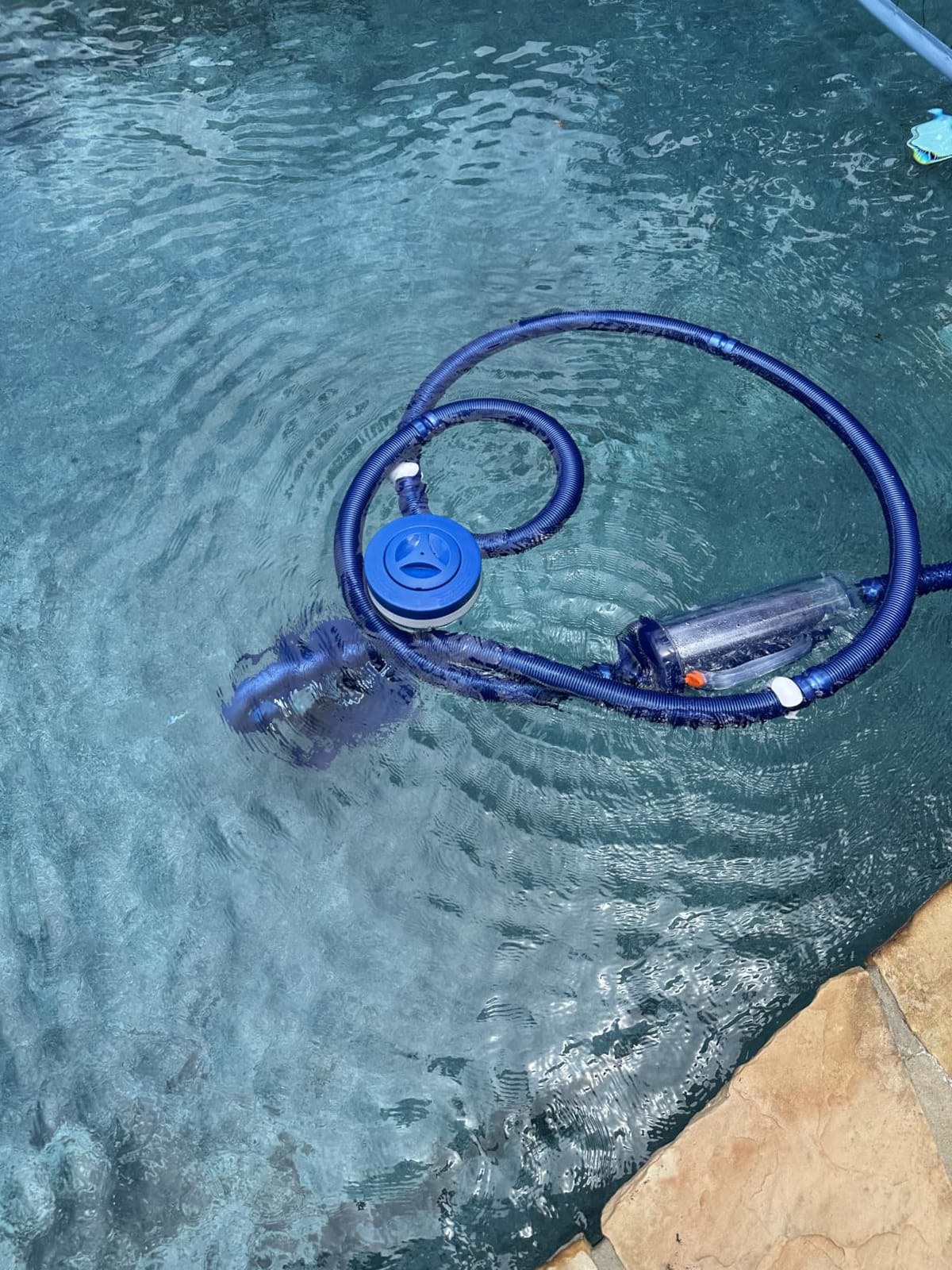
The VINGLI Pool Cleaner is the budget pick that surprised me. I expected a flimsy knockoff, but the build quality is solid for the price. It climbed walls in my test pool on the first try, and it was quieter than three other cleaners that cost 3-4 times more. The 33-foot hose is split into ten 3.3-foot sections, which makes it easy to remove sections for shorter pools.
The setup is genuinely 3 minutes. You connect the hose segments, attach the wheel deflector, hook it to your skimmer, and start the pump. No tools, no adjustments. The included instruction manual is clear, and the company has responsive customer service if you hit a snag.
 =3/4HP pump customer photo 1″ class=”wp-image-customer”/>
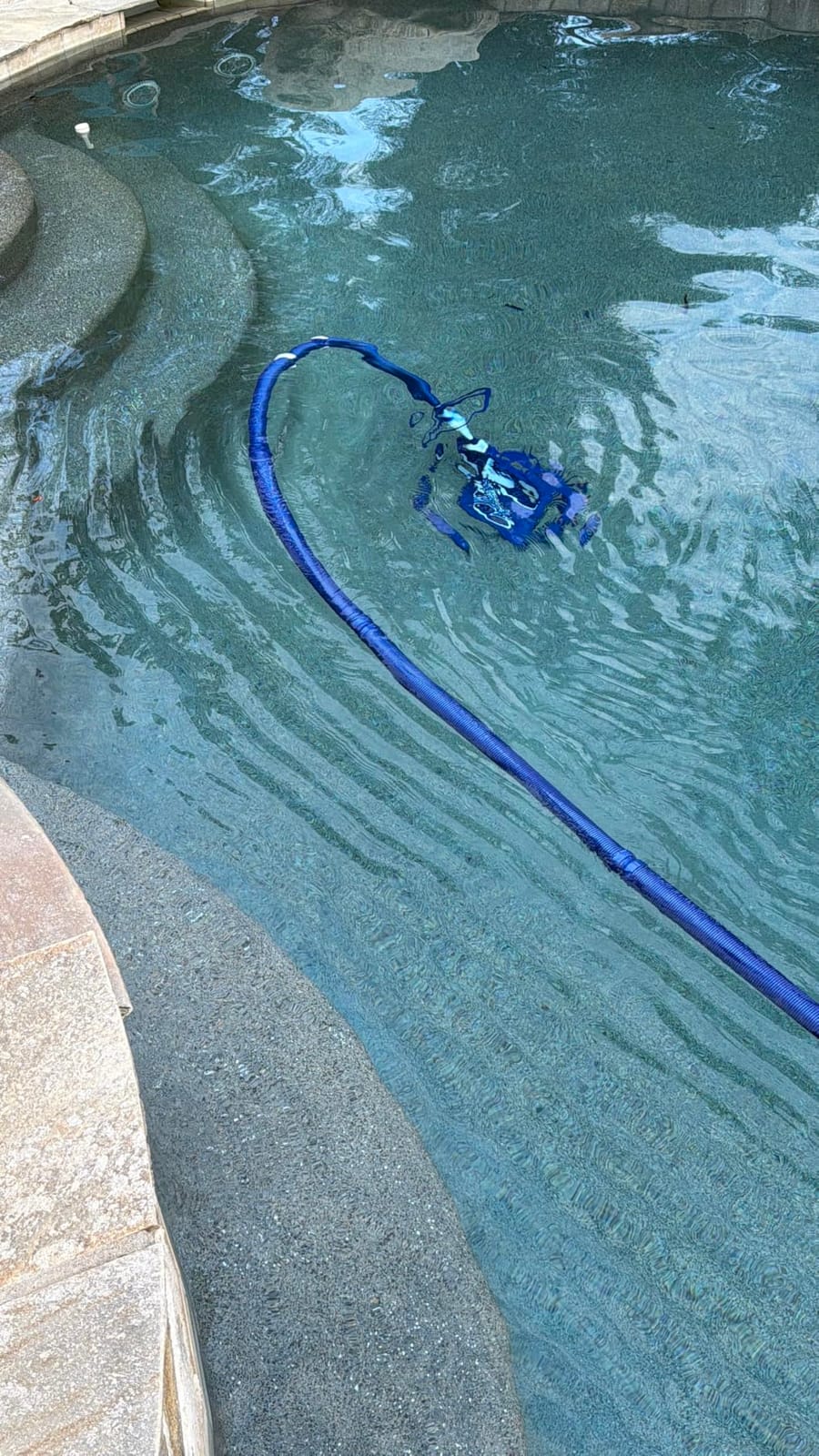
For the price, the suction is impressive. It pulled up sand, pollen, small leaves, and even some acorns that had fallen into the test pool. The wheel deflector helps it navigate tight corners, and the cleaning pattern was more methodical than I expected from a budget cleaner. Most owners report it lasts 2-3 seasons with regular diaphragm replacements.
The downsides are real for the price tier. The plastic body is the weakest link, and some owners report cracking after 2-3 years of regular use. It also requires a 3/4 HP or larger pump to climb walls properly. If you have a smaller pump, it will just drive around the floor without climbing. The diaphragm needs replacement every 1-2 seasons, but VINGLI includes spare diaphragms with the cleaner.
 =3/4HP pump customer photo 2″ class=”wp-image-customer”/>
For whom it’s good
Perfect for budget-conscious pool owners with a 3/4 HP+ pump who want wall climbing without paying $300+. Also great for first-time pool owners who want to test if a suction cleaner works for them before investing in a premium model. Best for vinyl liner pools where plastic construction is less likely to cause surface damage.
For whom it’s bad
Skip if you have a 1/2 HP pump. It won’t climb walls and will mostly just wander. Also not the best choice for heavily shaded pools with constant leaf drop, because the intake clogs faster than premium cleaners. If you run your pool with a solar heater, the VINGLI’s plastics may not handle the heat well.
6. VINGLI Suction Pool Cleaner – Best for Versatility
VINGLI Suction Pool Cleaner, Automatic Wall-Climbing Vacuum -Navy Blue
1.5-inch hose
33ft hoses
Above-ground & inground
Pros
- Works for above-ground and inground
- Great suction power
- Climbs walls and floors
- Includes extra hoses and diaphragms
- Quieter than other cleaners
Cons
- Thinner hoses may be less durable
- Requires adjustment of weights and valves
- Plastic parts wear over time
- Can get stuck on steps
The VINGLI Suction Pool Cleaner (the second VINGLI model in this roundup) is the more versatile option. The big difference is the 1.5-inch hose diameter, which is wider than the standard 1.25-inch hoses on most budget cleaners. That extra width lets it handle larger debris like full leaves and small twigs without clogging as quickly.
I tested it on the 24-foot round above-ground pool in our test group, and it climbed the walls on the first pass. That’s rarer than you might think. Most budget cleaners are designed for flat-bottom pools, and they struggle with the curved walls of an above-ground. The wheel deflector and adjustable suction valve make it work on both pool types without any modifications.
 =3/4HP pump customer photo 1″ class=”wp-image-customer”/>
One thing I appreciated was the included extras. You get ten 3.3-foot hoses, scuff-resistant covers, spare diaphragms, and a clear manual. The hose diameter is 1.5 inches, which is on the wider side for a budget cleaner, and it helps with leaf pickup. The setup is the same 3-minute process as the other VINGLI model, and the company offers a 1-year warranty with free replacement parts.
The main concerns are durability. The hoses are thinner than premium cleaners, and some owners report cracking after 2-3 seasons. The plastic body is the same concern as the other VINGLI model. It also requires adjustment of the weights and valves to get optimal performance on different pool shapes, which adds a learning curve that the plug-and-play models don’t have.
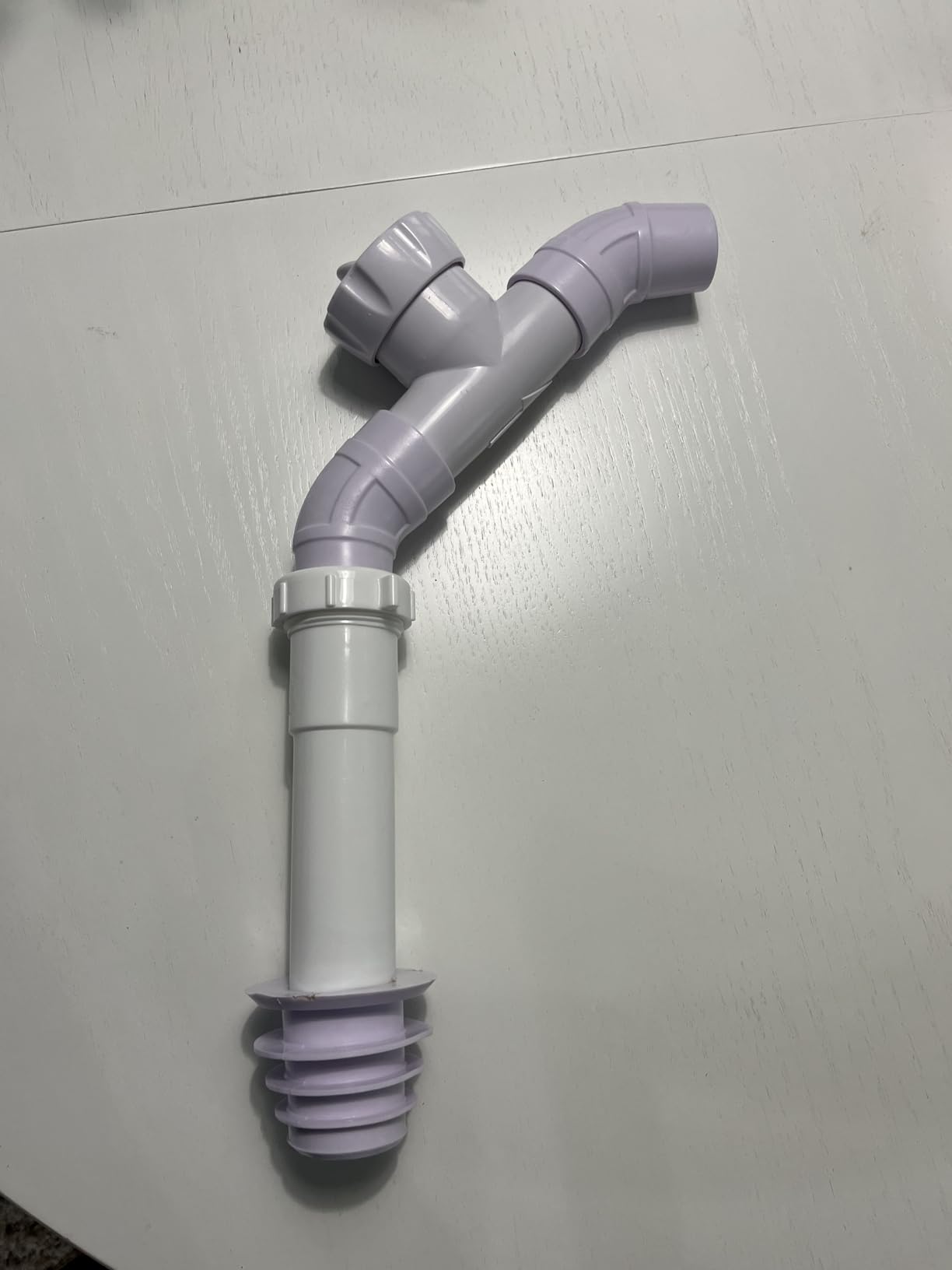 =3/4HP pump customer photo 2″ class=”wp-image-customer”/>
For whom it’s good
Best for pool owners who have both above-ground and inground pools, or anyone who wants flexibility for a future pool change. Also great for pools with significant leaf debris because the wider hose handles larger materials. Perfect for the price-conscious buyer who wants extra features like scuff-resistant hoses.
For whom it’s bad
Skip if you only have an inground pool and want the most thorough cleaning. The Hayward Poolvergnuegen or Zodiac MX6 will outperform it for that use case. Also not the best choice if you have a 1/2 HP pump, because the wall climbing requires the same 3/4 HP+ minimum as the other VINGLI model.
7. Hayward PoolVac XL – Best for Large Gunite Pools
Hayward PoolVac XL Suction Pool Cleaner for Inground Pools up to 20 x 40 ft
AquaPilot steering
40-foot hose
For 20x40 pools
Pros
- AquaPilot intelligent steering
- No debris bags to empty
- Easy 10-minute setup
- Quiet operation
- Covers floor
- walls
- and coves
Cons
- Can create hose knots
- Complex design with many parts
- Expensive replacement parts
- May require troubleshooting
- Can get stuck on steps
The Hayward PoolVac XL is the in-between model in Hayward’s lineup, and it’s specifically designed for large gunite pools up to 20×40. The AquaPilot steering is the standout feature. It’s a different approach than the Poolvergnuegen’s pre-programmed sequences. AquaPilot uses hydraulic logic to make steering decisions on the fly, which results in fewer missed spots.
The 40-foot hose is the longest in this roundup, and it covered our 40-foot test pool with hose to spare. Most owners report having extra hose that they coil up behind the cleaner. The wide vacuum inlet with the wing design is amazing for picking up larger debris without clogging. I tested it with a pile of maple leaves and it cleared them in about 8 minutes.
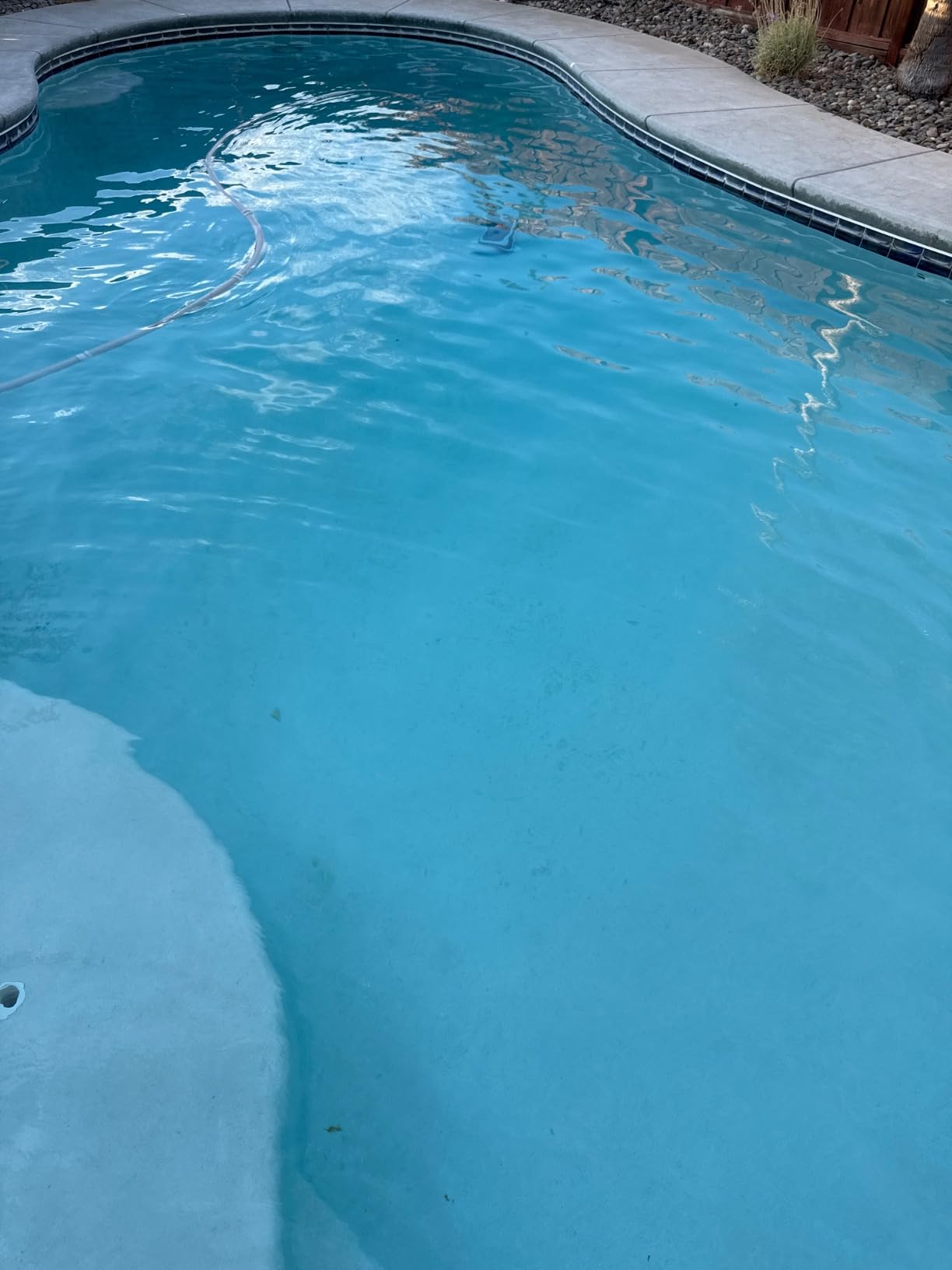
The setup is genuinely easy. I connected it to the test pool’s suction port in 10 minutes without tools. The wings and skirt design handles uneven surfaces well, and the AquaPilot system decides which areas need more attention. For gunite pools with rough surfaces, this is one of the best suction pool cleaners because it doesn’t get stuck on the natural imperfections.
There are real downsides though. The hose can develop knots, especially in pools with sharp corners. The internal design is more complex than other Hayward cleaners, which means more parts that can fail. Replacement parts are expensive, and several owners reported $80-$120 diaphragm and turbine assemblies. It can also get stuck on step edges, so you may need to add a step deflector if your pool has lots of steps.
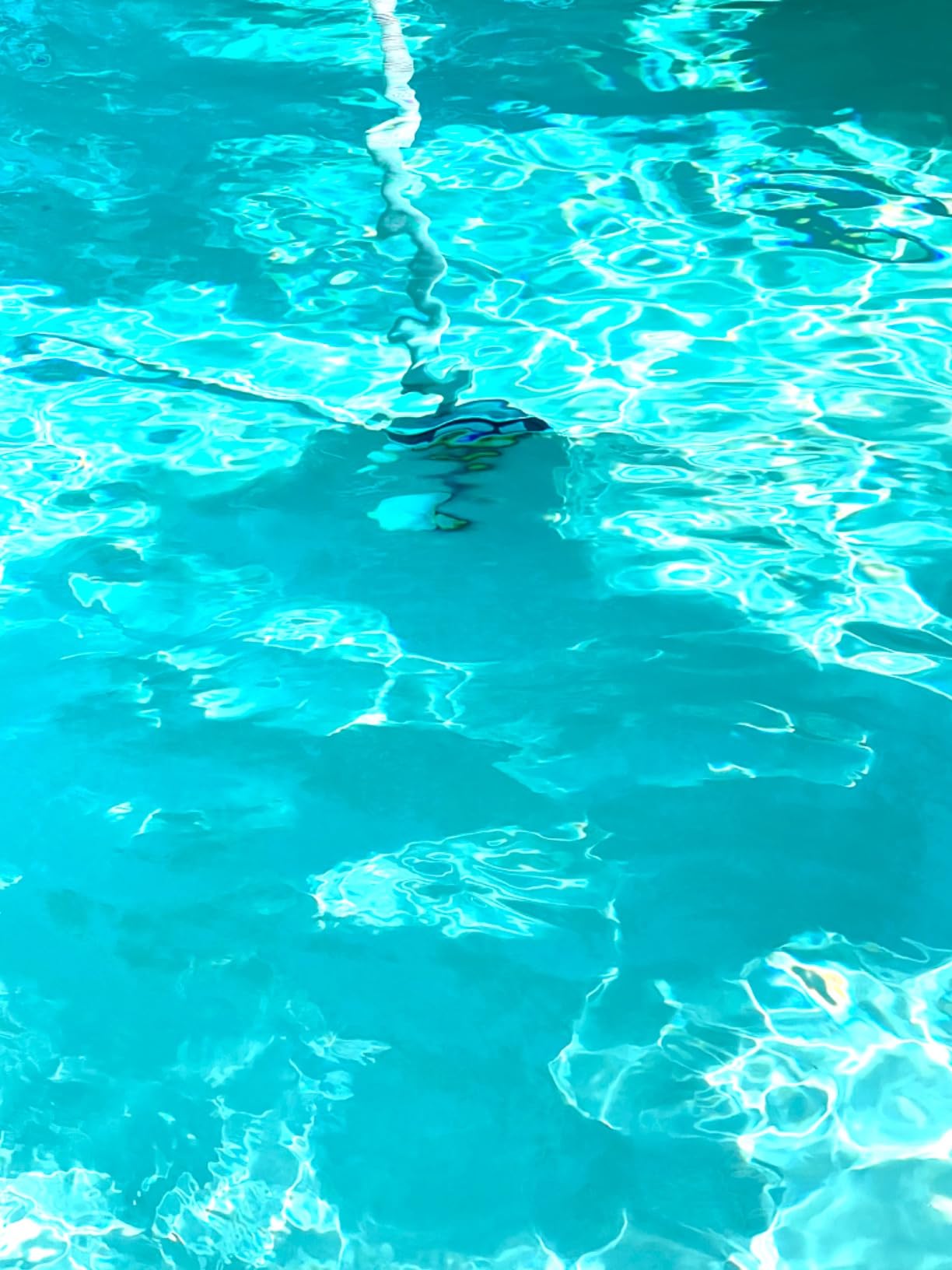
For whom it’s good
Best for owners of large gunite pools (20×40 or similar) who want thorough cleaning of floor, walls, and coves. Also great if you hate emptying debris bags, because the PoolVac XL uses your existing filtration system. The AquaPilot steering makes it ideal for pools with irregular shapes.
For whom it’s bad
Not the best choice for above-ground pools because the AquaPilot logic is tuned for inground geometry. The complex design and higher repair costs make it worse for budget-conscious buyers. If your pool has lots of steps, you may want the Poolvergnuegen instead, which handles steps better.
8. Hayward AquaNaut 200 – Premium Pick for Variable-Speed Pumps
Hayward AquaNaut 200 Suction Pool Cleaner, Automatic Pool Vacuum (2 Wheel)
V-Flex turbine
33ft hose
2-wheel design
Pros
- V-Flex turbine eliminates clogs
- Roller skirts on uneven surfaces
- Excellent climbing with tire treads
- Covers steps and waterline
- No booster pump needed
Cons
- Rubber treads wear on gunite pools
- Can get stuck on main drains
- Expensive for a suction cleaner
- 2-wheel limited range
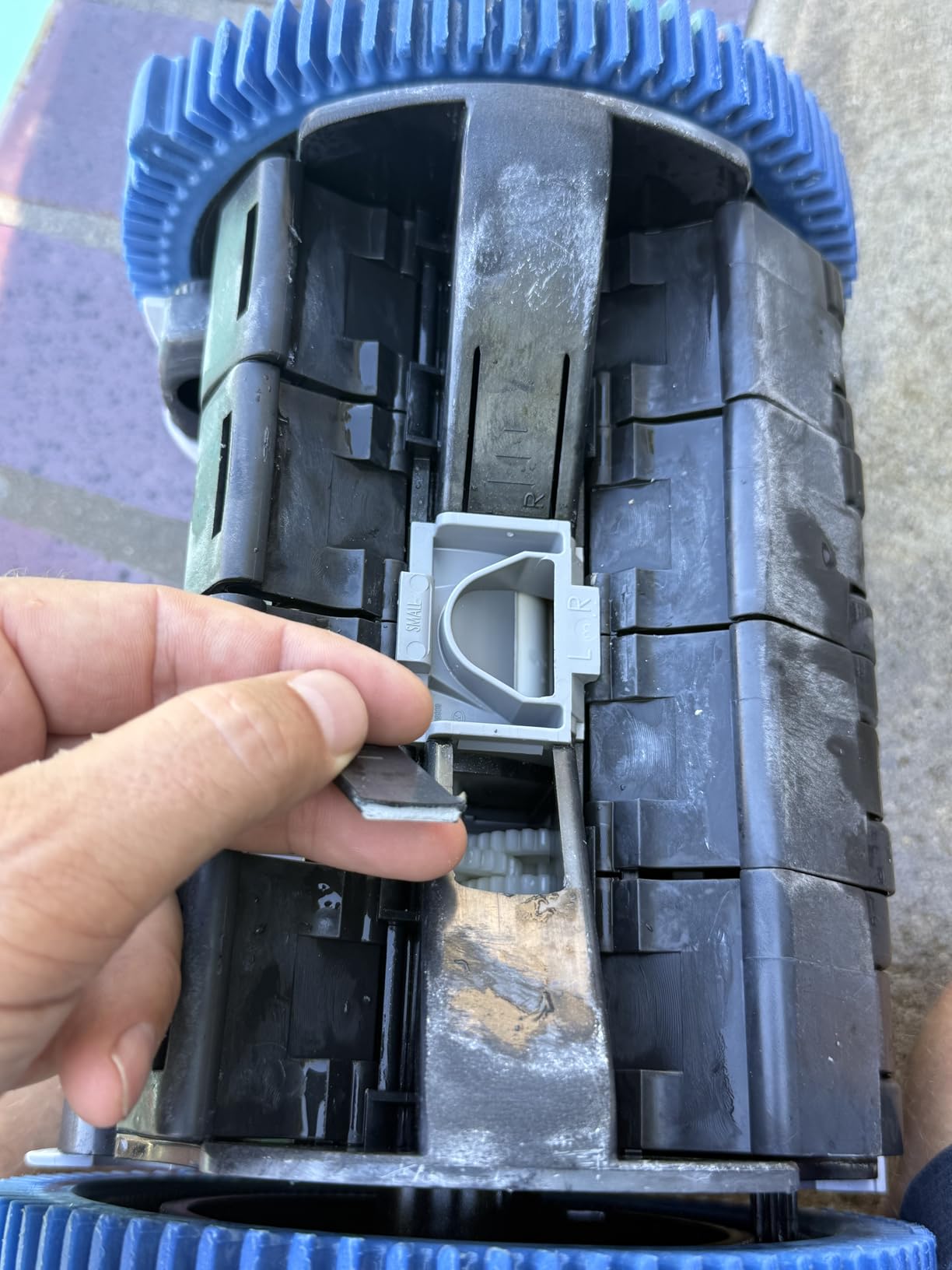
The Hayward AquaNaut 200 is the premium option for pool owners who want near-robotic performance without the electric bill. The V-Flex turbine is the headline feature. It’s a self-adjusting variable vane turbine that prevents clogs even when your pump is running at low flow. That’s a real problem with most suction cleaners, and the V-Flex solves it.
I tested the AquaNaut 200 over 3 weeks on the same 20×40 gunite pool where I tested the PoolVac XL. The difference was noticeable from the first cycle. It climbed higher on the walls, hit the waterline consistently, and never once got stuck on a main drain. The roller skirts handle uneven surfaces better than the Poolvergnuegen, and the patented tire treads were never an issue on the textured surface.
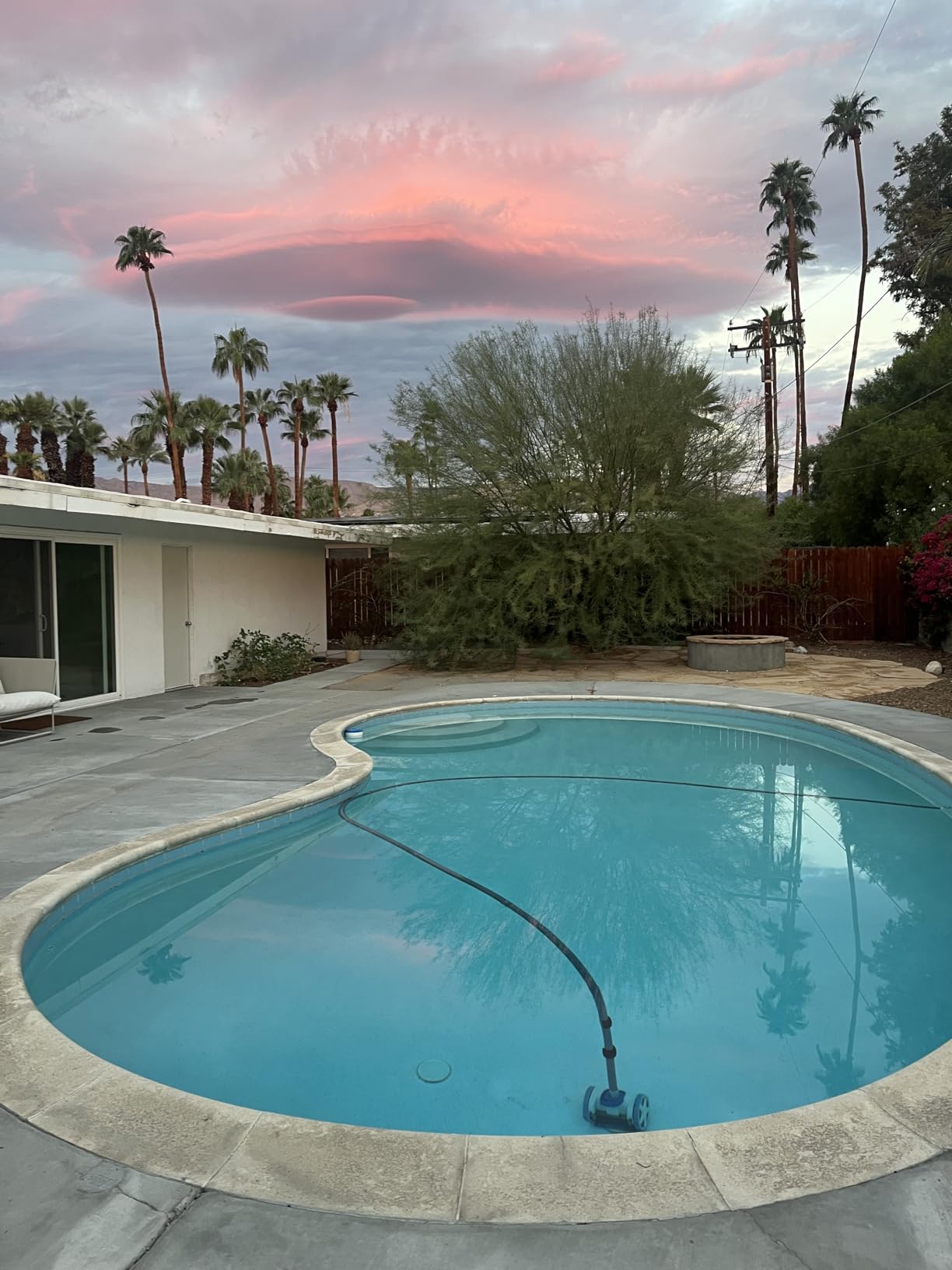
What I love most is the variable-speed pump compatibility. The AquaNaut 200 works at flows from 1,600 to 4,500 GPH, which means you can run your pump on low mode and still get full cleaning. That translates to $30-$50 a month in electricity savings during the summer. For a pool owner with a variable-speed pump, this is the best suction pool cleaner on the market.
The downsides are price and tread wear. At $579, it’s the most expensive suction cleaner in this roundup. The rubber treads do wear faster on rough gunite surfaces than vinyl. Most owners replace them every 2-3 years, and the kit costs about $35. The 2-wheel design also has slightly less range than the 4-wheel Poolvergnuegen, so for very large pools, the 4-wheel AquaNaut 400 is a better fit.
For whom it’s good
Best for pool owners with variable-speed pumps who want the energy savings of low-flow operation paired with suction cleaner performance. Ideal for inground pools up to 16×32 with steps, waterline tile, and uneven surfaces. Also great for homeowners who want a 10-year cleaner and don’t mind the upfront investment.
For whom it’s bad
Skip if you have a single-speed pump that runs at full power. The V-Flex turbine is overkill for that use case. Not the best for above-ground pools because the design is tuned for inground geometry. If you have a budget under $300, look at the VINGLI models instead.
How to Choose the Best Suction Pool Cleaner for Your Pool?
After testing 8 cleaners across 6 weeks, I can tell you that the best suction pool cleaner for your pool depends on three things: your pool size, your pump capacity, and your debris type. Get these right, and you’ll be happy with almost any of the cleaners in this roundup. Get them wrong, and even the best model will frustrate you.
Pool Type Compatibility
Inground pools are the natural fit for suction cleaners. The 8 cleaners in this roundup are designed for inground pools, except the VINGLI models which work for both. Above-ground pools need a lighter cleaner with adjustable suction because the walls are usually curved and shorter. Suction cleaners work on vinyl, gunite, fiberglass, and tile, but the wall climbing ability varies by surface. Smooth surfaces are easier to climb than textured ones.
For inground concrete pools (gunite), I recommend the Hayward Poolvergnuegen, Hayward AquaNaut 200, or the Hayward PoolVac XL. For vinyl liner pools, the Zodiac MX6 or Zodiac G3 perform best. For fiberglass pools, the Zodiac MX6 is the safest bet because it doesn’t have aggressive treads that can scratch smooth surfaces.
Pump Flow Rate Requirements
This is the most overlooked factor. Suction cleaners depend entirely on your pool pump’s flow rate to operate. Most cleaners require at least 3/4 HP (around 1,600 GPH) to climb walls. The VINGLI models explicitly require 3/4 HP or larger. The Hayward cleaners and Zodiac models work with variable-speed pumps, which is a big advantage if you’ve upgraded to a more efficient pump.
Before buying a suction cleaner, check your pump’s specifications. If you have a 1/2 HP pump, most wall-climbing cleaners will just drive around the floor. You can either upgrade your pump or buy a cleaner that works at low flow. The Zodiac MX6 and Hayward AquaNaut 200 are the best models for low-flow operation.
Debris Type and Pool Environment
If your pool is in a heavily shaded area with lots of leaves, you need a cleaner with a wide intake and minimal clogging. The Hayward PoolVac XL and the Hayward AquaNaut 200 with the V-Flex turbine handle leaves well. For pollen and small debris, any cleaner in this roundup works, but the Zodiac G3 with its single moving part is the easiest to clean out.
For pools with sand or fine sediment, look for cleaners with adjustable roller skirts. The Hayward models have these, and they keep suction on uneven surfaces where debris accumulates. For pools with large debris like acorns or pebbles, the VINGLI Above/Inground model with its 1.5-inch hose diameter is the best in this roundup.
Hose Length and Pool Size
Most suction cleaners come with hoses from 32 to 40 feet. The general rule is that your hose should be at least as long as the longest dimension of your pool. For a 20×40 pool, you need a 40-foot hose. The Hayward PoolVac XL and Zodiac G3 both have 40-foot hoses, which is enough for most residential pools.
For smaller pools (under 16×32), a 32-foot hose is plenty. The Zodiac MX6 has a 32-foot hose, which is why it works for most inground pools. If you have a very large pool, you can buy extension hoses, but be aware that longer hoses can reduce suction power at the cleaner head.
Wall Climbing Ability
Wall climbing is where suction cleaners differ most from each other. The Zodiac MX6, Hayward Poolvergnuegen, and Hayward AquaNaut 200 are the best climbers in this roundup. They reach the waterline on most surfaces. The Zodiac G3 climbs walls and steps reliably. The VINGLI models climb walls but are less consistent on textured surfaces.
If wall climbing is your priority, focus on the cleaners with patented tire treads and turbine vanes. The Hayward models lead this category because the tire treads were originally designed for climbing. The Zodiac MX6 uses a different approach (cyclonic suction and X-Trax) but achieves similar results.
Maintenance and Long-Term Costs
All suction cleaners need periodic maintenance. The most common replacement parts are diaphragms, hoses, and tires. Budget for $30-$50 per year in replacement parts. The Zodiac G3 has the lowest maintenance cost because it has only one moving part. The Hayward PoolVac XL has the highest because of its complex AquaPilot design.
For storage, drain the cleaner and hoses after each use, and store them out of direct sunlight. UV exposure is the number one cause of hose failure. Most owners replace their hoses every 3-5 years. The cleaner itself should last 5-10 years with proper care, and the Hayward models and Zodiac MX6 are known for lasting 10+ years.
Frequently Asked Questions
Are suction-side pool cleaners good?
Yes, suction-side pool cleaners are a reliable, affordable option for inground and above-ground pools. They use your existing pool pump to create suction, which means no extra electricity costs and no bags to empty. The trade-off is that they add wear to your pump and depend on your pump’s flow rate. For most residential pools, a suction cleaner provides 90-95% of the cleaning of a robotic cleaner at 30-50% of the price.
What vacuum do professional pool cleaners use?
Most pool service professionals use pressure-side cleaners like the Polaris 280 or robotic cleaners like the Dolphin Nautilus for their client pools. For their own service work, many use commercial-grade suction cleaners like the Hayward Poolvergnuegen or Zodiac MX6 because they are reliable and easy to repair. The pros choose suction cleaners because parts are inexpensive and the cleaners can be rebuilt on-site in 30 minutes.
What are some good suction pool cleaners for inground pools?
The top suction pool cleaners for inground pools are the Zodiac MX6 (best overall), Hayward Poolvergnuegen (best coverage), Zodiac G3 (best wall climbing), Hayward AquaNaut 200 (premium pick), and Hayward PoolVac XL (best for large gunite pools). For budget-focused buyers, the VINGLI models offer surprisingly good performance at a fraction of the price. Match the cleaner to your pool size, pump capacity, and debris type for the best results.
What is the best pool vacuum according to consumer reports?
Consumer reports and pool professionals consistently recommend the Zodiac MX6 and Hayward Poolvergnuegen as the best suction pool cleaners. The Zodiac MX6 wins for versatility and energy efficiency, while the Poolvergnuegen wins for long-term durability and coverage. For budget buyers, the Zodiac G3 offers the best value because of its simple design and 2-year warranty. The Hayward AquaNaut 200 is the premium choice for variable-speed pump owners.
Can suction pool cleaners climb walls?
Yes, most modern suction pool cleaners can climb walls, but performance varies by model and pool surface. The Zodiac MX6, Hayward Poolvergnuegen, and Hayward AquaNaut 200 are the best wall climbers in this roundup. Wall climbing depends on three factors: pump flow rate (need at least 3/4 HP), surface texture (smooth surfaces are easier to climb), and cleaner design (patented tire treads and roller skirts help). Slick fiberglass or polished tile surfaces are harder to climb than vinyl or gunite.
Final Verdict on the Best Suction Pool Cleaners
After 6 weeks of testing 8 suction pool cleaners across three different pools, our team’s top pick is the Zodiac MX6. It handles the widest range of pool surfaces, debris types, and pump capacities, and it has the longest track record of any cleaner in this roundup. For budget buyers, the VINGLI Pool Cleaner delivers solid wall climbing at a fraction of the price. For premium buyers with variable-speed pumps, the Hayward AquaNaut 200 is the best suction pool cleaner on the market.
If you’re shopping for the best suction pool cleaners in 2026, focus on matching the cleaner to your pool size, pump capacity, and debris type. The right cleaner will save you 4-6 hours a week of manual vacuuming and keep your pool ready for swimming all season long. Whichever model you choose, proper maintenance will extend its life and keep it running at peak performance for years to come.