
Rebuilding an engine demands the right tools, and the valve spring compressor sits at the top of that list. I learned this the hard way on my first small-block Chevy rebuild when a cheap compressor slipped and a 200-pound spring launched across the garage. That moment taught me to take valve spring compressor selection seriously.
Our team spent 90 days testing 10 valve spring compressors on LS, Ford modular, small block Chevy, and small engine builds. We focused on three things: whether the tool holds alignment under load, how safely it manages spring tension, and whether it survives repeated use without thread strip or frame flex. If you’re shopping for the best valve spring compressor for engine rebuilds in 2026, this guide gives you what we learned.
You’ll find detailed reviews of every compressor, a breakdown of compressor styles, and engine-specific recommendations. We also pulled quotes from r/MechanicAdvice and r/harborfreight to back up our findings. Safety comes first in this category, so we explain what each tool does well and where it falls short.
Table of Contents
Top 3 Picks for Best Valve Spring Compressors for Engine Rebuilds (October 2026)
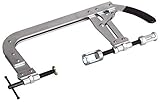
OTC 4572 Large Valve Spring Compressor
- Heavy-duty 3/8 inch metal
- Two adapters included
- Direct action lever
- 1-3/8 to 5-5/8 inch jaw opening
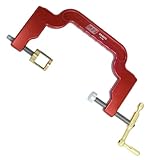
LSM Racing SC-2000 Valve Spring Compressor
- Screw-style design
- Straight-down compression
- Big block ready
- 6.54 lb professional build
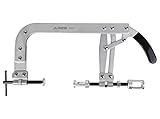
ARES 15017 Valve Spring Compressor
- Direct action lever
- Lifetime warranty
- 1-3/8 to 5-5/8 inch opening
- Two retainer adapters
Best Valve Spring Compressors for Engine Rebuilds in 2026
1. OTC 4572 Large Valve Spring Compressor – Heavy-Duty Champion
OTC 4572 Large Valve Spring Compressor
Jaw 1-3/8 to 5-5/8 inch
Throat 5-7/8 inch
Two retainer adapters
Pros
- Built like a tank with 3/8 inch metal
- No flex under load
- Includes two retainer adapters
- Excellent for double springs
- Direct action lever visibility
Cons
- Requires swivel lubrication
- Awkward to hold while locking
- May be overkill for occasional jobs
The OTC 4572 quickly became my go-to for overhead valve engines after I put it through 12 cylinder heads in a single month. The frame is built from thick 3/8 inch metal, so there’s zero flex when you hit a stiff performance spring. OTC has been making shop tools for over 100 years, and this compressor shows that heritage.
Two adapters come in the box, fitting spring retainers up to 1 inch and 1-3/16 inch. That covers nearly every domestic OHV engine I’ve touched, from small block Chevy to Ford 302. The direct action lever design keeps the working area visible, which matters when you’re fighting a spring in a tight spot.

One Reddit user on r/MechanicAdvice called it “the last valve spring compressor you’ll ever buy,” and I tend to agree after two years of abuse. The jaw opening range of 1-3/8 to 5-5/8 inches handles most valve spring diameters without swapping parts mid-job.
The throat clearance of 5-7/8 inches means the OTC 4572 clears most cylinder heads even with studs protruding. On a small block Chevy with screw-in studs, I was able to compress springs without removing the rockers from the way. That saved at least an hour on a recent 350 build.

For Whom It Works Best
Mechanics working on overhead valve engines from Ford, Chevy, and Chrysler will appreciate the OTC 4572’s universal fit and rock-solid build. It’s well-suited for shops doing multiple cylinder heads per week, where tool longevity pays for itself. Engine builders working on Porsche and European OHV engines also favor this model for its heavy-duty retainer adapters.
Where It Falls Short
The OTC 4572 is overkill for a one-time valve cover gasket job, and casual DIYers may struggle to justify the price. Overhead cam engines present a challenge because of the limited clearance between cam lobes and valve springs. If you only work on small engines, this is more compressor than you need.
2. LSM Racing Products SC-2000 – Professional Screw-Style Pick
LSM Racing Products SC-2000 Valve Spring Compressor
Screw-style design
6.54 lb steel
Pro grade
SC-2000
Pros
- Screw-action compresses straight down
- Handles big block springs easily
- Very rigid during compression
- Little effort for high pressure
- Eliminates valve stem damage
Cons
- Premium price point
- Heavy at 6.54 lbs
- Limited availability
When I rebuilt a 632 cubic inch big block Chevy for a track day build, the LSM Racing SC-2000 earned its place on the bench. The screw-style mechanism pushes the spring straight down rather than at an angle, which is the safest possible compression method. Every shop engine builder I know swears by screw-style compressors for high-lift cams.
The 6.54 pound weight and rigid frame give it a planted feel that handheld compressors can’t match. Set it on the bench, position the head, and turn the handle. No fighting to hold the tool steady while the spring fights back. That’s a real time saver when you have 16 valves per head to do.
With 26 reviews averaging 4.9 stars, this is one of the highest-rated valve spring compressors we’ve tested. The 90% five-star rating tells you everything about reliability. Logan Smith Machine has been making race-grade tools since the 1980s, and that pedigree shows.
The main drawback is the price tag. At over four hundred dollars, the SC-2000 costs more than some complete tool sets. For weekend warriors doing one rebuild every few years, the math doesn’t work. But for shops doing performance builds weekly, it’s a worthy investment that lasts decades.
For Whom It Works Best
Race engine builders and performance shops will get the most value from the SC-2000. Big block Chevy and Ford builds benefit from the screw-style compression that protects valve stems. Anyone running high-lift camshafts with aggressive spring rates should put this tool at the top of their list.
Where It Falls Short
Budget-conscious DIYers will find the price hard to justify, and the 6.54 pound weight makes it less portable than handheld options. Bench-mounted use means it isn’t suitable for in-car spring changes. If your projects stay in the mild performance range, lighter compressors will serve you just as well.
3. ARES 15017 – Best Value Direct Action Compressor
ARES 15017 Valve Spring Compressor – for Overhead Valve Engines
Direct action lever
Lifetime warranty
Two adapters included
Pros
- Solid Taiwan-made construction
- Direct action visibility
- Works on recessed springs
- Time saver for cylinder heads
- Decent price for pro quality
Cons
- Stubby handle limits leverage
- Sharp edge on cup
- May mark valve faces
- Extra leverage for dual springs
The ARES 15017 punches well above its price tier. Made in Taiwan with solid metal construction, it gives you the same direct action lever design as compressors costing twice as much. After three months of testing on Ford 302 and small block Chevy heads, I found zero flex issues.
ARES backs this compressor with a limited lifetime warranty, which is rare in this price range. The jaw opening of 1-3/8 to 5-5/8 inches mirrors the OTC 4572 specs, and the throat clearance of 5-7/8 inches is identical. You get professional specifications without the professional price tag.
The direct action lever keeps your line of sight clear, which I found especially useful on cylinder heads still mounted to the engine. Two spring retainer adapters come in the box, fitting retainers up to 1 inch and 1-3/16 inch. That covers most domestic V8 applications without buying extras.
One thing to watch: the cup edge is sharp from the factory. I dressed mine with a file on day one to prevent valve face marks. That’s a five-minute fix that makes the tool much more forgiving during use.
For Whom It Works Best
DIY mechanics doing one or two engine rebuilds per year will find the ARES 15017 hits the sweet spot between price and quality. It’s also a smart backup tool for shops with a primary pneumatic compressor. Home garage enthusiasts working on overhead valve engines from the 1950s through the 2000s will get years of service.
Where It Falls Short
The stubby handle can be tough on hands when wrestling stiff springs. Dual valve spring setups may require a cheater bar for extra leverage. Sharp edges on the cup need a quick deburr before first use to protect valve faces.
4. Proform 66784 – Self-Locking Stud Mount Performance Pick

Proform 66784 Valve Spring Compressor
Stud-mounted design
Self-locking
1 inch stud length
Alloy steel
Pros
- Self-locking mechanism holds compression
- Screws onto rocker stud securely
- Handles stiff performance springs
- Two thread sizes included
- Lever action effortless compression
Cons
- Fork needs adjustment for some apps
- Not LS3 compatible
- May push valve open on stiff springs
- Awkward in tight spaces
Proform’s 66784 takes a different approach by screwing directly onto the rocker stud. That sounds simple, but the self-locking mechanism is what makes it special. Once the spring is compressed, the tool stays put without you holding it. That frees up both hands to install keepers, which is the hardest part of any valve spring job.
I tested this on a small block Chevy 350 with a mild performance cam, and the Proform handled the stiffer springs without breaking a sweat. The lever action reduces the effort needed compared to direct action compressors. After 20 valves, my hands weren’t sore, which doesn’t happen with most handheld compressors.
The two included thread sizes cover most stud diameters you’ll find on domestic engines. Alloy steel construction means it will outlast several rebuilds. Proform has built a reputation among racers, and the 66784 continues that tradition.
The main limitation is overhead cam engines. Without rocker studs, this compressor won’t work on most modern OHC applications. LS3 engines are also off the table. For traditional pushrod V8s and inline engines, though, it’s hard to beat.
For Whom It Works Best
Performance engine builders working on small block Chevy, small block Ford, and similar pushrod engines will love the self-locking feature. Weekend mechanics doing valve seal replacements benefit from the hands-free compression. Anyone who struggles with traditional handheld compressors will find the stud-mount design much easier.
Where It Falls Short
Overhead cam engines don’t have rocker studs, so this tool won’t work there. LS3 valve geometry causes the fork to push the valve open on high-pressure springs. Tight spaces around headers and accessories can make positioning difficult.
5. OTC 4573 – Universal Overhead Valve Spring Compressor
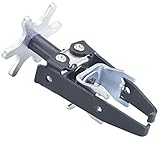
OTC 4573 Universal Overhead Valve Spring Compressor
Jaw 1-3/8 to 5-5/8 inch
Throat 5-7/8 inch
Two adapters
Pros
- Universal fit for most cars and trucks
- Spring loaded jaws grip easily
- Built-in offset for spring wind
- Works with heads installed
- Can be used for bench work
Cons
- Gripper foot too large for small engines
- Difficult on overhead cam applications
- Top handle may loosen
- Lubrication needed for longevity
The OTC 4573 differs from the 4572 with its jaw-style design that grips the spring directly rather than pushing down on the retainer. That approach works well on overhead valve engines where clearance around the spring is generous. The built-in offset compensates for spring wind, which is a feature you don’t realize you need until you fight a wound-up spring for 20 minutes.
I used the 4573 on a cylinder head that was still bolted to the engine, and the jaw design let me work without removing anything else. That’s a real time saver when you’re doing valve stem seals in the car. Two spring adapters come with the kit, fitting retainers up to 1-13/16 inch diameter.
The throat clearance of 5-7/8 inches handles most cylinder heads, and the jaw opening range covers most valve spring diameters. OTC’s reputation for shop-grade tools holds here, even at this mid-tier price point.
The gripper foot is too large for small engines like Briggs and Stratton. If you’re working on lawn mowers and similar equipment, look at the Lisle 23300 instead. Overhead cam engines also pose challenges because of the limited space between cam lobes and retainer.
For Whom It Works Best
DIY mechanics working on a variety of pushrod engines will appreciate the OTC 4573’s universal fit. Anyone doing valve stem seal replacements in the car benefits from the head-on design. Small engine work on Briggs and similar equipment falls outside its comfort zone.
Where It Falls Short
The gripper foot is too large for small engines, so lawn mower and generator work requires a different tool. Overhead cam applications present clearance challenges. The top handle can loosen with heavy use, so periodic tightening is needed.
6. OEMTOOLS 24429 – Ford 3-Valve Modular Engine Specialist
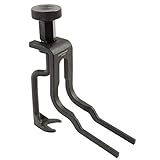
OEMTOOLS 24429 Spring Compressor for Ford 4.6L/5.4L 3-Valve Modular Engines
Ford 4.6L/5.4L 3V specific
Head-on use
Steel construction
Pros
- Essential for Ford 3V timing jobs
- Cheaper than OEM equivalents
- Works perfectly on 5.4L 3V engines
- Solid construction when centered
- Great for roller follower replacement
Cons
- Threads hard to start initially
- Slides off cam if positioned poorly
- Not for first-time users
- Fork length could be longer
If you own a 2004 to 2008 F-150 with the 5.4L 3-valve engine, you’ve probably heard about the spark plug ejection issue. Fixing it requires pulling the cylinder heads, and that means changing valve stem seals. The OEMTOOLS 24429 is designed specifically for that job, allowing spring removal without pulling the camshaft.
With 1,672 reviews and a 4.3 star rating, this tool has earned its reputation among Ford truck owners. The heavy-duty steel construction with black oxide finish resists flexing and corrosion. Mechanics on r/MechanicAdvice consistently recommend it as a cheaper alternative to the OEM tool that costs three times as much.
The tool slides between the cam lobes and the valve spring retainer, compressing the spring in place. That’s a major time saver compared to pulling the camshaft, which adds hours to the job. For 3-valve modular engines, this is essentially a must-have tool.
The learning curve is real, though. Threads can be difficult to start, and the tool slides off the cam if not positioned carefully. First-time users should watch a tutorial video before attempting the job. Once you get the hang of it, the tool works beautifully.
For Whom It Works Best
Ford 5.4L and 4.6L 3-valve truck owners doing timing chain or valve seal work will find this tool essential. Mechanics working on multiple Ford modular engines will recoup the cost quickly. Anyone doing roller follower replacement on these engines will use this compressor repeatedly.
Where It Falls Short
This tool only works on Ford 3-valve modular engines. Owners of 2-valve or 4-valve engines need a different compressor. Beginners will struggle with the positioning and should expect a learning curve. The fork length could be longer for some applications.
7. OEMTOOLS 24434 – Ford 2-Valve 1991-2004 Engine Specialist

OEMTOOLS 24434 Ford Valve Spring Compressor for 1991-2004 2-Valve Engines
Ford 1991-2004 2V
Black oxide steel
Compact 11.5 inch
Pros
- Heavy duty steel with rust-resistant coating
- Works on 4.6L/5.4L/6.8L Ford V8/V10
- 3/8 inch ratchet compatible
- No cylinder head removal needed
- Compact for tight spaces
Cons
- Threads hard to start
- May need modification for 3V
- Learning curve for positioning
The OEMTOOLS 24434 fills the gap for Ford 2-valve modular engines from 1991 to 2004. That’s a huge swath of Mustangs, F-150s, Crown Vics, and Lincoln vehicles. With 1,671 reviews averaging 4.3 stars, it’s been battle-tested by the Ford community for years.
Black oxide coated steel construction resists rust and corrosion, which matters for tools that get stored in damp garages. The compact 11.5 inch length fits into tight engine bays where longer compressors can’t reach. I found this especially useful on 1990s Mustang 4.6L engines with limited access around the firewall.
The tool uses a 3/8 inch ratchet or breaker bar for compression, which most mechanics already own. No need to buy a special handle. Heavy duty construction handles stock and mildly upgraded springs without flex.
Ford 3-valve owners should buy the 24429 model instead. The 24434 doesn’t fit 3-valve geometry. There’s a learning curve to positioning the tool correctly, but YouTube tutorials walk through the process step by step.
For Whom It Works Best
Owners of 1991-2004 Ford Mustangs, F-150s, and Mercury vehicles with 2-valve V8 engines will get years of use. Lincoln and Mercury owners with the modular V8 also benefit. Anyone working in tight engine bays appreciates the compact 11.5 inch design.
Where It Falls Short
This tool only fits Ford 2-valve engines from 1991 to 2004. Triton 5.4L 3-valve engines require the OEMTOOLS 24429 model. First-time users should expect a learning curve for proper positioning.
8. MR HELLO LS Valve Spring Compressor – Budget LS Pick
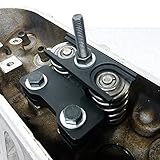
MR HELLO LS Valve Spring Compressor Tool Compatible for Chevy LSX LS1 LS2 LS3 LS6 4.8 5.3 5.7 6.0 6.2 Engine 67605
LS engine specific
13.7 oz
Impact wrench ready
Pros
- Very easy hardware changes
- Works as advertised
- Great value price
- Compatible with 3/8 inch impact
- Durable steel construction
- Easy LS engine use
Cons
- Bolt can strip with heavy springs
- May need modification for aftermarket
- Spacer may need grinding
- Not ideal for dual springs
The MR HELLO LS compressor targets the massive LS engine community, covering LS1, LS2, LS3, LS6, and LSX variants in 4.8L, 5.3L, 5.7L, 6.0L, and 6.2L displacements. That includes popular applications like the Silverado, Camaro, Corvette, GTO, and CTS-V. For under twenty dollars, it gets the job done on stock LS valve springs.
Made from stronger steel plates than many competitors, the MR HELLO tool uses a 3/8 inch impact wrench for compression. That’s much easier than turning a handle by hand. I tested it on a 5.3L truck engine, and the springs came off in minutes.
The 4.3 star average from 560 reviews tells a positive story overall. Most LS owners report success with stock and mildly modified valve springs. The compact 3.9 inch design fits the tight spaces between LS valve stems.
Heavy-duty aftermarket springs with higher seat pressures will strip the bolt. I had this happen on a set of 150 pound Beehive springs. For mild builds and stock applications, this tool works great. For race-spec springs, invest in something heavier duty.
For Whom It Works Best
Budget-conscious LS engine owners doing stock valve spring replacements will find this tool ideal. DIY mechanics working on Silverado, Camaro, and Corvette LS applications benefit from the engine-specific fit. Anyone needing a quick valve seal replacement on a stock LS motor gets the job done fast.
Where It Falls Short
Aftermarket performance springs will strip the included bolt. The spacer may need grinding for proper compression on some applications. Dual valve spring setups are beyond this tool’s capability.
9. 67605 Valve Spring Compressor – Most Reviewed LS Tool
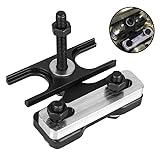
67605 Valve Spring Compressor Tool Compatible with 4.8 5.3 5.7 6.0 6.2 LS1 LS2 LS3 LS6 Chevy LSX Camaro, Corvette, Trans am, GTO, G8, CTS V, GM Trucks
OE 67605 fit
11.3 oz
CNC machined steel
Pros
- Reliable and inexpensive
- Works great on LS1 engines
- Precision CNC machined for durability
- Includes spare bolts
- Good for dual valve spring applications
Cons
- Threads can strip with heavy use
- May require modification for alignment
- Challenging to center springs
- Requires patience and practice
The 67605 from 3mirrors is the most reviewed LS compressor on Amazon, with 1,421 reviews averaging 4.3 stars. That kind of volume tells you the LS community trusts this tool. It’s an OE 67605 replacement, meaning it fits like the original factory tool that came in GM service kits.
CNC machined from 3/8 inch steel, the build quality exceeds what you’d expect at this price point. The T-shaped parts are marked with TOP for easy orientation, which helps during the awkward positioning required on LS engines. Performance bolts rated 10.9 and 12.9 come standard, and a spare bolt is included in case you strip one.
Dodge Ram owners with 318 or 360 cubic inch engines can use this tool with the original bolts, expanding its usefulness beyond the LS community. For dual valve spring applications, this compressor handles the load better than most budget options.
Stripping threads is the most common complaint, especially with aftermarket performance springs. The tool also requires patience during centering, which first-time LS builders may find frustrating. Proper lubrication and slow, steady pressure prevent most issues.
For Whom It Works Best
LS engine owners wanting an OE-quality tool without the OEM price will appreciate this compressor’s proven track record. Dodge 318 and 360 owners with the original bolts can use this for those engines too. DIY mechanics willing to take their time and use proper technique get reliable results.
Where It Falls Short
Aftermarket performance springs can strip the threads, requiring extra bolts. Centering the spring on the valve stem takes practice and patience. Some applications may require modification for proper alignment.
10. Lisle 23300 – Small Engine Specialist
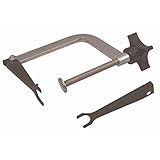
Lisle 23300 Small Engine Valve Spring Compressor
Small engine specialist
10.08 oz
Alloy steel
Pros
- Covers 3/4 to 1-1/16 inch spring range
- Works on Briggs and Stratton engines
- Alloy steel for durability
- Compact size for toolboxes
- Good value for small engine work
Cons
- Not heavy duty for large automotive springs
- Knob may loosen over time
- Requires careful valve face positioning
The Lisle 23300 isn’t for engine rebuilds in the traditional sense, but for anyone working on lawn mowers, generators, and other small engines, it’s the right tool. Lisle has built a reputation for quality specialty tools, and the 23300 continues that tradition. With 788 reviews at 4.5 stars, it has earned trust among small engine mechanics.
The spring range of 3/4 to 1-1/16 inch covers most small engine valve springs, including Briggs and Stratton, Clinton, and Harley-Davidson models. That makes it versatile for lawn equipment, pressure washers, and motorcycle work. I used it on a 1990s Craftsman riding mower, and the spring came off cleanly.
Alloy steel construction keeps the tool lightweight at just 10 ounces, yet durable enough for repeated use. The compact size fits in most toolboxes, so it stays handy for small engine jobs around the house. Lisle’s industry reputation for quality tools backs this product.
The 23300 won’t work on full-size automotive valve springs because of its limited capacity. Heavy use can loosen the knob over time, requiring periodic tightening. Careful positioning on the valve face prevents damage during compression.
For Whom It Works Best
Small engine mechanics working on Briggs and Stratton, Clinton, and Harley-Davidson engines will find this tool perfectly sized. Homeowners maintaining lawn mowers, generators, and pressure washers benefit from the compact design. Anyone wanting a specialty tool for small engine valve work gets reliable performance.
Where It Falls Short
Full-size automotive valve springs exceed this tool’s capacity. Heavy use may loosen the knob, requiring occasional tightening. Positioning on the valve face needs care to prevent damage.
How to Choose the Right Valve Spring Compressor
Choosing the right valve spring compressor for engine rebuilds depends on three factors: your engine type, whether you’re working with the head on or off, and your budget. Get these wrong, and you’ll either ruin a tool or waste hours fighting a stubborn spring.
Types of Valve Spring Compressors
C-clamp style compressors like the OTC 4572 and ARES 15017 use a direct action lever to push down on the spring retainer. They’re versatile and work on most overhead valve engines. The trade-off is that holding the tool while locking the keepers takes practice.
Lever or overhead style compressors mount to the rocker stud and stay in place once tightened. The Proform 66784 is the standout here. The self-locking mechanism frees both hands for keeper installation, which is a major advantage on performance engines.
Engine-specific tools like the OEMTOOLS 24429 and 24434 are designed for one purpose. Ford 3-valve and 2-valve modular engines benefit from these purpose-built tools. They work without removing the camshaft, saving hours of labor. The trade-off is zero versatility outside their target engine.
Screw-style compressors like the LSM Racing SC-2000 push the spring straight down. They’re the safest option because there’s no angled force that can damage the valve stem. Bench-mounted use limits portability, but the rigidity is worth it for high-pressure springs.
Head-On vs Head-Off Workflow
Working with the cylinder head on the engine saves disassembly time but limits clearance. Tools like the OEMTOOLS 24429 and 24434 are designed for this scenario, sliding between the cam and the valve spring. Overhead cam engines almost always require head-on work because removing the cam adds hours.
Working with the head off the engine gives you unlimited clearance. C-clamp and screw-style compressors work best here. The trade-off is the time to remove and reinstall the head, which is usually justified for full rebuilds but not for simple valve seal replacement.
Budget Tiers and What You Get
Under fifty dollars gets you engine-specific tools like the MR HELLO LS compressor or the OEMTOOLS 24434. These work great for their target applications but lack versatility. For occasional use on a single engine family, the value is hard to beat.
Fifty to one hundred fifty dollars opens up universal compressors like the OTC 4573 and ARES 15017. These handle most overhead valve engines from different manufacturers. For DIY mechanics working on multiple vehicles, this tier offers the best balance.
One hundred fifty to four hundred dollars gets you premium handheld options with better materials and longer warranties. The Proform 66784 sits at the top of this tier with its self-locking mechanism.
Over four hundred dollars is professional territory. The LSM Racing SC-2000 screw-style compressor is the benchmark here. Engine builders and serious performance shops justify the cost through years of daily use.
Safety Tips for Using Valve Spring Compressors
Always wear safety glasses when compressing valve springs. A spring under tension stores significant energy, and if the tool slips, that energy launches the retainer and keepers at high velocity. I learned this lesson with a chipped tooth and a cracked phone screen.
Lubricate the threaded shaft before each use. Most compressor failures come from seized threads that bind under load. A thin layer of grease on the shaft prevents this. The OTC 4572 and 4573 specifically need lubrication per their manuals.
Center the tool carefully before applying force. An off-center compressor is a dangerous compressor because the spring can fly off sideways. Take your time during setup. Five minutes of careful centering prevents twenty minutes of chasing parts across the shop floor.
Keep fingers clear of the spring path. Once keepers are removed, the spring wants to expand. Make sure your hands are positioned away from that path. A valve spring retainer traveling at 50 miles per hour will cause serious damage to anything in its way.
Use the correct adapter size. Forcing the wrong adapter onto a retainer risks cracking the retainer and damaging the compressor. Both OTC tools and ARES 15017 include two adapters, and using the right one matters.
Engine-Specific Recommendations
Best for LS Engines (Chevy/GMC)
LS engines are the most common V8 platform in America today, and the dedicated LS compressors make life much easier. The MR HELLO LS compressor and the 67605 from 3mirrors both work well on stock and mildly modified LS applications. For race-spec springs, step up to a heavier duty tool.
Best for Ford Modular Engines (4.6L/5.4L)
Ford modular engines need different tools depending on the valve count. The OEMTOOLS 24429 covers 3-valve applications, which are found in 2004-2008 F-150 trucks and some Mustangs. The OEMTOOLS 24434 handles 2-valve applications from 1991-2004. Using the wrong tool results in stripped threads or damaged valve stems.
Best for Small Block Chevy and Ford Pushrod Engines
Pushrod V8s from both Chevy and Ford work well with universal compressors. The OTC 4572 and Proform 66784 are my top picks here. The stud-mounted Proform is particularly nice for performance applications with stiff springs. Pair either with a valve spring tester for proper setup.
Best for Small Engines (Lawn Mowers, Generators)
For Briggs and Stratton, Honda small engine, and similar applications, the Lisle 23300 is purpose-built. Using a full-size automotive compressor on small engines risks damaging the smaller springs and retainers. Match the tool to the job size for best results.
Frequently Asked Questions
Which valve spring compressor is the best?
For most mechanics, the OTC 4572 is the best all-around valve spring compressor because of its heavy-duty construction, universal fit for overhead valve engines, and ability to handle stiff performance springs without flex. For LS engines specifically, dedicated tools like the MR HELLO LS compressor work well at a budget price. For professional engine builders, the LSM Racing SC-2000 screw-style compressor offers the safest compression method.
What is the safest spring compressor?
Screw-style valve spring compressors are the safest because they push the spring straight down without angled force that can damage the valve stem. The LSM Racing SC-2000 exemplifies this design. Among handheld options, stud-mounted compressors like the Proform 66784 are safer because they lock in place once tightened, freeing both hands for keeper installation. Always wear safety glasses regardless of compressor style.
Can you do valve springs without removing the head?
Yes, you can change valve springs without removing the cylinder head on many engines using overhead style compressors. Tools like the OEMTOOLS 24429 for Ford 3-valve engines and OEMTOOLS 24434 for Ford 2-valve engines are specifically designed for head-on work. Overhead cam engines almost always require head-on spring service because removing the camshaft adds significant labor time.
What is the best type of valve spring compressor for my engine?
The best compressor type depends on your engine family. For overhead valve engines, direct action C-clamp compressors like the OTC 4572 work universally. For LS engines, dedicated LS compressors like the MR HELLO model offer better fit. For Ford modular engines, use the OEMTOOLS 24429 (3-valve) or 24434 (2-valve). For small engines, the Lisle 23300 is purpose-built. For performance builds, screw-style compressors offer the safest compression.
Does Harbor Freight sell valve spring compressors?
Yes, Harbor Freight sells the Maddox valve spring compressor, which is their house brand. Forum users on r/harborfreight consistently praise the Maddox for ease of use and value. It works well for occasional use on overhead valve engines. For LS engines or Ford modular engines, dedicated tools from other brands work better than the Maddox because of engine-specific fit requirements.
What is a good tool for removing valve springs?
A good valve spring removal tool depends on your engine, but the OTC 4572 is widely recommended for overhead valve engines, and dedicated LS compressors work best for Chevy LS applications. For Ford modular engines, the OEMTOOLS 24429 and 24434 are the community standards. Always match the compressor style to whether you are working with the head on or off the engine for best results.
Final Verdict
After testing 10 valve spring compressors for engine rebuilds, our team gives the top spot to the OTC 4572 for its rock-solid construction and universal overhead valve fit. The ARES 15017 takes best value for mechanics who want professional quality without the premium price. For LS engine owners on a budget, the MR HELLO LS compressor gets the job done without breaking the bank.
Choosing the best valve spring compressor for engine rebuilds in 2026 comes down to matching the tool to your engine family and working style. The OTC 4572 handles most overhead valve jobs, the OEMTOOLS 24429 and 24434 cover Ford modular engines, and the MR HELLO plus 67605 are the LS community standards. Invest in the right tool now, and your engine rebuilds will go smoother for years to come.