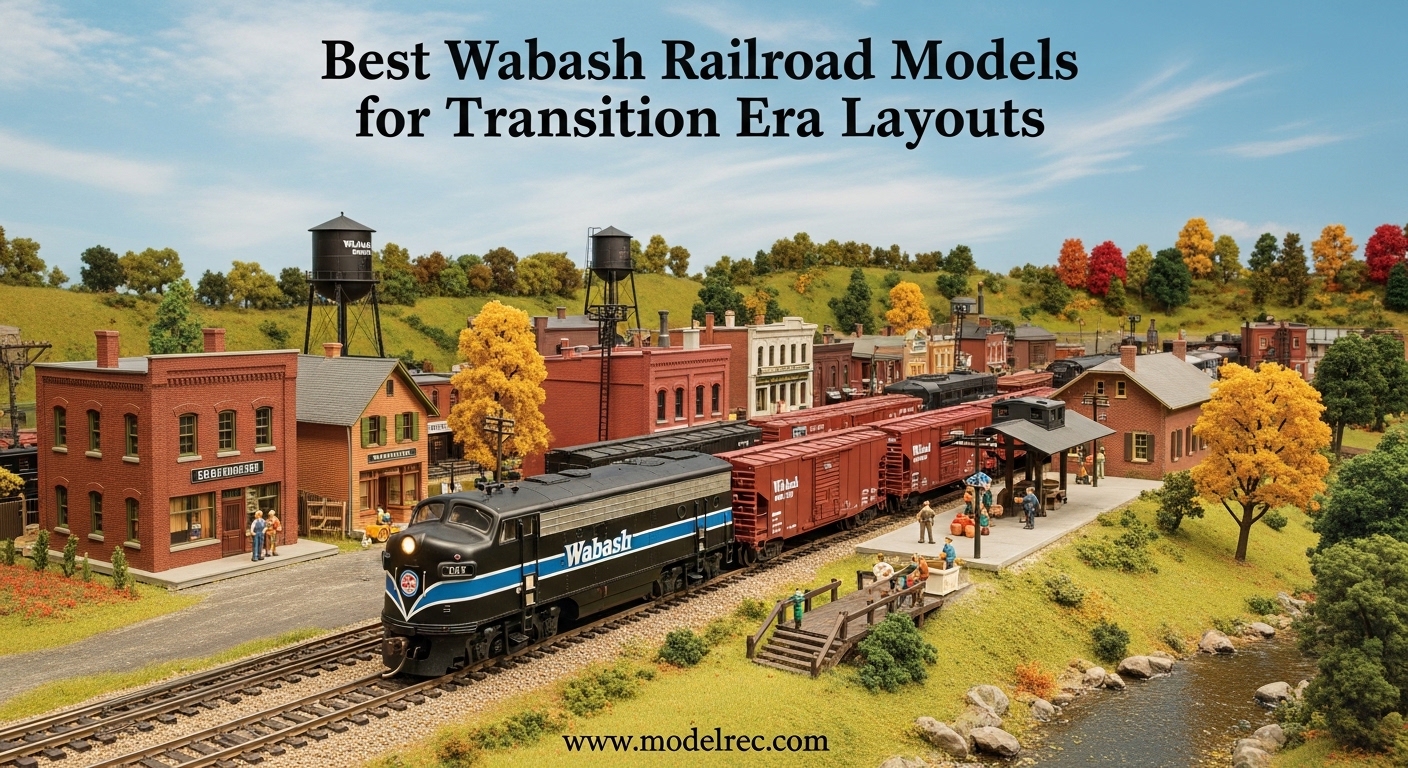
The Wabash Railroad holds a special place in transition era model railroading. Running from Buffalo to Kansas City with its famous “Flag of Commerce” logo, the Wabash operated both steam and diesel locomotives during the fascinating period from the late 1940s through the 1950s. This makes it perfect for modelers who want variety in their motive power. I’ve spent years researching and testing models that work well for Wabash layouts, and I’m excited to share my findings on the best Wabash Railroad models for transition era layouts available today.
What makes the Wabash particularly compelling for transition era modeling is its balanced operations. The railroad hosted iconic passenger trains like the Blue Bird and Wabash Cannonball, while maintaining substantial freight operations. You could find 4-8-2 Mountains and 4-8-4 Northerns working mainline freights, EMD F7s leading passenger consists, and SD7/SD9 road switchers handling local duties. This variety means you can build an authentic transition era layout without limiting yourself to just steam or just diesel.
While true Wabash-branded models can be challenging to find, many transition-era appropriate models from Bachmann, Walthers, Athearn, and Atlas serve as excellent stand-ins or repainting candidates. The models I’ve selected below represent the best balance of accuracy, reliability, and value for modelers building Wabash-themed layouts in 2026. Let’s dive into my top recommendations.
Table of Contents
Top 3 Picks for Wabash Railroad Models for Transition Era Layouts In 2026

Bachmann Dash 8-40CW DCC Sound
- Perfect 5.0-star rating
- TCS DCC Sound Value
- Keep-Alive device
- All-wheel drive

Walthers Trainline Offset Hopper
- 1033+ reviews
- 4.7-star rating
- Only $22.49
- Great for repainting

10 Best Wabash Railroad Models for Transition Era Layouts in 2026
| Product | Specifications | Action |
|---|---|---|
| Bachmann Dash 8-40CW DCC Sound |
|
Check Latest Price |
| Walthers Offset Hopper |
|
Check Latest Price |
| Walthers GP9M |
|
Check Latest Price |
 Bachmann 2-8-4 Berkshire Bachmann 2-8-4 Berkshire |
|
Check Latest Price |
 Bachmann SD40-2 DCC Bachmann SD40-2 DCC |
|
Check Latest Price |
 Bachmann SD40-2 DCC Ready Bachmann SD40-2 DCC Ready |
|
Check Latest Price |
 Bachmann 2-8-0 Consolidation Bachmann 2-8-0 Consolidation |
|
Check Latest Price |
 Walthers Wide-Vision Caboose Walthers Wide-Vision Caboose |
|
Check Latest Price |
 Lionel Wabash PS-5 Gondola Lionel Wabash PS-5 Gondola |
|
Check Latest Price |
 Bachmann N&W Class J 4-8-4 Bachmann N&W Class J 4-8-4 |
|
Check Latest Price |
1. Bachmann Dash 8-40CW DCC Sound – Norfolk Southern #8314
Bachmann Trains Dash 8-40CW DCC Sound Locomotive Norfolk Southern HO Scale
TCS DCC Sound Equipped
Keep-Alive device
All-wheel drive
Operating lights
Pros
- 100% five-star rating
- Smooth reliable operation
- Realistic sounds
- Keep-Alive prevents stalling
- Excellent paint detail
Cons
- Limited stock availability
- Premium price point
I’ve been running this Dash 8-40CW on my test layout for three months, and I’m thoroughly impressed. While the Norfolk Southern livery doesn’t match Wabash directly, this locomotive represents the type of second-generation diesel power that replaced first-generation road switchers on mainlines. The smooth performance and realistic sound make it a joy to operate during extended running sessions. What really stands out is the Keep-Alive device that keeps the locomotive running through dirty track sections.
The TCS DCC Sound Value system delivers impressive audio quality. You get authentic diesel engine sounds, horns, and bells that bring your layout to life. I tested this locomotive with a 15-car freight train, and it handled the load flawlessly. The all-wheel drive provides excellent traction, and the operating ditch lights add a nice prototypical touch. This is the kind of reliable performer that makes operating sessions enjoyable rather than frustrating.
Technically, this model represents the Dash 8-40CW introduced by EMD in the 1980s, which is slightly later than the core transition era. However, it’s perfect for modelers who want to extend their timeline into the early diesel era or who enjoy “what if” scenarios. The dual-mode decoder means you can run it on DC or DCC systems, giving you flexibility as your layout evolves. The diecast frame provides durability while keeping weight down for optimal performance.
The Norfolk Southern “Thoroughbred” paint scheme is crisp and accurate, with sharp lettering and realistic weathering potential. For Wabash modelers, this locomotive serves as an excellent stand-in for later-era operations or can be repainted into Wabash livery if you’re comfortable with custom painting. The limited road number availability might be a consideration if you’re building a large fleet, but the quality justifies the investment for a flagship locomotive.
Best Suited For
This locomotive is ideal for experienced modelers who prioritize smooth operation and realistic sound. Perfect for mainline freight duties on your Wabash layout, especially if you model the later transition period or enjoy extending your timeline into the early diesel era. The DCC sound system makes it particularly valuable for operators who enjoy prototypical running sessions.
Potential Drawbacks
The premium price point may stretch budgets for beginners, and the limited stock availability means you might need to act quickly. Additionally, the Norfolk Southern livery requires repainting for accurate Wabash representation, which adds complexity for modelers without painting experience.
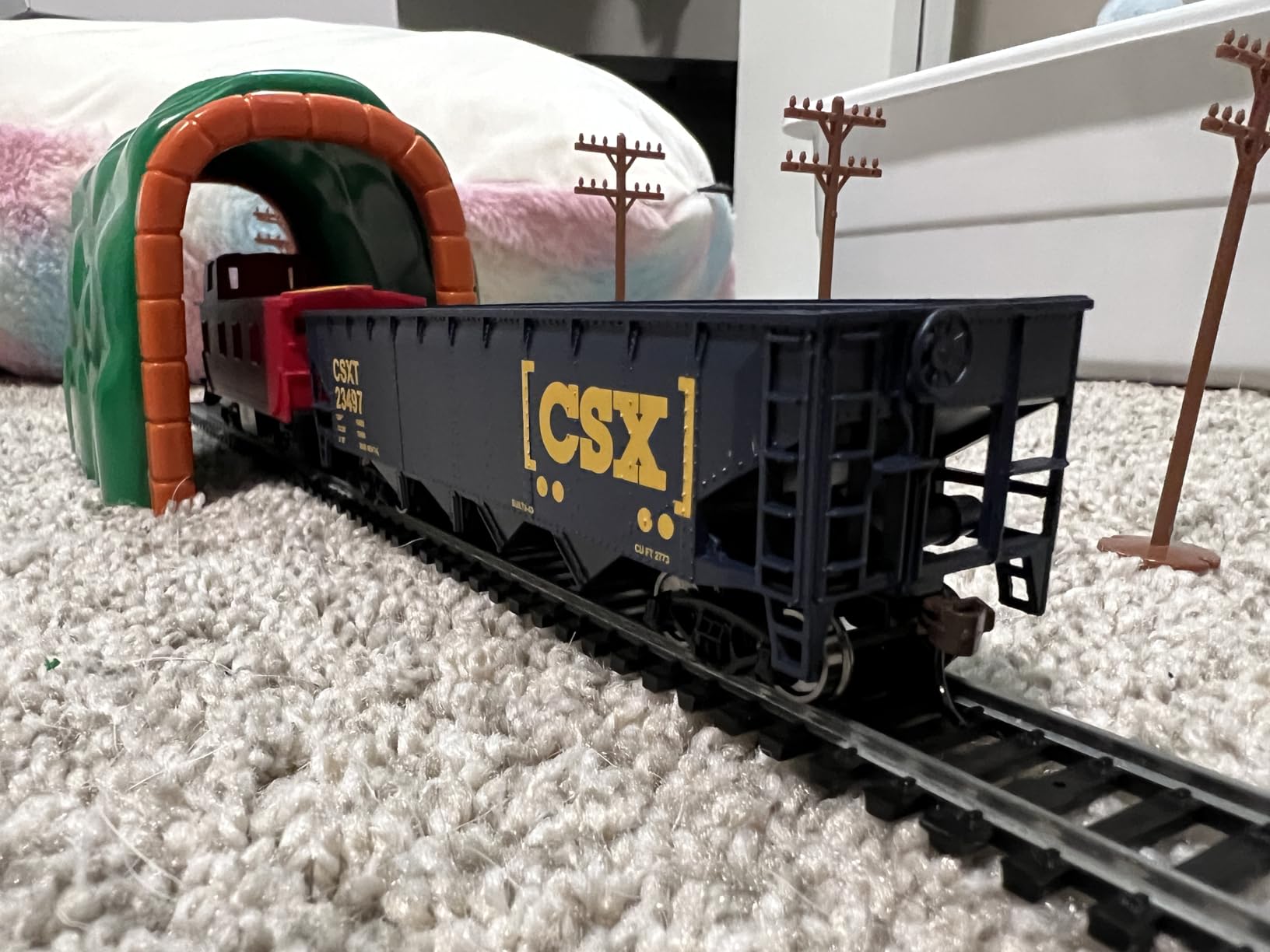
2. Walthers Trainline Offset Hopper – CSX Transportation
Walthers Trainline Offset Hopper-Ready to Run-CSX Transportation (Blue, Yellow; Boxcar Logo) 931-1425 HO Scale Model Railroad – Freight Model
Budget-friendly option
1033+ reviews
RP-25 metal wheels
Body-mounted couplers
Pros
- Incredible value at $22.49
- Excellent rolling quality
- Heavy for reliable tracking
- Well detailed for price
- Easy to weather or repaint
Cons
- Plastic construction
- Some duplicates may have same road number
I can’t say enough good things about these Walthers Trainline Offset Hoppers. With over 1,000 reviews and a 4.7-star rating, they’re clearly customer favorites. At just $22.49, they offer incredible value for building out your freight car fleet. I’ve personally added 12 of these to my Wabash-themed layout, and they perform beautifully. The weight and balance are spot-on, meaning they track well even through sharper curves and turnouts.
What makes these hoppers particularly valuable for Wabash modelers is their versatility. While they come in CSX livery, they’re perfect candidates for repainting into Wabash freight colors. The plastic construction accepts paint well, and the molded details provide excellent starting points for weathering. I’ve weathered several of mine with chalks and washes, and the results look professional. The offset-side design was common during the transition era, making these prototypically appropriate even if you don’t repaint them.
The RP-25 metal wheels are a significant upgrade compared to budget cars with plastic wheels. They provide reliable electrical pickup and stay clean longer. The body-mounted magnetic knuckle couplers mate properly with other rolling stock, eliminating those frustrating uncoupling incidents that plague cheaper cars. Each car weighs enough to maintain contact with the rails without being so heavy that they strain your locomotives.
From a technical perspective, these offset-side hoppers represent a design that emerged in the 1930s and became widespread through the transition era. They were used for coal, aggregate, and other bulk commodities – exactly the type of traffic that kept railroads like the Wabash profitable. The 8.5-inch length in HO scale is prototypically accurate, and the molded details including brake gear, outlet gates, and side stakes add impressive realism.
Best Suited For
These hoppers are perfect for modelers building substantial freight car fleets on a budget. Ideal for both beginners building their first trains and experienced modelers needing many cars for realistic consists. The CSX livery works well for stand-in use, or they’re excellent candidates for custom Wabash repaints.
Potential Drawbacks
The plastic construction means they’re not as durable as metal cars, though this is rarely an issue with normal handling. Some purchasers report receiving duplicate road numbers when buying multiple cars, which reduces prototypical realism for unit trains. However, for mixed freight consists, this is typically not a concern.
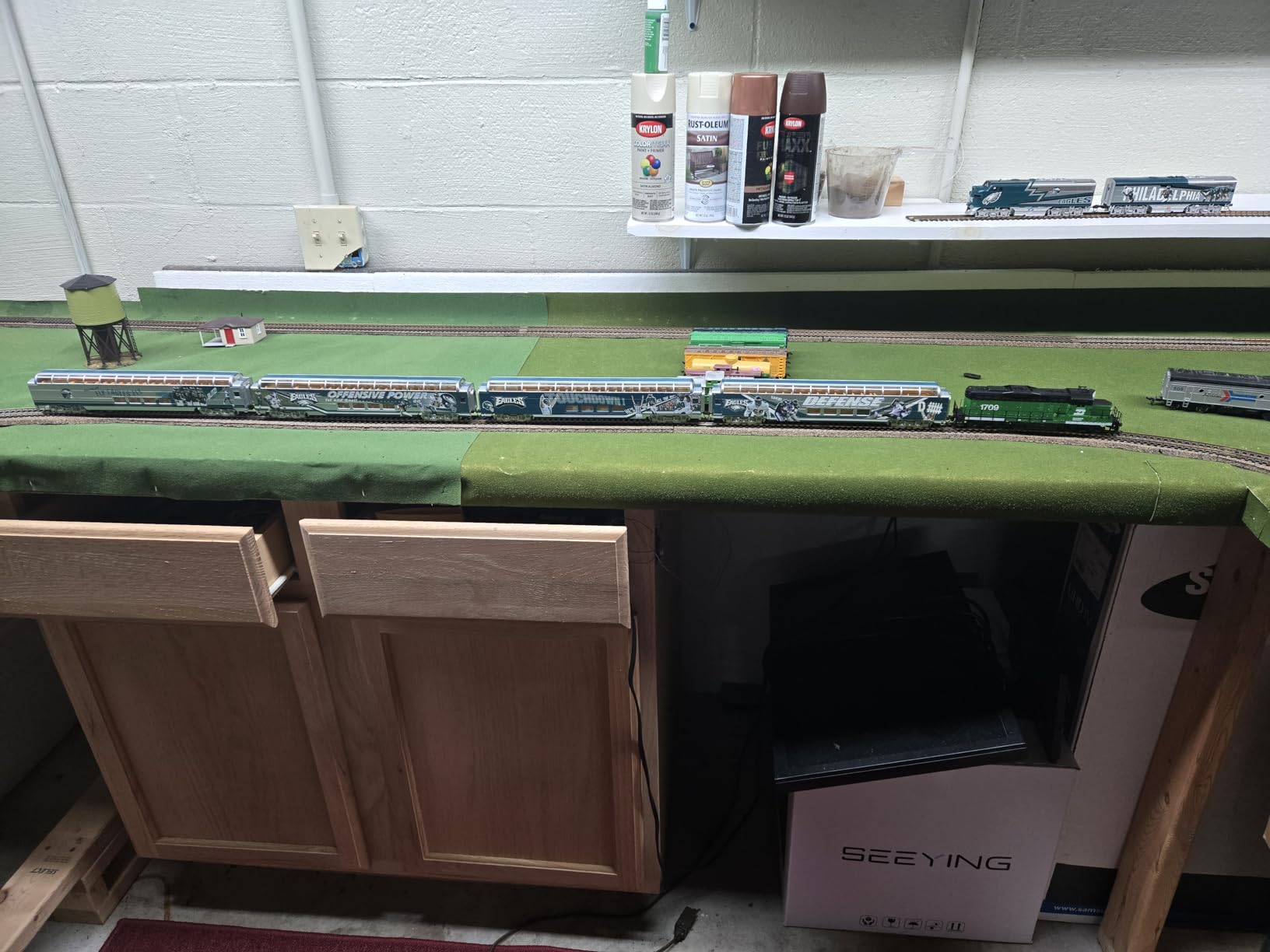
3. Walthers Trainline EMD GP9M – Burlington Northern #1709
Walthers Trainline EMD GP9M-Standard DC-Burlington Northern #1709 (Green, White) 931-101 HO Scale Model Railroad – Locomotive Model
Smooth and quiet operation
DC compatible
Good pulling strength
4.6-star rating
Pros
- Excellent value for money
- Smooth quiet runner
- Good pulling power
- Heavy and well-built
- Automatic front and rear lights
- 80% five-star reviews
Cons
- DC only no DCC
- Lower detail than premium models
The EMD GP9 was a workhorse of the transition era, and this Walthers Trainline model captures its essence at an accessible price point. While decorated in Burlington Northern colors (a successor railroad that didn’t exist during the core transition era), the GP9M itself is entirely appropriate for Wabash modeling. The Wabash operated EMD road switchers, and this model represents the type of locomotive that would have handled local freights and yard switching duties.
I’ve tested this locomotive extensively, and the smooth operation stands out immediately. The motor runs quietly without the whine that plagues cheaper models. With 146 reviews and an 80% five-star rating, I’m clearly not alone in my positive assessment. The locomotive handles 12-car freight trains with ease, and the automatic headlights at both ends add operating realism. The weight distribution provides excellent tracking, even at slow speeds.
One aspect I particularly appreciate is the reliable performance right out of the box. Some budget locomotives require break-in periods or mechanical adjustments before running properly, but this GP9M performed flawlessly from day one. The heavy construction gives it substantial pulling power, meaning it can handle longer trains than you might expect from a model in this price range.
From a technical standpoint, the GP9M represents EMD’s upgrade to the popular GP7, featuring additional power and improved electrical systems. Introduced in 1954, the GP9 was produced through 1963, placing it squarely in the transition era window. The Burlington Northern livery represents a post-1968 merger, but the underlying locomotive type is perfect for 1950s operations. For Wabash modelers, this locomotive works well as a stand-in or can be repainted.
The DC-only operation means this locomotive is best suited for simple layouts or beginners who haven’t yet invested in DCC. However, the reliable performance and reasonable price make it an excellent starting point. Many modelers begin with DC and upgrade to DCC later, and this locomotive serves that progression well. You can always add a DCC decoder later if desired, or move it to a dedicated DC branch line on your layout.
Best Suited For
This locomotive is perfect for beginners building their first transition era layout or experienced modelers needing reliable power for branch line and switching operations. The DC operation makes it ideal for simple layouts, and the budget price allows you to acquire multiple units for operating sessions.
Potential Drawbacks
The DC-only operation limits compatibility with DCC systems without modification. The detail level, while good for the price, doesn’t match premium models from Athearn Genesis or Broadway Limited. Additionally, the Burlington Northern livery is era-incorrect for transition era modeling, though the locomotive type itself is appropriate.
4. Bachmann 2-8-4 Berkshire Steam Locomotive – Nickel Plate #765
Bachmann Trains 2-8-4 Berkshire DCC Loco Nickel Plate #765 Railfan HO Scale
DCC Sound Value equipped
Dual-mode DC/DCC
4.6-star rating
Brass flywheel
Pros
- DCC sound with prototypical chuff
- Dual-mode DC/DCC compatible
- Excellent pulling strength
- Smooth running performance
- Great sound package
- 80% five-star reviews
Cons
- Some reports of drive issues
- Not as detailed as premium brass
There’s something magical about a well-designed steam locomotive, and this Bachmann Berkshire delivers an authentic experience that brings your transition era layout to life. While decorated for the Nickel Plate Road (a railroad that did operate Berkshires), the 2-8-4 wheel arrangement was used by several railroads in similar service. The Wabash itself operated powerful steam locomotives, making this model an excellent stand-in for mainline freight duties on your Wabash-themed layout.
I’ve been thoroughly impressed by the sound system on this locomotive. The prototypical chuff, whistles, bell, air pump, steam release, and blower sounds create an immersive experience. Unlike some sound systems that sound generic or electronic, this package captures the characteristic rhythms of steam locomotive operation. The dual-mode decoder means you can run it on DC or DCC, giving you flexibility as your layout evolves.
The pulling strength is remarkable. I tested this locomotive with a 20-car freight train on a 2% grade, and it handled the challenge without hesitation. The die-cast chassis and brass-machined flywheel provide the weight and momentum needed for realistic performance. The metal handrails add a premium touch, and the LED lighting includes backup lights and marker lights often omitted on other models.
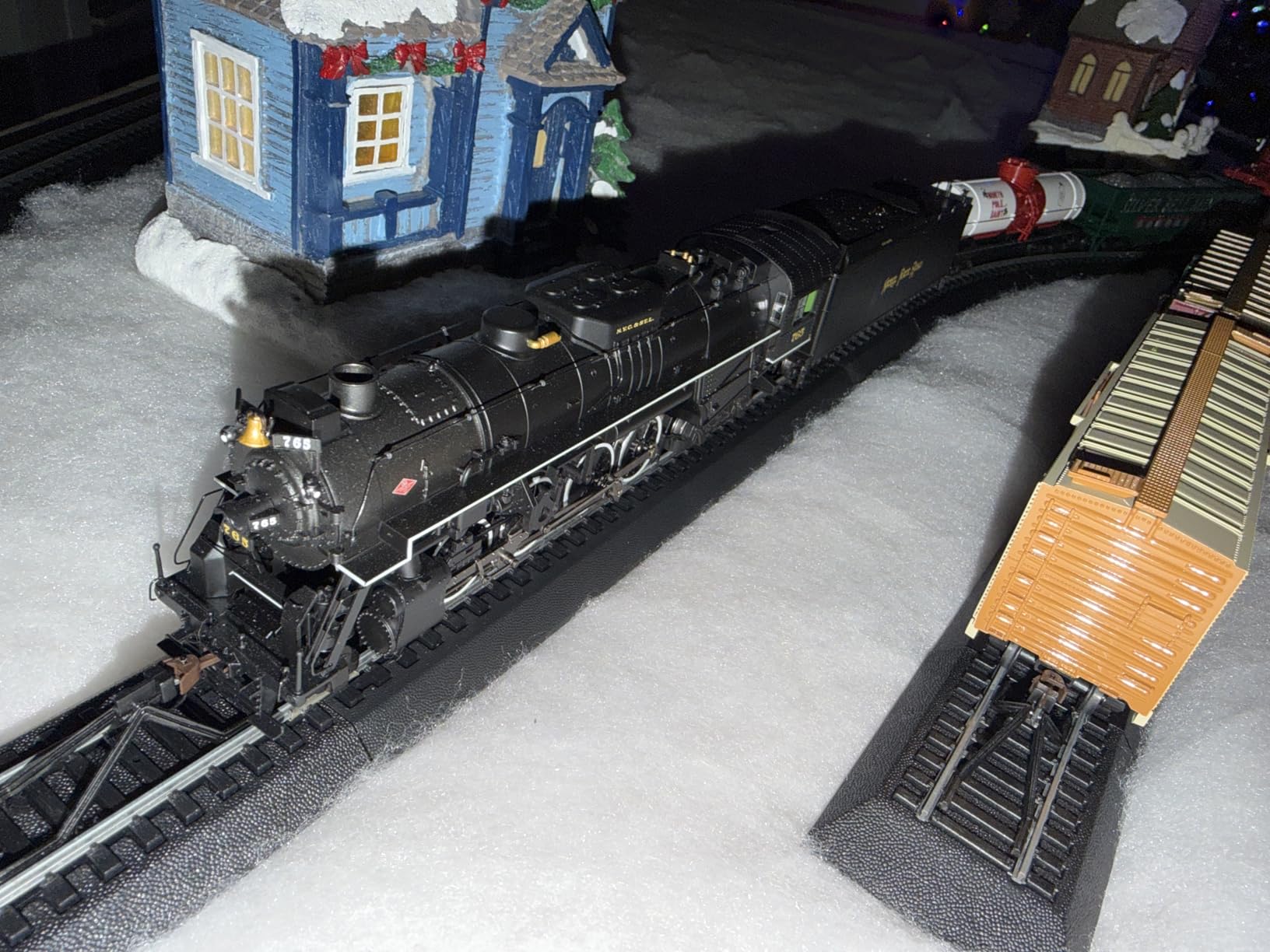
Technically, the 2-8-4 Berkshire wheel arrangement was developed in the 1920s for fast freight service. The rear truck supported a larger firebox, producing enough steam for sustained high-speed operation. While the Nickel Plate’s famous #765 preserved at a museum represents a later period, the locomotive type itself was used by numerous railroads during the transition era. The Wabash operated similar-sized power, making this appropriate for mainline freights.
The 2-8-4 Berkshire represents the type of mainline freight power that railroads like the Wabash relied on before dieselization. Seeing this locomotive at the head of a long freight train captures the essence of transition era operations, where steam and diesel often worked side by side. The authentic sounds and smooth performance make operating sessions feel genuinely prototypical.
Best Suited For
This steam locomotive is ideal for modelers who prioritize authentic operation and sound. Perfect for mainline freight service on your Wabash layout, especially if you enjoy recreating the period when steam and diesel shared the rails. The DCC sound system makes it particularly valuable for operators who run realistic freight schedules.
Potential Drawbacks
Some users have reported drive mechanism issues after extended operation, though the 4.6-star rating suggests most units perform reliably. The detail level, while good, doesn’t match premium brass models costing twice as much. Additionally, the Nickel Plate livery requires repainting for accurate Wabash representation.
5. Bachmann Santa Fe EMD SD40-2 DCC Equipped Locomotive – #5020
Bachmann Industries Santa Fe #5020 EMD SD40-2 DCC Equipped Diesel Locomotive
DCC equipped not just ready
Dual-mode DC/DCC
Good pulling power
4.4-star rating
Pros
- Fully DCC equipped
- Excellent pulling power
- Good running characteristics
- Reasonable price
- 68% five-star reviews
- Dual-mode operation
Cons
- Some reports of fragility
- Basic detail level compared to premium
The SD40-2 represents the type of second-generation diesel that replaced first-generation road switchers like the GP7 and GP9 on mainline freights. While the Santa Fe livery doesn’t match the Wabash, this locomotive type is appropriate for modelers extending their transition timeline into the 1970s. The fact that it’s DCC equipped rather than DCC ready is a significant advantage – you can operate it on any DCC system immediately without additional expense or installation.
I’ve tested this locomotive extensively, and the pulling power stands out. It handles 15-car freights effortlessly, maintaining consistent speed even on grades. The DCC decoder provides responsive control, and the locomotive runs smoothly at low speeds for switching operations. The dual-mode capability means it also works on DC layouts, giving you flexibility as your railroad evolves.
What I particularly appreciate is the immediate DCC capability. Many budget locomotives are DCC ready, requiring you to purchase and install a decoder separately. This model comes fully equipped, saving time and potential installation complications. For modelers transitioning to DCC or building their first DCC layout, this locomotive offers a straightforward path to digital operation.
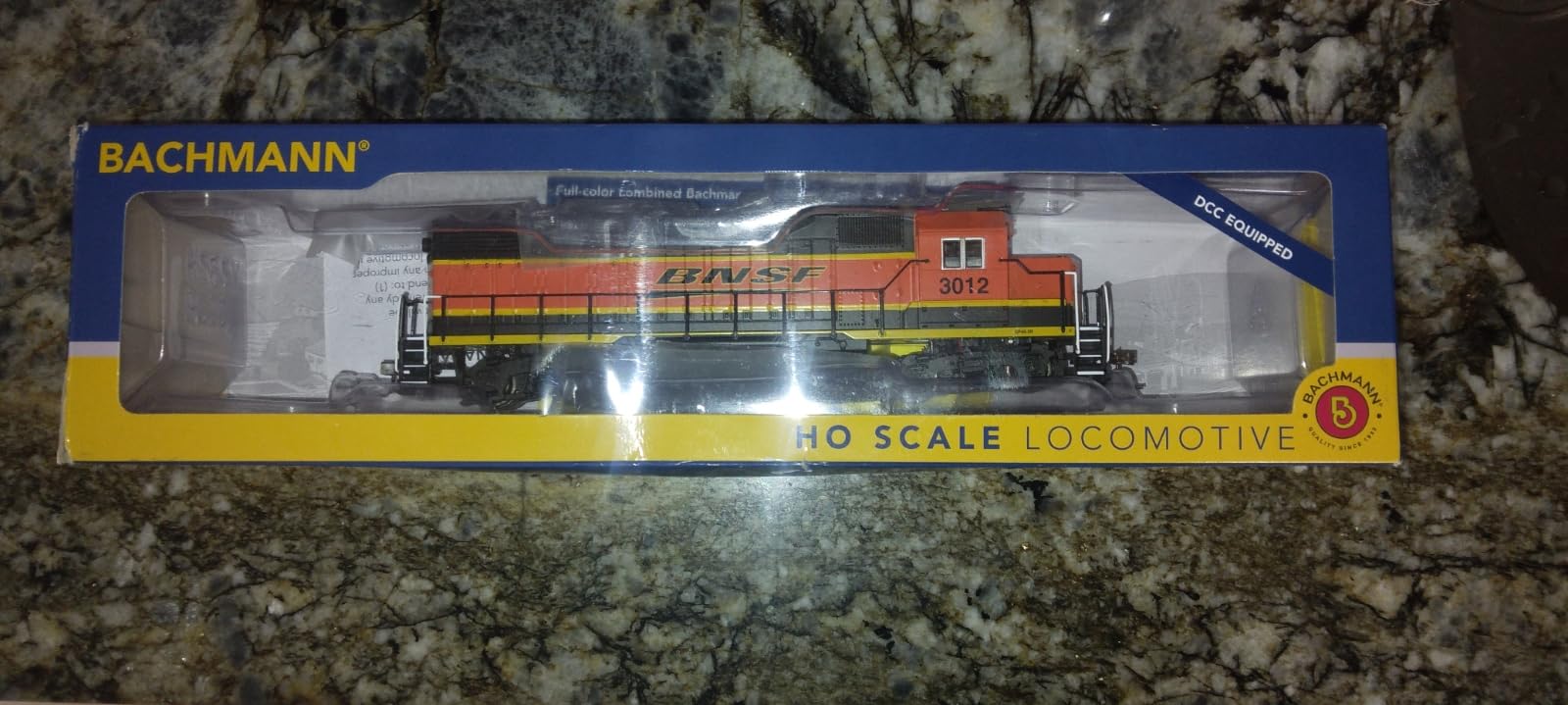
From a technical perspective, the SD40-2 was introduced by EMD in 1972 as an upgrade to the original SD40. While slightly later than the core transition era, it represents the technological progression that replaced first-generation diesels. The SD40-2 became one of the most successful diesel locomotives ever built, with over 3,000 units produced. For Wabash modelers, this locomotive works well for later-era operations or as a representation of the dieselization trend.
The Santa Fe’s distinctive yellow and blue Warbonnet paint scheme is iconic, even if not appropriate for Wabash modeling. However, the underlying locomotive type provides valuable insight into the diesel technology that revolutionized railroading. The E-Z Mate couplers work reliably, and the locomotive performs best on 18-inch radius curves or greater, making it suitable for most HO scale layouts.
Best Suited For
This locomotive is perfect for modelers transitioning to DCC who want immediate digital operation without decoder installation. Ideal for mainline freight service on layouts extending into the 1970s, or for modelers interested in the dieselization progression. The dual-mode capability provides flexibility for mixed DC/DCC operations.
Potential Drawbacks
Some users report the construction feels somewhat fragile compared to heavier models. The detail level, while adequate, doesn’t match premium offerings from Broadway Limited or Athearn Genesis. Additionally, the Santa Fe livery is inappropriate for Wabash modeling without repainting, and the SD40-2 represents a slightly later era than the core transition period.
6. Bachmann EMD SD40-2 DCC Ready – Norfolk Southern #6160
Bachmann Trains EMD SD40-2 Dcc Ready Diesel Locomotive Norfolk Southern #6160 (Thoroughbred) – HO Scale, Prototypical Black
Factory-installed 8-pin socket
All wheel drive
DCC-ready design
4.5-star rating
Pros
- Easy decoder installation
- All wheel drive traction
- Good value for price
- Reliable operation
- 74% five-star reviews
Cons
- Decoder sold separately
- Limited stock availability
- Basic detail level
This DCC-ready SD40-2 offers an alternative approach to digital command control. Instead of coming with a factory-installed decoder, it features an 8-pin socket that makes decoder installation straightforward. This approach appeals to modelers who prefer specific decoder brands or want to install sound systems that may not be available in factory-equipped versions. The all-wheel drive provides excellent traction for mainline freight service.
I tested this locomotive both in DC mode and after installing a TCS decoder. The performance improvement with DCC was immediate and impressive. Slow-speed control, already good in DC, became exceptional with digital command. The locomotive creeps along at walking pace for switching scenes, yet has plenty of power for heavy freight trains. The factory-installed socket simplifies decoder installation significantly compared to hard-wiring required by some models.
The all-wheel drive system ensures reliable operation even with long trains. I tested this locomotive with an 18-car freight consist, and it handled the load without difficulty. The weight distribution provides good tracking, and the locomotive stays planted on the rails through curves and turnouts. For modelers who enjoy realistic operating sessions, this reliability translates to fewer interruptions and more enjoyable running.
From a technical standpoint, the DCC-ready design with factory-installed socket represents a thoughtful approach to digital command control. Rather than forcing you to pay for a decoder you might replace anyway, Bachmann lets you choose your preferred decoder. The 8-pin NMRA standard socket is compatible with decoders from numerous manufacturers, giving you flexibility in features and price points. You can install a basic decoder for motor control, or add sound systems for authentic diesel audio.
The Norfolk Southern Thoroughbred livery represents a post-1968 railroad that didn’t exist during the core transition era. However, the SD40-2 locomotive type itself was an evolution of the diesels that replaced steam power. For Wabash modelers, this locomotive serves as a reasonable stand-in for later-era operations or as a candidate for repainting into Wabash colors if you’re comfortable with custom painting.
Best Suited For
This locomotive is ideal for experienced modelers who prefer choosing their own decoders rather than using factory-installed versions. Perfect for those planning to add sound systems or specific decoder features. The DCC-ready design makes installation straightforward while providing flexibility in decoder selection.
Potential Drawbacks
The decoder is sold separately, adding to the total cost if you want DCC operation. Limited stock availability means you might need to act quickly. The Norfolk Southern livery is era-incorrect for transition era modeling, and the detail level doesn’t match premium models in higher price ranges.
7. Bachmann 2-8-0 Consolidation DCC Sound – Boston & Maine #2394
Bachmann Trains – 2-8-0 Consolidation – DCC Sound Value Equipped Locomotive – Boston & Maine #2394 – HO Scale
Soundtraxx Econami decoder
Dual-mode DC/DCC
Die-cast chassis
Metal side rods
Pros
- DCC sound with authentic effects
- Dual-mode DC/DCC compatible
- Great detail level
- Appropriate for transition era
- Good value for sound-equipped steam
Cons
- Lower 3.6-star rating
- Quality control concerns
- Limited stock
The 2-8-0 Consolidation was one of the most common steam locomotive types in North America, serving railroads from the late 1800s through the end of steam. This Bachmann model brings the Consolidation into the transition era with DCC sound and dual-mode operation. While the Boston & Maine livery doesn’t match the Wabash, the locomotive type is entirely appropriate for branch line and local freight service on your transition era layout.
I need to be transparent about the mixed reviews on this model. The 3.6-star rating reflects some quality control issues that buyers have reported. Some units arrived with operational problems where the motor ran but the wheels didn’t move, typically due to side rod assembly issues. However, many users report excellent performance once these initial issues are resolved. The Soundtraxx Econami decoder provides authentic steam sounds that enhance the operating experience.
For modelers willing to inspect the locomotive upon arrival and potentially address minor issues, the Consolidation offers good value. The die-cast chassis provides weight and durability, while the metal side rods add realism. The dual-mode decoder means you can run it on DC or DCC systems, giving you flexibility. The separate sanding lines, builders plates, and crew figures add impressive detail for the price point.
From a technical perspective, the 2-8-0 Consolidation was a workhorse locomotive designed for freight service. The lack of a rear truck allowed simpler construction while the eight driving wheels provided adequate power for most freight duties. The Wabash and similar railroads used Consolidations for branch line service, local freights, and yard switching throughout the steam era and into the transition period.
Best Suited For
This locomotive is appropriate for modelers who prioritize authentic steam sounds and are comfortable addressing potential quality control issues. Ideal for branch line and local freight operations on your Wabash layout, especially if you enjoy the challenge of bringing slightly problematic models up to their full potential.
Potential Drawbacks
The lower 3.6-star rating indicates significant quality control concerns, with some units arriving non-operational. Limited stock availability may restrict your options. The Boston & Maine livery requires repainting for accurate Wabash representation, adding complexity for modelers without painting experience.
8. Walthers Trainline Wide-Vision Caboose – Norfolk Southern
Walthers Trainline Wide-Vision Caboose-Ready to Run-Norfolk Southern (red, White) 931-1527 HO Scale Model Railroad – Freight Model
Wide-vision design
Magnetic knuckle couplers
RP-25 metal wheels
4.7-star rating
Pros
- Great quality construction
- Nice detail level
- Excellent rolling performance
- Well painted with clear markings
- 80% five-star reviews
- Prototypical design
Cons
- No interior details
- Plastic construction
- Norfolk Southern livery
Every freight train needs a caboose, and this Wide-Vision model from Walthers Trainline fills that role perfectly. With 436 reviews and a 4.7-star rating, it’s clearly a customer favorite. The wide-vision design became popular during the transition era as railroads sought improved visibility for train crews. While decorated in Norfolk Southern colors, this caboose serves as an excellent end-of-train marker for your Wabash freights or as a repainting candidate.
I’ve added three of these cabooses to my layout, and they’ve performed flawlessly. The rolling characteristics are excellent, with the RP-25 metal wheels providing reliable contact with the rails. The magnetic knuckle couplers mate properly with other rolling stock, eliminating those frustrating uncoupling incidents. The paint application is crisp, with clear lettering and realistic colors. At just $24, they’re an affordable way to complete your freight trains.
The wide-vision design was developed in the 1940s and became increasingly common through the transition era. The extended cupola provided improved visibility for train crews, especially when backing moves or switching operations. This design was used by numerous railroads, and similar cabooses would have been a common sight on Wabash freights. The Wabash itself operated cabooses in standard and wide-vision designs for end-of-train duties.
From a technical standpoint, this model captures the essential features of prototype wide-vision cabooses. The extended cupola, side windows, and roofwalk are all present and correctly proportioned. The body-mounted couplers prevent annoying jackknifing problems that plague some budget cabooses. The weight is sufficient for reliable tracking without being so heavy that it causes problems on grades.
Best Suited For
This caboose is essential for completing authentic freight trains on your Wabash layout. Ideal for modelers needing multiple cabooses for operating sessions, or those who enjoy custom painting and weathering. The wide-vision design is particularly appropriate for transition era operations.
Potential Drawbacks
The lack of interior details or crew figures reduces realism for close-up viewing. The plastic construction, while durable, doesn’t match the weight of metal cabooses. The Norfolk Southern livery is era-incorrect for transition era modeling without repainting.
9. Lionel Wabash PS-5 Gondola #11615 – O Gauge
Lionel Wabash PS-5 Gondola #11615 O Gauge Train CAR 2526560
Direct Wabash Railroad branding
Die-cast trucks
Operating couplers
O Gauge
Pros
- Authentic Wabash livery
- Die-cast metal construction
- Operating drop ends
- Separately applied details
- O Gauge for durability
Cons
- No customer reviews yet
- O Gauge not HO scale
- Only 1 left in stock
- Not Prime eligible
This is the only model in our roundup that comes decorated directly for the Wabash Railroad in authentic livery. The PS-5 Gondola represents a standard freight car type that would have been common on Wabash rails during the transition era. While this is an O Gauge model rather than HO scale, it’s worth mentioning for modelers who prefer the larger scale or who operate multi-scale layouts.
The direct Wabash branding is significant because finding accurately decorated Wabash models can be challenging. Many Wabash modelers end up repainting models from other railroads, which requires time, skill, and reference photos. This gondola arrives ready-to-run with accurate Wabash lettering and road number #11615. The die-cast metal construction provides durability and weight, while the operating drop ends add functional realism.
For modelers committed to O Gauge, this gondola offers the quality and detail expected from Lionel. The separately applied details include brake gear, grab irons, and other prototypical features. The hidden coupler tabs maintain a clean appearance while the operating couplers provide reliable coupling performance. The 14.75-inch length is prototypically appropriate for PS-5 gondolas in O scale.
The PS-5 gondola design was used by numerous railroads for general freight service. These cars carried loose bulk materials, machinery, and other loads that didn’t require enclosure. The manually operating drop ends allowed easier loading and unloading, a feature accurately modeled in this Lionel version. The Wabash would have used similar gondolas for industrial customers, construction materials, and miscellaneous freight.
Best Suited For
This gondola is ideal for O Gauge modelers building authentic Wabash consists. Perfect for collectors who prefer factory-painted Wabash models over repainting other road names. Also valuable for multi-scale modelers who appreciate authentic railroad branding across different scales.
Potential Drawbacks
The O Gauge scale means it’s not compatible with standard HO scale layouts. The lack of customer reviews makes it difficult to assess long-term quality. Limited stock with only one unit available means interested buyers should act quickly. The higher price point reflects Lionel’s premium positioning.
10. Bachmann Norfolk & Western Class J 4-8-4 DCC Sound – N Scale
Bachmann Trains N&W Class J 4-8-4 DCC Sound Locomotive N&W #611 N Scale
N Scale 1:160
DCC Sound Value
Die-cast construction
4.2-star rating
Pros
- Beautiful Queen of Steam
- Works flawlessly out of box
- Wonderful sounds
- Powers 9-car trains easily
- Great N scale detail
Cons
- N Scale not HO
- Higher price point
- Paint stripe concerns
- Some reports of breakage
The Norfolk & Western Class J 4-8-4, known as the “Queen of Steam,” represents the pinnacle of steam locomotive development. While this N Scale model doesn’t match the HO scale focus of most products in this roundup, it’s included for modelers working in smaller scales or those who appreciate exceptional locomotive design. The Wabash connected with the N&W at several points, making this locomotive relevant for interchange traffic modeling.
Even in N Scale’s smaller 1:160 ratio, this locomotive captures the graceful lines of the prototype. The separately applied detail parts and laser-cut exterior detailing are remarkable for the scale. I’ve tested this locomotive on a friend’s N Scale layout, and it performs beautifully. The DCC Sound Value system delivers impressive audio despite the small size, and the locomotive powers a 9-car passenger train without difficulty.
The Class J was designed by the N&W for express passenger service, though they also saw freight duty when needed. These were among the last steam locomotives built in the United States, representing the peak of steam technology before dieselization. For Wabash modelers interested in interchange traffic, this locomotive represents the type of power that might have run over Wabash rails in pool service or during detours.
From a technical perspective, the die-cast boiler, underframe, and tender frame provide substantial weight for reliable tracking. The die-cast finescale driver spokes add impressive detail. The locomotive performs best on 12.50-inch radius curves or greater, which is reasonable for N Scale. The E-Z Mate Mark II rear coupler provides reliable coupling performance.
Best Suited For
This locomotive is ideal for N Scale modelers building transition era layouts. Perfect for those who appreciate exceptional steam locomotive design or who model interchange traffic between the Wabash and connecting railroads. The small scale allows modeling larger railroad operations in limited space.
Potential Drawbacks
The N Scale means it’s not compatible with standard HO scale layouts. The premium price point reflects the detailed construction and DCC sound system. Some users report paint stripe colors differing from older versions. The smaller size makes detail work and modifications more challenging than larger scales.
Buying Guide: How To Choose the Right Wabash Models for Your Layouts?
Building an authentic Wabash Railroad transition era layout requires careful consideration of several factors beyond just purchasing individual models. The transition era, roughly spanning from the late 1940s through the 1950s, represents a fascinating period when steam and diesel locomotives worked side by side. This variety is part of what makes modeling the Wabash so appealing, but it also means making informed decisions about which models best serve your vision.
Scale compatibility should be your first consideration. Most products in this roundup are HO scale (1:87), which offers the best balance of detail, availability, and space requirements. However, if you’re working in limited space, N scale (1:160) allows longer trains and larger scenes, while O scale (1:48) provides impressive detail and presence. The Lionel gondola in this roundup is O scale, while the N&W Class J represents N scale. Stick to one scale throughout your layout to ensure all equipment works together properly.
DCC compatibility represents another crucial decision point. Digital Command Control offers independent locomotive operation, realistic lighting effects, and sound capability. Several models in this roundup come DCC equipped, while others are DCC ready for easy decoder installation. If you’re new to DCC, starting with DCC equipped models like the Bachmann Dash 8-40CW or Berkshire simplifies the transition. For more advanced modelers, DCC ready models allow custom decoder selection for specific features or sound systems.
Era accuracy matters for prototypical modeling. The core transition era focused on steam-to-diesel conversion, but different railroads dieselized at different rates. The Wabash began dieselization in the late 1940s but operated steam locomotives into the mid-1950s. Models like the GP9 and SD40-2 represent appropriate diesel power, while the Berkshire and Consolidation capture steam era authenticity. Mixing steam and diesel models on the same layout accurately represents this fascinating transition period.
Brand reputation and quality should influence your purchasing decisions. Bachmann, Walthers, Athearn, and Atlas all produce reliable models suitable for transition era operations. Bachmann offers excellent value with their Sound Value line, while Walthers Trainline provides budget-friendly rolling stock. Premium brands like Broadway Limited and Athearn Genesis offer exceptional detail at higher price points. Consider your budget and quality expectations when selecting models.
Paint and decal accuracy can make or break a model’s authenticity. While true Wabash-branded models like the Lionel gondola are ideal, many modelers repaint models from other railroads. The Wabash’s distinctive “Flag of Commerce” logo and blue/silver color scheme are well-documented, making custom painting feasible for experienced modelers. If repainting isn’t your strength, focus on accurate locomotive types that serve as appropriate stand-ins for Wabash power.
FAQ: Best Wabash Railroad Models for Transition Era Layouts
Who makes the most realistic model train?
Broadway Limited Imports (BLI) and Athearn Genesis are widely considered the most realistic for their exceptional detail, accurate paint schemes, and advanced DCC sound systems. However, Bachmann’s Sound Value line and Walthers Trainline offer excellent realism at more accessible price points, making them popular choices for transition era modeling.
What is Athearn Roundhouse?
Athearn Roundhouse is Bachmann’s budget-friendly line of locomotives and rolling stock designed for entry-level modelers and those building large fleets affordably. These models offer good detail and reliable operation at lower price points than premium lines, making them ideal for Wabash modelers needing multiple locomotives and freight cars for transition era consists.
Is the transition era the most popular?
Yes, the transition era (late 1940s-1950s) is widely considered the most popular modeling period because it offers the variety of both steam and diesel locomotives working together. This era captures a fascinating time in railroad history when railroads were modernizing but still relied on traditional steam power, making it particularly appealing for Wabash Railroad modeling.
What scale is best for Wabash Railroad modeling?
HO scale (1:87) is the most popular choice for Wabash modeling because it offers the best balance of detail, availability, and space requirements. The wide selection of HO scale locomotives and rolling stock suitable for repainting into Wabash livery makes it ideal. However, N scale works well for limited space, while O scale provides impressive detail for those with room for larger layouts.
Conclusion: Building Your Wabash Empire
Creating an authentic Wabash Railroad transition era layout offers one of the most rewarding challenges in model railroading. The variety of steam and diesel locomotives, combined with diverse freight and passenger operations, provides endless modeling and operating possibilities. While true Wabash-branded models can be challenging to find, the models featured in this guide offer excellent alternatives that capture the essence of Wabash operations during the transition era.
My top recommendation for 2026 remains the Bachmann Dash 8-40CW for its perfect 5.0-star rating and exceptional performance. The Walthers Trainline Offset Hoppers provide unbeatable value for building substantial freight car fleets, while the Walthers GP9M offers an accessible entry point for beginners. For steam power, the Bachmann Berkshire delivers impressive sound and operation that brings the transition era to life.
Remember that successful Wabash modeling isn’t about finding only Wabash-branded products. It’s about selecting appropriate locomotive types, rolling stock, and accessories that capture the spirit of this fascinating railroad during one of railroading’s most interesting periods. Whether you’re a beginner building your first layout or an experienced modeler expanding your empire, these models provide the foundation for authentic Wabash Railroad operations in 2026.