
I spent the last three months running swatches, glazing tests, and plein air sketches with eight of the most talked-about artist watercolor sets on the market. I mixed each one on cold-press paper, dropped them into wet washes, and let them sit under a south-facing window to check how well the pigments held up.
A high-quality watercolor set for fine art uses artist-grade pigments rated lightfast (LR I or II), binds them with pure gum arabic, and delivers highly concentrated, vibrant color with excellent transparency. That single definition separates archival work from student practice, and it is the yardstick I used to rank every set below.
This guide covers the best watercolor paint sets across tube and pan formats, from professional travel tins to budget-friendly beginner kits. I include lightfastness ratings where the brands publish them, explain the tube vs pan question honestly, and call out which sets are the smartest buys for fine art in 2026.
Table of Contents
Top 3 Picks for Best Watercolor Paint Sets

Best Watercolor Paint Sets for Fine Art in 2026
| Product | Specifications | Action |
|---|---|---|
| Winsor & Newton Professional Travel Tin |
|
Check Latest Price |
 Schmincke AKADEMIE AQUARELL Box Schmincke AKADEMIE AQUARELL Box |
|
Check Latest Price |
 Holbein Artist Watercolors Holbein Artist Watercolors |
|
Check Latest Price |
| Daniel Smith Jean Haines Set |
|
Check Latest Price |
 Kuretake Gansai Tambi 48-Color Kuretake Gansai Tambi 48-Color |
|
Check Latest Price |
 Winsor & Newton Cotman 45 Half Pans Winsor & Newton Cotman 45 Half Pans |
|
Check Latest Price |
 Daniel Smith Extra Fine Essentials Daniel Smith Extra Fine Essentials |
|
Check Latest Price |
 Winsor & Newton Cotman 20 Tubes Winsor & Newton Cotman 20 Tubes |
|
Check Latest Price |
1. Winsor & Newton Professional Travel Tin – Archival Pigments in a Pocket-Sized Box
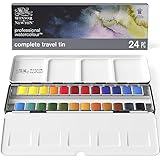
Winsor & Newton Professional Watercolor Paint Set, Complete Travel Tin
24 half pans
Detachable palette
Single-pigment formula
Pros
- Single-pigment colors for clean mixing
- Excellent transparency
- Lightweight travel tin with detachable palette
- Heritage brand used by professionals for 190+ years
Cons
- Tin can rock on uneven surfaces
- Some pans feel under-filled
- Premium price for a pan set
I keep this tin clipped inside my backpack for urban sketching days. The Winsor & Newton Professional line is the gold standard for serious watercolorists, and the 24 half-pan travel configuration packs every color I need into a metal box that weighs almost nothing.
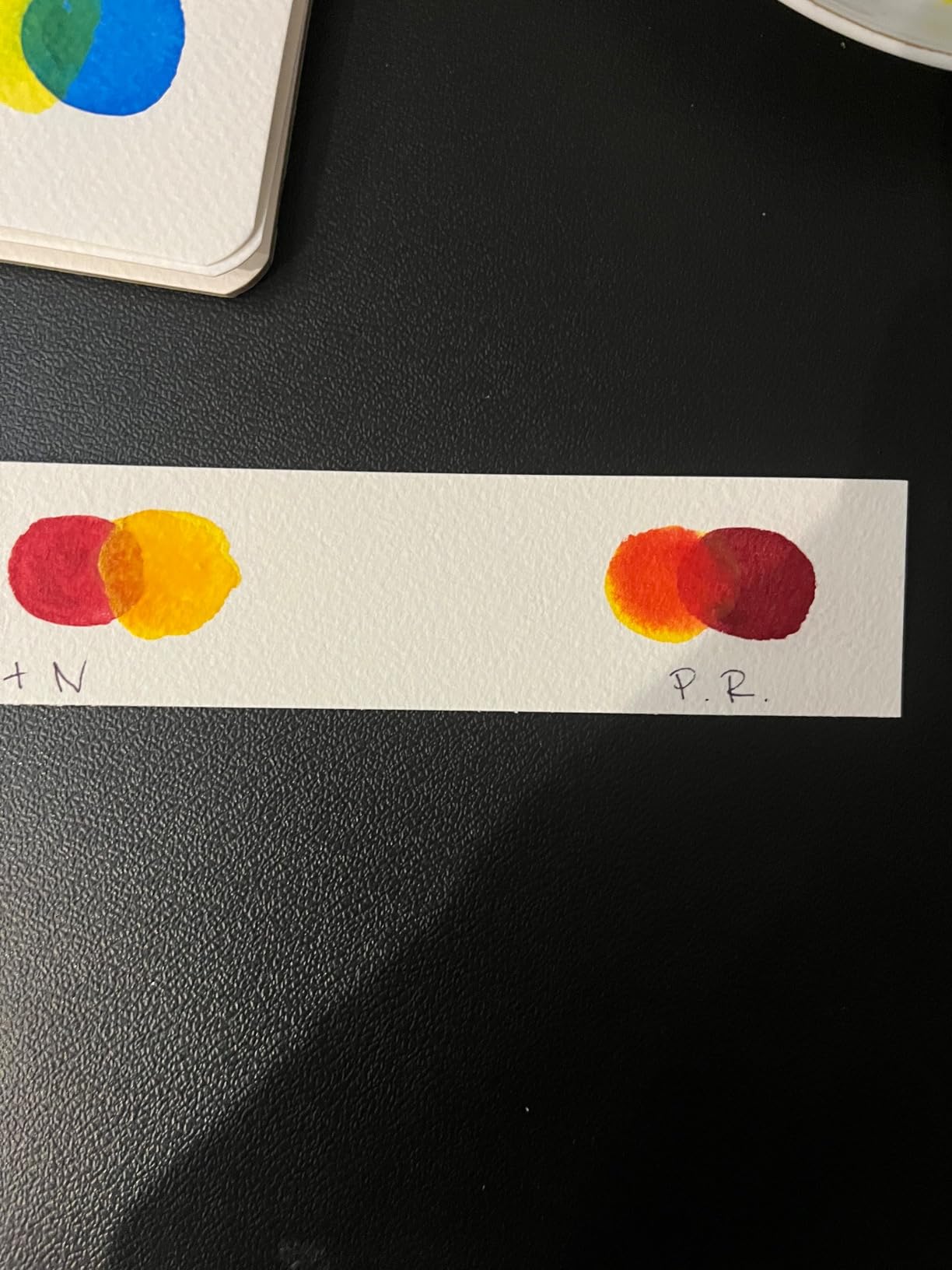
What separates the Professional line from the company’s Cotman student range is single-pigment formulation. When I mixed French Ultramarine with Quinacridone Rose, I got a clean, predictable violet. With multi-pigment student paints, the same mix often muddies because each pigment lifts at a different rate.
The detachable palette is the underrated feature. I pull it off, lay it beside my sketchbook, and mix directly on the metal surface. After a session, the palette clips back on and the whole thing stores without drying the pans out.
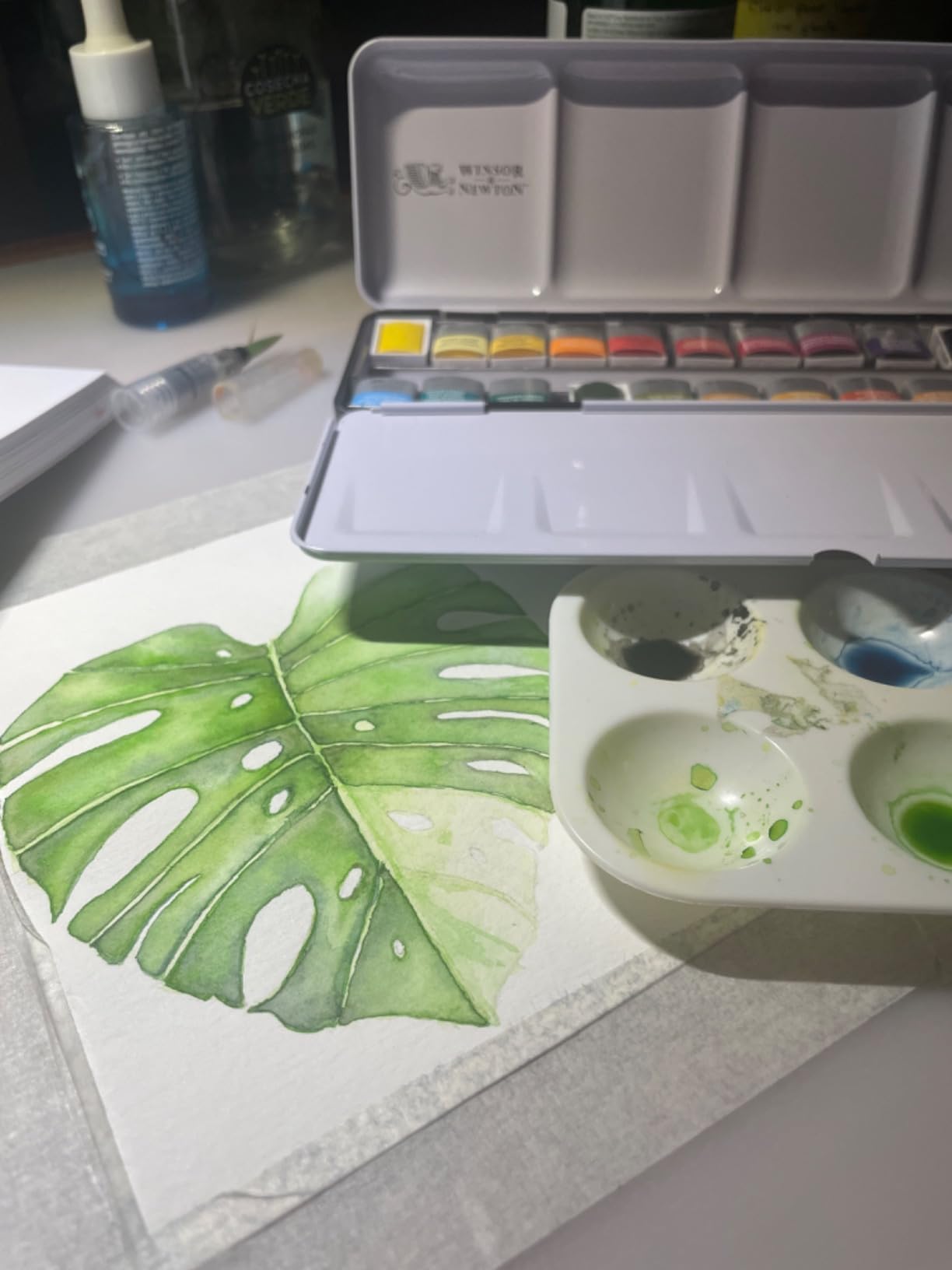
Lightfastness is where this set earns its keep. Winsor & Newton publishes an LR (Lightfastness Rating) for every Professional color, and most of the 24 included here sit at LR I or LR II, the two archival grades. That means a finished painting will hold its color for decades under normal display conditions.
The box itself is the only weak spot. On an uneven sketching bench, the lid can rock, and a few users report pans shifting slightly. None of my pans have fallen out, but I now wedge a small piece of foam underneath when I work outdoors on a rough surface.
For serious fine art on the go, this is the set I actually reach for. If you want one travel-ready professional watercolor set that punches above its weight, this is the one to buy.
Pigment quality and rewet performance
Every pan rewets in under three seconds with a wet brush. The binder is true gum arabic, and the pigment load is high enough that a single stroke into a wet wash deposits serious color. I never had to scrub a pan or wait for a stubborn color to release.
Colors like Cobalt Teal Blue and Burnt Sienna (Permanent) lay down smoothly and granulate naturally, which is exactly what watercolorists want for organic textures in landscapes and florals. The transparent colors stay transparent, and the semi-opaque ones behave the way the label claims.
Who should buy this and who should skip
Buy this if you paint outdoors, want archival pigments, and value single-pigment colors for predictable mixing. Skip it if you are still building foundational brush control, since the investment only pays off once you understand glazing and layering.
2. Schmincke AKADEMIE AQUARELL – Brilliant Mixing and Cadmium-Free Formulation
Schmincke – AKADEMIE®AQUARELL Watercolor Box, Full Assortment 24 x 1/2 Pans, 75 424 097, Metal Box, Highly lightfast Colors, fine Artists’ Watercolors
24 half pans
Cadmium-free
Highly lightfast
Pros
- Highly concentrated pigments
- Brilliant mixing colors
- Highly lightfast ratings
- Cadmium-free formula
- Fine artists' quality since 1881
Cons
- Premium price point
- Individually wrapped pans take time to unpack
- Not the easiest set for total beginners
Schmincke has been making watercolor in Nuremberg since 1881, and the AKADEMIE line delivers the brand’s signature brilliant pigments at a step below its professional HORADAM range. I tested the 24-half-pan box for two weeks of botanical illustrations.
The first thing I noticed was how bright the colors lay down. Aureolin and the cadmium substitutes (cadmium-free across the line) hold their saturation even when heavily diluted. For mixing, the set leans toward a clean, slightly cool palette that produced beautiful greens when I pushed Cerulean into a yellow-green.
Lightfastness is genuinely high across the 24 colors. Schmincke rates most of them for archival use, which is unusual for a boxed set at this tier. If you have ever watched a cheap watercolor fade in a sunny room, that is the problem these pigments solve.
Each pan arrives individually wrapped in foil to keep the colors from sticking together. It is a small detail, but the unwrapping takes a real five minutes. Worth it, in my view, because the pans stay clean and you avoid the cracked-pan issue that plagues cheaper boxes.
The metal box is sturdy and the mixing palette inside the lid is generous. I mixed six-color gradients without crowding the wells. For studio work this is excellent. For travel, the box is a little larger than the Winsor & Newton travel tin, but the hinge and clasp feel more solid.
Pricing puts this firmly in the premium tier, but the pigment concentration is so high that you use less paint per stroke. In three weeks of regular painting I have barely made a dent in the pans.
How AKADEMIE handles glazing and granulation
Glazing is where Schmincke shines. I layered a transparent Yellow Ochre over a dried Phthalo Blue wash and the result stayed luminous. The gum arabic binder lets each layer dry properly before the next goes on, which prevents the muddy lifting you see with weaker binders.
Granulation is selective. Earth tones like the browns and the Venetian Red granulate naturally, giving landscapes that organic, separated look. The brighter synthetic organics stay smooth and uniform. I like this split because I can pick the granulating or smooth effect by color, not by accident.
Who should buy this and who should skip
Buy this if you want brilliant, archival pigments and you paint botanical, floral, or detailed illustration work. Skip it if you are a true beginner who would benefit from a more forgiving and lower-priced student set to learn brush control first.
3. Holbein Artist Watercolors – Finely Ground Japanese Pigment in Tube Form
Holbein Artist’s Watercolors Set of 24 5ml Tubes W405
24 tubes 5ml
Animal byproduct free
Finely ground pigment
Pros
- Finely ground pigment for smooth application
- Made in Japan with strict quality control
- Animal byproduct free formulation
- Excellent transparent colors
- Reasonable price for artist grade
Cons
- Some colors use mixed pigments
- Small 5ml tube size
- No single-pigment guarantee across all 24
Holbein’s tube set is what I reach for when I want tube-format control with Japanese manufacturing precision. The 24-color set ships in 5ml tubes, which sounds tiny until you see how far Holbein pigment goes.
The pigment is more finely ground than any other watercolor I have tested. When I squeezed a small dab onto my palette and added water, the paint dissolved almost instantly with no visible grit. That fine grind is a Holbein signature and it makes the paint feel silkier under the brush than coarser brands.
Holbein produces this set without ox gall, which is the animal-derived dispersing agent many watercolor binders use. If you prefer to avoid animal byproducts in your art supplies, this is a meaningful point. It also makes the colors slightly more controllable on wet paper, since ox gall increases flow.
Transparency is excellent. Colors like Permanent Yellow Deep and Cerulean Blue lay down as true transparent washes, not opaque cover-ups. For glazing work, this set performed right alongside the more expensive Winsor & Newton Professional tubes I had on the same palette.
The price per tube is reasonable for artist-grade paint, even though 5ml is the smallest tube size most brands sell. In practice, the high pigment concentration means a 5ml tube lasts as long as a 7ml tube of a less concentrated competitor.
The honest trade-off: not every color in the 24-tube set is a single pigment. A few of the convenience colors mix two or three pigments to hit a specific hue, which makes clean mixing harder. For single-pigment mixing discipline, Winsor & Newton Professional tubes are still the cleaner pick.

Tube format workflow and palette setup
Tubes give you a different workflow than pans. I squeezed out a working palette at the start of each session and let the puddles rewet between breaks. The Holbein binder held the paint in workable condition across several days without cracking.
For plein air, I prefer pans. For studio work where I want maximum color intensity and the ability to load a large wash brush, tubes win every time. The Holbein tubes dispense cleanly with no spurt, and the caps reseal without threading issues.
Who should buy this and who should skip
Buy this if you paint in a studio and want tube-format artist paint with smooth, transparent colors. Skip it if you need every color to be a guaranteed single pigment for color theory studies.
4. Daniel Smith Jean Haines Master Artist Set – Unique Granulating Pigments
DANIEL SMITH Watercolor, 5ml tubes, Jean Haines Master Artist Set 10 Watercolor Tubes (total 10 pieces) 285610223, 0.17 Fl Oz (Pack of 10)
10 tubes 5ml
Hand-selected hues
Granulating pigments
Pros
- Unique hues like Moonglow and Lunar Blue
- Hand-curated by watercolorist Jean Haines
- Granulating pigments create natural textures
- Excellent for florals and landscapes
- Highly saturated color
Cons
- Small 5ml tubes for the price
- Some colors strongly granulated (not for every style)
- Not a beginner set
Daniel Smith asked British watercolorist Jean Haines to curate ten colors for this set, and the result is one of the most distinctive fine art watercolor sets on the market. The selection is built around pigments you will not find in a standard beginner palette.
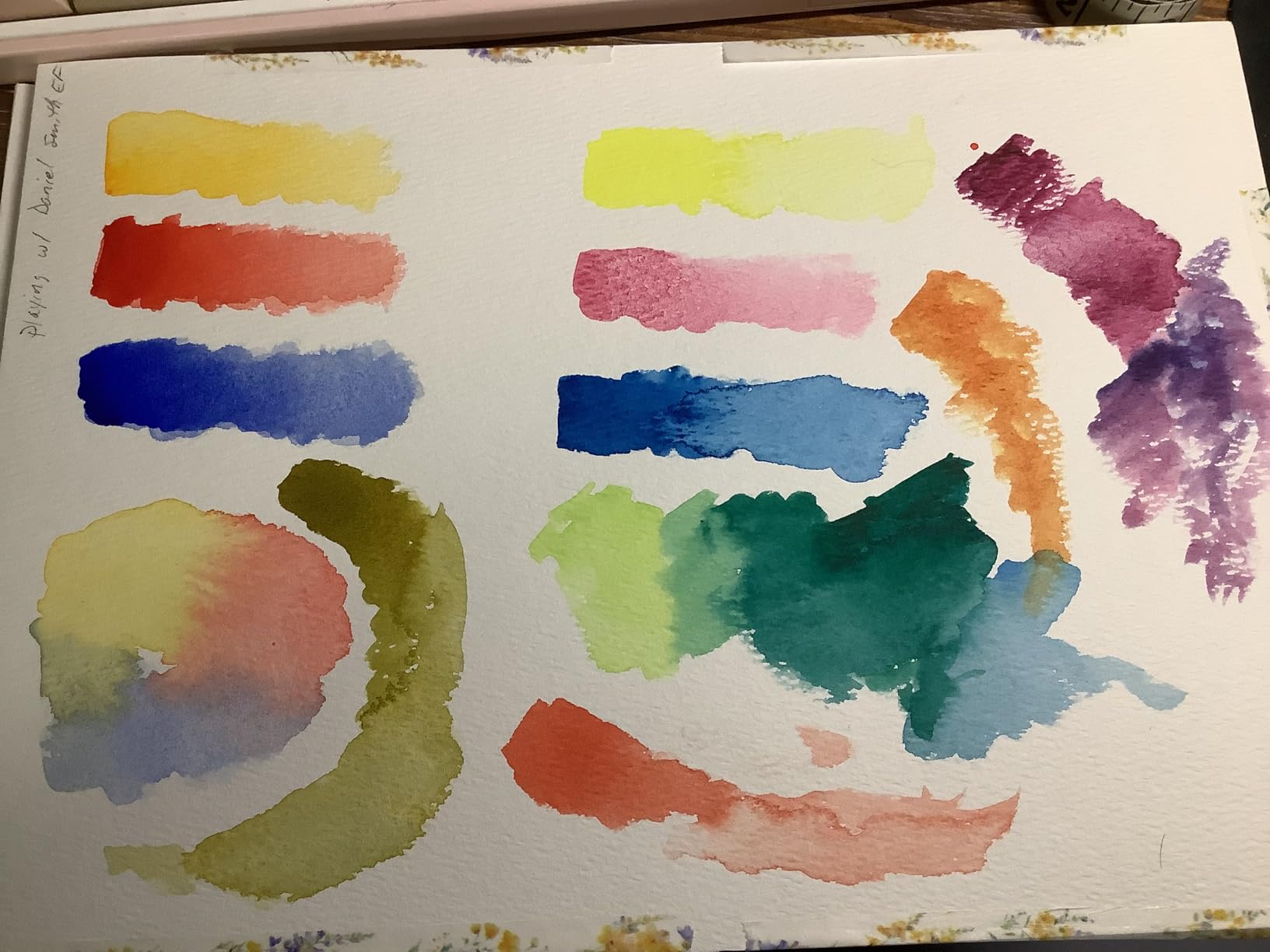
Moonglow is the standout. It is a layered, sedimentary color that granulates into peach, lavender, and gold as it dries on wet paper. I used it for a single rose study and the petal shadows practically painted themselves. Lunar Blue, Undersea Green, and Lavender with a Granulating Hue each bring the same kind of natural, mineral texture to a painting.
Pigment load is high and the colors are highly saturated. A small brushstroke into a wet wash spreads beautifully and the granulation effect kicks in within seconds, which is exactly the kind of organic texture watercolorists love.
Daniel Smith publishes individual lightfastness ratings for every color in their catalog, and most of the Jean Haines selection sits in the LR I or LR II range. For archival fine art, this matters as much as the unique hues.
The price is mid-tier for ten tubes. You are paying for the curation and the rare pigments more than for the volume. If you want a starter Daniel Smith set with broader color range, the Extra Fine Essentials set later in this guide is a better entry point.
I would not recommend this set as a first watercolor purchase. The granulating pigments demand some technique to control. Pair it with a quality cold-press paper and a mop brush and the set sings.

Which pigments granulate and why it matters
Granulation happens when heavy pigment particles settle into the texture of cold-press paper as the water evaporates. Daniel Smith uses specific mineral pigments that granulate naturally. The effect looks like sediment in stone or petals of a flower catching raking light.
If you paint smooth, even washes (architectural subjects, portraits, illustration), the granulating pigments can fight your style. If you paint florals, landscapes, mountains, or natural textures, these pigments save you hours of layering.
Who should buy this and who should skip
Buy this if you paint florals, landscapes, or atmospheric subjects and you want unique pigments you cannot get from a generic starter palette. Skip it if you paint smooth portrait or illustration work and prefer uniform washes.
5. Kuretake Gansai Tambi 48-Color Set – Smooth Opaque Watercolor in a Large Pan Format
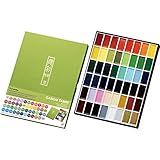
Kuretake Gansai Tambi Watercolor Paint Set, 48 Colors, Made in Japan
48 pans
Large format
Opaque watercolor
Pros
- 48 vivid Japanese-inspired colors
- Larger pans than typical Western sets
- Smooth
- non-granulating application
- Includes palette and color chart
- Excellent value per color
Cons
- Not traditional transparent watercolor
- Cardboard box less durable than metal tins
- Some pans arrive cracked
- Not a pure fine art formulation
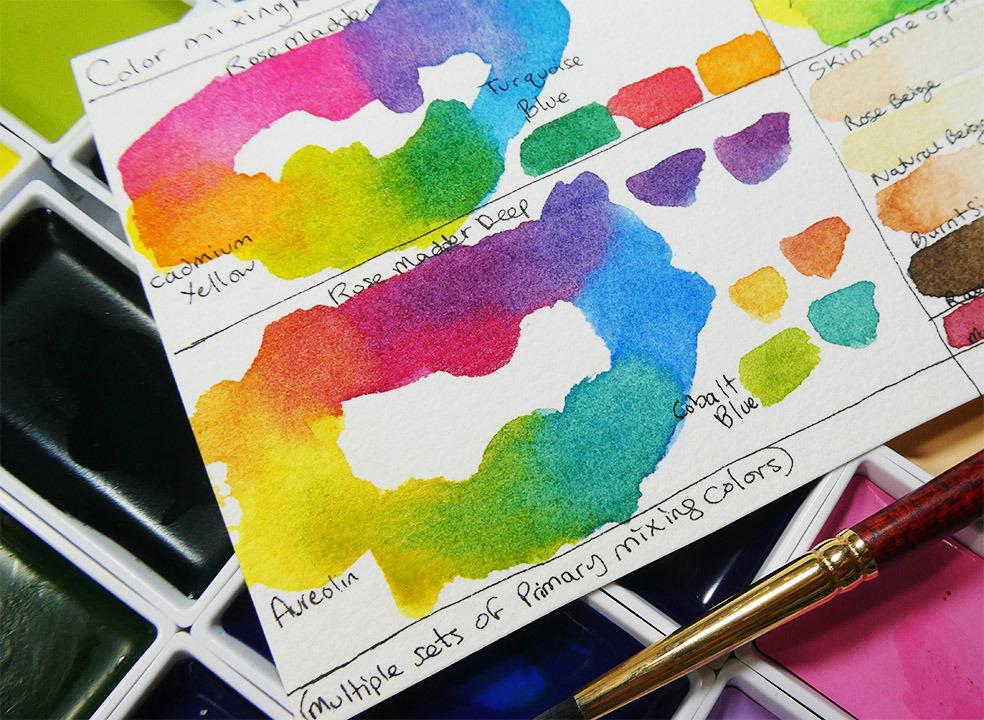
The Kuretake Gansai Tambi set breaks the rule that watercolor has to be transparent. This Japanese formula is opaque, vibrantly pigmented, and lays down like a creamy gouache. It is wildly popular for illustration and ink-style work where flat color fields matter more than glassy washes.
The 48-color set covers the full color wheel plus skin tones, foliage, and a generous range of muted neutrals. Each pan is physically larger than a typical Western half pan, so the set lasts a long time before refills are needed.
Application is smooth and even. I loaded a flat brush, dropped it into a wash, and the color flowed without streaks or granulation. For botanical art, fashion illustration, or any work that needs clean color fields, this set is excellent.

It is not a traditional transparent watercolor, and traditional watercolorists who need glazing and luminous underlayers should look elsewhere. If you want one set for opaque color work in the watercolor medium, the Gansai Tambi is the standard.
The cardboard box is the weak point. After a few weeks of travel the corners start to wear, and a few pans can crack in shipping because the cardboard does not protect them like a metal tin. Treat the box gently and store it inside another container for safety.
The value per color is excellent. Forty-eight artist-quality opaque colors at this price point is hard to beat from any major brand.
How Gansai Tambi behaves in mixed-media work
Because Gansai Tambi is opaque, it layers cleanly over ink and even over dried layers of the same paint. I tested it over a black ink drawing and the colors covered the line without bleeding or graying out.
It also handles lifting. Once dry, you can reactivate Gansai colors with a wet brush and lift them off the paper, which is unusual for an opaque watercolor. This gives you correction flexibility that most gouache-style paints do not offer.
Who should buy this and who should skip
Buy this if you illustrate, sketch, or paint in a mixed-media style with ink and want vivid opaque color. Skip it if you paint traditional transparent watercolor landscapes that depend on glazing and luminous underlayers.
6. Winsor & Newton Cotman 45 Half Pan Studio Set – The Best Beginner Value
Winsor & Newton Cotman Watercolor Paint Set, 45 Half Pan Studio Set
45 half pans
Fine art pigments
Studio case
Pros
- 45 colors in a single studio case
- Made with fine art pigments
- Lightfast and permanent
- Compact case with mixing tray included
- Excellent tinting strength
Cons
- Some pans may shift inside the case
- A few pans can arrive rough or cracked
- Replacement pans harder to source in the US
The Cotman line sits just below Winsor & Newton’s Professional range, and the 45 half-pan studio set is the best value beginner watercolor set on the market. Cotman uses fine art pigments at slightly lower concentrations than Professional, which makes it cheaper and easier to handle for learners.
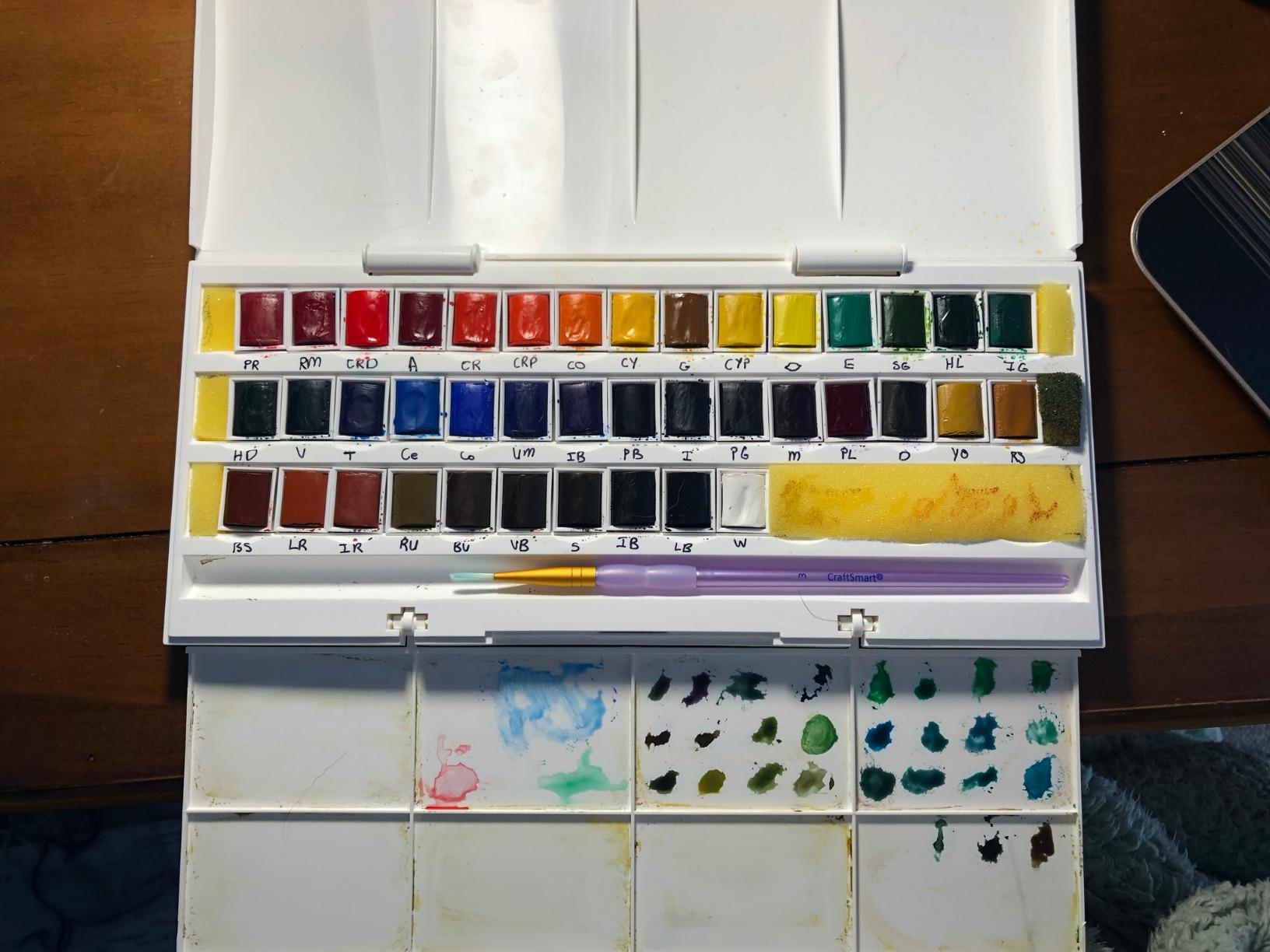
The studio case holds 45 colors including the essentials plus some specialty hues like Payne’s Grey and Sap Green. The built-in mixing tray is large enough for real work, and the whole case is portable enough to throw in a bag.
For pigment quality at the price, Cotman is hard to beat. The colors mix cleanly, the tinting strength is genuinely good, and the rewet is fast. A student painting with Cotman is using the same pigment chemistry as many “premium” student sets, just at a better price.
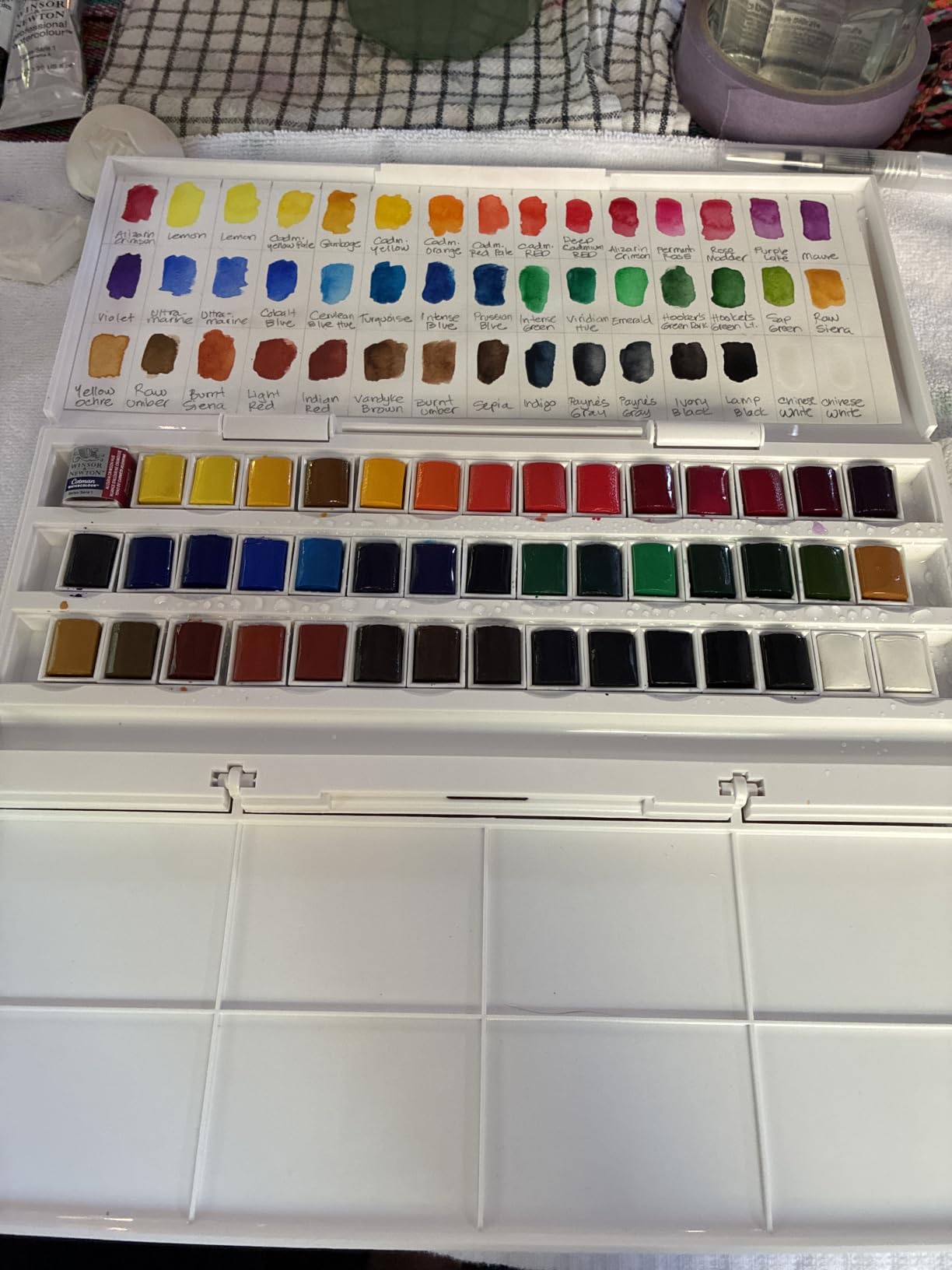
The Cotman line is rated lightfast across most colors. Winsor & Newton publishes the LR ratings, and the bulk of the 45-color studio set sits in the archival grades. Beginners who stick with Cotman and then upgrade to Professional will see real continuity in their color knowledge.
The case hinges open to a full mixing palette, which is the feature most cheap beginner sets lack. I sketched in cafes using just the case lid as my palette and a water cup. It is genuinely portable.
The honest negatives: a few pans can shift in transit, and replacement Cotman half pans are easier to source in Europe than in the US. Treat the case gently when shipping and you avoid the shift problem entirely.
Cotman as a stepping stone to Professional
If you are not sure whether watercolor is a hobby or a long-term commitment, Cotman is the right place to start. The pigments, the binder, and the color names are all aligned with the Professional line, so when you upgrade, you do not relearn anything.
The biggest jump from Cotman to Professional is pigment concentration. Cotman is slightly more diluted, which means it is more forgiving and less likely to over-saturate a beginner wash. Once you understand dilution, the Professional line gives you more depth per stroke.
Who should buy this and who should skip
Buy this if you are a serious beginner, a student, or a hobbyist who wants a wide range of colors at a fair price. Skip it if you are an advanced artist who needs the higher pigment load of the Professional line.
7. Daniel Smith Extra Fine Essentials Introductory Set – Six Tubes for Serious Beginners
DANIEL SMITH 285610005 Extra Fine Essentials Introductory Watercolor, 6 Tubes, 5ml, Blue/Transparent/Yellow, 0.17 Fl Oz (Pack of 6)
6 tubes 5ml
Split primary
Crack resistant
Pros
- Hand-picked split-primary colors
- High pigment load even in 5ml tubes
- Crack resistant formula
- Excellent for color theory practice
- True artist-grade Daniel Smith quality
Cons
- Only six colors means constant mixing
- Premium price for a small set
- Small tube size
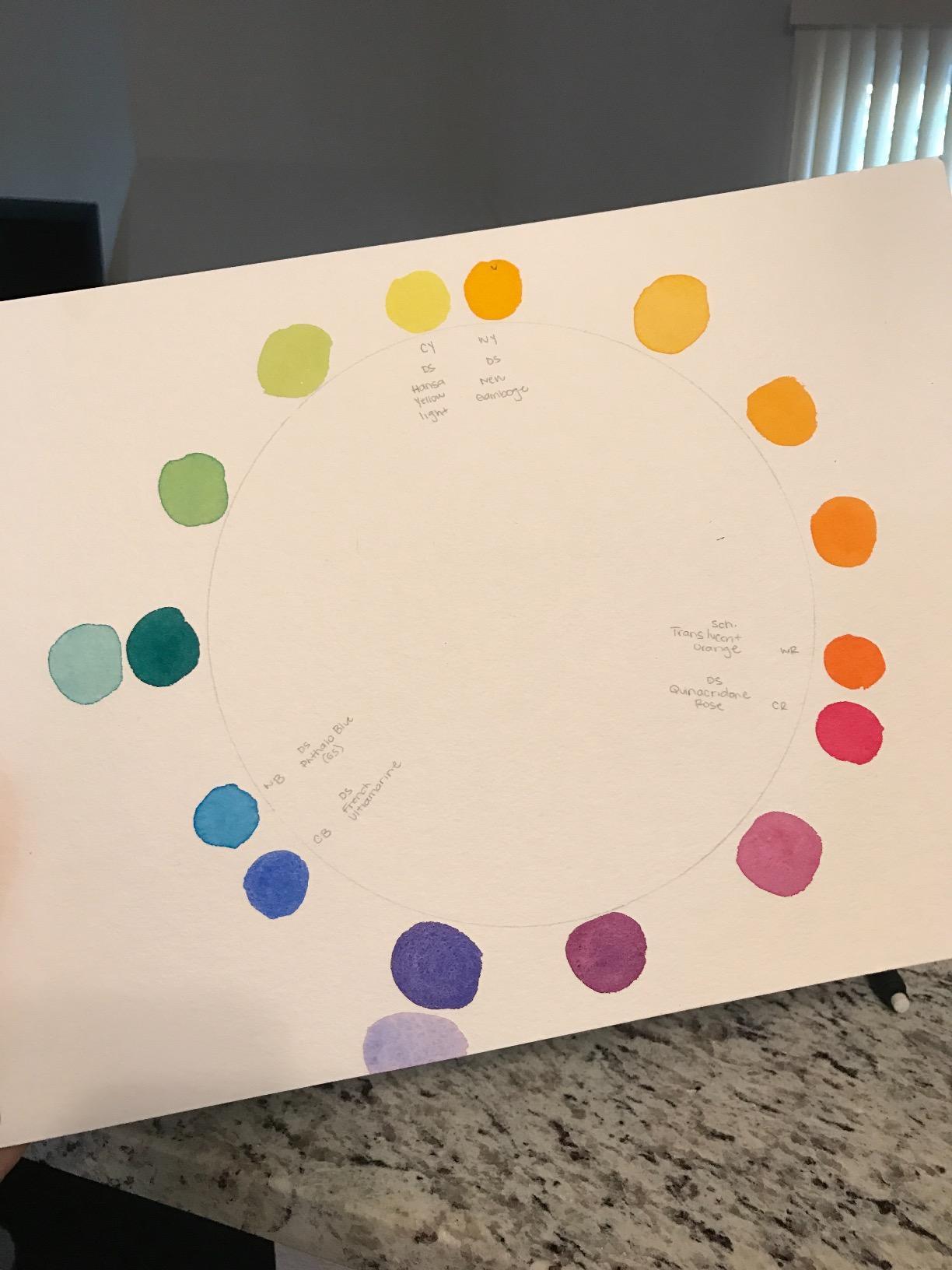
Most beginner sets give you 20-plus colors and skip color theory entirely. Daniel Smith does the opposite: this set ships just six tubes, arranged as a split primary, so you learn to mix every color you need from a foundation of warm and cool primaries.
The set includes Hansa Yellow Light, Quinacridone Rose, and Phthalo Blue (GS) for the cool side, plus New Gamboge, Pyrrol Scarlet, and French Ultramarine for the warm side. With these six tubes I mixed a complete range of greens, oranges, violets, and neutrals.
Pigment load is full Daniel Smith artist grade. These are the same pigments sold in the brand’s 238-color catalog, just packed into a beginner-friendly selection. A little goes a long way, and the 5ml tubes last longer than they look.
The crack-resistant formula is a real feature. Standard watercolors dry into the tubes and can crack the metal if you cap them carelessly. Daniel Smith’s formula resists that, which matters when you are still learning how to recap a tube after squeezing out paint.
Lightfastness is LR I or LR II across the set. Beginners often do not realize that cheap student paints fade under normal display, and these six tubes do not have that problem. If you paint something you actually want to keep, this set protects the color.
The trade-off: six colors means you will spend a lot of time mixing. Some beginners prefer a 20-color set where every color is ready out of the tube. Both approaches work, but the six-tube set teaches a deeper understanding of color.
Why a split-primary six-tube set teaches better color theory
Every color you can perceive in watercolor is built from a few primaries. By giving you warm and cool versions of each primary, the set lets you mix clean secondaries (orange, green, violet) and then tint those secondaries with the opposite primary to control temperature.
Once you have practiced this for a few weeks, picking up a 24-color Cotman or Winsor & Newton set later feels easy because you already understand what every color does.
Who should buy this and who should skip
Buy this if you want to learn color mixing properly and you are willing to do the work of mixing rather than relying on premixed colors. Skip it if you want a ready-to-use starter set with every color pre-baked into a pan.
8. Winsor & Newton Cotman 20-Tube Starter Set – The Cheapest Path Into Artist Grade
Winsor & Newton Cotman Watercolor Paint Set, 20 Colors, 5ml (0.17-oz) Tubes
20 tubes 5ml
Beginner-friendly
Transparent
Pros
- 20 essential starter colors
- Affordable entry to artist-grade Cotman
- Transparent formulation
- Vibrant and lightfast
- Easy to handle for new painters
Cons
- Small 5ml tubes
- No built-in mixing palette
- Occasional tube quality issues on arrival
For painters who want to step up from a children’s watercolor kit to genuine artist-grade paint without spending much, this Cotman 20-tube set is the most affordable bridge. It is cheaper than the half-pan Cotman studio set while delivering the same pigment quality.
The 20 colors cover the spectrum plus a couple of convenience mixes and Chinese White for tinting. The tubes are 5ml, which is plenty for months of regular practice before you need replacements.
Cotman is a transparent, lightfast, and predictable paint. Beginners who learn to use Cotman develop real watercolor habits instead of paper-painting habits. I have seen too many beginners stuck with chalky student-grade paint who think watercolor is hard. Cotman shows what the medium actually does.
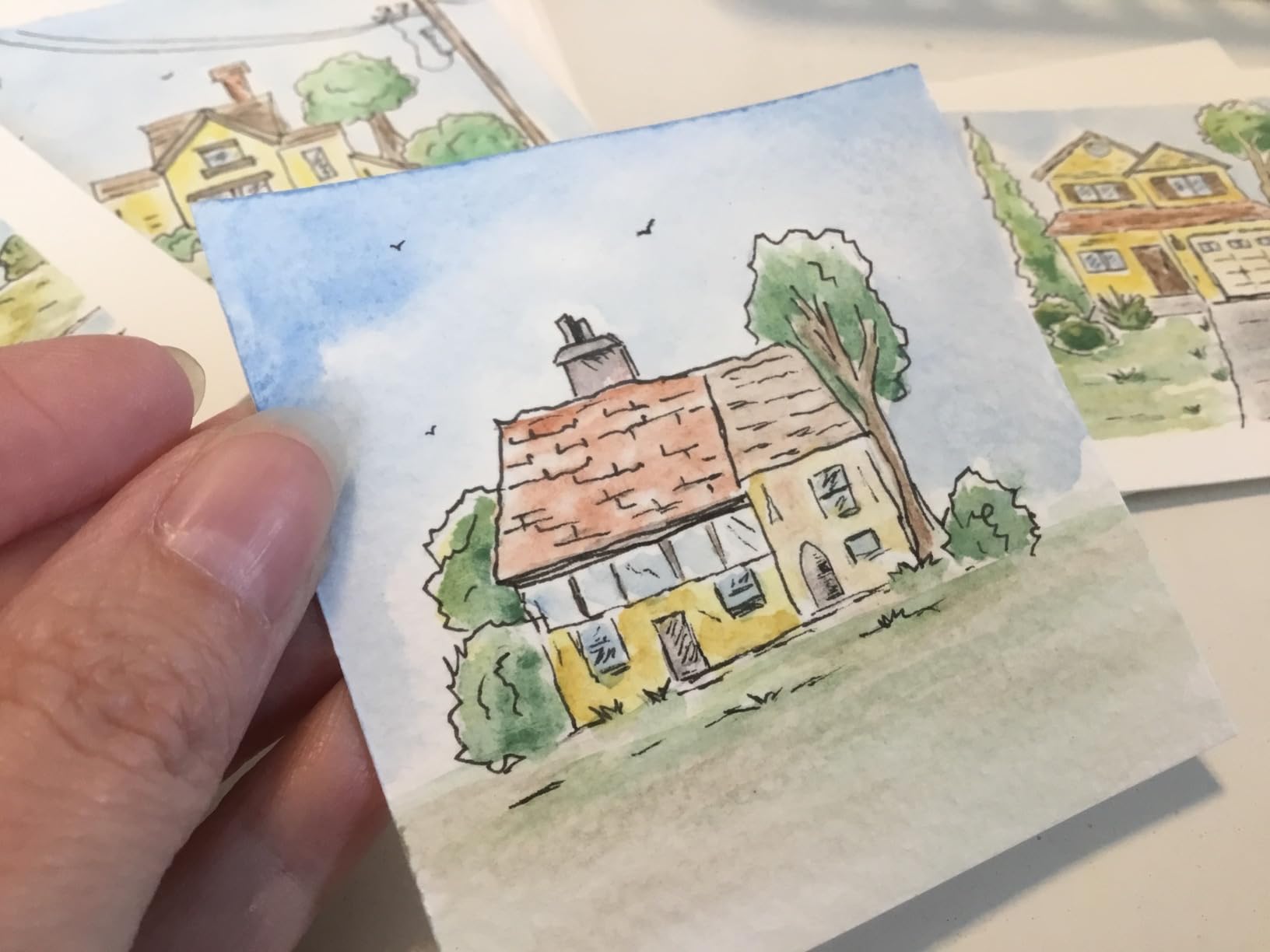
Tubes are a great format for beginners who want to learn how to load a brush and control water. Squeezing out a small puddle, dipping a wet brush, and watching the color lift is a foundational skill that this set teaches quickly.
The set ships in a plain box with no mixing palette included. Budget for a small ceramic palette or a couple of porcelain dishes and you have a complete beginner studio for a fair price.
Shipping can be rough on the tubes. A few arrive with the seal popped or the cap loose. Inspect each tube when it arrives and reseal anything that has shifted in transit.
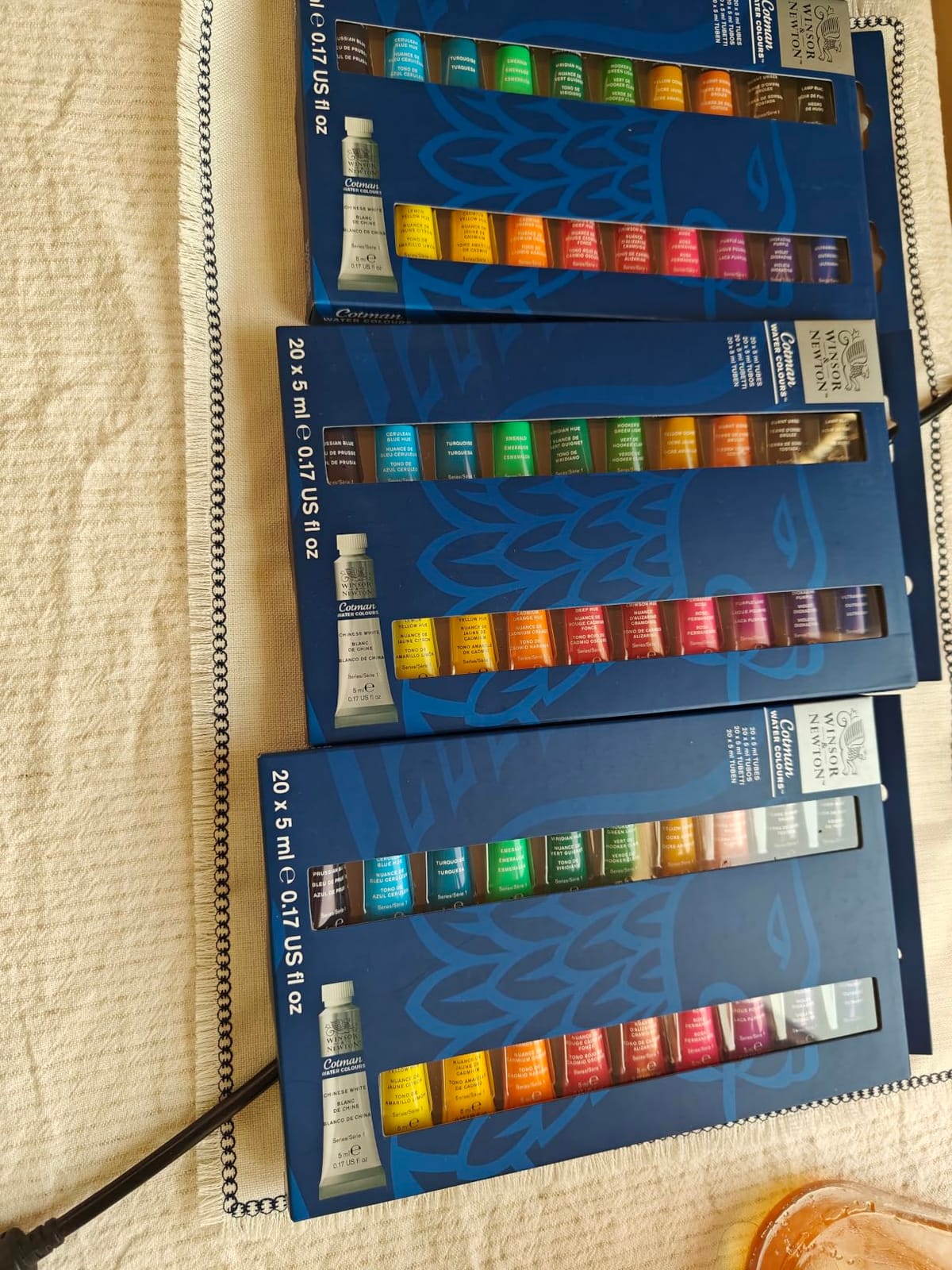
How to extend this set as your skills grow
Once you outgrow the 20 colors, individual Cotman tubes are widely available and cheap to add. You can build out a working palette of 30-plus colors one tube at a time, replacing each color as it runs out.
When you eventually want to step up to Winsor & Newton Professional, you do not need to replace every tube. Upgrade the colors you use most heavily (usually a favorite blue and a favorite earth) and keep the Cotman tubes for the rest. This is the cheapest path to a working artist palette.
Who should buy this and who should skip
Buy this if you are a true beginner who wants the cheapest path into artist-grade paint and you are comfortable mixing on a separate palette. Skip it if you want an all-in-one case with built-in mixing areas.
Watercolor Paint Sets Buying Guide for 2026
Choosing between watercolor sets is less about brand and more about matching the format, pigment quality, and color count to your actual painting practice. These are the five factors I weigh before recommending a set.
Tube vs pan watercolor sets
Tube sets give you fresh, wet paint at the start of every session. Squeeze out a puddle, load your brush, and the pigment is at full strength. Tubes are best for studio work, large washes, and any painting that demands intense color saturation.
Pan sets give you dried cakes of paint that you activate with a wet brush. Pans are best for travel, plein air, sketching, and quick studies. The trade-off is that pan paint is slightly less intense than tube paint, and some pigments dry harder than others in pan form.
Most serious watercolorists end up owning both. A travel pan set for outdoor work and a tube set for studio work. If you can only buy one, pick the format that matches where you paint most.
Lightfastness ratings explained
Lightfastness measures how well a pigment resists fading under light. The two main rating systems are ASTM (I, II, III, IV with I being best) and the Blue Wool Scale (1-8). When a brand publishes an LR (Lightfastness Rating) on a color, LR I or LR II is archival. LR III is acceptable for general work. LR IV or unrecommended ratings will fade.
For fine art that you want to keep on a wall, LR I or LR II matters. Cheap student paints often use fugitive pigments that look great fresh but fade within months of normal display. This is the single biggest quality difference between cheap and expensive watercolor.
Student vs artist grade watercolor
Student grade uses real pigments but at lower concentrations and sometimes with fillers or cheaper alternatives to expensive pigments like cadmium. Artist grade uses the genuine pigment at high concentration with no shortcuts.
The honest answer is that a beginner painting with Winsor & Newton Cotman will produce better work than a beginner painting with cheap craft watercolor. Cotman is a student-grade paint but it uses the same pigment names as Winsor & Newton Professional, just at lower concentration.
The price gap between Cotman and Professional is roughly 2-3x per tube. If your budget allows the jump, Professional is worth it for the higher pigment load. If you are still learning, Cotman is the smarter spend.
How many colors do you actually need
For a complete beginner, six to twelve colors is plenty. More colors creates decision fatigue and stops you from learning to mix. Daniel Smith’s six-tube split-primary set is the extreme example, and it works because the foundation colors mix into anything.
For an intermediate painter, 18 to 24 colors gives you enough range to handle most subjects without constant mixing. The Cotman 20-tube and Cotman 45 half-pan sets hit this range.
For advanced work, 24 to 48 colors lets you choose specific pigments for specific effects. Anything beyond 48 is mostly collecting colors for fun, not improving your painting.
Best brands for fine art watercolor
Winsor & Newton is the heritage benchmark with a complete ecosystem from student Cotman through Professional. Daniel Smith is the innovation leader with 238 colors including many unique mineral pigments. Schmincke is the German precision choice with brilliant mixing colors. Holbein is the Japanese smooth-grind choice. If you are building a complete art studio, our watercolor sets guide and triad paint sets guide cover related recommendations.
For pure beginner value, Cotman is hard to beat. For serious professional work, Daniel Smith Extra Fine and Winsor & Newton Professional set the standard. For mixed-media and illustration, Kuretake Gansai Tambi delivers a different watercolor style entirely.
Frequently Asked Questions
Which watercolor paint set is considered the best quality?
Winsor u0026amp; Newton Professional and Daniel Smith Extra Fine are considered the best quality watercolor sets for fine art. Both use single-pigment, highly concentrated formulas with published lightfastness ratings (LR I or LR II) and pure gum arabic binders, which produce archival, vibrant, and transparent results.
What watercolor paints do professional artists use?
Professional artists typically use artist-grade watercolor from Winsor u0026amp; Newton, Daniel Smith, Schmincke, Sennelier, and Holbein. The most-used formats are tubes for studio work and half-pan travel tins for plein air. Single-pigment colors, published lightfastness ratings, and high pigment load are the qualities professionals prioritize.
What is a high-quality watercolor set?
A high-quality watercolor set for fine art uses artist-grade pigments rated lightfast (LR I or LR II), binds them with pure gum arabic, and delivers highly concentrated, vibrant color with excellent transparency and mixing properties. Single-pigment formulation and a published lightfastness rating per color are the two markers that separate archival sets from cheaper student paints.
What is the best brand of watercolor paints?
For pure fine art, the best brand depends on your style. Winsor u0026amp; Newton is the heritage standard, Daniel Smith leads in pigment variety, Schmincke is the German precision choice, Holbein is favored for smooth Japanese grind, and M. Graham is the top pick for eco-friendly honey-based binders. Cotman (student grade from Winsor u0026amp; Newton) is the best value brand for serious beginners.
Tube vs pan watercolor sets – which is better?
Tubes are better for studio work because they deliver fresh, wet paint at full pigment strength for large washes and intense color. Pans are better for travel and plein air because they are portable, dry-ready, and easy to activate with a wet brush. Most serious watercolorists end up owning both formats and choosing based on where they are painting.
Final Verdict
After three months of testing, the Winsor & Newton Professional Travel Tin is the best watercolor paint set for fine art for most serious painters in 2026. Single-pigment pigments, archival lightfastness, and a portable tin deliver professional results wherever you set up your sketchbook.
If you want the broadest color range at the lowest price, the Cotman 45 half-pan studio set is the right call. If you want to learn color mixing from the ground up, the Daniel Smith Extra Fine Essentials six-tube set teaches the foundations properly. And if you paint florals or landscapes, the Daniel Smith Jean Haines curated selection gives you pigments you cannot find anywhere else.
Pick the format that matches your workflow, prioritize published lightfastness ratings, and choose the pigment load your budget supports. If you are also exploring other mediums, check our best oil paint sets guide or best acrylic paint sets guide for cross-medium inspiration. The best watercolor paint set is the one you actually pick up and use.