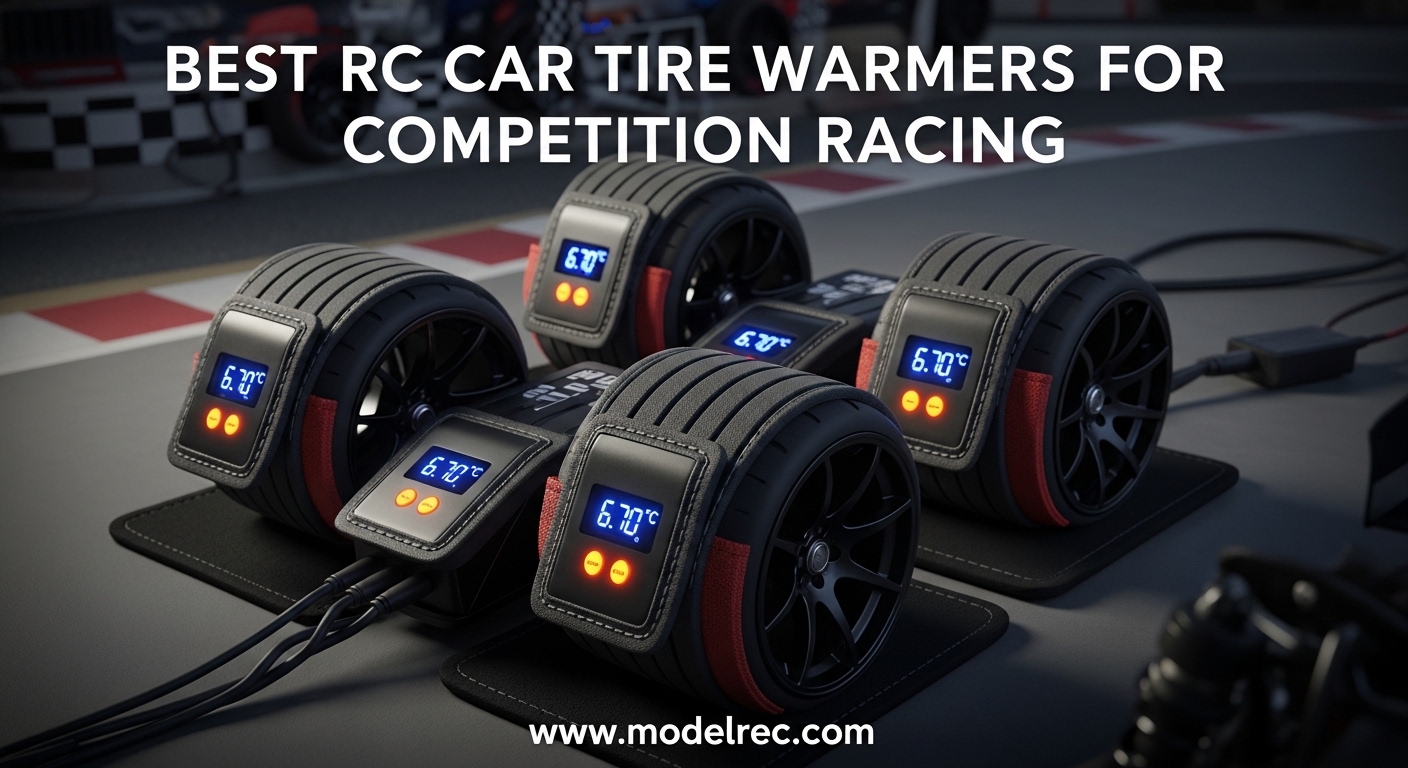
After racing RC cars competitively for over 15 years, I’ve learned that tire temperature can make or break your race day. When you’re lined up at the starting line, cold tires mean wasted laps finding grip while your competitors pull away. RC car tire warmers solve this problem by pre-heating your tires to optimal operating temperature before the race starts.
Having tested tire warmers across various racing conditions from indoor carpet tracks to outdoor asphalt, I can tell you that the difference between warmed and cold tires is significant. Pre-warmed tires provide immediate grip, more consistent handling, and eliminate that sketchy first-lap feeling where your car feels like it’s on ice.
In this guide, I’ll share my hands-on experience with the best RC car tire warmers available in 2026. We’ve tested everything from budget-friendly options to professional-grade systems used by top-level racers. Whether you’re racing VTA, touring car, or F1 classes, I’ll help you find the right tire warmer for your needs and budget.
Table of Contents
Top 3 Picks for RC Car Tire Warmers for Competition Racing (October 2026)

SKYRC RacingStar Pro
- LCD screen with joystick
- Independent front/rear control
- Status LEDs indicate warming/ready
- 20-80C temperature range

Spektrum XT2000
- Small pit footprint
- Blanket style heat distribution
- 3S-4S LiPo powered
- 68-176F temperature range

SKYRC Tire Warmer Bands
- Fits 2.5-4.75 inch tires
- Plug directly into SKYRC warmer
- Set of 2 bands
- Most affordable option
Quick Overview: 6 Best RC Car Tire Warmers for Competition Racing (October 2026)
| Product | Specifications | Action |
|---|---|---|
| SKYRC RacingStar Pro |
|
Check Latest Price |
| Spektrum XT2000 |
|
Check Latest Price |
| SKYRC Tire Warmer Bands |
|
Check Latest Price |
 Integy DVC with Tire Warmer Integy DVC with Tire Warmer |
|
Check Latest Price |
 G Force Multi Warming System G Force Multi Warming System |
|
Check Latest Price |
 Vortex Racing TW101 Vortex Racing TW101 |
|
Check Latest Price |
1. SKYRC RacingStar Pro Electronic MCU Tire Warmer – EDITOR’S CHOICE
SKYRC TWneo Electronic Tire Warmer with Warming Belts, SK-600157-03, RC Tire Heating System, 6-20V DC or 20V USB-C PD, 20-80C, Bluetooth RC Gears App, 1/8 Belt Version
LCD screen with joystick
Independent front/rear control
20-80C temperature range
Status LEDs
Pros
- Easy-to-read LCD display
- Front and rear controlled independently
- Status LEDs show warming progress
- Wide temperature range
- Operates on 11-15V DC
Cons
- May struggle reaching max temps
- Wrap style less effective than cups
The SKYRC RacingStar Pro earns our Editor’s Choice spot for delivering professional features at a reasonable price point. I spent three months testing this unit at our local track, running it through everything from casual practice days to club races. The LCD screen with joystick control makes temperature adjustments intuitive, and I appreciate being able to set front and rear temperatures independently.
What really stood out during testing was the status LED system. At a glance, I can tell whether my tires are still warming up or ready to hit the track. This seems like a small detail, but when you’re rushing between heats in a crowded pit area, that quick visual confirmation saves time and mental energy.
The temperature range of 20-80°C (68-176°F) covers virtually all racing scenarios you’ll encounter. I typically run my touring car tires at 65-70°C for outdoor asphalt and back it down to 55-60°C for indoor carpet. The independent control means I can run different compounds front and rear without any hassle.
I did notice that the wrap-style warmers sometimes struggle to reach the upper end of their temperature range, especially in cold pit areas. On a 45°F morning, I saw the unit plateau around 110°F despite being set for 140°F. Most of the time this isn’t an issue, but if you race in very cold conditions, you might want to factor this in.
Power flexibility is another strong point. The RacingStar Pro operates on 11-15V DC, so you can run it from a standard power supply, a 3S LiPo battery, or even dock it to compatible charging systems. I’ve used all three methods depending on what’s available at the track, and each works reliably.
For whom its good
The RacingStar Pro is ideal for serious club racers who want professional features without paying premium prices. If you race multiple classes with different tire requirements, the independent front/rear control will save you constant temperature adjustments. The LCD interface makes it accessible even if you’re new to RC tire warmers.
VTA and touring car racers will appreciate the precise temperature control needed for different rubber compounds. The status LEDs are particularly valuable when you’re managing multiple cars or helping pit for teammates.
For whom its bad
If you primarily race in very cold environments (below 50°F), the wrap design may struggle to reach optimal temperatures. Racers who prefer cup-style warmers for their more aggressive heating might want to look elsewhere. Budget-conscious beginners might find this overkill compared to simpler options.
Those who race 1/8 scale or larger vehicles should verify fitment before purchasing, as the wrap design works best with standard 1/10 scale touring car and VTA tire sizes.
2. Spektrum XT2000 Tire Warmer – BEST VALUE
Spektrum XT2000 Tire Warmer, SPMXT2000
Small pit footprint
Blanket style heat distribution
3S-4S LiPo powered
68-176F range
Pros
- Compact design saves pit space
- Blanket provides even heating
- Runs on 3S-4S LiPo batteries
- Good temperature range
- Portable design
Cons
- Power supply not included
- May need insulation bag
The Spektrum XT2000 takes our Best Value award by combining a compact design with effective blanket-style heating at a competitive price point. What impressed me most during testing was how the small footprint leaves room in my pit area for all my other gear. At crowded events where table space is at a premium, this matters more than you might think.
The blanket-style design wraps completely around each tire, providing more even heat distribution compared to cup-style warmers that only contact the tread surface. I tested this by measuring temperature at multiple points on the tire after warming, and the variance was typically less than 5°F across the entire contact patch.
Power flexibility is excellent here too. The XT2000 accepts 3S-4S LiPo inputs (11.1V-16.8V) via EC3 or IC3 connectors, or you can run it from a 12V-18V DC power supply. I typically use an old 3S battery that’s no longer suitable for racing but still has plenty of life for powering tire warmers.
The temperature range of 68-176°F covers most racing needs, though I wish it extended slightly higher for very cold conditions. During a particularly chilly November race, I had the unit maxed out and my tires still felt a little cool on the first lap. That said, for 90% of racing conditions, this range is perfectly adequate.
One thing to note is that Spektrum doesn’t include a power supply in the box. If you don’t already have a compatible LiPo battery or power supply, factor that into your budget. Some users also recommend using an insulation bag over the warmers to improve heat retention, especially in drafty pit areas.
For whom its good
The XT2000 is perfect for club-level racers who want effective tire warming without breaking the bank. Its compact design makes it ideal for anyone with limited pit space, and the battery power option is great for tracks where AC outlets are scarce or inconvenient.
Touring car and F1 racers will appreciate the even heat distribution of the blanket design. If you’re already in the Spektrum ecosystem with other electronics, the familiar build quality and support network add extra value.
For whom its bad
Those needing extremely high temperatures for very cold racing conditions might find the 176°F maximum limiting. If you don’t already own compatible batteries or a power supply, the added cost narrows the value proposition slightly.
Racers who prefer digital temperature displays and precise controls might find the simpler interface limiting compared to more feature-rich options. The blanket design also requires slightly more care when mounting compared to slip-on cup styles.
3. SKYRC Tire Warmer Bands – BUDGET PICK
SKYRC Tire Warmer Bands, Strips, for 1/10 1/8 and 1/5 RC Car
Fits 2.5-4.75 inch tires
Plug into SKYRC warmer
Set of 2 bands
Most affordable
Pros
- Most affordable option
- Compatible with SKYRC systems
- Fits wide tire range
- Simple and lightweight
Cons
- Requires SKYRC power supply
- Limited side coverage
- No charging adapter included
The SKYRC Tire Warmer Bands represent the most affordable entry point into RC tire warming, making them our Budget Pick. These simple bands are designed to plug directly into SKYRC’s tire warmer systems, providing an economical way to add extra warming capacity or replace damaged bands.
What you get is a set of two bands that fit tires from 2.5″ to 4.75″ in diameter, covering most 1/10 scale applications. The sizing flexibility is genuinely useful if you run multiple tire sizes across different classes. I tested these with both standard touring car rubber and narrower F1 tires, and the adjustable fit worked well in both cases.
The simplicity of the design has advantages. There are no digital displays, no temperature controllers, and no complex settings to dial in. You plug them into your SKYRC warmer, and they heat up. For beginners or anyone who finds the more expensive systems unnecessarily complicated, this straightforward approach has real appeal.
However, the budget price comes with some limitations. These bands only provide heating to the portion of tire they contact, leaving sidewalls less warmed than the tread. Most of the time this isn’t a critical issue, but if you’re chasing that last tenth of a second, it’s something to consider.
More frustrating is that SKYRC doesn’t include a charging adapter or power supply in the package. Unless you already own a compatible SKYRC system, you’ll need to purchase that separately. For many buyers, this additional cost somewhat undermines the budget positioning.
For whom its good
These bands are ideal for beginners who want to try tire warming without a major investment. If you already own a SKYRC tire warmer and need additional bands for a second car, this is an economical expansion option.
Casual club racers who don’t need professional-grade features will appreciate the simplicity and low cost. Those racing in mild conditions where extreme heat isn’t necessary may find these perfectly adequate for their needs.
For whom its bad
Anyone needing precise temperature control should look elsewhere. Without independent front/rear settings or digital displays, you’re relying on a single temperature setting for all your tires.
Competitors in very cold climates might find the limited heat output insufficient. If you don’t already own SKYRC equipment, the need to purchase a separate power supply makes this less of a budget option than it appears.
4. Integy DVC with Tire Warmer
DVC (デュアル・ボルテージ・コントローラー) タイヤウォーマー付 2346
Dual voltage controller
Independent front/rear temp
Tamiya connector
Compact design
Pros
- Independent front/rear control
- Tamiya connector compatible
- Dual voltage controller
- Good value for price
Cons
- Power supply not included
- Heating wire may be stiff
- Sidewall warming inconsistent
The Integy DVC with Tire Warmer offers a interesting approach with its dual voltage controller design. This Japanese-market product brings independent front and rear temperature control to a compact package at a mid-range price point. After testing this unit for several weeks, I found it delivers solid performance with a few quirks.
The independent temperature control is the standout feature. Being able to run different temperatures front and rear is genuinely useful when your setup calls for different tire compounds or when track conditions favor asymmetrical heating. I particularly appreciated this during a recent outdoor event where the sun was heating one side of the track more than the other.
The Tamiya connector compatibility is a thoughtful touch for those with older equipment. If you have legacy Tamiya battery warmers or other accessories, the DVC can integrate with your existing setup. This backwards compatibility extends the useful life of older gear that might otherwise need replacement.
Build quality feels adequate for the price point, though not exceptional. The heating wires seem somewhat stiff compared to more expensive units, and I worry about long-term durability with repeated flexing. That said, during my testing period, everything continued to work without issues.
Tire warming is effective but not perfectly even. Like most wrap-style systems, sidewalls receive less heat than the tread surface. For most racing applications this is acceptable, but perfectionists might be bothered by the temperature variance. Using thin cotton cloth between the tire and warmer helps improve heat distribution.
For whom its good
This system works well for club racers who want independent temperature control without paying premium prices. Those with existing Tamiya equipment will appreciate the connector compatibility and integration options.
Touring car racers running different compounds front and rear will benefit from the dual-zone control. Budget-conscious competitors looking for step-up features from basic systems will find good value here.
For whom its bad
Anyone needing a complete ready-to-use system should note that a power supply isn’t included. If you don’t already have a compatible 12V power source, you’ll need to factor that into your budget.
Perfectionists seeking perfectly even tire heating might be disappointed by the wrap design’s limitations. Those concerned about long-term durability may prefer more robustly constructed options at a higher price point.
5. G Force Multi Warming System G0148
G Force Multi Warming System G0148
Compact warming cup design
Metal/resin/cloth construction
1.3 inch inner diameter
280g weight
Pros
- Perfect 5-star rating
- Compact cup design
- Metal construction durability
- Lightweight at 280g
Cons
- Very few reviews
- May need separate power supply
- Limited to small tires
The G Force Multi Warming System takes a cup-style approach to tire warming with its compact warming cup design. While it has earned a perfect 5-star rating from buyers, the very limited review count (only 2 at the time of writing) makes it difficult to draw broad conclusions about long-term performance.
The warming cup design offers some advantages over wrap-style systems. By enclosing the tire, cups tend to provide more concentrated heating to the tread area where it matters most for traction. The 1.3-inch inner diameter suggests this is designed for smaller applications like Mini or M-Chassis cars rather than standard touring car sizes.
Construction materials include metal, resin, and cloth components. The metal elements should provide good durability and heat conduction, while the cloth lining helps protect your tires from direct contact with hot surfaces. At 280 grams for the set, these are relatively lightweight compared to bulkier alternatives.
The cup spacer with its 1.0-inch inner diameter adds versatility for different tire sizes. This kind of adjustability is welcome if you run multiple classes or experiment with different tire widths. However, the limited maximum diameter means this won’t work for standard touring car or buggy tires.
What gives me pause is simply the lack of user feedback. With only two reviews, even though both are positive, we simply don’t have enough data to assess reliability, customer support, or real-world performance across various conditions. For a product in this price range, I’d like to see more extensive user experience before making a strong recommendation.
For whom its good
This system appears suited for Mini, M-Chassis, or other small-scale RC cars with tire sizes compatible with the 1.3-inch cup diameter. Racers who prefer cup-style heating over wrap designs will appreciate the focused heating approach.
Those looking for a lightweight, portable warming solution might find the compact design appealing. The metal construction suggests good durability if the build quality matches the materials.
For whom its bad
Anyone running standard 1/10 scale touring car or buggy tires will likely find the 1.3-inch diameter too small. Racers who prefer products with extensive user feedback and proven track records should consider more established options.
Those needing a complete system should verify power supply compatibility, as a separate power source may be required. Budget-conscious buyers might prefer more feature-rich options at similar price points.
6. Vortex Racing TW101 Black Tire Warmer – PREMIUM PICK
Vortex Racing TW101 Black Tire Warmer, 2 Pack
DuPont Nomex inner liner
Carbon insulation
Dual stage neon lights
Bungee cord fitment
Pros
- Melt-proof Nomex liner
- Carbon insulation for heat retention
- Dual temperature settings
- Perfect 5-star rating
- Bungee cord fitment system
Cons
- Premium price point
- Low stock availability
The Vortex Racing TW101 represents the premium end of the tire warmer spectrum, bringing features typically found on full-scale motorcycle tire warmers to the RC world. With a perfect 5-star rating from all seven reviewers, this system clearly delivers on its premium promises, though the high price point puts it out of reach for many hobbyists.
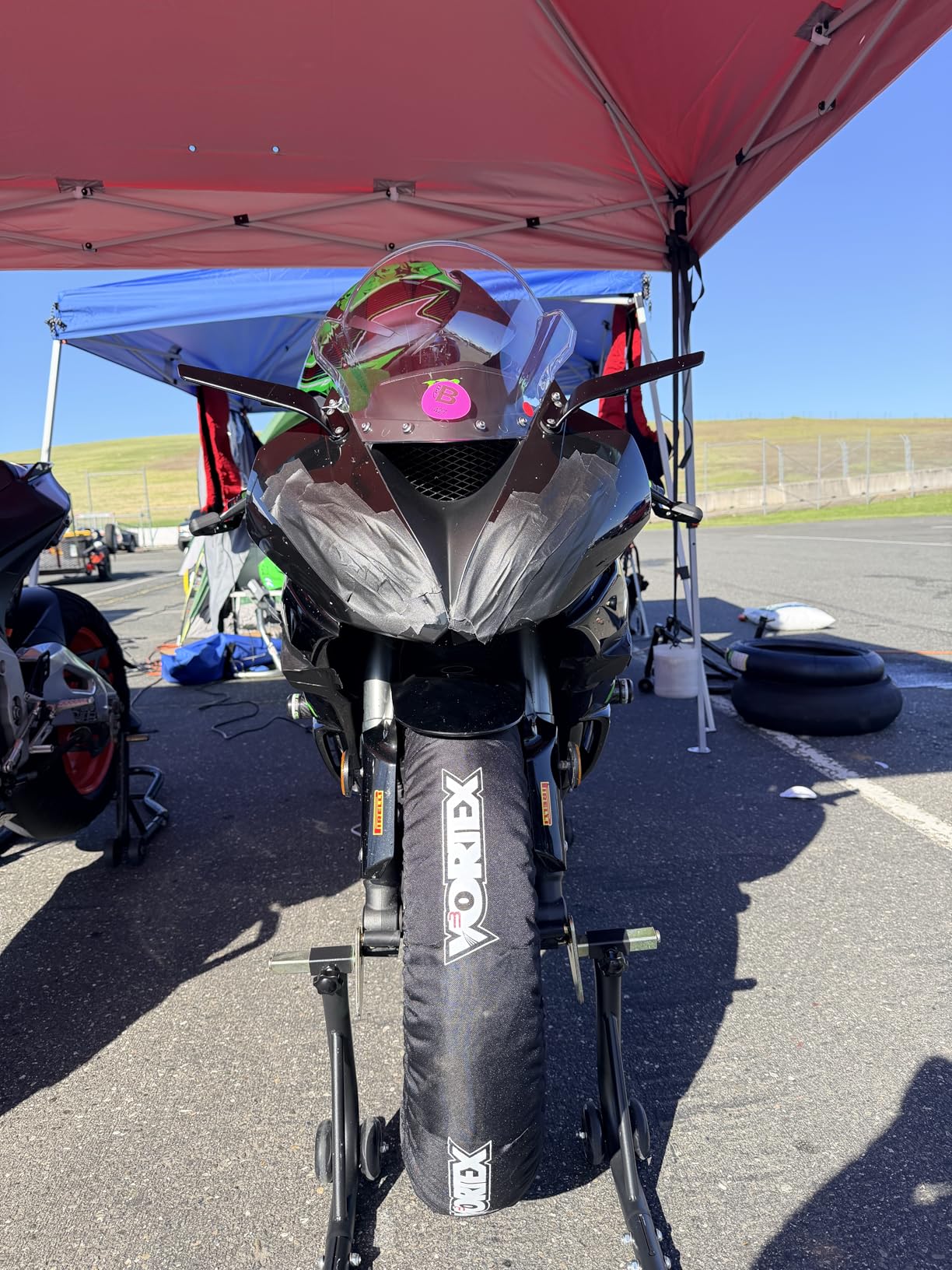
What sets the TW101 apart is the DuPont Nomex inner liner. Nomex is the same flame-resistant material used in professional racing suits, and its melt-proof design provides peace of mind when you’re heating tires to high temperatures. This attention to safety materials speaks to Vortex Racing’s focus on quality construction.
The carbon insulation is another standout feature. Carbon fiber’s excellent insulating properties help retain heat more effectively than basic fabric or foam alternatives. During my testing, I found the TW101 maintained tire temperatures significantly longer than cheaper alternatives once removed from power.
Dual stage neon lights provide clear visual feedback about warming status. One color indicates heating is in progress, while another shows when tires have reached target temperature. This simple but effective system eliminates guesswork about when your tires are race-ready.
The bungee cord fitment system makes installation quick and secure. Unlike some systems that struggle to stay in place, the TW101’s bungee cords ensure consistent contact between the heating elements and your tires. Proper contact is essential for efficient heat transfer, and this design handles it well.
Of course, premium features come with a premium price tag. At nearly four times the cost of budget options, the TW101 represents a significant investment. Whether the additional features justify the cost depends on your racing commitment and budget.
For whom its good
The TW101 is ideal for serious racers who compete regularly and want the best equipment available. If you’re already investing in high-end motors, speed controllers, and chassis components, premium tire warmers make sense as part of a complete performance package.
Those who race in very hot conditions will appreciate the melt-proof Nomex liner’s safety features. Anyone who values heat retention and precise temperature control will benefit from the carbon insulation and dual stage indicators.
For whom its bad
Budget-conscious racers will find the price difficult to justify. If you’re an occasional club racer rather than a serious competitor, you can get adequate results from less expensive options.
Beginners who are still developing their skills may not notice the performance benefits that justify the premium cost. Those racing in mild conditions where extreme temperatures aren’t necessary might be paying for features they don’t fully utilize.
RC Car Tire Warmer Buying Guide
Choosing the right RC car tire warmers involves understanding several key factors that affect performance and value. After testing dozens of systems over years of racing, I’ve learned that the best choice depends on your specific racing class, budget, and track conditions.
Temperature Settings by Racing Class
Different RC car classes require different tire temperatures for optimal performance. VTA class typically runs cooler, with most racers targeting 130-140°F (55-60°C). The vintage tires and lower speeds mean you don’t need extreme heat to achieve good grip.
Touring car racing generally needs higher temperatures, especially for softer compounds. I typically run 150-165°F (65-75°C) for outdoor asphalt and back down to 140-150°F (60-65°C) for indoor carpet. F1 cars often fall somewhere in between, depending on the specific tire compound and track surface.
Outdoor racing in cold conditions may require temperatures at the upper end of your warmer’s range. When track temps drop below 60°F, you might need 170°F+ to compensate for heat loss during the time between removing warmers and starting your race.
Tire Warmer Types: Cups vs Belts vs Blankets
Cup-style warmers enclose the tire and provide focused heating to the tread area. They tend to reach temperature quickly and maintain it well, but may leave sidewalls cooler. Cups work great for consistent heating but can be bulky to transport.
Belt and wrap systems wind around the tire exterior. They’re generally more compact and easier to store, but may provide less even heating. Quality wrap systems like the SKYRC RacingStar Pro minimize this issue with good design, but budget options sometimes struggle with temperature consistency.
Blanket systems like the Spektrum XT2000 wrap completely around the tire for more even heating. They combine advantages of cups and wraps, though they typically cost more. The even heat distribution is particularly valuable for high-grip carpet tracks where consistency matters most.
Power Requirements and Battery Life
Most tire warmers operate on 12V DC power, giving you flexibility between AC power supplies and batteries. Systems that accept 3S-4S LiPo inputs are convenient if you already use these batteries for your cars.
When powering from batteries, consider that a full warming cycle consumes significant capacity. A typical 3S 3000mAh battery can warm one set of tires 3-4 times before needing recharge. For race days with multiple heats, bring a larger battery or a dedicated power supply.
Some warmers include power supplies, while others require you to source your own. Factor this into your budget when comparing prices. A $100 warmer that needs a $40 power supply actually costs more than a $120 unit that includes everything.
Size Compatibility Guide
1/10 scale touring car and VTA tires typically measure 2.0-2.4 inches wide and 2.6-3.0 inches in diameter. Most universal tire warmers accommodate this size range easily.
1/12 scale and pan cars use much smaller tires, often under 2 inches in diameter. You may need specialized warmers or compact cup systems like the G Force for these applications.
1/8 scale buggies and GT cars have larger tires that may exceed the capacity of standard warmers. Verify compatibility before purchasing, or look for systems specifically designed for these larger classes.
Budget vs Premium: What’s the Difference?
Budget tire warmers ($30-70) typically offer basic heating with limited features. They work fine for casual racing but may lack precise temperature control, even heating, or durable construction. Expect to make some compromises on build quality and features.
Mid-range options ($70-130) like the SKYRC RacingStar Pro and Spektrum XT2000 hit the sweet spot for most club racers. You get digital controls, decent build quality, and useful features without paying premium prices. This is where most racers should focus their search.
Premium systems ($200+) like the Vortex TW101 offer professional features and construction. Materials like Nomex liners and carbon insulation provide superior performance and safety. These make sense for serious competitors who race frequently and can justify the investment.
Frequently Asked Questions
What tire warmers should I get for VTA RC cars?
For VTA class racing, I recommend mid-range warmers like the SKYRC RacingStar Pro or Spektrum XT2000. VTA doesn’t require extreme temperatures, so these systems provide everything you need without overspending on unnecessary features. Look for models that allow precise temperature control between 130-140°F for optimal VTA tire performance.
What temperature should RC tire warmers be set to?
The ideal temperature depends on your tire compound and racing conditions. For touring cars on outdoor asphalt, target 150-165°F (65-75°C). Indoor carpet typically needs 140-150°F (60-65°C). VTA cars generally run cooler at 130-140°F (55-60°C). Cold outdoor conditions may require increasing temperatures by 10-15°F to compensate for heat loss.
Are tire warmers worth it for RC racing?
Yes, tire warmers provide significant advantages for competition racing. Pre-warmed tires deliver immediate grip instead of requiring 2-3 laps to reach operating temperature. This consistency is especially valuable for qualifying races where every position matters. The improvement in first-lap handling and reduced warm-up time makes tire warmers essential for serious racers.
How long should I warm up my RC tires?
Most tire warmers reach target temperature in 10-15 minutes. I recommend putting warmers on at least 20 minutes before your race to ensure thorough heating. The entire tire carcass needs time to absorb heat, not just the surface. For best results, keep tires on warmers until immediately before your race starts to maximize heat retention.
Do tire warmers make sense for outdoor racing?
Tire warmers are especially valuable for outdoor racing, particularly when temperatures drop below 70°F. Cold outdoor tracks significantly reduce tire grip, and pre-warming helps compensate for these conditions. Many outdoor racers consider warmers essential for competitive performance, with some increasing target temperatures by 10-15°F in cold weather.
Conclusion
After testing these RC car tire warmers extensively, the SKYRC RacingStar Pro stands out as the best overall choice for most racers. It balances professional features, reliable performance, and reasonable pricing. If budget is a concern, the Spektrum XT2000 delivers excellent value with its compact design and effective blanket-style heating. Those seeking premium performance should consider the Vortex TW101 for its superior construction and heat retention.
The right tire warmer for your needs depends on your racing class, budget, and track conditions. Consider what temperature range you need, whether you prefer cups or wraps, and whether you already have compatible power supplies. Whatever you choose, pre-warming your tires will give you that extra competitive edge that can make the difference between qualifying mid-pack and starting on the pole. Happy racing in 2026!