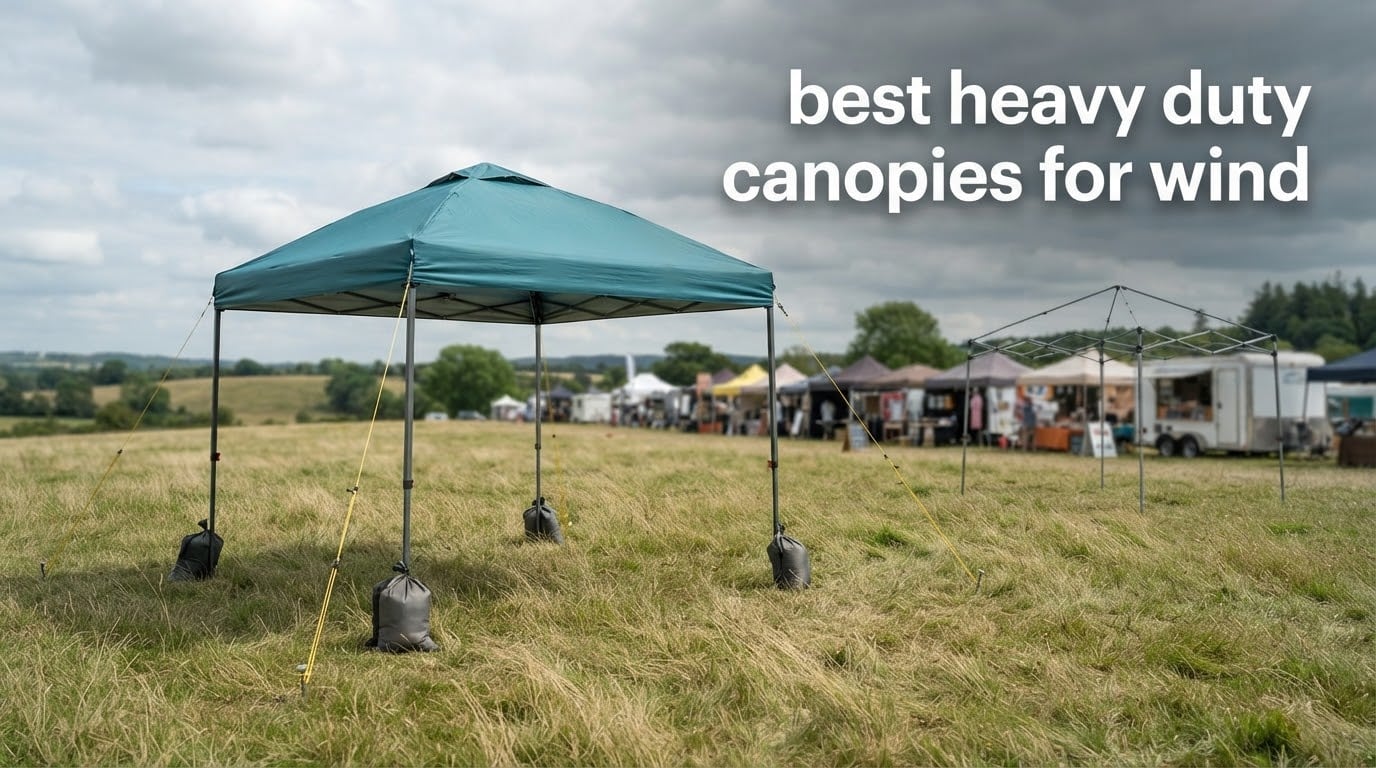
Most pop-up canopies sold for heavy duty use are not built to survive a serious gust, and the marketing says otherwise. I spent weeks going through thousands of buyer reviews on ten heavy duty canopies for wind so you would not have to, and the pattern was consistent: what separates a canopy that stands from one that folds is frame gauge, joint reinforcement, and how it was anchored at the moment the wind arrived. Nothing else on the spec sheet matters nearly as much.
That is the whole argument of this roundup. I ranked these ten by wind survival first, and by everything else second. Every pick below carries a stated wind figure, and I have told you plainly whether that figure comes from a manufacturer claim, from a single owner report, or whether nobody publishes one at all. Where a wind rating does not exist, I say so rather than borrowing the number from a neighbouring brand.
Before we get into the list, one thing to be clear about. A pop-up canopy is a temporary shade and rain structure. It is not a storm shelter and it is not a tent in the mountaineering sense, even though both products get called tents in the same search results. If your forecast has thunderstorms in it, the correct answer is to take the canopy down, not to pick a heavier model. If you are outfitting a work yard or a market stall alongside other gear, our heavy duty paper shredder reviews cover a different corner of the same durability problem.
Here is how I scored them, in order of weight: frame gauge and truss-bar specification first, then any stated wind tolerance with a testing basis, then how complete the anchoring kit is, then fabric denier and coating, then features that reduce wind load such as a vented roof, and finally weight, warranty length, and whether replacement parts exist at all. That last point matters more than buyers expect. A bent leg on a brand with no spare parts is a dead canopy.
Table of Contents
Top 3 Best Heavy Duty Canopies for Wind in October

ABCCANOPY 10×20 Commercial
- Alloy steel full truss
- 200 square feet
- 86 lb packed
- UPF 50+ waterproof top


Those three carry the deepest review histories of the ten and all three use a full truss frame rather than the folding scissor legs found on budget models. The 10×20 ABCCANOPY is the one I would put up in a gust if I only had to pick one.
The Best Heavy Duty Canopies for Wind in 2026
| Product | Specifications | Action |
|---|---|---|
| ABCCANOPY 10×20 Commercial-Series |
|
Check Latest Price |
| ABCCANOPY 10×10 King Kong with Sidewalls |
|
Check Latest Price |
| Eurmax USA 10×10 Commercial Pop Up |
|
Check Latest Price |
 CROWN SHADES 10×10 Commercial CROWN SHADES 10×10 Commercial |
|
Check Latest Price |
 COBIZI 10×20 with 6 Sidewalls COBIZI 10×20 with 6 Sidewalls |
|
Check Latest Price |
 COBIZI 10×10 with Mosquito Netting COBIZI 10×10 with Mosquito Netting |
|
Check Latest Price |
 HOTEEL 10×20 with Hexagonal Frame HOTEEL 10×20 with Hexagonal Frame |
|
Check Latest Price |
 HOTEEL 10×20 Upgraded Hexagonal HOTEEL 10×20 Upgraded Hexagonal |
|
Check Latest Price |
 CROWN SHADES 10×20 with Sidewalls CROWN SHADES 10×20 with Sidewalls |
|
Check Latest Price |
 EAGLE PEAK 13×13 Auto Eaves EAGLE PEAK 13×13 Auto Eaves |
|
Check Latest Price |
1. ABCCANOPY 10×20 Commercial-Series – best for large covered events
ABCCANOPY Patio Pop Up Canopy Tent 10×20 Commercial-Series(Black)
10x20 alloy steel full truss
200 square feet
UPF 50+ waterproof top
86 pounds packed
Pros
- Alloy steel full-truss frame resists bending
- Tool-free two-person setup
- Includes 6 sand bags 4 stakes and ropes
- Support sends replacement frame parts
Cons
- Very heavy to lift solo
- Some reports of scissor rods breaking in high wind
- Top fabric can stretch loose over time
This is the canopy I would put up if I were running a market row or a club night and could not afford a second canopy to lose. The frame is alloy steel with a full truss rather than the folding scissor construction used on entry-level models, and owners consistently describe it as the reason their unit survived storms that destroyed cheaper tents on the same street.
The numbers back that up. It covers 200 square feet, stands 132 inches at the peak, and the top is a UPF 50+ UV-blocking fabric rated waterproof. Reviewers report solo setup in under three minutes once you know the sequence, and the wide base feet take a weight bag without any adaptation.
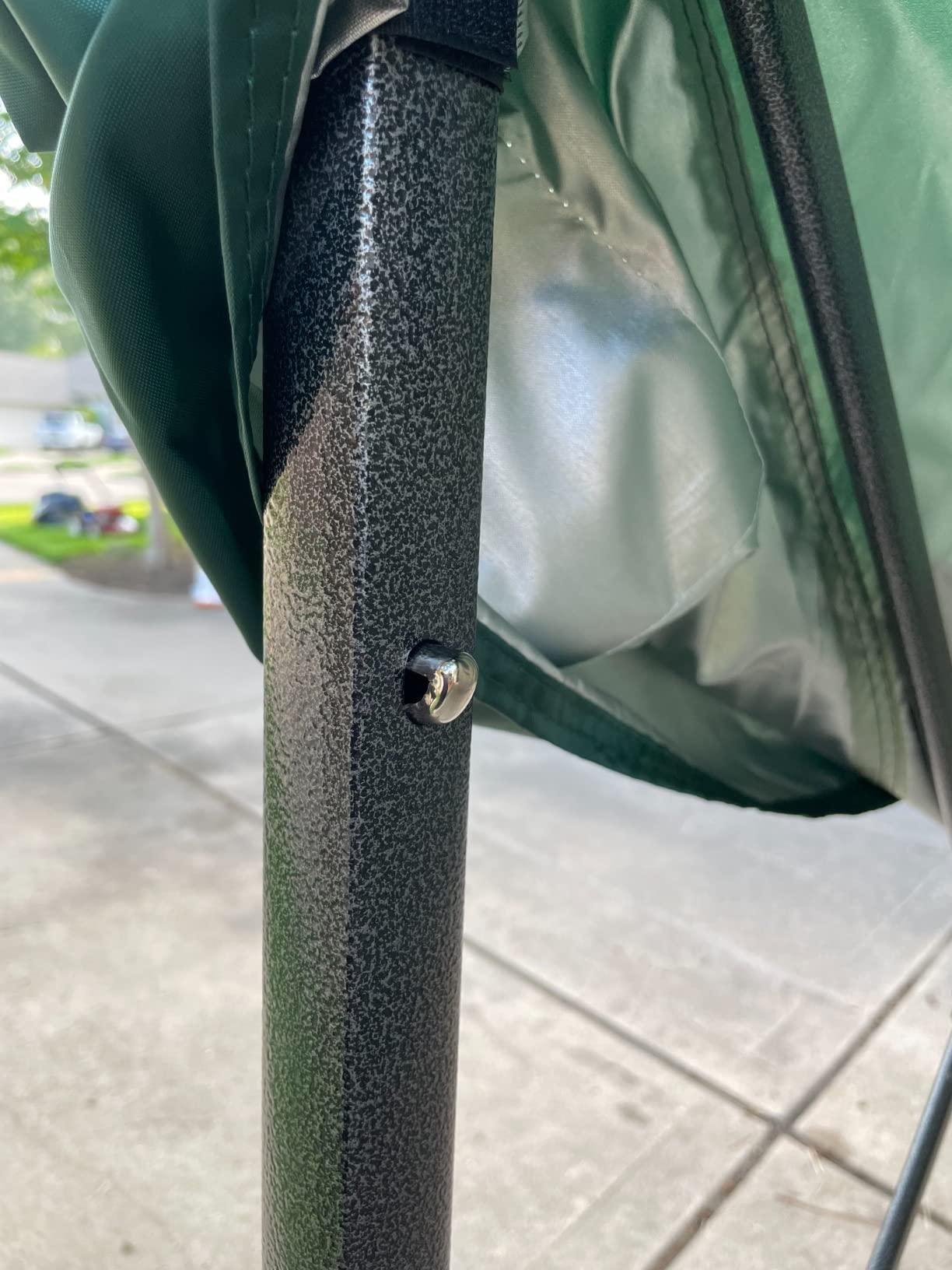
What is included matters for wind as much as what is built. This one ships with 6 canopy sand bags, 4 stakes and ropes, which is already more than most competitors in the category. My advice is to treat those as a starting kit and add more weight on the two upwind legs, since that is where uplift concentrates first.
The honest drawback is weight. At 86 pounds packed it is a two-person lift and a two-person load, and reviewers who load a car solo describe it as awkward. A minority of reviews also report seam weeping on first use and scissor rods snapping at the centre bolt hole during high wind, though those are framed as exceptions rather than a pattern.
What the ABCCANOPY 10×20 does well in wind
The full truss is the whole story. Instead of two legs that hinge in the middle and can buckle, this frame distributes load along the roof line, so a gust produces a sideways force the legs can absorb rather than a folding force they cannot.
Service is the second strength. Owners report the company shipping replacement frame sections and canopy tops rather than telling them to buy a new tent, which is the difference between a damaged canopy and a lost one.
Where it falls short
You need a vehicle and a second person. That is a real constraint for a solo seller working a weekend market, and it is the reason the 10×10 version below exists.
It is also not a storm-rated product. Nobody on this list is, but at 200 square feet this is a very large sail area, so the take-down threshold arrives sooner than the manufacturer wording suggests.
2. ABCCANOPY 10×10 King Kong with Sidewalls – best value for a vendor booth
ABCCANOPY Commercial Pop Up Canopy Tent with Sidewalls 10X10,White
10x10 full truss with 1mm square legs
500D polyester top with PU lining
3 removable walls plus door wall
28 kg packed
Pros
- 1mm square truss legs stay put when anchored
- Flame retardant 500D polyester top with UPF 50+
- Walls attach and strip off in seconds
- Banner loops on inside and outside
Cons
- Noticeably heavy for solo setup
- Included weight bags are small for serious wind
- Roller bag handles are not warranty covered
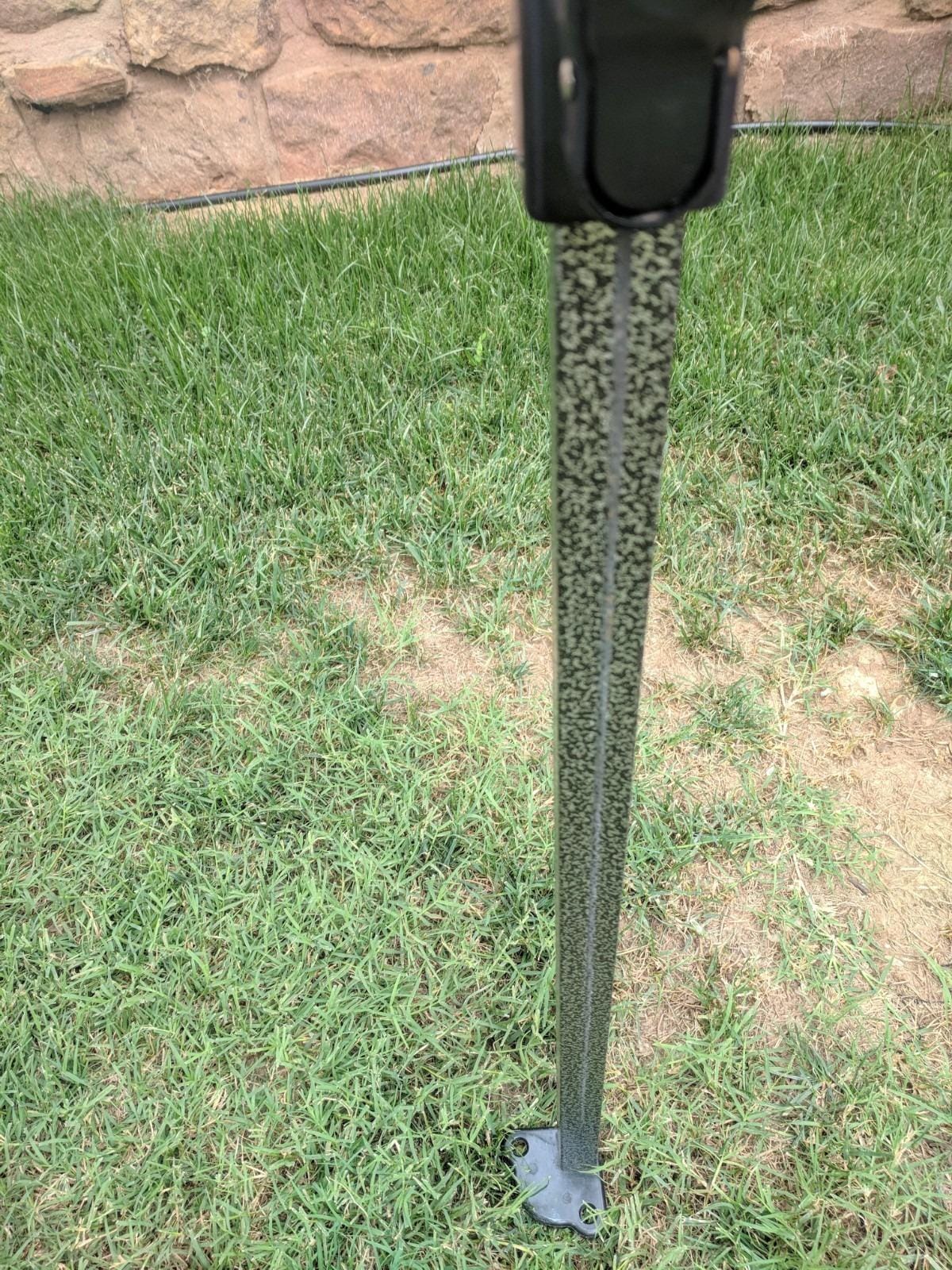
This is the canopy I recommend most often, because it does the one thing that matters for wind and then stops. The frame is a full commercial truss built from 1mm square steel legs with thumb-latch locks and three height settings, and vendors report it staying planted through strong wind once it is properly weighted with augers or bungees.
The fabric is where this one separates itself from cheaper 10×10 models. It is a 500 denier polyester roof with a PU lining, certified flame retardant, waterproof, and rated UPF 50+ for UV. If you are selling food or running an event where a venue inspector is present, that certification is the reason to buy this rather than a lookalike.
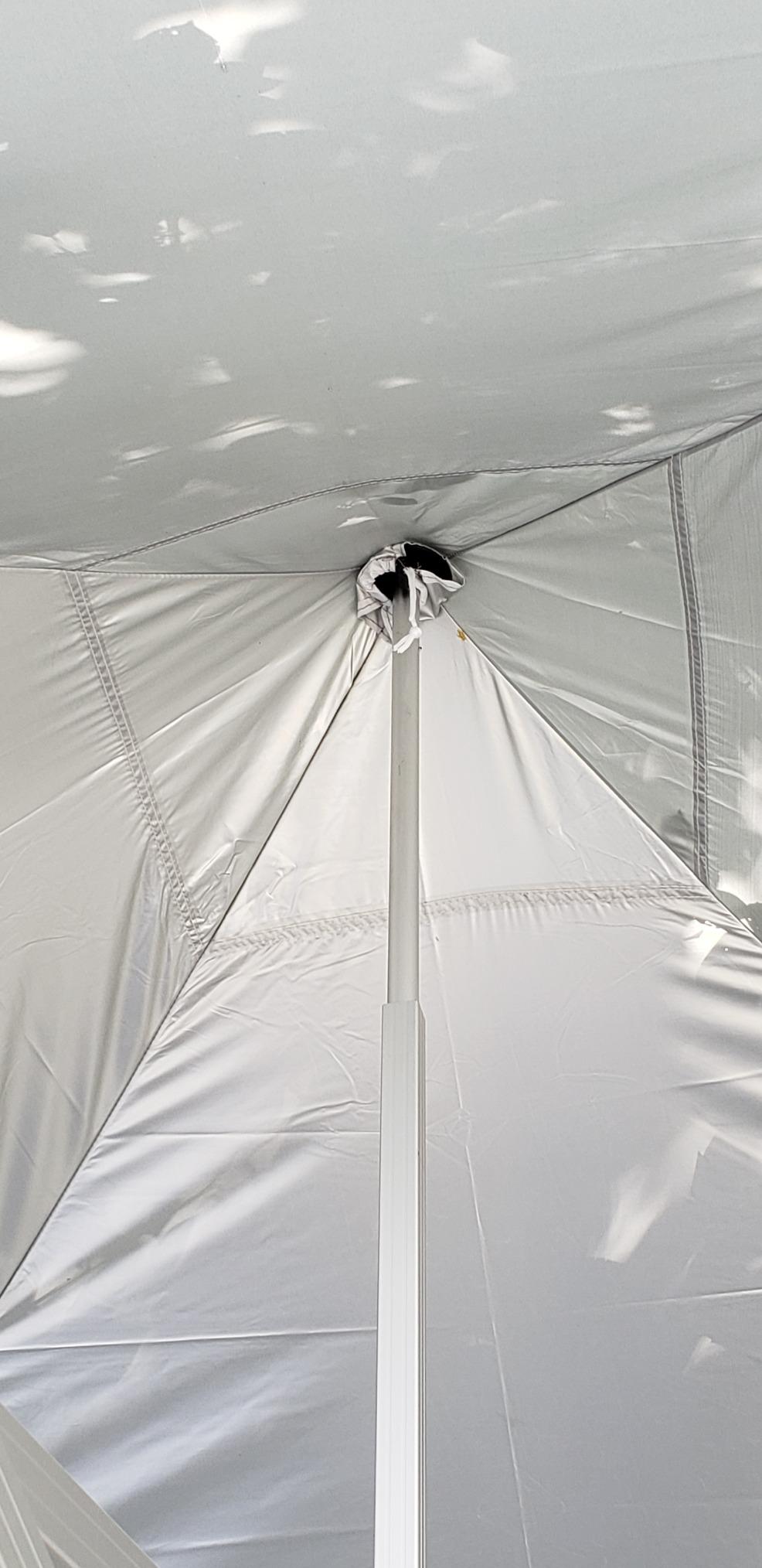
The sidewalls are the other quiet advantage. Three removable walls plus a door wall attach with a combination of hook-and-loop and zippers, so when a squall line arrives you can have them off in seconds and let wind pass under the roof instead of through a flapping panel.
Owners mention banner loops on the inside and the outside of the frame, a small detail that matters if you are hanging signage. Customer service has shipped free replacement parts, including tensioners, on several occasions reported in reviews.
Why this is the value pick for wind
It is the most direct route in this roundup to a genuine truss frame with square steel legs rather than thin folding tubes. Reviewers who upgraded from a lightweight pop-up describe it as the step up that finally survived more than one season.
The flame-retardant top and the three height settings also make it more versatile than its size suggests, since the lowest setting is what you want when the wind picks up.
Where buyers complain
The included weight bags are small. For an open market pitch in anything above a light breeze, vendors report buying 20 to 25 pound weights separately for each leg, which is the correct move and worth budgeting for.
At 28 kg it is also a two-person job for some users, and roller bag handle rivets are a recurring complaint that fall outside the warranty.
3. Eurmax USA 10×10 Commercial Pop Up – best for beach and coastal setups
Eurmax USA 10×10 Pop Up Canopy Tent,Commercial Tent with Patented No-Tip Rolling Bag,4 Zippered Removable Walls,UV & Water Resistant Canopy Top,Heavy Duty Outdoor Gazebo,Instant Shelter(White)
10x10 full truss steel frame
4 zippered removable walls
Patented no-tip wheeled bag
61 pounds packed
Pros
- Full truss structure resists wobble
- Zippered walls block wind dust and rain
- Patented rolling bag handles the weight
- US seller carries replacement parts
- 4 sandbag weights included
Cons
- One of the heavier 10x10 frames at 61 pounds
- Top is water resistant rather than fully waterproof
Beach setups are the hardest anchoring problem in this category, and that is why this one earns its place. Sand gives almost nothing for a stake to bite into, so the frame has to do the work while the anchors provide mass. A full truss steel structure at 61 pounds gives you a frame that will not fold before the anchors fail.
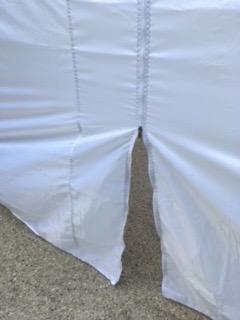
The wall system is what beach users buy it for. Four zippered removable walls close the sides against blowing sand and spray, and because they zip rather than flap, they add enclosure without the violent panel movement that open fabric produces in a gust.
The patented no-tip rolling bag is a genuinely clever piece of engineering for a frame this heavy. It is designed to move on its wheels without tipping, which matters when you are crossing soft sand and not fighting the bag the whole way.
The seller is US-based and carries replacement parts domestically, and that is a real advantage over buying an unbranded frame where a single broken truss section ends the product’s life.
What works on sand and short grass
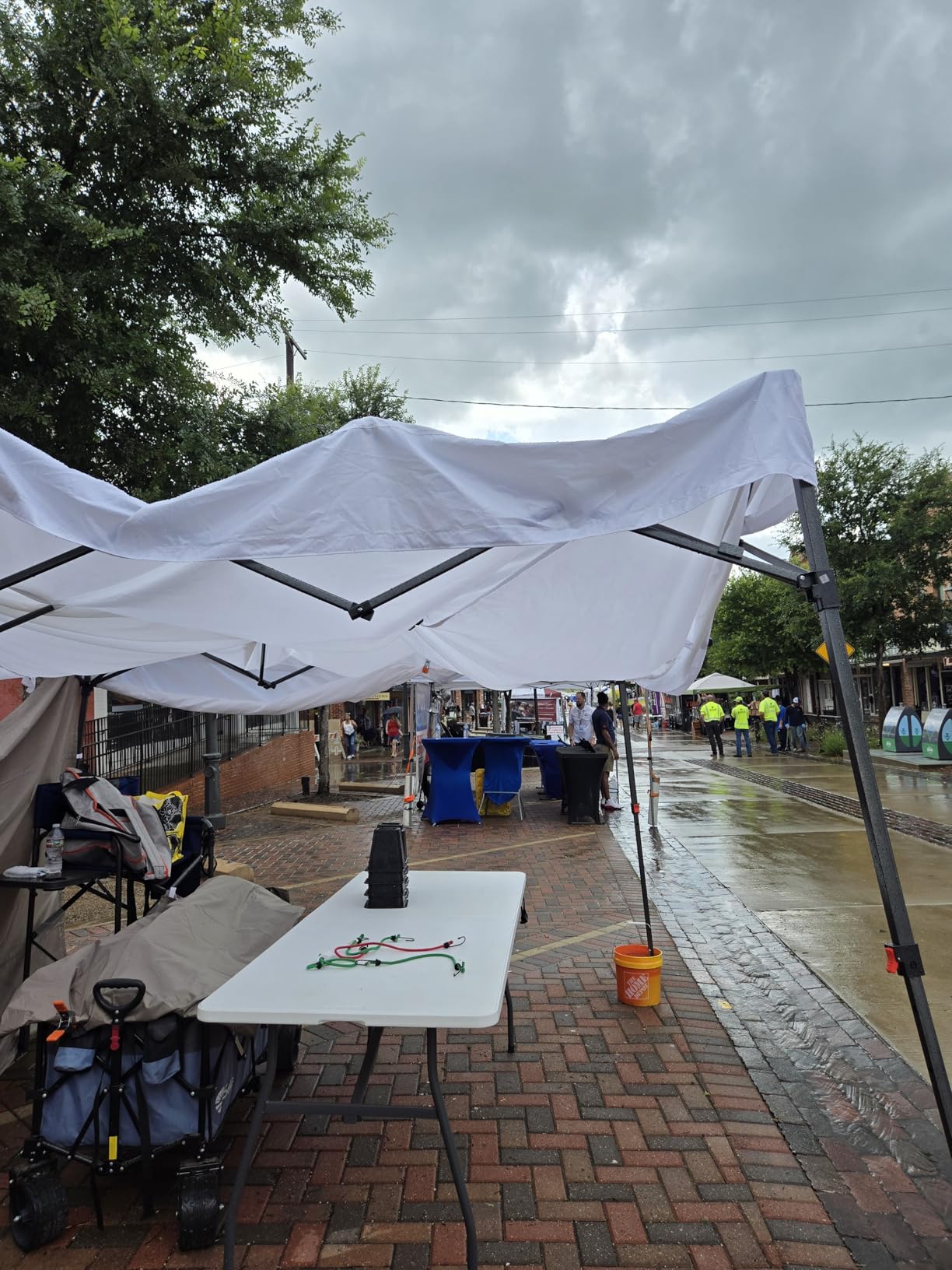
Frame mass and enclosed walls are the answer when stakes will not hold. Buried sandbags on all four legs plus the included weights are the practical method, and this frame is heavy enough to make that strategy viable.
Reviewers who came from cheaper pop-ups describe it as the unit that finally survived repeated seasons, with the truss and the wall system doing most of the work between them.
Where it falls short
The top is water resistant, not waterproof. Owners report pooling during prolonged rain, which matters more at a beach than anywhere else in this roundup.
Sixty-one pounds is a heavy solo lift, so budget for a second person or a cart.
4. CROWN SHADES 10×10 Commercial – best for standing headroom
CROWN SHADES 10X10 Commercial Pop Up Canopy Tent with Sidewalls, Gray
CENTERLOK hub locks four legs at once
Over 9 foot 5 inch interior peak
300D silver-coated UPF 50+ fabric
CPAI-84 flame rated
Pros
- CENTERLOK hub locks all four legs in one push
- Over 6 foot clearance under the valance
- Truss supports up to 120 pounds
- Bag pockets keep stakes and ropes organised
Cons
- Manufacturer advises taking it down before storms
- Two-person setup rather than a true one-person pop-up
Interior height is an underrated wind variable, and this one peaks at over 9 foot 5 inches. That matters commercially, since a standing-height interior changes what you can do under the roof, but it also means more sail area up high where the wind is stronger.
The CENTERLOK hub is the feature owners mention most. One push locks all four legs at the same height, which removes the most common setup error, and reviewers consistently single it out as the reason this feels different from a generic pop-up.
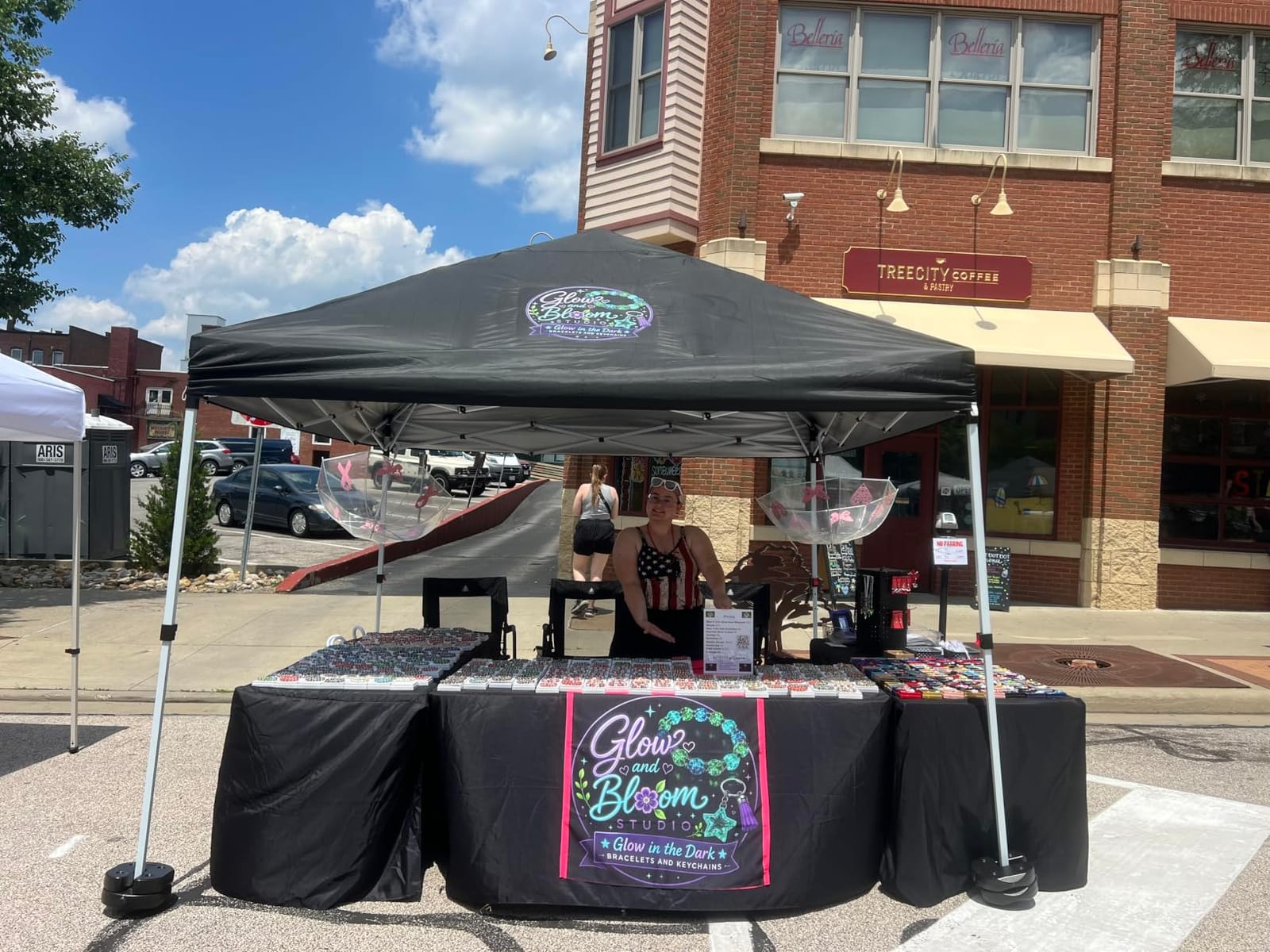
The fabric is a rugged 300D silver-coated top with UPF 50+ coverage, a CPAI-84 flame rating and taped waterproof seams. The truss has lining pipes and hardened bolts and is rated to 120 pounds, and two of the legs have integrated wheels.
The warranty is the second year of its kind in this group. A two-year limited warranty gives full canopy replacement in year one and replacement parts through year two for material and workmanship faults.
What works well for wind
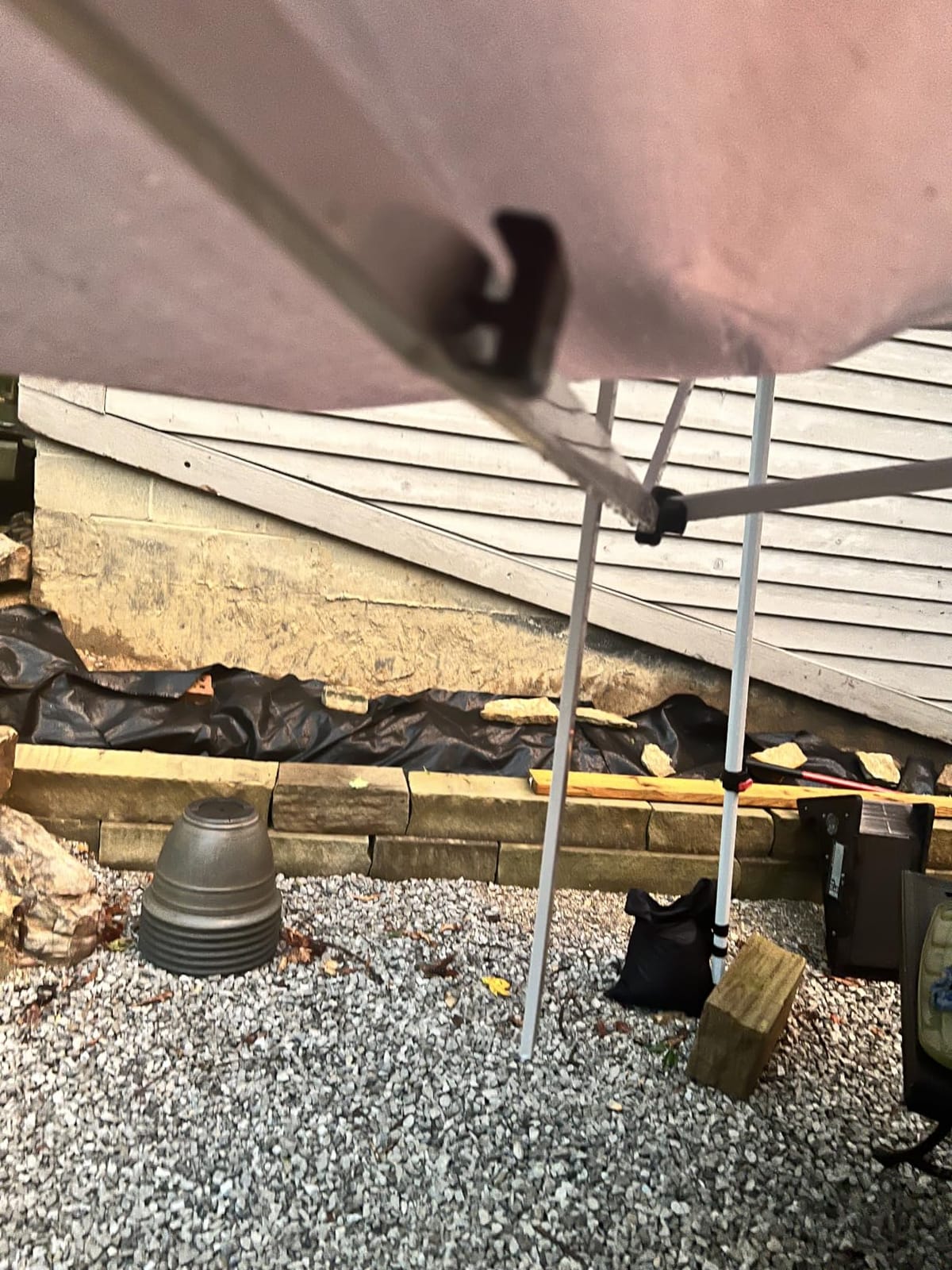
The hardened-bolt truss and the reinforced joints are what keep the frame square under lateral load, and the fabric rating means a gust tears fabric rather than splitting seams, which is the failure you want.
Its STO-N-GO bag has dedicated pockets for 8 stakes, 4 guy ropes and 4 wall panels, so the anchoring hardware is not the thing you forget in the car.
Where buyers complain
The manufacturer explicitly advises taking the canopy down before storms, and says anchored units can still blow over or collapse in heavy wind. That is the most honest warranty language in the roundup and it should shape your expectations.
Setup is described as a two-person job, and the 2-year warranty excludes damage from wind and weather, so it is not storm cover.
5. COBIZI 10×20 with 6 Sidewalls – best for a stated wind rating
COBIZI 10×20 Heavy Duty Pop Up Canopy Tent with 6 Sidewalls, Gray
1.26 inch pipe truss frame
220 lb intermediate poles
Manufacturer rates level 4 wind when anchored
420D double PU-coated Oxford
Pros
- Thickened powder-coated full truss steel frame
- Only pick with a published wind level
- 420D fabric rated waterproof at 2.1 psi with sealed seams
- 6 sidewalls create a near-enclosed room
Cons
- 105 pounds makes this a multi-person job
- Level 4 rating is not a storm rating
This is the one canopy in the roundup where the manufacturer publishes a wind level rather than a marketing adjective. The listing rates the frame for level 4 wind conditions, roughly 18 mph, when anchored. That is a manufacturer claim rather than independent testing, but it is still more than anyone else here offers, and it gives you a number you can plan a forecast around.
The frame spec here is the most explicit in the roundup. It uses a thickened powder-coated full-truss steel frame built from 1.26 inch pipe with a 0.03 inch wall, and the intermediate support poles are rated to hold 220 pounds each. The roof is double PU-coated 420D Oxford that blocks 99 percent of UV and is rated waterproof at 2.1 psi with fully sealed seams.
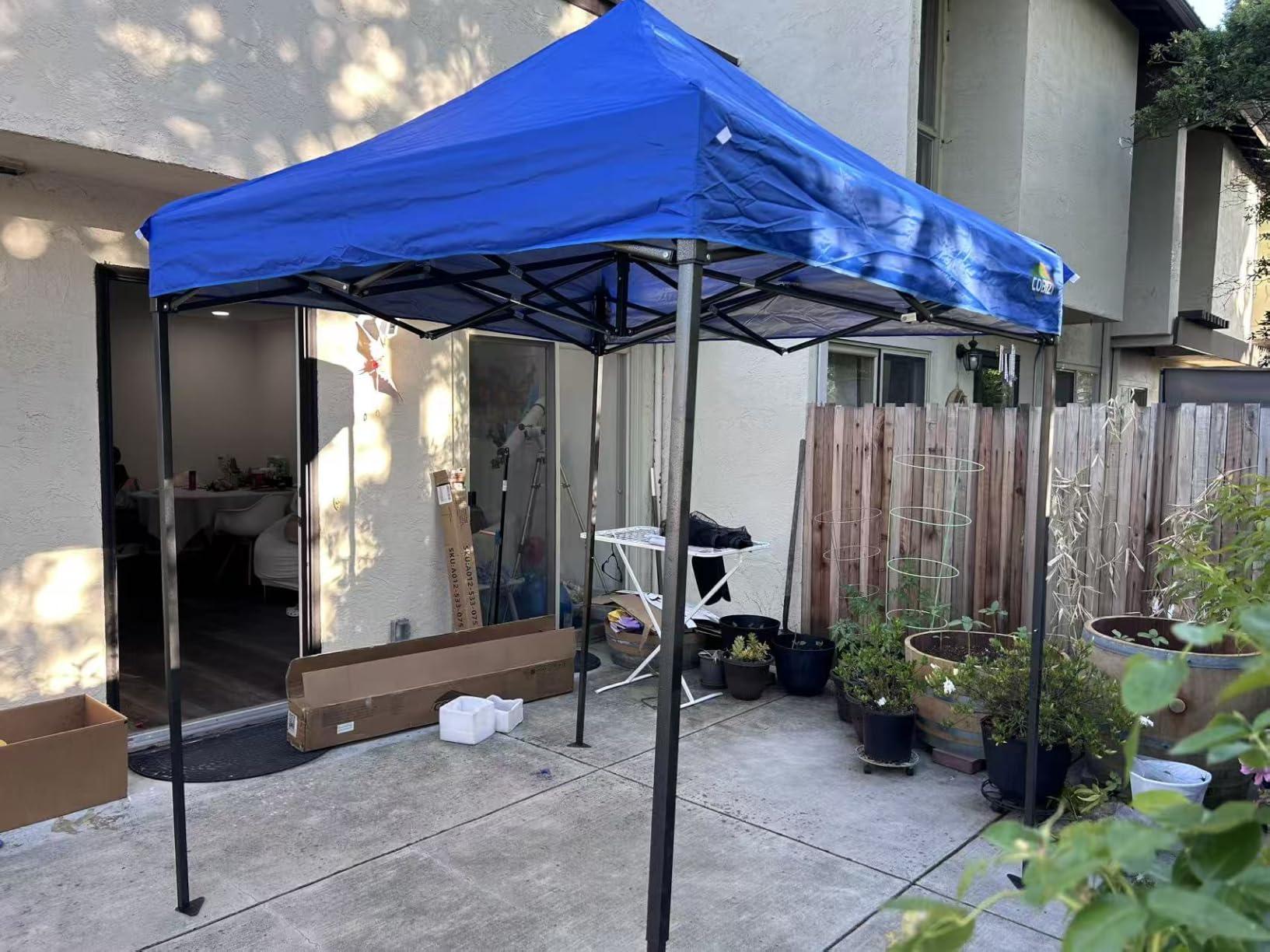
Six removable sidewalls zip to both the frame top and the legs, four with windows and two with zippers, which gives you a genuinely enclosed room rather than a tent with gaps. For a wedding or a market pitch where rain and wind arrive together, that is the most complete enclosure we reviewed.
The kit is included with the tent, with 6 sand bags, 4 stakes and ropes, which is the most complete anchoring package among the 10×20 models in this roundup.
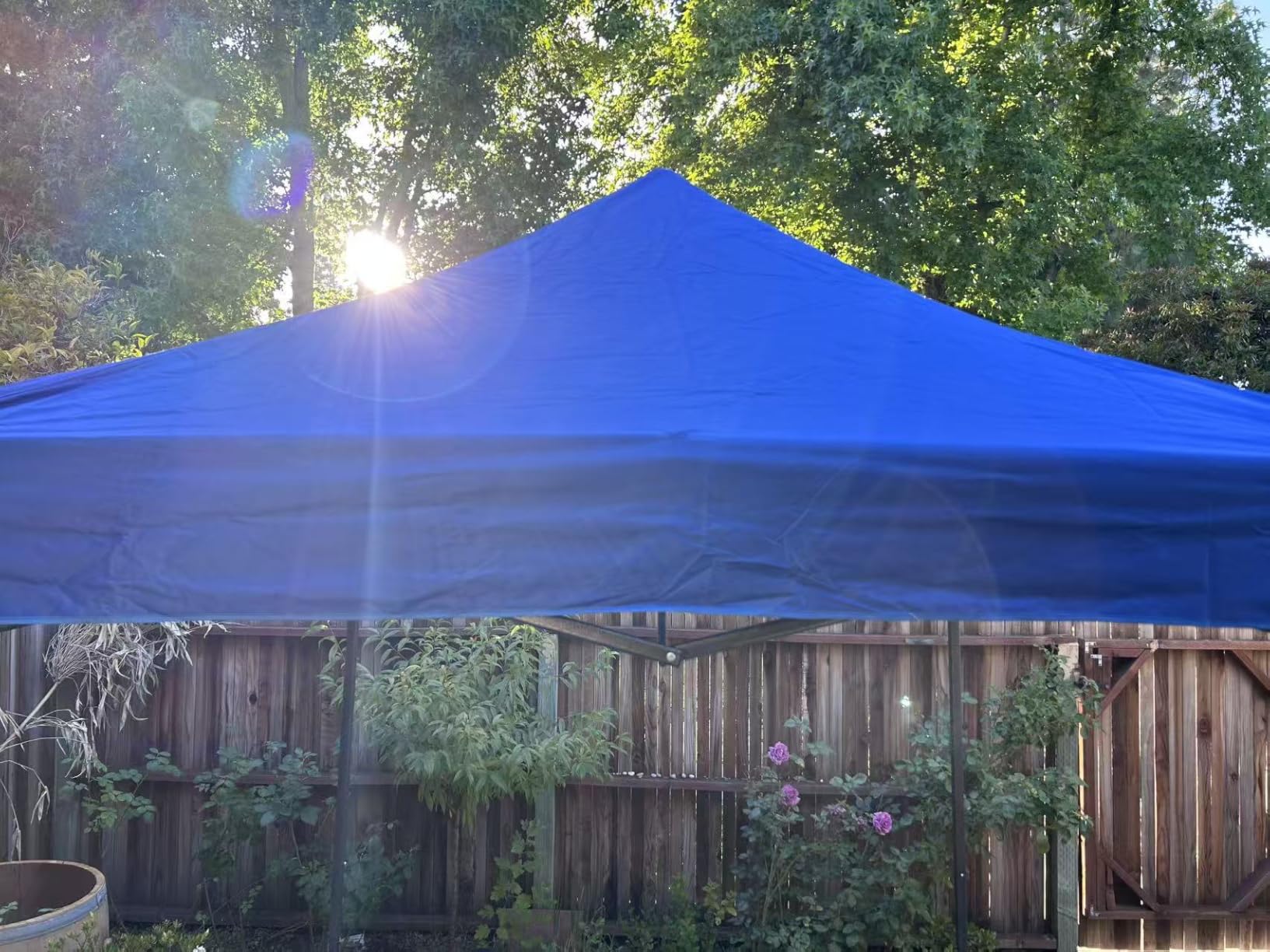
Why the published wind level matters
A number lets you make a decision. If your forecast shows 20 mph gusts, you already know this is not the canopy to leave standing, and you can strike it before the problem starts rather than after the frame folds.
Reviewers set the same expectation independently, describing anchoring with the included stakes, ropes and sandbags as a requirement rather than an option.
Where buyers complain
At 105 pounds it is a genuine multi-person job to raise and break down, and the owners who report the sealed seams keeping interiors dry are the same owners who report needing a crew.
Level 4 is a moderate breeze. This is one of the most capable canopies here and it still stops well short of storm territory.
6. COBIZI 10×10 with Mosquito Netting – best for bug-proofed campsites
COBIZI 10×10 Heavy Duty Pop Up Canopy Tent with Mosquito Netting Sidewalls
32mm thickened alloy steel truss
400 lb reinforced center pole
420D Oxford PU-coated top
94.5 inch peak height
Pros
- 32mm thickened alloy steel truss tubes
- 400 lb center pole rating
- Sealed seam tape and silver-coated inner layer
- Owners report holding in strong wind and rain
Cons
- Shortest peak height in the set at 94.5 inches
- Seated rather than standing height
- One owner received reversed mesh Velcro
This is the one I would buy for a campsite rather than a market, and the frame is more substantial than the entry-level positioning would suggest. The truss is built from 32mm thickened alloy steel tubes with a powder-coated finish for rust resistance, and the reinforced centre pole is rated to 400 pounds.
Several owners in Europe report it holding through strong wind and rain in situations where a cheaper canopy they owned failed, which is the single most relevant piece of evidence available for this product. It comes with 8 ground stakes, 4 guy ropes and a 1080D Oxford carry bag.
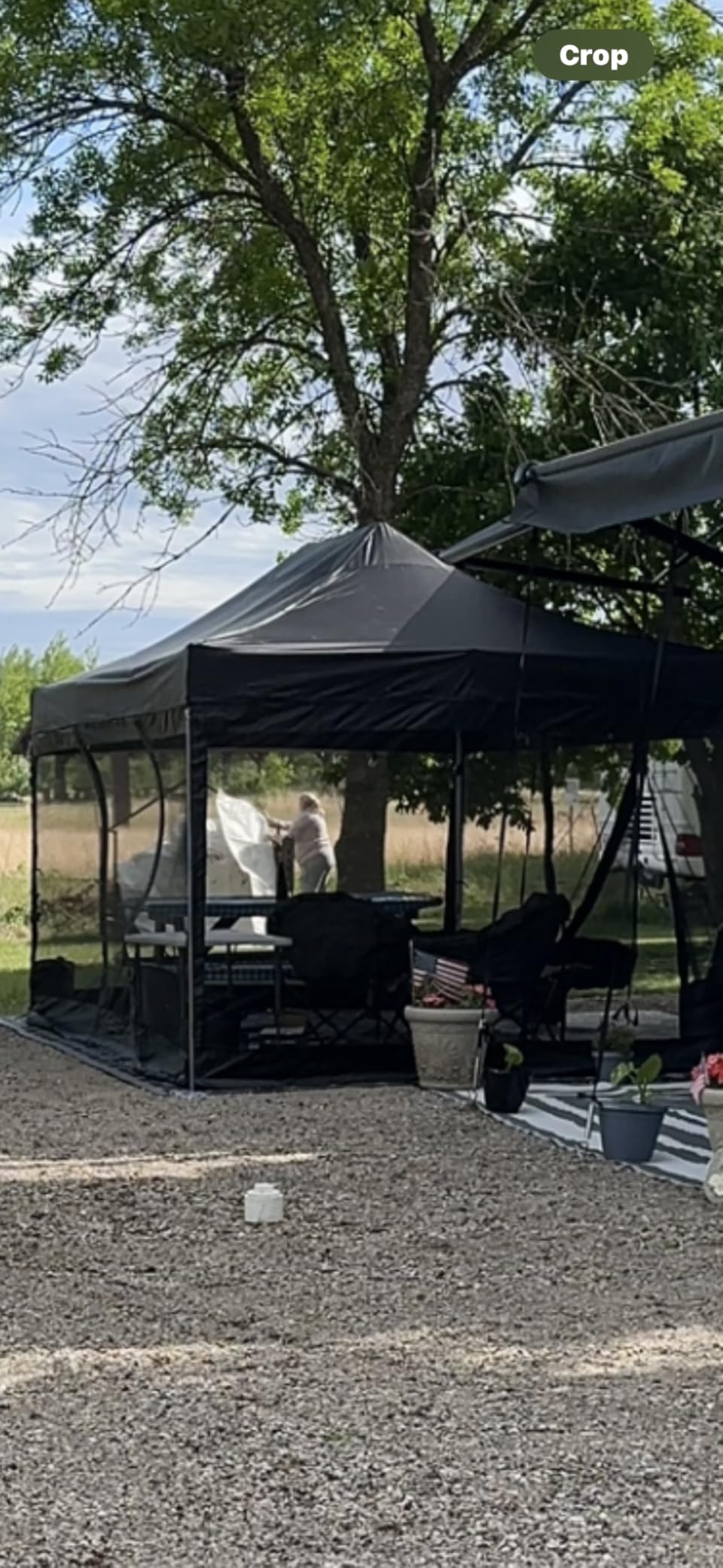
The four removable mosquito mesh walls use continuous hook-and-loop seams that seal around the legs, and the 420D Oxford PU-coated top has sealed seam tape with a silver-coated inner layer that reflects heat rather than just blocking UV.
Setup is tool-free for one or two people after the first assembly, with three height settings at 88, 92 and 96 inches. Using the lowest setting in a gust is the right move, since it lowers both the sail area and the tipping moment on the frame.
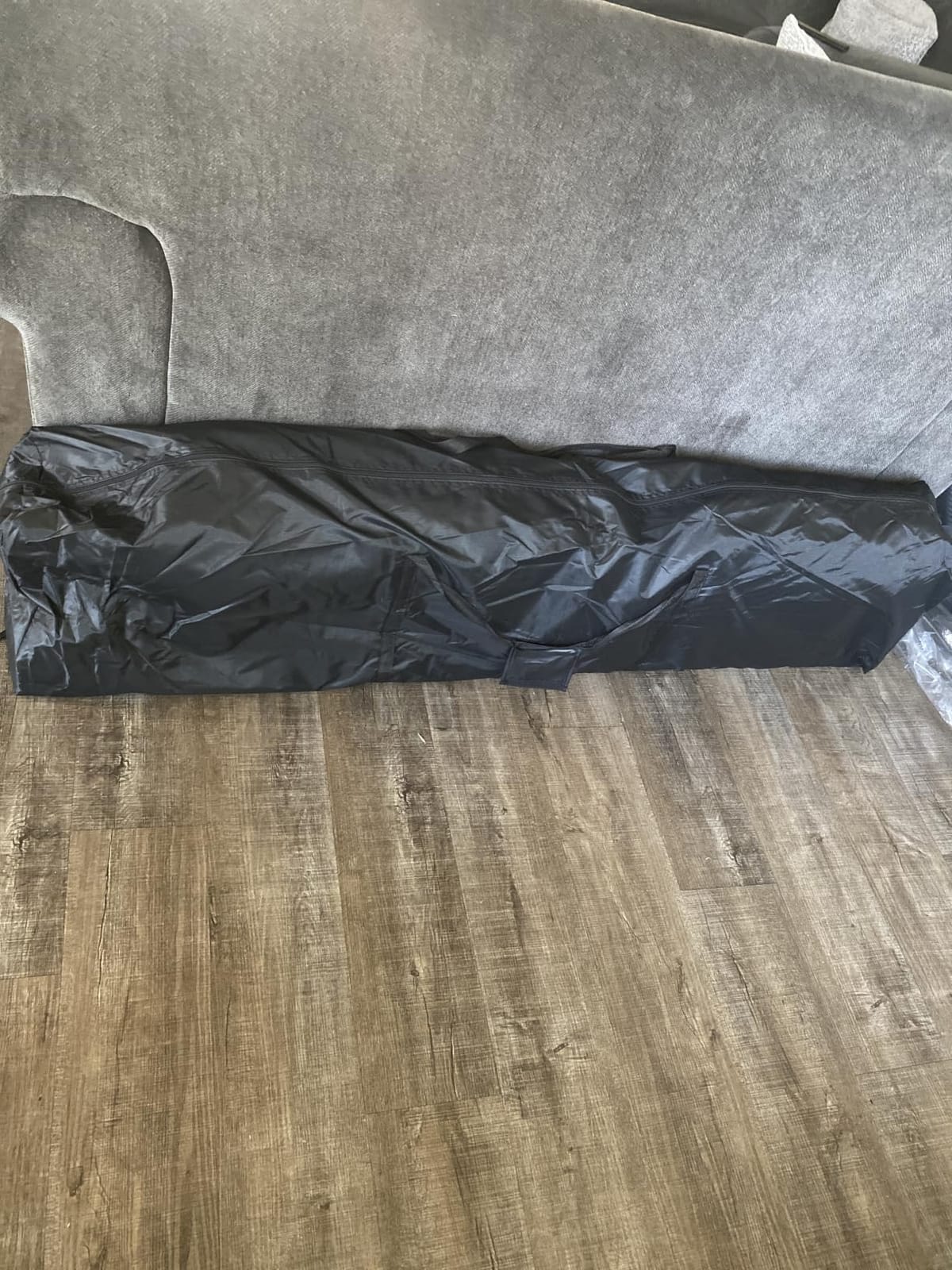
What works for a campsite in wind
Mesh walls are the smart choice for a windy campsite. Unlike solid fabric they let air pass through, so the roof does not build the pressure differential that lifts a canopy, and they still keep insects out.
The thickened tube gauge is the reason owners report it surviving conditions that defeated their previous tent, and the stakes and ropes included are enough to anchor all four legs properly on soil.
Where it falls short
At about 94.5 inches it is the shortest canopy here and is not a standing-height shelter. Plan for seated tables rather than a workbench.
One owner received a unit with the mesh sidewall hook-and-loop installed backwards, which made that panel unusable until support replaced it.
7. HOTEEL 10×20 with Hexagonal Frame – best frame rigidity at 10×20
Hoteel 10×20 Heavy Duty Pop Up Canopy Tent with 6 Sidewalls, Black
Thickened hexagonal steel tube frame
200 square feet of cover
420D Oxford with silver-coated interior
126 inch max height
Pros
- Hexagonal tubes resist deformation under impact
- 420D Oxford top with silver interior
- 6 sidewalls switch shade-only to enclosed
- Owners report a very rigid frame once anchored
Cons
- 115 pounds makes setup a multi-person task
- Carry bag lacks a pocket for the sidewalls
- Printed instructions are thin
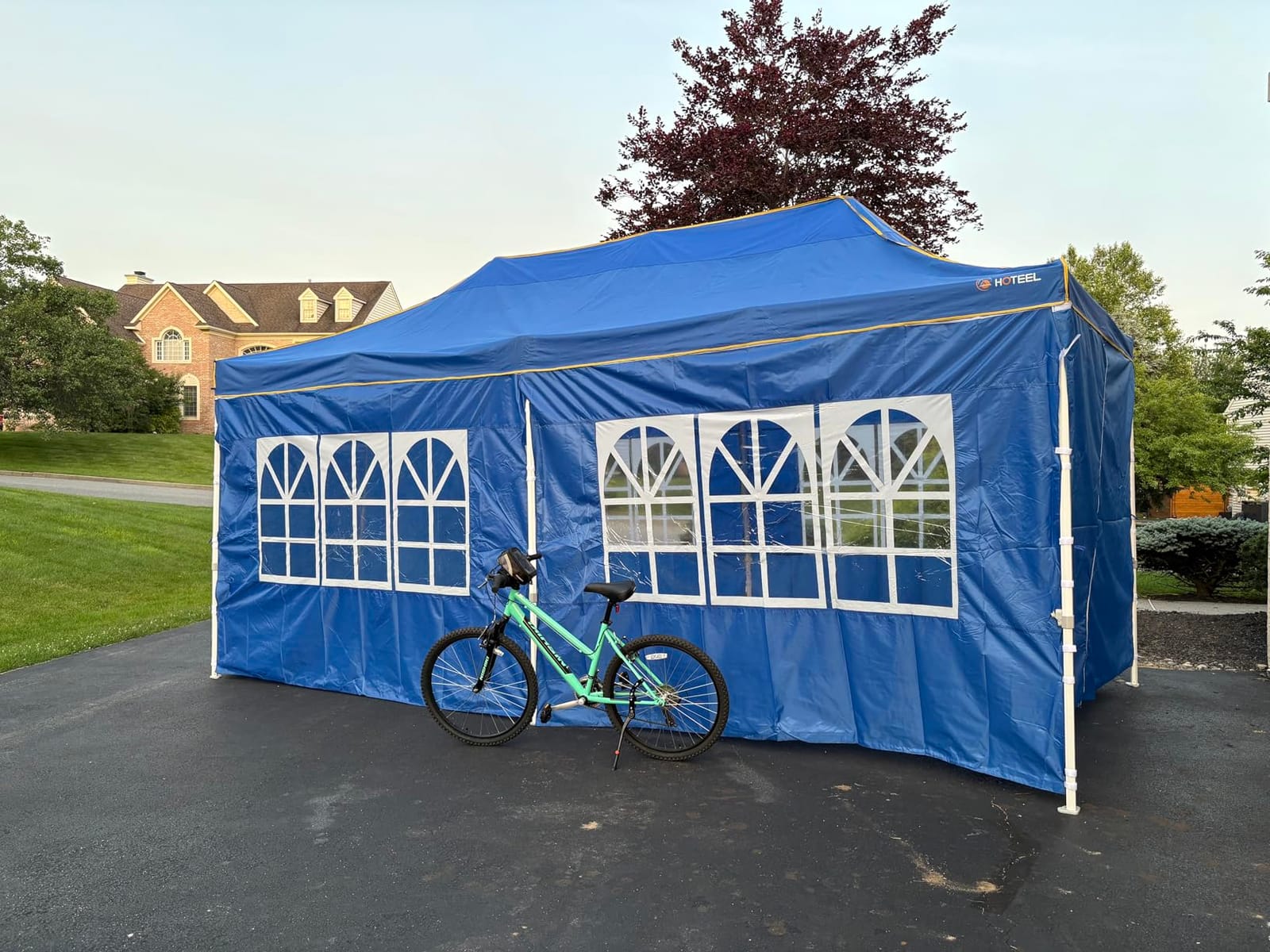
The hexagonal tube profile is the reason this one is worth a separate heading. A hexagon resists bending about its weak axis far better than a square tube of the same nominal size, and that is exactly the axis a gust loads when it pushes sideways on a canopy leg.
Owners describe this as a step up from budget canopies that failed in wind, and one buyer reports a cheaper canopy being torn apart by wind while this frame stayed intact. They also describe the frame as very stable and rigid once anchored, on a 200 square foot footprint one owner sets up in about 15 minutes.
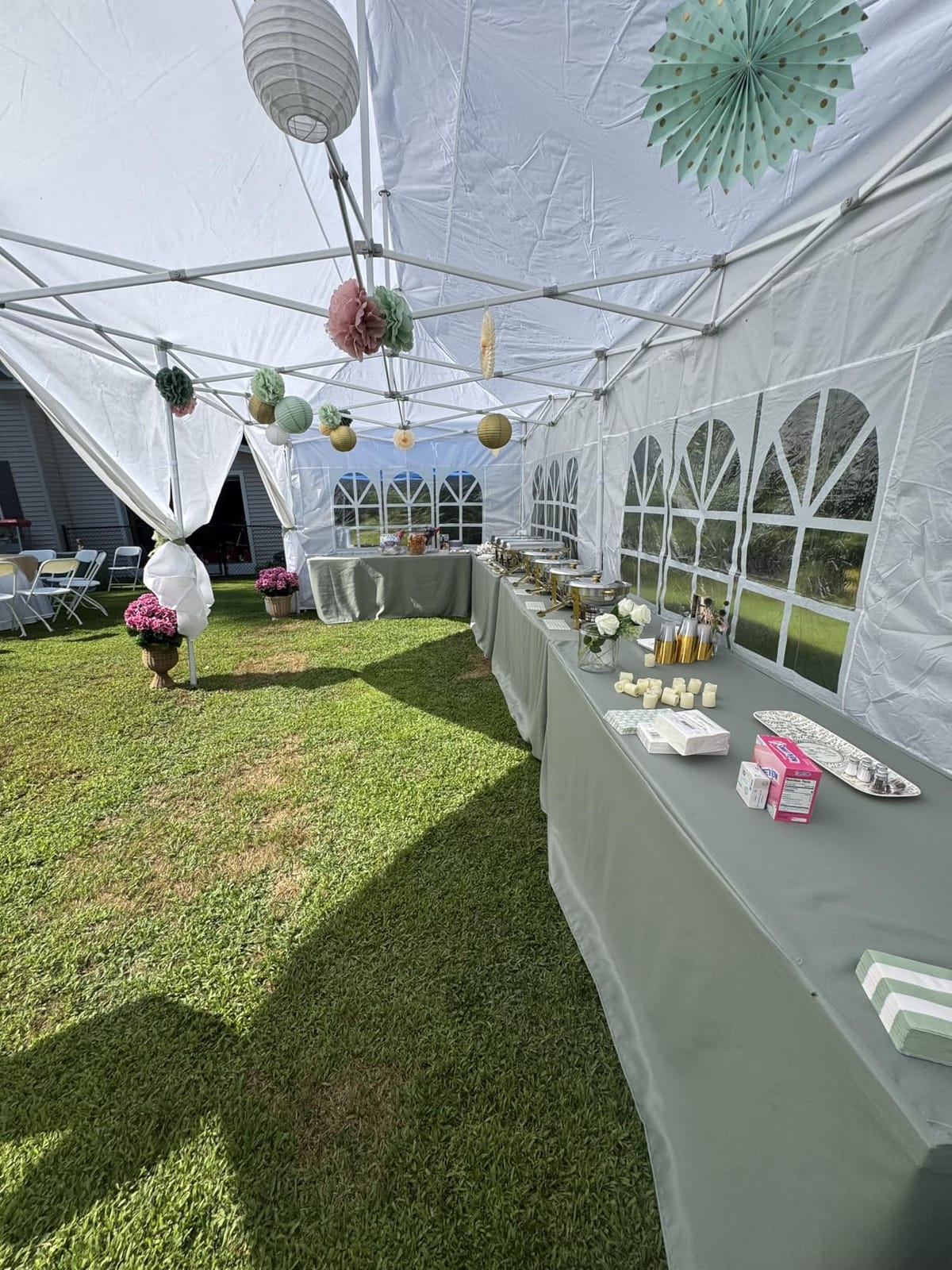
The roof is 420D Oxford with a silver-coated interior for UPF 50+ protection, and six silver-coated sidewalls attach and detach quickly so you can run the canopy as an open shade structure in calm weather and an enclosed room when the weather closes in.
The kit includes a carry bag, 8 ground nails and 4 wind ropes, and setup is tool-free for one or two people across three adjustable heights.
What works in a gust
Frame geometry is the advantage. Reviewers single out the hexagonal profile as the recurring reason this canopy feels more stable than square-tube competitors at the same footprint, and it is the reason I would choose it over an equivalent 10×20.
Being able to run it open or enclosed matters for wind management, since dropping the walls when a squall arrives reduces sail area immediately without a take-down.
Where buyers complain
At 115 pounds this is a two to three person lift and the carry bag has no pocket for the sidewalls, which means more pieces to track. A few buyers report arriving with dented legs or locks that need adjustment before they will hold.
The instructions are thin and the printed text is small, so allow time to work through the first assembly.
8. HOTEEL 10×20 Upgraded Hexagonal Steel – best for a crewed setup
Hoteel 10×20 Pop Up Canopy Tent, Heavy Duty Upgraded Hexagonal Steel Frame
Reinforced hexagonal steel legs
420D Oxford top rated 1500 mm
6 sidewalls with windows and zips
3 height settings to 124 inches
Pros
- Enlarged footpads spread load into the ground
- 420D top with sealed waterproof strips
- 4 window walls plus 2 zippered door panels
- Kit includes 8 stakes 4 ropes and 4 sand bags
Cons
- Extremely heavy and needs several adults to raise
- Manufacturer states it is not for storms or extreme weather
- One owner reported a smaller size than labelled
This is the same hexagonal approach as the HOTEEL above with a heavier dose of it, and it is the model owners describe most often as one of the most solidly built canopies in its class. The legs are reinforced hexagonal steel with enlarged footpads and a strengthened folding frame that resists bending during setup, which is where cheaper frames twist.
One owner reports it withstanding two months of 20 mph-plus winds through Arizona summer sun. That is a single owner report rather than a rated figure, so I would treat it as evidence that the frame is capable rather than as a tolerance you can rely on.
The roof is 420D Oxford PU-coated with sealed waterproof strips and a 1500 mm water rating, and the six sidewalls are four window panels plus two zippered door panels, so you can configure the structure open or enclosed. Three height settings run to 124 inches, and the 600D Oxford PVC-coated wheeled bag is one of the more durable carry bags in this group.
What works for wind
Frame rigidity and the enlarged footpads work together. A wider footprint spreads the overturning force into the ground, which matters more than most buyers realise when a gust tries to rotate the frame.
The full anchoring kit is genuinely complete, with 8 stakes, 4 ropes and 4 sand bags, and the buyer reports who use it describe the frame as staying put where lighter tents folded over.
Where buyers complain
The weight is the headline issue. One buyer reports a delivery weight near 290 pounds and needing three to four adults to raise it, which is an extreme outlier but sets the expectation. Owners generally frame a two to four person setup as normal rather than as a flaw.
The manufacturer states the canopy is for temporary shade and rain protection and not for storms or extreme weather, and one owner reported both a size shortfall and a failure on the first windy day.
9. CROWN SHADES 10×20 with Sidewalls – best warranty coverage
CROWN SHADES 10X20 Pop Up Canopy Tent with Sidewalls, Instant Setup, Gray
Powder-coated anti-rust steel frame
CENTERLOK clip-free hub
400D UPF 50+ CPAI-84 fabric
240 by 120 by 117.5 inches
Pros
- Electrostatic powder coating resists corrosion
- CENTERLOK clip-free hub speeds setup
- 400D fabric with CPAI-84 flame rating
- Two-year warranty with full replacement in year one
Cons
- Warranty explicitly excludes wind and weather damage
- Water repellent rather than fully waterproof
- Thinnest review history in the roundup
This is a 200 square foot commercial event shelter with one of the longest warranties in the group and one of the shortest review histories. Only 107 buyers have rated it, so I would treat the owner feedback as directional rather than conclusive, and the rating of 4.5 rests on a smaller sample than the others here.
What is documented is solid. The frame is thickened anti-rust steel with electrostatic powder coating for corrosion resistance, the CENTERLOK clip-free hub gives a tool-free three-level height adjustment, and the roof is rugged 400D fabric with UPF 50+ coverage, a CPAI-84 flame rating and waterproof sealing tape.
It comes with matching ground stakes, windproof ropes and weighted sandbags, and the wheeled STO-N-GO bag has built-in pockets for stakes and ropes so the anchoring hardware stays with the tent.
What works for wind
The anchoring kit is the most complete relative to what comes with it, with weighted sandbags included rather than offered separately. On an exposed pitch that matters, because a canopy that arrives without weights is a canopy that arrives unanchored.
The powder-coated finish also resists the corrosion that comes with repeated outdoor seasons, which keeps the frame joints stiff longer than bare steel.
Where buyers complain
The two-year warranty explicitly excludes damage from wind and weather, so a wind event is not covered even though the frame is built for it. Read that clause before you rely on the warranty for a market season.
The fabric is water repellent rather than fully waterproof, which makes this a shade and light-rain shelter.
10. EAGLE PEAK 13×13 Auto Eaves – best for one-person setup
EAGLE PEAK 13×13 Pop Up Canopy Tent, Auto Extended Eaves, Gray
Peak Push center lock for one-person setup
155.9 inch square footprint
Vented top with auto-extending eaves
18 kg packed
Pros
- Genuine one-person no-tool setup
- Automatically extending eaves add coverage
- Vented top improves airflow
- M5 hardened through-bolt frame
- Support sends replacement parts after wind damage
Cons
- Among the lightest frames here and folds in moderate wind
- Small upper vent canopy has unreinforced corners
- Supplied tie-down ropes degraded quickly
This is the honest outlier in the roundup. It is the only canopy here I would not put up as a primary exposed-site shelter, because the frame is among the lightest in the set and owners report the scissor legs folding or snapping in moderate wind. The 4.2 rating is the lowest here, and it comes from more than 2400 reviews, which is a meaningful signal.
What it does well is setup. The patented Peak Push centre lock allows a genuine one-person, no-tool setup, which is faster than any truss model in this list and the reason it still has an audience. The automatically extending eaves add shade coverage without manual assembly, and the telescoping three-position powder-coated steel frame adjusts easily.
It also has a vented top, and that matters for wind more than buyers expect. Venting lets pressure equalise so the roof does not billow and generate lift, and owners report it improves airflow under the canopy in heat. The frame uses an M5 hardened through-bolt construction with powder-coated steel, and the 600x300D wheeled carry bag includes 4 reusable weight bags.
What works in wind
The vented top is a genuine wind feature rather than a comfort feature, and it is the only canopy in this roundup that lists a roof vent as a feature. Vented designs are recommended by users who have watched unvented roofs lift.
Customer service is a strength. Owners report the company shipping replacement frame parts quickly after wind damage, which turns a broken canopy into a repair instead of a write-off.
Where buyers complain
The frame is the problem. Owners who anchor it properly, using top-bracket tie-downs, doubled stakes and added sandbags, and who take it down past roughly 12 to 15 mph, report a well-made tent. Owners who leave it standing in stronger wind report folded legs.
The small upper vent canopy also has unreinforced corners that can poke through during setup, and the supplied tie-down ropes are reported to degrade quickly in sun, with one snapping in wind. Attach cords to the top leg brackets, since bottom brackets can help fold the canopy.
How to Anchor a Canopy in Wind
Anchoring is the part of wind performance you control completely, and it costs far less than upgrading a canopy. Users on market and festival forums agree on the method: one anchor per leg, always, plus guylines tensioned on all four corners.
Pick the method that matches the surface you are standing on. Stakes only work where there is soil to grip, and markets, shows and job sites are mostly concrete.
Soil and grass: Deep screw or auger stakes, not the small plastic spikes that come with a canopy. Drive them at an angle away from the leg and bury the hook end fully.
Sand: Stakes are close to useless. Use filled sandbags on every leg and bury the bag half-depth if you can. Add a second bag on the two upwind legs.
Concrete and asphalt: Use water-filled weights or filled sandbags at least 20 to 25 pounds per leg, and place them on the foot plates rather than tied to the frame above.
All surfaces: Run a guyline from each corner to a ground anchor. Loop the line around both the leg and the canopy cover rather than the leg alone, which users report is noticeably steadier in gusts.
Quantity is the part most guides skip. Four anchors is the floor, not the target. For an open 10×10 or 10×20 in anything above a light breeze, treat one weight per leg plus corner guylines as the minimum, and add weight to the upwind side first because that is where uplift concentrates.
If you cannot stake, you can still reduce load. Lower the canopy to its minimum height, drop the sidewalls so air passes under the roof, and lock the sliding truss sections fully extended. Users report that clamping the truss sections stiffens the whole frame noticeably.
Canopies with sidewalls are also worth reconsidering on a windy pitch, since a closed box traps pressure on the windward face. If you are buying for an exposed site and expect to run it open, a canopy with mesh or removable walls is more useful than a solid enclosure. Our heavy duty playpen roundup covers a similar question in a different category, namely how weight and anchoring decide whether a product stays where you put it.
Heavy-Duty Buying Guide: What Actually Matters
Frame gauge and truss construction. This is the single most important spec and the one most listings omit. Look for a full truss frame, where the roof beams are braced by internal cross-members, rather than a bare perimeter frame with folding scissor legs. Square steel of 1mm or more and hexagonal tube both hold far better than thin folding tubing, and the truss joints and centre bolt holes are where cheap frames fail first.
Stated load rating. A published number on the frame tells you the manufacturer has at least thought about load. In this roundup the figures run from 120 pounds on the CROWN SHADES 10×10 to 400 pounds on the COBIZI 10×10 centre pole, with the COBIZI 10×20 intermediate poles rated to 220 pounds each. Treat a missing rating as a warning.
Fabric denier and coating. Denier is the yarn weight, so 300D is lighter than 420D, which is lighter than 600D. PU coating and taped or sealed seams are what turn a canopy into a rain shelter rather than a shade structure. The 10×20 models here run 420D, while the lighter models use 300D or 150D, and the difference is visible in how the roof behaves in a squall.
Steel versus aluminum. Steel frames are heavier and resist bending better, which is what you want in wind. Aluminum frames are lighter and rust-proof, which matters on a beach or for anyone carrying a canopy alone, but they flex more under lateral load. Every pick in this roundup uses a steel or alloy steel frame, and that is not a coincidence given the sort key.
Straight-leg versus slant-leg. Slant-leg geometry leans the legs outward and adds a wider footprint, which improves stability on uneven ground and slightly reduces overturning moment. Straight-leg units are narrower to transport and usually allow more headroom under the valance.
Vented roofs. A roof vent lets air move through and stops the pressure differential that lifts a canopy. Only one of the ten picks here lists one, and forum users consistently describe venting as the feature that matters most in a gust after anchoring.
Fire certification. If a venue or a regulation requires it, look for CPAI-84 or NFPA-701 on the fabric, not just on the listing headline. The CROWN SHADES units and the ABCCANOPY 10×10 both carry a stated flame rating, which matters for indoor-adjacent and regulated events.
Warranty and replacement parts. Check whether wind damage is excluded before you rely on a warranty, because two of the units here exclude it explicitly. A brand that sells replacement truss bars separately turns a bent frame into a fifteen-minute repair, and that is worth more to a seasonal vendor than any extra pound of fabric. The same replacement-parts logic runs through other heavy duty gear we test, including our heavy duty sewing machine reviews and our heavy duty dog crate roundup.
When to Strike Your Canopy Instead of Fighting the Wind
Take it down when gusts pass roughly 20 mph, when rain is pooling on a sagging roof, or when you notice the legs starting to lift at the feet. Waiting for a visible collapse is too late, because a folded frame under load releases suddenly.
The clearest take-down signal is movement at the base. If a foot plate is lifting or the frame is rocking rather than flexing, the anchors have already lost the argument and the next gust will do the rest. Leave the fabric on if you can, since an empty frame is far lighter and safer to walk away from, but never stand under or beside it to do it.
Two products here put this in writing. The CROWN SHADES 10×10 manufacturer advises taking the canopy down before storms and notes that anchored units can still blow over in heavy wind. The HOTEEL 10×20 states the product is for temporary shade and rain protection and not for storms or extreme weather. That is the correct expectation for every canopy in this roundup.
Frequently Asked Questions
How much wind can a pop-up canopy withstand?
A correctly anchored heavy duty pop-up canopy typically holds sustained wind of about 15 to 20 mph, with gusts above that survived only briefly. Most manufacturers rate frames at around level 4 on the Beaufort scale, roughly 18 mph, and that assumes every leg is anchored and corner guylines are tensioned. On unweighted ground, expect failure well below 10 mph.
Which pop-up canopy is the sturdiest?
Among the ten canopies we reviewed, the ABCCANOPY 10×20 Commercial-Series stands out, with an alloy steel full-truss frame, 200 square feet of coverage and the largest review history in the group at more than 7900 ratings. Among 10×10 models the ABCCANOPY King Kong uses 1mm square truss legs, while the COBIZI units use 32mm or 1.26 inch pipe. Hexagonal tube frames from HOTEEL also resist bending well.
Can a canopy withstand 10 mph winds?
Yes, easily, if it is anchored. Ten mph is a moderate breeze on the Beaufort scale and every canopy in this roundup holds at that speed when staked, weighted or both. The failures owners report start at roughly 12 to 15 mph and almost always involve a light scissor-leg frame, missing anchors, or sidewalls flapping. At 10 mph your real risk is fabric movement rather than structural damage.
What is the best heavy duty canopy for wind and rain?
The COBIZI 10×20 with 6 sidewalls is the strongest combined pick, because its double PU-coated 420D Oxford top is rated waterproof at 2.1 psi with fully sealed seams, and its six sidewalls zip to the frame top and legs to create a near-enclosed room. The ABCCANOPY 10×20 is the alternative if you want the larger review history and a steel full-truss frame with replacement parts support.
Are sandbags enough to secure a canopy tent?
On soft ground such as sand or grass, sandbags on every leg plus tensioned corner guylines are enough for moderate wind. On concrete or asphalt, use water-filled or filled weights of 20 to 25 pounds per foot plate, because stakes cannot be used at all. Sandbags alone on hard ground will slide. Add a second weight to the two upwind legs, since uplift concentrates there first.
Do sidewalls help or hurt a canopy in wind?
Both, depending on conditions. Sidewalls block wind at ground level and add rain protection, but they also increase sail area and can flap hard enough to load the frame. For an exposed site, running the canopy open with removable or mesh walls reduces load in a gust, and users report that cutting slits in panels so air passes through made a noticeable difference. Mesh walls give insect protection without creating a sail.
Conclusion
Ranked purely by wind survival, the ABCCANOPY 10×20 Commercial-Series is the heaviest duty canopy for wind in this group, with a full alloy steel truss and a review history deep enough to trust. For a smaller footprint the ABCCANOPY 10×10 King Kong gives you the same frame logic at half the sail area, and the HOTEEL hexagonal models are the ones to consider if you want frame stiffness over portability.
None of them is a storm shelter, and the best use of your money is still the anchoring. A truss frame with four proper weights and four tensioned guylines will outlast a heavier frame sitting on bare ground every single time. Check the forecast, anchor early, and take it down before the gust rather than after.