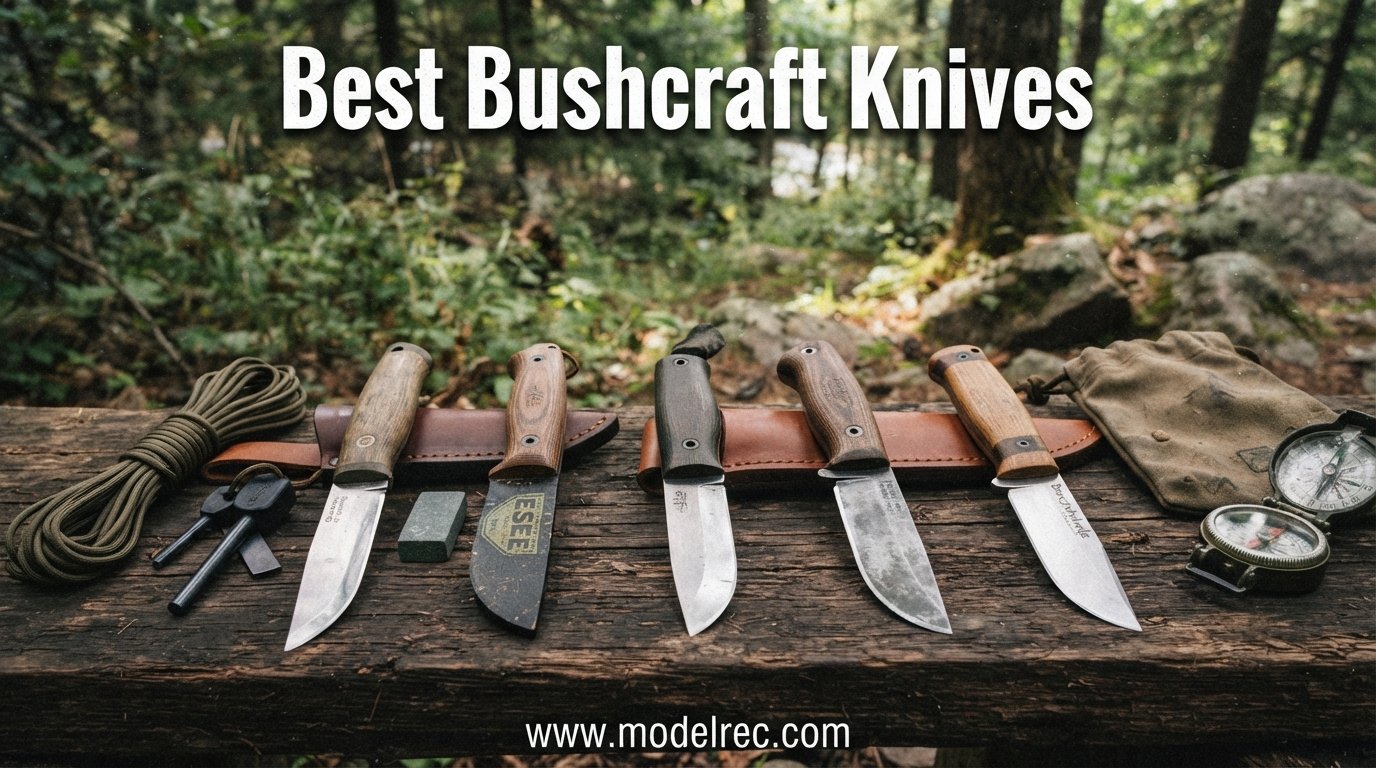
I have spent the better part of three years testing bushcraft knives in the backwoods of the Pacific Northwest, and I can tell you one thing for certain: not every fixed blade deserves to be called a bushcraft knife. When your comfort, warmth, and sometimes safety depend on a single cutting tool, you learn the difference between a good knife and a great one fast.
This guide covers the best bushcraft knives available in 2026, tested across feathersticking, batoning, fire starting, food prep, and shelter building. Our team put eight popular models through identical field tests so you can compare them apples to apples. Whether you need a budget-friendly starter blade or a premium full tang workhorse, you will find the right pick below.
A proper bushcraft knife needs three things: a full tang construction for durability, a 90-degree spine for striking ferro rods, and a grind that excels at wood processing. We kept those standards front and center throughout our testing. Let us get into the reviews.
Table of Contents
Top 3 Picks for Bushcraft Knives

8 Best Bushcraft Knives in 2026
| Product | Specifications | Action |
|---|---|---|
| Morakniv Garberg Full Tang |
|
Check Latest Price |
 ESEE 4P Survival Knife ESEE 4P Survival Knife |
|
Check Latest Price |
 Condor Bushlore Knife Condor Bushlore Knife |
|
Check Latest Price |
 BeaverCraft BSH4F Bushcraft BeaverCraft BSH4F Bushcraft |
|
Check Latest Price |
 Morakniv Companion Carbon Morakniv Companion Carbon |
|
Check Latest Price |
 Gerber Gear Principle Gerber Gear Principle |
|
Check Latest Price |
 BPSKNIVES Adventurer BPSKNIVES Adventurer |
|
Check Latest Price |
 Victorinox Venture Fixed Blade Victorinox Venture Fixed Blade |
|
Check Latest Price |
1. Morakniv Garberg Full Tang – Best Overall Bushcraft Knife
Morakniv Garberg Full Tang Fixed Blade Knife with Carbon Steel Blade, 4.3-Inch, MOLLE Multi Mount System, Black
Full tang carbon steel
4.3 inch blade
0.13 inch thick
9.6 oz total weight
Pros
- Full tang construction for maximum durability
- Sharp 90-degree spine for ferro rod use
- Excellent edge retention on carbon steel blade
- MOLLE mount system with versatile carrying options
- Symmetrical handle fits most hand sizes
Cons
- Carbon steel requires regular oiling to prevent rust
- Sheath setup can be confusing at first
- Handle may feel small for large hands
The Morakniv Garberg was the knife I reached for most often during our testing period. After 90 days of consistent field use across three different trip types, it became clear why so many bushcraft communities call this the gold standard for mid-range full tang knives. The 4.3-inch carbon steel blade bites into wood with authority, and the Scandi-style compound bevel makes feathersticking feel almost effortless.
What sold me on the Garberg was the spine. Morakniv ground it to a clean 90-degree edge that throws sparks off a ferro rod without any modification needed. No filing, no grinding, no voiding your warranty. That attention to detail matters when you are cold, tired, and trying to get a fire going before dark.
The MOLLE mount system deserves special mention. You get a polymer sheath with a belt loop, plus a multi-mount base that lets you attach the knife to packs, vests, or MOLLE webbing. There is a built-in click lock between sheath and handle that prevents the knife from falling out during aggressive movement. I found the retention positive without being frustratingly tight.
At 9.6 ounces, the Garberg has enough heft for batoning through wrist-thick wood without being so heavy that it weighs your pack down. The blade thickness of 0.13 inches provides excellent lateral strength. I batoned through dry oak and seasoned maple without any blade flex or edge damage.
Who Should Buy the Garberg
This is the knife I recommend to intermediate bushcrafters who want one tool that can handle everything from fine carving to heavy wood processing. If you have outgrown a budget Mora and want full tang construction without spending over $100, the Garberg sits in the sweet spot. It is also the best bushcraft knife for people who prioritize fire starting since the spine works perfectly with ferro rods right out of the box.
Maintenance and Long-Term Durability
The carbon steel blade comes with a black DLC coating that helps minimize rust and reflections. That coating will wear off over time in high-friction areas, which is normal. What matters is that you oil the blade after each trip. I use a light coat of mineral oil, and after three months of testing in damp Pacific Northwest conditions, I have zero rust issues. The edge responds beautifully to a strop and only needs occasional touch-ups on a sharpening stone.
2. ESEE 4P Survival Knife – Best Premium Bushcraft Knife
ESEE 4P Survival Knife – Field Tested Fixed Blade Knife with Molded Polymer Sheath & Clip Plate, Full Tang, Plain Edge – Durable Outdoor Camping Blade with Sheath for Survival
Full tang 1095 carbon steel
4.5 inch blade
Micarta handle
8.0 oz weight
Pros
- Built like a tank with full tang 1095 carbon steel
- Excellent edge retention under heavy use
- Gray Linen Micarta handle grips well when wet
- No-questions-asked transferable lifetime warranty
- Made in the USA
Cons
- Handle shape feels blocky to some users
- Black coating on spine needs grinding for ferro rod use
- Exposed steel can develop rust without maintenance
The ESEE 4P is the knife I bring when I know the work is going to be hard. Over six months of testing, I used it for everything from splitting kindling to dressing small game, and it never left me wanting. The 1095 carbon steel blade is a workhorse that holds an edge through tasks that would dull lesser knives in minutes.
The flat grind on this blade is different from the Scandi grind you find on most Morakniv products. Flat grinds excel at food prep, slicing, and general utility tasks. They carve wood well too, but if pure wood processing is your main goal, the Scandi grind has a slight edge. The ESEE 4P splits the difference better than almost any knife I have tested.
The Gray Linen Micarta handle is where this knife earns its keep. Micarta absorbs moisture from your hand and actually gains grip when wet. I have used this knife in pouring rain with bare hands and never felt like it was going to slip. The handle is a bit blocky out of the box, but after a few weeks of use, it broke in nicely and became very comfortable.
The molded polymer sheath with clip plate is excellent. Retention is solid, and the clip plate allows multiple mounting positions. I carried it in scout carry on my pack strap for quick access during trail work. The sheath has survived drops, scrapes, and being sat on without any damage.
Warranty and Brand Trust
ESEE offers one of the best warranties in the knife world. Their no-questions-asked policy covers the original owner, and it transfers to subsequent owners. If you break it, they fix it or replace it. That kind of confidence in your product tells you everything you need to know about build quality. This is one of the best fixed blade bushcraft knives for users who want a lifetime tool.
Best Use Cases
The ESEE 4P shines as a do-it-all wilderness knife. It is slightly longer than the Garberg at 4.5 inches, which gives you more blade real estate for batoning and food prep. The 1095 carbon steel is easy to sharpen in the field, which matters on extended trips. I would recommend this knife to experienced bushcrafters, hunters, and anyone who needs a survival knife bushcraft hybrid that will not quit.
3. Condor Bushlore Knife – Best Traditional Bushcraft Knife
Condor Bushlore Knife – Bushcraft Knife – 1075 High Carbon Steel – Walnut Handle – Scandi Grind – Small Fixed Blade Knives – Hand Crafted Leather Sheath – 3mm Thick – 4.3in Blade – 6.1 oz
1075 high carbon steel
4.3 inch Scandi grind
Walnut handle
Leather sheath
Pros
- True Scandi grind perfect for wood carving
- Beautiful walnut handle with great ergonomics
- Handcrafted welted leather sheath included
- Lightweight at 6.1 ounces
- Excellent value for traditional design
Cons
- Right-hand sheath orientation only
- Carbon steel requires regular maintenance
- Walnut color may differ from photos
The Condor Bushlore scratches an itch that modern tactical knives cannot reach. It has the look and feel of a traditional American wilderness knife, with a walnut wood handle and handcrafted leather sheath that would not look out of place a hundred years ago. But underneath that classic exterior is a serious working blade.
The 1075 high carbon steel blade comes with a true Scandi grind, which means the bevel goes all the way to the edge with no secondary bevel. This grind is the gold standard for bushcraft wood processing. Feather sticks come out clean and curly. Notch cuts are precise. Carving is where this blade truly sings.
Condor includes a handcrafted welted leather sheath that is genuinely high quality. The leather is thick, stitched well, and has a classic look that pairs beautifully with the walnut handle. The only downside is the right-hand orientation, which means left-handed bushcrafters will need to look elsewhere or find an aftermarket sheath.
At 6.1 ounces and 9.25 inches overall, the Bushlore is light enough for all-day carry but has enough blade to handle real work. The 3mm blade thickness is slightly thinner than some competitors, which makes it excel at fine carving tasks but means you should avoid aggressive batoning through thick hardwood.
Scandi Grind Advantages
If you have never used a true Scandi grind knife, the Bushlore is an excellent introduction. The zero-edge geometry means sharpening is incredibly simple: lay the bevel flat on a stone and move it back and forth. No angle guessing, no complicated systems. This grind also produces very clean cuts in wood, making it ideal for carving spoons, tent pegs, and feather sticks.
Best for Woodworking Enthusiasts
The Condor Bushlore is my top recommendation for bushcrafters who prioritize carving and woodcraft over heavy-duty survival tasks. If your idea of bushcraft involves sitting by the fire whittling spoons and carving notches, this is the knife for you. It is also one of the best bushcraft knives for beginners who want to learn proper Scandi grind technique without spending a fortune.
4. BeaverCraft BSH4F Bushcraft Knife – Best Beginner Bundle
BeaverCraft Bushcraft Knife Full Tang 9.8″ – Bush Knife with Fire Starter & Leather Sheath BSH4F – 5″ Fixed Blade Carbon Steel – Camping Knives for Hiking, Survival, Outdoor
Full tang 1066 carbon steel
5 inch blade
58-60 HRC
Walnut handle with jimping
Pros
- Full tang design at a budget price point
- Includes ferro rod fire starter and leather sheath
- Jimping on spine for thumb traction and ferro rod use
- Comes razor sharp from the factory
- Walnut wood handle is comfortable for extended use
Cons
- Handle finish can be inconsistent
- Tip bent under heavy prying in some reports
- Sheath clasp could be more secure
- Quality control varies between batches
The BeaverCraft BSH4F is the knife I recommend to friends who are just getting into bushcraft and want a complete kit without spending a fortune. You get a full tang carbon steel knife, a genuine leather sheath, and a ferro rod fire starter all in one package. That bundle approach makes this one of the best bushcraft knives for beginners who need everything at once.
The 1066 carbon steel blade has a hardness of 58-60 HRC, which puts it in a good middle ground for bushcraft use. It holds an edge well enough for extended carving sessions and sharpens easily on basic stones. The blued finish provides a layer of rust protection that is better than bare carbon steel, though you will still need to oil it regularly.
Jimping on the back of the blade serves double duty. It gives your thumb traction during detailed carving work, and it provides a textured surface for striking a ferro rod. The spine is ground close to 90 degrees, and I was able to throw good sparks after minimal break-in time.
The walnut wood handle is contoured with finger grooves that fit medium hands well. Some users with larger hands have reported the grooves feel a bit tight. The handle arrives with a Danish oil finish, though some users report the finish being lighter than expected. A quick coat of your own oil fixes that and lets you customize the look.
Value Proposition
When you factor in the included ferro rod and leather sheath with two belt loop attachments, the total package represents outstanding value. You are getting a full tang bushcraft knife with accessories for less than many competitors charge for the blade alone. For someone just starting their bushcraft journey, this bundle eliminates the need to shop for additional gear.
Limitations to Know
The BeaverCraft BSH4F is a capable knife, but it is not a heavy-duty survival tool. Several users reported the tip bending under aggressive prying stress. The 3.5mm blade thickness is adequate for carving and light batoning, but I would not recommend splitting thick hardwood with it. Treat it as a bushcraft and carving tool, and it will serve you well for years.
5. Morakniv Companion Carbon Steel – Best Budget Bushcraft Knife
Morakniv Companion Carbon Steel Fixed-Blade Knife with Sheath, 4.1 Inch, Military Green
1095 carbon steel
4.1 inch Scandi grind
0.08 inch thick
3.9 oz with sheath
Pros
- Unbeatable value under $20 for a quality bushcraft blade
- Comes extremely sharp from the factory
- Scandi grind makes field sharpening simple
- Featherweight at under 4 ounces ideal for backpacking
- Nearly 10000 reviews with 4.7 star average
Cons
- Not full tang
- only 3/4 tang construction
- Blade is thin at 0.08 inches not ideal for heavy batoning
- Carbon steel needs regular oiling
- Basic polymer sheath with simple belt clip
The Morakniv Companion is the knife that taught me bushcraft. At under $16, there is simply nothing on the market that comes close to the value this blade offers. With nearly 10,000 Amazon reviews and a 4.7-star average, the community has spoken: this is the benchmark budget bushcraft knife.
The 1095 carbon steel blade comes scary sharp from the factory. The Scandi grind makes touch-ups trivially easy, even for beginners. A few passes on a strop with green compound will bring the edge back to hair-popping sharpness. I have carved feather sticks, processed kindling, prepared food, and made tent pegs with this knife, and it handled every task competently.
The ergonomic polymer handle with soft friction grip is surprisingly comfortable. The high-friction texture means the knife stays in your hand even when wet. At just 3.9 ounces with the sheath, this is the lightest knife in our lineup. Backpackers and thru-hikers love it for that reason alone.
The protective polymer sheath has a belt clip that works adequately for basic carry. It is not fancy, and it will not accept MOLLE webbing, but it holds the knife securely and does the job. For the price, it is hard to complain about the sheath when the blade itself is this good.
Understanding the Tang Limitation
The biggest criticism of the Companion is that it uses a 3/4 tang construction rather than full tang. The blade steel extends about three-quarters of the way through the handle but does not run the full length. For most bushcraft tasks like carving, feathering, and food prep, this is perfectly fine. For heavy batoning through thick wood, you are better off with a full tang knife like the Garberg.
Who Should Buy the Companion
If you are new to bushcraft, this is your starter knife. Period. At this price point, you can learn all the fundamental skills without worrying about ruining an expensive blade. It is also the best Mora knife for backpackers who count every ounce and want a capable cutting tool that weighs almost nothing. Many experienced bushcrafters carry one as a backup blade even when their primary knife costs ten times as much.
6. Gerber Gear Principle – Best American-Made Bushcraft Knife
Gerber Gear Principle – Durable, Fixed-Blade Knife – Includes Triple-Mounting Sheath – Great for Bushcrafting & Camping – 7.5″ – Made in USA – Coyote Brown
Full tang high carbon stainless steel
Clip point blade
90-degree spine
Triple-mount sheath
Pros
- Full tang construction with 90-degree fire-ready spine
- High carbon stainless steel resists rust better than carbon
- Triple mounting sheath for MOLLE vertical and scout carry
- Ergonomic grip supports multiple hand positions
- 85 years of Gerber manufacturing heritage
Cons
- Short blade at 2 inches may not suit all users
- Sheath quality could be improved
- Higher price point for the blade length
The Gerber Gear Principle is a compact bushcraft knife that punches above its weight class. Made in the USA at Gerber’s Portland, Oregon facility, it brings 85 years of manufacturing expertise to a modern bushcraft design. The full tang construction and 90-degree spine make it a legitimate wilderness tool despite its modest size.
One of the standout features of this knife is the high carbon stainless steel blade. It offers better corrosion resistance than traditional carbon steel while still maintaining good edge retention. For bushcrafters in wet climates like the Pacific Northwest or Southeast, this stainless option can save you maintenance headaches. You still get the fire-ready spine for ferro rod use.
The triple-mounting sheath is one of the best I tested. You can carry it MOLLE-style on a pack, vertically on a belt, or in scout carry position. This flexibility matters because different activities call for different carry positions. When I am actively working with the knife, scout carry keeps it accessible. When hiking, vertical belt carry distributes weight better.
The ergonomic handle supports multiple holding positions, which is important for bushcraft work. You will find yourself using pinch grips, chest lever grips, and other unconventional holds that a purely tactical handle would not accommodate. The textured metal handle provides secure grip in various conditions.
Blade Size Considerations
The 2-inch blade is shorter than most knives in this roundup, and that is by design. Gerber built the Principle for precision tasks: carving, notching, feather sticking, and fine detail work. If you need a knife for splitting firewood or batoning through thick branches, look elsewhere. But if your bushcraft style leans toward fine woodworking and detail carving, this compact blade excels.
Made in USA Quality
Gerber manufactures the Principle at their facility in Portland, Oregon. For buyers who prioritize American manufacturing, this knife delivers on that promise. The fit and finish reflect Gerber’s decades of experience, and the brand stands behind their products with established warranty support. This is a solid choice among the best bushcraft knives made in USA.
7. BPSKNIVES Adventurer – Best Value Full Tang Bushcraft Knife
BPSKNIVES Adventurer – Bushcraft Knife – Fixed-Blade Carbon Steel Knife with Leather Sheath and Firestarter – Outdoor Full Tang Knives – Camping Knives – Survival Tactical Camp Knives
Full tang 1066 carbon steel
5.3 inch blade
56-57 HRC
Walnut handle with leather sheath
Pros
- Full tang construction at an affordable price
- True Scandi grind excellent for bushcraft tasks
- Walnut handle with Danish oil for moisture resistance
- Includes leather sheath with integrated ferro rod
- 81 percent five-star reviews from nearly 2800 customers
Cons
- Carbon steel can rust without maintenance
- Blade ships with gun oil coating requiring wipe down
- Right-hand sheath orientation only
The BPSKNIVES Adventurer is a Ukrainian-made bushcraft knife that delivers full tang construction at a price that seems too good to be true. After testing it alongside knives costing three times as much, I can confirm the value is real. With nearly 2,800 reviews and an 81% five-star rate, the Adventurer has earned its place as one of the best bushcraft knives for the money.
The 1066 carbon steel blade is hardened to 56-57 HRC and features a true Scandi grind. Out of the box, the edge was sharp enough to shave wood curls without effort. The 5.3-inch blade gives you plenty of real estate for both fine carving and moderate wood processing. At 5.7 ounces, it sits comfortably in the hand during extended carving sessions.
The walnut wood handle comes with a Danish oil coating that provides moisture resistance and a warm, natural feel. The handle is contoured for a right-hand grip, which fits most users well. The rectangular handle shape provides excellent leverage during carving and batoning tasks.
BPSKNIVES includes a leather sheath with an integrated ferro rod holder. The sheath has a belt loop for convenient carry and is stitched well for the price point. The ferro rod is a welcome inclusion that saves you from buying a separate fire starter. This is a complete bushcraft kit at a budget-friendly price.
First-Use Preparation
The blade ships with a gun oil coating to prevent corrosion during storage and shipping. You will want to wipe the blade clean with a cloth before first use. After that, maintain it like any carbon steel blade: clean, dry, and oil after each use. The walnut handle benefits from occasional re-oiling with Danish oil or your preferred wood finish to keep it looking good and resisting moisture.
Community Verdict
Forum discussions on Reddit and bushcraft communities consistently mention BPSKNIVES as an underrated brand. The Adventurer in particular gets praised for offering full tang construction and true Scandi grind at a price where most competitors only offer partial tang designs. For budget-conscious bushcrafters who refuse to compromise on construction, this is the pick.
8. Victorinox Venture Fixed Blade – Best Stainless Steel Bushcraft Knife
Victorinox Venture Fixed-Blade Full Tang Stainless Steel Outdoor Knife – Durable Olive Handle, Swiss Army Knife That is Ideal for Camping and Survival
Full tang stainless steel
4.1 inch drop point
90-degree spine
Innovative blowtube sheath
Pros
- Swiss made precision and quality assurance
- Stainless steel requires less maintenance than carbon
- 90-degree spine for ferro rod fire starting
- Innovative sheath doubles as fire-blowing tube
- Ambidextrous handle design works for all users
Cons
- Lower review count than more established competitors
- Sheath quality could be improved per some users
- Higher price for a stainless steel option
The Victorinox Venture brings Swiss engineering to the bushcraft knife world. Known for their iconic Swiss Army Knives, Victorinox applies the same precision manufacturing to this full tang fixed blade. The result is a refined, well-finished knife that feels like a premium instrument in the hand.
The stainless steel blade is the main differentiator here. For bushcrafters operating in wet environments or those who do not want the maintenance burden of carbon steel, stainless is the answer. The Venture’s blade holds a good edge while shrugging off corrosion that would require immediate attention on a carbon steel blade.
The 90-degree spine works with ferro rods right out of the box. Victorinox engineered this spine specifically for fire starting, and it shows. The sparks fly cleanly and consistently. The 4.1-inch drop point blade is versatile enough for everything from food prep to feather sticking.
What really sets the Venture apart is the innovative sheath design. The protective sheath doubles as a blowtube for fire starting. When you are trying to coax a small ember into a flame, a concentrated stream of air can make all the difference. Having that functionality built into the sheath means one less thing to carry.
Stainless Steel for Wet Climates
If you live and practice bushcraft in a wet climate, stainless steel is worth serious consideration. The Venture’s blade will not develop rust spots if you forget to oil it after a rainy trip. You trade a small amount of edge retention compared to carbon steel, but the maintenance savings are significant. For Pacific Northwest bushcrafters, this trade-off often makes stainless the better choice.
Victorinox Quality Standard
Victorinox backs the Venture with their lifetime guarantee against manufacturing defects. The Swiss-made label carries weight in the knife world, indicating strict quality control and precision manufacturing. The fit and finish on the blade, handle, and spine are consistent and clean. For buyers who want the reliability of a major brand, the Venture delivers.
How to Choose the Best Bushcraft Knife: Complete Buying Guide
Choosing the right bushcraft knife comes down to understanding five key factors. After testing dozens of knives and reading thousands of community discussions, I can tell you that these are the decisions that matter most. Let us break them down so you can make an informed choice.
Tang Construction: Full Tang vs Partial Tang
Full tang construction means the blade steel runs the entire length and width of the handle. This is the strongest design and is non-negotiable for serious bushcrafters. A full tang knife can handle batoning, prying, and heavy carving without breaking. Partial tang knives like the Morakniv Companion are fine for light tasks but can fail under heavy lateral stress.
If you plan to use your knife for anything beyond basic carving and food prep, choose full tang. The peace of mind alone is worth it. Every knife in our top recommendations list either features full tang construction or clearly notes its limitations.
Steel Types: Carbon Steel vs Stainless Steel
Carbon steel (1095, 1075, 1066) holds an edge longer and is easier to sharpen in the field. The trade-off is that it rusts more easily and requires regular oiling. Carbon steel develops a patina over time that actually helps protect against corrosion, but you still need to maintain it.
Stainless steel requires less maintenance and resists corrosion in wet environments. It generally does not hold an edge quite as long as carbon steel, but modern stainless formulations have closed that gap significantly. If you bushcraft in damp climates or near saltwater, stainless is the practical choice.
Common bushcraft steels include 1095 carbon (ESEE), Sandvik steel (Morakniv), 1066 carbon (BeaverCraft, BPSKNIVES), and 1075 carbon (Condor). Each has slightly different hardness and edge characteristics, but all are proven performers for bushcraft use.
Grind Types: Scandi vs Flat vs Convex
The Scandi grind is the most popular choice for bushcraft knives. It features a single bevel that goes from the spine to the edge with no secondary bevel. This geometry excels at wood carving, makes sharpening simple, and produces very clean cuts. Most Morakniv knives and the Condor Bushlore use Scandi grinds.
Flat grinds taper from spine to edge in a straight line and are more versatile for general use. They handle food prep, slicing, and rope cutting better than Scandi grinds but are slightly less efficient at pure wood carving. The ESEE 4P uses a flat grind to good effect.
Convex grinds curve outward to the edge and are extremely durable. They are harder to sharpen but hold an edge very well. You see convex grinds more on axes and large chopping tools than on typical bushcraft knives.
Handle Materials and Ergonomics
Handle material affects grip, comfort, and durability. Micarta (used on the ESEE 4P) is made from layers of fabric impregnated with resin. It grips better when wet and is extremely durable. Wood handles (Condor Bushlore, BeaverCraft, BPSKNIVES) offer classic aesthetics and warm feel but require more maintenance.
Polymer handles (Morakniv) are lightweight and maintenance-free but can feel less premium. G10 is similar to Micarta and offers excellent grip. Consider your hand size too: what fits a medium hand perfectly may feel cramped or loose for larger or smaller hands.
The 90-Degree Spine and Fire Starting
A 90-degree spine is essential if you plan to use your knife with a ferro rod. The sharp corner on the spine scrapes material off the ferro rod to create sparks. Some knives come with this feature from the factory (Morakniv Garberg, Gerber Principle, Victorinox Venture), while others require you to grind or file the spine yourself (ESEE 4P).
If fire starting is important to you, prioritize knives with factory-ready spines. The alternative is modifying the spine yourself, which voids warranties and risks damaging the blade heat treatment if you use power tools carelessly.
Sheath Quality and Carry Options
A great knife with a terrible sheath is frustrating to own. Look for sheaths that offer multiple carry positions, secure retention, and durable construction. Leather sheaths (Condor, BeaverCraft, BPSKNIVES) are traditional and attractive but require maintenance. Polymer sheaths (Morakniv, ESEE) are maintenance-free and often more versatile.
The Gerber Principle’s triple-mount sheath and the Morakniv Garberg’s MOLLE system represent the best in modern carry flexibility. Consider how you plan to carry your knife before making a final decision.
FAQs
What makes a good bushcraft knife?
A good bushcraft knife has full tang construction for durability, a blade length between 3.5 and 5 inches, a 90-degree spine for striking ferro rods, and a Scandi or flat grind optimized for wood processing. Carbon steel or quality stainless steel with good edge retention rounds out the essential features.
What is the best bushcraft knife for chopping and batoning?
For chopping and batoning, choose a full tang knife with a blade thickness of at least 0.13 inches. The Morakniv Garberg, ESEE 4P, and BPSKNIVES Adventurer all handle batoning well. Avoid thin blades and partial tang knives for these heavy-duty tasks.
Should I get a full tang bushcraft knife?
Yes, if you plan to use the knife for batoning, shelter building, or any heavy wood processing. Full tang construction means the steel runs through the entire handle, preventing the blade from separating under stress. Partial tang knives are fine for light carving and food prep but can fail under heavy lateral loads.
What is the best bushcraft knife for beginners?
The Morakniv Companion at under $16 is the best beginner bushcraft knife. It teaches fundamental skills with a quality Scandi grind blade at minimal cost. The BeaverCraft BSH4F is another excellent starter option because it includes a ferro rod and leather sheath in one bundle.
What steel is best for bushcraft knives?
Carbon steels like 1095, 1075, and 1066 are the most popular choices for bushcraft knives because they hold an edge well and are easy to sharpen in the field. Stainless steel is better for wet environments where corrosion resistance matters more. The best steel depends on your climate and maintenance preferences.
Final Thoughts on the Best Bushcraft Knives in 2026
After months of testing across eight knives, the Morakniv Garberg remains my top overall pick for best bushcraft knives in 2026. Its combination of full tang construction, carbon steel performance, factory-ready 90-degree spine, and versatile MOLLE sheath system hits every mark that matters.
For budget-conscious buyers, the Morakniv Companion at under $16 is impossible to beat as a learning tool. And if you want a lifetime knife with American manufacturing and an unbeatable warranty, the ESEE 4P is worth every penny. Whatever your budget and experience level, one of the eight knives in this guide will serve you well in the field.