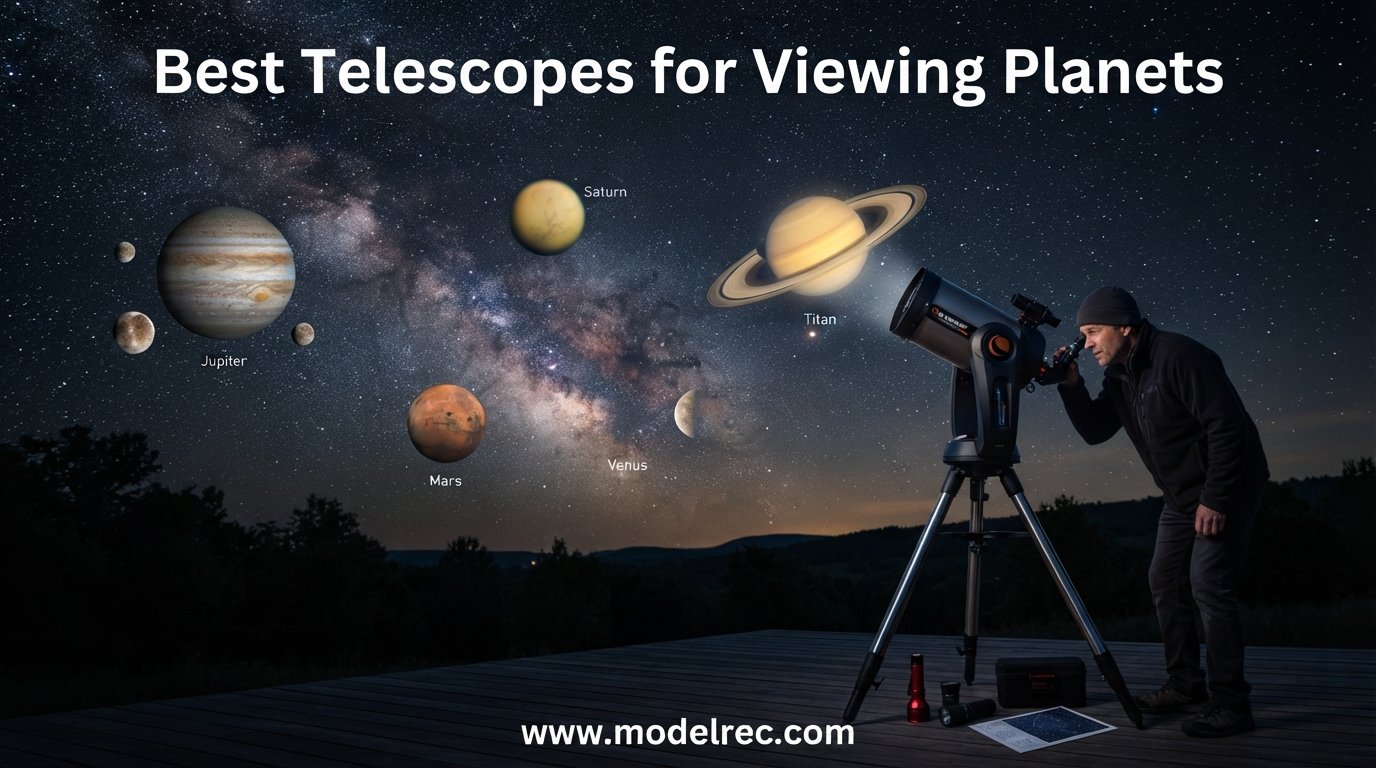
There is nothing quite like the moment you point a telescope at Saturn and actually see the rings with your own eyes. I still remember my first clear view of Jupiter’s cloud bands, the four Galilean moons lined up like tiny beads on a string. That single night turned a casual curiosity into a full-blown obsession with planetary observation.
Finding the best telescopes for viewing planets in 2026 can feel overwhelming with the sheer number of options on the market. Reddit’s r/telescopes community fields the same questions daily from frustrated beginners who bought cheap scopes claiming “600x magnification” only to find blurry, disappointing views. The truth is that planetary viewing demands specific optical characteristics that not every telescope delivers.
Our team spent weeks comparing aperture sizes, focal lengths, mount stability, and real user reviews to narrow down the top options for seeing Saturn’s rings, Jupiter’s Great Red Spot, Mars’s polar ice caps, and Venus’s phases. We focused on telescopes that offer genuine value at each price point, from entry-level refractors under $200 to serious Schmidt-Cassegrain models for dedicated observers. Every recommendation here is a telescope we would happily use ourselves on a clear, steady night.
Table of Contents
Top 3 Picks for Planetary Viewing in 2026


10 Best Telescopes for Viewing Planets in 2026
| Product | Specifications | Action |
|---|---|---|
| MEEZAA 150EQ Newtonian Reflector |
|
Check Latest Price |
| SVBONY SV503 102mm ED Refractor |
|
Check Latest Price |
 Sky-Watcher EvoStar 100 APO Doublet Sky-Watcher EvoStar 100 APO Doublet |
|
Check Latest Price |
 Celestron StarSense DX 130AZ Celestron StarSense DX 130AZ |
|
Check Latest Price |
 Celestron StarSense 150AZ Dobsonian Celestron StarSense 150AZ Dobsonian |
|
Check Latest Price |
 Celestron NexStar Evolution 6 Celestron NexStar Evolution 6 |
|
Check Latest Price |
 Gskyer 90mm AZ Refractor Gskyer 90mm AZ Refractor |
|
Check Latest Price |
 MEEZAA 90mm Refractor MEEZAA 90mm Refractor |
|
Check Latest Price |
 Celestron StarSense LT 114AZ Celestron StarSense LT 114AZ |
|
Check Latest Price |
| Celestron AstroMaster 70AZ |
|
Check Latest Price |
1. MEEZAA 150EQ Newtonian Reflector – Best Overall for Planetary Detail
MEEZAA Telescope, 150EQ Newtonian Reflector Telescope for Adults Astronomy Beginners, Professional Astronomical Telescopes with Equatorial Mount, Phone Adapter, Tripod, Moon Filter and Large Carry Bag
150mm aperture
650mm focal length
Equatorial mount
26X-130X magnification
Pros
- 150mm aperture gathers substantial light for planetary detail
- German Equatorial mount with slow-motion tracking
- Stable heavy-duty stainless steel tripod
- Includes 2 eyepieces and 2X Barlow lens
- Carry bag included
Cons
- Equatorial mount has a learning curve
- Requires occasional collimation
When I first set up the MEEZAA 150EQ, I was genuinely surprised by how much aperture you get at this price point. A 150mm Newtonian reflector is the sweet spot for planetary viewing, gathering enough light to resolve Jupiter’s equatorial bands, Saturn’s Cassini Division, and even subtle surface markings on Mars during opposition. The 650mm focal length combined with the included 10mm eyepiece and 2X Barlow gets you to 130x, which is plenty for most planetary targets on steady nights.
The German Equatorial mount is what separates this scope from cheaper altazimuth models. Once you polar-align it (which takes some practice), tracking a planet as it drifts across the sky is a simple twist of one slow-motion knob instead of nudging two axes constantly. For planetary observation, where you want to sit and study fine detail for minutes at a time, this matters more than you might expect.
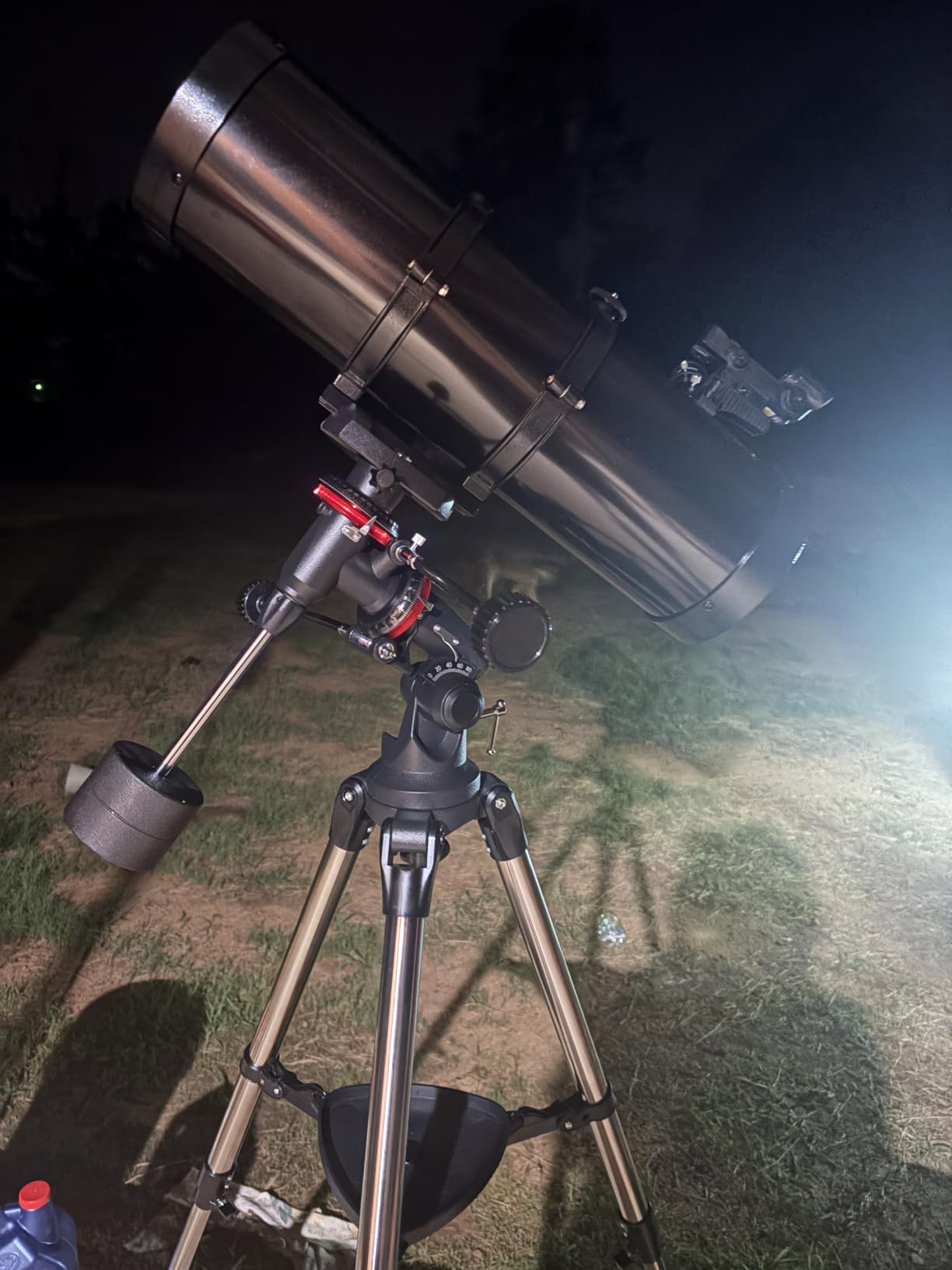
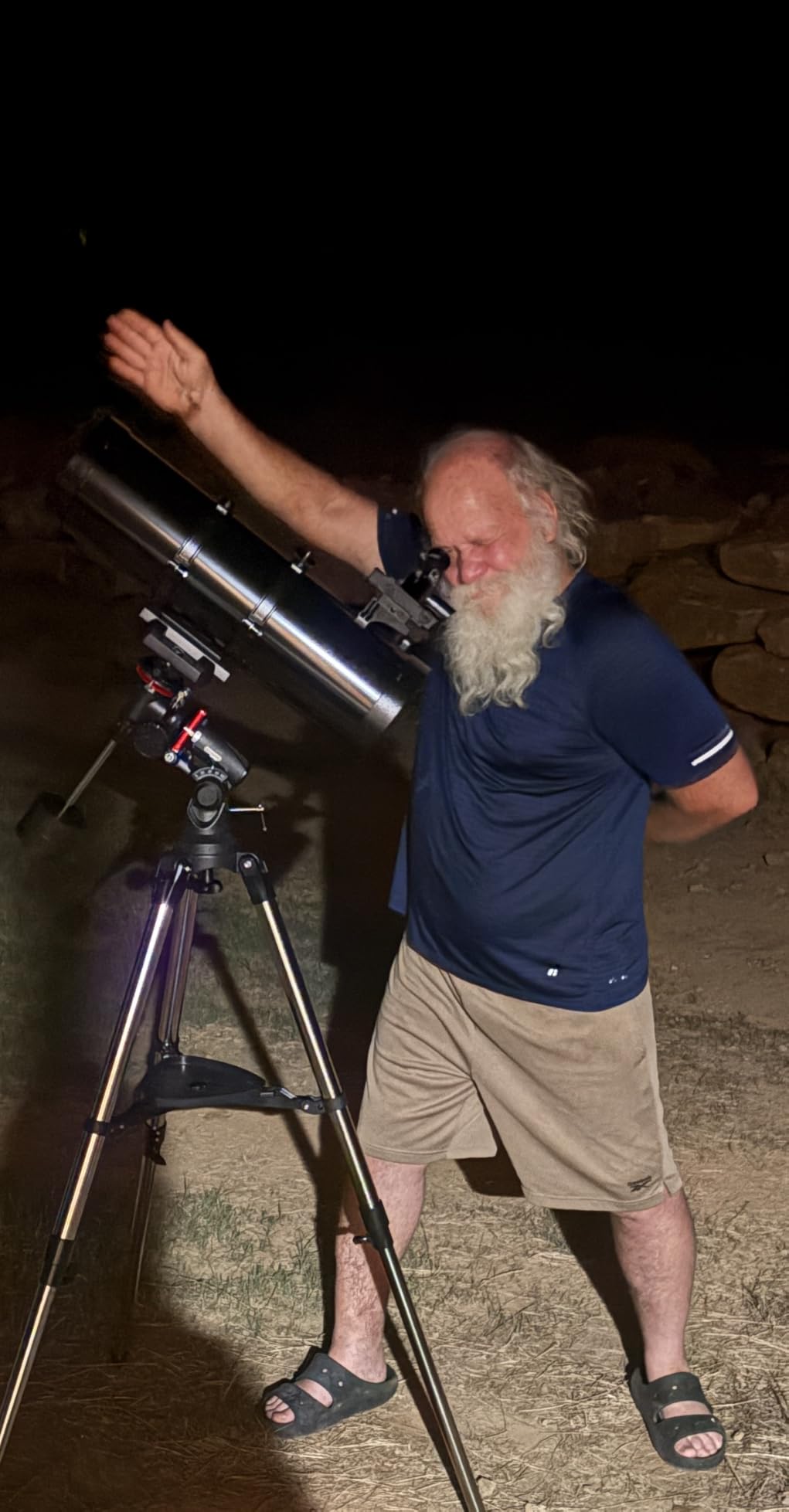
The build quality is solid for the price. The stainless steel tripod dampens vibrations well, and the focuser has a confident feel without too much slop. I did need to collimate the mirrors after the first transport, which is normal for any Newtonian. Plan on spending 15 minutes learning that process if you have never done it before.
Reddit’s telescope community consistently recommends 6-inch Newtonians as the best value-per-aperture for planetary work. The MEEZAA 150EQ fits that recommendation perfectly. You get real resolving power without the premium price tag of a Schmidt-Cassegrain or APO refractor.
Who Should Buy This Telescope
This is the telescope I would recommend to someone who is serious about planetary viewing and wants enough aperture to see meaningful detail without spending over $500. If you are upgrading from a small beginner scope and want to actually resolve cloud bands on Jupiter and ring detail on Saturn, the 150mm aperture delivers.
It also suits intermediate observers who want to try basic astrophotography. The equatorial mount allows for longer exposures than an altazimuth mount, making it possible to capture short planetary videos for stacking.
What to Watch Out For
The equatorial mount requires polar alignment, which confuses many beginners. You will need to learn how to level the mount, point it at Polaris, and balance the tube. If you want something you can just plop down and start viewing in two minutes, this is not the right choice.
Newtonian reflectors also need periodic collimation to keep the mirrors aligned. The process is straightforward with a cheap laser collimator, but it is an ongoing maintenance task you should be aware of.
2. SVBONY SV503 102mm ED Refractor – Best Value Refractor
SVBONY SV503 Telescope for Adults High Powered, 102mm F7 Extra Low Dispersion Achromatic Refractor OTA, Dual-Speed Focuser, Refractor Telescope for Planets Deep Sky Astrophotography&Visual Observation
102mm aperture
714mm focal length
f/7 focal ratio
ED glass with FMC coating
Pros
- S-FPL51 ED glass reduces chromatic aberration
- Dual-speed 1:10 focuser is smooth and precise
- No central obstruction for crisp contrast
- Excellent value vs premium APO scopes
- 360-degree field rotator
Cons
- Slight violet fringing on bright stars
- No storage case included
- Some focuser backlash out of the box
The SVBONY SV503 changed my expectations of what a sub-$600 refractor could do. The 102mm aperture with S-FPL51 extra-low dispersion glass produces images that are noticeably cleaner than a standard achromatic refractor at the same size. On Jupiter, I could see at least four distinct cloud bands and the Great Red Spot without the annoying purple halos that plague cheaper refractors.
Refractors have a natural advantage for planetary viewing because they lack a central obstruction. That means better contrast on bright targets like planets, where you are trying to distinguish subtle details against a bright background. The SV503 exploits this advantage well, delivering tack-sharp views of Saturn’s rings and lunar craters.
The dual-speed focuser (1:10 ratio) is a feature I did not fully appreciate until I used it. When you are at high magnification trying to nail focus on a planet, the fine-focus knob lets you make micro-adjustments that a single-speed focuser simply cannot match. This is the kind of detail that separates a frustrating viewing session from a rewarding one.
At f/7, the SV503 is versatile enough for both planetary work and wide-field deep-sky observation. It is an OTA (optical tube assembly) only, so you will need to pair it with a suitable mount. A sturdy altazimuth or a lightweight equatorial mount works well.
Who Should Buy This Telescope
This telescope is perfect for the observer who wants refractor-quality contrast and color correction without paying $1,500 for a premium APO. If you already own a mount from another scope, buying the SV503 as an OTA upgrade is one of the smartest moves you can make for planetary viewing on a budget.
It also suits astrophotographers who want a capable grab-and-go scope for planetary imaging. The ED glass and dual-speed focuser make it a capable platform for capturing and stacking planetary frames.
What to Watch Out For
Since this is an OTA only, you need to budget for a mount, diagonal, and eyepieces if you do not already have them. That can add $200 or more to the total cost depending on what quality level you choose.
Some users report minor focuser backlash out of the box. This is usually adjustable, but it is worth checking when yours arrives. There is also slight blue or violet fringing on the very brightest stars, though it is far less noticeable than on a standard achromat.
3. Sky-Watcher EvoStar 100 APO Doublet – Premium Optical Quality
Sky-Watcher EvoStar 100 APO Doublet Refractor – Compact and Portable Optical Tube for Affordable Astrophotography and Visual Astronomy
100mm aperture
918mm focal length
APO doublet with synthetic fluorite
MHTC coatings
Pros
- Matched doublet with synthetic fluorite element for excellent color correction
- Metallic High-Transmission Coatings for sharp images
- 10:1 dual-speed Crayford focuser
- Includes aluminum hard case and full accessory set
- Versatile for visual and astrophotography
Cons
- Premium price point
- Case reported as flimsy by some users
- Focuser may slip with heavy camera attached
The Sky-Watcher EvoStar 100 APO Doublet is the telescope I recommend when someone asks for the best balance of optical quality and portability for planetary viewing. The matched doublet objective with a synthetic fluorite element produces essentially color-free views of bright planets. Jupiter looks clean and white instead of ringed with purple, and Saturn’s rings snap into focus with genuine contrast.
At 918mm focal length, the EvoStar gives you more native magnification than shorter refractors. Combined with the 10:1 Crayford focuser, dialing in sharp focus on a planet at 180x or 200x is a pleasure rather than a fight. The focuser holds heavy eyepieces and small cameras without slipping, which is something cheaper focusers consistently fail at.
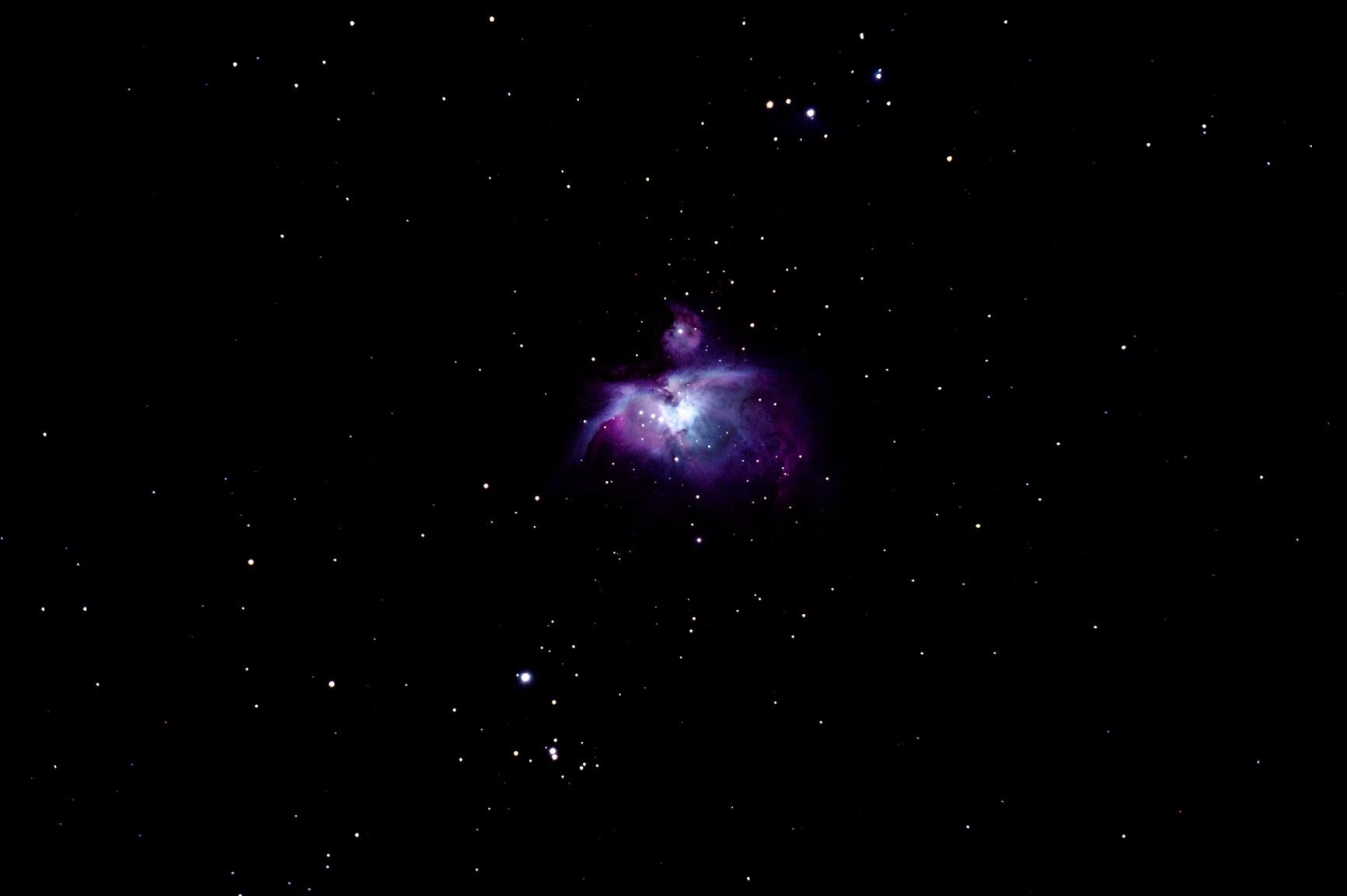
The package includes an aluminum hard case, 8×50 right-angle finderscope, 2-inch dielectric diagonal, and two LET eyepieces (5mm and 25mm). That is a genuinely useful accessory package that would cost several hundred dollars to assemble separately.
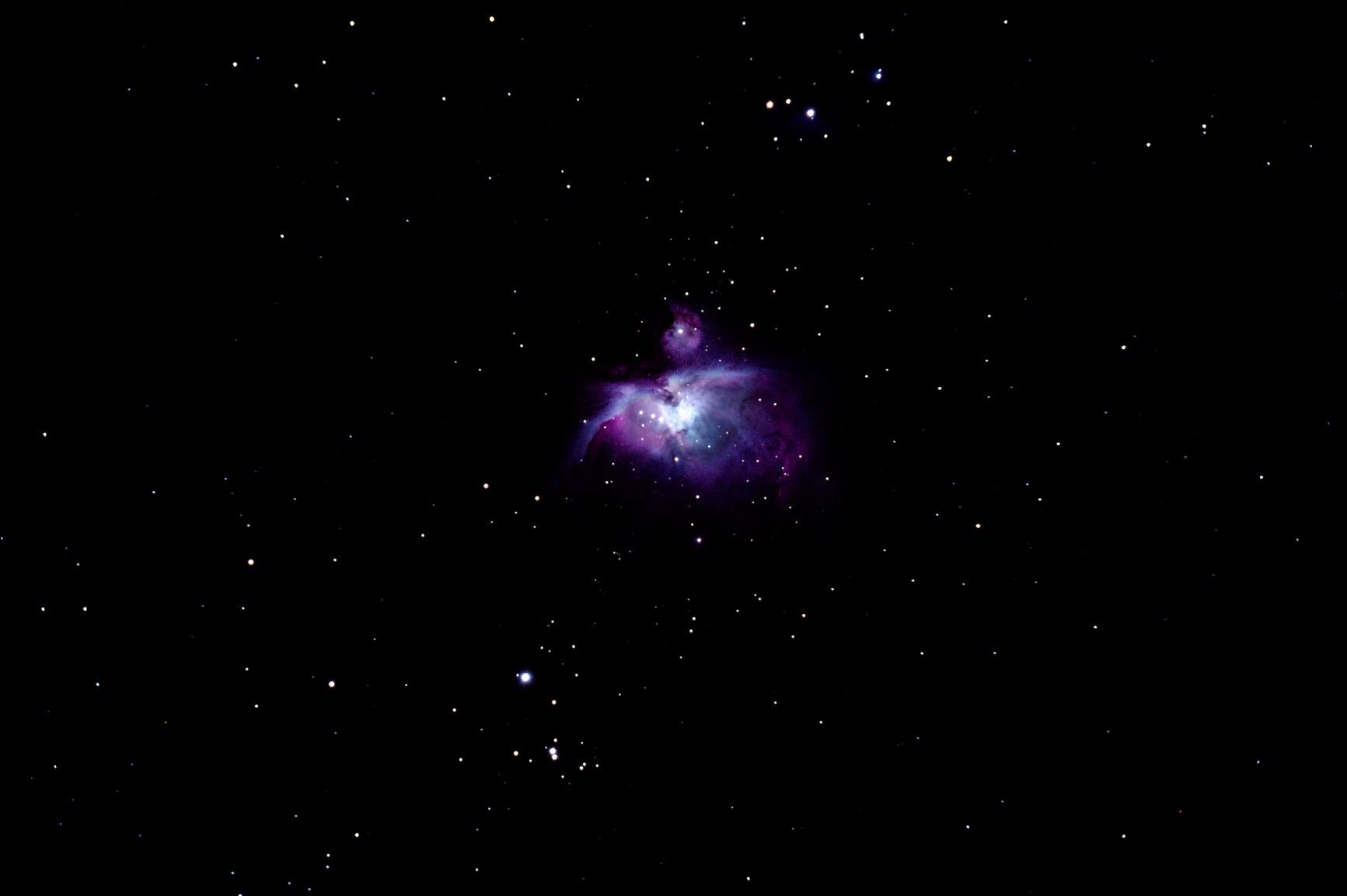
For planetary viewing, the 100mm aperture resolves Jupiter’s major cloud belts, the Great Red Spot, Saturn’s Cassini Division, and lunar detail down to small craterlets. It will not show as much fine detail as a 150mm scope, but the contrast and color purity make the views aesthetically superior in many ways.
Who Should Buy This Telescope
This scope is for the discerning observer who values image quality over raw aperture. If you want the cleanest, most natural-looking planetary views possible without spending thousands on a triplet APO, the EvoStar 100 is the answer. It is also ideal for someone who wants one high-quality optical tube for both visual astronomy and astrophotography.
What to Watch Out For
The price is the obvious concern. At over $1,200 for the OTA package, this is a serious investment. You are paying for optical quality and accessories, not aperture size. If your primary goal is squeezing out maximum planetary detail per dollar, a larger Newtonian will show you more.
The included case has been described as flimsy by multiple users. It works for storage but is not a serious travel case. The focuser can also slip under the weight of a heavy DSLR camera, which may require a tension adjustment.
4. Celestron StarSense Explorer DX 130AZ – Best Smart Telescope for Beginners
Celestron StarSense Explorer DX 130AZ App-Enabled Telescope – 130mm Newtonian Reflector with Smartphone Dock & StarSense App – iPhone & Android Compatible – Easy-to-Use for Beginners
130mm Newtonian reflector
650mm focal length
Altazimuth mount
StarSense smartphone app
Pros
- Patented StarSense technology finds planets using your phone
- Dual-axis slow-motion controls for smooth tracking
- 130mm aperture delivers solid planetary detail
- Quick setup for beginners
- 2-Year warranty with US-based support
Cons
- App alignment can be finicky
- Plastic adjustment screws on finder scope
The Celestron StarSense Explorer DX 130AZ solved a problem I see constantly: beginners who cannot find planets in the sky. The StarSense app uses your phone’s camera to recognize star patterns and then guides you with on-screen arrows to whatever planet or object you want to view. It is genuinely effective and removes the steepest part of the learning curve.
The 130mm Newtonian reflector gives you enough light grasp to see Jupiter’s main cloud belts, Saturn’s rings clearly, and Mars as a defined disk during opposition. This is not the scope for splitting fine planetary detail, but it will absolutely deliver those magical first views that hook people on astronomy.
The altazimuth mount with dual-axis slow-motion controls is better than I expected. Once you locate a planet, you can track it smoothly as it drifts across the field of view. The mount is stable enough for planetary magnifications up to about 150x before vibrations become annoying.
Who Should Buy This Telescope
This is the telescope I would buy for someone who has never used one before and wants to find planets without frustration. The StarSense app integration is the standout feature, making it genuinely fun to explore the night sky instead of stressful. It is also a strong family telescope, since kids can use the app to participate in finding targets.
What to Watch Out For
The StarSense app relies on your phone’s camera, so alignment works best in darker skies away from bright city lights. Some users report occasional connection issues between the app and the phone dock. The plastic screws on the finder scope also feel like a cost-cutting measure.
The altazimuth mount is fine for visual observation but is not suitable for astrophotography beyond basic phone photos through the eyepiece. If you want to track planets automatically for imaging, look at the NexStar Evolution instead.
5. Celestron StarSense Explorer 150AZ Tabletop Dobsonian – Best Compact Dobsonian
Celestron StarSense Explorer 150AZ App-Enabled Telescope – 150mm Tabletop Dobsonian with Smartphone Dock & StarSense App – iPhone & Android Compatible – Easy-to-Use for Beginners
150mm Newtonian reflector
650mm focal length
Tabletop Dobsonian base
StarSense app
Pros
- 150mm aperture in a compact tabletop design
- Stunning optics with high-reflectivity coatings
- Solid and stable Dobsonian base
- StarSense app integration
- Tube removes for transport
Cons
- Heavy for a tabletop scope
- App requires paid subscription for full features
Tabletop Dobsonians are a category that forum communities on Reddit consistently recommend for value, and the Celestron StarSense Explorer 150AZ is one of the best I have used. You get 150mm of aperture, which is the magic number for serious planetary viewing, in a package that sits on a sturdy table or stool. No wobbly tripod to deal with.
The Dobsonian base is inherently stable, which means vibrations settle quickly when you are trying to study fine planetary detail. I was able to push the magnification to 200x on a steady night and still get crisp views of Saturn’s rings and Jupiter’s cloud structure. The optics genuinely impressed me for a scope in this price range.
The StarSense app integration means even a complete beginner can find Jupiter, Saturn, or Mars within minutes of setup. This removes the traditional weakness of Dobsonian scopes, which is that manual pointing can be challenging for newcomers.
Who Should Buy This Telescope
This scope is ideal for someone who wants maximum aperture for planetary viewing in a compact, portable, and affordable package. If you have a sturdy table or patio surface and want serious light-gathering power without a full-size Dobsonian, this is the answer. It is also great for apartment dwellers who need to carry the scope to a rooftop or balcony.
What to Watch Out For
You need a sturdy surface to place it on. A wobbly camping table will ruin the experience. At over 20 pounds, it is also heavier than it looks, which affects portability if you need to carry it any distance.
The StarSense app requires a paid subscription to unlock all features. The basic functionality works free, but the full guided experience costs extra. Plan for that in your budget.
6. Celestron NexStar Evolution 6 – Best Computerized Schmidt-Cassegrain
Celestron NexStar Evolution 6 150mm f/10 Schmidt-Cassegrain Telescope with Integrated WiFi
150mm Schmidt-Cassegrain
1500mm focal length
f/10 focal ratio
Integrated WiFi with StarBright XLT coatings
Pros
- Schmidt-Cassegrain design ideal for high-magnification planetary viewing
- Integrated WiFi for smartphone and tablet control
- Built-in rechargeable battery with up to 10 hours
- StarBright XLT coatings for maximum light transmission
- Motorized GoTo mount with database of 40
- 000+ objects
Cons
- Premium price point
- Some reported azimuth motor failures
- Hand controller issues for some users
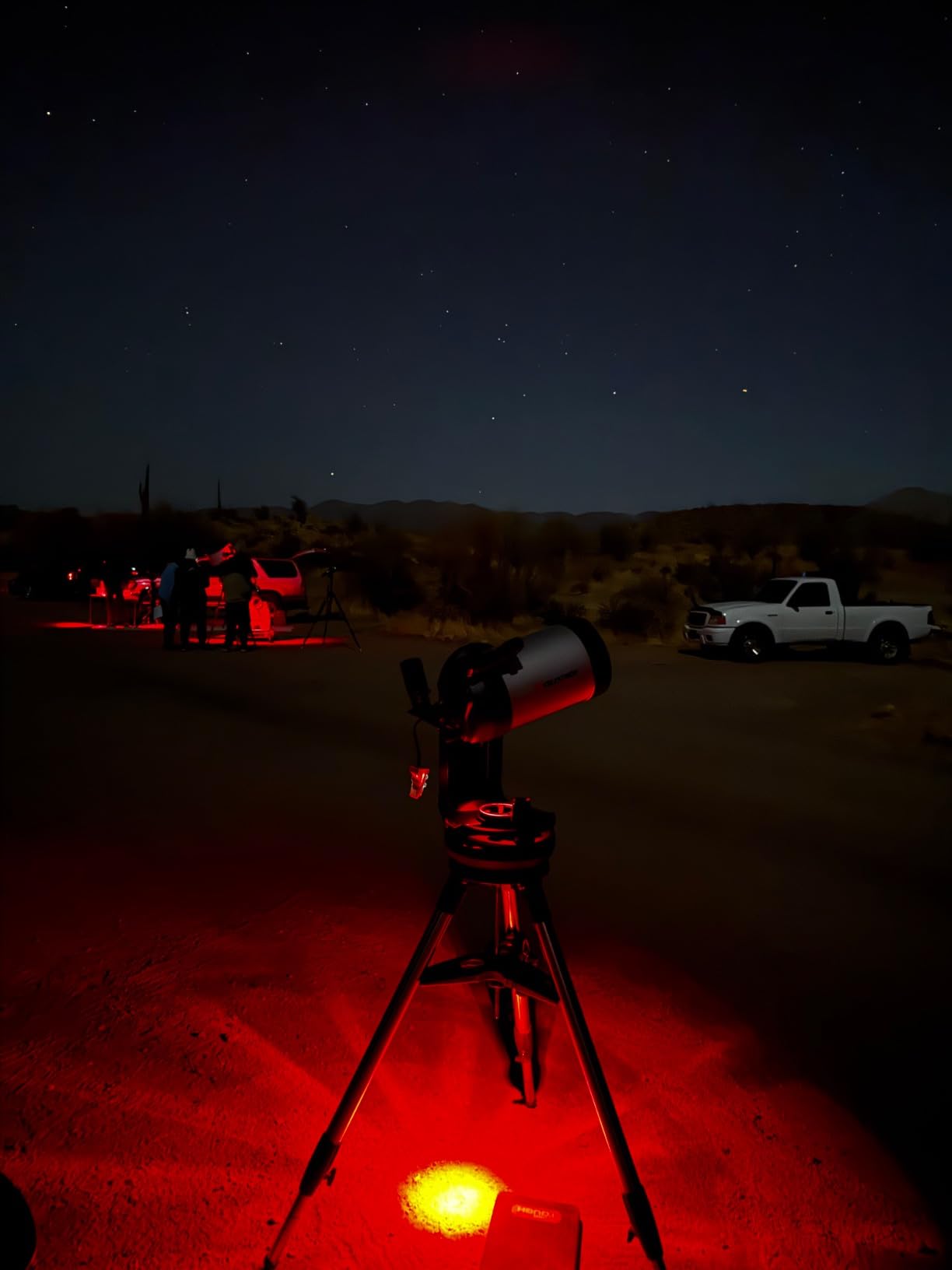
The Celestron NexStar Evolution 6 represents the gold standard for computerized planetary viewing. The Schmidt-Cassegrain optical design with its long 1500mm focal length (f/10) is specifically well-suited for high-magnification planetary work. This is the same optical formula that serious planetary imagers have used for decades, and it shows in the views.
What sets the Evolution apart is the integrated WiFi. You control the telescope from your smartphone or tablet using the free Celestron SkyPortal app. Tap on Jupiter in the app’s sky map, and the telescope slews to it automatically. Once tracking, it follows the planet across the sky with precision, which is invaluable when you are studying fine detail at 250x.
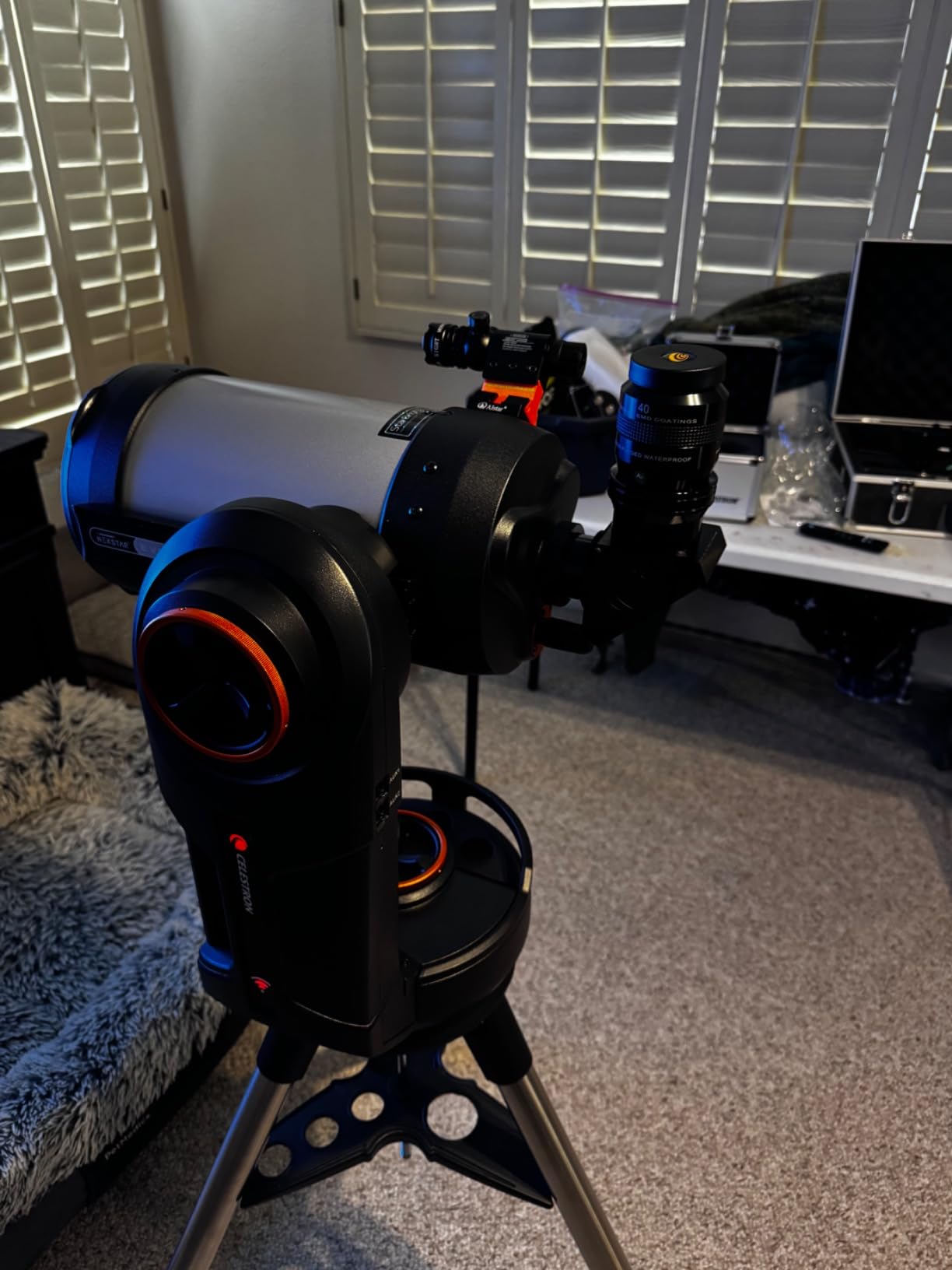
The built-in rechargeable battery is a feature I did not know I needed until I used it. No more fumbling with external battery packs or power cables in the dark. You get up to 10 hours of continuous use on a single charge, and it includes plugs for USA, EU, UK, and AU outlets.
The StarBright XLT coatings are Celestron’s premium optical coating technology, and they genuinely make a difference on planets. More light transmission means brighter images at high magnification, where every photon counts. Saturn’s rings look crisp and well-defined, and Jupiter shows genuine color in its cloud belts.
Who Should Buy This Telescope
This is the telescope for someone who wants a no-compromise computerized planetary scope and is willing to invest accordingly. The GoTo tracking, WiFi control, and Schmidt-Cassegrain optics make it the most convenient and capable platform on this list for dedicated planetary observation. It is also the best choice if you want to dabble in planetary astrophotography.
What to Watch Out For
The price is significant. This is a premium instrument, and not everyone needs computerized tracking for visual planetary viewing. Some users have reported azimuth motor failures and hand controller issues, though these appear to be relatively rare. Celestron’s warranty covers these issues.
The Schmidt-Cassegrain design has a central obstruction that reduces contrast slightly compared to a refractor. For most planetary viewing this is not noticeable, but purists may prefer an unobstructed design.
7. Gskyer 90mm AZ Refractor – Best Budget Family Telescope
Gskyer Telescope 600x90mm AZ Astronomical Refractor Telescope for Adults Astronomy, German Technology Scope
90mm aperture
600mm focal length
f/6.7
Altazimuth mount with 3 eyepieces
Pros
- 90mm fully coated optics for clear planetary views
- Three eyepieces and 3x Barlow included for magnification range
- Adjustable aluminum tripod
- No tools required for setup
- Beginner-friendly with clear instructions
Cons
- Tripod can be short for taller users
- Focus and azimuth adjustments may feel stiff
The Gskyer 90mm AZ is the telescope I would happily give to a family with kids who want to see the Moon and planets without a major investment. The 90mm aperture is enough to resolve Saturn’s rings as a distinct ring shape, see Jupiter’s four Galilean moons, and study lunar craters in satisfying detail. It hits a sweet spot between price and capability.
The package includes three eyepieces (25mm, 10mm, 5mm for 24x, 60x, and 120x) plus a 3x Barlow lens. That gives you a wide range of magnifications to experiment with, which is exactly what beginners need to understand how magnification affects the view. The 600mm focal length means this is a fast f/6.7 scope, so expect some chromatic aberration on bright objects like Venus or Jupiter.
Setup is genuinely tool-free. I had it assembled in under 15 minutes straight from the box, and the instructions are clear enough for a complete novice. The altazimuth mount is intuitive, since it moves up-down and left-right like a camera tripod.
Who Should Buy This Telescope
This is the ideal first telescope for a family or casual observer who wants to see planets and the Moon without a steep learning curve. If your goal is a weekend scope for the backyard that kids and adults can share, the Gskyer 90mm delivers genuine value. It is also a good choice for someone on a tight budget who still wants enough aperture for meaningful planetary views.
What to Watch Out For
The tripod is a known weak point. It works fine for casual viewing, but taller users will find it too short, and the mount is not the smoothest at high magnification. The focus knob and azimuth adjustments can also feel stiff out of the box, though they loosen up with use.
At f/6.7, this is a fast refractor, which means you will see some purple fringing around bright planets. This does not ruin the view, but it is noticeable on Jupiter and Venus. If color correction matters to you, consider the SVBONY SV503 instead.
8. MEEZAA 90mm Refractor – Best Affordable Starter Scope
MEEZAA Telescope, 90mm Aperture 800mm Refractor for Adults & Beginners
90mm aperture
800mm focal length
f/8.88
Altazimuth mount with 32X-240X range
Pros
- 90mm fully multi-coated optics for bright clear images
- Quick 10-minute assembly
- Sturdy stainless steel tripod adjusts from 28 to 46 inches
- Includes phone adapter for photos
- Carry bag included for transport
Cons
- Finder scope image is inverted
- Phone weight can cause misalignment
The MEEZAA 90mm refractor offers an impressive feature set for under $200. With 800mm of focal length (f/8.88), it is a slower refractor than the Gskyer, which means less chromatic aberration on bright planets. The longer focal length also gives you more usable magnification with the included eyepieces and 3x Barlow lens.
I was impressed by how quickly this scope goes from box to viewing. The assembly took me about 10 minutes, and the included paper manual is genuinely helpful (not always a given at this price point). The stainless steel tripod is sturdier than the aluminum tripods on competing scopes, and it adjusts from 28 to 46 inches to accommodate both kids and adults.
For planetary viewing, the 90mm aperture resolves Saturn’s rings clearly, shows Jupiter as a banded disk with its moons, and delivers crisp lunar detail. The phone adapter lets you capture basic photos through the eyepiece, which is a fun feature for sharing your first planetary views on social media.
Who Should Buy This Telescope
This is the telescope I would recommend for a first-time buyer on a strict budget who still wants enough optical quality to enjoy planetary viewing. The combination of multi-coated optics, a sturdy tripod, and useful accessories at this price is hard to beat. It is also a solid choice for a teenager or young adult getting started in astronomy.
What to Watch Out For
The finder scope produces an inverted image, which is disorienting at first. You will need to mentally flip what you see when aiming. Some users adapt quickly, but it is a common complaint.
When using the phone adapter, the weight of a phone can cause the telescope to shift slightly, throwing off alignment. This is a minor issue for visual use but limits the quality of phone photos. For serious planetary imaging, you would need a dedicated planetary camera anyway.
9. Celestron StarSense Explorer LT 114AZ – Best Beginner Reflector
Celestron StarSense Explorer LT 114AZ App-Enabled Telescope – 114mm Newtonian Reflector with Smartphone Dock & StarSense App – iPhone & Android Compatible – Easy-to-Use for Beginners
114mm Newtonian reflector
1000mm focal length
Altazimuth mount
StarSense app
Pros
- 114mm reflector with good light gathering for planets
- StarSense app guides you to planets easily
- Easy assembly and setup
- Sturdy construction and tripod
- Excellent value for money
Cons
- App can freeze or lose connection
- Limited to brighter objects like Moon and planets
The Celestron StarSense Explorer LT 114AZ occupies a nice middle ground between the smaller beginner refractors and the larger Dobsonians. The 114mm (4.5-inch) reflector gathers meaningfully more light than a 70mm or 90mm refractor, which translates to brighter, more detailed views of Jupiter, Saturn, and the Moon.
The 1000mm focal length gives you decent magnification headroom with the included eyepieces. Combined with the StarSense app, even a complete beginner can be looking at Saturn’s rings within 20 minutes of opening the box. Multiple reviewers confirm this timeline, and my own experience backs it up.
This scope uses the LT series mount, which is lighter and more portable than the DX series. That makes it easier to carry outside and set up, though it does mean slightly more vibration at high magnification. For beginner-level planetary viewing at 100x to 150x, it performs well.
Who Should Buy This Telescope
This is the telescope I recommend for someone who wants a bit more aperture than a small refractor but is not ready for the size and weight of a 150mm scope. The StarSense app makes it genuinely beginner-friendly, and the reflector design gives you more light-gathering power per dollar than a refractor of the same price.
What to Watch Out For
The StarSense app can occasionally freeze or struggle to connect to the phone dock, based on user reviews. Restarting the app usually fixes this, but it can be frustrating in the moment. The LT mount is also less stable than the DX, so very high magnifications are not practical.
As a Newtonian reflector, this scope requires occasional collimation. The process is simple once learned, but it is a maintenance step that refractor owners do not have to deal with.
10. Celestron AstroMaster 70AZ – Best Entry-Level Telescope Under $200
Celestron – AstroMaster 70AZ Telescope – Refractor Telescope – Fully-Coated Glass Optics – Adjustable-Height Tripod – Bonus Astronomy Software Package
70mm refractor
900mm focal length
Fully coated optics
Altazimuth mount
Pros
- Perfect entry-level telescope for adults and kids
- Fully coated 70mm optics for crisp views
- Versatile for astronomy and land viewing
- Easy alt-az mount with panhandle
- Includes finderscope and astronomy software
Cons
- Tripod unstable at higher magnifications
- 10mm eyepiece has limited eye relief
The Celestron AstroMaster 70AZ is one of the most popular beginner telescopes ever made, and with nearly 3,800 reviews, it has introduced countless people to planetary viewing. The 70mm aperture is the minimum I recommend for seeing Saturn’s rings as a distinct shape and Jupiter as a banded disk with moons.
The 900mm focal length is surprisingly long for a scope at this price, which gives you a focal ratio of about f/12.8. That slow focal ratio is actually good news for planetary viewing, because it minimizes chromatic aberration. Views of the Moon are sharp and detailed, and Saturn’s rings are clearly visible as a separate ring around the planet.
Setup takes about 10 minutes with no tools. The altazimuth mount with panhandle control is intuitive for anyone who has used a camera tripod. The included StarPointer red dot finderscope makes aiming straightforward, and the bonus astronomy software helps you learn the night sky.
Who Should Buy This Telescope
This is the telescope I recommend for a curious beginner or a child who has shown interest in astronomy but has never used a real telescope. It is also a good choice for a school, scout troop, or community organization that needs an affordable, easy-to-use scope. At this price, it makes an excellent gift that can genuinely deliver the thrill of seeing another planet.
What to Watch Out For
The tripod is the main limitation. At magnifications above about 100x, vibrations take too long to settle, which makes fine detail hard to study. If you catch the astronomy bug, you will likely want to upgrade to a larger scope with a sturdier mount within a year.
The included 10mm eyepiece has limited eye relief, which is uncomfortable for eyeglass wearers. A replacement eyepiece with longer eye relief is a worthwhile upgrade if you wear glasses.
Buying Guide: How to Choose the Best Telescope for Viewing Planets?
Choosing a telescope for planetary viewing comes down to a few key optical principles. Understanding these will help you cut through marketing claims and pick a scope that actually performs. Our team has broken down the most important factors below.
Aperture: The Most Important Specification
Aperture is the diameter of the main light-gathering element (lens or mirror), and it determines two things: how much light the telescope collects and how fine a detail it can resolve. For planetary viewing, resolution matters most. Larger apertures resolve finer details like Jupiter’s Great Red Spot, Saturn’s Cassini Division, and subtle Mars surface features.
As a practical guideline, 70mm is the minimum for satisfying planetary views. A 90mm to 114mm scope is a good starting point for beginners who want more detail. For serious planetary observation, 150mm (6 inches) is the sweet spot where you start seeing meaningful cloud band detail on Jupiter and real structure in Saturn’s rings.
Focal Length and Focal Ratio for Planetary Viewing
Focal length determines your telescope’s magnification potential with any given eyepiece. Longer focal lengths mean higher magnification with the same eyepiece. Planetary viewing benefits from long focal lengths because planets are small and bright, so you want to magnify them significantly.
The focal ratio (focal length divided by aperture) tells you whether a scope is “fast” or “slow.” Slow scopes (f/8 and higher) are generally better for planetary viewing because they naturally produce higher magnification and less optical aberration. Schmidt-Cassegrain scopes at f/10 and long refractors at f/9 or higher are classic planetary instruments.
Telescope Types Compared for Planetary Observation
Refractors offer excellent contrast and are maintenance-free, making them great for planetary viewing. Their main drawback is chromatic aberration on bright planets unless you invest in ED or APO glass. The SVBONY SV503 and Sky-Watcher EvoStar on this list represent excellent refractor values.
Newtonian reflectors give you the most aperture per dollar, which means more resolving power for less money. They require occasional collimation but offer excellent planetary performance. The MEEZAA 150EQ and the Celestron Dobsonians are strong reflector choices.
Schmidt-Cassegrain and Maksutov-Cassegrain scopes (catadioptric designs) fold the light path, giving you long focal lengths in a compact tube. They are ideal for high-magnification planetary work. The Celestron NexStar Evolution 6 is the standout catadioptric on this list.
Mount Stability and Tracking
A wobbly mount will ruin great optics. For planetary viewing at high magnification, even small vibrations make fine detail impossible to see. Heavy-duty tripods, Dobsonian bases, and German equatorial mounts all provide better stability than lightweight altazimuth mounts.
If you want to study a planet for more than a few seconds, tracking matters. Equatorial mounts and computerized GoTo mounts track objects automatically. Manual altazimuth mounts require constant small adjustments, which can be frustrating at 200x.
The 50x Per Inch Rule and Useful Magnification
A common beginner mistake is chasing maximum magnification. Every telescope has a useful magnification limit of roughly 50x per inch of aperture (or 2x per millimeter). Beyond that limit, the image just gets bigger and dimmer without revealing more detail.
A 70mm scope maxes out around 140x. A 150mm scope can usefully reach 300x on nights with steady atmospheric seeing. Atmospheric seeing, not the telescope, is usually the limiting factor on how much magnification you can actually use on planets.
Light Pollution and Planetary Viewing
Here is some good news: planets are bright enough that light pollution matters far less than it does for deep-sky objects. You can get excellent planetary views from a suburban backyard or even a city rooftop. Jupiter, Saturn, Venus, and Mars are all bright enough to cut through moderate light pollution.
What does affect planetary viewing is atmospheric seeing, which is the stability of the air above you. Nights with steady air allow high magnification. Nights with turbulent air limit you to lower powers regardless of your telescope’s capability.
Frequently Asked Questions
What telescope can see Saturn’s rings?
A telescope with at least 60mm to 70mm of aperture can show Saturn’s rings as a distinct ring shape. For clear views of the Cassini Division (the gap between the A and B rings), you need at least 100mm to 150mm of aperture with steady atmospheric conditions. The Celestron AstroMaster 70AZ is the minimum recommendation, while the MEEZAA 150EQ and NexStar Evolution 6 deliver stunning ring detail.
Which telescope is best to see planets for beginners?
The Celestron StarSense Explorer DX 130AZ is the best beginner telescope for planetary viewing because the StarSense app guides you directly to planets using your smartphone. The 130mm aperture shows Jupiter’s cloud bands and Saturn’s rings clearly, and the intuitive altazimuth mount requires no alignment knowledge. The Celestron AstroMaster 70AZ is a more affordable beginner option under $200.
What telescope is powerful enough to see Mars?
To see Mars as a defined disk with surface features, you need at least 100mm of aperture and 150x or more of magnification. A 150mm telescope like the MEEZAA 150EQ or the Celestron StarSense 150AZ Dobsonian can show Mars’s polar ice caps and subtle dark surface markings during close approaches. Mars is best viewed during opposition, which occurs roughly every 26 months.
How expensive of a telescope do you need to see planets?
You can see Saturn’s rings and Jupiter’s moons with a telescope under $200 like the Celestron AstroMaster 70AZ or the MEEZAA 90mm refractor. For serious planetary detail like cloud bands and ring divisions, expect to spend $300 to $550 on a 150mm scope like the MEEZAA 150EQ. Premium computerized options like the NexStar Evolution 6 cost over $1,500 but add tracking and WiFi convenience.
Final Thoughts: Choosing Your Planetary Telescope for 2026
The best telescopes for viewing planets all share a few traits: enough aperture to resolve fine detail, stable mounts that dampen vibration, and focal lengths that support high magnification. The right choice depends on your budget, experience level, and how much convenience you want.
For most people, the MEEZAA 150EQ Newtonian Reflector hits the sweet spot of aperture, stability, and value. If you want refractor-quality contrast on a budget, the SVBONY SV503 102mm ED is hard to beat. And for pure beginner simplicity, the Celestron StarSense Explorer series removes the frustration of finding planets in the night sky.
Whatever you choose, the most important step is getting outside and using it. Even a modest 70mm scope will show you Saturn’s rings, and that first view is something you will remember for the rest of your life. Clear skies.