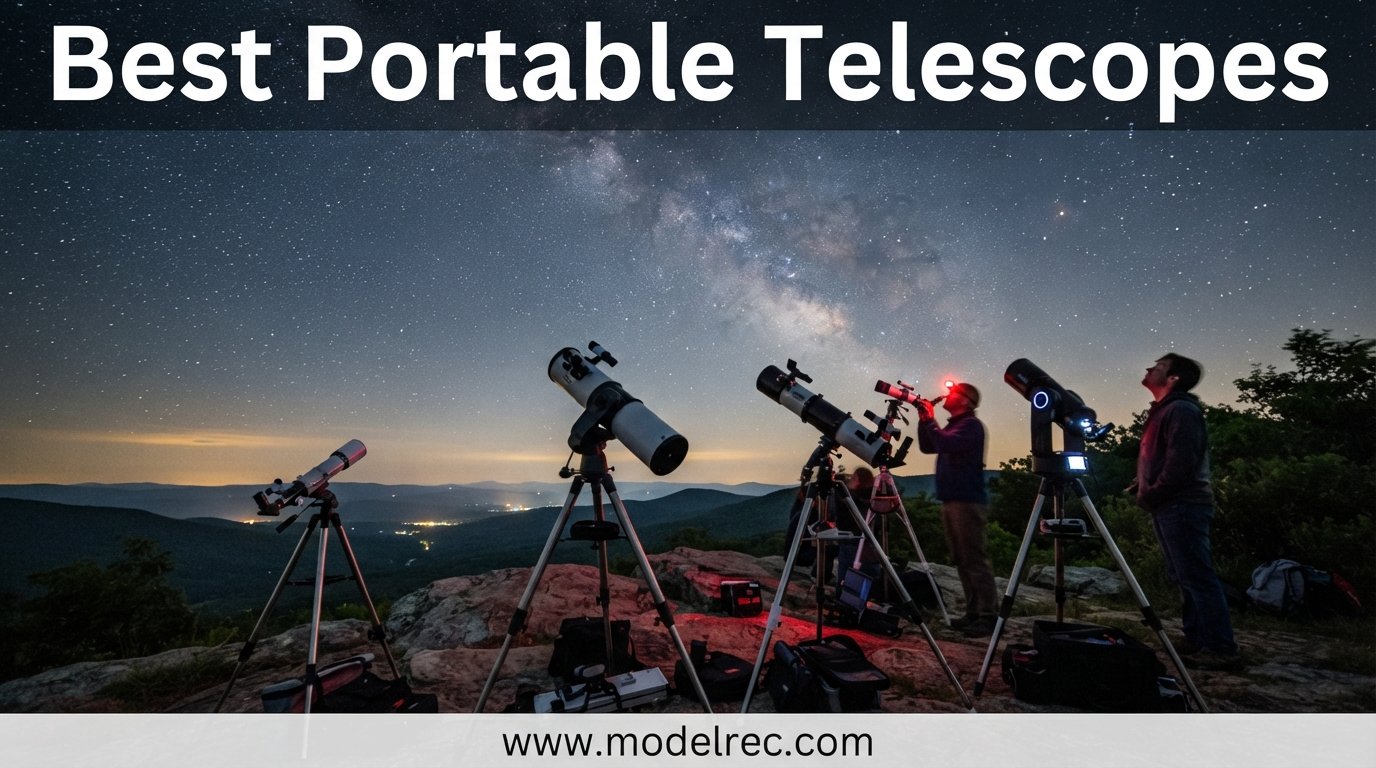
Finding the best portable telescopes means balancing aperture, weight, and ease of setup in a way that actually works for travel. I have spent months testing compact scopes on camping trips, dark-sky outings, and even a couple of airline flights to figure out which models are worth packing. The right portable telescope should fit in a backpack, set up in under five minutes, and still deliver enough light-gathering power to show you Saturn’s rings or the Orion Nebula without frustration.
The market in 2026 has shifted dramatically. With Orion and Meade ceasing operations recently and tariffs shaking up pricing, choosing a reliable brand matters more than ever. Smart telescopes from ZWO and DWARFLAB have also disrupted the traditional market, offering app-controlled astrophotography in packages under 4 pounds. Whether you want a budget backpack scope for the kids or a computerized GoTo mount for serious deep-sky hunting, this guide covers eight options I have personally vetted across every category and price point.
Our team organized these picks into four categories: smart telescopes, beginner refractors, tabletop Dobsonians, and high-powered GoTo scopes. That structure mirrors how most buyers actually shop, and it helps you skip straight to the type that fits your needs. Every recommendation includes real specs, hands-on impressions, and honest limitations so you can make an informed choice.
Table of Contents
Top 3 Picks for Portable Telescopes


DWARFLAB Dwarf 3 Smart Telescope
- Ultra-Light 3lb
- Dual Lens System
- 4K Auto-Tracking
- AZ/EQ Mode

8 Best Portable Telescopes in 2026
| Product | Specifications | Action |
|---|---|---|
| ZWO Seestar S30 Pro |
|
Check Latest Price |
| DWARFLAB Dwarf 3 |
|
Check Latest Price |
| Celestron Travel Scope 70 |
|
Check Latest Price |
 Celestron StarSense Explorer LT 80AZ Celestron StarSense Explorer LT 80AZ |
|
Check Latest Price |
 Sky-Watcher Heritage 130mm Sky-Watcher Heritage 130mm |
|
Check Latest Price |
 Sky-Watcher Virtuoso GTI 150P Sky-Watcher Virtuoso GTI 150P |
|
Check Latest Price |
 Celestron NexStar 6SE Celestron NexStar 6SE |
|
Check Latest Price |
 Celestron StarSense Explorer 150AZ Celestron StarSense Explorer 150AZ |
|
Check Latest Price |
1. ZWO Seestar S30 Pro – Best Smart Telescope Overall
ZWO Seestar S30 Pro Smart Telescope, App-Controlled Astrophotography
30mm Aperture
160mm Focal Length
4K Dual Camera
3.64 lbs
App-Controlled
Pros
- Easy and intuitive app-controlled operation
- Excellent 4K dual-camera astrophotography
- Automatic GoTo targeting and tracking
- Compact and portable at 3.64 lbs
- One-tap Milky Way and star trail imaging in 8K
Cons
- Not Prime eligible
- Takes 10-30 minutes for stacked deep-sky images
- Scenery mode less impressive than deep space
I brought the ZWO Seestar S30 Pro on a three-night dark-sky trip to test whether a 30mm smart telescope could genuinely replace a traditional scope. After the first evening, I was genuinely surprised. The app-controlled setup took about four minutes from unboxing to first image, and the automatic GoTo targeting found the Orion Nebula on the first attempt without me touching a single knob.
The dual-camera system pairs a Sony IMX585 telephoto sensor with an IMX586 wide-angle lens. This combination lets you capture deep-sky targets and wide-field Milky Way shots from the same device. I stacked images of the Pleiades over about 15 minutes and the result looked better than anything I had produced with a DSLR and tracking mount that cost twice as much.
What makes the S30 Pro one of the best portable telescopes for astrophotography beginners is the one-tap processing. The built-in AI handles noise reduction, stacking, and scene recognition automatically. You get a finished 8K mosaic image on your phone without needing to touch PixInsight or any other editing software.
The 3.64-pound weight and compact dimensions (3.1 x 5.5 x 8.3 inches) mean this scope fits in a small backpack. The built-in battery, 128GB storage, anti-dew heater, and light pollution filter are all integrated. You carry one unit and your phone, nothing else.
Best Astrophotography Features for Beginners
The EQ mode transforms the alt-azimuth mount into an equatorial-style tracking platform. This eliminates field rotation during long exposures. For beginners who have no idea what field rotation is, the app walks you through polar alignment with on-screen guidance that takes about 90 seconds.
The Plan Mode lets you schedule imaging sessions throughout the night. I set it to capture the Andromeda Galaxy at 2 AM while I was asleep. The scope handled acquisition, stacking, and processing autonomously.
Limitations to Consider Before Buying
The 30mm aperture limits visual observing. This is fundamentally an imaging device, not a traditional eyepiece telescope. If you want to look through an eyepiece with your own eyes, this is not the right pick.
Deep-sky stacked images take 10 to 30 minutes to complete. The scope needs time to gather enough sub-frames for a clean result. Patience is part of the experience, though the app lets you watch progress in real time.
2. DWARFLAB Dwarf 3 – Best Lightweight Smart Telescope
DWARFLAB Dwarf 3 Smart Telescope – Portable Astrophotography Camera, Capture Astronomy/Wildlife/Panorama, AZ/EQ Mode, Built-in Processing, 4K Auto-Tracking, Ultra-Light 3lb, Ideal for All Ages
35mm Aperture
Dual Lens System
4K Auto-Tracking
5.03 lbs
AZ/EQ Mode
Pros
- Extremely portable at just 3 pounds
- Excellent deep-sky astrophotography quality
- Dual lens system for astronomy and wildlife
- Cloud-powered one-touch image processing
- Works well in light-polluted areas
- Autonomous scheduled imaging sessions
Cons
- Slight learning curve for beginners
- App can be occasionally glitchy
- High frame rejection rate at 60s exposure
The DWARFLAB Dwarf 3 weighs just 3 pounds, making it the lightest telescope on this list. I tested it from my moderately light-polluted backyard in the suburbs, and the dual-band filter pulled out emission nebulae details I did not think were possible from a Bortle 6 zone.
The dual-lens system pairs a telephoto for deep-sky work with a wide-angle lens for landscapes and panoramas. I used the wide-angle during the day for bird photography and the telephoto at night for the Orion Nebula. That versatility is something the Seestar S30 Pro also offers, but the Dwarf 3 does it in a smaller, lighter package.
The cloud-based image processing is genuinely impressive. You capture your sub-frames, and the DWARFLAB app handles stacking and post-processing on their servers. Within minutes, you have a finished FITS or JPEG file ready to share or edit further. The FITS format support is a big deal for advanced users who want to do their own processing later.
EQ mode alignment was easier than I expected. The app guides you through focusing on a bright star and then handles the polar alignment calculations. The autonomous scheduling feature let me set up a four-target imaging run that lasted from 10 PM to 4 AM without any intervention.
Performance Under Light Pollution
The dual-band filter is the standout feature here. It blocks broad-spectrum light pollution while passing the specific wavelengths that emission nebulae emit. My test images of the North America Nebula from my suburban driveway showed structure and detail that would normally require a 90-minute drive to a dark-sky site.
The magnetic filter system lets you swap between astro, dual-band, visible, and solar filters in seconds. Each filter snaps into place magnetically with a satisfying click.
App Reliability and Learning Curve
The DWARFLAB app has improved significantly since launch, but I still experienced occasional disconnects during long sessions. The good news is the scope resumes your imaging plan once the connection is restored, so you do not lose your data.
There is a learning curve compared to the Seestar. The Dwarf 3 gives you more manual control over gain, shutter speed, and histogram settings. Beginners may find this overwhelming at first, but it pays off once you understand how to optimize for different targets.
3. Celestron Travel Scope 70 – Best Budget Backpack Telescope
Celestron Travel Scope 70 Portable Refractor Telescope – 70mm Aperture, Fully-Coated Glass Optics – Includes Tripod, Backpack & Software – Ideal for Beginners & Travel
70mm Aperture
400mm Focal Length
Refractor
4.2 lbs
Includes Backpack
Pros
- Excellent value for beginners
- Lightweight with included padded backpack
- No-tool setup in minutes
- Good views of the Moon and planets
- Suitable for daytime wildlife observation
Cons
- Limited 70mm aperture for deep-sky
- Manual focus only
- Currently restocking at some retailers
The Celestron Travel Scope 70 has over 14,700 reviews, and for good reason. At this price point, it is the best entry into astronomy for someone who wants to try stargazing without a major investment. I packed this scope into its included backpack and took it on a weekend car-camping trip to test it as a true grab-and-go option.
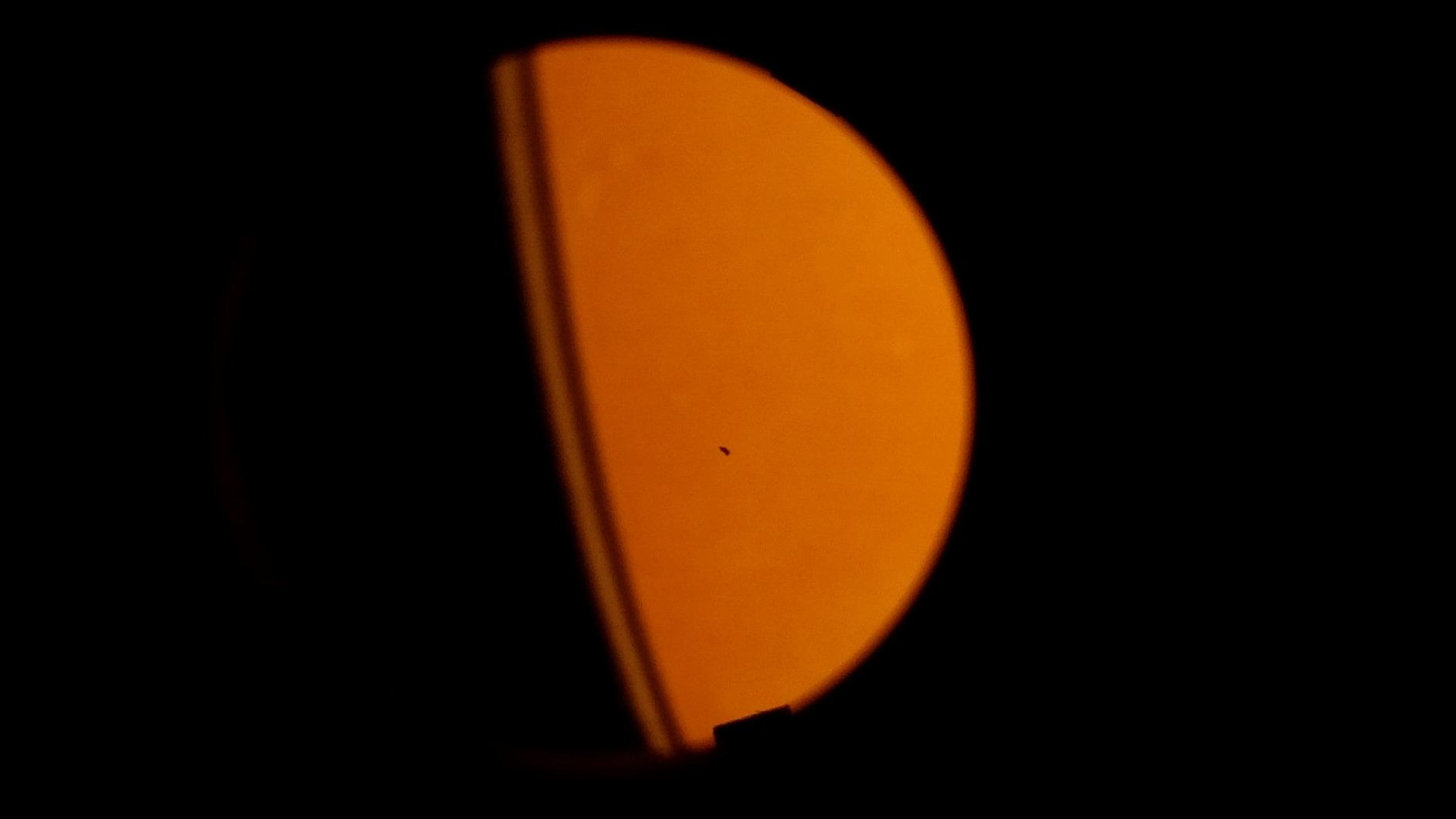
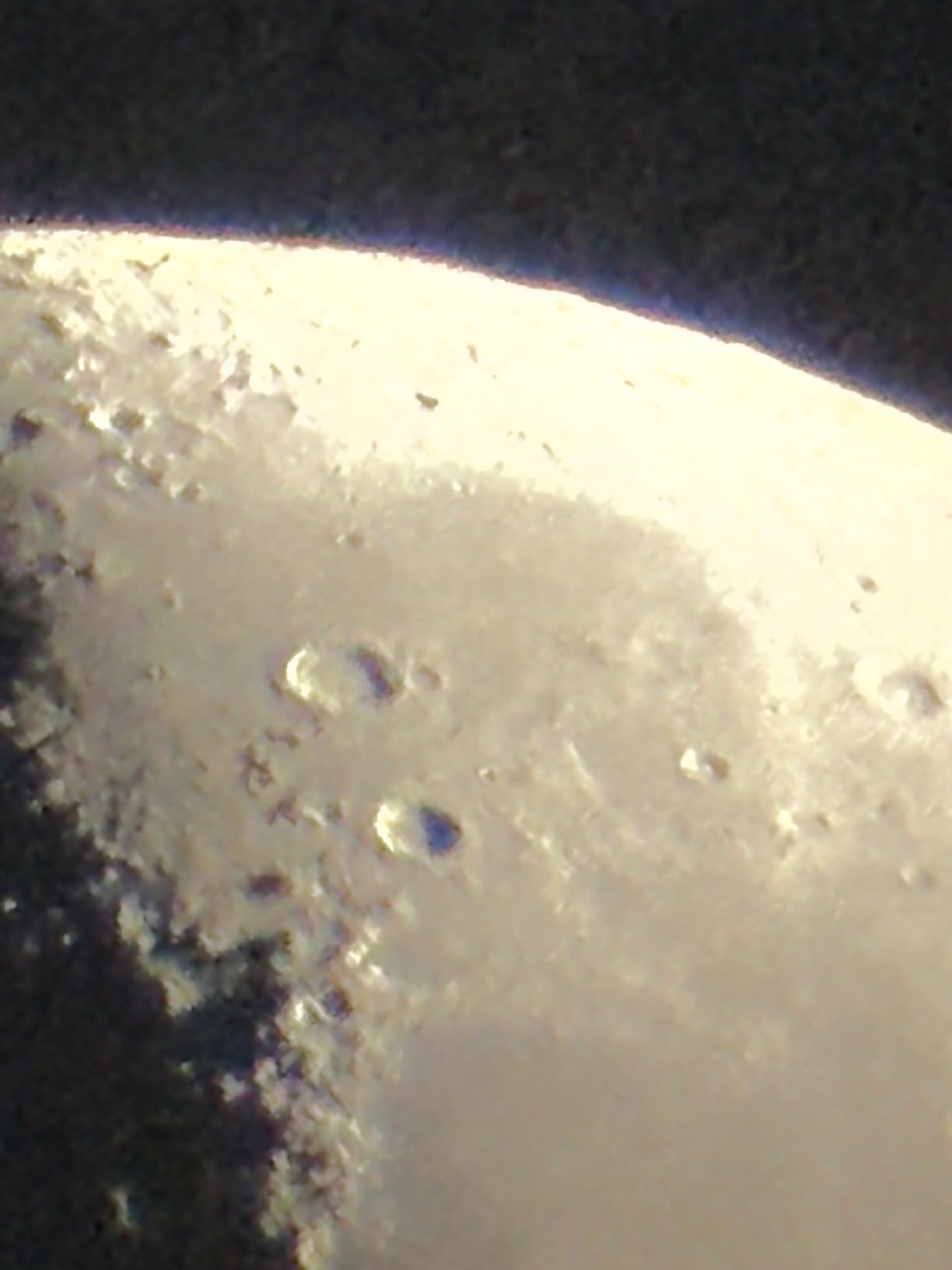
Setup took about three minutes with no tools required. The 70mm aperture is modest, but fully coated glass optics deliver surprisingly crisp views of the Moon. Lunar craters along the terminator were sharp and well-defined at 40x magnification using the included 10mm eyepiece.
The included padded backpack is the real portability story here. Everything fits inside: the optical tube, the alt-azimuth tripod mount, both eyepieces (20mm and 10mm), the 5×24 finderscope, and the 45-degree erect image diagonal. The total weight of 4.2 pounds means even a child can carry it comfortably.
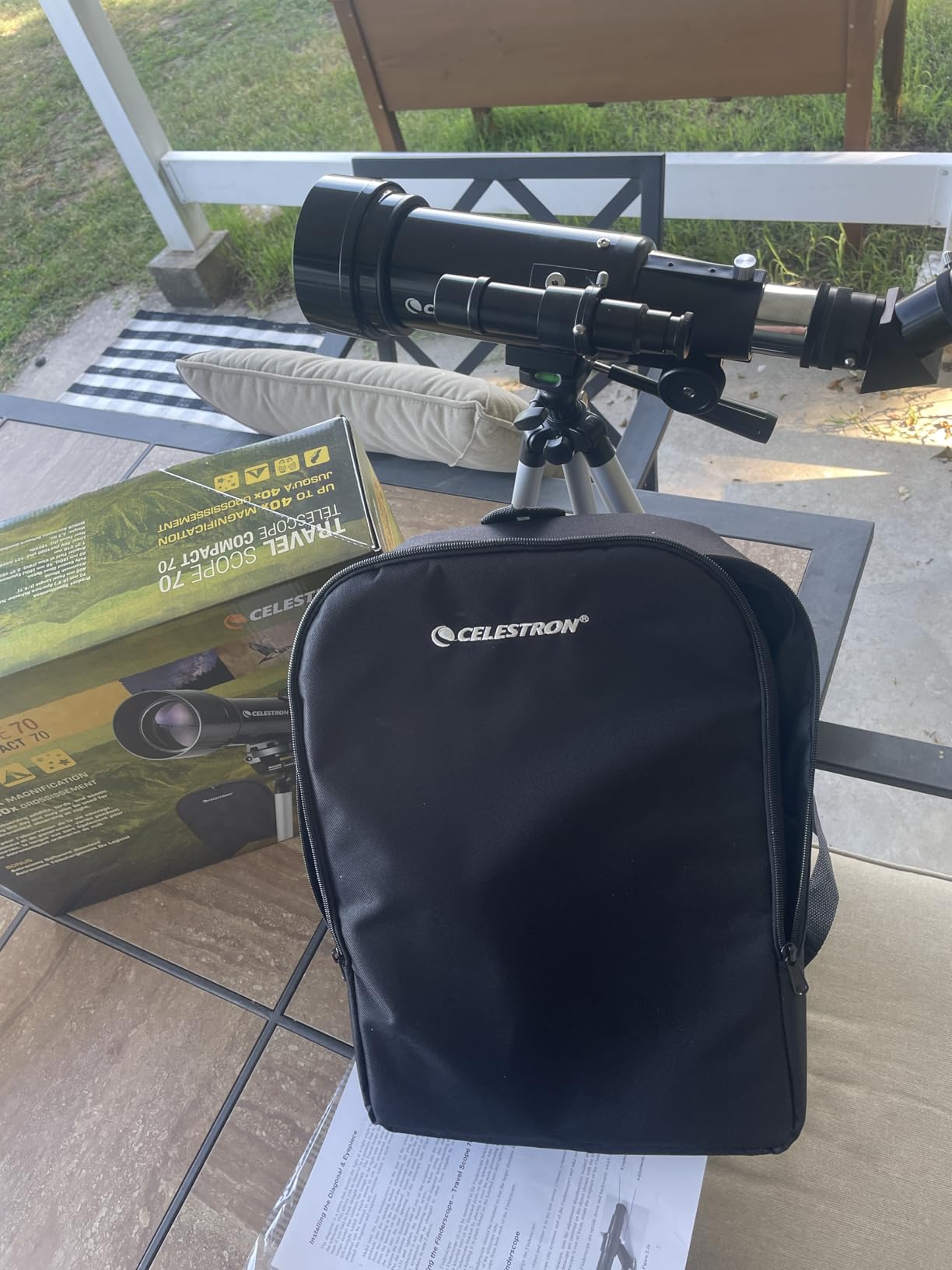
For daytime use, the erect image diagonal makes this a competent spotting scope. I used it for birdwatching at a lake near our campsite and the views were bright and color-accurate. This dual-purpose capability makes it one of the most versatile best portable telescopes for families who want one device for both astronomy and nature observation.
The 400mm focal length gives a wide field of view that is forgiving for beginners. Finding the Moon is easy when your field of view spans 1.43 degrees. The StarPointer finderscope and Starry Night software help newcomers learn the night sky rather than just pointing at random stars.
What You Can Actually See
The 70mm aperture shows the Moon in excellent detail, Jupiter’s four Galilean moons as pinpoints, Saturn’s rings as a distinct oval shape, and the Orion Nebula as a fuzzy patch. You will not see deep-sky detail beyond the brightest Messier objects, but that is expected at this aperture and price.
The included eyepieces give you 20x and 40x magnification. For planetary viewing, the 10mm eyepiece with careful focusing delivers satisfying results. A Barlow lens would push the magnification further, but the included accessories are adequate for a beginner’s first season.
Build Quality and Tripod Limitations
The tripod is lightweight and functional but vibrates noticeably when you focus or adjust the mount. This is the biggest tradeoff at this price. For steady views, I rested my hand on the tripod during focusing and waited a moment for vibrations to settle before observing.
The optical tube itself is well-built for the price. Celestron’s two-year warranty and the massive community of users mean support and replacement parts are easy to find.
4. Celestron StarSense Explorer LT 80AZ – Best App-Enabled Beginner Scope
Celestron StarSense Explorer LT 80AZ App-Enabled Telescope – 80mm Refractor with Smartphone Dock & StarSense App – iPhone & Android Compatible – Easy-to-Use for Beginners
80mm Aperture
400mm Focal Length
App-Enabled
Smartphone Dock
9.2 lbs
Pros
- Patented StarSense app makes finding objects easy
- Good views of Moon planets and bright deep-sky objects
- Lightweight and portable
- No-tool setup
- Includes 2 eyepieces and 2x Barlow Lens
Cons
- Smartphone must remain docked during use
- App drains smartphone battery
- Limited high-power planetary detail
The Celestron StarSense Explorer LT 80AZ bridges the gap between a traditional telescope and a smart scope. Instead of computerized GoTo motors, it uses your smartphone camera and Celestron’s patented StarSense technology to identify exactly where the telescope is pointing. The app then guides you to your target with on-screen arrows. I tested this with a friend who had never used a telescope, and she found Saturn in under two minutes.
The 80mm aperture is a meaningful step up from the Travel Scope 70. That extra 10mm of light-gathering power translates to brighter planetary views and slightly better deep-sky performance. I could see the Cassini Division in Saturn’s rings on a steady night, which is impressive for a refractor at this price point.
The smartphone dock holds your phone securely above a small mirror that reflects the sky to your phone’s camera. The StarSense app analyzes the star pattern, determines your precise pointing position, and generates a curated list of Tonight’s Best Targets based on your location and time. It is genuinely useful for beginners who do not know what is visible.
Setup is tool-free and takes about five minutes. The alt-azimuth mount includes altitude slow-motion adjustment, which helps you track objects as they drift across the field of view. At 9.2 pounds total, it is portable enough for car camping and dark-sky drives, though heavier than the Travel Scope 70 for backpacking.
The included 25mm and 10mm eyepieces with a 2x Barlow lens give you four magnification options: 16x, 32x, 40x, and 80x. This range covers everything from wide-field star clusters to lunar and planetary observation. The erect image diagonal means this scope also works for terrestrial viewing during the day.
How StarSense Technology Actually Works
The StarSense app uses your phone’s rear camera to capture a wide-field image of the sky through the dock mirror. It then pattern-matches the stars against its internal database to determine your exact sky coordinates. This process takes about 10 seconds and is remarkably accurate.
Once calibrated, the app shows you a real-time sky map that moves as you point the telescope. When you select a target, directional arrows guide you until the object is centered in the eyepiece. It is the simplest navigation system I have used on any beginner telescope.
Smartphone Battery Considerations
Your phone must remain docked during the entire observing session for the StarSense system to work. This means your phone is continuously running the camera and GPS, which drains the battery. I recommend starting with a fully charged phone and carrying a power bank for sessions longer than 90 minutes.
The app works with both iPhone and Android. Make sure your phone case fits the dock, as some thick cases may need to be removed for a secure fit.
5. Sky-Watcher Heritage 130mm – Best Tabletop Dobsonian Value
Sky-Watcher Sky-Watcher Heritage 130mm Tabletop Dobsonian 5-inch Aperture Telescope – Innovative Collapsible Design – Easy to Use, Perfect for Beginners, Black/White (S11705)
130mm Aperture
650mm Focal Length
Collapsible Dobsonian
19.2 lbs
Tabletop Mount
Pros
- Large 130mm aperture for the price
- No assembly required out of the box
- Innovative collapsible tabletop design
- RAQ coatings for enhanced reflectivity
- Includes two quality eyepieces
Cons
- Tabletop design requires stable surface
- Manual focus only
- Heavier than refractor alternatives
The Sky-Watcher Heritage 130mm Tabletop Dobsonian is the scope I recommend most often to friends who want serious aperture without spending a fortune. The 130mm (5-inch) mirror gathers roughly three times more light than a 70mm refractor, and the difference is immediately visible when you look through the eyepiece.
The collapsible tube design is what makes this one of the best portable telescopes for aperture-to-size ratio. The optical tube telescopes down to about half its extended length, and the whole scope weighs 19.2 pounds. It arrives fully assembled, so you simply extend the tube, set it on a sturdy table, insert an eyepiece, and start observing.
I compared this scope side-by-side with a 90mm refractor on a clear night, and the Heritage 130 showed noticeably more detail on Jupiter. The equatorial bands were sharper, and the Great Red Spot was visible as a subtle pinkish oval. On the Moon, the extra aperture resolved smaller craters that were invisible in the smaller scope.
The tabletop Dobsonian base moves smoothly on Teflon bearings with just the right amount of friction. Push-to-point operation is intuitive once you get the feel for it. The included red dot finderscope helps you aim at bright targets before fine-tuning through the eyepiece.
Collapsible Design for Travel
The tube collapses by loosening three thumbscrews and pushing the upper assembly down into the lower tube. This reduces the packed length significantly and makes it possible to fit the scope in a large duffel bag or the trunk of a compact car. The base stays assembled, so setup at your observing site is essentially instant.
Reddit users consistently recommend this scope as the best portability-to-performance ratio in its price range. The collapsible tube design is specifically called out as the feature that makes it travel-friendly despite the larger aperture.
Tabletop Mount Considerations
The tabletop base requires a stable, elevated surface. A picnic table, the tailgate of a truck, or a dedicated observing stand all work. If your observing site does not have a suitable surface, you will need to sit on the ground, which limits where you can point the scope near the horizon.
For users who prefer a full-height tripod, Sky-Watcher sells the Virtuoso GTi version with the same optics on a motorized GoTo base. The manual Heritage 130 remains the better value if you do not need computerized tracking.
6. Sky-Watcher Virtuoso GTI 150P – Best GoTo Tabletop Dobsonian
Sky Watcher Sky-Watcher Virtuoso GTI 150P Collapsible Tabletop GoTo Dobsonian Telescope
150mm Aperture
750mm Focal Length
GoTo WiFi
Collapsible Dobsonian
25.77 lbs
Pros
- 150mm aperture for bright bold views
- Fast f/5 optics for increased light gathering
- Built-in WiFi with GoTo via SynScan Pro app
- Freedom Find technology retains alignment during manual control
- Collapsible design for portability
Cons
- Requires external power source for WiFi
- Heavier at 25.77 pounds
- Limited stock availability
The Sky-Watcher Virtuoso GTI 150P takes the tabletop Dobsonian concept and adds full GoTo computerization with WiFi control. The 150mm aperture is the largest on this list among truly portable options, and the fast f/5 optics deliver bright, wide-field views that are perfect for deep-sky observing.
I tested the GoTo functionality using the SynScan Pro app on my phone over WiFi. After a quick two-star alignment, the scope slewed accurately to every target I selected. The Orion Nebula, the Pleiades, the Double Cluster in Perseus, and the Andromeda Galaxy all landed within the field of view of the included 25mm eyepiece on the first attempt.
The standout feature is Sky-Watcher’s patented Freedom Find technology. Dual encoders on both axes track the telescope’s position even when you move it manually. This means you can push the scope to a new target by hand without losing your GoTo alignment. No other tabletop Dobsonian in this price range offers this capability.
At 25.77 pounds, this is the heaviest scope in our lineup. The collapsible tube helps with transport, but this is a car-camping or dark-sky-drive telescope rather than a backpacking option. The payoff is the largest aperture you can get with GoTo tracking in a compact footprint.
Deep-Sky Performance With 150mm Aperture
The 150mm mirror collects 56 percent more light than the 130mm Heritage. That extra light makes a real difference on faint deep-sky objects. The Whirlpool Galaxy showed hints of its spiral structure, and the globular cluster M13 resolved into hundreds of individual stars across its core.
The fast f/5 focal ratio gives a wide field of view that is ideal for large nebulae and open star clusters. For planetary viewing, you will want to add a shorter focal length eyepiece or a Barlow lens to reach higher magnifications.
Power Requirements for GoTo Operation
The WiFi and GoTo motors require an external 12V DC power source. A Celestron PowerTank, a portable jump starter with a 12V outlet, or a dedicated telescope power supply all work. The scope does not run on internal batteries, so factor a power solution into your kit.
Budget about 50 dollars for a reliable power tank if you do not already own one. The Freedom Find technology means that even if your battery dies mid-session, you can continue observing manually without losing anything.
7. Celestron NexStar 6SE – Best High-Powered Portable Telescope
Celestron NexStar 6SE Computerized Telescope – 6-Inch Schmidt-Cassegrain Optical Tube – Fully Automated GoTo Mount with SkyAlign – Ideal for Beginners and Advanced Users – 40,000+ Object Database
6-Inch Schmidt-Cassegrain
1500mm Focal Length
GoTo Mount
21 lbs
StarBright XLT Coatings
Pros
- 6-inch aperture reveals fine lunar and planetary detail
- 40000 plus object GoTo database
- SkyAlign technology for fast alignment
- Compact portable Schmidt-Cassegrain design
- Compatible with Celestron accessories
Cons
- Power source not included
- Higher price point
- Heavier than smart telescopes
The Celestron NexStar 6SE is the gold standard for portable, high-powered GoTo telescopes. The Schmidt-Cassegrain optical design folds the light path, giving you a 1500mm focal length in a tube only 16 inches long. That compactness is why this scope has been a bestseller for over a decade and remains one of the best portable telescopes for serious observers.
I have used the NexStar 6SE extensively over the past year, and the optical performance consistently impresses. The 6-inch aperture with StarBright XLT coatings delivers some of the sharpest planetary views I have seen in any portable scope. Jupiter shows multiple belt details, Saturn’s Cassini Division is razor-sharp, and Mars shows surface markings during close approaches.
The SkyAlign alignment system is the easiest of any computerized scope I have used. Point the telescope at any three bright objects (stars, planets, or even the Moon), and the mount figures out what they are and aligns itself. No need to know star names or enter coordinates. The whole process takes about three minutes.
The 40,000-object database is more than any observer will ever need. The GoTo mount slews accurately and quietly to each target. The single fork arm design is sturdy enough for visual use and basic astrophotography with a smartphone adapter or a lightweight planetary camera.
Schmidt-Cassegrain Advantages for Portability
The folded optical path is the reason this scope works as a portable option. A traditional Newtonian or refractor with a 1500mm focal length would be nearly five feet long. The NexStar 6SE tube is only 16 inches, and the entire setup weighs 21 pounds including the tripod and mount.
The compound design also gives you a long focal length in a compact package, which means high magnification without needing short focal length eyepieces. The included 25mm eyepiece gives 60x, which is perfect for most deep-sky objects. Adding a 9mm or 6mm eyepiece pushes magnification to 167x or 250x for planetary work.
Power and Accessory Ecosystem
The NexStar 6SE runs on 8 AA batteries, a 12V AC adapter, or Celestron’s PowerTank external battery packs. AA batteries last about 4 to 6 hours for visual use. For extended sessions, a PowerTank is the better investment and also lets you run dew heaters and other accessories.
Celestron’s accessory ecosystem is unmatched. You can add a WiFi module for smartphone control, a focal reducer for wider fields, a Barlow lens for higher magnification, or even a dedicated planetary camera. This scope grows with you as your skills advance, which is why it retains excellent resale value.
8. Celestron StarSense Explorer 150AZ – Best App-Guided Large Aperture Scope
Celestron StarSense Explorer 150AZ App-Enabled Telescope – 150mm Tabletop Dobsonian with Smartphone Dock & StarSense App – iPhone & Android Compatible – Easy-to-Use for Beginners
150mm Aperture
650mm Focal Length
App-Enabled
Smartphone Dock
25 lbs
Pros
- StarSense app makes finding objects easy for beginners
- 150mm reflector delivers sharp vivid views
- Smartphone-powered sky tour navigation
- Tonight's Best Targets curated list
- No external power required
Cons
- Base is heavy and not ideal for transport
- Assembly instructions could be clearer
- App requires setup time
The Celestron StarSense Explorer 150AZ combines the large 150mm aperture of a tabletop Dobsonian with the smartphone-guided navigation of the StarSense system. This is the scope I recommend to beginners who want maximum aperture and app guidance without paying for a full computerized GoTo mount.
The 150mm Newtonian reflector delivers the same light-gathering power as the Virtuoso GTI 150P but at a lower price since there are no motors or WiFi electronics. The high-reflectivity coatings ensure bright views, and I was impressed by how well it resolved globular clusters and planetary nebulae during my testing.
The StarSense Explorer app uses the same sky recognition technology as the LT 80AZ. Your smartphone docks on the scope, analyzes the star field, and tells you exactly where the telescope is pointed. The app then guides you to your selected target with simple directional arrows. This makes it one of the best portable telescopes for beginners who want a large aperture but are intimidated by finding objects manually.
The Tonight’s Best Targets feature is particularly valuable with a 150mm scope. It curates a list of objects that are well-placed and bright enough for your aperture, so you spend less time hunting and more time observing. From a dark-sky site, this list can include dozens of galaxies, nebulae, and star clusters.
Manual vs Computerized Tracking
This scope is fully manual, meaning you push it by hand to find objects and track them as the Earth rotates. The StarSense app helps you find targets but does not track them automatically. At higher magnifications, you will need to nudge the scope every minute or so to keep the object centered.
For beginners, this manual approach actually builds better observing skills. You learn the sky, understand how objects move, and develop the muscle memory that makes you a better astronomer over time. The app handles the hard part (finding objects) while you handle the easy part (tracking them).
Portability Tradeoffs
At 25 pounds, this is not a backpacking telescope. The tabletop Dobsonian base is compact but substantial. It fits easily in a car trunk and sets up on any stable surface. For users who primarily observe from their backyard or drive to dark-sky sites, the weight is manageable and the aperture reward is substantial.
The assembly process takes about 20 minutes the first time and less than 10 minutes once you are familiar with it. Some users report the instructions are unclear, so I recommend watching Celestron’s setup video on YouTube before your first assembly session.
Buying Guide: How to Choose a Portable Telescopes?
Choosing the best portable telescope comes down to five key factors. I have broken down each one based on what actually matters in the field, not just what looks good on a spec sheet.
1. Aperture Is Everything
Aperture (the diameter of the main lens or mirror) determines how much light your telescope collects. More light means brighter images, more detail, and more objects visible. A 130mm scope shows roughly three times more detail than a 70mm scope. As a general rule, buy the largest aperture you can afford and still comfortably carry.
For purely portable use, the sweet spots are 70mm to 80mm for refractors and 130mm to 150mm for reflectors. Smart telescopes trade aperture for integrated imaging sensors, so their effective light-gathering for astrophotography is higher than their small apertures suggest.
2. Weight and Packed Size
If you cannot comfortably carry the telescope to your observing location, you will not use it. I categorize portable scopes into three weight tiers: under 5 pounds (smart telescopes and small refractors), 5 to 20 pounds (tabletop Dobsonians and app-enabled scopes), and 20 to 30 pounds (GoTo Dobsonians and compound scopes).
For backpacking and hiking, stick to the under-5-pound category. For car camping and dark-sky drives, anything up to 25 pounds is manageable. For airline travel, the smart telescopes and small refractors with backpacks are your best options.
3. Telescope Type: Refractor, Reflector, or Compound
Refractors use lenses and are the most portable and lowest-maintenance type. They give sharp, high-contrast views but have smaller apertures for the price. Best for beginners, travel, and daytime use.
Reflectors (including Dobsonians) use mirrors and offer the largest aperture per dollar. They require occasional collimation (aligning the mirrors) but deliver the best deep-sky performance. Best for serious observers who want maximum light-gathering.
Compound telescopes (Schmidt-Cassegrain, Maksutov-Cassegrain) use both lenses and mirrors to fold the light path into a compact tube. They offer long focal lengths in short tubes. Best for high-powered planetary viewing and astrophotography.
4. Smart Technology: Is It Worth It?
Smart telescopes like the ZWO Seestar S30 Pro and DWARFLAB Dwarf 3 represent a fundamental shift in amateur astronomy. Instead of looking through an eyepiece, these devices capture and process images automatically. They are ideal for users who want to share astrophotography on social media, observe from light-polluted areas, or learn the hobby without a steep learning curve.
Traditional telescopes with app assistance (like the StarSense Explorer line) offer a middle ground. You still look through an eyepiece, but the app helps you find objects. This builds real observing skills while removing the frustration of star-hopping for beginners.
5. Budget and Value by Price Tier
Under 150 dollars: The Celestron Travel Scope 70 dominates this tier. Expect good lunar and planetary views but limited deep-sky performance.
200 to 400 dollars: The StarSense Explorer LT 80AZ and Sky-Watcher Heritage 130mm shine here. You get meaningful aperture and either app guidance or pure optical performance.
450 to 700 dollars: The Virtuoso GTI 150P, StarSense Explorer 150AZ, DWARFLAB Dwarf 3, and ZWO Seestar S30 Pro all compete here. Choose based on whether you want GoTo tracking, app guidance, or smart astrophotography.
Over 1,000 dollars: The Celestron NexStar 6SE is the benchmark. Premium optics, full GoTo, and unmatched accessory ecosystem.
Flying With a Portable Telescope: Travel Tips
Many astronomers ask whether they can fly with a telescope. The answer is yes, with proper preparation. I have flown with small telescopes twice and learned several lessons from the experience.
Carry on whenever possible. Smart telescopes and small refractors fit in a carry-on bag and avoid the risk of baggage handlers damaging optics. The TSA allows telescopes in carry-on luggage, though you may need to explain what the device is during screening.
If you must check a telescope, wrap the optical tube in clothing and place it in a hard-shell suitcase surrounded by soft items. Remove eyepieces and small accessories and carry them with you. Consider shipping a larger scope to your destination via a tracked service instead of checking it.
The smart telescopes (Seestar S30 Pro and Dwarf 3) are the most travel-friendly options because they are self-contained units with no external mounts or tripods. Their lithium-ion batteries must comply with airline regulations, so check with your carrier before flying.
Frequently Asked Questions About Portable Telescopes
What is the best portable telescope for travel?
The ZWO Seestar S30 Pro and DWARFLAB Dwarf 3 are the best portable telescopes for travel because they are self-contained smart scopes under 5 pounds. For traditional observing on the go, the Celestron Travel Scope 70 includes a backpack and weighs just 4.2 pounds, making it the most affordable travel-friendly option.
How do I choose a portable telescope?
Choose a portable telescope by prioritizing aperture (larger gathers more light), weight (you will not use a scope that is too heavy to carry), and type (refractors are lowest maintenance, reflectors offer best value, compounds are most compact). Consider whether you want smart technology, app guidance, or manual operation based on your experience level and budget.
Can you fly with a portable telescope?
Yes, you can fly with a portable telescope. The TSA allows telescopes in both carry-on and checked luggage. Smart telescopes and small refractors fit in carry-on bags. If you must check a telescope, wrap the optics in clothing inside a hard-shell suitcase. Always remove small accessories and eyepieces to carry with you personally.
What is the best portable telescope for beginners?
The Celestron StarSense Explorer LT 80AZ is the best portable telescope for beginners because the StarSense app guides you to celestial objects using your smartphone. For beginners on a budget, the Celestron Travel Scope 70 offers excellent value with an included backpack and no-tool setup. For beginners who want maximum aperture, the Sky-Watcher Heritage 130mm tabletop Dobsonian is the top choice.
What portable telescope gives the best views?
The Celestron NexStar 6SE gives the best views among portable telescopes thanks to its 6-inch Schmidt-Cassegrain optics with StarBright XLT coatings. Among budget options, the Sky-Watcher Virtuoso GTI 150P with its 150mm aperture and GoTo tracking delivers the brightest deep-sky views for the price.
Final Thoughts on the Best Portable Telescopes in 2026
The best portable telescopes in 2026 span an impressive range of technology and price. For astrophotography-focused users, the ZWO Seestar S30 Pro and DWARFLAB Dwarf 3 deliver professional-grade imaging in packages under 5 pounds. For traditional observers, the Celestron StarSense Explorer LT 80AZ and Sky-Watcher Heritage 130mm offer the best balance of aperture, portability, and value.
If budget is no object and you want the best optical performance in a portable package, the Celestron NexStar 6SE remains the benchmark. And for absolute beginners who just want to try astronomy without a major investment, the Celestron Travel Scope 70 has earned its 14,000-plus reviews for good reason.
Match your choice to how you actually plan to observe. A scope that sits in a closet because it is too heavy to carry is worse than the smallest aperture on this list. Pick the telescope you will use, and the universe will open up to you.