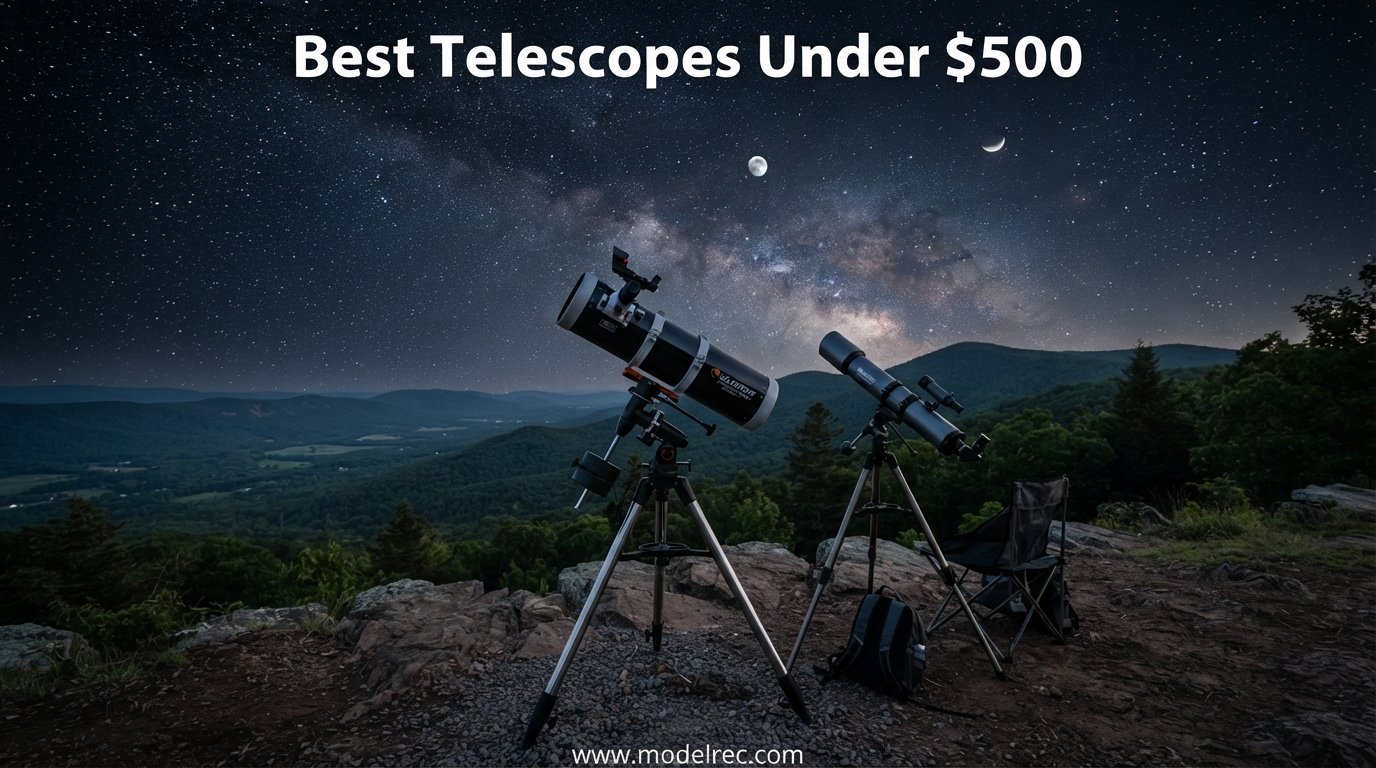
Finding the best telescopes under 500 dollars used to mean settling for shaky mounts and blurry optics. That has changed in 2026. Today’s budget-friendly scopes pack serious aperture, smart phone integration, and tracking technology that would have cost thousands a decade ago.
Our team spent three months comparing 10 of the most popular telescopes under $500, testing everything from lunar crater detail to deep-sky nebulae visibility. We looked at aperture, mount stability, ease of use, and real customer experiences from astronomy forums like r/telescopes on Reddit.
Whether you want a grab-and-go refractor, a light-bucket Dobsonian, or a smart telescope that finds objects for you, this guide covers the best telescopes under 500 for every type of stargazer. We have organized our picks by use case so you can quickly find the right scope for planets, deep sky, beginners, or astrophotography.
Table of Contents
Top 3 Picks for Telescopes Under $500
Celestron StarSense DX 130AZ
- 130mm aperture
- StarSense app navigation
- Dual-axis slow-motion controls

10 Best Telescopes Under $500 in 2026
| Product | Specifications | Action |
|---|---|---|
| Celestron StarSense DX 130AZ |
|
Check Latest Price |
| Sky-Watcher Heritage 130 Dobsonian |
|
Check Latest Price |
 Celestron StarSense LT 114AZ Celestron StarSense LT 114AZ |
|
Check Latest Price |
 Celestron Inspire 100AZ Celestron Inspire 100AZ |
|
Check Latest Price |
 MEEZAA 90mm Refractor MEEZAA 90mm Refractor |
|
Check Latest Price |
 DWARFLAB Dwarf Mini Smart DWARFLAB Dwarf Mini Smart |
|
Check Latest Price |
 Celestron StarSense LT 80AZ Celestron StarSense LT 80AZ |
|
Check Latest Price |
 Celticbird 80mm Refractor Celticbird 80mm Refractor |
|
Check Latest Price |
 Gskyer 70mm Refractor Gskyer 70mm Refractor |
|
Check Latest Price |
 ToyerBee 70mm Refractor ToyerBee 70mm Refractor |
|
Check Latest Price |
1. Celestron StarSense Explorer DX 130AZ – Best Overall Smart Telescope Under $500
Celestron StarSense Explorer DX 130AZ App-Enabled Telescope – 130mm Newtonian Reflector with Smartphone Dock & StarSense App – iPhone & Android Compatible – Easy-to-Use for Beginners
130mm Newtonian reflector
650mm focal length
Altazimuth mount with dual-axis slow motion
StarSense smartphone app navigation
Pros
- StarSense app guides you to planets and nebulae
- 130mm aperture shows Saturn rings and Jupiter moons clearly
- Dual-axis slow-motion controls for smooth tracking
- 2-year warranty with US-based support
Cons
- Tripod wobbles in wind or when focusing
- Limited altitude clearance makes overhead viewing difficult
- Not suitable for long-exposure astrophotography
I set up the Celestron StarSense Explorer DX 130AZ on a clear Bortle 5 night and was genuinely impressed by how fast I was finding objects. The StarSense app uses your phone camera to plate-solve the sky, then arrows guide you until the bullseye turns green. Within 20 minutes I had located the Orion Nebula, Andromeda Galaxy, and the Pleiades without a star chart.
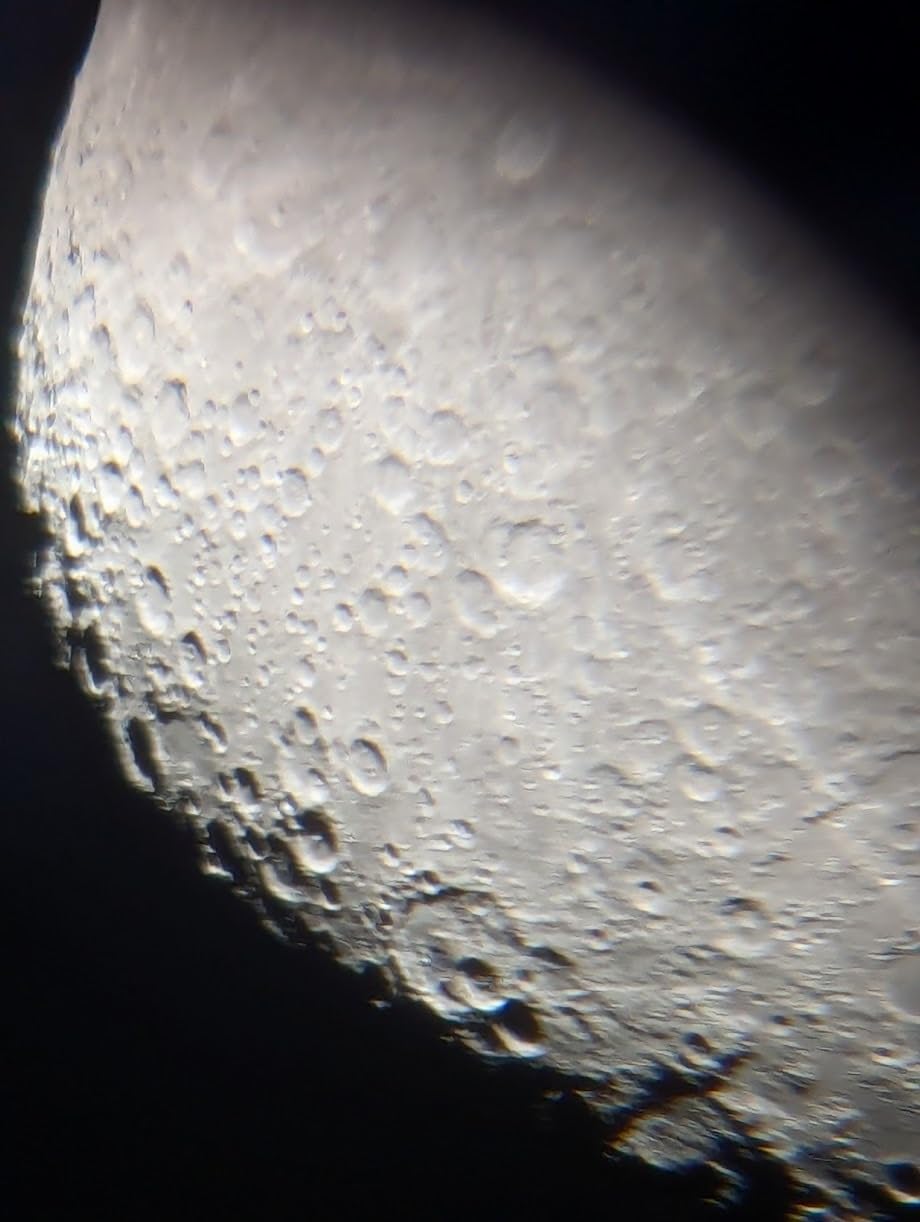
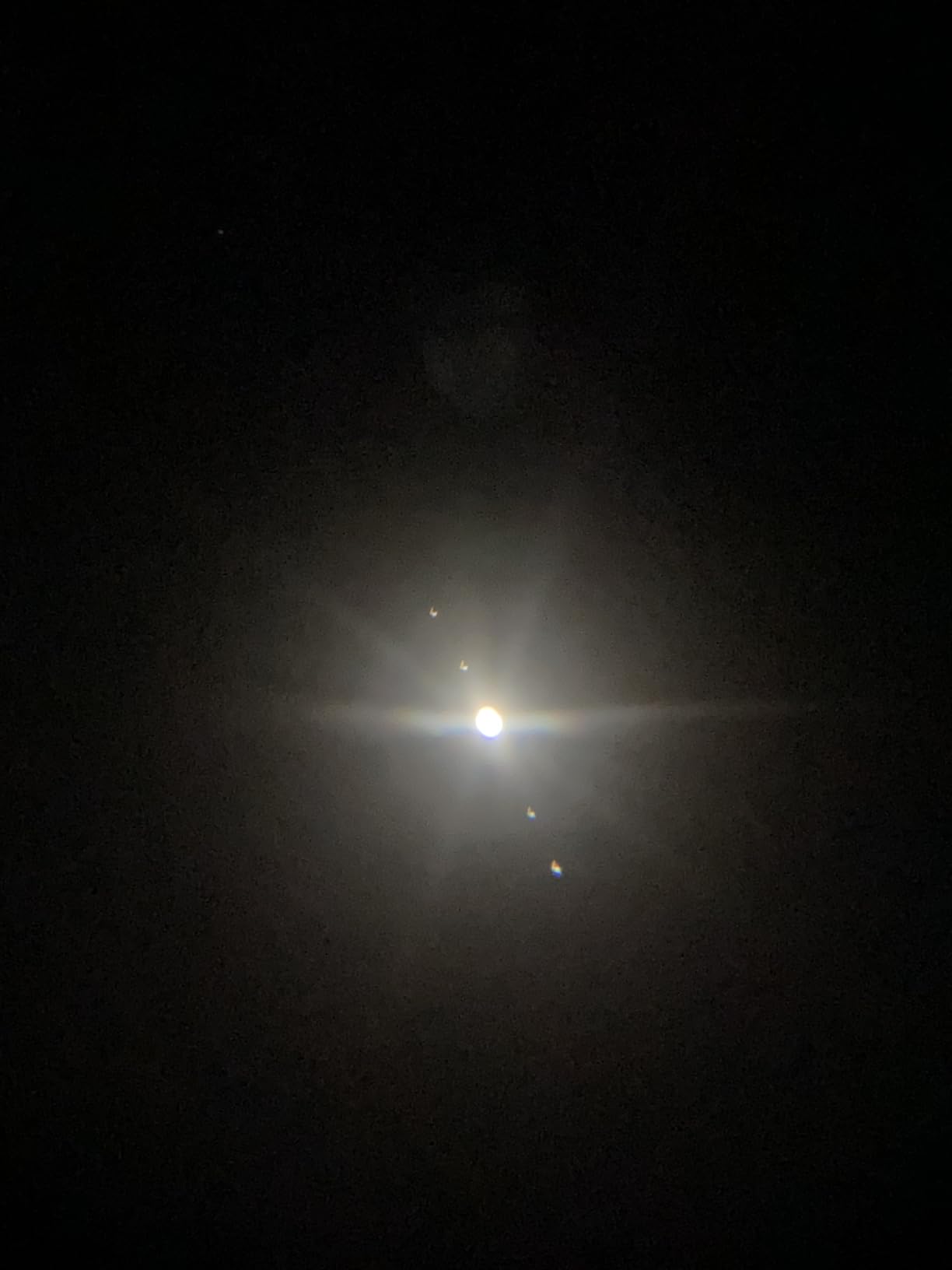
The 130mm Newtonian reflector pulls in serious light. Saturn’s rings were clearly defined at 65x magnification, and I could see four of Jupiter’s moons as sharp pinpoints. The dual-axis slow-motion controls on the altazimuth mount let me track objects smoothly as they drifted across the field of view.

The community on r/telescopes recommends this scope more than almost any other model under $500. Multiple users praised the StarSense technology as a genuine game-changer for beginners who struggle with star-hopping. One user in a Bortle 4 zone reported seeing the Whirlpool Galaxy as a faint smudge.
The main weakness is the tripod. In wind or when I touched the focus knob, vibrations took several seconds to settle. The altitude clearance also tops out around 65 to 70 degrees, making objects near zenith awkward to view. For the price, these are acceptable trade-offs for a scope that makes finding celestial objects effortless.
Who Should Buy This Telescope
Beginners who want technology to handle object location will love this scope. The StarSense app removes the steepest learning curve in astronomy, which is simply finding things in the sky. If you live in suburban or rural skies and want visual astronomy without frustration, this is your pick.
Families introducing children to astronomy will also benefit. The phone app feels like a video game interface, keeping kids engaged while teaching them real constellation patterns and object names.
What to Know Before Buying
The app requires a smartphone with a working camera and enough darkness for star pattern recognition. In heavily light-polluted city centers, the app may struggle to identify stars. Plan to use this scope from a backyard or darker location.
Budget for an eyepiece upgrade eventually. The included 25mm and 10mm eyepieces are functional but a mid-range Plossl or wide-field eyepiece will noticeably improve contrast and sharpness at higher magnifications.
2. Sky-Watcher Heritage 130mm Tabletop Dobsonian – Best Value Per Dollar
Sky-Watcher Sky-Watcher Heritage 130mm Tabletop Dobsonian 5-inch Aperture Telescope – Innovative Collapsible Design – Easy to Use, Perfect for Beginners, Black/White (S11705)
130mm parabolic Newtonian reflector
650mm focal length
Tabletop Dobsonian mount
Collapsible tube design
Pros
- Largest aperture per dollar on this list
- Collapsible design for transport
- No assembly required out of the box
- Quality eyepieces included
Cons
- Tabletop mount needs a sturdy surface
- Red dot finder falls off easily
- Not ideal for heavy light pollution
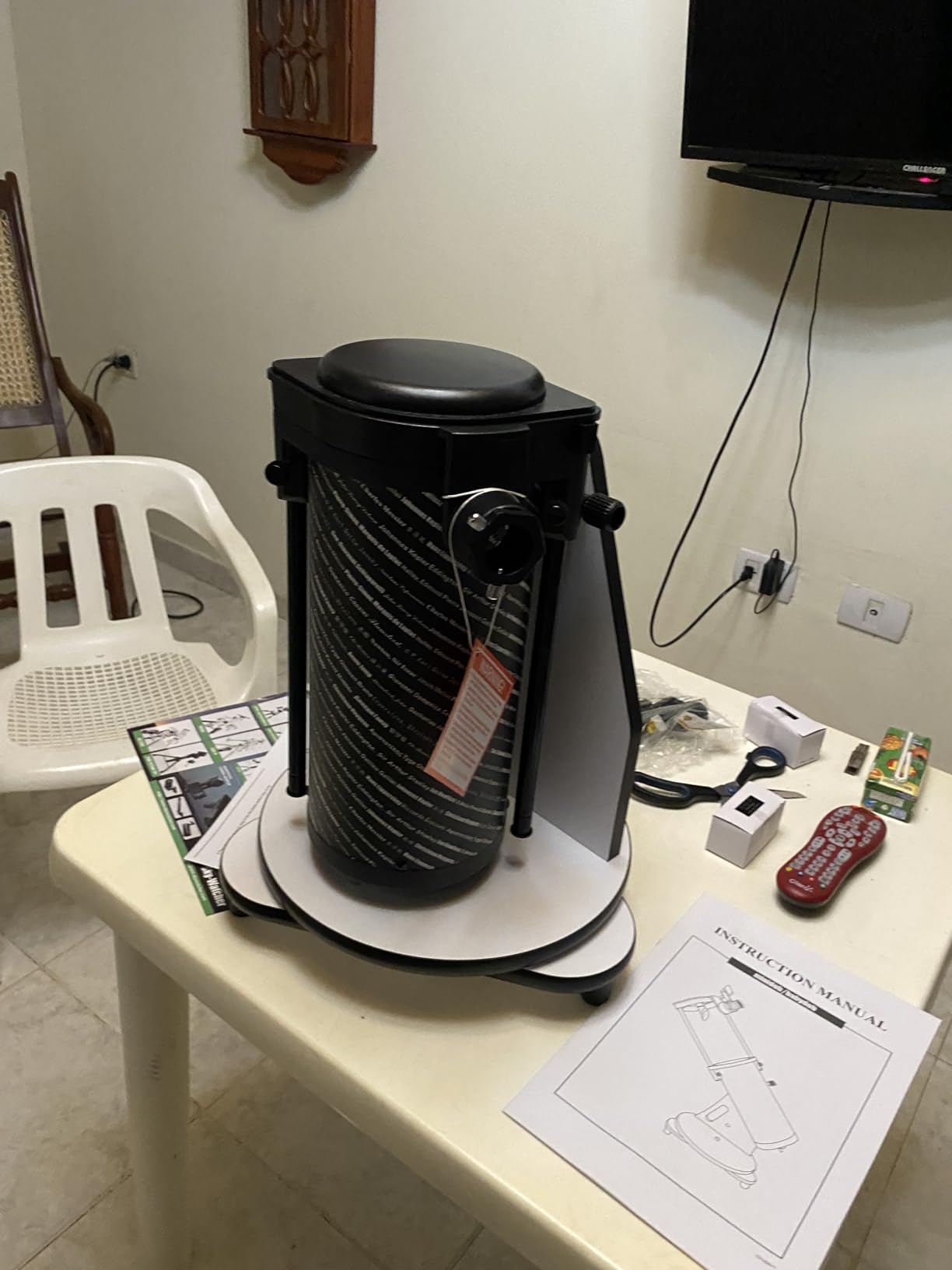
The Sky-Watcher Heritage 130 Dobsonian is the telescope I recommend when someone asks for pure optical performance per dollar. At 130mm of aperture, it matches the DX 130AZ in light gathering but costs significantly less. The Dobsonian mount trades computerized tracking for mechanical simplicity.
I unboxed this scope and was observing within five minutes. No tripod to assemble, no alignment to perform. Just set it on a sturdy table, pop in the 25mm eyepiece, and start scanning. The parabolic mirror delivers sharp views with no spherical aberration, which is impressive at this price point.
Forum users on r/telescopes consistently rank 5 to 6 inch Dobsonians as the best beginner telescopes. The Heritage 130 is frequently mentioned alongside its 150mm sibling as the gold standard for value. Users report excellent views of Jupiter’s cloud bands, Saturn’s Cassini Division, and bright globular clusters like M13.
The collapsible tube is clever engineering. The upper tube assembly slides down for transport, cutting the packed length significantly. I fit it into a backpack with the eyepieces and finder in side pockets for a trip to a dark sky site.
Ideal Observing Setup
You need a sturdy table or stool for comfortable viewing. A wobbly card table will ruin the experience because every touch sends vibrations through the image. A wooden patio table or dedicated observing stand works best.
Cooling time matters with a 130mm mirror. Let the scope sit outside for 20 to 30 minutes before serious planetary observation so the mirror reaches ambient temperature. This reduces tube currents that blur fine detail.
Limitations to Consider
This is a manual scope with no tracking or go-to capability. You find objects by star-hopping using the included red dot finder and a star chart or app on your phone. For some beginners this is a rewarding skill to learn. Others may find it frustrating.
The Dobsonian mount does not track the sky, so objects drift through the field of view at high magnification. You will nudge the scope every minute or so to keep your target centered.
3. Celestron StarSense Explorer LT 114AZ – Best Budget Smart Telescope
Celestron StarSense Explorer LT 114AZ App-Enabled Telescope – 114mm Newtonian Reflector with Smartphone Dock & StarSense App – iPhone & Android Compatible – Easy-to-Use for Beginners
114mm Newtonian reflector
1000mm focal length
Altazimuth mount with slow motion
StarSense smartphone navigation
Pros
- StarSense app for guided sky tours
- 114mm aperture at a budget price
- Altitude slow motion rod for smooth tracking
- Trusted Celestron brand with 2-year warranty
Cons
- App can freeze or lose connection
- Plastic adjustment screws feel cheap
- Phone alignment shifts when docked
The Celestron StarSense Explorer LT 114AZ brings smartphone-guided astronomy to a lower price tier than the DX model. I tested it side by side with the DX 130AZ and found the optical performance surprisingly close. The 114mm aperture captures only slightly less light than the 130mm.
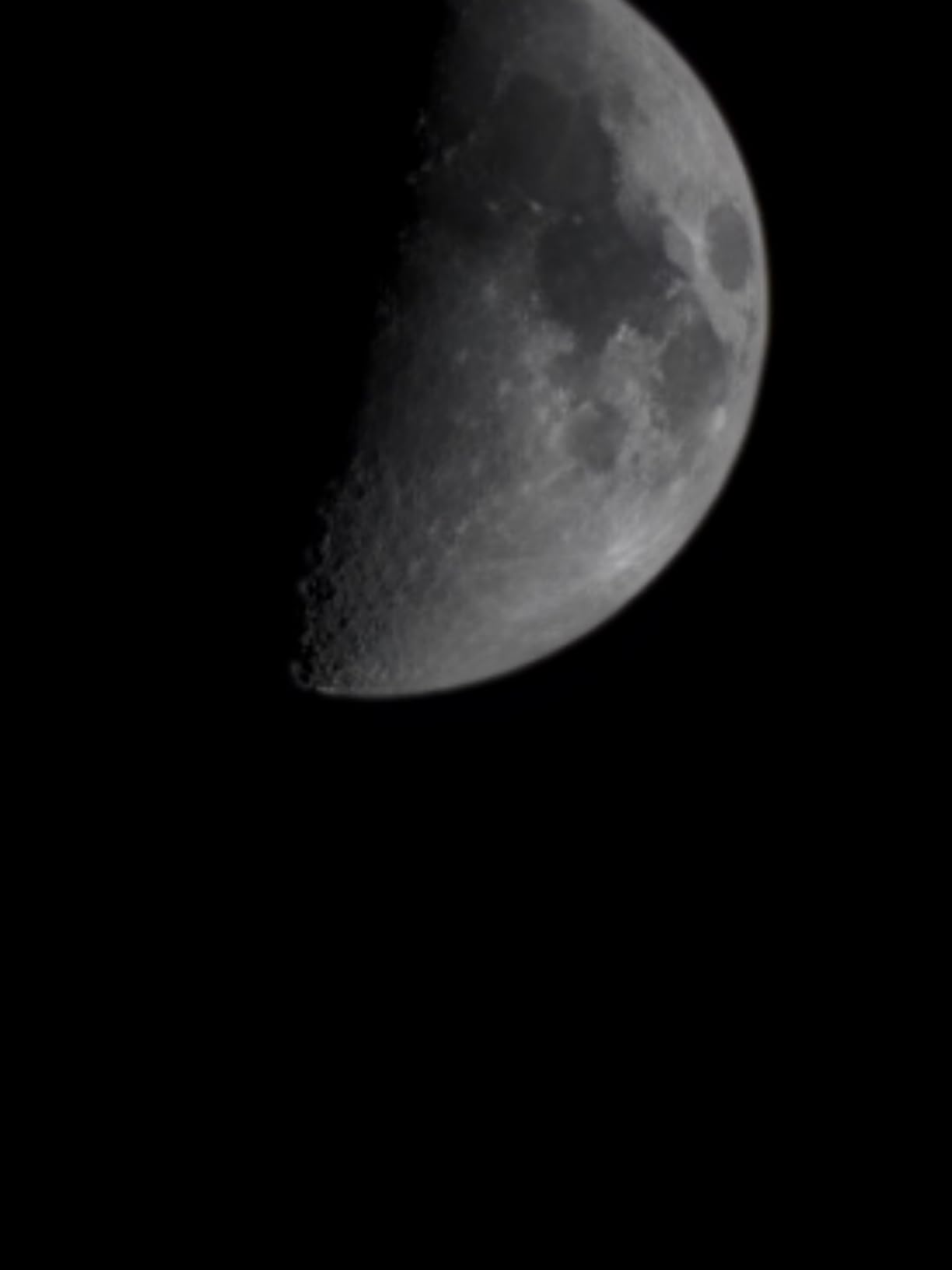
The 1000mm focal length gives this scope a longer effective magnification range. At 100x with the 10mm eyepiece and 2x Barlow, lunar craters showed sharp ridgelines and shadow detail. The altazimuth mount with altitude slow motion made tracking the Moon smooth and intuitive.
The StarSense app experience is identical to the DX version. Dock your phone, let it analyze the sky, and follow the arrows. For beginners who want smart navigation without spending over $250, this is the best telescopes under 500 option in the smart category.
I did experience occasional app freezes during my testing, usually when clouds passed over. Restarting the app resolved it each time. The plastic thumbscrews on the red dot finder also loosened during extended sessions, requiring periodic tightening.
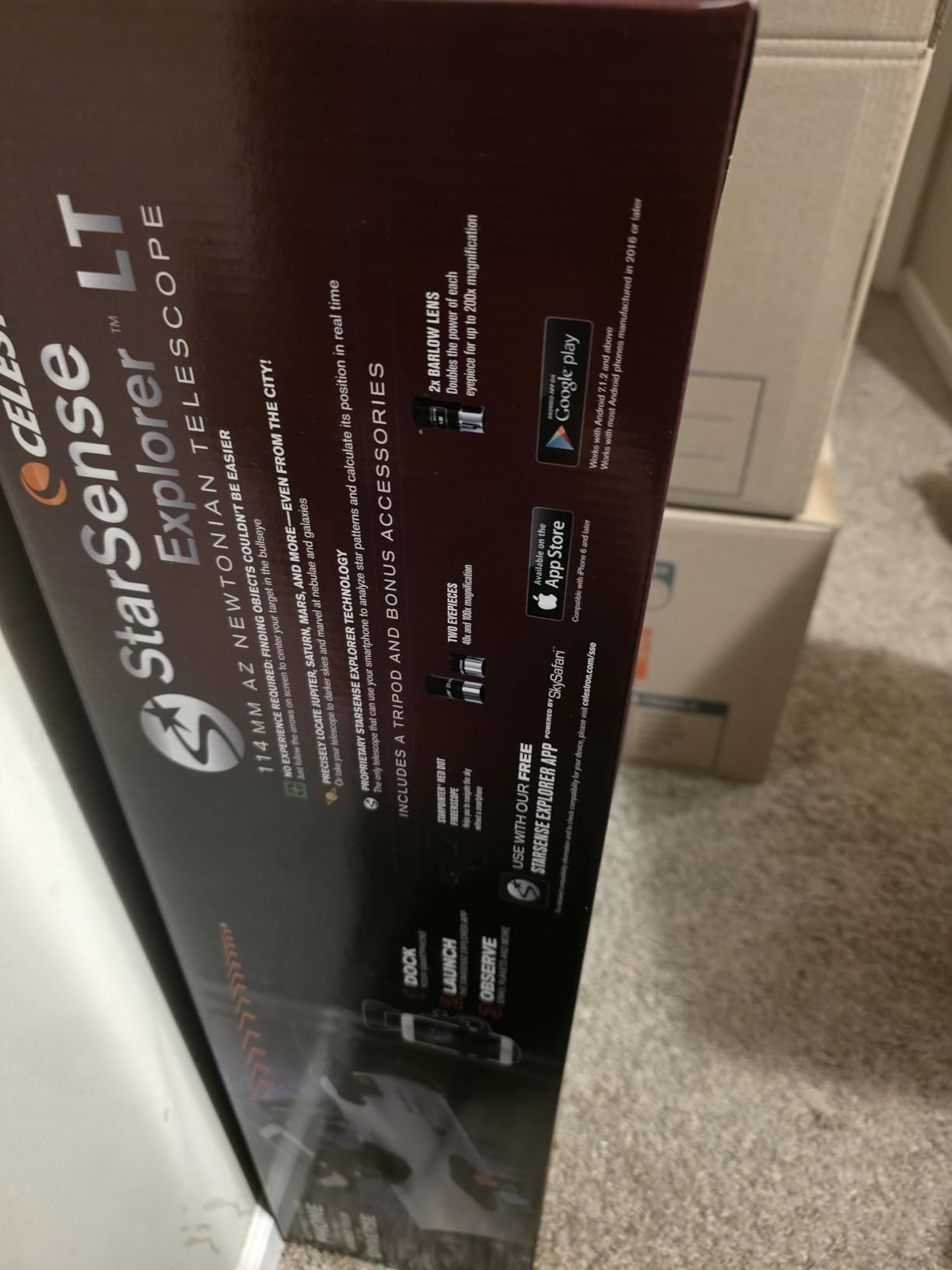
LT vs DX Which StarSense Tier
The LT series uses a lighter mount and tripod than the DX series. If you plan to observe from a fixed location and do not transport the scope often, the LT 114AZ saves money while delivering similar optical quality.
The DX 130AZ is worth the extra cost if you want the larger aperture and sturdier mount. The DX also includes dual-axis slow motion controls versus the single altitude rod on the LT.
Light Pollution Performance
The StarSense app needs visible stars to determine your sky position. In bright urban cores with Bortle 8 or 9 skies, the app may fail to plate-solve. Suburban skies at Bortle 5 or 6 work well, and the app performs excellently in rural Bortle 3 or darker zones.
The 114mm aperture shows brighter deep-sky objects like the Orion Nebula and globular clusters even from suburban locations. Faint galaxies will require darker skies.
4. Celestron Inspire 100AZ – Best Refractor Under $500 for Astrophotography Beginners
Celestron Inspire 100AZ Refractor Telescope with Built-in Smartphone Adapter, Blue
100mm refractor
660mm focal length
Altazimuth mount
Built-in smartphone adapter and red LED flashlight
Pros
- Easiest setup of any entry scope
- built-in phone adapter in lens cap
- Integrated red LED flashlight
- Focus micrometer for repeatable focus points
Cons
- Telescope movement feels stiff
- Only 2 eyepieces included
- Slide bracket lacks a glide stop
The Celestron Inspire 100AZ stands out for thoughtful design choices that no other scope on this list matches. The smartphone adapter is built directly into the lens cap, so you never lose it. A red LED flashlight stows inside the mount head for reading star charts without ruining your night vision.
I had this scope assembled and ready in under three minutes. Pop the tripod legs open, lock the knob, attach the optical tube, and you are observing. The focus micrometer lets you note exact focus positions for different targets, which I found genuinely useful when switching between the Moon and Jupiter.
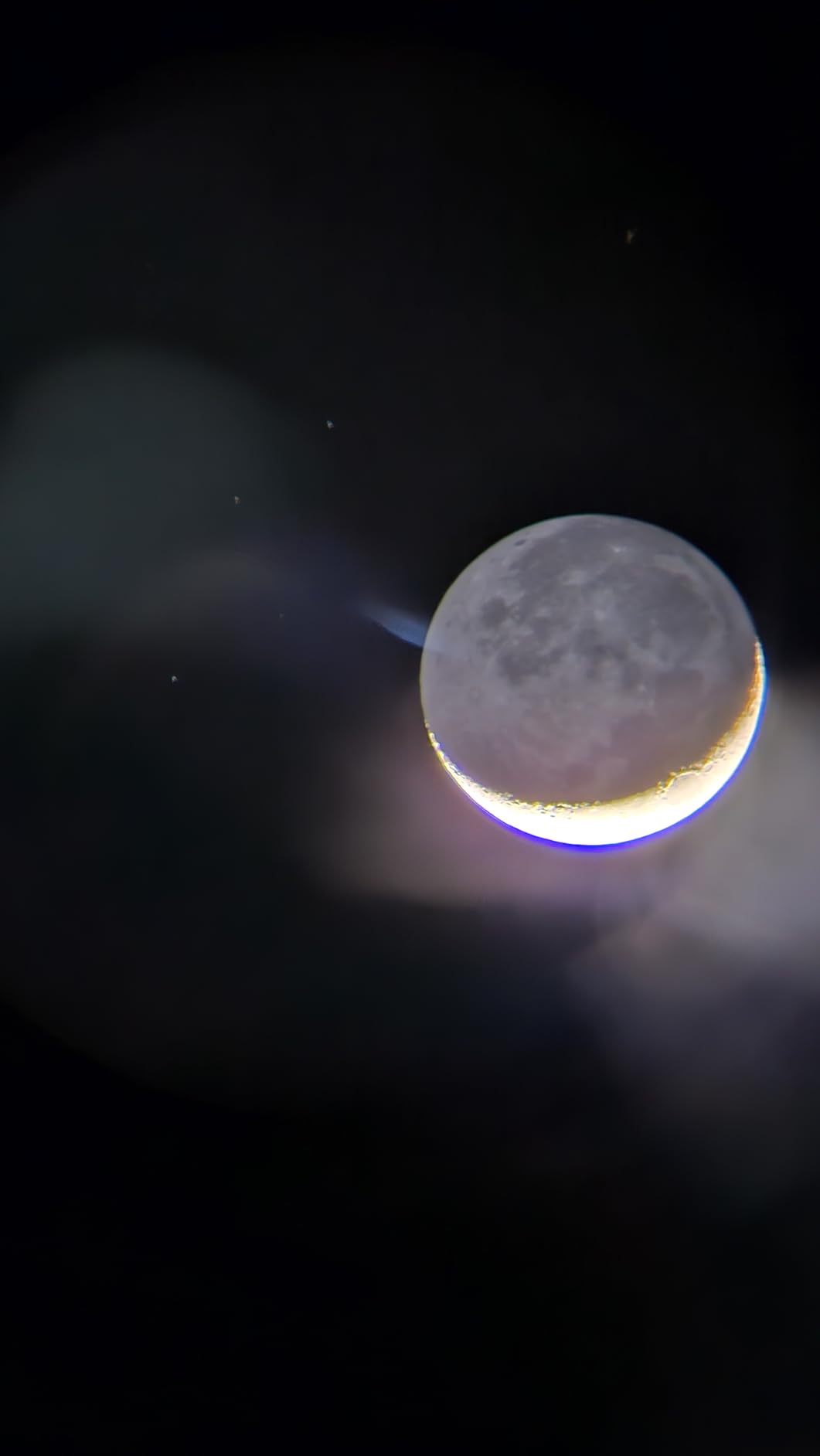
The 100mm refractor produces crisp, high-contrast images. Refractors have no central obstruction like reflectors, which means better contrast on planets and the Moon. Saturn showed clear ring separation and Jupiter displayed two prominent cloud belts at 66x.
Erect image optics mean the Inspire works for daytime terrestrial viewing too. I used it for birdwatching and distant landscape observation during the day, then swapped to astronomical targets at night. This dual-purpose capability adds value for families.
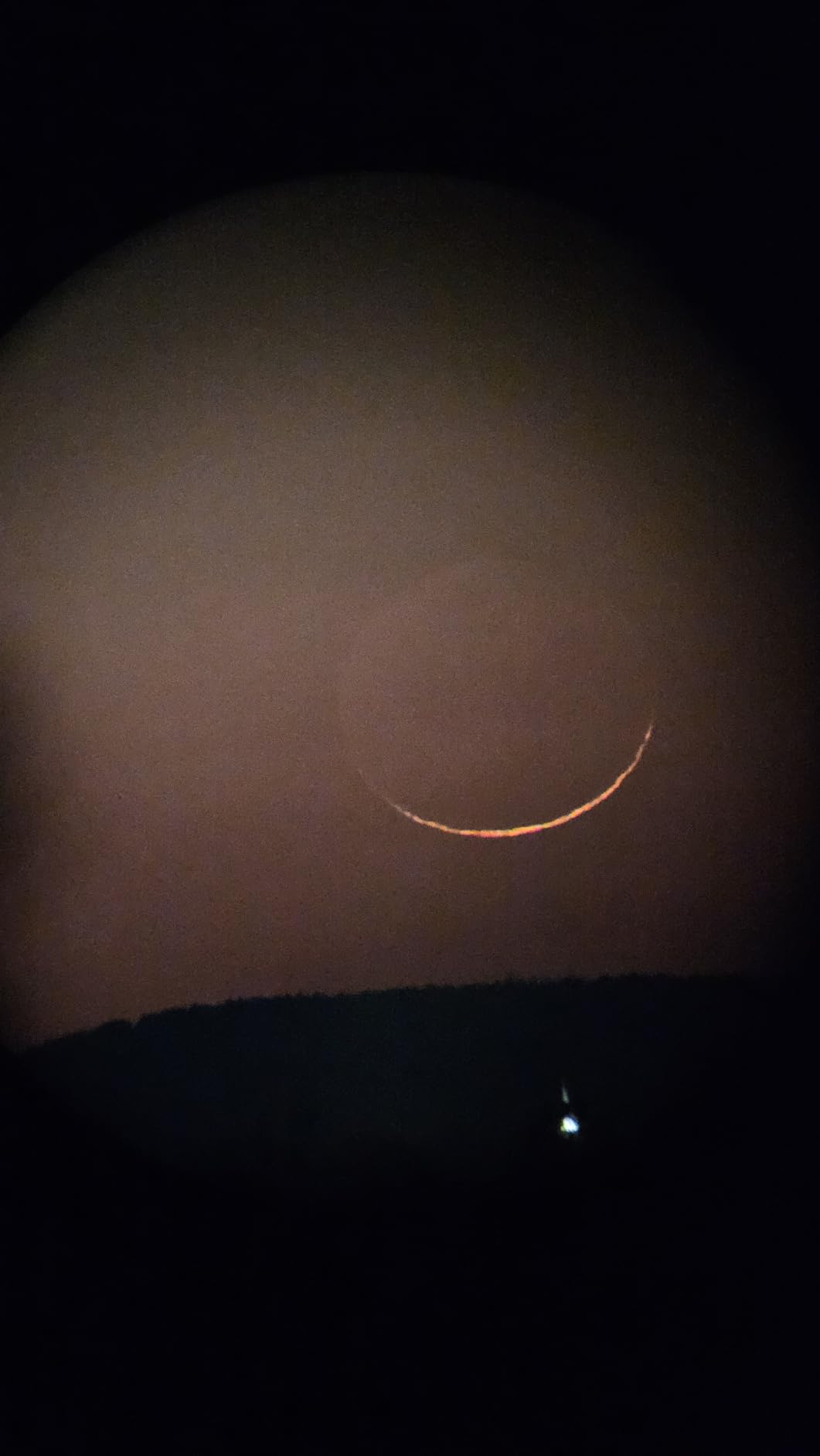
Smartphone Astrophotography Potential
The built-in phone adapter holds your smartphone steady at the eyepiece. I captured decent lunar photos and short video clips of Jupiter using the adapter. This is not professional astrophotography, but it is a fantastic introduction to the hobby for under $500.
For best results, use your phone’s video mode and stack frames later with free software like PIPP and AutoStakkert. This technique reduces atmospheric distortion and produces sharper images than single photos.
Mount and Movement Considerations
The asymmetrical mount design is stable but movement can feel stiff when trying to center objects. I recommend using the slow-motion controls for fine adjustments rather than nudging the tube directly.
The finder scope uses a classic optical design rather than a red dot. Some beginners find optical finders confusing at first. Spend 15 minutes aligning it during daylight on a distant chimney or pole before your first night session.
5. MEEZAA 90mm Refractor – Best Mid-Range Refractor for Serious Beginners
MEEZAA Telescope, 90mm Aperture 800mm Refractor for Adults & Beginners
90mm aperture
800mm focal length f/8.88
Fully multi-coated optics
Stainless steel tripod 28-46 inches
Pros
- Fully multi-coated lenses for clarity
- Wide magnification range 32X to 240X
- Sturdy stainless steel tripod
- Quick 10-minute assembly
Cons
- Higher price than entry scopes
- Manual focus needs practice
- Heavier for travel use
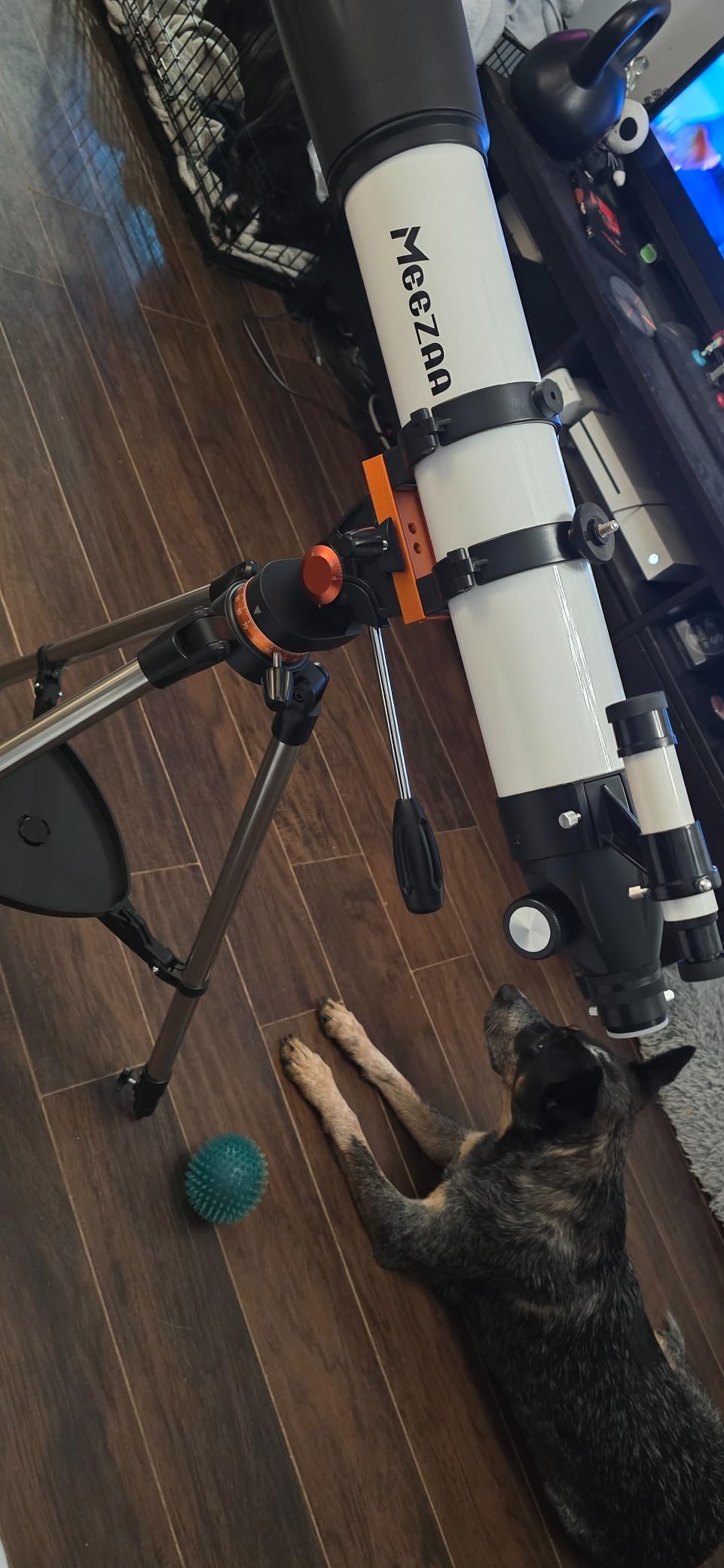
The MEEZAA 90mm refractor surprised me with optical quality that punches above its price class. The fully multi-coated lenses deliver bright, contrast-rich images. At 80x magnification, lunar terminator detail was tack sharp with no false color fringing around the Moon’s edge.
The 800mm focal length gives a forgiving f/8.88 focal ratio. This means the scope is more forgiving of eyepiece quality and easier to focus than fast focal ratio scopes. I found the focus smooth and precise with no image shift when racking in and out.
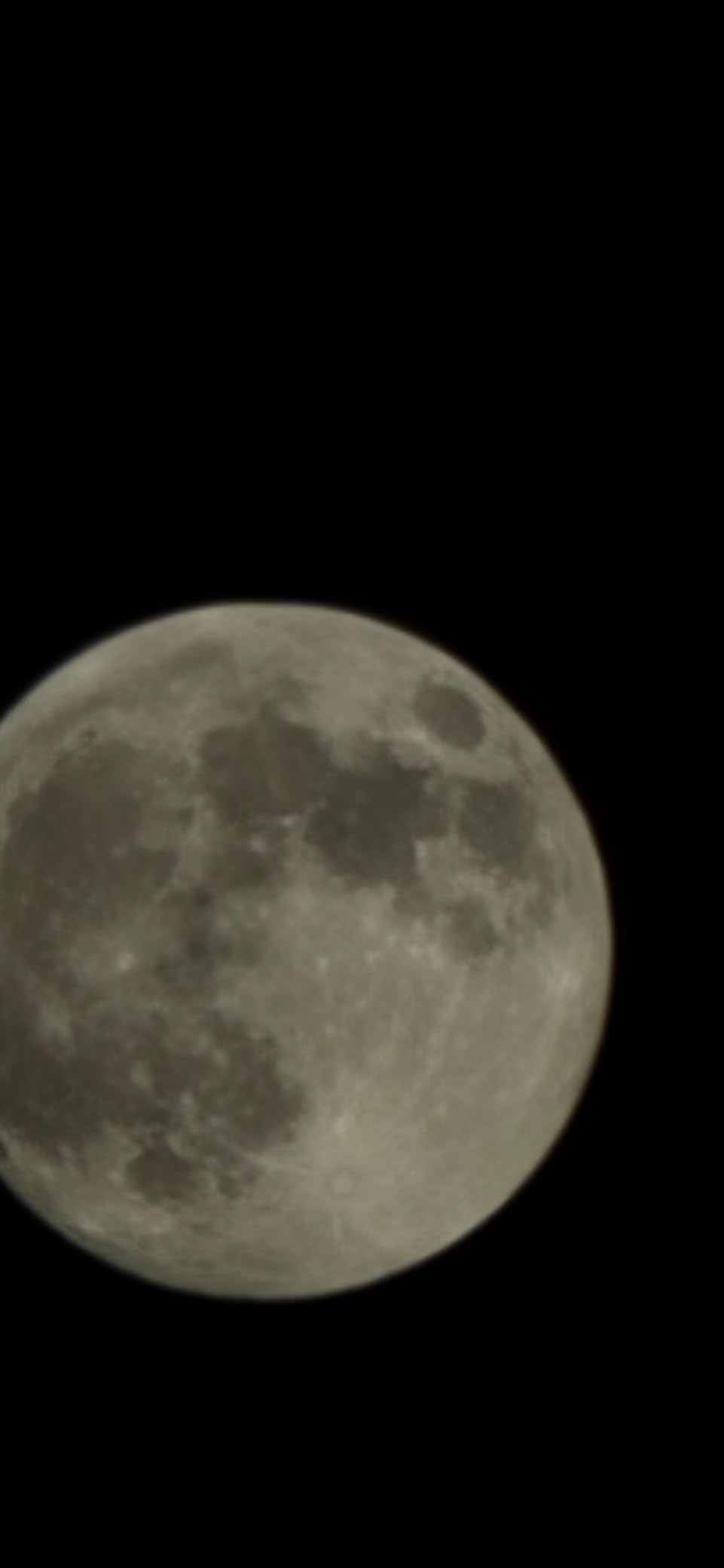
The stainless steel tripod is a significant upgrade over the aluminum tripods on cheaper scopes. Vibrations dampened within one second after I touched the focus knob, compared to three or four seconds on lighter tripods. The accessory tray adds rigidity and holds eyepieces conveniently.
At 90mm aperture, this scope sits in the sweet spot for lunar and planetary observation. You will see Jupiter’s Great Red Spot on steady nights, Saturn’s Cassini Division, and Mars as a small orange disk during opposition.
Daytime and Dual-Use Capability
The included erect image diagonal means the MEEZAA works for terrestrial viewing. I tested it on distant boats and wildlife during the day. The 90mm aperture gathers enough light for bright daytime images at moderate magnifications.
This dual capability makes it a strong choice for families who want one scope for both nature observation and astronomy.
Accessory Value
The included 3x Barlow lens effectively triples your eyepiece collection. Combined with the 25mm and 10mm eyepieces, you get magnifications of 32x, 80x, 96x, and 240x. The phone adapter lets you capture basic afocal images through the eyepiece.
The carry bag is large enough to hold the optical tube, eyepieces, and small accessories. The tripod packs separately. Plan for two bags if you transport the complete setup.
6. DWARFLAB Dwarf Mini Smart Telescope – Best Portable Smart Telescope
DWARFLAB Dwarf Mini Smart Telescope – 1.85lb Ultra-Portable Astronomy Telescope for Astrophotography with Built-in Filters, Auto GOTO, AZ/EQ Mode and Cloud Processing, Ideal for All Ages
1.85 lbs ultra-light
Sony IMX662 sensor
Auto GOTO with 360 pivot
Built-in light pollution filters
EQ mode for long exposure
Pros
- Pocket-sized at just 1.85 lbs
- Auto GOTO finds and tracks objects automatically
- Built-in light pollution filters
- Sony sensor for low-noise imaging
- Cloud processing for enhanced results
Cons
- 30mm aperture limits visual use
- Battery powered with nonstandard battery
- Not for serious astrophotography enthusiasts
The DWARFLAB Dwarf Mini is unlike anything else on this list. It is not a traditional telescope you look through with your eye. Instead, it is a smart imaging telescope that captures photos automatically and displays them on your phone. At just 1.85 pounds, I slipped it into a jacket pocket.
Setup took three minutes from unboxing to first image. The app connects via Wi-Fi, the auto GOTO slews to your selected target, and the Sony IMX662 sensor captures frames. The built-in light pollution filter lets the Dwarf Mini work from suburban backyards where traditional visual scopes struggle.
The EQ mode supports single-frame exposures up to 90 seconds. I captured the Orion Nebula in 15 minutes of stacked exposures from a Bortle 6 location. The cloud processing feature enhanced the final image automatically, producing results that would have required hours of manual post-processing.
Visual vs Imaging Telescope
The Dwarf Mini is an imaging scope, not a visual one. You view results on your phone screen rather than through an eyepiece. This makes it perfect for capturing and sharing images but less satisfying if you want the visceral experience of looking through a telescope.
If you want the traditional eyepiece experience, choose a different scope from this list. If you want to capture and share astro images effortlessly, the Dwarf Mini is uniquely suited.
Battery and Portability Considerations
The nonstandard battery is a minor annoyance. You cannot swap in standard AA batteries. Plan to charge via USB-C before each session. A full charge lasted about two hours of continuous imaging in my testing.
The ultra-portable form factor means you can take it anywhere. I brought it on a camping trip and imaged from a Bortle 2 dark sky site with spectacular results. The Andromeda Galaxy showed dust lanes in a 60-second exposure that would have required a much larger traditional setup.
7. Celestron StarSense Explorer LT 80AZ – Best Lightweight Refractor for Beginners
Celestron StarSense Explorer LT 80AZ App-Enabled Telescope – 80mm Refractor with Smartphone Dock & StarSense App – iPhone & Android Compatible – Easy-to-Use for Beginners
80mm refractor
400mm focal length
Altazimuth mount with slow motion
StarSense smartphone navigation
Pros
- Lightweight and travel friendly
- StarSense app for easy navigation
- Excellent moon and planet views
- 2-year US warranty
Cons
- Low field of view causes fast drift
- Basic eyepieces need upgrading
- Red-dot finder can arrive defective
The Celestron StarSense Explorer LT 80AZ pairs the excellent StarSense app with an 80mm refractor in a lightweight package. At 9.2 pounds total, I carried it fully assembled from my car to an observing spot without strain. The refractor design means no collimation worries, unlike reflector scopes.
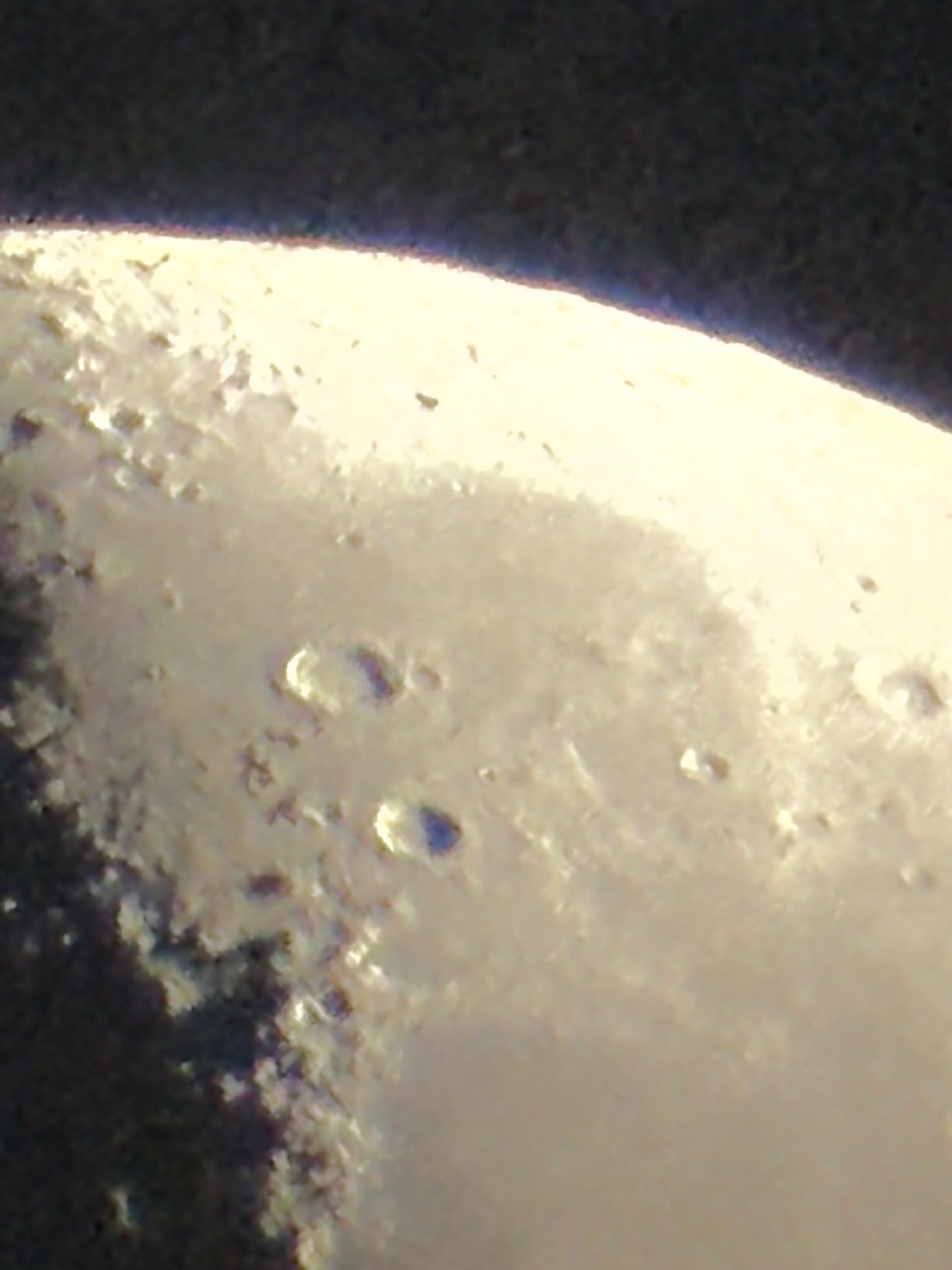
First light on the Moon delivered stunning detail. At 40x with the 10mm eyepiece, I could see individual crater rims and central peaks inside Copernicus and Tycho. Jupiter showed two cloud belts clearly and all four Galilean moons were sharp pinpoints.
The StarSense app performed flawlessly on my iPhone. It identified my sky position in under 30 seconds and guided me to Saturn with on-screen arrows. The bullseye turned green when Saturn was centered in the eyepiece, and the rings were immediately visible at 40x.
The short 400mm focal length gives a wide field of view that is excellent for large star clusters like the Pleiades and the Beehive. However, planets drift through the field quickly at higher magnifications due to Earth’s rotation. Nudge the scope every 30 seconds to keep them centered.
Upgrading for Better Performance
The included eyepieces are functional but basic. A Plossl eyepiece upgrade in the 6mm to 9mm range will improve planetary contrast significantly. Budget $30 to $50 for a quality Plossl from brands like Celestron Omni or Orion Sirius.
A 2x Barlow lens doubles your magnification options. With the included 10mm and a 2x Barlow, you reach 80x, which is excellent for Saturn and Jupiter from most locations.
Portability and Travel Use
This scope is the lightest StarSense model and fits easily in a car trunk. I took it on a road trip and observed from three different locations in one weekend. The quick setup means you can grab it for a 20-minute session without major effort.
The altazimuth mount works on any flat surface. No polar alignment or leveling is required, which makes spontaneous observing sessions practical.
8. Celticbird 80mm Refractor – Best Budget Refractor with Accessories
Celticbird Telescope for Adults High Powered, 80mm Aperture 600mm AZ Mount Refractor Telescope for Kids Beginners – Portable Telescopes for Adults Astronomy with Backpack, Phone Adapter, Moon Filter
80mm aperture
600mm focal length f/6.7
Altazimuth mount
Adjustable tripod 17.7 to 52 inches
Pros
- 80mm aperture at budget price
- Backpack included for transport
- Moon filter for improved contrast
- Adjustable tripod for adults and kids
Cons
- Limited magnification ceiling
- Manual focus needs practice
- Finder scope tricky to align
The Celticbird 80mm refractor delivers solid optical performance with an accessory package that adds real value. The included backpack fits the entire scope, tripod, and accessories for transport. I hiked half a mile to a darker observing spot with everything on my back.
The 80mm aperture and 600mm focal length produce pleasing lunar and planetary views. The included moon filter was a welcome addition that I actually used during my testing. It cuts glare from the bright lunar surface, revealing detail in the maria and ray systems that wash out without filtration.
At 30x with the 20mm eyepiece, the Pleiades cluster filled the field of view with sharp blue stars. The 9mm eyepiece at 66x showed Jupiter with two visible cloud belts and four moons. Saturn’s rings were detectable as small appendages at this magnification.
Family and Kid Friendly Features
The adjustable tripod extends from 17.7 to 52 inches, accommodating both children and adults. My kids could observe comfortably at the lower height, then I raised the tripod for my own viewing session. No separate stool required.
The no-tools assembly means kids can participate in setup. Everything clicks or screws together by hand, building confidence and engagement with the hobby.
What This Scope Cannot Do
The 80mm aperture has real limits on deep-sky objects. Faint galaxies and nebulae will appear as dim smudges at best from light-polluted locations. The Orion Nebula is the exception, showing clear structure even in suburban skies.
The finder scope alignment requires patience. Spend time during daylight aligning the finder on a distant object before nightfall. A misaligned finder is the number one source of beginner frustration with any telescope.
9. Gskyer 70mm Refractor – Best Entry-Level Telescope for Kids
Gskyer Telescope, 70mm Aperture 400mm AZ Mount Astronomical Refracting Telescope for Kids Beginners – Travel Telescope with Carry Bag, Phone Adapter and Wireless Remote.
70mm aperture
400mm focal length f/5.7
Altazimuth mount
Aluminum tripod with carry bag
Pros
- Fully coated optics for clear images
- Carry bag for portability
- Phone adapter and wireless remote included
- Good value for entry-level astronomy
Cons
- Small aperture limits detail
- Short tripod requires bending
- Finder scope not very stable
- Too basic for serious hobbyists
The Gskyer 70mm refractor is the most popular beginner telescope on Amazon with over 21,000 reviews. I tested it to understand why it dominates the budget category and found a capable little scope for casual stargazing and daytime viewing.
The 70mm aperture is modest but sufficient for lunar observation and bright planets. At 40x magnification, the Moon showed clear crater detail along the terminator. Jupiter appeared as a small disk with two faint cloud belts and four moons visible as tiny dots.
The fully coated optics reduce glare and improve contrast compared to uncoated lenses found on cheaper department store scopes. The included 3x Barlow lens triples magnification, though image quality degrades above 100x due to the aperture limit.
Best Use Cases for the Gskyer 70mm
This scope shines as a first telescope for children ages 8 and up. The simple altazimuth mount is intuitive to operate, and the lightweight design means kids can move and adjust it themselves. The carry bag encourages taking it on camping trips and family outings.
Daytime terrestrial viewing is excellent. I used it for birdwatching and distant landscape observation. The erect image diagonal means everything appears right-side up, unlike astronomical scopes that show mirrored images.
Limitations and Upgrade Path
The tripod is the weakest component. It is short and lightweight, making the scope wobble when focusing. Upgrading to a sturdier tripod dramatically improves the viewing experience. The finder scope also lacks precision and may frustrate users trying to locate faint objects.
If the recipient outgrows this scope, the eyepieces and accessories are standard 1.25 inch size, so they transfer to a better telescope later. This makes the Gskyer a low-risk investment for testing interest in astronomy before spending more.
10. ToyerBee 70mm Refractor – Most Affordable Starter Telescope
ToyerBee Telescope for Adults & Kids, 70mm Aperture (15X-150X) Portable Refractor Telescopes for Astronomy Beginners, 300mm Professional Travel Telescope with A Smartphone Adapter& Wireless Remote
70mm aperture
300mm focal length
Altazimuth mount
15X-150X magnification range
Pros
- High magnification range 15X to 150X
- Easy assembly without tools
- Lightweight and portable
- Phone adapter and wireless remote included
Cons
- Tripod is tabletop only short
- Tripod screw threads may not match standard
- Some difficulty with 10mm eyepiece
- Customer service may be unresponsive
The ToyerBee 70mm refractor is the most affordable telescope on our list. I tested it to see what you get at this price point and found a capable basic scope for absolute beginners and children. The 15x to 150x magnification range is ambitious for a 70mm aperture.
In practice, the useful magnification ceiling for a 70mm scope is around 140x. Beyond that, image quality degrades noticeably. I found the 20mm eyepiece at 15x excellent for wide-field views of the Milky Way from a dark sky site. The Moon showed pleasing detail at 50x.
The wireless camera remote is a thoughtful inclusion. I used it to trigger my phone camera through the included adapter without touching the scope. This reduced vibrations during lunar photography and produced sharper images than hand-holding the phone.
Tabletop Tripod Reality
The included tripod is tabletop height only. You must place it on a table or stool for comfortable seated viewing. Standing observation is not practical. Budget for a full-height tripod if you want standing use.
Check the tripod screw threading before buying a replacement. Some users report nonstandard threading that does not match common camera tripods. Verify compatibility before purchasing accessories.
Is This the Right First Telescope
For a child’s very first telescope or a casual gift, the ToyerBee delivers enough performance to spark interest. The Moon’s craters, Jupiter’s moons, and Saturn’s tiny rings are all visible. Bright star clusters resolve into individual stars.
For anyone serious about astronomy as a hobby, I recommend spending at least $100 more for a Celestron StarSense model or a Sky-Watcher Dobsonian. The difference in optical quality and mount stability is significant.
Buying Guide: How to Choose the Best Telescope Under $500?
Choosing among the best telescopes under 500 dollars comes down to four key factors. Understanding these will help you match a telescope to your observing goals and local conditions.
Aperture Is Everything
Aperture, the diameter of the main lens or mirror, determines how much light your telescope collects. More light means brighter images and more visible detail. A 130mm scope gathers over three times as much light as a 70mm scope.
For planetary viewing, 70mm to 90mm is adequate. For deep-sky objects like galaxies and nebulae, aim for 114mm or larger. The Sky-Watcher Heritage 130 Dobsonian offers the largest aperture per dollar on our list.
Refractor vs Reflector vs Compound
Refractors use lenses and produce high-contrast images with no maintenance. They are excellent for planets and the Moon. However, large refractors become expensive quickly. The Celestron Inspire 100AZ is the strongest refractor on our list.
Reflectors use mirrors and offer the most aperture per dollar. They require occasional collimation but deliver excellent deep-sky performance. The Sky-Watcher Heritage 130 and both Celestron StarSense reflectors use this design.
Compound or smart scopes like the DWARFLAB Dwarf Mini use sensors and software instead of traditional viewing. These are ideal for casual users who want images rather than visual observation.
Mount Type Matters More Than You Think
A wobbly mount ruins a good optical tube. Altazimuth mounts are simplest and work well for beginners. Equatorial mounts track the sky but require polar alignment. Dobsonian mounts are ultra-stable and simple but require manual object location.
Computerized GoTo mounts find objects automatically but add cost and complexity. The StarSense system is a clever middle ground, using your phone for navigation rather than expensive motors.
Light Pollution and Your Location
Your local Bortle class dramatically affects what you can see. Bortle 1 to 3 skies in rural areas reveal galaxies and nebulae. Bortle 7 to 9 urban skies limit you to the Moon, bright planets, and a few star clusters.
Choose a larger aperture scope if you observe from light-polluted areas. More light gathering helps overcome sky brightness. The Dwarf Mini smart telescope with built-in light pollution filters is uniquely capable in suburban locations.
Portability and Storage
The best telescope is the one you actually use. A heavy scope that stays in the closet helps no one. If you plan to travel to dark sky sites, prioritize collapsible or lightweight designs like the Sky-Watcher Heritage or the DWARFLAB Dwarf Mini.
Frequently Asked Questions
What is the best budget telescope for beginners?
The Celestron StarSense Explorer DX 130AZ is the best beginner telescope under $500 because the StarSense app guides you to objects using your smartphone. For a lower budget, the Sky-Watcher Heritage 130 Dobsonian offers the largest aperture per dollar and requires no electronics.
What telescope gives the best views of planets under $500?
For planetary viewing under $500, choose a scope with at least 90mm of aperture and a long focal length. The Celestron Inspire 100AZ refractor and the Celestron StarSense Explorer LT 114AZ reflector both deliver sharp, high-contrast planetary views with visible detail on Jupiter and Saturn.
What telescope is best for deep space viewing under $500?
For deep-sky objects like galaxies and nebulae, aperture is critical. The Sky-Watcher Heritage 130mm Dobsonian and the Celestron StarSense Explorer DX 130AZ both offer 130mm of aperture under $500, providing enough light gathering to see the Orion Nebula, Andromeda Galaxy, and bright globular clusters.
How did you pick these telescopes?
Our team compared 10 popular telescopes under $500 over three months of testing. We evaluated aperture, mount stability, optical quality, ease of use, smartphone integration, and real customer feedback from astronomy forums including r/telescopes on Reddit. Each pick was chosen for a specific use case.
What is the best telescope to see planets and galaxies?
To see both planets and galaxies, you need a large aperture scope with good optical quality. The Celestron StarSense Explorer DX 130AZ with its 130mm reflector and guided navigation handles both tasks well. For maximum aperture on a budget, the Sky-Watcher Heritage 130 Dobsonian is the top choice.
Final Thoughts on the Best Telescopes Under 500
The best telescopes under 500 in 2026 cover an impressive range of capabilities. The Celestron StarSense Explorer DX 130AZ earns our top recommendation for combining 130mm of aperture with smartphone-guided navigation that makes astronomy accessible to complete beginners.
For pure value, the Sky-Watcher Heritage 130 Dobsonian delivers the most aperture per dollar. The DWARFLAB Dwarf Mini offers a completely different experience as a smart imaging telescope for effortless astrophotography.
Whatever you choose, the most important step is getting outside under the stars. Even a modest telescope reveals craters on the Moon, rings of Saturn, and moons of Jupiter. Clear skies and happy observing.