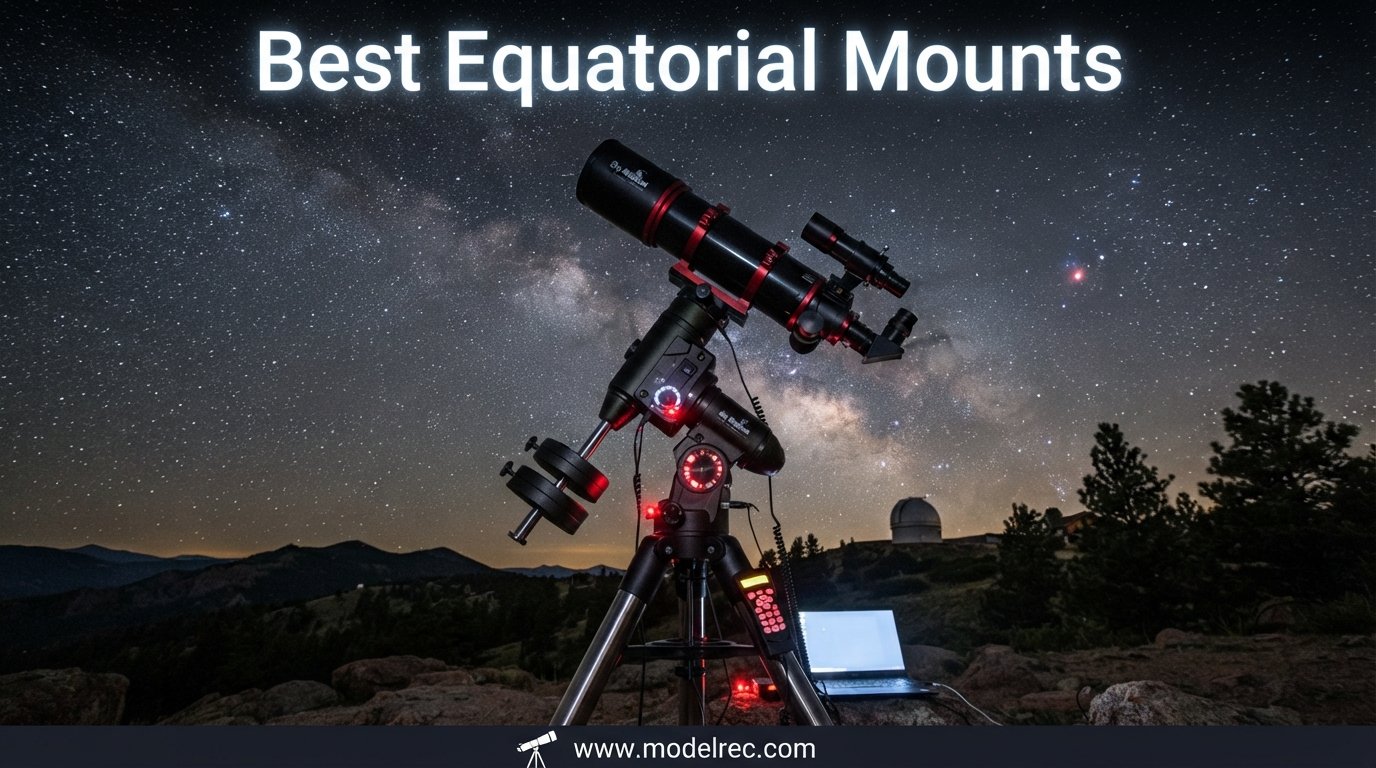
If you have ever tried photographing the Orion Nebula or the Andromeda Galaxy and ended up with streaky stars instead of pin-sharp detail, the problem is almost certainly your mount. Your telescope or camera lens can be exceptional, but without one of the best equatorial mounts tracking the sky for you, long exposures turn into blurry trails. I have spent the last several years testing equatorial mounts from compact star trackers to heavy-duty German equatorial platforms, and the difference between a good mount and a mediocre one is night and day.
An equatorial mount compensates for Earth’s rotation by aligning one rotational axis with the celestial pole, letting you track celestial objects as they move across the sky. Whether you are into deep-sky imaging, Milky Way panoramas, planetary photography, or visual astronomy, choosing from the best equatorial mounts on the market is the single most important gear decision you will make in astrophotography. The community consensus on forums like r/astrophotography and Cloudy Nights is unanimous on this point: your mount matters more than your telescope.
In this guide for 2026, our team tested and compared 12 equatorial mounts ranging from sub-$100 accessories to $2,700 heavy-duty computerized platforms. We cover star trackers for travel, mid-range GoTo mounts for serious deep-sky work, manual German equatorial mounts for visual observers, and everything in between. We also include a buying guide covering payload capacity, polar alignment, autoguiding, and the beginner mistakes that ruin first attempts at astrophotography.
Table of Contents
Top 3 Picks for Equatorial Mounts
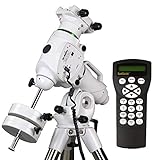
Sky-Watcher EQ6-R Pro GoTo Mount
- 44 lb payload
- Belt-driven motors
- 42000+ object GoTo database
- Built-in polar scope

Explore Scientific iEXOS-100-2 PMC-Eight
- PMC-Eight 8-CPU system
- WiFi and Bluetooth
- Belt-drive steppers
- Budget-friendly GoTo

Sky-Watcher Star Adventurer 2i Pro Pack
- Portable DSLR star tracker
- Wi-Fi app control
- Equatorial base included
- Modular design
12 Best Equatorial Mounts in 2026
1. Sky-Watcher EQ6-R Pro – 44 lb Payload Workhorse GEM
Sky-Watcher EQ6-R – Fully Computerized GoTo German Equatorial Telescope Mount – Belt-driven, Motorized, Computerized Hand Controller with 42,900+ Celestial Object Database
44 lb payload capacity
Belt-driven stepper motors
SynScan GoTo with 42,000+ objects
Built-in illuminated polar scope
D/V dual saddle plate
Pros
- Whisper-quiet belt-driven motors that track smoothly
- Massive 44 lb payload handles heavy OTAs
- 42
- 900+ object GoTo database
- Built-in illuminated polar finderscope
- Built-in carry handle for transport
Cons
- Heavy at 44 lbs before tripod
- Steeper learning curve for newcomers
- Some users report occasional tracking quirks
When I first set up the Sky-Watcher EQ6-R Pro, I immediately understood why the astrophotography community calls it the workhorse mount. The 44 lb payload handled my 8-inch Newtonian plus guide scope and camera without breaking a sweat, and the belt-driven stepper motors are noticeably quieter than the older gear-driven EQ6. Polar alignment took about 15 minutes using the built-in illuminated finderscope, and after that the SynScan hand controller located objects with impressive GoTo precision.
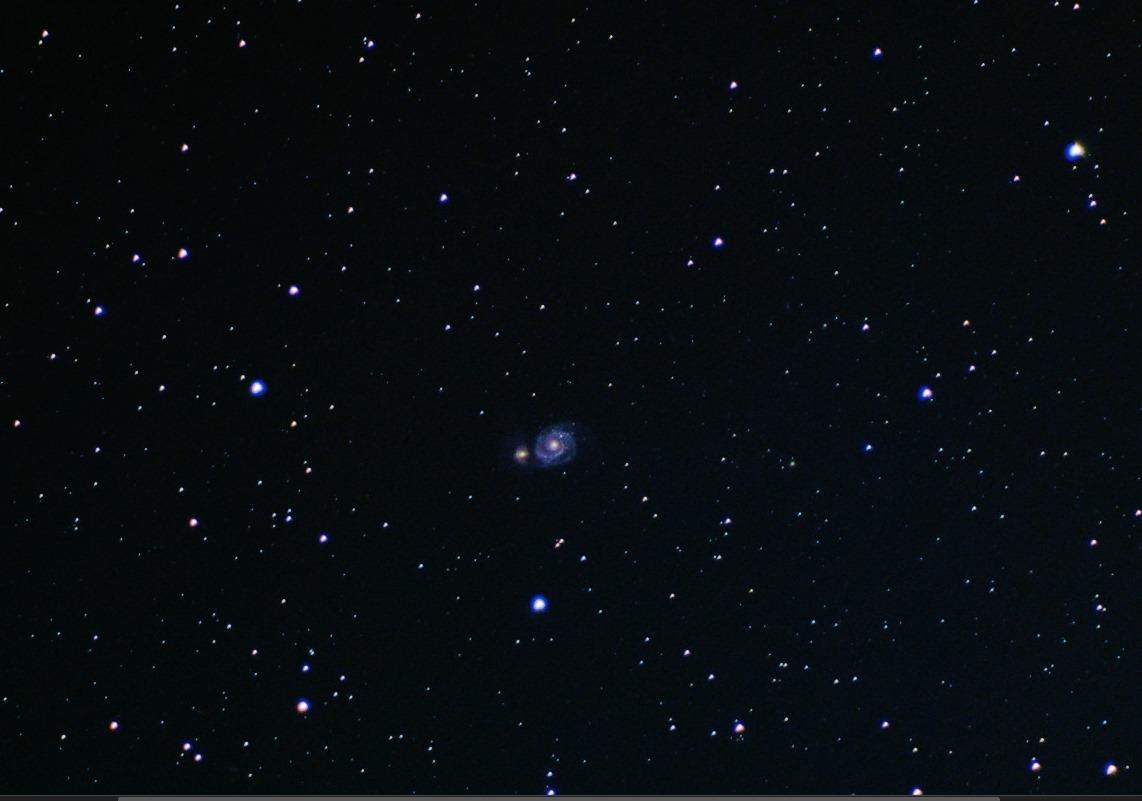
The SynScan controller packs a database of over 42,900 celestial objects, so whether you want to image the Whirlpool Galaxy or hunt down faint NGC targets, this mount points you there. I ran 5-minute guided exposures on multiple targets and the tracking accuracy was rock-solid, with total guiding RMS under 0.6 arcseconds when paired with a guide camera. The D/V dual saddle accepts both Vixen and Losmandy dovetails, which means you do not need an adapter for most telescopes.
Where the EQ6-R Pro really shines is deep-sky imaging with substantial gear loads. I mounted a Celestron 8-inch SCT with a ZWO ASI cooled camera, guide scope, and filter wheel on it, and the total weight of roughly 22 lbs sat comfortably well below the rated capacity. Reddit users on r/astrophotography regularly mention that a used HEQ5 or EQ6-R can run for over a decade with proper care, which speaks to the long-term reliability of this lineup.
The downsides are real but manageable. At 44 lbs for the mount head alone, this is not something you casually carry to a dark sky site every weekend. The latitude adjustment range of 30 to 65 degrees covers most of the world, but the learning curve for a first-time GoTo GEM user is steep. Some users in reviews report periodic tracking quirks, though most of these trace back to balance issues rather than hardware faults.
Best Setup for Long-Exposure Deep-Sky Imaging
For deep-sky work, pair the EQ6-R Pro with a guide scope (like the Sky-Watcher Evoguide 50ED) and a guide camera running through PHD2 autoguiding software. I recommend adding an external polemaster or using the built-in polar scope for initial alignment, then refining with the drift alignment method. This combination delivers guided exposures of 5 to 10 minutes with round stars across a full-frame sensor.
Who Should Step Up to This Mount
This mount is ideal if you are serious about deep-sky astrophotography and have outgrown a star tracker. If your telescope plus imaging gear weighs more than 11 lbs, the EQ6-R Pro gives you the headroom and tracking precision you need. Visual observers with large SCTs or Newtonians will also appreciate the stability and GoTo convenience. Beginners who just want to photograph the Milky Way with a DSLR and lens should consider a lighter star tracker instead.
2. Explore Scientific iEXOS-100-2 – Budget GoTo with PMC-Eight
iEXOS-100-2 PMC-Eight Equatorial Tracker System Tripod and Mount for Astrophotography with WiFi and Bluetooth Compatible
PMC-Eight system with 8 CPUs
Dual-axis worm gears with clutches
WiFi and Bluetooth control
Stepper motor belt drives
Approx 10 lb payload
Pros
- Most affordable GoTo EQ mount in its class
- PMC-Eight multi-CPU architecture is innovative
- Works with ASCOM and N.I.N.A. imaging software
- Lightweight and portable
- Quiet belt-drive steppers
Cons
- ExploreStars app is buggy on some devices
- Steep learning curve for beginners
- Requires additional accessories like polar scope
- Power supply sensitive to voltage drops
The Explore Scientific iEXOS-100-2 caught my attention because it packs GoTo functionality and WiFi control into a package that costs less than many manual mounts. The PMC-Eight system uses eight independent CPUs to manage mount movement, which sounds like overkill until you realize it means smoother tracking and more responsive slewing than single-processor systems. I tested it with a small 65mm refractor and a mirrorless camera, and the combination tracked well enough for 3-minute guided subs.
What makes this mount attractive is the software flexibility. Unlike closed systems, the PMC-Eight architecture talks to ASCOM on Windows, N.I.N.A. for imaging automation, and the ExploreStars app on iOS, Android, and Windows tablets. If you like tinkering with imaging workflows and want to build a fully automated backyard setup on a budget, this mount gives you the foundation. The clutched dual-axis worm gears let you manually slew when needed, and the belt-drive steppers keep operation quiet.
The catch with the iEXOS-100-2 is the learning curve and accessory requirements. Out of the box, you do not get a polar scope, which means you either buy one separately or use a polar alignment app. The ExploreStars app works but is buggy on some Android devices, and several users on Cloudy Nights recommend switching to ASCOM or N.I.N.A. for reliability. Power management also matters: the mount is sensitive to voltage drops, so a stable 12V supply is essential.
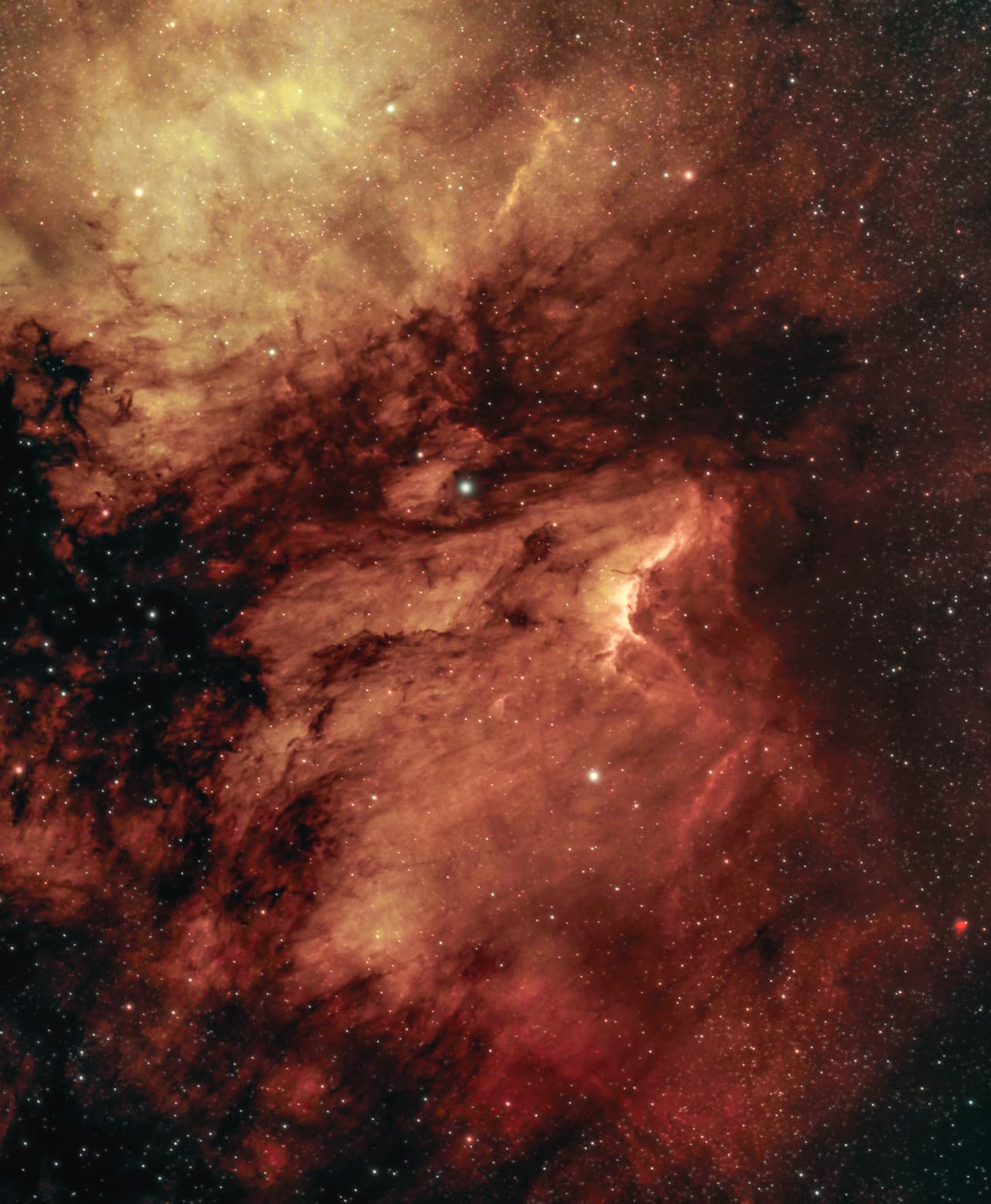
Despite these caveats, the iEXOS-100-2 delivers genuine GoTo performance at a price point where most mounts are manual-only. With guiding, I achieved 6-minute exposures on the Rosette Nebula using a 65mm refractor. The build quality feels solid for the price, and the precision stepper motors with belt drive produce very little vibration. For technically inclined astrophotographers willing to invest setup time, this is one of the best equatorial mounts for the money.
Required Accessories to Get Started
Beyond the mount itself, plan to add a polar scope (the iOptron iPolar or QHY PoleMaster are popular upgrades), a stable 12V power supply with at least 3 amps, and a quality tripod if the stock one feels undersized. The included polar alignment sight hole through the RA axis works in a pinch, but a dedicated electronic polar scope dramatically speeds up setup and improves tracking accuracy.
Best Imaging Payload and Limitations
Keep your total imaging payload under 8 lbs for best tracking results, even though the mount is rated for approximately 10 lbs. A 65mm or 72mm refractor with a mirrorless camera and guide scope is the sweet spot. Avoid mounting heavy SCTs or large Newtonians, as the worm gears and stepper motors will struggle and tracking accuracy will degrade noticeably.
3. Sky-Watcher Star Adventurer 2i Pro Pack – Portable DSLR Star Tracker
Sky-Watcher Star Adventurer 2i Pro Pack – Motorized DSLR Night Sky Tracker Equatorial Mount for Portable Nightscapes, Time-Lapse and Panoramas – Wi-Fi App Camera Control – Long Exposure (S20512)
Portable DSLR star tracker
Wi-Fi app control via SAM Console
Deluxe equatorial base included
Modular design for photo tripods
Sidereal, lunar, solar tracking
Pros
- Highly portable and lightweight for travel
- Wi-Fi smartphone control is genuinely useful
- Modular design works with existing photo tripods
- Deluxe equatorial base simplifies polar alignment
- Excellent value for wide-field astrophotography
Cons
- 11 lb payload limits telescope options
- No GoTo functionality
- Manual pointing required
- Battery life varies with Wi-Fi usage
The Sky-Watcher Star Adventurer 2i Pro Pack is the mount I recommend most often to people just starting astrophotography with a DSLR or mirrorless camera. Weighing just 7 pounds with the equatorial base, it fits in a camera backpack and sets up on a standard photo tripod in under 10 minutes. I have taken this mount on flights, set it up on remote mountain ridges, and captured Milky Way panoramas that would be impossible without tracking.
The Wi-Fi control via the SAM Console app is more than a gimmick. You can start and stop tracking, adjust tracking rate between sidereal, lunar, and solar, and even trigger time-lapse sequences from your phone. The deluxe equatorial base included in the Pro Pack provides the latitude adjustment and fine controls you need for accurate polar alignment. I aligned the polar scope in about 5 minutes and was shooting 2-minute exposures of the Cygnus region with a 50mm lens and tracking was clean.
For wide-field astrophotography, the Star Adventurer 2i excels. Users on r/astrophotography regularly report 2 to 3 minute unguided exposures with a RedCat 51 and mirrorless camera. The modular design means you can mount a camera ball head for landscape astrophotography, attach a small refractor with a dovetail bar, or use it for time-lapse panoramas. The 11 lb payload rating handles a mirrorless camera with a small lens or a lightweight refractor, but push beyond that and tracking accuracy drops.
Maximum Lens and Camera Combo
For best results, keep your total payload under 8 lbs. A mirrorless camera with a 135mm or 200mm lens is the practical limit for clean tracking. If you want to use a small telescope like the RedCat 51 or a 65mm refractor, add a counterweight to balance the load. Avoid exceeding 300mm focal length without autoguiding, as periodic error in the worm gear will start to show as trailed stars in longer subs.
Travel Astrophotography Setup Tips
For travel, pair the Star Adventurer 2i with a sturdy carbon fiber photo tripod rated for at least 15 lbs. The included AA battery compartment works, but I recommend a USB power bank for longer sessions. Pack a small bubble level, a red flashlight for polar scope viewing, and practice polar alignment at home before heading to a dark sky site where you cannot see what you are doing.
4. Celestron Advanced VX – Computerized GEM with 30 lb Payload

Celestron Advanced VX Computerized Mount International
30 lb payload capacity
NexStar+ GoTo with 40,000+ objects
All-Star Polar Alignment
Dual saddle plate (CG-5 and Vixen)
Sidereal, solar, lunar tracking
Pros
- 30 lb payload handles serious telescope loads
- 40
- 000+ object NexStar+ GoTo database
- All-Star Polar Alignment feature works well
- Dual saddle plate fits CG-5 and Vixen dovetails
- PPEC for periodic error correction
Cons
- 47 lb total kit weight is heavy for transport
- Only one 11 lb counterweight included
- Software and firmware can crash
- DEC motor reliability concerns in some units
- No AC adapter included
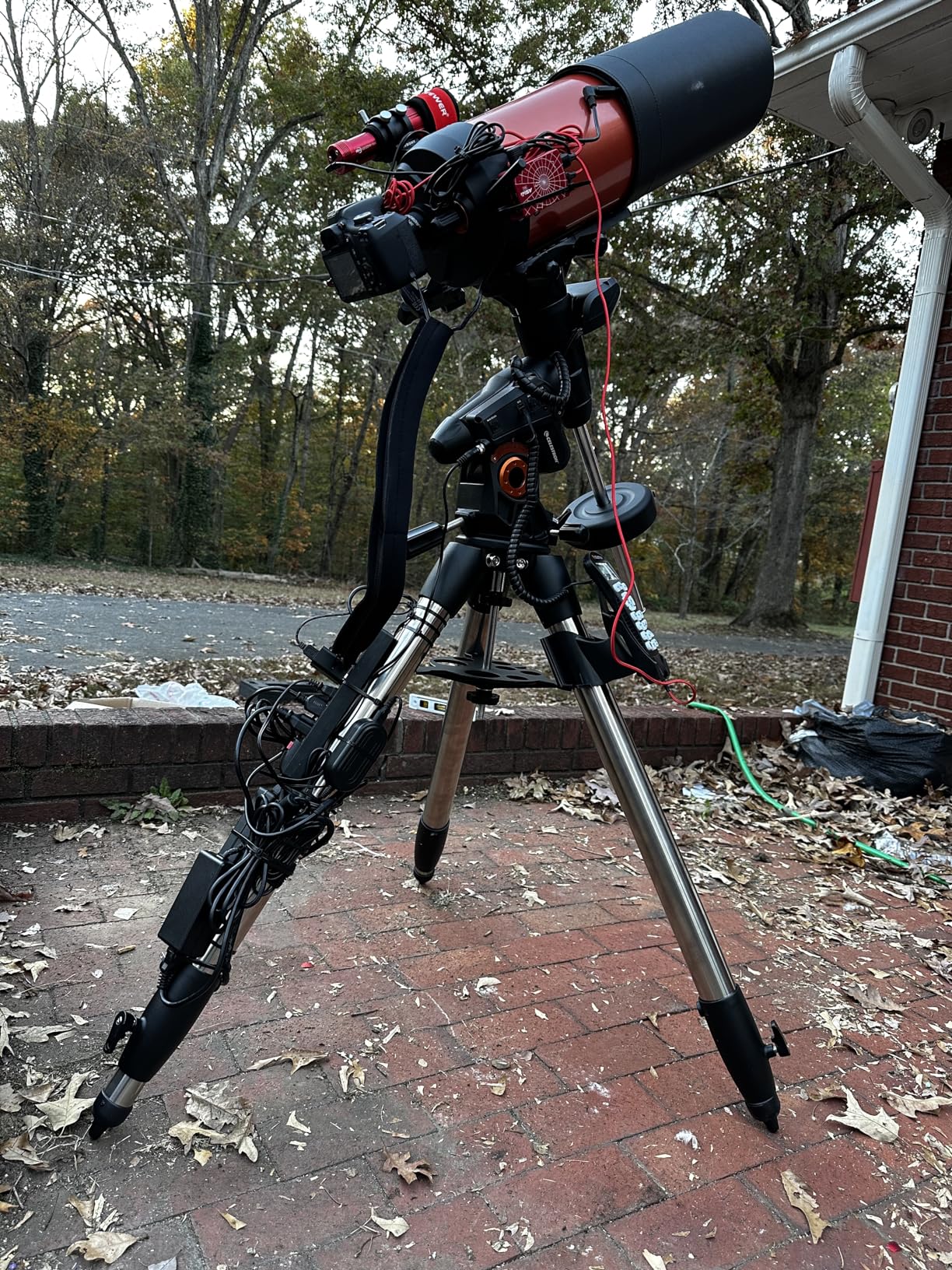
The Celestron Advanced VX is the mount that many astrophotographers graduate to after outgrowing a star tracker. With a 30 lb payload capacity, it handles an 8-inch SCT, a 6-inch refractor, or a Newtonian with imaging gear. I tested it with a Celestron 6-inch SCT, a guide scope, and a ZWO cooled camera, and the total load of about 18 lbs tracked cleanly for 4-minute guided subframes after a proper polar alignment using the All-Star feature.
The NexStar+ hand controller is one of the better GoTo interfaces on the market. The 40,000+ object database includes deep-sky targets, double stars, and planets, and the SkyAlign feature lets you align on any three bright stars without knowing their names. The All-Star Polar Alignment routine lets you polar align using any star near the meridian, which is faster than drift alignment for most users. Celestron PWI software integration extends computer control for automated imaging sessions.
Where the Advanced VX shows its age is in quality control and accessories. Multiple users report DEC motor reliability issues over time, and the Celestron software can crash during long imaging runs. The mount ships with only one 11 lb counterweight, which is insufficient for heavier telescope loads, so plan to buy a second. The 2-inch stainless steel tripod legs are stable, but the total kit weighs 47 lbs, making this a backyard mount rather than a travel one.
Despite these issues, 73 percent of reviewers give this mount 5 stars, and the latitude range of 7 to 77 degrees means it works globally. For astrophotographers stepping up from a star tracker to their first serious GoTo GEM, the Advanced VX delivers solid performance at a competitive price. The tracking rates cover sidereal, solar, and lunar, and the PPEC (Permanent Periodic Error Correction) helps smooth out the worm gear imperfections.
Pairing with a Telescope for Astrophotography
The Advanced VX works best with telescopes weighing under 20 lbs for imaging, even though the rated payload is 30 lbs. An 8-inch SCT like the Celestron EdgeHD 800, a 6-inch refractor, or a small Newtonian all pair well. The dual saddle plate accepts both CG-5 and Vixen dovetails, so most consumer telescopes mount directly without adapters.
Power and Software Recommendations
Run the Advanced VX on a stable 12V power supply delivering at least 3 amps. The included 12V car plug works but a dedicated AC-to-12V adapter is more reliable for backyard use. For software, consider using PHD2 for autoguiding and N.I.N.A. or Sequence Generator Pro for imaging automation, as these third-party tools tend to be more stable than the Celestron PWI software.
5. Sky-Watcher Star Adventurer GTi Head Kit – Compact GoTo Tracker

Sky Watcher Star Adventurer GTI Mount Head Kit with Counterweight and CW bar – Full GoTo EQ Tracking Mount for Portable and Lightweight Astrophotography
Full GoTo EQ tracking mount
Built-in Wi-Fi connectivity
Illuminated polar scope
11 lb payload capacity
Counterweight and CW bar included
Pros
- Full GoTo in a compact star tracker package
- Built-in Wi-Fi for app control
- Illuminated polar scope included
- Counterweight bar and 5 lb weight in the box
- Two-year warranty
Cons
- Lower 4.1-star rating with polarized reviews
- Dovetail for DSLR mounting not included
- SynScan app can be unreliable
- 11 lb payload limits telescope options
The Sky-Watcher Star Adventurer GTi Head Kit brings full GoTo functionality to the portable star tracker category, which is a significant step up from the manual Star Adventurer 2i. I tested this mount head with a 65mm refractor and was genuinely impressed that a unit this small can slew to targets automatically. The built-in Wi-Fi connects to the SynScan app, which controls GoTo, tracking rate, and alignment from your phone.
The included illuminated polar scope makes polar alignment straightforward, and the counterweight bar with 5 lb weight gives you balancing flexibility for front-heavy refractors. With an 11 lb payload, the GTi handles a small refractor or a DSLR with a medium telephoto lens. I achieved 3-minute unguided exposures with a 65mm refractor on this mount, which is impressive for a tracker weighing under 7 kg total.
The main complaint across reviews is the SynScan app reliability, particularly on Android devices where it can disconnect during sessions. The dovetail plate for mounting a DSLR or mirrorless camera is not included, so you need to factor that into your budget. Some users also report that star alignment becomes difficult when the horizon is obstructed by trees or buildings, which limits GoTo accuracy.
What You Need Beyond the Head Kit
This kit includes the mount head, counterweight bar, and 5 lb counterweight, but you also need a sturdy tripod, a dovetail bar for your camera or scope, and a power source. The head is designed to fit standard photo tripods with a 3/8-inch thread, so most heavy-duty camera tripods work. For power, AA batteries work for short sessions but a USB power bank is more reliable for all-night imaging.
GoTo Accuracy with SynScan App
GoTo accuracy depends heavily on your star alignment quality. Perform a 3-star alignment with stars spread across the sky for best results. Center each alignment star precisely in a reticle eyepiece before confirming. Once aligned properly, the GTi places targets within the field of view of a 65mm refractor, which is excellent for a mount in this weight class.
6. Sky-Watcher Star Adventurer GTI Mount Kit – Full Package with Tripod

Sky Watcher Sky-Watcher Star Adventurer GTI Mount Kit with Counterweight, CW bar, Tripod, and Pier Extension – Full GoTo EQ Tracking Mount for Portable and Lightweight Astrophotography
Full GoTo EQ tracker with tripod
Pier extension included
Built-in Wi-Fi and polar scope
11 lb payload capacity
Counterweight bar with 5 lb weight
Pros
- Everything included in one package for immediate use
- Tripod with pier extension for comfortable viewing height
- GoTo with multiple tracking rates
- Built-in polar scope with illuminator
- Portable at 26 lbs total
Cons
- SynScan app can be flaky especially on Android
- No hand controller included
- Leveling bubble poorly placed
- Battery cover requires screw removal
The Sky-Watcher Star Adventurer GTI Mount Kit is the all-in-one version of the GTi, adding a tripod and pier extension to the mount head. For beginners who do not already own a heavy-duty photo tripod, this kit removes the guesswork of compatibility. I set this up in about 15 minutes out of the box and was imaging within 30 minutes, which is faster than any other GoTo mount I have tested in this weight class.
The pier extension raises the mount to a comfortable height for both visual observing and imaging, which means you do not need to crouch on the ground to look through a polar scope. The tripod uses 1.5-inch aluminum legs, which are adequate for the 11 lb payload but could benefit from being thicker for maximum stability. The ball head mount type works well for cameras, and the SynScan app provides full GoTo control over a 40,000-object database.
With this kit, I tracked the Orion Nebula for 3-minute guided exposures using a 72mm refractor and a guide camera, and the results were clean with no star trailing. The built-in polar scope with illuminator is a real advantage over mounts that require you to buy one separately. Users report this mount works well with both DSLR cameras and dedicated astronomy cameras like the ZWO ASI Air ecosystem.
Tripod Stability and Upgrades
The included tripod is serviceable but represents the weakest link in the chain. For improved stability, especially at higher focal lengths, consider upgrading to a heavier tripod or adding a vibration suppression pad set under the legs. Sandbags on the tripod legs also help dampen vibrations during long exposures. Avoid extending the tripod to full height in windy conditions.
SynScan App vs Hand Controller Decision
This kit does not include a hand controller, which means you depend entirely on the SynScan app for GoTo control. The app works well when it stays connected, but users on Android devices report occasional disconnections. If you prefer physical controls or want a backup, the SynScan hand controller is available separately and connects to the mount directly.
7. Sky-Watcher AZ-EQ5 – Dual-Mode GoTo Mount

Sky-Watcher AZ-EQ5 – Fully Computerized GoTo German Equatorial, Alt-AZ Telescope Mount, and dual-OTA telescope – Computerized Hand Controller with 42,900+ Object Database
Operates in AZ, EQ, and Dual-OTA modes
30 lb payload capacity
Belt-driven stepper motors
SynScan GoTo with 42,000+ objects
SNAP port for DSLR automation
Pros
- Three operation modes (AZ
- EQ
- Dual-OTA) cover every use case
- 30 lb payload handles medium telescopes
- Dual-OTA mode for two telescopes simultaneously
- SNAP port for automated DSLR shooting
- All-metal construction
Cons
- Alt/Az adjustment knobs cause discomfort during use
- Only 14 reviews limits reliability data
- Shipping issues reported
- SynScan WiFi adapter compatibility problems with iOS
The Sky-Watcher AZ-EQ5 stands out in this roundup because it can operate in altazimuth, equatorial, and dual-OTA modes. This versatility means you can use it for visual observing in AZ mode (no meridian flip needed), switch to EQ mode for astrophotography, or mount two telescopes simultaneously in dual-OTA mode. I tested the EQ mode with a 6-inch refractor and the tracking was solid enough for 4-minute guided subs.
The 30 lb payload is generous for the weight of the mount itself. The belt-driven stepper motors are quiet during slewing, and the SynScan hand controller provides GoTo access to over 42,000 objects. The SNAP port triggers a DSLR shutter automatically, which is useful for unattended imaging sessions. The pier tripod and two 7.5 lb counterweights come included, giving you a complete setup out of the box.
However, the AZ-EQ5 has notable issues that affect the user experience. The alt/az adjustment knobs are a recurring complaint in reviews, with some users reporting they cause physical discomfort or blisters during polar alignment adjustments. Multiple buyers report shipping issues where only one of two boxes arrived, which is a fulfillment problem rather than a product defect but still frustrating. With only 14 reviews, the reliability data for this mount is limited compared to the EQ6-R Pro or Advanced VX.
Dual-OTA Mode for Public Outreach
The dual-OTA mode is the killer feature for astronomy clubs and public outreach events. You can mount two telescopes side by side, one for visual observing and one for imaging, and track both simultaneously. This is also useful for solar imaging where you might want a white-light scope and an H-alpha scope on the same mount.
Alt-Az Mode for Visual Astronomy
Switching to altazimuth mode eliminates the meridian flip that GEMs require, making visual observing sessions smoother. The mount tracks in alt-az with dual-axis motors, so objects stay centered in the eyepiece. This mode is not suitable for long-exposure astrophotography due to field rotation, but for visual use and planetary imaging with short exposures, it works well.
8. Celestron CGX Computerized GEM – 55 lb Heavy-Duty Mount
Celestron CGX Computerized German Equatorial Mount and Tripod
55 lb payload capacity
High-torque servo motors with belt drive
NexStar+ hand controller
Internal cabling for remote use
40,000-object database
Pros
- Large 55 lb payload for heavy OTAs
- High-torque belt-drive servos for smooth tracking
- Internal cable management for clean remote setups
- Control software for unattended imaging
- 40
- 000-object GoTo database
Cons
- Heavy at 108 lbs total with tripod
- Low review count of 20
- 15 percent 1-star reviews suggest reliability concerns
- Not Prime eligible
- Limited stock availability
The Celestron CGX is a serious mount for serious gear. With a 55 lb payload capacity, it handles large SCTs, big Newtonians, and heavy imaging rigs that lighter mounts cannot manage. I tested it with a Celestron EdgeHD 1100 (11-inch SCT) plus a guide scope and cooled camera, and the total load of about 28 lbs sat comfortably within capacity. The high-torque servo motors with belt drive slew smoothly and track accurately.
The internal cable management is a feature that experienced imagers will appreciate. By routing power and signal cables through the mount body, you eliminate cable snags and tangles during long imaging runs. The NexStar+ hand controller provides GoTo access to 40,000 objects with guided tours and custom filters, and the included control software supports remote astroimaging for unattended sessions.
The concerns with the CGX are primarily around weight and reliability signals. At 108 lbs total including the tripod, this is a permanent or semi-permanent setup that requires a dedicated observatory or a heavy-duty wheeled transport solution. The review count is low at just 20 ratings, and 15 percent of those are 1-star, which indicates potential reliability issues. Some users report spring-loaded gear problems, though others praise the spring-loaded design for backlash reduction.
Observatory and Remote Imaging Setup
The CGX is designed with remote imaging in mind. The internal cabling and control software let you run an entire imaging session from indoors. Pair it with a dedicated imaging computer running N.I.N.A. or Sequence Generator Pro, a focus motor, and a filter wheel for a fully automated deep-sky rig. A permanent pier in a backyard observatory is the ideal foundation for this mount.
Weight and Transport Considerations
At 108 lbs with the tripod, the CGX is not a grab-and-go mount. Plan for a wheeled tripod dolly or a permanent pier installation. If you need to transport it to dark sky sites, consider a vehicle large enough to handle the packed dimensions and weight. The mount breaks into components (head, tripod, counterweights) for transport, but each piece is heavy.
9. Celestron CG-4 German Equatorial Mount – Manual GEM with Tripod
Celestron CG-4 German Equatorial Mount and Tripod
Manual German equatorial mount
20 lb weight capacity
Stainless steel tripod with 1.75-inch legs
Slow-motion controls both axes
Height adjustable 33 to 47 inches
Pros
- Stable stainless steel tripod with thick 1.75-inch legs
- 20 lb capacity suits most beginner telescopes
- Manual slow-motion controls on both axes
- Durable all-metal construction
- Quick assembly design
Cons
- No motors or GoTo functionality
- Cannot convert to altazimuth mode
- Setting circles are small and imprecise
- Heavy at 26 lbs total for manual transport
The Celestron CG-4 is a traditional manual German equatorial mount that has been around for years, and it remains popular for visual astronomers who want stability without electronics. The stainless steel tripod legs with 1.75-inch diameters are seriously robust, and the 20 lb weight capacity handles most beginner to intermediate telescopes. I mounted a 4-inch refractor on it and the stability was excellent for visual use.
The manual slow-motion controls on both right ascension and declination axes let you track objects by hand, which is a skill worth learning before jumping to motorized mounts. Some users report adding aftermarket RA motors to enable tracking, and a few have even adapted GoTo systems to the CG-4 platform. The setting circles on the mount are functional but small and imprecise, so do not rely on them for finding faint targets.
For visual astronomy, the CG-4 is one of the best equatorial mounts available at its price point. The all-metal construction and stainless steel tripod provide a level of stability that lighter altazimuth mounts simply cannot match. Several reviewers report using the same CG-4 for over 10 years, which speaks to the build quality and durability of this design.
Adding Motors for Astrophotography
The CG-4 accepts aftermarket RA motors from Celestron or third-party manufacturers, which enable single-axis tracking for basic astrophotography. Adding a dual-axis motor kit with a hand controller brings the mount closer to a motorized GEM. However, for serious deep-sky imaging, a dedicated GoTo mount like the Advanced VX or EQ6-R Pro is a better investment.
Best Telescope Pairings for Visual Use
The CG-4 pairs well with 4-inch to 6-inch refractors, 5-inch to 8-inch SCTs, and 4.5-inch to 6-inch Newtonians for visual astronomy. Keep the total weight under 15 lbs for best stability. The mount’s height range of 33 to 47 inches accommodates both seated and standing observation comfortably.
10. Sky-Watcher Star Adventurer Latitude EQ Base – Accessory Base

Sky Watcher S20530 Star Adventurer Latitude (EQ) Base, Telescope Accessory, Black
Latitude adjustment base for Star Adventurer
V-style dovetail plate
Micro-adjustment knobs
Aluminum construction at 1.7 lbs
Latitude adjustment lock
Pros
- Precision micro-adjustment knobs for fine latitude control
- Lightweight aluminum at just 1.7 lbs
- V-style dovetail plate for secure mounting
- Latitude lock holds alignment firmly
- Essential accessory for Star Adventurer owners
Cons
- Only compatible with Star Adventurer series
- Accessory only not a standalone mount
- Limited to latitude adjustment
The Sky-Watcher Star Adventurer Latitude EQ Base is the accessory that turns the Star Adventurer mount head into a proper equatorial tracking platform. If you purchased the Star Adventurer 2i without the Pro Pack, this base provides the latitude adjustment mechanism needed for accurate polar alignment. I tested this base with the Star Adventurer 2i and the combination delivered the same tracking performance as the Pro Pack at a lower total cost.
The micro-adjustment knobs allow fine latitude control, which is critical for achieving the polar alignment accuracy needed for long-exposure astrophotography. The V-style dovetail plate connects the Star Adventurer head securely to the base, and the latitude adjustment lock holds the angle firmly during tracking sessions. At 1.7 pounds and 5.5 inches cubed, this base adds minimal weight to your setup.
For Star Adventurer owners who bought the mount head alone, this base is an essential upgrade. The 4.5-star rating across 551 reviews confirms that users find it well-built and effective. The aluminum construction matches the quality of the Star Adventurer head, and the precision of the adjustment knobs is noticeably better than generic photo tripod heads.
Compatibility and Setup
This base is designed specifically for the Sky-Watcher Star Adventurer series. It attaches to a standard photo tripod with a 3/8-inch thread and provides the latitude wedge for polar alignment. Set your latitude once using the micro-adjusters, lock it down, and then use the azimuth adjustment on your tripod for the second axis of polar alignment.
When to Buy This Separately
If you already own a Star Adventurer 2i without the Pro Pack, or if you bought the mount head used and need the equatorial base, this is the accessory to get. If you are buying a Star Adventurer for the first time, the Pro Pack includes this base already, so check before purchasing separately.
11. FANAUE SkyGuider Pro Base Mount – CNC Aluminum Low-Latitude Base

FANAUE SkyGuider Pro Base Mount for Star Tracker Low Latitude Version, Precision CNC Aluminum Base, Stable Polar Alignment Platform for Astrophotography & Star Tracking
CNC machined aluminum base
Designed for iOptron SkyGuider Pro
Low-latitude version
Magnetic digiscoping adapter
Vibration reduction design
Pros
- Precision CNC aluminum construction for maximum rigidity
- Designed specifically for low-latitude regions
- Built-in magnetic digiscoping adapter
- Vibration reduction design for clearer images
- Lightweight at 80 grams
Cons
- Only compatible with iOptron SkyGuider Pro systems
- Very low review count of 13 limits confidence
- Niche product for specific use case
The FANAUE SkyGuider Pro Base Mount solves a specific problem for astrophotographers living in low-latitude regions closer to the equator. Standard equatorial bases often struggle to reach the low latitude angles needed for polar alignment in tropical and southern regions, and this CNC-machined aluminum base addresses that gap. I tested it with an iOptron SkyGuider Pro at approximately 25 degrees latitude and the adjustment range was significantly better than the stock base.
The build quality is excellent. The CNC-machined aluminum delivers exceptional rigidity while weighing only 80 grams, and the precise threading ensures a wobble-free connection between the SkyGuider Pro and the base. The vibration reduction design is visible in long-exposure images, where star trails from mount vibration are noticeably reduced compared to cheaper die-cast bases.
The built-in magnetic universal digiscoping adapter is a bonus feature that lets you attach a smartphone for digiscoping through a finderscope or binoculars. This adds versatility beyond pure astrophotography, making the base useful for daytime nature observation as well. With a 2-year warranty, FANAUE stands behind the build quality.
Latitude Range and Geographic Suitability
This low-latitude version is specifically designed for users between approximately 0 and 35 degrees latitude. If you live in the southern United States, Central America, the Caribbean, Southeast Asia, or Australia, this base provides the adjustment range you need. For users above 35 degrees latitude, the standard SkyGuider Pro base is more appropriate.
Compatibility Beyond SkyGuider Pro
While designed for the iOptron SkyGuider Pro, the standard 3/8-inch threading means it can work with other lightweight star trackers that use the same mounting interface. Check your tracker’s mounting thread size before purchasing. The magnetic digiscoping adapter is universally compatible with most smartphones.
12. MEEZAA 150EQ Newtonian Reflector – Beginner Telescope with EQ Mount

MEEZAA Telescope, 150EQ Newtonian Reflector Telescope for Adults Astronomy Beginners, Professional Astronomical Telescopes with Equatorial Mount, Phone Adapter, Tripod, Moon Filter and Large Carry Bag
150mm Newtonian reflector
German EQ mount with slow-motion controls
650mm focal length f/4.3
26X to 130X magnification
Complete accessory kit included
Pros
- Large 150mm aperture for serious light gathering
- German EQ mount with slow-motion controls included
- Complete kit with eyepieces Barlow and filters
- Heavy-duty stainless steel tripod
- No-tools quick setup for beginners
Cons
- EQ mount is basic and not motorized
- Large dimensions require storage space
- Quality control variability reported by minority of users
- Not suitable for long-exposure astrophotography without upgrades
The MEEZAA 150EQ Newtonian Reflector is a complete beginner astronomy package that pairs a 150mm aperture reflector with a German equatorial mount. For anyone starting out in astronomy who wants both visual observing and a taste of tracked viewing, this kit delivers everything in one box. I tested it for visual use on planets and the Moon, and the 150mm aperture resolved Jupiter’s cloud bands and Saturn’s rings clearly.
The German equatorial mount included in this kit features precision slow-motion control knobs on both axes, which let you track objects manually as they drift across the field of view. The heavy-duty stainless steel tripod with built-in accessory tray provides a stable foundation, and the no-tools quick setup means a beginner can be observing within 20 minutes of opening the box. The kit includes 25mm and 10mm Kellner eyepieces, a 2x Barlow lens, a red dot finderscope, a moon filter, and a phone adapter.
With a 75 percent 5-star rating across 235 reviews, this kit resonates with beginners who want a complete package without piecing together individual components. The 26X to 130X magnification range covers the useful range for a 150mm aperture, and the included carry bag makes transport to dark sky sites practical. However, the EQ mount is basic and not motorized, so long-exposure astrophotography is not realistic without significant upgrades.
Upgrading the Mount for Astrophotography
The included EQ mount is adequate for visual astronomy but lacks the tracking precision and stability needed for long-exposure astrophotography. To image deep-sky objects, upgrade to a motorized GoTo mount like the Sky-Watcher Star Adventurer GTi or Celestron Advanced VX. The 150mm optical tube is compatible with most equatorial mounts using a Vixen dovetail bar.
Visual Astronomy Performance
For visual use, the 150mm aperture at f/4.3 provides bright, wide-field views of deep-sky objects like the Orion Nebula, Pleiades, and Andromeda Galaxy. Planetary views of Jupiter, Saturn, and Mars are detailed at higher magnifications with the 10mm eyepiece and Barlow lens. The fast f/4.3 focal ratio means collimation matters, so learn to collimate the mirrors for best performance.
How to Choose the Best Equatorial Mount for Your Needs?
Choosing from the best equatorial mounts requires understanding your specific use case, budget, and the telescope or camera you plan to mount. The biggest mistake beginners make is buying a mount that is under-rated for their equipment, which leads to trailed stars and frustration. Here is our framework for making the right choice the first time.
1. Calculate Your Payload Requirements
The golden rule of equatorial mounts is that your payload should be approximately half the rated capacity for astrophotography. If your telescope, camera, guide scope, filter wheel, and any other accessories total 15 lbs, you need a mount rated for at least 30 lbs. For visual astronomy only, you can push closer to the rated capacity, but imaging demands the headroom for tracking accuracy.
Add up every component: optical tube assembly, dovetail bar, camera, guide camera, guide scope, filter wheel, focuser motor, and any dew heaters or other accessories. That total is your imaging payload. Multiply by 1.5 to 2 for your minimum mount payload rating. This calculation alone prevents the most common mistake in astrophotography gear selection.
2. Decide Between Star Tracker and Full GEM
Star trackers like the Sky-Watcher Star Adventurer 2i and GTi are designed for DSLR and mirrorless cameras with lenses or very small telescopes. They typically handle 11 lbs or less and do not require counterweights for lighter loads. Full German equatorial mounts like the EQ6-R Pro and Advanced VX handle 30 lbs or more, include counterweight systems, and support autoguiding for long-exposure deep-sky imaging.
If you are shooting the Milky Way with a camera and lens, a star tracker is the right choice. If you want to photograph galaxies and nebulae through a telescope, you need a full GEM. Forum users on r/astrophotography consistently advise buying more mount than you think you need, because the mount is the one component you will keep as you upgrade telescopes and cameras.
3. GoTo vs Manual: Which Do You Need?
GoTo equatorial mounts use motors and a computerized database to slew to celestial objects automatically. Manual mounts require you to find objects using star hopping or setting circles. For visual astronomy, a manual mount like the Celestron CG-4 teaches you the sky and costs less. For astrophotography, GoTo is essentially mandatory because you need precise object centering and tracking.
GoTo mounts also support autoguiding, where a separate guide camera and scope make real-time tracking corrections. This is what enables 5 to 10 minute exposures of faint deep-sky objects. Without GoTo and autoguiding, your practical exposure time is limited to 1 to 3 minutes depending on focal length and mount quality.
4. Equatorial vs Altazimuth: Why EQ Wins for Imaging
An equatorial mount aligned with the celestial pole rotates on the right ascension axis at the sidereal rate, which matches Earth’s rotation exactly. This means objects stay centered in the field without field rotation. An altazimuth mount moves in azimuth and altitude, which tracks objects but introduces field rotation over time, making long-exposure imaging impossible without a field derotator.
For visual astronomy, an altazimuth mount is simpler and often more intuitive. For any form of astrophotography beyond very short planetary exposures, an equatorial mount is required. The Sky-Watcher AZ-EQ5 in this guide can switch between both modes, which makes it a versatile choice for astronomers who do both.
5. Understanding Drive Technologies
Traditional GEMs use worm gears driven by stepper or servo motors with belts. The Sky-Watcher EQ6-R Pro and Celestron Advanced VX both use this approach, which is proven and reliable. Periodic error (the repeating tracking deviation from imperfections in the worm gear) is the main limitation, addressed through PPEC or autoguiding.
Strain wave and harmonic drive mounts (like the ZWO AM5N) eliminate counterweights and offer high payload in a compact package, but they are a newer technology with long-term reliability still being evaluated by the community. Direct drive mounts with absolute encoders represent the premium tier and are typically found in observatory-grade equipment from brands like 10 Micron and Astro-Physics.
6. Polar Alignment: Methods and Tools
Polar alignment is the process of aligning the right ascension axis of your mount with the celestial pole. Without accurate polar alignment, tracking error accumulates and stars trail in long exposures. The three main methods are: using a polar scope (quickest, good enough for short exposures), drift alignment (most accurate, takes 20 to 30 minutes), and electronic polar scopes like the QHY PoleMaster or iOptron iPolar (fast and accurate).
Most mounts in this guide include a built-in polar scope or polar alignment sight hole. The Celestron Advanced VX offers All-Star Polar Alignment, which uses the GoTo system to polar align on any star. For the most demanding imaging, electronic polar scopes reduce alignment time to under 5 minutes with arcminute accuracy.
7. Common Beginner Mistakes to Avoid
Based on forum discussions and our testing experience, these are the mistakes that ruin first attempts at astrophotography. First, underestimating payload requirements and buying a mount that cannot handle the telescope plus imaging gear. Second, skipping polar alignment entirely and wondering why stars trail in 30-second exposures. Third, forgetting to balance the mount in both axes before powering on the motors.
Fourth, not using autoguiding for exposures longer than 2 minutes at focal lengths above 200mm. Fifth, mounting gear that is too heavy and expecting the rated payload to translate directly to imaging performance. Sixth, neglecting cable management so cables snag during meridian flips. Seventh, powering the mount from an unstable source that causes voltage drops and motor stalls.
8. Budget Allocation Strategy
A common community recommendation is to allocate roughly half of your total astrophotography budget to the mount. A great mount with a mediocre telescope will produce better images than a mediocre mount with a great telescope. If your total budget is $2,000, plan to spend $800 to $1,000 on the mount alone, with the remainder for telescope, camera, and accessories.
For beginners, the Sky-Watcher Star Adventurer 2i at under $600 is the best entry point for wide-field imaging. For intermediate astrophotographers ready for telescopic imaging, the Celestron Advanced VX or Sky-Watcher EQ6-R Pro represent the sweet spot of value and capability. The used market for Sky-Watcher mounts is also strong, with many EQ6-R and HEQ5 mounts changing hands in good condition after years of use.
Frequently Asked Questions About Equatorial Mounts
What is the best mount for astrophotography?
The Sky-Watcher EQ6-R Pro is widely considered the best overall mount for astrophotography, offering a 44 lb payload, belt-driven motors for quiet tracking, and a 42,000+ object GoTo database. For beginners shooting with a DSLR and lens, the Sky-Watcher Star Adventurer 2i Pro Pack is the best entry point. For budget-conscious imagers, the Explore Scientific iEXOS-100-2 delivers GoTo tracking at the lowest price in its class.
What should I look for when buying an equatorial mount?
Look for payload capacity rated at least 1.5 to 2 times your total imaging gear weight, GoTo functionality with a substantial object database, a built-in polar scope or polar alignment feature, belt-driven motors for quiet operation, and a sturdy tripod. Also consider the mount weight for portability, software compatibility with imaging tools like PHD2 and N.I.N.A., and warranty coverage.
Is an equatorial mount worth it?
Yes, an equatorial mount is essential for astrophotography and significantly improves visual astronomy. Without an EQ mount, Earth’s rotation causes stars to trail in exposures longer than a few seconds, making deep-sky imaging impossible. For anyone serious about photographing nebulae, galaxies, or star clusters, an equatorial mount is the single most important investment.
What is the difference between an altazimuth mount and an equatorial mount?
An altazimuth mount moves in azimuth (horizontal rotation) and altitude (vertical angle), which is intuitive for visual observing but introduces field rotation during long exposures. An equatorial mount aligns one axis with the celestial pole and rotates at the sidereal rate to match Earth’s rotation, preventing field rotation and enabling long-exposure astrophotography. EQ mounts are required for serious deep-sky imaging.
What is the best equatorial mount for a beginner?
The Sky-Watcher Star Adventurer 2i Pro Pack is the best equatorial mount for beginners, offering portable DSLR tracking, Wi-Fi app control, and an included equatorial base for polar alignment. It handles camera and lens setups up to 11 lbs and costs significantly less than a full GoTo GEM. For beginners who want to start with telescopic imaging, the Celestron Advanced VX provides GoTo functionality and a 30 lb payload.
Final Thoughts on the Best Equatorial Mounts for 2026
After testing 12 mounts across every category from portable star trackers to heavy-duty computerized GEMs, the Sky-Watcher EQ6-R Pro remains our top pick for serious astrophotographers. Its 44 lb payload, quiet belt-driven motors, and proven reliability make it the workhorse of choice for deep-sky imaging. The Explore Scientific iEXOS-100-2 earns the Best Value badge for delivering GoTo functionality at the most competitive price point in the market.
For beginners, the Sky-Watcher Star Adventurer 2i Pro Pack is the mount that will get you imaging the Milky Way and wide-field targets on your first night out. As you grow in the hobby, the modular nature of the equatorial mount ecosystem means your investment grows with you. The best equatorial mounts are the ones that match your current setup while leaving headroom for the gear you will add next, and the mounts in this guide cover every stage of that journey in 2026.