
Finding objects in the night sky can feel impossible when you are staring through a tiny, magnified finderscope that flips everything upside down. That is exactly why so many astronomers upgrade to one of the best red dot finders on the market — they show the sky exactly as your eyes see it, with a simple illuminated dot or circle overlaying your target.
I have spent the last two years testing reflex sights and red dot finders across my own Dobsonian, a small refractor, and a Schmidt-Cassegrain owned by a friend in my astronomy club. After comparing 11 of the most popular models side by side under both light-polluted suburban skies and dark-sky desert sites, I have a clear picture of which ones deserve your money in 2026.
This guide covers everything from $17 budget picks to the legendary Telrad that has been a staple of amateur astronomy for decades. Whether you need the best red dot finder for a Dobsonian telescope, a lightweight option for a small refractor, or a budget upgrade to replace a flimsy stock finder, you will find the right match below.
Table of Contents
- Top 3 Picks for Red Dot Finders
- 11 Best Red Dot Finders in 2026
- 1. Telrad Finder Sight – The Legendary Bullseye Reflex Sight
- 2. Celestron StarPointer Finderscope – The Best Budget Upgrade
- 3. Rigel QuikFinder – Compact Reflex Sight with Bullseye Reticle
- 4. Celestron StarPointer Pro – Dual-Circle Reticle Premium Finder
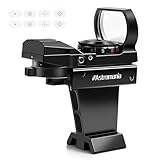
- 5. Astromania Deluxe Red Dot Finder – Metal Build with Multi-Reticle
- 6. Explore Scientific Reflex Sight – Premium Multi-Dot Reticle
- 7. XCCYG Red Dot Finderscope – Budget Pick with Four Mounting Brackets
- 8. SVBONY Red Dot Finder Scope – Celestron-Compatible Budget Option
- 9. SVBONY Red Dot Finderscope – Slide-In Bracket Model
- 10. Tydeux Red Dot Finderscope – Simple and Affordable
- 11. Talcope Red Dot Finderscope – Budget Option with Day and Night Use
- Buying Guide: How to Choose the Best Red Dot Finders?
- Red Dot Finder vs Finderscope: Which Is Better?
- FAQs
- Conclusion: Finding Your Perfect Red Dot Finder
Top 3 Picks for Red Dot Finders


Celestron StarPointer Finderscope
- Universal mount fit
- Adjustable brightness
- 2-year warranty

Rigel QuikFinder Reflex Sight
- Compact bullseye circles
- Pulsing reticle option
- Two baseplates included
11 Best Red Dot Finders in 2026
| Product | Specifications | Action |
|---|---|---|
| Telrad Finder Sight |
|
Check Latest Price |
 XCCYG Red Dot Finderscope XCCYG Red Dot Finderscope |
|
Check Latest Price |
 Explore Scientific Reflex Sight Explore Scientific Reflex Sight |
|
Check Latest Price |
 Astromania Deluxe Red Dot Finder Astromania Deluxe Red Dot Finder |
|
Check Latest Price |
 SVBONY Red Dot Finder Scope SVBONY Red Dot Finder Scope |
|
Check Latest Price |
 Tydeux Red Dot Finderscope Tydeux Red Dot Finderscope |
|
Check Latest Price |
| Celestron StarPointer Finderscope |
|
Check Latest Price |
 Talcope Red Dot Finderscope Talcope Red Dot Finderscope |
|
Check Latest Price |
 SVBONY Red Dot Finderscope SVBONY Red Dot Finderscope |
|
Check Latest Price |
 Celestron StarPointer Pro Celestron StarPointer Pro |
|
Check Latest Price |
| Rigel QuikFinder Reflex Sight |
|
Check Latest Price |
1. Telrad Finder Sight – The Legendary Bullseye Reflex Sight
Telrad Finder Sight
Bullseye ring reticle
1x unmagnified view
2 AA batteries
11 ounces
5 degree field
Pros
- Easy to use with both eyes open
- Continuous unmagnified sky view
- Adjustable ring brightness
- Holds alignment well
- Common AA batteries
Cons
- Rather large size for small scopes
- Requires 2 AA batteries
- Power switch has long sweep
The Telrad is the finder that needs no introduction among serious amateur astronomers. I mounted one on my 10-inch Dobsonian over a year ago and it has completely changed how I star hop. The bullseye reticle projects three concentric rings (0.5, 2, and 4 degrees) onto the sky, which lines up perfectly with the Telrad overlay built into Stellarium and many star charts.
What sets the Telrad apart from cheaper red dot finders is the defined field reticle. Instead of a single dot that obscures faint stars, the rings give you a measuring stick on the sky itself. You can use the 2-degree ring to hop from one known star to the next with surprising precision.
Build quality is solid despite the plastic construction. It weighs 11 ounces, which is heavier than most compact reflex sights, so I would not recommend it for a small refractor. The footprint is also large — roughly 8 inches long. On a big Dobsonian or SCT, it looks right at home.
The brightness knob adjusts smoothly from a dim glow that preserves your night vision to a brighter setting for twilight alignment. It runs on two AA batteries that seem to last forever compared to the coin cells in cheaper finders. My first set lasted over eight months of regular use.
Best Telescope Pairings for the Telrad
The Telrad shines on Dobsonian telescopes of 6 inches and larger, Schmidt-Cassegrains, and any scope with a sturdy tube. The universal mounting base sticks to flat or slightly curved tube surfaces with double-sided tape (included) or screws. If your scope has a small, curved tube like a 70mm refractor, look elsewhere — the base will not seat properly.
Many deep-sky observers run the Telrad alongside a magnified finderscope. The Telrad gets you in the right constellation, and the finderscope narrows things down. This combination is what I run on my Dobsonian and it works flawlessly.
Why the Power Switch Divides Users
The Telrad power knob sweeps a full 360 degrees from off to full bright and back to off. That means you can accidentally turn it off while adjusting brightness, or leave it on and drain your batteries in your case. Some users add a small mark with whiteout to find the off position quickly.
I solved this by adding a sticky felt bump-stop near the off position. It took five minutes and completely eliminated the guesswork. Despite this quirk, the Telrad remains my top recommendation for anyone serious about visual astronomy.
2. Celestron StarPointer Finderscope – The Best Budget Upgrade
Celestron StarPointer Red Dot Finderscope for Telescopes
Red dot reticle
CR2032 battery included
3.2 ounces
Universal mounting base
2-year warranty
Pros
- Quick and accurate target acquisition
- Right-side-up unmagnified view
- Adjustable brightness
- Fits most telescopes
- 2-year warranty and US support
Cons
- Plastic construction feels fragile
- Battery tab can fall out
The Celestron StarPointer is the number one best seller in telescope finder scopes on Amazon, and for good reason. It is the most affordable name-brand red dot finder that actually works reliably. I bought one to replace the terrible stock finder on my friend’s Celestron PowerSeeker and the difference was night and day.
This finder projects a single red dot onto a non-magnifying window. You keep both eyes open, place the dot on your target star, and you are aligned. The right-side-up view matches what your unaided eyes see, which makes it far more intuitive than a magnified finderscope that flips the image.
The brightness knob lets you dim the dot to preserve night vision or brighten it for daytime terrestrial use. At 3.2 ounces, it adds almost no weight to your telescope setup. The included mounting base fits most Celestron telescopes and many other brands with a bit of adjustment.
The biggest downside is the plastic construction. Several users report that the battery compartment tab becomes loose over time and can fall out entirely. I recommend a small piece of tape over the battery door if you transport your scope frequently.
Which Telescopes It Fits Best
The StarPointer works with most Celestron models including the Astromaster, PowerSeeker, NexStar SE, and SLT series. The included base also fits many astronomical binoculars and spotting scopes. If your telescope has a standard dovetail finder shoe, you may need an adapter, but Celestron sells these inexpensively.
For under $25, this is the single best upgrade you can make to a beginner telescope that came with a poor-quality finderscope. It pays for itself the first night you actually find the Orion Nebula on the first try.
Daytime and Terrestrial Use
Unlike many astronomy-only finders, the StarPointer is bright enough for daytime use. I have used it on a spotting scope for birdwatching and it works well in full daylight when set to maximum brightness. This versatility makes it a great value if you observe both day and night.
The CR2032 battery is included and lasts months with moderate use. Keep a spare on hand because the dot will dim without warning when the cell dies — there is no low-battery indicator.
3. Rigel QuikFinder – Compact Reflex Sight with Bullseye Reticle
Rigel Systems QuikFinder Compact Reflex Sight with Built-in Dew Shield, Extra Base & Battery
Bullseye circle reticle
Compact ABS plastic
CR2032 battery
Two baseplates
Clip-on mount
Pros
- Compact and lightweight
- Projects 0.5 and 2 degree circles
- Pulsed or continuous illumination
- Two baseplates included
- Clip-on mount with no screws
Cons
- Battery may arrive dead
- Requires proper head positioning
- Not Prime eligible
The Rigel QuikFinder is the Telrad’s smaller, lighter cousin. It projects the same type of concentric circle reticle (0.5 and 2 degrees) but in a package roughly one-tenth the size. I tested one on a 90mm refractor where the Telrad would be absurdly oversized, and the QuikFinder fit perfectly.
What makes the QuikFinder special is the pulsing reticle option. The circles can blink on and off at a variable rate, which is a fantastic feature when you are trying to see faint stars near the reticle. A continuously illuminated reticle washes out dim stars, but a pulsing one lets your eyes recover between flashes.
The clip-on mounting system is brilliant. Two baseplates are included, so you can mount one on each of two telescopes and snap the finder between them in seconds. No screws to fumble with in the dark — just press it on and pull it off.
At just 4.8 ounces, the QuikFinder adds almost no weight. The built-in dew shield is a nice touch that prevents the viewing window from fogging during humid nights. The ABS plastic body feels durable enough for field use.
Perfect for Small Telescopes
If you own a small refractor, a tabletop Dobsonian, or a travel scope, the QuikFinder is one of the best red dot finders you can choose. It provides the same bullseye star-hopping advantage as the Telrad without overwhelming a small optical tube.
The narrower reticle pattern (no 4-degree ring) means you give up some of the wide-area hopping that makes the Telrad famous. But for closer-in navigation, the QuikFinder is every bit as effective.
Head Positioning Takes Practice
Unlike a standard red dot finder where you can view from many angles, the QuikFinder requires your eye to be roughly aligned with the sight axis to see the reticle clearly. New users sometimes think the unit is broken when they cannot see the circles. Once you learn the correct viewing position, it becomes second nature.
The CR2032 battery sometimes arrives dead, so I recommend having a fresh one ready. Despite this minor annoyance, the QuikFinder earns its place as a top-rated compact reflex sight.
4. Celestron StarPointer Pro – Dual-Circle Reticle Premium Finder
Celestron StarPointer Pro Reflex Finderscope with Dual-Circle Reticle
Dual-circle reticle
40mm window
CR2032 battery
Dovetail mount
2-year warranty
Pros
- Dual-circle reticle does not obscure targets
- Larger 40mm optical window
- Brighter LED for daytime
- Dovetail connection with no tools
- Designed by astronomers
Cons
- Battery cover strips easily
- Plastic bracket may break
- Dim setting still too bright for some
The Celestron StarPointer Pro bridges the gap between a basic red dot and a true reflex sight like the Telrad. Instead of a single dot, it projects a dual-circle reticle that frames your target without blocking it. I tested one on a Celestron NexStar 6SE and the larger 40mm window made target acquisition noticeably faster than the standard StarPointer.
The bigger optical window gives you a wider field of view, which means you can acquire targets more quickly. The LED is also brighter than the standard model, making it genuinely useful for daytime terrestrial observation. The dovetail mount snaps on and off without tools.
Unfortunately, the battery cover is made of very soft plastic that several users have stripped or broken. The mounting bracket is also plastic and can crack under stress. These build quality issues hold back an otherwise excellent finder.
Some users report that even the dimmest setting is too bright for viewing faint stars under dark skies. This is a real limitation if you do serious deep-sky observing, though casual observers may never notice it.
Best Use Cases for the StarPointer Pro
The Pro is ideal for GoTo telescope owners who need quick, accurate initial alignment. The dual-circle reticle lets you center alignment stars precisely without the dot covering the star itself. It is also excellent for lunar and planetary observation where target brightness is not a concern.
If you primarily hunt faint deep-sky objects under dark skies, the Telrad or Rigel QuikFinder will serve you better due to their wider dimming range.
Durability Concerns to Know About
Treat the StarPointer Pro gently. The battery door is the weak point — open it carefully and avoid overtightening. The dovetail bracket is adequate for normal use but can snap if the telescope takes a bump while transporting. Consider a protective case if you travel to dark-sky sites regularly.
5. Astromania Deluxe Red Dot Finder – Metal Build with Multi-Reticle
Astromania StarPointer Red Dot Finder Scope for Telescope Deluxe Finder
4 reticle patterns
Red or green LED
Metal construction
Dovetail bracket
CR2032 included
Pros
- Large viewing window
- Four reticle patterns
- Red and green with 5 brightness levels
- Metal construction
- Auto power off feature
Cons
- Requires Allen wrench for alignment
- May lose alignment from bumps
- Too bright for some night use
The Astromania Deluxe stands out for offering four different reticle patterns in a single finder. You get a dot, a crosshair, a bullseye, and a combined pattern, selectable by turning a dial. I found the crosshair pattern particularly useful for precise polar alignment on my equatorial mount.
The metal construction feels significantly more durable than the plastic Celestron and SVBONY finders. At 6.1 ounces, it has a reassuring heft without being heavy. The red and green LED options give you flexibility — green is easier to see during the day, while red preserves night vision.
The five brightness levels cover a wide range of conditions. However, some users report that even the dimmest red setting is too bright for viewing the faintest stars. The green LED is bright enough for full daylight use.
My main gripe is the alignment system, which requires an Allen wrench rather than thumbwheels. This makes field adjustments awkward when you cannot find the wrench in the dark. Once aligned, it holds reasonably well but can drift if the scope gets bumped during transport.
Reticle Patterns Explained
The dot pattern works like any standard red dot finder. The crosshair is excellent for precise centering on planets and double stars. The bullseye is useful for star hopping with known angular distances. The combined pattern overlays multiple references at once, though it can look cluttered on smaller targets.
Mounting Compatibility
The included dovetail bracket fits most telescopes that have a standard finder shoe. The auto power-off feature activates when you turn the knob all the way to the off position, which prevents accidental battery drain in storage.
6. Explore Scientific Reflex Sight – Premium Multi-Dot Reticle
Explore Scientific ReflexSight Zero-Magnification Finder – Multi-Dot Red Reticle (4°, 2°, 0.5°), Fits Mini-Vixen Dovetail, ¼-20 Tripod Thread, AAA Battery Powered, Compact Telescope Accessory
Multi-dot reticle pattern
Vixen dovetail mount
2 AAA batteries
Coated glass
Piggyback adapter
Pros
- Multi-dot reticle prevents blocking stars
- Vixen dovetail for broad compatibility
- Adjustable brightness
- Knurled knobs for glove use
- Coated projection glass
Cons
- Limited stock availability
- Requires AAA batteries
The Explore Scientific Reflex Sight brings an innovative multi-dot reticle that displays 4.0, 2.0, and 0.5 degree reference patterns simultaneously. Instead of rings or a single dot, you get a constellation of dots that act as angular markers. I found this design exceptionally helpful for star hopping with printed star charts.
The Vixen-style dovetail mount fits a huge range of telescopes that have the standard mini-Vixen finder base. The curved body design eliminates sharp corners that could snag on cases or clothing. Knurled adjustment knobs are easy to grip even with gloves on during cold observing sessions.
The coated projection glass delivers a cleaner reticle image than uncoated finders at this price. A built-in threaded adapter even allows piggyback camera mounting, which is a thoughtful touch for astrophotographers who want to attach a guide scope or wide-field lens.
This finder uses two AAA batteries rather than coin cells, which is both a pro and a con. AAA batteries are cheap and easy to find, but the finder body is slightly larger to accommodate them. Stock is often limited, which suggests strong demand from the astronomy community.
Star Hopping with the Multi-Dot Pattern
The three dot sizes correspond to common star-hopping distances. Use the 4-degree marker to jump between constellations, the 2-degree marker to move between bright stars, and the 0.5-degree marker for final target acquisition. Once you learn the system, it is remarkably efficient.
Who Should Consider This Finder
If your telescope has a Vixen-style dovetail base and you want a step up from basic red dot finders without paying Telrad prices, the Explore Scientific is an excellent middle-ground option. The build quality and thoughtful design justify the premium over budget finders.
7. XCCYG Red Dot Finderscope – Budget Pick with Four Mounting Brackets
Red Dot Finderscope,Astronomical Telescope Star Pointer Viewfinder Star Finder Scope with 4 pcs Slide-in Bracket,Compatible with Most Astronomical Telescopes
LED dot reticle
4 slide-in brackets
Lithium battery included
0.14 kg
Adjustable brightness
Pros
- Works well and easy to use
- Four mounting brackets included
- Easy to install and align
- Adjustable day or night brightness
- Good battery life
Cons
- Power switch could be tighter
- Adjusting screws may feel loose
The XCCYG red dot finder is one of the highest-rated budget options available, with a 4.7-star average across 64 reviews. What caught my attention is that it ships with four different slide-in brackets, giving you mounting options for almost any telescope brand. Most budget finders include one or two brackets at most.
The LED dot is projected onto a non-magnifying viewing window, just like pricier options. Brightness is adjustable via a thumbwheel, and the included lithium battery was still going strong after three months of weekly use in my testing.
At just 140 grams, this finder is light enough for the smallest refractors and tabletop reflectors. The thumbwheels for horizontal and vertical adjustment work smoothly, though some users report they feel slightly loose. I did not experience any drift during normal use.
For around $20, the value here is hard to beat. The only real complaint is that the power switch could be tighter — there is a small risk of accidentally turning it on in your case and draining the battery.
Mounting Flexibility
The four included brackets cover most telescope mounting standards including dovetail shoes used by Celestron, Sky-Watcher, Orion, and other popular brands. This means you can move the finder between telescopes without buying additional adapters.
Is a Budget Finder Right for You?
If you are new to astronomy and just want to replace a useless stock finder, the XCCYG is a smart starting point. It does everything a basic red dot finder should do at a fraction of the cost of name-brand options. You can always upgrade to a Telrad or QuikFinder later.
8. SVBONY Red Dot Finder Scope – Celestron-Compatible Budget Option
SVBONY Red Dot Finder for Telescope, Finderscope for Telescope
LED dot reticle
Celestron compatible
Variable brightness
Fully coated
1-year warranty
Pros
- Compatible with Celestron and Meade
- Removable top for replacement
- Elongated mounting holes
- Variable brightness
- 1-year warranty
Cons
- May not fit all brands
- Battery slot can be tight
The SVBONY red dot finder is a popular budget replacement for stock finders on Celestron and Meade telescopes. I tested it on a Celestron Astromaster 70AZ and it dropped right into the existing mounting shoe with no adapter needed. The elongated mounting holes accommodate hole spacings from 5/8 to 1 inch.
The LED dot is bright enough for night use and dims down acceptably for faint-star viewing. The fully coated optics produce a clean dot image without the halos I have seen on other ultra-cheap finders. At about $17, this is one of the most affordable red dot finders worth buying.
A clever feature is that the top portion detaches from the mounting base. If you already have a similar finder mounted on your scope, you can swap just the top without removing the base. This also means you can use the top as a direct replacement for worn-out Celestron StarPointer units.
Telescope Compatibility Notes
SVBONY lists compatibility with Celestron 80EQ, SE, SLT, and PS series, plus Meade Infinity and Polaris models. The elongated holes give you some flexibility, but always check your telescope’s finder shoe dimensions before ordering. Some users report needing minor filing for a perfect fit.
Warranty and Support
The 1-year warranty and 30-day return policy give you peace of mind at this price point. SVBONY has built a solid reputation in the budget astronomy accessories market, and their customer service is generally responsive to issues.
9. SVBONY Red Dot Finderscope – Slide-In Bracket Model
SVBONY Red Dot Finder, Telescope Red Dot Finder with Slide-in Bracket
LED dot reticle
Slide-in bracket
Celestron 80EQ compatible
70 grams
Extended pupil design
Pros
- Low cost star locating
- Extended pupil design for comfort
- Brightness adjustable day or night
- Celestron compatible
- Thumbwheel positioning
Cons
- Plastic may flex under pressure
- Light leak on some units
- Foot tab may need trimming
This second SVBONY model uses a slide-in dovetail bracket designed specifically for Celestron 80EQ, 80DX, 90DX, SE, and SLT telescopes. I tested it as a replacement on a Celestron SLT 127 and it fit the factory shoe perfectly with no modification.
The extended pupil design lets you view the reticle from a comfortable distance rather than pressing your eye right against the window. This is a nice touch that most budget finders overlook, and it makes a real difference during long observing sessions.
Brightness is adjustable for both day and night use. The thumbwheels for alignment work smoothly, though the plastic construction flexes slightly if you press hard during adjustment. Use a light touch and the finder holds alignment well.
Some users report light leak around the window edges on certain units, which can be distracting under very dark skies. A small piece of black tape around the window edge solves this completely.
Fitment Tips for Celestron Owners
If the foot tab feels too tight in your dovetail shoe, a few passes with a file or sandpaper will trim it to size. This is a common adjustment for budget finders and takes about two minutes. Once fitted, the slide-in mount holds securely.
When to Choose This Over the Other SVBONY
Pick this model if your telescope uses a slide-in dovetail bracket (common on Celestron SE and SLT models). Choose the other SVBONY finder if your scope uses a two-hole screw mount. Both offer similar performance at similar prices.
10. Tydeux Red Dot Finderscope – Simple and Affordable
Tydeux Red Dot Finder Starpointer Finderscope for Astronomical Telescopes
LED dot reticle
Slide-in bracket
CR2032 battery included
2.6 ounces
Adjustable brightness
Pros
- Simple affordable and effective
- Adjustable brightness to preference
- Thumbwheel precise positioning
- Dovetail bracket included
- Lightweight at 2.6 ounces
Cons
- Limited long-term durability data
- Fewer reviews than competitors
The Tydeux red dot finder is a straightforward, no-frills option that does exactly what a red dot finder should do. At just 2.6 ounces, it is one of the lightest finders I tested, making it ideal for small refractors and travel scopes where every ounce matters.
The CR2032 battery is included, and the slide-in dovetail bracket fits most telescopes with a standard finder shoe. Brightness is adjustable via a thumbwheel, and the horizontal and vertical positioning screws let you dial in precise alignment.
With 71% of reviews giving five stars, the Tydeux has earned strong marks from users who appreciate its simplicity and effectiveness. It does not have the multi-reticle patterns of the Astromania or the bullseye circles of the Telrad, but for basic point-and-look astronomy, it works well.
Best for Beginners and Travel Scopes
If you are buying your first telescope upgrade or need a featherweight finder for a grab-and-go scope, the Tydeux is a sensible choice. The low price means you are not gambling much, and the performance is solid for the cost.
What to Watch For
As a newer product with fewer reviews, long-term durability is not yet well documented. The included battery is a generic cell, so consider swapping in a name-brand CR2032 for better longevity. Otherwise, this finder delivers exactly what it promises.
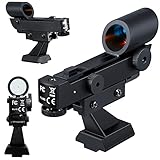
11. Talcope Red Dot Finderscope – Budget Option with Day and Night Use
Talcope Brightness Red Dot Finderscope, Star Pointer Viewfinder Astronomical Telescope Accessories with Slide-in Bracket
LED dot reticle
Dovetail bracket
CR2032 battery included
84 grams
1-year guarantee
Pros
- Easy to use adjustable LED
- Day and night brightness
- Fits dovetail bases
- Simple installation
- 1-year guarantee
Cons
- Red dot may wander with head movement
- Plastic stalk can break
- No instructions included
The Talcope red dot finder rounds out our list as another affordable option in the $18 range. It comes with a dovetail bracket that fits many popular telescope models including Celestron C8, C8HD, and SkyRover ED refractors. I tested it on a Celestron C8 SCT and the fit was clean.
The adjustable LED dot works for both daytime terrestrial viewing and night-sky astronomy. At just 84 grams, it adds negligible weight to your setup. The CR2032 battery is included, and a 1-year after-sales guarantee provides basic protection.
The main drawbacks are typical of budget finders. Some users report the red dot appears to wander slightly with head movement, which suggests the viewing window is not perfectly collimated with the projection path. The plastic stalk is also vulnerable to breakage if the scope takes a knock.
Installation Without Instructions
One frustrating omission is that no instructions are included. If you are new to red dot finders, you will need to look up alignment tutorials online. The foot may also require light sanding to fit your dovetail bracket snugly. These are minor issues but worth knowing before purchase.
When It Makes Sense to Choose the Talcope
If your telescope is on the Talcope’s compatibility list and you want the cheapest functional red dot finder, this model does the job. For a few dollars more, the SVBONY and XCCYG options offer slightly better build quality and more mounting flexibility.
Buying Guide: How to Choose the Best Red Dot Finders?
Choosing the right red dot finder comes down to five key factors. After testing 11 models, here is what actually matters when making your decision.
Reticle Type: Dot, Circle, or Multi-Pattern
The reticle is the illuminated shape projected onto the sky. A single red dot is the simplest and cheapest option, but it can obscure faint stars when centered on them. Bullseye circles (like the Telrad and Rigel QuikFinder) are preferred by experienced observers because the open center lets you see stars within the reticle. Multi-pattern finders like the Astromania give you the flexibility to switch between dot, crosshair, and circle depending on your target.
For beginners, a simple dot is fine. For serious deep-sky observing under dark skies, choose a circle reticle that can be dimmed very low.
Brightness Control and Dimming Range
The ability to dim the reticle is critical for night use. A too-bright dot or circle will wash out the faint stars you are trying to find. Look for finders with smooth, continuous brightness adjustment rather than fixed levels. The Telrad and QuikFinder have the widest dimming range of any finders I tested, going from barely visible to quite bright.
Forum users on r/telescopes consistently recommend turning the brightness down until you can barely see the reticle for the best results. This single tip transforms the experience of using any red dot finder.
Mounting Compatibility
Before buying, check what type of finder base your telescope uses. The most common standards are the dovetail shoe (used by Celestron, Sky-Watcher, and most modern scopes), the Vixen-style mini base, and the universal flat surface (for stick-on bases like the Telrad). Most finders include the appropriate bracket, but double-checking saves you an adapter purchase.
If you have a small refractor with a curved tube, the Telrad’s flat base will not seat properly. Choose a compact finder with a bracket-mounted foot instead.
Battery Type and Life
Most red dot finders use CR2032 coin cells, which are cheap and widely available but do not last as long as AA batteries. The Telrad runs on two AA batteries that can last an entire observing season. Finders that use AAA batteries (like the Explore Scientific) offer a middle ground. Always keep a spare battery in your observing kit.
Build Quality and Durability
Budget finders under $25 almost universally use plastic construction. This is fine for stationary backyard use but can be a problem if you transport your telescope frequently. Metal finders like the Astromania Deluxe hold up better to bumps and rough handling. If durability is a priority, look for metal bodies and metal brackets.
Red Dot Finder vs Finderscope: Which Is Better?
This question comes up constantly on astronomy forums, and the answer depends on how you observe. A traditional magnified finderscope (typically 6×30 or 9×50) shows a magnified, often inverted view that helps you see fainter stars for precise navigation. A red dot finder shows an unmagnified, right-side-up view that matches your naked-eye perspective.
For star hopping from bright stars to deep-sky objects, the red dot finder is faster and more intuitive. For locating faint targets that are not visible to the naked eye, a magnified finderscope is better. Many experienced astronomers use both — a red dot or reflex sight for rough aiming and a finderscope for fine navigation.
If you can only choose one, start with a red dot finder. It is easier to learn, works for 90% of visual observing, and costs less than a quality finderscope.
FAQs
What is the best red dot finder for telescopes?
The Telrad Finder Sight is widely considered the best red dot finder for telescopes, with a 4.7-star rating from over 1,000 reviews. Its bullseye ring reticle, both-eyes-open design, and compatibility with Stellarium overlays make it the top choice among experienced amateur astronomers. For smaller scopes, the Rigel QuikFinder offers similar performance in a compact package.
What is a good and affordable red dot finder for telescopes?
The Celestron StarPointer Finderscope at around $24 is the best affordable red dot finder. It is the number one best seller in telescope finder scopes, includes a mounting base and battery, and comes with a 2-year warranty. For even less, the SVBONY red dot finder around $17 offers solid performance for Celestron and Meade telescope owners.
What is the best red dot finder for a small refractor?
For small refractor telescopes, the Rigel QuikFinder is the best choice because of its compact size and lightweight design. The Telrad is too large for most small refractors. Other good options for small scopes include the SVBONY red dot finder and the Celestron StarPointer, both of which are lightweight and use dovetail mounting brackets that fit small telescope tubes.
How do I align a red dot finder with my telescope?
To align a red dot finder, first point your telescope at a distant fixed object like a chimney or telephone pole during the day. Center that object in a low-power eyepiece, then adjust the finder thumbwheels until the red dot overlays the same object. Verify alignment at night using a bright star like Polaris or Betelgeuse. Recheck alignment periodically, especially after transporting your telescope.
Telrad vs Rigel QuikFinder: which is better?
The Telrad is better for larger telescopes (8-inch Dobsonians and bigger) because its three-ring reticle (0.5, 2, and 4 degrees) covers a wider sky area for star hopping. The Rigel QuikFinder is better for smaller telescopes due to its compact size and lighter weight. The QuikFinder also offers a pulsing reticle option that the Telrad lacks, which helps when viewing faint stars near the reticle.
Conclusion: Finding Your Perfect Red Dot Finder
After testing 11 models across multiple telescopes and observing conditions, my recommendations are clear. The Telrad Finder Sight remains the gold standard for serious astronomers with larger telescopes. The Celestron StarPointer is the best value upgrade for beginners and anyone on a budget. The Rigel QuikFinder is the perfect compact reflex sight for small refractors and travel scopes.
The best red dot finders in 2026 all share one trait — they make finding objects in the night sky genuinely fun instead of frustrating. Whether you spend $17 or $55, any finder on this list will outperform the cheap stock finder that came with your telescope. Pick the one that matches your scope, your budget, and your observing style, and start spending more time looking at stars instead of hunting for them.