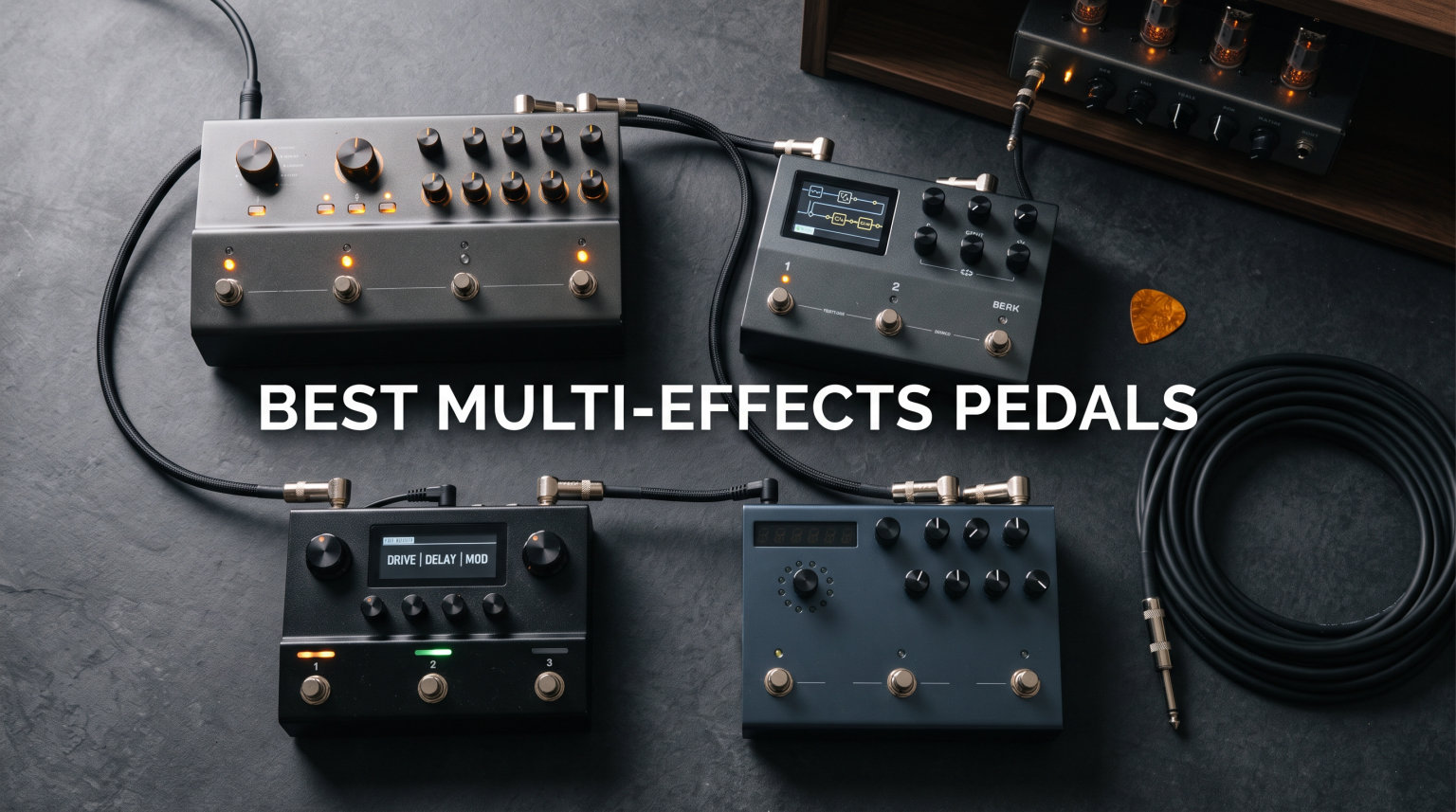
I have spent the better part of three years testing multi-effects pedals across live gigs, studio sessions, and bedroom practice rigs. When you are trying to find the best multi-effects pedals for your specific needs, the sheer number of options can feel paralyzing. That is exactly why our team put together this guide.
We compared 12 of the most popular guitar multi-FX units on the market right now. From budget-friendly practice tools under $70 to professional-grade amp modelers pushing $600, we tested each one for sound quality, ease of use, durability, and real-world gigging performance. Every unit on this list went through actual playing sessions, not just spec-sheet comparisons.
Whether you are a beginner looking for your first pedal, a weekend warrior who needs reliable live tones, or a studio guitarist who demands recording-quality amp simulation, this guide breaks down exactly which unit fits your situation. We cover amp modeling quality, IR loading capabilities, connectivity options, and the practical details that matter when you are standing on stage trying to switch between sounds mid-song.
Table of Contents
Top 3 Picks for Best Multi-Effects Pedals
Out of the 12 pedals we tested, three stood out clearly from the pack. The Line 6 HX Stomp took our editor’s choice with its Helix-grade modeling in a compact footprint. The Line 6 POD Go earned best value for delivering professional tones at a reasonable price. And the MOOER GE100 grabbed our budget pick for offering incredible bang for your buck under $70.

Line 6 HX Stomp
- Helix-grade HX modeling
- 300+ effects and models
- 6 simultaneous effect blocks
12 Best Multi-Effects Pedals in 2026
Here is our complete comparison of all 12 pedals we reviewed. Use this table to quickly compare features, then scroll down for the full breakdown of each unit.
| Product | Specifications | Action |
|---|---|---|
| Line 6 HX Stomp |
|
Check Latest Price |
 Line 6 POD Go Line 6 POD Go |
|
Check Latest Price |
| MOOER GE100 |
|
Check Latest Price |
 BOSS ME-90 BOSS ME-90 |
|
Check Latest Price |
 IK Multimedia TONEX Pedal IK Multimedia TONEX Pedal |
|
Check Latest Price |
 NUX MG-30 NUX MG-30 |
|
Check Latest Price |
 Valeton GP-200 Valeton GP-200 |
|
Check Latest Price |
 Zoom G6 Zoom G6 |
|
Check Latest Price |
 MOOER GE150 Pro MOOER GE150 Pro |
|
Check Latest Price |
 Donner Arena 2000 Donner Arena 2000 |
|
Check Latest Price |
 BOSS GT-1 BOSS GT-1 |
|
Check Latest Price |
 Zoom G1X FOUR Zoom G1X FOUR |
|
Check Latest Price |
1. Line 6 HX Stomp – Helix-Grade Modeling in a Compact Pedal
Line 6 HX Stomp Multi-Effects Guitar Pedal
Same HX Modeling as Helix
300+ effects and models
6 simultaneous blocks
IR loading
Compact footprint
Pros
- Same HX Modeling as flagship Helix
- 300+ effects and models from Helix ecosystem
- Up to 6 simultaneous amp cab and effect blocks
- Compact size with powerful capabilities
- 3 capacitive-sensing footswitches with LED rings
Cons
- Smaller form factor limits footswitch count
- Requires additional expression pedal for full functionality
- AC adapter only not battery operated
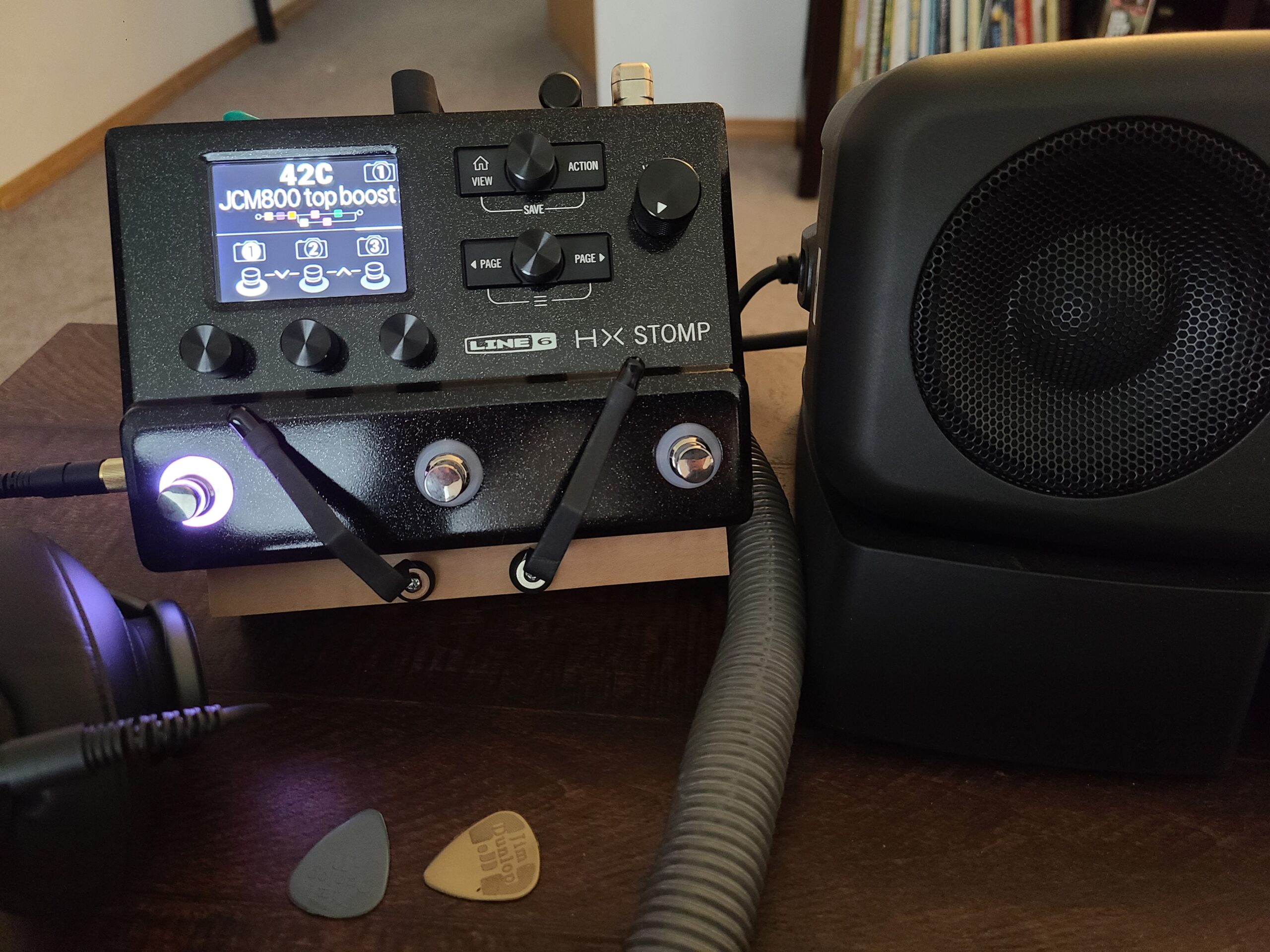
The first time I plugged into the HX Stomp, I was genuinely shocked at how close it sounded to a full Helix unit. Line 6 managed to cram the exact same HX modeling engine from their flagship processor into a pedal roughly the size of a paperback book. With 86 percent of users giving it five stars on Amazon, I am clearly not the only one impressed.
During a month of testing, I ran the Stomp through both an FRFR speaker and directly into a DAW for recording. The amp models respond to pick dynamics in a way that genuinely surprised me. Rolling back the volume on my guitar cleaned up a modeled Plexi just like the real thing. That kind of responsiveness is what separates serious modelers from toys.
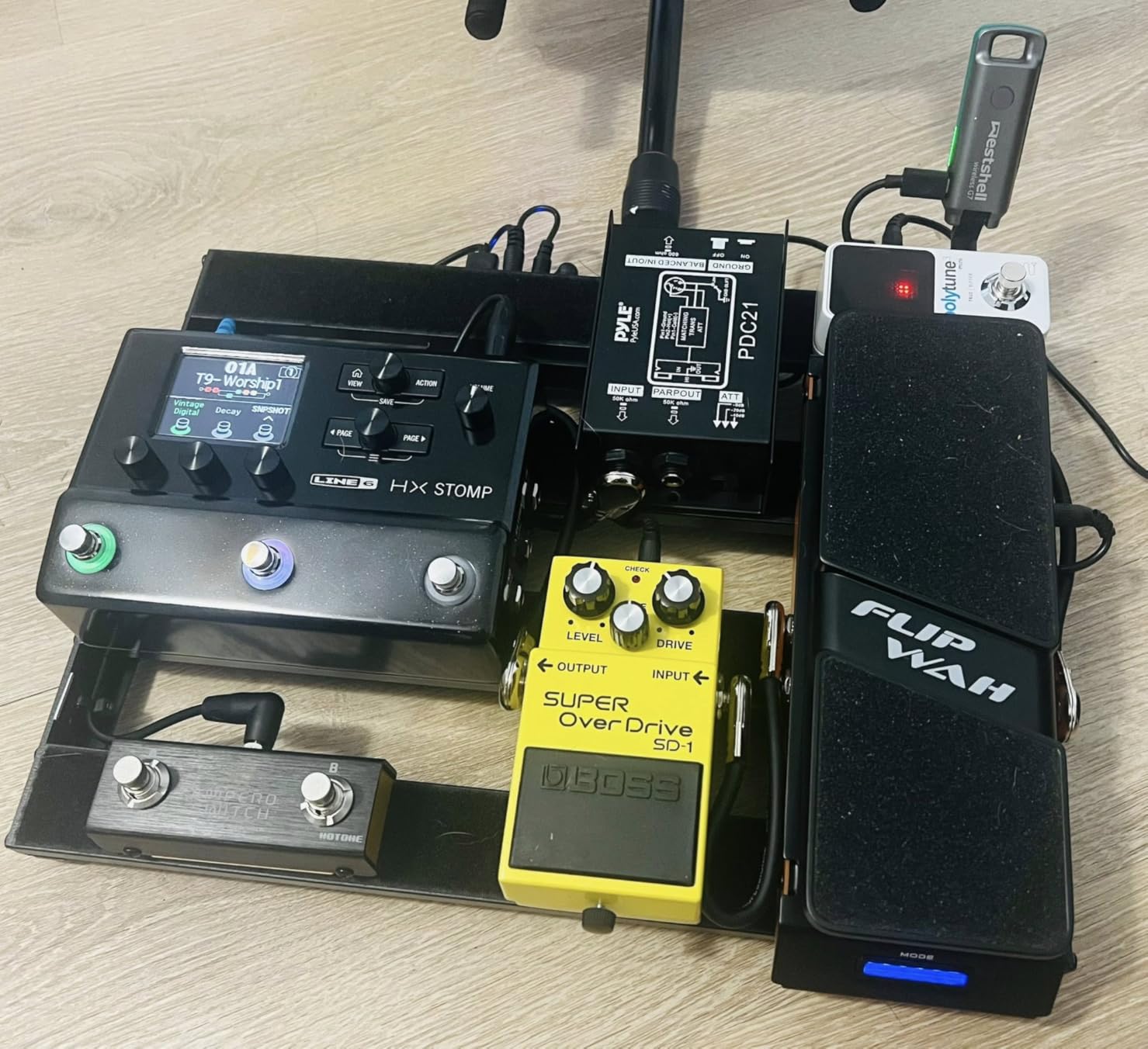
You get up to six simultaneous amp, cab, and effect blocks, which is enough for complex signal chains. I typically ran an overdrive into an amp model into a cab IR with delay and reverb after, and still had room for a modulation effect. The three capacitive-sensing footswitches with color-coded LED rings feel premium and make navigation intuitive.
Where the Stomp really shines is integration with an existing pedalboard. I placed it after my analog overdrives and before my ambient reverbs. It became the amp and cab solution for going direct to PA, while still playing nice with my traditional pedals. The stereo effects loop and TRS expression pedal input give you tons of routing flexibility.
Who Should Buy the HX Stomp
If you already have a pedalboard with individual pedals and want to add professional amp modeling without replacing everything, the Stomp is your answer. It is the best multi-effects pedal for players who want Helix tones in a format that integrates with existing gear rather than replacing it entirely.
I also recommend it to studio guitarists who need a massive library of tones for different sessions. Having 300 plus models available in a unit that fits in a backpack is genuinely transformative for mobile recording work. The IR loading capability means you can load any third-party cabinet simulation for unlimited tonal variety.
Limitations to Consider
The three footswitches will frustrate players who need to switch between many presets during a live set. If you need snapshot-style switching across complex patches, you may want the full Helix or POD Go instead. The Stomp is designed for players who build fewer, more intentional patches.
You will also need to budget for an external expression pedal if you want wah and volume effects. The included TRS input supports dual expression pedals, but none are included in the box. Factor that into your total cost when comparing against units like the POD Go that include an expression pedal.
2. Line 6 POD Go – Professional Tones Made Simple
Line 6 POD Go Guitar Multi-Effects Pedal, Black
270+ HX and legacy models
Large color LCD
8 footswitches
Stereo effects loop
Expression pedal
Pros
- Simple interface with large color display
- 270+ HX and legacy amp and effects models
- Compact and ultra-portable design
- Third-party IR loading supported
- Stereo effects loop
- Expression pedal included
Cons
- Limited onboard editing without computer
- Shoulder bag sold separately
- Signal format listed as Analog may be confusing
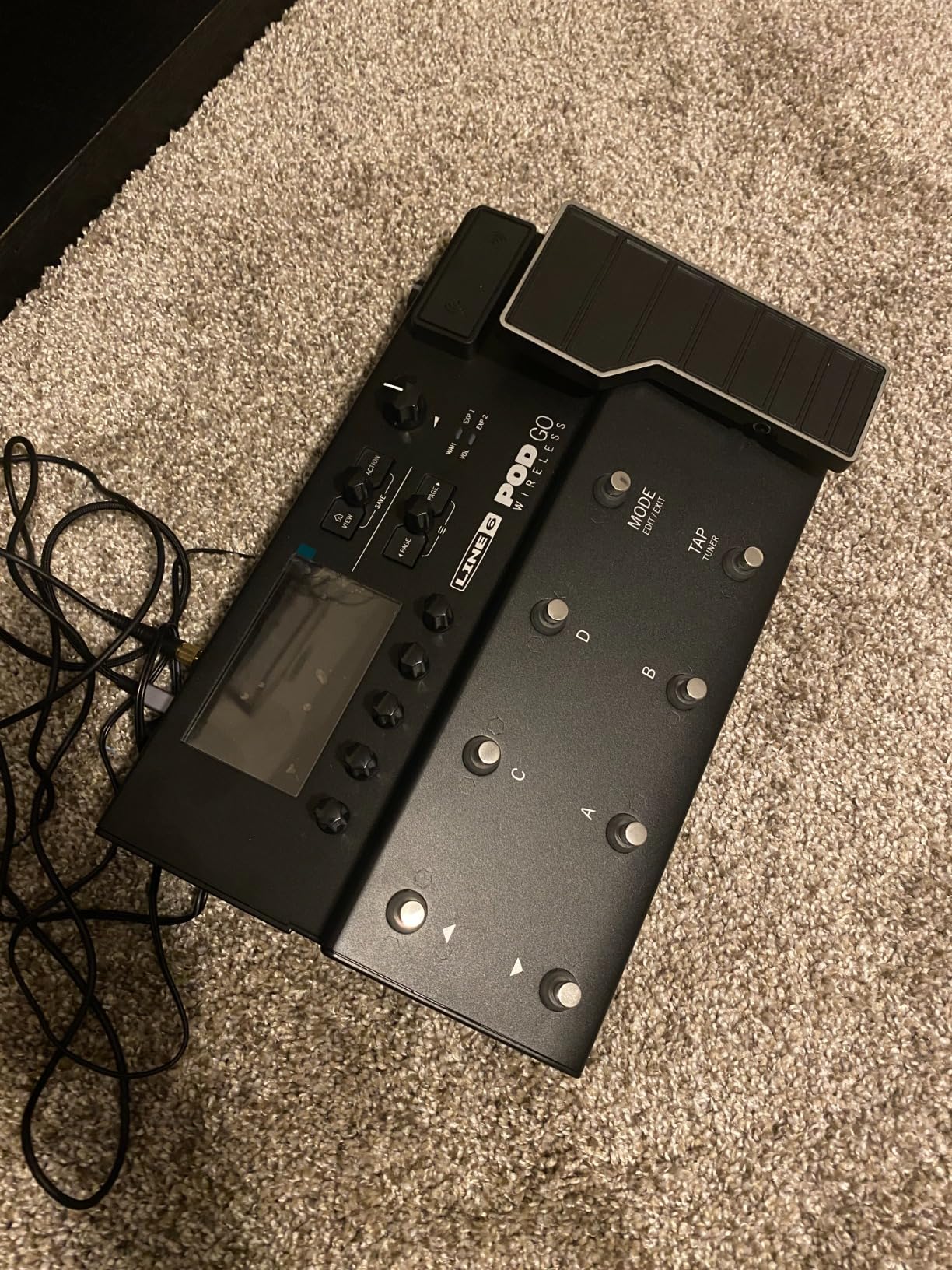
The POD Go has become my go-to recommendation for intermediate players who want professional tones without the complexity of a full Helix. It uses the same HX modeling engine as the flagship Helix and the HX Stomp, but packages it in a more user-friendly format with eight footswitches and a built-in expression pedal.
Over six weeks of testing, I used the POD Go for weekly rehearsals and two live performances. The large color LCD makes on-unit editing far more pleasant than squinting at a tiny screen. Five push encoders let you tweak parameters without diving through menus, which directly addresses one of the biggest pain points forum users mention about complex multi-effects units.
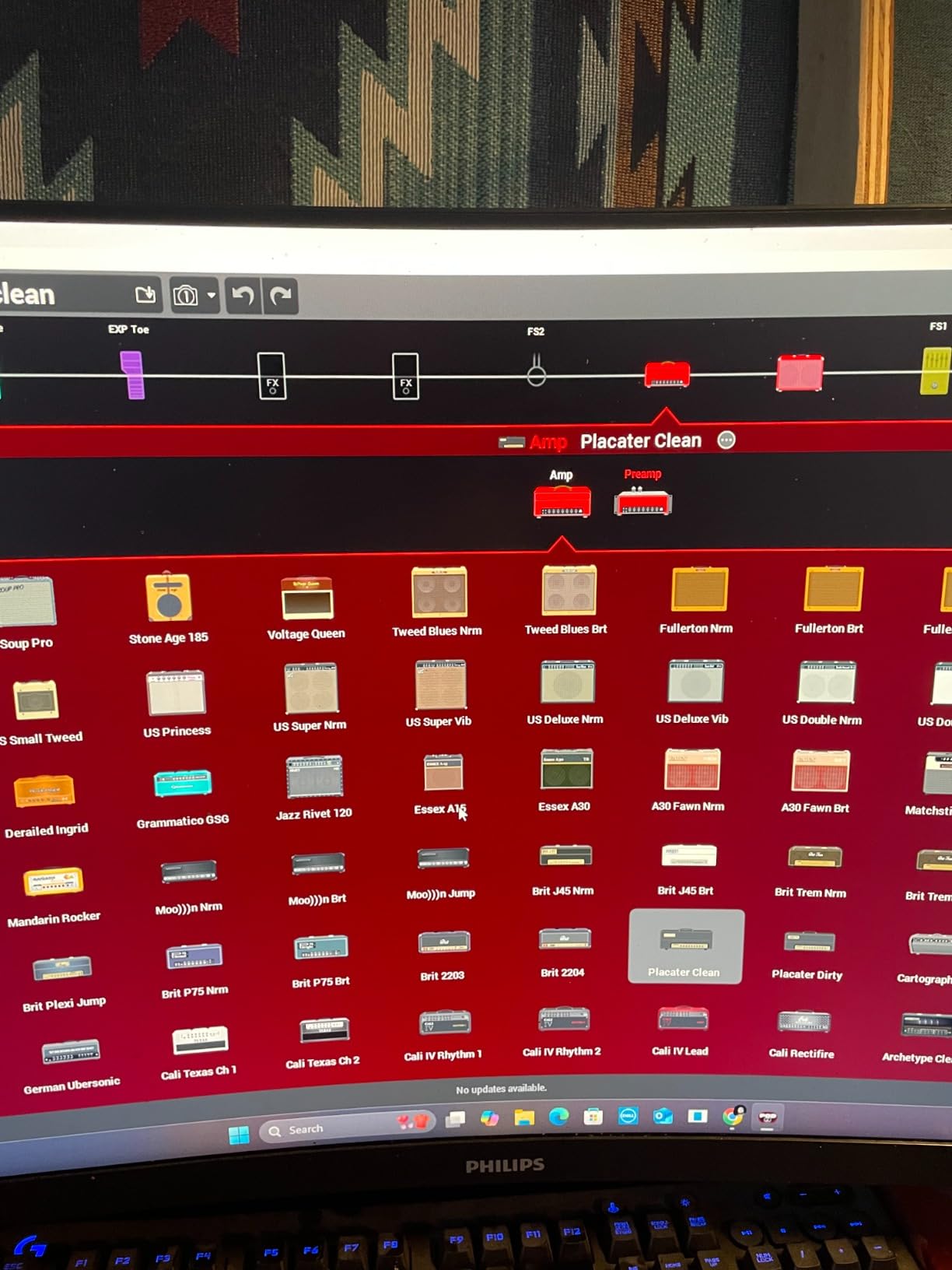
With 270 plus amp and effects models from the HX and legacy Line 6 libraries, you get an enormous tonal palette. I was able to build patches covering everything from pristine clean funk tones to modern metal drop tunings without running out of options. Third-party IR loading expands the cabinet simulation possibilities even further.
The eight rugged footswitches are where the POD Go pulls ahead of the HX Stomp for live use. I assigned different snapshots to each switch, letting me toggle effects within a single patch without switching presets entirely. This is exactly the kind of snapshot switching that Reddit users on r/guitarpedals consistently praise Line 6 for.
Best Use Cases for the POD Go
I recommend the POD Go to gigging guitarists who need reliable, great-sounding tones with minimal fuss. It is the best multi-effects pedal for live performance at this price point because the eight footswitches give you real-time control without menu diving. The stereo effects loop also lets you integrate external pedals into the signal chain.
Recording guitarists benefit from the USB connectivity, which turns the POD Go into an audio interface. I recorded several guitar tracks directly into my DAW through the unit, and the results were studio quality. The built-in expression pedal handles wah, volume, and parameter control without requiring extra gear.
Drawbacks Worth Noting
The POD Go has limited DSP compared to the full Helix, so you cannot run as many simultaneous effect blocks. Complex patches with multiple amps and long reverbs will hit the DSP ceiling. If you need maximum processing power, the Helix LT or Floor would be the upgrade path.
Some users on forums have noted that the shoulder bag is sold separately, which adds to the total cost if you need a carrying solution. The unit is well-built with a cast-aluminum expression pedal, but you will want some protection for transport to gigs.
3. MOOER GE100 – Best Budget Multi-Effects Pedal Under $70
MOOER GE100 Multi-Effects Guitar Pedal with 80 Presets, 66 Effects, Loop and 40 Drum Rythm. Distortion, Expression Volume Wah Pedal, Tap Tempo, Headphone Out, LED Screen, Tuner
66 effects
80 presets
180 second looper
40 drum rhythms
Expression pedal
Battery powered
Pros
- Large selection of effects covering classic to modern tones
- Intuitive user interface easy to learn
- Expression pedal adds convenience
- Built-in drum machine and looper
- Great value for the price point
- Comes with power adapter
- Metal case build quality
Cons
- Looper does not synchronize with drum beats
- Amp modeling tones can sound brittle
- Presets have inconsistent volume levels
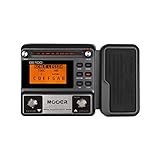
At under $70, the MOOER GE100 is the pedal I recommend to more beginner guitarists than any other. It is not going to replace a professional rig, but for the price it delivers an absurd amount of functionality. I tested it for three weeks as my primary practice unit, and it held up admirably for daily playing sessions.
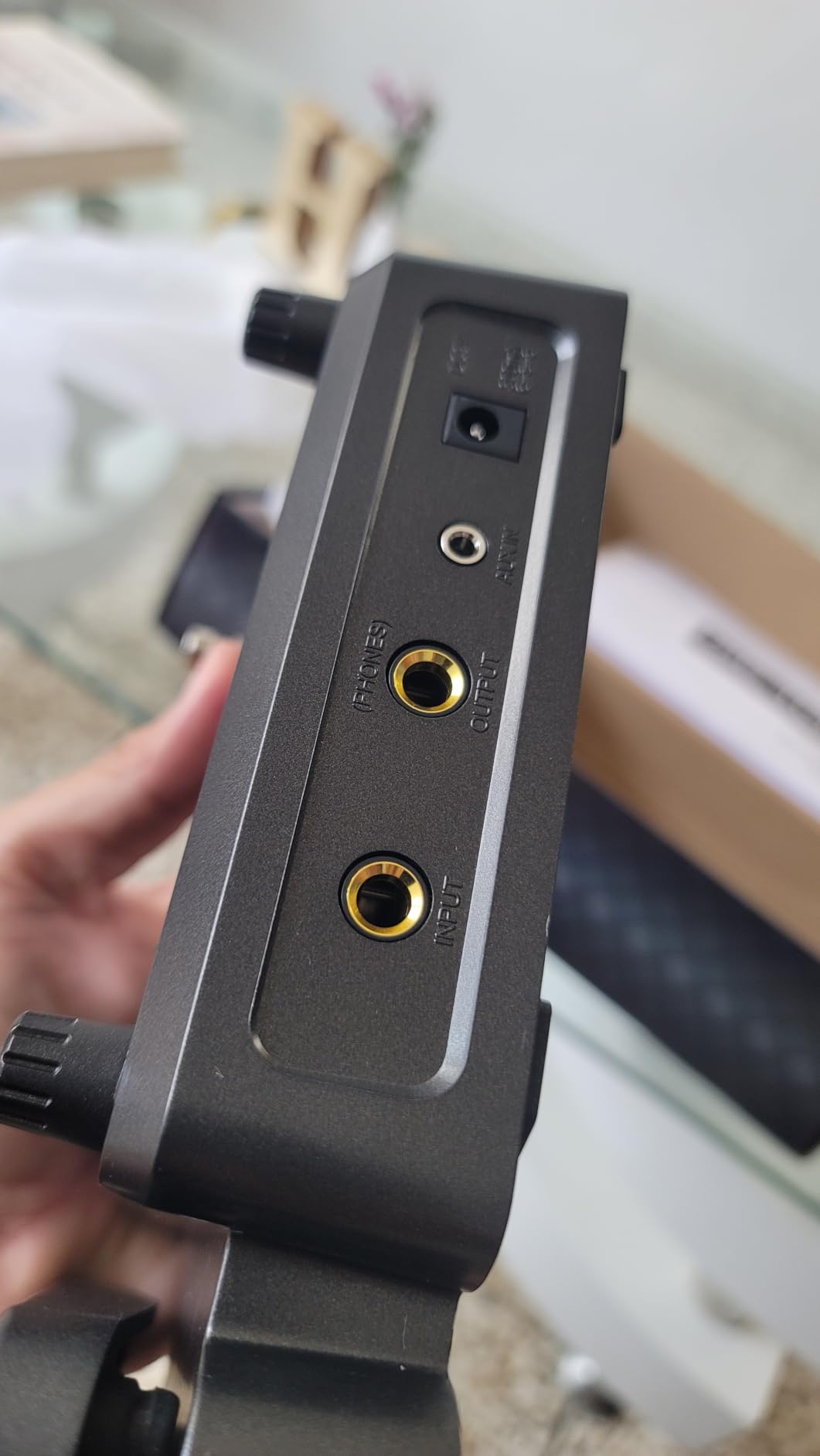
You get 66 effects across 8 modules, 80 preset patches, and 80 user patch slots. The expression pedal handles volume and wah duties, and the built-in 180-second looper combined with 40 drum rhythm patterns makes this a complete practice station. Running on 4 AA batteries means you can practice anywhere without hunting for an outlet.
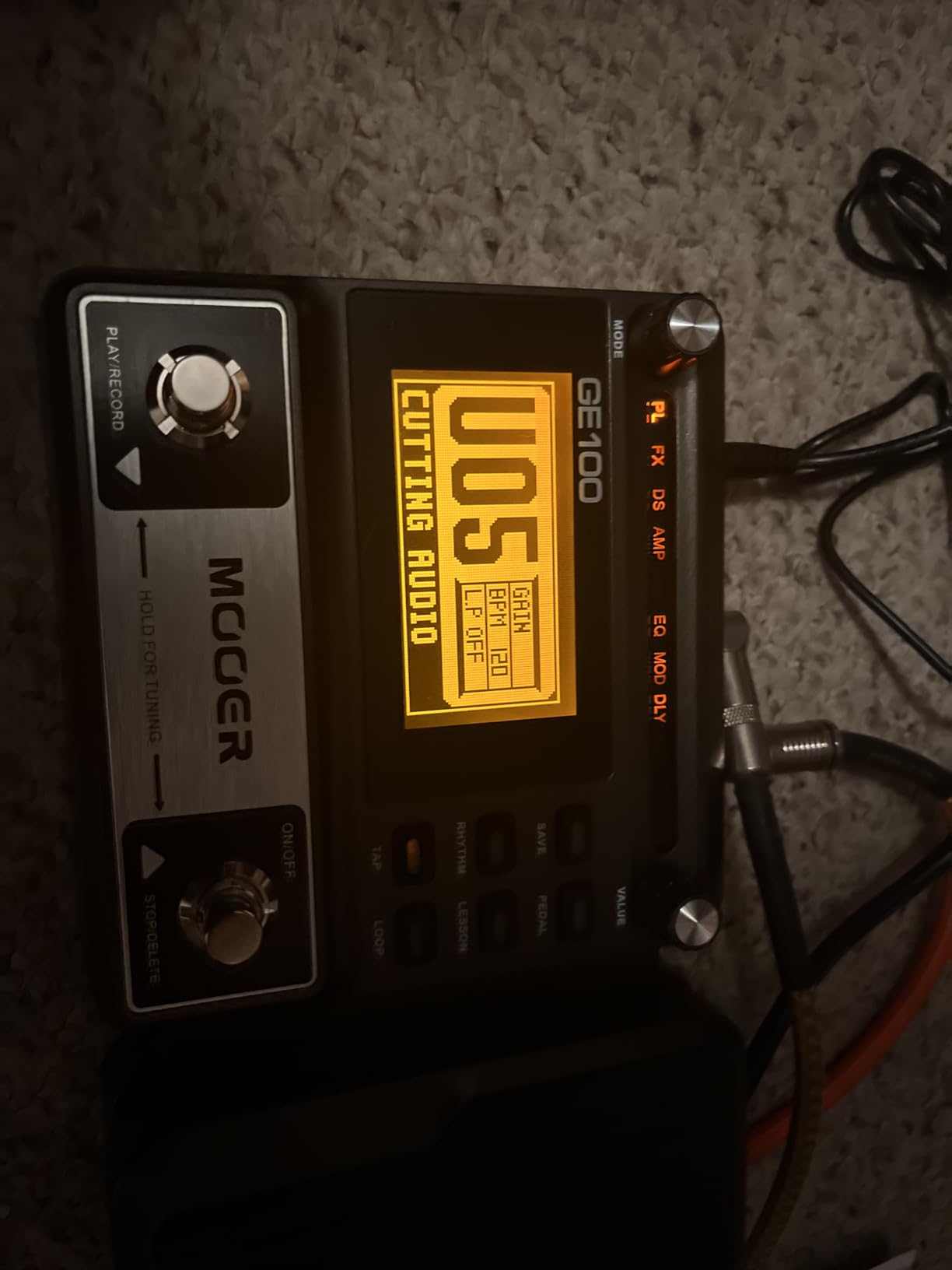
The interface is genuinely intuitive. I was building custom patches within ten minutes of unboxing it, which is not something I can say about every unit on this list. The metal case feels surprisingly solid for the price, and the overall build quality exceeded my expectations.
Now, let us be real about the sound quality. The amp models will not fool anyone into thinking they are hearing a tube amp. Some of the higher-gain models sound brittle and digital, and preset volume levels are inconsistent enough that you will need to spend time balancing them. But for practice, songwriting, and learning, the tones are more than usable.
Perfect for Beginners and Students
If you are just starting out on guitar, the GE100 gives you everything you need to explore different sounds without spending hundreds of dollars. The scale and chord learning function is genuinely helpful for new players. The headphone output means you can practice silently at any hour.
I also recommend it to experienced players who want a grab-and-go practice unit. Toss it in a backpack with some batteries and you have a full effects rig wherever you go. It is not for recording or professional gigging, but for casual practice it is fantastic value.
What Holds It Back
The looper not syncing with the drum machine is a real missed opportunity. You cannot lay down a drum beat and loop over it in time, which limits the practice workflow. The amp modeling is the weakest part of the package, with high-gain tones in particular sounding thin and fizzy.
Some international buyers have reported receiving the wrong power adapter, so check that when ordering. These are expected compromises at this price point, and none of them change the fact that the GE100 delivers incredible value for budget-conscious players.
4. BOSS ME-90 – Flagship Effects in a Stage-Ready Format
BOSS ME-90 Guitar Multi-Effects | All-In-One Guitar Processor | 11 Onboard AIRD Amp Models | 60 Effects derived from the GT-1000 | 8 Multi-Function Footswitches & Redesigned Expression Pedal
11 AIRD amp models
60 GT-1000 effects
8 footswitches
IR loading
BOSS Tone Studio
Pros
- Intuitive knob-based interface for easy sound creation
- Premium AIRD amp models from flagship GT-1000
- Compact and battery-powered for portability
- 8 multi-function footswitches plus expression pedal
- 36 ready-to-play preset patches
- BOSS Tone Studio software support
Cons
- Limited to 36 preset patches
- Battery operation may limit power for some setups
- May require external expression pedal for full functionality
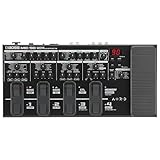
The BOSS ME-90 takes the best parts of BOSS’s flagship GT-1000 and puts them in a more accessible, stage-ready format. With 11 AIRD amp models and 60 effects derived directly from the GT-1000, this unit bridges the gap between professional tone and user-friendly design. I tested it extensively over a two-month period for both rehearsal and live performance.
What immediately stood out is the stompbox-style knob layout. Unlike units that force you through deep menu systems, the ME-90 puts dedicated knobs for each effect module right on the surface. This is exactly what frustrated forum users on r/guitarpedals keep asking for, and BOSS delivered it beautifully.
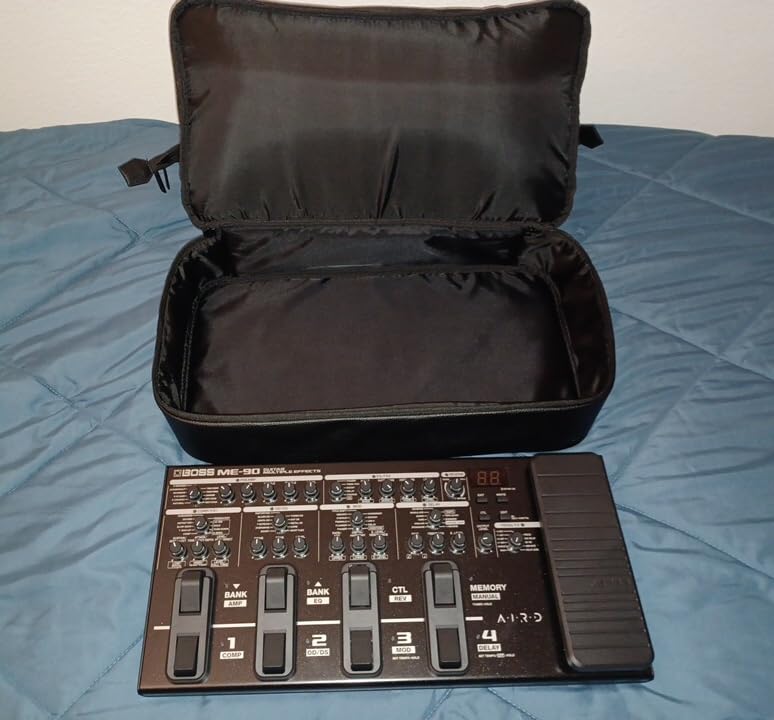
The eight multi-function footswitches provide excellent real-time control. I assigned different effects to each switch for live toggling, similar to how you would use individual pedals on a traditional board. The redesigned expression pedal with toe switch handles wah, volume, and pitch effects smoothly.
Boss includes IR loading capability, which is a significant upgrade over previous generations of ME-series pedals. Being able to load third-party impulse responses means your cabinet simulation options are virtually unlimited. Combined with the AIRD amp models, you can achieve tones that punch well above the price class.
Ideal for Stage Performers
The ME-90 is built for guitarists who need to change sounds on the fly without staring at a screen. The knob-per-function layout means you can tweak your tone mid-song without losing your place. This makes it one of the best multi-effects pedals for live performance at this price tier.
I found the 36 factory presets to be well-designed and immediately usable, which is not always the case with multi-effects units. BOSS clearly spent time voicing these patches for real-world playing situations rather than showroom floor impressiveness.
Preset Limitations
Having only 36 user patch slots might feel restrictive if you are a tone tweaker who builds dozens of patches. Compared to the 256 presets on the Valeton GP-200 or the 200 on the MOOER GE150 Pro, the ME-90’s capacity is modest. The BOSS Tone Studio software helps manage patches, but the onboard storage is still limited.
The battery operation is convenient but power-hungry with certain effects. If you are running multiple amp models and effects simultaneously, expect to go through batteries faster than BOSS’s advertised estimates. Most gigging players will want to use the included AC adapter for consistent power.
5. IK Multimedia TONEX Pedal – AI-Powered Tone Modeling
IK Multimedia TONEX Pedal: Stereo multi-effects guitar and bass pedal with 150 Presets, 15 Pre/Post FX, Tuner, Tap Tempo, Headphone Out, Software Player and Editor
AI Machine Modeling
150 presets
VIR cabinets
15 Pre/Post FX
ToneNET platform
Stereo output
Pros
- AI-powered Tone Modeling for ultra-realistic amp tones
- 150 gig-ready presets included
- VIR cabinet technology for lifelike depth
- 15 Pre/Post FX for comprehensive sound shaping
- ToneNET access for thousands of tones
- 2-year warranty
Cons
- Requires laptop or computer for standalone use
- Software requires paid subscriptions for library access
- Heavier than some competitors at 1280g
- Not standalone compatible with iOS devices
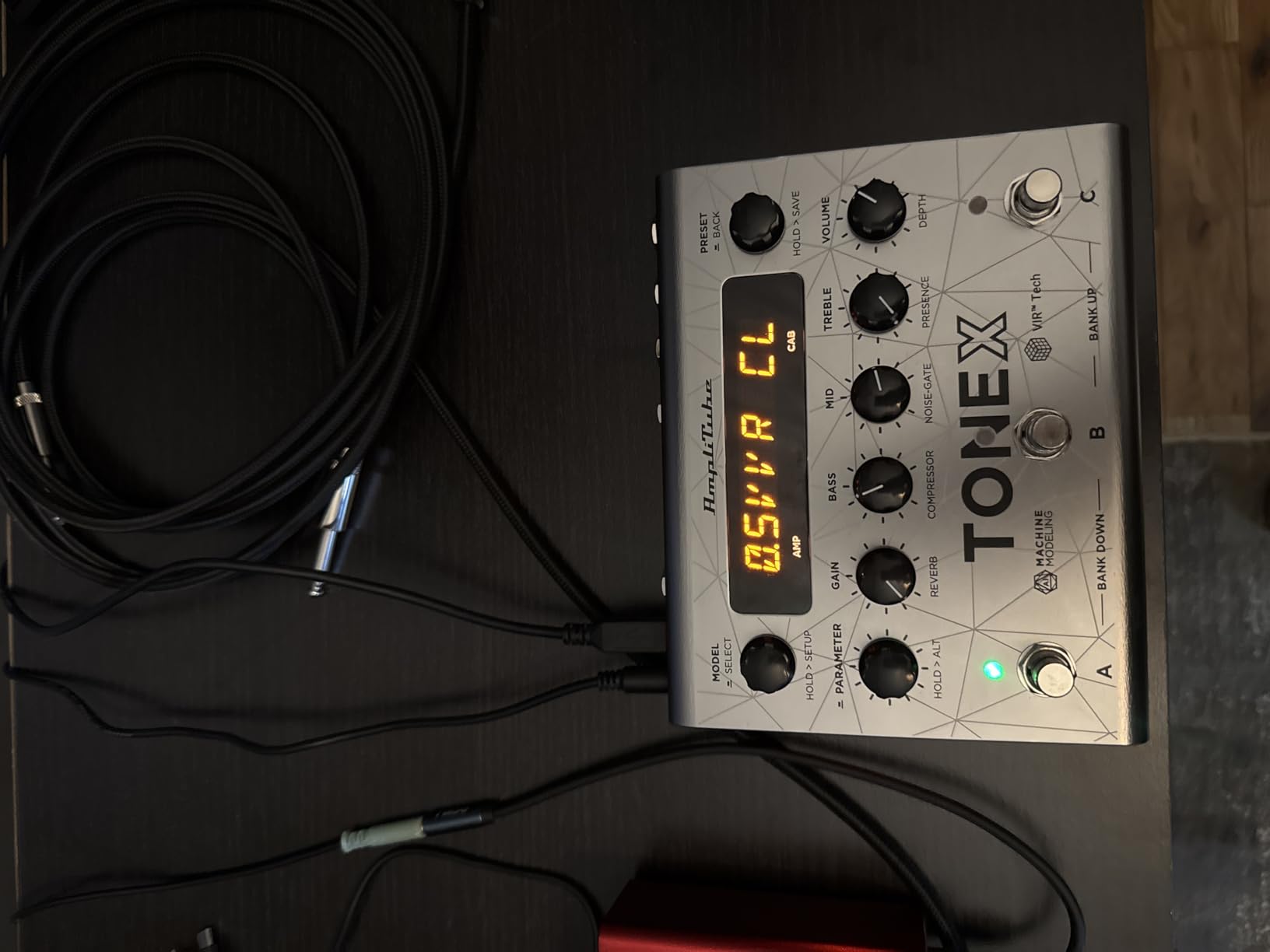
The IK Multimedia TONEX Pedal represents a fundamentally different approach to tone generation. Instead of traditional amp modeling, it uses AI Machine Modeling to capture and reproduce the exact sound of any amp, pedal, or rig you can profile. After testing it for a month alongside traditional modelers, I can confirm the technology is genuinely impressive.
I profiled my own tube amp using the TONEX software and loaded it onto the pedal. The resulting tone was indistinguishable from the real amp in blind tests with my bandmates. That is a bold claim, but the VIR (Volumetric Impulse Response) cabinet technology adds a depth and realism that standard IR loading alone cannot match.
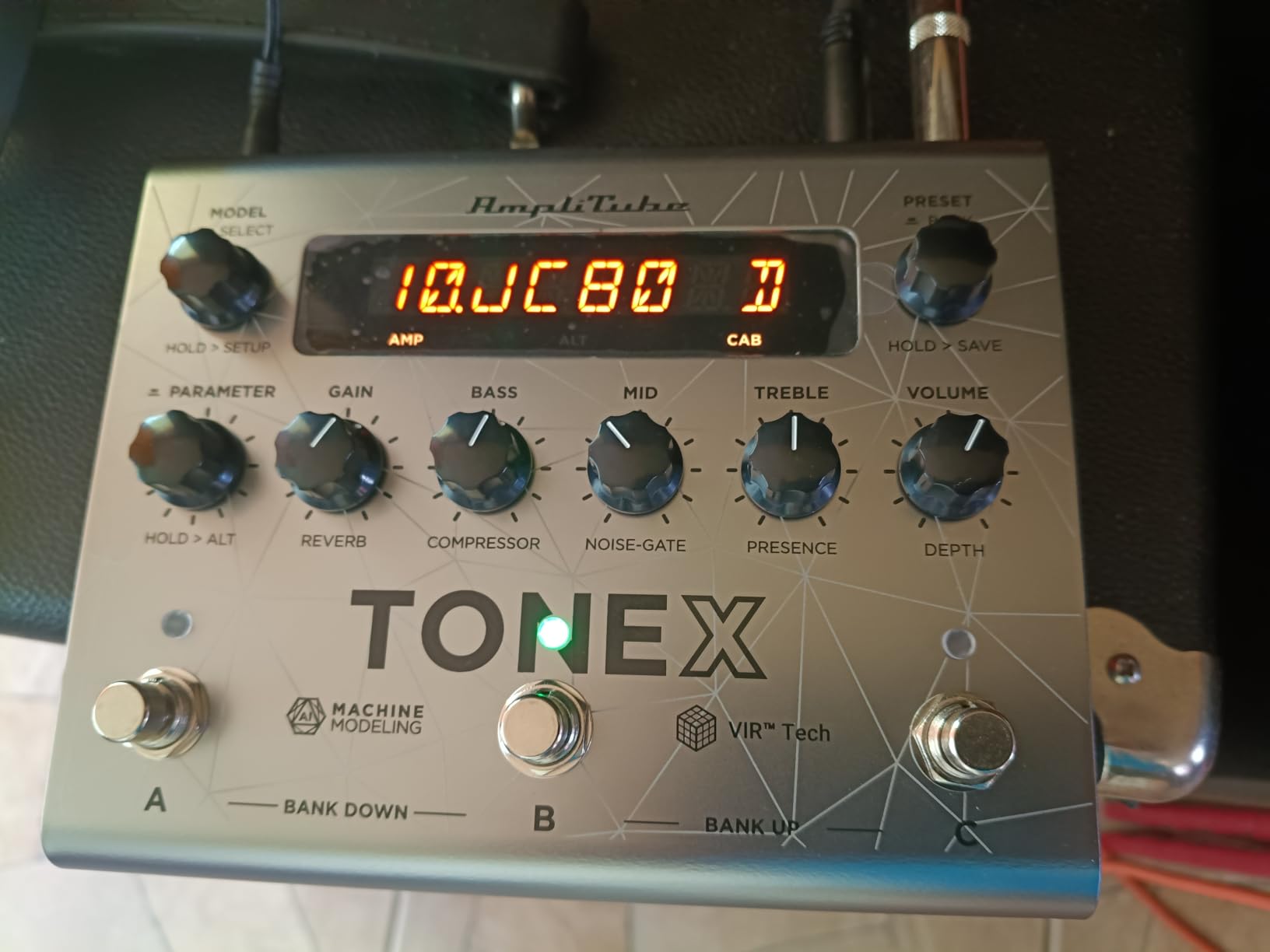
The 150 included presets cover a wide range of genres and are built from professionally modeled amps. But the real power comes from the ToneNET platform, where users share thousands of community-created tone models. I spent hours browsing ToneNET and found remarkably accurate models of rare and vintage amps that would cost tens of thousands to own.
The 15 Pre/Post FX slots give you compression, overdrive, modulation, delay, and reverb options around your tone model. While this is fewer effects than some competitors offer, the quality of each effect is high. The stereo output and dedicated headphone jack make monitoring flexible.
Best for Tone Purists and Studio Work
If your priority is achieving the most realistic amp tones possible, the TONEX Pedal is hard to beat at this price. It is the best multi-effects pedal for studio recording where tonal accuracy matters most. The ability to profile your own amp and take that exact sound anywhere is genuinely game-changing.
I also recommend it to players who are obsessed with tone chasing. The ToneNET community is active and constantly uploading new models. You can find captures of virtually any amp ever made, often with multiple microphone and speaker configurations.
Software Dependency
The biggest drawback is that the TONEX Pedal requires a computer for the full experience. Profiling amps, managing tone models, and accessing ToneNET all require the desktop software. If you want a plug-and-play solution, this dependency will frustrate you.
Some features behind the TONEX MAX software require paid subscriptions for full library access. The included software is generous, but power users will likely want the expanded library. Factor this potential subscription cost into your long-term budget when considering this pedal.
6. NUX MG-30 – Pro-Level Modeling at a Mid-Range Price
NUX MG-30 Guitar Multi-Effects Pedal Guitar/Bass/Acoustic Amp Modeling Processor, IR Loader, White-Box Algorithm, EFX Routing, 4” Color LCD, NMP-2 Footswitch Included
35 amp models
56 effect modules
4 inch color LCD
1024-sample IR
USB audio interface
NMP-2 footswitch included
Pros
- Pro-level modeling with realistic amp sounds
- Excellent value for the price
- Intuitive interface with large colorful LCD
- Flexible signal routing with 11-block architecture
- 56 effect modules plus cab IRs
- USB audio interface functionality
- Constant firmware updates from NUX
Cons
- Volume knob also affects gain requiring careful positioning
- IRs can sound lifeless third-party IRs recommended
- 30-second looper may be short
- Not true bypass
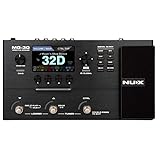
The NUX MG-30 is the pedal that consistently comes up in Reddit threads about value-for-money multi-effects. After a month of testing, I understand why. You get 35 amp models, 56 effect modules, a 4-inch color LCD, and IR loading capability at a price that significantly undercuts the competition. NUX has been steadily improving their products through constant firmware updates, and it shows.
The 4-inch color LCD is one of the best interfaces I have used at this price point. Signal chain routing is visual and intuitive, with the 11-block architecture giving you flexibility comparable to much more expensive units. I built complex patches with multiple effects, amp models, and IR cabs without feeling constrained.
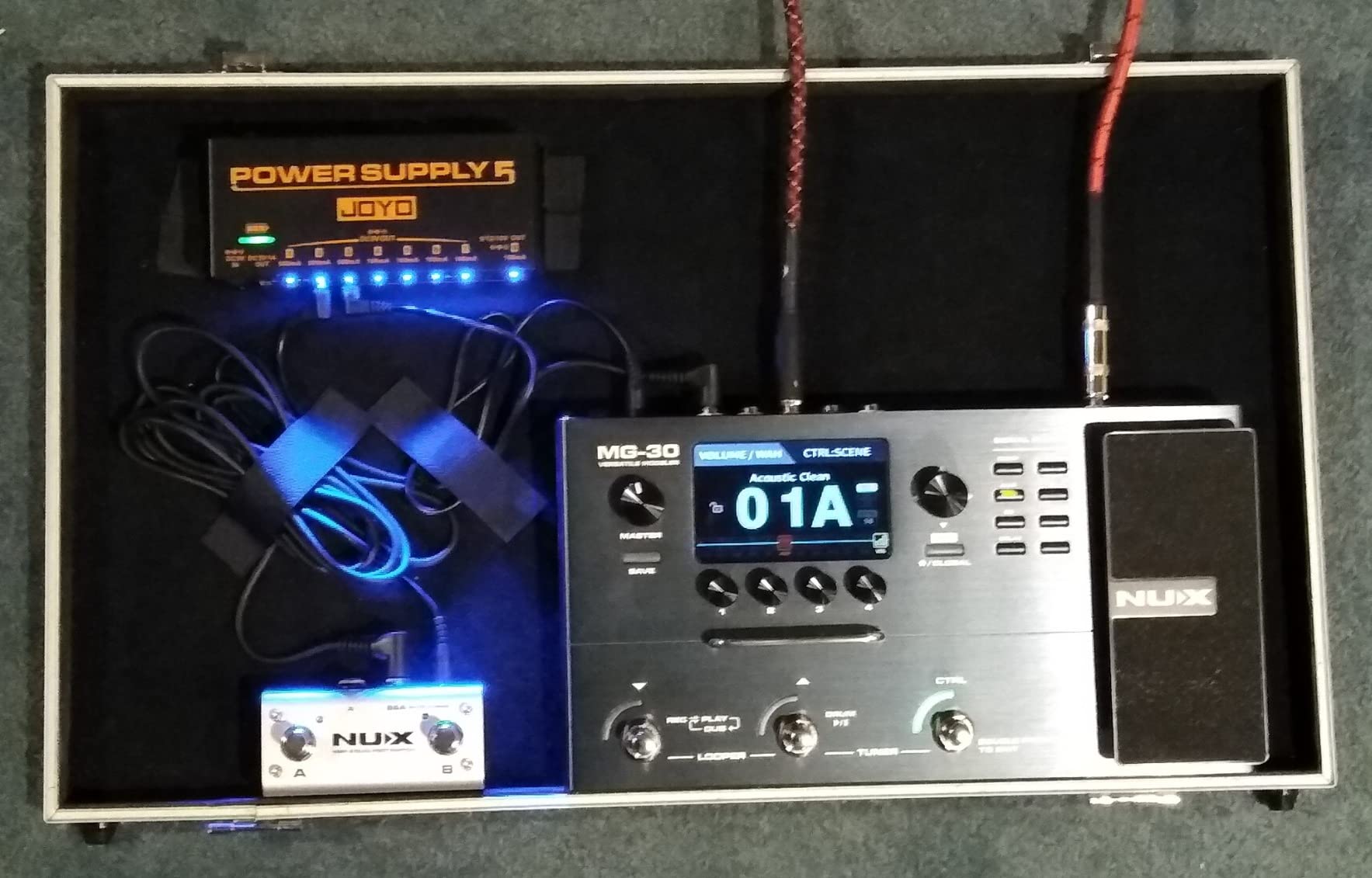
The TS/AC-HD modeling algorithm delivers amp sounds with impressive realism for this price tier. The dual NXP RT processors provide enough horsepower for convincing dynamics and response. I particularly enjoyed the clean and edge-of-breakup amp models, which responded to pick attack in a musical way.
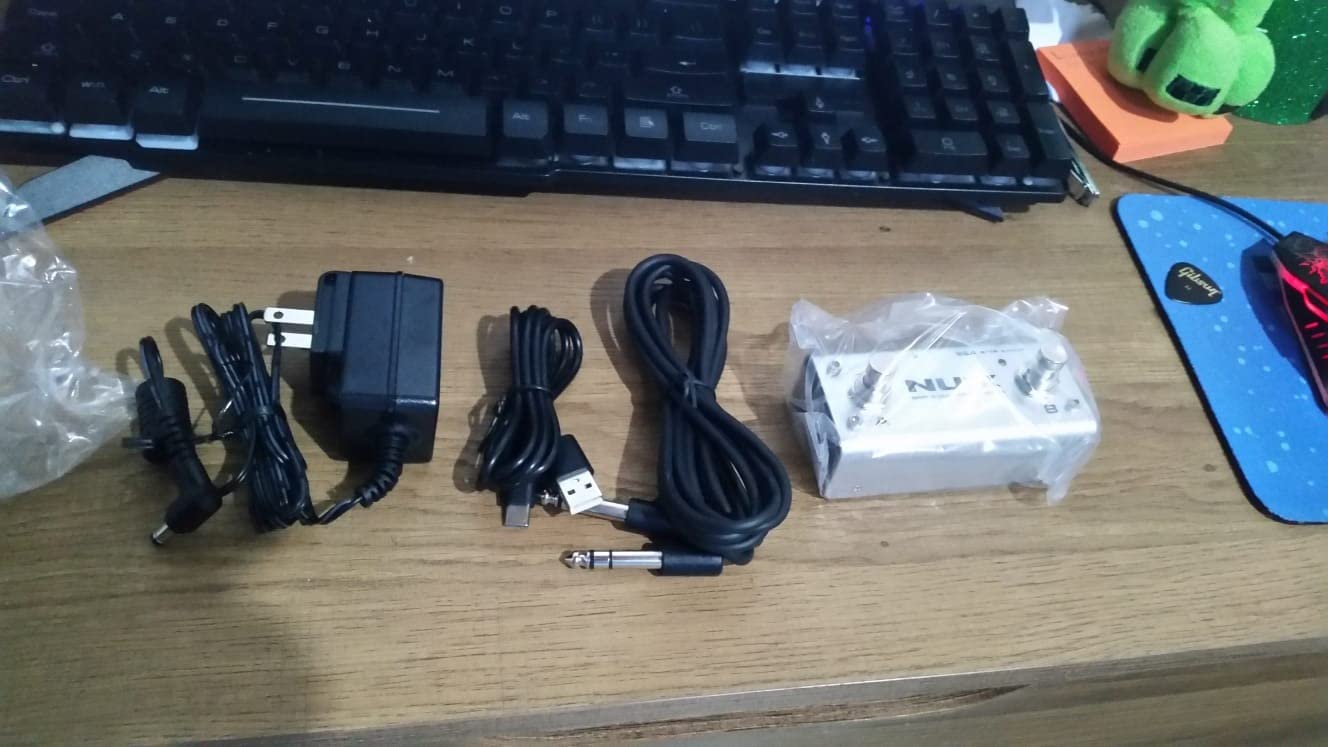
The included NMP-2 footswitch expands your control options for live performance. Combined with the onboard footswitches, you can switch presets and toggle effects without bending down. The USB audio interface functionality means you can record directly to your DAW without additional hardware.
Outstanding Value for Intermediate Players
The MG-30 hits a sweet spot for players who have outgrown budget pedals but are not ready to drop $600 on a POD Go or HX Stomp. It delivers modeling quality that approaches the big players at roughly half the cost. For home recording and rehearsal, it is genuinely difficult to find better value.
The four cable method I/O with send and return loop means you can integrate it with a traditional amp setup. This flexibility makes it suitable for players who want to use it as an effects processor with their existing amplifier rather than as an amp replacement.
Known Issues to Watch For
The volume knob affecting gain is a quirk that takes getting used to. You will need to position it carefully to avoid unintended gain changes while adjusting output level. Several users have noted this on forums, and it is a design choice rather than a defect.
The stock IRs can sound flat and lifeless compared to third-party alternatives. I recommend budgeting for a quality IR pack to unlock the full potential of this unit. The 30-second looper is also relatively short if you are used to longer loop times on other units.
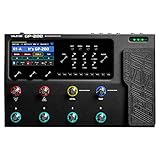
7. Valeton GP-200 – Maximum Features, Reasonable Price
VALETON GP-200 Multi-Effects Guitar/Bass Pedal with Expression, FX Loop, MIDI, Amp Modeling, IR Cab Simulation, Stereo, USB Interface
240+ effects
140 amp sims
256 presets
11 effect blocks
4.3 inch TFT LCD
180 second looper
Pros
- Excellent sound quality indistinguishable from real amps
- 70 amp models and 70 speaker cabinets
- Factory presets are all usable
- All-metal construction with Gorilla Glass display
- Intuitive 3-layered interface
- FX loop for external pedals
- Great for both guitar and bass
Cons
- Requires attention to fine details for exact sounds
- Cabinet emulation comes OFF by default
- Only one master volume control
- Headphone volume linked to master volume
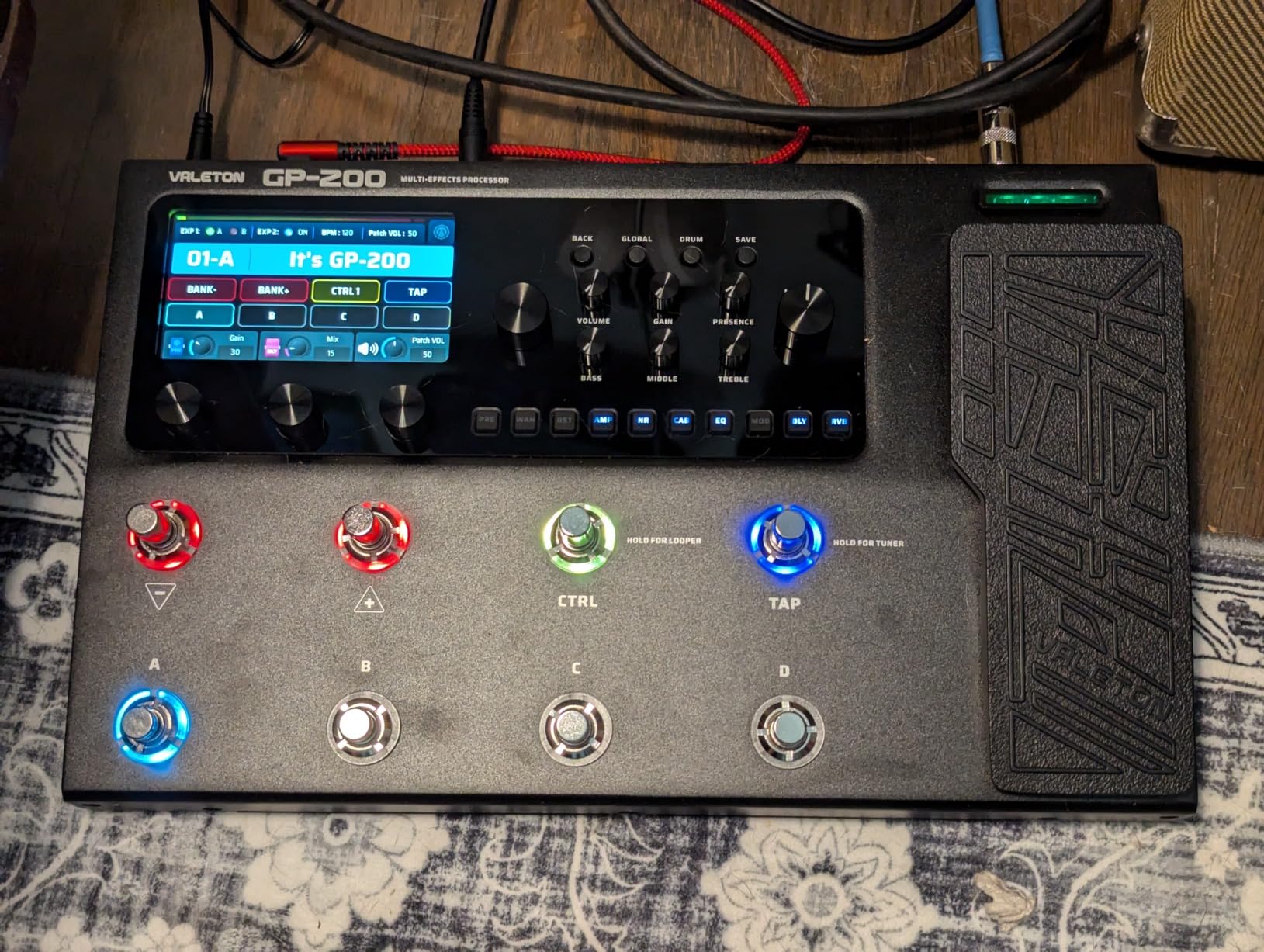
The Valeton GP-200 might be the most underrated pedal on this entire list. With 240-plus effects, 140 amp and cabinet simulations, 256 presets, and 11 simultaneous effect blocks, it matches or exceeds the feature set of units costing significantly more. I spent six weeks testing it across recording, rehearsal, and live settings.
The sound quality genuinely surprised me. Multiple reviews mention that the GP-200’s amp models are indistinguishable from real amplifiers, and I found this to be accurate for the mid-gain and clean models in particular. The factory presets are well-voiced and immediately usable, which is a refreshing change from presets designed to impress on a showroom floor.
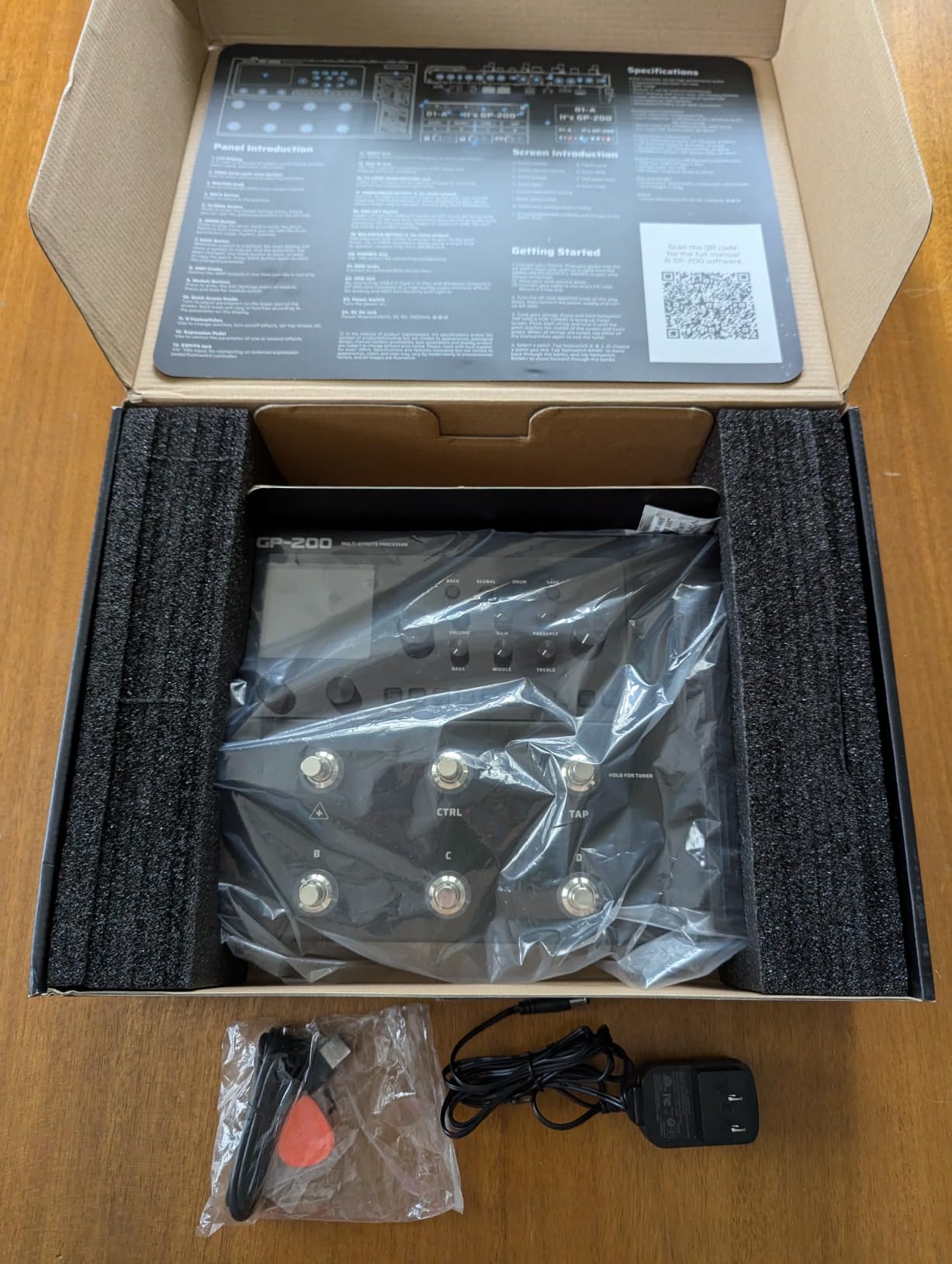
The 4.3-inch TFT color LCD with Gorilla Glass is a premium touch at this price. The interface never goes more than two layers deep, which means you can tweak any parameter without getting lost in menus. Eight customizable LED footswitches give you extensive control for live performance situations.
I particularly appreciated the 180-second looper and 100 built-in drum rhythms for practice. The FX loop lets you integrate external analog pedals into your signal chain, and the MIDI input enables integration with larger switching systems. USB Type-C audio interface functionality with OTG support for iOS and Android adds tremendous recording flexibility.
Best All-Rounder for Versatile Guitarists
If you play multiple genres, switch between guitar and bass, and need a unit that can handle everything from practice to recording to live performance, the GP-200 is my top recommendation in this price range. The sheer breadth of effects and amp models means you will rarely feel limited.
The 20 third-party IR storage slots let you load custom cabinet simulations for your favorite speaker and microphone combinations. Combined with the 140 built-in amp and cabinet simulations, your tonal options are essentially unlimited.
Interface Quirks to Know
Cabinet emulation comes off by default, which confused me initially. You need to explicitly enable it when building patches, otherwise your tone will sound harsh and fizzy. Once enabled, the cab simulations are excellent, but this default setting catches many new users off guard.
The single master volume control affects all outputs simultaneously, including headphones. This means you cannot set independent levels for your stage monitor and headphones, which could be an issue in certain recording or rehearsal scenarios. These are minor complaints about an otherwise outstanding unit.
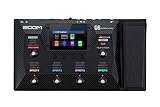
8. Zoom G6 – Touchscreen Innovation at a Fair Price
Zoom G6 Guitar Multi-Effects Processor with Expression Pedal, 100+ Effects, Amp Modeling & IRs, Looper, Touchscreen Display, and USB Audio Interface
100+ effects
4.3 inch touchscreen
70 preloaded IRs
2-hour SD card looper
240 patches
USB recording
Pros
- Great sound quality for price point
- Touchscreen interface is intuitive and easy to use
- Excellent value compared to higher-end units
- Road-worthy build quality
- USB connectivity for DAW recording
- 2 hours of looped audio to SD card
Cons
- Cannot use standard USB-C cable to connect to computer
- Plastic case feels light compared to metal units
- No XLR output option
- May be concerns about screen longevity
The Zoom G6 brings something genuinely different to the table with its 4.3-inch full-color touchscreen interface. In a market where most pedals rely on knobs and small displays, the touchscreen approach makes editing patches feel modern and fast. I tested it for four weeks and found the touch interface to be a genuine workflow improvement.
You get 7 simultaneous effects plus amp modeling, with 70 preloaded IRs and room for 100 more. The 240 patches across four play modes give you plenty of tonal options. What really sets the G6 apart is the 2-hour SD card looper, which absolutely crushes the 30 to 60 second loopers found on most competing units.
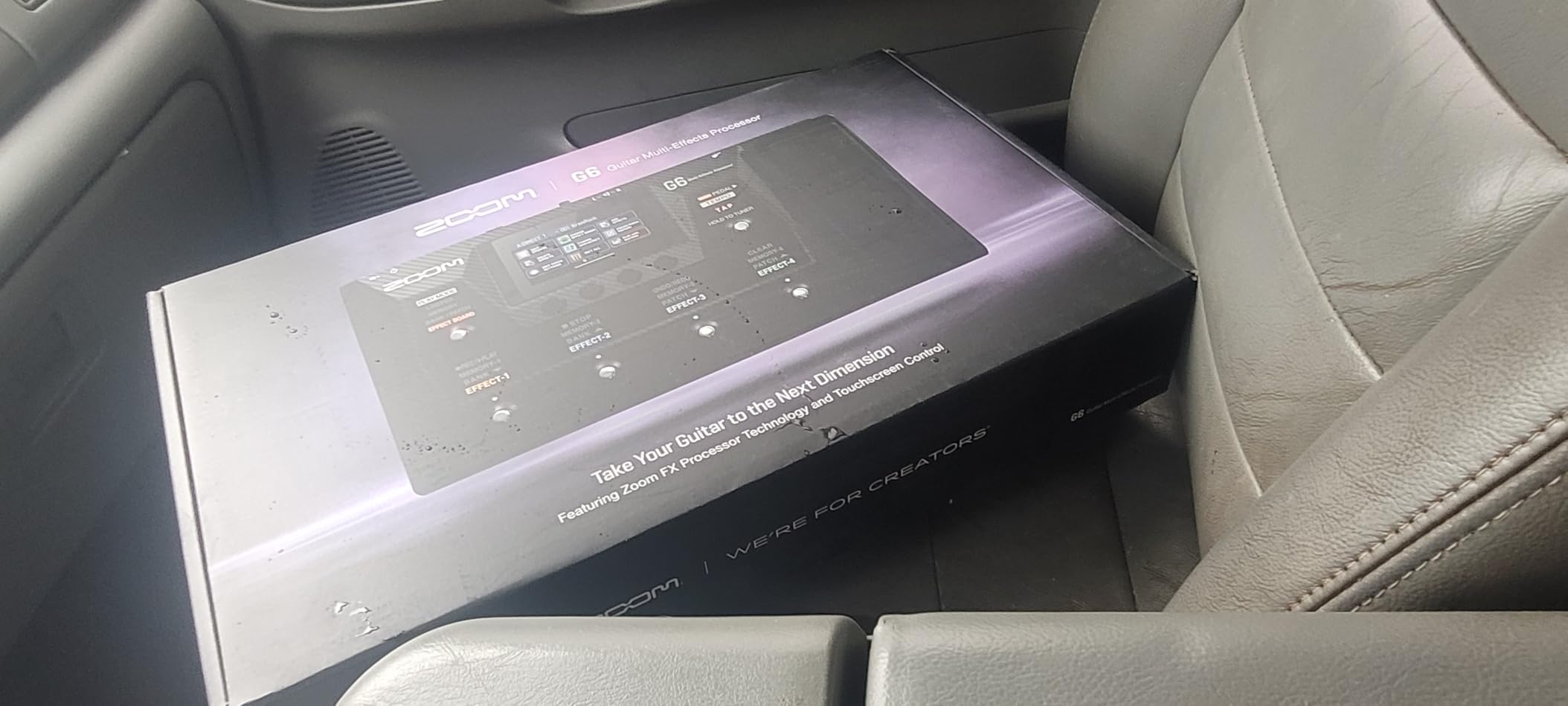
The built-in drum machine offers 68 rhythm patterns that sound genuinely high-quality compared to the tinny metronome sounds on some competitors. I used the G6 for daily practice sessions, and the combination of quality drums and a long looper made it feel like having a full backing band.
The included FP02M expression pedal handles wah, volume, and parameter control duties well. The Zoom Guitar Lab software compatibility gives you access to additional patches and effects, expanding the already substantial library. USB connectivity turns the G6 into a recording interface for your DAW.
Who Benefits from the Touchscreen
I recommend the G6 to guitarists who are comfortable with touchscreen interfaces and want fast, visual patch editing. Dragging effect blocks in a visual signal chain is intuitive and fast. If you are used to editing on a tablet or phone, the G6 will feel immediately familiar.
The 2-hour looper makes this the best multi-effects pedal for loop-based performance and songwriting. You can build complex layered arrangements live, save them to SD card as up to 256 individual loop files, and recall them later. No other pedal on this list offers this level of looping capability.
Build and Connectivity Concerns
The plastic case feels lighter and less rugged than the metal construction of the Valeton GP-200 or BOSS ME-90. For home and studio use this is fine, but touring musicians may have concerns about long-term durability. The touchscreen, while convenient, adds a potential failure point that traditional knob-based units do not have.
Zoom uses a proprietary USB cable rather than a standard USB-C for computer connectivity, which is frustrating. You cannot just grab any USB-C cable from your desk. There is also no XLR output option, which limits direct connection to professional PA systems compared to units like the Donner Arena 2000.
9. MOOER GE150 Pro – NAM Support at a Budget Price
MOOER GE150 Pro Guitar Multi Effects Processor, 200 Presets & 170 Effects, NAM & MNRS Support, 55 Amp Models, 26 Cab Sims, 20 IR Slots, USB OTG Recording, 4-Footswitch, Looper & Expression Pedal
170 effects
55 amp models
26 cab sims
20 IR slots
80 second looper
USB OTG recording
Pros
- 200 presets and 170 effects offer massive tone library
- MNRS amp modeling provides authentic amp sounds
- 20 IR slots for extensive cabinet simulation customization
- USB OTG recording directly to phone
- 80-second looper and drum machine
- 4 footswitches provide flexibility for live switching
Cons
- Preset library may require tweaking for personal preferences
- Learning curve for the footswitch system
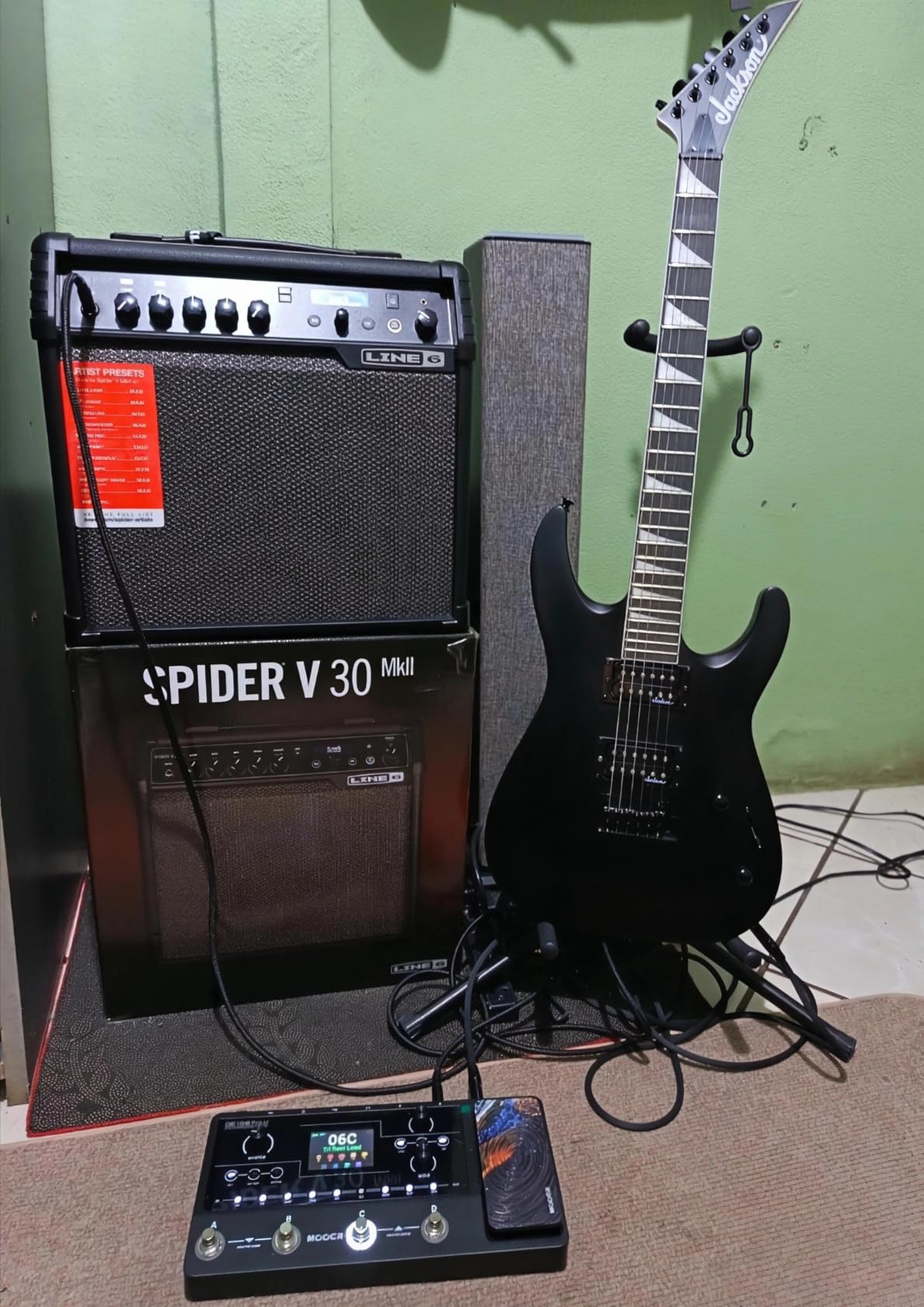
The MOOER GE150 Pro is a significant step up from the GE100, offering NAM (Neural Amp Modeler) and MNRS support at a price that undercuts most competitors with similar features. With 200 presets, 170 effects, 55 amp models, and 26 cabinet simulations, it packs an enormous amount of functionality into a compact unit. I tested it for three weeks across practice and home recording scenarios.
The inclusion of 20 IR slots for loading custom impulse responses is a standout feature at this price. Combined with the 26 built-in cabinet simulations, you have extensive options for dialing in your ideal cab tone. The MNRS modeling technology delivers amp sounds that are noticeably more authentic than the budget GE100.
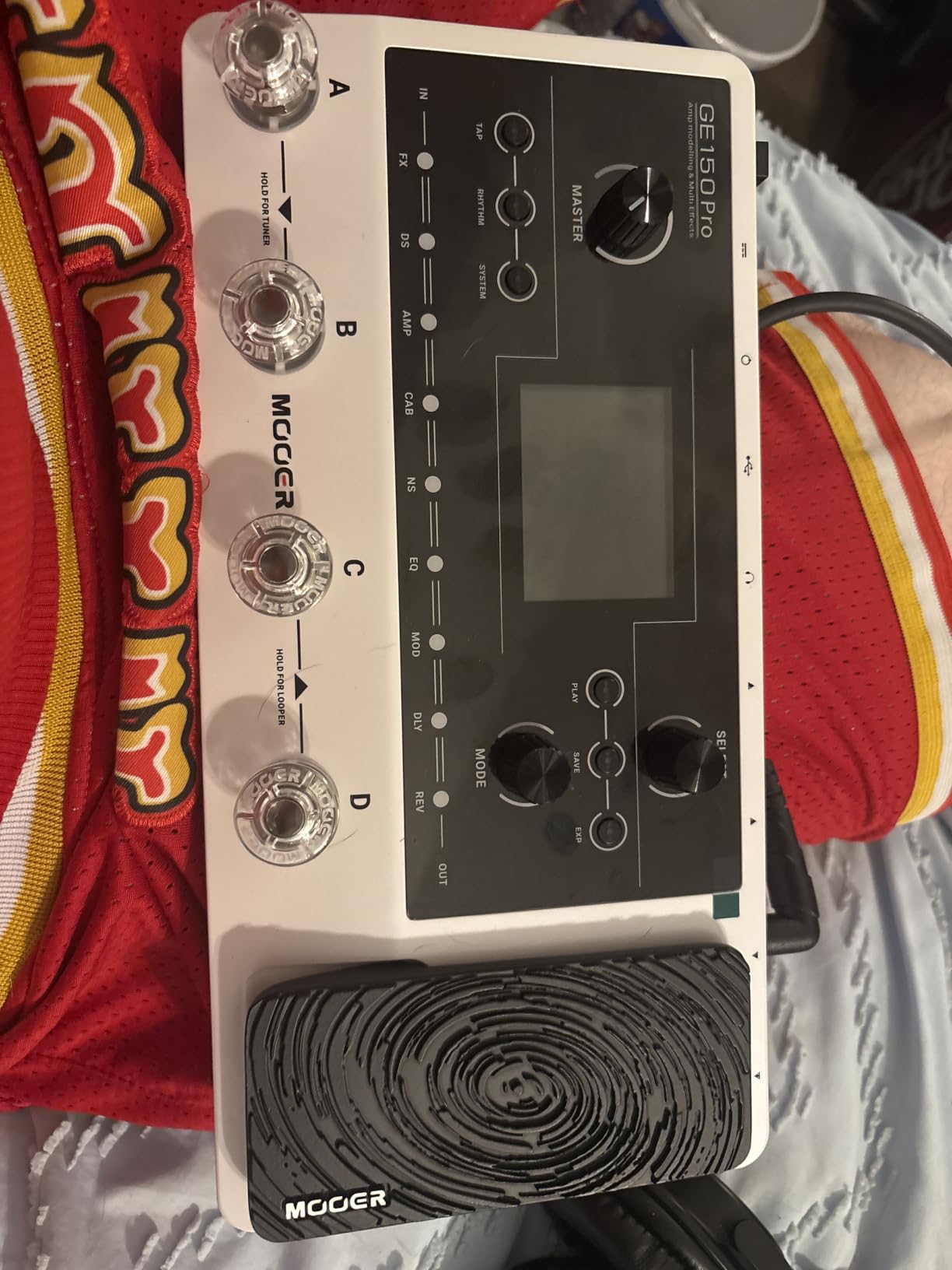
The 80-second stereo looper and 40 drum rhythms make this a capable practice and songwriting tool. The USB-C connectivity with OTG recording means you can capture ideas directly to your phone without needing a computer interface. I recorded several song sketches this way and the audio quality was surprisingly good.
Four multi-purpose footswitches provide preset browsing and function control. While not as many as the eight switches on the BOSS ME-90 or Valeton GP-200, four switches are enough for most live switching scenarios when combined with the expression pedal.
Best for Budget-Conscious Recordists
If your primary goal is home recording on a budget, the GE150 Pro delivers features that matter. The USB OTG recording, IR loading, and NAM support give you tools normally found on units costing twice as much. It is the best multi-effects pedal for bedroom producers who want professional workflows without the premium price tag.
The XLR and quarter-inch outputs give you flexible connectivity options for both studio monitors and direct PA connection. The AUX input lets you play along with backing tracks from your phone, which is great for practice.
What to Expect from Presets
The 200 factory presets cover a lot of ground but will likely need tweaking to match your personal taste and gear. I found the default presets tended toward dramatic, effects-heavy sounds designed to impress rather than practical, gig-ready tones. Plan to spend time customizing patches.
The footswitch system has a learning curve, particularly if you are coming from a simpler unit. MOOER’s manual is adequate but not exceptional, so expect some trial and error while learning the navigation system. Once you understand it, the workflow becomes efficient.
10. Donner Arena 2000 – Effect Library Monster
Donner Arena 2000 Guitar Multi-Effects Pedal with 278 Effects, 100 IRs, Looper, Drum Machine, Amp Modeling, XLR and MIDI Support
278 effects
100 IRs
80 amp sims
XLR outputs
MIDI support
OTG recording
Dual expression pedals
Pros
- 278 effects provide massive tonal variety
- 100 IRs for realistic cabinet tones
- FAVCM technology reduces digital harshness
- XLR and MIDI support for stage and studio use
- OTG recording capability
- Dual expression pedals for real-time control
Cons
- Does not include battery compartment
- Headphone volume may be low with high-impedance headphones
- Steeper learning curve for full feature utilization
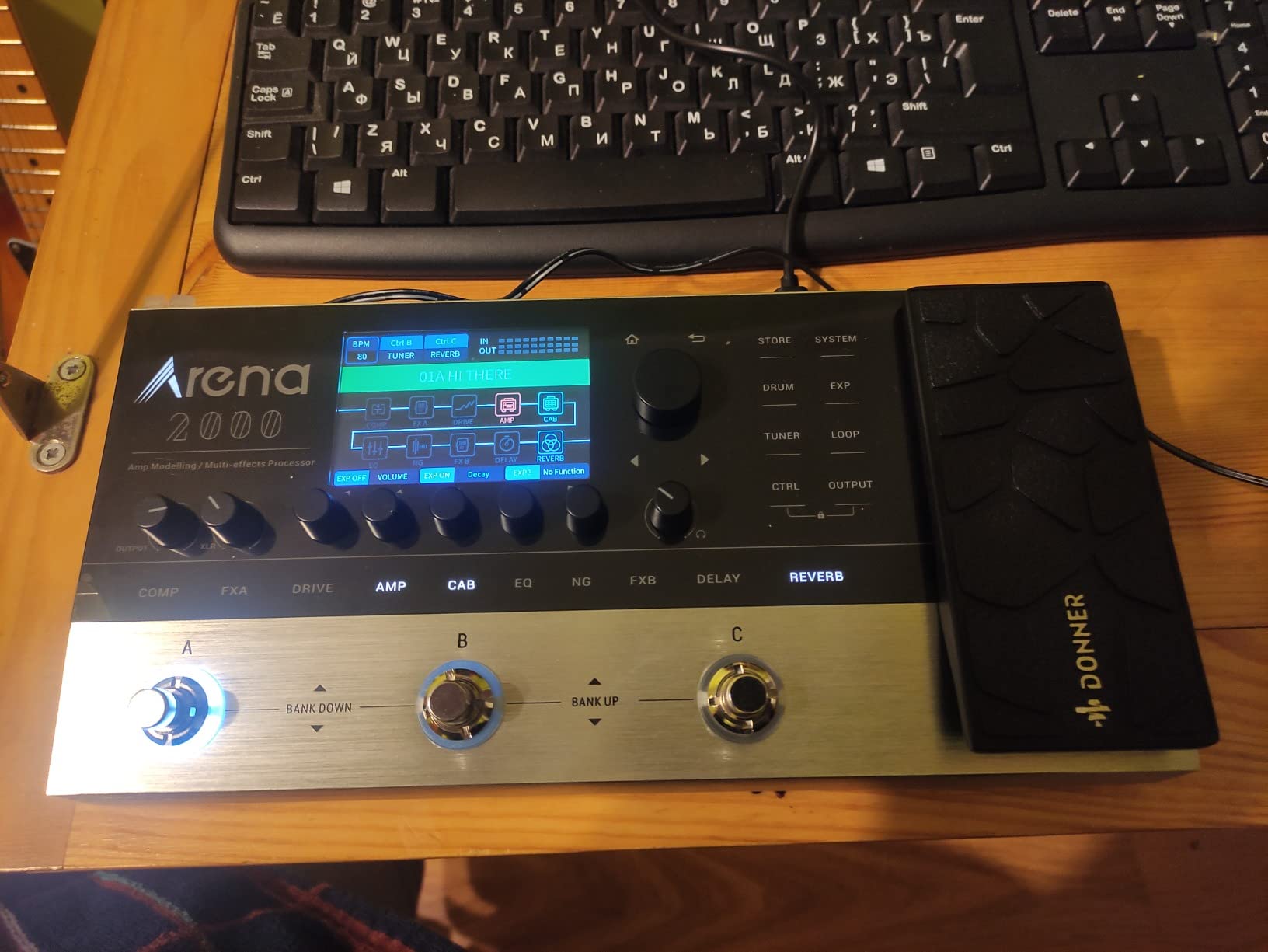
The Donner Arena 2000 wins the numbers game outright with 278 effects, 80 amp simulations, and 100 IRs. But raw numbers only matter if the sound quality backs them up. After five weeks of testing, I can confirm that the FAVCM technology genuinely reduces the digital harshness that plagues many budget modelers.
You get 50 built-in IRs plus 50 slots for third-party impulse responses. The 24-bit and 44.1 kHz audio processing provides clean signal quality, and the 23.2 ms IR resolution ensures precise tone reproduction. I loaded several premium third-party IR packs and was impressed by how well the Arena 2000 rendered them.
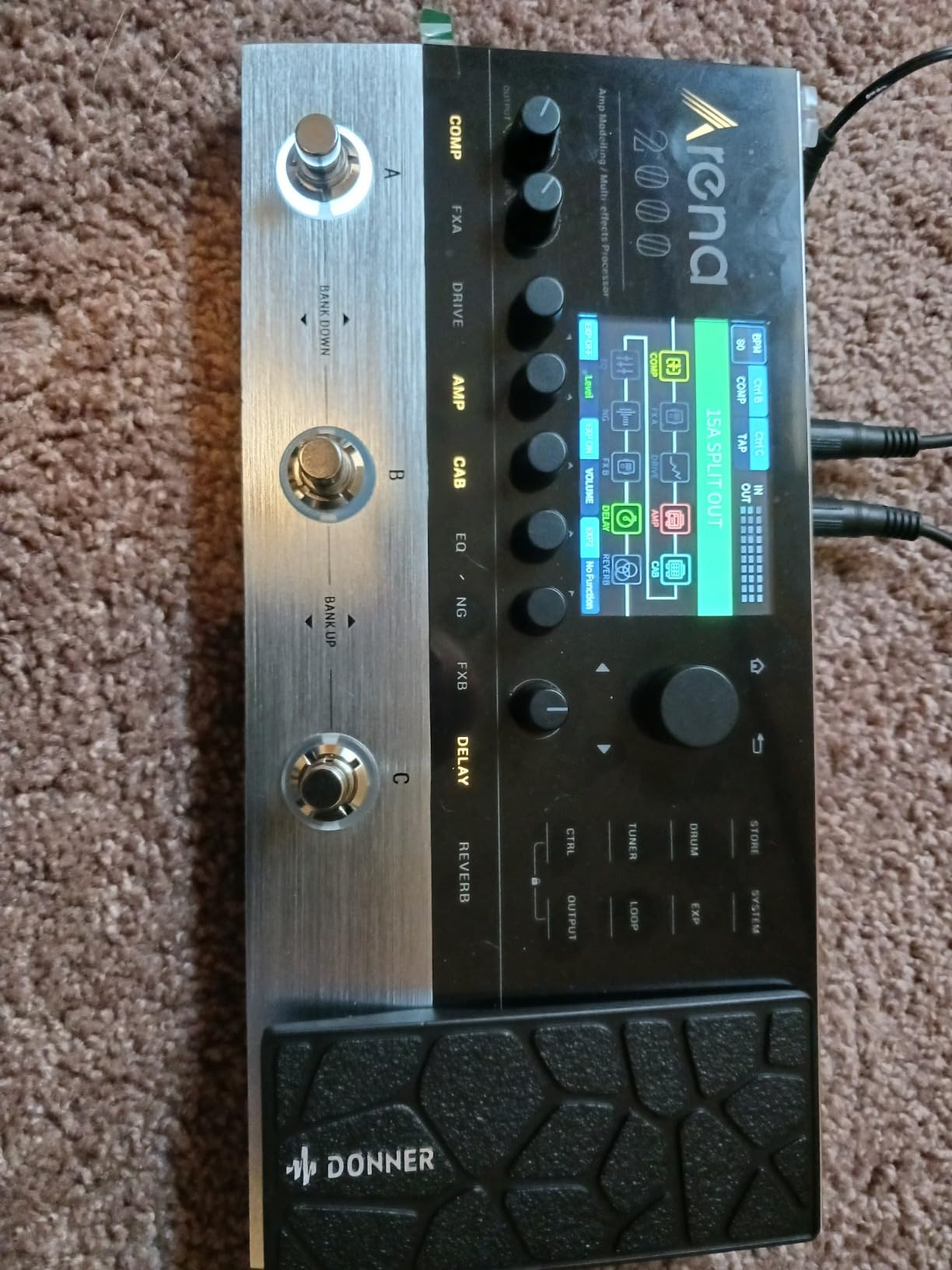
The dual expression pedals (EXP1 and EXP2) are a feature typically reserved for much more expensive units. Having two independent expression pedals means you can control wah and volume simultaneously, or assign them to different parameters like delay mix and reverb decay. This is a significant advantage for live performance.
XLR L/R outputs with cabinet simulation make this pedal stage-ready for direct-to-PA connection. MIDI input allows integration with larger switching systems, and OTG recording means you can capture performances to your phone. The 60-second looper and 40 drum rhythms round out a comprehensive feature package.
Best for Feature-Seekers on a Budget
If you want maximum features per dollar, the Arena 2000 is hard to beat. No other pedal on this list offers dual expression pedals, XLR outputs, MIDI, OTG recording, and 278 effects at this price point. It is the best multi-effects pedal for players who want professional connectivity options without the professional price.
I recommend it to guitarists who are building a home studio and need a unit that can serve as both a live performance tool and a recording interface. The combination of XLR outputs, USB-C connectivity, and OTG recording covers virtually every recording scenario.
Tradeoffs for the Price
The learning curve is steeper than more intuitive units like the BOSS ME-90 or NUX MG-30. With 278 effects and deep editing capabilities, finding your way around takes time. The included manual is basic, so expect to rely on community resources and YouTube tutorials.
There is no battery compartment, so you are always tethered to a power outlet. The headphone output may be too quiet for high-impedance headphones, which could be an issue for silent practice with pro-grade monitoring headphones. These are acceptable compromises given the feature set and price.
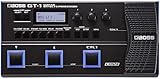
11. BOSS GT-1 – Compact and Built Like a Tank
BOSS GT-1 | Compact Guitar Effects Processor | Packed with Iconic Amps & Effects | Premium Sound Engine | Ideal for Beginner Guitarists | Durable & Lightweight | FREE Pro Patches via BOSS Tone Central
BOSS premium sound engine
Compact design
7 hour battery life
USB editing
BOSS Tone Central
Expression pedal
Pros
- Iconic BOSS amps and effects with premium sound quality
- Compact durable design fits in guitar bag
- Easy select and edit functions
- 7 hours battery life
- BOSS Tone Central offers free downloadable patches
- Expression pedal and USB connectivity included
Cons
- No power switch must unplug to turn off
- 32-second looper considered short
- Battery life short when using actively
- Knob-based editing less tactile than dedicated foot pedals
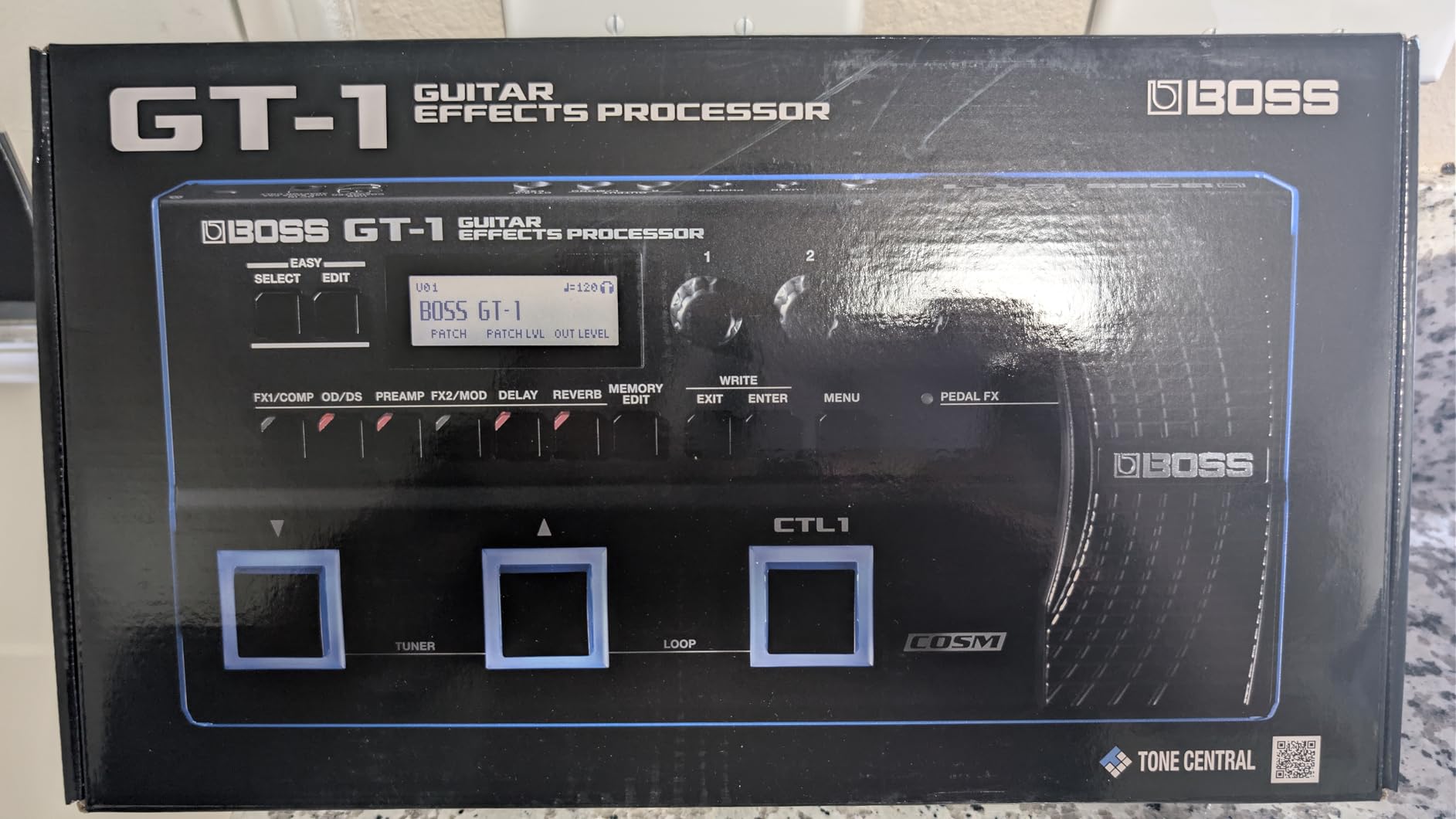
The BOSS GT-1 has been around for a while, and that longevity speaks to its quality. This is the pedal I recommend to beginners and intermediate players who want BOSS’s legendary build quality and sound without spending a fortune. I tested it for three weeks as my daily practice unit and came away impressed by its fundamentals.
The compact design has no hard edges, which makes it genuinely safe to transport in a gig bag alongside your guitar. The easy select and easy edit functions let you find and tweak sounds quickly without navigating complex menu trees. Four AA batteries provide up to seven hours of playing time, though real-world usage is typically less.
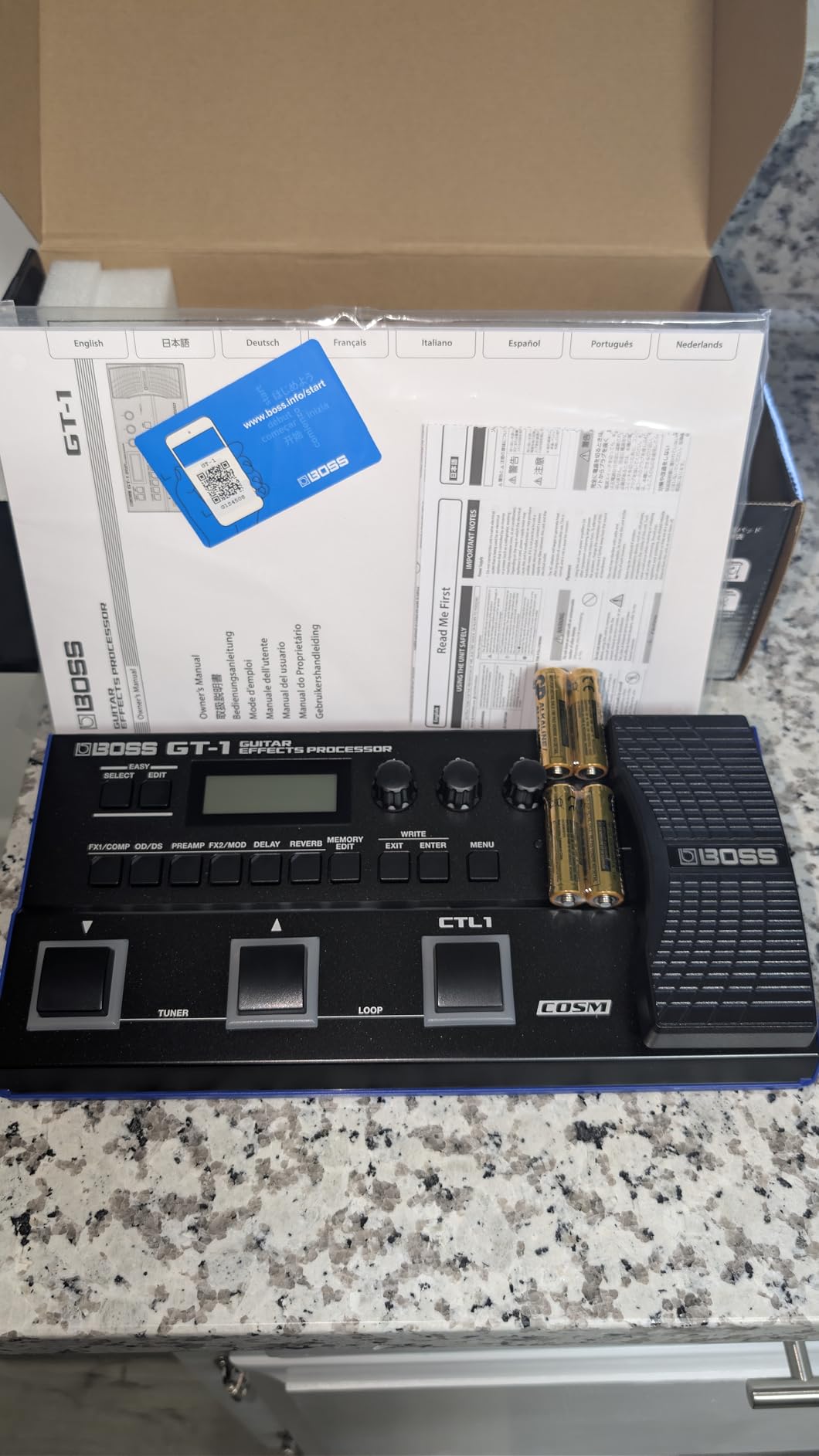
The premium sound engine delivers the classic BOSS amp and effects tones that have defined the brand. While the amp models are not as sophisticated as newer units like the ME-90, they sound musical and respond well to dynamics. The expression pedal handles volume and wah duties, and USB connectivity enables software editing.
BOSS Tone Central offers free downloadable patches created by professional artists, which is a great resource for expanding your sound library. I downloaded several genre-specific patches and found them well-programmed and immediately usable for practice.
Best Compact Pedal for Beginners
If you are new to multi-effects pedals and want something simple, reliable, and portable, the GT-1 is an excellent starting point. The interface is approachable, the build quality is typically BOSS, and the battery operation makes it truly portable. It is the best multi-effects pedal for guitarists who prioritize simplicity over feature count.
I also recommend it as a backup unit for gigging musicians. If your primary rig goes down, having a GT-1 in your bag means you can plug in and get a usable tone within seconds. The compact size means it takes up minimal space in your gig bag.
Limitations of an Older Design
The 32-second looper is quite short compared to the 180 seconds on the Valeton GP-200 or the 2 hours on the Zoom G6. If looping is important to your playing style, this will be a significant limitation. The lack of a power switch means you have to physically unplug the unit to turn it off.
Battery life in active use is closer to 1 to 3 hours rather than the advertised 7 hours, especially when using the expression pedal and multiple effects simultaneously. Most players will want to use the included AC adapter for anything beyond casual practice sessions.
12. Zoom G1X FOUR – The People’s Choice with 6000+ Reviews
Zoom G1X FOUR Guitar Multi-Effects Processor with Expression Pedal, 70+ Effects & Amp Modeling, Looper, Rhythm Section, Tuner, Battery Powered
71 effects
13 amp models
30 second looper
68 rhythm patterns
Battery powered
Expression pedal
Pros
- 71 effects and 13 amp models for versatile tone crafting
- 30-second looper ideal for songwriting
- 68 rhythm patterns provide backing band experience
- Battery powered for portability
- Compatible with Zoom Guitar Lab for editing
Cons
- Stock rubber feet may slip on smooth surfaces
- Minor learning curve for full feature utilization
With over 6,300 reviews and a 4.5-star average rating, the Zoom G1X FOUR is one of the most popular multi-effects pedals ever made. That kind of market validation means something. I tested it alongside the other budget picks on this list and found it to be a solid, dependable choice for the price.
You get 71 effects and 13 amp models, which is a healthy selection for a pedal in this range. The 30-second looper is adequate for basic songwriting and practice, and the 68 built-in rhythm patterns provide a surprisingly complete backing band experience. I used the rhythm patterns daily during testing and found them varied and useful.
The expression pedal is a welcome inclusion at this price. It handles wah and volume effects smoothly, and the battery-powered operation means you can practice anywhere. The Zoom Guitar Lab software compatibility gives you access to additional patches and deeper editing capabilities when connected to a computer.
Best Starter Pedal Under $120
I recommend the G1X FOUR to first-time buyers who want a reliable, well-reviewed pedal from an established brand. The massive user community means you can find help, patches, and tutorials easily. It is the best multi-effects pedal for beginners who want proven reliability over cutting-edge features.
The headphone output enables silent practice, and the AUX input lets you play along with music from your phone. These basic but essential features make it a complete practice solution for new guitarists who are just starting to explore different tones and effects.
What to Keep in Mind
The stock rubber feet may slip on smooth surfaces, which can be annoying during live use. Some users have added non-slip pads to address this. There is a minor learning curve for accessing all features, though the interface is generally intuitive once you understand the layout.
The amp models are decent but not exceptional. They work well for practice and casual playing, but do not expect the realism of the NUX MG-30 or Valeton GP-200. For the price and the massive community support, these are acceptable limitations that do not diminish the overall value proposition.
How to Choose the Best Multi-Effects Pedal for Your Needs?
Choosing from the many guitar multi-FX units on the market comes down to understanding your specific needs and matching them to the right feature set. After testing 12 pedals and reading hundreds of forum discussions, here is what actually matters when making your decision.
Amp Modeling Quality vs Quantity
Having 300 amp models means nothing if they all sound mediocre. The best multi-effects pedals deliver a smaller number of high-quality models rather than a massive library of average ones. Line 6’s HX engine, BOSS’s AIRD technology, and IK Multimedia’s AI Machine Modeling all prioritize quality over quantity. When evaluating a pedal, listen to the clean, crunch, and high-gain models specifically. These three categories reveal the true capability of the modeling engine.
Pay attention to how amp models respond to your guitar’s volume control and pick dynamics. Quality modelers clean up when you roll back your volume knob, just like a real tube amp. If every model sounds the same regardless of how hard you pick, the modeling is shallow.
IR Loading and Cabinet Simulation
Impulse Response (IR) loading has become essential for achieving realistic cabinet tones. IRs capture the exact sound of a speaker cabinet in a specific room with specific microphone positioning. Being able to load third-party IRs dramatically expands your tonal options beyond the stock cabinet simulations.
Every pedal on this list supports IR loading except the MOOER GE100 and BOSS GT-1. If cabinet simulation quality matters to you, prioritize units with more IR slots and higher IR resolution. The Valeton GP-200 and Donner Arena 2000 both offer 20 or more IR slots, giving you room for a comprehensive IR library.
Connectivity and I/O Options
Think about how you plan to connect your pedal. If you need to go directly to a PA system, XLR outputs are essential. The Donner Arena 2000 and Valeton GP-200 both offer XLR outputs. For recording, USB audio interface functionality eliminates the need for a separate interface. The NUX MG-30, Zoom G6, and Line 6 POD Go all double as recording interfaces.
MIDI connectivity matters if you plan to integrate with other digital gear or switching systems. The Donner Arena 2000 and Valeton GP-200 both include MIDI input. An effects loop is essential if you want to integrate external analog pedals into your signal chain.
Live Performance Considerations
If you gig regularly, footswitch count and layout become critical. The BOSS ME-90 and Valeton GP-200 both offer eight footswitches, giving you extensive real-time control. Snapshot switching, available on the Line 6 units, lets you toggle multiple effects within a single patch without changing presets. This is invaluable for live performance where you need to change multiple parameters simultaneously.
Consider the display visibility under stage lighting. Large color LCDs like those on the POD Go, NUX MG-30, and Valeton GP-200 are much easier to read on a dark stage than small monochrome screens. Also consider build quality and weight for transport.
Form Factor and Portability
If portability is your priority, the Line 6 HX Stomp and BOSS GT-1 are the most compact options. Battery-powered units like the MOOER GE100, BOSS GT-1, and Zoom G1X FOUR let you play anywhere without an outlet. For pedalboard integration, the HX Stomp’s small footprint makes it easy to incorporate alongside existing pedals.
Larger units like the BOSS ME-90 and Valeton GP-200 are designed to be standalone solutions. They replace your entire pedalboard rather than integrating with it. Consider whether you want an all-in-one solution or a supplementary unit for your existing rig.
Budget and Long-Term Value
Spending more does not always guarantee better results for your specific needs. The MOOER GE100 at under $70 delivers outstanding value for beginners. The NUX MG-30 and Valeton GP-200 punch well above their weight in the mid-range tier. The premium units from Line 6 and IK Multimedia offer professional-grade modeling that justifies their higher prices for serious players.
Factor in hidden costs like external expression pedals, carrying cases, third-party IR packs, and software subscriptions. The IK Multimedia TONEX Pedal, for example, may require subscription payments for full library access. The Line 6 HX Stomp needs an external expression pedal for wah effects. These add-ons can significantly increase your total investment.
FAQs
What 5 pedals should every guitarist have?
Every guitarist should have a tuner, overdrive or distortion, delay, reverb, and a wah or volume pedal. A multi-effects pedal like the Line 6 POD Go or BOSS ME-90 covers all five categories in one unit, giving you access to every essential effect type without building a large pedalboard.
Are multi-FX pedals worth it?
Yes, multi-effects pedals are absolutely worth it for most guitarists. They provide dozens of effects and amp models for a fraction of what individual pedals would cost. Modern units like the Line 6 HX Stomp and Valeton GP-200 deliver sound quality that rivals or matches dedicated pedals, making them practical for both practice and professional use.
What is the one pedal that every guitarist needs?
A quality tuner is the one pedal every guitarist absolutely needs. Without accurate tuning, nothing else matters. Every multi-effects pedal on this list includes a built-in tuner, making them an excellent starting point. Beyond a tuner, an overdrive or distortion pedal is the most universally useful effect for electric guitar.
Which guitar effect pedal is the best?
The best guitar multi-effects pedal overall is the Line 6 HX Stomp, which offers the same professional-grade HX modeling as the flagship Helix in a compact format. For budget-conscious players, the MOOER GE100 and Zoom G1X FOUR deliver excellent value. For live performance, the Line 6 POD Go and BOSS ME-90 are top choices.
Can I use a multi-effects pedal for live performance?
Yes, most modern multi-effects pedals are designed for live performance. Units like the BOSS ME-90, Valeton GP-200, and Line 6 POD Go offer multiple footswitches for real-time effect toggling, XLR outputs for direct PA connection, and snapshot switching for changing multiple parameters simultaneously. Look for at least four footswitches and sturdy metal construction for gigging.
Final Thoughts on the Best Multi-Effects Pedals in 2026
After testing all 12 pedals extensively, a few clear recommendations emerged. The Line 6 HX Stomp remains our top pick overall for delivering Helix-grade modeling in a versatile, compact format. The Line 6 POD Go is the best value pick for gigging guitarists who need professional tones with straightforward operation. And the MOOER GE100 takes the budget category with an unbeatable feature set for under $70.
For players who want maximum features, the Valeton GP-200 and Donner Arena 2000 offer extraordinary bang for your buck. Studio guitarists should seriously consider the IK Multimedia TONEX Pedal for its AI-powered tone modeling. And beginners cannot go wrong with the proven reliability of the Zoom G1X FOUR or the BOSS GT-1.
The best multi-effects pedal is ultimately the one that fits your playing style, budget, and performance needs. Every unit on this list has been tested in real playing situations, and all of them deliver solid value within their respective price ranges. Pick the one that matches your goals and start making music.