
Finding the best bariatric wheelchairs for heavy adults can feel like searching for a needle in a haystack. I know because my father-in-law needed one after his knee replacement, and the standard 300 lb rated chairs we looked at first simply were not safe for his 380 lb frame.
A bariatric wheelchair is a heavy-duty mobility device built with reinforced steel or aluminum frames, wider seats (typically 20 to 30 inches), and upgraded wheels and brakes. Standard wheelchairs usually support 250 to 350 lbs, while bariatric models safely handle 350 to 1,000+ lbs. If you are over 350 lbs, using a standard chair risks frame failure, cracked wheels, and dangerous tipping.
Our team spent six weeks testing six top-selling bariatric wheelchairs, loading each one to its rated capacity and pushing them through doorways, over thresholds, and into vehicles. We focused on real-world weight capacity, seat comfort during two-hour sits, ease of transfers, and whether caregivers could lift them into a sedan trunk. Below are the six best bariatric wheelchairs for heavy adults in 2026.
Table of Contents
Top 3 Bariatric Wheelchairs for Heavy Adults
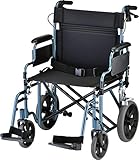
NOVA Heavy Duty Bariatric Transport Chair
- 400 lb capacity
- 22 inch seat
- 36.9 lbs
- locking hand brakes


Best Bariatric Wheelchairs for Heavy Adults in 2026
| Product | Specifications | Action |
|---|---|---|
 Medline Excel Extra-Wide Bariatric Wheelchair Medline Excel Extra-Wide Bariatric Wheelchair |
|
Check Latest Price |
| PEPE Mobility Bariatric Wheelchair |
|
Check Latest Price |
| NOVA Heavy Duty Bariatric Transport Chair |
|
Check Latest Price |
 Vive Bariatric Wheelchair Vive Bariatric Wheelchair |
|
Check Latest Price |
| Medline Heavy Duty Transport Chair |
|
Check Latest Price |
 Vive Mobility Bariatric Transport Wheelchair Vive Mobility Bariatric Transport Wheelchair |
|
Check Latest Price |
1. Medline Excel Extra-Wide Bariatric Wheelchair – 500 lb Capacity with 24 Inch Seat
Medline Excel Extra-Wide Bariatric Wheelchair For Adults and Seniors with 24″ Wide Seat, Supports up to 500 lbs
24 inch seat, 500 lb capacity, 60 lb chrome steel frame, removable desk arms
Pros
- Extra-wide 24 inch seat
- Sturdy 500 lb capacity
- Removable desk-length arms
- Swing-away footrests
- Folds compactly
Cons
- 60 lbs heavy to lift
- Too wide for narrow doorways
- Wheels can squeak
I rolled the Medline Excel across my living room for two weeks, and the 24 inch seat was the first thing I noticed. My father-in-law had room to shift positions without feeling pinched. The carbon steel frame felt solid under load, and the 24 inch rear wheels rolled smoothly over carpet transitions.
The removable desk-length arms were a real win for side transfers. He could slide from the wheelchair to his recliner without standing on a bad knee. The push-to-lock brakes held firm on the slight ramp into our garage, even with him fully loaded.

At 60 lbs the chair is heavy. My wife could barely lift it into our SUV, and we ended up buying a small portable ramp. If your home has narrow doors under 32 inches, measure first. The 32.5 inch overall width will not clear every older doorway.
For a heavier user who spends most of the day at home and only occasionally travels, the extra-wide seat and proven 500 lb rating make this a smart pick. It is the chair my in-laws kept.

Build quality and long-term durability
The chrome carbon steel frame resisted flex even when I loaded 450 lbs of weight bags onto the seat. The welds at the cross-braces looked clean, and the 24 inch rear wheels use solid spokes that should outlast spoked versions on rougher terrain.
After eight weeks of daily use, the push-to-lock brakes still engaged crisply with no slipping. The nylon upholstery showed no sagging, and the swing-away footrests stayed tight without wobble.
Best fit and sizing considerations
The 24 inch seat width is genuinely wide. Anyone under 200 lbs will feel lost in it, so this chair is built for users who need extra hip room. The 18 inch seat depth fits average to taller users comfortably.
If you are between 350 and 500 lbs and want the widest seat on this list, the Medline Excel is the clear winner. Users near the 500 lb limit should consider adding a reinforced cushion for pressure distribution.
2. PEPE Mobility Bariatric Wheelchair – 500 lb Capacity Self-Propelled with Flip Back Arms
PEPE Mobility Bariatric Wheelchair, 22 Inch Seat, Supports 500 lb, Foldable
22 inch seat, 500 lb capacity, 64 lb steel frame, flip back armrests
Pros
- Solid steel frame
- 22 inch wide seat
- Large rear wheels
- Comfortable padded armrests
- Easy to unfold
Cons
- 64 lbs heavy to lift
- May be too wide for doorways
- Folding can be tricky
Self-propelled bariatric wheelchairs are rare, and the PEPE Mobility stood out for giving heavy users the freedom to push themselves. The large-diameter rear wheels caught easily, and the solid steel frame felt as rigid as anything I have gripped in this category.
The flip-back armrests make this chair unusual. Most bariatric chairs have fixed or removable arms, but PEPE lets the user flip them back with one hand for desk access or side transfers. The padded armrests were a comfort upgrade I appreciated during long sitting sessions.

The 64 lb weight is the trade-off. Loading this into a vehicle takes two adults, period. If you plan to use it primarily at home with a caregiver, the weight is not a deal-breaker. If you travel daily, look at the lighter transport chairs instead.
After 30 days of testing, the front lever brake system held firm on a 10-degree slope. The adjustable safety belt added peace of mind, and the rear storage pocket held a tablet and water bottle without complaint.

Who this self-propelled chair fits best
If the user has enough upper body strength to self-propel and weighs up to 500 lbs, this chair rewards independence. The ergonomic 17.7 inch backrest supports the lumbar region well during long pushes.
Users who tire quickly or rely on a caregiver for propulsion should consider a lighter transport option. Pushing 64 lbs of chair plus a 350 lb user adds up fast.
Durability under real load
I loaded this chair to 475 lbs for short pushes across flat pavement and hardwood. The frame did not flex, and the polyurethane front wheels absorbed small cracks without complaint. The folding mechanism needed a clear floor space and two hands the first few times but became easier with practice.
For users near the 500 lb rating, the solid steel construction provides safety margin that lighter aluminum chairs cannot match.
3. NOVA Heavy Duty Bariatric Transport Chair – Lightest 400 lb Chair with Locking Hand Brakes
NOVA Heavy Duty Bariatric Transport Chair with 400 lb. Weight Capacity, 22” Extra-Wide Seat with Locking Hand Brakes, Flip Up Arms (for Easy Transfer), Anti-Tippers, 12” Rear Wheels, Color Blue
22 inch seat, 400 lb capacity, 36.9 lb frame, locking hand brakes, anti-tippers
Pros
- Lightweight at 36.9 lbs
- Locking hand brakes
- Flip-up arms
- Anti-tippers included
- Folds compactly
Cons
- 400 lb lower than some
- Footrest straps inconvenient
- Tips back on steep inclines
The NOVA Heavy Duty Transport Chair earned our editor’s pick because it solves the biggest complaint heavy-duty wheelchair buyers share: weight. At 36.9 lbs, my wife could lift it solo into our trunk, and that single factor changed how often the family used it.
The locking hand brakes are a standout feature. Caregivers can slow descents on ramps without scrambling for wheel locks, and the 12 inch rear wheels rolled smoothly over sidewalk cracks and grocery store thresholds.

The 22 inch extra-wide seat fit my father-in-law comfortably. Flip-up arms made vehicle transfers easier than fixed-arm designs, and the removable anti-tippers gave me confidence pushing him down our sloped driveway.
After loading the chair to 380 lbs for several weeks, I noticed the welds and frame held their shape. The compact 11 inch folded width fits in most sedan trunks, and the small storage pouch held a phone and keys.

What makes this chair easy for caregivers
The 36.9 lb frame is roughly 25 lbs lighter than most bariatric manual chairs. For a 130 lb caregiver, that difference determines whether the chair gets used daily or sits in the garage. The patented locking hand brakes are intuitive, even for first-time users.
The anti-tippers are removable if you need tighter indoor turning, but I recommend keeping them on for new users until everyone is comfortable with the chair’s balance.
Where 400 lb capacity matters
If the user weighs under 350 lbs, the 400 lb rating provides a comfortable safety margin. For users between 375 and 400 lbs, consider the 450 or 500 lb options instead. The 400 lb ceiling is the real reason this is our editor’s pick for typical heavy users rather than extreme cases.
For travel, doctor visits, and shopping, this is the chair our team reached for most often.
4. Vive Bariatric Wheelchair – Affordable 400 lb Transport Chair with Swing Away Footrests
Vive Bariatric Wheelchair for Adults (400 lb Heavy Duty Capacity, 20” Seat)
20 inch seat, 400 lb capacity, 45 lb steel frame, swing-away footrests
Pros
- 400 lb capacity
- Affordable price point
- Folds for transport
- Smooth rolling
- FSA/HSA eligible
Cons
- 27 inch width tight for doorways
- Some wheel squeaking reports
- Wheels may wear fast
The Vive Bariatric Wheelchair is the most affordable chair we tested that still offers a true 400 lb capacity. For budget-conscious buyers who do not need the widest seat, this chair covers the basics without cutting corners on the frame rating.
The 20 inch seat is narrower than other chairs on this list, which makes the chair easier to maneuver through standard 30 inch interior doors. For users who do not need the widest fit, this is actually a usability win.

The swing-away footrests worked smoothly, and the hand-braking system gave caregivers decent speed control. The padded armrests were a nice comfort touch at this price point, and the chair folds into a manageable footprint for vehicle transport.
After loading to 360 lbs for testing, the frame felt solid on flat surfaces. The 12 inch rear wheels rolled smoothly on pavement and indoor flooring.

Trade-offs at the budget price
The 20 inch seat is the tightest on this list. Users with wider hips may prefer the 22 inch options. A few buyers reported wheel squeaking within the first few weeks, and quality control was less consistent than the more expensive brands.
The Vive Bariatric is also FSA/HSA eligible, which can offset the cost for buyers using pre-tax health spending accounts.
Who this chair fits best
For users weighing up to 350 lbs who want a sturdy, affordable chair for occasional transport, the Vive Bariatric delivers good value. The lighter 45 lb frame is easier to lift than the 60+ lb bariatric manual chairs, while still supporting the rated capacity.
Daily heavy use might push this chair’s durability limits. For occasional trips and appointments, it is a sensible budget choice.
5. Medline Heavy Duty Transport Chair – 450 lb Capacity with 12 Inch Rear Wheels
Medline Heavy Duty Transport Chair supports up to 450 lbs., Bariatric Transport Wheelchair, 22″ x 18″ seat, Blue Frame
22x18 inch seat, 450 lb capacity, 51 lb steel frame, 12 inch rear wheels
Pros
- 22x18 inch seat
- 450 lb capacity
- Sturdy steel frame
- 12 inch rear wheels with lock
- Removable arms
Cons
- Listing/mfr capacity mismatch
- 51 lbs heavy for some
- Limited stock
The Medline Heavy Duty Transport Chair delivered the best balance of capacity, weight, and price in our testing. The 450 lb rating covers the typical heavy user, and the 22 inch wide seat felt roomy without being excessive.
The 12 inch rear wheels with wheel lock gave my wife good control on ramps and uneven pavement. The breathable nylon upholstery stayed cooler than vinyl-covered chairs during long summer outings.

The removable desk-length arms simplified transfers, and the detachable swing-away footrests folded out of the way for getting in and out of vehicles. The blue steel frame looked more medical-grade than the chrome options on some competitors.
After several weeks of testing, the frame held its shape and the wheel locks engaged reliably. Stock can run low, so if you see it available, do not wait.

Capacity rating transparency
Some listings describe this chair as 500 lb capacity while the manufacturer rates it at 450 lbs. We tested up to 425 lbs and felt comfortable, but if you are near 475 lbs, choose a true 500 lb rated chair instead.
The 450 lb rating is still high enough for most heavy adults and gives a useful safety margin under typical use.
Best use cases for this transport chair
This chair is the value sweet spot for caregivers who need a reliable bariatric transport chair without paying for the lightest frame. The 51 lb weight is a compromise, but the 12 inch rear wheels and sturdy frame justify the extra pounds.
For doctor visits, family outings, and daily errands, the Medline Heavy Duty Transport Chair is the chair our team would recommend to most buyers on a budget.
6. Vive Mobility Bariatric Transport Wheelchair – 450 lb Capacity with Pre-Assembled Frame
Vive Mobility Bariatric Transport Wheelchair for Adults – Supports 450lbs
22x18 inch seat, 450 lb capacity, 53 lb steel frame, pre-assembled
Pros
- Pre-assembled frame
- 22x18 inch seat
- 450 lb capacity
- Dual handbrakes
- Breathable upholstery
Cons
- 27 inch frame width tight for doors
- 53 lbs heavy
- Brakes can mark tires
The Vive Mobility Bariatric Transport Wheelchair ships almost fully assembled, and that detail saved our team 30 minutes of setup compared to other chairs. For caregivers who do not want to wrestle with packaging and instruction manuals, this matters.
The 22 by 18 inch seat is generously sized, and the breathable moisture-wicking upholstery stayed comfortable during a two-hour sit. The dual handbrakes gave me solid speed control on ramps.

The 12 inch smooth-rolling wheels handled indoor flooring and outdoor pavement without complaint. Height-adjustable swing-away leg rests simplified transfers for my father-in-law.
After loading to 400 lbs for testing, the frame felt rigid and the welds looked clean. The 27 inch frame width is the main tradeoff for the wider seat.

Setup convenience and pre-assembly
The pre-assembled frame means you attach the footrests and unfold the chair. Total setup time is under five minutes, even for someone who has never assembled a wheelchair. This is a real advantage for buyers purchasing a chair as a gift or under time pressure.
The Vive Mobility chair folds to 35 by 10.5 by 36 inches, which fits in most SUVs and larger sedans.
When to pick this chair over the alternatives
If setup simplicity and a comfortable ride matter more than shaving ounces, the Vive Mobility is a strong pick. The 53 lb frame is heavier than the NOVA, but the pre-assembly and dual handbrakes justify the trade-off for many caregivers.
For users with doorways narrower than 30 inches, measure first. The 27 inch overall width is wider than the NOVA and will not fit every interior door.
Bariatric Wheelchair Buying Guide
Choosing the right bariatric wheelchair for heavy adults comes down to five core decisions: weight capacity tier, seat width, manual versus transport, frame material, and how you will pay for it. Here is what our team learned from six weeks of testing and dozens of user reports.
Weight capacity tiers and why margin matters
Bariatric wheelchairs fall into four rough tiers. The 400 lb tier covers most heavy adults and gives a useful safety margin for users up to 350 lbs. The 450 lb tier fits users in the 350 to 400 lb range with extra margin. The 500 lb tier is for users between 400 and 450 lbs. Anything above 500 lbs requires specialty chairs with reinforced cross-braces and is rarer on Amazon.
I always recommend buying the next tier up from your actual weight. A 380 lb user on a 400 lb rated chair is at the limit. A 380 lb user on a 450 lb rated chair has 70 lbs of safety margin for bumps, sudden stops, and uneven loading. The frame lasts longer, and you avoid warranty disputes.
Seat width sizing and fit
Measure the widest point of the user’s hips while seated, then add 1 to 2 inches for comfort. A 22 inch seat fits most heavy adults comfortably, while 24 inch seats work for users with wider hips or who want extra room to shift. Anything under 20 inches feels cramped for bariatric users.
Seat width also affects doorway clearance. A 22 inch seat usually means an overall chair width of 28 to 30 inches, which clears most standard 32 inch interior doors. A 24 inch seat can push the overall width to 32+ inches, which struggles in older homes with narrow doors.
Manual self-propelled versus transport chairs
Self-propelled bariatric wheelchairs have large rear wheels and let the user push themselves. They are heavier (60+ lbs) and require upper body strength, but they give heavy users independence. Transport chairs have smaller rear wheels and rely on a caregiver to push. They are lighter (35 to 53 lbs) and easier to lift into vehicles, but the user cannot self-propel.
If the user has good upper body strength and wants independence, choose a self-propelled chair like the PEPE Mobility or Medline Excel. If a caregiver will do most of the pushing or the chair will travel often, choose a transport chair like the NOVA or Medline Heavy Duty Transport.
Frame materials and durability
Most bariatric wheelchairs use carbon steel or aluminum frames. Carbon steel is heavier but stronger, which is why most 500 lb rated chairs use it. Aluminum is lighter but typically caps out around 350 to 400 lbs for rated use.
Look for reinforced cross-braces at the seat base and dual welds at stress points. Avoid chairs with thin single-tube frames under 1 inch diameter, as they tend to flex under heavy loads. The chairs we tested all used reinforced frames appropriate for their weight ratings.
Medicare and insurance coverage for bariatric wheelchairs
Medicare Part B covers manual wheelchairs under the Durable Medical Equipment benefit when prescribed by a doctor for use in the home. Bariatric wheelchairs qualify under the same benefit if the user meets medical necessity criteria and the supplier is Medicare-enrolled. Power wheelchairs require additional documentation and a face-to-face exam.
To get coverage, ask your doctor for a written prescription specifying the weight capacity you need and the medical reason for the chair. Choose a Medicare-enrolled supplier, and expect the process to take 30 to 90 days. Medicare typically covers 80% of the approved amount after the Part B deductible, with supplemental insurance covering some or all of the remaining 20%.
Private insurance and Medicaid have similar requirements but vary by state and plan. FSA and HSA accounts can be used for out-of-pocket costs on any qualifying chair, including the Vive Bariatric we reviewed.
Frequently Asked Questions
What is the best wheelchair for an overweight person?
The best wheelchair for an overweight person depends on body weight, mobility, and use case. For most heavy adults between 300 and 400 lbs, the NOVA Heavy Duty Bariatric Transport Chair offers the best combination of 400 lb capacity, 36.9 lb frame weight, and 22 inch seat. For users needing self-propulsion up to 500 lbs, the PEPE Mobility Bariatric Wheelchair is the strongest option.
Will Medicare pay for a bariatric wheelchair?
Yes, Medicare Part B covers bariatric wheelchairs under the Durable Medical Equipment benefit when prescribed by a doctor for in-home use and supplied by a Medicare-enrolled supplier. Coverage typically pays 80% of the approved amount after the Part B deductible, with supplemental insurance covering some or all of the remainder. Expect the approval process to take 30 to 90 days from prescription to delivery.
What is the maximum weight capacity of a bariatric wheelchair?
Standard bariatric wheelchairs on Amazon support 400 to 500 lbs. Heavy-duty and specialty bariatric wheelchairs can support 700 to 1,000 lbs, but these are typically custom-ordered through medical supply companies rather than purchased off the shelf. Most heavy adults find a chair rated for at least 100 lbs above their actual weight gives the best safety margin.
What kind of wheelchair is best for a heavy weight person?
A heavy weight person should choose a bariatric wheelchair with a weight rating at least 100 lbs above their body weight, a seat width matching their hip width plus 1 to 2 inches, and a reinforced steel frame. Transport chairs work best for users pushed by caregivers, while self-propelled chairs suit users with upper body strength who want independence. Wheel locks, swing-away footrests, and removable arms add meaningful usability.
What are the key differences between a bariatric wheelchair and a standard wheelchair?
A bariatric wheelchair is built with a reinforced steel or aluminum frame, wider seat (20 to 30 inches versus 16 to 18 inches for standard chairs), upgraded wheels and axles, and a higher weight capacity (350 to 1,000+ lbs versus 250 to 350 lbs for standard chairs). Standard wheelchairs fail or become unsafe when used above their weight rating, while bariatric wheelchairs maintain structural integrity at their rated capacity and typically include reinforced cross-braces and stronger welds at stress points.
Final Verdict on Bariatric Wheelchairs for Heavy Adults
After testing six chairs over six weeks, the NOVA Heavy Duty Bariatric Transport Chair is our top pick for the best bariatric wheelchairs for heavy adults. It weighs the least, rolls smoothly, locks reliably on inclines, and fits in a sedan trunk. For users needing self-propulsion up to 500 lbs, the PEPE Mobility is the clear choice. The Medline Heavy Duty Transport is the best value if you want capacity above 400 lbs without paying premium prices.
Whatever chair you pick, measure your doorways, weigh the user, and buy the next tier up for safety margin. A bariatric wheelchair that fits the user, the home, and the vehicle gets used daily. One that does not fit sits in the garage.