The Wayne WSS30VN is the best battery backup system for sump pumps overall in 2026, because it ships as one preassembled 1/2 HP primary-and-backup assembly, moves up to 5100 GPH, and carries the largest owner rating base in this group. Everything else on this list either costs you pit space, capacity at real lift height, or a troubleshooting manual you will actually need at 2am.
That last point is the whole problem with shopping for a battery backup sump pump. Almost every listing leads with a zero-foot flow number that no homeowner will ever see, and almost none of them tell you that the deep-cycle battery is not in the box. We pulled the specs that matter, matched each system to the pit and pump you probably already have, and flagged the failure modes owners actually report.
We compared 10 systems across four categories: standalone DC backup pumps, preassembled combos, battery-case systems, and inverter/transfer-switch units that keep your existing AC pump running. Each one below is written for the home it actually suits, not a generic spec sheet.
If you are still working out what you need, start with our broader battery backup sump pump roundup, and if your pit is already plumbed with municipal water nearby, our water-powered backup pump picks are worth a look too.
Table of Contents
Top 3 Best Sump Pump Battery Backup Picks in 2026
The Wayne WSS30VN takes the top slot on owner satisfaction and install simplicity, the Basement Watchdog BWSP is the one that fits where nothing else will, and the Basement Watchdog CITS-50 is the strongest combo if your pit has room and your head height is high.
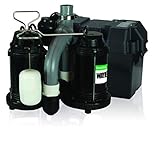
Wayne WSS30VN Preassembled Combo
- Up to 5100 GPH
- Preassembled drop-in design
- 1/2 HP primary with 12V backup
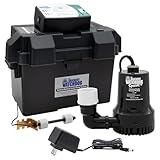
Basement Watchdog BWSP
- 1730 GPH at 10 ft lift
- Compact body for small pits
- Dual float and fluid sensor

Basement Watchdog CITS-50 Combo
- 4400 GPH primary
- 2890 GPH backup at 0 ft
- Parallel battery support
All 10 Battery Backup Systems Compared in October
Every system below lists a zero-foot flow figure that will never apply to your basement, so read the second number instead: what it moves at 10 feet of vertical lift. That is the number that decides whether water leaves the pit as fast as it arrives.
| Product | Specifications | Action |
|---|---|---|
| Wayne WSS30VN Preassembled Primary and Battery Backup Combo |
|
Check Latest Price |
| Basement Watchdog BWSP Special CONNECT |
|
Check Latest Price |
| Basement Watchdog CITS-50 Big Combo CONNECT |
|
Check Latest Price |
 Basement Watchdog CITE-33 Combo Basement Watchdog CITE-33 Combo |
|
Check Latest Price |
 Zoeller 508-0005 Aquanot 508 Zoeller 508-0005 Aquanot 508 |
|
Check Latest Price |
 VEVOR 2000W Sump Pump Battery Backup VEVOR 2000W Sump Pump Battery Backup |
|
Check Latest Price |
 Zoeller 507-0005 Basement Sentry Zoeller 507-0005 Basement Sentry |
|
Check Latest Price |
 SEC America 822PS Pump Sentry SEC America 822PS Pump Sentry |
|
Check Latest Price |
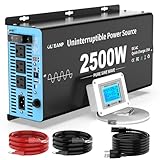 OLTEANP 2500W Inverter Charger OLTEANP 2500W Inverter Charger |
|
Check Latest Price |
 PumpSpy 2000W Sump Pump Battery Backup PumpSpy 2000W Sump Pump Battery Backup |
|
Check Latest Price |
1. Wayne WSS30VN Preassembled Combo – The Best Battery Backup Sump Pump Overall
Wayne Preassembled Primary & Battery Backup Sump Pump Combo System
Up to 5100 GPH
1/2 HP primary with 12V backup
Fits 16-inch and larger pits
3-year warranty
Pros
- Preassembled drop-in design installs in about 15 minutes
- Whisper-quiet 1/2 HP AC primary pump
- Backup keeps up with heavy inflow on one battery charge
- Loud alarms for power failure and backup activation
- Assembled in the USA with a 3-year warranty
Cons
- Backup pump runs a preset cycle instead of stopping when the pit empties
- Power-failure alarm cannot be silenced or adjusted
- Wide base barely fits an 18-inch round pit
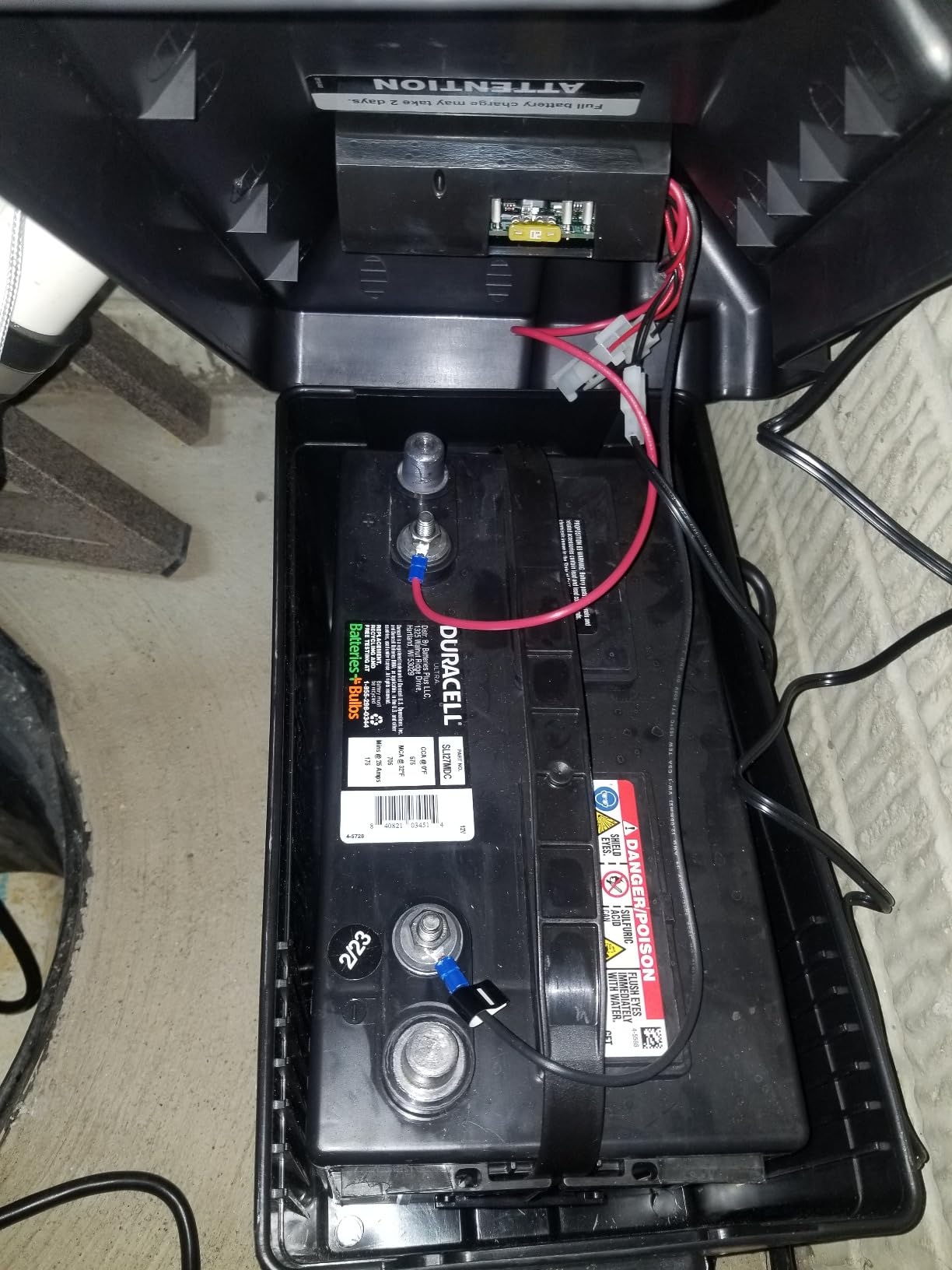
- Requires a 75 AH deep-cycle battery sold separately
This is the system we kept coming back to. The Wayne WSS30VN arrives as one molded assembly with the primary pump, the 12V backup, the vertical float, the discharge plumbing and the alarm box already fitted together. There is no assembly list to work through with a crescent wrench on a Saturday afternoon.
Owners describe the primary as the quietest sump pump they have owned, and that matters more than it sounds like it should, because a loud 1/2 HP motor running in a finished basement becomes something you turn off within a month. The backup pump is reported to keep pace with the primary against a real head, which is the honest test of whether a backup is worth buying.
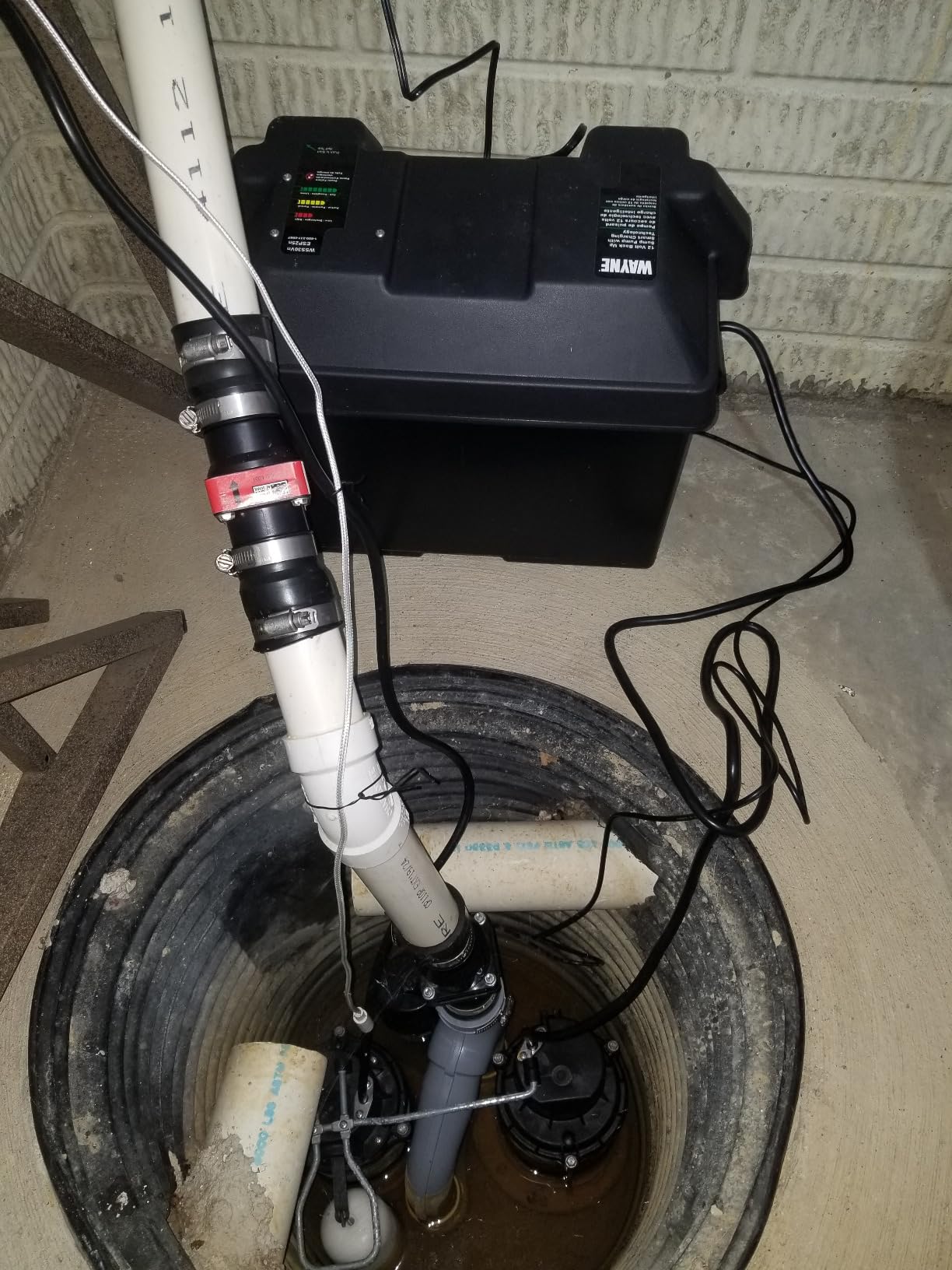
Two design details decide whether this unit works in your pit. First, it needs a basin at least 16 inches in diameter, and the wide side-by-side pump layout barely clears an 18-inch round pit. Measure before you order. Second, there is no weep hole to drill, which removes the single most common source of a splash during install.
The battery is the real cost line, not the pump. Wayne specifies a 75 AH deep-cycle battery for the backup and does not include one. Buyers who went in expecting a complete system report that reaction on forums, so budget for the battery and a proper battery box before you order anything.
What to check before buying the WSS30VN
Confirm your basin diameter is 16 inches or larger, because a 14-inch pit will not take this assembly and no amount of careful fitting will change that. Then decide whether you can accept a fixed-run backup cycle. The DC backup pump runs for a preset period once its float trips rather than stopping the instant the pit empties, which means its float has to be set above the primary’s float or the two will fight each other and cause short cycling.
Owners also flag that the power-failure alarm has no volume control and no mute. That is a genuine annoyance in a house where bedrooms are near the sump, and it is the single most common complaint in the reviews.
Where the WSS30VN is the wrong choice
Skip it if your pit is small, and skip it if you already have a strong primary pump and simply want something to catch it when the power dies. In those cases a dedicated backup pump or an inverter-class unit is a better use of the same money. The WSS30VN is specifically a full replacement assembly, and buying it as an addition means two primaries where you needed one.
The built-in charger also sits in constant charge mode, which is why sealed AGM batteries are the sensible pairing. A wet-cell battery under continuous float charge will lose water quietly in a pit you never look at.
2. Basement Watchdog BWSP – Best Battery Backup for Small and Narrow Pits
The Basement Watchdog Special CONNECT Battery Backup Sump Pump System w/Copper-Wound Motor, 2,890 GPH (BWSP); WiFi-Capable w/Add-on Module
2500 GPH at 0 ft, 1730 GPH at 10 ft
Compact body for tight pits
12V DC with dual float
2-year warranty
Pros
- Compact pump body fits small or narrow sump pits
- Control panel describes what to do when a warning lights up
- Battery fluid-level sensor adds monitoring for wet-cell batteries
- Dual float switch included
- Long-established backup-pump maker
Cons
- Battery is not included and must be purchased separately
- WiFi monitoring requires an add-on module
- Lower capacity than larger combo systems at higher lift
If you have ever had a full-size combo unit refuse to go into your pit, this is the one to look at. The Basement Watchdog BWSP is a standalone 12V DC backup pump that weighs 12 pounds and measures just over 9 inches long, so it drops into basins that would swallow a 27-pound assembly.
The published flow figures are unusually honest for this category. Basement Watchdog states 2500 GPH at zero feet of lift and 1730 GPH at 10 feet, which tells you exactly how much capacity you lose to head pressure. On a pit with a shallow discharge run and modest lift, that is enough to keep up with normal inflow for most homes.
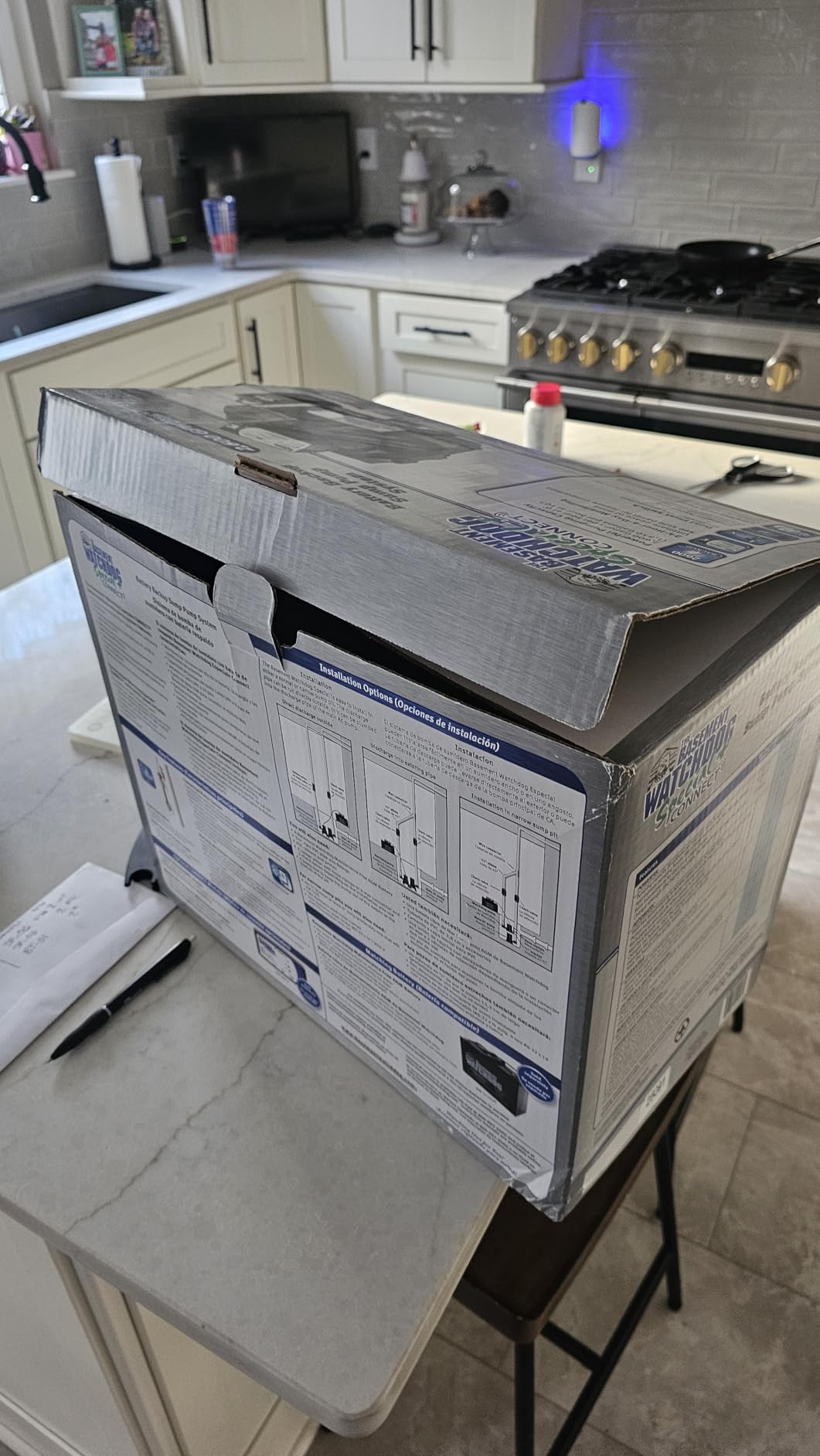
The controller is the reason people keep this one. When a warning light comes on, the panel describes the fault in words rather than flashing a generic code, so you know whether to add water to the battery or call someone. The included battery fluid sensor is a genuine advantage if you run a wet-cell battery, since it tells you before the cells go dry and damage themselves.
What you give up is capacity. At higher lift heights the flow falls off in a way that matters during a genuine storm, and the unit is backup-only, so your existing primary pump has to be doing the heavy lifting every day. That is fine in a low-inflow basement and wrong in a high water table situation.

What to check before buying the BWSP
Add up the full installed cost before you commit. The pump, the controller, the charger, the dual float switch and the battery box are included, but the battery itself is not, and the optional WiFi module is a separate purchase. Owners who planned for that find the system performs well; owners who did not are the ones leaving one-star reviews.
Also confirm your pump run length. Because the BWSP is a backup-only design, it depends on your primary keeping the pit under control most of the time. If your primary is old, undersized, or already short-cycling, pair this with a new primary rather than expecting the backup to compensate.
Where the BWSP is the wrong choice
Do not buy it as your primary protection in a finished basement with expensive contents. The 1730 GPH figure at 10 feet of lift is respectable, but it is roughly a third of what the Wayne combo moves, and during a hundred-year rainfall event the difference decides whether you are mopping or calling an adjuster.
It is also the wrong pick if you want phone alerts out of the box. The CONNECT capability is real, but the add-on module is a separate expense and a separate install step, and WiFi is not something you want between yourself and a working float switch during a storm.
3. Basement Watchdog CITS-50 Big Combo – Best High-Capacity Preassembled System
The Basement Watchdog Combo Preassembled Primary & Battery Backup Sump Pump System w/Monitoring Controller (CITS-50); Copper-Wound PSC Motor; WiFi-Capable w/Add-on Module
Primary 4400 GPH at 0 ft
Backup 2890 GPH at 0 ft
Preassembled and preplumbed
Backup pump is plastic
Pros
- Preassembled and preplumbed for fast installation
- Primary moves 4400 GPH at zero lift
- Backup still moves 2890 GPH at zero lift
- 24/7 monitoring controller with descriptive fault warnings
- Two batteries can run in parallel for double runtime
Cons
- BW-WiFi2 module needed for WiFi and text alerts
- Highest share of 1-star ratings in this group
- Tall 18-inch assembly needs a deep enough pit
- Battery is not included
The CITS-50 is the capacity leader among the preassembled combos, and its spec sheet is the clearest in this group. The 1/2 HP cast-iron primary delivers 4400 GPH at zero lift and 3540 GPH at 10 feet, while the plastic backup moves 2890 GPH at zero lift and 2150 GPH at 10 feet. Published figures at real lift height are exactly what most listings in this category refuse to give you.
It accepts both AGM and wet-cell batteries, and two batteries can be wired in parallel for roughly double the runtime. For anyone in an outage-prone area who has watched the grid go down three storms in a row, that flexibility is worth more than any single spec on the page.
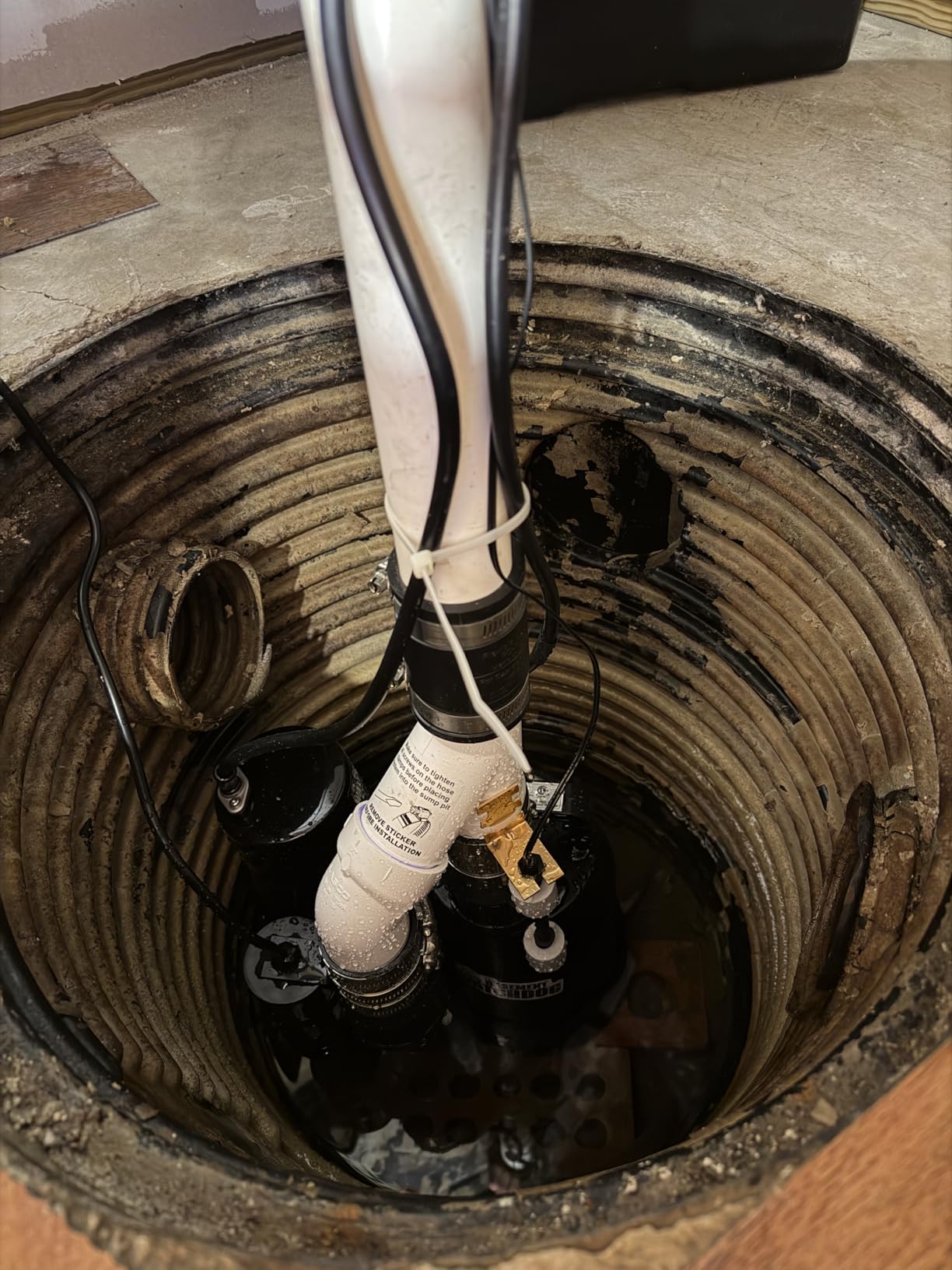
The monitoring controller runs pump, power and battery checks around the clock and lights a warning with a description of the fault when something changes. Owners consistently single this out as a reason to feel covered rather than hopeful, which is the emotional core of buying a backup system at all.
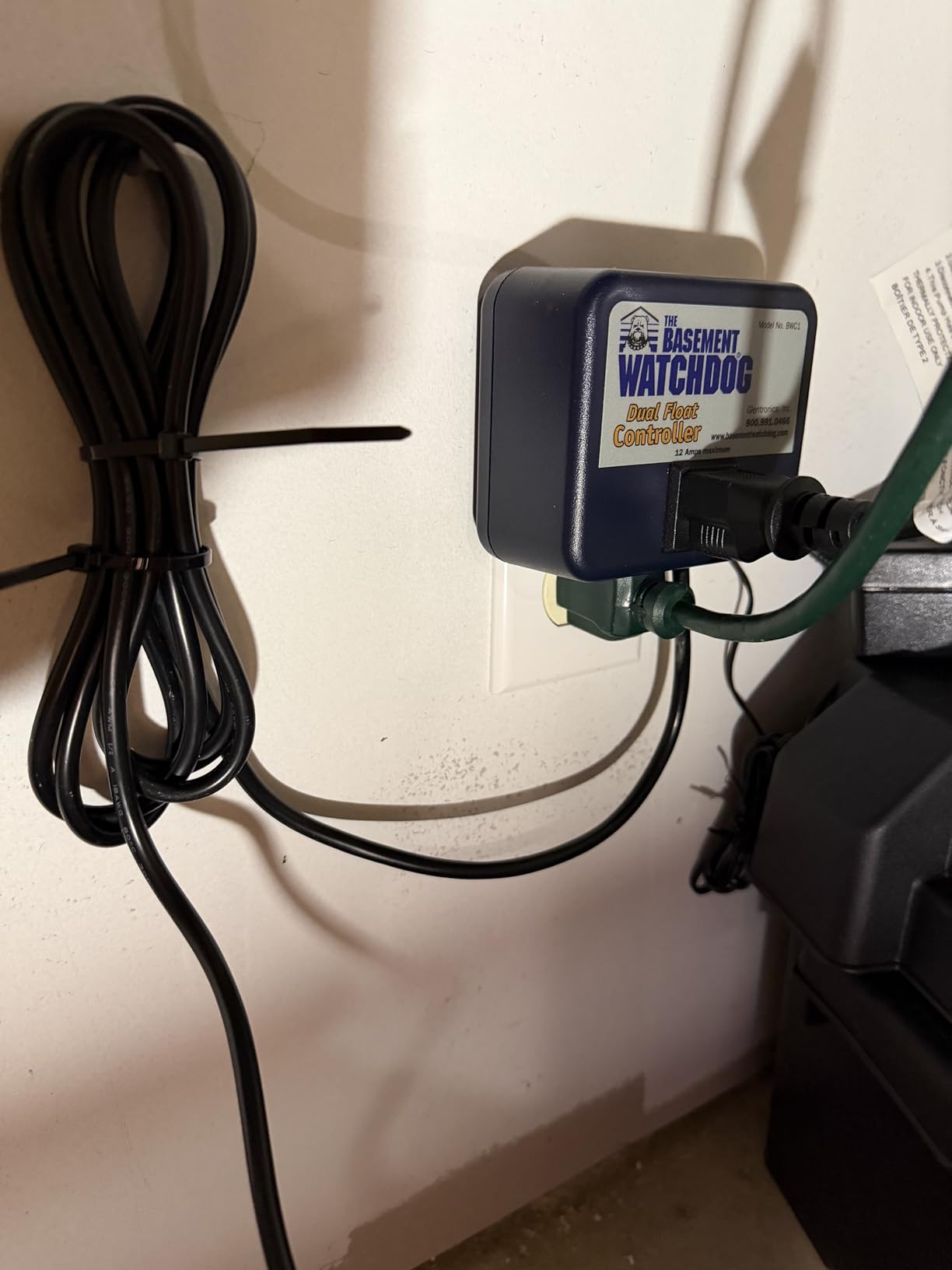
Durability is the trade-off. This unit carries the largest share of one-star ratings among the ten we compared, and those complaints tend to be long-horizon reliability rather than anything obvious at install. If you buy it, buy it for a finished basement where the failure cost is high, and keep the pit dry enough that corrosion has less to work with.
What to check before buying the CITS-50
Measure pit depth first. The assembly stands 18 inches tall, and an undersized basin is the most common reason a combo system comes back out of the box. If your pit is shallow, the CITE-33 below fits the same brand in a shorter package, or the BWSP takes almost no space at all.
Decide about WiFi honestly. The BW-WiFi2 CONNECT module adds app and text alerts, but it is a separate purchase and a separate failure point. Owners who skipped it report no regret; the controller’s fault descriptions already do most of the useful work.
Where the CITS-50 is the wrong choice
Pass on it if your budget only covers the pump. Combo systems are the most expensive category here once the deep-cycle battery and a vented battery box are added, and the total is where most of the disappointment on this list comes from. This is the system to buy when the basement is finished, or holds a furnace, water heater, or anything else you would rather not replace.
It is also the wrong pick for a very small pit, and the wrong pick for a cold unheated space where battery capacity drops through the floor in deep winter. In a finished room, this is as close to a set-and-forget answer as the category offers.
4. Basement Watchdog CITE-33 Combo – Best Preassembled System for 12-Inch Pits
The Basement Watchdog Combo Preassembled Primary & Battery Backup Sump Pump System w/Monitoring Controller (CITE-33); Copper-Wound PSC Motor
1/3 HP primary, 3720 GPH at 0 ft
Backup 1500 GPH at 10 ft lift
Fits pits as small as 12 inches
0.4-Amp charger
Pros
- Preassembled and preplumbed so installation is quick
- Fits pits as small as 12 inches in diameter
- Dual float switches on both pumps
- Monitoring controller with alarms and battery fluid sensor
- Good primary flow of 3720 GPH from a 1/3 HP pump
Cons
- Backup flow falls to about 1500 GPH at 10 ft of lift
- Battery not included
- 0.4-Amp charger refills a large battery slowly
The CITE-33 solves a specific and common problem: a pit too small for a full-size combo. Basement Watchdog rates it for pits as small as 12 inches in diameter, and that single spec is what makes it the pick for older homes with undersized basins and a cramped utility room.
It still gives you two pumps. The 1/3 HP copper-wound primary delivers 3720 GPH at zero lift and 3100 GPH at 10 feet, and there are dual float switches on both the primary and the backup, giving four independent activation points across the system. That redundancy is the reason many owners treat it as the safest of the combos despite the smaller motor.
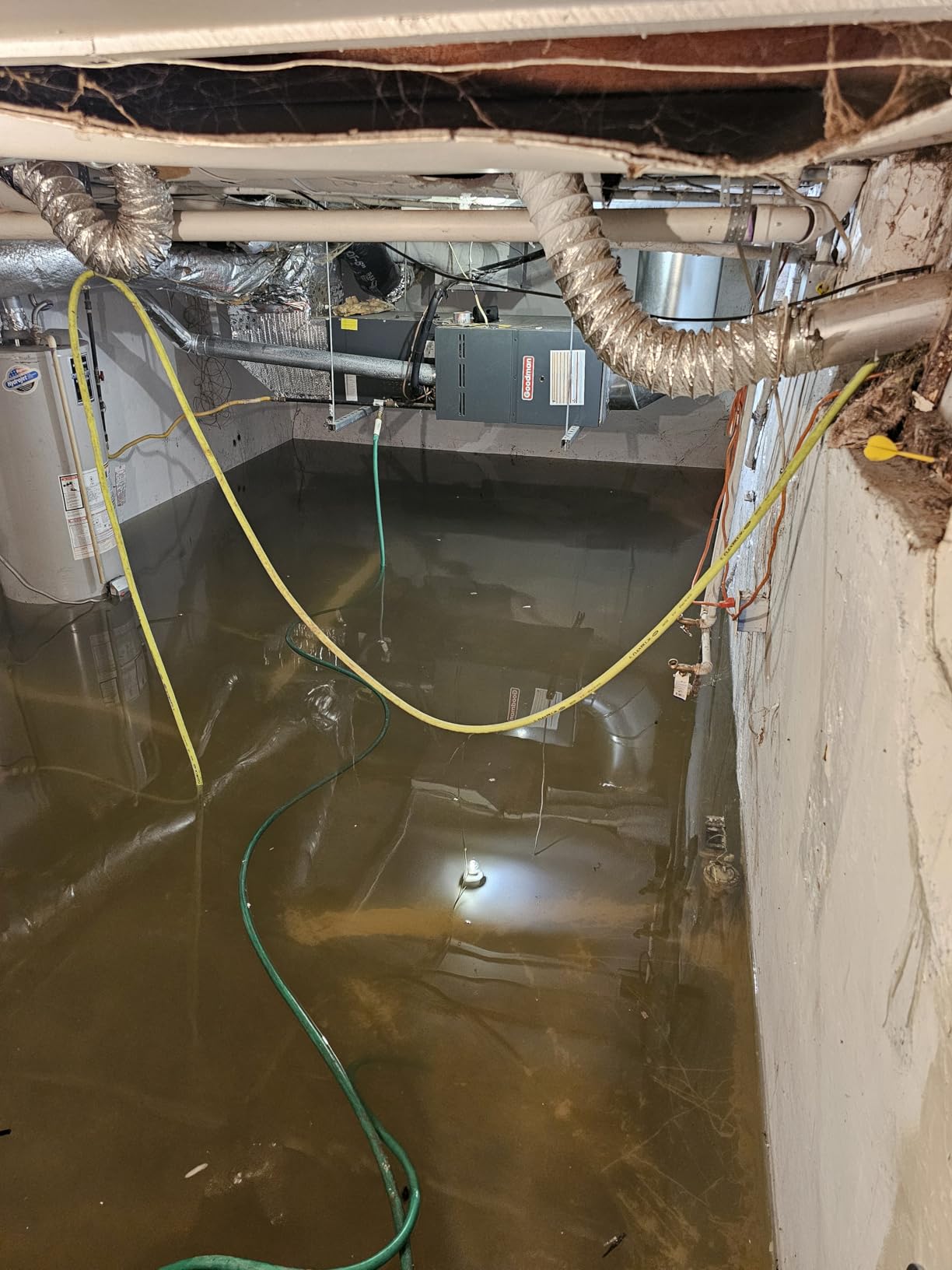
Its weakness is arithmetic. The backup drops to roughly 1500 GPH at 10 feet of lift, which is a real reduction from the CITS-50’s 2150 GPH. In a basement with a high water table, that margin is the difference between keeping up and starting to lose ground in a long storm.
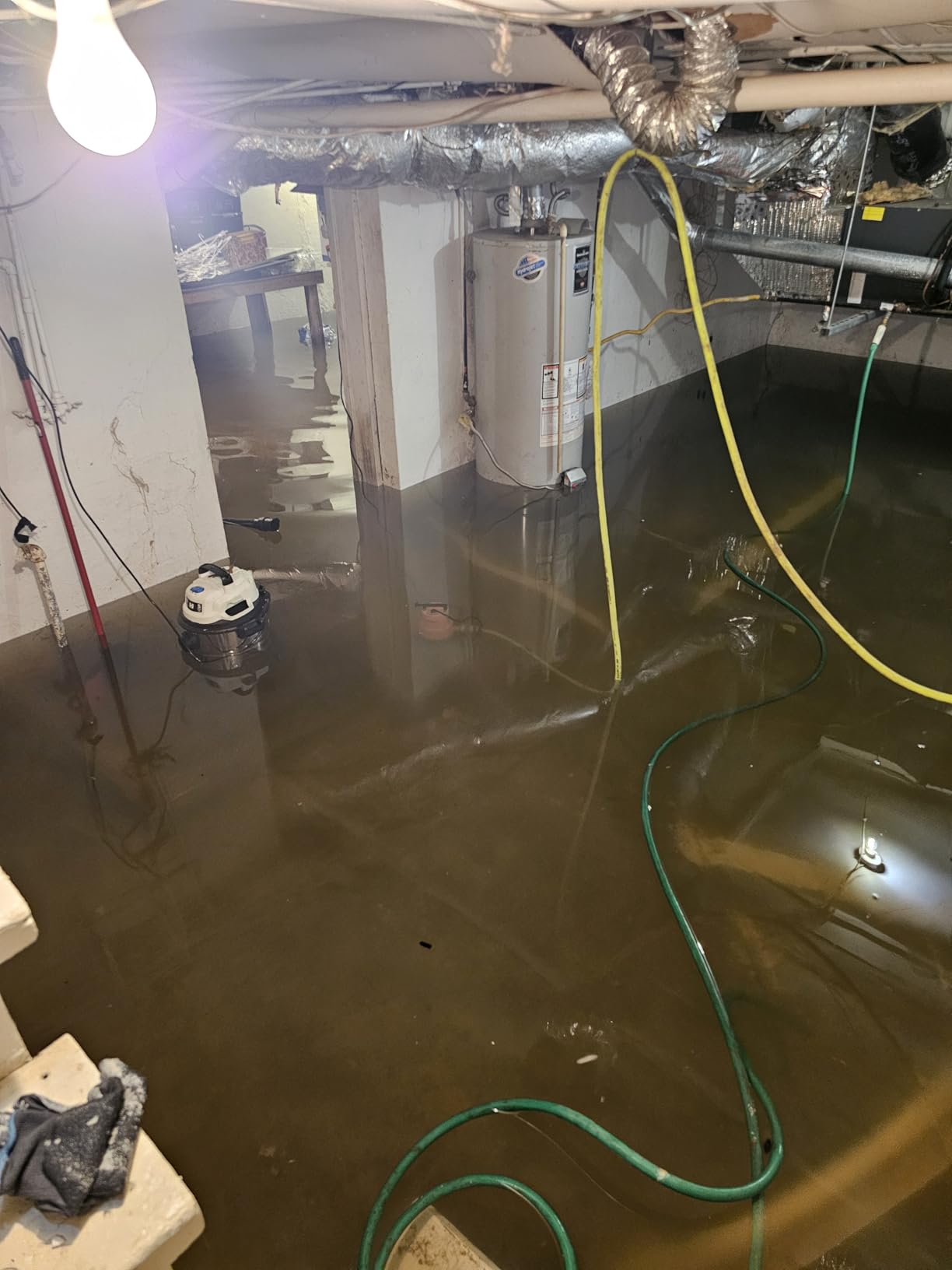
The included 0.4-Amp charger is the other quiet catch. It is designed to maintain a battery rather than recover one, so if your battery dies completely you will be waiting a long time for it to come back to a useful state. Plan on a charger of your own if you go this route.
What to check before buying the CITE-33
Confirm the 12-inch fit applies to your basin rather than assuming it, and check the discharge pipe diameter while you are down there. A narrow pit with a large existing discharge line can still be a tight fit, and this is the point in the process where a tape measure saves an expensive return.
Pair it with a sealed AGM battery rather than a wet cell. The controller includes a battery fluid sensor that is genuinely useful with wet cells, but a sealed battery removes the watering question entirely and holds charge better through the idle months.
Where the CITE-33 is the wrong choice
Skip it in a high-flow basement. The 1500 GPH backup figure at 10 feet of lift is the honest number, and buying on the 2500 GPH zero-foot headline would be buying the wrong pump. Where inflow is heavy, the CITS-50 or the Wayne combo has the headroom you need.
It is also the wrong choice if you expect to be without power for a day or more. With a small charger and a single battery, recovery after a deep discharge is slow, and the CITE-33 does not have the parallel battery provision the CITS-50 does.
5. Zoeller Aquanot 508 – Best Backup Pump for Corrosive Wet Pits
Zoeller 508-0005 Aquanot 508 Battery Back-Up System
12V noncorrosive DC pump
40 GPM flow, 1/3 HP
Integrated check valve, 10.5-pound body
Warranty 12 to 18 months, 36 with Zoeller battery
Pros
- Noncorrosive 12V build for a wet
- acidic sump environment
- Integrated check valve simplifies installation
- Quick-disconnect discharge makes servicing fast
- Aluminum seal pocket and cooling plate aid durability
- Hand built and individually tested in the USA
Cons
- Battery sold separately
- Extended three-year warranty requires a Zoeller Aquanot battery
- Backup-only unit so a separate primary pump is still needed
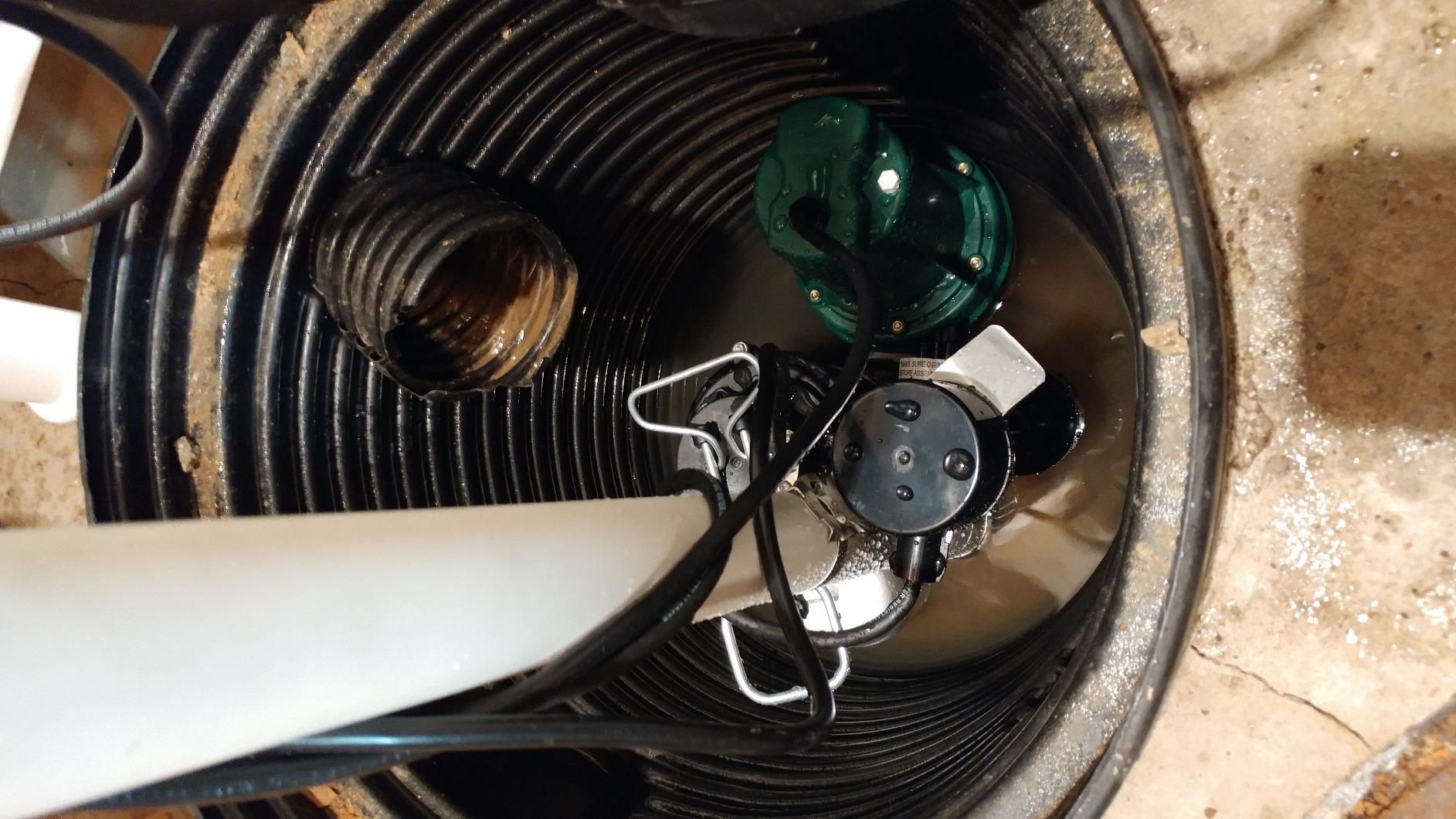
The Aquanot 508 is the most purpose-built backup pump in this group, and its construction is the reason. Zoeller uses noncorrosive 12V components with an aluminum seal pocket and a cooling plate, which are exactly the parts that fail first when a backup pump lives permanently submerged in slightly acidic pit water.
At 10.5 pounds and roughly 10 inches square, it installs easily into an existing pit alongside a working primary. The integrated check valve removes one common install step and one common leak point, and the quick-disconnect discharge means you can pull the pump for service in minutes rather than cutting pipe.
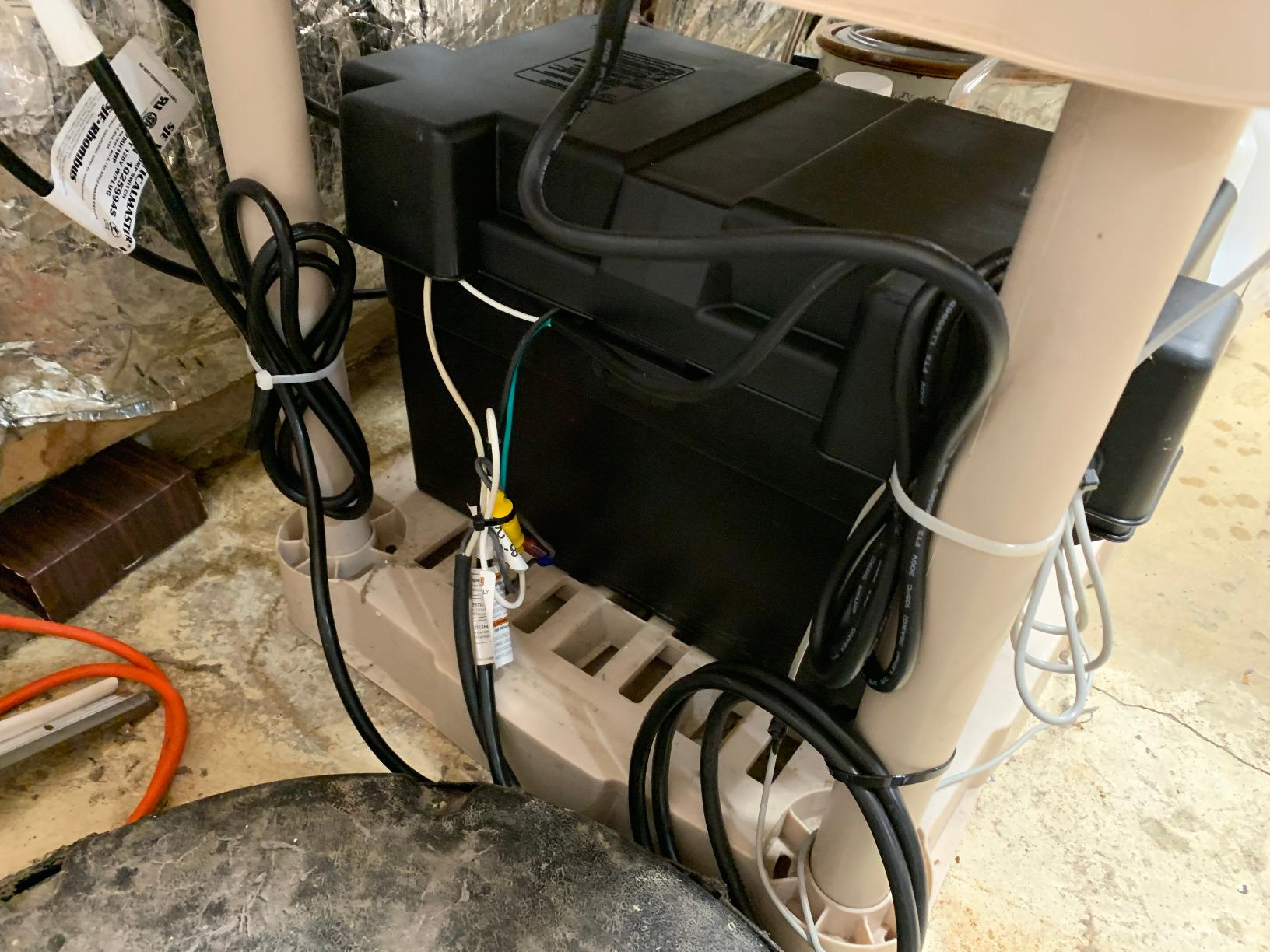
Zoeller backs it with 12 months from installation or 18 months from manufacture, extended to 36 months when it is paired with a Zoeller Aquanot battery as a complete system. That conditional structure is worth understanding before you buy, because the longer coverage only exists if you source the battery from the same manufacturer.
Zoeller builds and individually tests these in the USA, and owners who have had one for years describe it as boring in the best sense. It is the pump you forget you own, which is the highest compliment a sump pump can earn.
What to check before buying the Aquanot 508
Confirm that you already have a primary pump you trust, because this is a backup-only design. Owners pair it with an existing AC pump for exactly this reason, and it is one of the cleanest retrofits in the category since nothing about your primary has to change.
Check the mounting situation. The compact footprint works in most pits, but smaller basins sometimes need a bracket to hold the unit off the floor and away from debris. The 40 GPM flow rate is the figure to compare against your actual lift height before you commit.
Where the Aquanot 508 is the wrong choice
Do not buy it expecting a complete system. Pump, controller and battery are separate purchases, and the alarm and charger arrangement is not the all-in-one package the combo systems provide. Buyers who expected a box they could install in an hour report that as a complaint about the product when it is really about the category.
It is also the wrong choice if you want a unit that ships preplumbed with a float switch already set. Everything here is a component purchase, which makes it more work than a combo and much more work than an inverter that just needs to be plugged into the pump you own.
6. VEVOR 2000W Battery Backup Inverter – Best Inverter for Two Pumps on One Box
VEVOR 2000W Sump Pump Battery Backup with LCD, Automatically Shifts to Inverter Power Ensuring Uninterrupted Operation, Essential for Emergencies & Power Failures
2000W pure sine wave, 4000W peak
Dual AC outlets, 18.2A operating current
20A charger, about 5 hours for 100Ah
LCD with LED indicators
Pros
- Dual outlets can back up two sump pumps
- Switchover to battery is essentially instantaneous
- 20A charger refills a 100Ah battery in roughly five hours
- 3-pin quick plug connection resists miswiring
- Pure sine wave output suits sensitive electronics
Cons
- Some units need a manual reset to leave bulk charge
- Wattage readout reported as inaccurate
- Manual omits the flashing charging-light behavior
- Internal low-voltage fuse requires disassembly
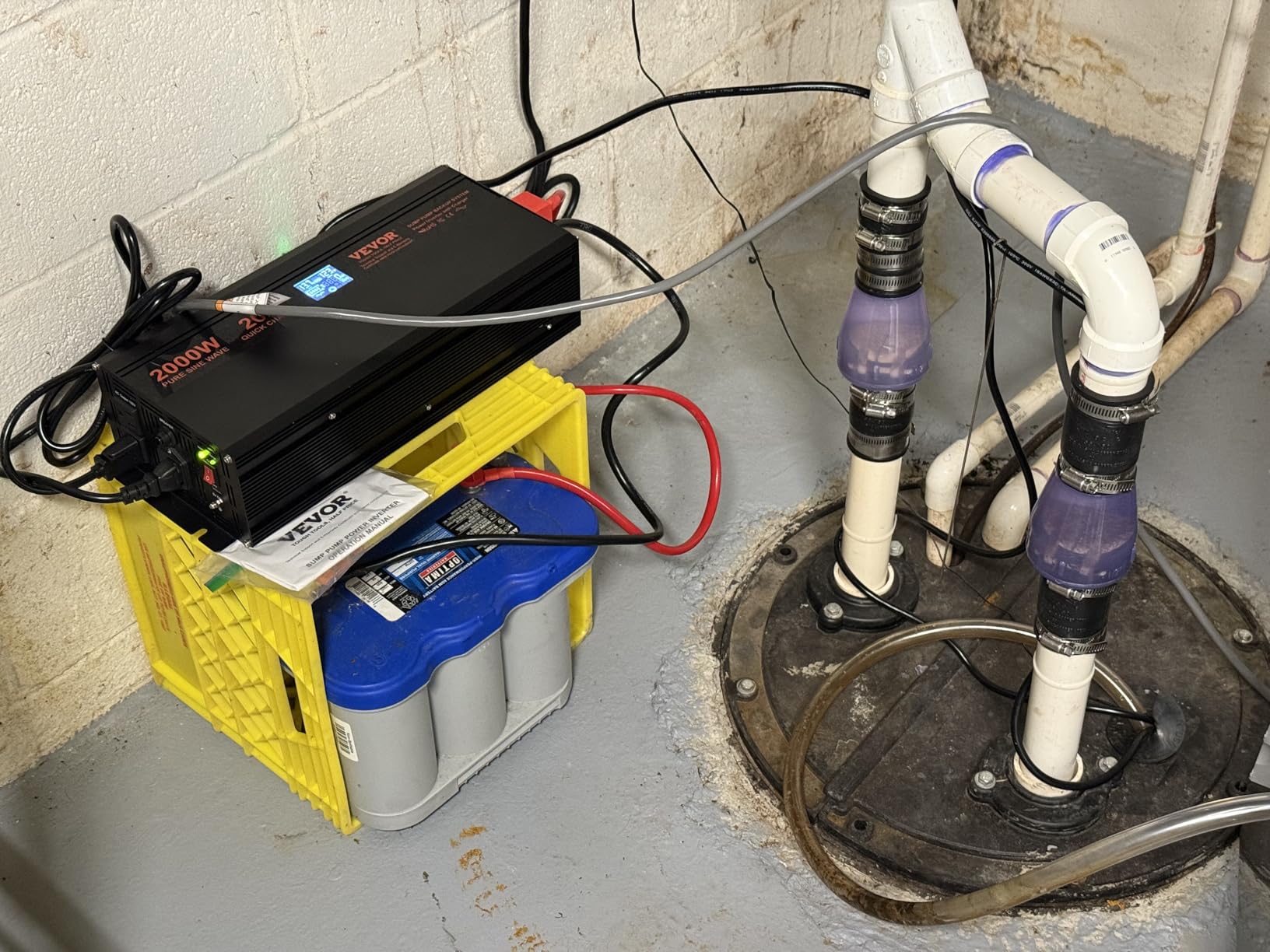
The inverter class works completely differently from a backup pump. Instead of adding a second pump, it detects the outage and feeds your existing AC sump pump from a deep-cycle battery, so the pump you already own keeps running on its own float switch. Nothing about your pit plumbing changes.
This VEVOR unit puts out 2000 watts of pure sine wave power with 4000 watts peak, and the two AC outlets are the feature that separates it from most competitors. One box can carry a primary and a backup pump, or a primary in one pit and a pump in a second pit, without a second inverter competing for the same battery.
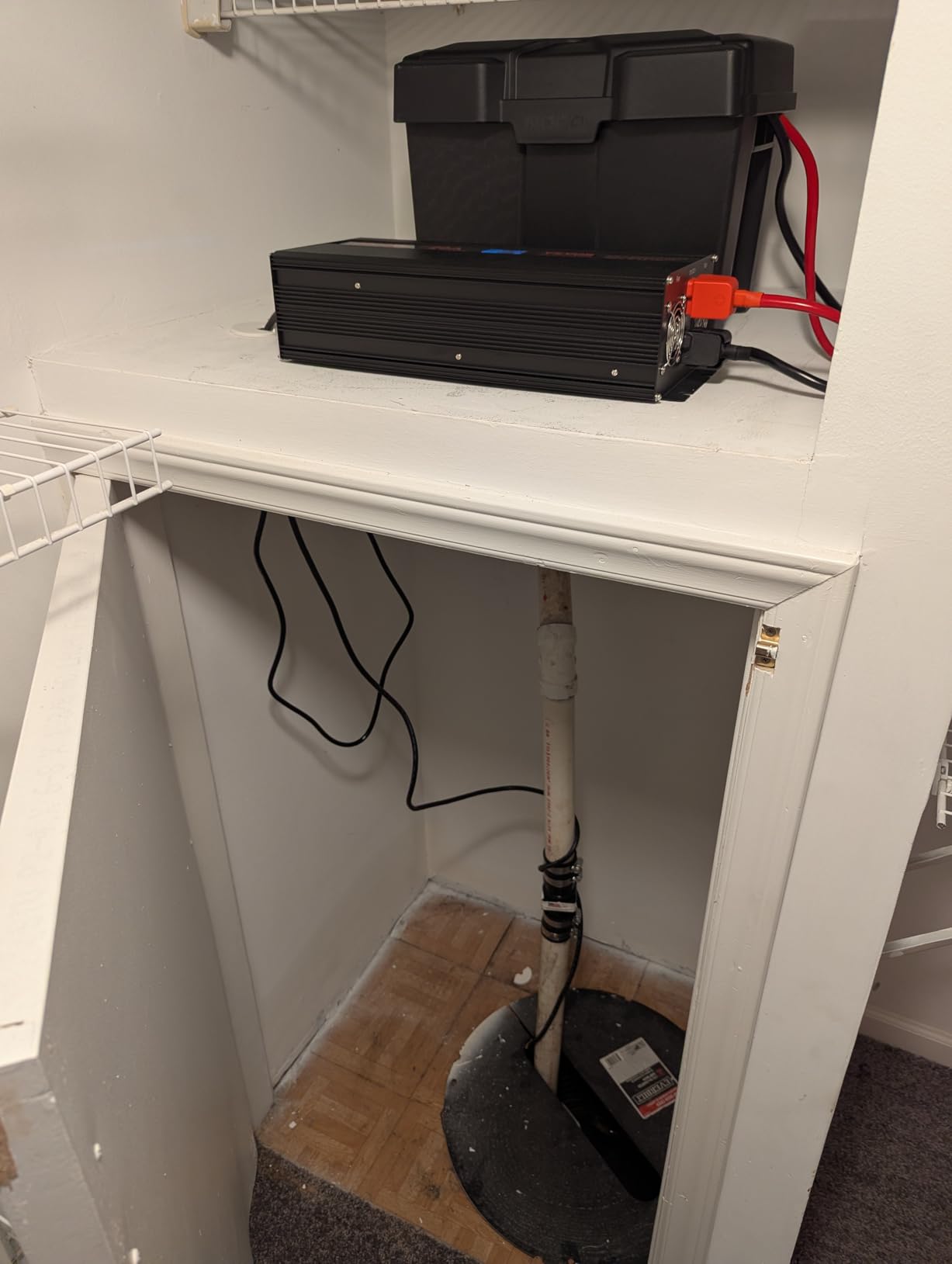
The charging side is genuinely fast. A 20A charging current refills a 100 amp-hour battery in roughly five hours, which matters enormously for someone whose grid is unreliable and whose battery is their only reserve. The 3-pin quick plug design also removes the single most common install error on inverter units, which is reversing the battery leads.
Owners running pumps on it report keeping basements dry through a week-long storm event, and the pure sine wave output means you can put sensitive electronics on the same circuit without fuss. That crossover capability is why this category keeps growing.
What to check before buying the VEVOR 2000W
Add up the running current of everything you plan to connect. This unit is rated at 18.2 amps operating current across two outlets, and a 1/2 HP pump plus a 1/3 HP backup can approach that. If you have a larger primary, size the inverter up a class rather than running it near the limit.
Read the manual before you order, because owners report weak English translation and an instruction set that leaves out the flashing charging-light behavior. That last omission produces exactly the kind of false alarm call that makes people distrust a working system.
Where the VEVOR 2000W is the wrong choice
Pass if you have no existing AC pump to protect. An inverter is a power supply, not a pump, and buying one for an empty pit gets you a very nice box that moves no water. In that situation a dedicated DC backup pump is cheaper, simpler, and does the job directly.
There is also a serviceability issue worth weighing. The internal low-voltage fuse sits inside the case and requires disassembly to replace, while the 120V input fuse is external. If your battery bank sits in an unheated space, that is a real inconvenience at the moment you least want it.
7. Zoeller Basement Sentry 507 – Best All-in-One Battery Box System
Zoeller 507-0005 Basement Sentry Battery Backup Pump
12V backup pump with 10 amp recharger
Solid-state controller with alarms and lights
Noncorrosive polyethylene battery case
UL and cUL listed
Pros
- Self-contained 10 amp recharger built into the battery case
- Solid-state controller with alarms and indicator lights
- Current units ship with a compact charger and front-panel LCD
- Battery burnout and overcharge protection
- Owners report it saved basements during real outages
Cons
- Sump pump and battery both sold separately
- Supplied check valve is below standard quality
- Instructions advise drilling a weep hole that can spray water
- Some owners report a low hum from the charger
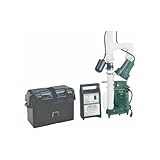
The Basement Sentry is the oldest idea in this category and still the most self-contained: a polyethylene battery case with a lock strap, a built-in 10 amp recharger, and a solid-state controller with alarms and indicator lights. Newer production units ship with a compact charger carrying a front-panel LCD and text-alert hardware capability, which is a genuine step up from the noisier original.
For a household that wants a battery backup sump pump where the battery lives in a cased, lockable box rather than loose in the pit, this is the cleanest answer. Long-term owners treat the name as a dependable standard, and several report it genuinely saving their basement during an outage.
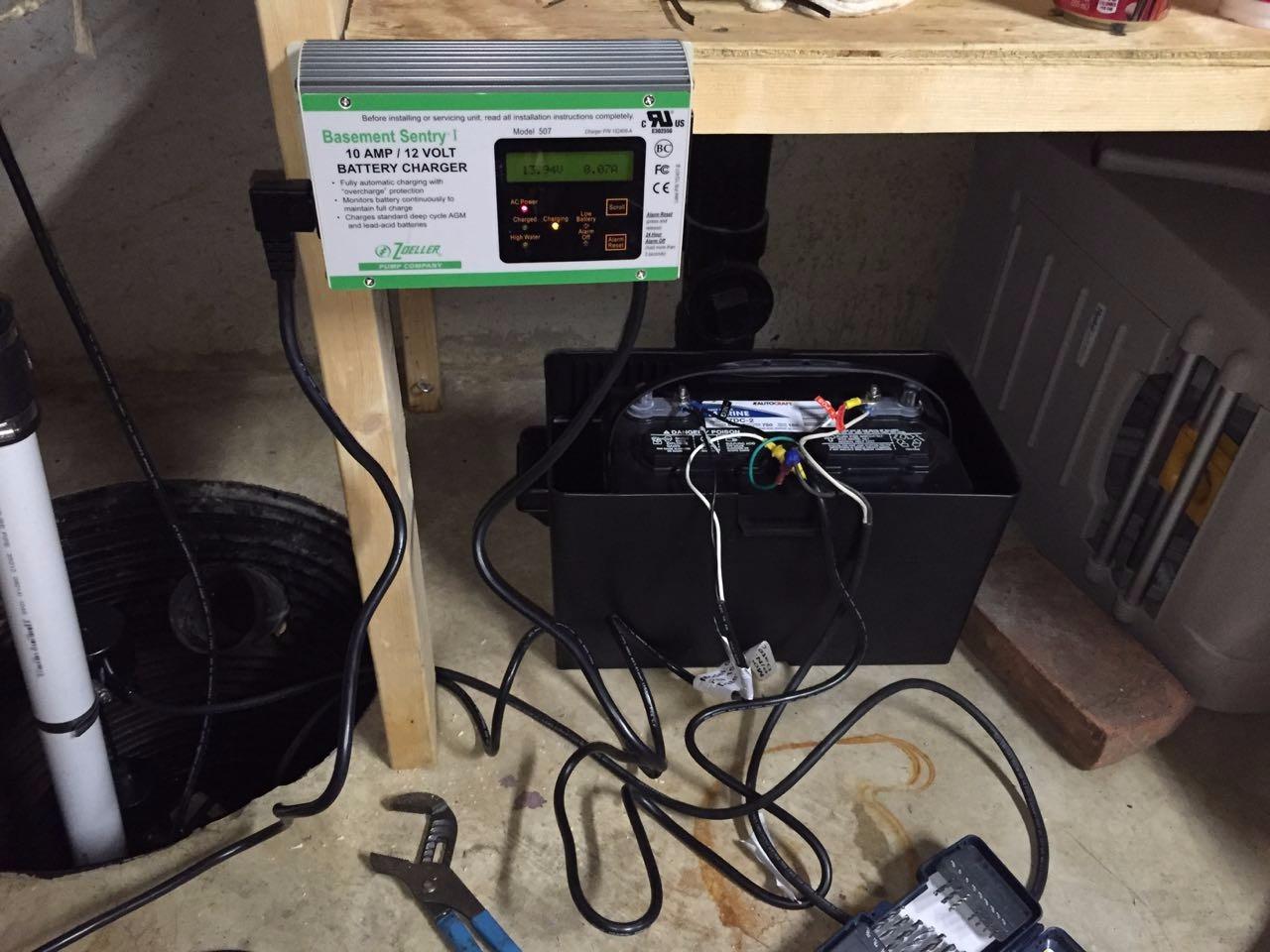
Two details make this an easy install. The assembly is simpler than older Basement Sentry versions, and the low-voltage float switch plus burnout and overcharge protection mean the system fails toward alarm rather than toward a dead battery. The alarm-off indicator shows on a yellow light, so you can tell at a glance whether the system is still armed.
Both the sump pump and the battery are separate purchases, which is the loudest complaint in the reviews and the reason the total installed cost is higher than the product page suggests. Plan on a pump, a deep-cycle battery, and the case as three line items.
What to check before buying the Basement Sentry
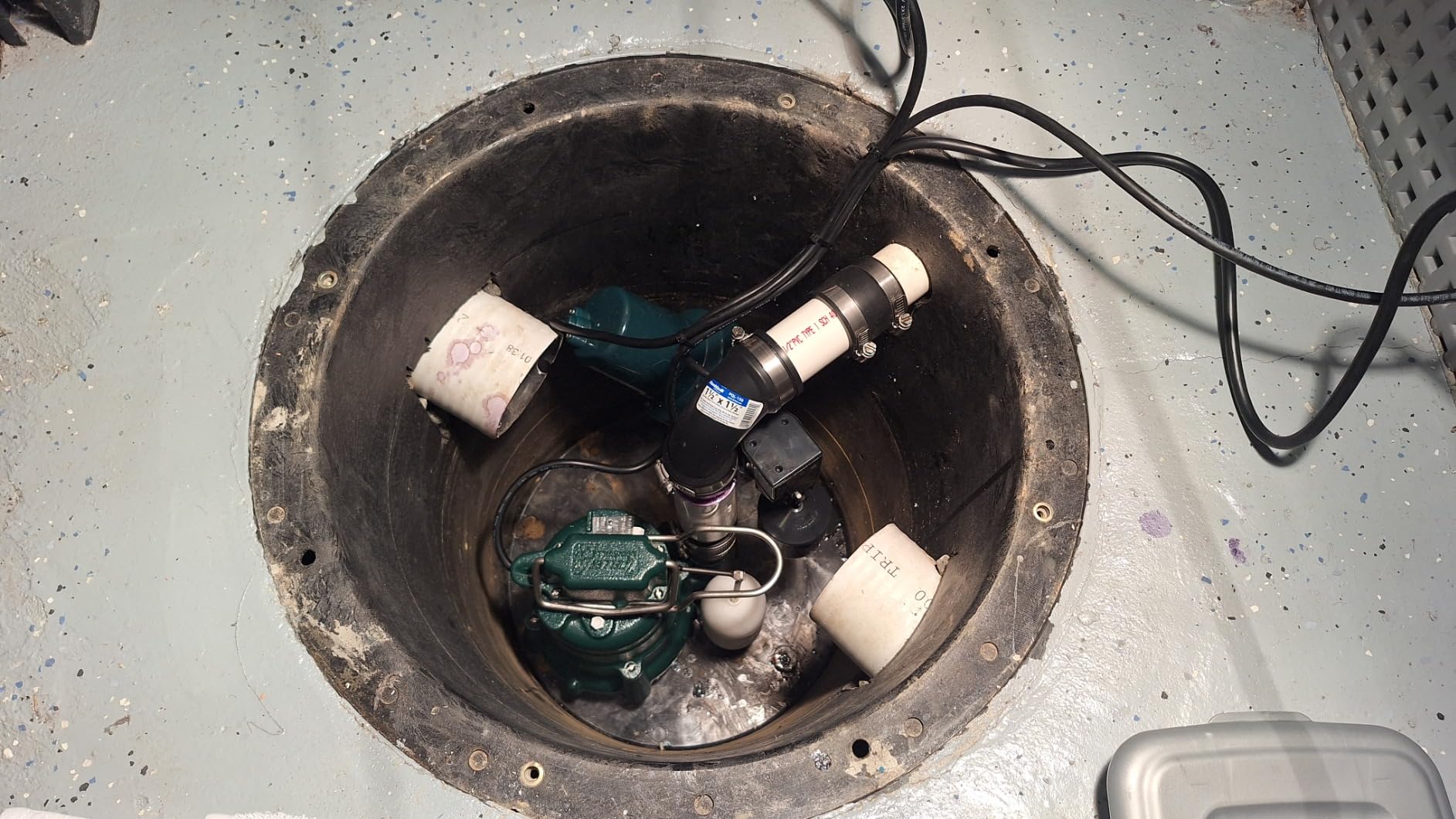
Buy a better check valve than the one supplied. Owners report the included valve as below standard quality, and swapping in a quiet brass or PVC check valve is a ten-minute fix that removes both seepage and pump chatter. Do this at install rather than waiting for the noise to annoy you.
Skip the weep hole. The printed instructions advise drilling one, and that drilling produces a spray of water inside the pit during operation. Modern installs generally do not need it, and plenty of owners have simply not done it.
Where the Basement Sentry is the wrong choice
It is the wrong pick for a finished, climate-controlled room. The noncorrosive polyethylene battery case is a utility-space product, and a few owners report a low hum from the charger that is unnoticeable in a basement and irritating in a closet off a hallway.
It is also not the choice for a shallow pit with a high discharge line, because everything has to fit inside the case footprint. If your basin is already crowded, a cased system is harder to place than a loose pump on a bracket.
8. SEC America 822PS Pump Sentry – Best Battery Backup for an Existing Sump Pump
822PS – Sump Pump Backup System
1200 watt backup inverter
Runs pumps up to 9 amps
Needs a 90-200 Ah deep cycle battery
2-year warranty
Pros
- Keeps the existing primary pump running so no second pump is needed
- Automatically transfers to battery and recharges with no manual step
- Handles pumps up to 9 amps
- Rugged aluminum housing with UL and CSA accreditation
- Silent operation with clear status indicators
Cons
- Requires a separate 90-200 Ah deep cycle marine battery
- Not compatible with pedestal pumps
- Bulky 17 x 6 x 3 inch aluminum enclosure
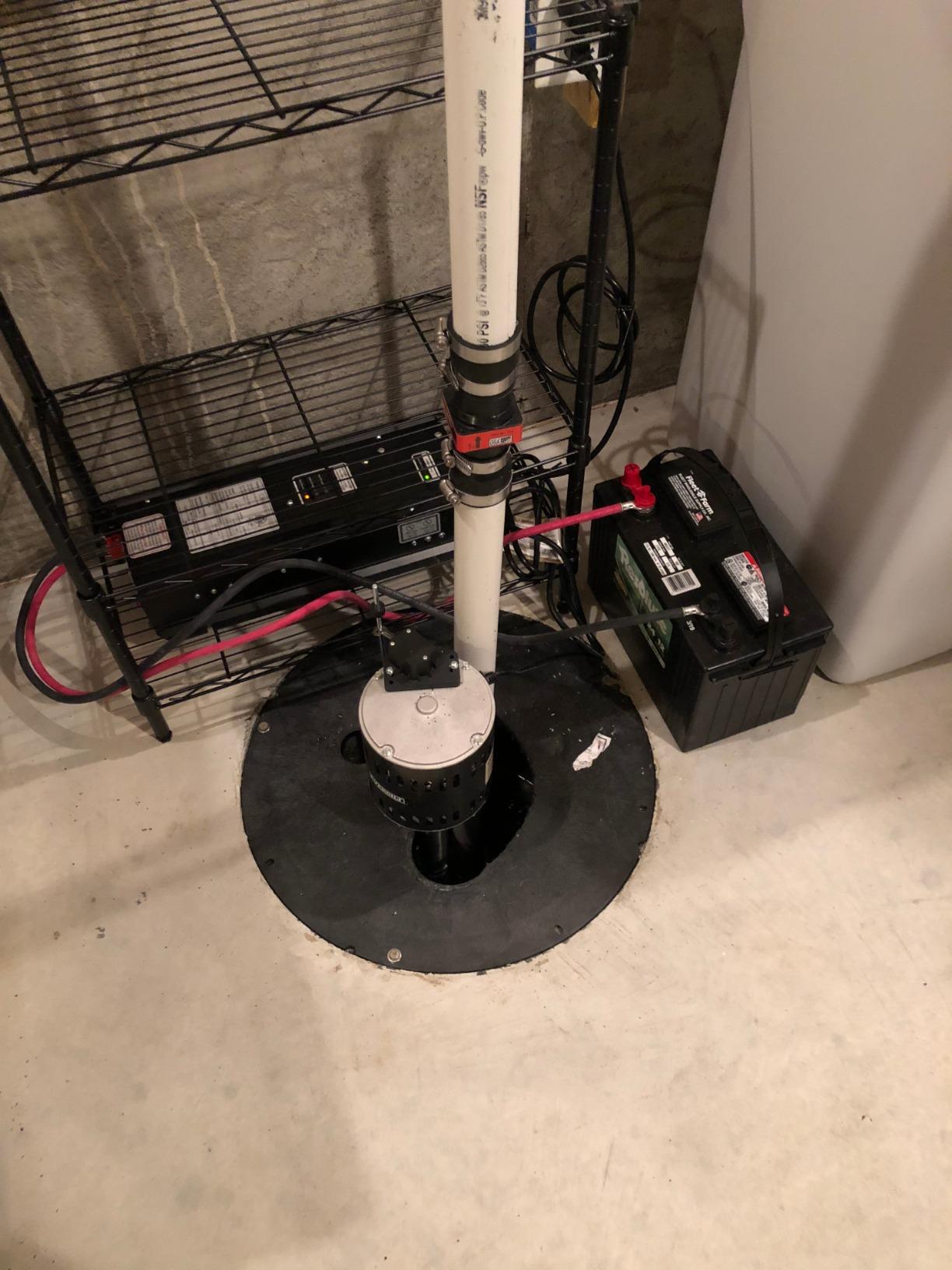
The 822PS is the most popular inverter in this group for a simple reason: it protects the pump you already own. There is no second pump, no second float switch, no new discharge line and nothing to fit in the pit. You install the box, connect a deep-cycle battery, and your existing pump keeps running on its own controls when the power fails.
The 9-amp operating limit covers most residential sump pumps, including a 1/2 HP model, and the 1200 watt rating gives comfortable headroom above that. The transfer and recharge are fully automatic, with no manual switch to find in the dark, and indicators cover power output, battery charge and when the battery needs replacing.
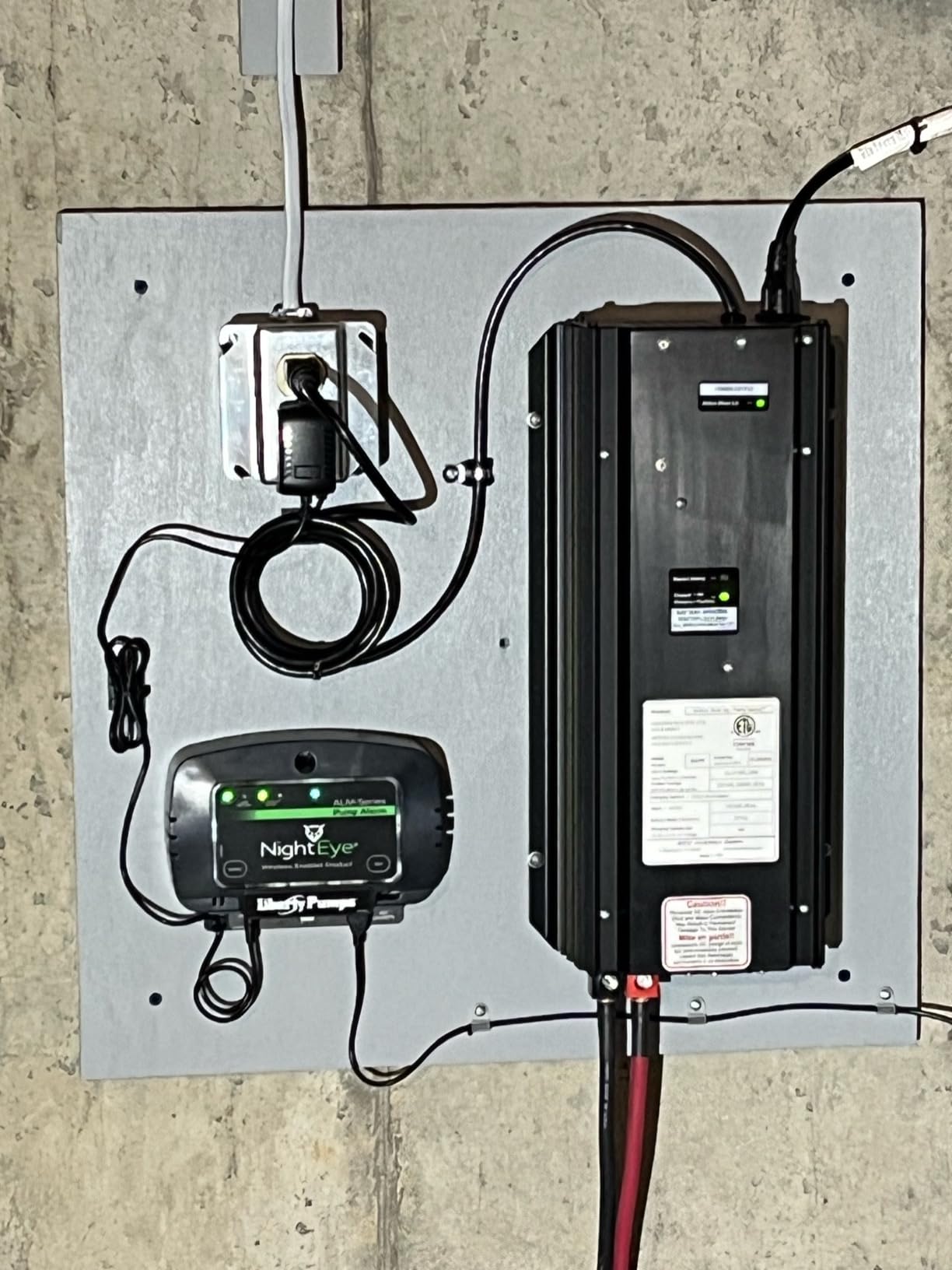
Owners point to the aluminum housing and the UL and CSA accreditation as reasons to trust it, and describe the unit as silent and clean in operation. For a home with a reliable existing pump that simply has no power protection, this does the job with the least disruption to anything you have already built.
There is one hard limitation: it does not work with pedestal pumps. If your sump setup is a pedestal pump rather than a submersible, this is not the product. Check what you have before spending an afternoon on the install.
What to check before buying the 822PS
Find your pump’s running amps on its nameplate. Anything drawing more than 9 amps will not start reliably, and a 1/2 HP submersible is right at the boundary, so confirm the actual figure rather than estimating from horsepower.
Size the battery to the outage, not to the box. The unit requires a 12V deep-cycle marine battery of 90 to 200 amp-hours, sold separately, and where you land in that range determines whether you have hours of runtime or a full day. The status indicators will tell you when the battery itself has aged out.
Where the 822PS is the wrong choice
It is the wrong pick if you want phone alerts or a fine-grained view of what the system is doing. There is no remote panel here. The three indicator lights are honest and sufficient, but if you are the kind of person who wants a phone notification, you are buying a different product.
It is also wrong for a pit that cannot host a second pump, and wrong for a home that needs backup power beyond the sump. This is a single-purpose device, and it does that one thing with fewer failure points than anything else in the roundup.
9. OLTEANP 2500W Inverter Charger – Best Inverter for Battery Chemistry Flexibility
2500W Sump Pump Battery Backup System for Basement Flood Protection
2500W pure sine wave, 5000W peak
25A smart charger with selectable modes
3 AC outlets plus USB and Type-C
Wired LCD remote controller
Pros
- Selectable charging modes for LiFePO4
- AGM
- GEL and flooded batteries
- Wired remote panel controls a unit mounted out of reach
- Integrated AC input cord simplifies the grid connection
- Verified to sustain 200 amps at 12V at full rated output
- Can run a furnace or other AC motor loads beyond a sump pump
Cons
- Cooling fans are loud and cycle during charging
- After a full discharge the inverter needs a manual switch-on
- Displayed battery voltage reads about a tenth of a volt low
- Large enclosure
This is the highest-rated unit in the group at 4.7 stars, and the reason is that it puts an inverter, a charger and a transfer switch in one enclosure. Most competitors force you to choose between a fast charger and automatic transfer; this one does both with a 25A smart charger and selectable charging modes.
That mode selection matters more than it sounds. It is compatible with LiFePO4, AGM, GEL and flooded deep-cycle batteries, so if you decide a lithium bank is right for your basement, this inverter will charge it correctly instead of cooking it with a lead-acid profile.
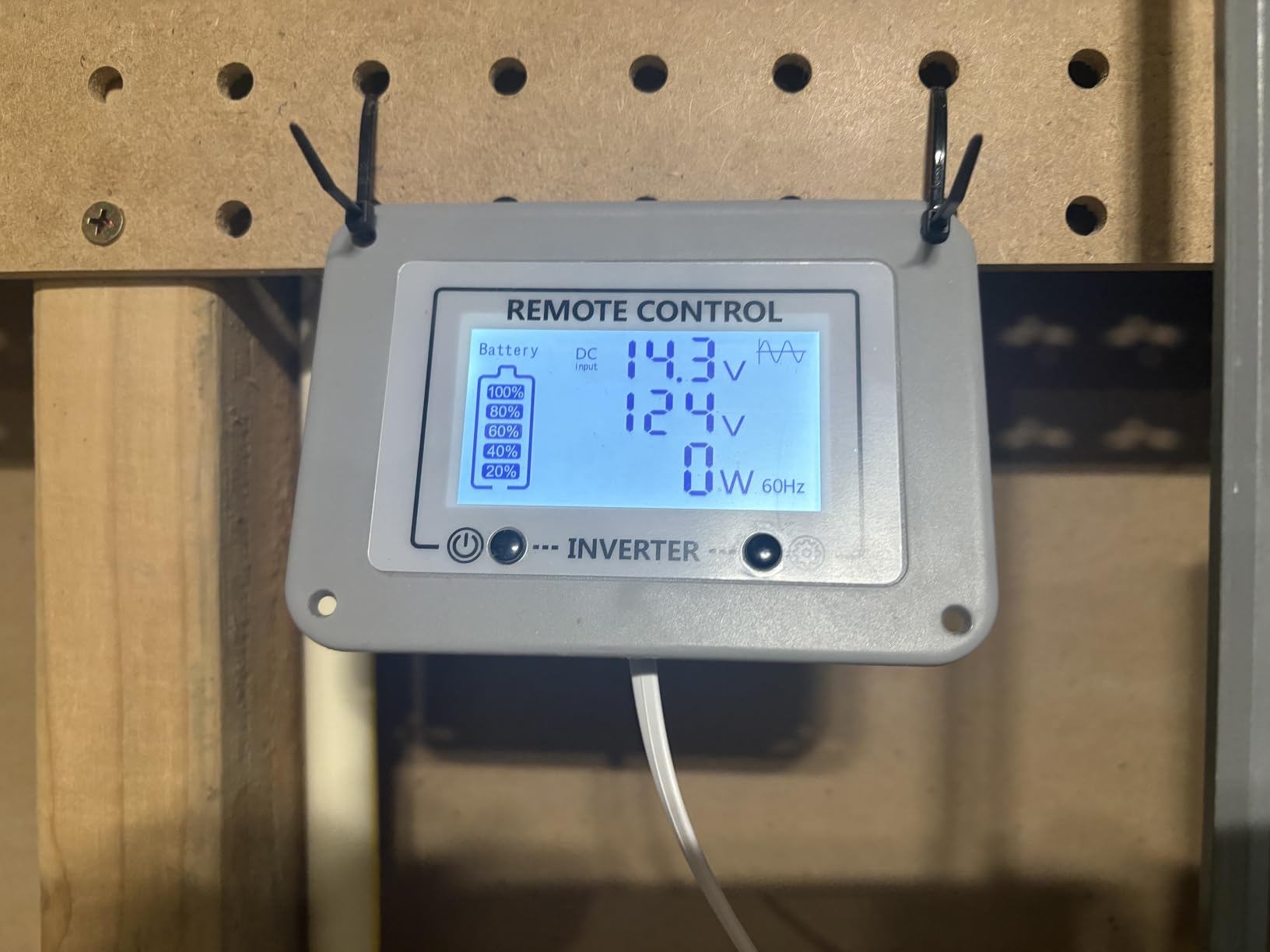
The wired LCD remote is the sleeper feature. It shows battery voltage, load status and operating mode, and it lets you power up a unit mounted somewhere you cannot physically reach, which is common when the inverter lives behind a finished wall or above a finished ceiling.
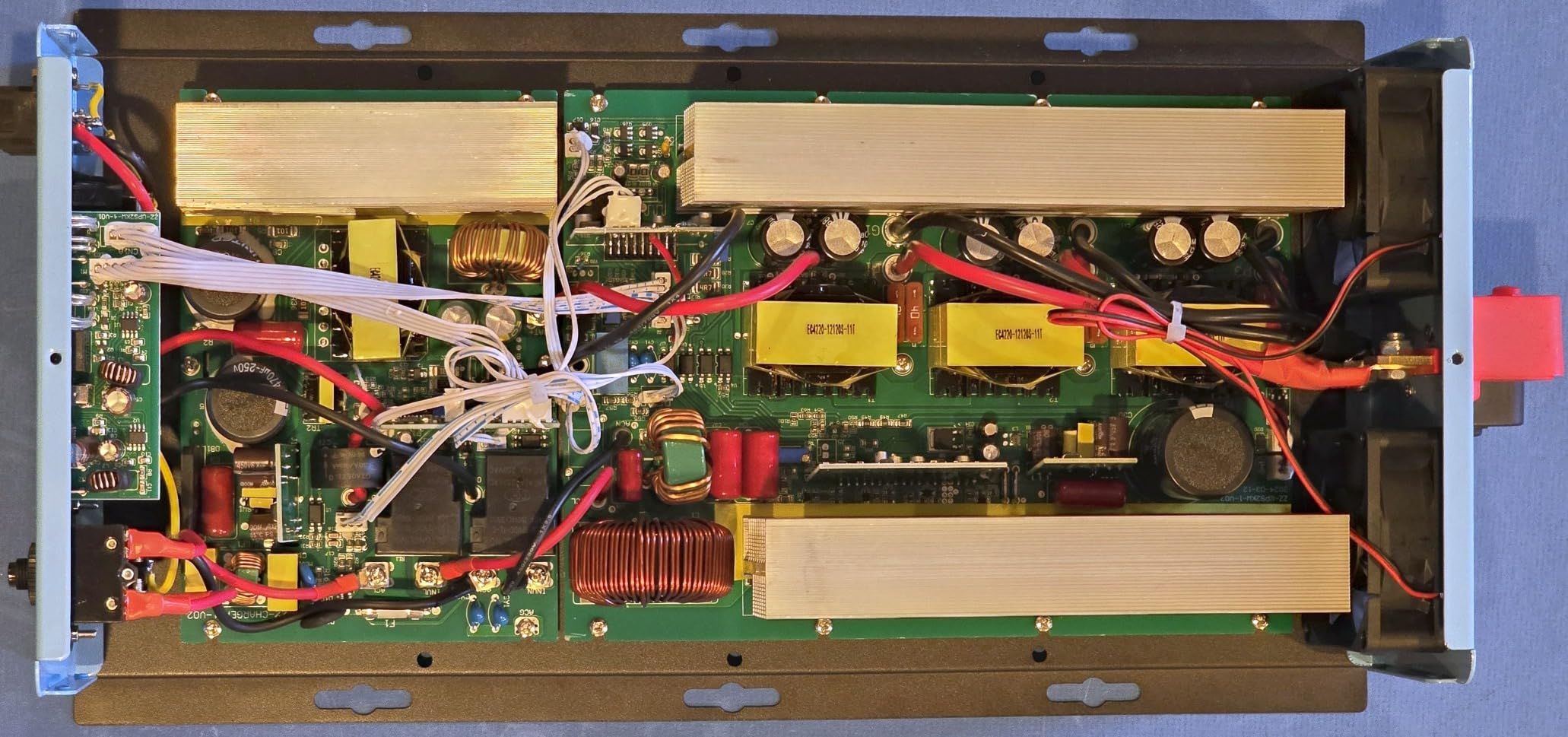
Detailed testing by owners confirms genuine 2500W output at full rated load, and the transfer is fast enough that servers and routers do not reboot on switchover. The three AC outlets plus USB and Type-C ports also make it usable for a furnace or other AC motor loads when the storm is over.
What to check before buying the OLTEANP 2500W
Test the transfer behavior before a storm rather than during one. Set your monitoring expectations properly: if the battery is fully discharged, this unit stays off after grid power returns and needs a manual switch-on at the panel. Knowing that in advance is the difference between a ten-second fix and an hour of troubleshooting in the dark.
Make sure you can live with the charging fan noise. Owners describe the cooling fans as loud, and they cycle on and off while charging. In a utility room that is background noise; in a finished basement next to a bedroom wall it is not.
Where the OLTEANP 2500W is the wrong choice
Do not buy it as a dedicated sump device if your only goal is pumping water. At 2500 watts of general inverter capability, you are buying more machine than a sump pump needs, and the 12-month warranty is the shortest in this roundup. Buyers wanting a simple, long-lived sump answer are better served by a dedicated backup pump.
It is also the wrong choice if you want zero-touch recovery. The manual restart after a deep discharge is a genuine gap, and in a storm that has already knocked out power twice, a system that needs you to find the remote and press a button is not the same as a system that recovers itself.
10. PumpSpy 2000W Battery Backup – Best Compact Inverter Install
PumpSpy 2000 Watt Battery Backup System for Sump Pumps During Power Outages
2000W pure sine wave 120 VAC
Two pumps up to 16.6 amps combined
10.5-pound aluminum box
Requires 12V deep cycle battery
Pros
- Two outlets run two sump pumps at up to 16.6 amps combined
- Pure sine wave 120 VAC output
- Trickle-charge maintenance with overcharge prevention
- Compact aluminum enclosure at only 10.5 pounds
- USB charge port for small devices during an outage
Cons
- 12V deep cycle battery is not included
- Lowest average rating in this group
- No remote status panel unlike competing inverter units
PumpSpy is the smallest and lightest inverter in this roundup at 10.5 pounds, and that weight is the selling point when you are mounting it in a tight utility space or a finished mechanical room. The aluminum enclosure measures 17.5 by 6.75 by 4 inches, which is easy to find wall for.
It outputs 2000 watts of pure sine wave 120 VAC across two grounded outlets, and can run two primary sump pumps simultaneously as long as combined draw stays at or under 16.6 amps. The overcharge prevention with trickle-charge maintenance once the battery is full means the battery sits ready without being cooked.
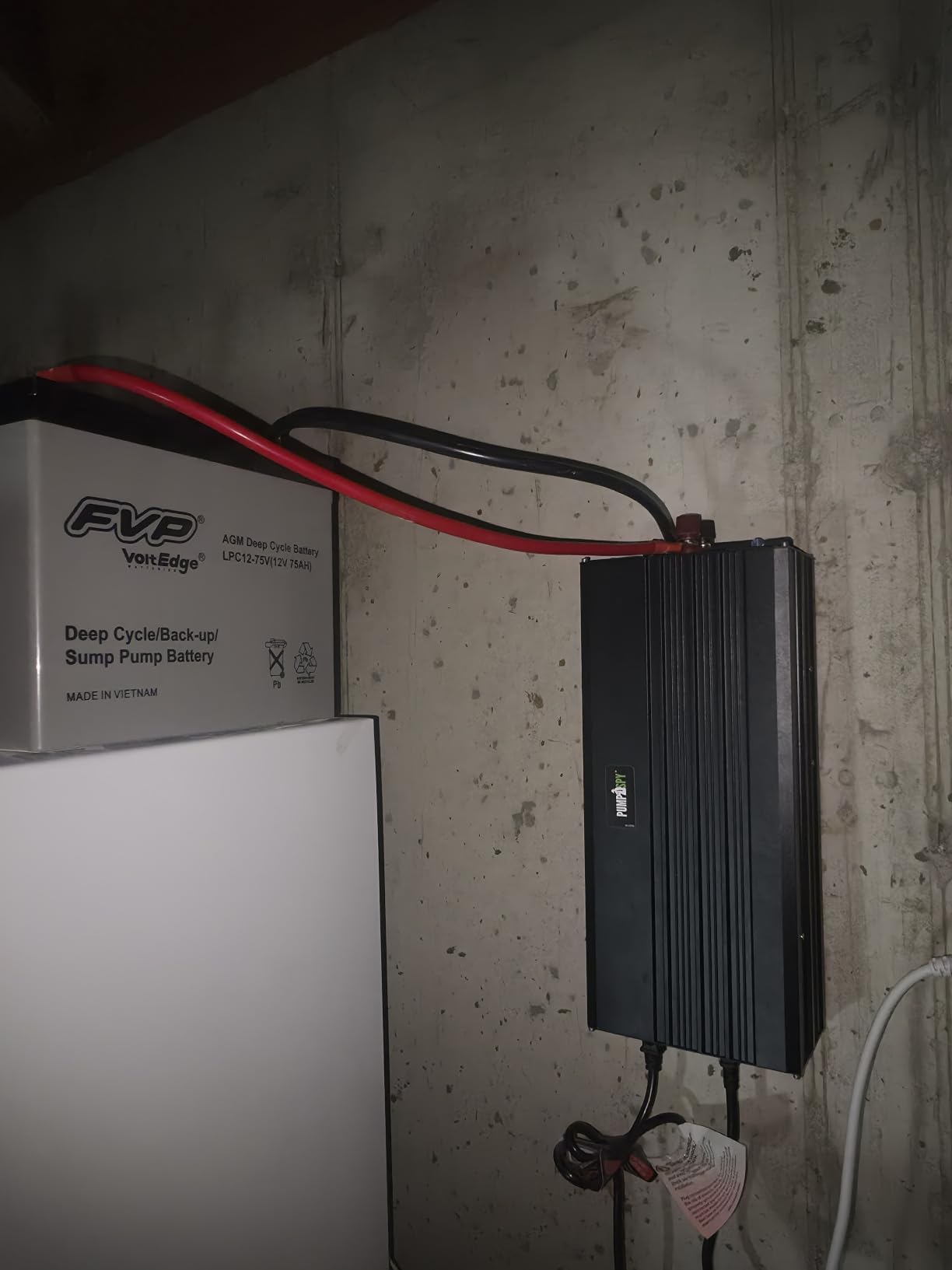
Owners describe it as quiet enough to call silent backup power, and the intelligent cooling feature is aimed at extending component life during an extended outage. There is a USB port for charging small devices, which is a small thing that matters when the power has been out for a day.
The 4.1 star average is the lowest of the ten, and the reason is not flow performance but a higher share of one- and two-star reviews, partly on a much smaller sample. There is no remote status panel, so you learn the system’s state from indicator lights rather than an app.
What to check before buying the PumpSpy 2000W
Budget for the deep-cycle battery separately, and confirm the total amperage of both pumps if you plan to use both outlets. The 16.6 amp combined ceiling is generous, but two 1/2 HP primaries can exceed it and cause nuisance trips at the worst possible moment.
Know that support is regional and direct. The unit is tested and packaged in Kalamazoo, Michigan, and the technical support team is based there, which owners who have used it describe as a genuine advantage over generic offshore support.
Where the PumpSpy 2000W is the wrong choice
It is the wrong pick if you want monitoring. No remote panel means no visibility into battery state or load unless you are standing next to the box during the outage. The larger VEVOR and OLTEANP units both give you more to work with for a similar class of money.
Given the lower average rating, it is also not the choice for a finished basement where a failed system means damage. Pick it when space is the binding constraint and you want a clean, quiet box that will run two pumps without fuss.
How to Choose a Sump Pump Battery Backup System
Choose the architecture first, then the pump. There are four distinct approaches, and picking the wrong one is the most expensive mistake in this category because it usually means buying a second time.
Dedicated DC backup pump. A small 12V pump on its own float switch sits beside your existing primary. This is the cheapest way to add protection, and it is the right pick for a small pit or a retrofit where the primary is still reliable. The Basement Watchdog BWSP and the Zoeller Aquanot 508 are the clearest examples in this roundup.
Preassembled combo. One molded unit contains a primary, a backup, the floats, the plumbing and the controller. This is the least work at install and the most expensive at purchase, and it is the right pick for a finished basement or a replacement install. The Wayne WSS30VN and the two Basement Watchdog combos fall here.
Battery case system. The pump and controller sit outside the pit with the battery in a cased box containing its own recharger. The Zoeller Basement Sentry is the archetype, and it suits utility rooms where you want a lockable, tidy battery rather than a loose cell.
Inverter and transfer switch. No second pump at all. A box detects the outage and powers your existing AC pump from a deep-cycle battery. The SEC America 822PS, the VEVOR 2000W, the OLTEANP 2500W and the PumpSpy 2000W are all in this class, and the pump you already own keeps its own float switch and check valve.
Measure your pit before you buy anything
Get in the pit with a tape measure and write down four numbers: basin diameter, basin depth, discharge pipe diameter, and the vertical lift from the water surface in the pit to the check valve. Those four measurements eliminate almost every return shipment in this category.
Basin diameter decides which assemblies fit at all. The CITE-33 works in pits as small as 12 inches, the Basement Watchdog BWSP is compact enough for most narrow basins, and the Wayne combo needs at least 16 inches and barely clears an 18-inch round pit. Buy for the diameter you measured, not the diameter you hope you have.
Basin depth decides whether an 18-inch assembly can sit on the floor. Vertical lift decides whether your backup can keep up: read the GPH figure at 10 feet of lift, not the zero-foot number, and compare it to the inflow rate of your pit during a heavy storm.
Size the battery for the outage you actually get
Almost every system on this list ships without a deep-cycle battery. That single fact is the loudest complaint in owner reviews, and it means the sticker price is roughly half the installed cost once you add a sealed AGM battery, a battery box, and the wiring between them.
On sizing, start with what the manufacturer requires rather than the largest battery you can fit. The Wayne combo specifies 75 amp-hours, the 822PS accepts a range of 90 to 200 amp-hours, and the VEVOR 2000W is built around a 100 amp-hour bank that its 20A charger refills in about five hours. Oversizing beyond the charger can leave you with a battery that never fully recovers between outages.
Sealed AGM is the consensus choice across plumbing forums because it eliminates watering and resists the corrosion that eats battery terminals in a damp pit. A wet-cell battery can work, and the Basement Watchdog units include a fluid sensor for them, but it adds a maintenance item to a box you will rarely look at.
Look for float switch independence and an audible alarm
The backup has to activate independently of the primary. If both pumps share a float switch, a fouled or stuck float takes out your redundancy at exactly the moment you needed it. Dual float switches on both pumps, as the CITE-33 has, are the strongest version of this; a single backup float is a meaningful improvement over nothing and less than dual floats.
Owners rank an independent high-water alarm audible throughout the house as the feature they value most, above flow numbers and above app features. A warning light in a basement you do not enter tells you nothing at 3am. If the controller can be mounted near living space, mount it there.
On shared discharge lines, plan for backflow. A backup plumbed into the primary’s discharge pipe needs a properly oriented check valve on its own branch, or water can run backward through the idle pump. Running a separate discharge line is cleaner but means more plumbing work, and on a combined system most installers use the factory-preplumbed arrangement for this reason.
Cold weather and idle time are the two battery killers
Cold cuts usable capacity hard. In an unheated pit in northern winters, a lead-acid battery delivers noticeably less of its rated amp-hours at low temperature, so a bank that gives you a full day of runtime in September may give you considerably less in January. If your basement is unheated, a larger battery bank or a lithium-compatible charger is worth the extra.
Idle time is the other one. A battery left to sit at low charge will not hold capacity when you need it, and budget units in this category draw complaints about exactly that. A maintained float charge from a quality charger, plus a battery you test before storm season, is what separates a battery that works in an emergency from one that does not.
Our broader guides cover the rest of the system: start with the best sump pumps if you are replacing a primary, and look at smart sump pumps if you want app-based monitoring on your primary in addition to a backup.
How to Test the System and What Breaks First
Test your battery backup sump pump before storm season, not during it. The test takes about fifteen minutes and tells you whether your float switches, your check valves, your battery and your alarm all work while it is still inconvenient rather than urgent.
First, pull the breaker feeding the primary pump and the charger. Confirm the alarm sounds, which proves the outage detection path works. Second, fill the pit with a hose until the backup float trips, then watch the backup pump run and confirm water is actually leaving through the discharge pipe rather than bubbling back. Third, after the pit drains, confirm the pump stops and the alarm clears.
Fourth, check the battery with a load tester or a multimeter rather than trusting the alarm panel, since a panel reading can look fine on a battery that will not deliver current under load. Fifth, confirm the battery terminals are clean and the connections are tight, because corrosion on terminals is one of the most common reasons a working system stops working.
Sixth, verify your float switches move freely. Lift each one by hand and confirm it switches without catching on the discharge pipe, the pump body or another float cord. Crowded pits trap floats, and a float that catches on plumbing is a system that works perfectly until the one storm that matters. Seventh, note the high-water alarm location and confirm it is loud enough to hear from your bedroom.
What breaks first, based on owner reports, follows a predictable order. Floats catch on plumbing or foul with debris. Battery terminals corrode in damp air. Undersized pits cause short cycling, which owners on plumbing forums repeatedly identify as the root cause of premature AC pump failure. LCD control panels fail after a season or two on some units. And WiFi or app connectivity drops out on inverter units that otherwise work perfectly, which is why we would rather you have a physical alarm.
One more thing worth knowing: most systems fail during exactly the storm that causes the outage. The storm takes out the power and floods the pit at the same moment, so a backup that has been sitting untested for eleven months is not a backup. Put the fifteen-minute test on your calendar for the same week every year.
Frequently Asked Questions
What is a good battery back-up system for a sump pump?
The Wayne WSS30VN is the best all-around choice, because it arrives preassembled as a 1/2 HP primary with a 12V backup, moves up to 5100 GPH, and installs in about 15 minutes. If your pit is very small, the Basement Watchdog BWSP fits where larger assemblies will not, and if you want to protect a pump you already own, an inverter like the SEC America 822PS is the least invasive option.
Are sump pump battery backups worth it?
Yes, for most homes. The sump pump fails most often during the same storm that causes the power outage, and owner forums consistently report that a finished basement plus stored belongings costs far more than a backup system plus a deep-cycle battery. The exception is a home with an unfinished basement, a reliable grid, and a primary pump that is still relatively new.
How big of a battery backup do I need for a sump pump?
Start with the manufacturer’s requirement rather than the largest battery that fits. The Wayne combo specifies 75 amp-hours, the SEC America 822PS accepts 90 to 200 amp-hours, and the VEVOR 2000W is designed around a 100 amp-hour bank that its 20A charger refills in roughly five hours. A sealed AGM battery of that size covers the low duty cycle most homes actually see.
What is the best battery backup for an existing sump pump?
An inverter with an automatic transfer switch, because it powers the pump you already own instead of adding a second pump and a second float switch. The SEC America 822PS handles pumps up to 9 amps and is UL and CSA accredited. Just confirm your pump is a submersible rather than a pedestal model, since pedestal pumps are not supported.
Which sump pump is better, Wayne or Zoeller?
Wayne tends to lead on preassembled integration and quiet operation, with the WSS30VN rated for pits of 16 inches or larger and tested to one million cycles. Zoeller tends to lead on corrosion-resistant component construction, with the Aquanot 508 using noncorrosive 12V parts, an aluminum seal pocket and a cooling plate. Owners on plumbing forums more often flag pit size and short cycling as decisive factors than brand preference.
What type of float switch is most reliable for a sump pump?
Dual float switches are the most reliable configuration, because each pump has its own primary and secondary float and redundancy is doubled. The Basement Watchdog CITE-33 uses dual floats on both the primary and the backup, giving four independent activation points. A vertical float is preferable to a tethered float in a crowded pit, because it has no cord to snag on the discharge pipe.
Final Verdict: The Best Battery Backup Systems for Sump Pumps
The Wayne WSS30VN is the best battery backup system for sump pumps in 2026. It is the only pick here that pairs the largest owner rating base with a genuinely drop-in install, a 1/2 HP primary that owners describe as quiet, and a backup that keeps pace under real head pressure.
Buy the Basement Watchdog BWSP if your pit is too small for anything else. Buy the Basement Watchdog CITS-50 if your basement is finished and you need the capacity and the parallel battery option. Buy the SEC America 822PS if you already have a good pump and want protection without adding hardware to the pit. And add a sealed AGM deep-cycle battery to whichever you choose, because the system is not finished until that is installed and tested.