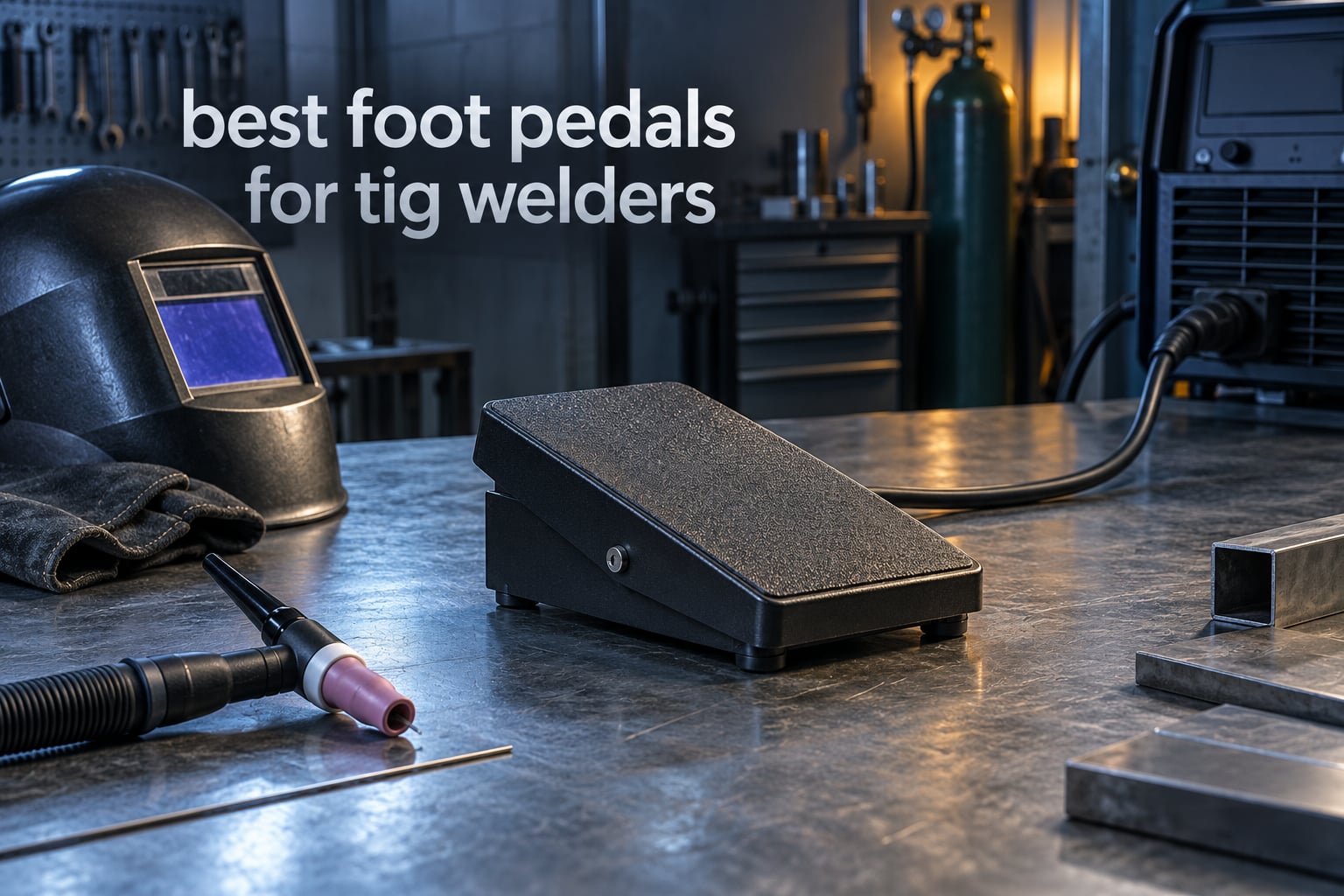
A TIG welding foot pedal is a foot control that varies welding amperage by how far you press it, so you can add or remove heat mid-weld without taking a hand off the torch. That single sentence matters more than it sounds, because the pedal is the one accessory that turns a constant-current TIG machine into a tool that can handle thin aluminum, thin-gauge stainless, tube and pipe work with any real consistency.
We spent weeks matching connector standards against real machine platforms, reading what buyers actually report after daily use, and separating the pedals that modulate amperage from the ones that just click an arc on and off. The result is the list below: the best foot pedals for TIG welders, sorted by the thing that actually decides whether a pedal works for you, which is the plug on the end of the cable.
If you are still picking the machine itself, start with our guides to the best TIG welders and our budget TIG welder picks, then come back here to match the pedal to the connector your machine uses.
Table of Contents
Do You Even Need a TIG Foot Pedal?
Short answer: you need one if you weld thin aluminum, thin stainless or small tube, and you can skip it if you are mostly doing flat bar, structural work or the occasional repair. Experienced welders on the Welding Tips and Tricks forum put it plainly, describing the place where a foot pedal “shines” as smaller, thinner parts, especially thin stainless and aluminum.
The reason is heat control. With a torch rocker switch, you set amperage on the panel before you strike and live with it until you stop. With a pedal, you feather the arc down when the puddle is small and the edges are starting to glow, then bring it back up as the puddle builds. On aluminum that is the difference between a bead that stays on the edge and one that melts through. Users welding aluminum consistently describe the pedal as the way to make on-the-fly amperage changes without breaking your torch grip.
There is an honest counterargument, and it comes up on welding forums too. Plenty of experienced hands argue the pedal becomes unnecessary once your torch-switch technique is solid, and a torch-mounted slider is a legitimate alternative for aluminum work. We would put it this way: learn on the rocker switch first, then add a pedal when you find yourself constantly reaching for the panel mid-weld. If your hands or wrists tire from holding the trigger down, the pedal solves that problem on its own, which is why welders with arthritic hands describe it as the ergonomic answer rather than the performance answer.
One more distinction before you shop, and it is the one that trips up most buyers. A true variable-output pedal contains a potentiometer that ramps current continuously as you press. A simple on/off remote is just a switch, and there are plenty of those sold as foot pedals. Plug a true pedal into a machine that only supports switching and you get an on/off pedal with terrible feel, which is exactly the failure a welding forum expert described when they told a buyer a mismatched pedal “will work as an on off switch ideal, but not as an amp control, even if the impedance matched the action is horrid.”
Top 3 Best Foot Pedals for TIG Welders in 2026
SSC Controls C910-0725 AHP 7-Pin
- 7-pin plug
- 25 ft cable
- steel case
- Made in USA
- CSA and UL listed

NOVA 14-Pin RFCS-14 Replacement
- 14-pin plug
- 25 ft cable
- stainless steel
- replaces four OEM part numbers

Best Foot Pedals for TIG Welders in October
| Product | Specifications | Action |
|---|---|---|
| SSC Controls C910-0725 AHP 7-Pin TIG Foot Pedal |
|
Check Latest Price |
| NOVA 14-Pin Miller and Hobart TIG Foot Pedal |
|
Check Latest Price |
| YESWELDER FP-5P-B 5-Pin TIG Foot Pedal |
|
Check Latest Price |
 Lincoln Electric K4361-1 TIG Foot Pedal Lincoln Electric K4361-1 TIG Foot Pedal |
|
Check Latest Price |
 SSC Controls C810-1425 Miller 14-Pin Foot Pedal SSC Controls C810-1425 Miller 14-Pin Foot Pedal |
|
Check Latest Price |
 SSC Controls C810-0625 6-Pin Miller Foot Pedal SSC Controls C810-0625 6-Pin Miller Foot Pedal |
|
Check Latest Price |
| NOVA AHP 7-Pin TIG Foot Pedal |
|
Check Latest Price |
| NOVA 6-Pin Lincoln K870 Amptrol Foot Pedal |
|
Check Latest Price |
 ARCCAPTAIN 5-Pin TIG Foot Pedal ARCCAPTAIN 5-Pin TIG Foot Pedal |
|
Check Latest Price |
1. SSC Controls C910-0725: The Best Foot Pedal for AHP and PrimeWeld Machines
SSC Controls C910-0725 TIG Foot Pedal, AHP, Made in USA, 7-Pin Plug, 25-ft Cable, AHP AlphaTIG 200X and Primeweld, TIG Welding Control
7-pin plug
25 ft cable
5.5 lb steel case
8.8 x 5.5 x 3.7 in
CSA and UL listed
Pros
- Highest rated pedal in our group with 93 percent five-star reviews
- Steel case with OEM quality components
- 25 ft cable gives real working reach
- Smooth current ramp on press and clean afterflow on release
Cons
- Fits only AHP AlphaTIG and PrimeWeld 225X machines with a 7-pin plug
- Will not work with any Everlast welder
- Highest cost in the 7-pin group
This is the pedal we kept coming back to as we read through buyer reports. The C910-0725 is a 7-pin part from SSC Controls, made in the USA and certified to both CSA and UL standards, and it is the only pedal in this group with a 4.9 average and zero one-star ratings among the reviews we read. Ninety-three percent of its reviews are five-star, which for a shop accessory is a remarkable signal.
Fitment is narrow and you need to read it twice. This is the pedal for AHP AlphaTIG machines and PrimeWeld 225X welders using the 7-pin plug, and the manufacturer states plainly that it is not for any Everlast. If your machine is on that list, the question is settled. If it is not, move on rather than trying to adapt it.
What makes it feel good underfoot is the mechanics. Pressing the pedal activates the gas contactor and ramps amperage smoothly upward, and releasing it turns output off and starts the afterflow timer, so your shielding gas keeps flowing long enough to protect the tungsten as it cools. The steel case weighs 5.5 pounds, which is heavy enough that the pedal stays planted on the floor rather than creeping while you work, and it measures 8.8 by 5.5 by 3.7 inches.
The 25-foot cable is the other quiet advantage. Most of the pedals in this roundup that are not budget units ship a 25-foot lead, and buyers report walking over the cable without damage, which tells you something about the jacket quality. The platform is wide enough to be comfortable under a steel toe boot, and the action is linear enough that fine control on thin material comes down to how lightly you press, not how precisely you place your foot.
When the C910-0725 outranks every other pedal here
The certification and the build spec are the differentiators. Buyers consistently describe the housing as steel with OEM quality components, and the pot feel as smooth rather than stepped. A 93 percent five-star share with no one-star reviews at all is a pattern you almost never see outside a brand-name part.
CSA and UL certification matters in a shop environment more than most buyers think, because your insurance and your plant safety rules care about it. Made in USA manufacture also tends to mean the potentiometer and the switch are components you could actually source again in five years if a pedal ever needed a repair, which is not true of the cheapest sealed units.
When a different 7-pin pedal makes more sense
Compatibility, plainly. This is a dedicated 7-pin AHP and PrimeWeld part, and the single most common buyer regret pattern across the whole category is ordering a pedal that does not match the connector. It also sits at the top of the price range among 7-pin options, so if you own an AHP machine and want to spend less, the NOVA 7-pin pedal covered below is the alternative.
The other limitation is the afterflow feel, which some buyers want longer. Because the afterflow timer is set in the welder rather than the pedal, you are limited by what your machine’s menu allows. If you weld long aluminum stretches and need a longer post-flow gas delay, check that setting before you assume the pedal is at fault.
2. NOVA 14-Pin Pedal: The Best Choice for Miller and Hobart Owners
NOVA TIG Welding Foot Amp Control Pedal, Compatible with Hobart and Miller Welders, 14-pin Plug, 25-ft Cable, Replaces RFCS-14, 043554, RFCS-14 HD, 194744
14-pin plug
25 ft cable
6 lb stainless steel
9 x 6 x 4 in
Replaces four OEM pedals
Pros
- Broadest Miller and Hobart coverage we found in the roundup
- Direct replacement for four common OEM pedal part numbers
- Stainless steel housing rated for daily shop use
- Controls amperage and gas contactor with afterflow on release
Cons
- Not suitable for Everlast welders
- Requires Miller serial number after JK674521
- 6 lb housing is heavy to reposition
If you run a Miller or Hobart machine with a 14-pin remote receptacle, this is the broadest coverage we found in the entire roundup. The compatibility list spans EconomyTig, the AeroWave and ALT 304 units, Big Blue 302 and 402, CST 250 and 280, the Dimension series, Dynasty 200 SD and DX through 700, the Goldstar series, HF-251-2 and HF-251D-1, Maxstar 90 through 700, Maxtron 300 and 450, Metro 250D, MK VI, Phoenix 456, PipeWorx 400, ShopMaster 300, Shopmate 300 DX, SyncroWave, TIG Runner, the Trailblazer series and the XMT line.
It also replaces four OEM part numbers directly, which is the practical reason shops buy it. Those are RFCS-14, RFCS-14 HD, 043554 and 194744, so if your original pedal died, you can match on the part number instead of guessing at connector geometry.
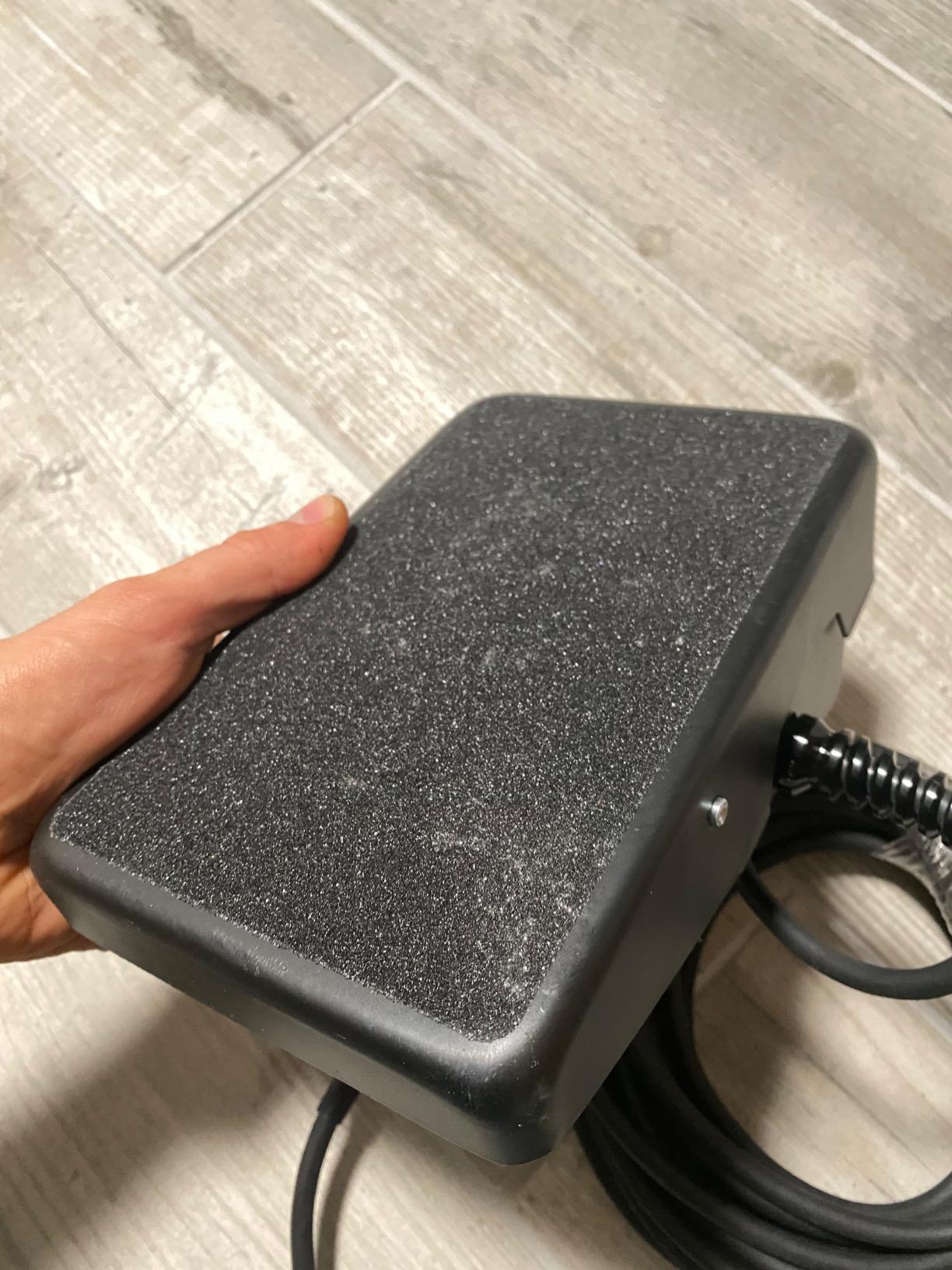
Build quality is a stainless steel housing at 6 pounds, sized 9 by 6 by 4 inches, with a stable non-slip base. That weight is a feature in a shop and a complaint in a garage, and it is the main tradeoff against lighter generic pedals. Pressing increases amperage and activates the gas contactor, and releasing turns output off and initiates afterflow, so the pedal handles both halves of a TIG cycle rather than only the arc.
Review sentiment is very consistent, with 86 percent five-star ratings. Buyers treat it primarily as a value replacement for an OEM Miller control, and the 25-foot cable plus metal housing come up again and again in the positive comments. The 4.6 average across 100 reviews puts it right alongside the Lincoln OEM part for pure satisfaction.
How to confirm this pedal fits your Miller
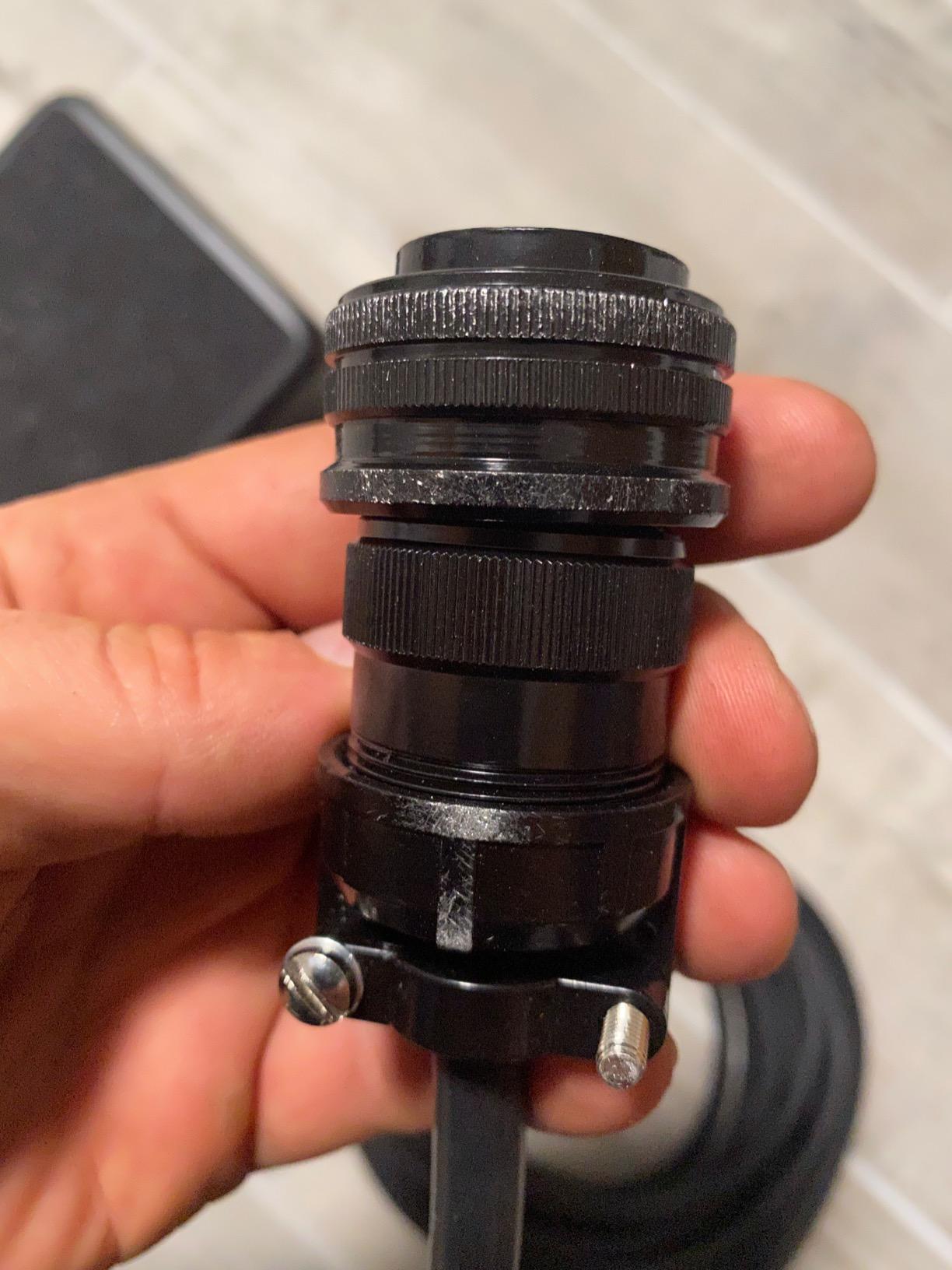
There is a serial number condition and it catches people. This pedal works with Miller solid-state power sources built after serial number JK674521, so a very old Dynasty or a secondhand shop machine with a low serial may not be covered even though the connector looks identical. Check the serial plate before you order.
You also need an actual 14-pin remote receptacle on the machine. A 6-pin receptacle is a different standard entirely, and a physical 14-pin plug will not physically enter a 6-pin socket no matter how similar the shells look. The Lincoln and Miller 6-pin pedals later in this list handle those machines, and mixing them up is the most common purchase error in this category.
Which Miller and Hobart machines are excluded
Everlast owners should look away. The manufacturer states the pedal is not compatible with Everlast welders, and forum buyers have reinforced that, describing a budget TIG that shipped with an RJ45 plug rather than a standard Miller plug as a reminder that connector standards vary even within a brand family.
The 6-pound stainless housing is genuinely heavy to reposition, and some buyers who moved between machines note the foot position takes a moment to relearn. At 4.6 stars with 100 reviews this is a mature, dependable part rather than a risky buy, and the serial number check is the only real homework.
3. YESWELDER FP-5P-B: The Best Value 5-Pin Foot Pedal
YESWELDER TIG Welding Foot Pedal Amp Control Pedal
5-pin plug
16 inch control cord
Metal housing
Plug and play
No assembly
Pros
- Most reviewed pedal in the roundup at 254 reviews
- Noticeable weight and grippy base that resists sliding
- Metal housing feels durable versus cheaper generic pedals
- Frees the torch hand and reduces hand fatigue
Cons
- Cable strain relief at the connector is not properly seated
- Some units behave as an on-off switch rather than variable control
- One report of cutting out around 30 amps on the TIG-205P
The FP-5P-B is the entry point for anyone whose welder uses a 5-pin torch control, and it is the most heavily reviewed pedal we could find, with 254 reviews behind it. That volume matters in a category where many listings have single-digit ratings, because it is the closest thing this niche has to a track record. It fits the YESWELDER TIG-200P ACDC, TIG-205P and YWT-200DC machines directly, and the listing is explicit that you should confirm the 5-pin torch control connection before using it with anything else.
Feel is the surprise. Buyers describe solid metal construction with noticeable weight and a grippy base that resists sliding on the floor, which is exactly the combination you want when you are feathering amperage on a hot piece. The pedal takes both hands off the machine for you, and multiple reviewers mention that holding the torch is simply easier once you stop bracing it against a panel knob.
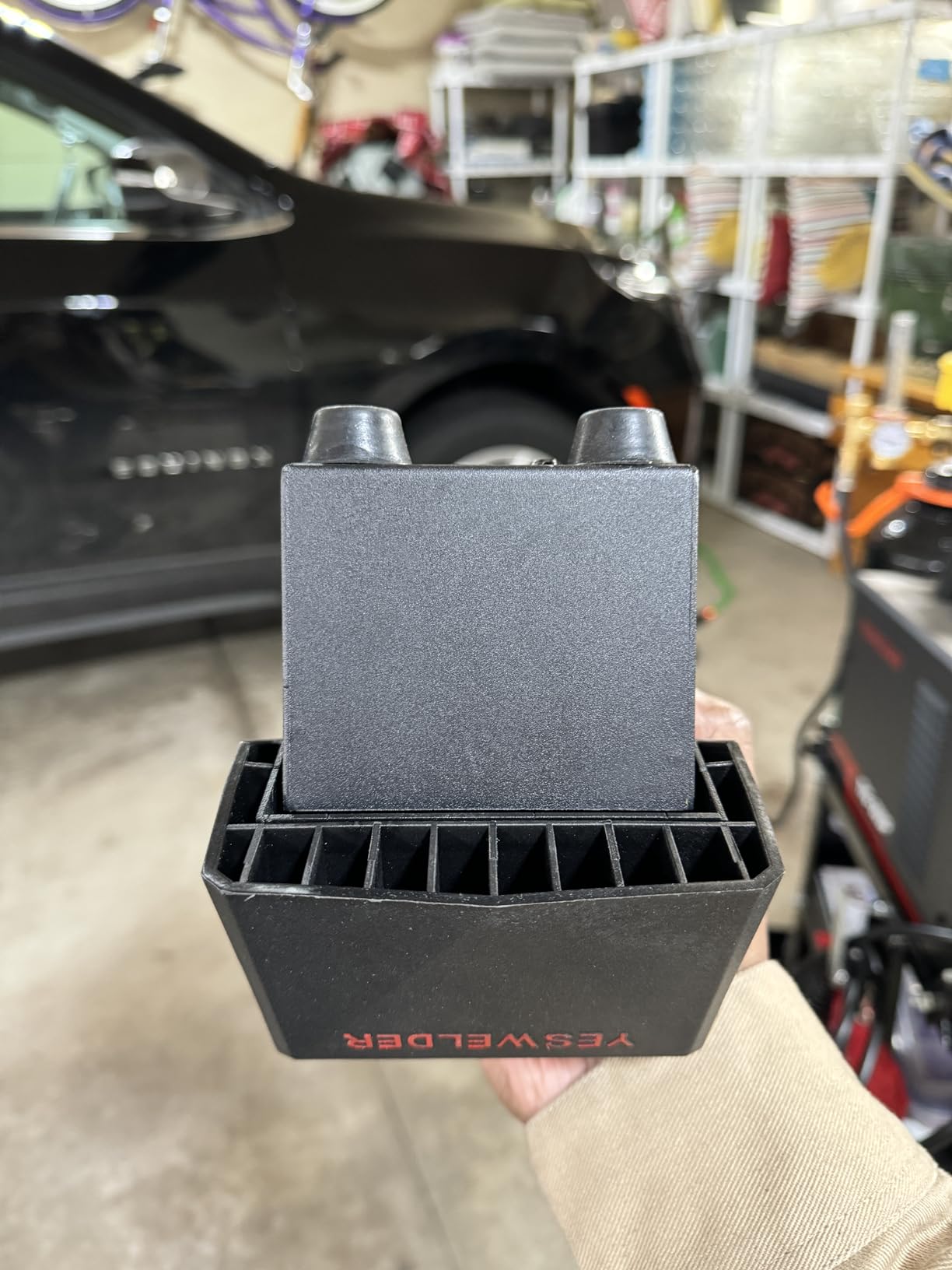
Operation is straightforward. Press to activate the gas contactor and increase amperage, release to turn off and decrease amperage. There is no assembly and the setup is plug-and-play, with a 16-inch control cord that is the shortest in the roundup but adequate for a benchtop machine sitting near your work.
The catch is the connection hardware, and it is worth being specific. The recurring negative thread across reviews is connection reliability rather than feel: the cable strain relief at the connector is not properly seated and can loosen or pull out over time, and the connector housings and locking collars use a light screw nut that reviewers call fragile. There is also a report of the plug crimp quality being poor, with visible conductors at the cable end.
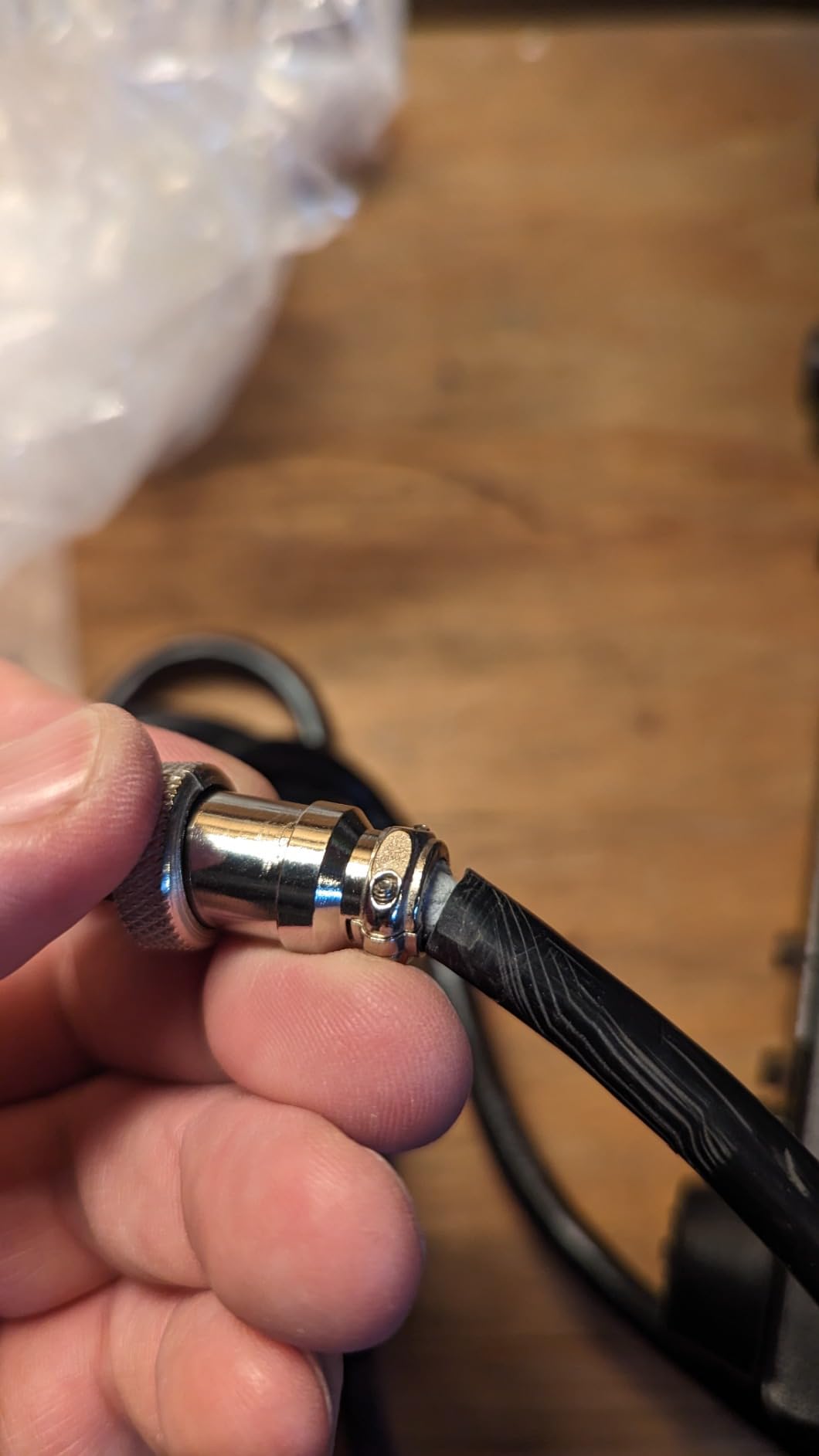
Why the 4.2 rating is still worth reading past
The rating distribution explains the score: 72 percent five-star and 8 percent four-star, but with a notable 11 percent one-star share. That is not a pedal that feels bad, it is a pedal where a slice of buyers received units with connection problems. If you have an 11 percent chance of a flaky strain relief, it is worth checking the connector and crimp on arrival, before you rely on it for a production job.
There is also a second, more serious cluster in that one-star group: some units report the pedal acting as an on/off switch rather than giving variable amperage control, and one report describes the pedal cutting out around 30 amps on the 205P, which limits thin-material welding exactly where you bought a pedal to help. If your priority is thin aluminum, this is a fair reason to step up to a heavier-duty unit.
When to skip this budget pedal entirely
Two situations. First, if you have access to a heavier pedal from a name-brand manufacturer for your connector, the SSC and NOVA options have better housings and better strain relief, and the price gap between tiers is smaller than most buyers assume. Second, if you need reach, because 16 inches is tight when the machine sits across the bench from the work.
There is one service story worth repeating though. Customer support has been responsive on this product, including unsolicited refunds and replacement parts, which softens the risk considerably if you do get a bad unit. Few budget accessories in any category are backed by a seller that proactive.
4. Lincoln Electric K4361-1: The Best OEM Foot Pedal for Lincoln Machines
Lincoln Electric Foot Pedal for TIG Torch – 10ft.L Cable, Model Number K4361-1
8-pin connector
10 ft cable
Steel enclosure
UL specification met
Indoor use
Pros
- Genuine OEM Lincoln Electric part
- Steel enclosure built for durability
- Plug and play smart connector design
- Full amperage control at the foot
Cons
- Listed compatibility is limited to the Lincoln Electric LE31MP machine
- Sold without a warranty
- 10 ft cord is shorter than the 25 ft cables most rivals include
Sometimes the right answer is the factory part, and for owners of the Lincoln Electric LE31MP the K4361-1 removes all guesswork. It is an 8-pin connector foot pedal from Lincoln Electric itself, specified for that machine, with a steel enclosure, a maximum rating of 30 volts DC, and a UL specification met. The product listing calls it a complete control of welding amperage at the foot, and that is precisely the job.
Satisfaction is broad across its 148 reviews, which is the largest review base of any Lincoln-related pedal we found. The rating distribution is 79 percent five-star and 12 percent four-star, leaving only 4 percent one-star, and the strongest theme in those reviews is durability of the steel housing combined with the reliability of the smart plug-and-play connector.
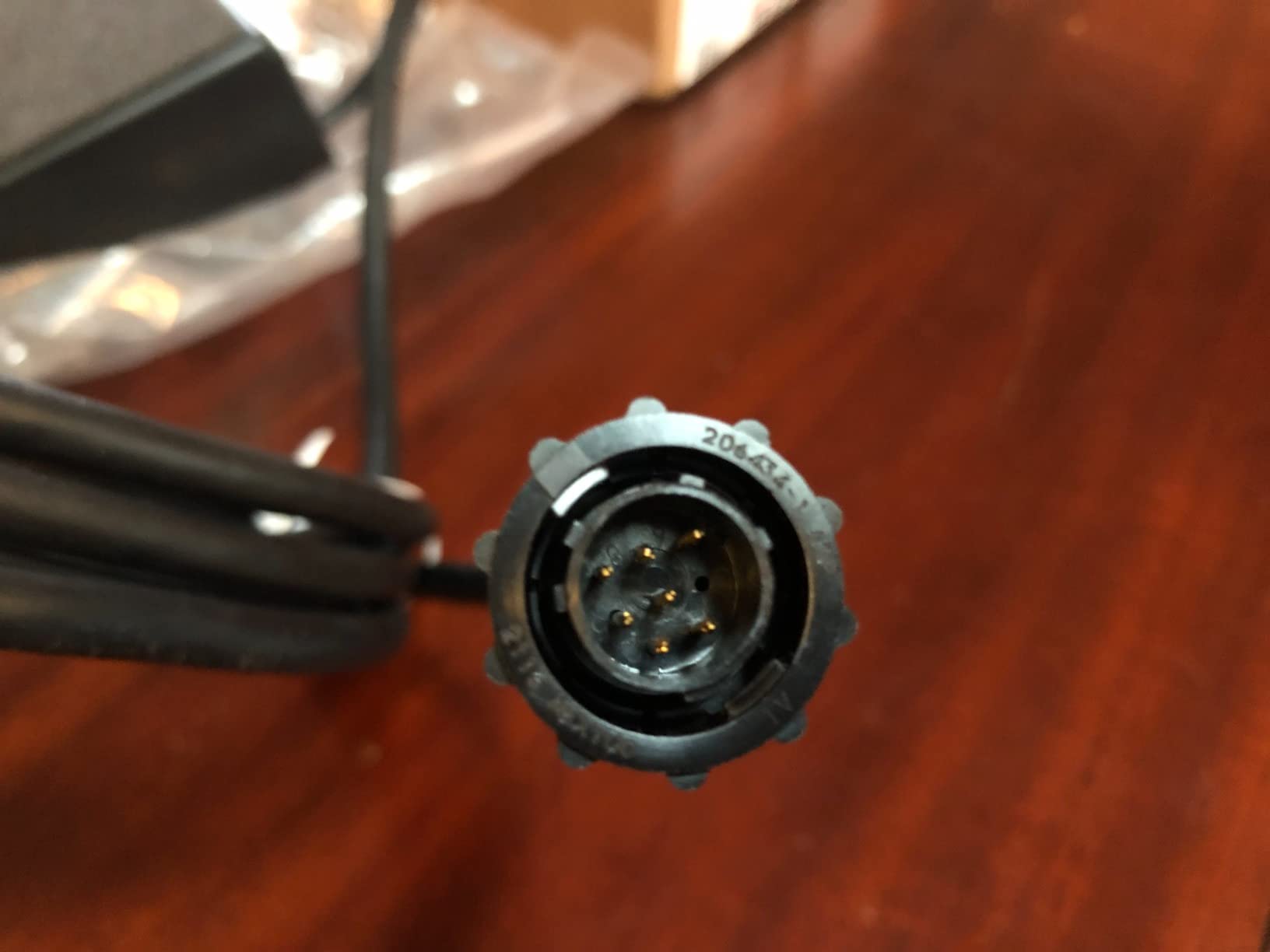
The physical details are worth noting before you commit. The unit is an indoor-use pedal with a 10-foot cable, a male-to-male connector configuration, and it weighs 9.6 ounces. That weight figure is for the item as shipped, and it is in stark contrast to the 6-pound steel alternatives in this roundup, so expect less planted feel than a heavy shop pedal gives you.
The connector is male-to-male, which is unusual enough to double-check against your machine before ordering. Buyers generally report that the design clicks into place correctly with no wiring, and the pedal is offered as a general TIG welding accessory rather than restricted to a single use case.
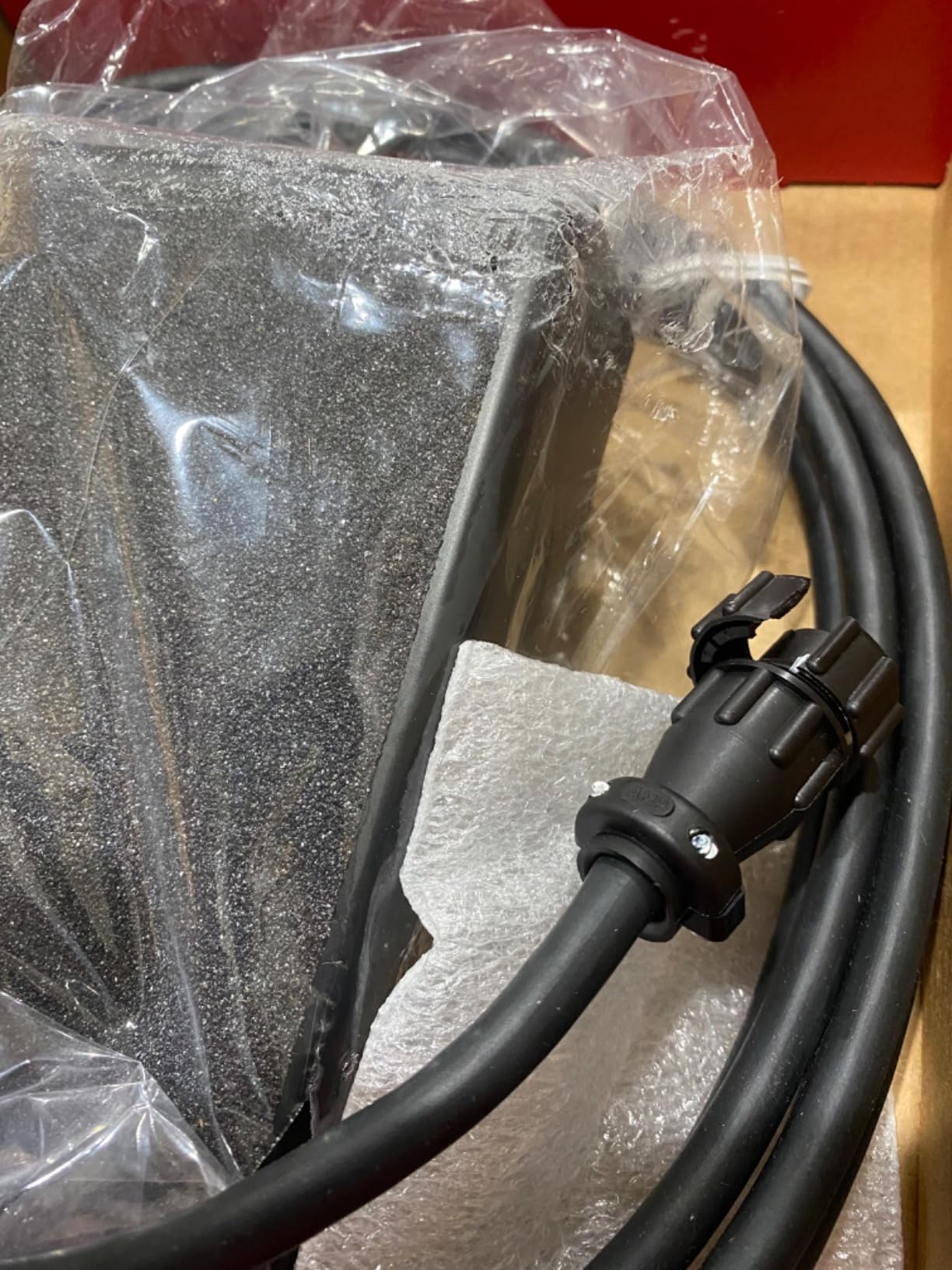
How this compares to the aftermarket Lincoln option
Compare it against the NOVA 6-pin Lincoln pedal further down if you run a K870 or a 215MP, because those are different connectors entirely. The K4361-1 is an 8-pin part tied in the listing to the LE31MP, so it is not a universal Lincoln solution the way the 6-pin Amptrol standard is across older Lincoln machines.
Where the OEM part wins is provenance. You get the manufacturer design, the UL specification, and the confidence that the pinout is correct for your machine because it came from the same company that built the welder. That matters when the alternative is a mis-mated pedal that behaves as an on/off switch.
When this OEM part is the wrong choice
Two clear limitations, both stated in the specifications. The listed compatibility is only the Lincoln Electric LE31MP machine, so if you own a different Lincoln TIG you should confirm the connector before buying. And it is sold without a warranty, which is a genuine drawback on a shop tool even when the hardware itself is well built.
The 10-foot cable is the third issue and the one buyers mention most. Most competitors include 25-foot leads, and on a workbench or a ladder-based pipe job the extra 15 feet is the difference between a comfortable stance and a cable you have to route around your body. A weld shop with benches close to the machine will not notice.
5. SSC Controls C810-1425: The Best Heavy-Duty 14-Pin Miller Pedal
SSC Controls C810-1425 TIG Welding Foot Pedal, Miller, 14-Pin Plug, Made in USA, 25-ft Cable, Replaces RFCS-14 HD, 301589, 043554, 194744, Amperage Control
14-pin plug
25 ft cable
5.5 lb steel case
Made in USA
CSA and UL listed
Pros
- Steel case that feels better built than OEM budget pedals
- Wider and lower housing several buyers prefer
- Same housing as the matching SSC Lincoln pedal
- 25 ft cable has survived being walked over
Cons
- Costs more than most aftermarket 14-pin alternatives
- Still light for a heavy shop-duty pedal
- No wireless or cordless option
Where the NOVA 14-pin covers range, the SSC C810-1425 covers build. This is a steel case with professional-grade component quality, made in the USA and certified to CSA and UL standards, and the dominant buyer sentiment is that it is a durable, better-made replacement for an inexpensive OEM Miller control. The rating is 4.6 across 90 reviews with 85 percent five-star and only 3 percent one-star.
It replaces the RFCS-14 HD pedals, part numbers 301589 and 194744, as well as the RFCS-14 part number 043554, so like the NOVA unit it doubles as a direct replacement. The mechanism is the same across this family: press to activate the gas contactor and increase amperage, release to turn off and activate afterflow.
Two design details come up repeatedly in owner comments. The housing is wider and lower than the Miller pedal it replaces, and several buyers state outright that they prefer the stance. And because SSC uses the same housing across its matching Lincoln pedal, switching between machines does not mean re-learning foot position, which is a small thing until you have done it in the middle of a job.
Why shops pick this over an OEM pedal
The case thickness and the component quality are the reason. Buyers describe it as feeling far better built than OEM budget pedals, and the 25-foot cable is reported to have survived being walked over repeatedly, which is the kind of detail that tells you a jacket is doing its job rather than just existing.
Customer service is the quiet strength. One owner had a connector damaged in shipping, and SSC resolved it quickly and shipped a replacement the same afternoon. For a shop that cannot afford a day of downtime waiting on parts, that responsiveness is worth as much as the spec sheet.
When a cheaper 14-pin pedal is the better call
The price objection is the honest one, and it is the most common complaint in the reviews. It sits above most aftermarket 14-pin alternatives, so a value-focused buyer with a Miller machine will find the NOVA 14-pin in the same guide and get broad compatibility for less.
Second, at 5.5 pounds it is still lighter than you would want for a genuinely heavy shop-duty pedal, and one reviewer says so plainly. Third, there is no wireless or cordless version, which some buyers wished for, and that is a category limitation rather than a defect. The one reported defect we found was shipping damage to a connector, and the manufacturer fixed it.
6. SSC Controls C810-0625: The Best 6-Pin Pedal for Maxstar 150 and 161
SSC Controls C810-0625 TIG Welding Foot Pedal, 6-Pin Plug, 25-ft Cable, Miller Welders (Maxstar 150/161 STL/STH), Replaces RFCS-6M (301587, 301588, 195183, 195504), Made in USA
6-pin plug
25 ft cable
5.5 lb steel case
8.8 x 5.5 x 3.7 in
CSA and UL listed
Pros
- Reliable USA-made performance on Maxstar 150 and 161 machines
- Grip tape underside holds the pedal in place
- 25 ft cord with a platform large enough under a boot
- Costs far less than the OEM Miller pedal it replaces
Cons
- Plug locking collar can arrive warped and let the pedal unplug
- Start of the pedal travel is not perfectly smooth
- One report of a unit that did not work at all
The C810-0625 exists because Miller built a large installed base of Maxstar 150 and 161 STL and STH machines with a 6-pin remote receptacle rather than the 14-pin standard that dominates everything else from the same brand. If that is your machine, this pedal replaces the RFCS-6M units, part numbers 301587, 301588, 195183 and 195504, and nothing else in the Miller range will physically fit.
It is the same SSC construction language as the 14-pin unit: a steel case with OEM quality components, made in the USA, certified to CSA and UL, with a 25-foot cable and a platform measuring 8.8 by 5.5 by 3.7 inches at 5.5 pounds. The mechanism is identical, press to activate the gas contactor and increase amperage, release to turn off and activate afterflow.
What owners like about it on a Maxstar
The underside grip tape gets specific praise for keeping the pedal in place on both sides, which is a real problem with smooth-floor shop pedals. The 25-foot cord means you are not routing cable around the workpiece, and the platform is large enough to be comfortable under a boot, which matters more on the smaller Maxstar chassis.
The money argument comes up repeatedly too. Buyers note that it costs far less than the OEM Miller option it replaces, and when the machine is a proven workhorse that you are not planning to retire, that is a sensible allocation of budget.
Why the widest rating spread of the SSC pedals matters
This pedal has the widest rating spread of the three SSC models, at 75 percent five-star, 15 percent four-star and 7 percent one-star. The specific quality-control complaint is a plug locking collar that can be warped out of the box, letting the pedal unplug when it is moved. That is a real risk on a smaller, more mobile welder, so check the collar before you rely on the pedal.
Two smaller issues. The start of the pedal travel is not perfectly smooth, so fine low-current modulation takes a little practice to get used to. And one reviewer received a unit that did not work at all on a new TIG welder, which is a dead-on-arrival scenario rather than a design fault. It is also the joint-heaviest cost point in this roundup alongside the other SSC pedals, which is worth weighing against the cheaper NOVA options on other connectors.
7. NOVA AHP 7-Pin Pedal: The Best Budget Route Into the AHP Platform
NOVA TIG Welding Foot Pedal, AHP Welders, 7-Pin Plug, 25-ft Cable, AlphaTIG 200X, Fits 2015 and newer AHP TIG Welder Models
7-pin plug
25 ft cable
6 lb aluminum
9 x 6 x 4 in
AlphaTIG 203Xi and 225Xi
Pros
- Works as a direct replacement for factory AHP foot controls
- Strong construction that holds up to daily shop use
- Costs less than the comparable SSC 7-pin pedal
- Consistently well received at 83 percent five-star
Cons
- AlphaTIG 200X models from 2013-2014 are not compatible
- 6 lb aluminum housing is heavy underfoot
- Reverse wiring variants mean fitment must be checked by year
This is the value route onto the 7-pin AHP platform. The NOVA-pedal-AHP is built for the AHP AlphaTIG 203Xi and AlphaTIG 225Xi welders with the TIG 7-pin plug, and it also covers the AHP AlphaMIG 190MP welder with the MTS 7-pin plug. It ships with a 25-foot cable and the 7-pin plug, and it carries a 4.6 rating across 100 reviews with 83 percent five-star and 6 percent four-star.
That review profile is worth comparing directly against the SSC 7-pin unit in this guide. The SSC carries a 4.9 with no one-star reviews at all, so it is the stronger buy if you want the best-built option and the connector fits. The NOVA is the choice if you want solid construction at a lower cost and you are certain about your model year.
Construction is aluminum at 6 pounds, sized 9 by 6 by 4 inches. That is the same weight and footprint as the NOVA 14-pin unit, so the feel and the stance transfer directly between them if you own machines on two different connectors.
The model-year check that saves you a return
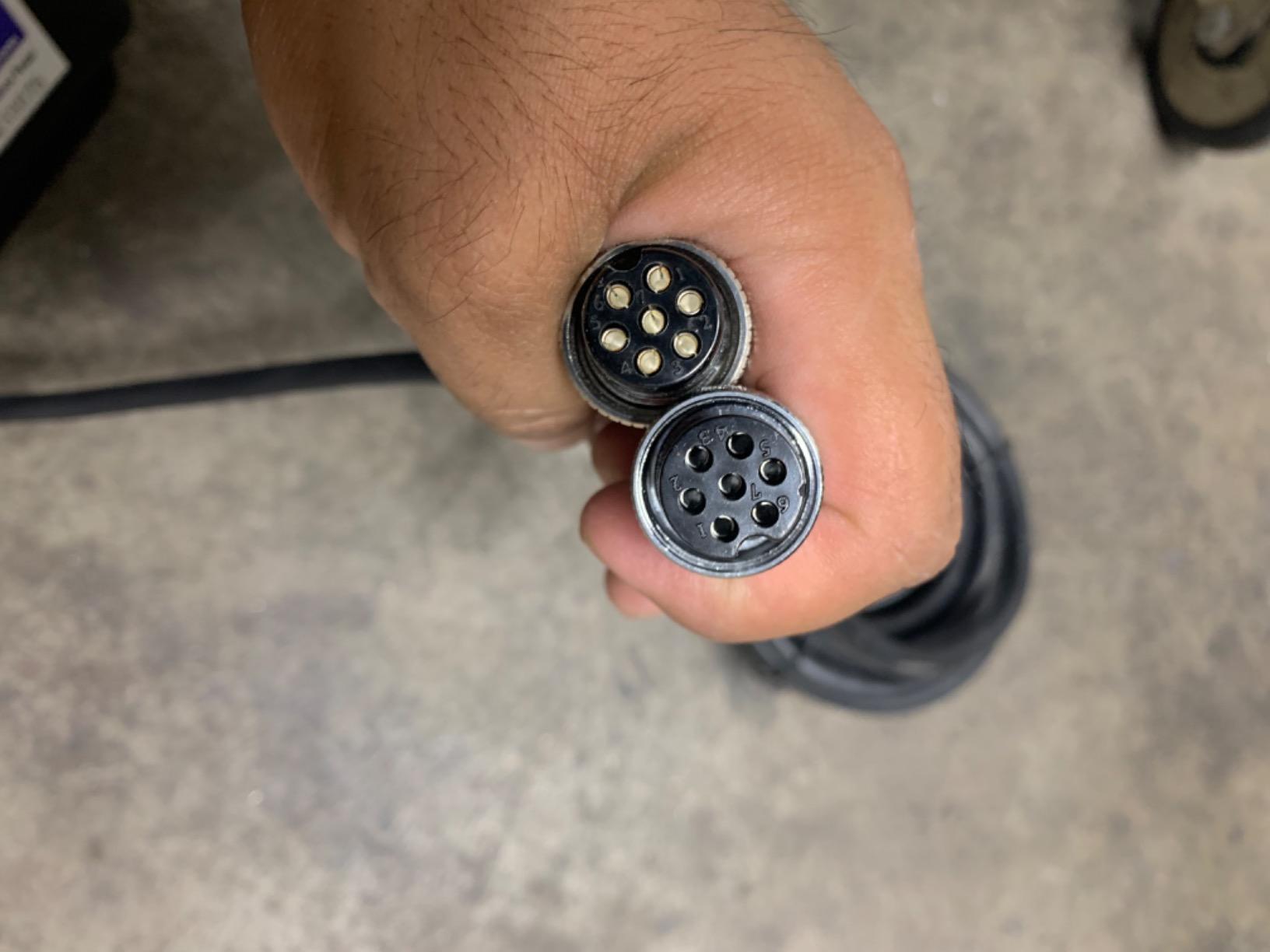
This is the single most important paragraph for anyone buying this pedal. AlphaTIG 200X models from 2013 to 2014 are not compatible with it. AlphaTIG 200X models from 2015 to 2018 are designed to work in reverse wiring, so they will function. Check the year before you order, because the connector body looks the same in all three cases.
Reviewers flag the compatibility list as the essential reading on the listing, which is honest advice from people who learned it the hard way. If you cannot identify your model year, identify the model number first, because the 203Xi and 225Xi names are what map to the supported machines.
When the heavier housing is not worth it
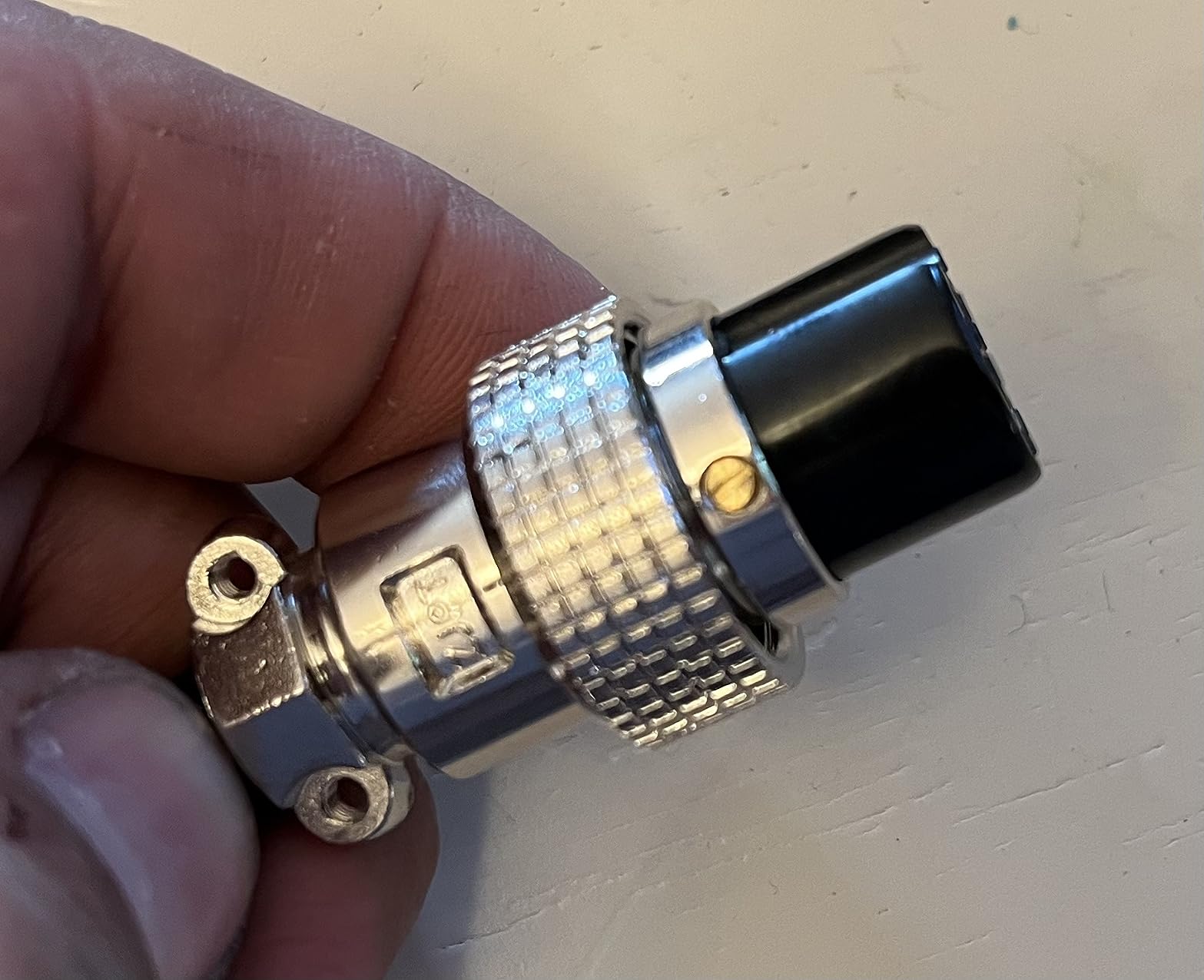
The 6-pound aluminum housing is not light for a foot pedal. It stays planted, which is good for control, but it is heavy to reposition and it is heavier than the steel SSC unit despite the lower cost, so the savings do not come from a lighter product.
And the narrow fitment is unavoidable. This is a 7-pin AHP part, full stop. If you own an Everlast, a Miller or a Lincoln, this is the wrong pedal no matter how good the rating looks, and no adapter in this roundup will make it work. Check your connector first, then choose your pedal.
8. NOVA 6-Pin Lincoln Amptrol: The Best Direct Replacement for the K870
NOVA 6-Pin TIG Foot Pedal Amptrol Amp Control for Lincoln Welders K870
6-pin Amptrol plug
Metal housing
6 lb weight
Non-slip base
Plug and go
Pros
- Direct replacement for the Lincoln K870 and 6-pin Lincoln machines
- Metal build has outlasted a name-brand OEM pedal
- Smooth heel to toe action makes trailing out thin welds easy
- Non-slip base holds position on the shop floor
Cons
- Only for Lincoln machines with a 6-pin connector
- 6 lb metal housing is heavy to reposition
- Adapting to another brand requires plug and capacitor changes
The Lincoln K870 is a common enough machine that its original foot amptrol becoming a casualty of a shop floor is a routine event. This NOVA 6-pin pedal is a direct-fit replacement, and it also works on other Lincoln machines that use the 6-pin connector, including the 215MP and Square Wave TIG models. Setup is plug-and-go, with no wiring, adapters or modifications.
Satisfaction is among the most consistent in the roundup, with 80 percent five-star, 12 percent four-star and only 2 percent one-star ratings across 74 reviews. The description owners give is dependable OEM-equivalent replacement that works as designed, and several mention buying a second unit as a backup, which is the clearest endorsement a shop tool can earn.
What makes it good for thin material work
The action is described as smooth heel-to-toe, which is the mechanical detail that matters most for the reason people buy pedals. Because the travel is linear from heel to toe rather than hinged or stepped, you can feather the amperage down for a trailing-out thin weld and back up again without lifting your foot or breaking stride. Owners call that out specifically, and it is the whole argument for a pedal on stainless and aluminum.
The housing is metal with a stable non-slip base, weighing 6 pounds at 9 by 6 by 4 inches. One long-term shop install reported the metal construction outlasting the name-brand red pedal it replaced, which is the kind of report that matters more than a specification line.
When a different Lincoln pedal is the right choice
Fitment is the whole story, and it is narrow. This is a 6-pin Lincoln part, so it will not serve a Miller, Hobart, AHP or Everlast machine. If your Lincoln uses the 8-pin standard covered by the K4361-1 earlier in this guide, you need that one instead.
Second, the 6-pound metal housing is heavy to reposition, so if you move between workstations constantly it is more of a nuisance than an asset. Third, and this one is worth taking seriously, one reviewer had to change the plug type and remove capacitors to adapt the unit to a PrimeWeld TIG225X. Cross-brand adaptation through this pedal is possible but it is a project, not a plug swap, and the parts and steps involved are not something we would recommend as a first approach.
9. ARCCAPTAIN 5-Pin Foot Pedal: The Best Match for ARCCAPTAIN TIG Machines
ARCCAPTAIN TIG Welding Foot Pedal, 5-Pin Remote Amp Control
5-pin plug
Two 10 ft cables included
5.5 lb weight
0-200 A potentiometer
Adjustable foot strap
Pros
- Wider 15 cm contact area and adjustable foot strap for stability
- 12-tooth alloy gear and full-range potentiometer for 0-200 A
- Two cable harnesses included for plug and play fit
- Hands free control without reaching for panel knobs
Cons
- Cable exit is wrapped in electrical tape and feels fragile
- Side connector questioned for long term durability
- Some units arrive with a rubber foot missing
This is a 2025-updated design built around a specific stability problem. The contact area was widened from 10 cm to 15 cm, and an adjustable foot strap was added to keep the pedal from slipping during long sessions. For anyone welding thin aluminum with a boot on, that footprint matters, because the difference between a planted pedal and a creeping one is the difference between smooth amperage changes and a stutter.
The control mechanism is a 12-tooth alloy gear driving a full-range potentiometer for 0-200 A adjustment. Press to start and increase current, release to decrease or stop output. Compatibility covers the ARCCAPTAIN TIG200, TIG200P, TIG200P ACDC, TIG205 Pro and TIG205P Pro, and it is not compatible with the MIG205MP.
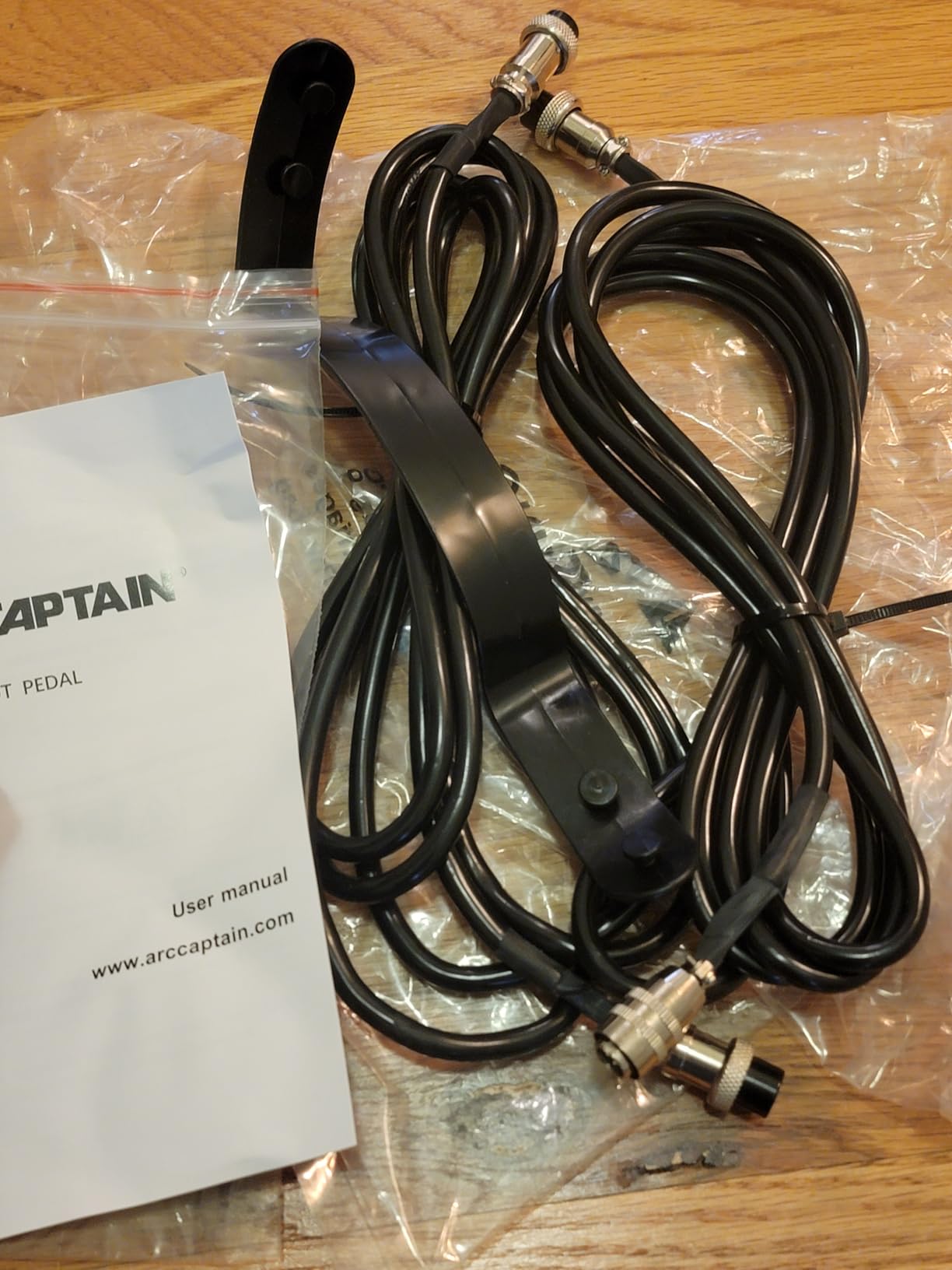
What makes it unusual in this category is the cable bundle. Two 10 ft, 3 m cables are included, one for the TIG200 and TIG200P and one for the TIG200P ACDC, TIG205 Pro and TIG205P Pro, so you cover the newer and older platforms without a separate purchase. The unit weighs 5.5 pounds, and the warranty description lists 180 days.
The rating is 4.4 across 73 reviews, with 66 percent five-star, 19 percent four-star, 6 percent three-star and 3 percent one-star. That is broad satisfaction but slightly less uniform than the SSC and NOVA pedals, and the distribution explains why: the pedal feels and performs well, and the complaints cluster around small-part quality control.
Why the two-cable approach is genuinely useful
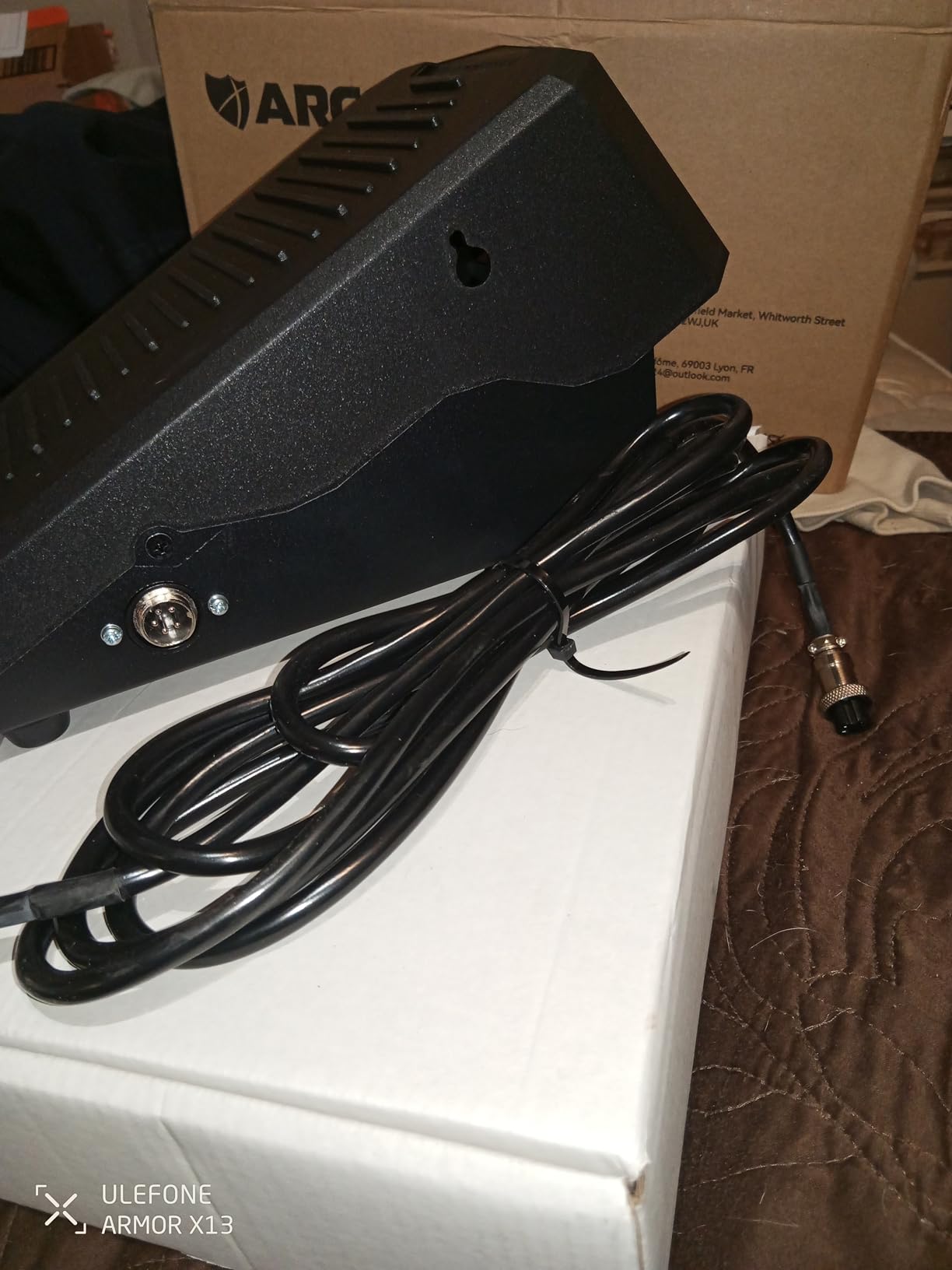
It removes the most common reason aftermarket pedals get returned. Instead of identifying which harness your specific ARCCAPTAIN model needs and risking a wrong fit, you get both in the box and plug whichever one matches. For a shop running two generations of the same brand, that is a real convenience rather than a spec-sheet nicety.
The 0-200 A range from a single pedal also covers the full spread of TIG work, from the low single-digit amperage you need to keep a puddle alive on thin sheet through to full output on heavier stainless work. Reviews describe the potentiometer as smooth and precise, which is the mechanical difference between a pedal you can modulate at the low end and one you cannot.
Why the cable exit is the thing to inspect on arrival
The cable exit is the repeated criticism and it is a legitimate one. Where the cable leaves the pedal, it is only wrapped in electrical tape and several reviewers expect it to fail, and the side connector itself is questioned for long term durability even though it is easily fixable. Add the large pedal footprint, the fact that it is a plastic body, and the reported loose quality control on small parts such as arriving with a rubber foot missing, and you are looking at a well-designed pedal held together with hardware that has not been fully sorted out.
One reviewer also had to rewire the pedal for a different welder brand, which is a reminder that even a well-documented 5-pin part is not universally plug-compatible. If you are on any other platform, the 5-pin standard is not a guarantee of fit, and cross-brand adaptation is a job rather than a purchase.
How to Check if Your Welder Takes a Variable-Output Pedal
This is the check that prevents the single most common purchase failure in the category, and it takes about five minutes. Do it before you order anything, not after.
Step 1: Count the wires at the torch socket. Open the torch socket or connector cover on your machine and look at what actually goes to the torch trigger. A welding forum expert put the number plainly: for pedal compatibility there should be a minimum of four wires connected, and five is more common. If you find only two wires, the machine is switch-only, and no pedal you buy will give you variable amperage from it.
Step 2: Confirm variable-output is enabled in the machine. Many modern welders ship with remote amperage control disabled or available only through a menu setting. Check the manual for the remote control configuration, and check whether the machine needs a specific mode or parameter box for a foot control to be recognized. A pedal plugged into a machine that is not configured for it will click and do nothing.
Step 3: Match the pin count and the plug body. Count the pins in the receptacle and compare against the pedal plug, not just the number. A 5-pin, 6-pin, 7-pin, 8-pin and 14-pin all exist, and a 6-pin Miller RFCS-6M plug is not interchangeable with a 6-pin Lincoln Amptrol plug even though the number matches. If the shapes look unfamiliar, take a photo of the socket and match it against the manufacturer chart rather than eyeballing it.
If step 1 comes back with two wires, the honest answer is that you need a different machine or a different approach. A torch-mounted amperage slider is a legitimate alternative for the same job, and learning the rocker switch well is the foundation anyway.
Wired vs Wireless TIG Foot Pedals
Every pedal in this roundup is wired, and that is a deliberate limitation worth explaining. There are wireless foot pedals available, including a Miller wireless foot control and a Lincoln wireless amptrol, and they do work. What the feedback from people who own them suggests is that the response is very good, with owners describing the wireless unit as more responsive than the wired pedal with noticeably more control, and one owner reporting they had not managed to drain the battery.
The tradeoff is the machine dependency. A wireless pedal is a closed system tied to a specific welder brand and model range, and it is an expensive way to add a second machine to a shop that already runs several brands. Every wired pedal in this guide uses a passive potentiometer and a connector, so the pedal does not care what welder you plug it into as long as the pinout matches.
There is also a latency question, and it is smaller than it sounds. A potentiometer pedal has no radio in the loop at all, so its response is limited by the welder’s own contactor and filtering rather than by transmission delay. A wireless system adds a receiver and a transmitter between your foot and the same contactor.
Our read: buy wired unless your machine is one of the specific platforms with a supported wireless controller, and unless you specifically weld somewhere that has no safe path for a foot pedal cable. Cable routing is a genuine safety concern on ladders, scaffolding and confined spaces, and it is the strongest argument for going wireless. Everywhere else, a 25-foot cable is a non-issue and a wired pedal gives you broader machine choice for the money.
For the machine itself, our guides to the best multiprocess welders and the best welders overall cover the platforms most of these pedals attach to.
How to Choose a TIG Foot Pedal
1. Confirm the connector before anything else. Pin count and plug body, matched to the receptacle on your specific machine and model year. Everything else on this list is secondary, and a beautiful pedal that does not fit is a paperweight. If you cannot identify the connector, ask the machine manufacturer before ordering.
2. Verify variable-output support, not just a pedal port. Some machines have a remote control port that only carries an on/off signal. The wire count check described earlier settles this in minutes.
3. Prioritize a heavier housing over a cheaper one. Heavier is better here, because a pedal that does not move is a pedal that gives you repeatable control. The pedals in this guide run from 5.5 to 6 pounds, and owners of heavier units consistently mention floor grip and stability as a reason the pedal feels better than a lighter one.
4. Look for a long cable, ideally 25 feet. A 25-foot lead is the difference between a comfortable stance and cable routed around your body. One 10-foot pedal in this roundup draws regular complaints for exactly that reason. If your machine sits on a bench next to the work, cable length barely matters; if you weld pipe or climb, it matters a great deal.
5. Judge the build at the connection points. The failures we saw across all nine pedals were almost entirely at the cable exit, the strain relief and the plug crimp, not in the housing. Strain relief that is properly seated, connector locking collars that are not flimsy screw nuts, and visible conductor at the cable end are all things you can check on arrival in a few seconds.
6. Prefer certification and documented support. CSA and UL certification, a stated warranty length, and a manufacturer that resolves problems quickly are all practical signals. One pedal in this guide is sold without a warranty, and another carries a 180-day term, so read the warranty field rather than assuming coverage is equal.
7. Make sure it controls the gas contactor, not just the arc. A pedal that ramps amperage but does not open the gas contactor on press, or that does not trigger afterflow on release, will leave you fighting tungsten oxidation. Every pedal here does both, but it is worth confirming on any used or generic unit.
8. Match the pedal to the work you actually do. If you are on thin aluminum or thin stainless, prioritize a smooth linear pot and a wide, planted base. If you are doing structural work, the housing and cable length matter more than pot refinement. Buying a delicate pedal for shop work is paying for refinement you will never notice.
Frequently Asked Questions
Is a foot pedal needed for TIG welding?
Not strictly, and plenty of experienced welders weld fine with the torch rocker switch alone. But a pedal becomes close to essential on thin aluminum, thin-gauge stainless, tube and pipe work, where you need to reduce heat mid-weld without stopping to reach the panel. If you weld those materials regularly, or if holding the trigger tires your hands, a variable-output foot pedal is the right tool.
What pin does my TIG welder foot pedal use?
It depends entirely on the machine, and this is the first thing to check. Common standards include 5-pin, 6-pin, 7-pin, 8-pin, 9-pin and the Miller 14-pin RFCS-14, plus Lincoln 6-pin Amptrol and AHP 7-pin variants. Open the torch socket cover, count the wires and pins, and match the plug body rather than the pin count alone, since a 6-pin Miller and a 6-pin Lincoln are not the same part.
Is there a wireless foot pedal for TIG welders?
Yes. Wireless TIG welding foot pedals exist for specific welder platforms, including a Miller wireless foot control and a Lincoln wireless amptrol. Owners report the response is very good, describing them as more responsive than a wired pedal with more control. The catch is that they are closed systems tied to particular brands and models, so verify your machine is supported before choosing one over a wired pedal.
Why does my TIG foot pedal not work?
The most common causes are connector mismatch and configuration, not a faulty pedal. If your machine has only two wires at the torch socket, it is switch-only and cannot modulate amperage. Some machines also ship with remote amperage control disabled or require a menu setting or parameter box. Finally, a warped plug locking collar or loose strain relief can let the pedal disconnect, which is a reported issue on some new units.
Can I use a Miller foot pedal on a Lincoln welder?
Not directly. A Miller 14-pin RFCS-14 pedal and a Lincoln 6-pin Amptrol pedal are different connector standards and are not interchangeable, even though both are TIG foot pedals. Adapting one to another means changing the plug and removing capacitors, which is a bench project rather than a swap. Buy the pedal built for your connector instead, and save the modification for a machine you cannot replace.
What is the Rule of 33 for TIG welding?
The Rule of 33 is a starting-point estimate for TIG amperage on steel: multiply the thickness of the material in thousandths of an inch by 33 to get a starting amperage. A 0.035 inch sheet works out to roughly 115 amps. It is a starting number only, and it changes with alloy, shielding gas, joint design and travel speed, which is exactly why having a foot pedal to trim heat on the fly matters.
Conclusion
Start with the connector, not the spec sheet. Identify the plug your welder actually accepts, confirm it has at least four wires at the torch socket so it can modulate amperage, and then choose from these nine. If you want one recommendation rather than nine, the SSC Controls C910-0725 is the pedal we would put under a bench, at a 4.9 rating with 108 reviews and no one-star ratings behind it, provided your machine uses the AHP or PrimeWeld 7-pin plug. Miller and Hobart owners should take the NOVA 14-pin for the widest coverage in the guide, and Lincoln 6-pin owners should take the NOVA 6-pin Amptrol as a direct K870 replacement.
For everything else, match the connector and pick the build. Check the strain relief and the plug collar on arrival, run a full ramp test from minimum to maximum before you need the pedal on a real job, and set your afterflow timer in the welder rather than expecting the pedal to manage it. If you are still choosing a machine, our best TIG welders guide covers the platforms these pedals attach to, and our stick welder picks help if you split your time between processes.