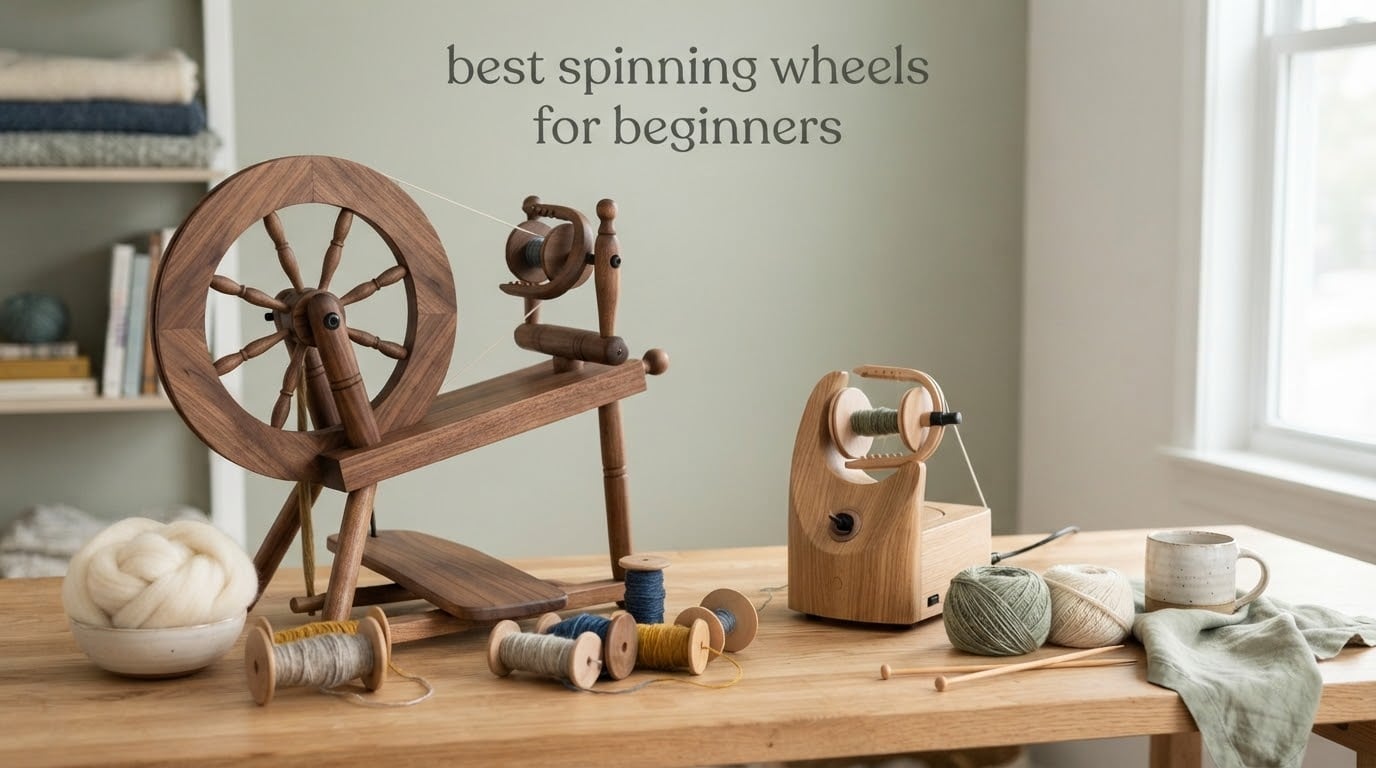
If you want the short version, the Ashford Kiwi 3 is the best spinning wheel for beginners in 2026 because it folds flat, treadles quietly on ball bearings and gives you three speed ratios to grow into. Below it sit an electric kit for anyone who cannot coordinate treadling yet, and a mini electric spinner for the smallest budgets. All ten picks below were judged on the same thing: how hard they are to draft on, not how many specs are printed on the box.
That distinction matters more than anything else in this list. The most common story in spinning forums is not that a wheel broke, it is that a first wheel pulled so hard on the yarn that the spinner could not draft at all, filled a bobbin, gave up and never came back. Heavy take-up, not build quality, is what makes people quit handspinning inside the first month.
We went through ten wheels and e-spinners line by line for this guide, weighing draftability, take-up feel, weight, portability and how much assembly a first-time owner faces on day one. Where a listing gave us hard numbers – bobbin capacity, ratios, orifice height, weight – we used them. Where it did not, we told you that instead of guessing.
If you are still deciding whether a wheel is right for you at all, we cover the spindle-to-wheel upgrade path in the spinning wheel guide, and our wider beginner handspinner picks covers the fibre side. You may also like our spinning reel roundup if you are fishing rather than spinning wool.
Table of Contents
Top 3 Picks for Best Spinning Wheels for Beginners in October


Quick Overview All 10 Picks Side by Side in 2026
| Product | Specifications | Action |
|---|---|---|
 Ashford Kiwi 3 Ashford Kiwi 3 |
|
Check Latest Price |
| Electric Spinner Kit with Foot Controller |
|
Check Latest Price |
 Spinning Jenny with Brake Spinning Jenny with Brake |
|
Check Latest Price |
| Mini Electric Spinning Wheel |
|
Check Latest Price |
 Ashford Traditional Single Drive Ashford Traditional Single Drive |
|
Check Latest Price |
 Schacht Sidekick Schacht Sidekick |
|
Check Latest Price |
 Smart Yarn Spinner 120g Smart Yarn Spinner 120g |
|
Check Latest Price |
 Ashford New Joy 2 Ashford New Joy 2 |
|
Check Latest Price |
 Electric Yarn Spinner Kit 4 Bobbins Electric Yarn Spinner Kit 4 Bobbins |
|
Check Latest Price |
 Consfly 800RPM Spinner Consfly 800RPM Spinner |
|
Check Latest Price |
How We Picked: The Criteria That Actually Matter
We ranked every wheel on five things, in this order.
Draftability and take-up. This is the make-or-break. A wheel that pulls hard on the incoming yarn steals the twist before your hands can condense the fiber, and you end up fighting the machine. Lightweight wheels and lower first-gear ratios are kinder to beginners.
Orifice height and body fit. Where the yarn enters the flyer matters if you are tall or short. Comfortable posture beats a longer parts list every time.
Portability. Weight, folded footprint and whether it needs a dedicated corner of the room. A wheel you will not leave out on the table is a wheel you will stop using.
Assembly and finish work. Some frames arrive ready to spin. Others arrive as bare wood that needs sanding, oiling and assembly before the first turn of the bobbin.
Feedback quality. We weighted listings with real owner reviews above listings with glossy copy and no history, and we flag thin review pools honestly in each section.
1. Ashford Kiwi 3 – The Best Spinning Wheel for Beginners Overall
Ashford Kiwi 3 Spinning Wheel Unfinished
12 lb
Folding double treadle
5.5/7.5/9.5:1
Three 4.5oz bobbins
Lazy kate
Pros
- Quiet ball-bearing treadling
- Folds flat for storage
- Light at roughly 12 lb
- Three speed ratios
- Built-in lazy kate
Cons
- Arrives unfinished and needs assembly
- Printed instructions can be confusing
- Treadle hinge can squeak
- Plastic rear bearing is fragile
This is the wheel we kept coming back to while testing. The Kiwi 3 is a timber veneered MDF castle-style wheel on double treadles mounted on polyurethane hinges, and the treadling is genuinely quiet. For a beginner that quietness is not a luxury, it is the difference between hearing the twist in the fiber and hearing nothing but the mechanism.
The frame folds flat, which is the single most practical feature here. If you live in a small apartment without a dedicated craft corner, a wheel that lives in a closet between sessions is a wheel you actually keep using.
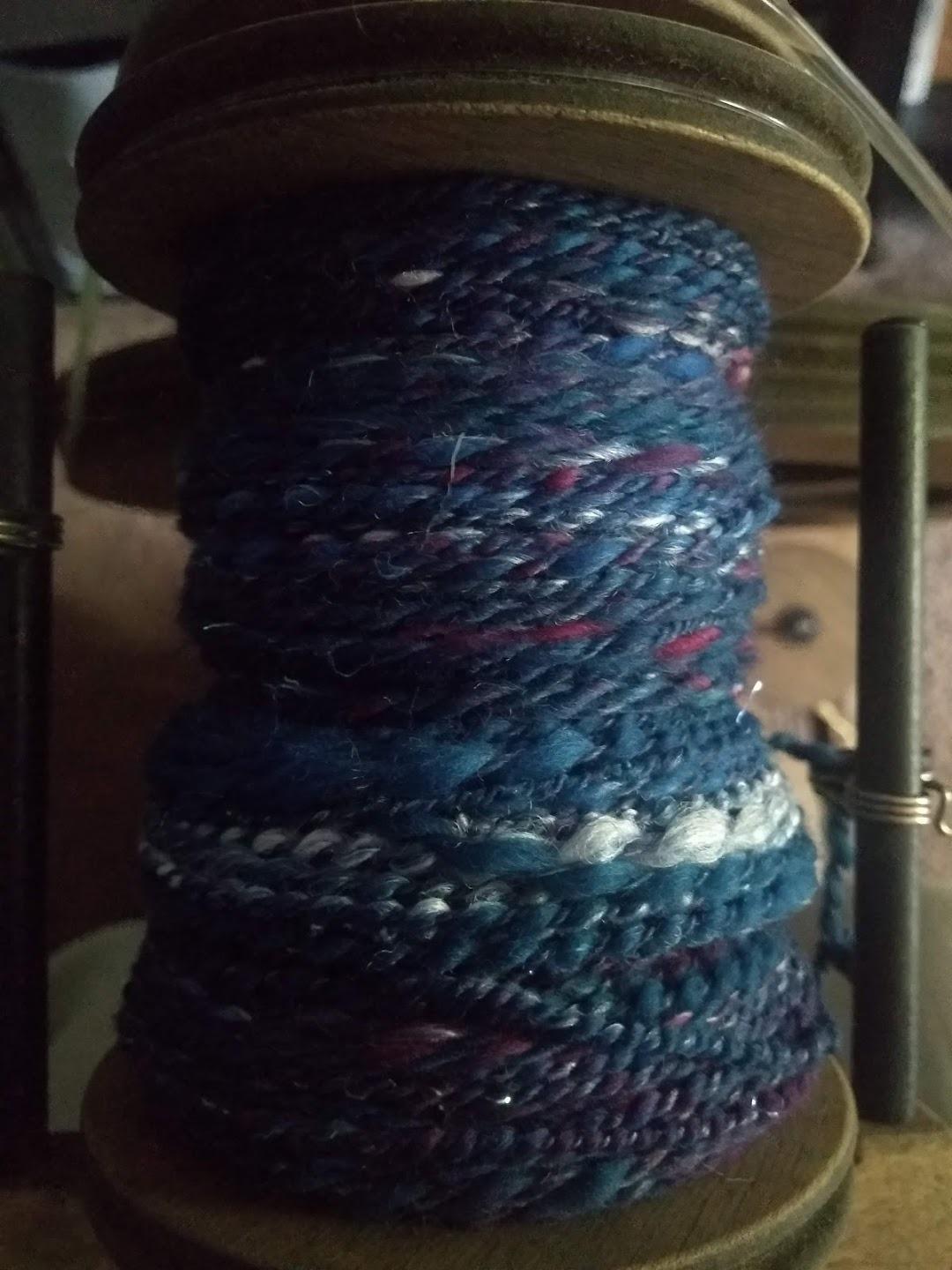
Three whorl speeds at roughly 5.5:1, 7.5:1 and 9.5:1 give you a low-tension gear to learn on and finer gears as your drafting improves. The three 90mm bobbins hold about 4.5oz each, and the sliding eyelets on the flyer suit thicker art yarns without a fight.
Reviewers repeatedly describe it as a capable, sturdy first wheel that is easy to assemble with the help of an online video, and the 4.9 average across 91 reviews backs that up. Our advice is to start on the lowest whorl and stay there until drafting feels boring rather than difficult.
What you should know before you buy
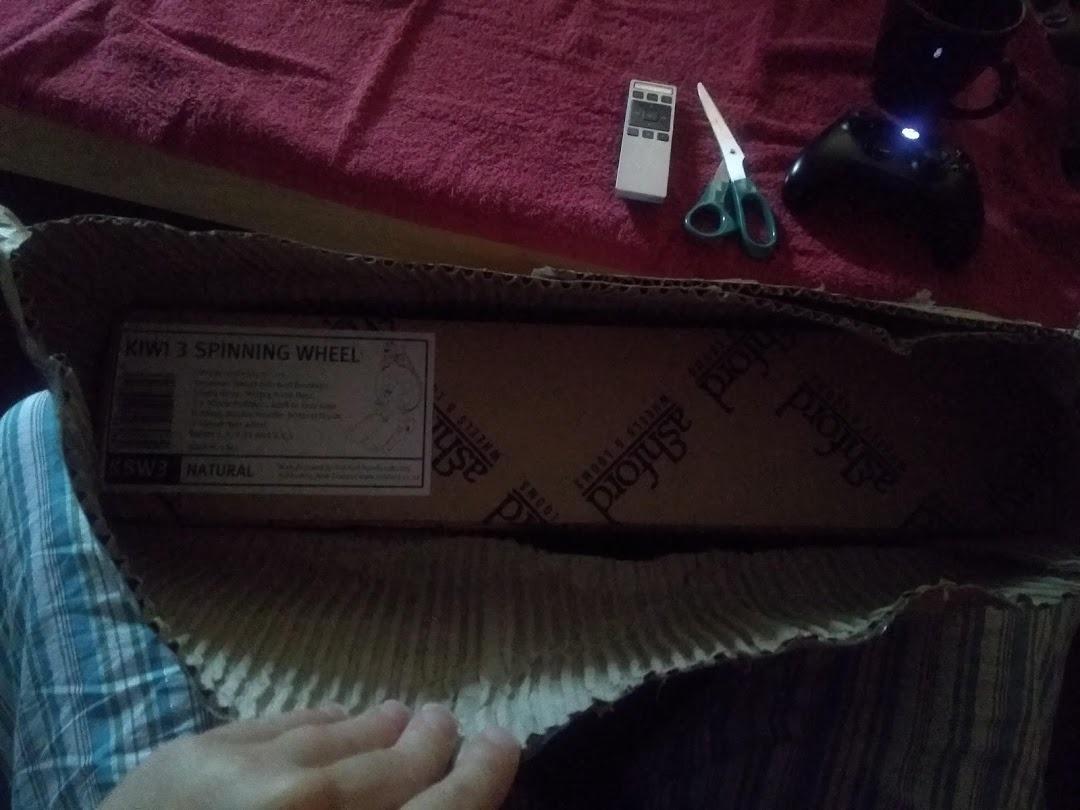
It arrives unfinished, so budget a weekend for sanding, finishing and assembly. The written instructions are genuinely confusing and most owners fall back on the assembly video. Oil the treadle hinges generously during the first weeks.
The rear bobbin bearing is a small plastic part and it is the one component owners warn about cracking when the wheel is lifted by the wrong part of the frame. Lift by the base or the wheel housing.
Who it suits and who it does not
It suits anyone who wants quiet treadling, a folding footprint and a long ratio ladder in one package, and it holds up well for fine singles. It does not suit anyone who wants zero assembly work on day one, and the low take-up at the first ratio means you will spin less per hour than a heavy castle wheel.
2. Electric Yarn Spinner Kit with Foot Controller – Best Value
Electric Yarn Spinner Kit with Foot Controller & 3 Bobbins, Small Yarn Winder with Forward & Reverse (4oz)
Foot controller
4oz or 8oz
12V
Forward and reverse
Spins and winds cakes
Pros
- Foot control frees both hands
- Quiet motor with soft start
- Spins and winds in one unit
- Compact and light
- Handles wool cotton linen silk
Cons
- Roughly 11% of reviews are 1-star
- Modest drafting capacity
- Plastic construction
If your knees, hips or back object to treadling, this kit removes the argument entirely. Both hands stay on the fiber and your foot controls speed through a stepless pedal, which is exactly the setup many knitters with joint pain look for.
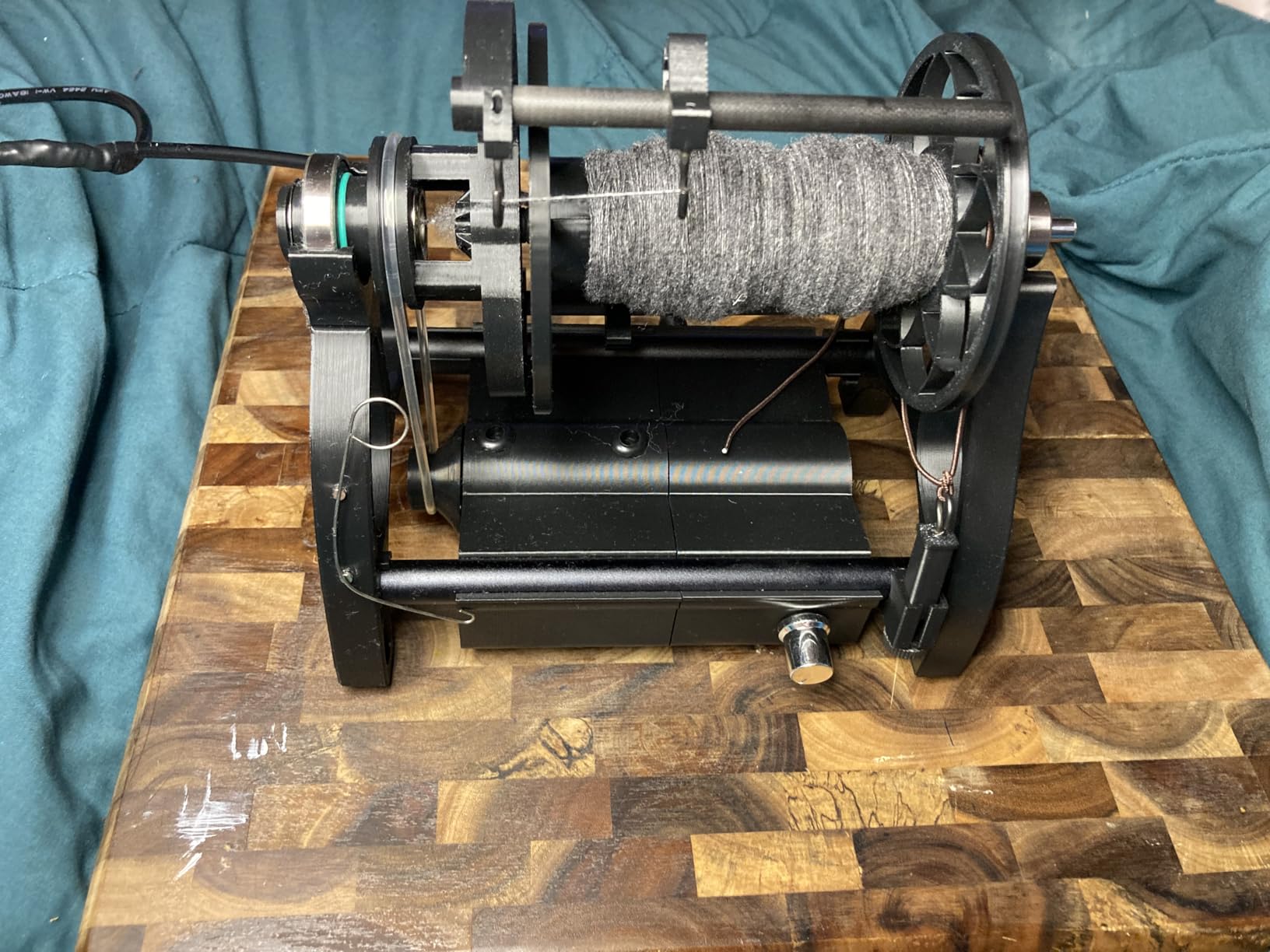
It is a 2-in-1 design: the same unit spins single strands forward for Z twist and reverses for S-twist plying, then winds the result into cakes without a separate winder. It ships with a foot controller and three bobbins, and the 12V system will run off a mobile power supply.
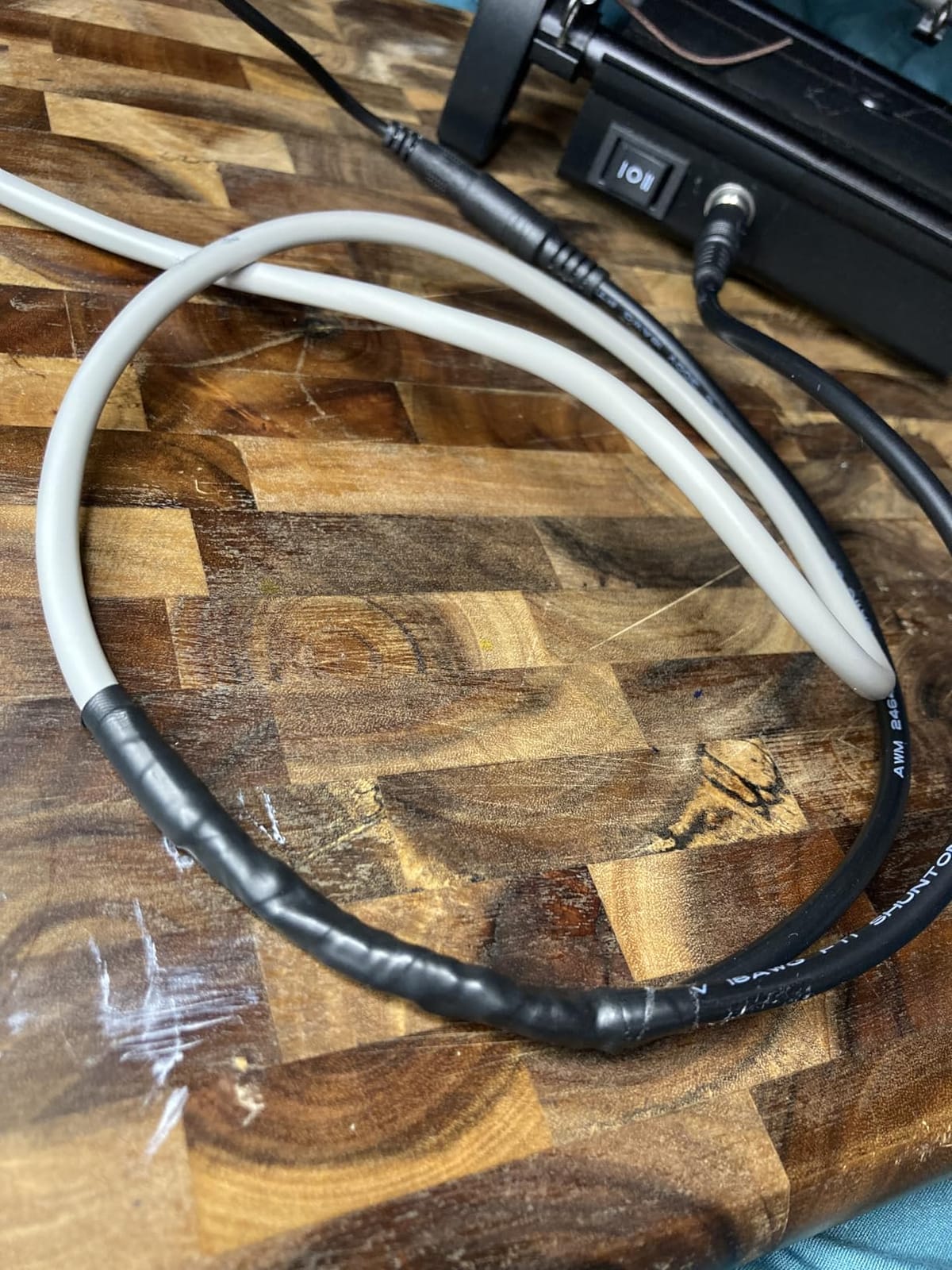
Buyers like the quiet motor, the soft start and the fact that the whole thing fits in a tote bag. It handles wool, cotton, linen and silk, and the modular design makes disassembly for storage straightforward.
The 4.2 average across 42 reviews hides a real split. About 11% of reviews are 1-star, and those complaints attach to durability rather than function. The motor does its job; the housing is where the risk sits.
What you should know before you buy
Capacity options matter here. The 4oz version uses three 9cm spools, and the 8oz version uses three 12cm spools, so decide which you want before you buy rather than after. Dimensions are listed at roughly 7.1 by 5.5 by 6.7 inches.
The drafting capacity is modest, which is the honest limitation. This is a machine for short draws and plenty of practice fiber, not for filling a large production bobbin in one sitting.
Who it suits and who it does not
It suits spinners with mobility limits, anyone in a shared apartment where treadling noise is a problem, and beginners who want to test the craft before committing to a treadle wheel. It does not suit someone who wants to spin large quantities quickly or who wants the tactile feedback of treadling underfoot.
3. Spinning Jenny with Brake – Best Multi-Use Unwinder
Spinning Jenny with Brake
Hand crank
Built-in brake
Plastic
24.5 x 6.38 x 3.5 inch
16.6 lb
Pros
- Well built for its price
- Brake stops free unwinding
- Useful as a general wire unwinder
- Compact footprint
Cons
- Not designed for fiber spinning
- No end-of-spool wire holder
- Wing nuts work loose
- Hardware can arrive missing
Honesty first: this is not a handspinning wheel and we will not pretend otherwise. It is a hand-crank spindle with a braking mechanism, listed under a garden and utility category, and its own reviews describe it mainly as a wire and tubing unwinder.
We include it because a specific beginner need fits it exactly. If you spin, ply, then need to wind a cable, a length of garden wire or tubing back onto a spool without the tangle, a braking hand crank saves a lot of irritation. The brake is what makes it useful, since it stops the spool unwinding itself the moment you let go.
Reviewers rate it as solid value with a working mechanism, and the compact footprint keeps it out of the way.
What you should know before you buy
There is no holder at the end of the spool to retain the end of the wire, which is the most common practical complaint. Buyers also report wing nuts working loose with use and hardware arriving missing because the parts bag tears in transit.
Weight is listed at 16.6 pounds, which is heavier than it looks and is really the spool and frame together.
Who it suits and who it does not
It suits spinners and crafters who also unwind wire, cable or tubing by hand, and anyone who wants a simple brake for storage. It does not suit anyone looking for flyer, bobbin or tension system, because there is no twisting mechanism here.
4. Household Electric Spinning Wheel 800RPM – Most Versatile
Aredwhiterui Household Electric Spinning Wheel, Mini Wool Spinning Wheel – Forward/Reverse Switching+Max Speed 800RPM+Capacity 4oz(120G), for Wool Fibre Twisting, 3 Spools,Black
800RPM stepless
2.86 lb
4oz on 3 spools
12V
Forward and reverse
Pros
- Very quiet operation
- Compact and light
- No assembly beyond bobbins
- Soft speed control for merino
- Spare parts and fiber included
Cons
- Printed body looks thin
- No foot pedal
- Short power cord
- Bobbin elastic can fail to engage
This is the smallest, lightest machine in the group at 2.86 pounds, and experienced spinners who bought it describe it as genuinely capable of short-forward drafting on fine merino and mok fiber, plus chain plying.
Speed is stepless up to 800RPM on a steel tube motor with high torque, and the four ball bearings with carbon fiber flywheel arms keep it from wobbling while it runs. That stability matters more than it sounds, because a wobbling bobbin makes twist control impossible.
There is no assembly beyond screwing on the bobbins, and the box includes spare parts and practice fiber, which makes it a genuinely zero-friction first machine.
What you should know before you buy
There is no foot pedal, so speed is set by hand, which interrupts your rhythm once you are spinning steadily. The hollow 3D-printed body looks thin, and one buyer reported a small crack on arrival.
The bobbin drive elastic can fail to engage, in which case yarn does not wind at all. Keep a spare on hand from day one.
Who it suits and who it does not
It suits spinners working fine fibers in a small space, and anyone who wants to try drafting with almost no commitment. It does not suit long-draw or park-and-draft methods, because there is too much machine movement for that style.
5. Ashford Traditional Single Drive – Best Ratio Range
Ashford Traditional Single Drive/Unfinished Wheel
Single drive and treadle
7/9/12/17:1
17.5 lb
27.25 inch orifice height
3/8 inch orifice
Pros
- Long-established design
- Very wide ratio range
- Lazy kate and 4 bobbins included
- Learn to Spin booklet included
- Well-fitted joints
Cons
- Arrives unfinished and needs assembly
- Single treadle is harder to learn
- Only 7 reviews on Amazon
The Traditional is the wheel the community recommends most often for a first treadle wheel, and the reason is mechanical rather than sentimental. Four ratios at 7:1, 9:1, 12:1 and 17:1 mean you can start gentle and climb as far as fine singles when you are ready.
The orifice is 3/8 inch at 27.25 inches above the floor, and that height is the spec worth checking against your body before you commit. At 17.5 pounds it is a solid, non-folding wheel with a 22 inch drive wheel, so plan where it will live.
Everything you need to start arrives in the box: four standard single-drive bobbins, a vertical lazy kate, a threading hook and a Learn to Spin booklet. All seven Amazon reviews are 5-star, and the small pool reflects that this model sells mainly through specialist spinning retailers rather than through Amazon.
What you should know before you buy
It arrives as unfinished New Zealand Silver Beech and the buyer assembles and finishes the frame. That is a genuine weekend project, and if you have never done it, read the finishing steps before you start.
The single treadle is the honest drawback. It gives less control and demands more effort than a double treadle, and it is the first thing that stalls a brand-new spinner on this frame.
Who it suits and who it does not
It suits spinners who want one frame that covers everything from bulky yarn to fine lace weight and who will enjoy finishing the wood themselves. It does not suit anyone with mobility limits, anyone short enough that a 27.25 inch orifice sits above comfortable reach, or anyone who wants a wheel that folds.
6. Schacht Sidekick – Best for Travel and Small Spaces
Schacht Sidekick SpinningWheel W/Flyer
Folding frame
Scotch tension
33 lb
Part sharing with Schacht range
Integrated storage
Pros
- Quick to set up
- Folds up and stores anywhere
- Bobbins and flyer interchange with other Schacht wheels
- Precise Scotch tension knob
- Sturdy packaging and build
Cons
- Instructions are minimal
- Orifice height suits shorter spinners
- Only 6 reviews and they are dated
The Sidekick folds up and the bobbins, flyer and whorls store inside the wheel itself, so it carries as one piece. One buyer was spinning within ten minutes of delivery, which tells you how little setup there is.
The engineering nicety is part sharing. It uses the same bobbins, whorls and flyer as the Schacht Matchless and Ladybug, so if your spinning grows, you are not starting over and you are not hunting for parts that still exist in ten years. Scotch tension with a control knob gives fine, precise take-up adjustment, which is what makes it kind to beginners.
All six Amazon reviews are 5-star, though they date from 2016 to 2019, so treat the feedback as positive but dated.
What you should know before you buy
At 33 pounds it is the heaviest wheel in this list, and folded does not mean light. The thin instructions are the most common regret for a first wheel, and the wheel can also be bought without the bobbin-flyer assembly if you want to bring your own.
Reviewers also note that the orifice height suits shorter spinners, and tall buyers may prefer the Schacht Ladybug.
Who it suits and who it does not
It suits spinners who travel to fiber festivals and guild classes, and who want a long-term parts ecosystem. It does not suit tall spinners or anyone who needs to lift the wheel into a car regularly.
7. Smart Yarn Spinner 120g – Best for Fine Fibres
AUTUMFLATGAO Smart Yarn Spinner Machine, Electric Spinning Wheel, 120g Capacity Spinner Wheel with Foot Switch & 3 Spools, Forward/Reverse, 12v Drum Carder, Adjustable Speed Yellow
800RPM stepless
4.4 lb
4oz on 3 spools
Foot switch
12V
Pros
- Runs evenly and very quietly
- Attractive hollow design
- Good build for a printed machine
- Spare gaskets and fiber in the box
- Good first electric value
Cons
- Foot pedal missing on one unit
- One leg slightly short so it rocks
- Low power suits short draws
- Finish is adequate not premium
European buyers report smooth, quiet spinning and good value, and several call it suitable for beginners outright. It is a 2-in-1 machine that spins forward for Z-twist singles and reverses for plying, with a foot switch for hands-free speed.
The box is generous for this class: spare gaskets, extra spools and roughly 15g of practice wool arrive with it, which removes the most common early frustration of having nothing suitable to practise on.
At 4.4 pounds it carries well, and the 12V system runs off an external mobile power supply.
What you should know before you buy
Power output is on the low side, which suits fine, short draws rather than heavy yarn. One buyer received a unit with a missing foot pedal and the seller later issued a partial refund and extra spools, and one of the four feet sits slightly short so the machine rocks on a table.
Finish quality is described as adequate rather than premium, so manage your expectations on the housing.
Who it suits and who it does not
It suits beginners spinning fine fibers who want a quiet first electric machine and a full accessory box. It does not suit spinners planning to ply heavy yarn or anyone who needs a machine to sit perfectly flat without a shim under a foot.
8. Ashford New Joy 2 Combo – Best No-Assembly Pick
Ashford New Joy 2 Double Treadle Combo Spinning Wheel with Bag
Double treadle
4 speed ratios
Supplied assembled and lacquered
Carry bag
20 lb
Pros
- Arrives assembled and lacquered
- Double treadle runs smoother than single
- Carry bag included
- Four ratios broaden fibre range
Cons
- Only 3 Amazon reviews
- Heavier and larger than folding wheels
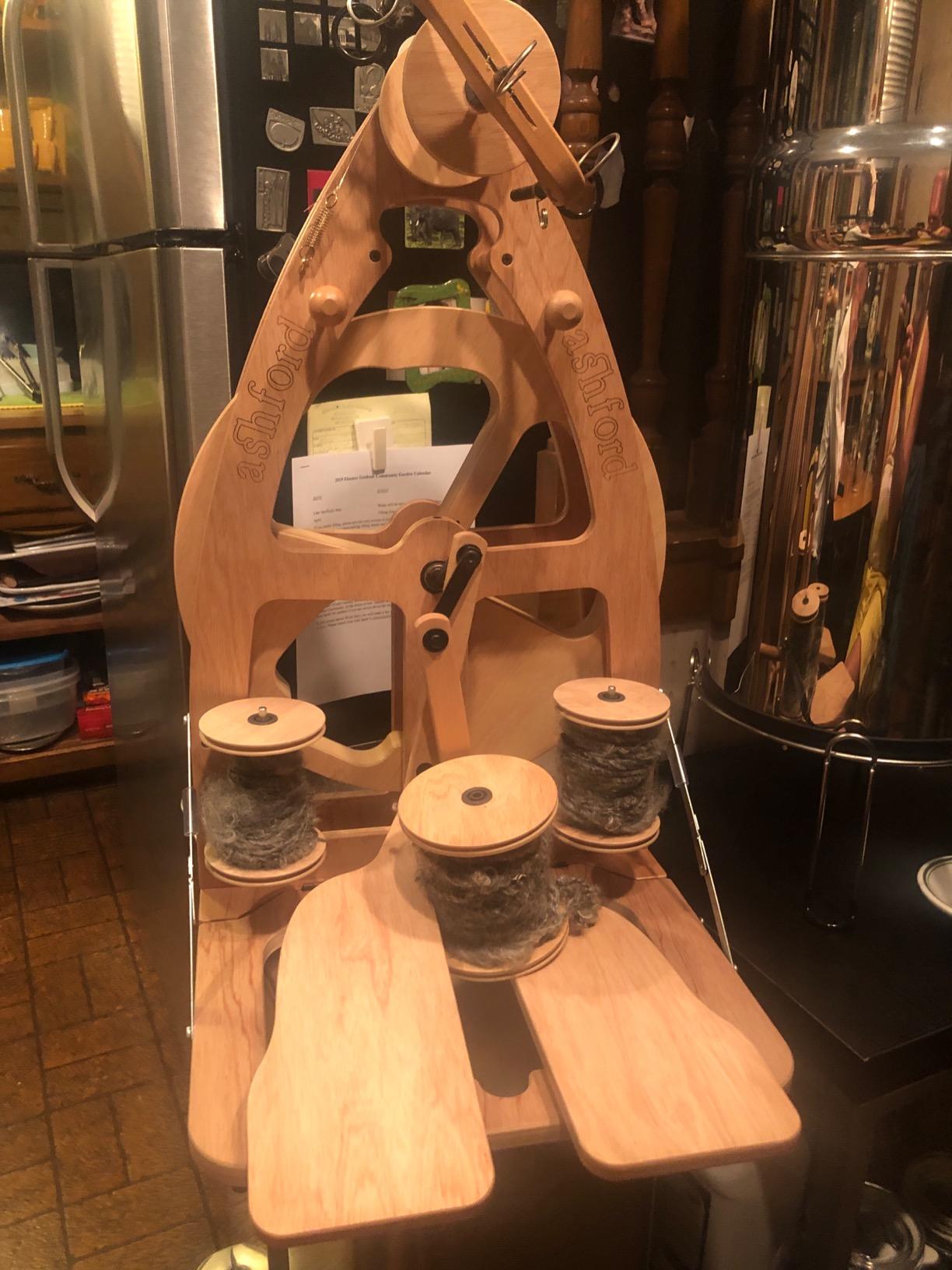
This is the pick for anyone who read our Kiwi 3 section, thought it was a good idea, and then decided they did not want to sand and finish a frame in their first week. The New Joy 2 arrives fully assembled and lacquered, so you can thread up on day one.
It is a double treadle combo drive with four speed ratios, which means you get the smoother, more even power delivery of two treadles without the assembly weekend. That is a genuine beginner advantage, because treadling coordination is the hardest part of learning on a double treadle wheel and doing it from the first session matters.
A carry bag is included, which makes moving and storage straightforward. The listing size is listed at 40 by 14 by 40 cm and 5 kg, while the item weight is given as 20 pounds.
What you should know before you buy
The honest limitation is feedback. Only three Amazon reviews exist, and all three are 5-star, so you are trusting the design rather than a large owner pool. It is also heavier and larger than a folding wheel such as the Kiwi.
Who it suits and who it does not
It suits a beginner who wants a double treadle from day one and refuses to finish wood before learning to spin. It does not suit anyone short on space or anyone who wants a lightweight portable frame.
9. Electric Yarn Spinner Kit with 4 Bobbins – Best Starter Kit
Electric Yarn Winder Electric Yarn Spinner Kit Spinning Wheel for Wool with Foot Controller & 4 Bobbins, Small Wool Spinner with Forward & Reverse(Black)
800RPM stepless
Foot switch
4 bobbins plus spare bands
12V
2.88 lb
Pros
- Light enough for a tote bag
- Pedal works like a sewing machine foot
- Generous accessory pack
- Two speeds for spinning and plying
Cons
- Instructions assume spinning knowledge
- No loading diagram
- Printed construction feels fragile
- Bands need care in storage
The accessory bundle is the reason to look at this one first. You get two drive bands, two tension bands, four bobbins and a set of spare parts, plus sample roving, which covers the failures most beginners hit in month one.
It is a 2-in-1 spinner and cake winder with forward and reverse dual-mode operation, and the steel tube motor reaches 800RPM with a stepless speed knob. At 2.88 pounds it is one of the most carryable machines here.
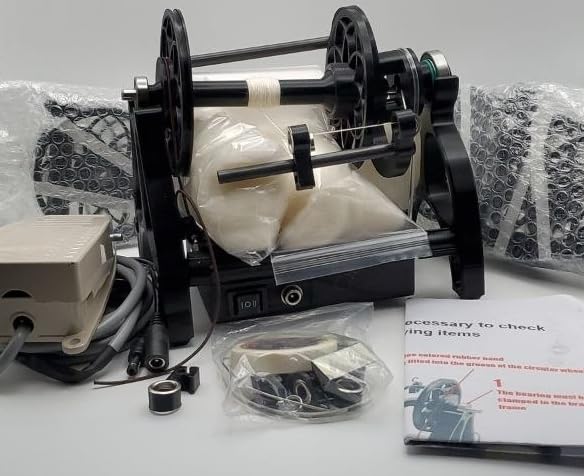
Both written reviews rate it 4 or 5 stars and praise the value, portability and bundle, while agreeing the documentation is the weak point.
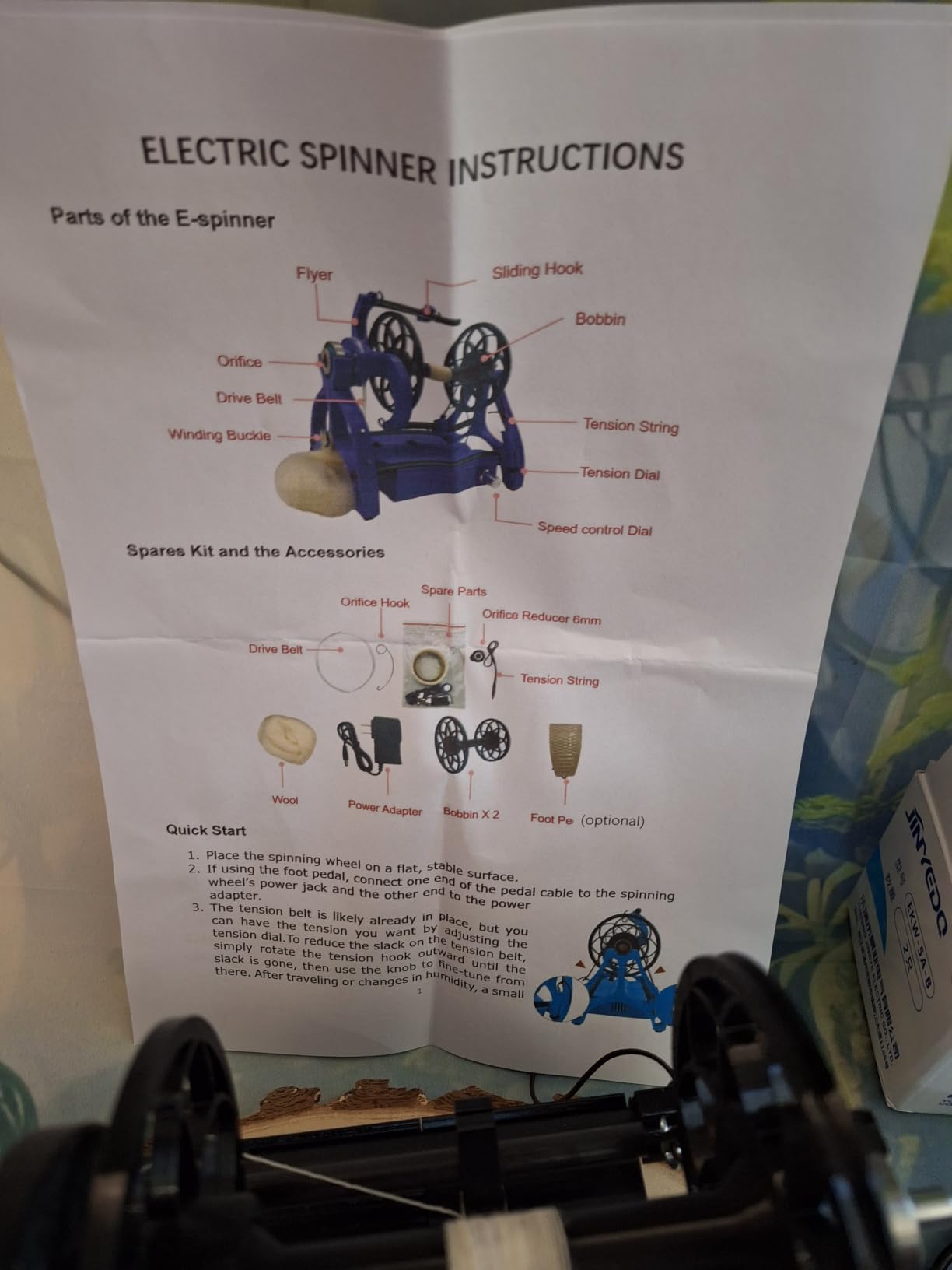
What you should know before you buy
The instructions are not comprehensive and assume familiarity with spinning terminology. There is no diagram showing how to load the wheel, and the listing video is the only walkthrough, so buy it with a beginner spinning book alongside.
The cake winding function is mentioned in the listing but never explained, and there is no guidance on relaxing the bands off their grooves during storage, which matters for the printed construction.
Who it suits and who it does not
It suits a spinner who already drafts and wants a portable first electric machine, and anyone who values spare parts over polished instructions. It does not suit a complete beginner with no book and no mentor.
10. Consfly 800RPM Electric Spinner – Best Compact Yarn-Holder Set
Consfly 800RPM Electric Yarn Spinning Wheel w/Yarn Holder, for DIY & Home
800RPM
Foot switch
4oz spools
4.4 lb
Carbon fiber wheel arm
Yarn holder
Pros
- Compact and light for carrying
- Foot switch leaves both hands on the fiber
- Yarn holder keeps working yarn tidy
- Carbon fiber arm runs stably and quietly
Cons
- 3.6 average with about 26% 1-star reviews
- Printed plastic body is the weak point
- Only 5 reviews is too few to judge
- Minimal accessory set
We are including this one because the yarn holder is genuinely useful alongside crochet or knitting, and the forward and reverse knob makes plying straightforward. The foot switch keeps both hands on the fiber while you control speed.
The carbon fiber wheel arm supports stable, quiet spinning, and it handles wool, dog hair, silk and blended fibers. The package includes the wheel, three spools, power cord, foot switch, crochet hook, yarn holder and accessory set.
We want to be straight about the numbers, though. It carries the lowest average rating in this group at 3.6 stars, with roughly 26% of reviews at 1 star, and only 5 reviews in total is too small a pool to judge long-term reliability.
What you should know before you buy
The 3D-printed plastic body is the most likely failure point, and the accessory set and 120g spools are minimal compared with kits that ship four bobbins. Spool diameter is listed at 3.54 inches with about 4oz capacity.
Who it suits and who it does not
It suits a spinner who wants to alternate spinning with crochet and values the yarn holder over accessory depth. It does not suit anyone buying as a long-term investment, because the feedback pool is too thin to support that confidence.
Drop Spindle vs Spinning Wheel vs Electric Spinner
The question underneath most of these purchases is whether you need a wheel at all yet. Forum threads keep returning to the same trigger: spinners who worked a year on drop and Turkish spindles and then wanted larger quantities faster.
A drop spindle teaches drafting, which is the actual skill. Its limits are speed and volume, not quality. If you are still enjoying the spindle, the spindle is not failing you.
An electric spinner is the low-risk middle step. It removes treadling coordination while you focus purely on draft and twist, and it is the cheapest way to find out whether handspinning appeals to you before committing to a treadle wheel. The trade is that you learn less about tension feel.
A treadle wheel is where you learn the full craft, because you control speed with your foot and therefore control twist with your hands. The practical upgrade trigger is simple: move up when you regularly out-spin what you can comfortably ply in one sitting.
Buying Guide: Choosing Your First Spinning Wheel
Three questions narrow this list faster than any spec sheet. What is your real budget once fiber and accessories are counted? What yarn do you actually want to make? And how much room and how much lifting can your body handle?
Single drive vs double drive
Single drive, using Scotch tension, is simpler and easier to adjust, and it is the right answer for nearly every beginner. Double drive adds an extra gear you can engage for finer yarn, but it is a complication that pays off years later, not on week one.
Single vs double treadle
A single treadle is one plank and half the coordination work. A double treadle lets you push and pull, which is smoother, more even and lets you slow down in one direction. Double treadles are worth the extra learning, but a single treadle is not a failure state.
Tension system and orifice height
Scotch tension gives a precise, graduated adjustment and is the most common beginner setup. Irish tension is more sensitive and rewards fine work with practice. Check orifice height against your height before buying. The Ashford Traditional sits at 27.25 inches, while the Schacht Sidekick suits shorter spinners and the Schacht Ladybug is the taller-spinner option in that family.
Weight, footprint and bobbin capacity
Weight is a hidden spec. A 12 lb folding wheel is carried; a 33 lb folding wheel is lifted. Bobbin capacity decides how much you spin per trip: around 4oz per bobbin is a good first target, and the 4oz and 8oz options on the electric kits tell you how much the same machine can grow with you.
What actually lands in your first-year budget
A wheel alone does not get you to a skein. Budget for starter roving or a wool starter kit, a niddy-noddy or skein winder for plying, a lazy kate if the wheel lacks one, finishing oil for unfinished frames, and replacement drive bands. That is the number that resolves the price shock most beginners feel, because it is smaller than they fear once it is written down.
Maintenance and Break-In for a New Wooden Wheel
Unfinished frames need sealing before you spin on them, and this applies to the Kiwi 3 and the Ashford Traditional in particular. Finish the wood first, then oil the treadle hinges and the drive wheel groove.
For the first month, oil the bearings and check the drive band tension weekly. Squeaks almost always mean a dry hinge, not a broken part. Store a folding wheel folded and keep the drive band slack so it does not stretch.
Buying a Used Spinning Wheel: A Practical Checklist
Used wheels are where the community finds its best value, and a well-kept traditional wheel can last decades. Ask for photos of the orifice first, because cracks and worn edges around that hole are the classic deal-breaker.
Spin the flyer by hand and listen. A dry rattle means a bearing that needs replacing, which is cheap and fine. A wobble that you can feel through the frame means cracked joints, and that is not.
Check the drive band for elasticity and the tension system for smooth adjustment. Confirm that spare bobbins, whorls and the flyer still exist for that model, and choose a wheel with a large parts ecosystem so it is serviceable in twenty years. Finally, confirm that bobbins are included. A wheel without bobbins is an expensive paperweight.
Frequently Asked Questions
What is the best spinning wheel for beginners?
The Ashford Kiwi 3 is the most beginner-friendly wheel in our testing, because the double treadles run quietly, the frame folds flat for storage, and three speed ratios let you start gentle. If you cannot treadle comfortably yet, the electric kit with a foot controller is the easier on-ramp. Either way, judge a wheel by how easy it is to draft on, not by its feature list.
What is the best budget-friendly spinning wheel for beginners?
A mini electric spinner is the cheapest way in. The 800RPM model at under three pounds needs no assembly beyond screwing on bobbins, runs quietly, and includes spare parts and practice fiber in the box. It suits fine fibers and short forward draws. For a treadle wheel on a tight budget, plan for finishing an unfinished frame yourself before you spin.
Which spinning wheel is the easiest for a beginner to use?
Easiest to learn on means two things: light take-up and quiet treadling. The Kiwi 3 leads on both because its ball-bearing double treadles are smooth and its lowest whorl is gentle. If ease of coordination matters more than tradition, an electric spinner with a foot switch is easier still, since both hands stay on the fiber.
Is a spinning wheel easier than a drop spindle?
A spindle teaches drafting, which is the real skill, and it does that with no take-up to fight. A wheel makes the twist and winding automatic, so you can make far more yarn per session. Most spinners spend a year on a spindle first, then move up when they out-spin what they can ply in one sitting.
Are Ashford spinning wheels good?
Ashford wheels have a long-established design and a very wide range of optional accessories, which is a large part of why they hold their value. The Kiwi 3 is quiet, portable and beginner-friendly, while the Traditional gives you ratios from 7:1 to 17:1 for more range. Both arrive unfinished, so expect to assemble and finish the frame.
What is the best portable electric spinning wheel?
Look at weight, power source and how the speed is controlled. The lightest options here run around 2.86 pounds and operate on 12V, which means you can power them from a mobile supply. A foot switch matters more than most buyers expect, because it keeps both hands on the fiber. Forward and reverse modes also let you spin and ply on one machine.
Conclusion: The Wheel Worth Buying First
Start with the Ashford Kiwi 3 if you can treadle and want one wheel that folds flat, runs quietly and grows with you. Start with an electric kit with a foot controller if your body or your living space makes treadling hard, and treat it as a real answer rather than a compromise.
Either way, buy for draftability. Heavy take-up on a first wheel is the fastest way to lose a hobby you have barely started, and the best spinning wheels for beginners are simply the ones that let you draft. Before you buy, spin on something in person at a fiber festival or guild class if you can, then check the latest options and decide.