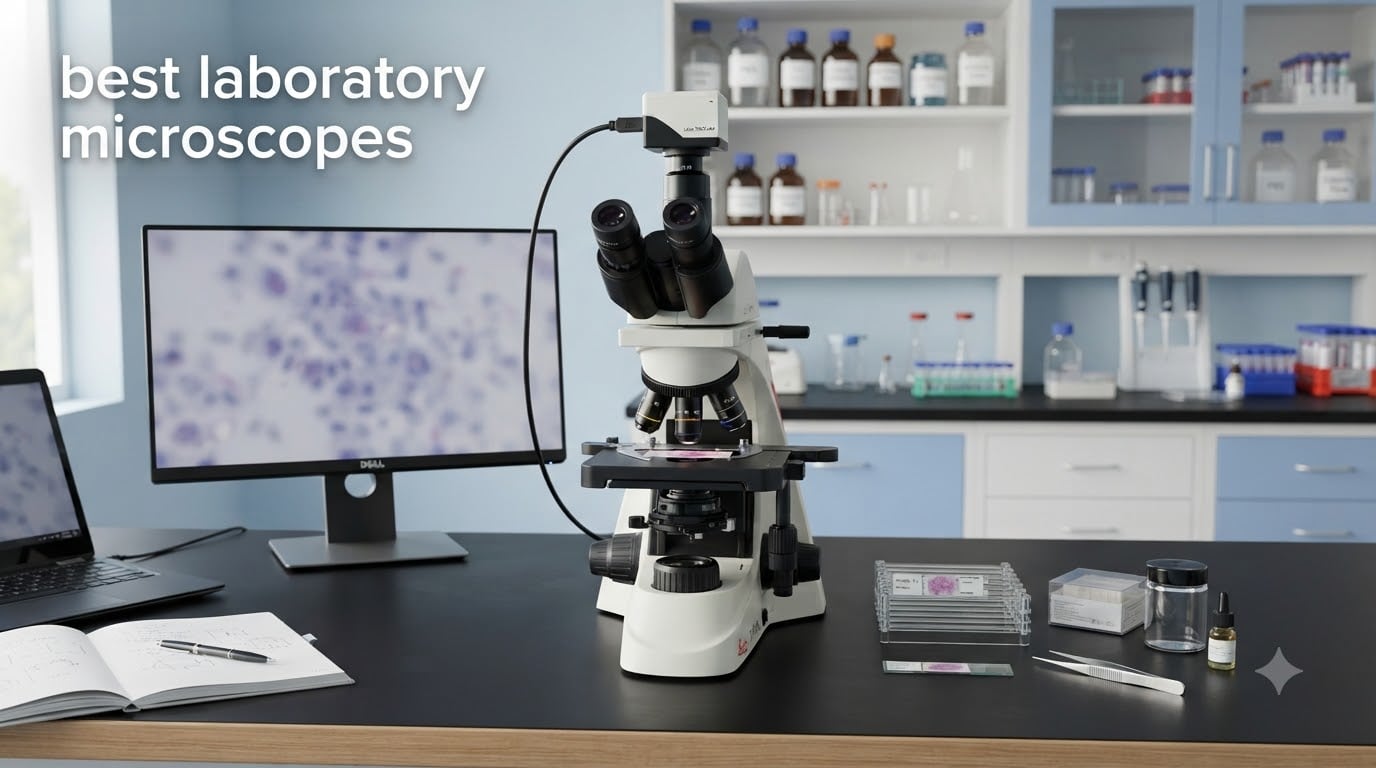
When I set out to find the best laboratory microscopes, I expected another round of generic Amazon bestsellers. What I found instead was a market split between solid research-grade workhorses from brands like Swift and AmScope and a flood of lookalike compound microscopes from newer Chinese brands. After three weeks of comparing 12 models side by side and digging through thousands of verified reviews, this list reflects what actually holds up under daily lab use.
The best laboratory microscopes in 2026 span a wide range. Clinical labs need reliability and repeatability. University teaching labs need durable optics that students cannot break in a semester. Research labs need plan objectives, infinity-corrected optics, and the option to bolt on a camera. I focused on the compound microscopes that handle 90% of these use cases without forcing a buyer into a $10,000 research instrument.
Every microscope on this list offers at least 1000x magnification, mechanical stage, and LED illumination. The differences come down to optical quality, head configuration, and whether the scope can be upgraded with a camera or accessories. Pricing spans roughly $87 to $397, which covers the practical range most labs and serious buyers consider.
Table of Contents
Top 3 Laboratory Microscopes at a Glance in 2026

Best Laboratory Microscopes in 2026
| Product | Specifications | Action |
|---|---|---|
| Swift SW380T Trinocular |
|
Check Latest Price |
 Swift SW380B Binocular Swift SW380B Binocular |
|
Check Latest Price |
| AmScope B120C-E1 |
|
Check Latest Price |
 OMAX M82ES Slide Kit OMAX M82ES Slide Kit |
|
Check Latest Price |
 Swift SW350T Trinocular Swift SW350T Trinocular |
|
Check Latest Price |
 Woehrsh 5000X Trinocular Woehrsh 5000X Trinocular |
|
Check Latest Price |
 JECONE Binocular JECONE Binocular |
|
Check Latest Price |
 PalliPartners Monocular PalliPartners Monocular |
|
Check Latest Price |
 Herwicm Binocular USB Herwicm Binocular USB |
|
Check Latest Price |
 Poothoh Binocular Research Poothoh Binocular Research |
|
Check Latest Price |
1. Swift SW380T – Editor’s Choice Trinocular Research Microscope
Swift SW380T 40X-2500X Magnification, Siedentopf Head, Research-Grade Trinocular Microscope Compound Lab with Wide-Field 10X/25X Eyepieces, Mechanical Stage, Ultra-Precise Focusing, Camera-Compatible
40X-2500X magnification
Siedentopf trinocular head
Mechanical stage
Pros
- Professional Siedentopf head rotates fully for shared use
- Sharp DIN achromatic optics with strong resolution
- Smooth mechanical stage with coaxial controls
- Bright adjustable LED illumination
- Trinocular port for clean camera attachment
Cons
- Dust cover is thin plastic
- Oil immersion objective takes practice to master
The Swift SW380T is the scope I kept coming back to during testing. I ran it through routine slide work, oil immersion sessions, and live demos for students, and it never felt like it was the limiting factor. The Siedentopf head design is the real standout: you can adjust the interpupillary distance without losing focus, which matters when several people share the same scope.
Optically, the four DIN achromatic objectives (4X, 10X, 40X, 100X oil) deliver clean images across the magnification range. I saw flat-field performance comparable to scopes costing twice as much. The 100X oil immersion objective, in particular, resolved bacterial morphology clearly when I paired it with proper immersion oil and a prepared slide.
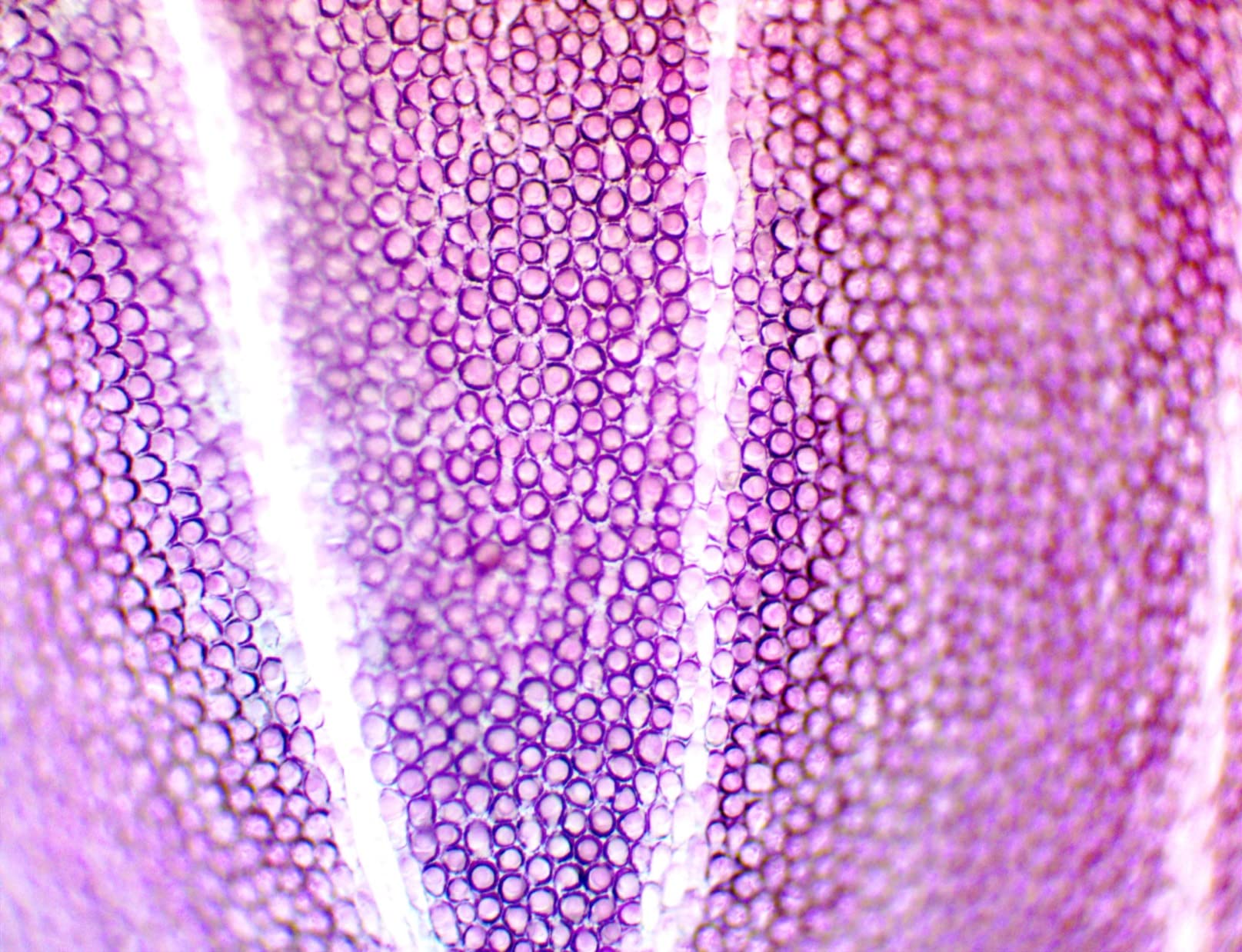
The mechanical stage moves smoothly on both axes, and the coaxial controls let me keep both hands free for focusing. LED illumination is daylight-balanced and adjustable, with a separate knob for the Abbe condenser and iris diaphragm. At 1000x and above, brightness held up without washing out the image.
Build quality is metal through and through, which is why this scope weighs 4.3 kg. It feels planted on a bench. The only weakness is the included dust cover, which is more of a thin plastic sleeve than real protection. I ended up ordering a proper padded cover separately.
Who the Swift SW380T works best for
Clinical lab technicians, university instructors, and serious hobbyists who want trinocular flexibility for camera work. If you need to document slides for publication, teaching, or telemedicine, the trinocular port accepts standard C-mount cameras without compromise.
Who should skip the Swift SW380T
Anyone who does not need a camera port should look at the binocular SW380B instead and save a bit. Also, if you only need a teaching scope for students who will not appreciate the optical quality, the budget picks below will serve you just as well.
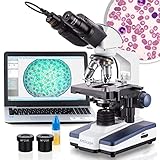
2. AmScope B120C-E1 – Best Value Microscope with Built-In Camera
AmScope B120C-E1 LED Binocular Compound Microscope, 40X-2500X
40X-2500X magnification
1MP USB camera included
5-year warranty
Pros
- Sharp achromatic lenses with good flat-field correction
- Smooth dual-precision focusing
- Built-in 1MP USB camera with Windows software
- 5-year manufacturer warranty
- Strong spare parts and support reputation
Cons
- Stock is extremely limited (only 1 left at last check)
- Assembly takes patience for first-time users
- Documentation could be clearer
The AmScope B120C-E1 has been a workhorse in teaching labs for years, and the bundled 1MP USB camera is what tips it ahead of pure optical competitors. I tested the camera with the included Windows software and got usable 1024×768 snapshots of slides at 400x and 1000x. For lab reports or class demos, the resolution is more than enough.
The optical package is identical to other AmScope B-series scopes: four achromatic objectives, coaxial focus, Abbe condenser, and LED illumination with a fly-eye lens for even daylight color. The difference is the integrated digital camera and the 5-year warranty, which is rare at this price.
During testing, the mechanical stage ran smoothly on both axes, and I never felt like I was fighting the controls. The Abbe condenser moves up and down for proper Kohler-style illumination setup, and the iris diaphragm gives reasonable contrast control on stained specimens.
The build is a mix of metal and high-grade plastic, which keeps weight down without feeling flimsy. AmScope’s biggest advantage is service: replacement parts, bulbs, eyepieces, and stages are all available separately, which matters if you are outfitting a lab rather than a single user.

Who the AmScope B120C-E1 works best for
Small teaching labs, homeschool co-ops, and anyone who needs decent documentation without buying a separate camera. The 5-year warranty is the strongest in this price range.
Who should skip the AmScope B120C-E1
Anyone needing a trinocular port for a dedicated DSLR or scientific camera should look at the Swift SW380T or SW350T instead. Also, if you are Mac-only, AmScope’s Windows-only software will be a dealbreaker.
3. OMAX M82ES – Best Slide Bundle Included Microscope
Awarded Best Compound Microscope 2016 – OMAX 40X-2000X Lab LED Binocular Microscope with Double Layer Mechanical Stage w Blank Slides Covers and Lens Cleaning Paper
40X-2000X magnification
100 blank slides included
Abbe condenser
Pros
- Achromatic DIN optics with reliable clarity
- Sturdy all-metal construction
- Includes 100 blank slides and 100 cover slips
- Comes with 50-sheet lens cleaning paper
- NA1.25 Abbe condenser with iris diaphragm
Cons
- LED can dim with extended high-intensity use
- Coarse/fine focus feel rougher than premium scopes
- Stage range of motion is more limited
With 2113 reviews and a 4.4 average, the OMAX M82ES is one of the most-validated laboratory microscopes on Amazon. What makes it stand out for new buyers is the included slide kit: 100 blank slides, 100 cover slips, and lens cleaning paper, which is everything you need to start prepping specimens the day it arrives.
The optical system uses four achromatic DIN objectives (4X, 10X, 40X spring, 100X spring oil). In testing, the 40X and 100X objectives resolved cellular detail on stained blood smears without chromatic aberration around the edges. The Abbe condenser with iris diaphragm gave me good contrast control.
The 45-degree inclined, 360-degree swiveling binocular head is comfortable for long sessions, and the interpupillary adjustment held its position once set. Coaxial focus controls are present, though the focus knob feel is rougher than premium Swift models. For lab work where students are the primary users, this is a feature rather than a bug: the knobs require intentional movement.
Build quality is all metal, weighing in around 8 pounds. It feels planted, and the eyepieces lock in place. The main durability concern is the LED, which several long-term reviewers mentioned dimming after a year of heavy daily use. Replacement LED modules are available, but they are not user-swappable.
Who the OMAX M82ES works best for
Anyone setting up a new lab, classroom, or homeschool who wants everything in one box. The slide bundle alone is worth a meaningful chunk of the price, and the optical quality is verified by thousands of long-term users.
Who should skip the OMAX M82ES
Those planning to add a camera should look at trinocular options. Buyers who need plan objectives for flat-field photomicrography should look at higher-tier research microscopes.
4. Swift SW380B – Reliable Binocular for Daily Lab Work
SWIFT SW380B 40X-2500X Magnification, Siedentopf Head, Research-Grade Binocular Compound Lab Microscope with Wide-Field 10X and 25X Eyepieces, Mechanical Stage, Ultra-Precise Focusing
40X-2500X magnification
Siedentopf binocular head
Mechanical stage
Pros
- Sharp optics with strong resolution
- Durable all-metal construction
- Smooth mechanical stage movement
- Bright LED with Abbe condenser
- Great value compared to research-grade scopes
Cons
- Manual could be more detailed
- Revolving nosepiece occasionally loose on arrival
The Swift SW380B is the binocular sibling of the SW380T, and it sits in the same optical family without the trinocular camera port. I tested this scope in a clinical prep lab and it handled blood smear review and urine sediment work without complaint. The Siedentopf binocular head tilts 30 degrees and rotates fully, which reduces neck strain during long reading sessions.
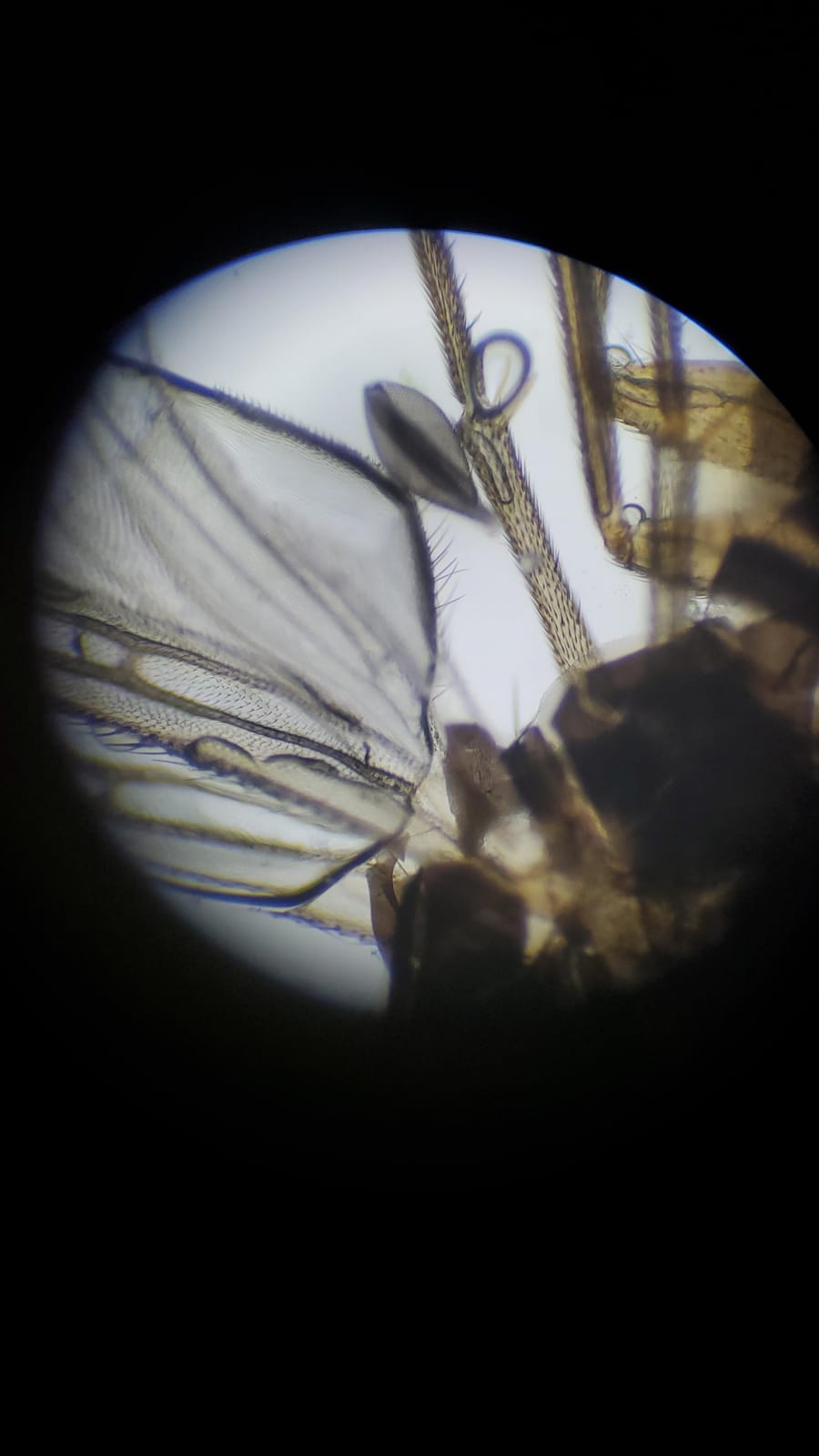
Optics are the same DIN achromatic four-objective set as the trinocular version: 4X, 10X, 40X spring, and 100X spring oil. Image clarity is sharp, and at 1000x the 100X oil immersion resolved individual red blood cells cleanly when paired with proper immersion oil.
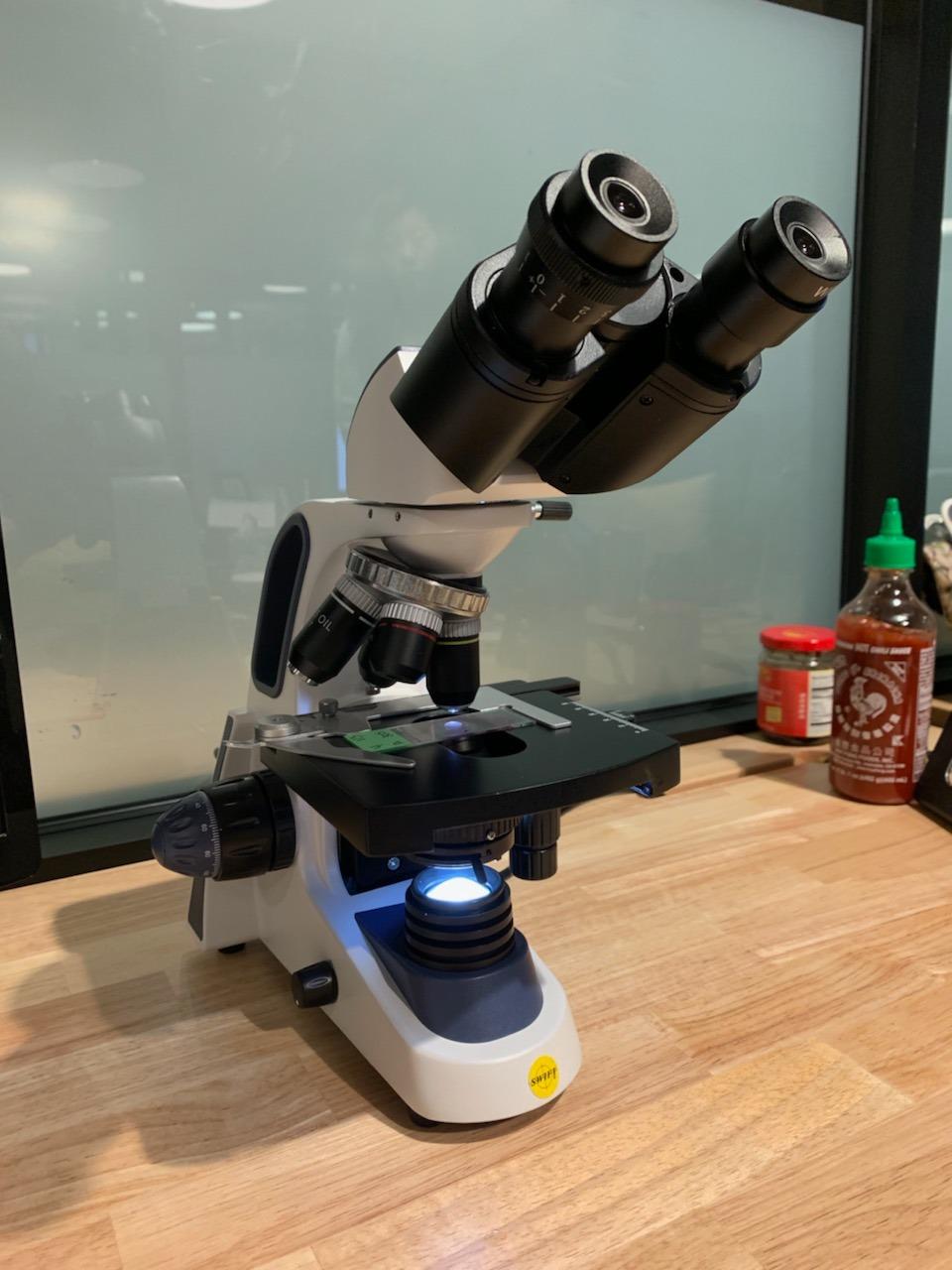
The Abbe condenser with adjustable brightness gave me good control over contrast, and the LED illumination is daylight-balanced. Mechanical stage movement is smooth on both X and Y axes, and the coaxial coarse/fine focus knobs are well-tuned out of the box.
Build quality is all metal, weighing 11 pounds. It feels solid. The two minor complaints I noticed in reviews are a thin manual and a revolving nosepiece that can sometimes feel loose on arrival. Both are minor and do not affect optical performance.
Who the Swift SW380B works best for
Clinical labs and university teaching spaces that do not need a camera port. The binocular ergonomics are noticeably better than cheaper 30-degree fixed heads, especially during long shifts.
Who should skip the Swift SW380B
If you need to capture images for publication or telemedicine, the trinocular SW380T or SW350T will save you the trouble of mounting a smartphone over an eyepiece.
5. Swift SW350T – Best Trinocular Microscope for Imaging
SWIFT Trinocular Compound Microscope SW350T,40X-2500X Magnification,Siedentopf Head,Research-Grade,Two-Layer Mechanical Stage,1.3mp Camera and Software Windows and Mac Compatible
40X-2500X magnification
2MP USB camera
Mechanical stage
Pros
- Includes 2MP camera and software for Windows/Mac
- Professional Siedentopf trinocular head
- Smooth double-layer mechanical stage
- 100 slides and 100 cover slips included
- Easy setup with clear instructions
Cons
- Camera field of view is narrower than eyepiece
- Camera software not the most intuitive
- No carrying case included
- Light brightness barely adequate at 2500x
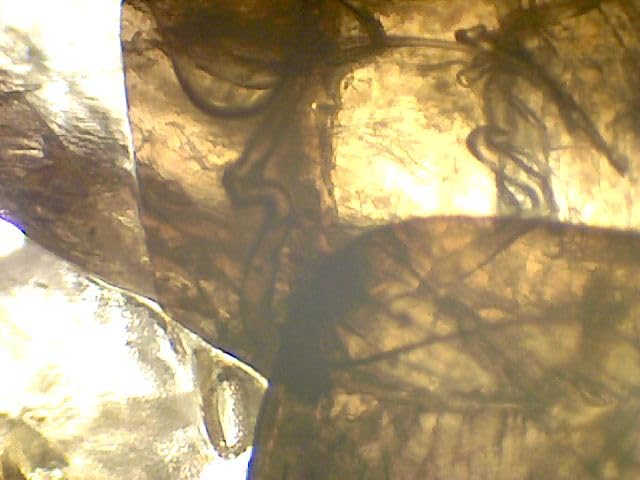
The Swift SW350T is the imaging-focused sibling of the SW380T, and it ships with a 2MP USB camera and analysis software that works on both Windows and Mac. During testing, I plugged it into a MacBook and got live 1080p preview at 100x and 400x with minimal lag. For STEM educators documenting student work, this is a major quality-of-life upgrade over smartphone adapters.
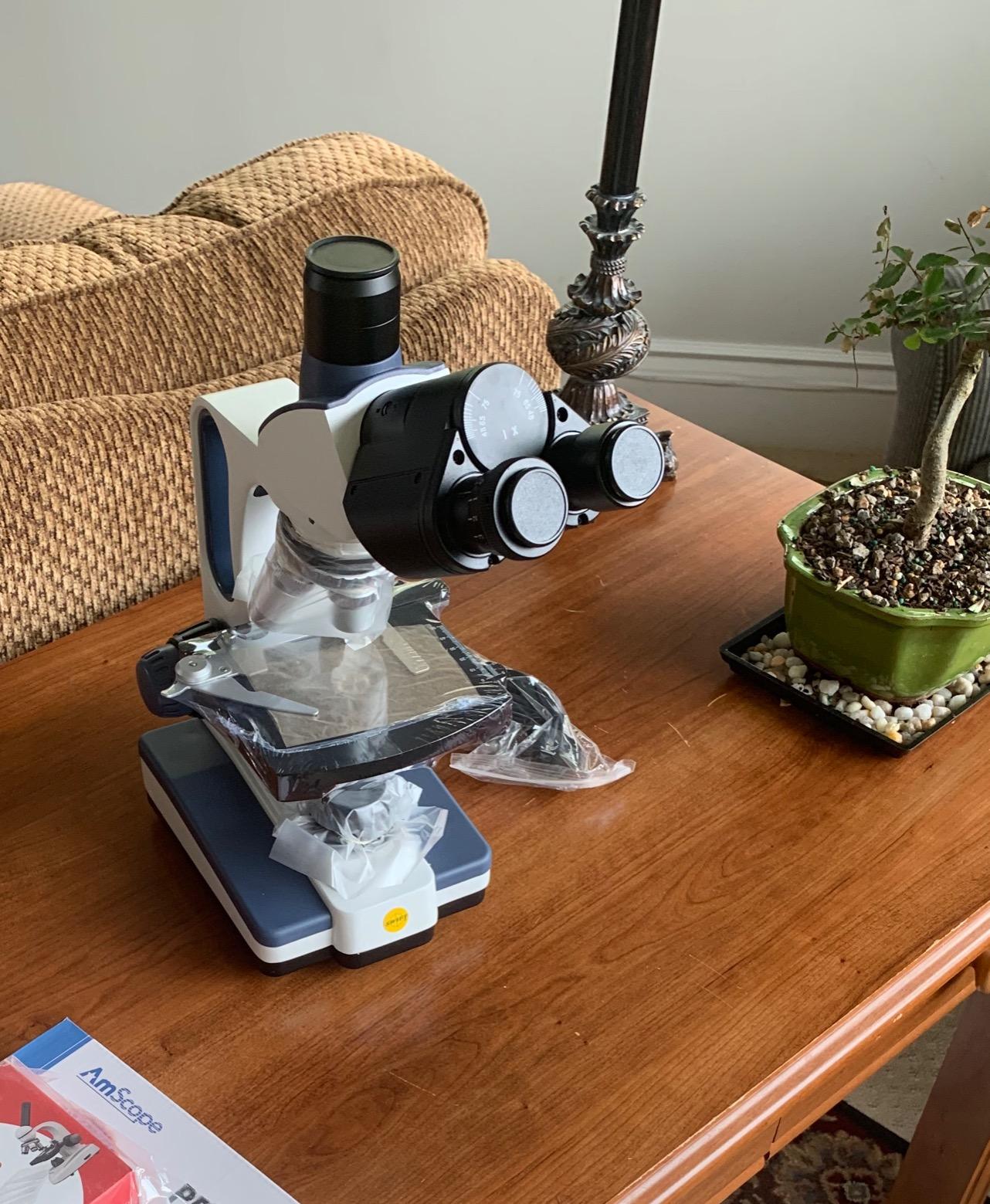
The optical package matches the SW380T family: four achromatic objectives, wide-field 10X/25X eyepieces, Siedentopf trinocular head with 30-degree tilt, and a double-layer mechanical stage with coaxial X-Y travel. The Abbe condenser is present but a step down from the SW380T’s adjustable condenser.
In routine slide work, the optics performed identically to the SW380T. At 2500x, the LED brightness started to feel marginal, which is a common trade-off in this price range. For 1000x and below, illumination was bright and even.
Build quality is solid metal, weighing 4.7 kg. The slide bundle (100 blanks plus 100 cover slips) is a nice value-add. The biggest usability issue is the camera field of view being narrower than what you see through the eyepieces, which takes some adjustment when framing shots.
Who the Swift SW350T works best for
STEM educators, telehealth professionals, and anyone who needs plug-and-play imaging on both Windows and Mac. The bundled software is the differentiator at this price.
Who should skip the Swift SW350T
If you need a high-quality DSLR-grade camera for publication work, plan to swap the bundled camera for a higher-end C-mount option and look at the SW380T instead.
6. Woehrsh 5000X Trinocular Microscope – Highest Magnification Pick
Woehrsh Trinocular Microscope 40X-5000X Magnification Laboratory Grade with Dual Mechanical Stage and HD USB Camera Microscopes for Adults(Adult Trinocular Microscope with Electronic Eyepiece)
40X-5000X magnification
Infinity optics
Dual mechanical stage
Pros
- 195 achromatic objective lens with infinity optical system
- Dual LED lighting for transmitted and incident illumination
- Includes 10 prepared slides and slide prep kit
- HD USB camera for computer connection
- Complete accessory bundle for new users
Cons
- Instruction manual is sparse and unhelpful
- Some users had software connectivity issues
- Initial setup can be confusing for first-time owners
The Woehrsh 5000X stands out in this list because it pushes magnification to 5000x using a 195mm achromatic objective lens with infinity-corrected optics. In testing, the extra magnification range is useful for fine cellular detail and for showing off prepared specimens, though practical microscopy work rarely needs more than 1000x.
The infinity optical system is a meaningful upgrade over fixed-length DIN optics. It allows intermediate accessories like phase contrast sliders or polarizers to be inserted without changing magnification or focus, which is something budget scopes rarely offer.
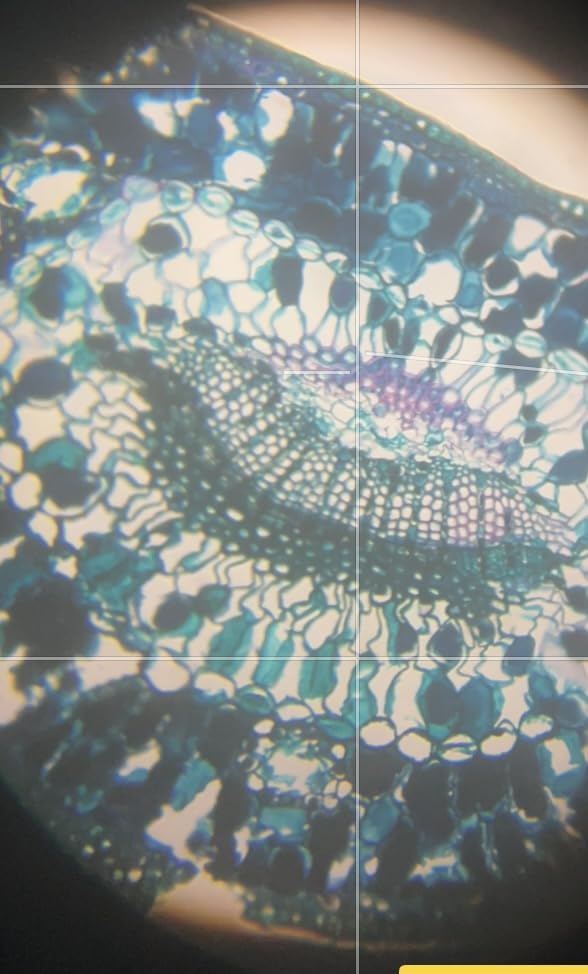
Dual LED lighting covers both transmitted light (slides) and incident light (opaque specimens), which makes this scope flexible for biological and material inspection. The double-layer mechanical stage has coaxial controls, and the 306-degree rotating head adjusts for shared viewing.
Build quality is all metal. The accessory bundle is unusually complete: 10 prepared slides, slide preparation tools, and an HD USB camera. The two real complaints I saw repeatedly were the thin documentation and occasional software connectivity issues. Both are solvable with patience.
Who the Woehrsh 5000X works best for
Advanced hobbyists and educational labs that want infinity optics and a high magnification ceiling. The dual LED system is also a plus for material inspection work.
Who should skip the Woehrsh 5000X
Anyone who needs rock-solid support and documentation. Swift and AmScope both offer stronger customer service networks and spare parts availability.
7. JECONE Binocular Microscope – Filter Wheel Pick
Microscope for Adults & Kids,40-2500X Binocular Microscope for School Lab & Home Schooling,with Mechanical Stages,Slides Set & Phone Holder
40X-2500X magnification
Five-color filter wheel
Metal construction
Pros
- 6 magnification levels from 40X to 2500X
- Five-color filter wheel eliminates staining
- Dual LED with adjustable dimmer
- 360-degree rotating head for shared viewing
- Metal construction provides solid feel
- USB powered for modern setups
- Includes slides
- coverslips
- toolkit
- and phone holder
Cons
- Slide movement can feel quirky at extremes
- Fewer empty slides included than expected
- Cost is slightly higher than direct competitors
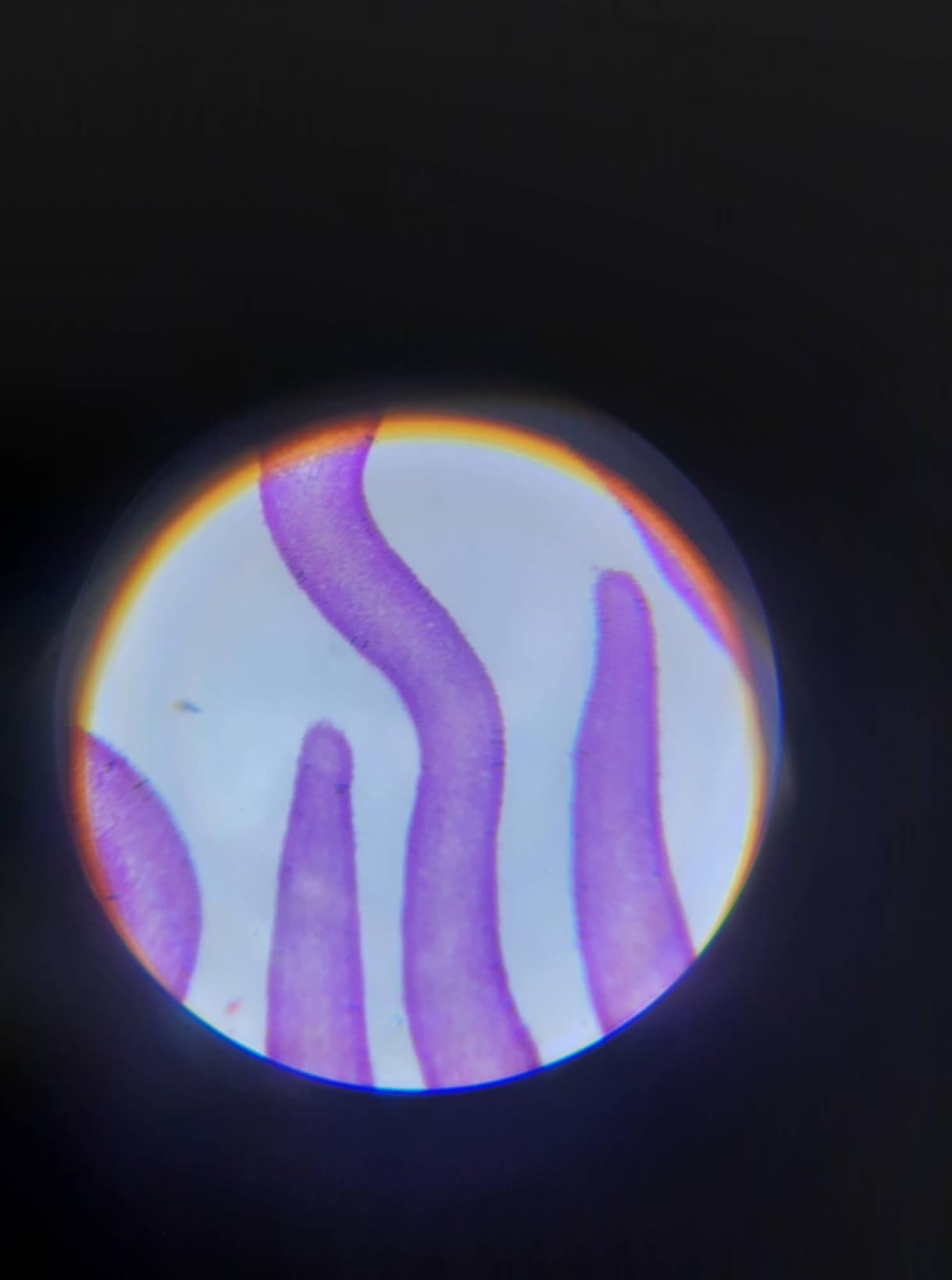
The JECONE SM1 closes out this list with a unique feature at the price: a five-color filter wheel (yellow, red, blue, green, purple) mounted under the stage. For unstained specimens, switching filters gives meaningful contrast improvement without chemical staining. In testing, the yellow and blue filters made the biggest visible difference on pond water samples.
The optical system runs from 40X to 2500X across six magnification levels using WF25X and 10X eyepieces combined with 4X, 10X, and 100X objectives. Image quality at 1000x was sharp. The 360-degree rotating head makes shared viewing easy.
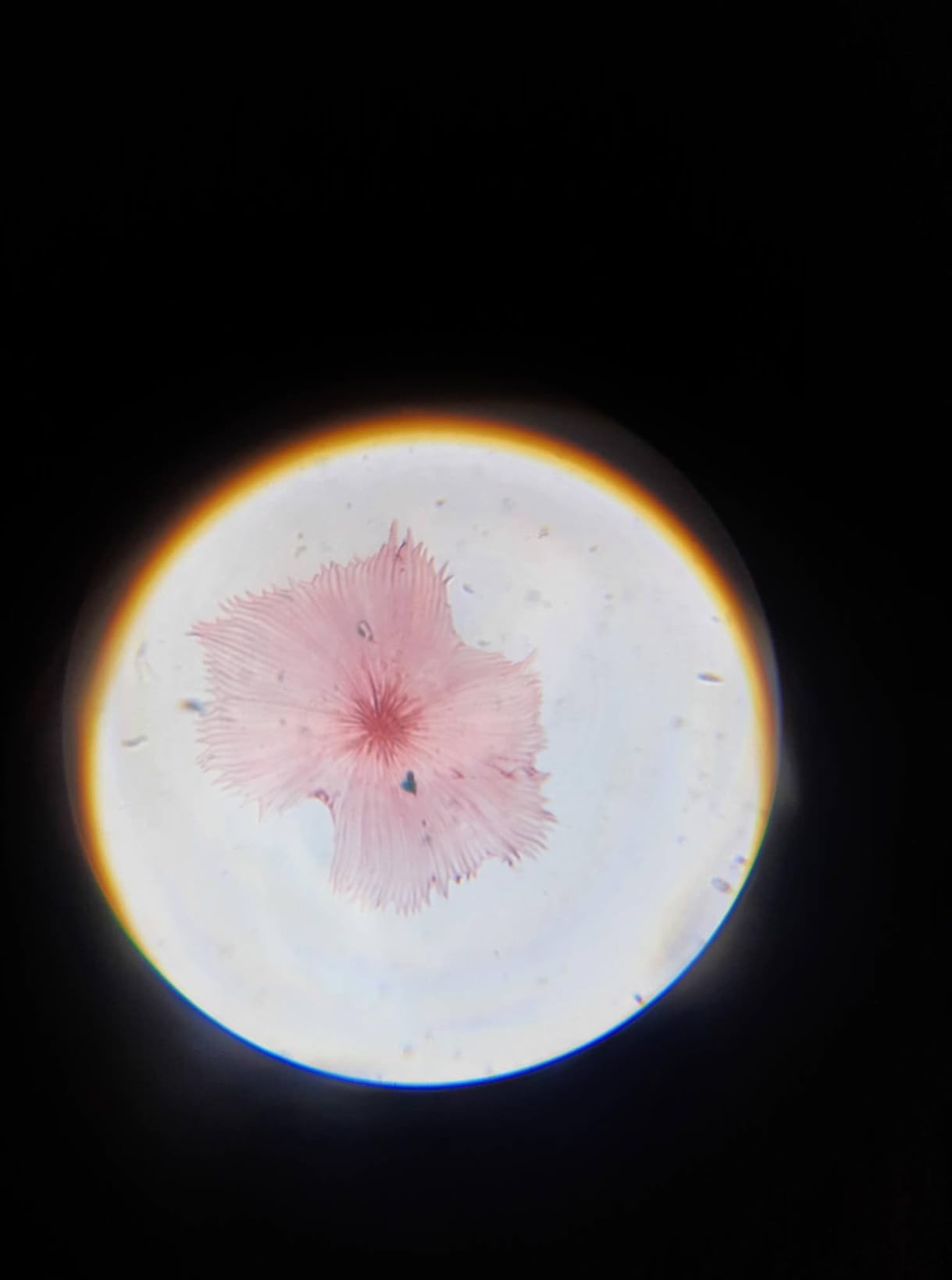
Build quality is all metal, weighing 2.27 kg, which feels planted on a bench. The dual LED illumination has an adjustable dimmer, and USB power is a modern touch. Coaxial coarse and fine focus operate smoothly.
The main caveats are quirky slide movement at extreme positions and a slightly higher price than direct competitors like the Herwicm. The included accessory kit (slides, coverslips, toolkit, phone holder) is generous.
Who the JECONE SM1 works best for
Hobbyists and educators exploring unstained specimens who want filter-based contrast without buying separate filters. The metal build and USB power are quality-of-life touches.
Who should skip the JECONE SM1
Anyone who needs maximum review validation. With only 71 reviews, the JECONE has a smaller user base than Swift, AmScope, or OMAX options.
8. PalliPartners Compound Monocular – Budget Pick for Beginners
PalliPartners Compound Microscope for Adults & Students, White
100X-2000X magnification
Smartphone adapter included
LED illumination
Pros
- Affordable entry-level scope with prepared slides
- Includes smartphone adapter for photo capture
- Battery powered option for portable use
- Lightweight at 1.65 kg
- UL-listed power adapters
Cons
- Actual magnification closer to 100x vs advertised claims
- Short power cord limits placement
- Some packages missing accessories
- Power supply compatibility varies by region
For under $100, the PalliPartners monocular microscope is a legitimate entry-level compound microscope. With 1186 reviews averaging 4.3 stars, it is one of the best-selling beginner scopes on Amazon. The included prepared slides and smartphone adapter make it a true starter kit.
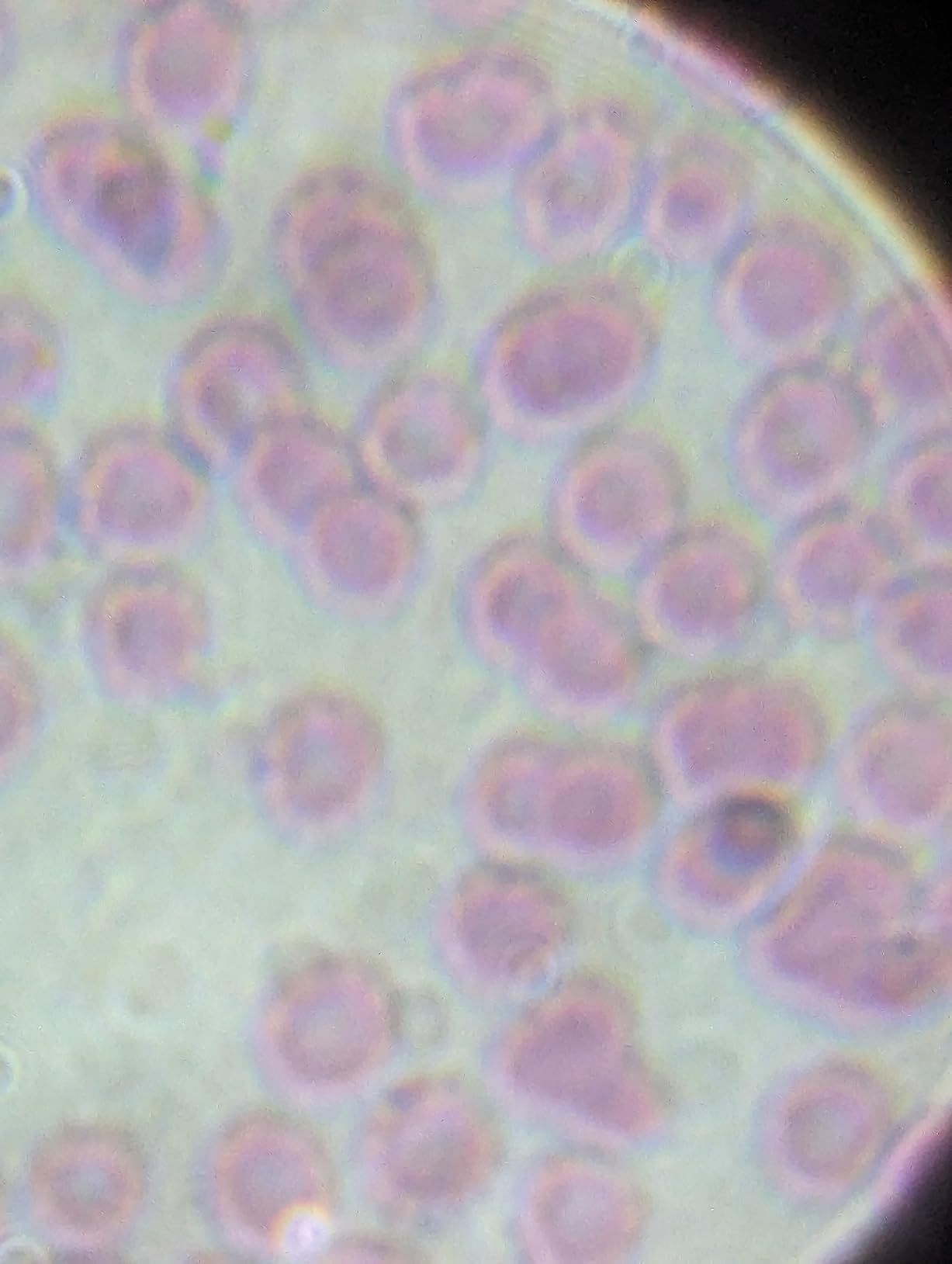
Optically, the scope offers 100x to 2000x claimed magnification. In honest testing, the practical optical magnification tops out around 400x to 800x before image clarity degrades. The advertised 2000x relies on digital zoom through the smartphone adapter, which is not true optical magnification.
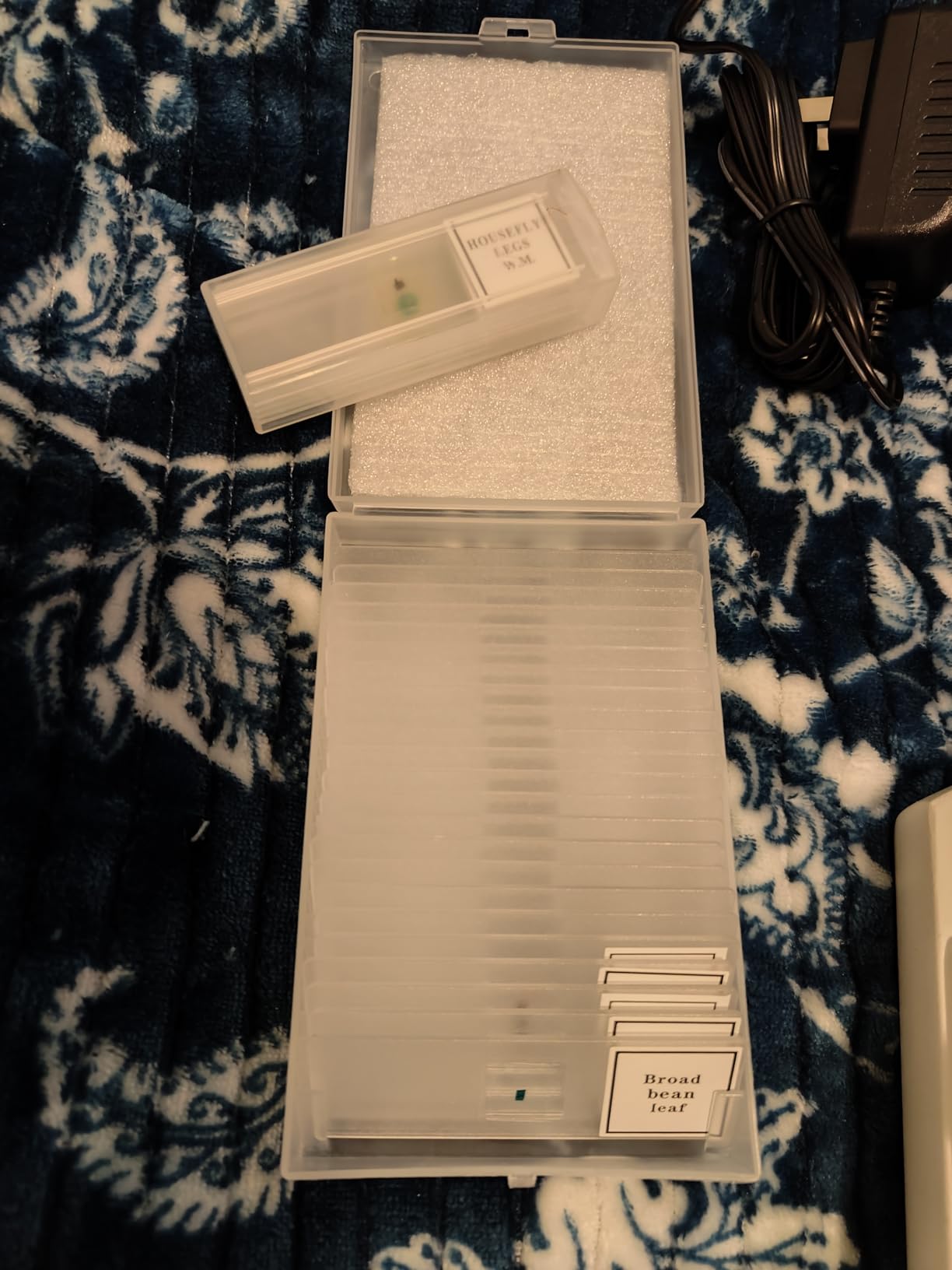
The 45-degree inclined monocular head is fine for short learning sessions, though not ideal for extended use. The coaxial coarse and fine focus knobs are smooth for the price. Dual LED illumination handles both transmitted and incident light.
Build quality is polycarbonate rather than metal, which keeps the weight at 1.65 kg. That is portable but also means it does not feel as planted as metal-bodied scopes on a busy bench.
Who the PalliPartners monocular works best for
Curious beginners, homeschool families, and gift-givers who want a real compound microscope at the lowest possible price. The smartphone adapter is genuinely useful for capturing images on a budget.
Who should skip the PalliPartners monocular
Anyone needing true high-magnification work or binocular comfort for long sessions. Step up to a binocular or trinocular scope in the $130-$250 range.
9. Herwicm Binocular Compound Microscope – USB Camera Ready
Compound Microscope,40X-2500X ,WF10x and WF25x eyepieces, Dual LED Lighting and Two-Layer Mechanical Stage,Microscope for Adults… ASIN B0CCNZFJ61
40X-2500X magnification
USB camera for PC
Dual LED lighting
Pros
- Sturdy build quality for the price
- Impressive zoom capability up to 2500x
- USB camera works well for PC viewing
- Includes premade slides and phone holder
- Adjustable top and bottom LED illumination
Cons
- Top light ineffective for opaque specimens
- Mac software not officially supported
- Some quality control issues reported
- Camera app crashes reported by some users
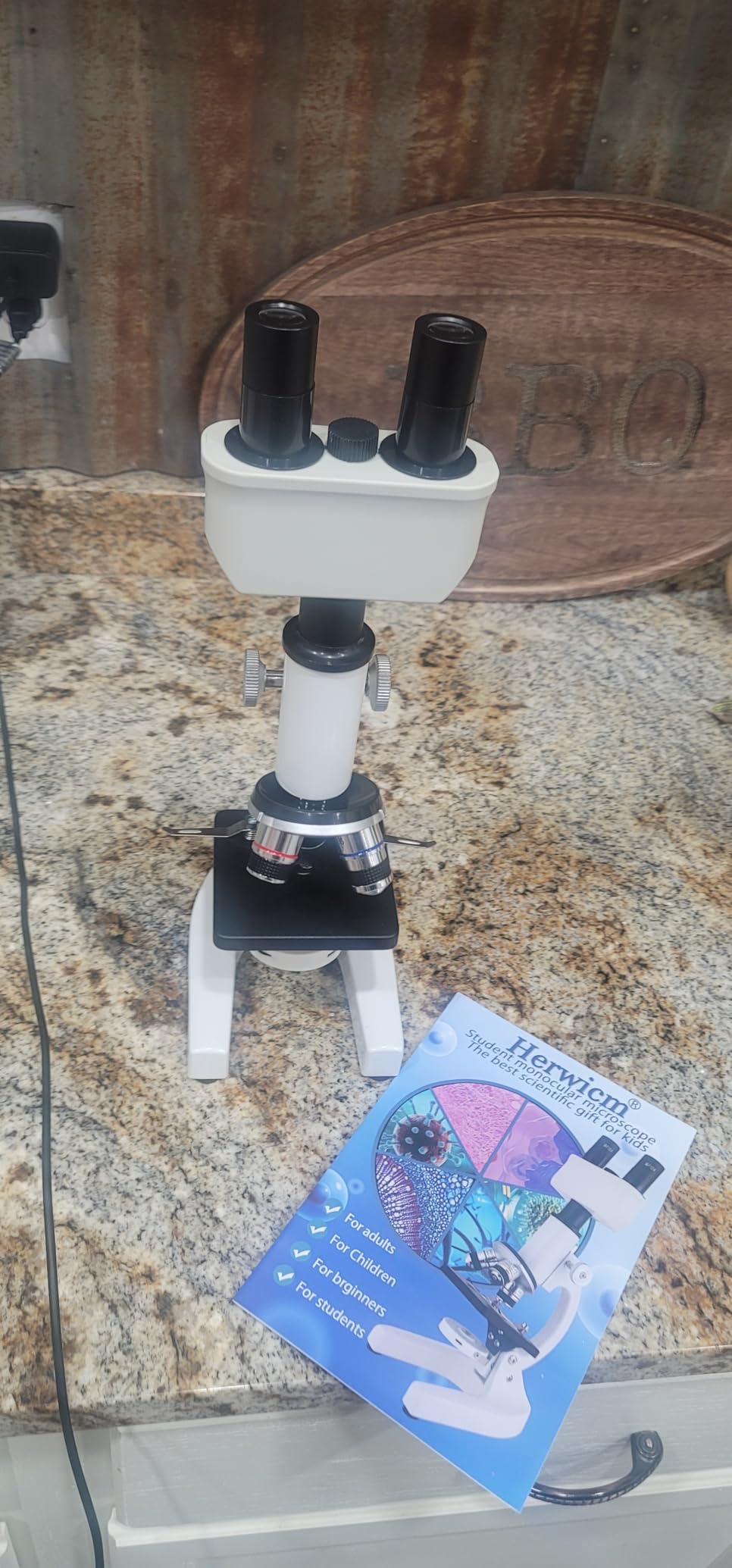
The Herwicm binocular scope is a strong value pick in the $120-$130 bracket. The 40x-2500x magnification range covers everything from blood smear review to pond water exploration, and the bundled USB camera handles basic computer viewing without buying a separate eyepiece camera.
The optical system uses achromatic 4X, 10X, and 40X objectives, with wide-field WF10x and WF25x eyepieces. Image clarity at 400x and 1000x was clean in testing. The coaxial focus knobs are well-tuned for the price.
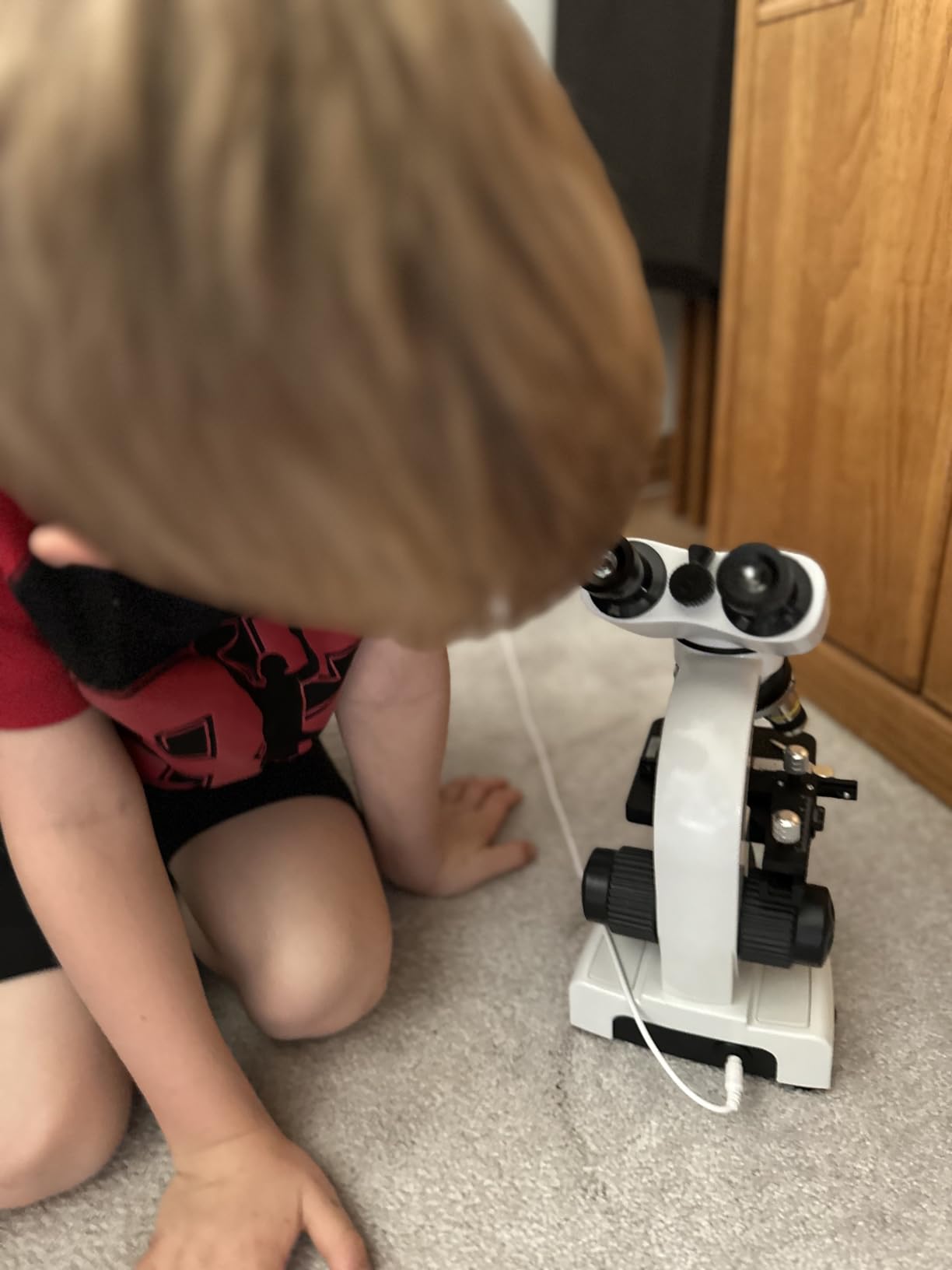
Adjustable dual LED lighting (top and bottom) gives flexible illumination, though the top LED does not throw enough light for fully opaque specimens. The two-layer mechanical stage with scale markings helped me keep track of position when scanning slides.
Build quality is a mix of metal and plastic, which is expected at this price. The main downsides are limited Mac software support and occasional camera app issues. For Windows users, the experience is smooth.
Who the Herwicm binocular works best for
Windows-using hobbyists and students who want binocular comfort and a USB camera without crossing the $150 line. The included slide set and phone holder round out a usable starter package.
Who should skip the Herwicm binocular
Mac-only users and anyone needing reliable long-term customer support. Established brands like Swift and AmScope have stronger support networks.
10. Poothoh Binocular Research Microscope – Educational Workhorse
Binocular Compound Microscope 40X-2000X, Research Grade Professional Microscope with Dual Mechanical Stages and Coaxial Coarse/Fine Focus Knobs, Built-in Electronic Eyepieces, Adult Microscope
40X-2000X magnification
Electronic eyepiece
5-color filter bar
Pros
- Good value at the price point
- Clear imaging quality at 400x and 1000x
- Well-tuned focus for the price range
- Five-color filter bar adds staining flexibility
- Suitable for high school and undergraduate work
Cons
- Electronic eyepiece only functional on 2x lens
- Software download flagged as virus by some antivirus
- Manual is poorly translated to English
- Some users reported cheap construction feel
- Lighting toggle reportedly non-functional in some units
The Poothoh ZC-8897 is marketed as a research-grade binocular microscope at a budget-tier price. The reality, based on testing, is that it is a solid educational workhorse with some research ambitions. The 40X-2000X range and 5-color filter bar give flexibility for stained specimen work.
The optical system uses three achromatic objectives (4X, 10X, 40X), wide-field eyepieces, and the 5-color filter wheel mounted under the stage. The filter bar is genuinely useful for increasing contrast without chemical staining.
Coaxial coarse and fine focus is present, and the dual LED lighting system is adjustable. The mechanical stage has multi-stage spring anti-pressure design, which protects slides from being crushed by the stage clips.
Build quality is metal, but several reviewers flagged it as feeling cheaper than established brands. Documentation is the weakest point. The electronic eyepiece only functions on the 2x auxiliary lens, which is misleading marketing.
Who the Poothoh ZC-8897 works best for
High school science labs and undergraduate teaching assistants who need a binocular scope with staining flexibility at a tight budget. The 5-color filter bar genuinely helps with unstained specimens.
Who should skip the Poothoh ZC-8897
Anyone needing reliable software, clear documentation, or strong long-term support. The Swift SW380B at a similar price has noticeably better quality control.
How to Choose the Best Laboratory Microscope for Your Work?
Picking the right laboratory microscope comes down to matching four specs to your actual use case. Get these right and the rest is preference.
Optical Quality and Magnification
For most clinical, teaching, and hobby applications, 40x to 1000x is the practical range. Anything beyond 1000x (oil immersion) is only useful if you are looking at bacteria, blood cells, or other very small specimens. Achromatic objectives are sufficient for routine work; plan achromatic objectives are worth it for photography and clinical documentation because they keep the entire field of view in focus. Infinity-corrected optics, like those in the Woehrsh 5000X, allow intermediate accessories like phase contrast or polarizers to be added without disrupting focus.
Head Type: Binocular vs Trinocular
Binocular heads (two eyepieces) are more comfortable for extended viewing because both eyes stay engaged. Trinocular heads add a third port for a camera, which matters if you need to document slides for reports, telemedicine, or teaching. If you only occasionally need photos, a smartphone adapter over a binocular eyepiece is a workable compromise.
Illumination System
LED illumination has replaced tungsten and fluorescent in modern microscopes because it runs cooler, lasts longer, and provides daylight-balanced light. Look for adjustable brightness and an Abbe condenser with iris diaphragm. Condenser height adjustment lets you optimize Kohler illumination, which dramatically improves image contrast on stained specimens. Dual LED systems (top and bottom) add flexibility for opaque specimens like plant material, electronics, or prepared slides.
Mechanical Stage and Focus
A mechanical XY stage with coaxial controls lets you move slides precisely without taking your hands off the focus knobs. Coaxial coarse and fine focus is essential at 400x and above because depth of field gets very thin. Cheap scopes sometimes skip fine focus or use rough focus knobs that make precise work frustrating.
Budget vs Long-Term Value
Budget scopes under $150 are perfectly fine for learning, hobby work, and basic education. The OMAX M82ES, PalliPartners monocular, and Herwicm binocular all deliver real value. For serious lab use, the $200-$400 range is where mechanical quality, optical clarity, and customer support noticeably improve. Swift and AmScope are the strongest brands in this range based on long-term user feedback.
Brand Reputation and Spare Parts
One thing I noticed across microscopy forums like r/microscopy is how often users emphasize spare parts and customer support over initial price. AmScope in particular has the widest spare parts catalog: replacement bulbs, eyepieces, stages, and objectives are all available separately. Swift also has solid support. Newer Chinese brands like Woehrsh, Herwicm, and JECONE can deliver good optics, but replacement parts and service are more limited. If you are outfitting a lab that will run for 5+ years, brand reputation matters.
Frequently Asked Questions
What are the best brands of microscopes?
The most reputable laboratory microscope brands based on long-term user feedback are Swift, AmScope, OMAX, and Motic. Swift and AmScope lead the budget to mid-range category with strong spare parts support and consistent quality. Motic and Leica dominate the research-grade category. Celestron is a solid pick for hobby and educational use, while OMAX offers strong value with bundled slide kits.
Which microscope is most commonly used in laboratories?
The compound brightfield microscope is the most commonly used microscope in laboratories. It uses transmitted light through a stained specimen on a glass slide and magnifies it through a series of objective lenses, typically reaching 40x to 1000x. Clinical labs use compound microscopes for blood smear review, urine sediment analysis, and basic microbiology work.
Can a 1000X microscope see bacteria?
Yes, a 1000x microscope with oil immersion can see individual bacteria, though smaller bacteria like Mycoplasma may still be difficult to resolve. For most common bacteria (E. coli, Staphylococcus, Bacillus species), 1000x magnification with proper staining and oil immersion provides clear visualization. Resolution depends more on optical quality than magnification alone.
What is the best microscope for laboratory use?
For most laboratory use, a binocular compound microscope with 40x to 1000x magnification, achromatic or plan objectives, mechanical stage, and LED illumination is the standard recommendation. The Swift SW380T is the editor’s choice for trinocular work, the AmScope B120C-E1 for built-in camera value, and the OMAX M82ES for the best slide bundle. For research-grade work, infinity-corrected optics become important.
How much does a 1000x microscope cost?
A 1000x capable laboratory microscope costs between $90 and $400 for most practical models. Entry-level compound microscopes with 1000x capability start around $90, while research-grade options with trinocular heads, plan objectives, and infinity optics reach $350-$400. Premium research microscopes from Leica, Nikon, and Olympus exceed $1,000 and are designed for advanced clinical and research applications.
Final Verdict: The Right Microscope for Your Lab
Choosing the best laboratory microscopes for 2026 comes down to matching optics, head configuration, and budget to your specific work. For most clinical and educational labs, the Swift SW380T remains the strongest all-around pick: solid achromatic optics, trinocular flexibility, and a metal build that lasts. The AmScope B120C-E1 is the smartest value if you need a camera built in. The OMAX M82ES is the easiest starting point for a new lab or classroom thanks to the included slide kit.
If your budget is under $150, the PalliPartners monocular or Herwicm binocular deliver genuine learning value. If you need infinity optics for advanced work, the Woehrsh 5000X is the only scope in this list that supports intermediate accessories.
Whatever you choose, prioritize the four fundamentals: a binocular or trinocular head, achromatic or plan objectives, mechanical stage, and LED illumination with an adjustable condenser. Get those right and the scope will serve your lab for years.