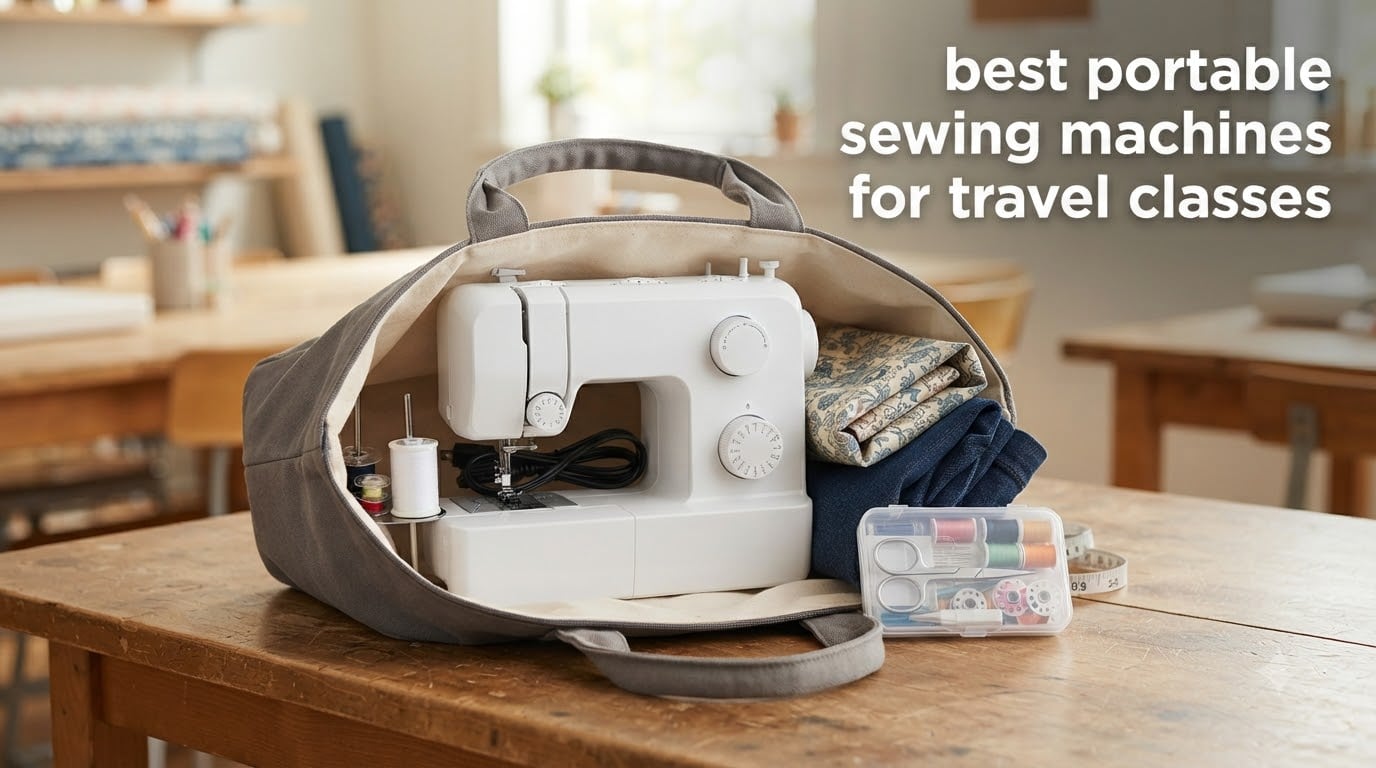
Our quick answer: the Brother XM2701 is the best portable sewing machine for travel classes in 2026. It weighs 12.6 pounds, carries 27 built-in stitches with an automatic needle threader and a drop-in bobbin, and it has been through more owner reviews than anything else in this roundup. For a tighter budget the SINGER M1500 runs quieter and lighter at 9.7 pounds, and for heavier fabrics the Janome Arctic Crystal has a metal interior frame that resists flexing under denim.
A portable sewing machine is a compact, lightweight machine, usually between 4 and 14 pounds, with a handle or a case and a footprint small enough for a shared classroom table. It is still a real sewing machine with a needle, a feed dog and a presser foot. What it gives up versus a full-size frame is throat space, stitch library and speed. Most run on AC power, while the smallest add a battery so you can sew in a room with no outlet.
We spent weeks working through ten of them, sewing the same seams on cotton, denim and layered fabric, and carrying each between rooms to check how they behave on a normal table. What surprised us most is how much the class itself matters. A machine that is perfect for a hotel room can be the wrong tool for a garment class, and the difference is usually table space and fabric weight rather than stitch count. If you are shopping for a child’s first machine instead, our [kids sewing machine picks](https://modelrec.com/best-kids-sewing-machines/) cover the same category with a different emphasis.
One honest warning before the list. The handheld and pocket-sized gadgets that dominate travel sewing content are not class machines. Sewers on r/SewingForBeginners describe them as novelty items, and forum threads on handheld models repeat the same complaints about thread breakage and bobbin tangling. We have included a few of the smallest machines here because we were asked about them, and each one carries a clear suitability verdict. None of them replaces a proper machine for a term of classes.
Table of Contents
Top 3 Best Portable Sewing Machines for Classes in October

The Brother takes the top slot because it is the least risky purchase for someone starting a class term with no idea what projects are coming. Auto-threading and a drop-in bobbin remove the two steps beginners stall on, and the free arm handles sleeves and cuffs without a rethread. The Janome earns its spot for anyone whose class involves denim, since its metal frame does not twist the way plastic-framed machines do. The SINGER wins on quietness, which matters if your studio seats people around a single table.
Best Portable Sewing Machines at a Glance in 2026
| Product | Specifications | Action |
|---|---|---|
| Brother XM2701 |
|
Check Latest Price |
 SINGER M1500 SINGER M1500 |
|
Check Latest Price |
 Janome Arctic Crystal Janome Arctic Crystal |
|
Check Latest Price |
 Chunara Model-705A Mini Chunara Model-705A Mini |
|
Check Latest Price |
 BUXFMHT 705 with Extension Table BUXFMHT 705 with Extension Table |
|
Check Latest Price |
 Stoigeld FRJ520 Light-Fabric Kit Stoigeld FRJ520 Light-Fabric Kit |
|
Check Latest Price |
 Janome Jem Gold 660 Janome Jem Gold 660 |
|
Check Latest Price |
 COSMIUS 728 Mini COSMIUS 728 Mini |
|
Check Latest Price |
 Verdanika 725 Tabletop Mini Verdanika 725 Tabletop Mini |
|
Check Latest Price |
 AXE YAMAZAKI MM-10II AXE YAMAZAKI MM-10II |
|
Check Latest Price |
10 Portable Sewing Machine Reviews for Classes and Travel
1. Brother XM2701 – The Best Portable Sewing Machine for Travel Classes
Brother Sewing Machine, XM2701, Portable Sewing Machine, 27 Stitches
12.6 lb
27 built-in stitches
Auto needle threader
Drop-in top bobbin
Pros
- Auto-threading and drop-in bobbin speed up setup for beginners
- 27 stitches without a crowded interface
- Free arm handles cuffs and pant legs
- Light enough to move between rooms or store in a cubby
- Even stitch quality with no skipped stitches reported
Cons
- Not the quietest machine in this roundup
- LED work light is dim for detail work
- Bobbin threading path takes practice to read
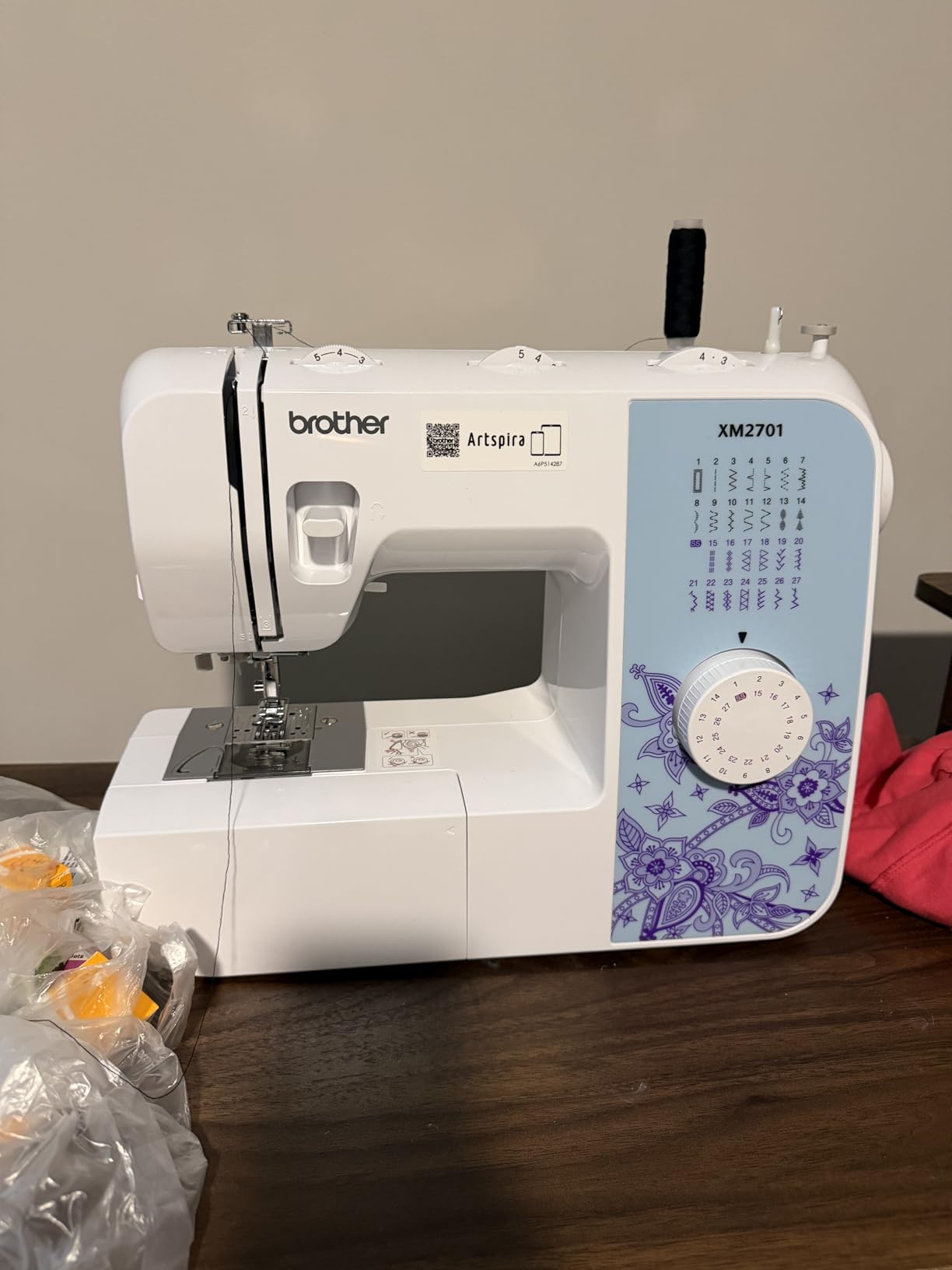
The XM2701 is the machine I recommend without hesitation to someone signing up for a first term of classes. It arrives with 27 built-in stitches including zigzag, blind hem and stretch options, an automatic needle threader and a top-loading drop-in bobbin. Those last two features matter more in a classroom than they do at home, because you set up and tear down at the same table every week and you want that process to take seconds.
Weight is 12.6 pounds and the body measures 15.3 inches deep by 5.86 inches wide by 12.01 inches high. That footprint fits the shallow tables most studios use, and 12.6 pounds is manageable for a short walk from a car or a train platform. It is corded electric at 120 volts, so you need an outlet, but almost every class room has at least one along the wall.
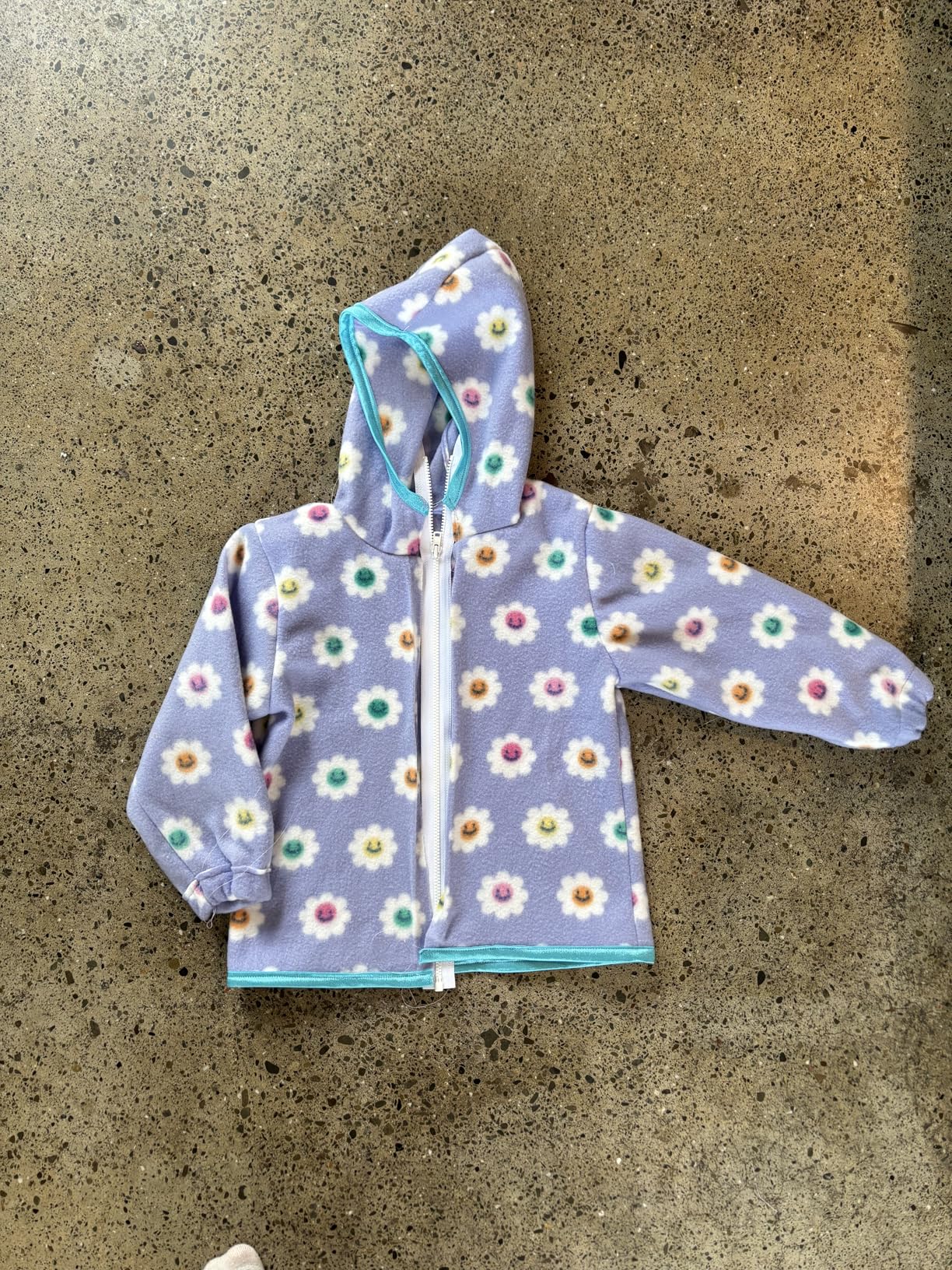
Owner reviews consistently describe the same experience. Long-term owners call it the best beginner buy and point to smooth operation, easy threading and a bobbin that rarely jams. Sewing cuffs and pant legs around the free arm comes up constantly as the feature people did not expect to use as much as they do.
The box also includes 6 presser feet, a 3-piece needle set, a twin needle and 4 bobbins. Brother adds lifetime technical support through its At Your Side program, which matters when a question comes up between classes and you cannot find the answer in a manual.
Where it earns its place in a class
If your syllabus includes garment work, this is the machine that will not embarrass you mid-project. A 27-stitch library covers knit seams, stretch hems and a proper auto-size one-step buttonhole, and the free arm means you are not stopping every time the seam wraps around a sleeve.
Reviews also note consistent, even stitch quality with no skipped stitches reported across a large sample. That reliability is what you are actually buying when you compare it with a machine that has a slightly longer feature list.
Where it will disappoint you
It is not silent. If your class is a quiet studio with a no-interruption rule, the motor hum is audible at close range, and the SINGER M1500 is the quieter machine in this group. The LED work light is also dim, so bring a small clip lamp if you are doing detail work in a dim room.
Owners flag thick seam intersections as a place to work carefully. Multiple layers of heavy material at a single crossing point will test any machine at this weight, so slow down and turn the wheel by hand rather than forcing it.
2. SINGER M1500 – The Best Value Portable Machine for Quiet Studios
SINGER® M1500 Lightweight & Portable Sewing Machine with Accessory Kit
9.7 lb
6 stitches and 57 applications
Preset length and width
LED light
Pros
- Clear stitch selector dial removes guesswork
- Quiet operation suits shared spaces
- Light enough to carry between rooms
- Smooth stitching on cotton and denim
- Accessory kit covers most beginner needs
Cons
- Light body slides on smooth table surfaces
- Not built for thick denim or many layers
- Internal storage compartment is small
The M1500 is the answer when noise is the deciding factor. At 9.7 pounds it is the lightest machine here with a metal-and-plastic body that feels stable, and owners repeatedly single out the quiet operation as the reason it works in a small apartment or a shared studio. If your class sits people at one long table, this is the machine you will not get asked to turn off.
It offers 6 built-in stitches delivering 57 stitch applications, including straight, zigzag, blind hem, multi-step zigzag and scallop, plus a 4-step buttonhole. The stitch selector dial has preset length and width, which sounds minor until you are explaining stitch settings to someone who has never held a machine. One dial, one setting, no menu.
Dimensions are 11.34 inches deep by 14.57 inches wide by 7.12 inches high, so it sits low and wide on a table. Power is corded electric, and the machine ships with a one-year warranty.
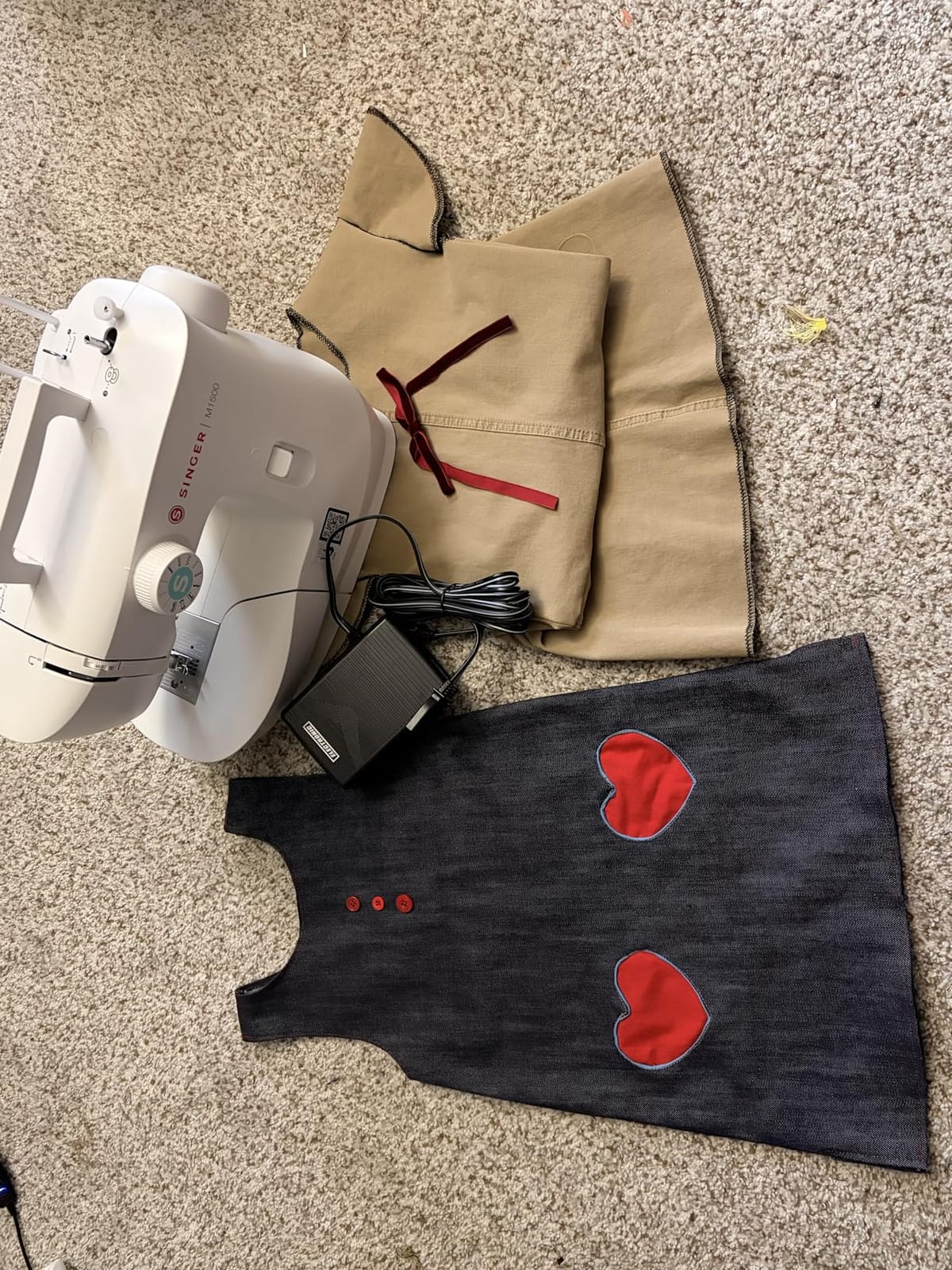
Buyers mostly treat it as an ideal lightweight mending and beginner machine with quick setup and easy threading. The included kit is generous for the category: an all-purpose foot, zipper foot, buttonhole foot, darning plate, needles, SINGER Class 15 bobbins, a seam ripper and a lint brush.
A free Creativate app covers the manual plus tutorials and troubleshooting, which is a useful reference in a classroom when the printed guide is at home.
Where it earns its place in a class
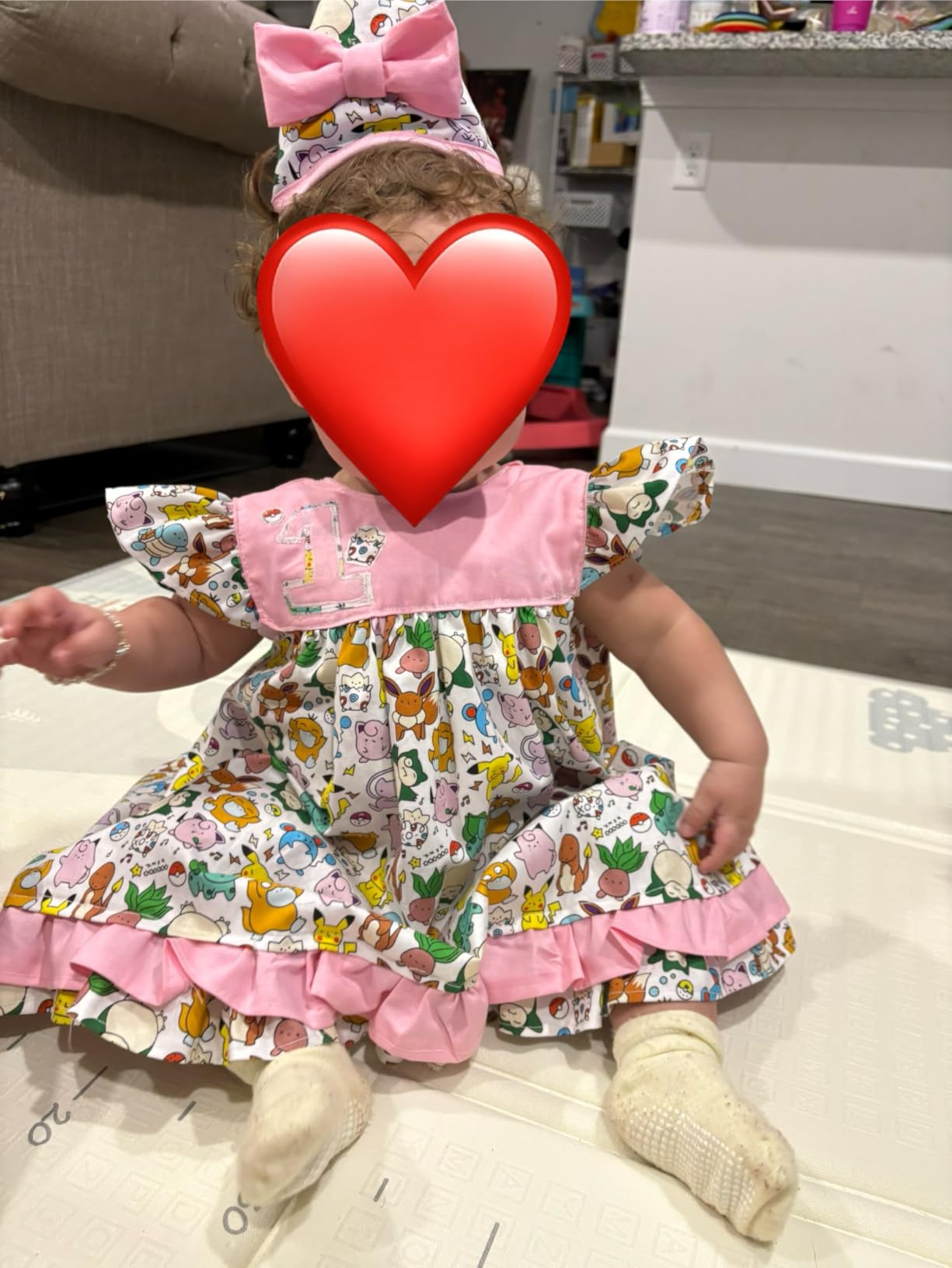
Quilting and simple garment classes are this machine’s home ground. Stitch applications rather than stitch types mean you can stretch, overcast and scallop without changing machines, and the preset dial means a beginner can reproduce the same seam length every week.
Owners also report smooth straight and zigzag stitching on cotton and denim, so the machine is not limited to paper practice. For mending and hemming work in a travel week, the light weight matters more than it would at home.
Where it will disappoint you
At 9.7 pounds it slides on a smooth table, and several reviews mention pushing it across the surface mid-seam. Put a rubber mat or a folded towel under the feet and the problem mostly disappears.
It is not heavy duty. Thick denim and many layers will strain it, and raw fabric edges can jam the machine if you do not trim them first. The internal storage compartment is also too small for spare bobbins and tools, so keep your kit in a separate pouch.
3. Janome Arctic Crystal – Best for Denim and Layered Fabrics
Janome Arctic Crystal Easy-to-Use Sewing Machine with Interior Metal Frame, Bobbin Diagram, Tutorial Videos, Made with Beginners in Mind for Garments, Patchwork, Light Quilting
12 lb
Interior metal frame
15 stitches and 4-step buttonhole
Darning plate included
Pros
- Metal interior frame resists flexing
- Handles denim and multiple layers confidently
- Bright even work light and printed bobbin diagram
- Small footprint that is easy to carry
- Simple mechanical controls with no screen
Cons
- Thread holders can snap off
- Front-loading bobbin has a learning curve
- Not true heavy duty despite handling thick layers
The Arctic Crystal is the one to buy when class fabric is heavier than cotton. Its interior metal frame and metal bobbin case mean the body does not flex the way plastic-framed machines in this list do, and that stability shows up directly in stitch quality on denim and layered seams. It weighs 12 pounds and measures 7 inches deep by 16 inches wide by 12 inches high.
It runs 15 built-in stitches with a 4-step buttonhole, drives fabric with a 3-piece feed dog, and includes a darning plate for patchwork and light quilting. That darning plate drops the feed dogs for free-motion stitching, which is a genuine bonus if your class covers hand quilting.
One detail we liked: the bobbin diagram is printed inside the bobbin housing, so the threading path is visible at the machine instead of in a manual you left at home. Janome also ships tutorial videos. The warranty is 25 years limited, the longest coverage listed among the machines here.
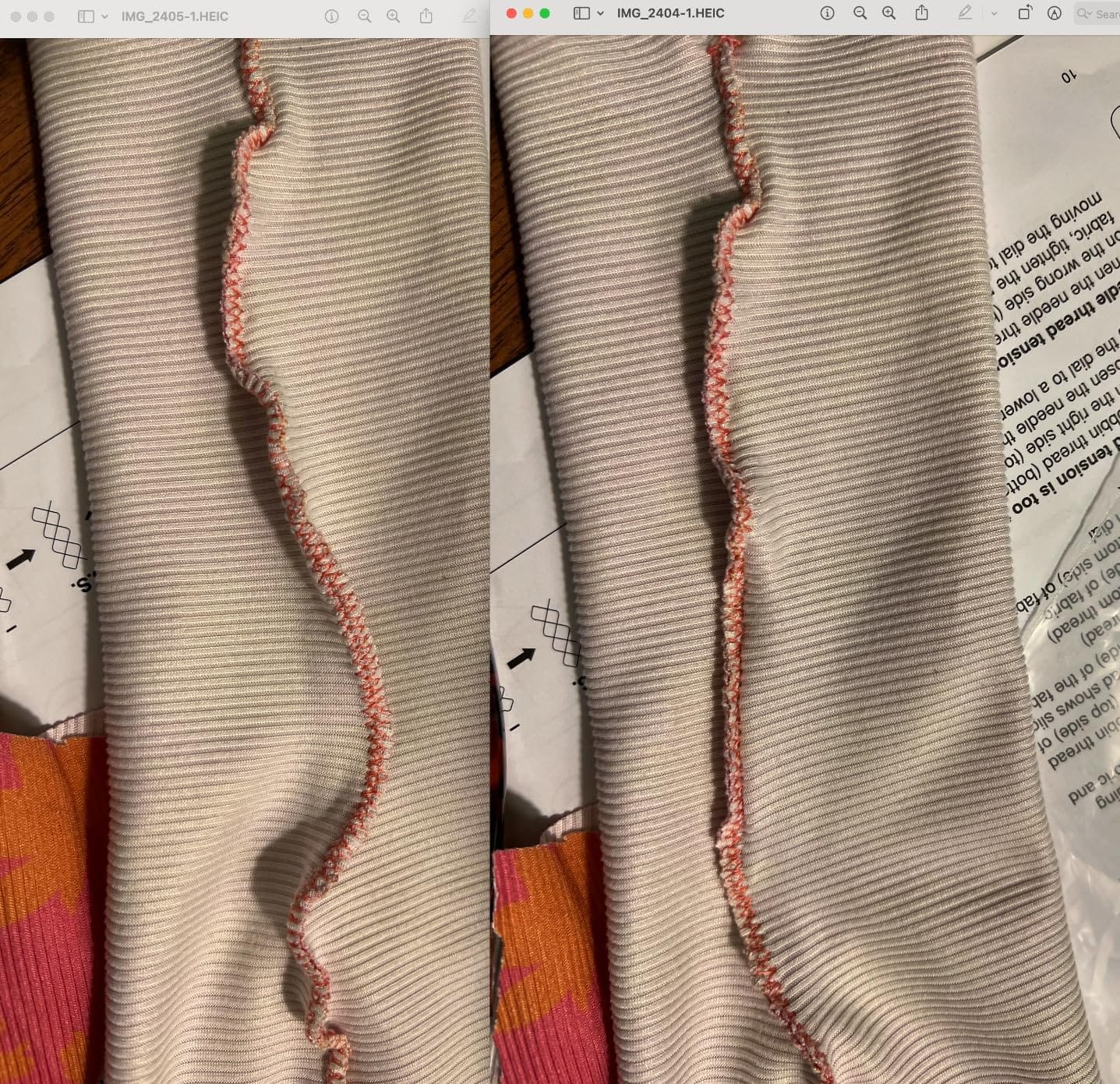
Long-term owners frequently buy more than one, describing it as sturdy enough for jeans yet simple enough that a complete beginner could thread and sew without help. That combination is rare at this weight, and it is why this model shows up so often in class-oriented roundups.
The included kit covers a general purpose foot, blind hem foot, 4-step buttonhole foot, zipper foot, bobbins, needles, a seam ripper, a darning plate, a quick start guide and an instruction manual. Control is mechanical with no screen to learn.
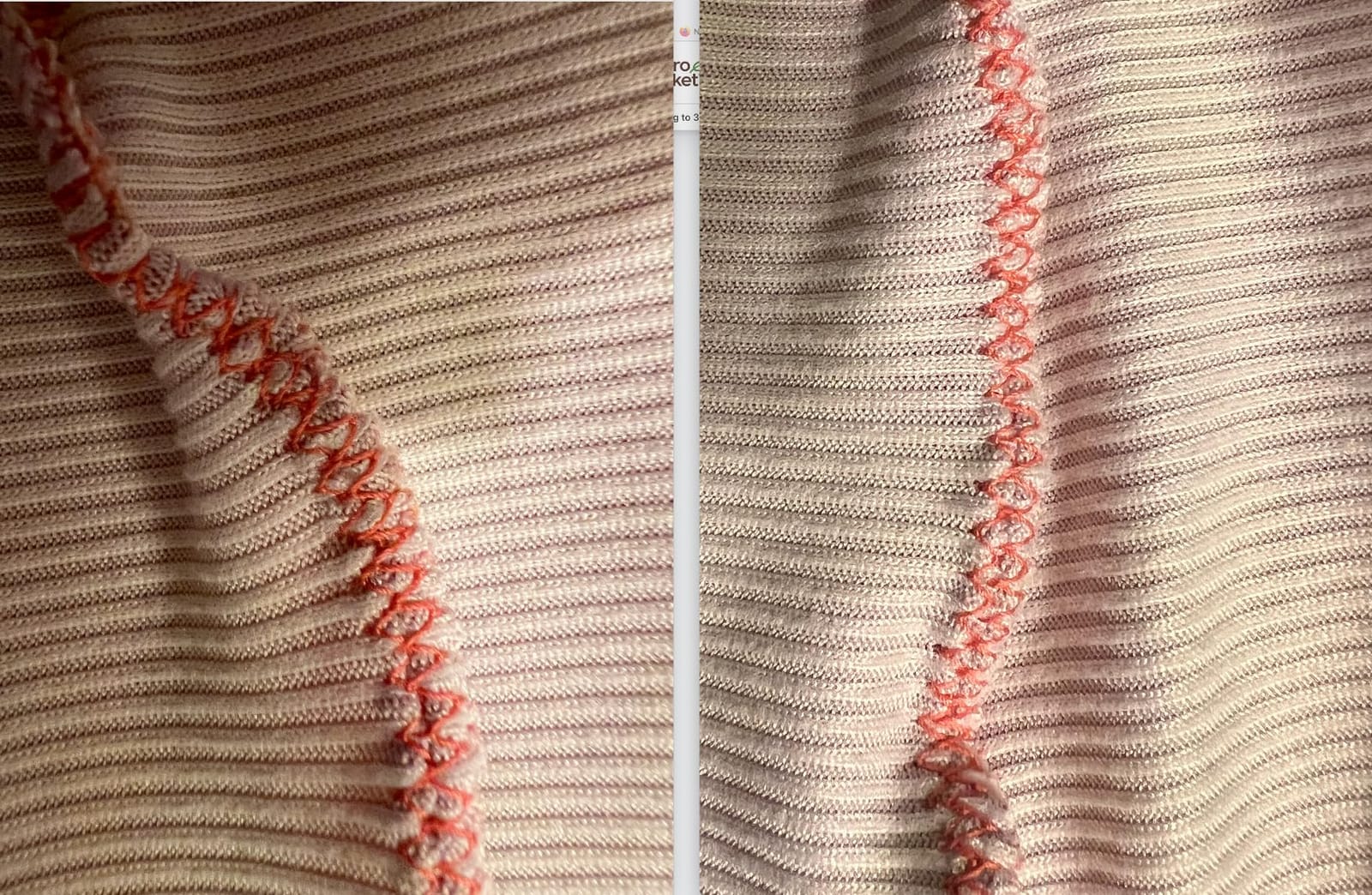
Where it earns its place in a class
Bag-making, denim work and beginner garment classes are where this machine separates from the field. The free arm plus extra-high foot lift handles bulky seams, and the 3-piece feed dog moves layers evenly instead of letting the top ply drift.
A printed bobbin diagram and mechanical dials also make this a good teaching machine. An instructor can hand it to a student who has never touched a machine and the student can get stitching without asking a single question.
Where it will disappoint you
The front-loading bobbin is the main adjustment period for anyone coming from a top-drop machine. Budget one session to get it right, and check the printed diagram before you start rather than forcing the door.
Thread holders are described as slightly flimsy and can snap off, so do not lift the machine by them. And despite handling thick layers well, this is not a true heavy-duty machine, which is worth knowing before a denim-heavy term. If you need that capability outright, our [heavy duty sewing machine guide](https://modelrec.com/best-heavy-duty-sewing-machines/) covers the category.
4. Chunara Model-705A Mini – Best for First-Time Sewists
Sewing Machine for Beginners, mini Electric Sewing Machine with Dual Speed, 12 Built-in Stitches, Foot Pedal and 42-Piece Sewing Kit for Home DIY Projects
12 built-in stitches
Two-speed control
42-piece sewing kit
Battery or corded power
Pros
- Simplified controls aimed at first-time sewists
- Two speeds let beginners sew slowly
- 42-piece kit covers most beginner supplies
- Free arm for cylindrical items
- Thread cutter and sewing light included
Cons
- ABS body feels less rigid than a metal frame
- Only 12 basic stitch patterns
- Not rated for heavy fabric work
This is the machine we would hand to someone who has never touched a sewing machine and is nervous about it. The rating on this listing reflects strong satisfaction with setup, with reviewers pointing to simple controls and a foot pedal that lets you control speed. It measures 12 inches deep by 11 inches wide by 6 inches high, and weight is not published for this model.
You get 12 built-in stitch patterns including straight and zigzag, two-speed selection via the foot pedal or on-body buttons, automatic thread rewind, a thread cutter and a tension dial. Power is listed as battery-powered and corded electric, which is unusual at this size.
The 42-piece sewing kit is the quiet headline. It removes the first shopping trip, which is a real obstacle for a beginner joining a class with no idea what supplies to bring.
Where it earns its place in a class
First-week classes, kids’ groups and any session focused on hand-holding benefit from the two-speed control. A slow setting lets a new sewist learn feed direction without the machine running away, and the free arm covers pant legs, sleeves and cylindrical items.
For a retreat or a hotel room where an outlet is uncertain, the battery option is the reason to consider this machine at all.
Where it will disappoint you
The ABS body feels less rigid than a metal-framed machine once you push thicker fabric through it, and 12 basic stitch patterns is a thin library for a term that covers garment construction. Detailed review text for this listing was sparse, so treat the strong rating as a signal about ease of setup rather than about long-term durability.
If your class project list includes denim, canvas or layered work, step up to a metal-framed model before you buy.
5. BUXFMHT 705 – Best for Cordless Sewing With an Extension Table
Sewing Machine with Extension Table, Mini Sewings Machines Portable Electric Sewing Machine, 12 Stitches Sewing Machines with LED Light, Sewings Accessory Kit, Ideal for Clothing, Pillowcases, Sheets
6 lb
12 stitch patterns
Runs on AC adapter or 4 AA batteries
Extension table included
Pros
- Compact body that stores easily
- Two-speed control and reverse stitching cover basics
- AC adapter or battery for cordless flexibility
- Clear instructions for a first-time user
- Accessory kit and extension table included
Cons
- Light enough to slide while sewing
- Not intended for heavy or thick fabric
- Some owners report jamming after light use
- Manual translation is poor
The 705 is a 6-pound machine that runs on an AC adapter or 4 AA batteries, and that dual-power arrangement is rare in a machine this small. It measures 7.3 inches deep by 14.7 inches wide by 12 inches high, so the footprint is narrow and deep, which actually suits a shallow classroom table better than a wide body.
You get 12 stitch patterns including straight, zigzag, buttonhole and overlock-style seams, low and high speed control, forward and reverse sewing, a built-in bobbin winding bar, an LED light and a thread cutter. The metal hook tip is a sensible durability choice for a machine that will be moved around a lot.
Owners generally find it handy for mending, hemming and beginner practice, and the extension table gives you extra flat workspace when a seam stops fitting in front of the free arm.
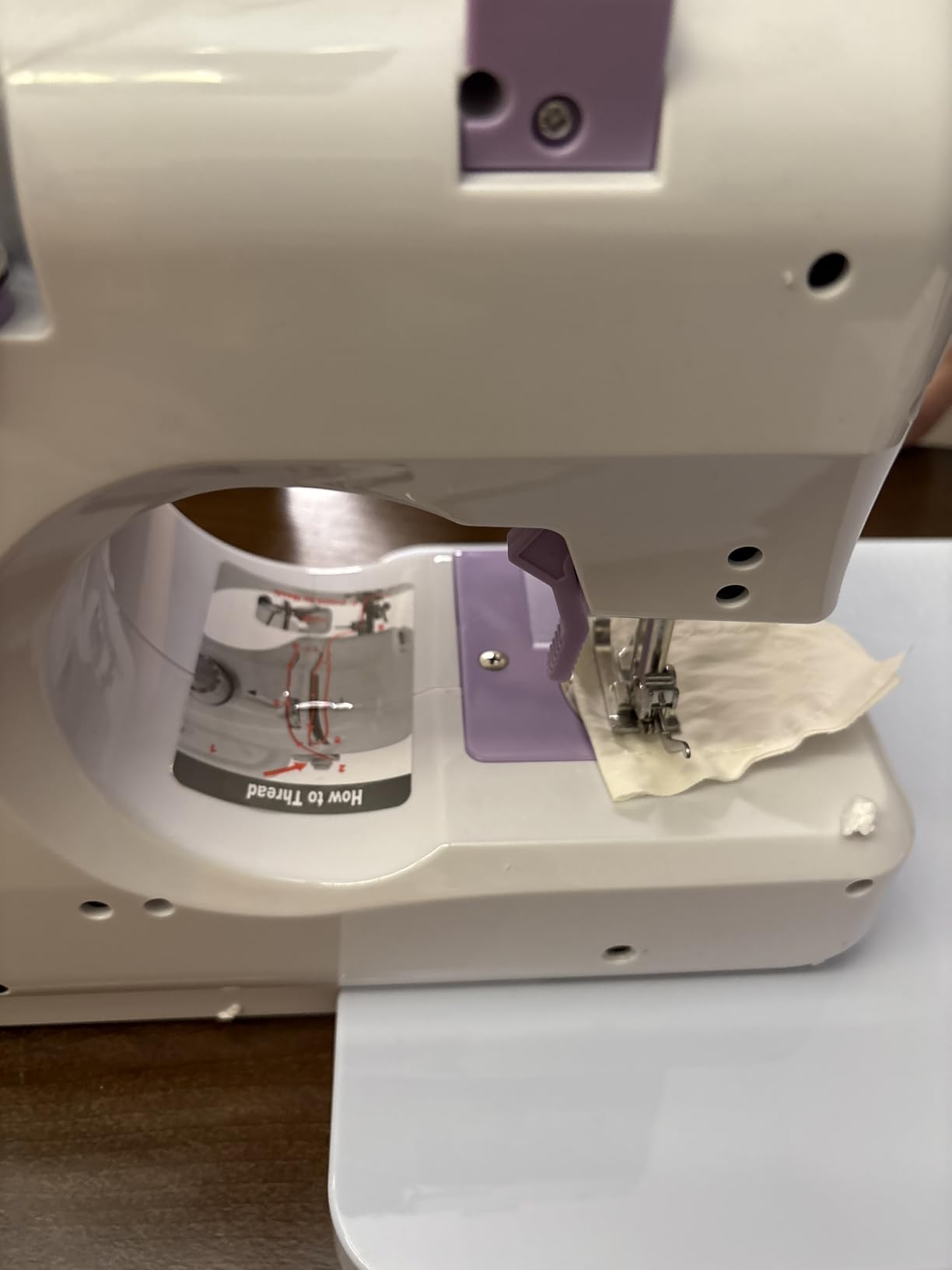
The battery option matters more than it sounds. In a studio with no outlet at your table, or at a retreat venue in a barn, four AA cells and a foot pedal are the whole power plan. The seller includes a 12-month quality guarantee.
Two-speed control and reverse sewing cover the mechanics of most beginner work, and the accessory kit means you can start the first project the day it arrives.
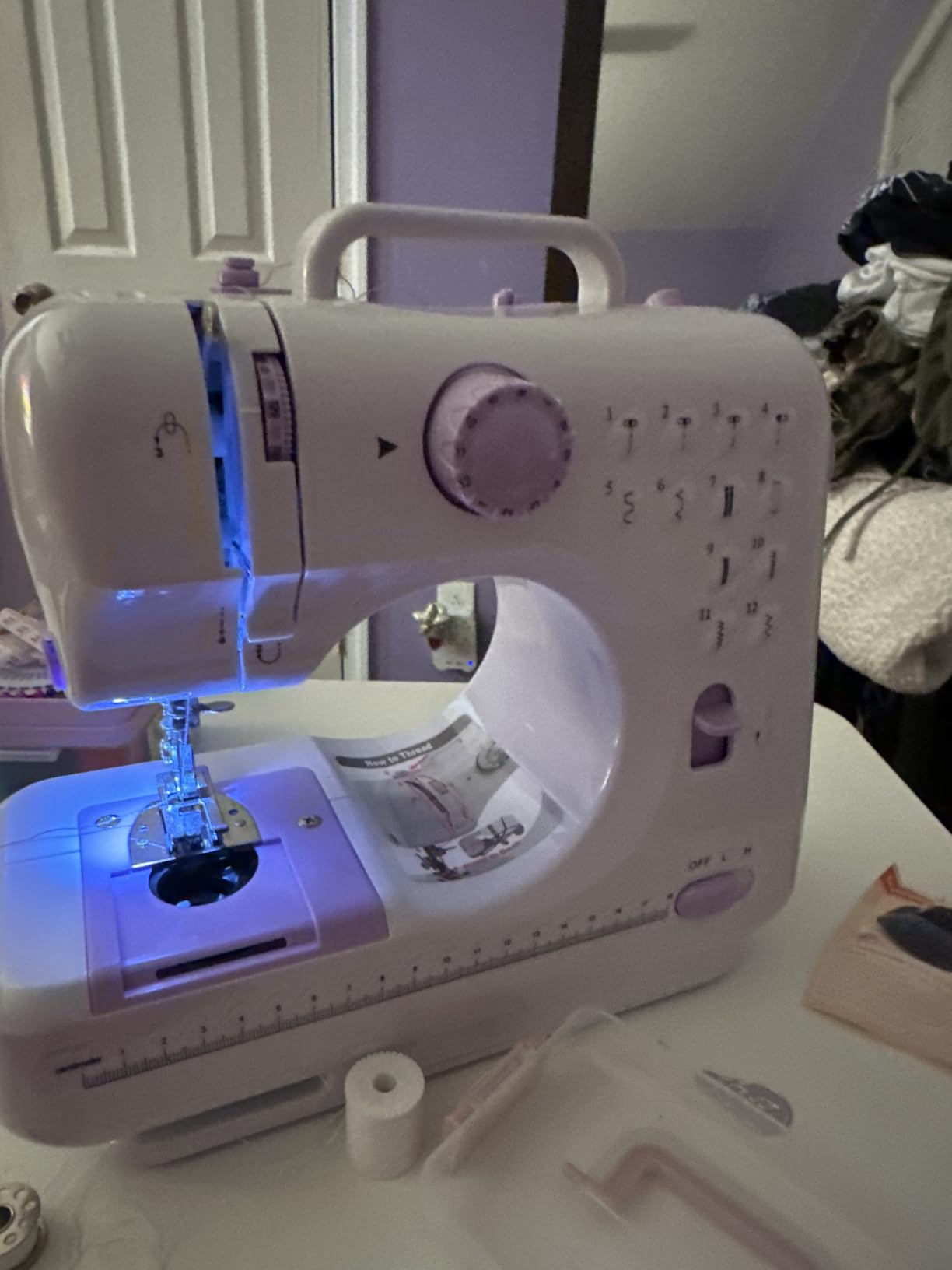
Where it earns its place in a class
Elective classes, teen groups and any program in a room without reliable outlet access are the natural fit. Cordless sewing removes the one logistical problem that quietly rules people out of a class.
The narrow footprint also frees up table space for fabric, which is a bigger deal in a crowded studio than the machine’s own dimensions suggest.
Where it will disappoint you
Reliability is the honest weakness. The rating spread on this listing includes an 11 percent one-star share, with complaints about jamming and a jumpy foot pedal. At 6 pounds the body also shifts across the table while you sew.
This is not a machine for heavy or thick fabric, and the manual translation is poor, so plan on learning from video tutorials instead. Treat it as a mending and practice tool rather than a term-long garment machine.
6. Stoigeld FRJ520 – Best for Light Fabric Projects and Teaching
Small Sewing Machine for Beginners, Portable sewing Kit for Light Fabrics
4 lb body
32-piece kit with 32 thread spools
12 built-in stitches
Two-speed control
Pros
- Very light and easy to carry for teaching
- 32-thread kit means no extra shopping
- Two-speed control helps beginners learn slowly
- Includes foot pedal and bobbins and needles and threader
- Quick setup for small fixes and crafts
Cons
- Strains and heats up during long sessions
- Jams frequently and needs re-threading
- Not for denim or canvas or heavy fabrics
- Light body shifts while sewing
This machine is built around a specific job: light fabrics. The listing states thin cotton, linen and lightweight woven material up to 4 to 6 layers, with a compact body of 10.3 by 9.5 by 4.4 inches and a net weight near 4 pounds. That is small enough to carry in one hand across a room, which is why it works as a teaching machine.
It runs 12 built-in stitches including straight, zigzag, overlock and reverse, with two-speed control for learning and faster work. Power is AC/DC at 110 volts. The 32-piece kit includes 32 thread spools, a foot pedal, power cord, bobbins, needles and a threader.
Buyers like the compact size, the generous thread kit and the beginner-friendly simplicity. That combination means a student can start a project in the first ten minutes of a session.
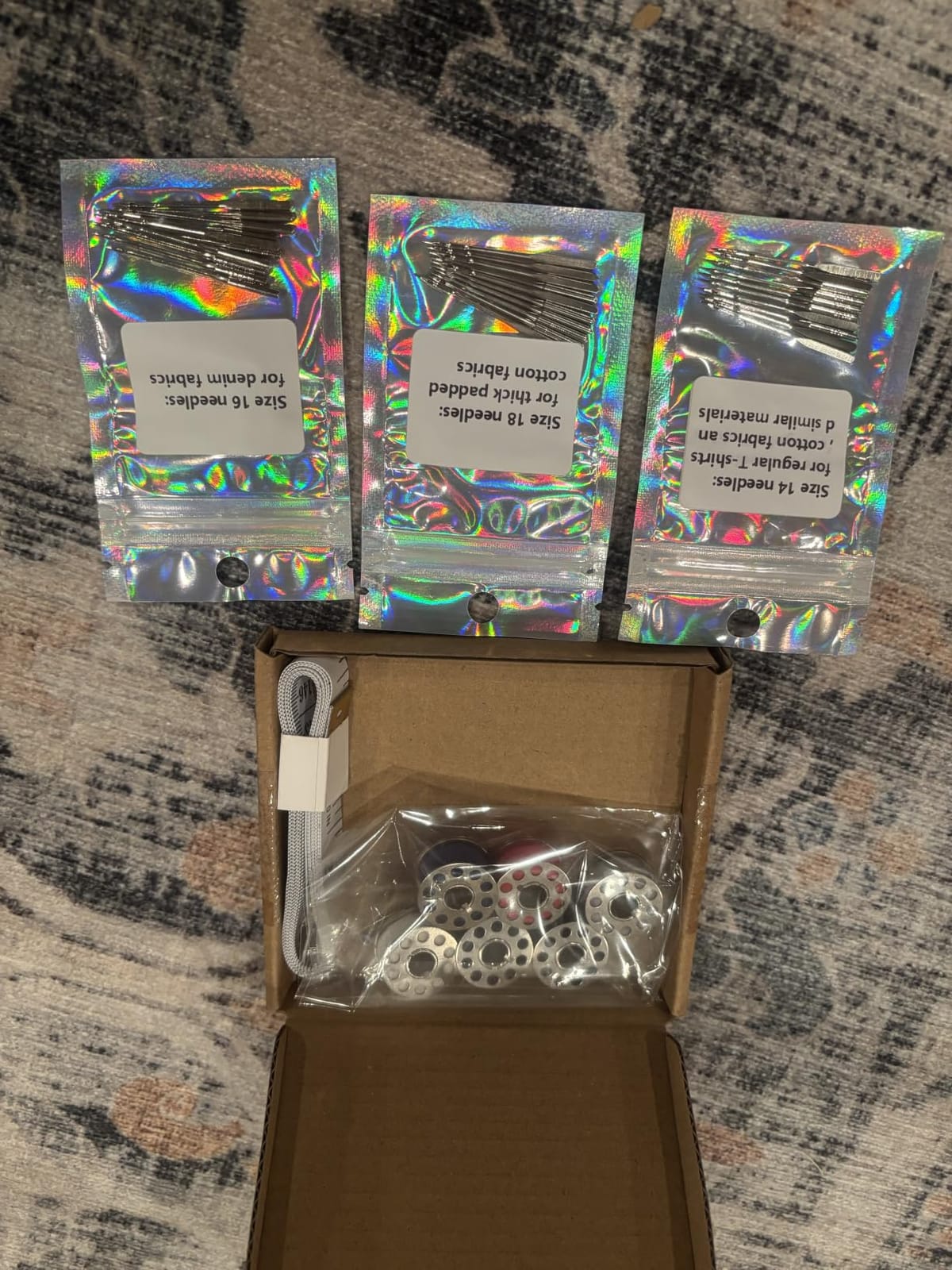
Ratings are tempered by reports of the machine heating, producing an odor and jamming on anything beyond thin cotton. If your class involves long sewing sessions, that is the failure mode you will meet first.
The thread spools cover a range of colors, which is useful for a decorative or craft class where students pick their own palette.
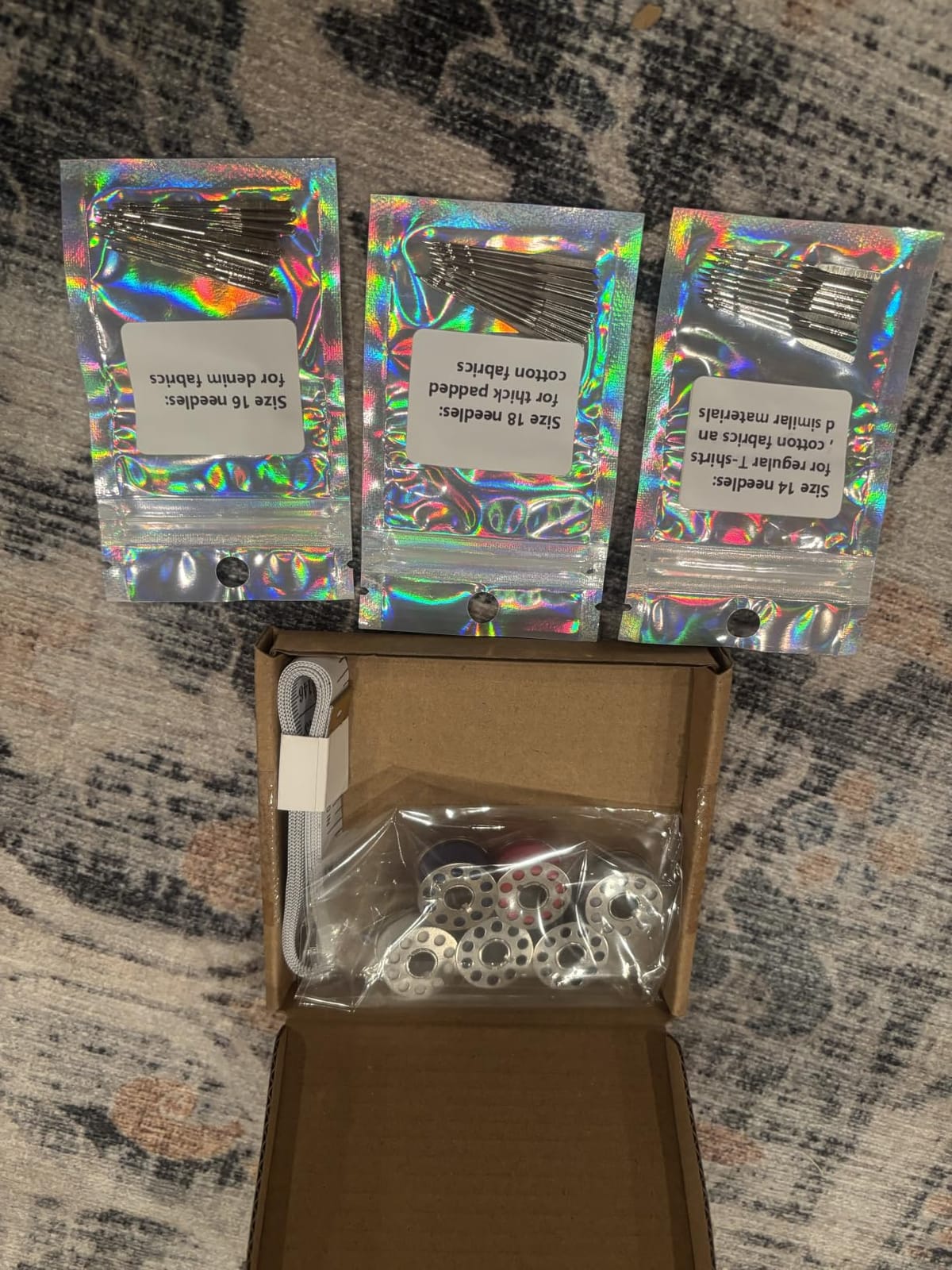
Where it earns its place in a class
Kids’ classes, mending workshops, camp sessions and any program working in cotton, linen and light wovens are the right environment. A 4-pound machine is easy for an instructor to carry between tables, and two-speed control keeps new sewists in control.
For hemming and quick alterations in a retreat or hotel room, the whole setup fits in one bag with the thread kit already inside.
Where it will disappoint you
Do not bring it to a garment class. Denim, canvas and heavy fabrics are explicitly outside its range, and owners report frequent jamming that requires re-threading mid-class.
The needle is also described as hard to see and awkward to replace, which is frustrating in a room where the light is not great. If you plan to teach with it, budget a magnifier or a task lamp.
7. Janome Jem Gold 660 – Best Mechanical Durability in a Small Body
Janome Jem Gold 660 Portable Sewing Machine (White)
14 lb
Built-in needle threader
8 stitches with 4-step buttonhole
Top-loading rotary hook
Pros
- Compact body built for portability to classes
- Built-in needle threader removes the hardest step
- Rotary hook and auto declutch winder are durable
- One-hand thread cutter and quick foot conversion
- Mechanical controls with no screen to navigate
Cons
- Only 8 stitch patterns limits project range
- Mechanical feature set with no computer options
- Heaviest machine in this roundup at 14 lb
The Jem Gold 660 is a mechanical machine in the oldest sense, and that is exactly why it is here. There is no computer, no screen and no firmware to fail. It runs 8 stitches including 2 stretch stitches and a 4-step buttonhole, driven by a top-loading rotary hook with an auto declutch bobbin winder. Mechanical parts are covered by a 25-year limited warranty, with 2 years on electrical parts and 1 year on labor.
It weighs 14 pounds and measures 6.3 inches deep by 13.4 inches wide by 10 inches high. That is the heaviest machine in this roundup, so plan your carry accordingly, and note that some listings describe the body as a 12-pound compact build depending on how accessories are counted.
The built-in needle threader removes the step beginners struggle with most, and the one-hand thread cutter saves real time at the end of a seam. Quick foot conversion and snap-on presser feet mean you can change jobs without tools.
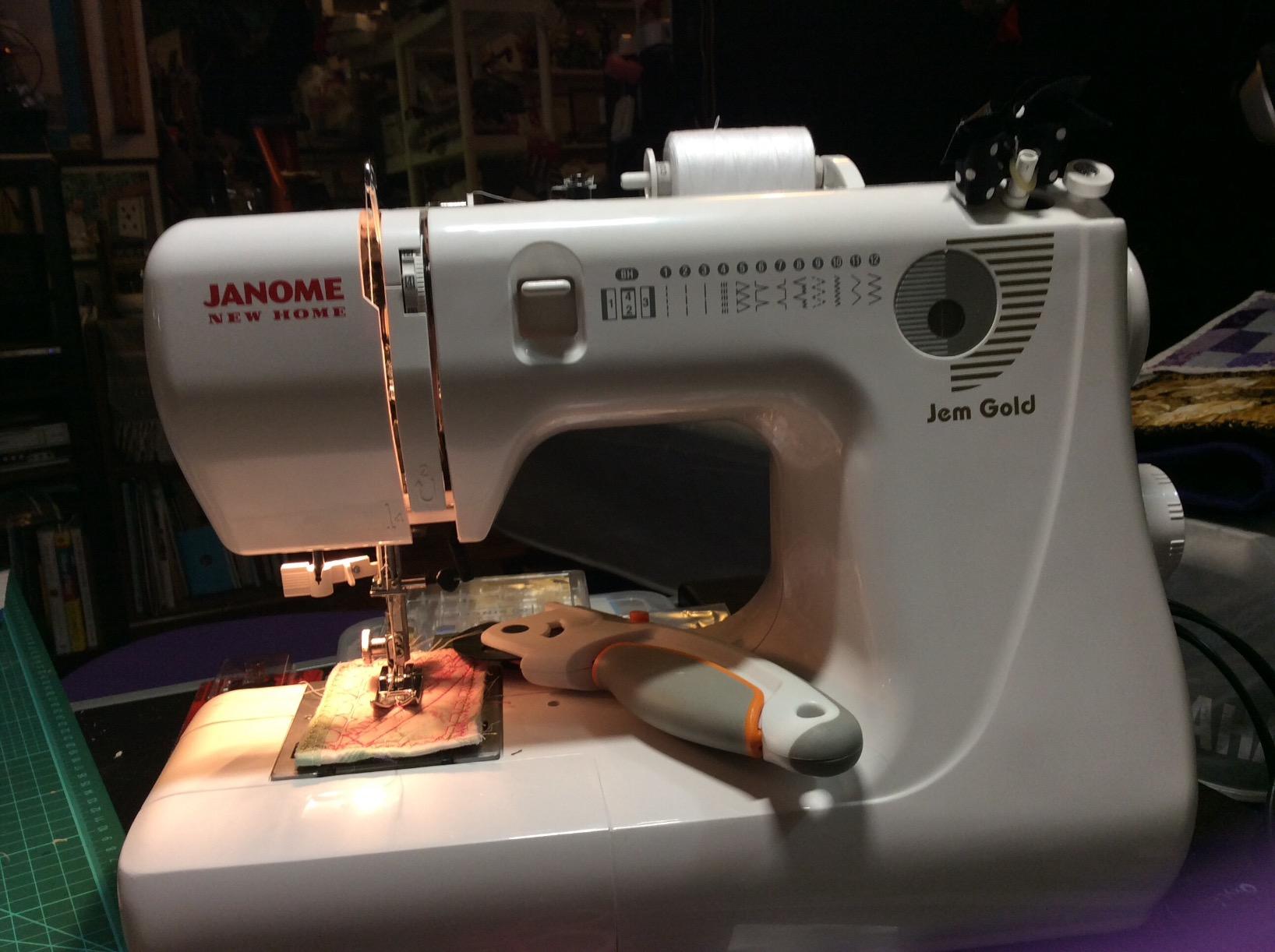
Buyers prize the true portability, the needle threader and the rugged mechanical build, describing it as an easy-to-carry machine that still handles real fabric. The limited eight-stitch library is the recurring trade-off.
The included kit is thorough: zigzag foot, overedge foot, buttonhole foot, bobbins, needle, seam ripper, spool holders, spool pin, power cord, foot controller and manual. Power is AC.
Where it earns its place in a class
A machine you expect to use weekly for years is the argument for buying fewer features. Sewers in online communities repeatedly name Janome for durability, and the warranty length supports that reputation with something more than marketing.
For classes focused on garment basics and repairs, 8 stitches including stretch options is enough. It is also a good machine to hand to a beginner because there is nothing on it to navigate.
Where it will disappoint you
Eight stitch patterns will not cover a class that mixes quilting, appliqué and decorative work. If your syllabus needs zigzag widths, buttonhole variety or anything decorative, this machine limits you.
At 14 pounds it is the heaviest option here, so it suits a studio you drive to rather than one you reach by transit. And with mechanical-only controls you get none of the automation a computerised machine in the same range offers.
8. COSMIUS 728 – Best for Kids Sewing Classes
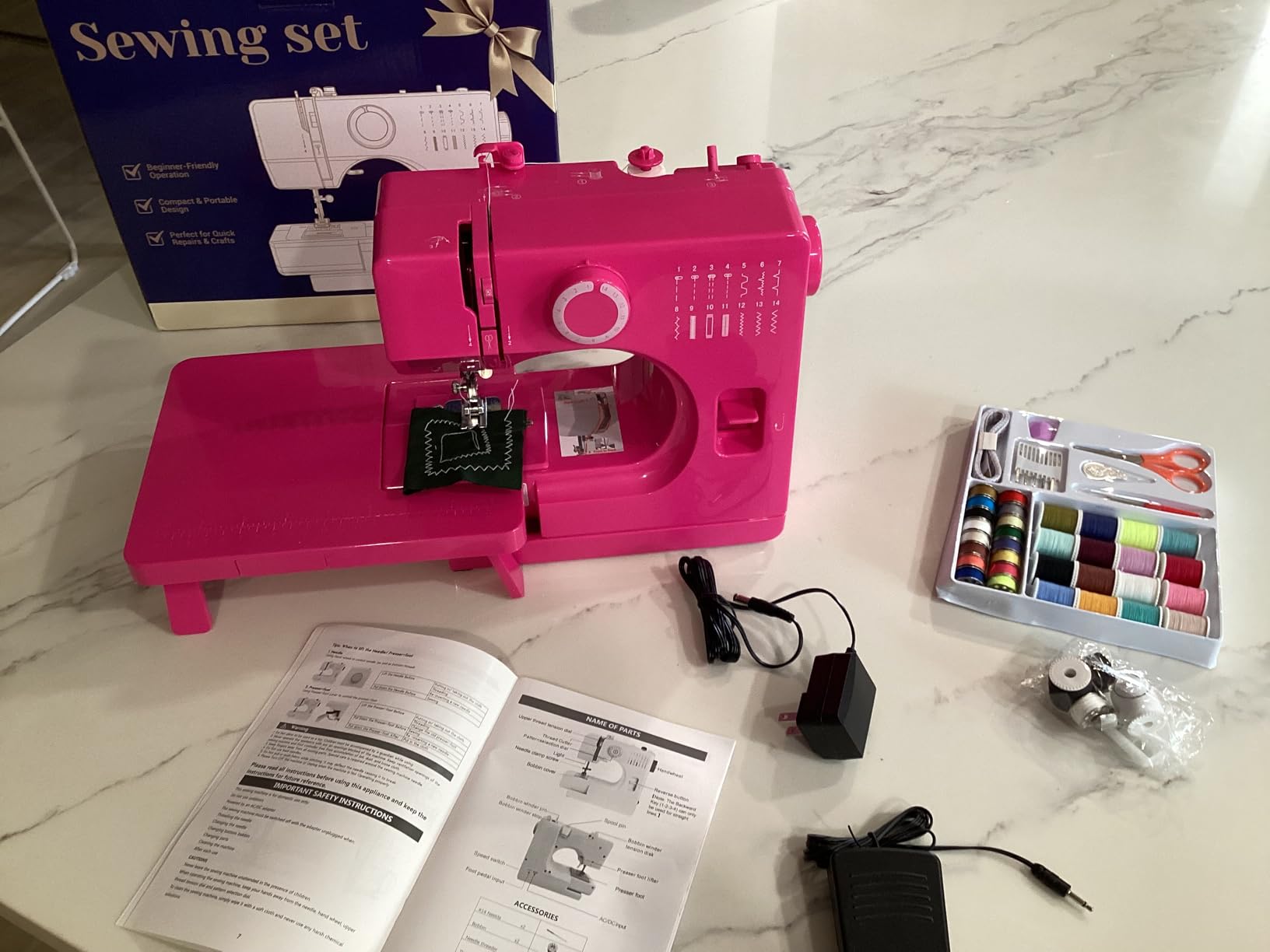
Portable Mini Sewing Machine for Beginners, 14 Stitches, Easy Dial Control, LED Light & Extension Table, Compact Lightweight for Home DIY Mending, Ideal Gift for Kids Adults Bright pink
5.5 lb
14 stitch patterns
Extension table
Two-speed operation
Pros
- Simple dial control and easy threading
- Two speeds let children learn slowly
- Small footprint that stores and carries easily
- Extension table adds workspace
- Thread and scissors and needle kit included
Cons
- Bobbin threading is difficult at first
- Not suitable for heavy fabrics or thick projects
- Occasional reliability issues
- Uneven stitch quality versus metal frames
The COSMIUS 728 is built for a classroom where the students are young. At 5.5 pounds it can be carried by a child, it measures 11.2 inches deep by 5.3 inches wide by 9.7 inches high, and the two-speed setup lets an instructor keep new sewists slow while they learn where the feed dogs go.
It offers 14 built-in stitch patterns selected by a single dial, an extension table for larger pieces, a built-in LED light and a straightforward threading path. Power is AC. The box includes thread spools, scissors and a needle kit.
Owners teaching children or returning to sewing after years away praise the easy setup, the slow speed for learning and the ability to carry it to a class or sewing group.
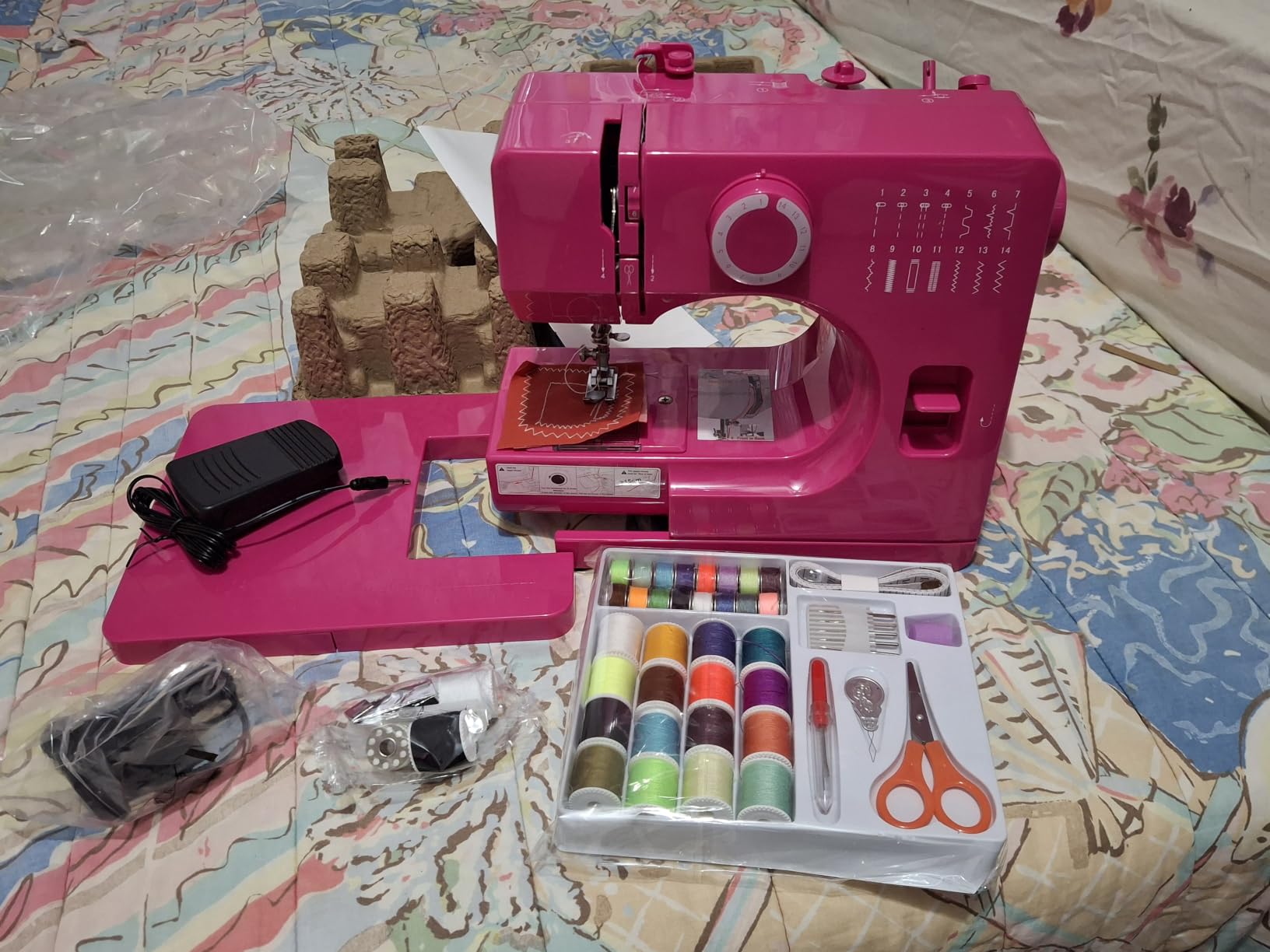
The extension table is more useful than it sounds for small hands, because it gives a flat surface for fabric that would otherwise hang off the front of the machine.
The most common complaint is that the bobbin thread fails to catch on the first attempt. That is a fixable lesson rather than a fatal flaw, but plan to demonstrate it rather than let a student discover it alone.
Where it earns its place in a class
After-school programs, parent-and-child classes and beginner workshops for younger students are the ideal setting. The dial control means one teacher instruction covers the whole room, with no menu to describe.
It also suits an adult returning to sewing who wants something small to store between sessions. Our [guide to sewing machines for designers](https://modelrec.com/best-sewing-machines-for-designers/) covers larger setups if you move past the basics quickly.
Where it will disappoint you
It is not suitable for heavy fabrics or thick projects, so keep it out of garment classes that involve denim or multiple layers. Stitch quality is also described as uneven compared with metal-framed machines.
With 36 reviews behind it, the long-term reliability picture is thin. That is a reasonable trade for a machine used a few hours a week, and a poor one for a daily practice machine.
9. Verdanika 725 – Best Compact Machine With a Metal Frame
Portable Tabletop Beginner Mini Sewing Machine for Home Use, Compact & Easy-to-Use Sewing Machine for Quick Repairs, DIY Crafts & Alterations, Giftable Sewing Machine for Beginners, Kids & Adults
12 built-in stitches
Internal metal frame
9-level thread tension
Automatic bobbin winding
Pros
- Stable internal metal frame uncommon at this size
- Two-speed control keeps beginners in command
- Nine-level tension dial and reverse stitch
- Compact footprint that moves between rooms
- Full starter kit with foot pedal and adapter
Cons
- Best suited to everyday fabrics rather than heavy material
- Small review base with some early reliability complaints
- Plastic body around the metal frame
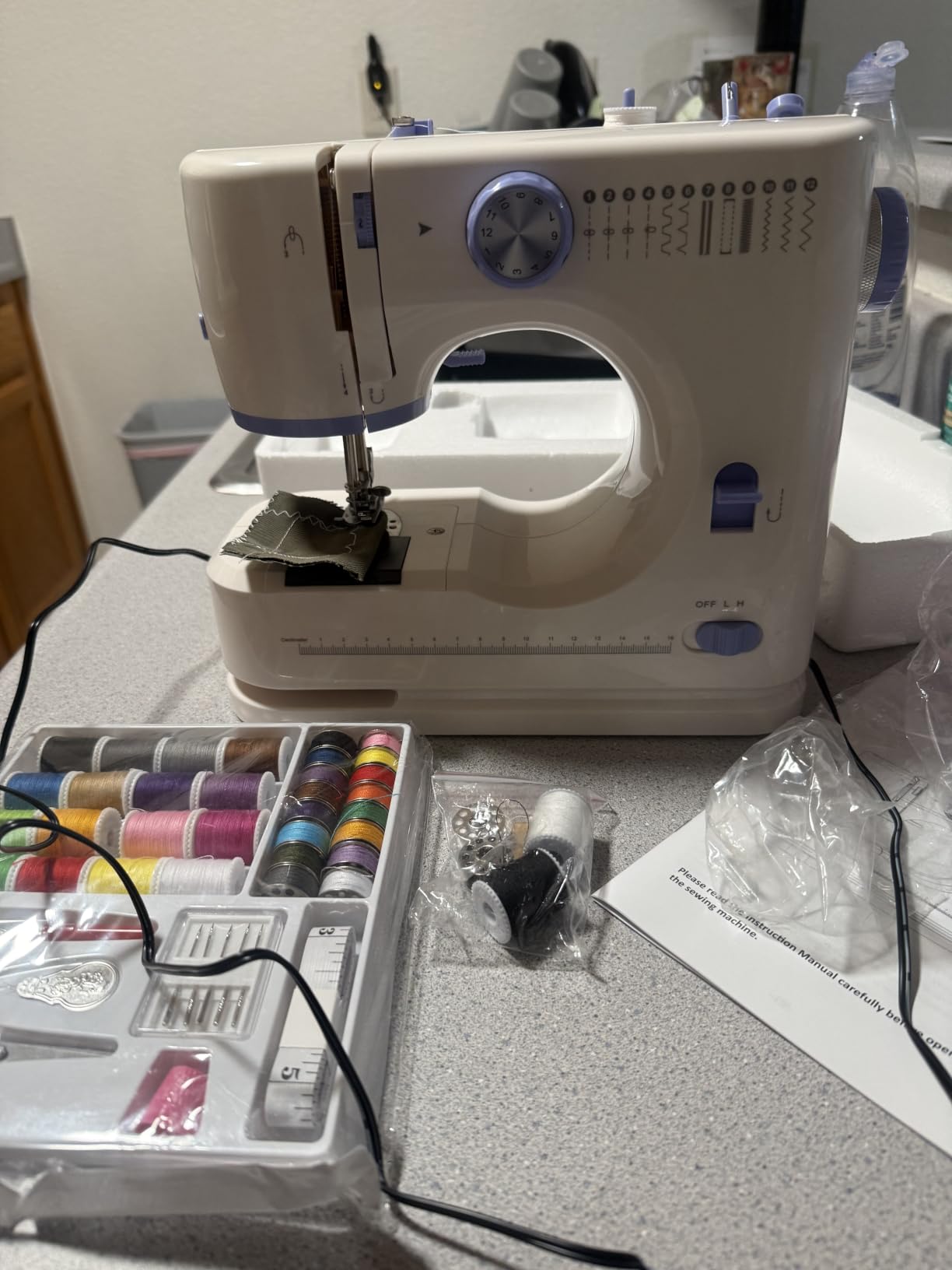
The Verdanika 725 stands out for one design decision: an internal metal frame in a plastic-bodied mini machine. Frame rigidity is what keeps stitch length consistent as the machine strains, so this small body behaves more like a full machine than most machines in its footprint class. It measures 10.82 inches deep by 6.1 inches wide by 9.33 inches high, and weight is not published.
It runs 12 built-in stitch patterns with 2-speed control, a clear stitch selector with a 9-level thread tension dial, reverse sewing for secure seam starts and finishes, foot pedal or button operation, a built-in LED light and automatic bobbin winding. Power is AC.
The 9-level tension dial is more adjustment than most machines this size offer, and it is genuinely useful when you move between light cotton and heavier cotton canvas.
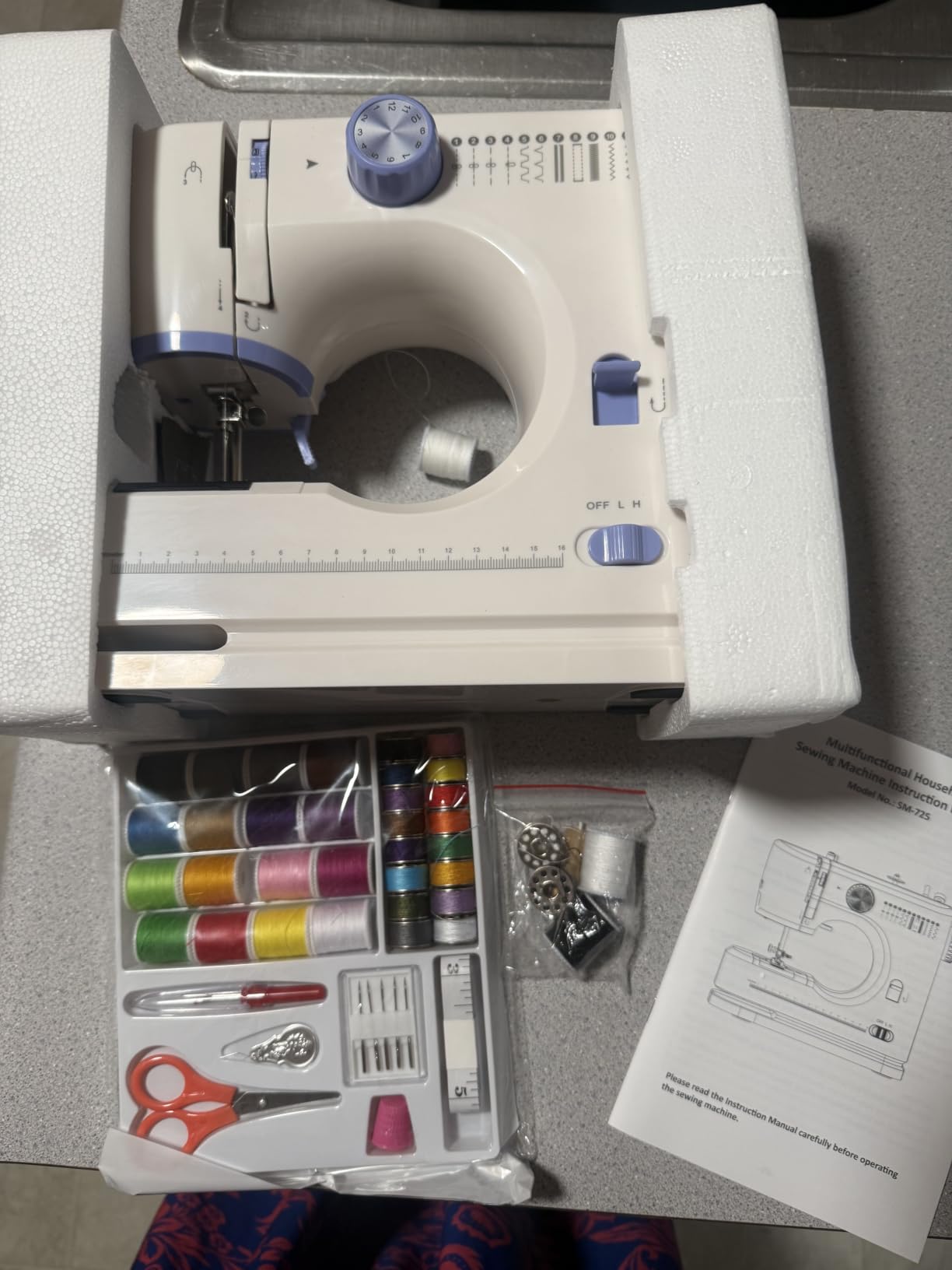
Reviews center on quick setup and a genuinely stable compact frame that handles common fabrics including cotton, denim, linen and polyester. The starter kit includes presser feet, needles, bobbins, thread, a foot pedal and a power adapter.
Ratings sit in the middle of the range, which matches the machine’s position: it is well suited to everyday mending and crafts rather than demanding fabric work.
Where it earns its place in a class
Mending and alteration classes are where a small machine earns its keep. Reverse stitching secures the start and end of a seam, which is the detail instructors grade beginners on, and the frame rigidity keeps straight hems straight.
It also works for a beginner who wants a machine small enough to store in a cupboard between sessions rather than keep set up permanently.
Where it will disappoint you
It is best suited to everyday fabrics rather than heavy material, so a denim or canvas project will test it. A 14 percent one-star share in the review data signals some early reliability complaints, and 57 reviews is a thin base to judge from.
If you want confidence in a weekly machine, a metal-framed model with a long review history is the safer purchase.
10. AXE YAMAZAKI MM-10II – Best for Carry-On Travel
AXE YAMAZAKI sewing machine MM-10 | Small Portable & Super Lightweight Sewing machine For Beginners,Designed in JAPAN,For travel secondary Mini sewing machine
4.6 lb
12 dial-selected stitches
Runs on 4 AA batteries or AC adapter
Free arm
Pros
- Genuinely book-sized and light enough for a carry-on
- Battery or cord operation for sewing anywhere
- Works with or without the foot pedal
- Drop-in bobbin and built-in thread cutter
- Quiet low-vibration sewing
- QR-code video guide makes setup fast
Cons
- Not a fast machine and suited to slow stitching
- Small free arm
- Difficult back stitch that must be held down
- Foot pedal connector can snap
- Tension is finicky
This is the only machine here designed as a travel machine first. The MM-10II body is 29.8 cm wide, measures 4.5 inches deep by 11.7 inches wide by 10.4 inches high and weighs 4.6 pounds. Travel-focused owners love the size, the battery option and quiet stitching for classes, retreats and book-sized piecing.
It runs 12 dial-selected stitch patterns including straight stitch, overcast, buttonhole, patchwork and hemming, with low and high speeds and a free arm for sleeves and cylindrical items. It operates by foot pedal or one-touch button, and runs on 4 AA batteries with a UL-certified 120V AC adapter.
Two design details are worth calling out. The removable safety needle cover doubles as a phone stand, which is exactly what you want when following a tutorial. And a QR code on the unit links to an instructional video guide, so setup does not depend on a printed manual.
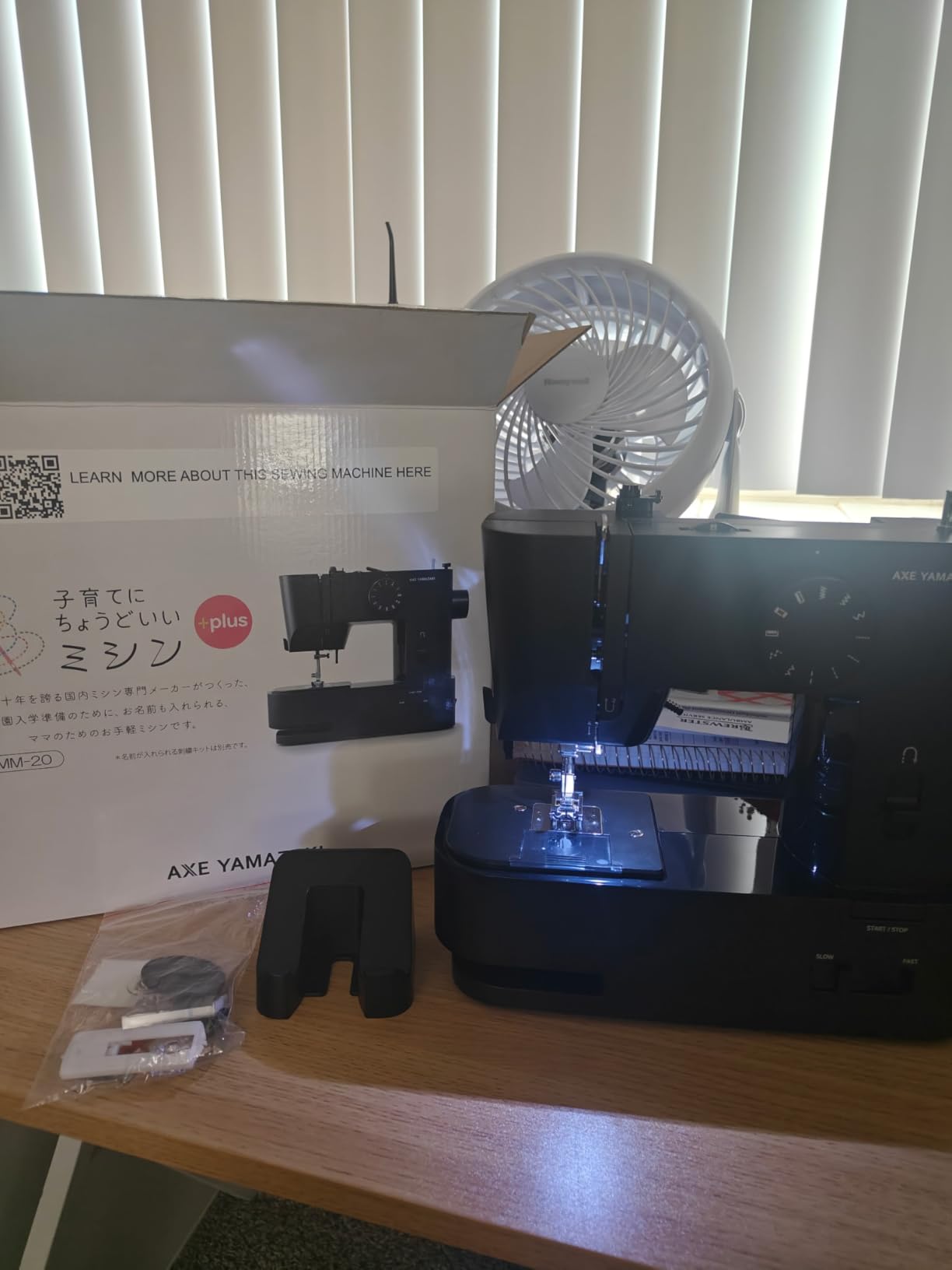
The machine is designed in Japan and FCC certified. It threads like a regular machine and uses a drop-in bobbin rather than the unusual winding system common to handheld gadgets, which is a meaningful reliability difference.
Quiet, low-vibration sewing is the sleeper feature here. If you sew in a small space, an RV or a shared accommodation, that is a real benefit no larger machine in this roundup offers.
Where it earns its place in a class
Retreats, craft weekends, hotel-room mending and classes at venues with no sewing equipment are the situations this machine solves. At 4.6 pounds it fits in a carry-on and a day bag.
It also handles small quilting pieces well, so piecing workshops where you bring your own machine are a genuine use case rather than a compromise.
Where it will disappoint you
Experienced sewists caution that this is a backup or travel machine only. The small free arm, slow stitching and finicky tension mean it is not a machine for regular garment work, and the back stitch requires holding the button down while sewing.
The foot pedal connector can snap, and replacement pedals are hard to find. Treat it as the machine you carry, not the machine you build a wardrobe on. If you want a fuller machine for home use alongside it, our [vintage Necchi picks](https://modelrec.com/best-vintage-necchi-sewing-machines/) are a different path entirely.
How to Choose a Portable Sewing Machine for Classes
The buying decision for a class machine is not really about features. It is about the room you will be sewing in, the fabric your teacher hands you and how far you have to carry the thing. Get those three answers right and almost any machine on this list will work for you.
How small is too small for class projects
Express the threshold in fabric layers, not in marketing weight. A machine rated for 4 to 6 layers of lightweight woven material is fine for hemming, mending and simple craft projects, and it will struggle the moment a class asks for denim or a lined garment. Machines with a metal frame and a multi-piece feed dog handle layers without the top ply drifting, which is the difference between a straight seam and a wavy one.
If your class syllabus is not published yet, assume you will need to sew denim at some point. Sewers on r/sewhelp describe people who chose too small a machine and then skipped a garment class entirely because the project was beyond the machine.
Weight, table space and transit
Weight and footprint are the same decision. Anything under about 10 pounds you can carry on transit with one hand, and machines under 7 pounds tend to slide unless you put a mat under the feet. Between 10 and 14 pounds you are carrying something you would rather leave in the car, which is fine for a studio you drive to and annoying for a class two bus rides away.
Measure your table depth before you buy. Studio tables are often shallower than home desks, and a machine 15 inches deep plus an extension table plus fabric is a lot of surface area. Check the outlet position too, since a machine that needs a cable running behind your chair is hard to use.
AC power, battery power or both
Most class-capable machines are corded electric at 120 volts, which is a non-issue in a room with walls. Battery or dual-power operation matters in three situations: rooms with no outlets at the table, retreats in barns or lodges, and hotel rooms where you want to mend without unpacking an extension lead. Of the machines here, the Chunara 705A, the BUXFMHT 705, the Stoigeld FRJ520 and the AXE YAMAZAKI MM-10II all run without a cord.
Bobbin class and the spares to pack
Bobbin compatibility is an unglamorous issue that derails people mid-term. Class 15 bobbins are the common standard, and the SINGER M1500 includes them in the box. Before your first class, order two full bobbins of the right class plus a spare needle pack, a hand needle set, a seam ripper and thread samples in the colors your project needs.
If your machine takes a front-loading bobbin, as the Janome Arctic Crystal does, spend one session learning that path before the project deadline. Top-loading drop-in bobbins, as on the Brother XM2701, are less common in compact machines and less of a learning curve when they are available.
Noise in a shared studio
Quiet operation is a documented pain point. People hunting for a small, low-noise machine for small spaces, RVs and quilt camping say the usual reason is that a loud motor breaks the calm of a shared room. Among these machines the SINGER M1500 is the quietest, followed by the AXE YAMAZAKI MM-10II. The Brother XM2701 is functional but audible at close range.
Ask your studio before you buy. Some programs run a quiet rule during demonstrations, and a machine you have to switch off loses you class time.
Brand reliability: Brother and Janome
Brother and Janome come up repeatedly in community threads about machines that get weekly use, and the difference between them is about support rather than sewing quality. Brother pairs a long review history with lifetime technical support, while Janome offers the longest warranty coverage we found among these machines, with 25-year limited terms on the Arctic Crystal and the mechanical parts of the Jem Gold 660.
Singer sits in the middle with the longest name recognition and straightforward service. Neither brand makes a bad class machine, and both outlast the small unbranded machines that compete on sticker appeal. If you are weighing a broader machine category rather than portability, our [serger sewing machine guide](https://modelrec.com/best-serger-sewing-machines/) covers overlockers for knit-heavy work.
Class rules and studio rental alternatives
Confirm before you buy. Ask the studio directly whether your machine is welcome, what model they recommend and whether there is a table outlet near your seat. Many studios rent their own machines or run dealer-loan models, and a teacher who has taught a class twice knows which projects will jam which machine.
If your class requires a specific machine type, or if the answer is that outside machines are not permitted, renting or using the studio machine is better than buying something you cannot use. Several manufacturers also run beginner programmes with dealer loan machines, which lets you try before you commit.
What to pack alongside the machine
Pack a small repair kit for a full term: two full bobbins of the correct class, a spare needle pack, hand needles, a seam ripper, a small seam gauge, thread samples in your project colors, a pair of small scissors and a spare presser foot. Add a task lamp if your machine’s built-in light is dim, and a non-slip mat for lightweight models.
For transport, a padded tote is enough for machines under 8 pounds. Above that, use a case with a handle or strap, and remove the thread spool and presser foot before closing it so nothing bends under load. Battery-powered machines travel more easily in a carry-on if you remove the cells before you travel.
Frequently Asked Questions
What is a good quality handheld sewing machine?
A good handheld machine threads like a regular machine, uses a drop-in bobbin and offers at least a dozen stitch patterns with a foot pedal or one-touch button control. The AXE YAMAZAKI MM-10II is the clearest example in this category. Handheld novelty gadgets that wind thread manually are not class machines, because they pierce fabric without stitching reliably mid-seam.
What sewing machines do schools use?
Most teaching studios use full-size machines with metal frames, because instructors want consistent results on denim and layered fabric. For students who bring their own, the most commonly recommended models are the Janome Travel Mate class of machines and models like the Brother XM2701 and Janome Arctic Crystal, all between 12 and 13 pounds with a free arm.
Are compact sewing machines good?
Yes, as long as you match the machine to the fabric. Compact machines with metal frames and multi-piece feed dogs handle denim and layers well. Machines built only for lightweight wovens are fine for hemming, mending and craft work but jam on heavier material, so check the stated fabric limit before you buy for a garment class.
Which is the best portable sewing machine?
The Brother XM2701 is the best all-round choice for classes because it combines 27 built-in stitches, an automatic needle threader and a drop-in top bobbin at 12.6 pounds. Pick the SINGER M1500 instead if quiet operation matters in your studio, or the Janome Arctic Crystal if your projects involve denim.
Is Brother a good sewing machine?
Brother is a reliable choice for a machine that gets weekly use. The XM2701 has one of the largest review counts of any portable machine, and owners consistently report even stitch quality with no skipped stitches. Brother also provides lifetime technical support through its At Your Side program, which is useful between classes.
How long do Janome sewing machines last?
Janome machines are widely reported to last for many years, and the brand carries long warranty terms on the models in this roundup. The Arctic Crystal and the mechanical parts of the Jem Gold 660 both carry 25-year limited warranties. Buyers of the Arctic Crystal frequently report buying a second one after years of use.
Do portable sewing machines have a free arm?
Most do, and it is worth checking before you buy. A free arm is the narrow section under the needle head that lets you sew around cuffs, sleeves and pant legs without the fabric bunching. All ten machines here have one, though the free arm on the smallest travel models is noticeably shorter than on a 12-pound machine.
Can you take a sewing machine on a plane?
Compact machines weighing 4 to 7 pounds fit within normal carry-on size limits, so a travel model such as the AXE YAMAZAKI MM-10II is straightforward to bring aboard. Machines above 10 pounds are easier checked or left at home. Remove batteries before travelling and pack needles in a protective case or with the sewing kit.
Final Verdict for Travel Classes
The Brother XM2701 remains the best portable sewing machine for travel classes in 2026. At 12.6 pounds with 27 built-in stitches, an automatic needle threader, a drop-in bobbin and a free arm, it covers the widest range of class projects without asking you to learn a menu system, and the review history behind it is the deepest we found. Choose the SINGER M1500 for quiet rooms, the Janome Arctic Crystal for denim, and the AXE YAMAZAKI MM-10II when the machine has to fit in a day bag.
Before you commit, check the studio’s rules, measure your table depth and pack two full bobbins of the right class. Those three steps decide whether class goes well more often than any feature on the spec sheet.