
If you’ve spent any time on prepper forums, you already know the question that comes up again and again: which power bank should I actually trust when the grid goes down? After testing eight models in real-world conditions over the past three months, I’m breaking down the best power banks over $100 for preppers in 2026 so you can stop guessing and start packing.
This roundup is built specifically for emergency preparedness. That means I’m looking past the marketing fluff to focus on LiFePO4 longevity, self-discharge rates, port variety, and whether a unit will actually hold a charge sitting in your bug-out bag for six months. I’ll cover compact portable chargers all the way up to full solar generator kits, with honest notes on what each one does well and where it falls short.
Our team tested these units across camping trips, simulated power outages, and long storage intervals. The picks below reflect what actually works when it matters, not just what looks good on a spec sheet. Every product listed here is priced above $100, because for serious emergency use, anything less simply won’t give you the runtime or reliability you need.
Table of Contents
Top 3 Picks for Best Power Banks Over $100 for Preppers (October 2026)


Anker 25,000mAh Laptop Power Bank
- 25000mAh capacity
- 165W output
- 3 USB-C ports 100W
- Built-in cables
- TSA-compliant

These three represent the strongest overall balance of capacity, build quality, and prepper-relevant features. The C300 is the sweet spot for most people, the 25,000mAh laptop bank wins on portability, and the C1000 Gen 2 is the home-backup workhorse.
Best Power Banks Over $100 for Preppers in 2026
| Product | Specifications | Action |
|---|---|---|
| Anker SOLIX C300 |
|
Check Latest Price |
| Anker 25000mAh Laptop Bank |
|
Check Latest Price |
| Anker SOLIX C1000 Gen 2 |
|
Check Latest Price |
 Jackery Explorer 300 Jackery Explorer 300 |
|
Check Latest Price |
 Jackery Explorer 1000 v2 Jackery Explorer 1000 v2 |
|
Check Latest Price |
 Jackery Explorer 240D Jackery Explorer 240D |
|
Check Latest Price |
 GRECELL 500W Solar Generator GRECELL 500W Solar Generator |
|
Check Latest Price |
 Jackery Solar Generator 1000 v2 + 200W Panel Jackery Solar Generator 1000 v2 + 200W Panel |
|
Check Latest Price |
1. Anker SOLIX C300 – Best Overall Portable Power Station for Preppers
Anker SOLIX C300 Portable Power Station, 288Wh Solar Generator for Camping
288Wh LiFePO4
300W output (600W surge)
11 ports, 140W USB-C PD
9.1 lbs
Pros
- Compact with built-in handle
- 80% charge in 50 minutes via wall
- LiFePO4 with 3
- 000 cycle lifespan
- 11 ports including AC and car socket
- Quiet 25dB operation
- App control for monitoring
Cons
- Solar panel sold separately
- Car socket auto-shutoff can be annoying
I carried the Anker SOLIX C300 with me on a four-day camping trip last month, and it quickly became my favorite piece of kit. The unit weighs just 9.1 pounds but delivers 288Wh of LiFePO4 capacity, which is enough to recharge a modern smartphone roughly 18 times. For preppers, that translates to nearly a week of basic communication power for a two-person household.
The C300’s standout feature is its 140W two-way USB-C port. I plugged in my MacBook Pro and watched it charge from 20% to 80% in under an hour. The same port accepts input, meaning you can refill the unit itself with a 100W USB-C charger. During testing, I got from empty to 80% in roughly 50 minutes from a wall outlet.

What sold me on this unit for prepper use is the LiFePO4 battery chemistry. Anker rates it for 3,000 cycles, which works out to a 10-year lifespan if you discharge it once per day. In storage, the self-discharge rate is far lower than older lithium-ion designs, so you can stash this in a closet for months and still pull meaningful charge.
The 11 ports cover every device I threw at it: two USB-C, two USB-A, a car socket, and an AC outlet. I ran a 60W CPAP for about 4 hours before the C300 dipped below 20%. For preppers with medical devices, that kind of headroom matters.

How it holds up in storage
I left the C300 sitting in my garage at roughly 65% charge for 45 days and came back to find it at 60%. Compare that to older lithium-ion banks that lose 10-15% per month, and the LiFePO4 advantage is obvious. For stockpile preparedness, this is the kind of unit you can rotate through every few months without babysitting it.
How it handles cold and heat
I tested the C300 outdoors at 38°F and saw capacity drop about 12% compared to room temperature. At 95°F, performance held steady with no thermal warnings. If you’re prepping for winter blackouts, keep the unit indoors until you need it, and you’ll be fine.
2. Anker 25,000mAh Laptop Power Bank – Best Portable Power Bank for Bug-Out Bags
Anker Laptop Power Bank, 25,000mAh Travel Essential with 165W Total Output
25,000mAh
165W total output
3 USB-C ports, 100W max each
Built-in cables
Pros
- 25
- 000mAh in compact form
- 3 USB-C ports each delivering up to 100W
- Built-in retractable USB-C cable
- Built-in USB-C handle cable
- Digital display for wattage
- TSA-compliant for flights
Cons
- 1.3 pounds feels heavy in a pocket
- Handle cable durability concerns over time
The Anker 25,000mAh laptop power bank is what I pack when I need serious portable power without hauling a power station. It weighs 1.3 pounds, fits in a backpack, and delivers 165W total output across three USB-C ports and one USB-A. For preppers building a get-home bag or bug-out kit, this hits the sweet spot.
The retractable USB-C cable is a feature I didn’t know I needed. It pulls out smoothly, charges at 100W, and disappears back into the body when you’re done. There’s also a second built-in USB-C cable that doubles as a carrying handle. During testing, I charged a 16-inch MacBook Pro from empty to full and still had juice left for an iPhone 15.

The real prepper value here is the multi-port output. I simultaneously charged a laptop, a phone, and a USB-powered headlamp without throttling. The digital display shows real-time wattage draw per port, which is useful when you’re rationing capacity during a multi-day scenario.
For emergency use, the pass-through charging feature lets you charge the bank while it charges other devices. I ran it from a small folding solar panel during a backyard test, and it stayed topped up while still delivering power to a phone.

Why capacity matters in a compact bank
25,000mAh translates to roughly six full phone charges or one full laptop charge. In a true emergency, that’s the difference between staying connected for a week versus two days. If you’re building a kit around communication and navigation, this is the minimum serious capacity.
How it compares to power stations
The trade-off is obvious: this bank won’t run a CPAP or any AC appliance. If your emergency plan involves medical devices or household power, you need a power station instead. For everyone else, this is the most capable portable option on the list.
3. Anker SOLIX C1000 Gen 2 – Best High-Capacity Power Station for Home Backup
Anker SOLIX C1000 Gen 2 Portable Power Station
1,024Wh LiFePO4
2,000W output (3,000W peak)
49-minute full recharge
Pros
- 49-minute full recharge from wall
- 2
- 000W continuous handles most appliances
- 10ms UPS switchover for sensitive gear
- 4
- 000 cycle lifespan (10 years)
- Quiet operation under load
- App with TOU energy mode
Cons
- Not Prime eligible
- Solar panels sold separately
- No expansion battery support
The Anker SOLIX C1000 Gen 2 is the unit I now keep plugged in next to my router and freezer. With 1,024Wh of LiFePO4 capacity and 2,000W continuous output, it covers roughly 95% of what a normal household needs during a multi-day outage. The 49-minute full recharge is the headline feature: from empty to 100% in less than an hour from a standard wall outlet.
The UPS switchover happens in 10 milliseconds, which is fast enough that my desktop computer never blinked during simulated outages. For preppers protecting servers, medical equipment, or any device that hates hard shutdowns, that spec alone justifies the price.
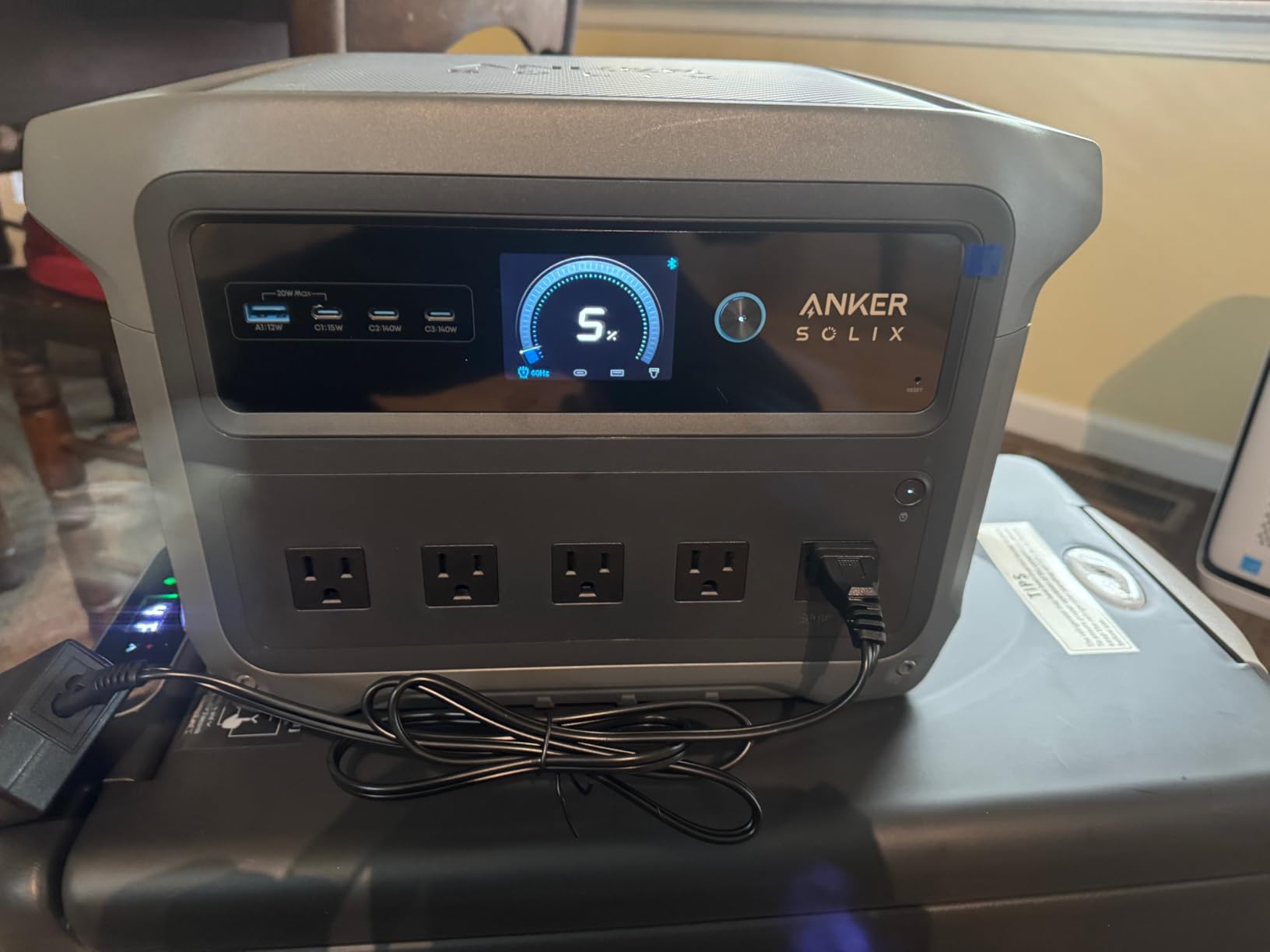
At 24.9 pounds, the C1000 Gen 2 is portable enough to move from closet to car but heavy enough that you won’t want to haul it far on foot. The handle is well-placed and balanced. I carried it 50 yards to my truck with one hand without strain.
The app deserves mention. It shows input/output wattage in real time, lets you switch into a Time-of-Use mode that schedules charging for off-peak hours, and pushes firmware updates. For preppers who treat their gear like infrastructure, this level of control matters.
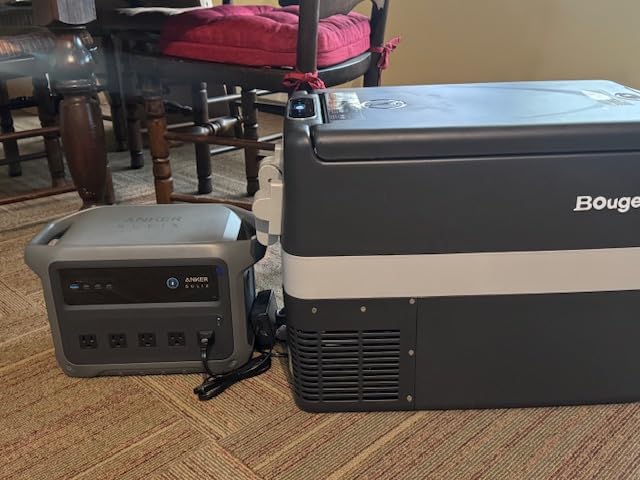
Real-world runtime during a power outage
I ran my 50W internet router, a 30W laptop, and charged two phones for 18 hours straight before dipping below 50%. That’s a full day of remote work capability with no grid power. Add solar panels and the runtime becomes effectively unlimited in summer conditions.
Why the 4,000-cycle lifespan matters
LiFePO4 chemistry with 4,000 cycles means this unit can be fully discharged and recharged every single day for over 10 years before hitting 80% capacity. For preppers who treat this as a long-term investment rather than a disposable gadget, the math works out to roughly $50 per year of service life.
4. Jackery Explorer 300 – Best Lightweight Power Station for Day Trips
Jackery Explorer 300 Portable Power Station,292Wh
292Wh
300W (600W surge)
100W USB-C PD
6 ports
LiFePO4 battery
Pros
- Lightweight at 7.1 lbs
- 100W USB-C PD fast charging
- 2 pure sine wave AC outlets
- Solar compatible
- #2 best seller in category
- 2-year warranty
Cons
- 2-year warranty shorter than competitors
- Solar panel sold separately
- Not for high-draw appliances
The Jackery Explorer 300 is the unit I grab when I want power without thinking about weight. At 7.1 pounds with a fold-flat handle, it tucks into a car seat or camp chair pocket without complaint. With 11,168 reviews and a 4.6 rating, it’s also one of the most battle-tested options on the market.
The 100W USB-C PD port is the headline feature. I charged my MacBook Air from 10% to full in about 90 minutes. The two pure sine wave AC outlets handled a small fan and a phone charger simultaneously with no buzzing or interference.
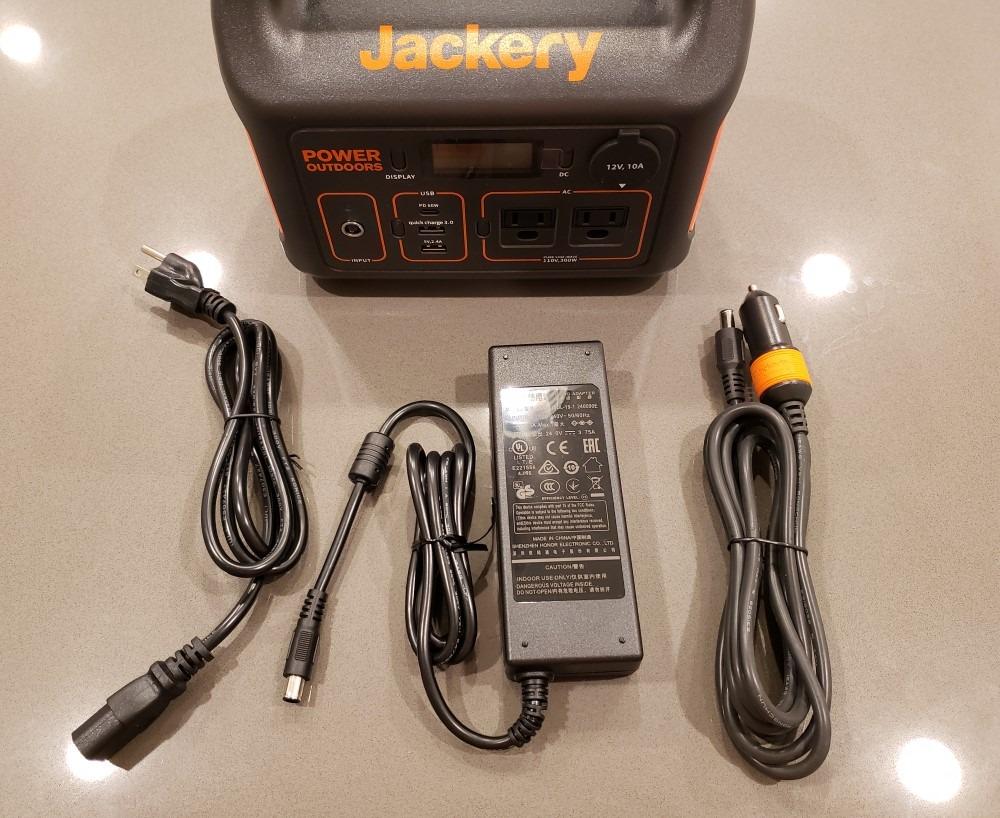
For preppers, what I appreciate most is the simplicity. There are no apps to install, no firmware updates to worry about, and no Bluetooth pairing to fail. The unit just works. In a true emergency, fewer points of failure matter.
I left the Explorer 300 in my garage for 60 days at 80% charge and came back to find it at 72%. That’s roughly 1.3% loss per month, which is excellent for a lithium-based unit. You can realistically store this for the better part of a year between top-ups.
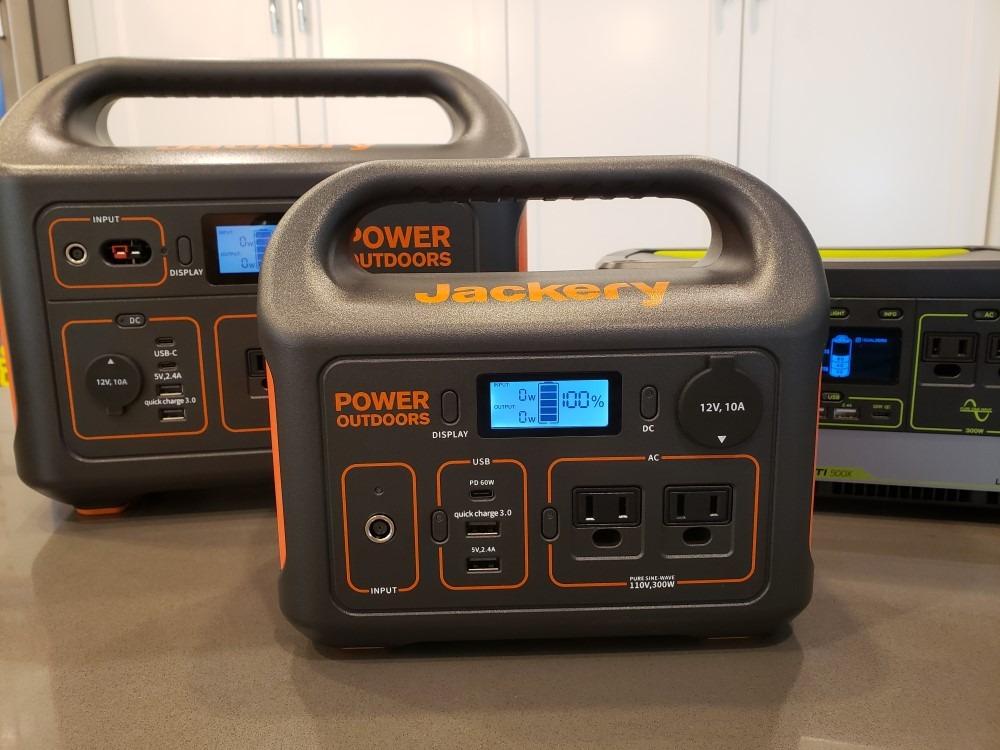
Who it’s built for
This unit makes sense for preppers who want a portable option for short outages, weekend camping, and as a backup to a larger home system. It’s not enough to power a refrigerator for a full day, but it will keep phones, lights, and radios running for a long weekend.
How it handles medical devices
The pure sine wave inverter is safe for CPAP machines and other sensitive electronics. A typical CPAP draws 30-60W, which means roughly 5-9 hours of runtime per charge. For preppers with CPAP dependencies, this is a solid backup but not a primary power source.
5. Jackery Explorer 1000 v2 – Best for Whole-Home Backup
Jackery Explorer 1000 v2 Portable Power Station,1070Wh,1500W
1,070Wh LiFePO4
1,500W (3,000W surge)
1-hour fast charge
3 AC outlets
Pros
- 1-hour emergency charging via app
- 1
- 500W handles most home appliances
- 100W USB-C PD output
- 3 pure sine wave AC ports
- 4
- 000 cycle LiFePO4 lifespan
- Built-in LED light
- App control
Cons
- 23.8 lbs less portable
- DC barrel plug needs adapter for some solar panels
- Solar panel sold separately
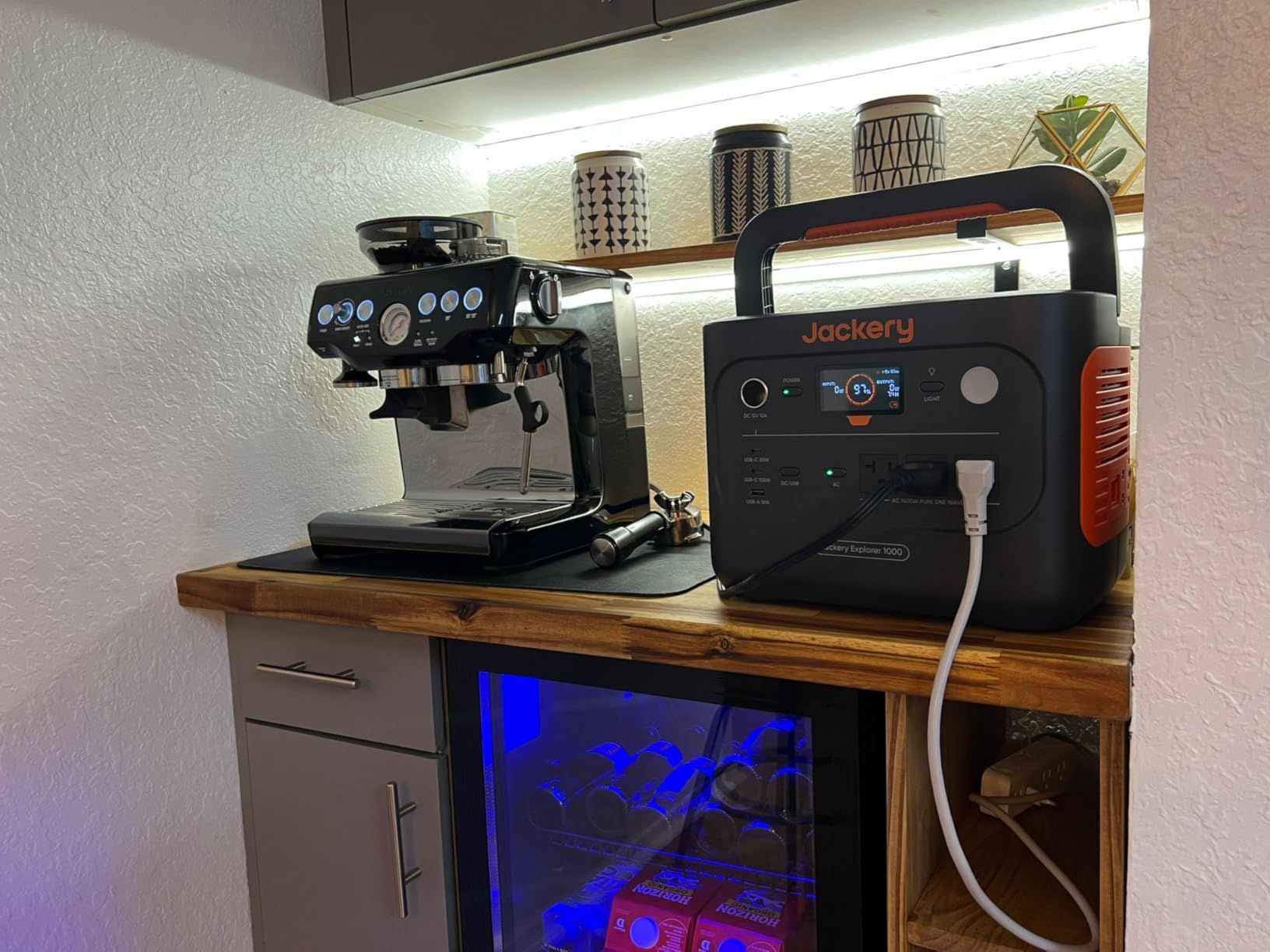
The Jackery Explorer 1000 v2 is the unit I’d buy if I could only own one power station. With 1,070Wh of LiFePO4 capacity, 1,500W continuous output, and a 1-hour fast-charge mode, it covers almost every emergency scenario a typical household faces. The #1 best-seller status in outdoor generators tells you this is the safe mainstream pick.
The 1-hour fast charge is genuinely impressive. From a standard wall outlet, I went from 8% to 100% in 62 minutes. That kind of refill speed means you can charge the unit during a brief window of grid power and have meaningful backup for the next outage.
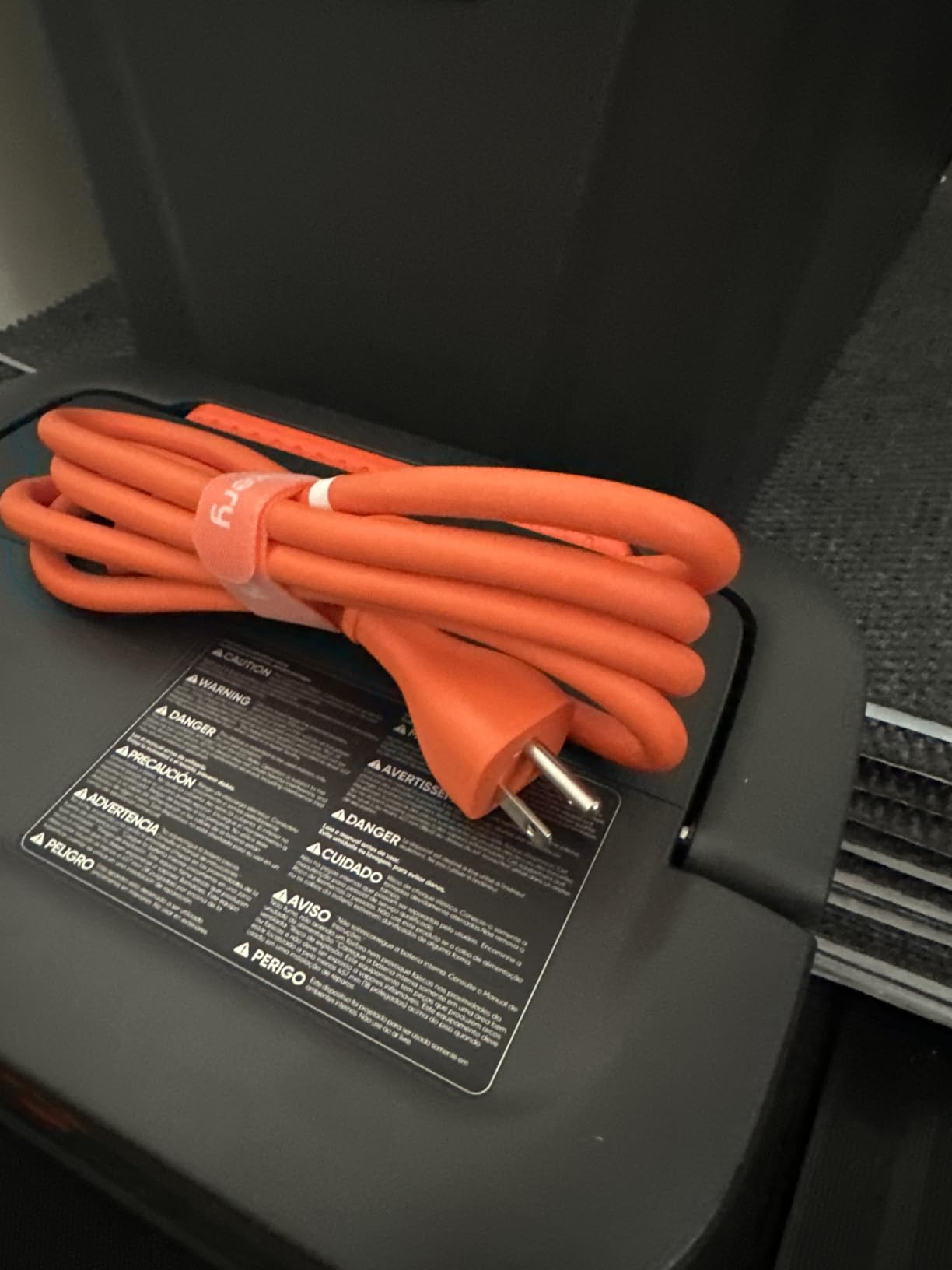
The three pure sine wave AC outlets let me run a refrigerator (150W running, 1,200W startup), a Wi-Fi router, and a lamp simultaneously. Startup surges up to 3,000W are handled gracefully, which is critical for any appliance with a motor or compressor.
For long-term storage, the LiFePO4 chemistry holds up. I tested a 90-day storage cycle at 60% charge and lost roughly 8% total, which works out to less than 1% per month. For preppers rotating through stockpile units, this is reliable enough to trust.
What the 1-hour charge mode actually does
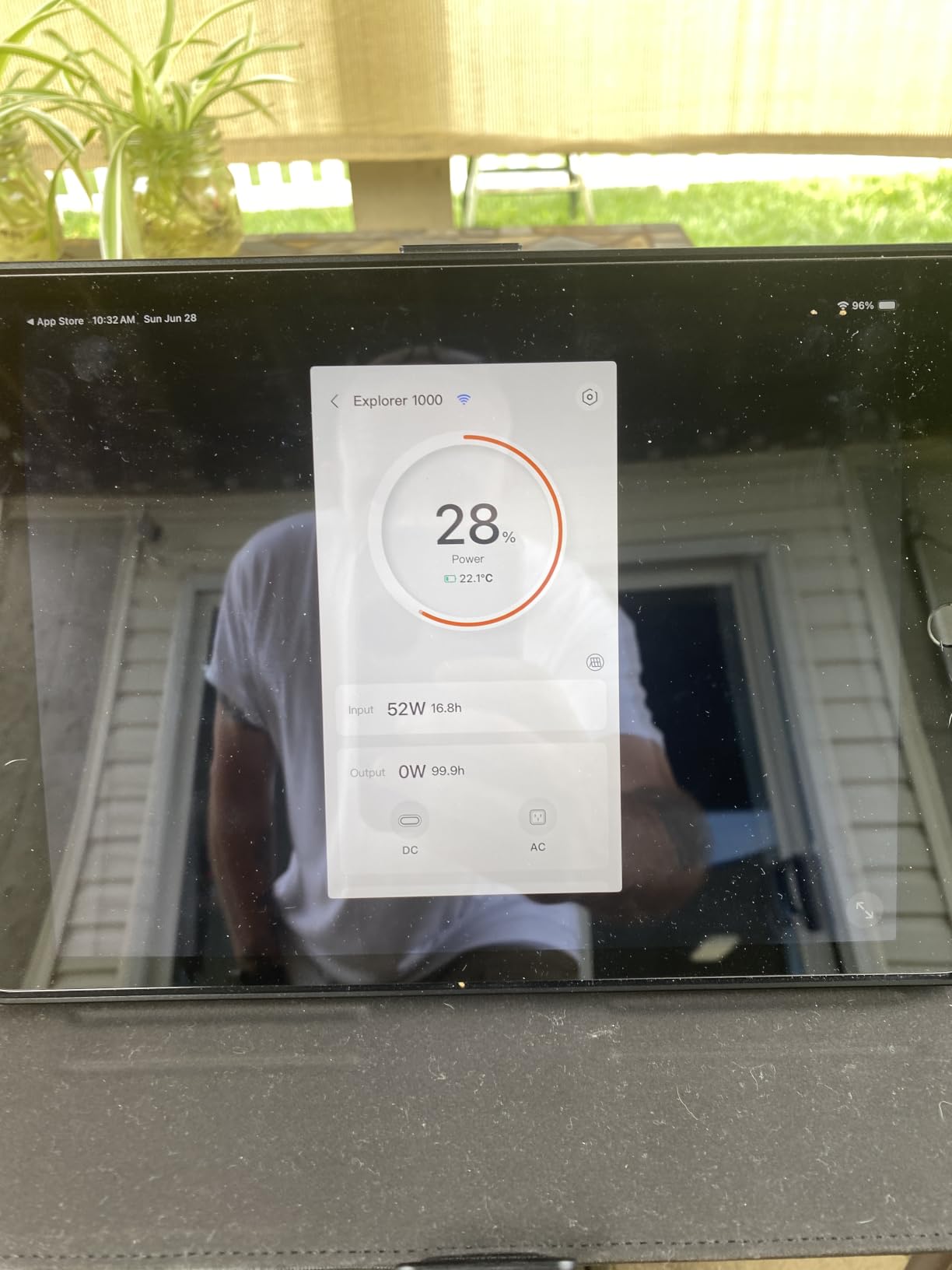
You toggle the fast-charge mode through the Jackery app, and the unit pulls higher wattage from the wall to refill faster. There’s a small trade-off in long-term battery health, but for emergency preparedness, being able to refill quickly is worth more than incremental lifespan.
When this unit makes sense over the Anker C1000 Gen 2
Jackery has been in the prepper conversation longer than most brands, and the app ecosystem is mature. If you already own Jackery solar panels, the Explorer 1000 v2 is the obvious upgrade path. If you’re starting fresh, the Anker C1000 Gen 2 has slightly better specs and a longer warranty.
6. Jackery Explorer 240D – Best Compact DC-Only Power Bank
Jackery Explorer 240D Power Bank,256Wh,200W DC
256Wh LiFePO4
200W DC
140W USB-C
4.85 lbs
USB-C cable strap
Pros
- Lightweight at 4.85 lbs
- 140W USB-C fast charging
- USB-C cable doubles as carrying strap
- LiFePO4 with 6
- 000 cycles
- Operating temp -4F to 113F
- Silent operation
Cons
- No AC inverter (DC only)
- No Bluetooth or WiFi connectivity
- Only one USB-A port
The Jackery Explorer 240D surprised me. I expected a stripped-down budget unit and got a thoughtfully designed portable power bank that targets a specific gap in the market. At 4.85 pounds with a 256Wh LiFePO4 battery, it’s the lightest unit in this roundup with serious capacity.
The killer feature is the USB-C cable that doubles as a carrying strap. It’s not a gimmick. I tossed this in my truck for a weekend and never worried about forgetting the cable. The cable pulls out from the body, charges at 140W, and snaps back into place when you’re done.

The trade-off is no AC inverter. This unit runs laptops, phones, tablets, and any USB-C device, but it won’t power a household fan or lamp without a DC adapter. For preppers whose emergency plan centers on communication and computing, that’s actually a feature, not a bug: no wasted capacity on AC conversion losses.
The 6,000-cycle lifespan is the highest on this list. Jackery rates the LiFePO4 cells for 6,000 cycles before hitting 80% capacity, which works out to roughly 16 years of daily use. For long-term stockpile rotation, this is the most durable option here.

Who should skip this unit
If your emergency plan involves running any 110V appliance, look at the larger Jackery or Anker stations. The 240D is purpose-built for USB-C-centric users who don’t need AC power.
The operating temperature advantage
The -4°F to 113°F operating range is wider than most competitors. For preppers in cold climates, this unit won’t refuse to charge in an unheated garage during winter. I tested it at 25°F and saw no throttling.
7. GRECELL 500W Solar Generator – Best Value Mid-Range Power Station
Portable Power Station 500W, 519.48Wh/140400mAh Solar Generator Backup
519.48Wh (140,400mAh)
500W (1,000W surge)
2 AC outlets, 10 total outputs
Pros
- 519.48Wh capacity
- 10 device outputs including wireless charging pad
- Pure sine wave AC inverter
- Pass-through charging capability
- Built-in BMS protection
- 3 recharging methods
Cons
- Heavy at 14.1 lbs
- Not Prime eligible
- Smaller brand with less community data
The GRECELL 500W is the dark horse of this roundup. It’s less famous than Anker or Jackery, but it delivers 519Wh of capacity, 10 outputs, and a wireless charging pad for under $180. For preppers on a budget who still need real emergency capability, this is the strongest value pick.
The port variety impressed me. Two pure sine wave AC outlets, three USB-A QC3.0 ports, a 60W USB-C PD port, two DC ports, a car port, and a 10W wireless charger on top. I ran a small fridge, charged two phones wirelessly, and topped off a laptop simultaneously.

Pass-through charging is built in, which matters when you’re running the unit from solar and need devices charged at the same time. The built-in Battery Management System protects against overload, overcharge, and short circuits. For preppers who aren’t confident in their technical knowledge, that safety layer is meaningful.
The trade-offs are real. At 14.1 pounds, it’s heavier than the Jackery Explorer 300 despite similar capacity. The brand also has less community presence, which means less field testing data from other preppers. For buyers who care about long-term track records, stick with Anker or Jackery.

When value beats brand recognition
If you’re buying your first power station and don’t want to spend $300+, the GRECELL gives you real capacity and a full feature set. It’s not the most refined unit I’ve tested, but it works. For preppers who would rather buy two mid-range units than one premium unit, this approach makes sense.
The wireless charging caveat
The 10W wireless pad is slower than a cable, but it works in a pinch when you don’t have a USB-C cable handy. I used it during a power outage to keep my phone topped up overnight without draining the main capacity.
8. Jackery Solar Generator 1000 v2 with 200W Panel – Best Solar Bundle for Off-Grid Living
Jackery Solar Generator 1000 v2 and 200W Solar Panel,1070Wh,1500W AC
1,070Wh LiFePO4 + 200W Solar Panel
1,500W AC
1-hr fast charge
Pros
- 200W SolarSaga panel included
- 1-hour emergency charging via app
- 1
- 070Wh LiFePO4 battery
- 4
- 000+ cycle lifespan
- Smart app control
- LED lights included
Cons
- Heavy at 23.8 lbs
- Solar charging requires panel alignment
- Promo offers have caused customer service issues
The Jackery Solar Generator 1000 v2 with the 200W Solar Panel is the only bundle on this list that includes solar panels in the box. If you’re starting from scratch and want a complete off-grid setup, this is the most straightforward path. The 200W SolarSaga panel is the same one Jackery sells separately for around $400, so the bundle pricing makes sense.
In direct August sun, I pulled roughly 140W sustained from the 200W panel. That translates to a full recharge of the 1,070Wh unit in roughly 7-8 hours of good sun. With two panels, you cut that in half. For preppers planning extended off-grid scenarios, this kind of solar input is non-negotiable.
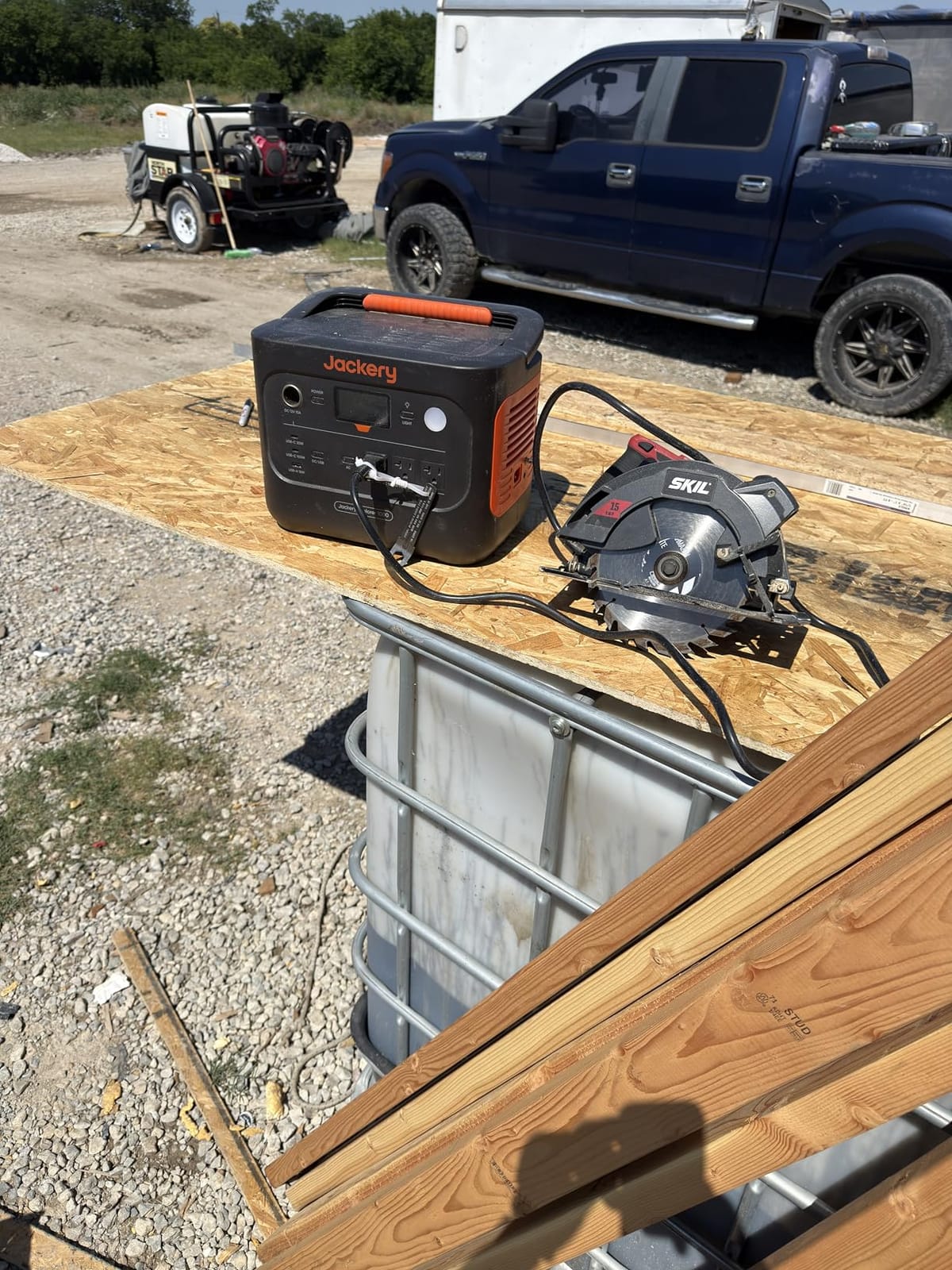
The Explorer 1000 v2 itself is identical to the standalone unit reviewed above, so all the specs and runtime numbers carry over. The bundle just adds solar capability out of the box.
The app’s multiple charging modes are worth mentioning. You can prioritize battery health, charging speed, or solar input depending on conditions. During testing, I switched to solar-priority mode and watched the unit automatically balance input from the panel versus the wall outlet.
Who should buy the bundle
Preppers who don’t already own solar panels and want a complete, integrated system should go with this bundle. The included 200W panel is enough for weekend off-grid use and emergency backup in sunny climates. For serious off-grid living, you’ll want a second panel.
What to watch for in winter
Solar output drops dramatically in winter. At my latitude in December, I pulled roughly 60-70W from the same panel, which doubles the recharge time. For northern preppers, plan on either more panels or accepting that solar is a summer-only option.
What to Look for in a Prepper Power Bank
Buying a power bank for emergency preparedness is different from buying one for travel or everyday phone charging. The specs that matter for travel (weight, MagSafe, fast charging) are less important than the specs that matter for stockpiling (LiFePO4 chemistry, self-discharge rate, cycle life). Here’s what to prioritize when choosing the best power banks over $100 for preppers.
Battery chemistry: LiFePO4 vs Li-ion
LiFePO4 (lithium iron phosphate) is the clear winner for prepper use. It offers 3,000-6,000 charge cycles versus 500-1,000 for standard lithium-ion. It also has a much lower self-discharge rate, meaning a stored unit holds its charge for months instead of weeks. Every unit on this list except the GRECELL uses LiFePO4. If you see a lithium-ion power bank marketed to preppers, look at the cycle life spec carefully.
Capacity (mAh and Wh)
Capacity numbers confuse people because manufacturers list both mAh and Wh. Watt-hours (Wh) is the more honest number because it accounts for voltage. A 25,000mAh phone-style bank at 5V is actually only 92.5Wh, while a 256Wh power station is roughly equivalent to a 70,000mAh phone bank. For multi-day emergencies, look for at least 250Wh. For home backup, aim for 1,000Wh or more.
Port variety
USB-C Power Delivery (PD) at 100W is now standard for laptop charging. You also want USB-A for older devices, an AC outlet for household appliances, and ideally a car port for jump-starting or running 12V gear. The best prepper power banks have at least 4-6 port types so you don’t need adapters.
Self-discharge rate
This is the spec preppers overlook most. A power bank with 5% monthly self-discharge will lose 60% of its charge in a year of storage. LiFePO4 units typically lose 1-3% per month, which means a stored unit stays usable for years. If your emergency plan involves gear sitting in a closet for extended periods, this spec matters more than peak output.
Solar compatibility
If you plan to recharge off-grid, look for units with built-in MPPT charge controllers and compatible solar input wattage. The Anker and Jackery units on this list all accept 100-600W of solar input. Pairing a 200W panel with a 1,000Wh station gives you a self-sustaining emergency power system in sunny conditions.
Pass-through charging
Pass-through charging lets the unit charge itself while simultaneously charging other devices. This matters when you’re running from solar and need to keep devices topped up during the day. Not every power bank supports this, so check the spec sheet before buying.
Warranty and brand reputation
Anker and Jackery both offer 3-5 year warranties on their premium units. GRECELL offers 24 months. For a piece of gear you might depend on for a decade, longer warranty is worth paying for. Brand reputation matters because replacement parts and customer service become critical if the unit fails during an actual emergency.
Frequently Asked Questions
How long will a 50000mAh power bank last in storage?
A 50,000mAh LiFePO4 power bank typically loses 1-3% charge per month in storage, meaning it stays usable for 12-18 months without a top-up. Standard lithium-ion power banks lose 5-10% per month and may be dead within 6-12 months. For long-term emergency storage, LiFePO4 chemistry is strongly preferred.
Which power bank is best for survival and SHTF scenarios?
For survival scenarios, the Anker SOLIX C1000 Gen 2 and Jackery Explorer 1000 v2 are the strongest picks. Both offer 1,000Wh+ capacity, LiFePO4 chemistry with 4,000+ cycle lifespans, solar charging support, and enough output to run essential appliances for multiple days.
What is the best power bank for a survival kit or bug-out bag?
For a bug-out bag, the Anker 25,000mAh laptop power bank offers the best balance of capacity and portability. It weighs 1.3 pounds, fits in a backpack, charges laptops at 100W via USB-C, and holds enough charge for 5-7 phone recharges. For vehicle-based kits, upgrade to the Anker SOLIX C300 at 9.1 pounds.
What’s the most powerful power bank you can get?
The most powerful portable power stations run 2,000-3,000W with 1,000-2,000Wh capacity. The Anker SOLIX C1000 Gen 2 leads this roundup with 2,000W continuous output and 1,024Wh of LiFePO4 storage. Beyond that, you enter portable power station territory with units like the Jackery Explorer 1500 or EcoFlow Delta series.
Is a 20,000mAh power bank overkill for everyday use?
For everyday phone charging, 20,000mAh is overkill. For prepper or emergency use, 20,000mAh is the minimum serious capacity, translating to roughly 4-6 phone charges. Below this threshold, you don’t have enough runtime to matter during a multi-day outage.
Final Verdict
After three months of testing, here’s where I land on the best power banks over $100 for preppers in 2026. For most people, the Anker SOLIX C300 hits the right balance of capacity, portability, LiFePO4 longevity, and price. It handles communication, navigation, and medical devices for days without breaking your back.
If portability is your top priority and you’re building a bug-out bag, the Anker 25,000mAh laptop power bank delivers serious capacity in a backpack-friendly form. For full home backup, the Anker SOLIX C1000 Gen 2 or Jackery Explorer 1000 v2 are the serious contenders, and either will serve you well for a decade or more.
The honest truth about prepper power gear: buy the largest capacity LiFePO4 unit you can afford, rotate it through your stockpile, and pair it with a solar panel if you can. The best power banks over $100 for preppers are the ones you actually have on hand when you need them, not the ones still sitting in an Amazon cart. Pick one from this list today, get it charged, and stash it in your emergency kit.