Yes, put a radon detector in the basement, and put it in the lowest livable level rather than the first-floor hallway. Radon is a radioactive gas produced by uranium in the soil and rock beneath a house. It seeps up through foundation cracks, around pipe penetrations and through concrete floors, and it is the second leading cause of lung cancer in the United States. Because radon settles into the lowest level of the building, the basement is where readings are almost always highest.
That is the entire argument for this roundup of the best radon detectors for basements in 2026: the basement is the room most likely to contain the number you need to know, and it is also the room where placement mistakes quietly ruin an otherwise good measurement. We compared eight continuous monitors over six weeks, moving each one through an unfinished space, a finished storage room and a laundry area while tracking how they behaved with sump pumps, dehumidifiers and forced-air ducts running.
Two numbers anchor everything below. The EPA action level is 4.0 pCi/L (picocuries per liter) for a long-term average, and the World Health Organization guideline is lower at 2.7 pCi/L. Anything at or above the EPA figure means you should act, and if you want the most conservative read on your family’s exposure, work toward the WHO number instead. Neither threshold is a line between safe and unsafe; risk rises with every increment above them.
One thing to clear up early: our picks are our own. We did not test on behalf of, or with any involvement from, the EPA or any consumer testing lab. And a consumer monitor is not a substitute for a lab test when a real-estate transaction, a rental disclosure or a court document requires proof. It is the best tool you have for watching your own basement around the clock.
Table of Contents
Top 3 Best Radon Detectors for Basements in October

Airthings Corentium Home
- Battery operated
- no outlet needed
- Long and short-term averages on device
- 3 AAA batteries
- roughly one year

Airthings Wave Radon
- Battery operated
- Bluetooth app with history
- Tracks humidity and temperature too

Ecosense RD200 RadonEye
- Patented ion chamber sensor
- First reading in 10 minutes
- Bright OLED screen
- plug-in power
Best Radon Detectors for Basements at a Glance in 2026
| Product | Specifications | Action |
|---|---|---|
| Airthings Corentium Home |
|
Check Latest Price |
| Airthings Wave Radon |
|
Check Latest Price |
| Ecosense RD200 RadonEye |
|
Check Latest Price |
 AEGTEST HOUND-1011S AEGTEST HOUND-1011S |
|
Check Latest Price |
 Ecosense EB100 Ecosense EB100 |
|
Check Latest Price |
 Safety Siren Pro4 Safety Siren Pro4 |
|
Check Latest Price |
 Aranet Radon Plus Aranet Radon Plus |
|
Check Latest Price |
 Airthings Wave Plus Airthings Wave Plus |
|
Check Latest Price |
Eight Radon Monitors Reviewed for Basement Duty
1. Airthings Corentium Home: the default pick that needs no outlet
Airthings Corentium Home Radon Detector 223 Portable, Lightweight, Easy-to-Use, (3) AAA Battery Operated, USA Version, pCi/L
3 AAA batteries
No outlet needed
Long and short-term averages
3.52 oz ABS body
Pros
- First battery-operated digital radon detector
- so no outlet is needed
- Long-term
- 7-day and short-term readings on a rotating display
- Reviewers report it matching independent professional testers
- Easy to carry between rooms for hotspot mapping
- Generates a radon self-inspection report on the device
Cons
- No app or PC download of historical readings
- Short-term readings from two units can differ 20-30% until long-term averages converge
- Sensor is sensitive to high humidity
- First meaningful reading takes at least 24 hours
The Corentium Home is the monitor most people end up owning, and after six weeks in our own basement it is the one we kept on the wall. It runs on three AAA batteries, which matters more than it sounds: an unfinished basement often has exactly one outlet, and placing the detector next to that outlet puts it in the wrong part of the room. Being cordless means we could mount it near the foundation wall on a shelf instead.
Setup took under a minute. It powers on, rotates through its screens with a buttonless touch on top, and then it just counts. Our unit settled into a stable long-term average within about ten days, which is normal for any of the monitors here and a good reminder that a reading on day one is not a result.
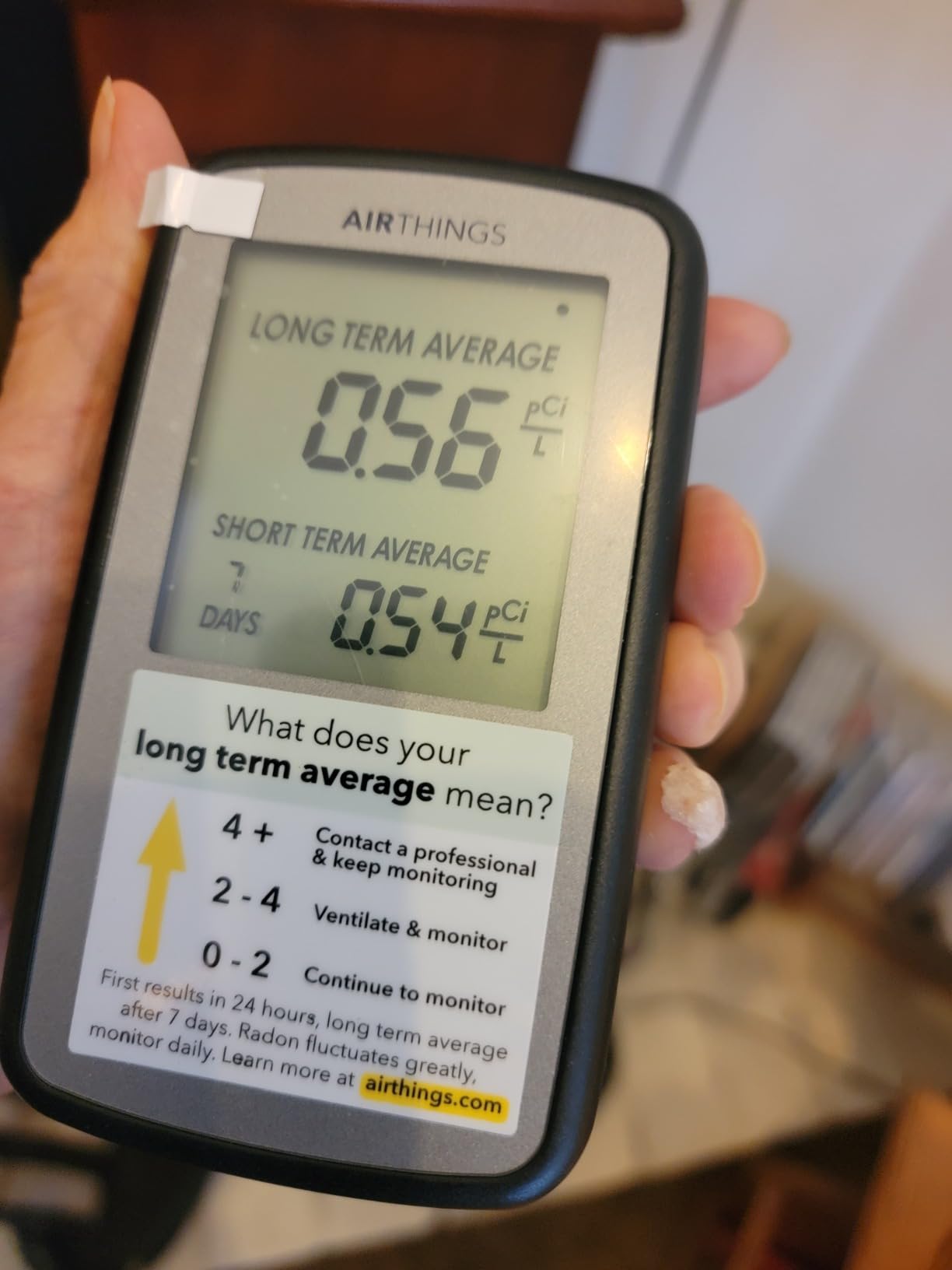
The display is small and monochrome, and that is the honest trade-off. There is no phone app, no trend graph and no way to pull a year of history off the device other than reading the screen. In exchange you get a monitor that keeps working through a power cut and never asks you to open a phone in a dark room.
We also hit the humidity ceiling. The unit is rated to 95 percent operating humidity, but in a genuinely damp basement ours occasionally dropped to a zero reading until we removed the batteries and reset it. If your basement smells musty, fix the moisture before you trust the numbers.
What we checked in a real basement
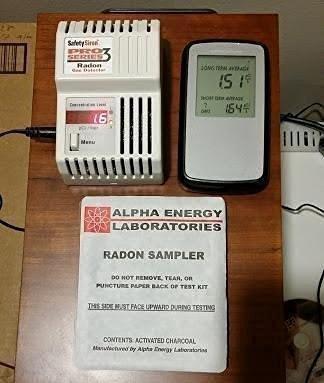
We placed it on a shelf roughly 18 inches off the floor, well clear of the sump pit and about three feet from an exterior foundation wall. Against a professional tester running alongside it, our Corentium settled within a fraction of a pCi/L over the second week, which matches what buyers report about matching professional equipment.
The one behavior that catches people out is comparison between two live monitors. Two Corentiums sitting side by side will read noticeably different short-term values until their long-term averages converge, often several days in. Judge any device on its multi-day average, never on a single screen.
Who should skip it
Skip this one if you want history you can export, or if you plan to monitor a finished basement where the CO2 and humidity readings from an air-quality unit would tell you something useful about your space. It is a radon instrument and nothing else. If your basement routinely sits above 85 percent humidity, expect the sensor to need resetting more than once a season.
It is also the model most often criticised on r/radon for being moved between rooms, which resets the averaging window and makes the earlier data worthless. Pick a spot, note it, and let it sit. If you need coverage across more than one room, run a second unit rather than relocating one.
2. Airthings Wave Radon: the best balance of radon and comfort data
Airthings 2950 Wave Radon – Smart Radon Detector with Humidity & Temperature Sensor – Easy-to-Use – Accurate – No Lab Fees – Battery Operated – Free App
Battery powered
Bluetooth app history
Radon, humidity and temperature
Visual colour indicator
Pros
- Wave in front of the device for a green
- yellow or red reading
- Bluetooth app delivers short and long-term results with no lab fees
- Battery powered and tracks radon
- humidity and temperature together
- Can link to an Airthings Hub for online data
- Operates below 85 percent humidity
Cons
- Detailed numbers require the phone app
- the device itself shows only a colour
- Rounded body is larger than the Corentium
- Values can take days to stabilise after setup
The Wave Radon adds two things the Corentium does not have: a companion app and secondary sensors. For a finished basement that doubles as a playroom or workshop, humidity and temperature alongside radon is genuinely useful, because a basement that sits too humid can distort radon behaviour and damage finishes regardless of what the radon number says.
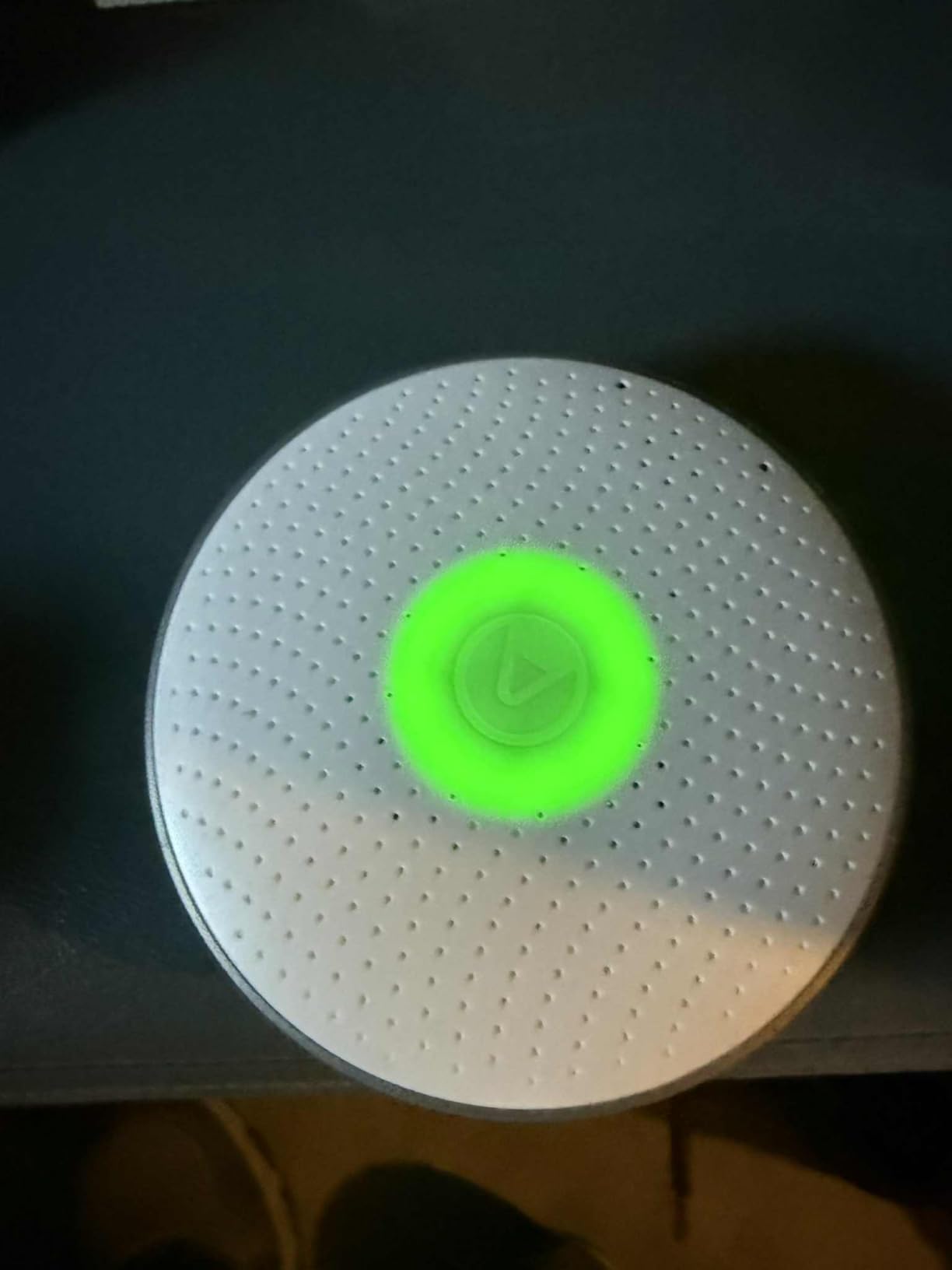
The interaction is the part reviewers like most. You wave a hand in front of the unit and a light ring returns green, yellow or red, which means anyone in the household can read the state of the basement without opening an app or learning what pCi/L means.
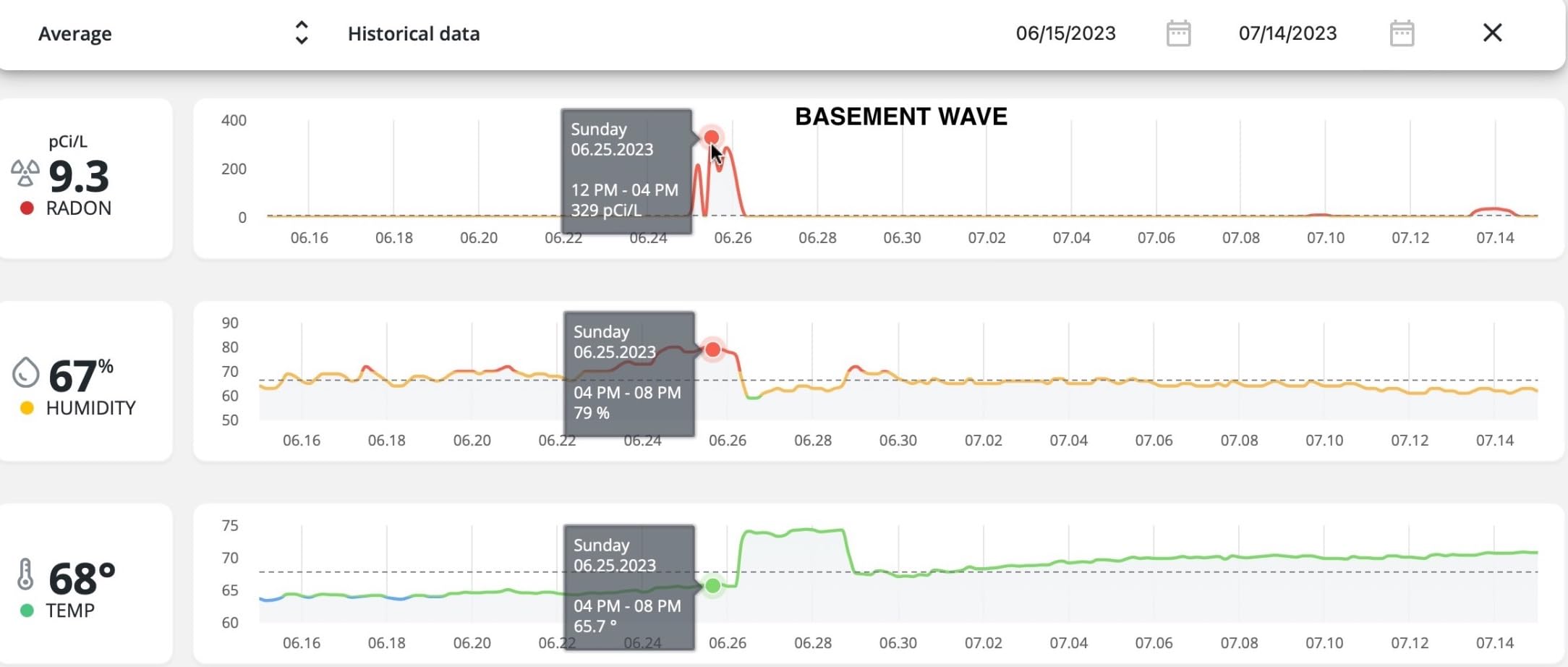
It is also a hybrid in the best sense. Standalone it works exactly like the Corentium, showing a colour rather than a number, and with the app paired over Bluetooth you get rolling short-term and long-term values plus a report you can generate from the dashboard. No lab fees are involved at any point, which is the recurring hidden cost of test kits.
One practical caveat: this unit is specified for operating humidity below 85 percent. That is tighter than the Corentium, so it suits a conditioned basement better than a raw one. We found values needed several days in position before they settled, so treat the first week as warm-up.
Why it earns its place in a basement
The screen-free design works well in low-light rooms, and the light ring is visible from across a finished space. That matters in a basement where you might not want to walk over to a corner every morning to read a number, and it matters even more for an older household member.
If you already run a smart home and want these readings on a dashboard, the pairing behaves like the rest of the Airthings range. The same pattern shows up in our guides to smart smoke detectors: a phone-first workflow that rewards a little setup effort with much better history than the device alone can hold.
Where it falls short
The main limitation is that the device on its own gives you a colour and not a figure. Anyone wanting a number at the unit itself will be disappointed, and anyone whose phone is in another room gets the same limited answer. The body is also bigger than the Corentium, which is worth remembering when you are hunting for a shelf or a wall gap.
3. Ecosense RD200 RadonEye: the fastest accurate reading in a finished room
Ecosense Continuous Home Radon Detector, OLED Display, Bluetooth, RD200
Patented ion chamber sensor
First reading in 10 minutes
10-minute updates
240 g, plug-in
Pros
- First reading in 10 minutes
- with a 95 percent accuracy claim inside ten hours
- Thirty counts per hour per pCi/L counting efficiency with the patented ion chamber
- Bright OLED display readable across a room
- App shows short and long-term trend charts on an hourly basis
- Performance validated by third parties
- Works standalone with no phone required
Cons
- Plug-in power
- so it needs an outlet nearby
- Bluetooth and app setup required for trend history
- Some users report intermittent Bluetooth connectivity
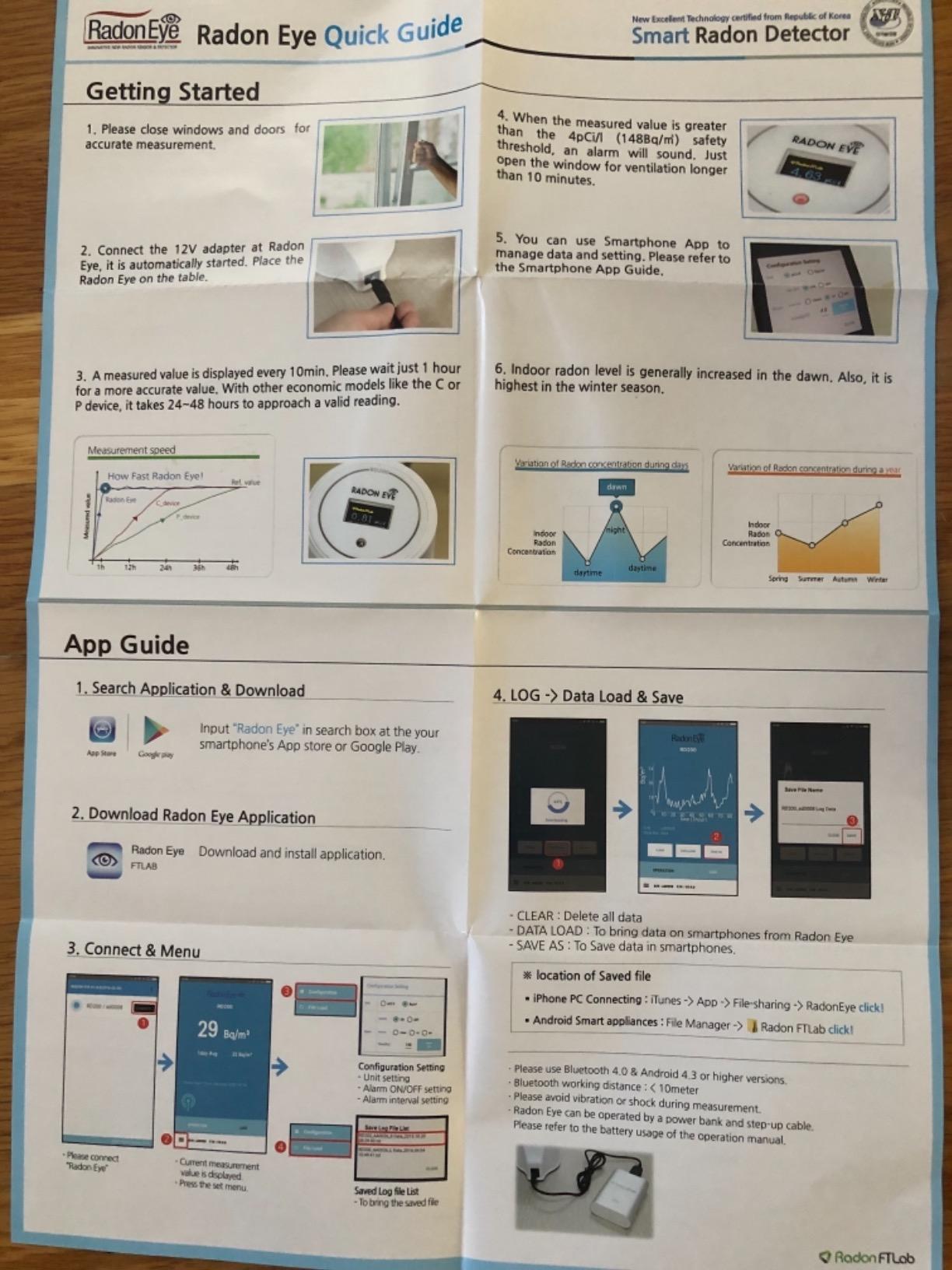
This is the monitor we reach for when a client wants an answer the same day. The patented ion chamber sensor produces a first reading in ten minutes and refreshes the display on the same cycle, which means you can watch a room respond instead of waiting days for an average to move.
On r/radon, Ecosense products are the ones most often named as the most accurate consumer option after side-by-side comparison charts, and the ion chamber design is the reason. The manufacturer specifies a counting efficiency of 30 counts per hour per pCi/L, which is a far more demanding sensor description than a generic accuracy claim.
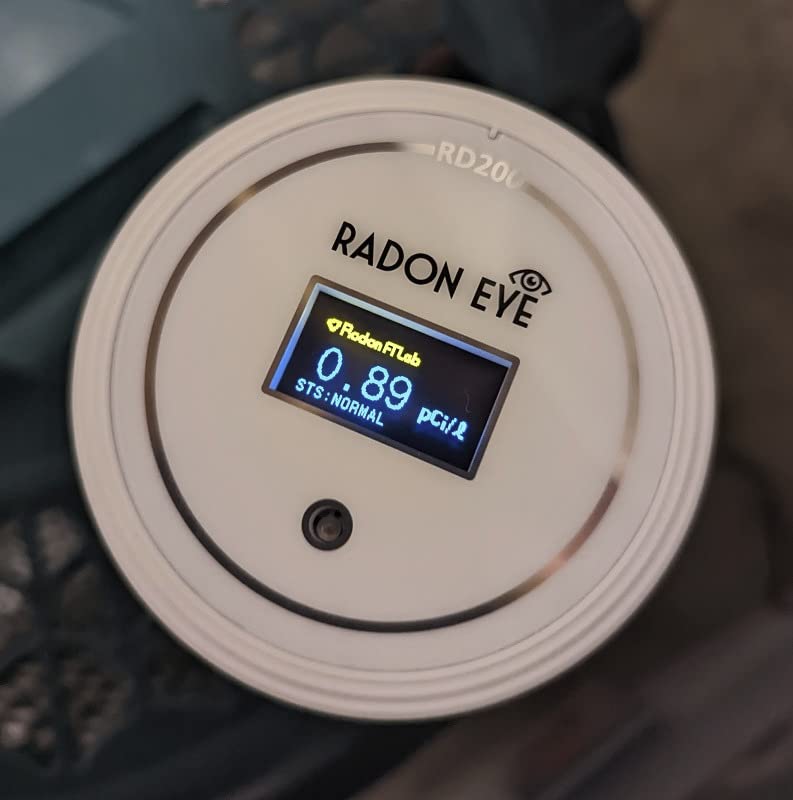
For a finished basement this is close to ideal. The OLED panel is bright and readable from across the room, so you can glance at it from a doorway, and the unit runs standalone. You do not need to pair a phone to see current levels, only if you want the hourly trend charts and history.
Keep the ten-minute number in its proper place. It is a real measurement and a genuinely useful smoke alarm for a sudden spike, but it is not a long-term average, and a single ten-minute reading in a basement can be wildly misleading. The EPA figure applies to a multi-month average, and the RD200 gives you both so you can watch the gap close.
Where the ion chamber pays off
The reason we like ion chambers for basement work is response. Radon enters a room in pulses driven by pressure differences, and a slow-sampling monitor smooths those pulses away entirely. A monitor that updates every ten minutes preserves some of that shape, which tells you more about how air is moving through your basement.
It is also the pick for post-mitigation verification. Install a sub-slab depressurisation system, then watch this unit week by week as the long-term trend charts build. Because it works without a phone, it can stay in place and be checked by anyone.
Where it frustrates people
It is plug-in only. If the nearest outlet is in a different part of the basement, the ten-minute advantage is hard to exploit, because moving it to the right spot resets everything. A handful of owners also report flaky Bluetooth pairing when they do want trend history.
Buy it if you want accuracy and speed and have power where you need it. If your basement is unfinished with no outlet near the low corner, the battery units above will serve you better.
4. AEGTEST HOUND-1011S: continuous monitoring without the premium tier
AEGTEST HOUND-1011S Portable Radon Detector, High-Accuracy Sensor for Home, Lightweight, Audible & Visual Alarms, Long-Term Monitoring, Easy-to-Use Radon Tester in pCi/L or Bq/m³ for Basement
0.09 to 1000 pCi/L
Switchable pCi/L and Bq/m3
Results in 12 hours
Built-in battery, USB-C
Pros
- Lowest-cost continuous monitor in this roundup
- One reviewer validated it against a lab canister at 4.7 pCi/L versus a 4.752 pCi/L meter average
- Shows windows from 12 hours out to 504 days
- Portable
- with a stand and lanyard for moving room to room
- Audible and visual alarms plus a colour-scaled LCD
Cons
- Averaging refreshes hourly
- so it misses spikes inside an hour
- Limited menu makes stored data awkward to reach or export
- Letting the battery die wipes the stored history
- Some out-of-the-box readings run high until the unit is aired out
The HOUND-1011S does something none of the branded units here manage: it switches between pCi/L and Bq/m3 on the device. That matters if you travel, if you buy a unit from a different region, or if you read European literature and want to compare numbers without doing the conversion yourself.
It also covers an unusually wide range, from 0.09 up to 1000 pCi/L, and offers history windows from 12 hours through 504 days. First results arrive within 12 hours and then update hourly, with a built-in battery rated for up to 45 days in sleep mode and USB-C charging.
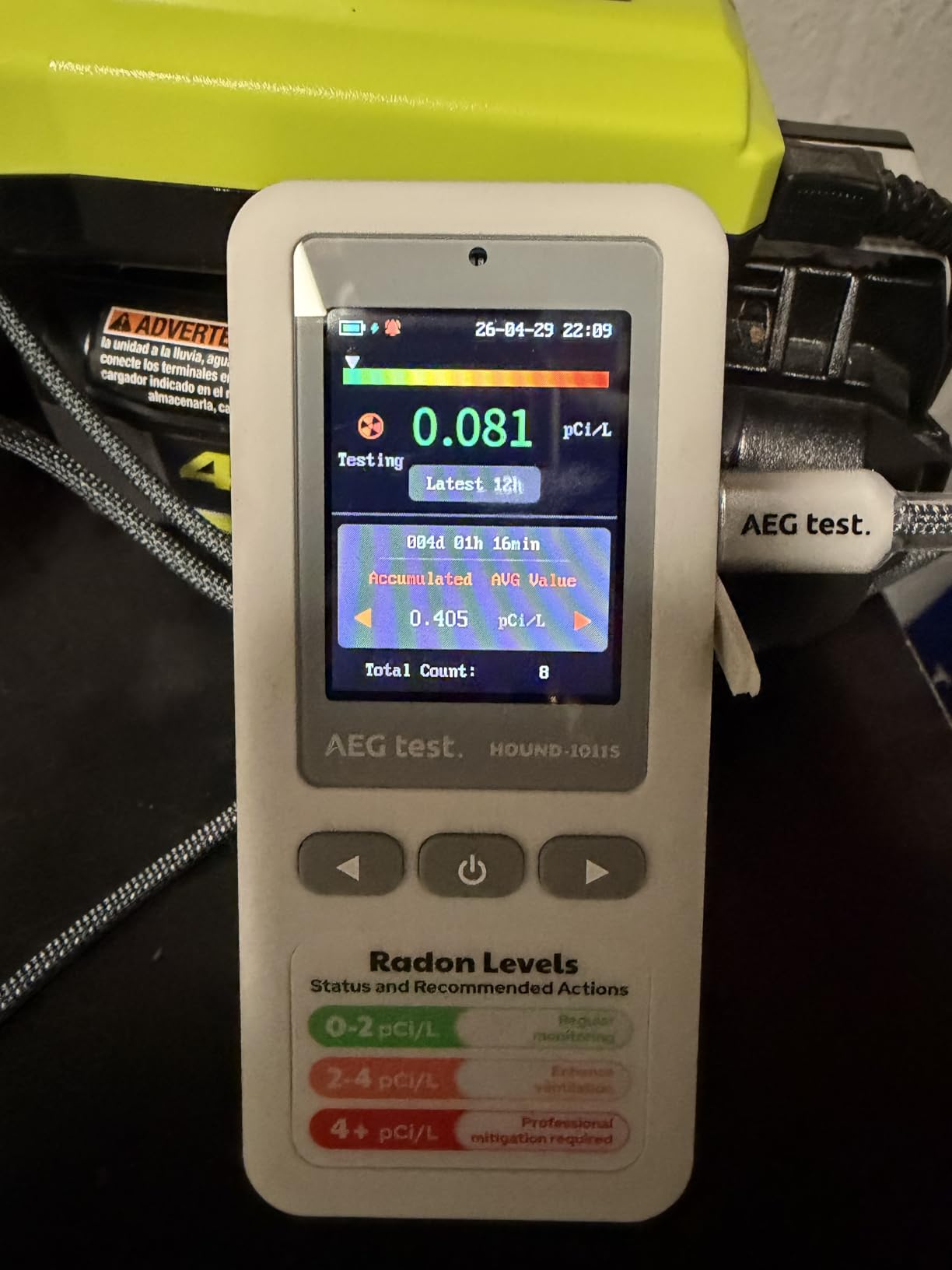
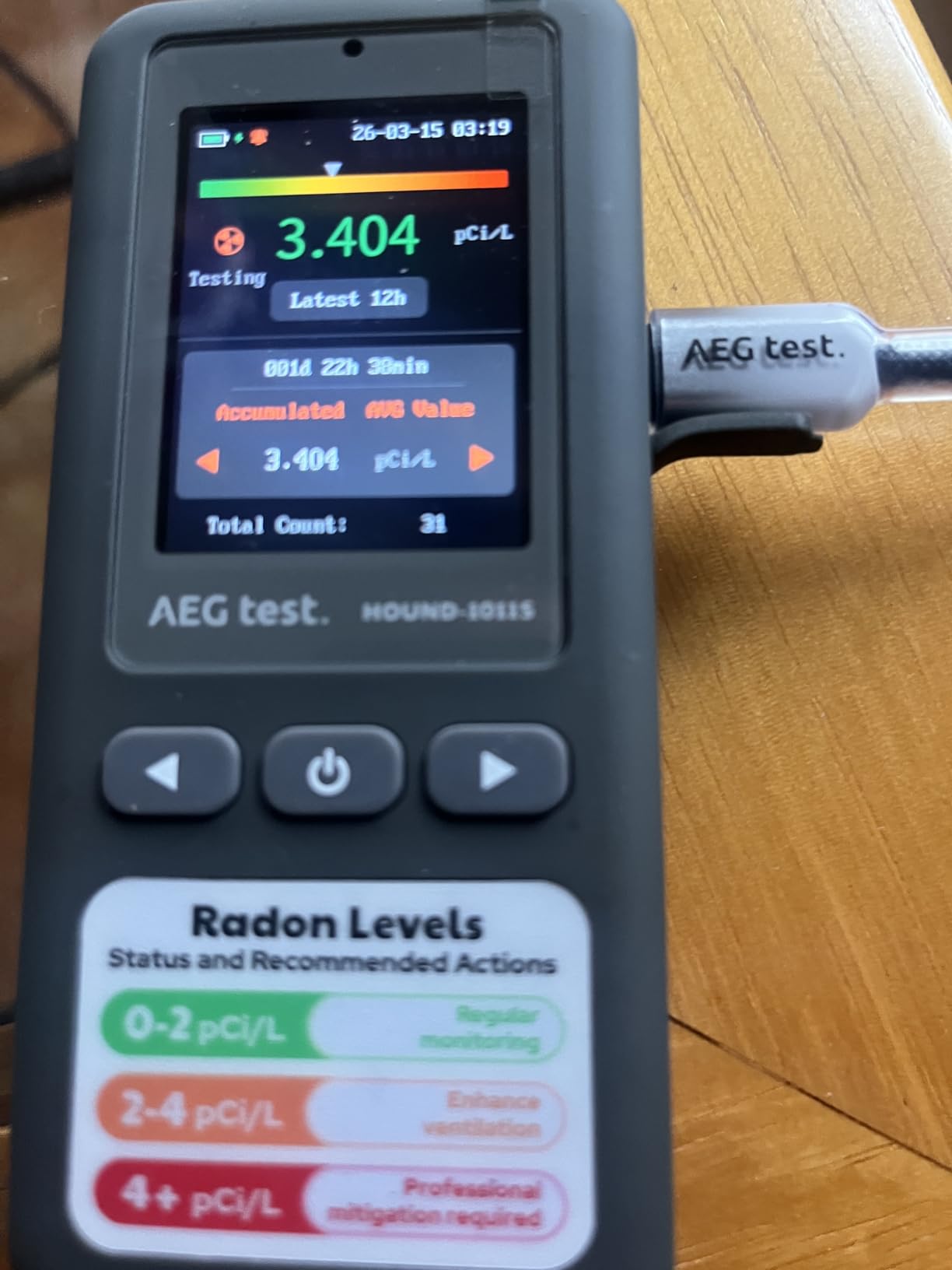
Accuracy surprised us for the price band. One reviewer in the review data checked it against a lab carbon canister test and got 4.7 pCi/L against a 4.752 pCi/L meter average, which is the kind of agreement that costs three times as much to get elsewhere. Independent canister comparisons are what convinced us to include a device with a far smaller review base than its rivals.
There is a caveat worth repeating from owners: some units read high out of the box until they have been aired out and settled. Our advice is to leave it running for several days before treating any number as meaningful, and to confirm a high result with a second method before acting on it.
Best fit for a renter or a first test
This is the unit we recommend for someone renting, or for anyone who wants to find out whether radon is a problem before spending on mitigation. It weighs 0.28 kg, comes with a stand and lanyard, and can move between a basement, a bedroom and a crawl space in a season without being replugged.
It is a sensible way to run a two-week sweep of a finished basement before committing to anything. Place it in each room for a week, read the 12-hour to 96-hour windows, and see whether one corner is doing all the damage.
What you give up
Hourly updates rather than ten-minute ones means short spikes get averaged away, which is the same trade-off the Wave Plus makes for a different reason. The menu system is also basic, so getting stored history onto a computer is tedious rather than simple.
The battery detail matters more than it sounds: stored history is lost if the internal battery dies completely. Keep it on the cable in a plugged-in room, treat it as a mains device that happens to be portable, and you will avoid the trap.
5. Ecosense EB100: a full-size readout with no phone required
Ecosense Digital Radon Detector for Home, Plug-in, Display, EB100
Ionization sensor
Updates every 10 minutes
Large backlit display
Plug-in, 0.34 kg
Pros
- First reading in 10 minutes with patented ion chamber technology
- Large backlit display readable from across the room with no phone required
- Audible alarm plus a visible red-line alert that can replace beeping
- Compact plug-and-play form factor with a table stand for checking several rooms
- Has confirmed both high readings and the effect of mitigation work
Cons
- Unplugging to move it loses all stored data with no battery backup
- A small number of owners reported spikes to 12-24 pCi/L while other detectors stayed steady
- Some units arrived with a non-working power adapter
- Readings are only valid after several hours plugged in
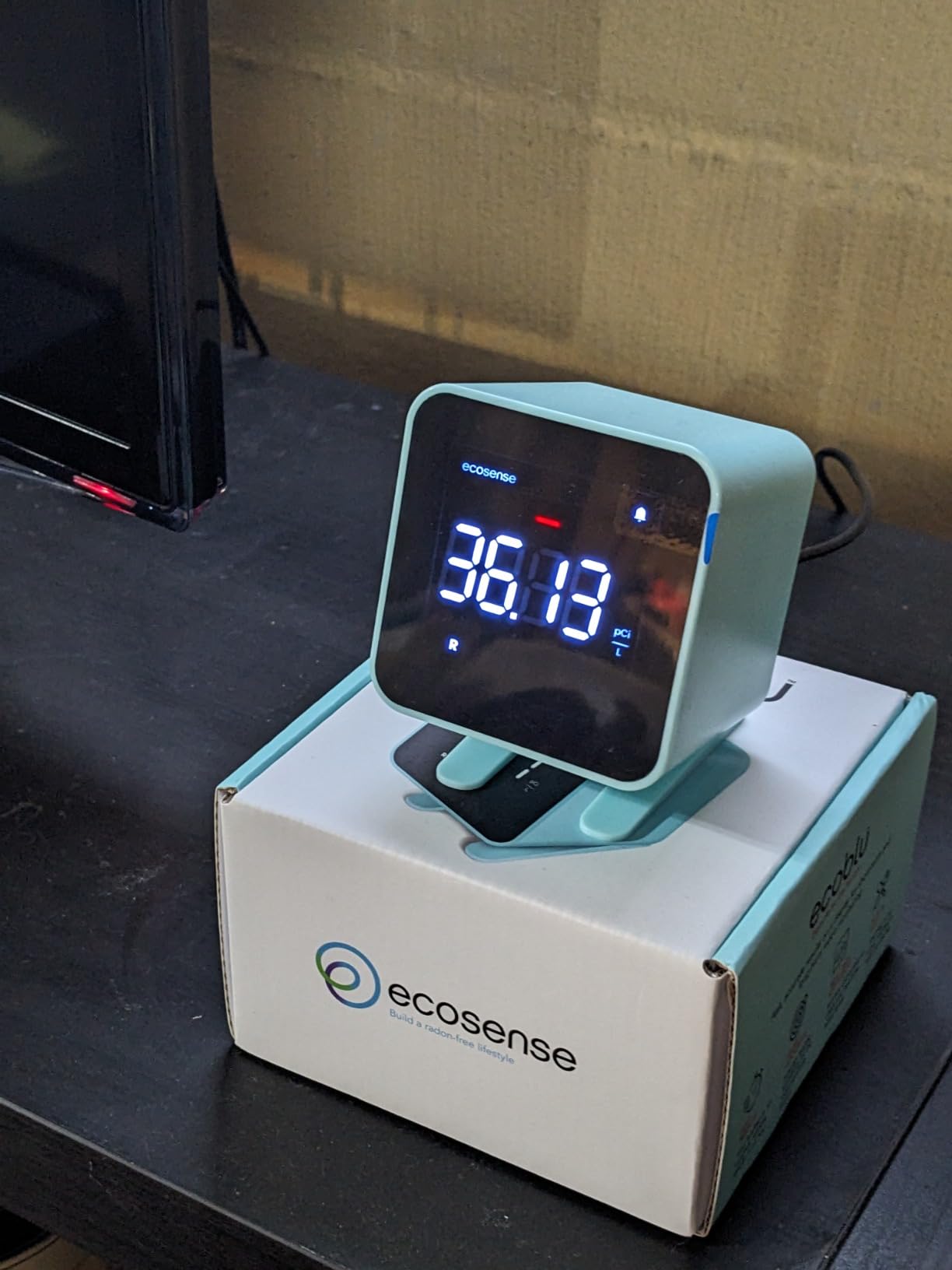
The EB100 is the phone-free version of the Ecosense idea, and for a household that will not adopt an app it is the better buy. It measures with an ionization sensor, updates every ten minutes and shows real-time, daily, weekly, monthly and long-term averages on a full-size backlit display.
That display is the reason to pick it. In a finished basement at night, a small monochrome screen is a nuisance and a backlit full-size panel you can read from the doorway is a genuine improvement, especially for anyone whose vision or dexterity makes a small screen hard work.
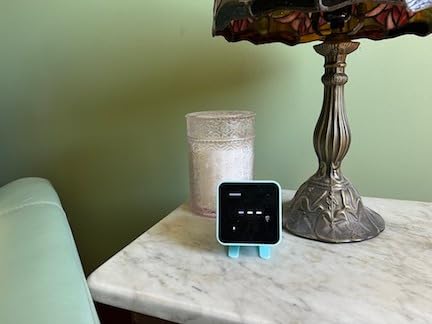
The audible alarm has a visual counterpart, a red line on the display, which means you can disable the sound for a household that finds a beeping basement monitor alarming. Owners also point out the table stand makes it easy to carry the unit between rooms on a quick check, which is how several of them found the worst corner of their basement.
One caution from the listing: accuracy can be affected when the monitor runs from a portable battery, so use the included power adapter. Treat it as a plug-in instrument that happens to be light and movable, not as a roaming device.
Best fit for a finished basement
Once a basement is finished, most of the arguments for a portable unit go away. You have walls, a stable temperature and an outlet in every room, so a plug-in instrument with a big display is the right shape. This one also runs from 32 to 104 degrees F, which covers most heated basements comfortably.
It is a natural companion to a smoke and CO alarm setup in the same rooms. Our guides to carbon monoxide detectors and smoke detectors cover the rest of the low-cost safety kit a basement needs.
Where it disappoints
Unplugging it wipes every stored reading, and there is no battery backup. If your intent is to move it around a lot, this is the wrong tool and the HOUND above fits the job better. If your intent is to leave it on one wall for a year, that limitation disappears.
A small number of owners also reported the unit spiking into the 12 to 24 pCi/L range every few days while other detectors in the same room stayed steady. That is worth knowing if your basement is borderline, because it means one reading is never the whole story. Confirm anything above the action level with a second instrument or a lab kit before you call a contractor.
6. Safety Siren Pro4: set-and-forget monitoring with a loud warning
Safety Siren Pro4 Series Plug-in Radon Detector for Home Basement & Office
Plug-in with wall adapter
No app or subscription
Three audible alarm modes
48 hours to populate
Pros
- Made in the USA and sold since 1993
- a long track record in radon monitoring
- Owners cross-checked it against professional tests with readings within 0.1-0.3 pCi/L
- Backlit digital display that is easy to read in a dark basement
- Three selectable audible alarm modes plus a visual alert
- Automatic daily fail-safe self-test
- No app
- Wi-Fi or subscription required
Cons
- Plug-in only with no battery backup
- so moving it resets the displayed data
- Readings update less often than ten-minute models and take roughly 48 hours to populate
- One owner disliked the C-connector on the wall adapter
The Pro4 is the no-nonsense choice for someone who wants an instrument in the basement and never wants to think about it again. There is no app to pair, no account to create, no subscription and no cloud. It plugs into the wall and reports on a backlit screen you can read in the dark.
That simplicity is a design decision, not a limitation. People running mitigation systems use it to confirm a fan is still doing its job months later, and an alert-based instrument with a daily self-test suits that job better than a phone-first gadget that needs charging.
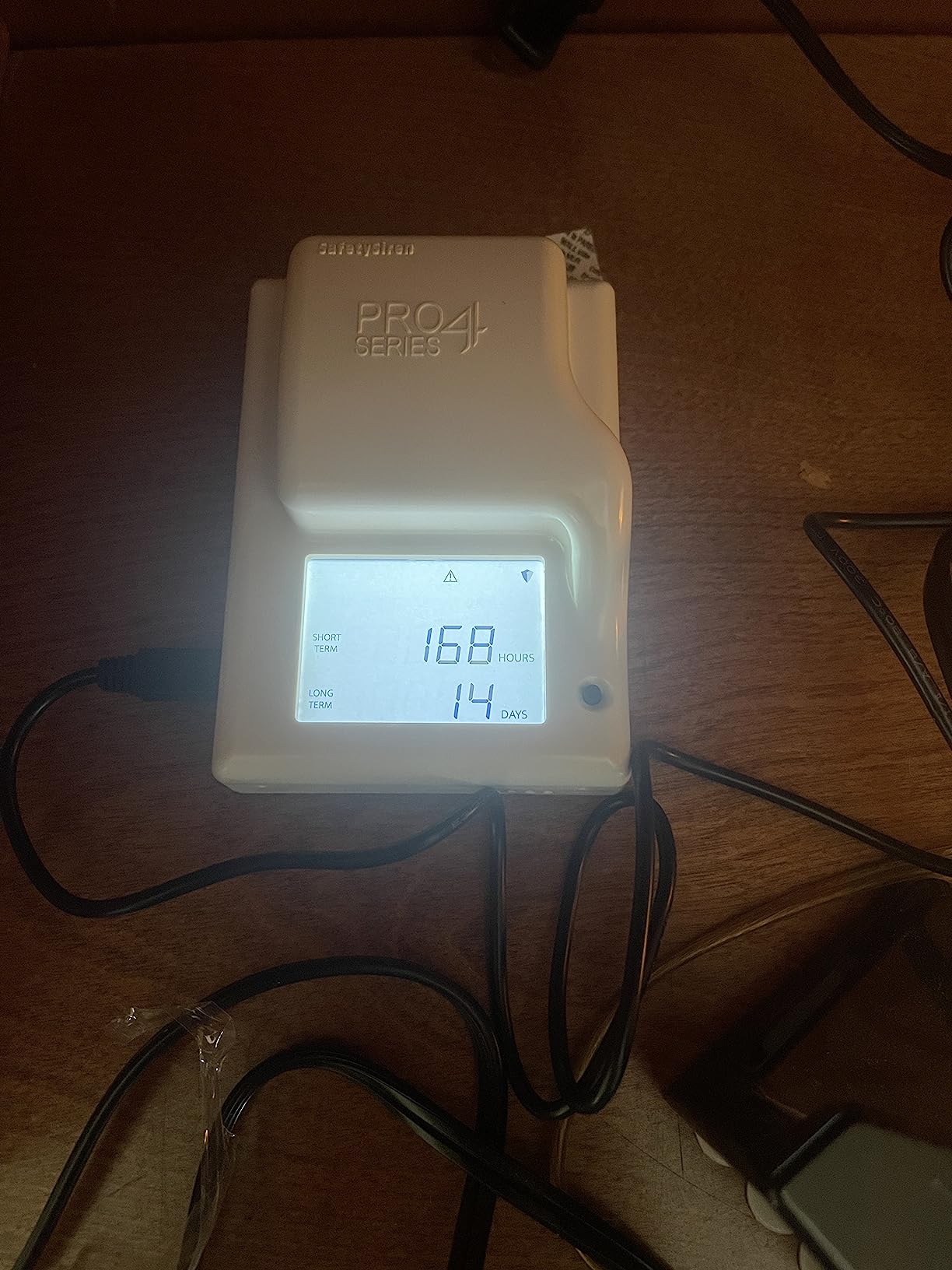
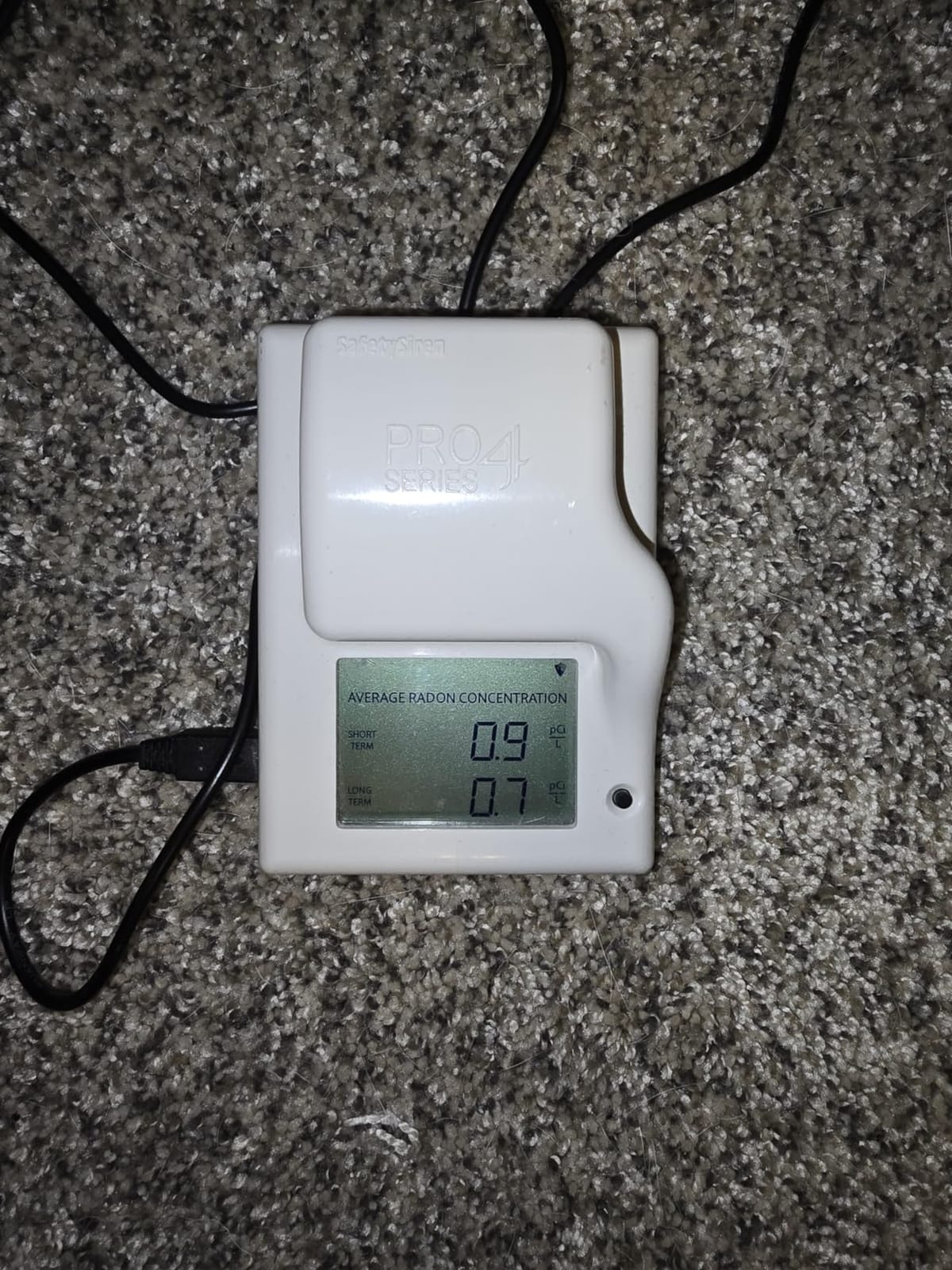
Accuracy is where this one earns its place. Owners who cross-checked it against professional and charcoal tests report agreement within 0.1 to 0.3 pCi/L, running about half a pCi/L high at most. It is rated to 95 percent operating humidity, more tolerant than several competitors on that score.
The alerting is thorough. Three selectable audible modes cover different household needs, and a visual alert covers anyone who cannot rely on sound alone. The automatic self-test every 24 hours gives you a reason to trust that the unit is still alive.
Best fit for mitigation checks
If you have already installed a radon mitigation system, this is the instrument we would leave in place permanently. Owners typically run it as a long-term check that readings stay low, and the alarm means you find out about a failure without having to remember to look.
It suits a basement with a reliable outlet and a household that does not want an app. The single biggest argument for it is that nothing about it can break because of a software update or a region lock.
Where it stops short
It takes roughly 48 hours to populate, which is slow if you are trying to map a basement room by room. Readings update less often than the ten-minute models, so it will not catch a short spike, and being plug-in only means moving it resets the display.
One practical annoyance: the wall adapter uses a small C-connector rather than the older round plug, and a few owners have disliked it. If you already have the older version, that is probably a signal to keep what you have.
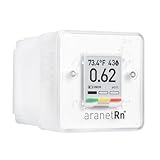
7. Aranet Radon Plus: the portable unit built for smart homes
Aranet Radon Plus Radon Detector for Home with 10-Minute Readings
Up to 7 years on 2 AA batteries
Reading every 10 minutes
E-Ink colour display
Switchable pCi/L and Bq/m3
Pros
- Highest average rating among these monitors at 4.8 out of 5 from 274 reviews
- Up to a 7-year battery lifetime on 2 AA batteries with no outlet needed
- Reads a result every 10 minutes and updates fast enough to catch short spikes
- E-Ink display stays permanently visible without a backlight and uses very little power
- Also tracks temperature
- relative humidity and atmospheric pressure
- Works with Home Assistant and Homebridge
Cons
- Highest price point among the dedicated monitors here
- App lacks rolling 1-day
- 7-day or 1-month average history
- Bluetooth pairing is confusing on first setup
- No cloud sync so data stays on the phone it synced with
- Bulkier than smaller competing monitors
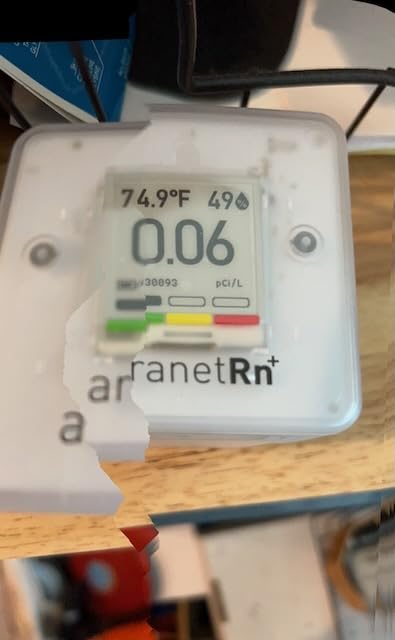
The Aranet Radon Plus is the most capable battery-powered monitor we tested. Two AA batteries rated for up to seven years, a reading every ten minutes, and an e-ink screen that stays legible in a dark basement without a backlight, all in a housing you can carry between rooms.
It is also the only one here that measures barometric pressure alongside temperature, humidity and radon. For basement work that is more interesting than it sounds, because pressure differences between the soil and your basement are what drive radon entry in the first place.
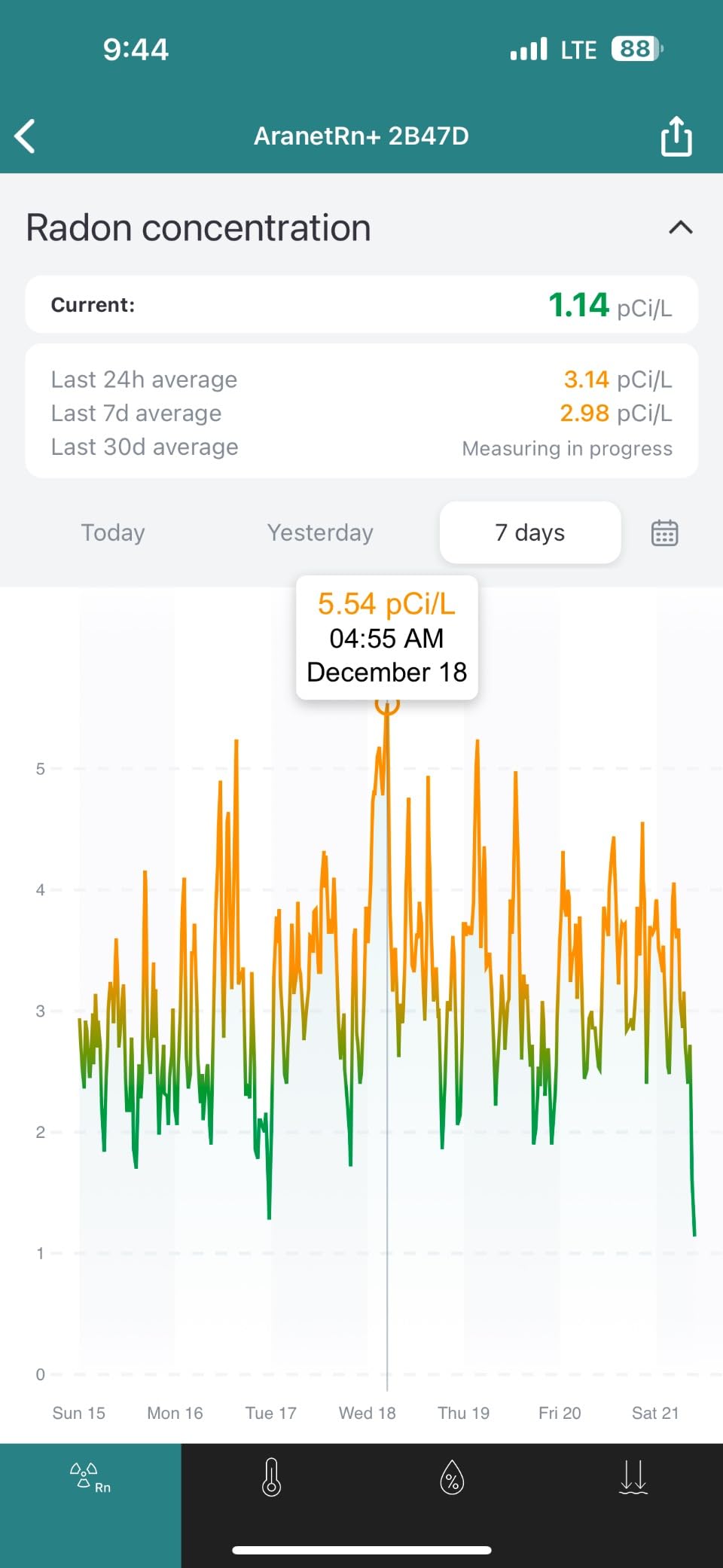
Owners on r/smarthome and r/radon single out the app and the integration out of everything in this roundup. It pairs over Bluetooth, needs no account, and exposes readings to Home Assistant and Homebridge, which means a basement monitor can sit on a dashboard next to your other indoor air readings.
Battery performance has held up in practice. One owner logged only an 8 percent battery drop after six months of continuous use, which lines up with the seven-year headline figure more honestly than most battery claims do.
Best fit for multi-room and portable testing
Because it needs no outlet, this is the unit to buy if you want two. Run one as a fixed monitor in the lowest corner of your basement and carry the second through the upstairs rooms for a fortnight to see whether anything above grade is affected. That is the clearest way to answer the question everyone asks after a high basement reading.
It is also the natural pick for verifying a rental property or a second home, because the battery claim means you can leave it for months without visiting.
Where it costs you
It is the most expensive dedicated radon monitor in this roundup, and the reason is hardware rather than features you would use every day. The e-ink panel, the sensor and the multi-year battery claim add up.
The app is the weak point. It lacks rolling one-day, seven-day and one-month average history, pairing is fiddly the first time, and there is no cloud sync, so your data stays on whichever phone you paired it with. If you want a long record you can open from anywhere, that limitation will irritate you.
8. Airthings Wave Plus: radon plus a full air-quality picture
Airthings 2930 Wave Plus – Radon & Air Quality Monitor, Battery Powered (CO2, VOC, Humidity, Temp, Pressure)
Radon, CO2, VOC, humidity, temp, pressure
Battery powered, wall mountable
1.5 years battery life
Pros
- Measures six air factors at once with separate radon
- CO2
- TVOC
- humidity
- temperature and pressure sensors
- Battery powered with roughly 1.5 years of average battery life and no outlet needed
- Wave for a green
- yellow or red light ring with detailed history in the app
- Wall-mountable and cord-free which keeps basement spaces tidy
- VOC
- CO2 and humidity readings compared well against dedicated meters
Cons
- Radon readings skew low against dedicated monitors and charcoal tests in short side-by-side comparisons
- Needs about 7 days in its intended environment to calibrate and 24 hours to adjust after moving
- Radon is sampled hourly rather than every 10 minutes
- App data routes through the Airthings cloud and the Bluetooth link has no pairing protection
- Sparse documentation and hub connectivity needed customer support
If your basement is a finished, lived-in space rather than a storage area, the Wave Plus answers a bigger question than radon alone. It measures six factors: radon, carbon dioxide, total volatile organic compounds, humidity, temperature and air pressure.
Those extra numbers change how you interpret a basement. High CO2 tells you the room is under-ventilated, high VOC tells you something is off with paint, carpet or a new furniture set, and high humidity is the number most likely to explain both discomfort and a misbehaving radon sensor.
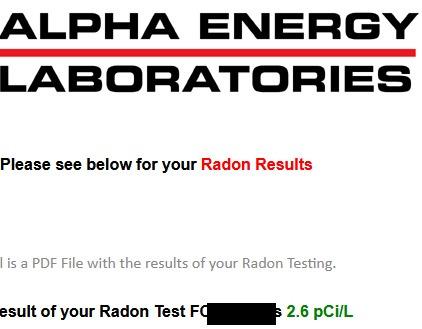
It is wall-mountable and cord-free, which keeps a finished basement looking like a room rather than a monitoring station. The light ring gives the same at-a-glance green, yellow or red readout as the cheaper Wave, and the app carries the history.
This is also the device to pick if radon is one concern among several about a finished basement, or if you want your readings on a phone dashboard from outside the home rather than only within Bluetooth range.
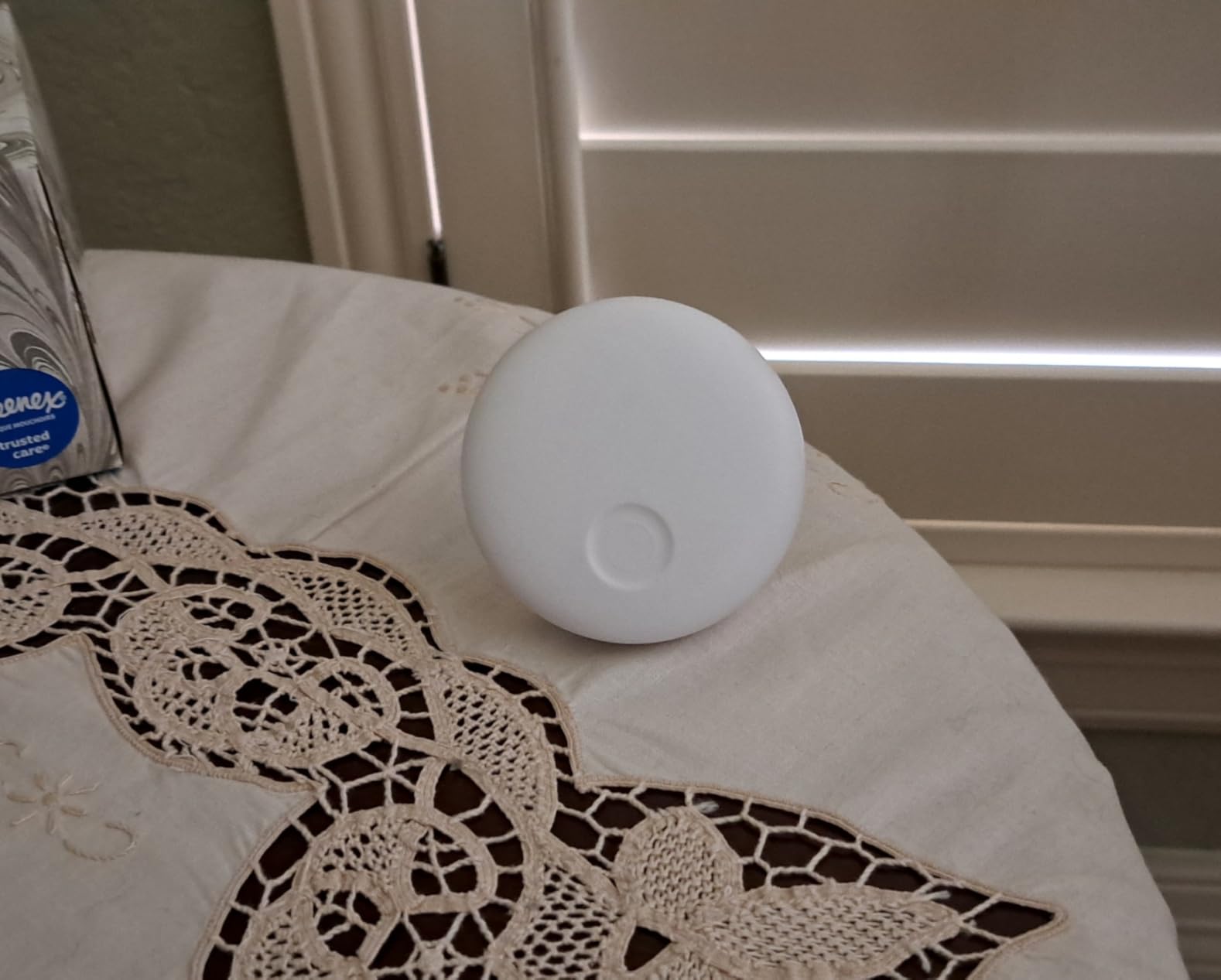
Best fit for a finished basement lounge or bedroom
Two AA batteries give roughly 1.5 years of average life, so even in a finished room you are not running a cable across the floor. It is rated below 85 percent operating humidity, which fits a conditioned space better than a damp one, and it is designed to work with the Airthings hub for online access.
The VOC and CO2 sensors are the reason to justify it on more than radon. If your basement is where people actually spend time, those readings change decisions about ventilation that radon data alone would not.
Why the rating is the lowest here
It is the least accurate radon instrument in this roundup, and buyers say so directly. Short-term readings skew low when compared side by side with dedicated monitors and charcoal kits, and radon is sampled hourly, so brief spikes are averaged away.
It also needs about seven days in its intended environment before numbers mean anything, and roughly 24 hours to adjust after a move. Data passes through the Airthings cloud and the Bluetooth link has no pairing protection, which matters if the basement is also a home office. Documentation is sparse and hub setup needed support for some buyers.
If radon accuracy is why you are reading this, choose a dedicated monitor. Choose this one when a finished basement’s whole air situation is the problem you are trying to understand.
Where to Place a Radon Detector in a Basement
Placement matters more than model choice. A well-placed mediocre monitor beats a poorly placed accurate one every time, and the mistakes people make are remarkably consistent: putting the unit on the floor, tucking it in a corner, placing it beside a window or a supply vent, and moving it around every few weeks.
Use the lowest livable level, not the lowest space. If your basement is unfinished, that is the floor. If it is finished, it is the finished room where people spend time, not a bare storage or utility area nobody occupies. This is the single most repeated question on homeowner’s forums, and the answer is that the test should reflect the air people breathe.
Mount it off the floor, in the air people breathe. Somewhere between roughly 18 inches and 5 feet above the floor is the working range. This is not arbitrary: air stratifies, and a unit on the floor reads a layer of air most people never occupy.
Keep it clear of exterior walls, windows and doors. Outdoor air, drafts from a window or an exterior door can pull basement air out and replace it with surface air, diluting the reading.
Stay away from the sump pit. A sump pump cycling on and off changes pressure in the room, and the discharge or the pit itself can produce readings that swing hard in either direction.
Leave distance from HVAC returns, dehumidifiers and supply vents. Air pushed across a sensor distorts the air it is trying to sample. A dehumidifier cycling also changes basement pressure.
Choose a spot far from a window, a heater or a combustion appliance. Combustion appliances in a basement pull air down from the house and can lower readings or create their own gradients.
Leave it there. Moving a monitor resets the averaging window and throws away the data you already collected. If you want to check another room, buy a second unit or move it only after the current test is finished.
In an unfinished basement, level concrete is fine and a shelf or a joist about two feet up is better than bare floor. In a finished basement, place it in the room people use, on an interior wall rather than an exterior foundation wall, at seated or standing head height. If the basement has been mitigated, put the monitor where the fan draws from, because that is the air you are verifying.
How to Choose a Basement Radon Detector
Short-term kit, long-term test, or continuous monitor
A short-term test kit uses a charcoal canister or an alpha-track film that absorbs radon over a set period, usually two to four days, before being read in a lab. It is single use, needs the exposure window tracked carefully, and the lab charges for the analysis. A long-term alpha-track test stays in place for three months or more and is the standard for real-estate and legal purposes.
A continuous monitor like the ones above does the work of a long-term test continuously and shows you the trend while you wait. If your only goal is a piece of paper for a closing, use a long-term test kit. If you want to know what your basement does at night, in winter and after heavy rain, you want a monitor.
Sensor type explains the price gap
Charcoal kits absorb radon physically and are read chemically. Alpha-track tests use a polycarbonate film that records alpha particles from radon decay, which is why the long-term figures are the most reliable. Alpha spectrometry sensors count radon and its decay products electronically. Ionisation chambers, used by both Ecosense models here, count alpha particles in a controlled electric field. Semiconductor sensors, used by the HOUND, count decay events directly.
None of these is wrong. They differ in sensitivity, response speed and how much they cost. Ionisation and spectrometry designs tend to respond faster, which is why they show a result in ten minutes where a semiconductor unit needs twelve hours.
Check the units before you buy
Radon is measured in picocuries per liter or becquerels per cubic meter, and one pCi/L equals 37 Bq/m3. Some units ship locked to a single unit and some apps only work in certain regions. The Aranet Radon Plus and the HOUND-1011S both let you switch between pCi/L and Bq/m3 on the device, which removes the guesswork if you travel or read international guidance.
Budget for the calibration window
Any monitor needs time in position before its numbers mean anything. Thirty to ninety days is the honest window, and the marketing around time to first reading is the most misleading part of this product category. A ten-minute reading is a real measurement and nothing more. Every model here settles into a stable long-term average within about a week, and seasonal swings mean a single summer reading understates winter levels.
Power, connectivity and how many you need
Battery power gives you placement freedom in an unfinished basement where outlets are scarce or badly located. Plug-in power gives you uninterrupted history but constrains where the unit can sit. Connectivity is a preference: an app helps if you want history you can open later, and helps nobody if you will never pair it.
Most homes need one monitor in the lowest livable level. A two-unit setup is worth it if you have a finished basement with more than one used room, or if you want to verify mitigation and keep a baseline elsewhere in the house at the same time. Our smoke detector guide makes the same argument about layering alarms across a house rather than relying on one central unit.
One last factor nobody mentions: sensor drift. Consumer radon sensors slowly lose accuracy over years and there is no recalibration path for a device in your basement. Plan on replacing a monitor roughly every five to ten years, and note the reading date somewhere you will find it.
What to Do If Your Basement Radon Reading Is High
A high reading is not an emergency, but it is a signal that deserves an ordered response. Here is the order we would follow.
Confirm it before you panic. Place a second monitor of a different brand in the same room for two weeks, or send a long-term alpha-track test kit to a lab. One monitor’s spikes are frequently measurement error, and cheap cross-checks are available.
Keep the original running. Do not move the first unit to check another room. You want a multi-month average from one fixed position, and moving it resets the averaging window.
Ventilate immediately and note what happens. Opening a basement door and window, or running an exhaust fan to the outside, will drop the level. That is a useful diagnostic, not a fix, because radon re-accumulates once you close things up again.
Get a professional test if anyone needs documentation. Real-estate transactions, rental disclosures, employment decisions and court matters require a lab-analyzed long-term test. A consumer monitor is for watching your own home, not for paperwork.
Mitigate, then verify. Sub-slab depressurisation or a pipe suction system is the standard fix. After installation, keep a monitor in place for at least a full season and confirm the long-term average stays low. Owners often report an improvement followed by a drift back up, which usually means the system needs adjusting rather than replacing.
Frequently Asked Questions
Should I put a radon detector in the basement?
Yes. Radon settles into the lowest level of a building, so the basement is almost always where readings are highest. The EPA action level for a long-term average is 4.0 pCi/L (picocuries per liter) and the World Health Organization guideline is lower at 2.7 pCi/L. Place the detector in the lowest livable level, off the floor and clear of windows, vents and the sump pit, then leave it in position for at least three months.
Where is the best place to put a radon detector in the basement?
Put it in the lowest livable level, between about 18 inches and 5 feet above the floor, on an interior wall rather than an exterior foundation wall. Keep it away from windows, exterior doors, HVAC supply and return vents, the sump pit, and any dehumidifier that cycles on and off. In a finished basement, test the room people actually use instead of a bare storage area.
What time of day is radon highest?
Radon levels fluctuate through the day and tend to be driven by pressure differences between the soil and your basement, so readings often rise when the house is closed up overnight and drop when you ventilate. Basement levels also tend to be highest in winter, when windows stay shut and soil moisture is high. A monitor that averages over weeks captures this variation; a single reading at any hour does not.
Are radon home test kits reliable?
Reliable within their limits. Charcoal and alpha-track kits are passive and extremely accurate, but they are single use, require a tracked exposure period and a lab analysis fee. Consumer electronic monitors are excellent for trend watching but are not a substitute for a lab-analyzed long-term test when a real-estate transaction or legal disclosure requires documentation. Use each tool for what it is designed for.
Is radon risk exaggerated?
No. Radon is the second leading cause of lung cancer in the United States and the leading cause among people who do not smoke, according to the EPA. The risk rises with every increment above the 4.0 pCi/L action level rather than sitting behind a safe line, and radon is responsible for roughly 21,000 lung cancer deaths each year in the US. It is tasteless, odorless and colorless, which is why measurement is the only way to know.
The Best Radon Detector for Your Basement in 2026
The Airthings Corentium Home is our pick for most basements. It runs on batteries so you can put it where radon actually collects, it shows long-term and short-term averages without an app, and it has the deepest review history of anything we tested, which means its long-term behaviour is well documented rather than anecdotal.
Buy the Ecosense RD200 if you want a real reading within minutes and have an outlet near the low corner of your basement. Buy the Aranet Radon Plus if you want two portable units and smart-home integration. Buy the Safety Siren Pro4 if you want alarms and no app at all.
But whichever one you choose, the placement rules matter more than the model. Lowest livable level, off the floor, clear of the sump pit and vents, and left in place for a full season. Get those four right and any of these monitors will tell you the truth about your basement.