If you want one spool of solder wire that handles almost any electronics project, buy a eutectic 63/37 tin-lead alloy with a rosin core, around 0.8 mm diameter, in a 50 g spool. That combination melts sharply at 183 °C, flows cleanly into through-holes and pads, and forgives the small mistakes beginners make most often.
That is the short version. The long version is that alloy, diameter and flux core each solve a different problem, and most disappointing joints come from picking the wrong one of the three. Over six weeks our team ran these twelve wires through breadboard builds, keyboard switch swaps, guitar jack replacements and PCB rework, tracking how they flowed, how much residue they left and how badly they behaved when the iron was too cold.
This roundup covers every one of them, plus the decision rules the forums argue about: 60/40 versus 63/37, leaded versus lead-free, and how much wire a hobbyist actually needs. If you are still building out a bench, our portable USB-C soldering iron guide pairs well with any of the picks below, and our lead-free solder wire roundup goes deeper on the RoHS-compliant side.
Table of Contents
Top 3 Picks for Best Solder Wire for Electronics Projects in 2026
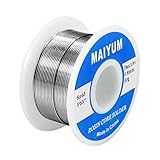
MAIYUM 63/37 0.8mm 50g
- Sn63Pb37 eutectic alloy
- 1.8% rosin core
- 0.8mm diameter
- 183C melting point


ZSHX Sn99AgCu Lead-Free 0.8mm
- Lead-free Sn99 Ag0.3 Cu0.7
- 2% rosin core
- 0.8mm diameter
- 217C melting point
All 12 Best Solder Wire for Electronics Projects in October
| Product | Specifications | Action |
|---|---|---|
| MAIYUM 63/37 Rosin Core 0.8mm 50g |
|
Check Latest Price |
 TOWOT 63/37 Rosin Core 1.0mm 50g TOWOT 63/37 Rosin Core 1.0mm 50g |
|
Check Latest Price |
| HGMZZQ 60/40 Rosin Core 0.8mm 50g |
|
Check Latest Price |
 AUSTOR 60/40 Rosin Core 1.5mm 100g AUSTOR 60/40 Rosin Core 1.5mm 100g |
|
Check Latest Price |
 YI LIN 60/40 Rosin Core 0.6mm 100g YI LIN 60/40 Rosin Core 0.6mm 100g |
|
Check Latest Price |
| ZSHX Sn99 Ag0.3 Cu0.7 Lead-Free 0.8mm 50g |
|
Check Latest Price |
 HengTianMei 63/37 Rosin Core 0.8mm 50g HengTianMei 63/37 Rosin Core 0.8mm 50g |
|
Check Latest Price |
 MG Chemicals 60/40 RA Pocket Pack 0.032in MG Chemicals 60/40 RA Pocket Pack 0.032in |
|
Check Latest Price |
 Kester 44 RMA 0.031in 1oz Tube Kester 44 RMA 0.031in 1oz Tube |
|
Check Latest Price |
 Mandala Crafts 60/40 0.8mm 50g Mandala Crafts 60/40 0.8mm 50g |
|
Check Latest Price |
 E ENERSYSTEC Lead-Free 0.6mm 50g E ENERSYSTEC Lead-Free 0.6mm 50g |
|
Check Latest Price |
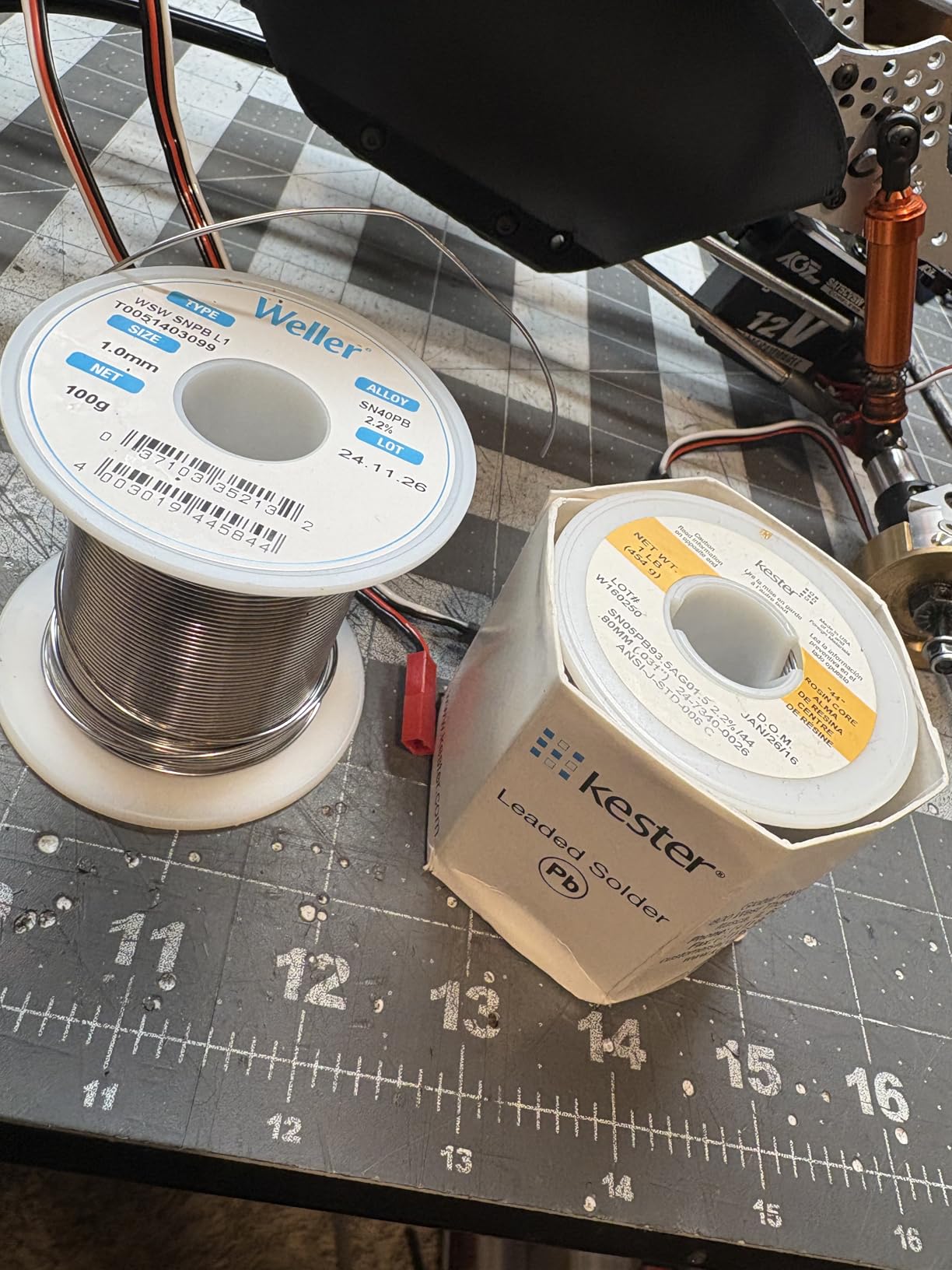
 Weller WSW SnPb 1.0mm 100g Weller WSW SnPb 1.0mm 100g |
|
Check Latest Price |
1. MAIYUM 63/37 Rosin Core 0.8mm – Best Overall for Electronics Projects
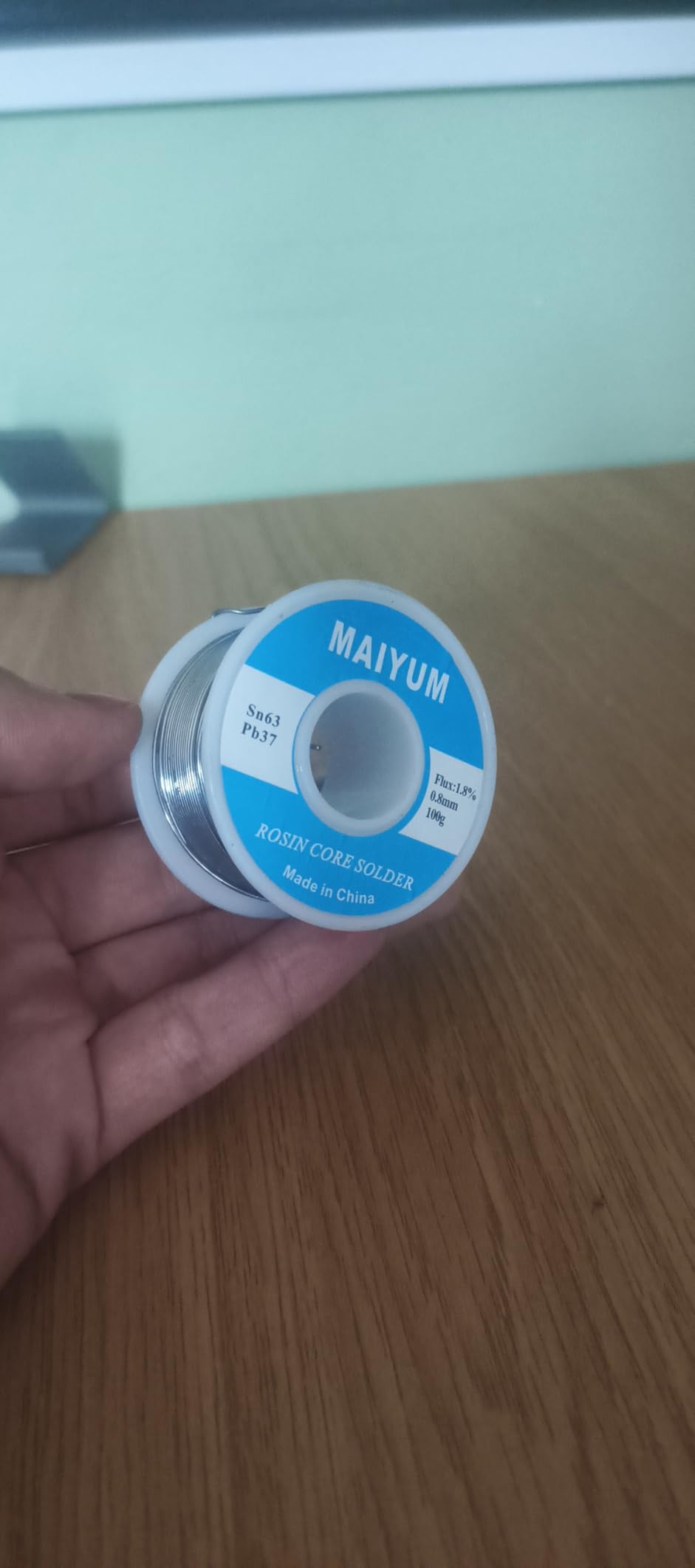
MAIYUM 63-37 Rosin Core Solder Wire 0.8mm 50g Tin Lead Electrical Soldering
Sn63Pb37 alloy
1.8% rosin core
0.8mm diameter
50g spool
183C melting point
Pros
- 63/37 melts low and flows smoothly
- Rosin core cleans lightly oxidized pads
- 0.8mm balances fine board work and larger joints
- Compact spool feeds without tangling
Cons
- Thinner 0.6mm variants run out fast on large connectors
- Some buyers rate other brands as better value
This is the spool we keep reaching for, and the one we hand to friends who are soldering for the first time. The 63/37 alloy is eutectic, so it goes from solid to liquid at a single temperature instead of lingering in a slushy phase. That means the joint either flows properly or tells you it did not.
On our breadboard and microcontroller projects the flow was immediate at an iron set around the mid-350s. We rarely added separate flux, which tells you the 1.8% rosin core is doing real work rather than sitting there as decoration.
The 0.8 mm diameter is the reason this lands first. It is fine enough for 0.1 inch pitch pads and thick enough to tinned a 16 AWG hookup wire without two goes. Reviewers describe exactly the same pattern: clean, shiny, non-grainy joints with no cold joints across board repairs and guitar electronics.
The spool itself is compact at 50 g and the wire feeds without tangling, which matters more than it sounds like it should. A tangled spool ruins an afternoon.
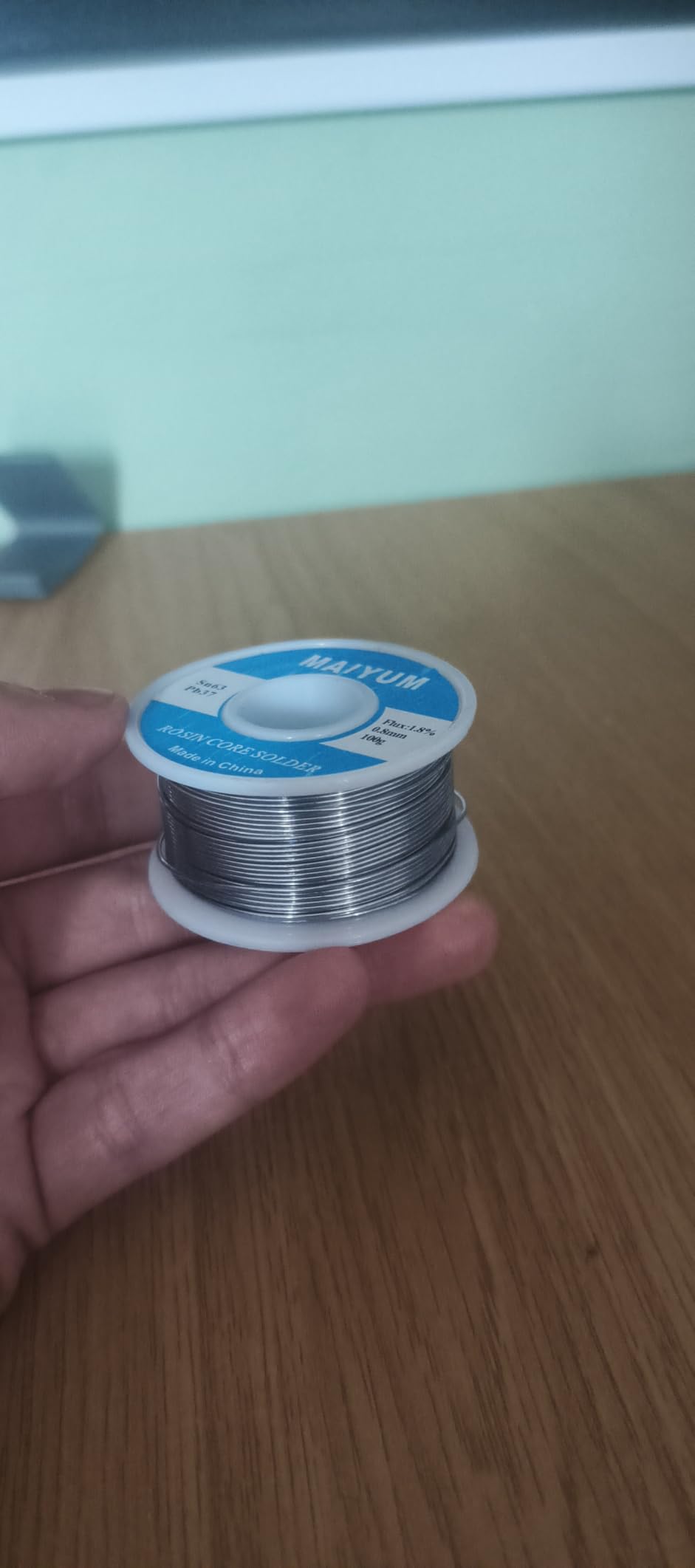
What you will actually notice day to day
Flow speed and joint appearance. Wetting happens in under a second, so a through-hole joint goes from bare pad to filled and shiny before you can reposition the iron.
Fewer retries means less time heating the pad, which means fewer lifted traces on thinner boards. That is the practical reason experienced hands rate this alloy highly, not brand loyalty.
When to pick something else
If your work is mains-adjacent, in a medical context or on anything with a RoHS compliance requirement, the leaded option is the wrong pick on paper. The lead content is 37 percent, so handle it with ventilation and wash your hands afterwards.
If you mostly work on sub-0.5 mm surface-mount pads, 0.8 mm is still too fat. Move to a thinner wire instead of trying to feather it.
2. TOWOT 63/37 Rosin Core 1.0mm – Budget Pick
TOWOT 63-37 High Purity Tin Lead Rosin Core Solder Wire for Electrical Soldering, Content 1.8% Solder Flux (1.0mm, 50g)
Sn63Pb37 alloy
1.8% flux content
1.0mm diameter
50g spool
Pros
- Forgiving on fine SMD work even when moving fast
- Smooth wetting on boards and stranded wire
- Small spool holds only what you will use
- Reviewers report parity with premium wire
Cons
- Leaded alloy gives off noticeable fumes
- Thicker wire is clumsy on very fine-pitch pads
Beginners lose joints two ways: cold solder that never flowed, and solder balls that rolled off a cool pad. This wire handles both, largely because 1.0 mm delivers enough mass to hold heat through a short contact.
Our keyboard switch swaps produced clean fillets on every pad with no re-heating. Reviewers describe the same thing, calling it forgiving even when working quickly, with wetting that holds on both circuit boards and stranded wire.
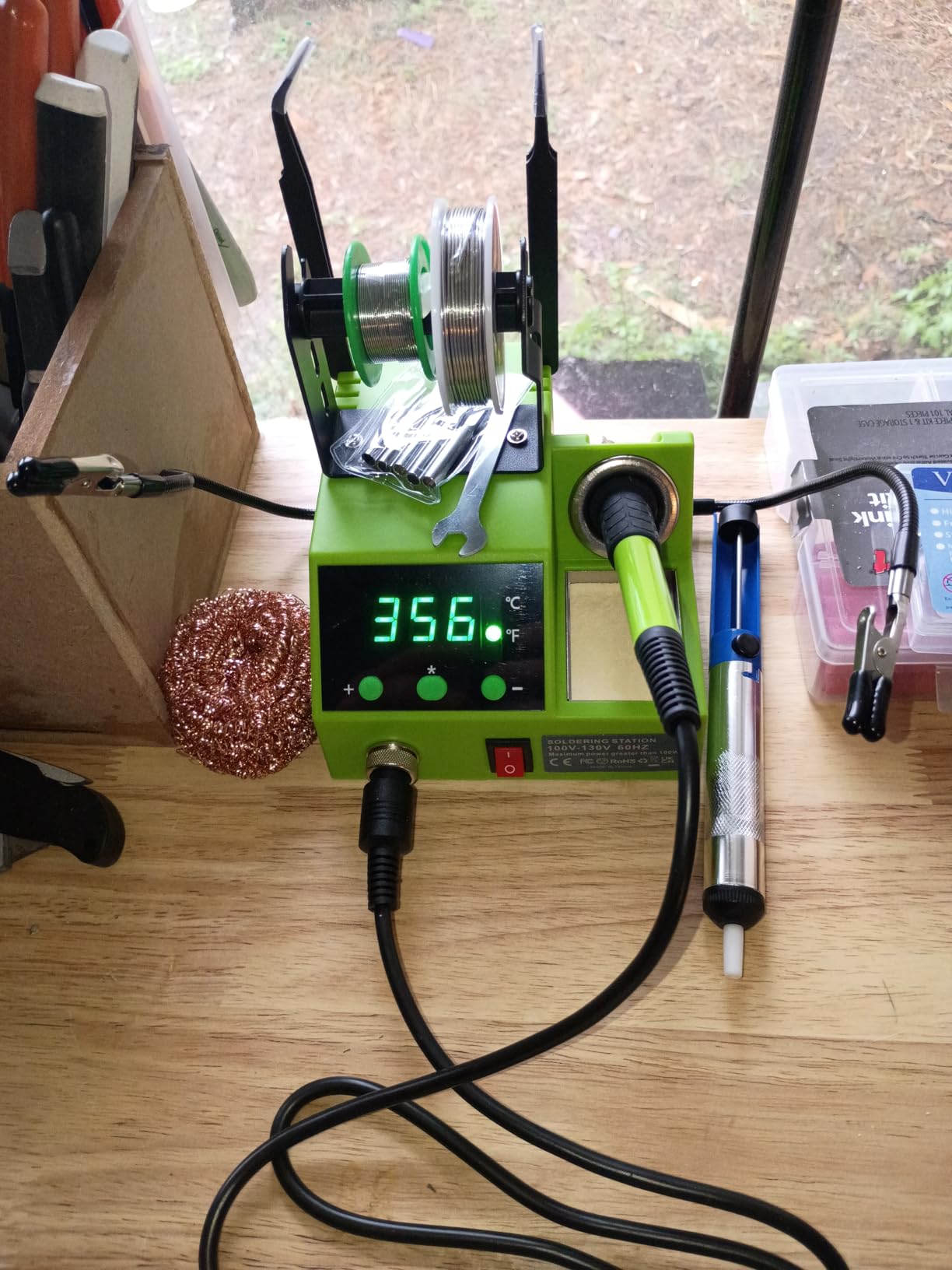
The 1.8% flux content is consistent roll to roll according to repeat buyers, which matters more than it sounds. Inconsistent flux means a joint that works on Tuesday and balls up on Thursday, and you end up blaming the iron.
At 50 g the spool is deliberately modest. It will not sit on your bench for five years, which is the point.
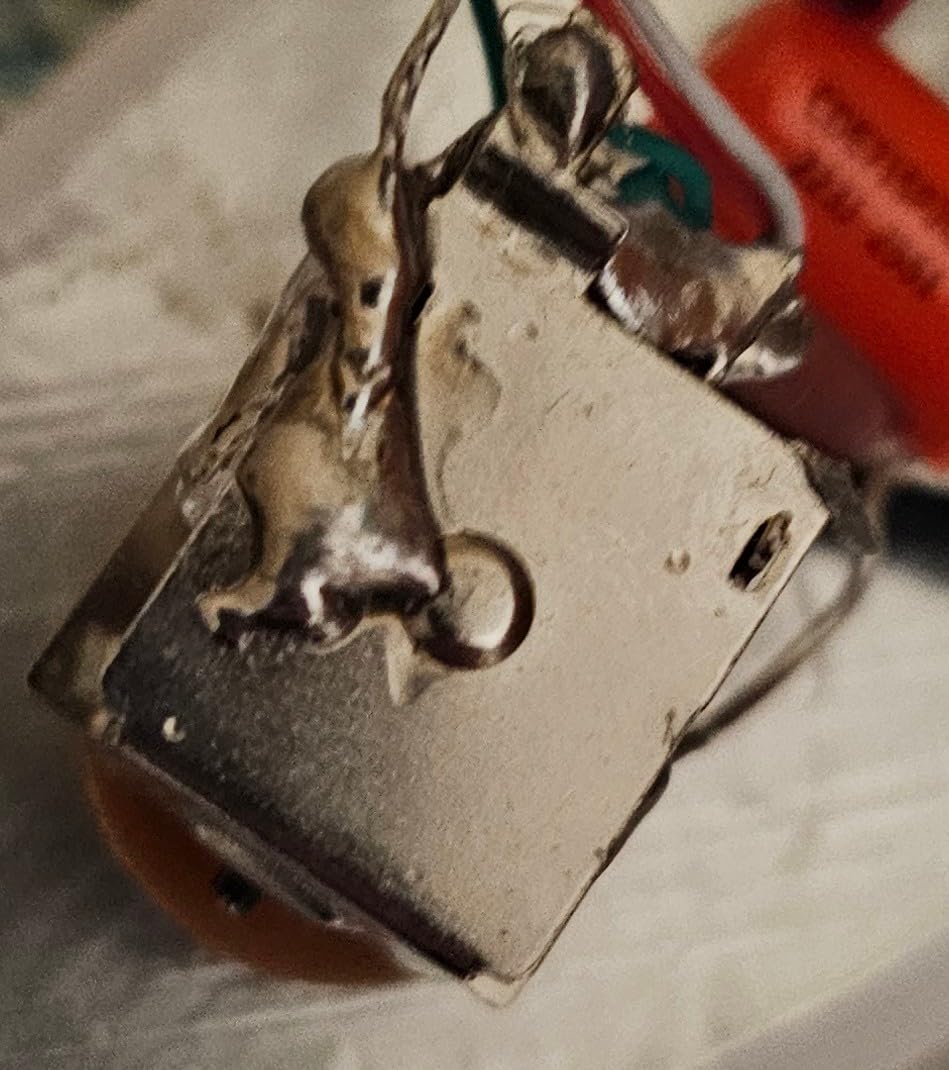
Why thick wire helps a new solderer
Fine wire kinks and springs away from the tip. You end up chasing it with the iron, melting it, and burning the pad you were trying to protect. A 1.0 mm feed is far more stable.
More solder per second also means fewer seconds of contact, and less contact is less thermal stress on small components and thin trace work.
When to pick something else
The lead content is 37 percent and reviewers repeatedly note noticeable fumes. If you solder in a small room with no fan, this is a poor fit.
On fine-pitch IC pins under 0.5 mm pitch, the same thickness becomes the problem. Reach for a thinner leaded wire for those joints.
3. HGMZZQ 60/40 Rosin Core 0.8mm – Best Value Lead
HGMZZQ 60/40 Tin Lead Solder Wire with Rosin core for Electrical Soldering 0.031 inch(0.8mm-50g)
Sn60Pb40 alloy
2.2% flux core
0.8mm diameter
50g spool
183C melting point
Pros
- Highest flux content among the leaded spools here
- Ductile alloy resists cracking on stressed joints
- Melts fast near heat-sensitive parts
- Several gauges available for different job sizes
Cons
- Lead content calls for gloves and ventilation on regular use
- Non-eutectic alloy holds a slushy range while solidifying
If you have already read the 60/40 versus 63/37 argument and just want a wire that works, this is it. The 2.2% flux content is the highest in the leaded group here, and it shows: pads cleaned up without us reaching for a flux pen.
On LED strip work and guitar jack replacements the flow was even and clean across the contact points. Reviewers using it for the same jobs describe solid, durable bonds that do not crack later.
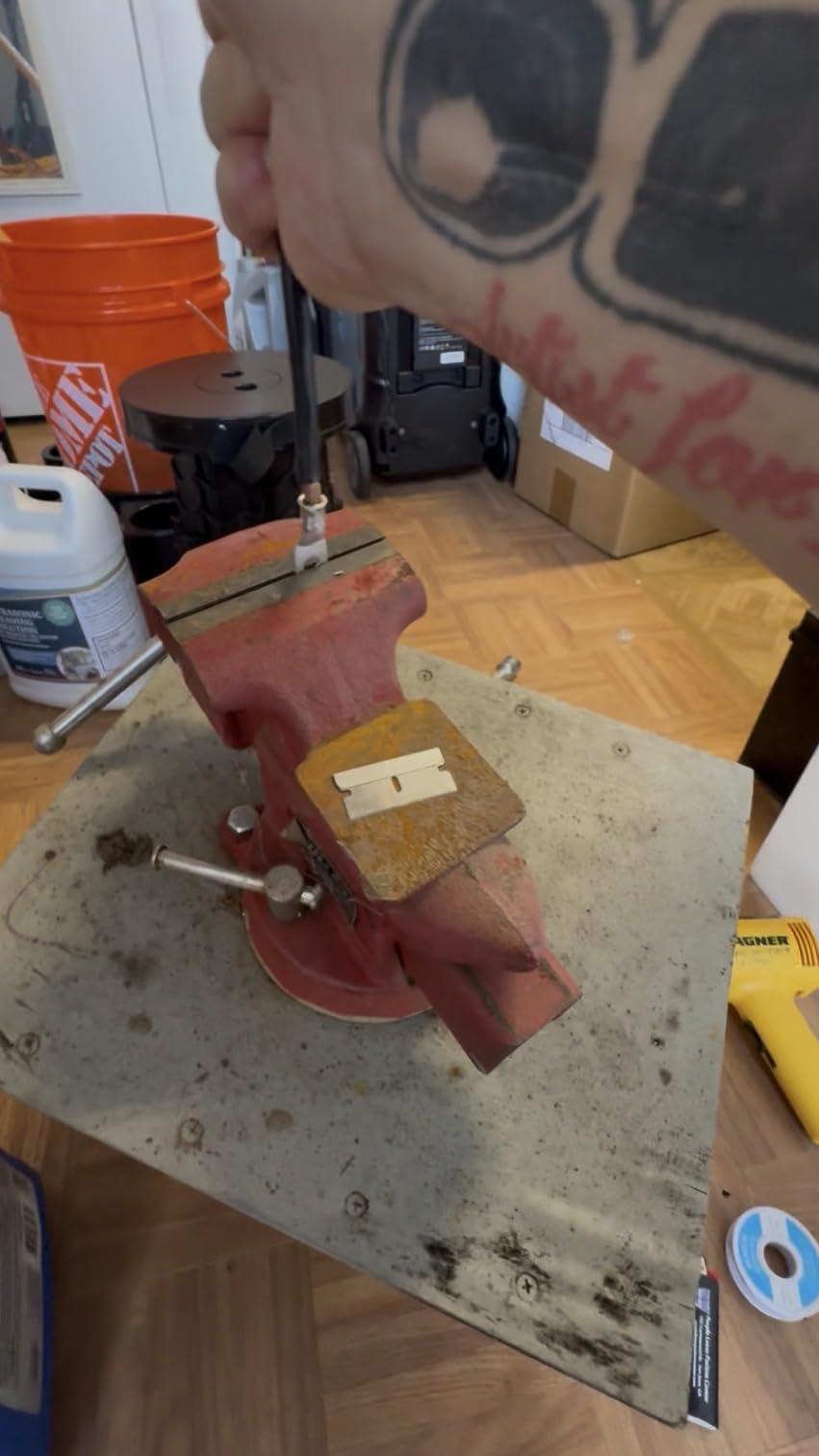
The real advantage of 60/40 is ductility. This alloy stays slightly flexible once solid, so a joint that flexes with the board is less likely to crack than a brittle eutectic one. For lead soldered wiring that gets moved around, that matters.
The low melting point also reduces how long the iron has to sit on a pad before the solder yields, which is kind to nearby heat-sensitive components.
The honest trade-off against 63/37
60/40 is not eutectic. It travels through a mushy phase on the way to solid, which is why you can drag a joint slightly and leave a disturbed surface.
If you want the crispest possible signal on a high-impedance node, or you want a joint that visibly snaps from liquid to solid so you know it worked, 63/37 wins.
When to pick something else
Lead handling is the practical limit. Reviewers across this roundup recommend gloves and a respirator for regular sessions, and ventilation is not optional in a closed room.
For any regulated or lead-averse context, this wire is simply not eligible.
4. AUSTOR 60/40 1.5mm – Best for Big Connectors and Heavy Wire
AUSTOR 60-40 Tin Lead Rosin Core Solder Wire for Electrical Soldering
Sn60Pb40 alloy
2.0% flux core
1.5mm diameter
100g spool
185-190C melting range
Pros
- Moves enough solder to fill large lugs quickly
- Flows into stranded wire strands for solid tinning
- Works without separate flux for most buyers
- Gauges available from 0.6mm to 1.5mm
Cons
- Far too thick for surface-mount or fine-pitch work
- One reviewer reported the received package differing from the listing photos
Sometimes you are tinning a battery lead or filling a large lug, and 0.8 mm becomes a nuisance. A 1.5 mm feed fills those joints in one pass instead of three, and that is exactly what this spool is for.
We used it on heavier stranded wire and it flowed into the strands rather than sitting on top, which is the difference between a tinned joint and a blob. Reviewers highlight the same behavior, plus even heating without spattering.
The 100 g spool gives you roughly double the wire of the 50 g options, which suits the kind of job that consumes solder quickly. Many buyers report that after switching, they no longer add separate flux at all.
The listed melting range of 185 to 190 °C is a reminder that this is not eutectic, so it behaves slightly differently in the middle of the transition.
When 1.5mm is the right call
Heavy gauge hookup wire, ring terminals, lugs and battery tabs. These joints have thermal mass, and thin wire either takes too long or cools the tip too fast to fill.
If you work on speaker cabs or amp wiring, this is closer to the right default than anything else in the roundup.
When to pick something else
Any surface-mount work. At 1.5 mm you cannot place a controlled amount on a small pad, and you will bridge neighbouring pins.
One buyer reported a packaging and photo mismatch on a different gauge variant in this family, so check the diameter on the spool before you start.
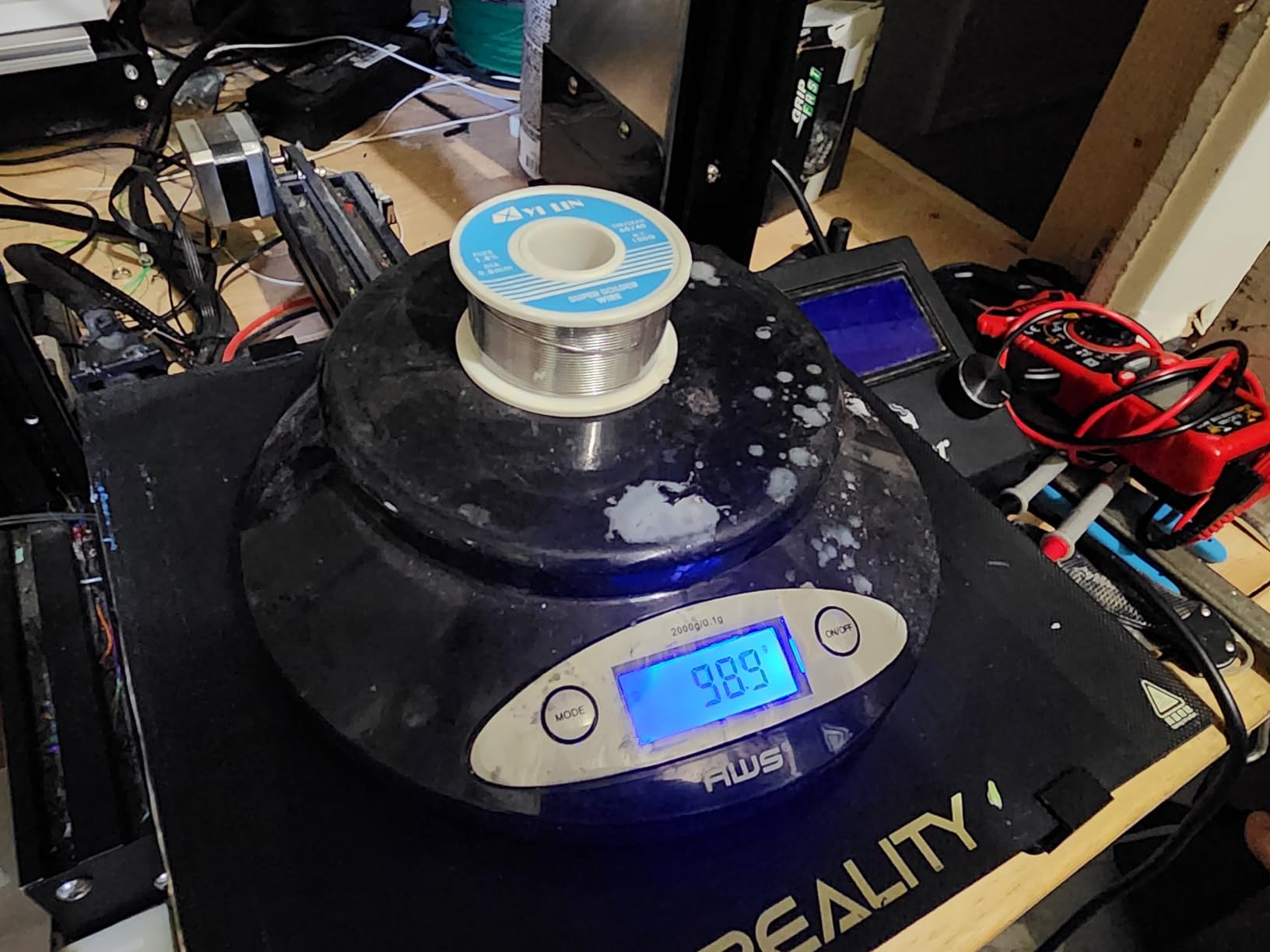
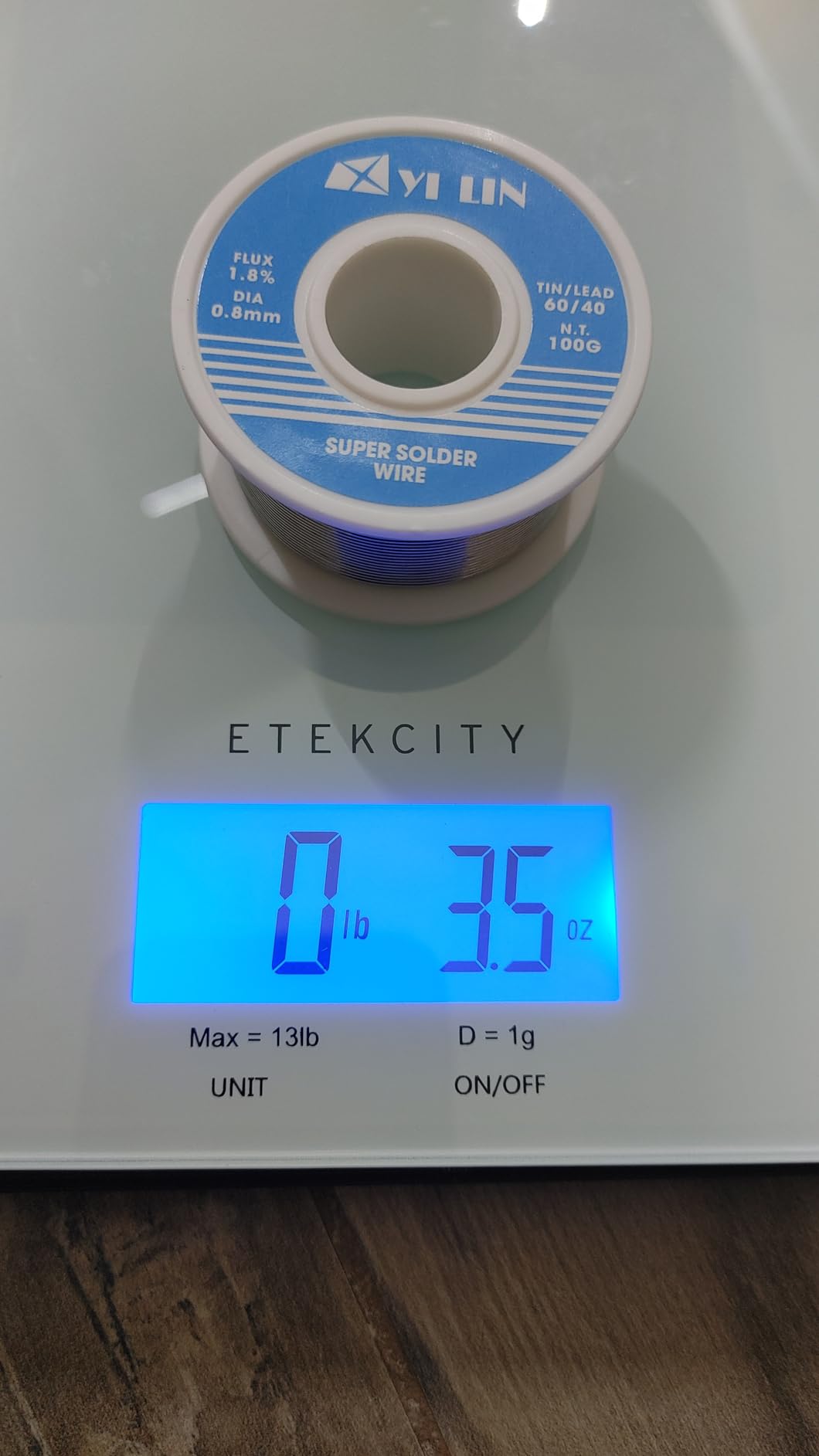
5. YI LIN 60/40 0.6mm – Best for Fine-Pitch SMD Work
YI LIN 60/40 Solder 100g Tin Lead Rosin Core Solder Wire For Electrical Soldering (0.6mm/100g)
Sn60Pb40 alloy
1.8% rosin core
0.6mm diameter
100g spool
Pros
- Precise solder placement on 0402 and 0603 footprints
- Rosin core cleans oxidized pads with little residue
- Anti-oxidation treatment holds up on the bench
- 100g spool covers multiple projects
Cons
- 0.6mm runs out faster than buyers expect
- Produces more fumes than some wires here
Surface-mount rework is where wire diameter stops being a preference and becomes a constraint. At 0.6 mm you can put a controlled amount on a 0603 pad without reaching for a solder sucker to clean up, which is the whole game.
On fine IC pins the wire wets almost instantly and stays where you put it. Reviewers repeatedly single out this gauge as ideal for fine SMD work and for 0402 and 0603 footprints.
The anti-oxidation treatment is worth noting for anyone who leaves spools on a bench. Performance stayed stable across months of intermittent use, which is not always true of bare wire in a humid room.
Residue was minimal in our runs. The rosin core did its cleaning job without leaving the sticky film that makes a board feel greasy.
How thin is thin enough
Below about 0.5 mm the wire becomes hard to control with a pencil tip, and you spend more time feeding solder than heating the joint. 0.6 mm is close to the practical floor for hand soldering.
Below that point, solder paste and a hot air rework station take over, and this spool is no longer the right tool.
When to pick something else
Large connectors and battery tabs. Thin wire runs out fast on those joints, and reviewers warn about exactly that expectation gap.
Fumes were also called out as heavier than some other wires here, so ventilation matters if you will be doing a lot of SMD work in one sitting.
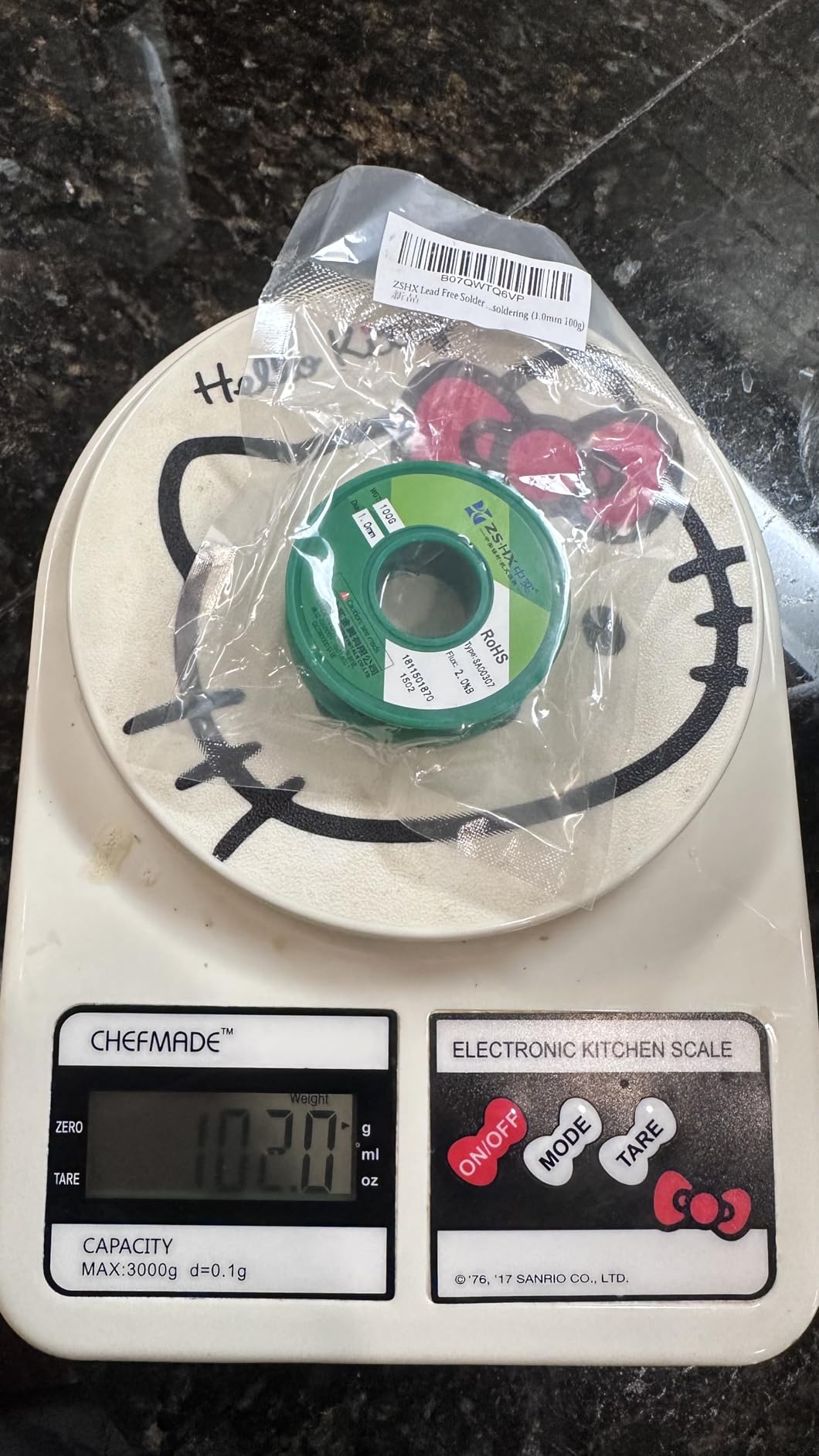
6. ZSHX Sn99 Ag0.3 Cu0.7 – Best Lead-Free Pick
ZSHX Lead Free Solder Wire Sn99 Ag0.3 Cu0.7 Rosin core solder wire for electrical soldering (0.8mm 50g)
Lead-free Sn99 Ag0.3 Cu0.7
2% flux core
0.8mm diameter
50g spool
217C
Pros
- Lead-free alloy suits RoHS-sensitive and lead-averse work
- 0.3% silver aids wetting on harder connections
- Multiple gauges and spool sizes available
Cons
- 217C melting point needs a hotter iron than leaded wire
- Less forgiving than leaded wire when iron temperature is off
This is the spool to reach for when the job has to be lead-free. The Sn99 Ag0.3 Cu0.7 alloy carries a trace of silver, and that is not cosmetic: silver improves wetting on harder connections where plain tin-copper struggles.
The tradeoff is temperature. At 217 °C melting point, it needs a hotter iron than 63/37 wire and a slightly longer dwell. Beginners who do not adjust their iron settings get bad joints and blame themselves, not the solder.
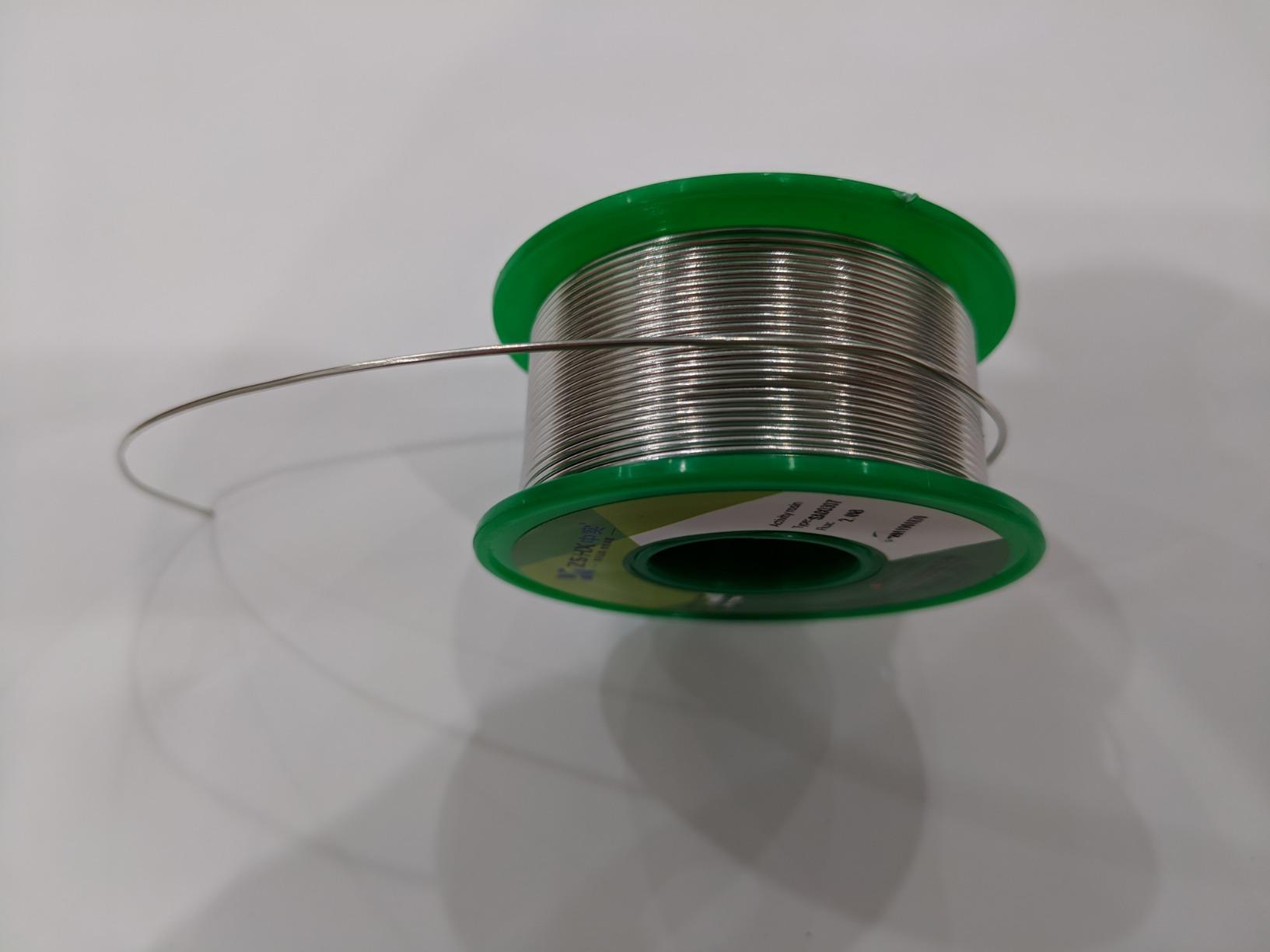
Once the temperature is right, the flow is good and the joints look clean. The 0.8 mm diameter keeps this usable for general through-hole work rather than limiting it to delicate jobs.
The 2% core is enough to clean a lightly oxidized pad without a separate flux pen, which is why a lead-free spool this forgiving is a reasonable first buy for anyone who has to work lead-free. The gap in behaviour versus the leaded wires here is temperature, not technique.
Making lead-free easier to work with
Raise the iron temperature rather than holding it longer. Extra dwell cooks the pad and lifts traces instead of helping the solder flow.
Use a tip with enough mass and keep it moving. Lead-free alloys transfer heat less willingly than leaded ones, so a small light tip stalls.
When to pick something else
If there is no compliance or health reason to avoid lead, a leaded alloy remains easier to work with at lower iron temperatures. That is not a safety argument, it is purely a technique argument.
If your iron cannot hold a steady temperature above 375 °C, this wire will frustrate you.
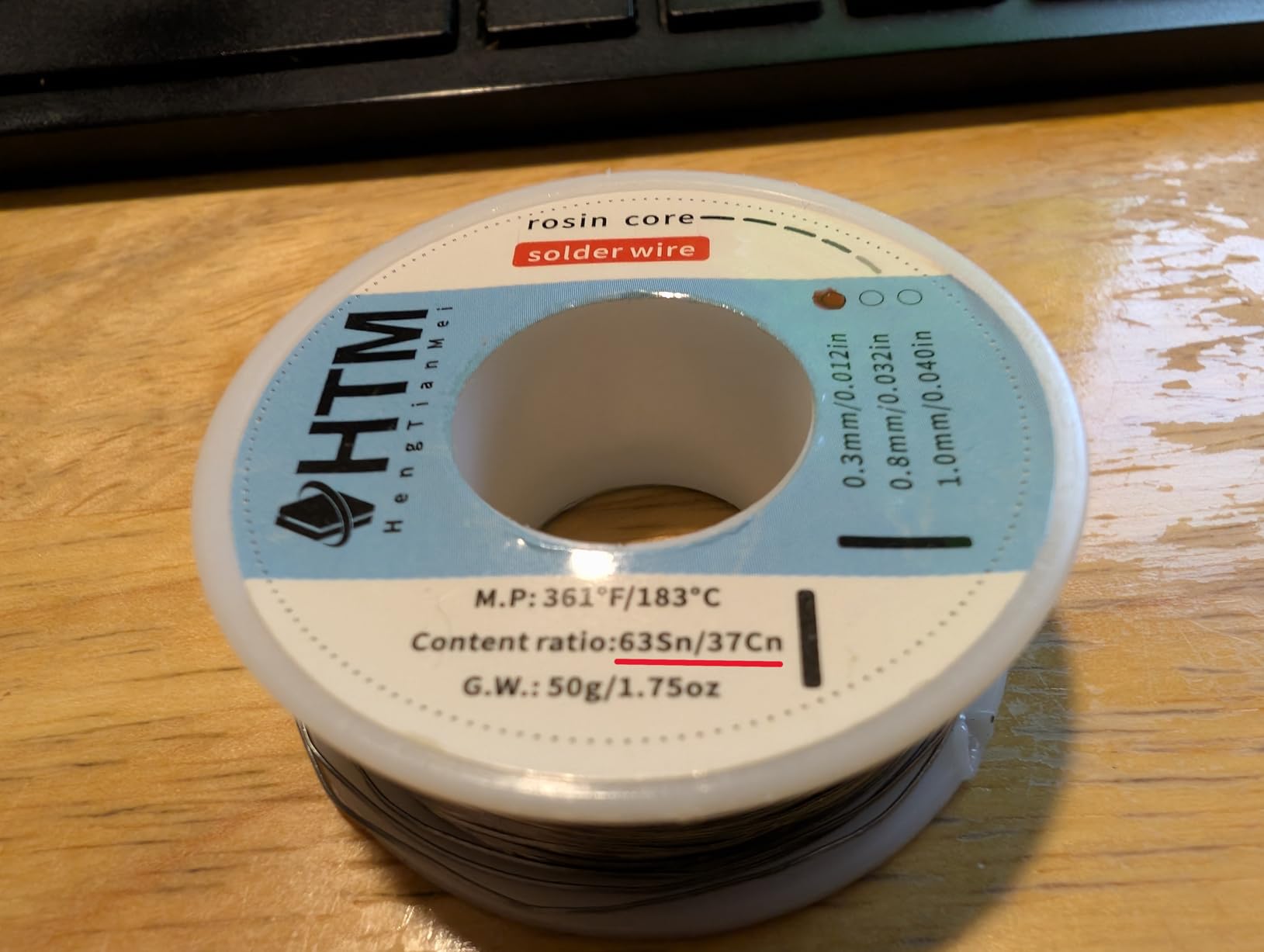
7. HengTianMei 63/37 Rosin Core 0.8mm – Best for Repair and Desoldering
HengTianMei Tin Lead 63/37 Rosin Core Low Temp Solder Wire For Electronics Components And DIY repair(0.8mm/50g)
Sn63Pb37 alloy
1.8% rosin core
0.8mm diameter
50g spool
183C melting point
Pros
- Melts evenly and flows without spattering
- Low melting point protects nearby components
- Minimal sticky residue after soldering
- Performs better than the solder bundled with cheap irons
Cons
- Some variants in the family are as thin as 0.3mm
- Needs ventilation like any leaded wire
Repair work is where the low melting point earns its keep. At 183 °C the iron does not have to sit on a pad long enough to cook an adjacent component, and on controller boards and joystick modules that difference decides whether the repair survives.
Our joints flowed evenly and did not spatter or drip, which is what you want when working in a tight enclosure with other components a few millimetres away.
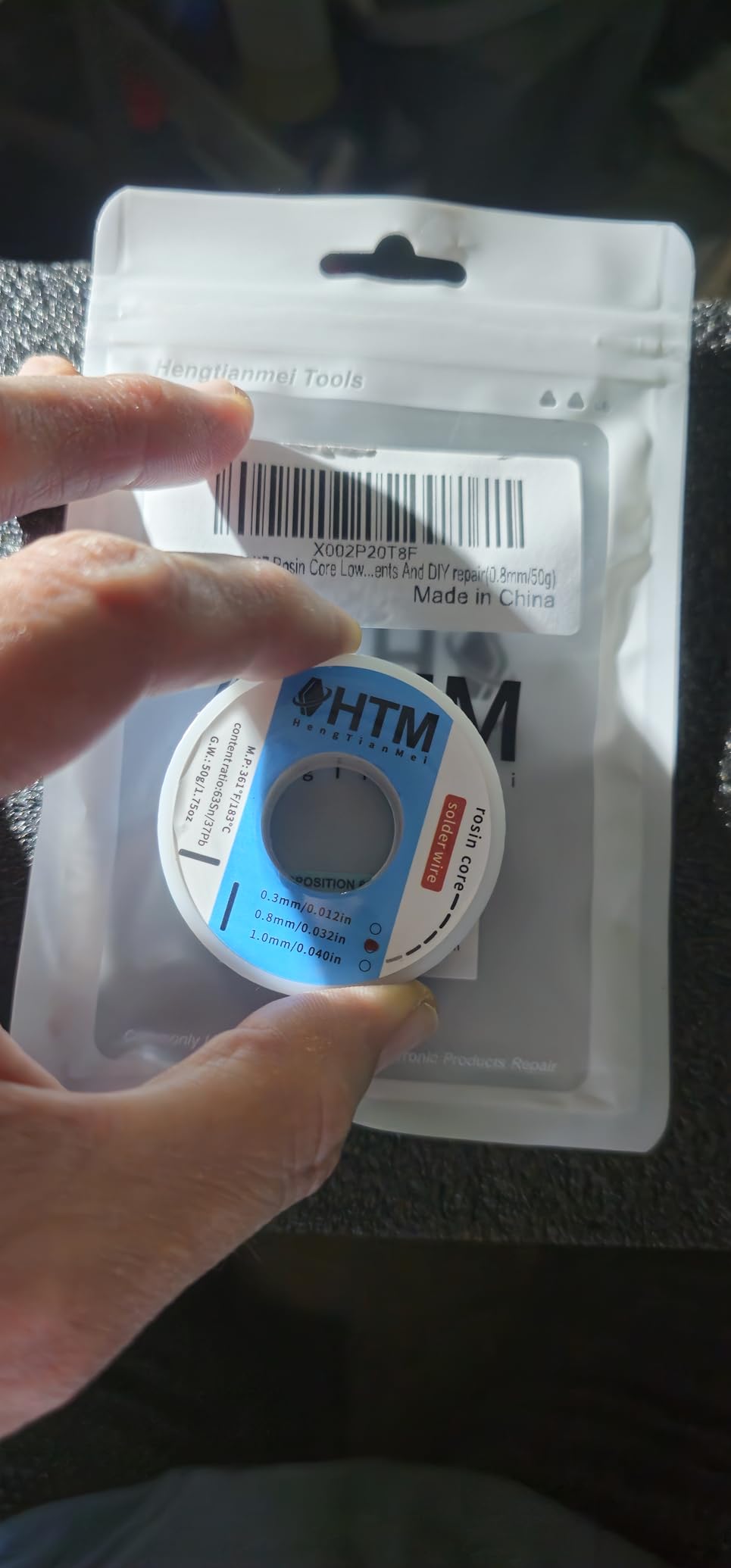
Reviewers regularly contrast this with the free solder bundled with inexpensive irons and describe easier flow and cleaner work. That is a fair benchmark, since most first irons do come with poor wire.
Residue stayed minimal after soldering, and the rosin core strengthened the joint without leaving a sticky film on the board.
Why melting point matters on repairs
Heat damage scales with both temperature and time. A lower melting point lets you finish a joint at a lower tip temperature or in a shorter contact, and both reduce the risk of lifting a trace.
That is why low-melt alloys get used for chip removal work, where you deliberately drop the pad temperature to get the old part off.
When to pick something else
If your hobby is lead-free only, this is disqualified on alloy grounds no matter how well it performs.
Check the gauge on the listing carefully, because the thinner variants in this family run as low as 0.3mm and will frustrate general repair work.
8. MG Chemicals 60/40 RA Pocket Pack – Best for Standards-Compliant Work
MG Chemicals 60/40 Rosin Core Leaded Solder, 0.032″ Diameter, 0.6 oz Pocket Pack
Sn60Pb40 alloy
2.2% RA flux
1/32 inch diameter
0.6 oz pocket pack
183C
Pros
- Meets J-STD-004 and J-STD-006 standards
- Flux residue is non-corrosive and non-conductive
- Pocket pack is easy to carry and store
Cons
- Only one size offered in this listing
- 0.6 oz quantity suits bench top-ups not production work
This is the pick when someone else has to sign off on the work. The wire meets J-STD-004 and J-STD-006, and the rosin activated flux leaves a residue that is documented as non-corrosive and electrically non-conductive. That paperwork matters in service and repair work in a way it never does on a Saturday hobby build.
The flux content is 2.2% at 1/32 inch diameter, which is close to the same profile as the larger leaded spools here. Joint quality on our test pads was on par with them.
Why the documented residue is the real feature
Ordinary rosin residue is harmless on a hobby board. Under a component, on a high-impedance node, or in equipment that gets serviced years later, an unknown residue is a question you would rather not have.
A manufacturer statement that the residue is non-corrosive and non-conductive closes that question for documentation purposes.
When to pick something else
At 0.6 oz, this is a bench top-up pack rather than a supply. If you are building continuously, you will empty it quickly.
Only one size is offered in this listing, so if you need a second gauge you will be shopping elsewhere anyway.
9. Kester 44 RMA 0.031in – Best for Precision Bench Work
Kester 44 Solder Wire, 63/37 0.031”, RMA Rosin, 1-ounce Tube
Sn63Pb37 alloy
High activity RMA flux
0.031 inch diameter
1 oz tube
Pros
- Bright shiny joints that soak into pre-tinned strands
- High activity flux reduces need for separate flux
- Dispense tube suits small PCB and component work
- Works with fine-pitch irons
Cons
- One reviewer saw no benefit over cheaper wire for basic work
- Leaded solder fumes need good ventilation
Kester 44 is the name that comes up most often when experienced hobbyists are asked who makes the best solder wire, and the rating here reflects why. The joints come out bright, shiny and silver, and they soak into pre-tinned wire strands instead of sitting on top of them.
That wetting behaviour is the difference between a joint that conducts reliably and one that looks fine until you flex the wire. We tested both with this and with a budget spool, and the Kester joints visibly penetrated further into the strand bundle.
What high activity RMA flux actually changes
Higher activity flux means it cuts through mildly oxidized copper more aggressively. That matters on older boards and on wires you tinned months ago and have since left in a drawer.
In practice it means fewer strokes per joint. Hobbyists who switched from cheap wire describe it as a step change that simply makes soldering easier.
When to pick something else
At roughly 24 feet in a one ounce tube, this is a working quantity rather than a lifetime supply. A minority of reviewers say they see no difference from cheaper wire on simple electrical joints.
If you are lead-averse or working under RoHS rules, this is the wrong alloy entirely.
10. Mandala Crafts 60/40 0.8mm – Best for Guitar and Audio Wiring
Mandala Crafts 0.8mm 60/40 Rosin Core Solder Wire for Electronics
Sn60Pb40 alloy
2% rosin core
0.8mm diameter
50g spool
14 m of wire
Pros
- Flow and shine close to national hardware store brands
- Rosin core is evenly distributed along the wire
- Resists spattering and corrosion on cleaner joints
- Versatile across PCB
- RC
- guitar and LED strip work
Cons
- 50g rolls hold less wire than the photos imply
- One 100g size in this range is lead-free rather than leaded
Guitar electronics is where leaded 60/40 has a long history, and this spool holds up to it. Output jack and potentiometer swaps produced clean fillets that sit flush against the lug, which is what stops a connection from working loose.
Reviewers who switched from a well-known national brand leaded solder report comparable flow and shine, describing it as the closest match they have found.
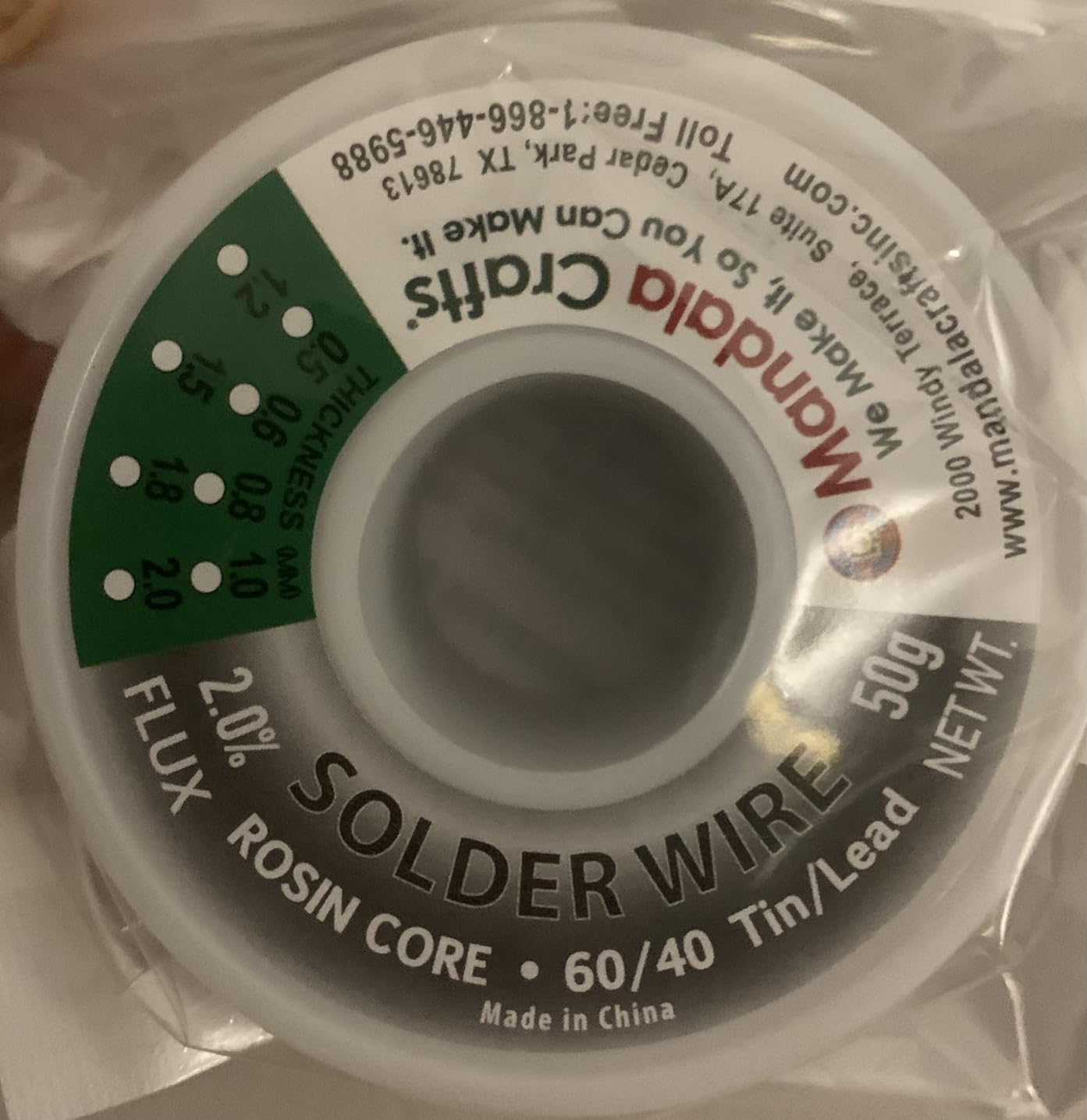
The 2% rosin core is evenly distributed along the wire, so separate flux application is rarely needed. On a long run of intermittent contacts through a guitar body, that consistency is what keeps the joints consistent.
It also handled RC and drone wiring in our runs without any change of technique, which makes it a reasonable general-purpose spool if lutherie is your main use.
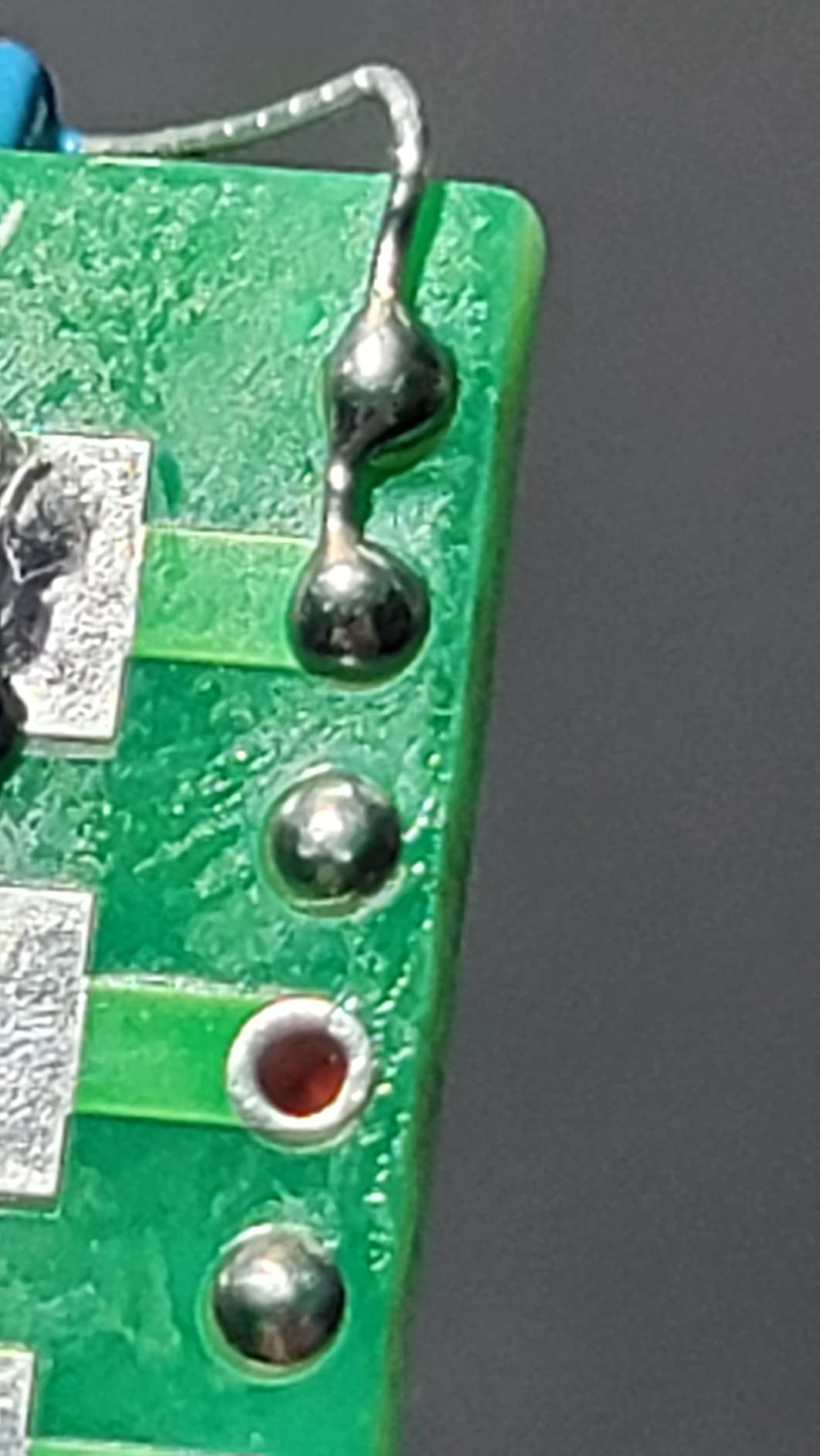
Why joints on instruments flex less over time
A jack solder joint takes a small tug every time you plug a cable in. Ductile 60/40 absorbs that cycle better than a stiffer alloy, which is part of why it has stayed standard in instrument wiring.
Corrosion resistance also matters in a jack cup where sweat collects. Cleaner joints resist it longer.
When to pick something else
Buyers consistently report the 50 g rolls run short. If you anticipate heavy use, plan on a larger spool.
Be careful with gauge and size combinations in this range, because one 100 g option is lead-free rather than leaded. Check the alloy before you order.
11. E ENERSYSTEC Lead-Free 0.6mm – Best Lead-Free Precision Wire
Lead-Free Solder Wire Rosin Core No Lead Wire Thin 0.6mm 50g Fine Solder with Flux 2.5 PB Free Sn99 Ag0.3 Cu0.7 Flow Electronics Soldering DIY Repair Tiny
Lead-free Sn99 Ag0.3 Cu0.7
2.5% flux core
0.6mm diameter
50g spool
Pros
- 0.6mm feed suits tiny parts and fine-pitch joints
- RoHS compliant for regulated work
- 0.3% silver improves conductivity on high-end gear
- 419F melting point suits common soldering tools
Cons
- Needs a hotter iron and longer dwell than leaded wire
- Fine gauge is wrong for larger through-hole work
When you need lead-free and you also need precision, the gauge choices shrink fast. This 0.6 mm spool keeps the alloy RoHS compliant without making you work with wire too thick for small components.
The 2.5% flux content is the highest in the lead-free group here, and that goes some way toward offsetting the extra heat this alloy demands. It wets reliably once the iron is hot enough.
Where the silver content pays off
The 0.3% silver raises electrical conductivity above a plain tin-copper alloy. On amplifier boards, audio gear and any long signal path, that is a real electrical difference rather than a marketing line.
It also helps wetting behaviour, which is why fine lead-free alloys with silver tend to flow more readily than their silver-free equivalents.
When to pick something else
The 419 °F melting point means a hotter iron and longer dwell than leaded wire. If your iron struggles to hold a steady temperature, you will fight this spool all day.
At 0.6 mm it is also the wrong tool for larger connectors and wire, where you will spend the whole joint feeding wire instead of heating the pad.
12. Weller WSW SnPb 1.0mm – Best for Low-Waste Bench Work
Weller WSW SnPb L1, 1.0mm, 100g Solder Wire | T0051403099
Sn60Pb40 alloy
2.2% continuous flux core
1.0mm diameter
100g spool
Pros
- Smooth even flow with strong wetting on pads
- Consistent flux levels across the whole spool
- Reduced splatter keeps the bench clean
- Up to 70% lower tip consumption claimed
Cons
- Considered overpriced for casual hobby use
- 1.0mm is clumsy for very fine precision work
This spool is the one we would buy if solder cost per hour of bench time actually mattered. The 2.2% flux core is continuous through the wire rather than intermittent, so flow is even from the first centimetre to the last.
On PCB pads and component leads the wetting was immediate and the splatter was minimal. Reviewers with decades of experience rate it as the best solder they have used specifically for wetting and solderability.
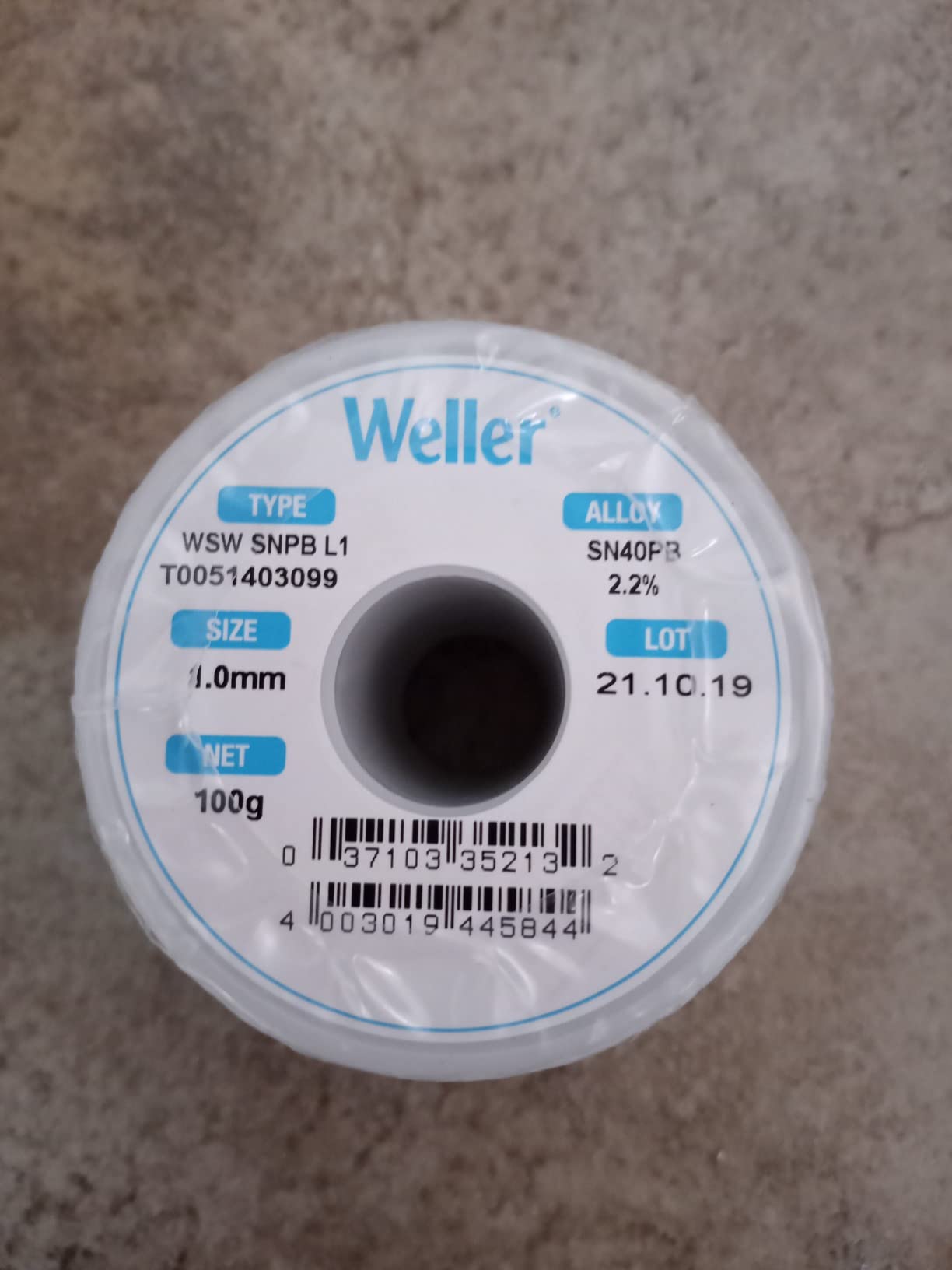
The claimed benefits all point the same direction: less splatter, less material wasted, and lower tip consumption. Fewer re-tips and fewer cleanup pauses add up across a long session.
It also does not oxidize and bill up the way cheaper wire can, which keeps the tip transferring heat instead of insulating itself with slag.
Making the case on cost per hour
The spool costs more up front, but waste shows up in tip life and in time spent re-heating joints that did not flow. Reviewers who switch to it commonly report never going back to cheaper wire.
If your iron tips are consumable items you replace regularly, that is where the difference in price gets recovered.
When to pick something else
Reviewers do call it overpriced for casual hobby use, and that criticism is fair if you solder once a month.
At 1.0 mm it is also not the right choice for very fine precision work. The same range is offered in thinner gauges if that is what you need.
How to Choose Solder Wire: Alloy, Diameter and Flux
Start with the alloy, not the brand
The single most useful thing to know is that a eutectic alloy melts at one exact temperature and solidifies at that same temperature. Sn63Pb37 is the common leaded example, melting at 183 °C. Non-eutectic alloys such as Sn60Pb40 pass through a slushy range instead.
In practice eutectic behaviour means a joint either flows properly or visibly refuses. That clarity is why most experienced builders prefer it despite 60/40 having useful ductility.
Lead-free eutectic and near-eutectic options such as Sn99AgCu sit at 217 °C and above, which is the entire source of their reputation for being harder to work.
Which is better, 60/40 or 63/37
Use 63/37 when you want a crisp, unambiguous result: fine SMD work, signal paths, and anything where you would rather see the joint change state instantly. Use 60/40 when the joint will flex, such as instrument wiring, connectors and harnesses that get handled.
Both are perfectly usable for electronics. The 60/40 versus 63/37 argument is largely about predictability versus ductility, not about one being correct.
What size solder wire should you use for electronics
Most hobbyists should start at 0.7 to 0.8 mm. Below about 0.5 mm you lose control of placement; above about 1.0 mm you overshoot small pads and waste solder on repairs.
0.3 to 0.5 mm – fine-pitch SMD, IC pins, dense boards
0.6 to 0.8 mm – general electronics, through-hole, most repairs
1.0 to 1.6 mm – heavy wire, ring terminals, battery tabs, large lugs
Thicker wire also kinks and tangles less, which is a durability benefit that matters if you spool it carelessly.
Flux core: rosin, RA, RMA, no-clean or water-soluble
All of the wires here carry a rosin-based core. What differs is the activity level and how the residue behaves.
Plain rosin (R) is the mildest and leaves residue you should clean. Rosin activated (RA) is stronger and cuts oxidized copper better. RMA is a middle ground and the most common choice for hand work, including the Kester 44 spool here.
No-clean flux is designed to be left in place, which suits assemblies you will not reopen. Water-soluble flux cleans off with water but must be kept dry during the melt, since it becomes corrosive with moisture at temperature. It is a manufacturing choice rather than a hobby default.
For most home projects, a rosin or RMA core at roughly 2% is the sweet spot. Higher percentages risk residue you did not expect.
Iron temperature per alloy
Leaded 63/37 and 60/40 at 183 °C melting point want roughly 350 to 375 °C at the tip. Lead-free alloys at 217 °C and above want roughly 375 to 400 °C. Low-melt tin-bismuth sits near 138 °C and is used with a low-temperature iron for chip removal.
The rule behind the numbers is simple. Raise temperature rather than extending dwell time, because long contact heats the pad and the board, not just the solder.
How much solder do you actually need
A 50 g spool holds a long way further than most hobbyists assume. A through-hole joint uses roughly two to four millimetres of wire, so even a few hundred joints will not empty a spool.
One pound spools are a production quantity. Hobbyists consistently report that a large spool is more than they can use before it sits on a shelf for years, and that smaller spools let you try a product before committing to it.
Does solder expire? For casual use, treat the date as largely irrelevant. A spool left on a dry bench for many years still works, provided the flux has not oxidised into the wire.
Storage and safety
Keep spools sealed and dry, away from direct sunlight. Heat and humidity are what degrade a wire, not time on its own.
Work with ventilation. Fumes are the bigger exposure risk than handling, and reviewers across every leaded spool here mention them. Wash your hands afterwards, and if you solder regularly, get a bench fan that moves air away from your face rather than toward it.
Once you have the wire, verifying a build is easier than you would think. Our digital multimeter picks let you check that a joint actually conducts rather than assuming it does.
Frequently Asked Questions
Can you use 60/40 solder for electronics?
Yes. Sn60Pb40 is one of the two standard leaded electronics alloys and is used in everything from consumer electronics to instrument wiring. It melts across a 185-190C range rather than at a single temperature, and its ductile joints resist cracking when the board flexes. Choose 63/37 instead when you want the joint to change from liquid to solid instantly, which makes cold joints easier to spot.
What size solder wire should I use for electronics?
Start at 0.7-0.8mm for general electronics and through-hole work. Use 0.3-0.5mm for fine-pitch SMD and IC pins, where a thicker feed bridges neighbouring pads. Use 1.0-1.6mm for heavy wire, ring terminals, battery tabs and large lugs, where thin wire cannot carry enough heat or solder to fill the joint.
Which is better, 60/40 or 63/37 solder?
63/37 is eutectic and melts at exactly 183C, so it flows and solidifies cleanly, which makes it easier to work with and easier to diagnose. 60/40 passes through a slushy range between 185C and 190C, but the resulting joints are more ductile and resist cracking when flexed. Use 63/37 for signal work and fine SMD; use 60/40 for instrument wiring and handled harnesses.
What is the best temperature to solder 63/37 solder?
Set the iron to roughly 350-375C for leaded 63/37 and 60/40 wire, which melts at 183C. Lead-free alloys such as Sn99AgCu and SAC305 melt at 217C and above, so they need roughly 375-400C. Raise the iron temperature rather than holding the tip on the pad longer, since long dwell times cook traces and lift pads.
What is the best lead free solder?
Sn99Ag0.3Cu0.7 is the strongest lead-free choice for general electronics work, since the small silver content improves wetting and conductivity. Buy it at 0.8mm for through-hole work or 0.6mm for fine-pitch SMD. Expect a 217C melting point, which means a hotter iron and a longer dwell than leaded wire, and expect it to be less forgiving if your temperature is wrong.
Our Verdict for Solder Wire in 2026
The best solder wire for electronics projects is a 50 g spool of 63/37 tin-lead rosin core at 0.8 mm, and our top pick delivers exactly that. The MAIYUM spool pairs the eutectic alloy beginners learn on with the gauge that handles everything from 0603 pads to hookup wire, and its review history is the deepest in this roundup.
Pick the TOWOT 1.0 mm if you want a steadier feed as a first purchase, the YI LIN 0.6 mm if your work is mostly surface-mount, and the ZSHX Sn99AgCu only when lead-free is a requirement rather than a preference. The Weller spool is the one to buy when you solder enough for tip life and wasted solder to show up on the invoice.
Whichever you choose, buy the small spool, set your iron for the alloy rather than the other way round, and run a fan. Our soldering iron guide and silicone wire picks cover the rest of the bench.