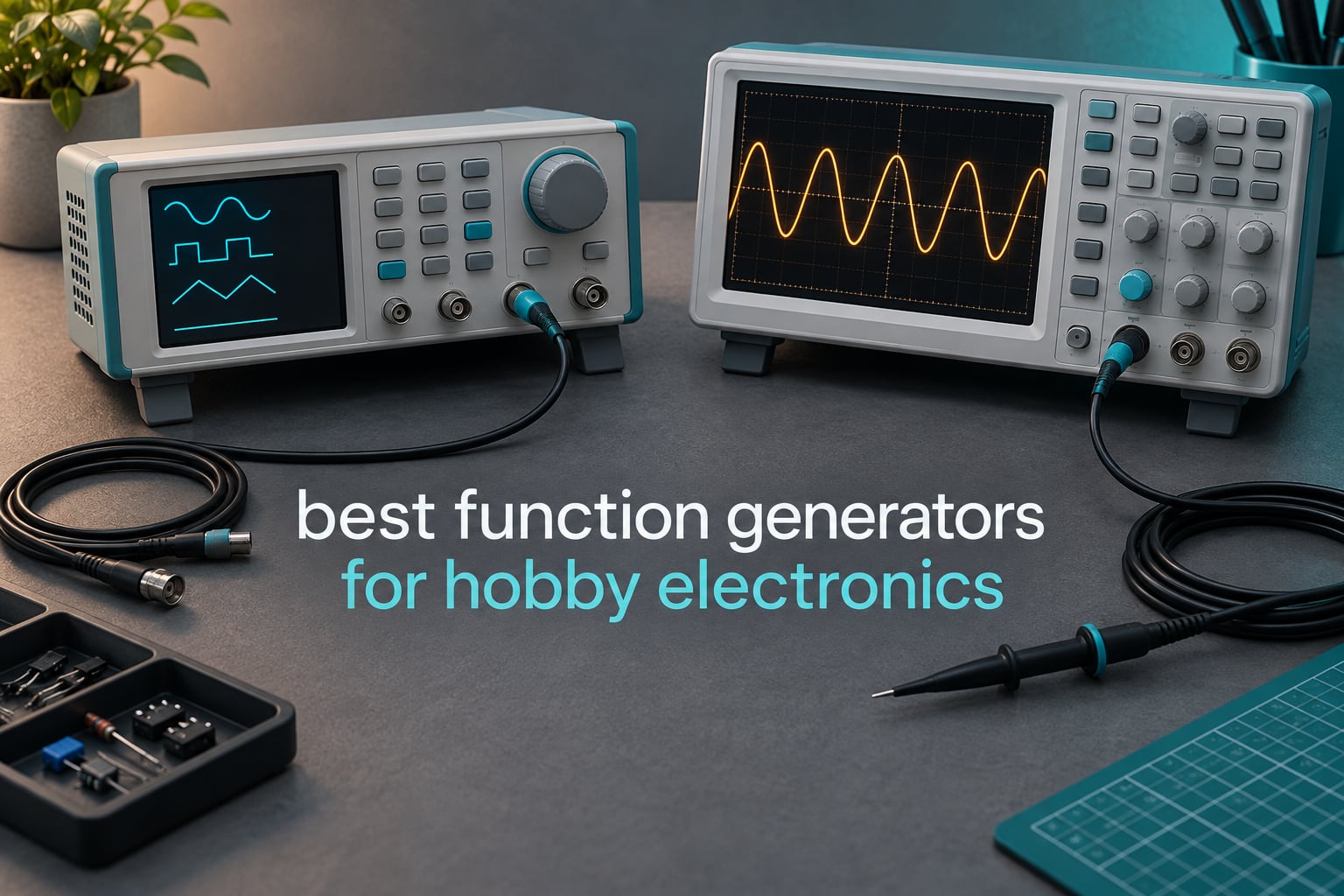
Every hobby electronics bench eventually runs out of built-in signal sources. You wire up a filter, a microphone preamp, or a switching converter, and there is nothing on the desk that can produce the known input you need to see how the circuit answers. That is the moment a function generator stops being optional.
The best function generators for hobby electronics in 2026 fall into three clear groups. For most builders, the Koolertron 15MHz dual-channel DDS unit is the strongest all-round bench companion. If you need real modulation modes and burst work, the Siglent SDG810 is the one with the documented feature set. If your work tops out at audio frequencies, two far cheaper boxes cover the same ground. This roundup sorts all ten by what they actually do, not by headline frequency numbers.
One important note before you read on: we did not bench-test these units ourselves. Every specification below comes from manufacturer listings, and every performance observation comes from documented owner reports in hobby electronics communities. Where owners measured something on a scope or a frequency counter, we say so. Where a number is a published claim, we attribute it. If you want the background on the instrument itself, our function generator and signal generator explainer covers the theory, and our general function generator roundup covers the instrument category at a higher level.
Table of Contents
Your Oscilloscope Probably Already Has a Function Generator Inside
Check your oscilloscope’s datasheet before you buy anything, because a large share of modern hobby scopes ship with a built-in waveform source.
The reason to check first is simple: a scope with a built-in source gives you one channel of sine, square, triangle and sawtooth up to a modest frequency ceiling, usually in the tens of megahertz. That is enough for the majority of analog debugging, and it arrives calibrated to match the scope on your desk.
A standalone unit earns its bench space when one of four things is true. You need two independent channels, so you can drive a circuit input and a reference at the same time. You need a higher frequency ceiling than the built-in source offers. You need deep arbitrary waveform memory for real-world signal simulation. Or you want a generator that works with whatever scope you own, rather than being locked to one brand’s ecosystem.
Watch out for the suffix trap. Closely named scope variants in the same product family do not always carry the same option list, and some omit the built-in source entirely. Verify the exact model number on your unit against the option list in the manual, not against the family name on the box. You can find our bench-side companions in the logic analyzer guide and the digital multimeter guide once you are setting the rest of the bench up.
Top 3 Best Function Generators for Hobby Electronics in October

Best Function Generators for Hobby Electronics at a Glance in 2026
The table below carries every model in this roundup with its headline specifications, so you can narrow the field before reading the individual write-ups.
| Product | Specifications | Action |
|---|---|---|
| Koolertron 15MHz DDS Signal Generator |
|
Check Latest Price |
 Seesii JDS6600 DDS Signal Generator Seesii JDS6600 DDS Signal Generator |
|
Check Latest Price |
 Siglent SDG810 Signal Generator Siglent SDG810 Signal Generator |
|
Check Latest Price |
 DOMINTY FY6900 60MHz DOMINTY FY6900 60MHz |
|
Check Latest Price |
 OWON DGE1060 OWON DGE1060 |
|
Check Latest Price |
 Lwuey DDS 1Hz-500kHz Mini Lwuey DDS 1Hz-500kHz Mini |
|
Check Latest Price |
 Cywhrvzsf FG-200 Module Cywhrvzsf FG-200 Module |
|
Check Latest Price |
 EC Buying XR2206 Kit EC Buying XR2206 Kit |
|
Check Latest Price |
 DROK Frequency Generator DROK Frequency Generator |
|
Check Latest Price |
 HiLetgo ICL8038 2-Pack Kit HiLetgo ICL8038 2-Pack Kit |
|
Check Latest Price |
1. Koolertron 15MHz DDS Signal Generator – Best Overall Two-Channel Bench Unit
Koolertron 15MHz DDS Signal Generator, Dual-Channel
15MHz sine
200MSa/s sampling
14-bit resolution
2048-point waveforms
Dual-channel DDS
Pros
- Two independent channels with separate parameter control
- 99 state slots and 60 user waveform positions
- Built-in frequency
- period and pulse-width measurement
- TTL level output alongside the analog channels
- Most owner reports in this roundup at 473 reviews
Cons
- Twin-style layout and on-screen menu system have a learning curve
- Square-wave edge quality and level accuracy are entry-level at high frequencies
My neighbour runs a small repair shop and this is the box that sits on his bench. It is the rare budget unit where the feature list matches the front panel: two independent DDS channels, seven waveform types including white noise and user-defined shapes, and measurement functions rather than output-only controls.
What makes it the pick here is the combination of two channels and storage. The Koolertron holds 99 instrument state groups and 60 user-defined waveform slots, so a filter response measurement is a matter of recalling a setup rather than rebuilding it. Linear sweep runs to 999.9 seconds with logarithmic sweep alongside, which is what you need for a slow audio sweep.
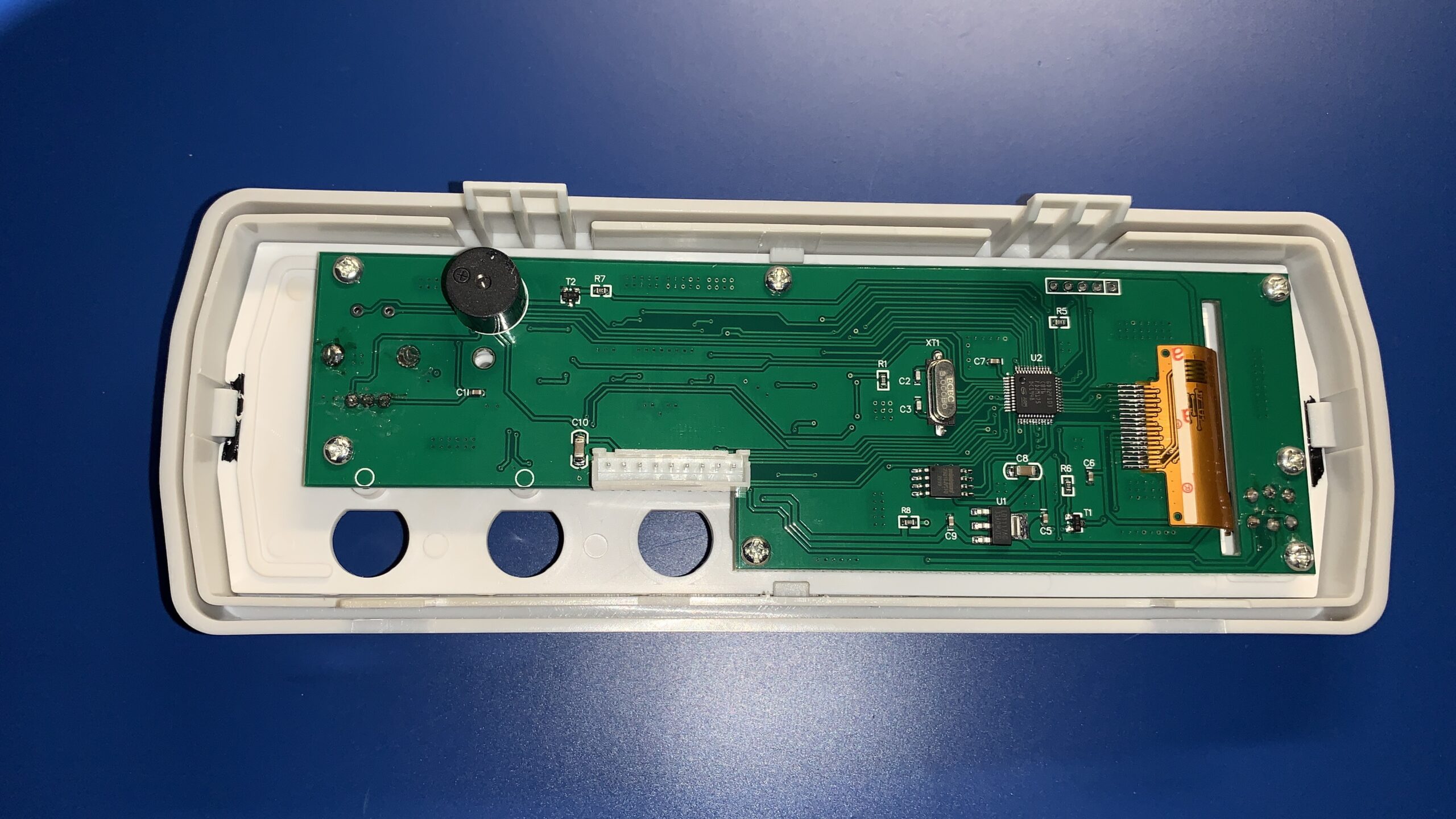
Published specifications are 15MHz maximum sine output at a 200MSa/s sampling rate, 14-bit vertical resolution and 2048-point waveform length, built on an FPGA and a high-speed MCU with an active crystal oscillator benchmark. The package weighs 2.05 pounds and the box is 9.96 by 9.41 by 4.45 inches, so it is a real bench instrument footprint rather than a pocket gadget.
The honest drawback is signal quality at the top of the range. Owners consistently describe square-wave edge quality and output level accuracy as entry-level rather than reference grade, which is expected from a 14-bit 2048-point design. Everything below a few megahertz is where this unit does its best work.
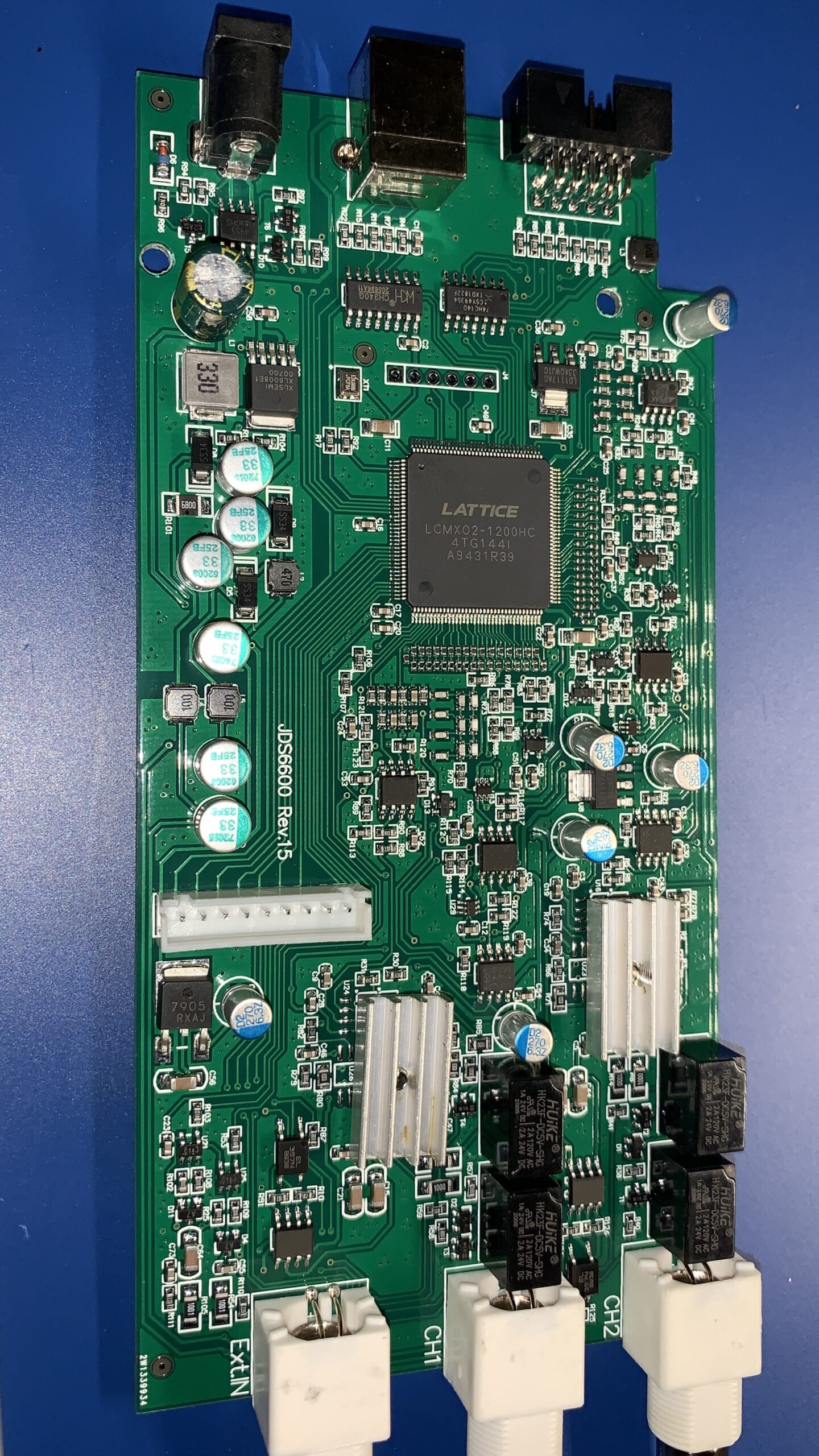
When the Koolertron earns its bench space
It suits a builder who needs a second independent channel to sit alongside the first stimulus, because a single-channel box forces you to change wiring between the reference and the test signal. The TTL level output is a genuine bonus if you are driving logic or triggering a counter rather than an analog stage.
Storage is the quiet hero. Anyone characterising a filter bank or an amplifier sweep will use those 99 state slots heavily, and the on-board frequency, period and pulse-width measurement means you can sanity-check your own setup without a second instrument.
When to skip the Koolertron
Skip it if your work sits above roughly 10MHz with clean edges, or if you need modulation modes. There is no documented AM, FM or PM on this unit, and the interface takes practice before you can change parameters quickly. Digital designers chasing picosecond edges should look elsewhere entirely.
For audio and general analog work under a few megahertz, though, it is difficult to argue against a two-channel box with this much storage at this level of cost.
2. Seesii JDS6600 60MHz DDS Generator – Best Headroom for a Two-Channel Box
Professional Upgraded DDS Signal Generator Counter, Seesii 60MHz LCD Display High Precision 200MSa/s Dual-Channel Arbitray Waveform Function Generator Frequency Meter
60MHz sine
200MSa/s sampling
0.1% stated frequency precision
Dual-channel
Built-in frequency meter
Pros
- Highest sine ceiling in the roundup at 60MHz
- Dual-channel independent parameter and duty-cycle control
- Frequency counter with period and pulse-width measurement
- PC software for authoring custom waveforms
- Owners report stable performance over years of bench use
Cons
- No sweep trigger output
- so a scope cannot sync to a sweep
- Frequency readings run slightly high against a precision reference
- Lightweight plastic case and hard feet that slide on a smooth bench
This is the unit that shows up most often in hobbyist recommendations, and the reason is the 60MHz sine ceiling paired with two channels. It is the same hardware family that gets discussed constantly on electronics forums, where the recurring verdict is that for the money you cannot go wrong.
Published specifications list a 200MSa/s sampling rate, 0.1% stated frequency precision, and seven waveform types with per-channel parameter and duty-cycle control. Linear and logarithmic sweep run to 999.9 seconds, and the same 99 state slots plus 60 user waveform positions appear here as on the Koolertron. The unit itself weighs 1kg.
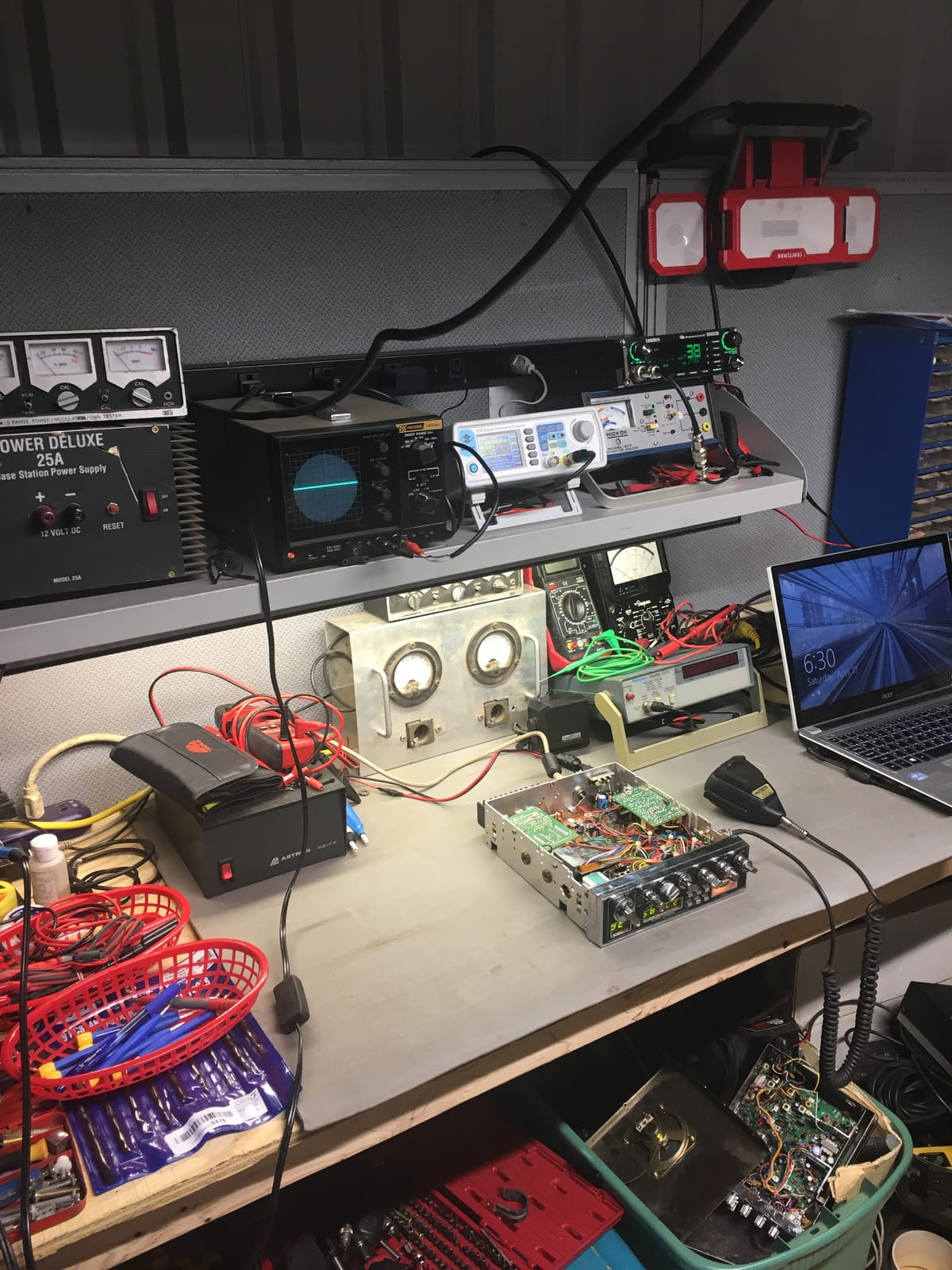
There is one real accuracy caveat worth knowing. Reviewers who compared the internal counter against a precision 10MHz standard report readings running slightly high, around 12 cycles out. That is a calibration offset, not a broken timebase, and it matters if you are measuring absolute frequency rather than relative response.
Two further gaps show up repeatedly. There is no start-sweep trigger output, so you cannot synchronise a scope sweep to the generator sweep in the way a bench reference would allow. And the unit carries no AM or FM modulation, plus no true earth ground terminal on the chassis.
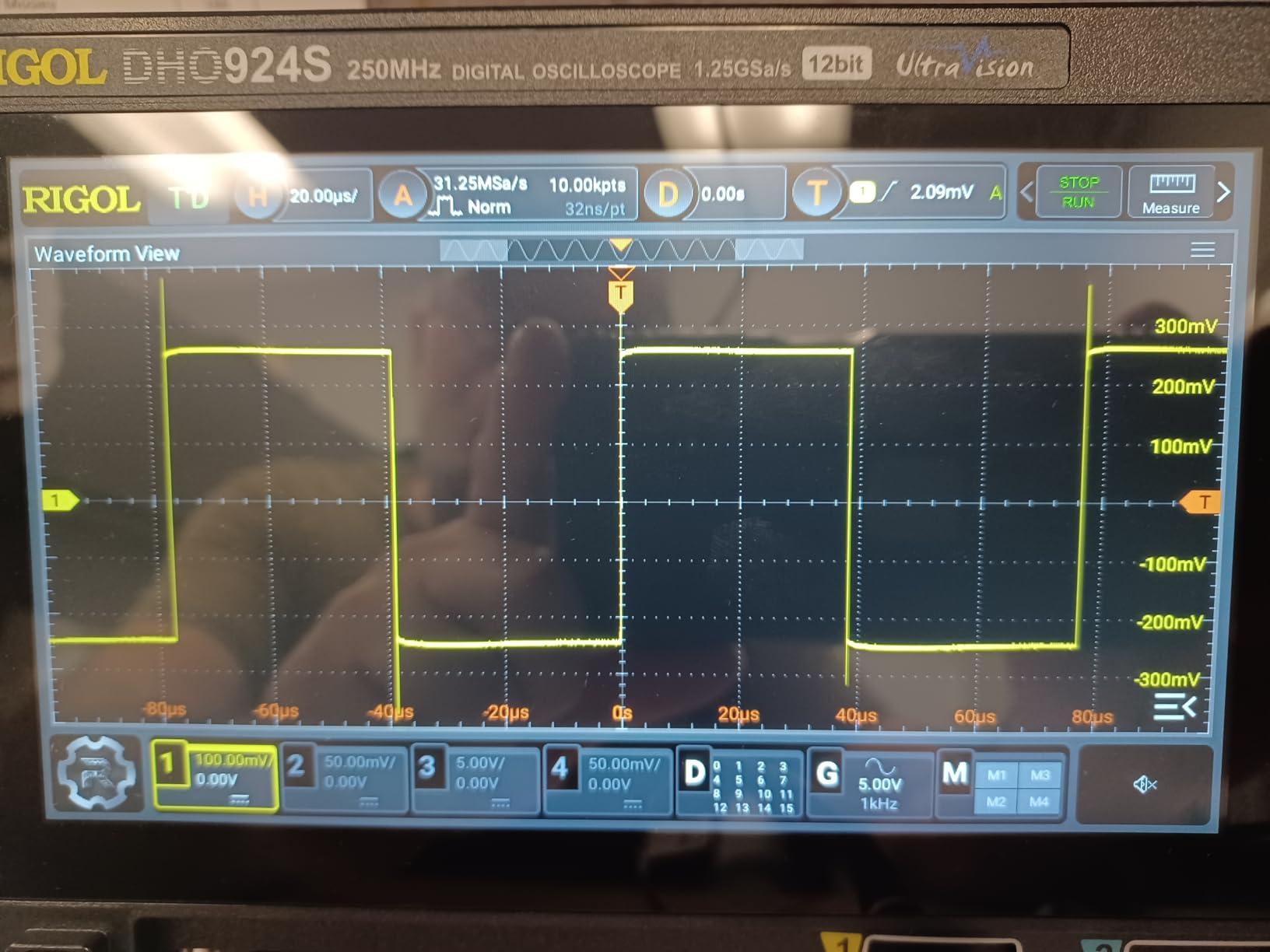
Where the JDS6600 is the right tool
It fits hobbyists who need genuine frequency headroom without stepping up to a bench instrument, and who work across two signals at once. Long-horizon owners report unchanged performance after years of use, and vintage audio repair builders in particular keep one as a general-purpose source.
The built-in frequency meter with period and positive and negative pulse-width measurement turns it into a two-in-one tool for filter and frequency-response work, and the PC waveform software lets you author a shape offline and run the unit standalone afterwards.
Where it will disappoint you
Buy a different box if your oscillator is earth-ground referenced and connected to other mains-adjacent equipment, or if you plan to do amplitude, frequency or phase modulation. The lack of a sweep trigger output is the more common complaint and it does complicate filter response work.
Some owners also report square-wave overshoot on leading and trailing edges, and note that pulse-width mode is limited to certain waveforms. Budget for a lightweight case that will slide unless you add something under the feet.
3. Siglent SDG810 Signal Generator – Best for Modulation and Burst Work
Siglent Technologies SDG810 Siglent Single Channel 10 mhz Bandwidth Signal Generator, Function Generator, Arbitrary Waveform Generator, 125 MSa/s Sampling Rate, Light Gray
10MHz sine
125MSa/s sampling
14-bit resolution
AM DSB-AM FM PM FSK ASK PWM
46 built-in arb waveforms
Pros
- Full modulation suite including DSB-AM
- FSK
- ASK and PWM
- Sweep and burst mode in a bench instrument
- Easy Pulse low-jitter output with fast edges
- Store and recall plus on-screen help
- Windows software for authoring and uploading waveforms
Cons
- Single channel only
- and the lowest sine ceiling in the roundup
- Higher analog noise and distortion than a reference instrument
- Sparse printed manual and no power-on state recall
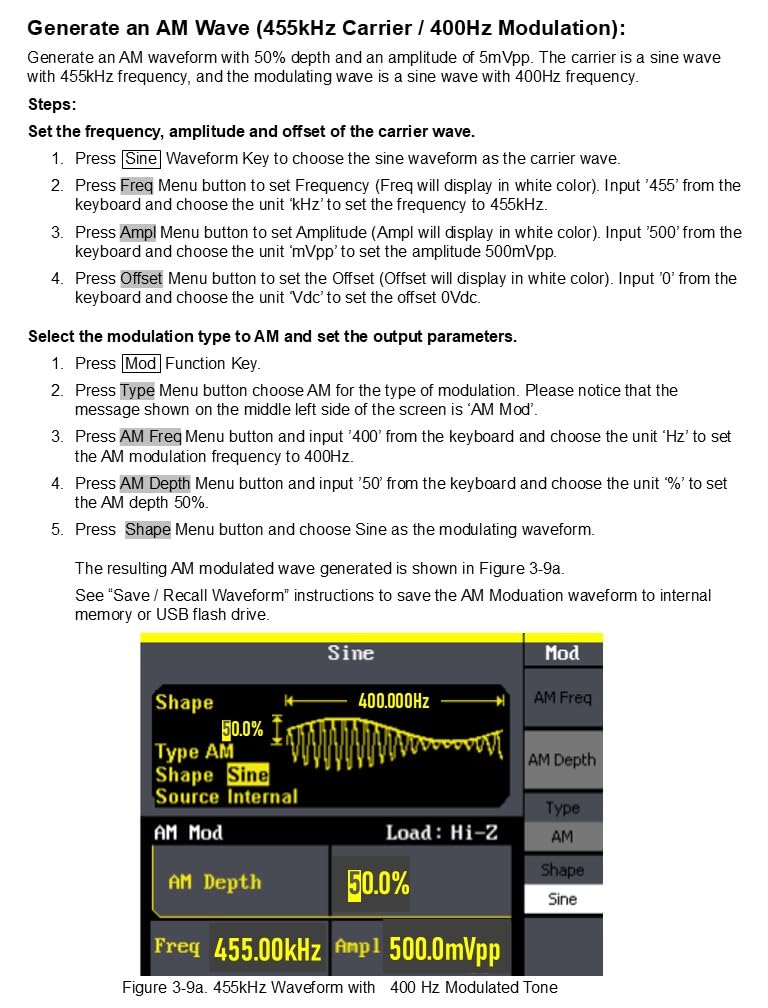
If modulation is on your list, this is the only unit here that covers the full set, and that single fact drives the recommendation. AM, double-sideband AM, FM, PM, FSK, ASK and PWM are all documented modes, not marketing words on a box.
It is also one of only two boxes in this roundup with an earth-referenced bench form factor and USB device and host interfaces, including U-disk storage and firmware update. The published spec is 125MSa/s sampling with 14-bit vertical resolution, five standard waveforms plus 46 built-in arbitrary shapes including DC.
Vintage audio restorers and physics lab buyers single out the modulation set, the store and recall behaviour and the frequency accuracy as the reasons to buy. Burst mode is the feature people underestimate: it lets you drive a transducer and pair it with a scope for pulse-echo measurements, which is how thickness and distance get tested cheaply.
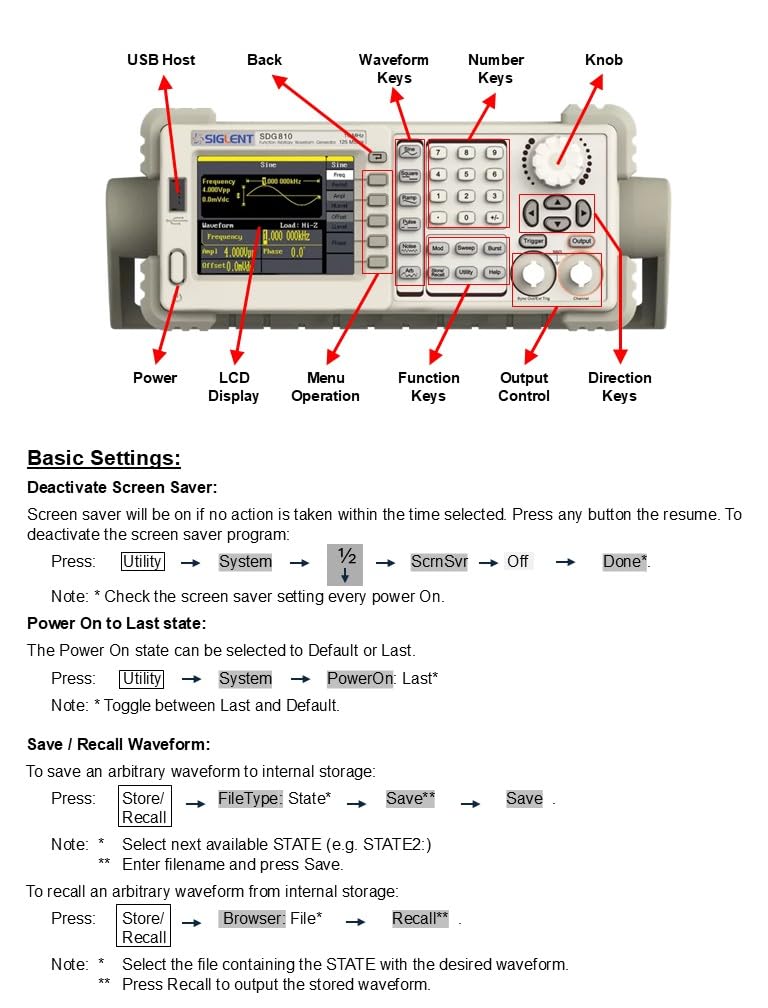
The honest limits are clear. This is a single channel unit, so there is no second stimulus to pair with the first. The 10MHz sine ceiling is the lowest of the bench units in this list, and owners report higher analog noise and distortion than a top-tier lab generator would produce. The unit weighs 5.72 pounds and measures 9 by 4.2 by 11 inches.
One reliability note belongs in the open: a small number of owners report units that stopped responding after several months of use, combined with unresponsive manufacturer support. That is a minority report, but it is the kind of thing worth knowing before you commit.
Who should buy the SDG810
Buy it if you are working on transmitters, envelope detectors, demodulation, motor control, or anything where you need to modulate a carrier. The FSK and ASK modes turn a simple keying test into a two-minute job rather than a breadboard exercise.
It also suits anyone who wants a unit that talks to a PC. With both USB device and host interfaces, you can script measurements or load waveforms from a laptop without extra hardware.
Who should buy something else
Skip it if you need two simultaneous channels, or if your circuits run above 10MHz. Anyone chasing clean low-noise output for a high-gain audio measurement will find the noise floor limiting before the frequency ceiling does.
It is also not the unit to pick if you only need audio-range stimulus. Ten megahertz of single-channel capability is a lot of instrument for a job a cheaper two-channel box handles better.
4. DOMINTY FY6900 60MHz – Best Value Two-Channel Generator
DOMINTY Function Generator AC100-240V FY6900 60MHz Double Channel DDS Function Arbitrary Waveform Signal Generator Frequency Meter 250MSa/s Sine Square/Triangle/Pulse/Sawtooth Wave/Staircase Wave
60MHz sine
250MSa/s sampling
Dual-channel
Staircase and arbitrary waveforms
Built-in frequency counter
Pros
- 60MHz sine at a 250MSa/s sampling rate
- two channels
- Frequency counter for measuring incoming signals
- Newer stock has properly bonded AC ground and BNC shells
- Compact footprint suits a crowded desk
Cons
- Very small display with digits that are hard to read
- Display restarts the waveform whenever a control is turned
- No trigger output in sweep mode
- Flimsy case and a rotary encoder many buyers replace
The FY6900 is the version of this hardware family that fixed a real complaint. Owners of earlier stock reported a floating ground, which is a safety problem when you clip the output to mains-adjacent test gear. Newer units have the AC ground and BNC shells properly bonded, and reviewers confirm the change.
On paper it is the strongest specification sheet per unit of money in this roundup: 60MHz sine output at a 250MSa/s real-time sampling rate, two channels, and a waveform set that includes staircase alongside sine, square, triangle, pulse, sawtooth and arbitrary shapes. It also carries a frequency meter for measuring incoming signals and runs from AC 100-240V.
Another documented improvement is on the noise side. Switching-supply noise is attenuated at the driver output rather than injected at the input, which is why owners measuring quiet sine waves on a sensitive circuit report acceptable results.
Who the FY6900 suits
It is aimed squarely at students and electronics learners who want a two-channel bench of their own, and at anyone who needs staircase or arbitrary shapes alongside standard waveforms. The 2.34-pound, 10.75 by 8.46 by 3.62 inch package takes up little desk space.
For amplifier and filter response work the combination of a frequency counter and sweep functions covers most of the job without a second instrument on the desk.
What frustrates owners
Almost every reviewer flags the same thing: the display is very small and the digits are hard to distinguish, particularly in bright light. The second complaint is behavioural, with the display restarting the waveform whenever a control is turned, causing momentary glitches mid-measurement.
There is also no trigger output in sweep mode, which makes scope-synchronised sweeps awkward. Several owners replace the rotary encoder, find the case flimsy, and note there is no printed manual, so setup depends on online walkthroughs.
5. OWON DGE1060 – Best Frequency Accuracy in the Roundup
OWON Waveform Generator, 60MHz Bandwidth,300MSa/s Sampling Rate, 14 bits Vertical Resolution, 8K Waveform Length, 5 Basic Waveforms, 160 built-in Arbitrary Waveforms, with 3.6IN LCD Display DGE1060
60MHz bandwidth
300MSa/s real-time sampling
14-bit, 8K record depth
160 built-in arbitrary waveforms
AM FM PM FSK
Pros
- Reviewers measured frequency within roughly 0.4-1.7 ppm against WWV and broadcast references
- 300MSa/s sampling with 14-bit resolution and 8K record depth
- 160 built-in arbitrary waveforms
- AM
- FM
- PM and FSK plus sweep and burst
- Ultra-thin portable body with a 3.6-inch TFT display
Cons
- Single output channel only
- No sync or trigger output for scope-synchronised work
- Square and triangle outputs degrade above roughly 2MHz
- Radiated VHF/UHF noise reported by amateur-radio users
The OWON DGE1060 carries the highest average rating in this group, and the reason owner reports back it up is measured frequency accuracy. Hobbyists have checked it against WWV and broadcast references and found it within roughly 0.4 to 1.7 parts per million, which is better than most of the other boxes here can demonstrate.
The specification sheet is strong for the tier: 60MHz bandwidth, 300MSa/s real-time sampling, 14-bit vertical resolution and 8K record depth with waveform length selectable from 2 to 8K points. You get five basic waveforms plus 160 built-in arbitrary shapes including exponential rise and fall and sin(x)/x, and modulation covers AM, FM, PM and FSK.
Sweep and burst functions are present, along with storage for 16 user-defined arbitrary waveforms, a 3.6-inch TFT display with a dedicated function-setting area, and PC remote control through the included waveform editor. The body is 5 by 3 by 5 inches, which makes it genuinely portable.
Two limitations matter more than they might appear. It is a single channel unit, so it cannot pair two stimuli. And there is no sync or trigger output, which makes it awkward to run a scope in step with a generator sweep.
Amateur-radio owners report a specific and unusual problem: radiated VHF and UHF noise that interferes with nearby receivers, plus conducted supply noise at low output levels unless the unit is powered from a clean USB battery bank. Square and triangle outputs also degrade above roughly 2MHz, and output is unstable at very low amplitudes around 20mV peak-to-peak.
One documentation caveat: the waveform editor and full manual are only available from a vendor website, and owners report that the listed links may not resolve.
Where the OWON wins
It wins on measurement fidelity rather than feature count. If you are counting cycles, timing a loop, or doing anything where an offset frequency would corrupt the result, the measured accuracy here is the argument. The 8K record depth and 160-waveform library also beat every other unit in this roundup on arbitrary content.
The portable form factor suits a bench where space is tight, and the TFT screen is far more readable than the small displays on some of its direct competitors.
Where it will frustrate you
Single channel rules it out for any filter or amplifier test that needs a reference alongside the stimulus. And if you work in square or triangle waves above 2MHz, the published ceiling is not representative of real output quality.
For radio work, test the radiated noise in your own environment before you commit. The 20mVpp instability also rules it out for very small-signal work.
6. Lwuey 1Hz-500kHz Mini DDS – Best for Audio Work on a Tight Budget
Lwuey DDS Function Signal Generator, 1Hz-500kHz Mini Kit
1Hz to 500kHz range
Bench-top DDS
Integrated frequency counter
AC adaptor or battery operation
Sine square triangle pulse and arbitrary output
Pros
- Very low entry cost for a bench-top DDS generator
- Useful for speaker diagnostics and amplifier frequency-response sweeps
- Handles falling-level sawtooth generation for circuit work
- Compact and portable with straightforward operation
Cons
- No physical frequency knob
- so you stop output to retune
- Square wave quality degrades near 100kHz
- Switching-regulator noise is significant at low output levels
If your work stays inside the audio band, this is the honest answer: you do not need to spend bench money to get a usable signal source for amplifier and speaker work. A cheap scope and a microphone plus this unit is a complete frequency-response setup.
It covers 1Hz to 500kHz from a DDS source with sine, square, triangle, pulse and arbitrary waveform output, plus frequency counter functionality and modulation options for communication-scheme simulation. It runs from an AC/DC adaptor or a battery, weighs 7.4 ounces, and is described as aimed at users with limited technical experience.
Audio-focused hobbyists rate it well for exactly the jobs it suits. The falling-level sawtooth mode is useful for driving circuit work where you need a controlled ramp rather than a symmetric ramp.
Where this unit is the right call
Choose it when your highest frequency is audio, when you are sweeping an amplifier or a crossover, or when you want a portable source you can move between benches. Battery operation makes it the easiest unit here to keep in a toolbox.
It also makes a sensible second source. Anyone who already owns a fast two-channel unit can add this to cover the low end where the cheaper boxes are actually adequate.
Where the compromises bite
The biggest one is the control scheme. There is no physical frequency knob, so changing frequency means stopping the output and editing digits one at a time. Amplitude adjusts live, but frequency does not, which makes a slow sweep an exercise in patience.
Signal quality also drops off. Square waves degrade noticeably near 100kHz and distortion becomes visible above that point, and switching-regulator noise is significant at low output levels and hard to filter out.
7. Cywhrvzsf FG-200 Module – Best Portable Amplifier and Service Test Source
FG-200 DDS Function Signal Generator 0.01Hz -500Khz Frequency Counter Signal Source Module Sine+Square+Sawtooth Waveform
0.01Hz-500kHz sine
0.01Hz-100kHz other waveforms
Adjustable DC bias to plus or minus 10V
Switchable low-pass filter
Runs from 4-9V DC or a 3.7V lithium cell
Pros
- Frequency accuracy confirmed on-frequency by modern counters in owner tests
- Clean drift-free 20Hz 5V RMS sine able to clip large power amplifiers
- Compact palm-sized module with a side amplitude knob
- Supports square output for probe and attenuator calibration
- Settings saved between sessions
Cons
- Frequency cannot be adjusted live
- so you stop
- edit and restart
- No battery included and the power lead fit is loose
- Some modules lock up and need a power cycle
- Amplitude gain control is touchy at higher output levels
This is the smallest genuinely useful signal source in the roundup, and it is built for a specific job. Repair-shop owners use it to clip large power amplifiers, because it delivers a clean, drift-free 20Hz sine at 5V RMS from a 2.76 by 1.97 by 2.36 inch module weighing 8.1 ounces.
The specifications are narrower by design. Sine output runs 0.01Hz to 500kHz, while square and sawtooth top out at 100kHz. DC bias is adjustable to plus or minus 10V, and a switchable low-pass filter cleans up sine and pulse output above roughly 300kHz. Dedicated MODE, RUN/STOP, DCOFFSET and FILTER keys keep the controls simple, and settings persist between sessions.
Power is flexible: it recommends 4-9V DC but accepts a 3.7V lithium cell at roughly 180mA at 5V, which is what makes it portable in a service bag.
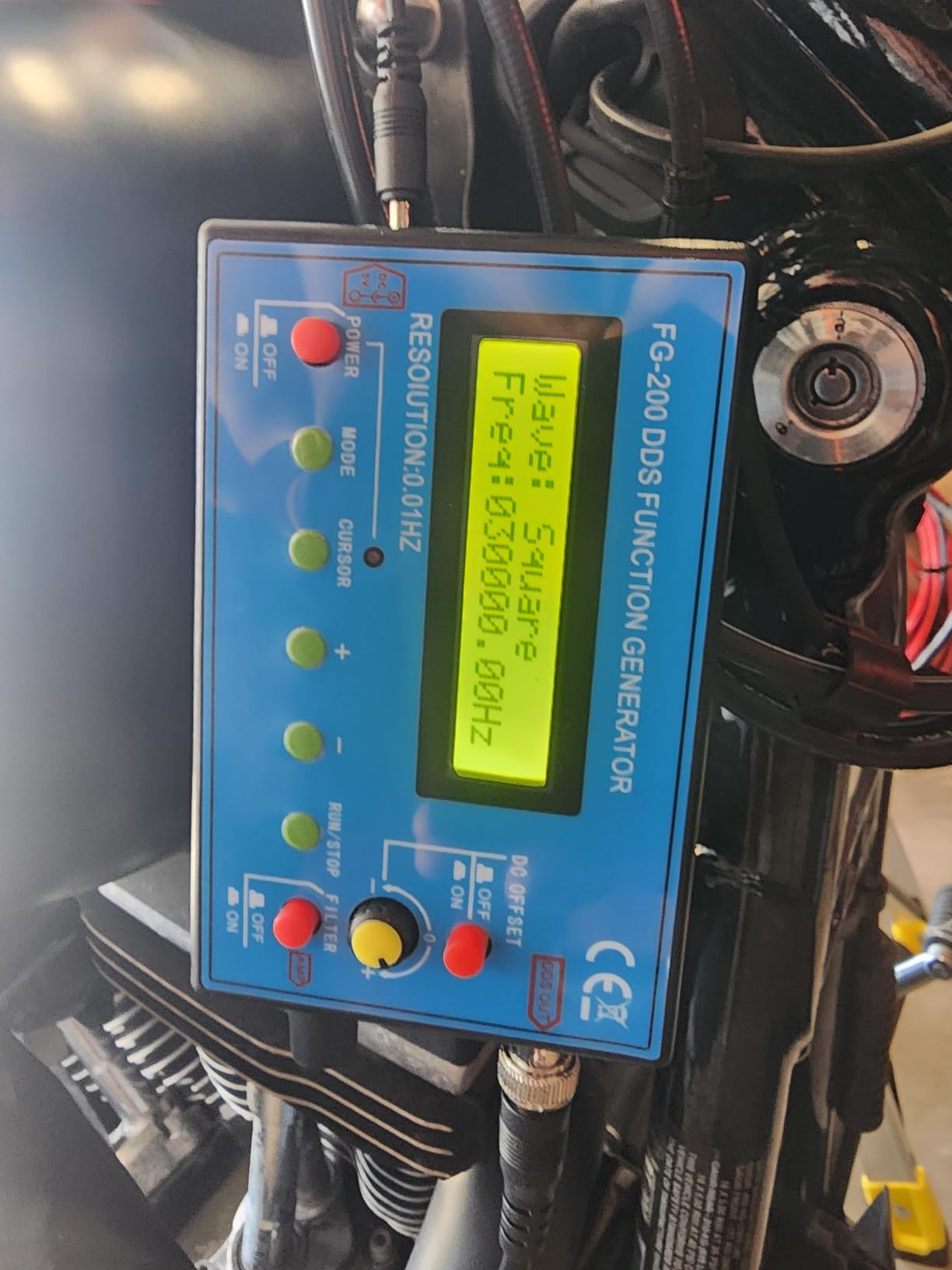
The same documentation note applies here as to the others in this price band: amplitude falls off as frequency increases beyond the stated range, so treat the 500kHz figure as a ceiling rather than a working point.
Reliability is the main weakness. A small number of modules lock up and need a power cycle to recover, which is unsettling when you are halfway through an amplifier measurement. The power lead fit is also reported as loose, and there is no printed manual, so the filter function takes some experimentation to understand.
When the FG-200 is the right tool
It is the right pick for amplifier and speaker repair, for any job that needs a known 20Hz to 5kHz sine at a usable level, and for testing oscillator probe compensation with a square wave. The saved-settings feature means a repeatable test setup across a work order.
For anyone building a portable or battery-powered test setup, running it from a lithium cell is the feature that no other unit in this roundup offers.
When to choose something else
Choose another unit if you need to change frequency while the output is running, which is a dealbreaker for filter sweeps. The gain control is also reported as touchy at higher output levels, so fine amplitude work needs care.
It is a one-channel source with no modulation, no sweep control beyond basic functions, and no way to do two-stimulus work.
8. EC Buying XR2206 Kit – Best for Building Practice and BTL Amplifier Testing
EC Buying High Precision Function Signal Generator DIY Kit XR2206 Adjustable Frequency Amplitude Module Sine Triangle Square Output 1Hz-1MHz DC 9-12V
1Hz to 1MHz range
XR2206 based
Sine triangle and square output
Adjustable amplitude
Floating output, 9-12V supply
Pros
- An inexpensive way to practise soldering and end up with a working generator
- PCB is properly drilled and components fit as labelled
- Floating output is useful for testing bridged BTL amplifier inputs
- Through-hole design with a small component count
Cons
- Amplitude knob runs in reverse
- with full clockwise giving minimum output
- Battery-powered output is floating but unipolar
- Instructions are thin and parts occasionally ship missing
- Output level too low to drive a speaker directly
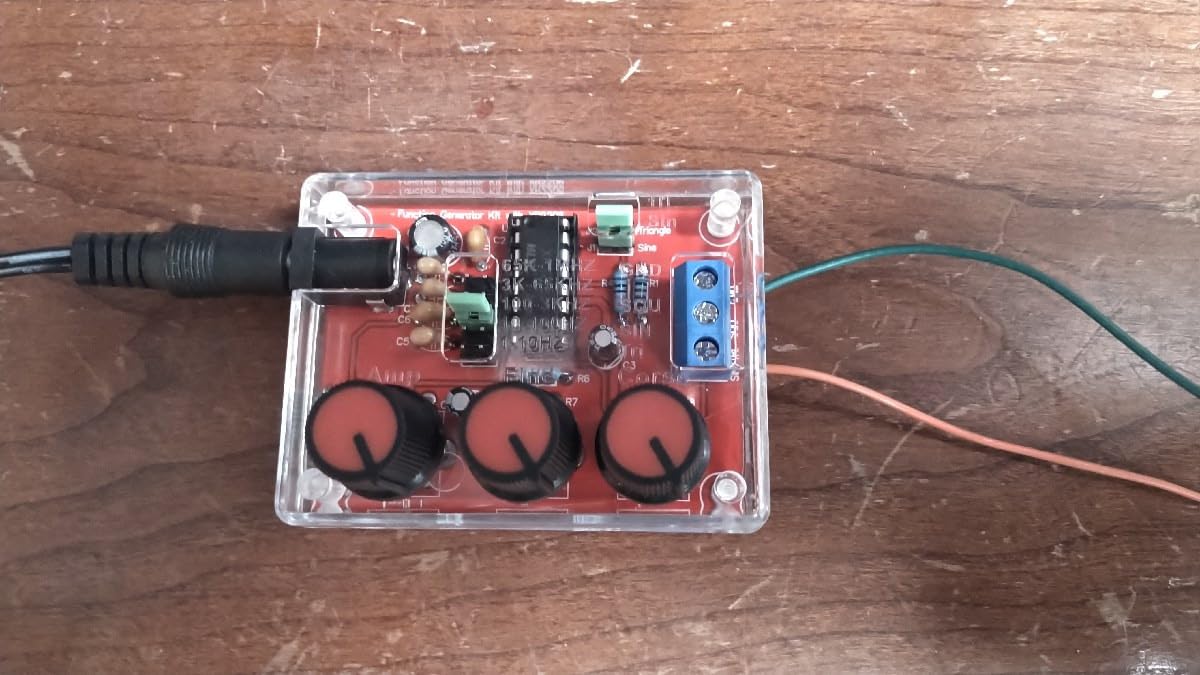
Not everyone wants to buy the box, and for some builders the soldering is the point. This XR2206 kit is a legitimate way to practise assembly and still end up with a working generator covering 1Hz to 1MHz with sine, triangle and square outputs.
The design is deliberately simple. All through-hole parts with a small component count make assembly and debugging straightforward, and the PCB is properly drilled so components fit as labelled. Frequency has coarse and fine adjustment, and amplitude is adjustable at five-bit precision resolution.
The feature that genuinely sets it apart is the floating output. That matters for anyone testing bridged or BTL amplifier inputs, because a grounded generator cannot be connected across a floating input in the way an ordinary unit can.
Power is a 9-12V external supply or a 9V battery, and the package measures 6.93 by 4.57 by 0.83 inches at 1.76 ounces.
Where the kit makes sense
It suits a beginner working on soldering technique who wants a finished instrument rather than a dead demonstration board. Owners consistently report that the build works as advertised, which is not something you can say for every kit in this category.
The floating output also earns it a place on an established bench, not just in a pile of projects. Bridged amplifier testing is a real need that most grounded generators cannot satisfy.
Where the kit disappoints
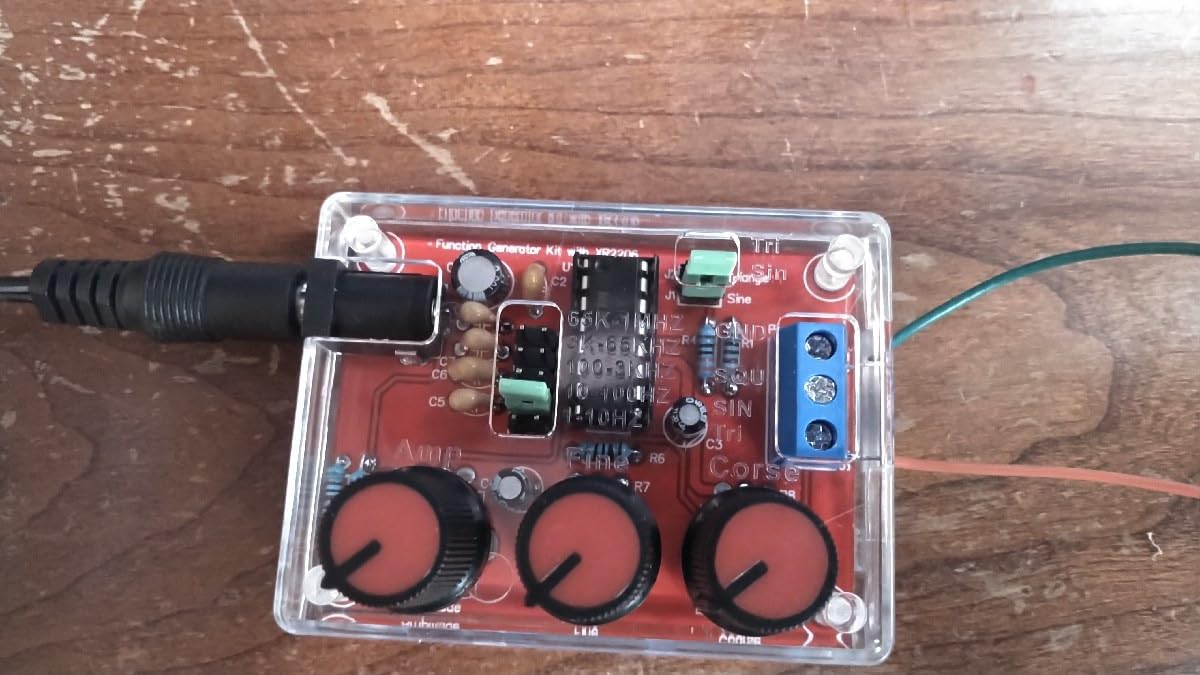
The amplitude control runs in reverse, with fully clockwise giving minimum output. That catches out almost every new builder at least once, and the documentation is thin enough that nobody warns you in advance.
On a 9V battery the output is floating but unipolar, so a series capacitor and bias resistor may be needed to get a usable output. Some kits arrive missing a 2200nF capacitor or the faceplate labels, and the output level is too low to drive a speaker directly without an external amplifier.
9. DROK Frequency Generator Module – Best Dedicated PWM Source
DROK Frequency Generator, DC 3.3V-30V 5-30mA 1Hz-150kHz Adjustable Output PWM Pulse Duty Cycle Square Wave Function Signal Generator Module
1Hz to 150kHz
PWM and square wave output
3.3V to 30V input, 5-30mA
Normal and 0.1% step accuracy modes
LCD readout with setting lock
Pros
- Most reviews of any module in this roundup at 294 ratings
- PWM output verified accurate on a scope against fuel pump and fan controllers
- Rotary knob makes frequency and duty adjustment quick
- Setting lock prevents accidental changes mid-test
- Retains the last setting across power cycles
- Wide 3.3V-30V input makes it easy to power from a bench supply
Cons
- Square wave only
- with no sine
- triangle or arbitrary output
- Cannot invert the signal
- so PWM semantics require reversed duty settings
- Frequency accuracy is about 2% per range rather than calibrated
- Documentation is weak and a few modules arrive with cracked cases
Call this a function generator with one caveat, because that is exactly what it is. It produces PWM and square wave output from 1Hz to 150kHz, and for the automotive and marine electronics work that dominates its owner reviews, that is all the source you need.
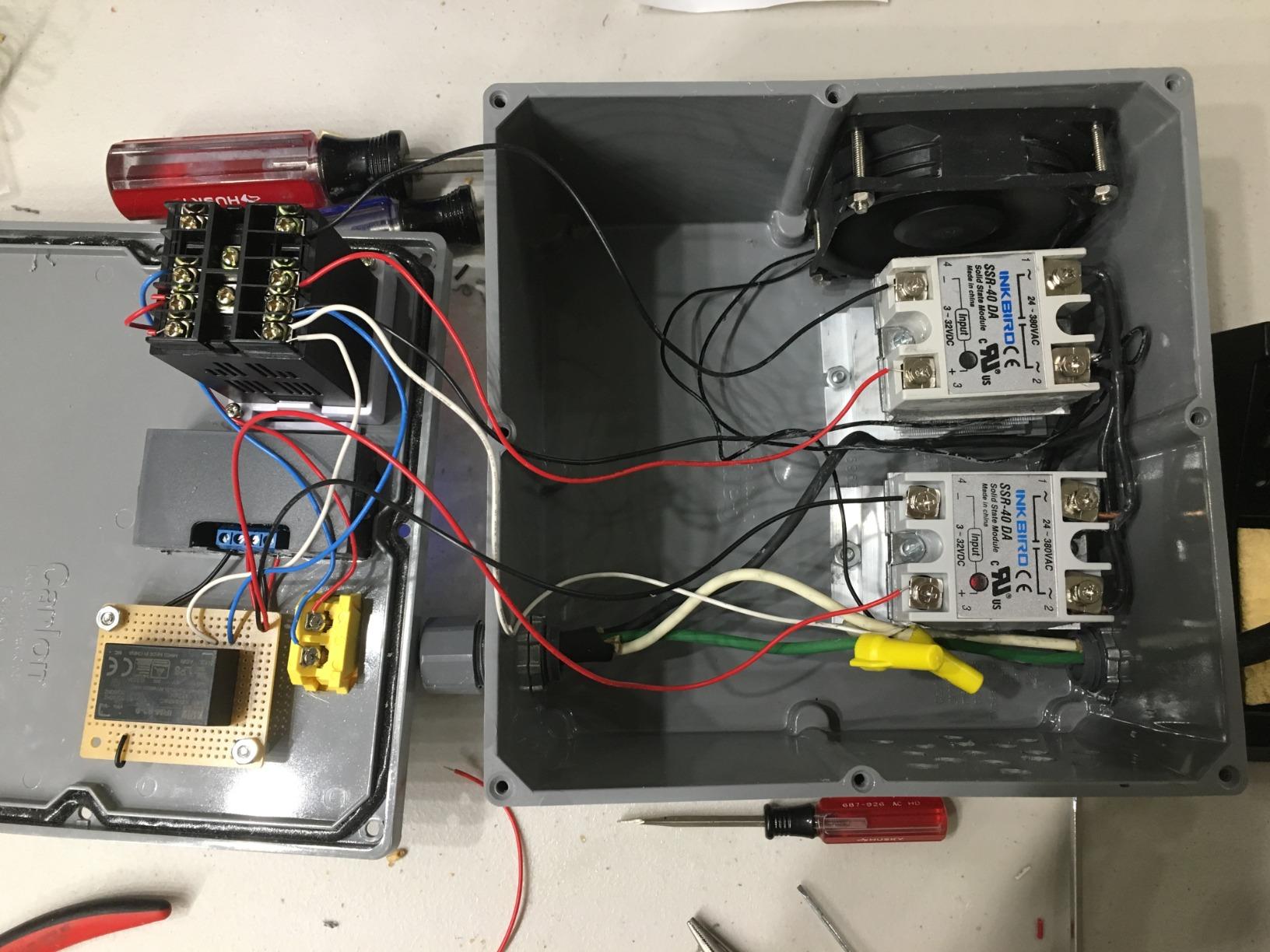
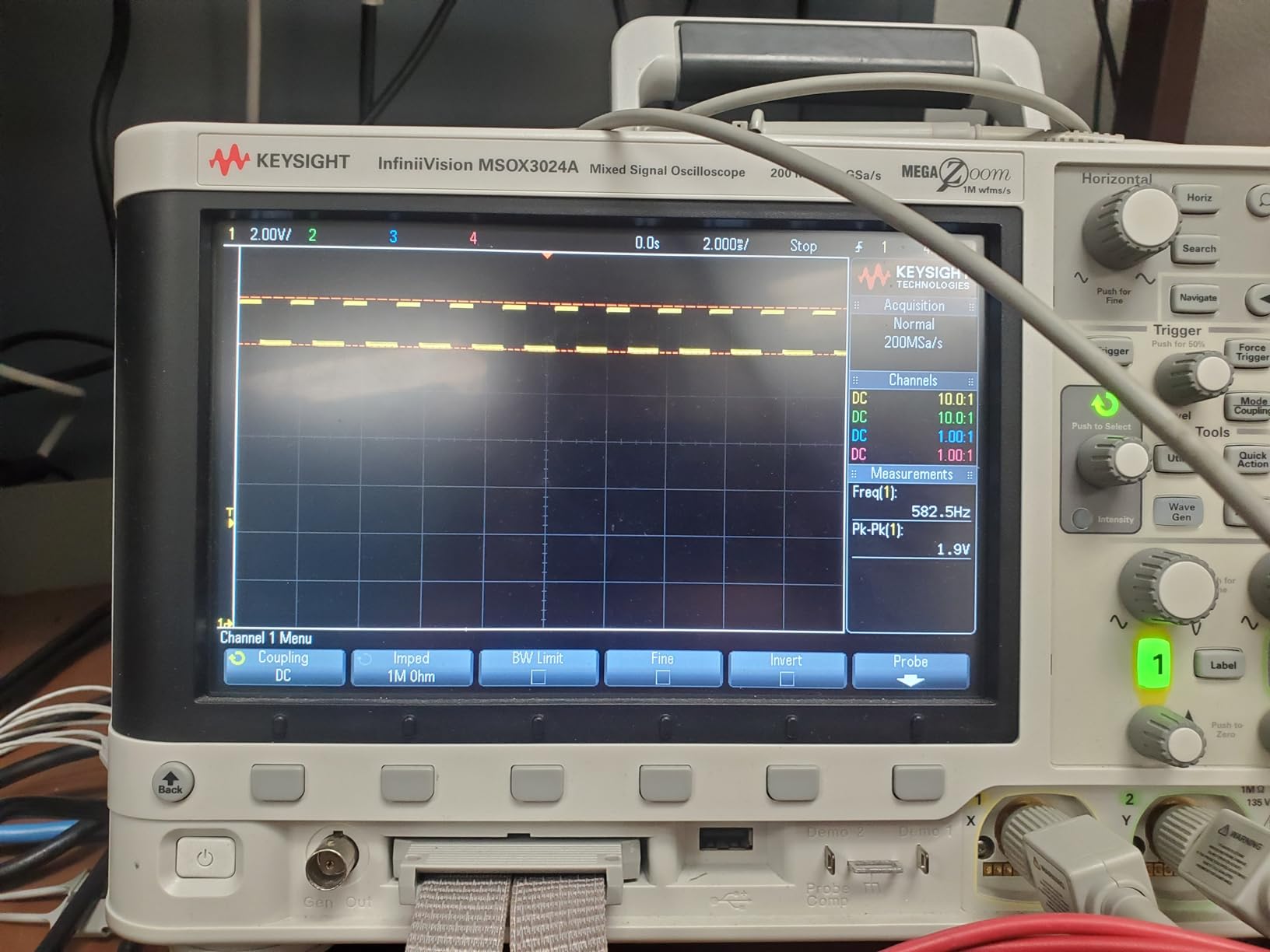
Owners verify the PWM output against a scope on fuel pump, fan and alternator controllers and report it lands where the dial says. The rotary knob makes setting frequencies and duty cycles quick, the setting lock stops accidental changes during a test, and the last setting survives a power cycle.
Two accuracy modes are documented. The normal range is 2% per range, and a higher-accuracy mode steps in 0.1% increments for very low duty-cycle work. The working voltage range is 3.3V to 30V with a 5-30mA output current, and the LCD shows frequency and duty ratio.
Serial communication support is present, which is unusual at this level and useful if you want to drive it from a microcontroller. The module weighs 0.01kg and runs happily off a bench supply at any voltage in range.
What you give up is everything else. There is no sine, triangle or arbitrary waveform output at all. The signal cannot be inverted, so driving a device that expects an active-low PWM input means setting the duty cycle in reverse and recalculating. And the 2% per range accuracy is not a calibrated figure.
Why this module earns its place
With 294 ratings it is the most heavily reviewed item in this roundup, and the reviews are consistent rather than scattered. Automotive and marine hobbyists, alternator rebuilders and anyone testing a fan controller come back to the same verdict: it is accurate enough for the job and it will not break.
It is also the easiest module here to integrate. A wide supply range, a retained setting, a lock function and serial communication make it a component in a test rig rather than a bench instrument.
When to skip it
Skip it for anything analog. It cannot produce a sine wave, which rules it out for amplifier testing, filter response work and distortion measurement. If your project is not fundamentally about duty cycle and timing, you want a different unit.
Also check your parts quality expectations. A few modules arrive with cracked cases or fail on arrival, and the screen shield can pop out of place. Documentation is weak, including the online instructions.
10. HiLetgo ICL8038 Two-Pack – Best Low-Cost Practice Kit
HiLetgo 2pcs ICL8038 Monolithic Function Signal Generator Module DIY Kit Sine Square Triangle
50Hz to 5kHz range
Sine, square and triangle outputs
12V DC input
Two modules per order
DC offset approximately plus VCC over 2
Pros
- Two complete modules per order for the money
- PCB is clearly labelled so experienced builders need no instructions
- Good solderability and quality components
- Breadboard-friendly
- and the bare chip can be used in your own design for lower distortion
- A good practice project for improving soldering
Cons
- Frequency output is unstable and hard to tune with both pots in parallel
- One of the two modules in a two-pack is often the non-working unit
- Not a beginner kit
- since some soldering experience helps
- Occasional trigger jitter suggests marginal capacitors
Two complete kits for a small outlay, which makes this a good choice for a parent buying a soldering practice project or for anyone who wants a spare board. The ICL8038 is a monolithic function generator producing sine, square and triangle outputs across a 50Hz to 5kHz range from a 12V DC input.
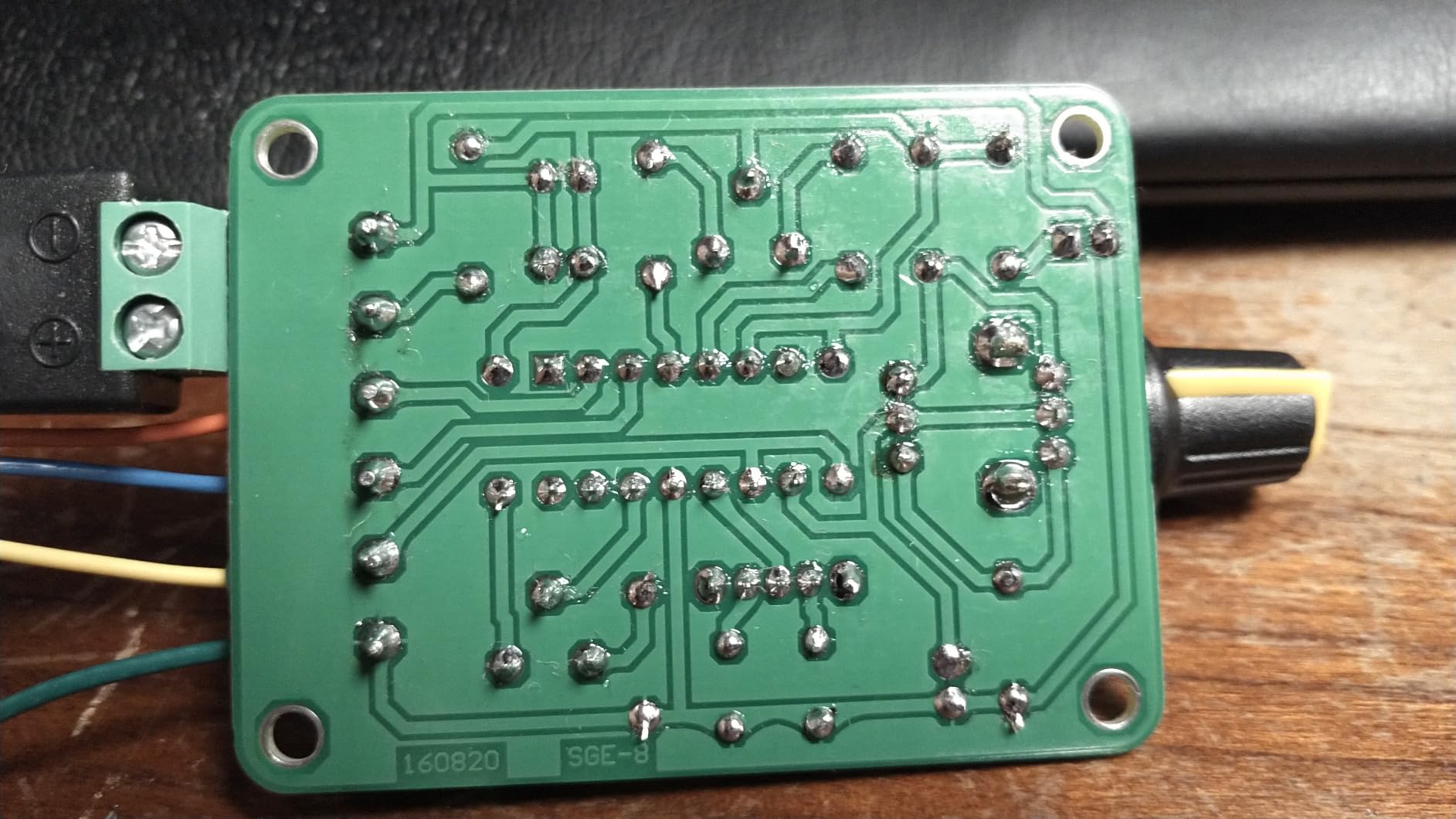
The build quality draws praise more often than the circuit. Owners note the PCB is clearly labelled, the parts solder well, and circuits often work on the first power-up. The package is 5.08 by 3.54 by 0.94 inches at 1.76 ounces, and the DC offset sits at approximately half the supply voltage.
The most interesting option is using the bare chip. Several builders drop the ICL8038 into their own breadboard designs rather than using the module, because a clean layout gives lower total harmonic distortion than the module board.
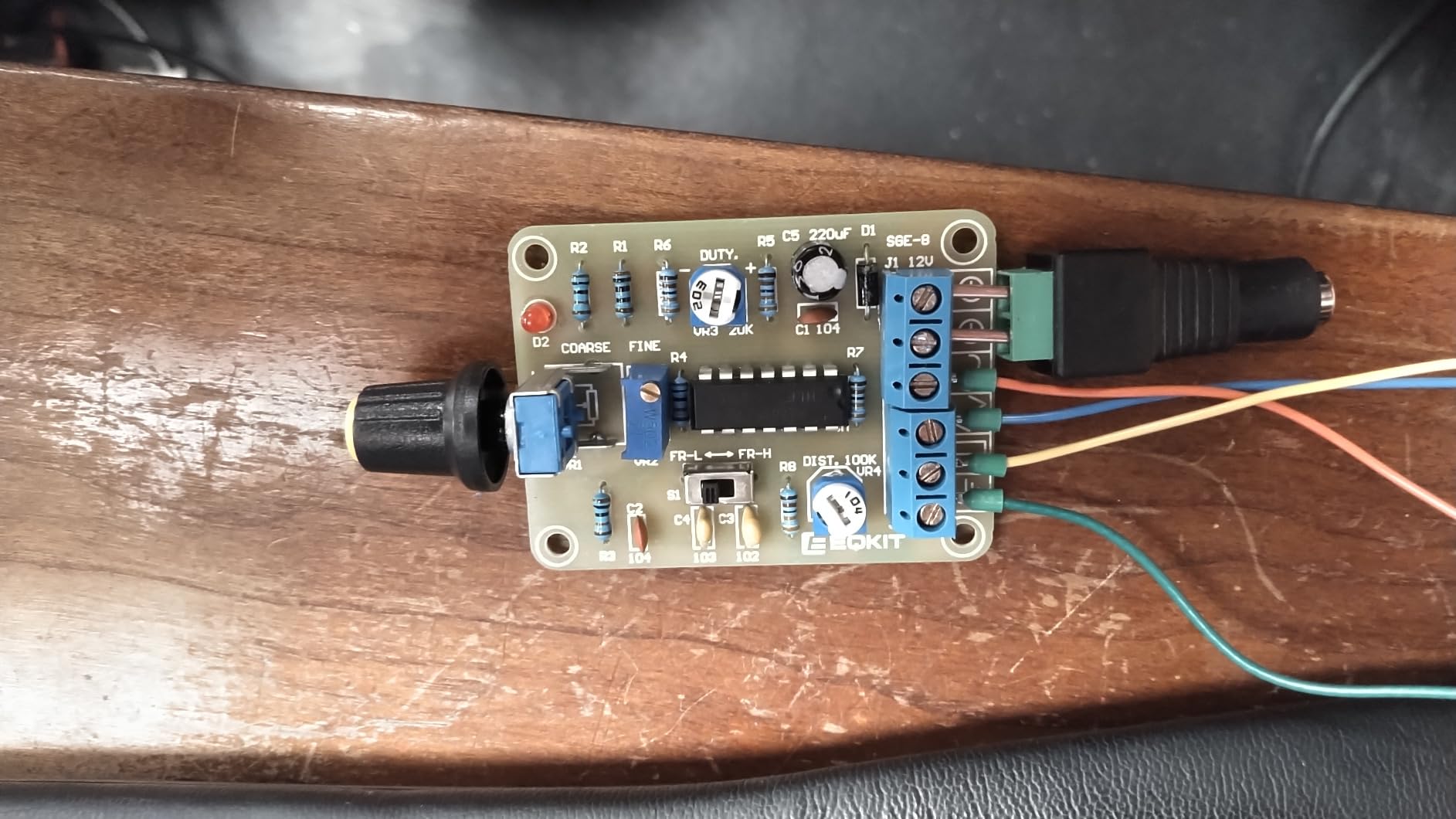
The two-pack has a known quality issue. It is common for one of the two modules to be the non-working one, and the bad board often arrives with no anti-static packaging. A three-pin screw connector can also be missing from the parts.
Frequency stability is the other concern. Output is described as unstable and hard to tune, especially when the coarse and fine potentiometers sit in parallel, and occasional scope-trigger jitter suggests marginal capacitors on some boards. The 50Hz to 5kHz range also limits it strictly to audio work.
Who should buy these kits
They suit someone who wants to practise soldering with a project that produces a measurable result, and anyone who wants a working oscillator block for a breadboard circuit. Having two boards means one can be sacrificed to a mistake, which is how the practice argument works.
Audio-only use is the realistic application. A 5kHz ceiling is fine for tone generation, simple filter demonstrations and learning exercises.
Who should buy something else
Skip this if you have never soldered. It is not a beginner kit, and with a two-pack where one board may be faulty you could end up frustrated rather than educated.
Skip it if you need a calibrated or stable source. Unstable frequency output makes it the wrong tool for anything where repeatability matters.
How to Choose a Function Generator in Six Steps
Six steps, in this order, will narrow ten models down to one without you reading a single spec table.
1. Check whether your oscilloscope already has a built-in source. Look up your exact model number in the manual’s option list. Closely named variants in the same family often differ, so the family name on the box is not evidence.
2. Set your budget band. Under roughly 150 covers portable and kit-level sources. The 150 to 350 band covers dual-channel DDS units that handle most analog work. Above 350 buys you measured frequency accuracy, deeper arbitrary waveform memory and proper modulation. Beyond 600 you are into reference instruments for work most hobbyists never do.
3. Pick the highest frequency your circuit actually needs. Audio is 20Hz to 20kHz. General analog and logic work runs to a few megahertz. Tens of megahertz only matters for RF-adjacent or high-speed digital work. Most hobbyists overspend on maximum frequency and underspend on the specifications that affect accuracy.
4. Decide how many independent channels you need. Two is the hobby default, because it lets you drive a circuit input while generating a reference or second stimulus. One channel only drives a single stimulus, which rules out a whole class of filter and amplifier measurements.
5. Match arbitrary waveform depth to your work. Preset waveforms are enough for audio. Thousands of points per waveform are needed when you are simulating real-world signals, and 8K record depth with a deep built-in library is the step up you notice on a scope.
6. Confirm modulation and remote control before buying. If you will use AM, FM, PM, FSK, ASK or PWM, verify the specific mode is documented, not implied. If you plan to script measurements or load waveforms, check for USB device and host interfaces rather than a single port.
One correction worth making before you spend: AM, FM and PM modulation is not I/Q vector generation. They are fundamentally different capabilities, and buying for the first when you need the second is an expensive mistake. Similarly, a stated maximum frequency says nothing about output amplitude accuracy at that frequency, which is a measurable failure mode on cheaper units. Our signal generator explainer covers the specification vocabulary in more depth.
What a Function Generator Cannot Do
A function generator measures your circuit’s response to a known input, not the circuit’s internals, and several practical limits are worth stating plainly.
It cannot deliver accurate amplitude across the full frequency range on a cheap unit. Output level commonly drops as frequency rises, and the same nominal 5V setting produces different results at 100Hz and at 1MHz. Always quote and measure amplitude into a stated load impedance, which is the classic spec trap.
A single-channel unit cannot drive input plus reference simultaneously, so you are left rewiring between measurements. And the output is limited by load impedance: a generator specified into 50 ohms may deliver half the quoted voltage into a high-impedance circuit, or draw more current than it can supply into a low one.
Beyond that, a general-purpose function generator is not an RF signal generator and not a vector generator. A cheap unit will not sweep RF properly, and modulation modes do not make it a vector source. Finally, it tells you how your circuit responds, which is not the same as seeing what is happening inside it.
What to Avoid on a Hobby Bench
Four categories of product waste bench space and money, and all four are easy to identify before you buy.
Fixed-frequency kits with no tuning range are the worst offender. A unit offering a fixed set of 1, 2, 4 and 8MHz outputs is fun once and useless afterwards, particularly when it needs three separate supply voltages to run.
RF-only synthesizers are the second trap. If your work is audio or analog, a radio-frequency signal source is the wrong instrument, and its controls will not map to what you are doing. Verify that the listing describes a general function generator, not a transmitter or an RF exciter.
Single-purpose PWM or duty-cycle modules are fine as an accessory but wrong as a first instrument, because they cannot produce a sine wave at all. The DROK module in this roundup is a fine product for the job it does; it is simply not a general function generator.
No-name mains-powered kits deserve their own warning. Avoid anything with an exposed transformer and no earth bonding. Confirm the unit is properly earthed before connecting it to other equipment, and be careful about generator and USB-scope grounds, since ground loops produce noise that looks like a fault in your circuit. When injecting signals into powered circuits, use current-limited bench supply rails.
A fifth item is coverage holes. Two cheap boxes at different frequency ranges frequently leave a gap between them, which is worse than one broader unit because you now own two devices that each cover half the range and neither covers the middle.
How to Verify a New Function Generator Before You Trust It
Three checks take twenty minutes and catch the most common failure modes before you waste a weekend debugging the wrong thing.
1. Cross-check the frequency against a known reference. Feed a known reference signal into the built-in frequency counter and confirm it reads correctly. If the internal counter is optimistic, you will see it immediately, which tells you whether the offset is in the counter or the output.
2. Sweep amplitude across the frequency range. Set a fixed amplitude, step the frequency up, and watch the measured peak-to-peak voltage on your scope. A unit that holds amplitude from 100Hz to 1MHz is doing its job. A unit whose output halves across that span will mislead every measurement you take with it.
3. Confirm the output impedance and test into a real load. Check the stated impedance in the manual, then connect a known resistive load and measure what the output actually delivers. A 50 ohm source into a high-impedance load reads roughly double the dial value, and a low-impedance source into a heavy load can sag or current-limit.
While you have the scope connected, check your probe compensation with the square wave output. A probe with poor compensation will skew every amplitude reading you take afterwards, and it is a five-minute fix with the compensation capacitor on the probe body.
Used and Vintage Function Generators Still Worth a Look
Second-hand bench instruments are a genuine value path, and the hobby forums have a settled view on which families to look for.
The most commonly recommended vintage starter is the HP 3311A, described in forum threads as a do-everything first unit. The HP 8640B earns praise for very low phase noise from its tuned-cavity design, and it is still valued decades later. B&K and RCA WR-50B units get called excellent starters, and Eico 324, Heathkit IG-102 and SG-8 appear as named alternatives.
The deciding factor before you buy any vintage instrument is documentation. Forum users specifically hunt down HP and Wavetek adjustment and service procedures before committing, and that habit is worth copying. Without a service manual, a unit that drifts out of calibration is a parts donor rather than an instrument.
Two practical warnings. Vintage units are often line-voltage designs with exposed mains capacitors, so treat them with real caution and have them checked before powering on. And check that the outputs you need are actually present, since older analog units frequently have no arbitrary waveform capability and a far lower frequency ceiling than their labels suggest.
Frequently Asked Questions
Do I need a function generator if I already have an oscilloscope?
Not automatically. First check whether your scope has a built-in waveform source, because many modern hobby scopes include one offering a single channel of sine, square, triangle and sawtooth to a modest frequency ceiling. Buy a standalone unit if you need two independent channels, a higher frequency ceiling, deep arbitrary waveform memory, or a generator that works with whatever scope you own. Verify your exact model number in the option list, since closely named variants often differ.
What is the best function generator for home use?
The Koolertron 15MHz dual-channel DDS unit is the strongest all-round pick for most hobby benches, with two independent channels, 99 state storage slots and measurement functions built in. For modulation and burst work, the Siglent SDG810 covers the full mode set including AM, DSB-AM, FM, PM, FSK, ASK and PWM. For audio-only work, a far cheaper dedicated source covers the same ground.
Where can I find a cheap function generator?
Major electronics distributors, specialist test equipment resellers and brand storefronts all carry budget units, and kit-level modules are available from general marketplaces. Before buying cheaply, verify the unit has a continuous tuning range, a stated output impedance, and available service documentation. Avoid fixed-frequency kits with no tuning range and no-name mains-powered kits with exposed transformers.
What is the difference between a signal generator and an RF generator?
A signal generator is the broad category covering anything that produces a controllable test signal. An RF signal generator is a specific type built for radio frequencies, using different synthesis techniques and intended for RF work. For hobby electronics involving audio, filters, amplifiers, microcontrollers and power supplies, you want a general function generator rather than an RF generator.
How many channels do I need on a function generator?
Two channels is the hobby default. One channel drives a single stimulus only, while two independent channels let you drive a circuit input while generating a reference or second stimulus at the same time. That combination is what most filter characterization, amplifier testing and gain measurement work requires, and a single-channel unit forces you to rewire between measurements.
What frequency range do I need for a hobby function generator?
Match the range to the work. Audio runs from 20Hz to 20kHz, general analog and logic debugging runs to a few megahertz, and tens of megahertz only matter for RF-adjacent or high-speed digital work. Most hobbyists overspend on maximum frequency, because the headline ceiling says nothing about output amplitude accuracy or edge quality at that frequency.
How do I make my generator safe for electronics?
Check the output impedance before connecting anything, confirm the instrument is properly earthed, and be careful about generator and USB-scope grounds since ground loops add noise that mimics a circuit fault. Avoid no-name mains-powered kits with exposed transformers, and use current-limited bench supply rails when injecting signals into powered circuits. Treat vintage line-voltage instruments as unsafe until they have been checked.
How to build your own function generator?
An XR2206 or ICL8038 kit module covers basic sine, triangle and square output across roughly 1Hz to 1MHz and 50Hz to 5kHz respectively, and both are available as through-hole kits that double as soldering practice. Watch the safety note on mains-powered designs, and expect reverse-running amplitude controls and occasional missing parts. Build your own when the project itself is the point, not when you need calibrated output.
Final Verdict
The best function generators for hobby electronics in 2026 come down to what your work actually needs. The Koolertron 15MHz dual-channel DDS unit is the pick for most benches, with two independent channels, 99 state slots and on-board measurement functions across 473 owner ratings. The Siglent SDG810 is the one to buy when modulation and burst matter more than channels. The OWON DGE1060 wins on measured frequency accuracy. If your projects stay inside the audio band, a far cheaper dedicated source will serve you just as well.
Start by checking whether your oscilloscope already has a generator inside, then match the remaining budget to the two-channel and modulation features you will genuinely use.