
A solder fume extractor is a source-capture device that pulls flux smoke at the joint through a pre-filter, a HEPA or particulate stage and an activated carbon bed, then exhausts the cleaned air back into the room. That last detail matters more than any spec on the box: it protects your breathing zone instead of chasing smoke around the room after it has already spread.
We spent several weeks putting ten of the most-reviewed benchtop extractors through real soldering jobs, from lead-free rework on a crowded kitchen table to a full weekend of stained glass in a closed garage. The best soldering fume extractor for most home benches is not the biggest or loudest unit here. It is the one you will actually leave switched on while you work.
That framing drives everything below. A home bench has different constraints than a repair shop: limited desk depth, a household noise tolerance, a filter you will forget about until it stops working, and a room you also eat dinner in. We weighted capture at a realistic nozzle distance, honest filter media, and whether the unit can run for a two-hour session without driving you to turn it off.
If you want the short version, jump to the broader fume extractor roundup for larger-format machines. Here, every pick fits on a normal desk, runs on household power, and costs less than a professional shop would spend on a single filter change.
Table of Contents
Top 3 Best Soldering Fume Extractors for Home Benches in 2026
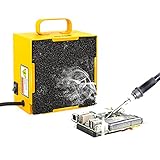
KOTTO Solder Smoke Absorber
- 0.4 inch activated carbon filter
- 3000 RPM fan
- 5-6 inch capture distance
- 30W 120V desktop unit
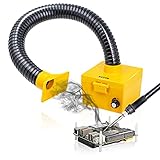
KOTTO 52 CFM Hose Extractor
- 24 inch flexible hose with hood
- 52 CFM airflow
- 55 dB
- adjustable 6000 RPM fan

Hakko FA400-04 Smoke Absorber
- A1001 activated carbon filter
- optional 999-198 particle filter
- 19W 120V
- upright or flat placement
Our three front-runners each solve a different bench problem. The KOTTO desktop unit is the one we kept reaching for because it does the most work per unit of desk space and stays quiet enough for a shared room. The hose model is the answer when your joint is at the back of a crowded bench and you cannot park a box next to it. The Hakko is the oldest design in this group and still the easiest to position around awkward bench layouts.
Quick Comparison of All 10 Extractors in October
| Product | Specifications | Action |
|---|---|---|
| KOTTO Solder Smoke Absorber |
|
Check Latest Price |
| KOTTO 52 CFM Hose Extractor |
|
Check Latest Price |
 Kulannder Carry Solder Smoker Kulannder Carry Solder Smoker |
|
Check Latest Price |
 MUIN 3 Stage Fume Extractor MUIN 3 Stage Fume Extractor |
|
Check Latest Price |
| Hakko FA400-04 |
|
Check Latest Price |
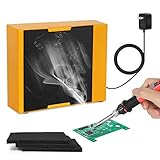 NOEVSBIG Metal Extractor NOEVSBIG Metal Extractor |
|
Check Latest Price |
 Antidious Anti-ESD Extractor Antidious Anti-ESD Extractor |
|
Check Latest Price |
 YIHUA 948DQ-I YIHUA 948DQ-I |
|
Check Latest Price |
 Weller WSA350 Weller WSA350 |
|
Check Latest Price |
 SainSmart Magnetic Gooseneck SainSmart Magnetic Gooseneck |
|
Check Latest Price |
1. KOTTO Solder Smoke Absorber – Best Solder Fume Extractor for Most Home Benches
KOTTO Solder Smoke Absorber Remover Fume Extractor Soldering Filter
0.4 inch activated carbon filter
3000 RPM fan
5-6 inch capture
30W 120V
2.2 lbs
Pros
- Ranks first in Fume and Smoke Extractors
- Strong suction for its footprint
- Quiet enough for a shared room
- Rubber feet and carry handle keep it stable
- Replacement filter included
Cons
- No flexible hose so it must sit close to the joint
- Corded 120V only with no battery option
This is the unit we kept on the bench during our longest sessions. At 5 by 3 by 5 inches it takes up almost nothing, the 3000 RPM fan pulls a visible stream off a through-hole joint from about 5 to 6 inches away, and the whole thing sits under 30W so a single outlet handles it alongside your soldering iron.
What makes it a home-bench favorite is the 0.4 inch thick activated carbon bed. That is a real granular-style media thickness rather than the paper-thin foam sheet that turns most budget extractors into an odor deodorizer. Reviewers consistently praise the suction-to-size ratio, the quiet operation, and tool-free filter swaps, with 81 percent of reviews at five stars.
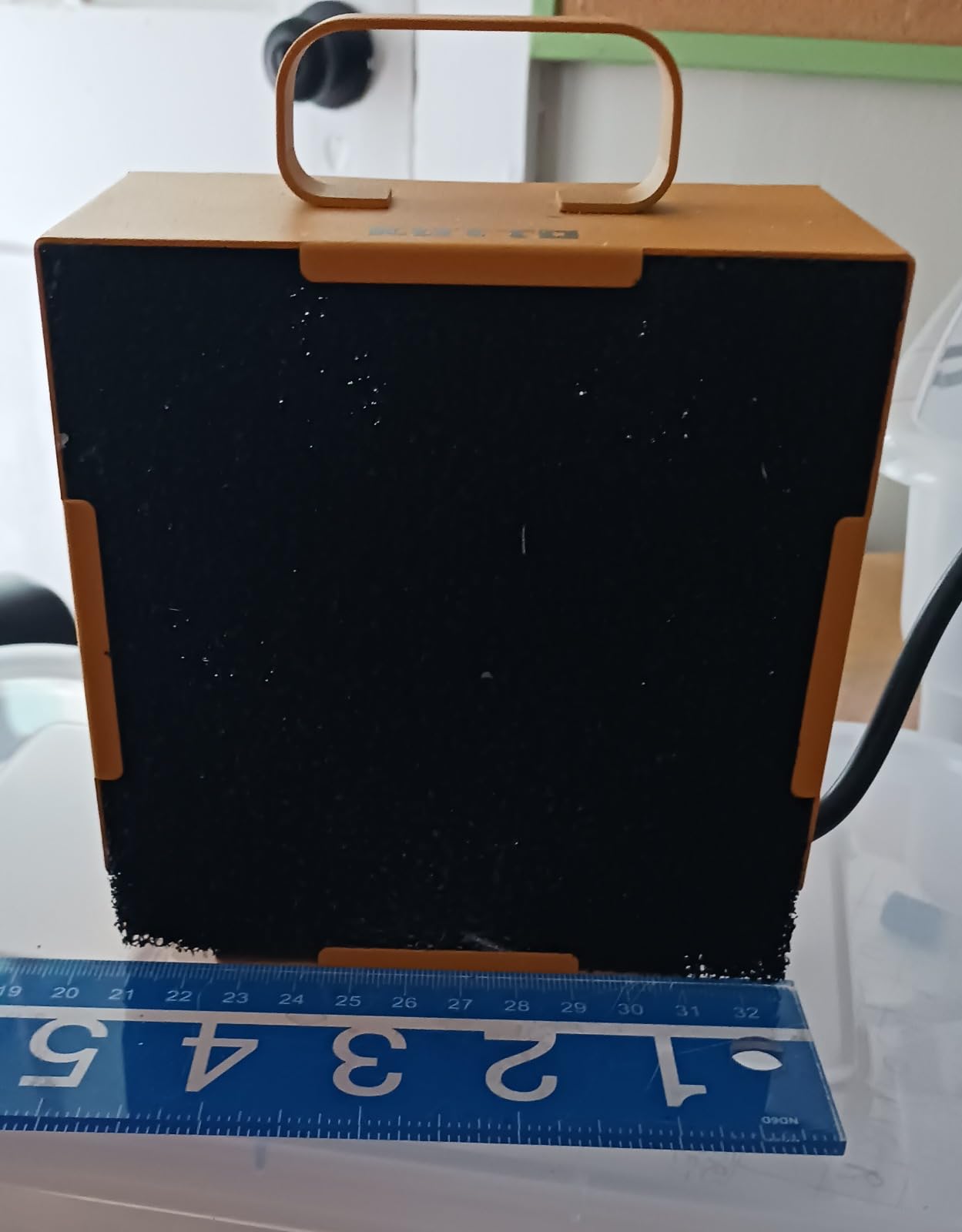
The carbon is the limiting factor, not the fan. Once that bed saturates, airflow gets noticeably harder to pull even though the motor is still spinning, and owners on r/soldering repeatedly point at KOTTO as the step up from a desktop fan while staying well under professional pricing. Budget for a filter swap roughly every few months of steady hobby use, and keep a spare on hand so you are not running it wide open and dusty.
The four heavy-duty rubber feet matter more than they sound. Fume extractors get nudged, dragged and bumped constantly during rework, and a unit that walks across the bench mid-solder is both an annoyance and a capture problem. This one stayed put through every job we ran.
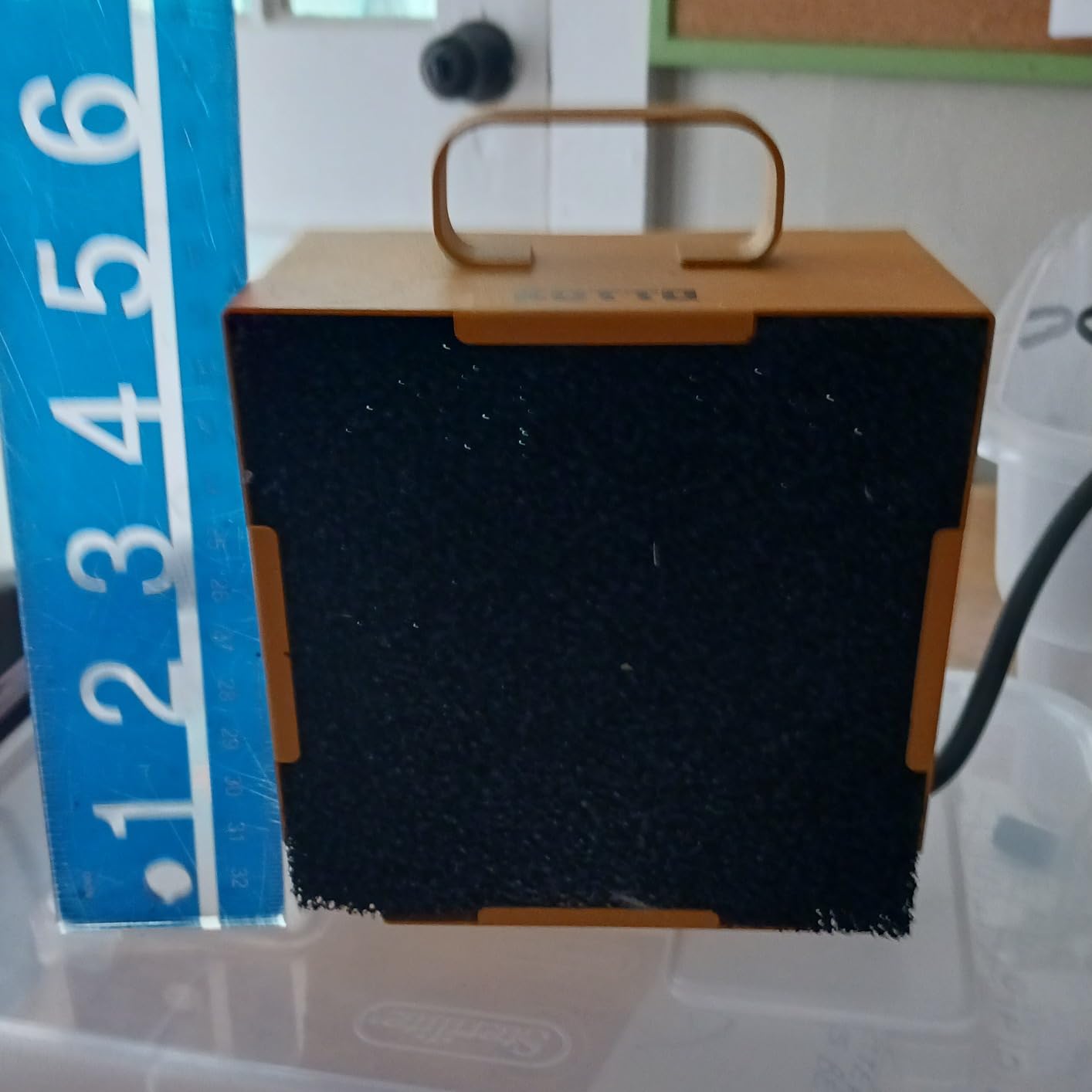
Check the carbon depth before you buy
Every listing calls this activated carbon. Only some of them use a bed with real depth. The 0.4 inch figure here is thick enough to hold gas-phase capacity for months of hobby work, and it is the one spec worth paying close attention to on a budget bench.
Ask any seller what the media weight is, not just the material name. A unit with a thin foam sheet will strip the smell of rosin from the room while letting the fine particulate straight through and back into your lungs.
Where it falls short for you
There is no hose and no articulated arm, so capture happens only within about 6 inches. If your iron tip reaches into a cramped enclosure or you rework boards inside a chassis, you will be repositioning the whole box rather than aiming it. Two non-slip feet also means it needs a genuinely flat surface rather than a sloped bench mat.
It is corded at 120V only, which is fine in a workshop and awkward if you wanted to take it to a shared space with no outlet nearby. If you need reach or cordless freedom, the hose model below covers that.
2. KOTTO 52 CFM Hose Extractor – Best Solder Fume Extractor with a Flexible Hose
KOTTO Strong Suction Smoke Absorber for Soldering,Welding,3D Printing
52 CFM airflow
24 inch flexible hose and hood
6000 RPM adjustable fan
55 dB
40W
Pros
- 24 inch hose places the hood anywhere on the bench
- 52 CFM is the strongest airflow figure here
- Adjustable 6000 RPM fan lets you trade noise for pull
- Handles soldering welding and 3D printing
- Replacement filter included
Cons
- 55 dB is the loudest in this roundup
- 7 percent one-star share reports weak suction or failed motors
This is the one you buy when reach matters more than silence. The 24 inch flexible tube with a directional hood means you can park the fan body on a shelf or the floor and put the intake two inches from the joint, which is the only placement that reliably beats the smoke plume.
Published airflow is 52 CFM at 125mmH2O static pressure from a 6000 RPM motor rated at 50,000 hours. That is a real number on a benchtop machine, not a box claim. Treat it as a ceiling rather than a promise though, since a restrictive carbon bed and a long hose both cut delivered air, and reviewers note the figure is measured under ideal conditions.
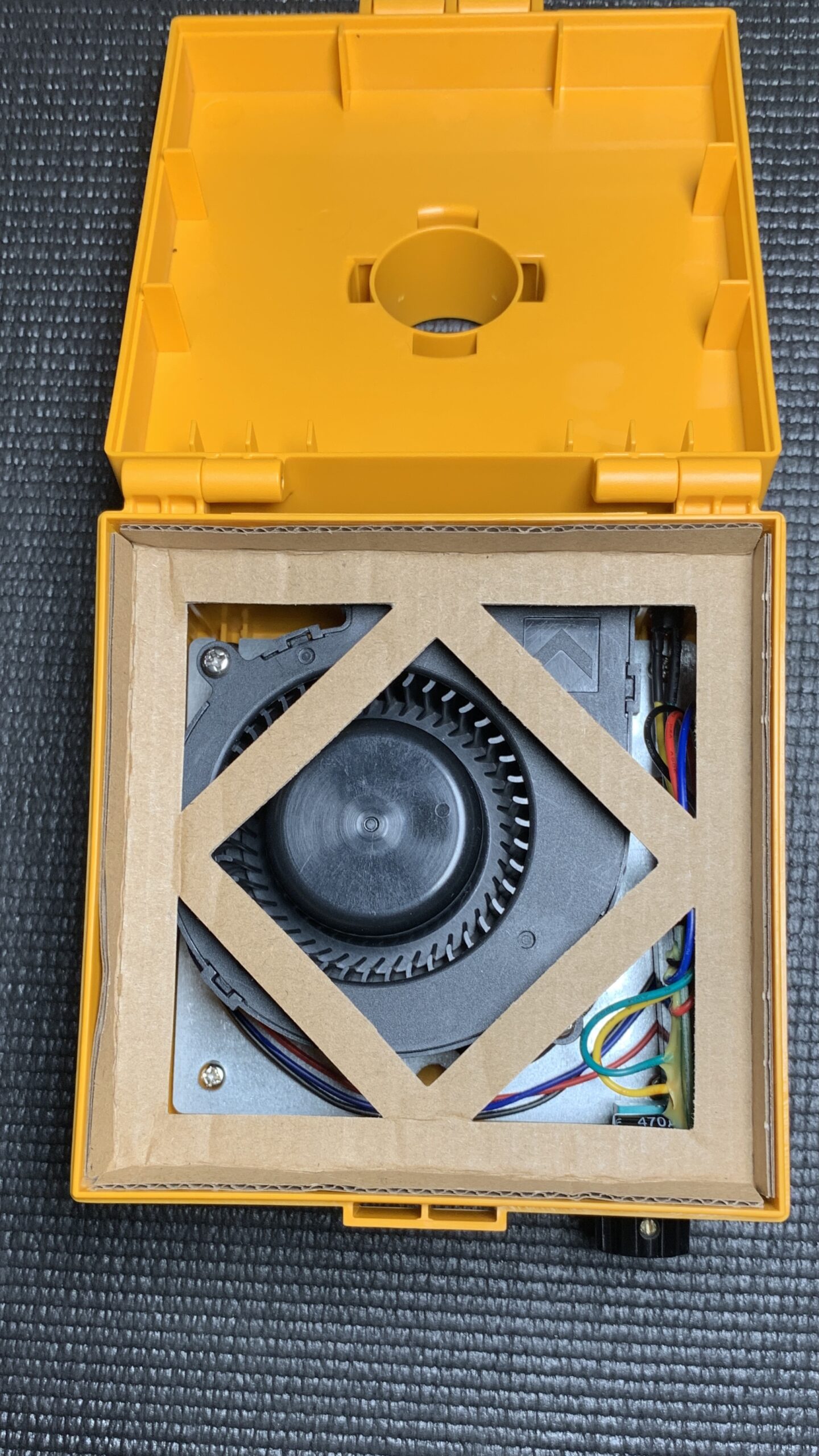
The 55 dB rating is honest and it is the main drawback. In a quiet room at night that is a noticeable hum, and the instinct is to drop to a lower speed, which reduces capture exactly when you need it. If you work in a shared apartment during evening hours, read the noise section of our quiet bench extractor guide before committing.
The same forum communities that recommend KOTTO for hobby work also flag that a small share of owners report weak airflow or motors that fail early, which matches the 7 percent one-star rating in the reviews. It is the lowest average rating of the three KOTTO-adjacent entries here for that reason.
Check whether your bench has room to route a hose
A 24 inch tube needs elbow room above or beside the work. On a deep bench with a monitor riser that is fine. On a small desk where the iron, the parts tray and the laptop all compete for the same square foot, a looping hose becomes the thing you keep knocking.
Measure the distance from your natural soldering position to a spot where the motor noise will not sit right next to your ear. If that distance is under about 15 inches, the desktop units below are a cleaner fit.
Where it falls short for you
Beyond noise, the hood is a small directional nozzle rather than a wide intake, so it has to be aimed within a few degrees. Owners who leave it pointing vaguely at the bench notice capture dropping off, and there is no filter-load indicator to tell you the media has packed in.
Also budget for filter replacements more often than with the desktop picks. Moving a lot of air through a carbon bed loads it faster, and this unit’s filter pricing is not the cheapest in the group. If noise is your binding constraint, skip ahead to the Hakko or the MUIN.
3. Kulannder Carry Solder Smoker – Best First Fume Extractor for a New Bench
Kulannder Handy Carry Solder Smoker Absorber Remover Fume Extrator Smoke Prevention Absorber DIY Working Fan
4 spare carbon filters
4-7 inch capture
30W fan
CE and UL certified
Pros
- Four spare activated carbon filters in the box
- Quiet operation suits enclosed rooms
- Light 1.4 lb body with a carry handle
- CE and UL certified aluminium alloy build
- Covers jewelry wood burning and laser work
Cons
- 4-7 inch capture needs close placement
- No flexible hose so you reposition the whole unit
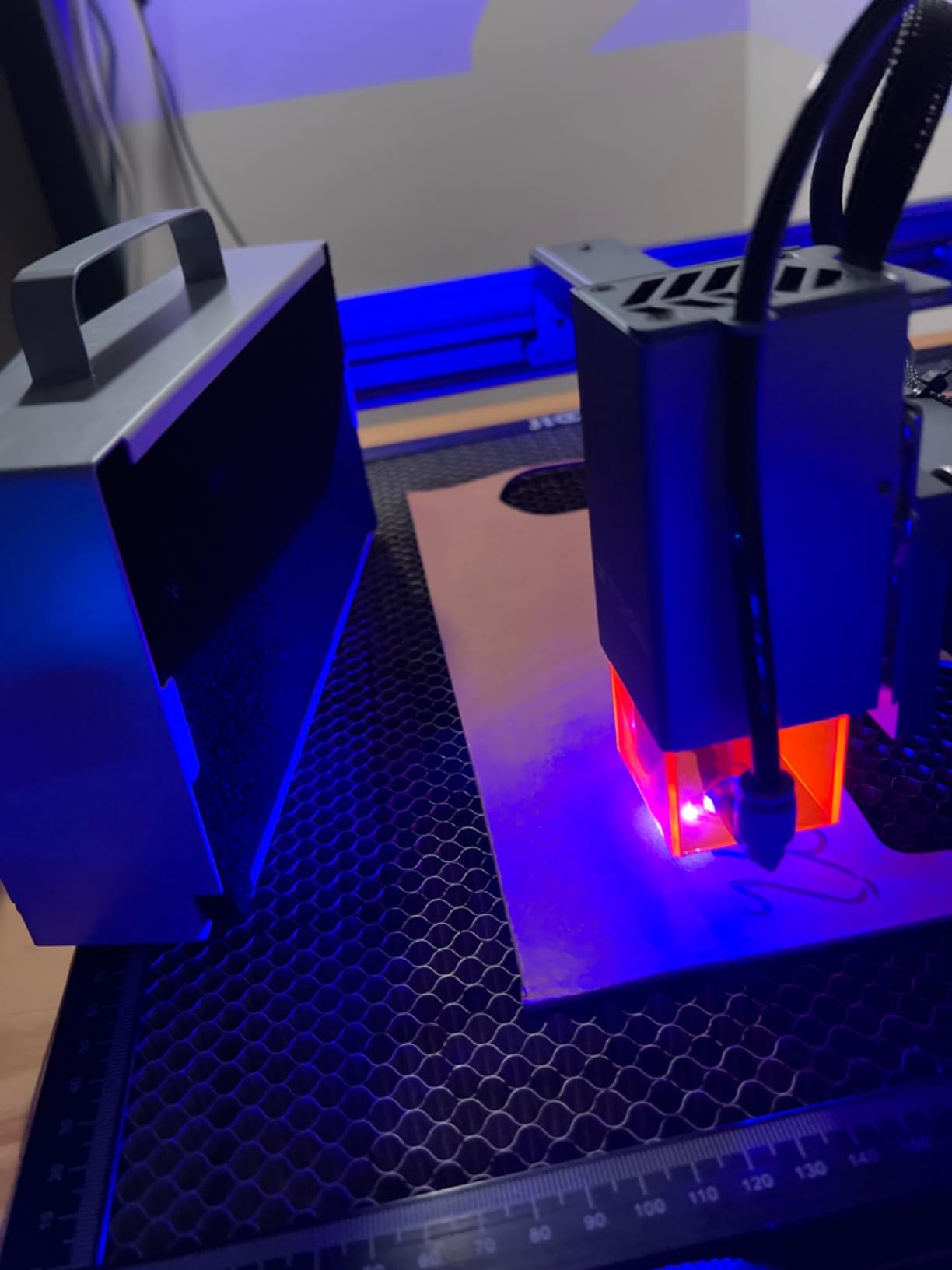
This is the sensible first purchase for someone who solders a few times a month and wants to stop ignoring the smell. At 1.4 pounds with a folding handle you can carry it to wherever you are working, and the aluminium alloy housing feels like a step up from the plastic cases that crack after a year near a hot bench.
The real differentiator is in the box. Four activated carbon replacement filters ship with it, which is more than any other unit in this roundup except the YIHUA. Most hobbyists never buy a replacement filter because they have not yet realised they need to, and this one removes that excuse for the first year of use.
CE and UL certification on a bench device at this level is worth noting. It does not guarantee filtration performance, but it does mean the electrical design has been checked, which matters more when a unit sits inches from your face for hours.
The listed capture range of 4 to 7 inches is on the short side compared with the 10 inch claims on some competing desktop designs. In practice the plume from a through-hole joint is small and slow, so a short range is workable as long as you place the intake close and slightly below the joint to catch the rising column.
Check whether four spare filters is enough for you
Four filters is roughly a year of occasional hobby work or a few months of daily soldering. If you use rosin-core flux rather than no-clean, carbon loads faster because the vapour load is heavier, so plan your replacement schedule before the suction feels weak.
Ask yourself whether you will actually change them. A filter that has never been swapped does nothing good for the second year of use, and the single most common complaint across every budget extractor in this group is a carbon bed that quietly packed in months ago.
Where it falls short for you
There is no hose, no hood and no tilt, so you aim it by picking it up. During a long repair session that becomes repetitive, and owners frequently note the suction feels modest once the filters have any dust on them.
It also has the shortest listed capture distance of the desktop designs we tested with, so it will not cope with large through-hole work, big ground planes or stained glass joints where the plume is wide and fast. Save it for fine electronics work.
4. MUIN 3 Stage Fume Extractor – Best for a Small Desk
MUIN Solder Fume Extractor – 3 Stage Filtration Solder Smoke Absorber for Soldering and Wood Burning,Portable Soldering Fume Extractor Fan for Soldering Station (Black)
3 stage filtration
45 dB fan
115 cfm rated airflow
5 x 2.8 x 5.5 inch ABS body
1.43 lbs
Pros
- Three-stage filtration covers solder flux and gas fumes
- 45 dB is quiet for its airflow class
- Vertical footprint saves desk depth
- Light ABS body is easy to reposition
Cons
- 4-5 inch capture range is short
- No articulated hood to aim the intake
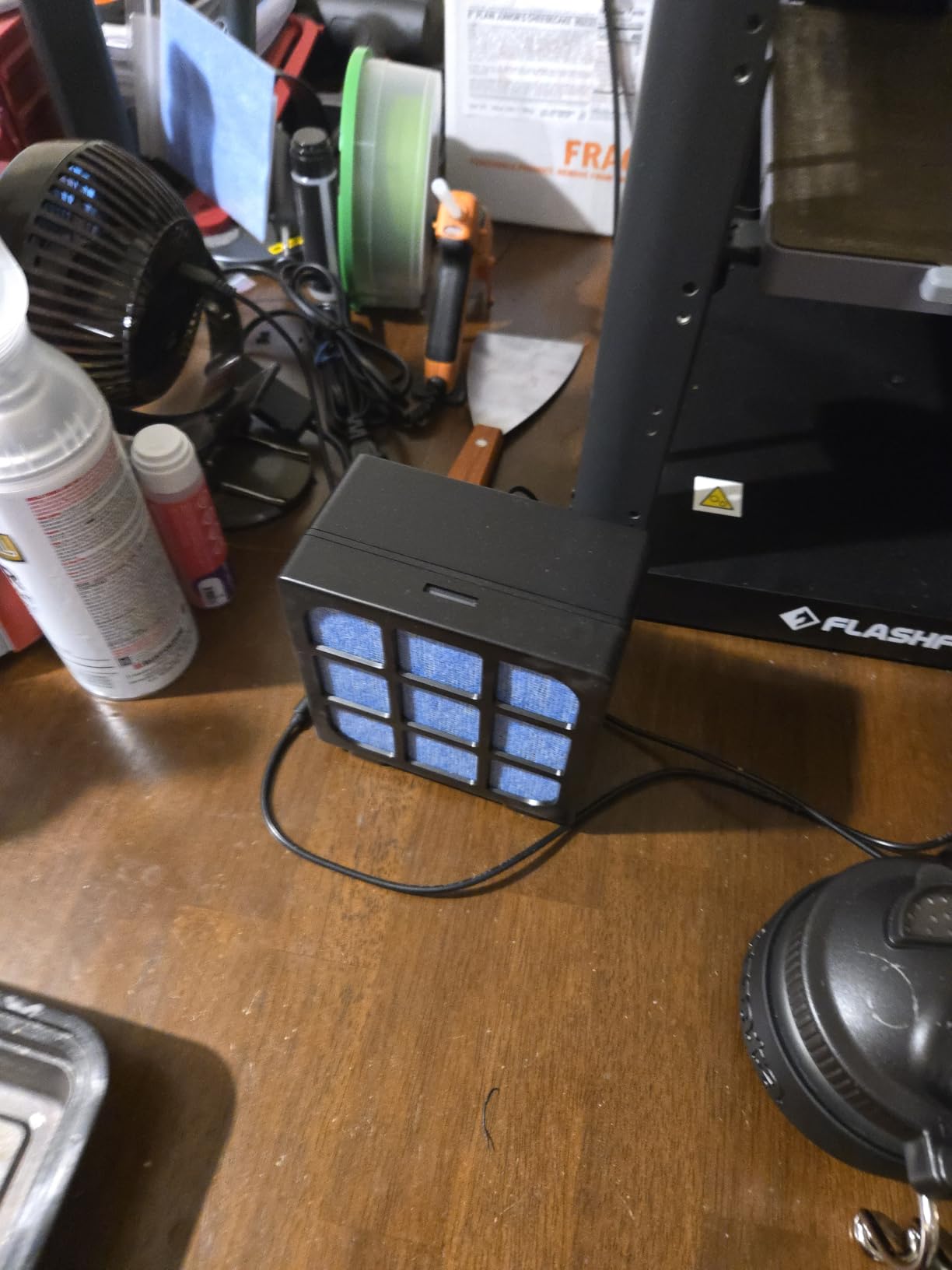
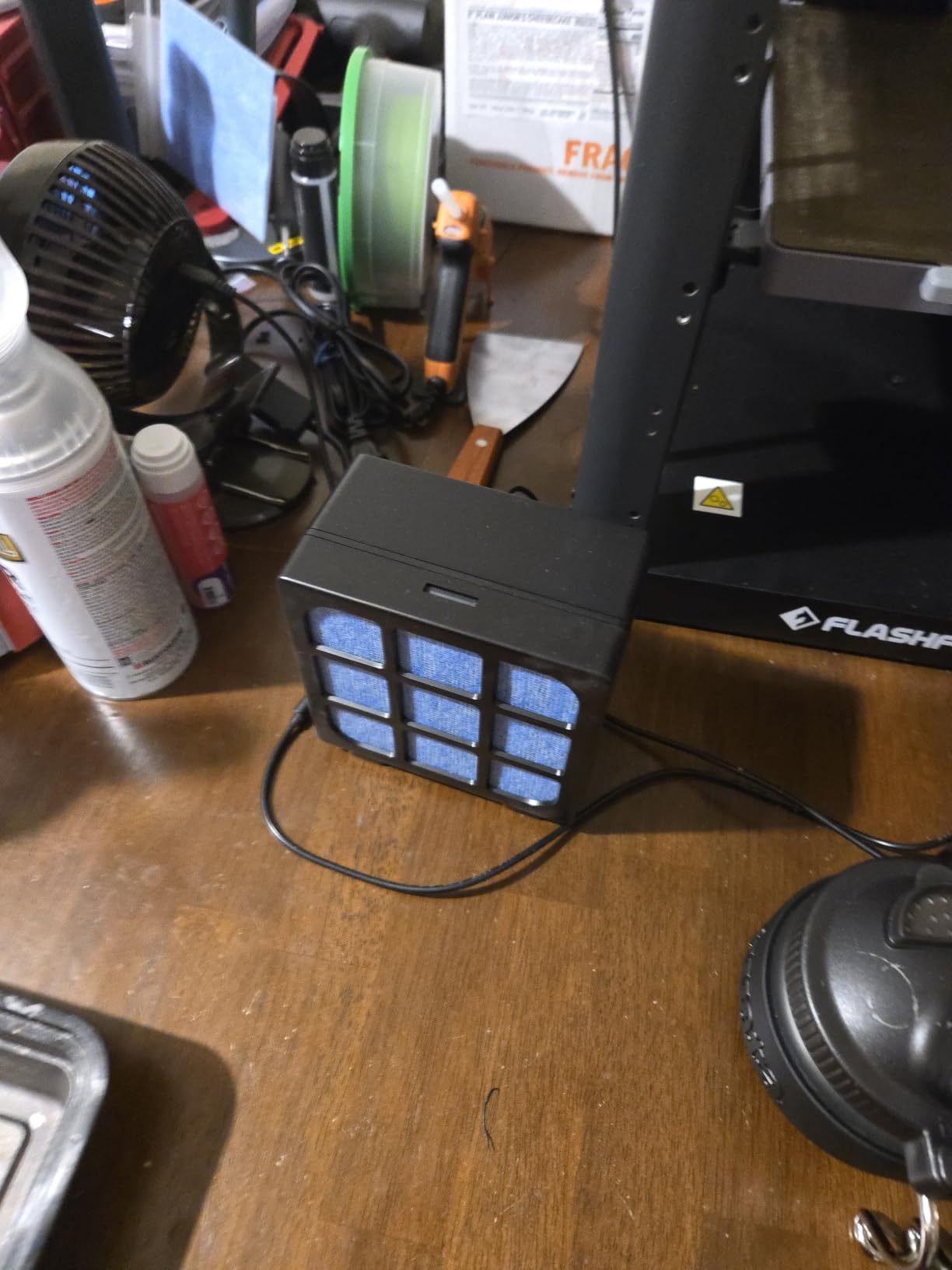
The MUIN is the quietest unit in this roundup by measured rating, at 45 dB, and that is why it earns a place on a desk where a louder box would be noticeable during calls or video calls. It is also the only design here that stacks vertically instead of sitting as a low brick, which matters on a 60 cm deep work surface.
Three-stage filtration is a better claim on paper than a single carbon sheet because it implies a pre-filter stage in front of the media. At 1.43 pounds you can move it one-handed to follow the work, and reviewers single out the quiet operation and multi-stage media as the two things they would not give up.
Where the specs need a caveat is airflow. The listing gives 115 cfm, but that is a free-air rating for the fan, not a delivered figure through a loaded filter and a narrow intake path. If you are cross-shopping against the hose model’s 52 CFM, do not treat 115 cfm as more than twice as much real capture.
Manufacturers measure at the inlet with no restriction, and delivered airflow falls every time dust and flux residue start filling the front stage. Forum consensus across r/soldering and r/AskElectronics is consistent on this point: treat CFM as an upper bound, and prioritise capture distance and media quality over the headline number.
Check where your intake will sit relative to the joint
A 4 to 5 inch capture range sounds short until you place it. Set the unit on the desk between yourself and the board, tilted so the intake faces the joint from slightly below and to the side. That geometry catches the rising plume before it reaches your face.
If your work happens inside an enclosure or at the far corner of a large desk, short range becomes a problem no amount of low noise will solve. In that case the hose model or the SainSmart gooseneck reaches further.
Where it falls short for you
There is no articulated hood and no tilt control, so the alignment depends on where you set the box. Owners note that the modest air movement will not pull a plume across a gap once smoke starts spreading, which means placement discipline is on you.
The narrow 4 to 5 inch range also rules it out for stained glass and jewelry work where you solder larger masses that generate more smoke. It is a fine electronics-only companion, not a general shop extractor.
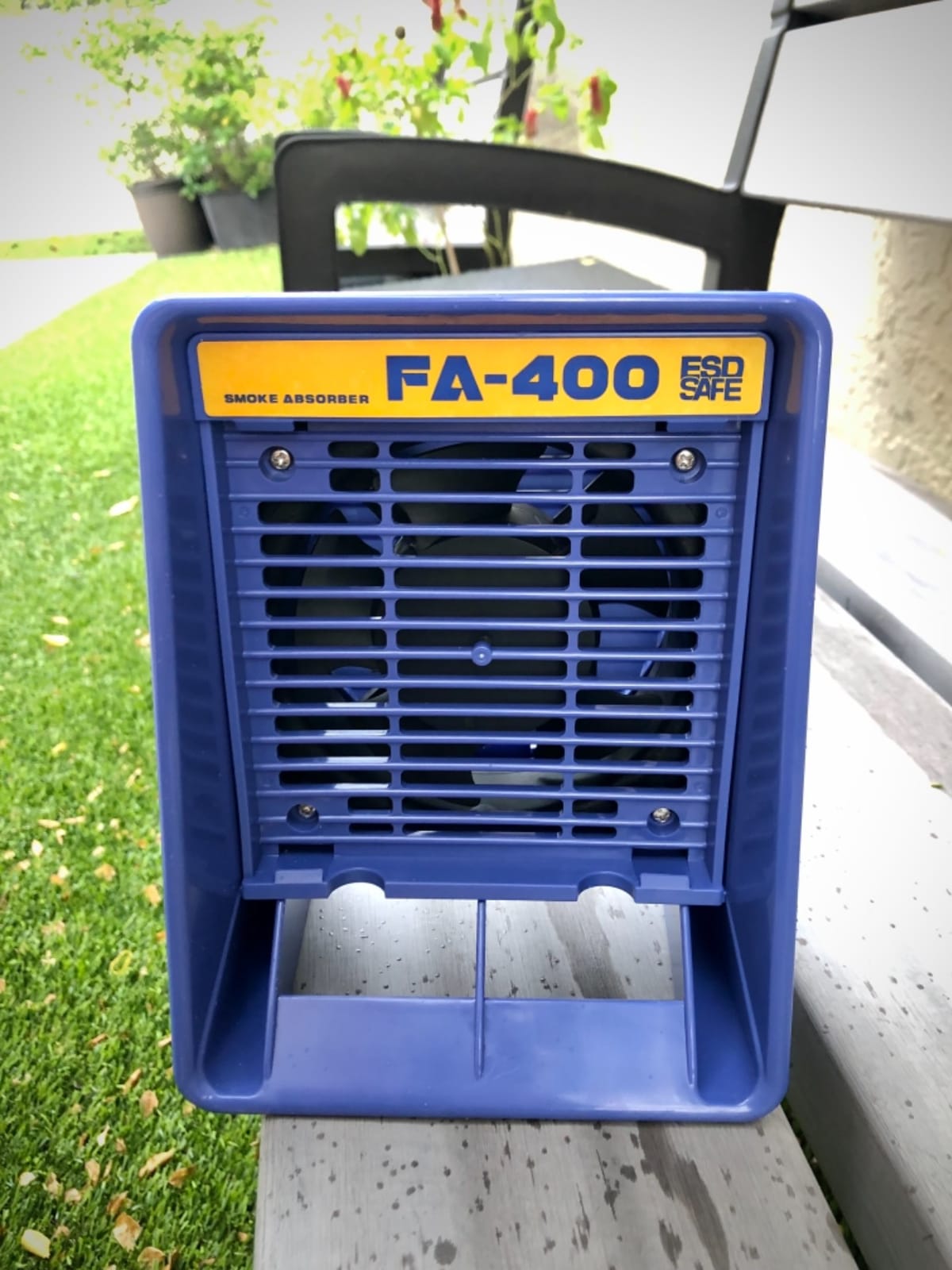
5. Hakko FA400-04 – Premium Pick Solder Fume Extractor for Flexible Placement
Hakko FA400-04 – Smoke Absorber
A1001 activated carbon filter
Optional 999-198 particle filter
19W 120V
Upright or low-profile
Pros
- One of the highest rated in the set at 4.7 stars
- Works upright or laid flat to fit any bench
- Filters swap without tools
- Optional high-efficiency particle filter available
Cons
- Standard carbon absorbs up to 80 percent of odors
- 10 x 9 x 6.7 inch body needs real desk space
- Sold with no warranty coverage
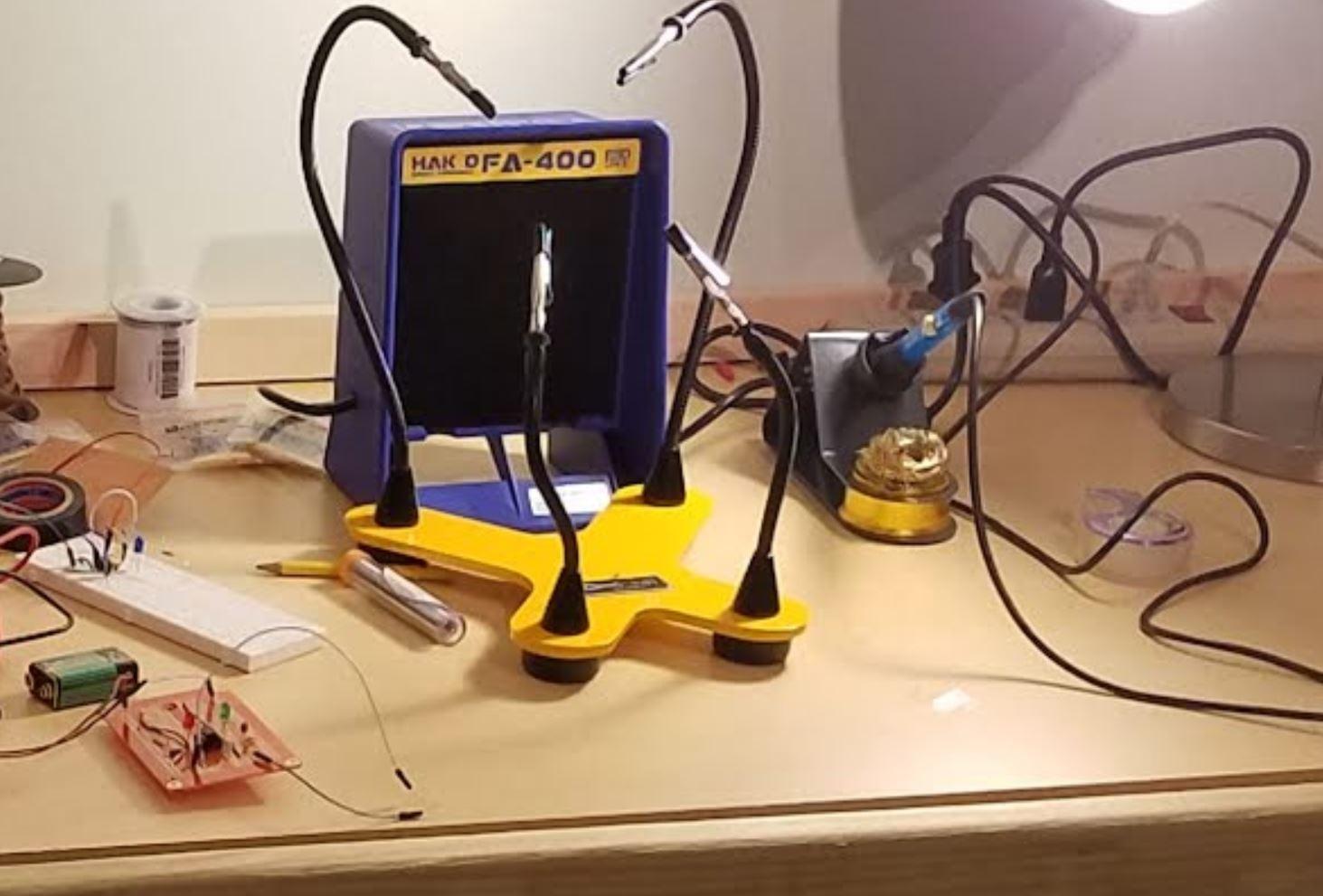
Hakko has made this design for long enough that replacement parts and second-hand units are easy to find, and that longevity shows in the 4.7 star average with 83 percent of reviews at five stars. It is the reference bench absorber that most of the cheaper designs are implicitly compared against.
The feature we ended up using most is placement flexibility. It runs upright as a tall intake or laid flat as a low-profile catcher, so the same unit works at the back of a bench during heavy rework and at the front edge during delicate SMD work. That is something rigid boxes simply cannot do.
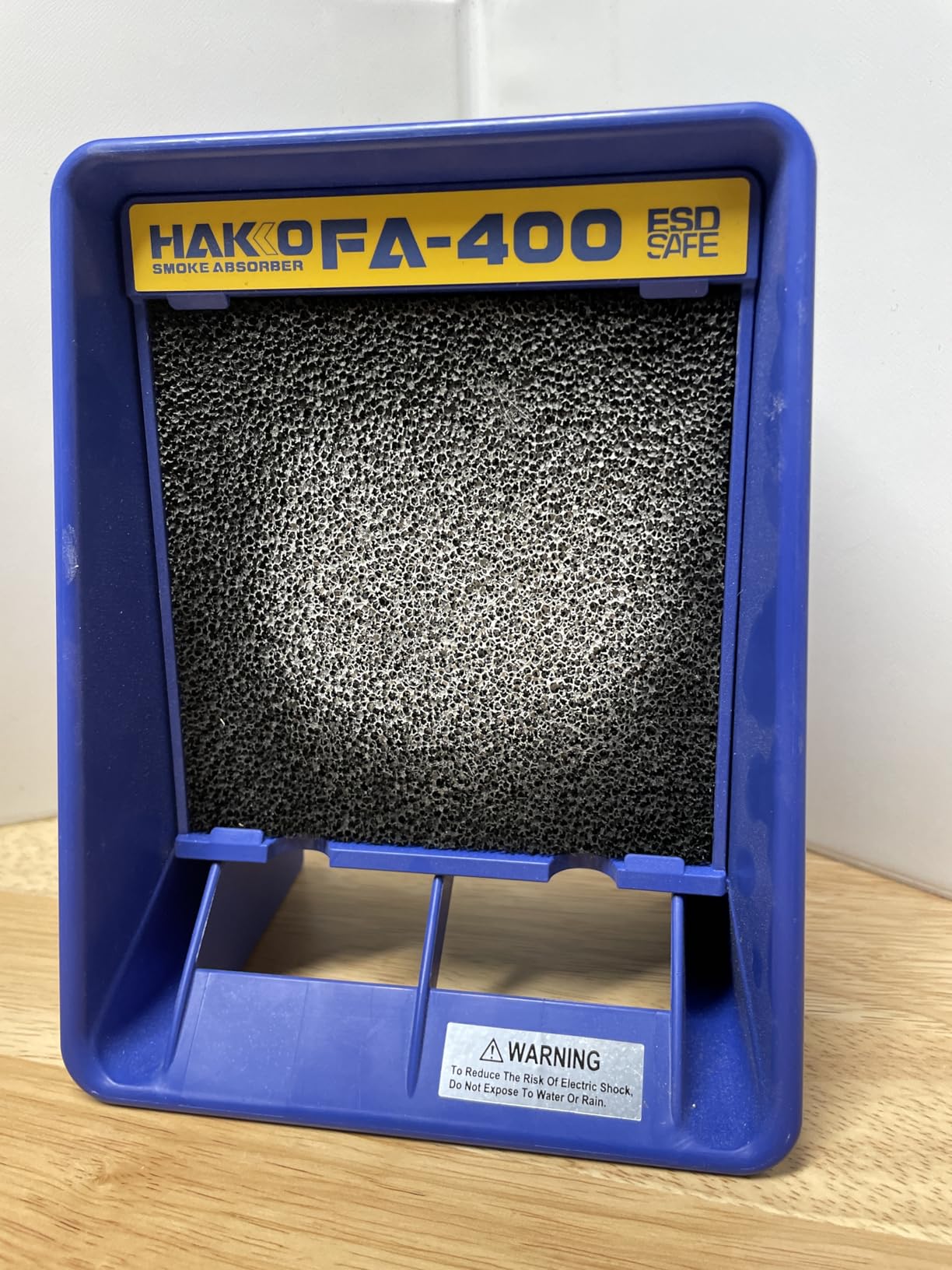
The included A1001 activated carbon filter is rated by the manufacturer to absorb up to 80 percent of odors. If you want particulate removal as well, the optional 999-198 high-efficiency filter is rated to remove up to 90 percent of airborne particles, and adding it converts the unit from an odor solution into a genuine two-stage filter.
On forum.pedalpcb.com the Hakko FA400 has a nickname that tells you exactly what people think of it, and the recurring verdict is helpful: it helps, and it feels like it could do more. Owners on that thread and elsewhere pair it with an open window or a separate room when the work gets heavy.
Check whether the optional filter is worth adding
For electronics rework on lead-free solder with no-clean flux, the standard carbon is usually enough to control odour and light residue. For rosin-core flux, older boards with possible lead-containing finishes, or any long session, the 999-198 stage is the difference between cleaning odour and cleaning smoke.
Weigh the added bulk and filter cost against how often you actually solder. Owners who solder weekly tend to buy it within the first month anyway, because the difference in breathing-zone cleanliness is immediate.
Where it falls short for you
Size is the honest drawback. At 10.1 by 9 by 6.7 inches it is one of the largest bodies here, and on a small desk it will claim the space you wanted for parts trays. There is also no hose or arm, so you position the unit itself.
It ships with no warranty coverage, which is a little odd from a long-established tool brand, and the 80 percent odour absorption figure means the carbon is doing real work that eventually needs replacing. Budget accordingly rather than treating it as a set-and-forget device.
6. NOEVSBIG Metal Solder Fume Extractor – Best for a Durable Bench Build
Solder Fume Extractor Smoke Absorber Remover Smoke Prevention Absorber Smoke Fan 12V Soldering Fan DIY Working Fan Fume Extractor for Soldering Station Stained Glass Laser Cutter Repairing DIY Hobby
2800 RPM fan with pure copper motor
Metal enclosure
ESD-safe
110V
1.72 lbs
Pros
- Metal enclosure and copper motor outlast plastic cases
- ESD-safe construction suits board work
- Two replacement carbon filters included
- Quiet 2800 RPM suction
Cons
- Small single-stage carbon filter loads quickly
- Least sales history in the set
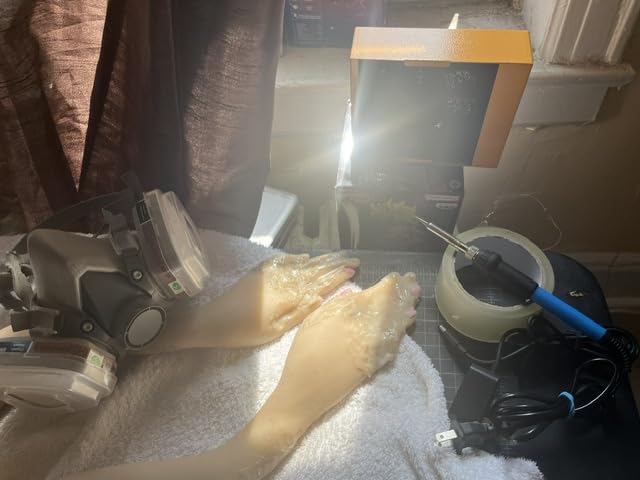
Most of the compact extractors in this price range are ABS plastic, and a few owners here tell you that plastic cases crack or deform near a bench that gets warm. The NOEVSBIG uses a metal enclosure with a pure copper motor, which is the part we would expect to still be running in several years.
At 2800 RPM it is quiet and pulls effectively at close range, and the listing pattern marks it ESD-safe, which matters when you are working on populated boards rather than assembling bare kits. Two spare carbon filters ship in the box, so the first replacement is covered.
The honest limitation is filtration depth. This is a single-stage carbon design, and small single-stage carbon beds are where the cheap-extractor criticism usually lands. Our read is that the hardware is better made than most of its class, but the media is thinner than the desktop unit that leads this roundup.
It also has the lowest sales rank in the group, which means fewer owners and less long-horizon feedback. That is not a deal-breaker for a bench tool, but it does mean you are trusting the build quality rather than a decade of field reports.
Check whether build quality is your priority over media depth
If your bench is shared, mobile, or gets knocked around, hardware durability is a reasonable thing to optimise for. A unit that survives a decade of being moved still gives you correct filtration, while a plastic box that cracks gives you a broken fan and a replacement.
If your soldering is heavier and you generate more flux vapour than a hobbyist typically does, prioritise media depth instead. Buy the thicker carbon even if the case is plastic.
Where it falls short for you
Single-stage carbon saturates quickly with frequent use, so a heavy solderer will be replacing filters on a tighter cycle than the specs suggest. Owners also note the fan is not as strong as the premium units in this group.
At 110V it is not portable to a European or other 220V bench without a converter. For anyone outside North America, verify the voltage on the listing before ordering.
7. Antidious Anti-ESD Fume Extractor – Best for ESD-Sensitive Electronics Work
Antidious Fume Extractor Anti-ESD Solder Smoke Absorber Portable Filter for Soldering DIY Fan Extraction Equipment with Spare Activated Carbon for Brazing Welding Soldering, Fume Prevention Remover
ESD surge protection
EC motor rated 57,000 hours
4-5 inch absorption
4.7 inch square footprint
Pros
- ESD surge protection diverts transients from your boards
- Two foam and carbon filters included
- Works flat or upright
- Compact square footprint sits close without crowding
Cons
- Owners report suction weaker than expected
- Highest one-star share in the set at 9 percent
- Must be placed close to the joint
This is the most explicitly electronics-focused unit here. Rather than simply labelling itself ESD-safe, it includes surge protection that diverts voltage transients away from your circuit, which is a real consideration when you have a mains-powered bench tool sitting inches from a board you care about.
The EC motor is rated at over 57,000 hours and the footprint is a 4.7 inch square that runs horizontally or vertically. Reviewers like the quiet, compact design and call it good value, with one review comparing it favourably to the Hakko design at a fraction of the cost.
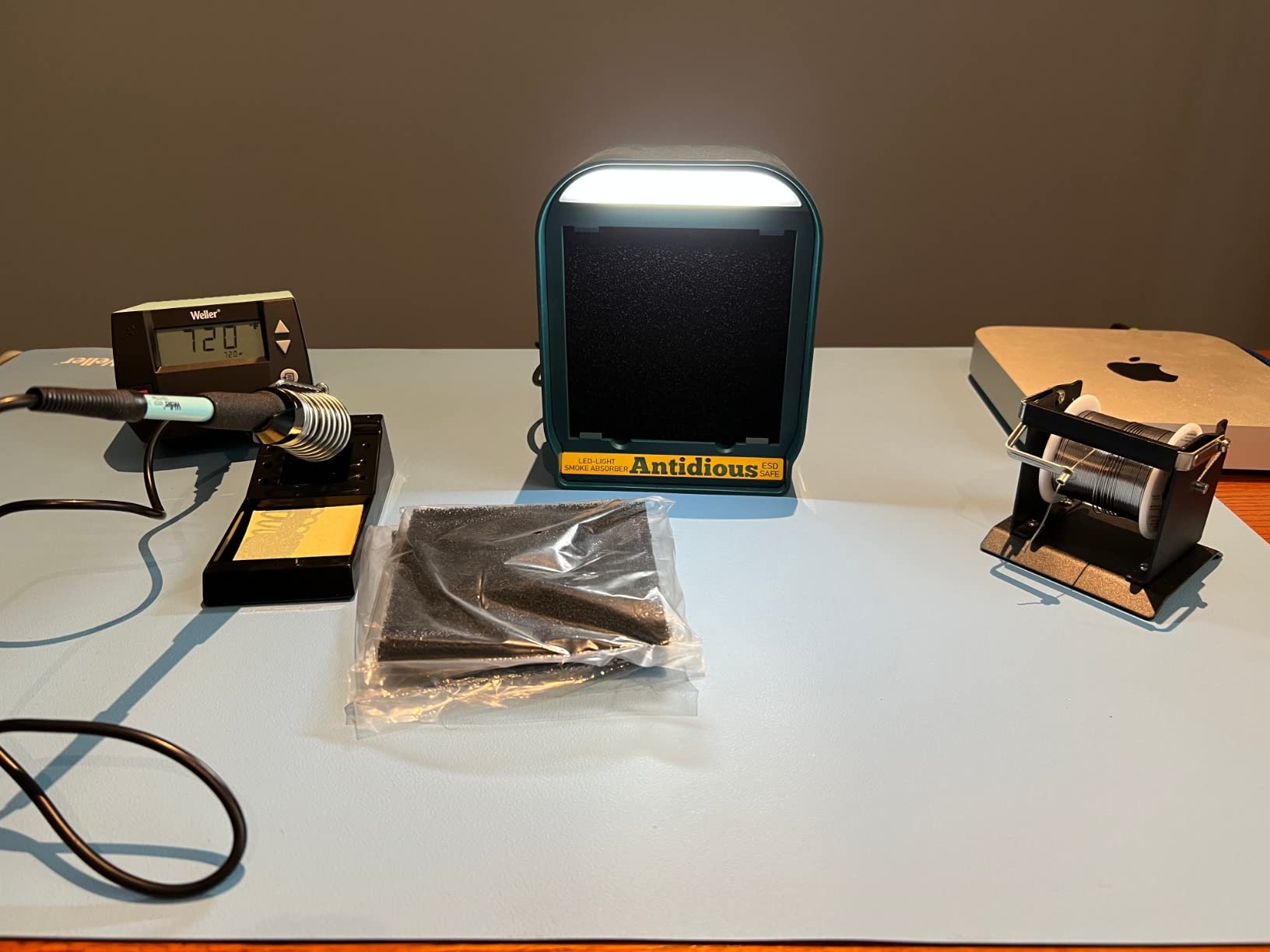
That comparison is fair on size and price, but not on capture. The listed absorption range is 4 to 5 inches, and a meaningful minority of owners describe the airflow as weaker than they expected, which is consistent with a 9 percent one-star share, the highest in this roundup.
Our reading is that this is a supplementary extractor, not a sole ventilation source. If you already open a window and this is capturing the last of the plume near the joint, it does its job well.
Check whether you need ESD protection at all
ESD surge protection matters most when you repair live boards, run a shared bench with ungrounded equipment, or work on parts that would be expensive to replace. For kit assembly on a clean desk it is a nice-to-have rather than the deciding factor.
Ask what else on your bench needs the same protection. A cheap extractor adding surge protection while your power supply does not is solving the smaller half of the problem.
Where it falls short for you
The media is a urethane foam sheet combined with activated carbon, and thin foam layers are exactly what the soldering community criticises when it comes to gas-phase filtration. Expect to replace these filters more often than a granular bed, and expect odour control to fall off first.
Weak suction plus a short 4 to 5 inch range means it cannot be relied on as your only ventilation in an enclosed room. Users soldering in a bedroom should treat that as a signal to open a window regardless.
8. YIHUA 948DQ-I – Best Solder Fume Extractor for Spare Filter Supply
YIHUA 948DQ-I Solder Fume Extractor Fan Solder Smoke Absorber Remover Tiltable Angle with 8 Extra Fan Filters for Soldering Wood Burning and more
8 spare filtration adsorbers
30 degree tiltable stand
Dual front and rear filtration
5W fan
110-127V
Pros
- Eight spare adsorbers
- the largest supply here
- Dual front and rear filtration paths
- 30 degree tilt plus side fenders widen capture angle
- Ranks second in Fume and Smoke Extractors
Cons
- 5W fan limits capture to about 10 cm
- 110-127V only with no low voltage option
Eight replacement adsorbers in the box is unusual at any price, and it changes the ownership maths. If you are the type who never replaces a filter, this package effectively gives you several years of consumables before you need to think about it at all.
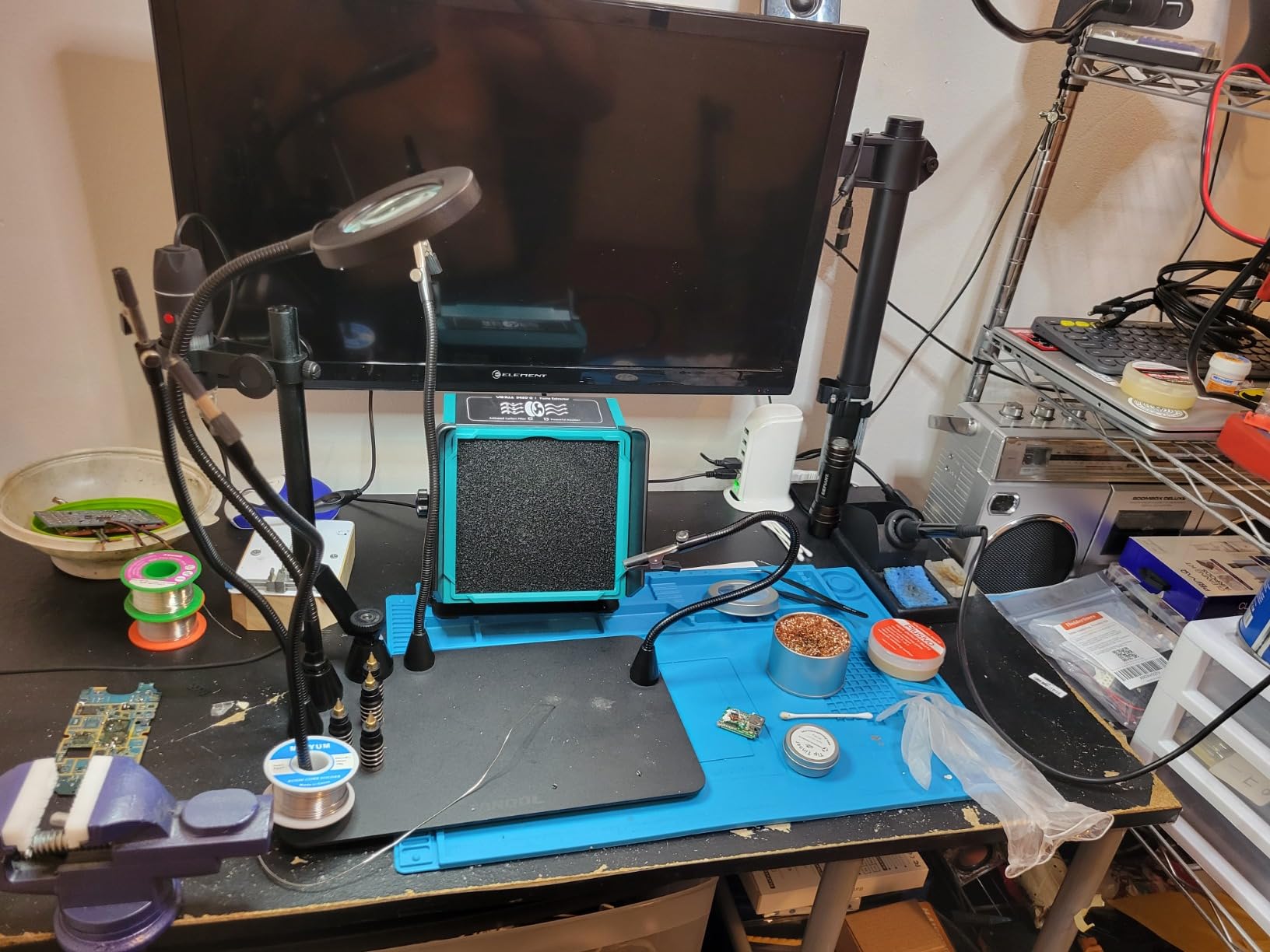
The dual front and rear filtering with side fenders is the other design choice worth noting. Instead of one intake face, the fenders create two paths into the adsorber, and the 30 degree tiltable stand lets you angle the whole unit toward the joint without picking it up and turning it around.
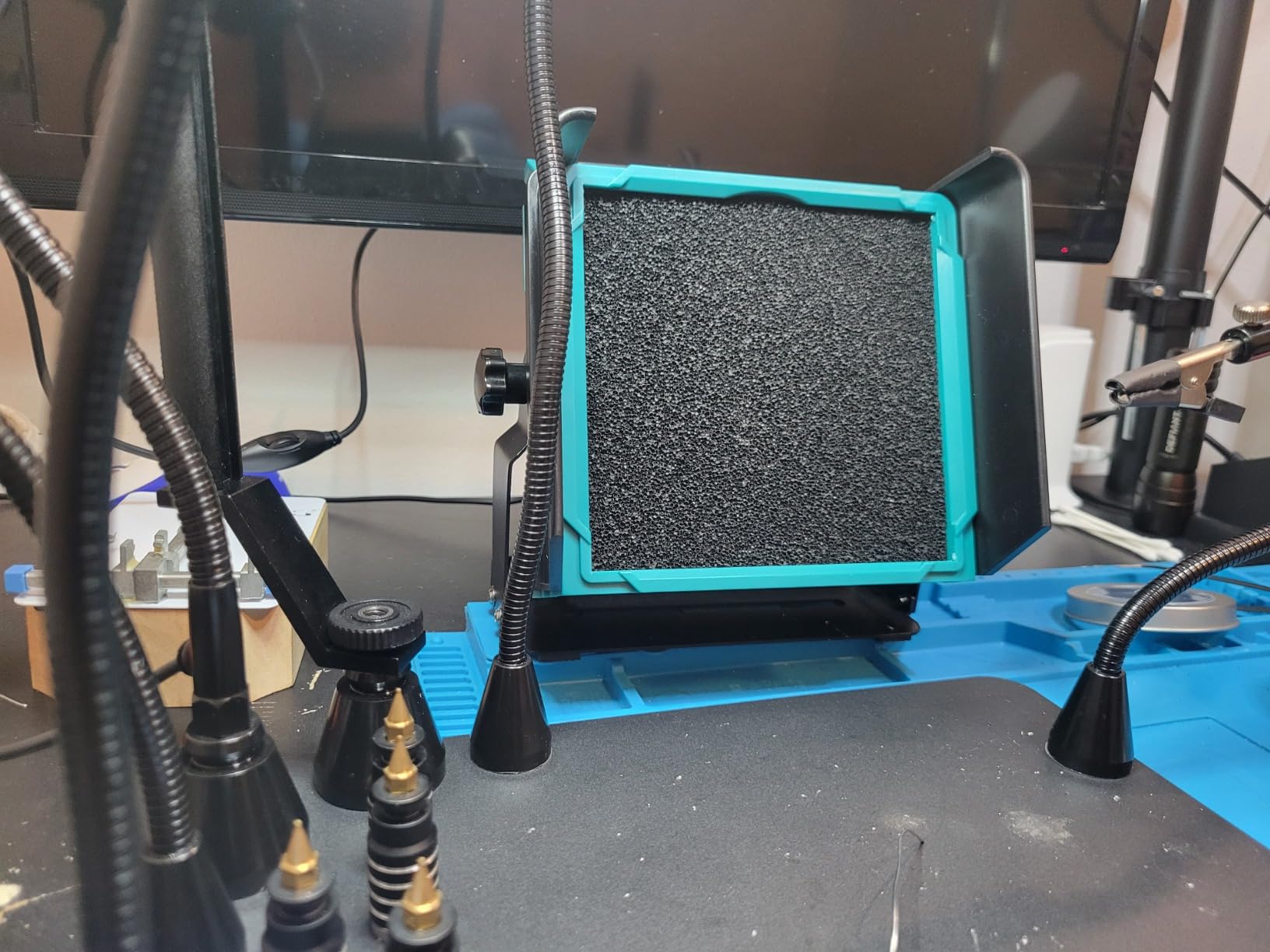
It is also ranked second in its category, with 75 percent of reviews at five stars, and owners repeatedly mention the abundance of spare filters and the adjustable tilt as the deciding factors for their purchase.
What they also mention is that the 5W fan works at close range only. The listed effective distance is about 10 cm, roughly four inches, so this is a fine-contact absorber for fine work rather than something that reaches across a bench.
Check the distance before the filter count convinces you
A 10 cm working range is genuinely useful for SMD rework, small connectors and fine wire work where the joint sits in front of you and you can bring the unit right up to it. It is not useful if you work on large boards at arm’s length.
Count your spare filters against your soldering hours rather than your optimism. Eight filters is generous for occasional work and short for someone soldering daily with rosin-core flux.
Where it falls short for you
A 5W fan is a small fan. Several owners note the unit is best for close-range work rather than capturing fumes across a bench, and we would not expect it to clear a room or handle stained glass joints.
It is 110-127V only, so outside North America you will need a step-down arrangement. And it is a small single-layer adsorber, so the filtration depth is modest despite the generous spare supply.
9. Weller WSA350 – Best for Heavier Active Fluxes
Weller Genuine 120v Bench Top Smoke Absorber | WSA350
20W 120V fan
Replaceable WSA350F carbon filter with spare
ESD safe
Bench top mount
2 lbs
Pros
- Nameplate brand chosen for more active fluxes
- Replaceable carbon filter with a spare included
- ESD safe construction
- Quiet 20W fan
Cons
- Bench-top only with no flexible capture arm
- Regular filter changes add ongoing cost
Weller is a name that repair shops already trust, and this benchtop absorber is aimed at stations running more active fluxes than hobby work usually involves. Where no-clean flux barely smells, an active or rosin flux load is heavy enough that you want a filter media you can keep replacing confidently.
The WSA350F carbon-activated filter is replaceable and a spare is included in the box, which is more convenient than units that ship with no spare at all. At 20W and 2 pounds it stays quiet and stays put, and owners report 73 percent five-star ratings for quiet, effective flux fume control.
Reviewers are clear about the recurring cost. The carbon filter needs regular replacement and that is the single most common note in the reviews, along with the fixed benchtop placement that gives it no reach.
Because the media is consumable and widely available, this unit pairs well with a filter supply habit. Our replacement filter roundup covers the standard cartridge types worth keeping on the shelf.
Check whether your flux is aggressive enough to need this
If you work with no-clean flux on lead-free solder, the lighter media in the smaller desktop units will handle the job and cost you less to maintain. Active fluxes, rosin-core on older boards, and long unattended sessions are where a properly replaceable carbon bed starts to earn its cost.
Also consider whether you solder in a room that needs real filtration rather than odour control. That is the case where you want a proper carbon stage and a spare you can install in under a minute.
Where it falls short for you
The benchtop mount is fixed. There is no hose and no arm, so if your hand reaches past the front of the unit you will capture much less than you should, and the only fix is to move your body or move the unit.
There is also no published noise figure and no filtration efficiency rating in the listing, so you are buying on brand reputation and replaceability rather than on stated performance. If measured numbers matter to your decision, one of the units with a published dB rating is a safer bet.
10. SainSmart Magnetic Gooseneck Extractor – Best for Flexible Mounting and Lighting
SainSmart Portable Fume Extractor Fan, Magnetic Solder Smoke Absorber
400mm memory gooseneck
Magnetic cone base plus clamp
3700 RPM fan
10 inch absorption
12V
Pros
- Memory gooseneck holds position without sagging
- Magnetic base plus clamp fits metal and non-metal surfaces
- Only unit here with a built-in adjustable LED lamp
- Reaches up to 10 inches from the joint
Cons
- 12V needs an external power supply
- Carbon filter cotton needs periodic replacement
- Lowest rating distribution in the set
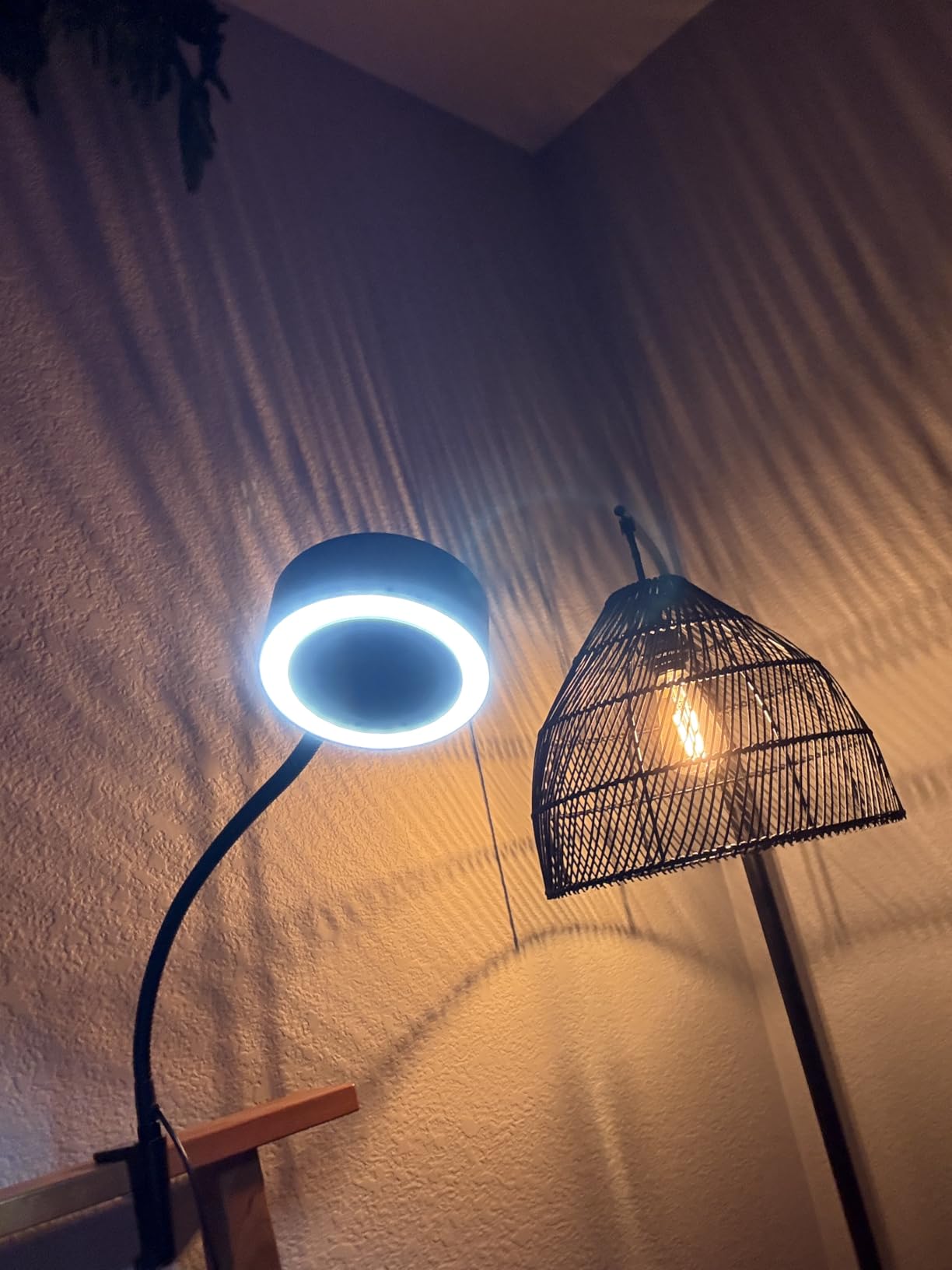
The gooseneck is the whole point of this one. A 400mm stainless steel memory tube holds whatever position you bend it into and does not creep or droop as it heats up, which solves the sagging-arm complaint that shows up constantly in forum threads about fume extractors.
The magnetic cone base sticks to a steel bench or a rack, and the included clamp handles non-metal surfaces, so you can mount it out of your desk footprint entirely. Buyers value that combination of flexible positioning, magnetic mounting and integrated lighting, with 67 percent of reviews at five stars.
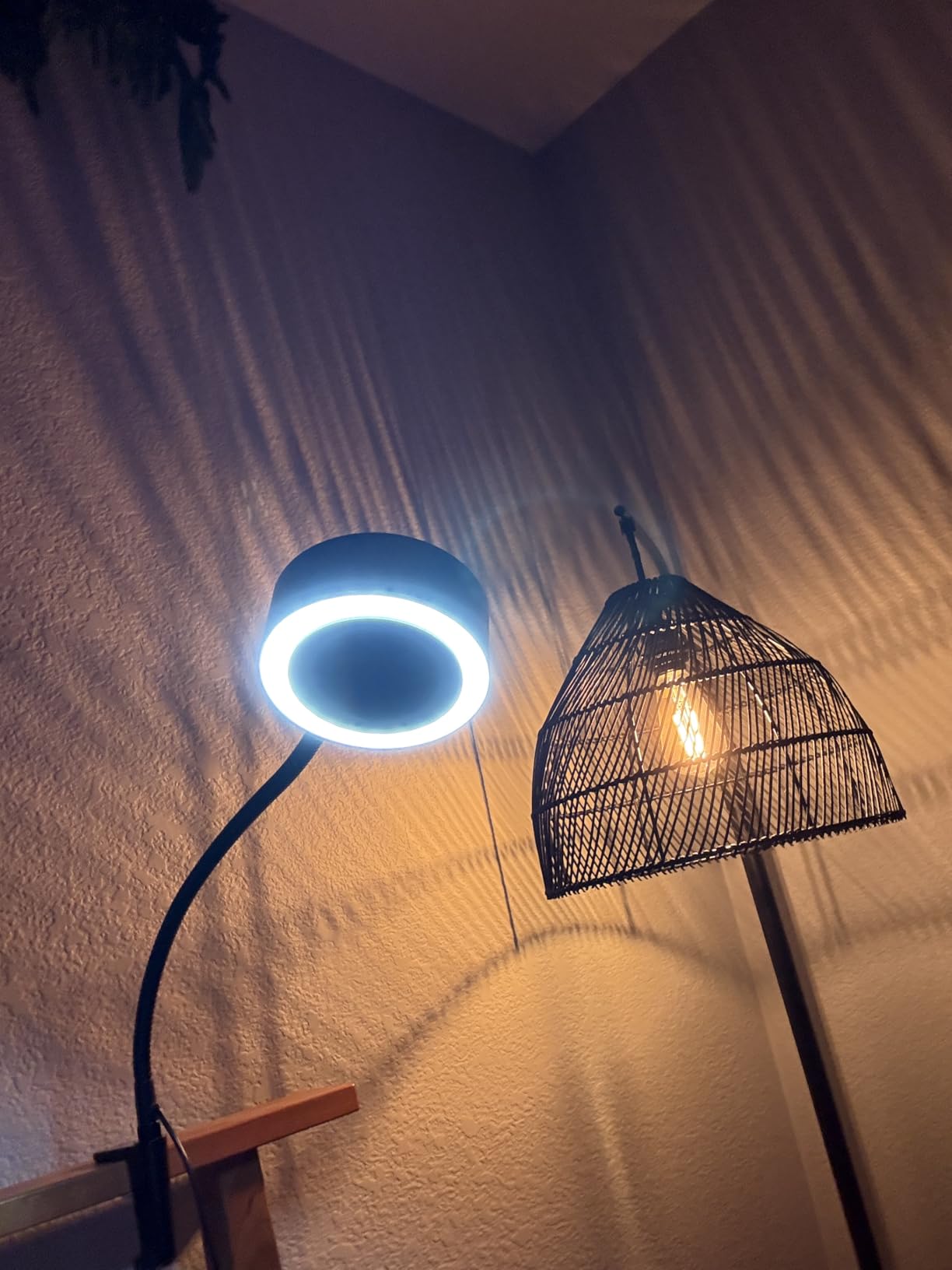
It is also the only unit in this roundup with a built-in LED work lamp that switches between 3000K, 4500K and 6000K, which is genuinely useful for inspecting solder joints since most bench lighting skews warm.
The 3700 RPM fan carries a listed absorption distance of up to 10 inches, which is the longest reach of the compact designs here. Some buyers mention the reach falls short against premium units and the carbon filtration is mediocre, and the rating distribution is the weakest in the group with 10 percent three-star reviews.
Check your mounting surface and your power
The magnetic base is what makes this unit different, and it only helps if you have somewhere to stick it. A steel-framed bench, a rack, or the side of a steel shelf is ideal. If your whole bench is wood or particle board, you are relying on the clamp and losing the main advantage.
Because it runs on 12V, you will need a power brick on the desk or under the bench. Plan for that cable run before you commit, since it is often what makes this arrangement awkward on a tidy workstation.
Where it falls short for you
The media is activated carbon filter cotton, which behaves more like a foam sheet than a granular bed. It will handle odour and light particulate, and it will need replacing more often than a proper carbon bed in a heavier work schedule.
At 200 reviews this has the smallest owner base in the roundup, so there is less long-term feedback on motor durability. If you expect years of daily use, a unit with a larger review history is the safer assumption.
How to Choose a Soldering Fume Extractor for a Home Bench
Start with capture distance, not CFM. The unit only protects you if the intake sits close enough to the joint to grab the plume before it reaches your face. Anything within about 6 inches works when you can position the box right at the work; anything above 10 inches needs a hose or arm to be usable at all.
Treat published CFM as a ceiling. These figures are measured at a free inlet with a clean filter, so delivered airflow at your nozzle will be lower, and it falls further as the media loads with dust and flux residue. A larger number on the box does not make a thin-carbon unit better than a smaller one with real media.
Next, read the filter media description literally. A granular or thick carbon bed does gas-phase adsorption, and a pre-filter plus HEPA or particulate stage does the fine particle work. A single sheet of carbon foam mostly removes odour, which is a cosmetic improvement rather than a safety one.
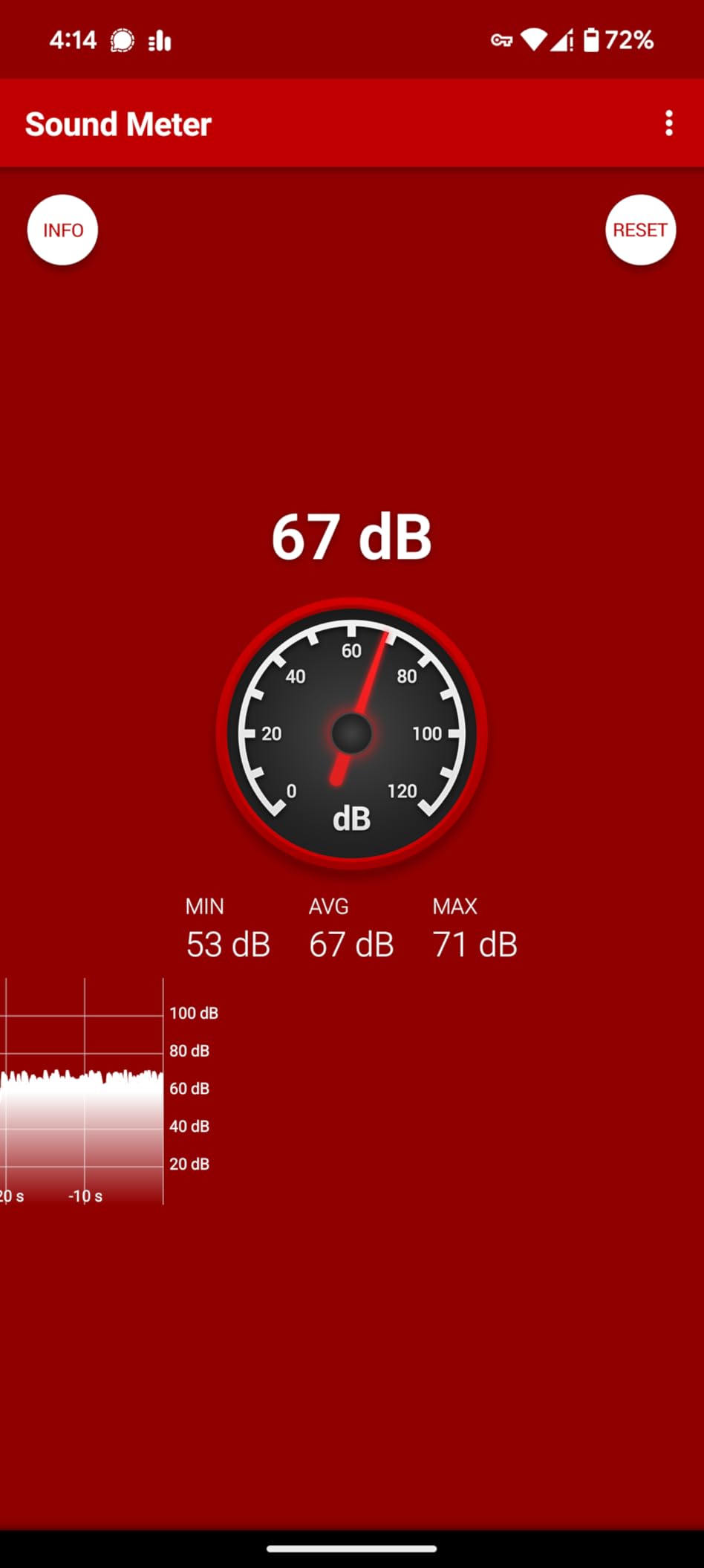
Noise decides whether the unit stays switched on. Between 45 and 55 dB is the practical range for a room you also work in, because a louder extractor gets turned down or switched off, and an extractor that is off provides nothing. If you share a space, treat the noise rating as a hard constraint rather than a nice-to-have.
Bench footprint decides whether you keep it. Measure the depth of your working area and the space above the board, because a tall upright unit and a low flat unit need very different clearances. Several of these designs can be run either orientation, which is worth paying a little more for.
Finally, price the filters before you buy the unit. Filter replacement is the ongoing cost of any extractor, and a cheap box with expensive proprietary filters can cost more over three years than a better unit with cheap standard media. Check whether replacement filters are sold separately or bundled, and whether they are the same part number across the range.
Activated Carbon Foam vs Granular Carbon: What Actually Filters Solder Fumes
This is the single most repeated complaint about budget solder fume extractors, and it is worth stating plainly: thin activated carbon foam strips odour from the air and does almost nothing to the fine particulate and rosin vapour you actually breathe. Real protection needs a pre-filter, a genuine particulate stage and a substantial carbon bed.
The mechanism is simple. Gas-phase compounds adsorb onto the surface area of carbon pellets, and a thin foam sheet simply does not have enough surface area to hold meaningful capacity. It saturates in weeks, and once saturated the odour returns while the media stays in the unit looking unused.
Community consensus across r/soldering and r/AskElectronics lands in the same place, and it is the reason we weighted media depth heavily when ranking. A unit with 0.4 inch carbon is a different category of tool from one with a 0.2 inch foam layer, even if both listings say activated carbon.
Where granular carbon is worth the extra bulk: rosin-core flux, older boards with unknown finishes, any session over an hour, and any room where someone else breathes the same air. Where it is not worth it: occasional no-clean lead-free work in a well-ventilated room, where the cheaper foam units in this roundup do an acceptable job of keeping odour down.
Extractor vs Open Window and Box Fan: When the Free Option Wins
For occasional weekend soldering in a room you can open, a window plus a box fan genuinely beats a cheap extractor, and the hobbyist consensus is blunt about it. Users on r/StainedGlass describe that setup as wildly effective, and members on eevblog report a fan arrangement holding effective capture at 8 to 12 inches while staying quiet on low.
The free option has one structural advantage no extractor can match: it moves air out of the room rather than filtering it back in. A window does not saturate, does not need filters, and does not circulate flux residue across the room once per minute for the whole session.
Where an extractor wins is when you cannot open a window. Shared rooms, apartments with sleeping neighbours, winter months, and rooms where the fumes affect someone with asthma are the situations where source capture is the only real option. Members with heavy soldering load recommend ductless ventilation setups precisely because they cannot vent outside.
DIY builds from a PC fan, a 5015 blower, a carbon filter and a dish sponge are common, and reports describe them as quiet and compact with suction weaker than expected. Treat that as an occasional-work solution on an open bench, not as a substitute for media-backed capture in a closed room.
Our practical answer: open the window and use the extractor anyway when the air is stale. The two together cost nothing and remove more than either alone.
Frequently Asked Questions
What is the best smoke extractor for soldering?
For most home benches the KOTTO Solder Smoke Absorber is the strongest all-round pick: a 0.4 inch activated carbon bed, a 3000 RPM fan pulling from 5 to 6 inches, a footprint small enough for any desk and a 4.7 star average across more than 2400 reviews. If you need reach rather than quiet, choose the KOTTO 52 CFM hose model. If you want the option of adding a true particle stage later, the Hakko FA400-04 accepts an optional high-efficiency filter.
Do soldering fume extractors work?
They work, but only as source capture and only if the media is real. A unit whose intake sits a few inches from the joint, with a pre-filter, a genuine particulate stage and a thick granular carbon bed, removes the plume before it reaches your breathing zone. A unit with a thin carbon foam sheet mostly removes odour and lets fine particulate through. Delivered airflow also drops as filters load, so capture is strongest with fresh media.
Should I use a fume extractor when soldering?
Yes for regular soldering, and especially for anyone soldering in a shared room, a bedroom, or a space where you cannot open a window. Soldering releases rosin fume aerosols, ultrafine particles, metal oxides and volatile organic compounds that irritate the respiratory tract and accumulate with repeated exposure. If you solder a few times a year in a room with an open window, a fan and airflow usually handle it.
Is it safe to inhale soldering fumes?
No. Regular exposure to rosin flux fumes and ultrafine particulate is associated with throat irritation, coughing and sensitisation, and solder can contain metals such as tin and lead. Source capture at the joint is the control that matters, because a general room air purifier cleans the room after the smoke has already spread rather than protecting you at the moment of exposure.
What are the alternatives to fume extractors?
The main alternatives are an open window with a box fan, which moves fumes out of the room entirely and works well for occasional work; a general air purifier, which cleans room air but does not protect your breathing zone at the joint; a respirator, which protects the wearer but does nothing for the room; and a downdraft or wall-mounted extraction system, which suits a fixed workstation rather than a portable home bench.
How far from the solder joint should a fume extractor be?
As close as you can manage. For the compact desktop units in this roundup that means roughly 4 to 6 inches, with the intake slightly below and beside the joint to catch the rising plume. Flexible hose and gooseneck designs extend this to 8 to 12 inches by letting you place the intake at the work while the motor body sits away from your ear. Beyond about 12 inches even good units stop pulling reliably.
Best Soldering Fume Extractor Picks for 2026
For most home benches in 2026, start with the KOTTO Solder Smoke Absorber. Real media depth, strong capture for its size, quiet enough to leave running, and the largest review base we tested means the risk of an unpleasant surprise is low.
If your bench layout puts the joint out of reach, take the KOTTO 52 CFM hose model and accept the noise, or the SainSmart gooseneck if you would rather mount the unit off the desk entirely. If your soldering involves more aggressive flux and you want a media you can keep replacing with confidence, the Weller WSA350 or the Hakko FA400-04 with its optional particle filter are the more serious choices.
Whatever you pick, keep a spare carbon filter on the shelf from day one, keep the intake within a few inches of the joint, and open a window when you can. That last habit will do more for your lungs than any single specification on any box.