Aperture decides almost everything about a Dobsonian telescope used for deep sky viewing, because light-gathering power scales with the square of the mirror diameter. The Sky-Watcher Classic 200 in this lineup shows you a 203mm primary that gathers 78% more light than the next size down, and that single number explains why it appears on almost every shortlist. Everything else, focal ratio, tube design, coatings, finder, focuser, is a refinement on top of that one decision.
That is why the best dobsonian telescopes for deep sky viewing are not the ones with the longest feature list. They are the ones where the aperture you can realistically carry, store, and point at the sky actually matches the faintness of the objects you want to see. Our team spent weeks comparing the six scopes below across mirror specifications, focusers, mounted weights, and the accessories that actually arrive in the box.
Two honest findings shaped this guide. First, every one of these telescopes needs collimation at some point, so the question is not whether but how often and how hard. Second, the jump from a 6-inch tabletop to a 10-inch full-size Dob buys a real and measurable increase in faint detail, and it also changes your transport plan, your setup routine, and the objects you can realistically reach.
If you want the short answer first: the Sky-Watcher Classic 200 8-inch is the scope most people should end up with, the Celestron StarSense Explorer 8-inch is the better pick if you cannot star-hop yet, and the Celestron StarSense 150mm tabletop is the right one when storage space or a first purchase matters more than faint detail. If galaxies are your primary interest rather than planets, our guide to the best telescopes for viewing galaxies goes deeper on that specific target class.
Table of Contents
Top 3 Best Dobsonian Picks for Deep Sky Viewing in 2026
The three picks below cover the realistic decision space: a full-size 8-inch for the best balance of light and portability, an app-guided 8-inch for buyers who want help finding targets, and a tabletop 6-inch for buyers with limited space. The full Dobsonian roundup covers the wider market including 12-inch tubes if you want to go bigger.

Sky-Watcher Classic 200 8 inch
- 203mm fully multi-coated borosilicate primary at 94% reflectivity
- 1200mm focal length with 2 inch Crayford-style focuser
- Tension Control Handles and Teflon bearings

Celestron StarSense 8 inch
- StarSense app points a docked phone at the sky for you
- 203mm XLT-coated Newtonian at 1200mm focal length
- 2 inch Crayford focuser with red-dot finder

Celestron StarSense 150mm
- 150mm tabletop Newtonian at 650mm focal length
- App-guided pointing with sky-recognition technology
- 25mm and 10mm eyepieces plus red-dot finder
All Six Dobsonians at a Glance in October
Every scope below is an alt-azimuth Newtonian on a friction-bearing rocker box, so the meaningful differences are aperture, focal length, tube construction, pointing aid, and mounted weight. The table uses only manufacturer-published specifications for each model.
| Product | Specifications | Action |
|---|---|---|
| Sky-Watcher Classic 200 8 inch Dobsonian |
|
Check Latest Price |
| Celestron StarSense Explorer 8 inch Dobsonian |
|
Check Latest Price |
| Celestron StarSense Explorer 150mm Tabletop Dobsonian |
|
Check Latest Price |
 Sky-Watcher Heritage 150 Tabletop Dobsonian Sky-Watcher Heritage 150 Tabletop Dobsonian |
|
Check Latest Price |
 Sky-Watcher Flextube 250 10 inch Dobsonian Sky-Watcher Flextube 250 10 inch Dobsonian |
|
Check Latest Price |
 Zhumell Z10 10 inch Dobsonian Zhumell Z10 10 inch Dobsonian |
|
Check Latest Price |
1. Sky-Watcher Classic 200 8 inch Dobsonian – Best All-Round Traditional Design
Sky-Watcher Classic 200 Dobsonian 8-inch Telescope – Solid-Tube – Simple, Traditional Design – Easy to Use, Perfect for Beginners, White (S11610)
203mm parabolic primary
1200mm focal length
94% reflective coatings
45 pounds assembled
Pros
- 203mm primary gathers 78% more light than the next size down
- 94% reflective fully multi-coated borosilicate mirrors
- Tension Control Handles move the tube without perfect balance
- Includes 2 inch Crayford-style focuser with 25mm and 10mm eyepieces
- Two year warranty
Cons
- Needs re-collimation after the tube is moved or knocked
- No tracking so faint targets require finder charts or an app
- 45 pound assembled weight is awkward for one person to carry
The Classic 200 is the telescope we keep coming back to because it does the fundamentals without asking anything of you. The 203mm parabolic primary reaches a faintest stellar magnitude of 14.2, and with the Radian Aluminum Quartz coating on both mirrors you get the full 94% reflectivity figure across the light path. At 1200mm of focal length on a 203mm mirror, the working focal ratio lands right around f/6, which is the sweet spot for splitting globulars and picking out galaxy structure rather than sweeping wide fields.
Mounted weight is 45 pounds, split as a 20 pound tube and a 25 pound base, and the overall footprint is 49 inches deep by 18 wide by 27 high. That size is genuinely the largest constraint in this list. It does not fit in most small cars with the base assembled, but the tube separates cleanly and the rocker box comes apart with a few bolts.
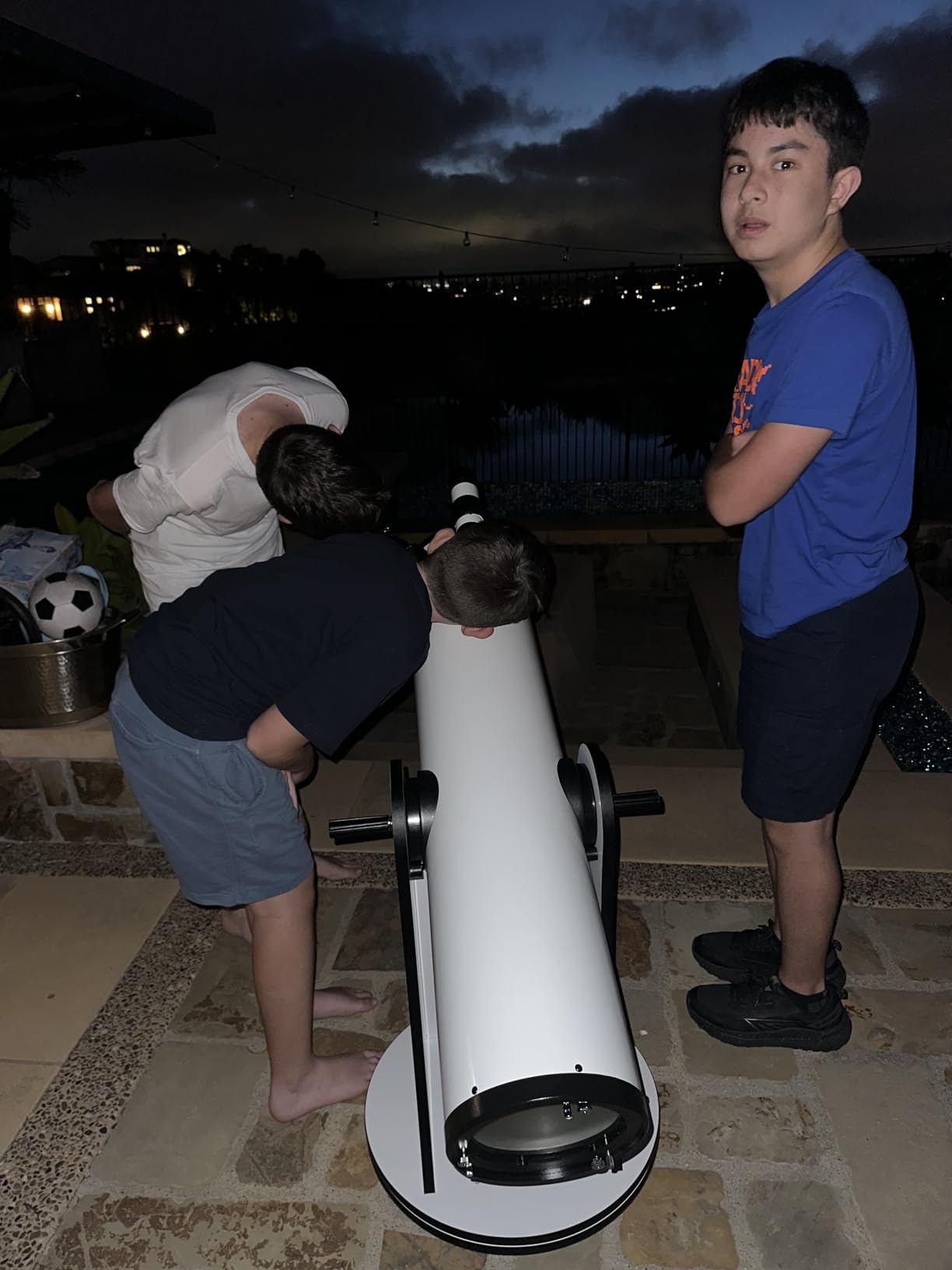
The Tension Control Handles are a small design decision that makes a real difference in practice. Instead of hunting for balance every time you want to move the tube, you squeeze the handles and the tube releases, then lets go once it is moving. Reviewers consistently single these out alongside the smooth azimuth movement from the Teflon bearings as the two features that make an 8-inch tube manageable rather than frustrating.
Collimation is the real recurring chore. A solid-tube Dobsonian needs its primary re-aligned after transport or any knock, and the honest expectation is that you will do this a few times a year. Budget for a laser collimator early, because it converts a fifteen-minute job into a two-minute one.
Who the Classic 200 suits
Buy this one if your observing involves structure rather than just detection. At 203mm you can start resolving the Andromeda Galaxy’s dust lanes, separate the Trapezium, and see the Ring Nebula’s annulus rather than only its glow. If you have a chart or an app and a few clear nights, the manual mount costs you nothing to operate.
It also suits anyone who wants one instrument to cover planets and deep sky. The same 1200mm focal length handles Jupiter’s belts and Saturn’s rings at moderate magnification, so you are not buying a deep-sky-only tool. If you also plan to spend time on the Moon and planets, our picks for the best telescopes for viewing planets cover the trade-offs in more detail.
Who should skip the Classic 200
Skip it if you cannot get the 45 pounds up stairs, into a hatchback, or across a garage by yourself. Two-person handling becomes the norm rather than the exception at this weight, and that is where a tabletop design or a collapsible tube is a better answer. Skip it too if you want motorized tracking or guided pointing, because this is a pure manual scope with no electronics at all.
2. Celestron StarSense Explorer 8 inch Dobsonian – Best Value for Beginners Who Cannot Star-Hop
Celestron StarSense Explorer 8″ Dobsonian Telescope with Smartphone App
203mm XLT-coated primary
1200mm focal length
2 inch Crayford focuser
43.4 pounds
Pros
- StarSense app removes the guesswork from finding faint targets
- XLT coatings with silicon dioxide and tantalum pentoxide
- Stable manual base with point-and-observe bullseye guidance
- Two year warranty with US-based support
Cons
- Requires a compatible smartphone plus the included dock
- Manual base does not track or motorize anything
- Only one 25mm eyepiece is included
The optical hardware here is the same class as the Classic 200: a 203mm Newtonian on a 1200mm focal length with a two-inch Crayford focuser. The XLT coatings use silicon dioxide and tantalum pentoxide layers rather than the standard aluminum-only stack, and reviewers report crisp views of the Orion Nebula, Andromeda, and the planets from suburban skies. Measured at 43.4 pounds, it is slightly lighter than the Sky-Watcher tube despite carrying electronics.
What separates it is the StarSense system. You dock a smartphone in the included cradle, the app takes a photo of the sky, matches the star pattern against its database, and works out where the telescope is pointing. From there it walks you to targets with on-screen arrows and builds a target list based on your location and time. For anyone who does not already know how to star-hop, this removes the single biggest reason people give up a Dobsonian in the first year.
The base itself is a manual alt-azimuth rocker, not a motorised mount, so nothing tracks once you arrive at a target. That is a fair trade for keeping the weight down and eliminating polar alignment, but on objects low in the sky you will still nudge the tube periodically to keep it centered. The included StarPointer red-dot finder takes very little room and is far easier to align than a traditional straight-through finder.
Two things to know before buying. You need a compatible smartphone and the dock, and the unlock step adds friction if you lend the scope to a friend. Reviewers also note that ambient light degrades sky recognition, so the app is most reliable in genuinely dark conditions rather than under a bright porch lamp.
Who the StarSense 8 inch suits
This is the scope for a first serious Dobsonian, particularly if the person buying it is not confident pointing at faint things. It covers the same deep-sky class as the Classic 200, so galaxies and bright nebulae are equally within reach, but it lowers the skill floor considerably. It also handles the Moon and planets well at moderate magnification, so a family that wants both ends of the sky gets one instrument.
It also suits anyone observing from a location where they cannot travel to darker skies. A pointing aid means you can sit in a suburban or bright backyard, dial in a target list for that exact time and location, and still spend the session on faint galaxies instead of hunting for them.
Who should skip the StarSense 8 inch
Skip it if you would rather learn to navigate by the stars, because that skill transfers to every telescope you will ever own and the app arguably delays it. Skip it if you want a second eyepiece out of the box, since only a 25mm is included and you will need at least a low-power wide-field option for large nebulae. If you want motorized tracking, this is not it.
3. Celestron StarSense Explorer 150mm Tabletop Dobsonian – Best Entry Point for Small Spaces
Celestron StarSense Explorer 150mm App-Enabled Tabletop Dobsonian Telescope
150mm Newtonian primary
650mm focal length
1.15 degree field
Tabletop base
25 pounds
Pros
- App-guided pointing makes faint targets reachable on a first night
- Includes both 25mm and 10mm eyepieces plus a red-dot finder
- Compact tabletop format stores out of sight in seconds
- Two year limited warranty
Cons
- 150mm aperture limits faint galaxy and nebula detail
- Manual tabletop base will not track anything
- Needs a compatible smartphone and dock for guided pointing
A 150mm mirror gives you roughly a third of the light of a 203mm one, and that difference shows on the faintest targets. What you still get is the Moon, the planets, the Orion Nebula, the Andromeda Galaxy, bright globulars, and the larger Messier objects, all at 650mm of focal length. That short focal length works out to a fast ratio near f/4, which gives a wide field and makes this genuinely pleasant for scanning rather than for drilling into detail.
Reviewers report the StarSense app doing the heavy lifting here. The panning knob on the tabletop base responds to light touches, and with the app you can go from unpacking to a view of the Ring Nebula without knowing a single star. The 1.15 degree field of view and 1.03 arc-second Dawes limit define the ceiling here: bright detail is on show, faint fuzz is not.
Portability is the reason to buy this scope. At 25 pounds and 19 by 19 by 32.5 inches, it moves between rooms, balconies, and campsites without a second person, and it stores out of sight when the session ends. Nothing here needs collapsing or disassembling beyond lifting the tube off the base, which is the entire appeal for apartment observers and anyone with a genuinely small footprint.
The trade-off is that the tube and base can be knocked out of alignment in transit if you are careless, and reviewers do mention occasional re-collimation after moving it. Two eyepieces and a collimation cap are included, which is generous at this level, and the aluminum coatings with a SiO2 overcoat hold up well for visual use.
Who the StarSense 150mm suits
It suits anyone whose real constraint is space rather than budget. If a full-size rocker box will not fit in your flat, your car, or your storage, this gets you a genuine Dobsonian optical tube and a working app instead of forcing you into a tabletop refractor that will not show galaxies at all. It also works as a travel companion to a larger scope, since 25 pounds is a genuinely carryable weight.
For children or adult beginners, it is the lowest-friction introduction we found. The two included eyepieces cover low and moderate power, the app does the pointing, and the whole thing assembles in a couple of minutes with no tools.
Who should skip the StarSense 150mm
Skip it if your target list is faint galaxies, dim planetary nebulae, or anything on the Caldwell list that requires real aperture. Owners are candid that 150mm hits its limit quickly, and no amount of eyepiece upgrading changes that limit because it is set by the mirror diameter. If you know you will be chasing small galaxies within a year, buy the 8-inch instead.
4. Sky-Watcher Heritage 150 Tabletop Dobsonian – Best Collapsible Design for Storage
Sky-Watcher Heritage 150 Tabletop Dobsonian Telescope – Perfect for Beginners, Easy Setup, Portable, and Fun (S11710)
150mm parabolic primary
750mm focal length at f/5
Collapsible tube
23 pounds
Pros
- Collapsible tube makes storage and transport genuinely easy
- Faster f/5 ratio gives bright wide contrast-rich views
- Borosilicate parabolic primary with RAQ coating
- Rubber feet reduce vibration on a table
Cons
- 1.25 inch helical focuser limits 2 inch eyepieces and wide-field use
- No finder scope or eyepieces listed as included in the standard kit
- 150mm aperture is modest for very faint targets
The Heritage 150 solves a different problem from the Celestron tabletop. Where the Celestron adds electronics, this adds portability. The collapsible tube design is the headline feature: the scope breaks down to a fraction of its assembled length and reassembles without tools while holding collimation. At 23 pounds and 24 by 17 by 17 inches, it fits in a closet or a car boot in a way that nothing else in this list does.
Optically it is a 150mm borosilicate parabolic primary with the Radian Aluminum Quartz coating at an f/5 ratio from a 750mm focal length. The faster ratio produces a brighter, wider, more contrast-rich view than the 650mm Celestron at the same aperture, which reviewers pick out on the Moon, planets, and brighter clusters. The 1.15 degree field of view is identical to the Celestron’s, so the two are near neighbours optically.
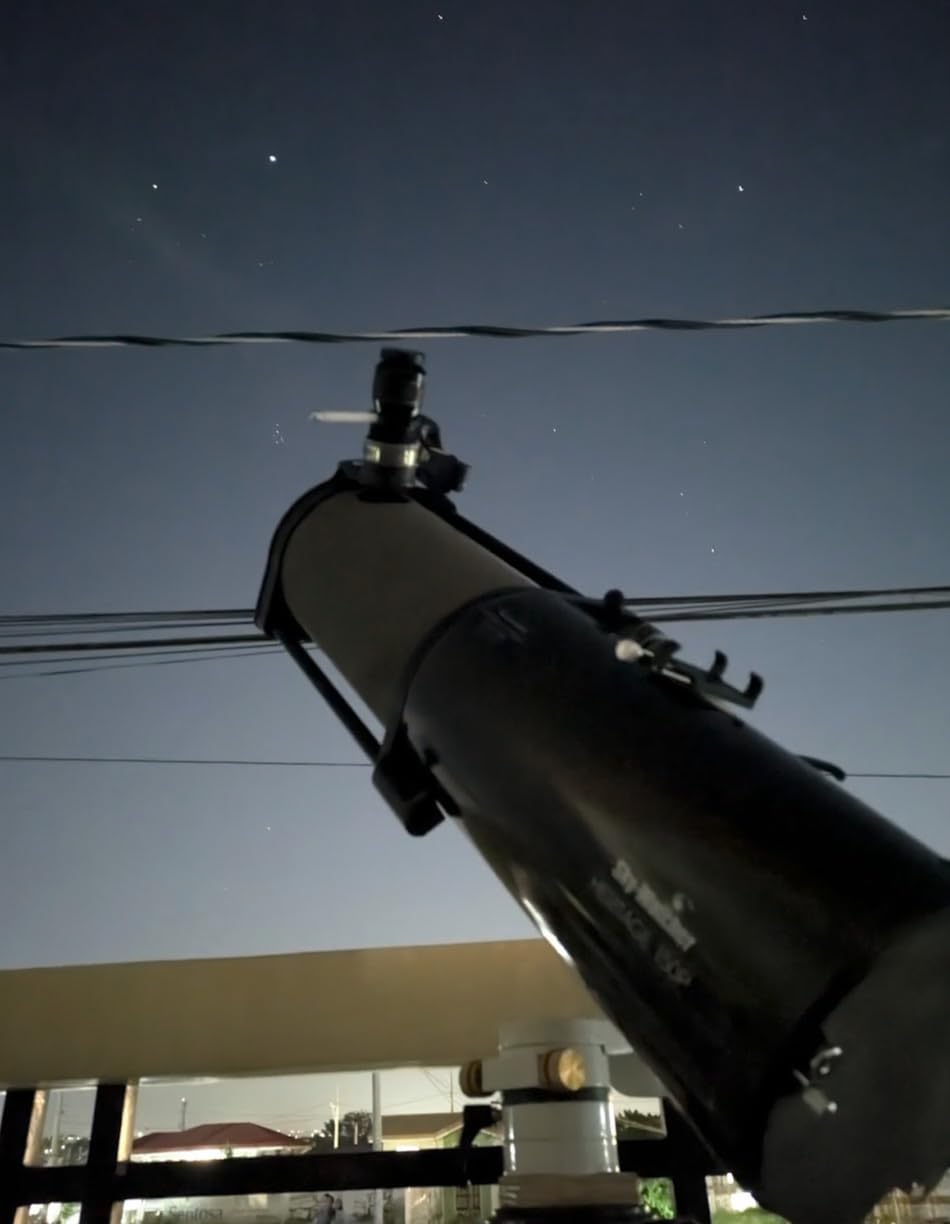
Two practical notes. The helical focuser is 1.25 inch, which rules out most modern 2-inch wide-field eyepieces and any imaging train, and it is a slow fine-focus mechanism compared with a Crayford. The rubber-footed tabletop base keeps vibration down but needs a table at a comfortable viewing height, since sitting on the floor and looking up into a 32-inch tube is not a sustainable observing posture.
The standard kit listing does not include eyepieces or a finder scope, which means you will be buying both before the first night out. Plan for that. In exchange you get the simplest, lightest, least fussy Dobsonian here, and a two year manufacturer warranty behind it.
Who the Heritage 150 suits
It suits observers whose storage is the binding constraint. If a full-length 8-inch rocker box simply cannot live in your home, a collapsible 150mm can, and it keeps collimation through the process rather than fighting it. It also suits travel-focused observers, since 23 pounds is a weight most people can carry to a dark site alone.
Second-guessing the missing eyepieces is fair, but many beginners already own a 25mm Plossl from another scope that will work perfectly here. The Heritage is a strong companion to an existing telescope rather than a replacement for one.
Who should skip the Heritage 150
Skip it if you want to buy one telescope and start observing that night without a second shopping trip. Skip it if you plan to grow into wide-field eyepieces, imaging, or any accessory that needs a 2-inch drawtube, because the focuser will block all of it. And skip it if faint galaxies from a suburban backyard are the goal rather than the Moon and planets.
5. Sky-Watcher Flextube 250 10 inch Dobsonian – Best Light-Gathering Upgrade
Sky-Watcher Flextube 250 Dobsonian 10-inch Collapsible Large Aperture Telescope – Portable, Easy to Use, Perfect for Beginners, White/Black (S11720)
254mm parabolic primary
1200mm focal length
94% reflective coatings
Collapsible tube
42 pounds
Pros
- 10 inch aperture shows large nebulae at their best
- Collapsible struts break the tube down for storage while holding collimation
- 2 inch Crayford focuser and 8x50 right-angle finder included
- Pre-drilled base holes make assembly straightforward
Cons
- Out-of-box collimation usually needs adjustment and a laser collimator
- Open truss tube has no light shield so stray light washes out faint targets
- Collapsed tube can go out of alignment if bumped during carrying
This is where the aperture argument stops being theoretical. A 254mm primary gathers 125% more light than a 203mm one, and owners describe the Orion Nebula filling the field like a dinner plate. The difference is not subtle brightness, it is objects that simply were not there before: fainter galaxies, the cores of large globulars, low-surface-brightness nebulae that a Bortle 6 backyard hides completely.
At 1200mm focal length you land around f/4.7, which is fast enough to give good wide-field scanning and bright images, and short enough that 250mm of aperture still produces a practical field of view. The fully multi-coated borosilicate mirrors are quoted at 94% reflectivity, matching the Classic 200 coating standard.
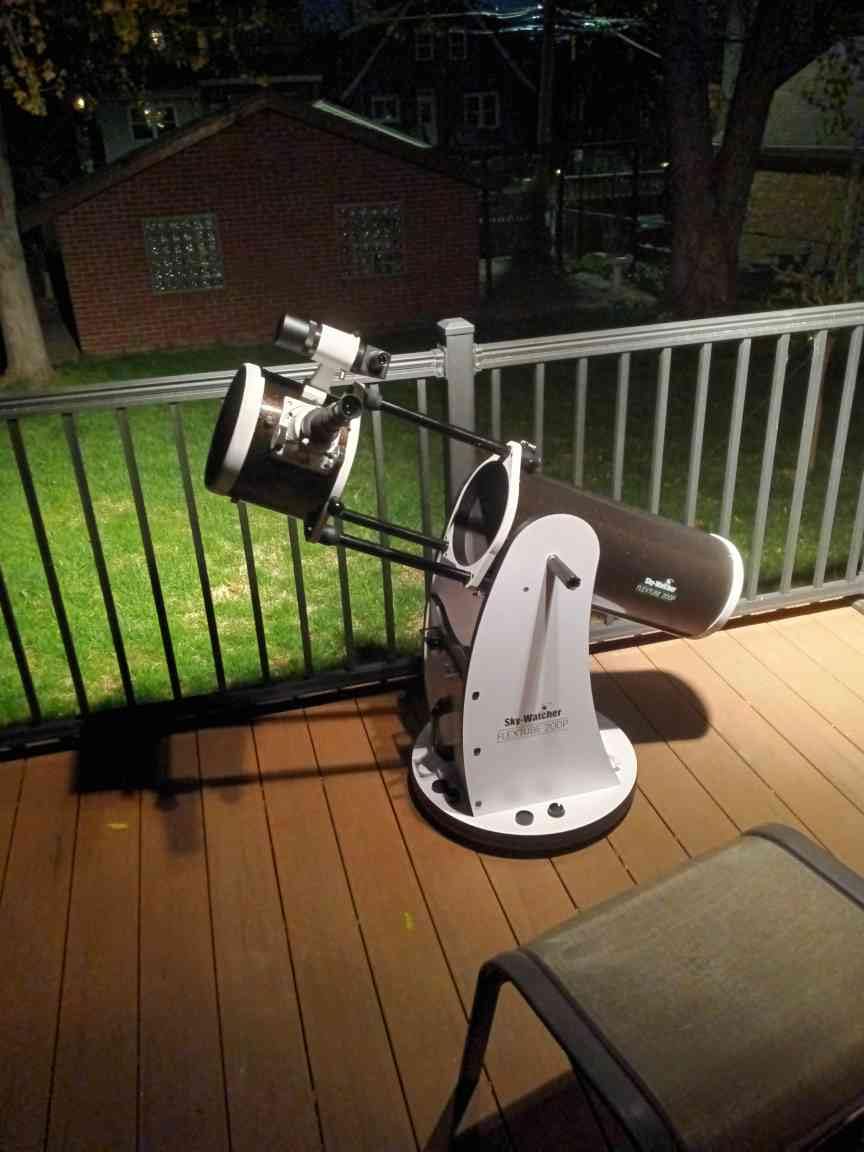
The collapsible strut design is what makes a 10-inch practical. The tube separates into sections that collapse the whole thing to roughly a third of its assembled length, and the strut design is intended to hold collimation through that cycle. The 42 pound assembled weight breaks down into pieces one person can lift, which is not true of most solid-tube designs at this size.
Collimation is where the reviews are most consistent, and most consistent in complaining. Out-of-the-box alignment usually needs work, and a laser collimator moves from optional purchase to essential one. Some owners report alignment drifting after the tube is bumped while collapsed, and a minority describe persistent problems that never fully resolved. The included Plossl eyepieces are entry-level, and you will want a Barlow or a zoom alongside them.
Who the Flextube 250 suits
It suits observers who have already worked through the brighter targets with an 8-inch and want the next tier of objects. If you live somewhere with genuinely dark skies, this is where the payback is clearest, because a fast 10-inch under a Bortle 2 or 3 sky outperforms a larger scope under city glow. The 8×50 right-angle finder is a genuine bonus, since a straight-through finder at this focal length is uncomfortable to use.
It also suits anyone who needs to move a large aperture without a second person. The collapsible tube is the feature that makes solo handling of a 10-inch realistic, and reviewers call out the Tension Control Handles and Teflon bearings for making that movement smooth.
Who should skip the Flextube 250
Skip it if you observe from a bright suburban or urban backyard and have no access to darker skies. An open truss tube has no light shroud, so stray light and skyglow degrade exactly the faint, low-surface-brightness objects you bought it for. Skip it if you are not willing to buy a laser collimator and re-align the tube when it is knocked, since that maintenance cycle is real.
Also skip it if 42 pounds and a tube taller than you is going to be a problem on stairs, because that logistics conversation tends to happen after delivery rather than before.
6. Zhumell Z10 10 inch Dobsonian – Best Included Accessory Kit
Zhumell – 10-inch Dobsonian Reflector Telescope – Large Aperture for Crisp, Bright Images – Solid Base Construction with Handle for Easy Transport – Ideal Astronomical Telescope
10 inch multi-coated primary
1250mm focal length
Built-in cooling fan
47 pounds
Pros
- Most complete accessory package in this group including a laser collimator
- Built-in fan cools the primary faster for sharp images sooner
- 10 inch multi-coated primary gives bright galaxy and nebula detail
- Integrated carry handle and manual clutches on a solid base
Cons
- Costs more than other 10 inch options for the same aperture class
- Tall 55 inch overall height is bulky and awkward to move alone
- Manual clutches can be over-tightened
- which hampers fine adjustment
The Z10’s real distinguishing feature is what arrives in the box. You get a 2-inch 30mm eyepiece, a 1.25-inch 9mm, an 8×50 right-angle finder, a Moon filter, a laser collimator, a focuser adapter, lens caps, and an eyepiece rack. Most competitors in this class include one or two eyepieces and nothing else. If you are factoring total cost of ownership rather than sticker price, that bundle changes the calculation substantially.
The optics are a fully multi-coated 10-inch primary at 1250mm focal length, which works out to roughly f/5. Owners report crisp, bright views of galaxies, nebulae, and planets, and the 2.72 degree field of view gives you a comfortable wide sweep across the summer Milky Way.
The built-in cooling fan is the second thing worth knowing about. A 10-inch borosilicate mirror needs time to shed heat before it delivers its sharpest images, and a fan that pulls ambient air across the primary cell shortens that wait substantially. Reviewers point to being able to start seeing sharp images sooner after moving outside, which is the difference between a usable session and a frustrating one.
Against that, the base is bulky at 21 by 21 by 55 inches and 47 pounds, which makes it the hardest of the two 10-inch options to move alone. The manual clutches need care, because owners report that over-tightening them takes away the fine azimuth adjustment that makes a big Dobsonian pleasant to use.
Who the Zhumell Z10 suits
It suits buyers who want a large aperture without a second shopping trip for eyepieces, a finder, and a collimation tool. If you are starting from nothing, that bundle removes the single most common beginner complaint about larger Dobs. The cooling fan also makes it a good fit for observers in warm climates where mirror cooldown is slowest.
The solid base and integrated carry handle suit star party and outreach use, where the scope will be moved around a field rather than set up in one spot. Two year warranty coverage is standard.
Who should skip the Zhumell Z10
Skip it if you already own decent 2-inch eyepieces, a finder, and a collimator, because you will be paying for a bundle you do not need on the same 10-inch aperture other makers offer. Skip it if 47 pounds and a 55 inch height is more than you can handle solo, because that is the honest limit for this design.
And skip it if you want GoTo pointing. There is no electronics, no motor, and no tracking here, which puts it in the same manual category as the Flextube 250 but without the collapsible transport option.
How to Choose a Dobsonian for Deep Sky in 2026
Aperture is the only spec that matters most
Light-gathering power scales with the square of the mirror diameter, so every step up the size ladder produces more than a proportional jump. The manufacturer’s own figure for the 203mm Classic 200 is 78% more light than the next size down, and a 254mm primary goes about 125% beyond a 203mm. That is why aperture dominates every other consideration in this article and why the community consensus on r/telescopes keeps landing on 8 inches as the practical sweet spot for almost everything.
There is a competing view worth hearing. CloudyNights regulars often recommend a 6-inch f/8 Dobsonian instead, on the grounds that the longer focal ratio gives more magnification per inch of aperture, which helps on the Moon and planets. Both positions are correct for their own target class. If deep sky is your priority, aperture wins.
What each aperture size actually shows
At 150mm you get the Moon, the planets, and roughly the brightest few hundred deep-sky objects, plus the large emission nebulae that are simply big and bright. The Orion Nebula, the Andromeda Galaxy, the Pleiades, the Ring, and the Beehive all read clearly.
At 203mm the ceiling rises meaningfully. Galaxy spiral structure starts to resolve rather than just appear as an oval smudge, globular cluster cores begin to granulate toward the centre, and planetary nebulae show rings rather than fuzzy disks. This is the size at which deep-sky observing stops being a novelty.
At 254mm and above, low-surface-brightness objects join the list, fainter galaxies come into reach, and extended nebulae fill the field. If your sky is genuinely dark, this is where the step up pays for itself. If your sky is bright, the extra aperture does less for you than the extra effort of moving it.
Focal ratio: fast f/4 tubes versus longer f/6 and beyond
Focal ratio is focal length divided by aperture, and it shapes the field of view and the brightness per unit magnification. Fast ratios around f/4 to f/5 give wider fields and brighter images, which suits sweeping the Milky Way and fitting large nebulae into one view. Ratios around f/6 sit in the middle and are the most forgiving for general use.
Longer ratios around f/8 and beyond give narrower fields and higher magnification for the same aperture, which is why planet-focused buyers gravitate toward them. They also produce more forgiving images because the cone of light leaving the focuser is smaller. The telescopes here span roughly f/4 to f/6, which is the range most visual deep-sky observers actually want.
Collimation and how often you will do it
Every Newtonian needs its mirrors aligned, and a Dobsonian needs it more often than any other design because the primary and secondary are never bolted in a fixed relationship. Expect to collimate after transport, after any knock to the tube, and periodically as the mount settles.
Solid-tube designs like the Classic 200 and both tabletop scopes generally hold alignment longer between events. Collapsible strut designs are built to survive the collapse cycle, but reviewers on the Flextube 250 report that a bumped tube can still go out of alignment. Buy a laser collimator with any of these; the tool costs little and the time saving is immediate.
Mirror cooldown time and thermal balance
A large borosilicate mirror takes longer to reach ambient outdoor temperature than a small one, and until it does, the images are soft. Smaller tabletop scopes are usable within minutes. A 10-inch can take considerably longer, which is exactly why the Zhumell Z10 includes a built-in cooling fan and why many owners of other large Dobs add a fan as a first accessory.
Thermal balance also cuts both ways. On a hot night a mirror that never cools enough stays permanently soft, and a tube in a car in summer can start the session far from equilibrium. Giving a 10-inch scope time to acclimatize is part of getting the aperture you paid for.
Navigation: manual, push-to or GoTo
Manual star-hopping is the traditional method and it teaches you the sky permanently. It is also the reason a lot of beginners never find the fainter targets. Push-to and app-based pointing solves that, and the two Celestron StarSense scopes here do it by photographing the sky and matching the star pattern.
Neither of the StarSense models tracks. A true GoTo mount slews to a target for you, which is convenient, and adds weight, cost, and electronics that can fail. For deep sky specifically, most experienced observers point manually once or twice per object and then use averted vision to hold the faint detail, so tracking matters less here than it does for planets.
Eyepieces: the first three you should buy
Most of these scopes include a 25mm and a 10mm Plossl, or in the Zhumell’s case a 30mm and a 9mm. Those two are a reasonable start but leave a gap in the middle of the magnification range. A useful first addition is a 2-inch wide-field eyepiece around 30 to 38mm for large nebulae, provided your focuser accepts 2 inches.
After that, a 2-inch diagonal plus a 13mm to 16mm eyepiece gives you a comfortable mid-range view, and a narrowband or OIII filter makes planetary nebulae dramatically easier from a lit backyard. Skip the eyepiece upgrades until after collimation is routine, because that is where the money returns first. Our guide to the best telescopes for deep sky objects goes further on matching eyepieces to aperture.
Light pollution and why filters help
A larger aperture suffers more from a bright sky than a smaller one, which surprises people who assume bigger always means better. Under heavy skyglow the faint, large objects you wanted are washed out before the light even reaches your eye, and filters become the more useful purchase. OIII and narrowband filters improve contrast on emission nebulae and planetary nebulae without needing a bigger mirror.
The flip side is that dark-sky observing rewards aperture far more than filters do. If you can travel to a Bortle 3 site or better a few times a year, that is where the money spent on a larger mirror returns the most. If you are strictly backyard-bound, budget for filters and choose a scope with a stable base and good pointing aid.
Astrophotography with a Dobsonian: what is realistic
Short answer: not much, beyond the Moon and bright planets. A Dobsonian’s alt-azimuth mount has no tracking, so any exposure longer than a fraction of a second trails, and field rotation turns stars into arcs around the frame centre as the mount is nudged. Reviewers on r/telescopes are consistent on this point, and it is the question most often asked about the design.
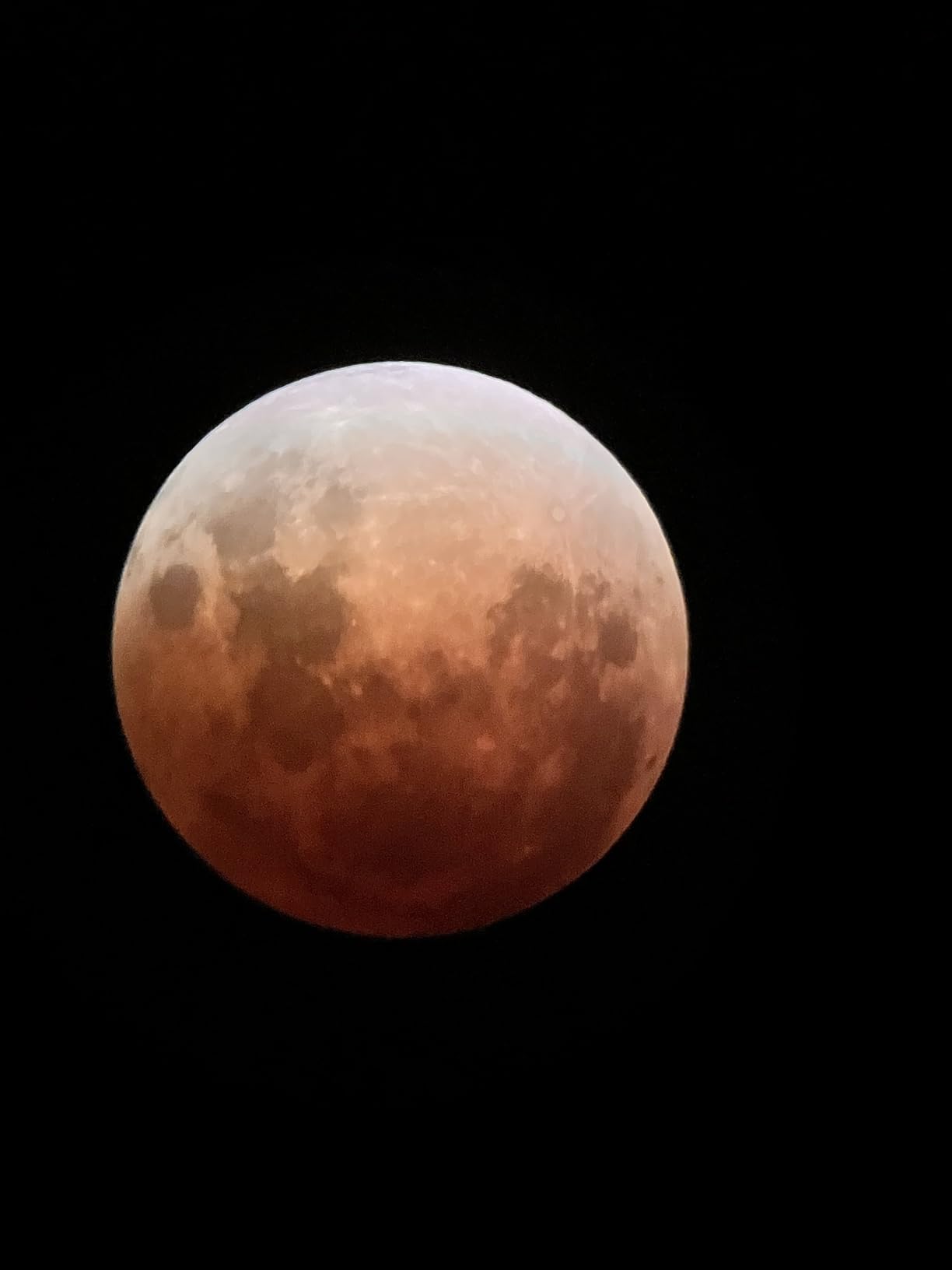
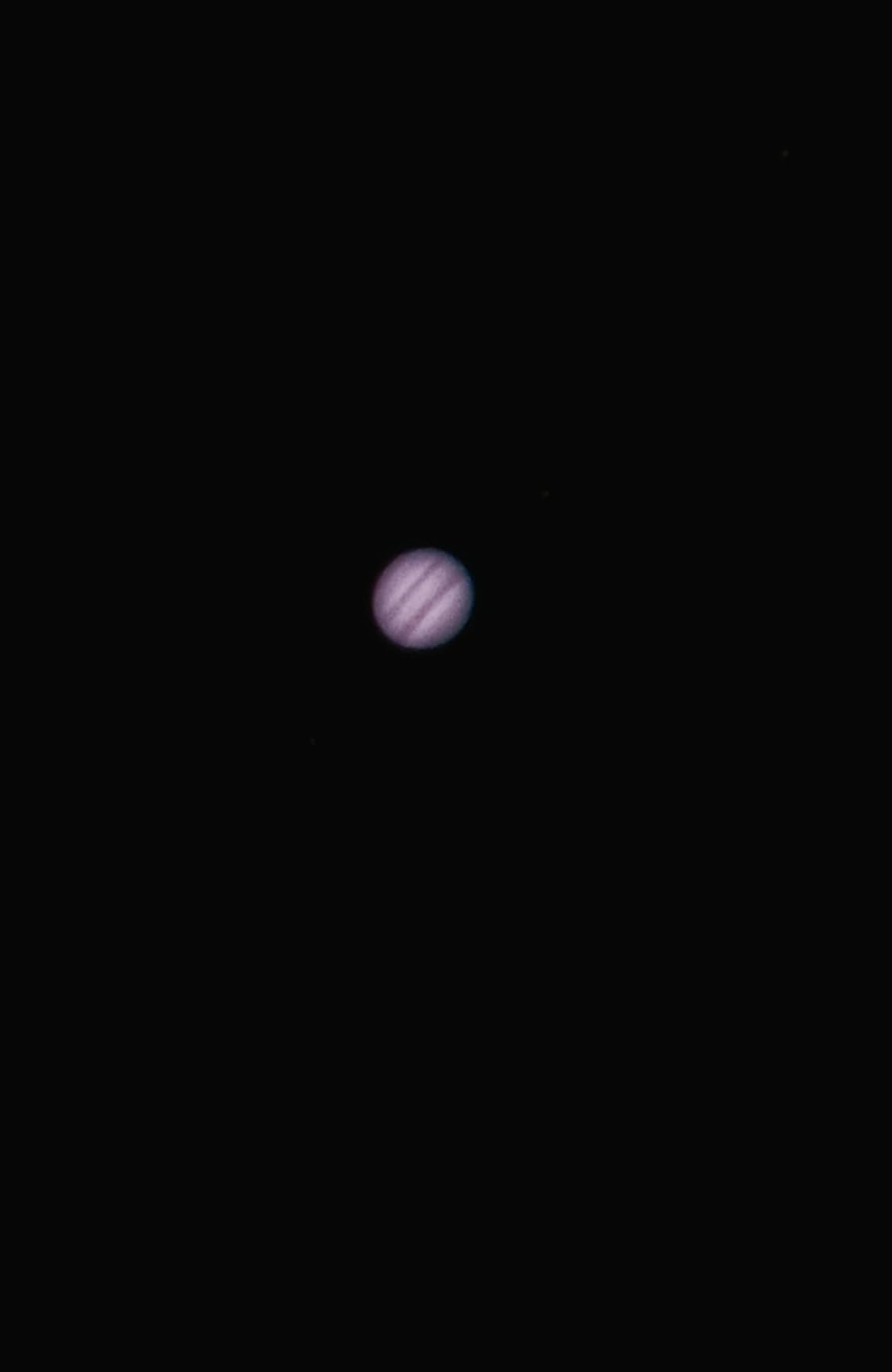
What is achievable: lunar and planetary video through the eyepiece, which is genuinely satisfying on a 6-inch or larger scope, and wide-field snapshots of large nebulae with a phone held to the eyepiece on a stable adapter. Everything beyond that wants a tracking equatorial mount, which is a different purchase at a different price. If imaging is the main goal, do not buy a Dobsonian for it. If solar observing is your interest instead, our guide to the best telescopes for solar viewing covers the safe options.
Frequently Asked Questions
What is the best telescope for observing the deep sky?
For visual deep sky work, a Dobsonian reflector gives the most light-gathering power per unit of money of any telescope design. Among the six scopes tested here, the Sky-Watcher Classic 200 8-inch is the best all-round choice because a 203mm primary hits the aperture sweet spot without adding electronics. A 10-inch model such as the Sky-Watcher Flextube 250 shows noticeably more, if you can move and store it.
Can you see Saturn with an 8 inch Dobsonian?
Yes, comfortably. The 8-inch models here have 1200mm of focal length, which supports around 120 times magnification on a 203mm mirror and easily resolves Saturn’s rings and the Cassini Division. Reviewers on the Celestron StarSense report sharp views of Saturn alongside deep-sky targets. Add a 9mm or 10mm eyepiece, let the tube cool, and use averted vision on the planet’s contrast.
Which 10 inch Dobsonian is considered the best?
Between the two 10-inch options here, the Sky-Watcher Flextube 250 is the stronger all-round choice. Its collapsible strut tube breaks down for storage and transport while holding collimation, and it includes a 2-inch Crayford focuser with an 8×50 right-angle finder. The Zhumell Z10 ships the more complete accessory kit and adds a built-in cooling fan, but it is bulkier and heavier at 47 pounds.
Can you do astrophotography with a Dobsonian?
Only in a limited way. A Dobsonian has an alt-azimuth mount with no tracking, so exposures longer than a fraction of a second trail, and nudging the tube to follow a target rotates the field and turns stars into arcs. Lunar and planetary video, and phone snapshots of large bright nebulae, work well. Deep-sky imaging needs a tracking equatorial mount instead.
Are collapsible Dobsonians as good as solid tube?
Optically they are the same class, since aperture and focal length do not change. The difference is handling and alignment. A solid tube like the Sky-Watcher Classic 200 needs re-collimation after transport, while the Flextube 250 is designed to collapse and hold collimation, though owners report a bumped tube can still shift. If storage space is tight, collapsible wins. If you keep the scope set up, solid tube is simpler.
The Verdict: Which Dobsonian Should You Buy?
The Sky-Watcher Classic 200 8-inch is our choice for most people. A 203mm parabolic primary at a 1200mm focal length hits the aperture sweet spot that the r/telescopes community keeps returning to, and the 94% reflective multi-coated borosilicate mirrors do the rest. It weighs 45 pounds, and with no electronics to fiddle with it is the instrument you will still be using in ten years.
Buy the Celestron StarSense Explorer 8-inch instead if you are not confident navigating by finder charts. It sits in the same aperture class with the same 1200mm focal length and adds a pointing aid that removes the star-hopping barrier, at the cost of a smartphone dependency and a single included eyepiece.
Buy the Celestron StarSense 150mm if space is the constraint. Twenty-five pounds, a 650mm focal length, and a field of view that makes quick sweeps easy, at the cost of the faint detail that only a larger mirror delivers. The Sky-Watcher Heritage 150 covers the same aperture class with a collapsible tube and a faster f/5 ratio if storage rather than pointing is your problem.
Step up to 10 inches only when you can get to darker skies. The Sky-Watcher Flextube 250 is the better 10-inch buy for transport and handling, and the Zhumell Z10 is the better buy if you want a laser collimator, a cooling fan, and a full eyepiece set in the box. Whichever you choose, plan for a laser collimator, one wide-field 2-inch eyepiece, and an OIII filter, because those three deliver more than any further jump in aperture will for most observers in 2026.