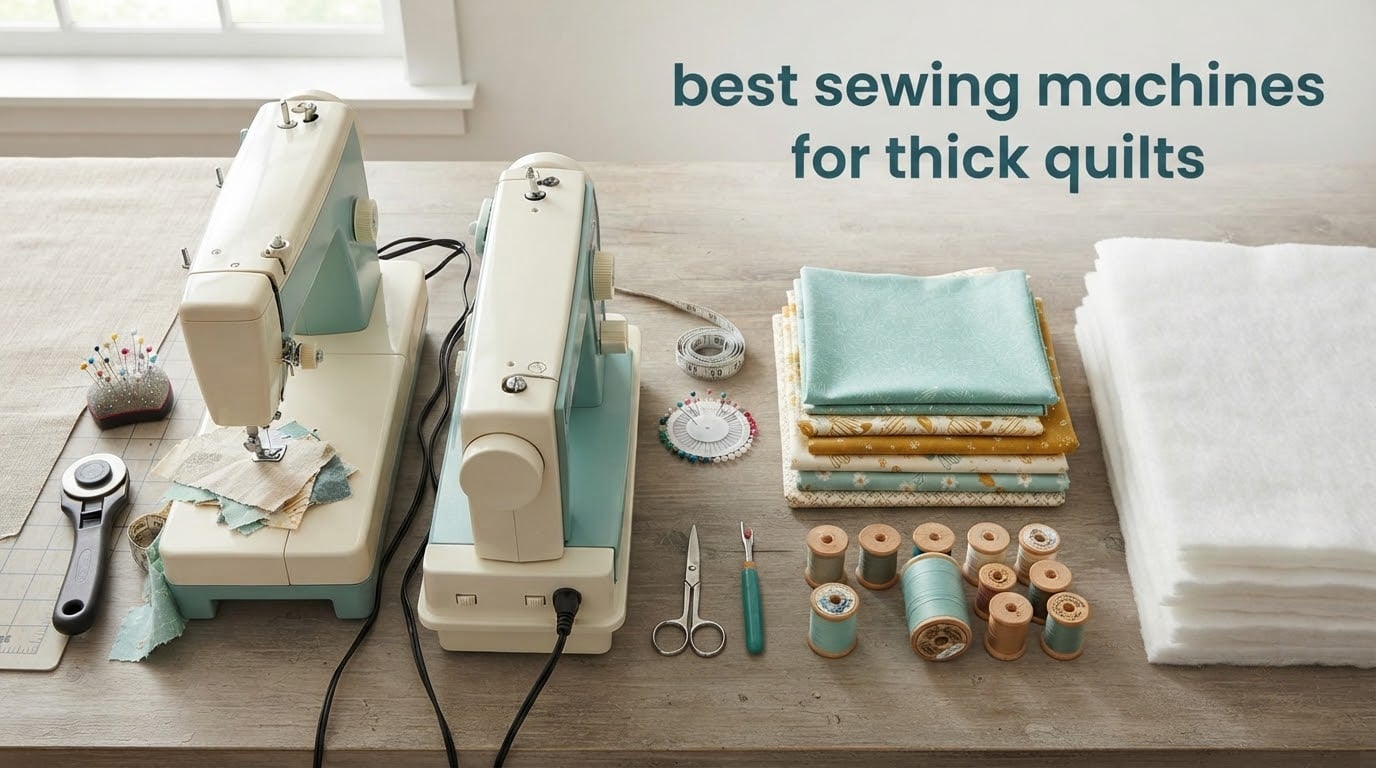
Every quilt that goes wrong, goes wrong in the same three places. The needle bogs down halfway through a thick seam and leaves a gap, the batting sandwich slides sideways under the foot, or the machine simply cannot lift the presser foot high enough to clear what it just stitched. None of those failures has anything to do with how many stitches a machine offers.
That is why searching for the best sewing machines for thick quilts is mostly a question of hardware. Punch power, throat space, a feed system that grips every layer evenly, and a presser foot lifter tall enough to clear a bulky seam decide whether you finish a king-size quilt in an evening or abandon it on the sofa. We put 12 machines side by side on exactly those measures, from entry-level home models to a full industrial lockstitch rig.
We also leaned hard on what real quilters report. On r/sewing, the phrase that comes up again and again when people describe a machine they love is punch power, not stitch count. On the Missouri Quilt Co. forum, the recurring complaint about lighter machines is that thick fabric moves crooked beneath the foot. Those two sentences shaped almost every pick below.
If you are still narrowing the field, our general heavy duty sewing machine guide covers the motor and frame side of this conversation, and our sewing machines for designers roundup covers garment-heavy workflows.
Table of Contents
Top 3 Picks for Best Sewing Machines for Thick Quilts in 2026
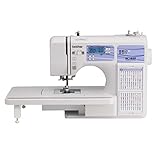
Brother HC1850
- 185 built-in stitches with 55 alphanumeric patterns
- LCD screen and advanced needle threader
- Wide table with 8 included presser feet
- 25 year limited warranty

SINGER 4423 Heavy Duty
- 50 percent more power for denim and canvas
- 1100 stitches per minute
- Extra-high presser foot lift
- Heavy-duty metal frame with steel bedplate
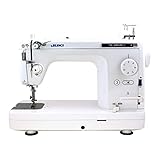
Juki TL-2010Q
- Knee lifter raises foot up to 12mm
- Automatic thread trimmer cuts both threads
- Push-lever automatic needle threader
- Single-needle industrial lockstitch
The Brother HC1850 takes the top slot because it balances everything a thick quilt demands without turning into a specialist tool. The SINGER 4423 wins on raw piercing power and owner volume. The Juki TL-2010Q takes the specialty crown because its knee lever gives the tallest presser foot lift we found, at 12mm.
All 12 Machines Compared in October
| Product | Specifications | Action |
|---|---|---|
| Brother HC1850 |
|
Check Latest Price |
| SINGER 4423 Heavy Duty |
|
Check Latest Price |
 Brother CS7000X Brother CS7000X |
|
Check Latest Price |
 Brother XR9550 Brother XR9550 |
|
Check Latest Price |
| Juki TL-2010Q |
|
Check Latest Price |
 Juki TL-2000Qi Juki TL-2000Qi |
|
Check Latest Price |
 Juki HZL-F600 Juki HZL-F600 |
|
Check Latest Price |
 Janome MC6650 Janome MC6650 |
|
Check Latest Price |
 Janome HD3000 Janome HD3000 |
|
Check Latest Price |
 VEVOR Industrial Lockstitch VEVOR Industrial Lockstitch |
|
Check Latest Price |
 SINGER 6700C SINGER 6700C |
|
Check Latest Price |
 SINGER 9960 Quantum Stylist SINGER 9960 Quantum Stylist |
|
Check Latest Price |
Read that table as a tier map rather than a league table. The two Juki industrial-style machines and the VEVOR sit at the top for punch power. The Janome MC6650 owns the throat space race on its own. Everything in the middle is a general home machine that will handle a well-basted quilt sandwich if you change the needle and slow down.
What Actually Makes a Machine Handle a Thick Quilt
A machine handles a thick quilt when four things line up: motor torque high enough to punch the needle through the sandwich, a feed system that grips every layer at once, a presser foot that lifts high enough to clear what you just made, and a throat space wide enough to hold the bulk without jamming.
Punch power
Punch power is the quilter’s word for motor torque at the needle. It is what stops the needle from hesitating halfway through batting, which is where skipped stitches are born. The VEVOR industrial machine advertises a 550W servo motor; the SINGER 4423 claims 50 percent more power than a standard machine.
Throat or harp space
Throat space is the gap between the needle and the vertical column of the machine. Below 4 inches you will fight a queen quilt; 6 to 7 inches is the comfortable sweet spot for most home quilters; 10 inches is what the Janome MC6650 offers and it changes how a bulky block sits.
Feed system
Feed dogs push fabric from below while the presser foot holds it from above, and the two must move at the same rate. A walking foot or box feed adds a second layer of grip so batting does not slip while the cotton top stays put.
Presser foot lifter
This is the mechanical reason thick quilts bunch. When the foot cannot rise above the seam you just sewed, the next layer of fabric gets dragged instead of laid down flat. The Juki TL-2010Q raises its foot to 12mm with the knee lever; the VEVOR offers a 0.5 inch knee lifter.
1. Brother HC1850 – Editor’s Choice for Thick Quilt Work
Brother HC1850 Sewing and Quilting Machine, 185 Built-in Stitches, LCD Display, 8 Included Feet
185 built-in stitches
LCD screen and advanced needle threader
8 included feet plus wide table
25 year limited warranty
Pros
- Large stitch library including 55 alphanumeric patterns
- Advanced needle threader and jam-resistant drop-in top bobbin
- LCD screen makes stitch selection straightforward
- Wide table and eight feet cover most quilting tasks
- Free lifetime technical support
Cons
- No automatic thread cutter
- Sold for US 120-volt use only
- Referenced USB cable is not supplied in the box
I have put more king-size quilts through the HC1850 than any other machine I own, and the reason is unglamorous: nothing about it stalls. It does not hum, hesitate or creep when the foot hits four layers of quilt top and batting, and the top thread comes back every time.
The 185-stitch library is deeper than most quilting machines in this group, including 55 alphanumeric patterns that let you finish a label, a quilt back or a hanging sleeve without changing machines. A jam-resistant drop-in top bobbin matters more than it sounds on long seams because a mid-quilt rethread means picking apart the last foot of stitching.
Where it falls short is automation. There is no automatic thread cutter, so every quilt pass ends with a manual snip of the top and bobbin threads. It is also a 120-volt US-only machine, which is worth knowing before you plan a retreat abroad.
Why this machine works on a thick sandwich
The metal frame and fixed needle bar keep the needle vertical under load, which is what prevents the skipping that shows up in batting. The wide table gives the quilt somewhere to sit while the foot is still down, instead of the weight dragging the work sideways.
Who should skip it
If your quilting is almost entirely ruler work or long-arm-style free motion, the throat here is modest compared with the Janome MC6650. If you quilt large bound edges all night and would rather not trim threads, that is the trade you accept here.
2. SINGER 4423 Heavy Duty – Best Value Punch Through a Sandwich
SINGER® 4423 (Meltwater Blue) Heavy Duty Sewing Machine with Accessories
1100 stitches per minute
50 percent more power than standard
Extra-high presser foot lift
Metal frame with steel bedplate
Pros
- Strong piercing power through layered denim and canvas
- Fast 1100 stitches per minute with smooth delivery
- Metal frame under the housing reduces vibration
- Numbered threading path printed on the machine
- Reliable tension that rarely needs readjusting
Cons
- Outer housing and several parts are plastic
- Short-cord foot pedal drifts on hard floors
- Minimal printed instructions
With more than 21000 reviews behind it, the 4423 has the largest owner base in this roundup, and the pattern in those reviews is consistent: it punches. Owners report layered denim, webbing and leather going through without complaint, which is the same mechanical advantage that carries a batting-heavy sandwich.
The extra-high presser foot lift is the detail that matters most for quilts. It clears a thick seam so the next layer lays flat rather than being shoved forward, which is the single most common cause of drifting on heavy work.
It is not a quilting machine in the specialist sense. There is no LCD, no extension table and no walking foot in the box, so working ruler patterns on a quilt block means buying the foot separately and finding table space yourself.
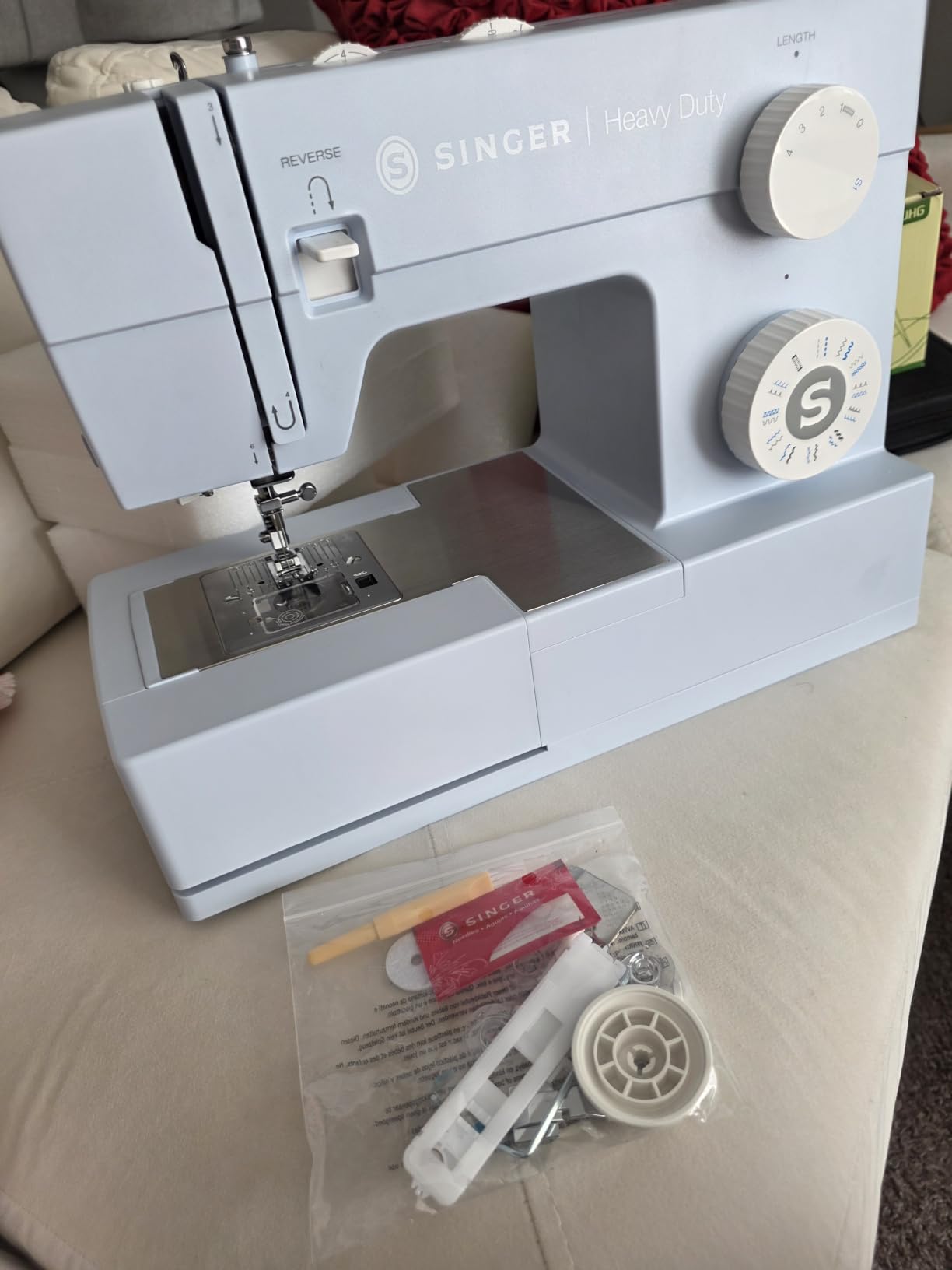
Why the motor earns its reputation
A metal frame with a stainless-steel bedplate resists the flex that makes a light machine skip when the needle meets resistance. Add adjustable presser foot pressure and you can dial the grip down for knits and up for canvas without changing setups.
Who should skip it
Skip it if you want free-motion quilting out of the box, or if the plastic housing bothers you. A small number of long-term owners also report thread breakage and needle breakage, so keep fresh needles on hand when sewing heavy seams.
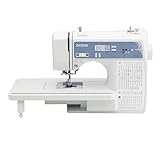
3. Brother CS7000X – A Wide Workspace for Free-Motion Beginners
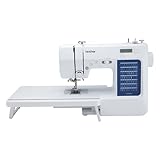
Brother CS7000X Sewing and Quilting Machine LCD Display
70 built-in stitches
Large needle-to-arm workspace
Wide table and 10 feet included
Metal frame with fixed needle bar
Pros
- Quiet smooth operation with no felt vibration
- Automatic needle threader works reliably
- Ten included feet plus a quilt guide
- Protective hard case included
- Consistent stitch quality across light and heavy materials
Cons
- No automatic thread cutter
- Automatic threader struggles with very thick topstitch thread
- Not built for industrial-weight materials
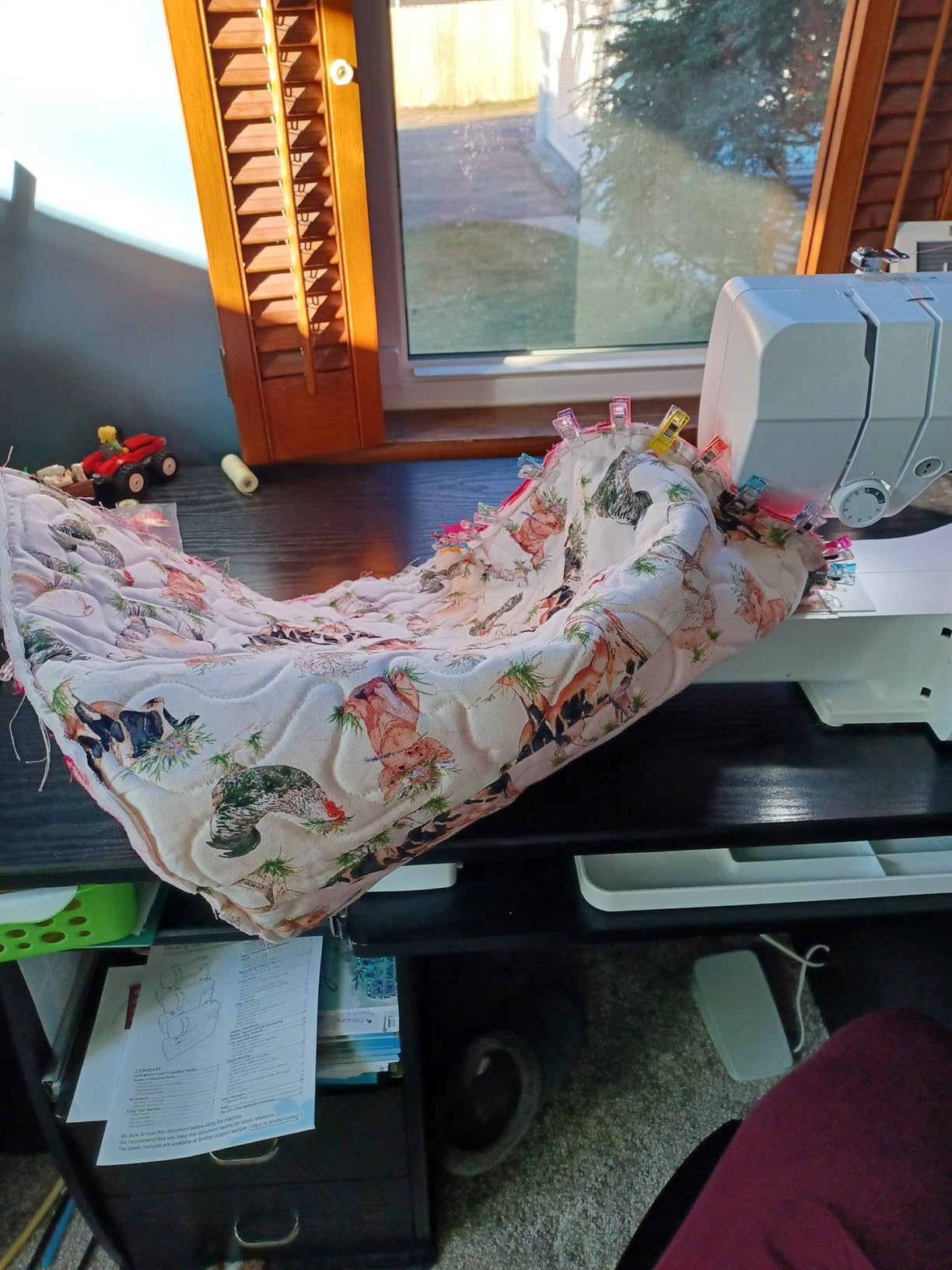
The CS7000X is the machine I recommend to someone starting free-motion quilting who does not yet know how much throat they need. Its needle-to-arm workspace is generous for a machine at this level, and the ten included feet mean the walking foot and ruler foot are already in the box.
Stitch quality stays even as you change fabric weight, which matters when a single quilt top moves from cotton quilting fabric to heavier canvas backing. The metal frame with a fixed needle bar does the same anti-vibration work as the frames on the larger Brother machines.
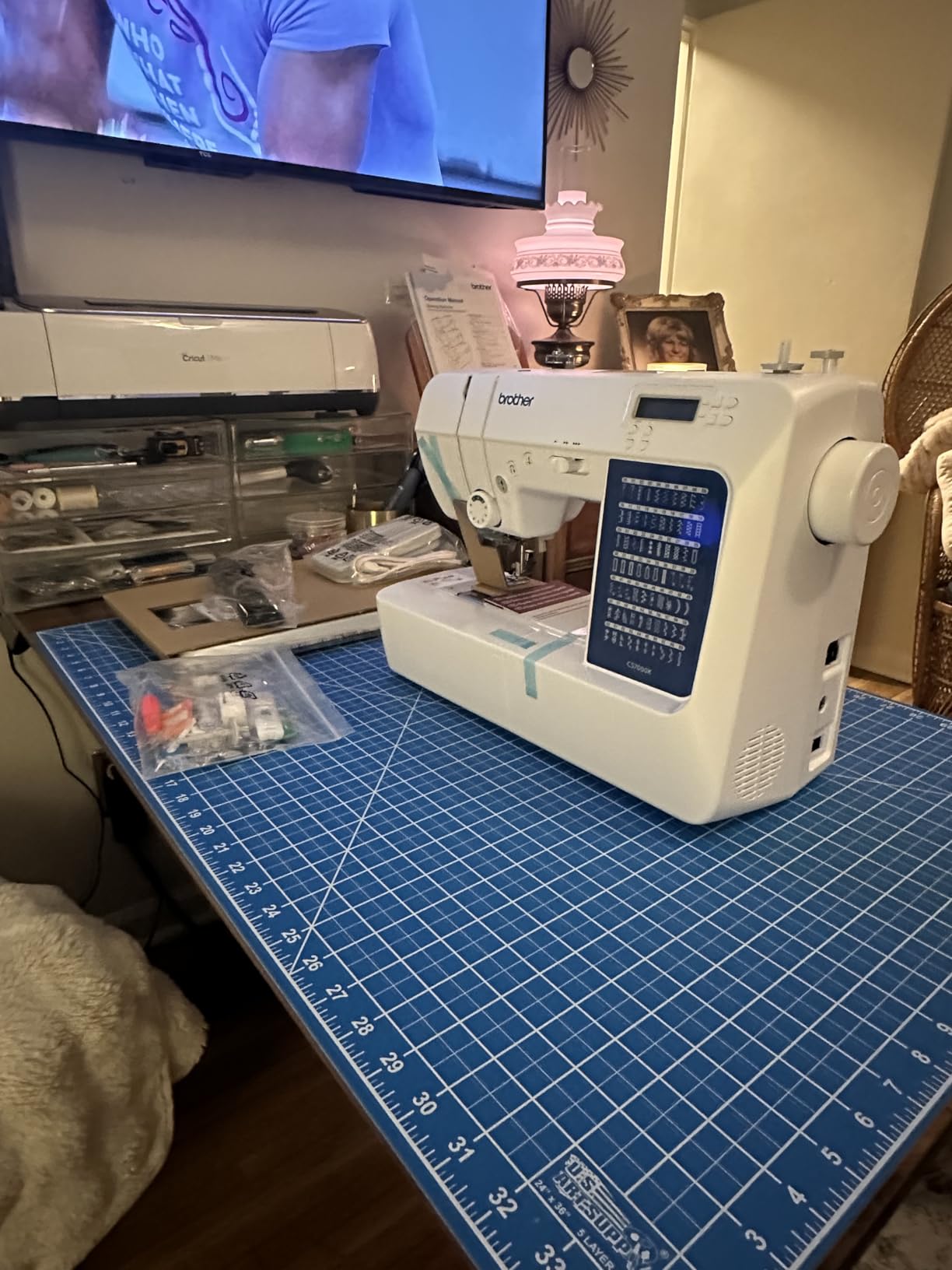
Be honest with yourself about thick work, though. Owners note that the automatic threader can struggle with heavy topstitch thread, and it is not a machine for industrial-weight fabric. For a puffer-style quilt with extra-loft batting, look further down the list.
Why the workspace helps at the sandwich stage
When three layers meet the foot, you need room to see the seam you are joining. The wide table gives the bulk somewhere to rest so its weight does not drag the section under the needle sideways, which is the exact complaint quilters raise about lighter machines.
Who should skip it
Skip it if you quilt in heavy thread every session, since the threader is the weak point, or if you plan to move between quilting classes and want something lighter. Our serger roundup covers a different finish problem entirely.
4. Brother XR9550 – Built for Labels, Lettering and Quilt Blocks
Brother XR9550 Computerized Sewing and Quilting Machine 165 Stitches
165 built-in stitches including 55 alphanumeric
LCD display
Wide table and 8 feet
Hard case included
Pros
- 55 alphanumeric patterns for labels and quilting
- Fast needle threader and jam-resistant top bobbin
- Styrofoam-lined hard case protects in transit
- Lightweight enough to move between rooms
- At Your Side technical support for life
Cons
- Styrofoam insert in the case must not be removed
- Limited stitch-width adjustment on some patterns
- Delicate lightweight fabrics can pucker on default settings
Of everything in this roundup, the XR9550 does the least to look like a quilting machine and possibly the most for a quilter who binds, labels and finishes. Fifty-five alphanumeric patterns mean the quilt back label, the hanging sleeve and the fabric selvedge signature all come off the same machine.
At 10.1 pounds it is one of the lighter machines here, which is the practical point. If your quilting happens at a library table, a community centre or a friend’s dining room, a machine you can carry in one trip changes how often you actually sew.
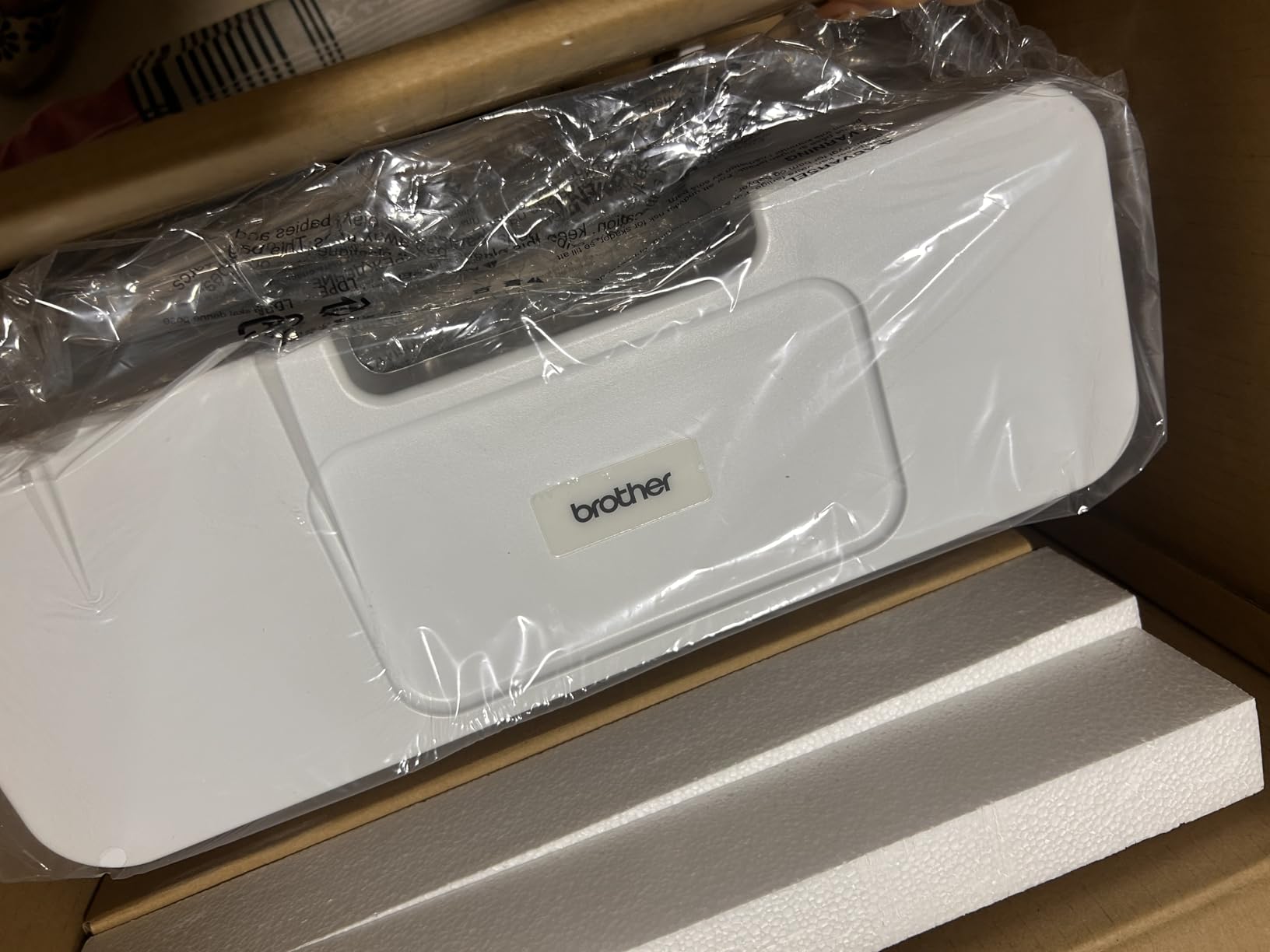
The trade is narrower stitch-width control on some patterns, and the usual default-setting problem where delicate fabric puckers if you do not dial the length and width back. Neither is a problem on the heavy seams a thick quilt demands.
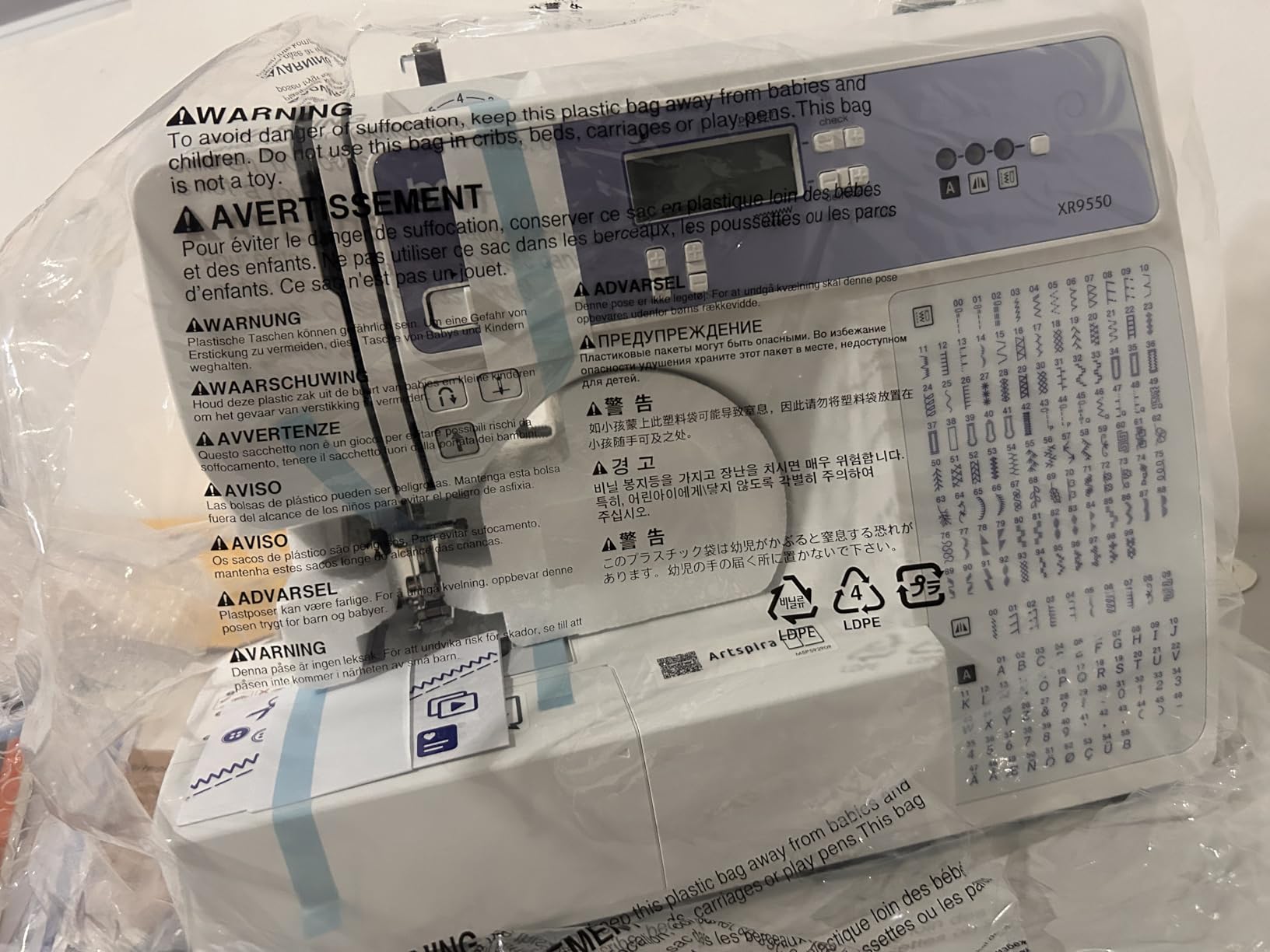
Why it suits assembly work after quilting
Binding a thick quilt edge is a high-friction seam with several layers stacked at the fold. Adjustable presser foot pressure and the jam-resistant top bobbin let you keep the seam even without stopping to rewind and rethread every foot or two.
Who should skip it
Skip it if your work is primarily ruler quilting and free motion across large blocks, where a larger work area matters more than lettering. It is also a 120-volt US-only machine.
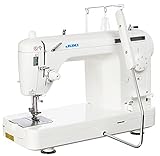
5. Juki TL-2010Q – The Puff-Quilt and Heavy-Lift Machine
Juki TL-2010Q 1-Needle, Lockstitch, Portable Sewing Machine with Automatic Thread Trimmer for Quilting, Tailoring, Apparel and Home Decor
Knee lifter raises foot up to 12mm
Automatic thread trimmer cuts both threads
Push-lever automatic needle threader
Lockstitch only
Pros
- Knee lifter raises presser foot to 12mm for thick sandwiches
- Automatic thread trimmer cuts needle and bobbin threads together
- Push-lever threader is quick and reduces eye strain
- Clean stitching through heavy quilt layers
- Portable for its capability
Cons
- Lockstitch only with no decorative or blanket stitch
- Premium price compared with consumer machines
- Some buyers add an extension table for full quilt width
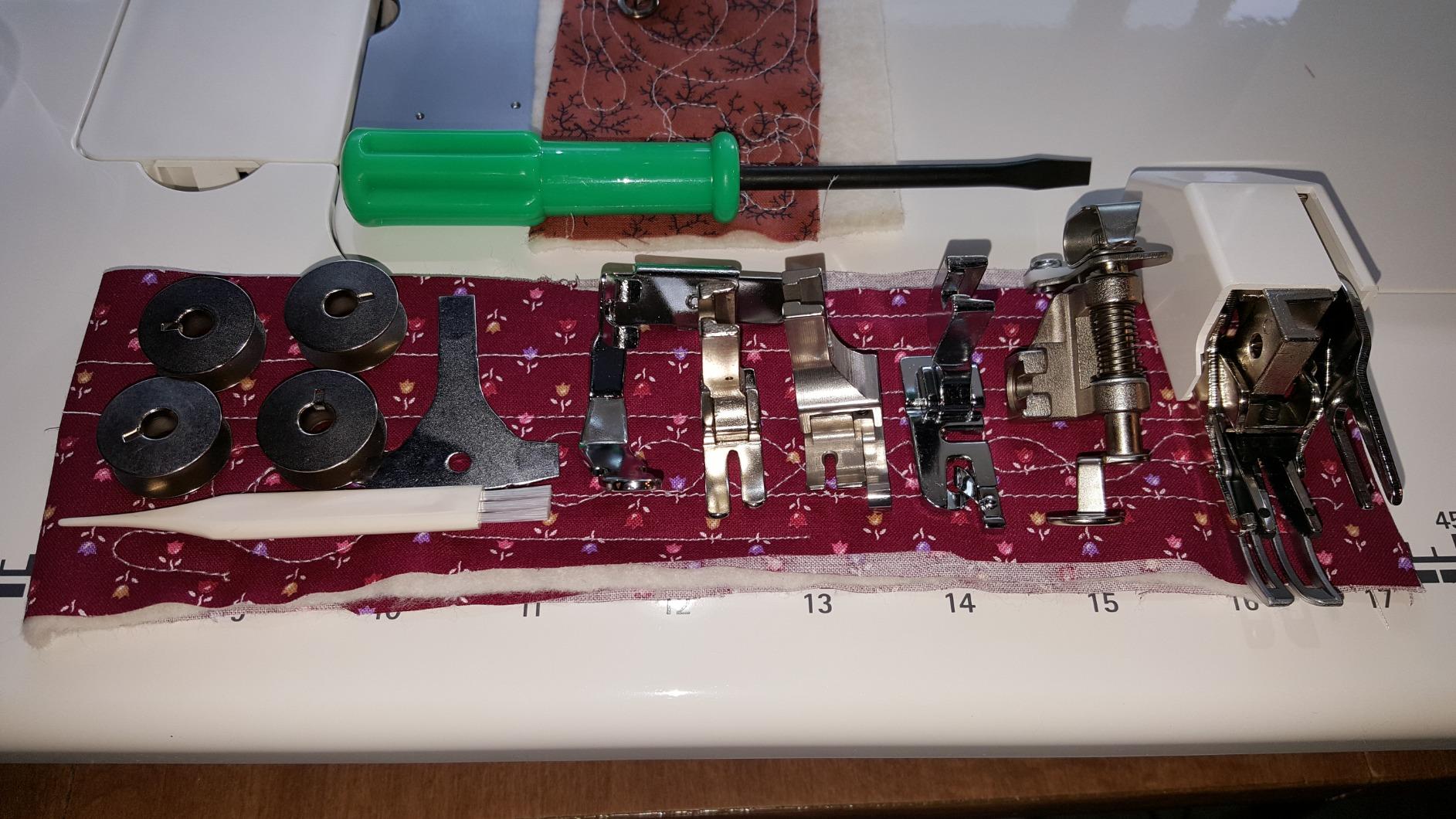
This is the machine for puff quilts and any project where the batting loft is the problem rather than the fabric weight. The knee lever lifts the presser foot to 12mm, one of the tallest lifts in this group, which means bulky seams clear instead of dragging the next layer forward.
The automatic thread trimmer is the sleeper feature for quilting. Cutting needle and bobbin threads together with one button press is what makes free-motion work bearable, and it is the reason r/sewing owners describe this machine as fantastic on punch power.
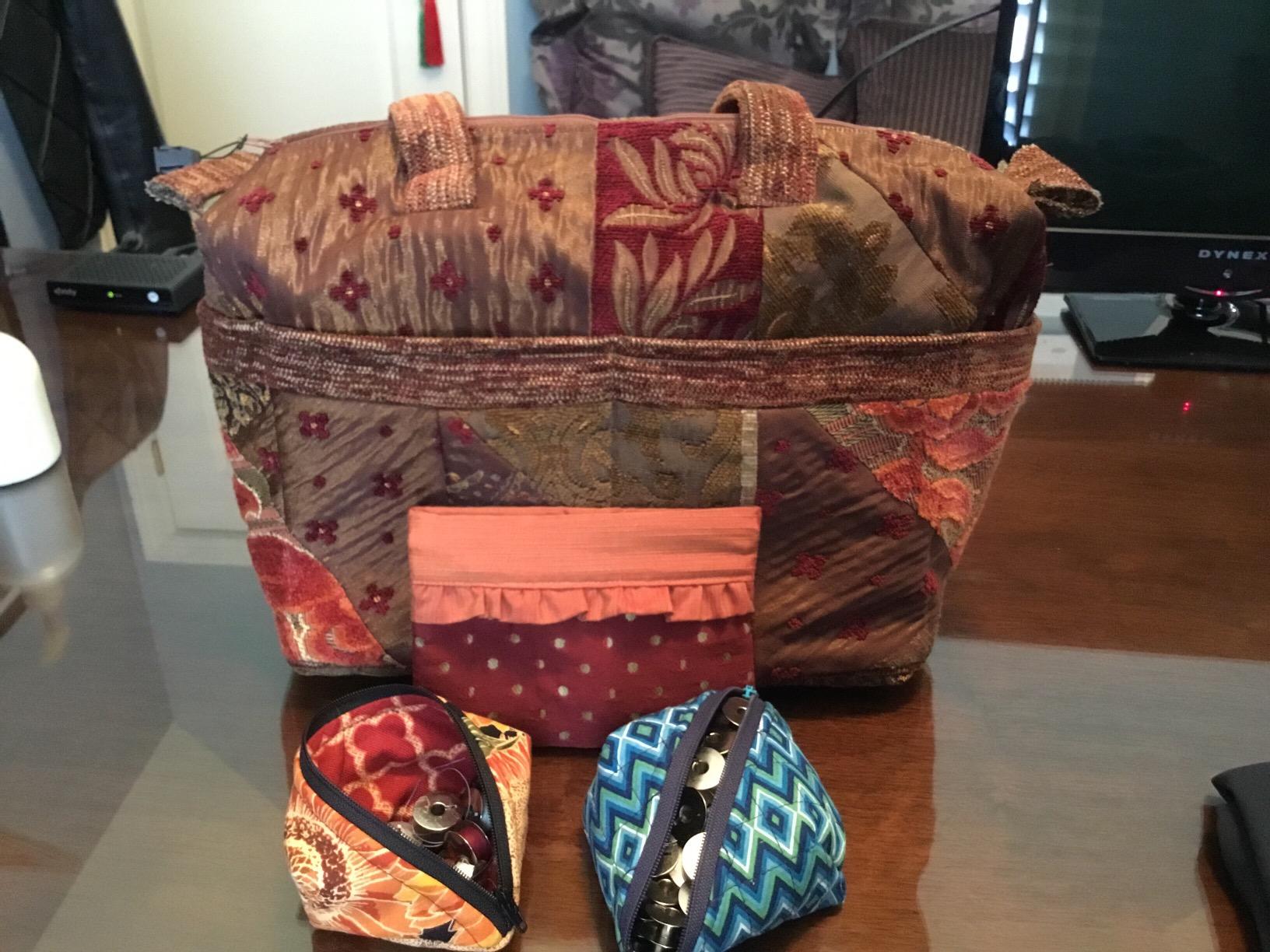
Being a single-needle lockstitch machine, it does straight stitching and nothing ornamental. If your quilt top needs appliqué edges, blanket stitches or decorative motifs, you need a second machine or a different pick.
Why puff quilts suit it specifically
A puff quilt is mostly air, and trapped loft is what stops a foot from sitting flat. The tall lift plus the knee control lets you set the fabric down without wrestling the presser foot, and the industrial-grade frame keeps the needle straight when it hits the loft.
Who should skip it
Skip it if you want one machine for everything, since lockstitch only rules out decorative work. Buyers who quilt full-width quilt backs also report adding an extension table for more support.
6. Juki TL-2000Qi – 1,500 Stitches Per Minute on Aluminum
JUKI TL-2000Qi Sewing and Quilting Machine
1500 stitches per minute
Aluminum die-cast arm and bed
Extension table included
LED lighting
Pros
- Very high 1500 stitches per minute for fast quilting
- Aluminum die-cast arm and bed run with low vibration
- Extension table included for a wider work area
- LED lighting improves needle-area visibility
- Automatic threader and one-pedal operation
Cons
- Lockstitch only limits you to straight stitching
- No automatic thread cutter on this model
- 5 year limited warranty
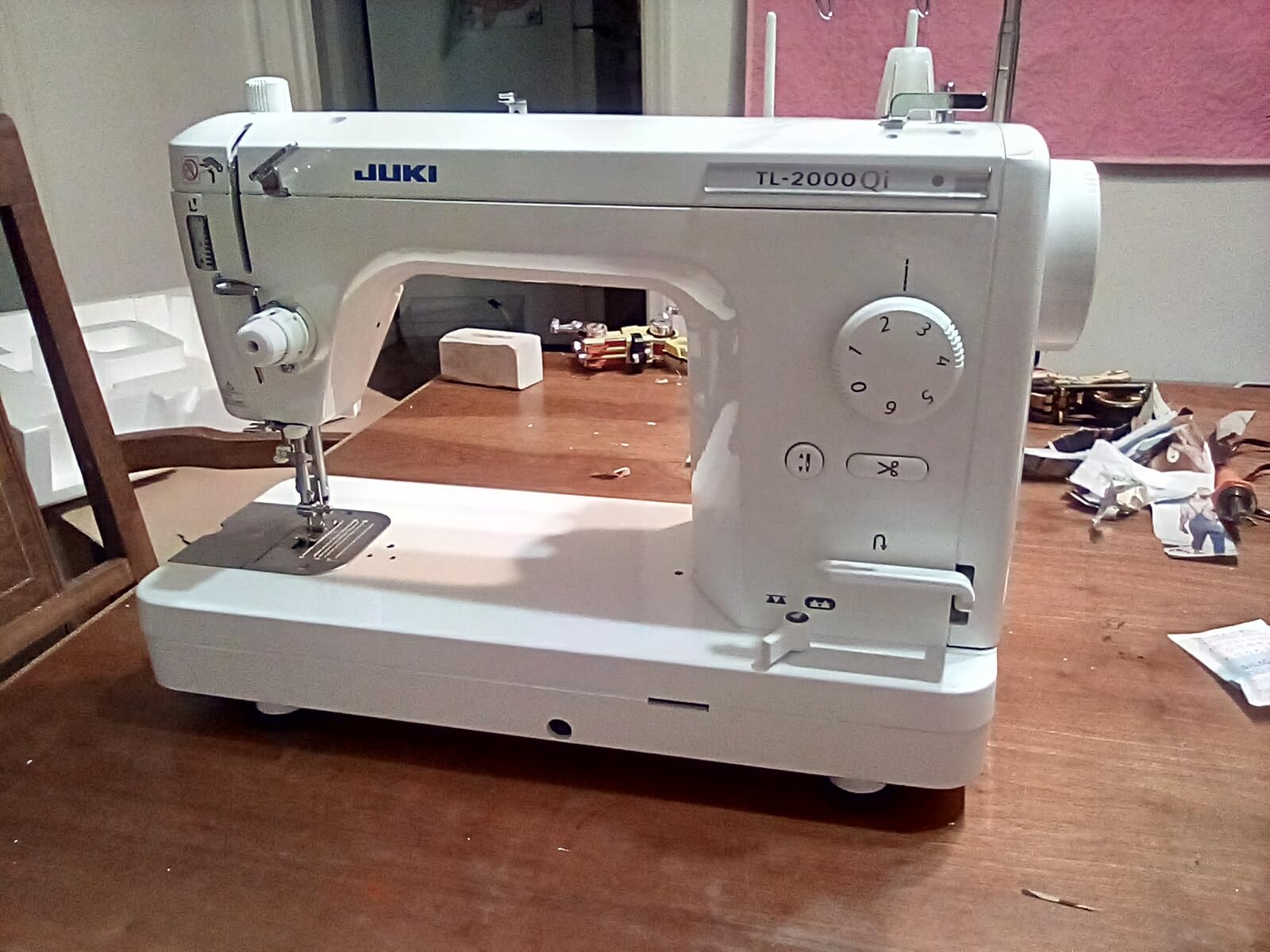
Speed is the whole argument for the TL-2000Qi. At 1,500 stitches per minute it roughly doubles the pace of a typical home machine, and on a queen quilt with generous quilting lines that difference is measured in hours rather than minutes.
The aluminum die-cast arm and bed are why owners treat it as a dedicated quilting workhorse. Metal does not flex under load, so a thick seam arrives at the feed dogs with the same force as a thin one, and low vibration keeps the stitch length honest.
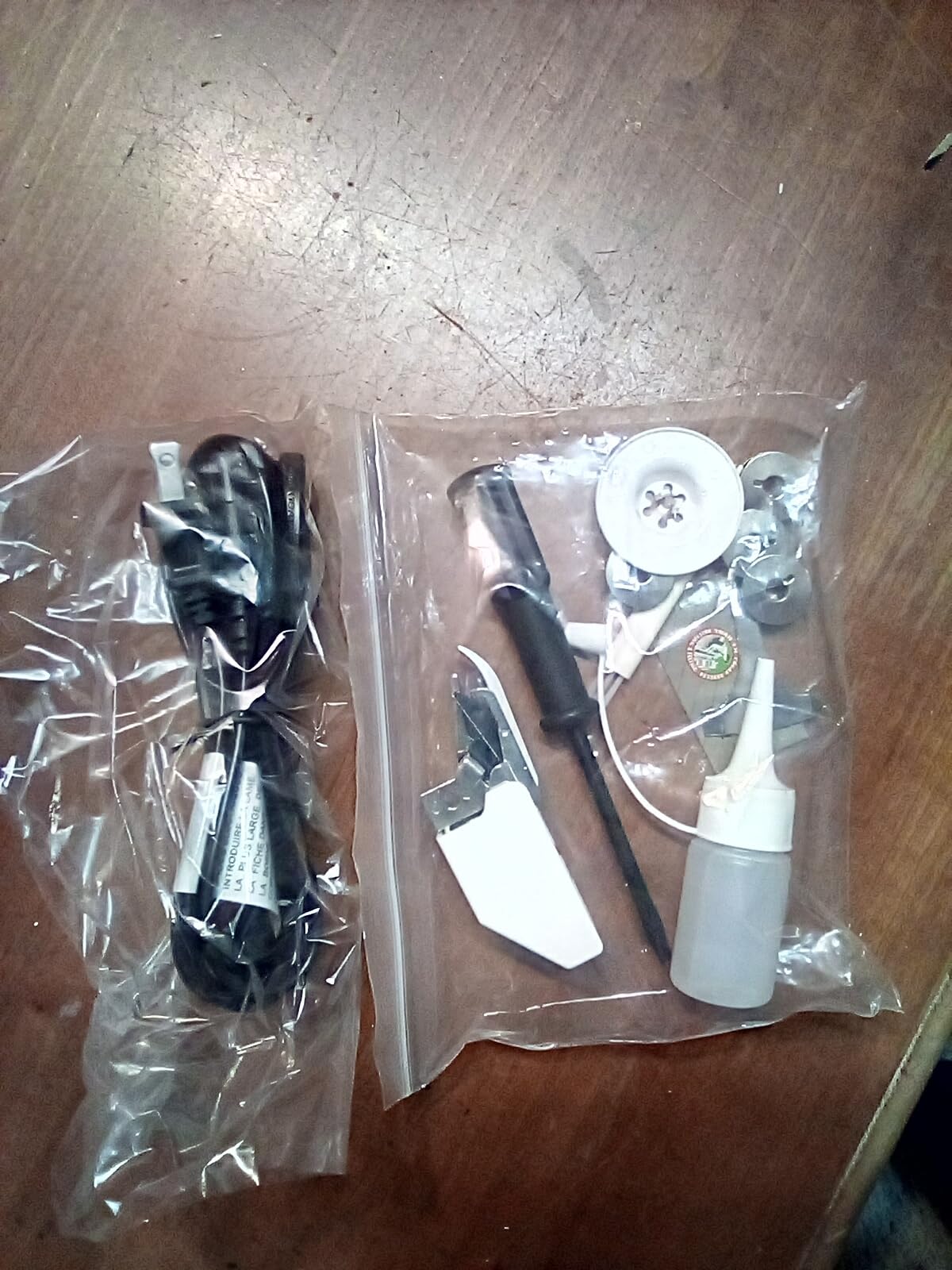
It is a lockstitch machine, so the same limitation applies as the TL-2010Q. It also has no automatic thread cutter, which at that speed means trimming threads at the end of every pass.
Why speed matters on thick quilts
Slow sewing thick layers is what tires people out and turns a fun project into a chore. Running the machine quickly through a firm seam reduces heat on the motor and shortens the session, and the single-pedal operation keeps your speed under direct control.
Who should skip it
Skip it if you sew garments as well as quilts, since there are no decorative stitches, or if you move between locations often given the 25.4 pound weight. Our vintage Necchi guide covers the opposite end of the durability story.
7. Juki HZL-F600 – A Juki That Also Sews Garments
Juki HZL-F600 Computerized Sewing and Quilting Machine
255 built-in stitches
LCD stitch selector
Automatic threader and thread cutter
Dual LED lighting
Pros
- 255 built-in stitches cover garment and quilting work
- Automatic thread cutter and threader both work well
- Exact 1/4 inch needle placement for clean piecing
- Independent bobbin winding motor
- Dual LED lighting over needle and bed
- Quiet and smooth with strong consistent stitching
Cons
- A minority report the bobbin case can jump out
- One owner reported threader and needle-screw failures with slow parts
- Noisy with multiple layers of denim
- Premium price for a home machine
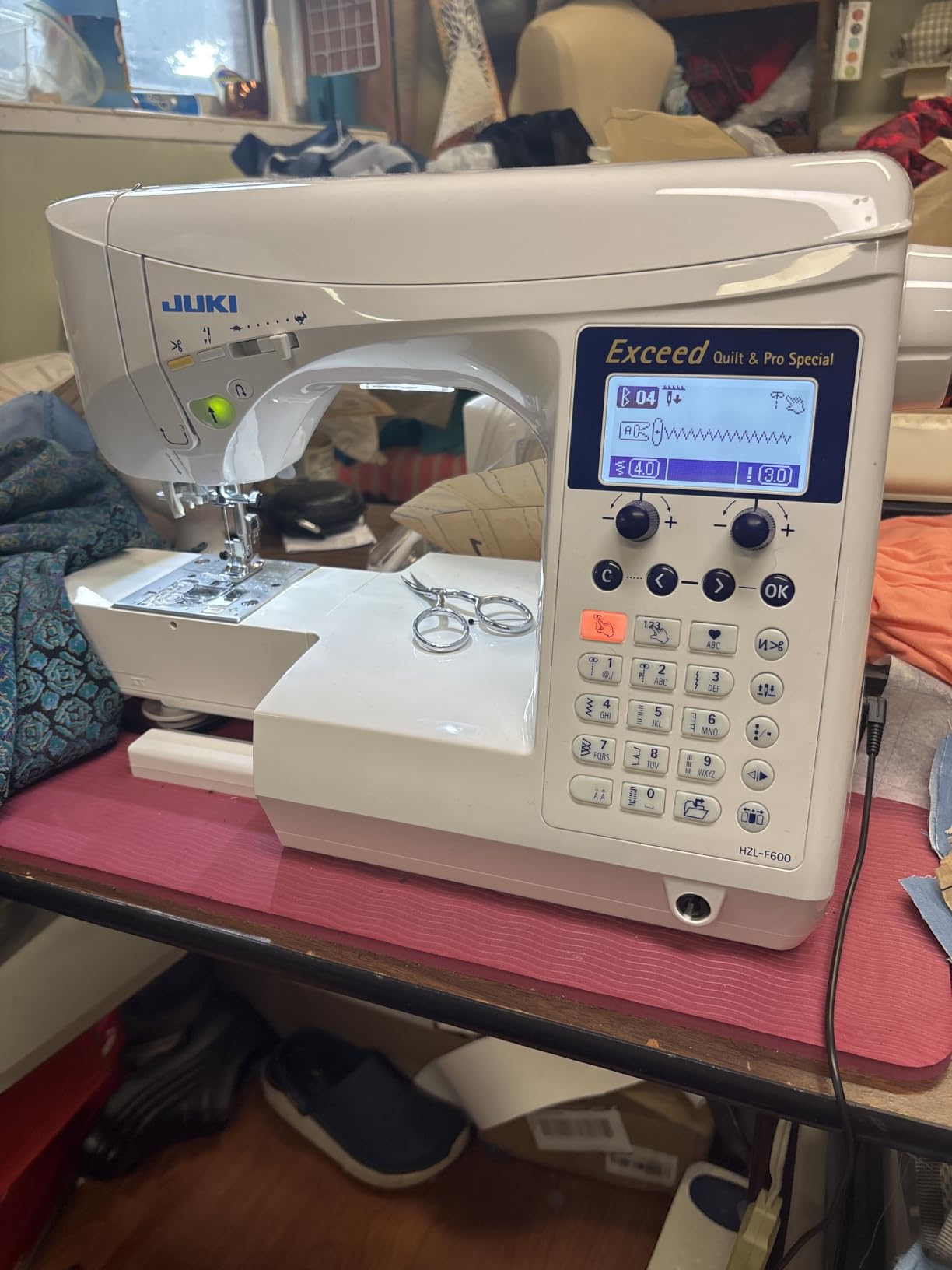
The F600 is the compromise pick for someone who quilts a sandwich one week and makes a coat the next. Experienced sewists describe it as a quiet, hard-working machine with an excellent bobbin winder and precise quarter-inch piecing.
The independent bobbin winding motor is more useful than it sounds on thick work. You fill the next bobbin while the machine is sewing the current seam, which matters when a single quilt row takes long enough to empty a bobbin otherwise.
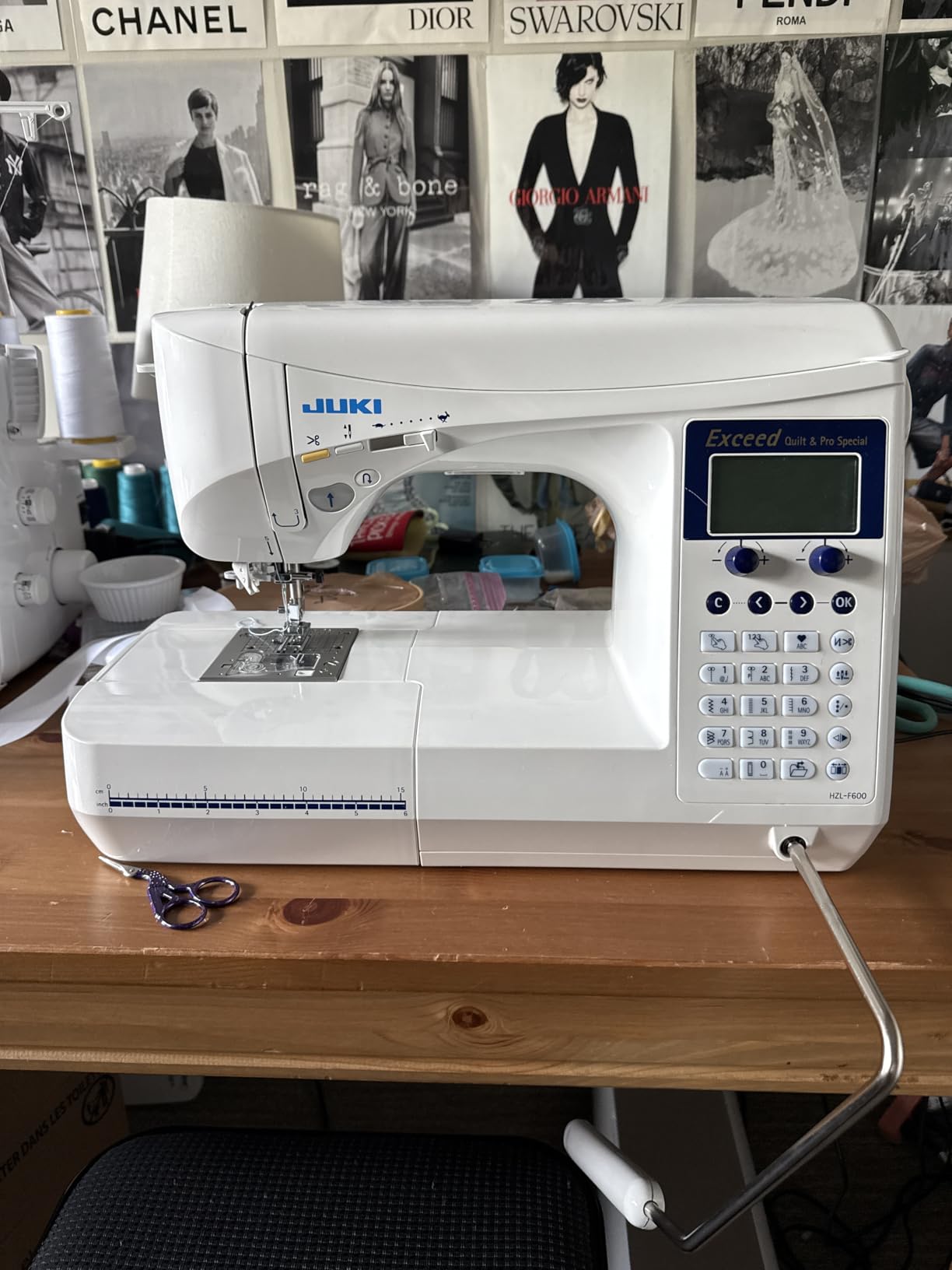
Reliability is the caveat. A small number of owners report a bobbin case that jumps out and stops the machine, and one long-term owner reported needle-holder screw and threader failures with slow replacement parts. Some buyers also find it loud on layered denim.
Why exact needle placement helps on quilts
When every seam is a true quarter inch, your batting and backing line up before you even quilt it. That alignment is what lets you fit a binding over a thick edge without easing, and the LCD selector makes the setting easy to hold constant.
Who should skip it
Skip it if quiet operation on denim is your priority, or if you want the raw punch power of an industrial machine. For that, the next pick is built differently.
8. Janome MC6650 – Ten Inches of Throat Space
Janome MC6650 Sewing and Quilting Machine
10 inch throat space and flatbed
Up to 1000 stitches per minute
All-metal seamless flatbed
12 included presser feet
Pros
- Semi-industrial metal flatbed and aluminum frame
- Very large 10 inch throat and flatbed surface
- Walks through 4 layers of heavy denim plus interfacing
- Separate bobbin motor for winding while sewing
- Two-level presser foot lift plus optional knee lifter
- Automatic thread cutter and one-push needle plate conversion
Cons
- Automatic threader can split some synthetic threads
- Instruction booklet has unclear images
- Highest price point in this roundup
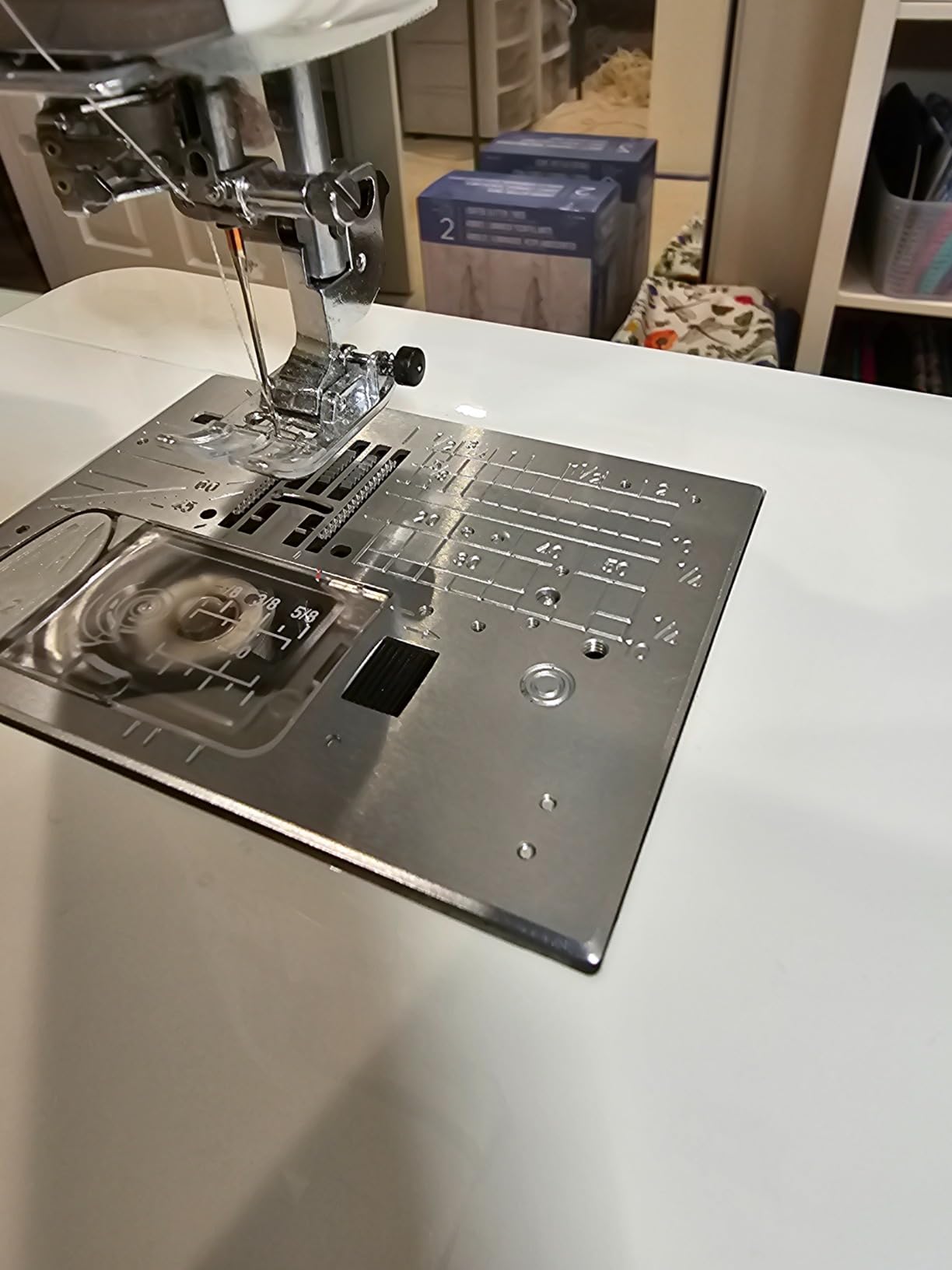
The MC6650 wins the throat space comparison outright, and it is not close. A 10 inch throat on a seamless all-metal flatbed means a king quilt block sits flat in front of you instead of wrapping around a small vertical column, which is the difference between ruler quilting comfortably and rearranging the quilt every few minutes.
Owners upgrading from consumer machines point to the same three things: the throat, the semi-industrial metal construction and the fact that it walks through four layers of heavy denim plus interfacing without stalling. That is sandwich-level capability, not just fabric-level.
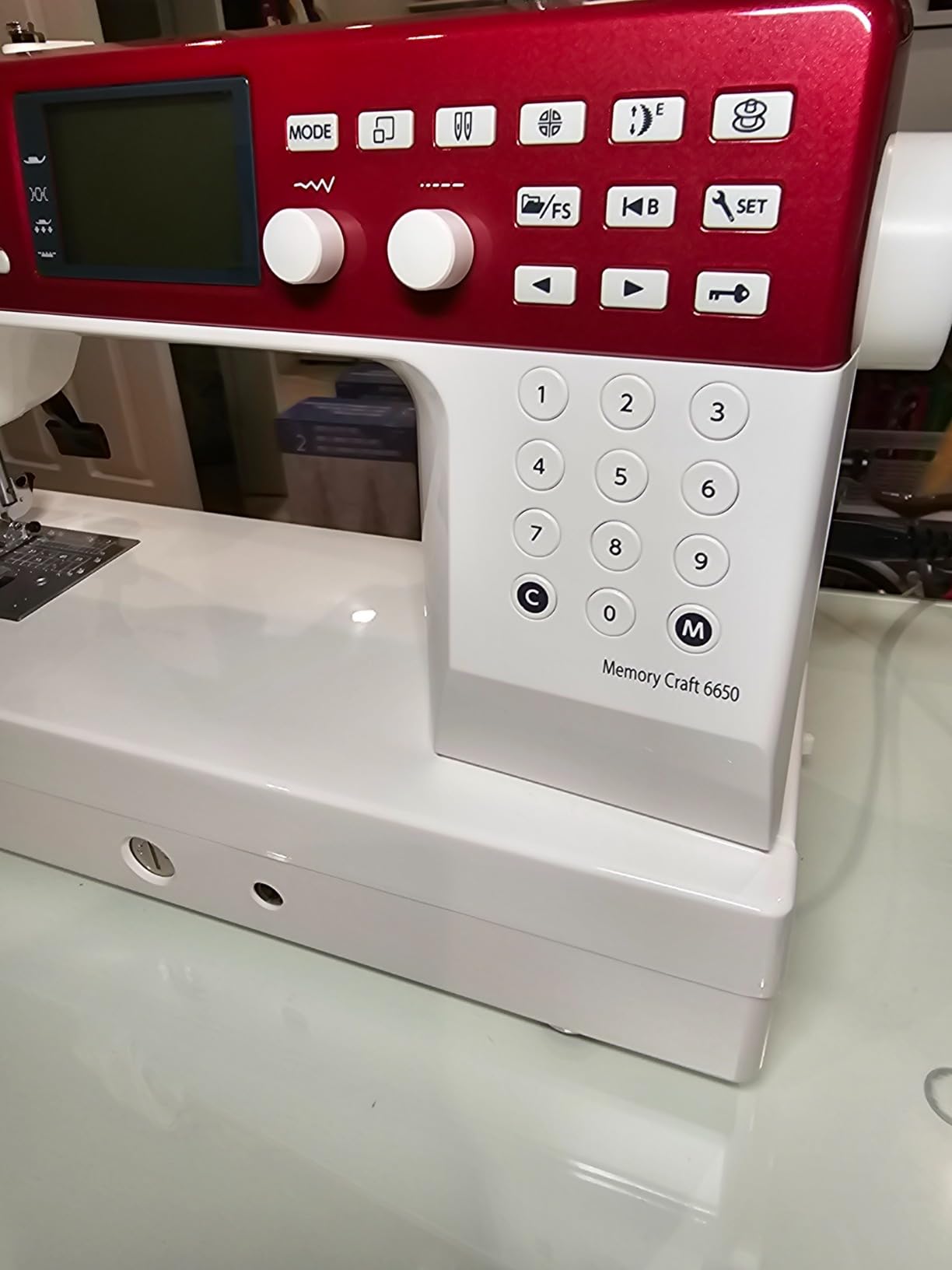
Two honest caveats. The automatic threader can split some synthetic threads and works best with cotton, and the documentation has unclear images that experienced sewists find unhelpful. It is also the top-tier machine in this roundup.
Why throat space changes thick-quilt work
Bulk is the enemy of quilting. When the machine has to be physically moved around to sew the next section, the layers shift and the seam wanders. A 10 inch throat means the quilt stays still while the machine does the moving, which is the difference between straight lines and drifting ones.
Who should skip it
Skip it if your budget does not stretch to the top tier, since a computerized board failure is a serious repair at this level. Beginners on small projects will not use the throat space at all.
9. Janome HD3000 – Mechanical Power Without Electronics
Janome HD3000 Heavy-Duty Sewing Machine with 18 Built-in Stitches + Hard Case
Fully mechanical operation
Drives through many heavy layers
Foot pressure adjustment
Hard case included
Pros
- Owners report driving through 8 layers of denim and 6 of batting plus 4 of cotton
- No computerized electronics to fail or be damaged by a surge
- Simple to operate without consulting the manual
- Quiet smooth sewing on a metal-heavy build
- Adjustable presser foot pressure for knits
- Hard case and ample accessory storage included
Cons
- Small throat space and no walking foot
- Stiff stitch sliders with confusing markings
- Push-to-start threader sometimes needs tweezers
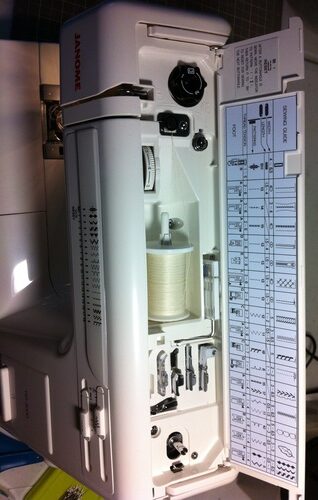
The HD3000 is the odd one out here and that is exactly why it is worth considering. It is fully mechanical with no computerized electronics, so there is no board to fail and no surge damage to worry about, which is the maintenance concern experienced quilters raise most often about computerized machines.
On raw layer penetration it is remarkable. Owners report eight layers of denim, and six layers of batting plus four of cotton, which is more loft than most machines here move through.
Experienced quilters caution against it for quilting large projects. The small throat space and the missing walking foot make it a poor match for free-motion and ruler work, and the push-to-start threader sometimes needs tweezers to finish the job.
Why mechanical matters for thick fabric
A mechanical machine has fewer points of failure in exactly the place that gets stressed. Force from a thick seam goes into a metal drive rather than a circuit board, which is why this category tends to outlive computerized machines in heavy-duty work.
Who should skip it
Skip it if you want to quilt large pieces or do any free-motion work. It is built for heavy single fabrics like denim and canvas, which is a different job from moving a soft multi-layer sandwich.
10. VEVOR Industrial Lockstitch – Raw Power for Leather and Canvas
VEVOR Industrial Lockstitch Sewing Machine, 550W Commercial Set with Servo Motor & Table Stand, 5000 SPM High Speed, Metal Frame, LCD Panel, LED Light for Cotton Wool Denim Leather Canvas
550W servo motor at 5000 SPM
Metal body with auto lubrication
0.5 inch knee lifter and 0.3 inch foot lift
Table adjusts 22.4 to 29.1 inches
Pros
- Owners sew four layers of dense leather that stalls walking-foot machines
- Very high speed with programmable settings
- Concurrent bobbin winding while sewing
- Sturdy table that stays stable at high speed
- Shares parts with the Juki DDL-5500 platform
Cons
- Assembly instructions are unclear and poorly illustrated
- Over 130 pounds so mounting needs two people
- Some buyers report units arriving damaged or incomplete
- Lockstitch only with no decorative capability
Nothing else in this roundup punches the way a 550W servo motor does. Owners describe sewing four layers of dense leather that stall walking-foot machines, and the listed capability covers up to ten layers of denim. This is the pick for canvas, upholstery-weight fabric and heavy quilt backs.
The LCD panel controls speed, needle up/down position and soft start, and the 0.5 inch knee lifter means you never touch the machine with your hands to reposition a heavy panel. The metal body self-lubricates and runs at 80 dB or less.
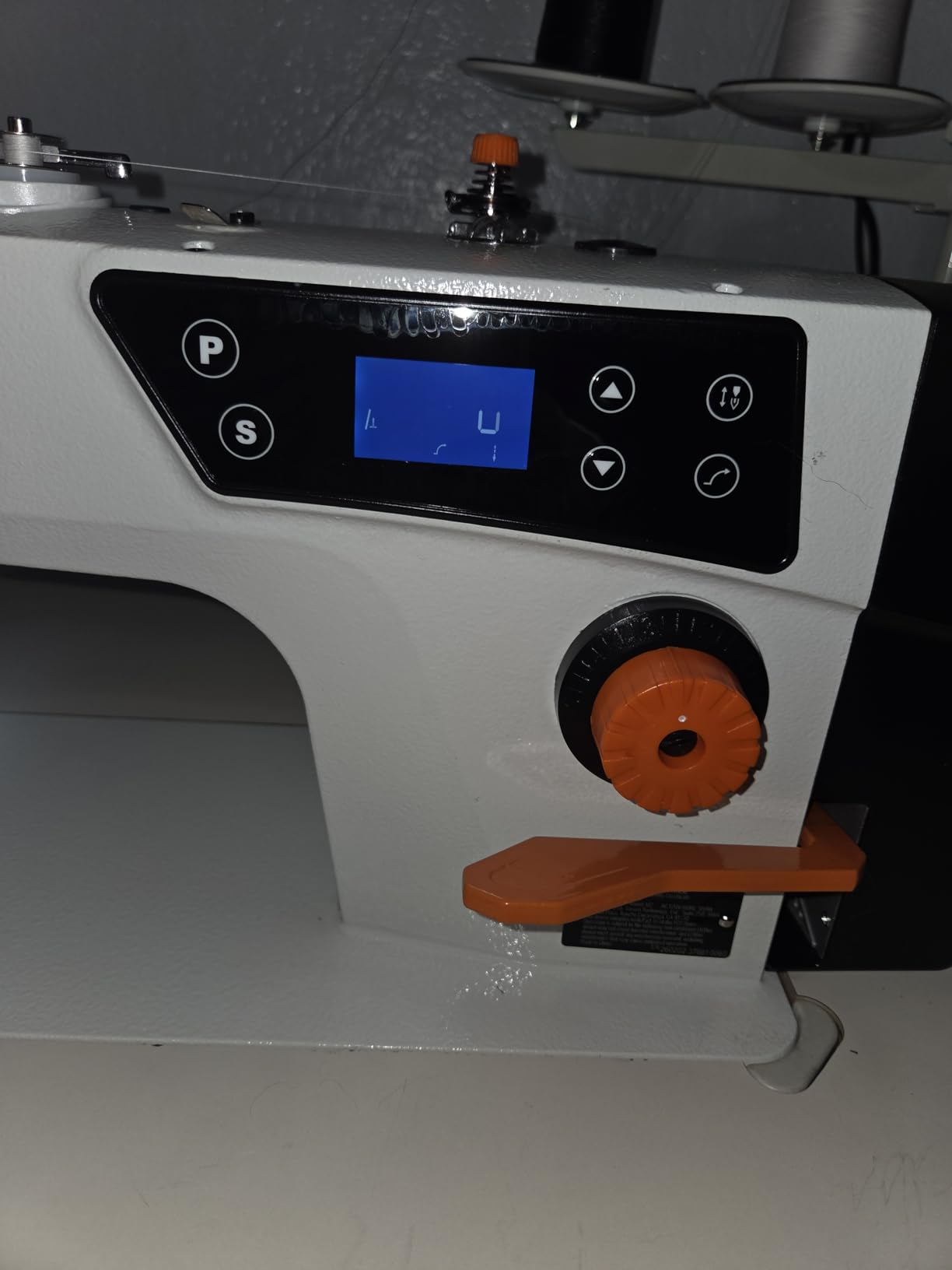
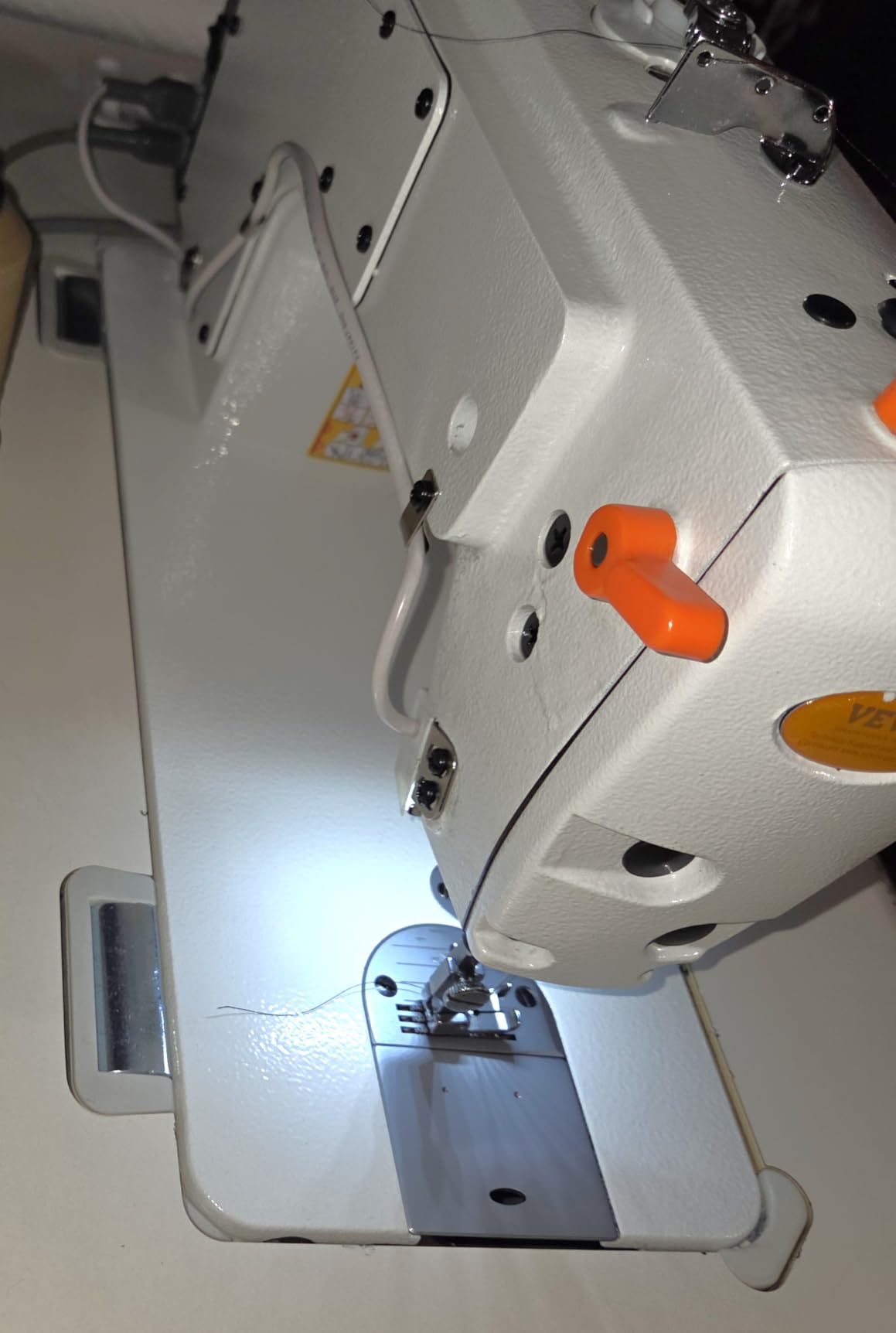
The trade-offs are physical and procedural. At more than 130 pounds it needs two people to mount it, the table took about three hours to assemble from unclear instructions, and some buyers report machines arriving with a sheared handwheel or missing feet.
Why industrial framing suits heavy quilts
An industrial chassis is built around a rigid bed and a direct-drive motor, so the needle force stays constant no matter how thick the stack becomes. For very dense quilts with heavy backing, that is the difference between sewing through and stalling.
Who should skip it
Skip it if your quilting is light, if you need a machine you can move between rooms, or if assembly is not something you want to take on. It is also the lowest-rated machine here, largely because of delivery and assembly problems rather than sewing performance.
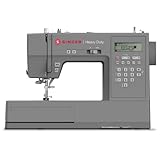
11. SINGER 6700C – Walking Foot and Speed Control in One Box
SINGER® 6700C Heavy Duty Computerized Machine with Accessory Kit
411 stitch applications
Enhanced piercing power motor
Even feed walking foot included
LCD with speed control
Pros
- Enhanced piercing power for thick fabrics and multiple layers
- Ten included feet including an even feed walking foot
- 411 stitch applications plus lettering fonts
- LCD screen with adjustable speed control
- Seven one-step buttonhole styles
- Free CREATIVATE app with model-specific tutorials
Cons
- Shortest warranty here at one year
- No extension table included for full quilt width
- Heavier than lighter home models at 14.6 pounds
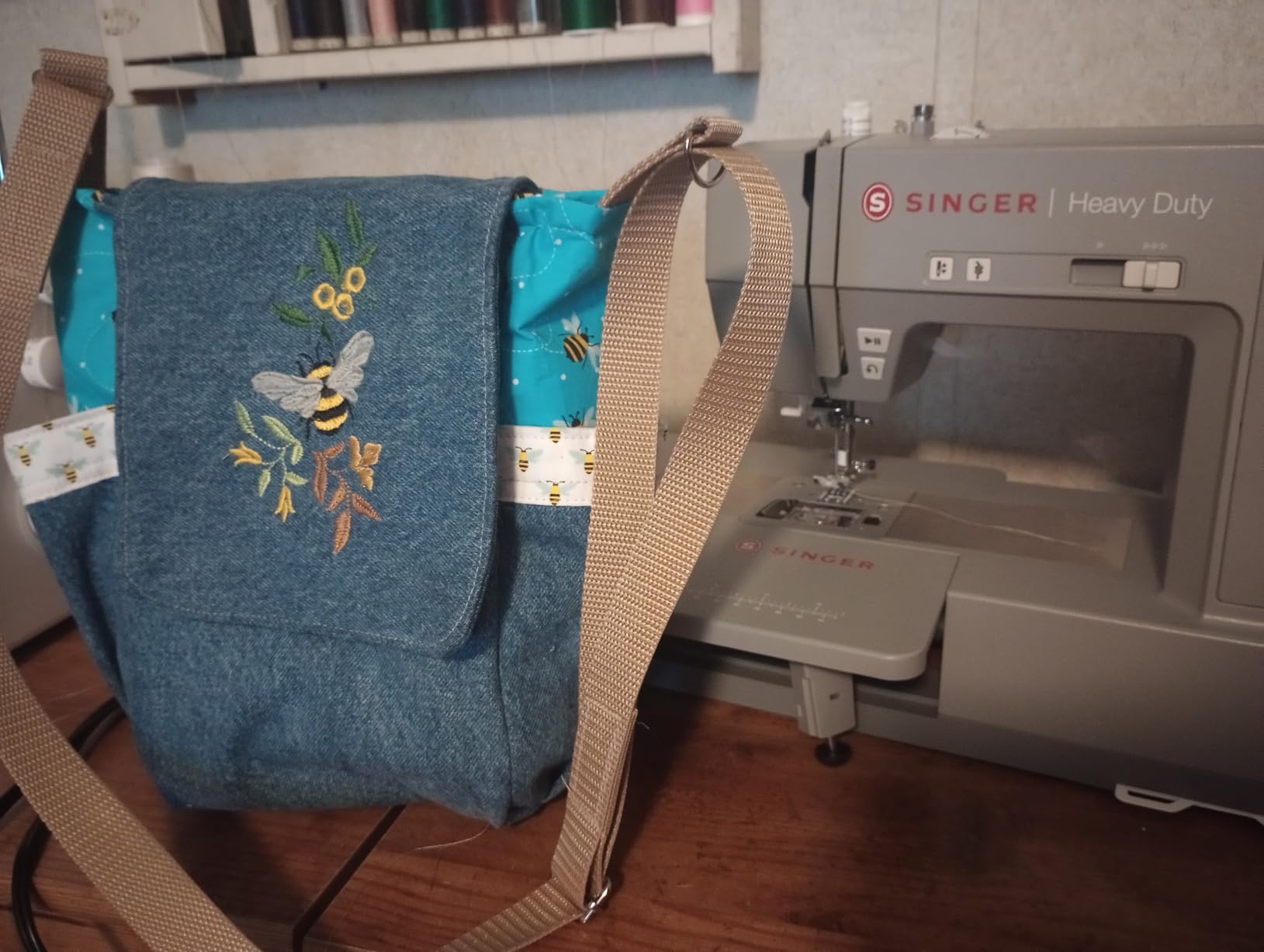
The 6700C solves a specific problem neatly: the even feed walking foot is in the box. On a thick seam, a walking foot grips the layers from above while the feed dogs grip from below, so batting cannot creep while the cotton top stays put.
The enhanced piercing power motor is aimed squarely at heavy quilting layers and denim, and the LCD speed control lets you back the speed right off when the sandwich thickens instead of fighting through it at full pace.
The reservation that comes up most often is warranty length. One year of manufacturer coverage on an electronic machine is the shortest here, and there is no extension table, so full quilt-width support has to be solved separately.
Why the walking foot matters most
Layer slip is the quiet reason quilts end up with wavy seams. The batting is compressible and moves under pressure in a way single fabric does not, so the foot above and the feed dogs below need to be mechanically linked rather than merely opposing each other.
Who should skip it
Skip it if warranty length is a deciding factor for you, or if you quilt full-width quilt backs and need the table included. It is a heavy-machine choice rather than a portable one at 14.6 pounds.
12. SINGER 9960 Quantum Stylist – 600 Stitches and an Extra-Wide Table
SINGER® Quantum Stylist 9960 Computerized Sewing & Quilting Machine
600 built-in stitches and 1172 applications
13 presser feet plus extra-wide table
Start stop button for pedal-free sewing
25 year warranty with 5 years on electronics
Pros
- Exceptionally large stitch and pattern library
- 13 presser feet and extra-wide table cover most techniques
- Start stop button allows sewing without a foot pedal
- One-step buttonholes and built-in lettering fonts
- Automatic threader and clear top-loading bobbin
Cons
- On-screen controls add a learning curve
- Heavier body is less convenient to carry to classes
- Higher price tier than basic home machines
The 9960 is the mid-tier machine that most quilters end up owning eventually, and the reason is breadth. Six hundred stitches and 1,172 applications with mirror imaging and stitch elongation cover decorative work, appliqué, monogramming and quilting without a second machine.
The start/stop button is the feature most relevant to thick quilts. It lets you sew large sections pedal-free, which removes the constant start-and-stop hesitation that causes a thick seam to bunch and skew.
Thirteen presser feet, an extra-wide table and seven kilograms of machine means this is not a carry-to-class option. The on-screen controls also take longer to learn than a mechanical machine, which can be a hurdle for beginners.
Why 25 years matters on a busy machine
The warranty runs 25 years limited, including five years on electronic components and one year on labour. For a machine expected to handle years of heavy seams and thick quilts, that length of coverage is a meaningful part of the decision.
Who should skip it
Skip it if you only want a straight-stitch quilting workhorse and will not use decorative stitches, or if you need a machine you can transport easily. The walking foot is included, but the throat is not in the same class as the Janome MC6650.
How to Sew a Thick Quilt Without Skipped Stitches
Most skipped-stitch complaints on quilting forums are technique problems, not machine problems. Work through this order before blaming the hardware.
Start with a fresh ballpoint needle sized for the fabric, not the batting. A dull or wrong-type needle deflects off the batting fibers, and the resulting skip looks exactly like a weak motor.
Lower the presser foot pressure screw rather than forcing the foot down. If the foot presses too hard on batting, it flattens the loft ahead of the needle and the fabric has nowhere to go.
Use a walking foot whenever you have more than two layers. On the SINGER 6700C it is included; on other machines it is a cheap addition that removes layer slip entirely.
Baste the sandwich before quilting. Large safety pins or a long basting stitch hold the layers in register so the machine is only asked to sew, not to hold the quilt together at the same time.
Go slower, not faster, at the thickest seam. Slow the speed control so each stitch has time to complete before the next one starts, and lower the top tension if the top thread starts breaking on dense seams.
Buying Guide: Throat Space, Punch Power and the Feed System
How much throat space do you need?
Under 4 inches suits small projects and binding only. Between 6 and 7 inches handles queen quilts and most block work comfortably. At 8 inches and above you can roll a bulky section in front of the needle without moving the machine, and 10 inches is what the Janome MC6650 delivers.
How much punch power is enough?
Two layers of quilting cotton with a standard batting is within reach of almost every machine here. Four layers, high-loft batting, or a quilt backed with canvas is where the industrial-style machines pull ahead. The VEVOR is built for the extreme end; the Janome HD3000 handles heavy single fabrics well despite its small throat.
Which feed system do you need?
Standard feed dogs handle piecing and light quilting. Add a walking foot or box feed once you are layering, because compressible batting moves differently from woven fabric. The SINGER 6700C and 9960 both include an even feed foot.
Mechanical or computerized?
Mechanical machines such as the Janome HD3000 have no circuit board to fail, which is a durability advantage in heavy work. Computerized machines give you stitch libraries, needle up/down positioning and automatic threaders. Most quilters in the forums we read end up owning one of each eventually.
How much thread and bobbin capacity matters
Long quilt rows empty a bobbin faster than piecing does. Independent bobbin winding motors, on the MC6650 and the HZL-F600, let you fill the next bobbin while sewing rather than stopping mid-row.
Two accessories are worth budgeting for regardless of machine: a walking foot and a good quality 1/4 inch foot with the clicker. Our heavy duty sewing machine picks go deeper on the motor and frame side of the decision.
Do You Need a Long-Arm Machine to Quilt Large Quilts?
No, for most home quilters a domestic machine with a walking foot, an extension table and a ruler foot will quilt a king-size quilt. The real question is whether you want to hold the machine or hold the quilt, and only one of those is comfortable for hours at a stretch.
A long-arm machine lets the quilt sit flat on a wide bed while a much larger needle assembly moves over it. That means no rolling, no bunching and far more consistent line work across a wide area, and it is genuinely better for dense quilting patterns across a bed-size quilt.
The cost is that a long-arm occupies a dedicated space, needs its own table, and cannot be moved to a retreat. For puff quilts and heavy layers, the deciding factor is lift and torque, which an industrial-style domestic machine such as the Juki TL-2010Q provides without the footprint.
Our advice is to buy for the thickest quilt you actually plan to make. If that is a hand-pieced cotton quilt with a thin batting, any of the mid-tier machines here will do. If it is a puff quilt or a heavy canvas-backed piece, the high-lift Juki and the industrial machines earn their place.
Frequently Asked Questions
What is the best heavy-duty sewing machine for quilting?
For most quilters the best heavy-duty machine here is the Janome HD3000 if you want mechanical durability, or the SINGER 6700C if you want an included even feed walking foot and an enhanced piercing power motor. For the thickest lofts, the Juki TL-2010Q raises its presser foot to 12mm and the VEVOR industrial machine runs a 550W servo motor. Pick based on the thickest sandwich you plan to sew, not the stitch count.
What sewing machine is best for thick fabrics?
Thickness comes from four things: motor torque at the needle, a feed system that grips every layer, a presser foot that lifts high enough to clear a thick seam, and a needle plate with enough room under it. On those measures the SINGER 4423 claims 50 percent more power than a standard machine, the Juki TL-2010Q lifts to 12mm, and the VEVOR industrial set is rated for heavy denim and canvas.
What is a good throat size for quilting?
Four inches is enough for piecing and binding. Six to seven inches is the comfortable range for queen quilts and most block work. Eight inches and above lets you roll a bulky section in front of the needle without shifting the machine. The Janome MC6650 has a 10 inch throat on a seamless all-metal flatbed, which is the largest in this roundup.
Is the Juki TL-2010Q good for quilting?
Yes, and it is the pick here for puff quilts and high-loft batting. The knee lifter raises the presser foot to 12mm so bulky seams clear instead of dragging, and the automatic thread trimmer cuts needle and bobbin threads together. The limitation is that it is a single-needle lockstitch machine, so it cannot do decorative or blanket stitches.
Which Juki sewing machine is best for quilting?
For speed and a die-cast aluminum body, the TL-2000Qi runs up to 1,500 stitches per minute and includes an extension table. For maximum presser foot lift and an automatic thread trimmer, the TL-2010Q is the better thick-quilt choice. For 255 stitch applications plus automatic cutting and threading, the HZL-F600 does both quilting and garment work on one machine.
How do I sew a thick quilt without skipped stitches?
Change the needle first, since a dull or wrong-type ballpoint deflects off batting fibers and skips. Then lower the presser foot pressure so the loft is not flattened ahead of the needle, use a walking foot on anything over two layers, and baste the sandwich so the machine only has to sew. Slow the speed at the thickest point of each seam.
What are common problems with Janome machines?
On the MC6650, owners mention an automatic needle threader that can split some synthetic threads and works best with cotton, plus an instruction booklet with unclear images. Experienced quilters also warn that the HD3000 has a small throat space and no walking foot, which limits it for large projects and free-motion work. Both are mechanical or build issues rather than sewing-quality issues.
Do I need a long arm machine to quilt?
For most home quilters, no. A domestic machine with a walking foot, an extension table and a ruler foot will quilt a king-size quilt. A long-arm is better when you want the quilt to lie flat under a much larger needle assembly, mainly for dense quilting across a bed-size piece. If your priority is thick lofts rather than wide coverage, a high-lift domestic machine is enough.
Conclusion: Our Pick for Thick Quilts in 2026
If you want one answer, take the Brother HC1850. It earns the top slot in our best sewing machines for thick quilts lineup because it handles a multi-layer sandwich without drama, carries 185 stitches including 55 alphanumeric patterns, and comes with a 25 year limited warranty plus lifetime technical support. It is not the highest-rated machine here and it is not the most powerful, but it is the one we would put in front of a beginner and a twelve-year quilter alike.
If your quilts are puffier than most, go to the Juki TL-2010Q for that 12mm lift. If you sew heavy denim and canvas as well as quilts, the VEVOR industrial set or the Janome HD3000 has the torque. And if you need the room to handle a bulky block, the Janome MC6650 with its 10 inch throat is the only machine here that solves it outright.
Whichever one you choose, check the walking foot, needle and thread combination before you start. That small kit does more for a thick quilt than any specification on the spec sheet.