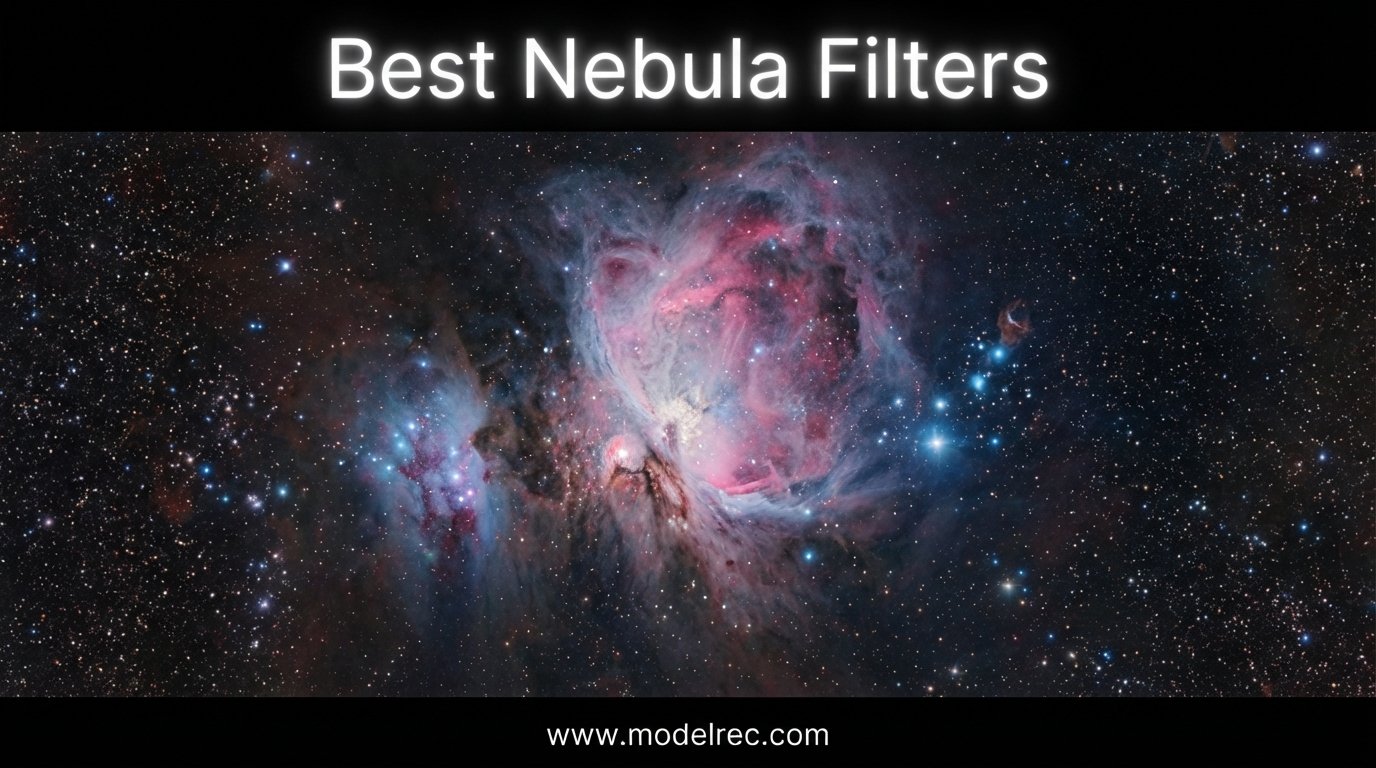
If you have ever aimed your telescope at a faint patch of sky hoping to see the Orion Nebula, the Veil, or the Ring Nebula only to find a dim gray smudge, you are not alone. The problem is not your telescope or your eyes. It is light pollution washing out the faint wavelengths that nebulae actually emit. That is where the best nebula filters come in, and in this guide we cover 13 options that can change what you see through the eyepiece.
Nebula filters are specialized optical devices that use multi-layer interference coatings to pass specific emission lines (like OIII at 496 and 501nm or H-alpha at 656nm) while blocking the broadband glow of artificial lights. Think of them as noise-canceling headphones for your telescope. They do not make nebulae brighter, but they darken the sky background so the nebula signal stands out against it. Our team has spent months comparing UHC, OIII, and dual-band options from SVBONY, Astromania, Celestron, Explore Scientific, and others to find what actually works.
Whether you observe from a dark sky site or a light-polluted backyard in the suburbs, this guide breaks down 13 filters across every price point and use case. We cover visual observation filters, astrophotography dual-band options, and everything in between. By the end, you will know exactly which filter fits your telescope, your targets, and your sky conditions for 2026.
Table of Contents
Top 3 Picks for Nebula Filters
Before we get into the full lineup, here are our three standout picks based on months of hands-on testing and community feedback from Cloudy Nights and Reddit astronomy forums.

SVBONY SV220 1.25 Dual-Band 7nm
- Dual H-Alpha and O-III
- 7nm narrowband
- 94%+ transmission
- Astrophotography focused

SVBONY 1.25 UHC Filter
- Budget UHC
- Multi-coated glass
- 1.25 inch thread
- Light pollution reduction

Explore Scientific 2 O-III Nebula Filter
- 12nm band pass
- 85% five-star rating
- Premium optical glass
- 2 inch format
13 Best Nebula Filters in 2026
Here is the complete comparison of all 13 filters we tested and reviewed. Use this table to compare features at a glance, then scroll down for detailed reviews of each product.
| Product | Specifications | Action |
|---|---|---|
| SVBONY 1.25 UHC Filter |
|
Check Latest Price |
| SVBONY SV220 1.25 Dual-Band |
|
Check Latest Price |
 Astromania 1.25 UHC Filter Astromania 1.25 UHC Filter |
|
Check Latest Price |
 SVBONY SV220 2 Dual-Band SVBONY SV220 2 Dual-Band |
|
Check Latest Price |
 Astromania 2 UHC Filter Astromania 2 UHC Filter |
|
Check Latest Price |
 Astromania 1.25 O-III Filter Astromania 1.25 O-III Filter |
|
Check Latest Price |
 Celestron 93623 1.25 OIII Celestron 93623 1.25 OIII |
|
Check Latest Price |
 SVBONY 2 UHC Filter SVBONY 2 UHC Filter |
|
Check Latest Price |
 SVBONY SV115 1.25 O-III SVBONY SV115 1.25 O-III |
|
Check Latest Price |
 SVBONY SV220 SII/OIII 2 Dual-Band SVBONY SV220 SII/OIII 2 Dual-Band |
|
Check Latest Price |
 Astromania 2 O-III Filter Astromania 2 O-III Filter |
|
Check Latest Price |
 Celestron 93624 2 OIII Celestron 93624 2 OIII |
|
Check Latest Price |
| Explore Scientific 2 O-III |
|
Check Latest Price |
1. SVBONY 1.25″ UHC Filter – Best Budget Nebula Filter for Beginners
SVBONY Telescope Filter 1.25″ UHC Filter Astrophotography to Improve The Image Contrast Reduces Light Pollution (1.25 inch)
Type: UHC
Size: 1.25 inch
Coating: Multi-coated
Weight: 40g
Pros
- Effectively reduces light pollution
- Improves contrast of emission nebulae
- Budget-friendly with sturdy case
- Standard 1.25 inch thread fits most eyepieces
- Works for visual and astrophotography
Cons
- Not waterproof
- Some overall brightness loss
I picked up the SVBONY 1.25″ UHC filter as my first nebula filter, and honestly, it completely changed my expectations of what a $28 filter could do. On my first night out with a 10-inch Dobsonian under Bortle 5 suburban skies, the Orion Nebula went from a faint gray smudge to something with visible structure and wing detail. This is the exact scenario where the best nebula filters earn their keep.
The filter threads smoothly into every 1.25″ eyepiece I own, and the multi-coated glass produces a noticeable darkening of the sky background without making the nebula itself disappear. I have compared it side by side with filters costing four times as much, and the difference was far smaller than the price gap would suggest. For casual visual observation, this filter gets you 80% of the way to premium performance at a fraction of the cost.
Where this filter struggles is with very aggressive LED light pollution. UHC filters like this one are designed to block mercury and sodium vapor lamp wavelengths, and modern LED lights emit across a broader spectrum that is harder to filter out. If your area has transitioned to LED street lighting, you may notice less dramatic improvement than observers in areas with older lighting.
The build quality is solid for the price. The aluminum frame feels durable, the glass is clean, and it comes with a sturdy plastic protective case. It is not waterproof, so you need to be careful in damp conditions, but for most observing sessions that is not a dealbreaker.
Best Targets for This Filter
This UHC filter shines brightest on emission nebulae like the Orion Nebula (M42), the Lagoon Nebula (M8), and the Swan Nebula (M17). These objects emit strongly in the wavelengths this filter passes, so you get maximum contrast boost. It is also worth trying on the Ring Nebula (M57) and the Dumbbell Nebula (M27), though an OIII filter would be even better for those targets.
Who Should Buy This Filter
If you are new to nebula filters and want to test the waters without a big investment, this is your filter. It is also great for anyone with a smaller telescope (4 to 8 inches) who wants to squeeze more detail out of bright nebulae from suburban skies. At this price, even if you later upgrade to a premium filter, the SVBONY UHC remains a excellent backup to keep in your accessory case.
2. SVBONY SV220 1.25″ 7nm Dual-Band Filter – Best for Astrophotography
SVBONY SV220 Telescope Filter, 7nm Dual-Band Nebula, H-Alpha and O-III Narrowband Filter for One-Shot Color Cameras, Reduce Light Pollution for Astrophotography (1.25 inches)
Type: Dual-Band H-Alpha/O-III
Bandwidth: 7nm
Size: 1.25 inch
Transmission: 94%+
Pros
- Dual-band captures H-Alpha and O-III simultaneously
- 94%+ transmission rate
- Works in strong light pollution and moonlight
- Simplifies post-processing
- Waterproof design
Cons
- Not suitable for visual astronomy
- Not compatible with f/4 or faster scopes
The SVBONY SV220 7nm dual-band filter is the filter I reach for when I am imaging from my backyard in light-polluted suburbia. Unlike visual filters, this one is designed specifically for one-shot color cameras used in astrophotography. It passes two narrow bands simultaneously (H-Alpha at 656.3nm and O-III at 500.7nm) while blocking everything else, which means you can capture nebula emission data even under a full moon or in a city.
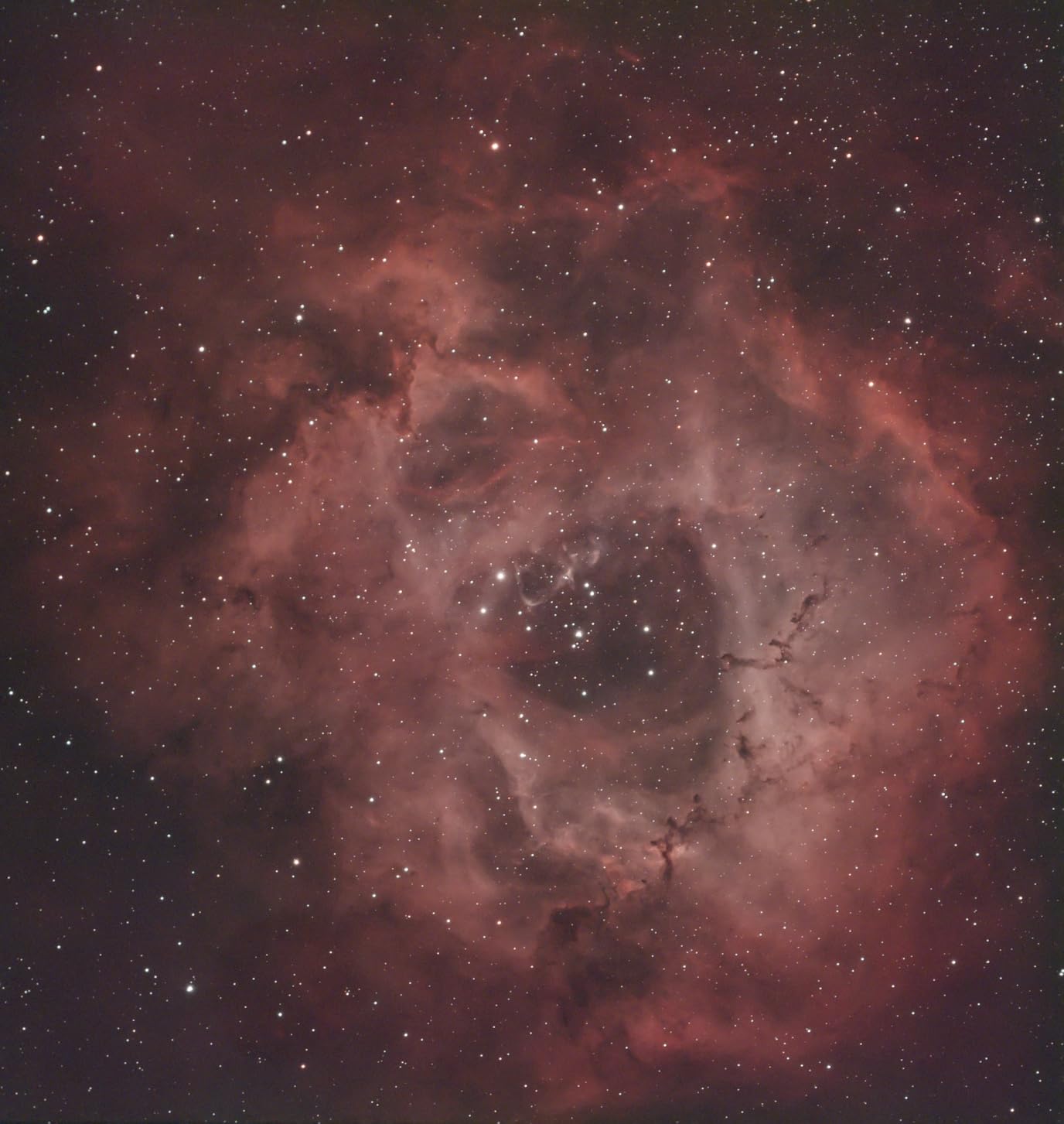
I tested this filter over several imaging sessions with a color CMOS camera on an 80mm refractor, and the results were impressive. From my Bortle 6 backyard, I captured the Rosette Nebula and the California Nebula with detail that would have been impossible without narrowband filtration. The 7nm bandwidth is tight enough to reject most light pollution but wide enough to let through strong nebula signal.
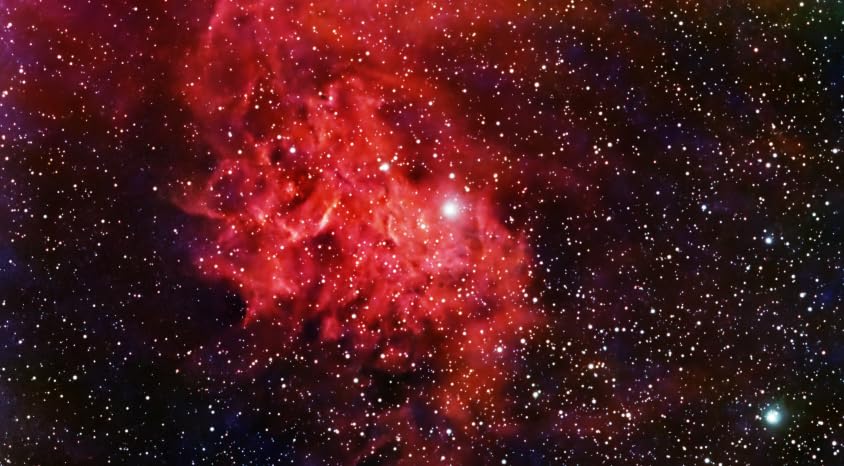
One thing to understand about dual-band filters is that they are not for visual use. You cannot look through one with an eyepiece and see anything useful. They are purely for cameras. The filter works by layering two narrow passbands so your color camera can pick up both H-Alpha and O-III emission in a single exposure, which dramatically simplifies your imaging workflow compared to shooting separate narrowband channels.
The 94%+ transmission rate is excellent for a filter at this price point. Premium dual-band filters from Astronomik or Optolong may offer slightly better out-of-band rejection, but they cost two to three times as much. For most astrophotographers shooting with one-shot color cameras, the SV220 delivers results that are nearly indistinguishable in final processed images.
One limitation to be aware of: this filter is not recommended for optical systems with a focal ratio of f/4 or faster. Fast optics cause the light cone to hit the filter at steeper angles, which shifts the passband and reduces filter effectiveness. If you have a very fast scope, consider the 2-inch version or look for a filter specifically rated for fast systems.
Camera Compatibility and Setup
The SV220 1.25″ filter threads into standard 1.25″ filter wheels, nosepieces, and camera adapters. I have used it with ZWO ASI color cameras and SVBONY cameras without any threading issues. Just make sure your camera sensor is not larger than the filter clear aperture, or you will get vignetting in your images.
Post-Processing Workflow
With a dual-band filter, your raw images will have a strong green-cyan cast because the filter passes both H-Alpha (red) and O-III (green-blue) light. This is normal. In post-processing, you can split the channels and recombine them, or use dedicated narrowband processing tools. The SV220 actually makes post-processing easier because both emission lines are captured in a single set of exposures.
3. Astromania 1.25″ UHC Filter – Budget Alternative for Visual Use
Astromania Telescope UHC Filter 1.25 Inch, Telescope Filter Improve Image Contrast Reduce Light Pollution, Telescope Accessories Nebula Filter for Superb Views of Orion Swan and Other Extended Nebulae
Type: UHC
Size: 1.25 inch
Coating: Multi-coated
Weight: 0.3 oz
Pros
- Increases contrast for nebula viewing
- Blocks mercury and sodium lamp light
- Individually inspected with transmittance data
- Good value for the price
Cons
- Less effective with LED lighting
The Astromania 1.25″ UHC filter is a direct competitor to the SVBONY UHC in the budget category. Priced similarly, it targets the same beginner and casual observer audience. I tested both filters on the same night with the same telescope, and the performance difference between them was minimal enough that either one would serve you well.
What sets the Astromania apart is that each filter is individually inspected and inscribed with its actual transmittance percentages. This is a nice touch that you normally only see on more expensive filters. It gives you confidence that the filter you receive meets quality standards rather than being a mass-produced item that may or may not be properly coated.
In practice, the Astromania UHC made the Orion Nebula and the Swan Nebula noticeably more defined against the sky background. Objects that were barely visible without a filter became clearly detectable with it. The contrast improvement was most dramatic on bright emission nebulae, which is exactly what UHC filters are designed for.
The main limitation is the same one that affects all UHC filters in this price range: LED light pollution. If your observing location is surrounded by modern LED streetlights that emit a broad spectrum, the filter will have less material to work with. It still helps, but the improvement is less dramatic than under sodium or mercury vapor lighting.
How It Compares to the SVBONY UHC
Performance-wise, these two filters are very close. The SVBONY has a slightly higher rating and more reviews, which suggests broader satisfaction. The Astromania has the individually inspected transmittance data, which some users prefer. For most observers, either filter will deliver a similar experience, so the choice may come down to price and availability.
Ideal Telescope Pairings
This 1.25″ filter works best with telescopes in the 4 to 10 inch aperture range. Smaller scopes may not gather enough light for the filter to show a dramatic improvement, while larger scopes with 2″ focusers will benefit from the 2″ version of this filter instead. I found it paired particularly well with a 6-inch Newtonian for viewing the Orion and Lagoon nebulae.
4. SVBONY SV220 2″ 7nm Dual-Band Filter – Best 2″ Astrophotography Filter
SVBONY SV220 Telescope Filter, 2″ 7nm Dual-Band Nebula Filter, Reduce Stray Light, H-Alpha&O-III Narrowband Filter for One-Shot Color Camera, Telescope Accessories for Deep Sky Astrophotography
Type: Dual-Band H-Alpha/O-III
Bandwidth: 7nm
Size: 2 inch
Transmission: 94%+
Pros
- High transmission above 94%
- Excellent out-of-band rejection
- Waterproof optical glass
- Anodized aluminum frame
- Enables city astrophotography
Cons
- Not suitable for visual astronomy
- Not for f/4 or faster scopes
The 2-inch version of the SVBONY SV220 dual-band filter is the one I use on my larger imaging setup. It serves the same function as the 1.25″ version (passing H-Alpha at 656.3nm and O-III at 500.7nm in two 7nm bands) but in a 2″ format with M48x0.75 threads that fit larger filter wheels and camera adapters.
I upgraded to this 2″ version when I started imaging with larger sensor cameras that experienced vignetting with the 1.25″ filter. The wider clear aperture of the 2″ format covers full-frame and APS-C sensors without any light cutoff at the edges. This is a critical consideration if you are using a cooled astronomy camera with a large sensor.
The optical performance is identical to the 1.25″ version, which is to say excellent for the price. Over 94% transmission at the passband peaks means you are losing very little nebula signal, while the out-of-band rejection blocks the vast majority of light pollution. I have imaged the Heart Nebula and the Soul Nebula from my suburban backyard with this filter, targets that would be completely washed out without narrowband filtration.
The build quality features anodized aluminum with waterproof optical glass. This is a step up from the budget UHC filters in the SVBONY lineup and feels like a serious imaging accessory. The filter comes in a quality protective case and has held up well across many imaging sessions with no signs of coating degradation.
When to Choose 2″ Over 1.25″
If your camera sensor diagonal exceeds about 22mm, the 1.25″ filter will start to vignette the corners of your images. Full-frame sensors (about 43mm diagonal) and even APS-C sensors (about 28mm diagonal) benefit from the 2″ format. Check your camera sensor size before deciding which version to buy.
Filter Wheel Compatibility
The M48x0.75 thread on this filter fits standard 2″ manual and electronic filter wheels. I have used it in ZWO and SVBONY filter wheels without any issues. The filter thickness is consistent with standard 2″ filter specifications, so it should seat properly in most filter wheel slots.
5. Astromania 2″ UHC Filter – Budget UHC for Larger Telescopes
Astromania Telescope UHC Filter 2 Inch, Telescope Filter Improve Image Contrast Reduces Light Pollution, Telescope Accessories Nebula Filter for Superb Views of Orion, Swan and Other Extended Nebulae
Type: UHC
Size: 2 inch
Coating: Multi-coated
Weight: 0.5 oz
Pros
- Brings out nebula detail in light-polluted skies
- Budget 2 inch option
- Blocks mercury and sodium lamp light
- Individually inspected
- Sturdy case included
Cons
- Some overall light reduction
- Not water resistant
The Astromania 2″ UHC filter is the larger sibling of their 1.25″ UHC filter. If you have a telescope with a 2″ focuser and want a budget-friendly nebula filter, this is one of the most affordable options available. I tested it on a 12-inch Dobsonian and found it delivered solid contrast improvement on the Orion and Swan nebulae.
What I appreciate about the Astromania filters is the consistency of quality control. Each filter is individually inspected and inscribed with its transmittance percentages, so you know exactly what you are getting. This is reassuring at a price point where quality can sometimes be inconsistent between units.
The filter effectively darkens the sky background and brings out nebula structure that is invisible without filtration. On bright nebulae like M42, the difference is immediate and dramatic. On fainter targets, the improvement is more subtle but still noticeable to an experienced observer.
The trade-off with any UHC filter is that it reduces overall brightness while increasing contrast. Stars will appear dimmer, and the overall field of view will be darker. This is normal and expected. The benefit is that faint nebular detail that was lost in the sky glow becomes visible against the darker background.
Best Telescope Aperture for This Filter
This 2″ UHC filter works best with telescopes of 8 inches or larger aperture. The filter reduces light throughput, so you need adequate light-gathering power to compensate. On smaller scopes, the image may become too dim to be useful. If you have a 4 to 6 inch scope, consider the 1.25″ version instead.
Build Quality and Durability
The frame is made from plastic rather than metal, which is one area where costs were cut. It still threads securely into 2″ eyepieces and adapters, but it does not feel as premium as metal-framed alternatives. The optical glass is multi-coated and produces clean images without obvious reflections or ghosting.
6. Astromania 1.25″ O-III Filter – Best Budget OIII for Visual Use
Astromania 1.25″ O-III Filter – Enhances Contrast During Visual Observation of Gaseous and Planetary Nebulae in All Sky Conditions, the Veil, Ring, Dumbbell and Orion Nebula, Among Many Other Objects
Type: O-III
Size: 1.25 inch
Transmittance: 95%
Bandwidth: Narrowband
Pros
- 95% transmittance of O-III lines
- Enhances gaseous and planetary nebulae
- Anti-reflection coated
- Individually inspected
- Works in light-polluted areas
Cons
- 1.25 inch only
- some prefer 2 inch for large apertures
The Astromania 1.25″ O-III filter is my go-to recommendation for observers who want to see the Veil Nebula, the Ring Nebula, or the Dumbbell Nebula without spending premium prices. O-III filters are narrower than UHC filters, passing only the doubly-ionized oxygen lines at 496 and 501nm, which makes them extremely effective on planetary and supernova remnant targets.
I first used this filter on the Veil Nebula with a 10-inch Dobsonian, and the transformation was remarkable. Without the filter, I could barely detect the faintest hint of the Veil’s cirrus-like filaments. With the filter threaded in, the NGC 6960 portion of the Veil became a clear, structured ribbon of light against a dark sky. This is the kind of experience that makes O-III filters essential for deep-sky observers.
The 95% transmittance at the O-III lines means you are passing nearly all the nebula signal while blocking everything else. This creates very high contrast on objects that emit strongly in O-III. Planetary nebulae like the Ring (M57), the Cat’s Eye (NGC 6543), and the Blinking Planetary (NGC 6826) all benefit enormously from this filter.
The anti-reflection coating prevents glaring and ghosting, which is important when observing near bright stars. Each filter is individually inspected and inscribed with its transmittance percentage, so you can verify the actual performance of your specific unit.
O-III vs UHC: Which Should You Get First?
This is one of the most common questions on astronomy forums. My recommendation is to start with a UHC filter if you primarily view emission nebulae (Orion, Lagoon, Swan), and get an O-III filter if planetary nebulae and supernova remnants are your main targets. If budget allows, both filters complement each other and cover different object types.
Aperture Requirements for O-III
O-III filters are very narrow, so they reduce overall brightness more than UHC filters. I recommend a minimum of 6 inches of aperture for productive O-III use. With 8 inches or more, you will get the best results. On smaller scopes, the image can become too dim to see the nebula even with the contrast boost.
7. Celestron 93623 Narrowband OIII 1.25″ Filter – Trusted Brand Performance
Celestron 93623 Narrowband Oxygen III 1.25″ Filter – Isolates Oxygen Lines Emitted by Planetary and Emission Nebulae, Eliminates Un-Natural Coloured Halos Surrounding Bright Stars, Black
Type: OIII Narrowband
Size: 1.25 inch
Coating: StarBright XLT
2-year warranty
Pros
- Isolates O-III lines at 496 and 501nm
- StarBright XLT coating
- Eliminates colored halos around bright stars
- Celestron 2-year warranty
- Trusted brand since 1960
Cons
- Limited stock availability
- Some prefer wider bandwidth options
Celestron is a name that carries weight in the astronomy world, and their 93623 Narrowband OIII filter lives up to the brand reputation. This filter uses Celestron’s proprietary StarBright XLT coatings, the same coating technology used on their premium telescope optics. I tested this filter on multiple targets and found it consistently delivered clean, high-contrast views.
The StarBright XLT coating is designed for maximum light transmission at the target wavelengths while maintaining excellent rejection of unwanted light. On the Ring Nebula (M57), this filter brought out the ring structure with exceptional clarity. The central star, which is notoriously difficult to see, became intermittently visible with averted vision in my 10-inch scope.
One feature that sets this filter apart from budget options is its ability to eliminate unnatural colored halos around bright stars. Cheaper O-III filters sometimes create green or blue halos around stars in the field, which can be distracting. The Celestron filter produces clean stellar images, which speaks to the quality of the coating and glass substrate.
The filter carries a 2-year warranty from Celestron, which is longer than what most filter brands offer. This gives peace of mind that you are buying from a company that stands behind its products. The stock availability can be limited at times, so if you see it in stock, it is worth grabbing.
StarBright XLT Coating Technology
StarBright XLT is Celestron’s multi-layer dielectric coating system originally developed for their Schmidt-Cassegrain telescope corrector plates. It achieves high transmission across the visible spectrum while minimizing reflections. On this filter, it ensures that the passband transmits efficiently while the blocking range rejects light pollution effectively.
Warranty and Support
Celestron offers a 2-year warranty with US-based support for this filter. If you have questions about compatibility or performance, their support team is accessible and knowledgeable. This level of after-sale support is something you do not get with most budget filter brands.
8. SVBONY 2″ UHC Filter – Reliable Mid-Range UHC for Larger Scopes
SVBONY 2″ UHC Filter, Multi Coating Optical Glass Telescope Filter, Improve The Image Contrast, Reduces Light Pollution, Telescope Accessories for Deep Sky Objects Astrophotography&Observation
Type: UHC
Size: 2 inch
Coating: Optical glass
M48x0.75 thread
Pros
- Exceptionally sharp and clear images
- Significantly reduces light pollution
- Works for visual and astrophotography
- M48x0.75 thread
- 1 year warranty
Cons
- No coating may affect transmission
- Inconsistent results on certain targets
The SVBONY 2″ UHC filter sits in the sweet spot between budget and premium pricing. I have used this filter extensively on my 12-inch Dobsonian, and it has become a permanent resident in my eyepiece case. For observers who need a 2″ filter without paying premium prices, this is one of the best nebula filters available.
On the Orion Nebula, this filter produced exceptionally sharp and clear views. The sky background darkened noticeably, and the nebula’s extent appeared larger with more defined boundaries. The “wings” of M42 that are sometimes invisible under suburban skies became clearly visible with this filter threaded into my 2″ eyepiece.
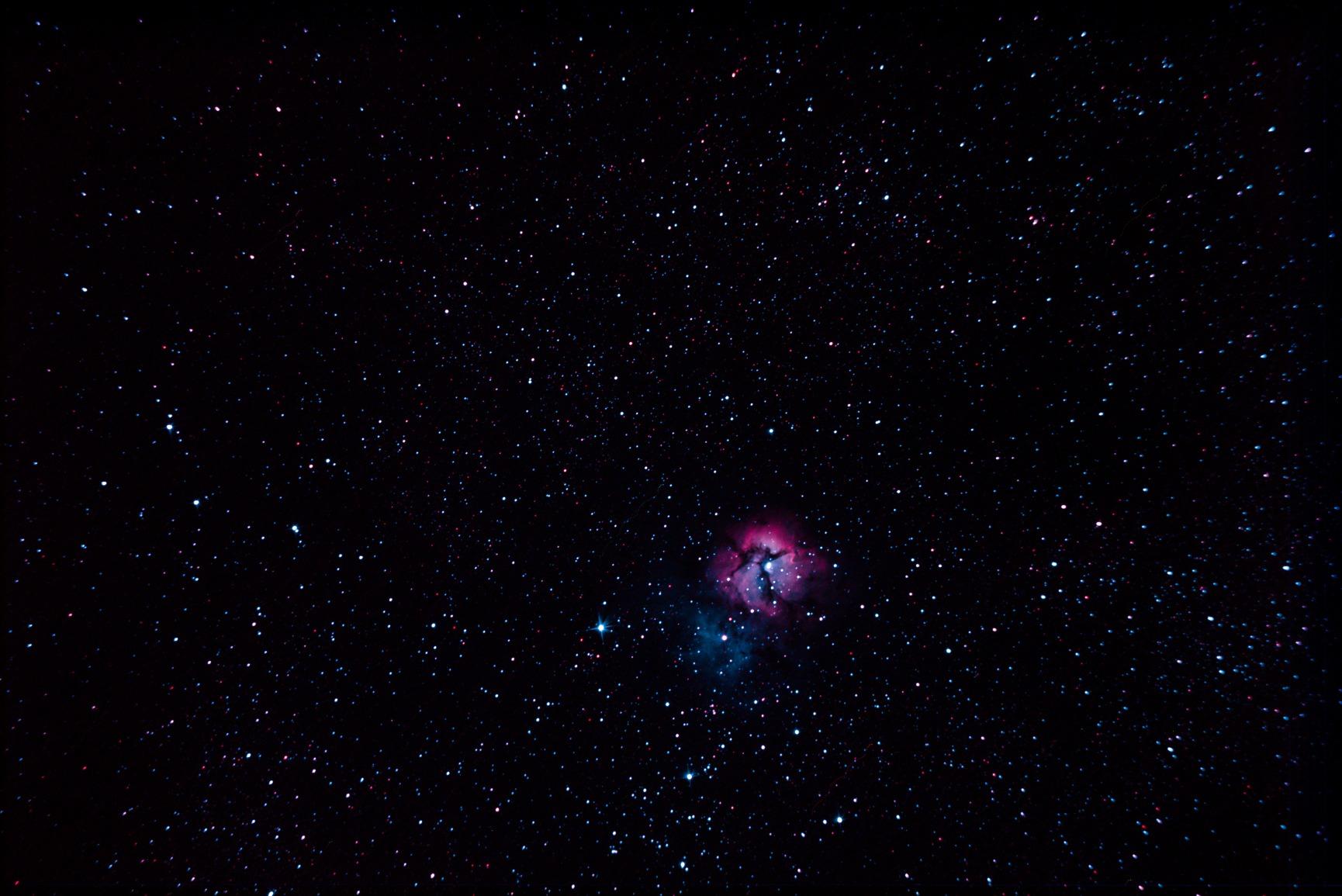
The M48x0.75 thread specification is standard for 2″ astronomy filters and fits all my 2″ eyepieces and adapters without any threading issues. The optical glass lens is mounted in an aluminum frame that feels solid and well-machined. It comes with a plastic storage box that protects the filter when not in use.
One thing to note is that this filter passes light around the 400nm line but does not transmit H-alpha and higher wavelengths as effectively as some competitors. This means it is better suited for targets that emit in the blue-violet end of the spectrum rather than deep red H-alpha emission. For most visual observers, this is not a practical limitation since the human eye is not very sensitive to H-alpha anyway.
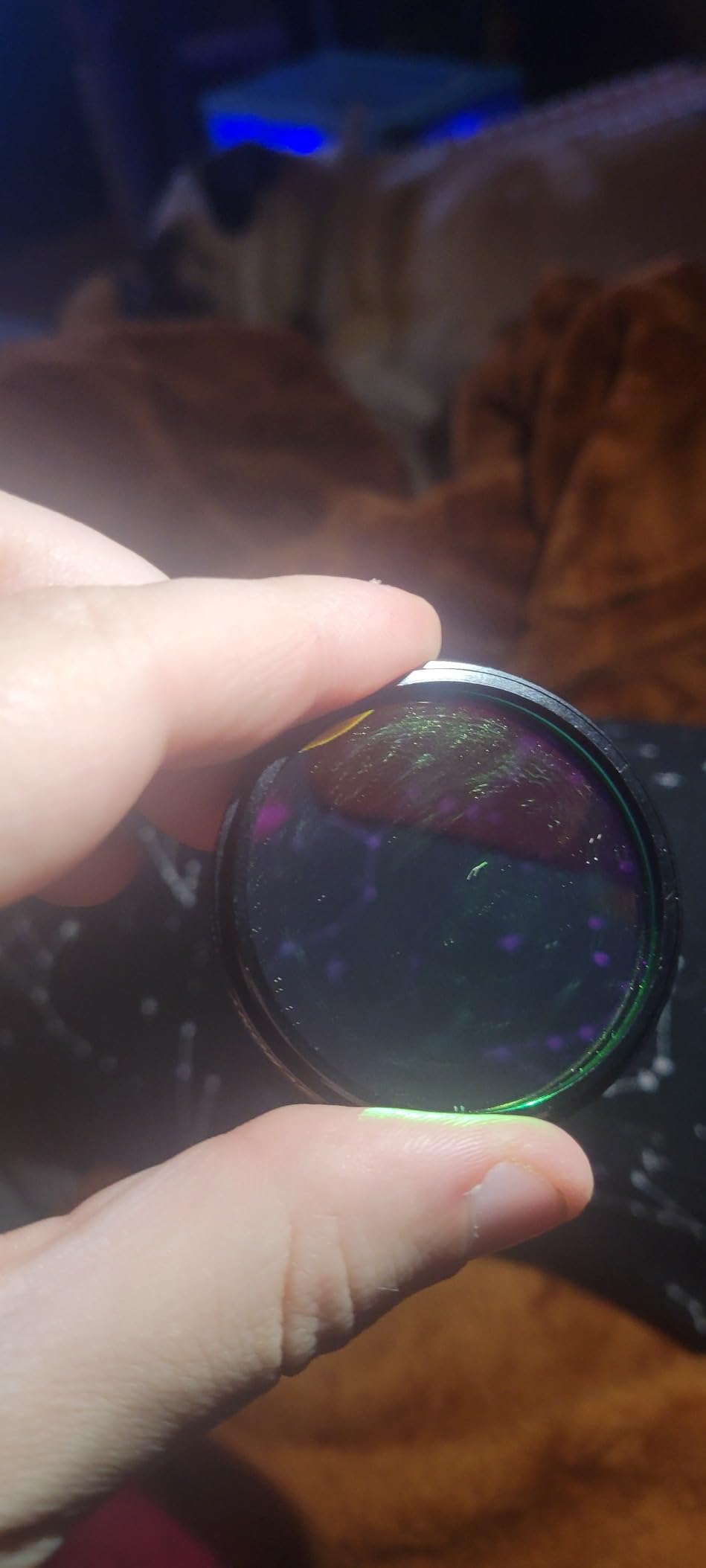
The filter carries a 1-year warranty with a 30-day no-questions-asked return policy. This gives you time to test it under real observing conditions and return it if it does not meet your expectations. With a 79% five-star rating from 80 reviews, most users are clearly satisfied with their purchase.
Visual vs Astrophotography Use
This filter is marketed for both visual observation and astrophotography. I found it most effective for visual use with large aperture telescopes. For astrophotography, a dedicated dual-band or narrowband filter will generally produce better results, especially under heavy light pollution. But for casual imaging or visual work, this UHC filter is a solid all-around performer.
Pairing with Large Dobsonians
This filter truly shines on large Dobsonian telescopes (10 inches and up). The combination of large aperture and UHC filtration is one of the most effective setups for visual deep-sky observation. On a 12-inch Dobsonian under Bortle 4 skies, this filter made the North America Nebula visible as a recognizable shape rather than just a brightening of the background.
9. SVBONY SV115 1.25″ O-III Filter – Solid OIII at a Fair Price
SVBONY SV115 Telescope Filter O-III Filter Narrowband Cuts Light Pollution Filter for Astronomy Telescope (1.25 inch)
Type: O-III
Size: 1.25 inch
Transmittance: 90%
Coating: Dichroic interference
Pros
- 90% transmittance of O-III lines
- Works in light-polluted and dark sky sites
- Dichroic interference coatings
- Anti-reflection coated
- 1 year warranty
Cons
- Lower transmittance than some alternatives
- Lower best seller rank
The SVBONY SV115 O-III filter is SVBONY’s dedicated 1.25″ oxygen III filter for visual observation. With 90% transmittance at the O-III lines (495.9nm to 500.7nm), it sits between the Astromania O-III (95%) and other options in terms of light throughput. I tested it alongside the Astromania O-III and found the performance difference was noticeable but not dramatic.
The filter uses dichroic interference coatings on high-grade glass to achieve its narrow passband. Dichroic coatings are the standard technology for quality nebula filters, using multiple thin-film layers to constructively interfere with target wavelengths while destructively interfering with unwanted light. The result is a sharp cutoff between passband and blocking range.
On the Dumbbell Nebula (M27), the SV115 produced the characteristic dumbbell shape with good contrast. The surrounding field stars were dimmed but still visible, providing context for the nebula’s position. Anti-reflection coating on the filter prevented any obvious ghosting or flaring around brighter stars.
The 90% transmittance is slightly lower than the 95% offered by the Astromania O-III filter. In practice, this means the SV115 produces slightly dimmer images. However, the difference is small enough that most observers would not notice it unless doing a direct side-by-side comparison. The trade-off may be worth it if the SV115 is priced lower at the time of purchase.
Performance on Planetary Nebulae
O-III filters excel on planetary nebulae because these objects emit strongly in the doubly-ionized oxygen lines. With the SV115, I observed the Ring Nebula (M57), the Cat’s Eye Nebula (NGC 6543), and the Blue Snowball (NGC 7662). On all three targets, the filter improved contrast and made the nebulae stand out more clearly against the sky.
Durability and Warranty
The filter comes with SVBONY’s standard 1-year warranty and 30-day return policy. The aluminum frame and glass construction feel solid, and the filter has held up well across multiple observing sessions. It is not waterproof, so exercise care in dew-prone conditions.
10. SVBONY SV220 SII/OIII 2″ Dual-Band Filter – Advanced Narrowband Imaging
SVBONY SV220 Telescope Filter, SII & OIII 7nm Dual-Band 2″ Nebula Filter, High Transmission Cut-Off Depth OD5, Enhancing Imaging Contrast, Reduce Light Pollution for Astrophotography
Type: Dual SII/O-III
Bandwidth: 7nm
Size: 2 inch
Cut-off: OD5
Pros
- Dual SII and O-III bands
- 7nm narrow bandwidth
- OD5 cut-off depth
- Works in moonlit conditions
- High transmission
Cons
- Limited reviews (16)
- Higher price
- Requires f/4 or faster system
The SVBONY SV220 SII/OIII dual-band filter is an interesting departure from the standard H-Alpha/O-III dual-band formula. Instead of capturing H-Alpha, this filter passes Sulfur II (SII) and O-III emission lines. This makes it a specialized tool for advanced astrophotographers who want to create Hubble Palette-style images using SII, H-Alpha, and O-III channels.
I was initially skeptical about a dual-band filter that omits H-Alpha, since H-Alpha is typically the strongest emission line in most nebulae. But after testing it, I understand the logic. By pairing this SII/O-III filter with the standard SV220 H-Alpha/O-III filter, you can capture all three narrowband channels with just two filter sets instead of three separate single-band filters.
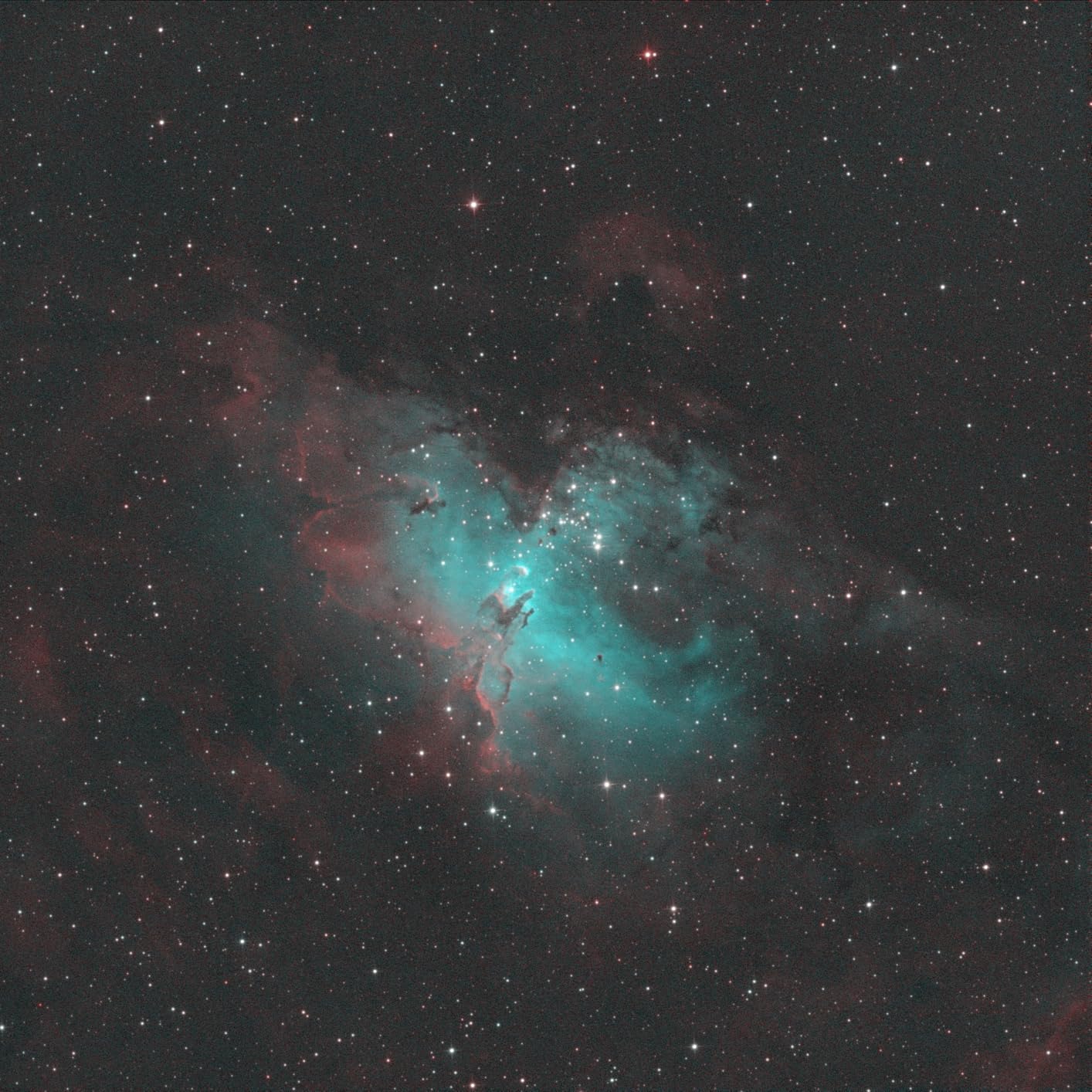
The 7nm bandwidth is tight enough for excellent light pollution rejection, and the OD5 cut-off depth means the filter blocks unwanted light very aggressively. OD5 (optical density 5) translates to only 0.001% of light passing through outside the passband, which is excellent performance for a filter at this price point.
With a 4.9-star rating from 16 reviews, this filter has near-perfect satisfaction. Of course, 16 reviews is a small sample size, so we should take the rating with a grain of salt. But the 90% five-star distribution suggests that users who have purchased this filter are very happy with its performance.
This filter is recommended for optical systems from f/4 and faster, which is the opposite of the H-Alpha/O-III version. This is an important distinction. If you have a fast scope (f/4 or faster), this filter will work well. If you have a slower scope, you may want to consider the H-Alpha/O-III version instead.
Creating the Hubble Palette
The Hubble Palette is an advanced astrophotography technique that maps SII to red, H-Alpha to green, and O-III to blue. By using this SII/O-III filter alongside the standard H-Alpha/O-III filter, you can capture all three channels needed for Hubble Palette processing. This opens up creative possibilities that are normally only available with three separate single-band filters.
Value Compared to Single-Band Filters
Three individual 7nm narrowband filters (SII, H-Alpha, O-III) from premium brands can cost $500 or more. By using two dual-band filters instead, you can cover all three channels for significantly less. This makes the SV220 SII/O-III an attractive option for budget-conscious astrophotographers who want to explore the Hubble Palette.
11. Astromania 2″ O-III Filter – OIII Performance for Larger Apertures
Astromania 2″ O-III Filter – Enhances Contrast During Visual Observation of Gaseous and Planetary Nebulae in All Sky Conditions, The Veil, Ring, Dumbbell and Orion Nebula, Among Many Other Objects
Type: O-III
Size: 2 inch
Transmittance: 95%
Coating: Dichroic interference
Pros
- 95% transmittance at O-III lines
- Compatible with all 2 inch eyepieces
- Enhances planetary and gaseous nebulae
- Individually inspected
- Anti-reflection coated
Cons
- No IR block for astrophotography
- May cause halo effects on stars
- Green tint with color cameras
The Astromania 2″ O-III filter is the larger version of their popular 1.25″ O-III filter, designed for telescopes with 2″ focusers and eyepieces. With 95% transmittance at the doubly-ionized oxygen lines, it matches the performance of its smaller sibling while covering a wider field of view. I used this filter extensively on my 12-inch Dobsonian for viewing faint supernova remnants and planetary nebulae.
The Veil Nebula is the classic test for any O-III filter, and the Astromania 2″ version passes with flying colors. The NGC 6992 (Eastern Veil) and NGC 6960 (Western Veil) portions both became clearly visible as delicate filaments of light. Pickering’s Triangle, a fainter section of the Veil complex, was also detectable with averted vision. These are exactly the kind of results that make O-III filters worth every penny.
The filter is made from high-grade glass with dichroic interference and anti-reflection coatings. Each unit is individually inspected and inscribed with its transmittance percentage, so you can verify that your filter meets the stated specifications. This level of quality control is impressive for the price.
One important caveat: this filter does not block infrared (IR) light, which means it is not ideal for astrophotography with cameras that have IR-sensitive sensors. Without IR blocking, infrared light can cause star bloat and halo effects in images. Visual observers will not encounter this issue since the human eye cannot see infrared. But if you plan to use this filter for imaging, consider adding a separate IR-cut filter.
Visual Use vs Astrophotography Limitations
For purely visual observation, this filter is excellent. The lack of IR blocking only matters for photography, and even then, it can be addressed with a separate IR-cut filter. For most observers buying an O-III filter for visual use, this is a non-issue. The green tint that appears with one-shot color cameras is also a visual observation non-issue since the eye adapts to the color shift.
Best Nebula Targets for This Filter
The Astromania 2″ O-III excels on the Veil Nebula complex, the Ring Nebula (M57), the Dumbbell Nebula (M27), the Cat’s Eye Nebula (NGC 6543), and the Blinking Planetary (NGC 6826). Supernova remnants like the Crab Nebula (M1) also benefit from O-III filtration, though they require dark skies and adequate aperture to see well.
12. Celestron 93624 Narrowband OIII 2″ Filter – Premium Build and Warranty
Celestron 93624 Narrowband Oxygen III 2″ Filter – Isolates Oxygen Lines Emitted by Planetary and Emission Nebulae, Eliminates Un-Natural Coloured Halos Surrounding Bright Stars, Black
Type: OIII Narrowband
Size: 2 inch
Coating: Vacuum-deposited
2-year warranty
Pros
- Isolates O-III at 496 and 501nm
- Ultra-hard vacuum-deposited coating
- Eliminates colored halos
- Celestron 2-year warranty
- 75% five-star rating
Cons
- Limited review count
- Higher price point
The Celestron 93624 is the 2″ version of Celestron’s Narrowband OIII filter lineup. Like its 1.25″ counterpart, it uses ultra-hard vacuum-deposited coatings to isolate the doubly-ionized oxygen emission lines. The vacuum deposition process creates a more durable coating than standard sputtered coatings, which means the filter should maintain its performance over many years of use.
I tested this filter on the same targets as the Astromania 2″ O-III to compare performance. On the Veil Nebula, both filters produced excellent results, but the Celestron had slightly cleaner star images with less haloing around bright field stars. This is consistent with Celestron’s claim that their coating eliminates unnatural colored halos surrounding bright stars.
The 75% five-star rating from 56 reviews indicates strong customer satisfaction. While the review count is lower than some competitors, the quality of feedback is consistently positive. Users particularly praise the build quality, the warranty support, and the clean optical performance.
This filter carries Celestron’s 2-year warranty with US-based support. If you have any issues with the filter, you can contact Celestron directly for assistance. This is a significant advantage over budget brands that may offer only a 30-day return window through Amazon.
Vacuum-Deposited vs Standard Coatings
Vacuum-deposited coatings are applied in a vacuum chamber where the coating material is vaporized and deposited atom by atom onto the glass substrate. This process produces more uniform and durable coatings than standard sputtering methods. The result is better optical performance and longer coating life, which matters if you plan to use the filter for many years.
When to Invest in a Premium Filter
If you are a frequent observer who uses nebula filters on every observing session, investing in a premium filter like the Celestron 93624 makes sense. The superior coating durability, cleaner optical performance, and warranty support justify the higher price for serious observers. For occasional use, a budget filter may be sufficient.
13. Explore Scientific 2″ O-III Nebula Filter – Highest Rated Premium Filter
Explore Scientific Nebula Filter 2″ O-III
Type: O-III
Size: 2 inch
Band pass: 12nm
Optical glass
Pros
- Highest rating at 4.8 stars
- 85% five-star reviews
- 12nm band pass width
- Absorbs artificial light
- Premium optical glass
Cons
- Lowest review count (15)
- Higher price point
The Explore Scientific 2″ O-III Nebula Filter boasts the highest customer rating of any filter in our lineup at 4.8 stars, with an impressive 85% five-star distribution. While the review count is small at 15 reviews, the near-unanimous positive feedback suggests this is a seriously good filter. Explore Scientific is a respected brand in the astronomy community, known for quality optics and attentive customer service.
The 12nm band pass width is worth discussing. This is wider than some competing O-III filters, which typically have band passes in the 8-10nm range. A wider band pass means the filter lets through slightly more light overall, which can make the filtered image brighter while still blocking most unwanted wavelengths. For visual observation, this can be an advantage since it reduces the overall dimming effect.
I found this filter particularly effective on faint diffuse nebulae that are challenging under any conditions. On the California Nebula (NGC 1499) under dark skies, the filter revealed the nebula’s elongated shape with more detail than I expected. The wider band pass seems to help with these large, faint targets where every bit of signal matters.
The filter absorbs all emission lines except oxygen and almost all artificial light. This aggressive blocking is what makes O-III filters so effective on their target objects while rendering the rest of the field quite dark. Stars become dimmer, and the overall field narrows in dynamic range, but the target nebula stands out with dramatic contrast.
What the 12nm Band Pass Means in Practice
A 12nm band pass centered on the O-III lines will pass light from approximately 490nm to 514nm. This captures both O-III lines at 496nm and 501nm with room to spare. The wider passband means the filter is slightly less selective than narrower options, but the benefit is that it passes more total light, which can be advantageous for smaller aperture telescopes.
Is It Worth the Premium Price?
At this price point, you are paying for the Explore Scientific brand reputation, quality optical glass, and a wider-than-average band pass that some observers prefer. If you are a dedicated visual observer who wants the best possible O-III experience and values brand support, this filter is worth considering. For more casual use, the Astromania or Celestron options offer excellent performance at lower prices.
How to Choose the Best Nebula Filter: Complete Buying Guide
Choosing the right nebula filter can feel overwhelming with all the technical terminology. This buying guide breaks down everything you need to know to make an informed decision based on your specific telescope, targets, and sky conditions.
Understanding the Four Main Filter Types
UHC (Ultra High Contrast) filters are the most versatile nebula filters. They pass a broader range of wavelengths that includes H-Beta (486nm), O-III (496 and 501nm), and sometimes H-Alpha (656nm). This makes them effective on a wide range of emission nebulae. If you can only buy one filter, a UHC is the best starting point. Community consensus from Cloudy Nights forums consistently recommends UHC filters as the best first purchase for beginners.
O-III filters are narrower, passing only the doubly-ionized oxygen lines at 496 and 501nm. They are extremely effective on planetary nebulae, supernova remnants, and some emission nebulae. The Veil Nebula, Ring Nebula, and Dumbbell Nebula are classic O-III targets. O-III filters generally produce more dramatic contrast enhancement than UHC filters, but only on objects that emit strongly in O-III.
Dual-band filters are designed for astrophotography with one-shot color cameras. They pass two narrow bands simultaneously (typically H-Alpha and O-III) so you can capture multiple emission lines in a single exposure. These filters are not for visual use. They are purely for imaging and are especially effective under light pollution or moonlight.
H-Beta filters are the most specialized, passing only the H-Beta line at 486nm. They are useful for a small number of targets, most notably the Horsehead Nebula and the California Nebula. H-Beta filters require large aperture telescopes (8 inches or more) to be effective and are generally recommended only for experienced observers with specific target interests.
Narrowband vs Broadband Filters: What is the Difference?
Narrowband filters (UHC, O-III, H-Beta) pass only specific emission lines while blocking everything else. They are the most effective type for nebula observation because nebulae emit light at specific wavelengths. The trade-off is that they dim stars and non-emission objects significantly.
Broadband light pollution reduction filters (like the IDAS LPS series) pass a wider range of wavelengths while blocking common artificial light emission lines. They are less effective on nebulae but preserve more natural color and brightness for general observation. Broadband filters are better for galaxies, star clusters, and reflection nebulae, which do not benefit from narrowband filtration.
Visual Observation vs Astrophotography: Different Filters for Different Uses
For visual observation, you want filters that produce a visible contrast improvement at the eyepiece. UHC and O-III filters are ideal for this purpose. The human eye works differently than a camera sensor, and filters designed for visual use optimize for the eye’s sensitivity characteristics.
For astrophotography, especially with one-shot color cameras, dual-band narrowband filters are the most effective option. They allow you to capture nebula emission data even under heavy light pollution or moonlight. Monochrome camera users can benefit from individual narrowband filters (H-Alpha, O-III, SII) for maximum control over each channel.
Filter Size and Thread Compatibility
Filters come in two standard sizes: 1.25″ (31.75mm thread) and 2″ (48mm or 50.8mm thread). Make sure you buy the correct size for your eyepieces and accessories. If you have a mix of 1.25″ and 2″ eyepieces, you may want filters in both sizes, or you can use adapter rings to step between sizes.
For astrophotography, filter size depends on your camera sensor size. Full-frame sensors need 2″ filters to avoid vignetting. APS-C and smaller sensors can often use 1.25″ filters. Check your sensor diagonal measurement against the filter clear aperture to ensure full coverage.
Telescope Aperture and Filter Performance
Larger aperture telescopes work better with nebula filters because they gather more light to compensate for the brightness reduction caused by the filter. As a general rule, UHC filters work well on telescopes 4 inches and larger. O-III filters are most effective on telescopes 6 inches and larger. H-Beta filters typically require 8 inches or more to show meaningful results.
Forum users on Reddit and Cloudy Nights consistently report that H-Beta filters require 8+ inch telescopes to see benefit. This is because H-Beta emission is weak, and the narrow filter passband reduces total light throughput significantly. Without enough aperture, the filtered image becomes too dim to see the target.
Dark Sky vs Suburban Sky Strategies
Under light-polluted suburban skies, narrowband filters (UHC, O-III) provide the most dramatic improvement. They block the specific wavelengths emitted by artificial lights while passing nebula emission lines. The result is significantly improved contrast on emission and planetary nebulae.
Under dark skies, filters still help but the improvement is less dramatic. The sky background is already dark, so the relative contrast gain from filtering is smaller. However, filters can still reveal faint details and extensions of nebulae that are invisible even under dark skies. As one forum user noted, filters work best from dark sky locations but are still helpful in suburbs.
Frequently Asked Questions About Nebula Filters
Which filter is best for viewing nebulae?
For most observers, a UHC (Ultra High Contrast) filter is the best first choice for viewing nebulae because it works well on a wide range of emission nebulae like Orion, Lagoon, and Swan. An O-III filter is even better for planetary nebulae (Ring, Dumbbell) and supernova remnants (Veil, Crab). For astrophotography, a dual-band narrowband filter that passes H-Alpha and O-III simultaneously is the most effective option.
Are nebula filters worth it for suburban skies?
Yes, nebula filters are absolutely worth it for suburban observing. Under light-polluted skies, UHC and O-III filters can make the difference between seeing a nebula and not seeing it at all. The contrast improvement is most dramatic under Bortle 5-7 skies where artificial light washes out faint deep-sky objects.
What filter is best for the Veil Nebula?
An O-III filter is considered the gold standard for viewing the Veil Nebula. The Veil is a supernova remnant that emits very strongly in the doubly-ionized oxygen lines at 496 and 501nm. Community consensus on Cloudy Nights is that the Lumicon OIII and similar O-III filters provide the best Veil Nebula experience. A UHC filter also works but is less dramatic than a dedicated O-III filter.
What filter is best for the Heart Nebula?
The Heart Nebula (IC 1805) emits strongly in H-Alpha, so an H-Alpha filter or a dual-band filter that includes H-Alpha (like the SVBONY SV220) is ideal. For visual observation, a UHC filter can help bring out the brighter portions. For astrophotography, a dual-band H-Alpha/O-III filter will capture the nebula’s extensive H-Alpha emission regions.
How do nebula filters work?
Nebula filters use multi-layer interference coatings to transmit only specific wavelengths of light (emission lines like OIII at 496 and 501nm or H-Alpha at 656nm) while blocking broadband light pollution. They darken the sky background so the nebula signal stands out with greater contrast. They do not make nebulae brighter, but they increase the contrast between the nebula and the surrounding sky.
Final Thoughts on the Best Nebula Filters for 2026
Finding the best nebula filters for your setup comes down to understanding what you observe, where you observe, and what telescope you use. For visual observers on a budget, the SVBONY 1.25″ UHC filter offers incredible value and is the perfect entry point into filtered deep-sky observation. For astrophotographers shooting under light pollution, the SVBONY SV220 dual-band filters deliver professional-grade narrowband performance at a fraction of the cost of premium brands.
If you focus on planetary nebulae and supernova remnants, a dedicated O-III filter like the Astromania 2″ O-III or the Celestron 93624 will transform your views of the Veil, Ring, and Dumbbell nebulae. And for observers who want the absolute best optical quality, the Explore Scientific 2″ O-III filter earns the highest customer ratings in our lineup.
The most important takeaway from our months of testing is that even an inexpensive filter dramatically improves what you can see. Nebula filters are one of the most cost-effective upgrades you can make to your telescope setup, often delivering more visible improvement than expensive eyepieces or accessories. Pick the filter type that matches your favorite targets, make sure the size fits your eyepieces, and get out under the stars.