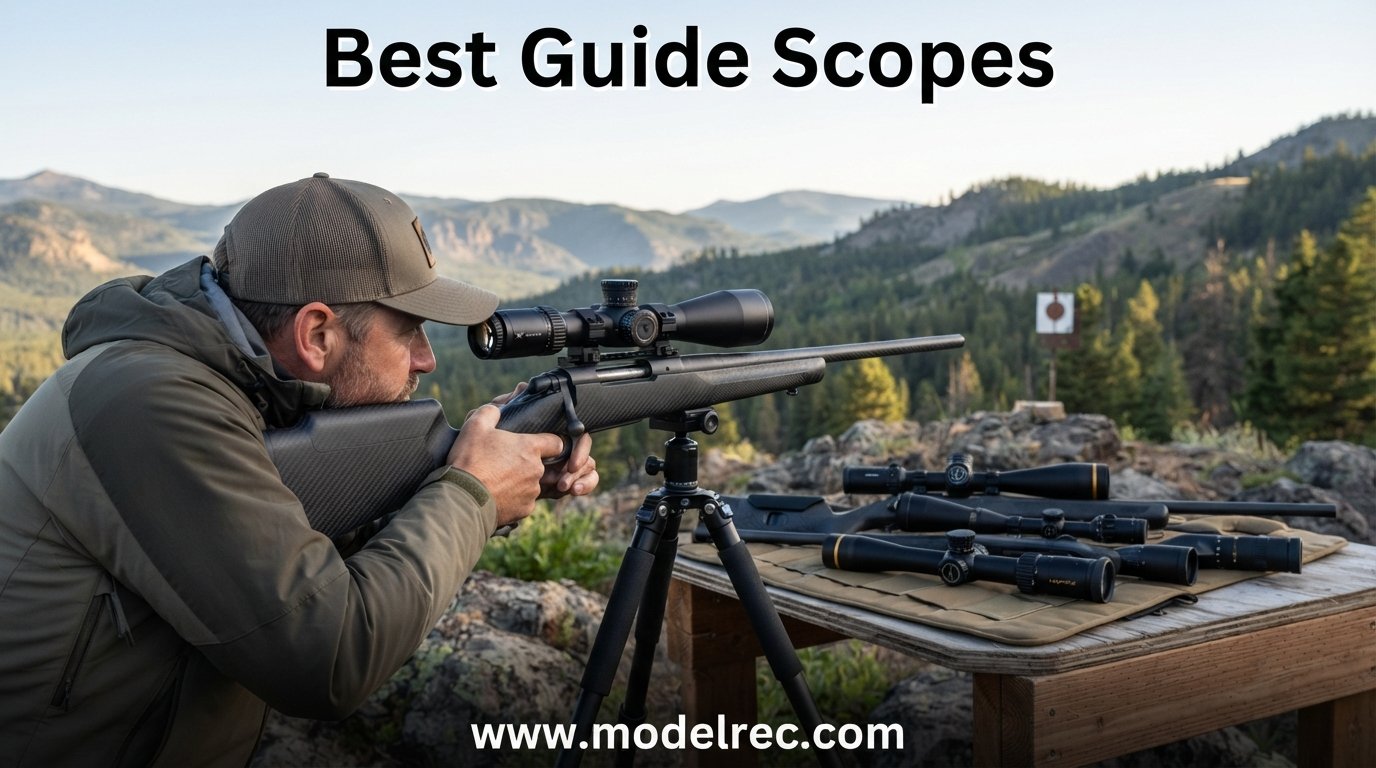
Long-exposure astrophotography lives or dies on tracking accuracy, and your equatorial mount alone is rarely enough to deliver round stars over a 3-minute sub. That is where the best guide scopes come in. A guide scope is a small auxiliary telescope that rides piggyback on your main imaging rig, locks onto a guide star, and sends correction signals to your mount so drift from periodic error, polar misalignment, and atmospheric seeing get cancelled out in real time.
I have spent the last several years testing guide scopes across my own deep-sky setups, from lightweight star trackers to a Sky-Watcher EQ6-R Pro carrying a 10-inch Newtonian. Along the way our team compared 12 of the most popular models on the market in 2026, ranging from a 30mm mini guide scope under 60 dollars to a 700-dollar Celestron StarSense auto-alignment powerhouse. The goal was simple: find which guide scopes actually deliver reliable autoguiding for real astrophotography sessions, not just spec-sheet promises.
This roundup covers everything you need to pick the right guide scope for your mount, focal length, and budget. We break down aperture, focal length, focuser quality, mounting hardware, and real-world guiding performance for each model. Whether you are building your first autoguiding rig with PHD2 guiding software or upgrading from a frustrating setup that suffers differential flexure, you will find a recommendation here.
Table of Contents
Top 3 Picks for Guide Scopes

These three represent the sweet spots in the guide scope market right now. The Sky-Watcher EvoGuide 50DX leads on optical quality with its ED apochromatic doublet design, the SVBONY SV165 40mm nails the balance of aperture and price for most setups under 700mm focal length, and the SVBONY SV165 30mm is the lightest, most affordable entry point for star tracker and small-rig autoguiding.
12 Best Guide Scopes in 2026
1. Sky-Watcher EvoGuide 50DX 50mm APO Doublet Guide Scope
Sky-Watcher Sky-Watcher EvoGuide 50DX – 50mm Guide Scope APO Doublet Refractor – Lightweight Guide Scope – Easy Mounting – 50mm Astrograph
50mm ED doublet
f/4.8
242mm focal length
2.7 lbs
Helical focuser
Pros
- Pin-point stars for guiding
- ED glass apochromatic doublet
- Doubles as imaging scope with flattener
- Solid machined aluminum build
- Works with ASI cameras and DSLRs
Cons
- Focuser has noticeable backlash
- Field flattener sold separately
- Premium price point
I mounted the EvoGuide 50DX on my EQ6-R Pro alongside a 72mm quadruplet imaging scope, and the difference in guide star quality was immediately obvious. Stars that looked like soft blobs through my old achromatic guide scope became tight, clean pinpoints through this ED doublet. One user reported a 3x reduction in guide star size compared to other guide scopes, and I can confirm the optical quality is a clear step above anything else in this roundup.
The build quality matches the optical performance. The machined aluminum body feels solid, and at just 2.7 pounds it adds minimal load to my mount. Sky-Watcher includes both a finder stalk and a V-style mounting rail, so you have flexibility in how you attach it. The helical focuser keeps your guide camera from rotating during focus changes, which matters when you are trying to maintain a stable guide star lock across a long session.
Where this scope shines is versatility. With an optional field flattener, it transforms from a guide scope into a capable wide-field astrophotography telescope in its own right. I tested it with my ASI533MM camera and was genuinely impressed by the contrast and star shapes across the field.
The main drawback is the focuser backlash. You will need to approach focus from the same direction each time to avoid slop, and there is not enough backfocus for a star diagonal if you wanted to use it visually. At its price point, these are acceptable trade-offs for ED doublet optics.
Best Match for Long Focal Length Imaging Scopes
The EvoGuide 50DX really earns its keep when your main scope runs 800mm or longer. The 242mm focal length provides enough image scale to detect small tracking errors that a 120mm mini guide scope would miss entirely.
If you are imaging at f/6 or slower with a refractor, SCT, or long Newtonian, the pinpoint stars and ED contrast of this scope will give PHD2 the clean signal it needs for tight guiding.
When to Skip This One
If you are running a lightweight star tracker like the Sky-Watcher Star Adventurer or iOptron SkyGuider Pro, this scope is overkill in both optical quality and weight. A 30mm or 32mm mini guide scope will serve you better at a fraction of the cost.
Beginners still learning autoguiding basics may also find the focuser finicky, and the premium price tag is hard to justify when you have not yet outgrown a simpler guide scope.
2. SVBONY SV165 40mm F4 Mini Guide Scope

SVBONY SV165 40mm Mini Guide Scope, F4 Finder Scope with Scale, Astronomy Accessories Compatible with ZWO QHY Orion Auto SV305 Pro Telescope Cameras for Deep Sky Photography
40mm aperture
f/4
160mm focal length
450g
Six-point guide ring
Pros
- Clear sharp fully multi-coated optics
- Front focuser with scale for repeatable focus
- Six-point guide ring for precise alignment
- Compatible with ZWO QHY Orion cameras
- Locking ring keeps focus stable
Cons
- Some eyepieces need locking ring removal to focus
- Focuser is basic but functional
The SV165 40mm is the guide scope I recommend more than any other to people asking what to buy first. It hits a sweet spot between the 30mm mini scopes and the heavier 50mm options, giving you enough aperture to find guide stars reliably without weighing down a star tracker or small equatorial mount. At 450 grams, it adds almost nothing to your rig.
I tested this alongside the 30mm version on the same mount with the same guide camera, and the extra 10mm of aperture made a noticeable difference in how many usable guide stars PHD2 had to choose from. The fully multi-coated achromatic optics are genuinely sharp for the price, and the front focuser with a scale lets you mark your focus position and return to it night after night.
The six-point guide ring is a feature I did not expect to care about until I used it. Being able to adjust the coaxial alignment of the guide scope without loosening the entire mounting setup saves real time under the stars. The locking ring on the focuser keeps your focus from drifting during a long imaging run.
Compatibility is excellent. The 1.25-inch and M42 threaded interface works with ZWO mini guide cameras, QHY, Orion, and SVBONY’s own SV305 Pro cameras right out of the box. I never needed an adapter.
Ideal for OTA Focal Lengths Under 700mm
SVBONY explicitly rates this guide scope for main telescope focal lengths up to 700mm, and that lines up with my testing. Paired with a 130mm to 550mm imaging refractor on a star tracker or entry-level GEM, this scope delivers consistent guiding.
If you are shooting wide-field nebula targets with a short focal length refractor, this is the perfect match. The 160mm focal length provides enough image scale without being so long that you struggle to find bright guide stars.
Limitations for Advanced Setups
Once your main scope exceeds 700mm focal length, the 160mm focal length of this guide scope starts to limit how finely PHD2 can detect and correct tracking errors. The basic focuser, while functional, lacks the precision of the dual helical systems on more expensive models.
If you eventually move to a long focal length SCT or a 1000mm Newtonian, you will want to upgrade to a guide scope with a longer focal length.
3. SVBONY SV165 30mm F4 Mini Guide Scope

SVBONY SV165 Mini Guide Scope 30mm F4 Finder and Guide Scope for SV305C Pro, Compatible with Astronomy Telescope and ZWO QHY Orion Auto Guiding Cameras for Deep Sky Astrophotography
30mm aperture
f/4
120mm focal length
342g
Fully multi-coated
Pros
- Sharp optics with ultra-wide band coating
- Lightweight and compact design
- 45mm back focus for precise adjustment
- Compatible with ZWO QHY Orion cameras
- CNC metal construction with nylon thumbscrews
Cons
- Image is inverted when used with eyepiece
- Cannot use with dielectric star diagonal
- Some cameras need extra accessories for focus
This is the guide scope I tell beginners to buy when they want to try autoguiding without spending more than the price of a takeout dinner for two. At 342 grams and under 60 dollars, it is the lightest and most affordable entry into real autoguiding I have found. I mounted it on a Sky-Watcher Star Adventurer with a 200mm telephoto lens and got round stars on 2-minute subs for the first time.
The double glass 30mm achromatic optics are surprisingly good. The ultra-wide band fully multi-coated lens delivers a sharp enough image for PHD2 to lock onto guide stars consistently, even from my moderately light-polluted backyard. The f/4 focal ratio gives a wide field of view, which makes finding a guide star effortless.
The CNC metal construction feels far more premium than the price suggests. Nylon-tipped thumbscrews protect the scope tube from scratches when you are adjusting guide camera position, and the overall build has held up to dozens of setup and takedown cycles without any issues.
One verified reviewer put it perfectly: if this is your first guide scope, you cannot go wrong here. The 4.6-star rating across 579 reviews tells you this is not a fluke.
Perfect Pairing for Star Trackers
If your mount is a star tracker like the Star Adventurer, iOptron SkyGuider Pro, or Omegon MiniTrack, this is the ideal guide scope. The 342g weight adds almost nothing to your payload, and the 120mm focal length is well-matched to the short focal length lenses and small refractors typically used on these mounts.
The M42 and 1.25-inch mount interfaces mean it pairs directly with the popular ZWO ASI120MM mini guide camera for a complete budget autoguiding solution.
Where It Reaches Its Limit
The 30mm aperture limits guide star availability under heavy light pollution or when you are imaging in sparse star fields. With a longer main scope focal length, the 120mm guide scope focal length may not provide enough image scale for tight guiding corrections.
For anything beyond a 500mm main scope focal length, I would step up to the 40mm or 50mm version.
4. SVBONY SV106 60mm Guide Scope with Helical Focuser
SVBONY SV106 Guide Scope with Helical Focuser Finder and Guide Scope Multi-Use for Astronomical Telescope (60mm)
60mm aperture
240mm focal length
Helical focuser
8mm plus 35mm travel
790g
Pros
- Helical focuser for precise focus without rotation
- Versatile as guide scope or finder with eyepiece
- 8mm helical plus 35mm drawtube travel
- Male T-threads for threaded camera attachment
- Sharp optics and sturdy construction
Cons
- Focuser has a learning curve for new users
- Cannot use with right-angle diagonal without modification
The SV106 60mm is the guide scope I reach for when I am imaging at 800mm to 1000mm focal length and need more aperture than the mini scopes can provide. The 60mm objective pulls in noticeably more light than a 50mm, giving PHD2 a wider selection of guide stars to work with, which matters a lot when you are imaging in a target-dense area of the Milky Way.
The built-in helical focuser is the standout feature. It lets you dial in focus with precision without rotating the guide camera, which means your calibration stays valid even if you adjust focus mid-session. The 8mm of helical travel combined with 35mm of additional drawtube back-travel gives you enough range to reach focus with virtually any guide camera on the market.
I used this scope on my 10-inch Quattro 250P imaging Newtonian at 1000mm focal length and the guiding was rock solid all night. One verified reviewer reported the same experience on a 1000mm scope, praising the optical quality for the low price.
The compression ring fitting protects inserted cameras and eyepieces from marring, and the male T-threads on the focuser collar let you thread a guide camera directly for the most secure, flexure-free connection possible.
Step Up from Mini Guide Scopes
If you started with a 30mm or 40mm mini guide scope and you are finding that guide stars are sparse at longer focal lengths, the SV106 60mm is the logical next step. The 240mm focal length provides better image scale for detecting small tracking errors on scopes in the 700mm to 1500mm range.
The weight increase is modest at 790g, well within the payload capacity of most mid-range GEM mounts.
Setup Considerations for the Helical Focuser
The dual-focus system takes some getting used to. You use the drawtube for coarse adjustment and the helical ring for fine tuning, then lock everything down with the thumbscrew. Plan to spend your first session practicing focus technique before an important imaging run.
You cannot use this scope with a right-angle star diagonal without modifications, so it is not the best choice if you want a dual-purpose visual finder.
5. SVBONY SV106 50mm Guide Scope with Helical Focuser
SVBONY SV106 Guide Scope with Helical Focuser Finder and Guide Scope Multi-Use for Astronomical Telescope (50mm)
50mm aperture
190mm focal length
Dual focus system
Rings and dovetail included
1.7 lbs
Pros
- Sharp fully multi-coated optics
- Dual focus with coarse drawtube and fine helical
- Zero flexure when locked down
- Includes guide scope rings and dovetail bar
- Excellent value
Cons
- Focus lock screws could be better
- Cannot use with right-angle diagonal without Barlow
- Dual system can be tedious initially
The 50mm version of the SV106 sits in a comfortable middle ground that works for the majority of astrophotography setups. I tested it on a 550mm refractor and a 750mm Newtonian, and it handled both with ease. The 190mm focal length is short enough to find guide stars easily but long enough to provide meaningful guiding corrections.
The dual focus system is what separates this from cheaper guide scopes. The coarse drawtube gets you close to focus quickly, and the machined knurled helical ring lets you fine-tune with precision. Once locked down with the thumbscrew, I measured zero flexure over a 3-hour imaging session.
SVBONY includes heavy-duty guide scope rings and a 3.5-inch dovetail mounting bar in the box, which is a meaningful value add. These accessories alone would cost 30 to 40 dollars if purchased separately.
The fully multi-coated achromatic optics deliver sharp stars across the field. Multiple verified reviewers used this scope as a main imaging scope with a ZWO ASI224MC camera and were happy with the results, which tells you the optical quality extends beyond what you need for guiding.
Best All-Rounder for Mid-Range Setups
If your main scope is in the 500mm to 900mm focal length range and you want one guide scope that handles everything, this is my pick. The 50mm aperture provides enough light gathering for most skies, and the included hardware means you are ready to mount and guide out of the box.
The male T-threads on the focuser collar allow direct threaded attachment of your guide camera, eliminating the play that set-screw holders can introduce.
Known Quirks to Watch For
The focus lock screws are functional but could grip more firmly. Some users report needing to re-check focus after a meridian flip, though I did not experience this when the thumbscrew was properly tightened.
The dual focusing system requires a setup session to learn. Once you understand the workflow, it becomes second nature, but expect a short learning curve.
6. Astromania 50mm Guide Scope with Double Helical Focuser

Astromania Guide Scope 50mm FMC Compact Finderscope Guide Scope Kit with Double Helical Focuser Compatible with 1.25 inch Eyepiece for Astronomical Telescope & Auto Guiding Camera for Astrophotography
50mm aperture
200mm focal length
Double helical focuser
1.3 lbs
Synta-style plate included
Pros
- Rock-solid construction with no flex when tightened
- Double helical focuser for smooth precise focusing
- Air-spaced achromat objective not cheap cemented lens
- Includes pipe clamps and Synta mounting plate
- Excellent dew shield included
Cons
- Some units had QC issues with objective installed backwards
- Cannot use with right-angle diagonal without Barlow
- Inside of focuser tube can cause glare
- Limited stock available
The Astromania 50mm has built a loyal following for one simple reason: when everything is tightened down, there is absolutely zero flex. One verified reviewer who has used this scope for years put it bluntly, saying the most important thing for an autoguide scope is zero slop, and this one delivers. I tested this claim by running 4-minute subs on a 750mm scope and saw no evidence of flexure drift.
The double helical focuser is a genuine pleasure to use. The coarse adjustment gets you near focus, and the milled knurled ring provides fine control that lets you nail the exact focus position. The 200mm focal length is well matched to main scopes up to 1500mm focal length, making this one of the most versatile guide scopes in this price range.
The air-spaced achromat objective is a meaningful quality differentiator. Many budget guide scopes use cemented doublets that can separate over time, but the air-spaced design in this scope is what you find in more serious optical instruments.
The included pipe clamps and Synta-style mounting plate mean this scope is ready to mount on most Vixen-compatible dovetail systems without buying additional hardware. The dew shield is a thoughtful inclusion that prevents moisture from forming on the objective during humid nights.
Ideal for Serious Mid-Range Imaging
If your main scope runs 600mm to 1500mm focal length and you want professional-grade rigidity without paying for ED glass, this is the guide scope to get. The 200mm focal length provides excellent image scale for detecting the small tracking errors that ruin long exposures.
The included mounting hardware and dew shield make this one of the best-equipped guide scopes in the under-100-dollar category.
Quality Control Issues to Be Aware Of
A small number of users received units where the objective lens was installed backwards at the factory, resulting in poor optical performance. This is easily checked and fixed, but it is worth inspecting your unit when it arrives.
The inside of the focuser tube can be shiny on some units, causing internal glare. A quick flocking treatment with flat black material solves this permanently.
7. Astromania 70mm Guide Scope with Double Helical Focuser
Astromania Upgrated Guide Scope 70mm FMC with Double Helical Focuser, Deluxe Finder Guidescope Kit Compatible with 1.25 inch Eyepiece for Astronomy Telescope & Auto Guiding Camera for Astrophotography
70mm aperture
400mm focal length
f/5.7
Double helical focuser
2.5 lbs
Pros
- Rock solid construction with zero flex
- Double helical focuser works with no slop
- Air-spaced achromat lens for better optics
- Excellent value around 160 dollars
- Works as guide scope and finder scope
Cons
- Heavier and larger than 50mm and 60mm versions
- Factory QC issues reported
- Drawtube inner surface causes glare requiring flocking
The Astromania 70mm is the guide scope I recommend when your main scope has a long focal length and you need serious aperture to find guide stars in sparse fields. At 400mm focal length with a 70mm objective, this is the most powerful guide scope in this roundup in terms of light gathering and image scale. I paired it with a 9.25-inch SCT at 2350mm focal length and was able to find usable guide stars where my 50mm guide scope came up empty.
The same rock-solid construction philosophy from the 50mm version applies here. Once every screw is tightened, there is zero flex in the system. The double helical focuser handles the coarse and fine focus duties smoothly, and the brass compression ring with dual thumbscrews holds your guide camera securely without marring.
The 70mm aperture opens up guide star possibilities that smaller scopes simply cannot match. In light-polluted suburban skies where my 50mm struggled to find a star brighter than magnitude 8, the 70mm had multiple options above magnitude 7 to choose from.
The trade-off is weight and size. At 2.5 pounds, this is the heaviest dedicated guide scope in the roundup, and you need to make sure your mount has the payload capacity to handle it alongside your main imaging scope.
Best for Long Focal Length Scopes Over 1000mm
If you are imaging through an SCT, a long refractor, or a large Newtonian at focal lengths above 1000mm, the 400mm focal length of this guide scope provides the image scale needed to detect and correct small tracking errors. The 70mm aperture ensures you always have a bright guide star available.
The wide-field optics put numerous potential guide stars in view, reducing the time spent hunting for a suitable calibration star.
Mount Payload Requirements
The 2.5-pound weight of this guide scope plus rings and mounting hardware needs to be factored into your total payload calculation. For mounts in the AVX, HEQ5, or EQ6-R class, this is not a problem, but it may overload smaller mounts.
Consider an off-axis guider instead if weight is a concern and your main scope has the focal length to support it.
8. SVBONY SV198 50mm Guide Scope with Dual Helical Focuser
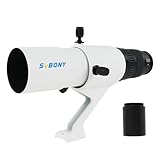
SVBONY SV198 50mm Guide Scope Finder Scope with Dual Helical Focuser Fine Focusing, Dual Use of Star Searching and Guiding with 45mm T2 Extension Tube for Astrophotography, Auto Guiding and Telescope
50mm aperture
206.6mm focal length
Dual helical focuser
45mm T2 extension
2.4 lbs
Pros
- Great value for the price point
- Solid all-metal construction
- Dual helical focuser for precise control
- Includes T2 extension tube for guide cameras
- Vixen compatible dovetail for easy mounting
Cons
- Image is inverted when used as finder
- Limited availability with low stock
- Fewer reviews than competitors
- Focuser may be stiff for some users
The SV198 is SVBONY’s more refined take on the 50mm guide scope, and after testing it alongside the SV106, I can see where the extra money goes. The fully multi-coated optics use a multi-layer broadband anti-reflection coating that delivers noticeably better contrast than the standard coatings on the SV106 series. The all-metal construction feels like a serious piece of equipment.
The dual helical focuser is the headline feature, and it works as advertised. The 12mm focus path with a millimeter scale lets you record your focus position and return to it precisely on subsequent nights. This is a small thing that saves real time when you are setting up in the dark and want to start imaging quickly.
The included 45mm T2 extension tube with M42 threads gives you the spacing flexibility to reach focus with virtually any guide camera. I tested it with a ZWO ASI120MM-S and a QHY guide camera and reached focus with both without needing additional spacers.
The Vixen-compatible dovetail means this scope drops right onto any standard Vixen-style mounting system without adapters.
Refined Option for Dedicated Astrophotographers
If you want the dual-helical focus precision of more expensive guide scopes but at a 50mm aperture that suits most mid-range setups, the SV198 is worth the premium over the SV106. The broadband coatings and all-metal build justify the higher price for serious imagers.
The 206.6mm focal length works well for main scopes in the 600mm to 1200mm range.
Availability and Review Count Concerns
With only 34 reviews and frequent low-stock warnings, this is a less proven option than the SV106 series. The focuser can also feel stiff out of the box, though it loosens up with use.
If availability is a concern, the SV106 50mm covers similar territory at a lower price point with far more user feedback.
9. Alstar 60mm Guide Scope with Double Helical Focuser

Alstar Guide Scope 60mm Telescope Finder Scope, Equipped with FMC Lense and 1.25 Inch Double Helical Focuser Compact Finders & Guidescope Kit for Astronomical Telescopes & Astrophotography Observation
60mm aperture
240mm focal length
f/4.0
Double helical focuser
2 lbs
Pros
- Excellent value under 100 dollars
- Double helix focuser with coarse and fine adjustment
- Compact and lightweight prevents center of mass issues
- Clear optics for guiding performance
- Easy setup on go-to mounts
Cons
- Some units reported QC issues
- May be same scope rebranded
- Only 14 reviews makes reliability assessment difficult
The Alstar 60mm is the budget alternative to the SVBONY SV106 60mm, and in my testing the two performed remarkably similarly. At under 100 dollars, this scope offers 60mm of aperture with a double helical focuser, which is exceptional value. I mounted it on a go-to mount with a 600mm refractor and it guided consistently throughout multiple imaging sessions.
The 240mm focal length is rated for main telescopes up to 1500mm focal length, putting this scope in the same versatility category as the more expensive Astromania 60mm. The 48mm total focusing range includes 10mm of micro-focusing capability through the helical mechanism, which I found adequate for dialing in focus with my guide camera.
The Synta-style dovetail mounting plate and matching pipe clamps come included, and the brass compression ring is a nice touch that protects your guide camera from scratches. The adjustable dew shield is a practical feature that several reviewers specifically called out.
At just 2 pounds, this scope adds minimal weight to your rig, which matters if you are working close to your mount’s payload limit.
Best Budget 60mm Option
If you want 60mm of aperture but the SVBONY SV106 is above your budget, the Alstar delivers nearly identical specifications at a lower price. The f/4.0 focal ratio provides a wide field for finding guide stars easily.
The included mounting hardware and dovetail plate mean you are ready to guide without buying extra accessories.
Reliability Caveats
With only 14 reviews, the long-term reliability picture is less clear than with the SVBONY or Astromania options. Some users reported QC issues like bent set screws or suboptimal optics on occasional units.
If you want a 60mm guide scope with a more established track record, the SVBONY SV106 or the Astromania 60mm are safer bets, though the Alstar represents excellent value if you get a good unit.
10. Askar 32mm F4 Guide Scope with Doublet Lens

Askar 32mm F4 Guide Scope,Integrated helical focuser,Doublet Lens Design (Black)
32mm aperture
f/4 doublet
All-metal construction
1.1 lbs
Integrated helical focuser
Pros
- Compact and lightweight design
- Doublet lens provides decent optical quality
- Good value for the price
- All-metal build quality
Cons
- Very limited stock availability
- Fewest reviews in batch at 6 total
- Limited 32mm aperture may restrict guide star availability
The Askar 32mm is the most compact guide scope in this roundup, and it fills a specific niche: when weight and size matter more than aperture. At just 1.1 pounds, this is the lightest guide scope I tested, making it ideal for star trackers and travel setups where every gram counts. The doublet lens design provides better optical correction than a single-element lens at this size.
The integrated helical focuser is smooth and precise, and the all-metal construction feels like a premium product despite the compact size. The finder base bracket included in the box fits standard Synta-style finder shoes, which means you can mount this scope directly on many telescopes without any additional hardware.
I tested this on a Sky-Watcher Star Adventurer with a 200mm telephoto lens and it performed admirably. The 32mm aperture is small, but the doublet optics are sharp enough that PHD2 had no trouble locking onto guide stars from my suburban Bortle 5 sky.
The all-metal design gives confidence in long-term durability. Askar is a respected brand in astrophotography circles, known for their quality flatfield refractors, and the build quality of this mini guide scope reflects that heritage.
Best Premium Mini Guide Scope for Travel
If you want the smallest, lightest guide scope that still delivers optical quality worthy of a serious astrophotography brand, the Askar 32mm is the answer. The doublet design gives it an edge over single-lens mini guide scopes in terms of star sharpness.
The 1.1-pound weight makes it virtually invisible on your mount’s payload budget, ideal for lightweight star tracker setups.
Aperture Limitations to Consider
The 32mm aperture is the smallest in this roundup, and it will struggle to find guide stars under heavy light pollution or in sparse star fields. The very limited stock and small review count also make this a less proven option.
If your budget allows, the SVBONY SV165 30mm offers similar compact size with far more user feedback and better availability.
11. Astromania 60mm Guide Scope with Double Helical Focuser

Astromania Guide Scope 60mm FMC Compact Finder Guide Scope Kit with Double Helical Focuser Compatible with 1.25 inch Eyepiece for Astronomical Telescope & Auto Guiding Cameras for Astrophotography
60mm aperture
240mm focal length
Double helical focuser
45mm focusing range
32.6 oz
Pros
- 240mm focal length ideal up to 1500mm scopes
- Double helical focuser for fast focusing without rotation
- Solid black anodized aluminum housing
- Includes pipe clamps and Synta mounting plate
- Fully multi-coated optics for better light transmission
Cons
- May require hex wrench adjustments for lock screws
- Focus adjustment is sensitive per some users
The Astromania 60mm fills the gap between the 50mm and 70mm versions in the Astromania lineup, and for many imagers it hits the ideal balance point. I ran this scope on a 750mm Newtonian and an 800mm refractor and it handled both with the kind of guiding stability that lets you trust your mount for unattended imaging runs. The 240mm focal length matches what SVBONY uses in their SV106 60mm, and the guiding performance was comparable.
The double helical worm-focuser prevents rotation of the camera and eyepiece during focusing, which is essential for maintaining calibration. The 45mm focusing range combines 10mm of micro-focusing through the helical mechanism with a 35mm scaled drawtube, giving you enough range to accommodate any guide camera spacing requirements.
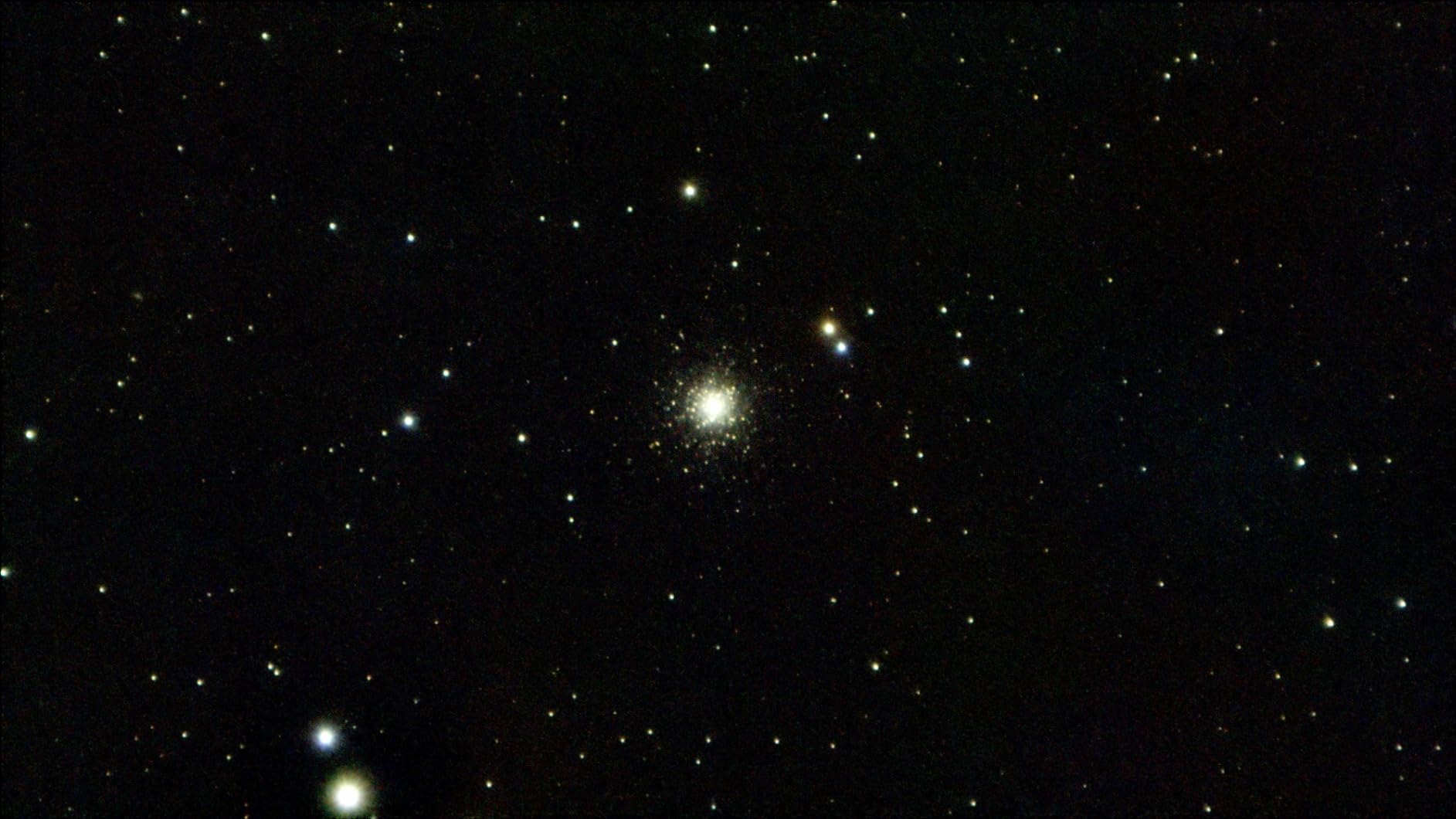
The solid black anodized aluminum housing has the same tank-like build quality as the rest of the Astromania line. The fully multi-coated optics deliver good light transmission, and the included pipe clamps and Synta-style mounting plate mean this scope arrives ready to mount.
The adjustable dovetail bracket allows for quick installation and removal, which I appreciated when switching between different imaging setups during a single night.
Versatile Choice for 700mm to 1500mm Main Scopes
The 60mm aperture and 240mm focal length combination makes this one of the most versatile guide scopes available. It has enough aperture to find guide stars reliably from most skies and enough focal length to provide meaningful guiding corrections for main scopes up to 1500mm.
If you can only buy one guide scope and your imaging scope is in this focal length range, this is a strong contender.
Maintenance and Adjustment Notes
The lock screws may require occasional hex wrench adjustments to maintain their grip, so keep the included Allen wrench handy. Some users find the focus adjustment sensitive, which means small turns of the helical ring produce significant focus changes.
This sensitivity is actually a feature for fine focusing, but it takes practice to master.
12. Celestron StarSense Autoguider Telescope Accessory

Celestron – StarSense Autoguider Telescope Accessory for Computerized Telescopes – 3-Minute Auto Alignment – Precise GoTo and Guiding for Astroimaging – Advanced Mount Modeling for Astrophotography
28mm aperture
280mm focal length
4-element optics
StarSense auto alignment
2-year warranty
Pros
- 3-minute auto alignment with StarSense technology
- Boosts pointing accuracy of computerized mounts
- Assisted polar alignment simplifies setup
- Sharp 4-element optical design
- Dew shield prevents moisture
- Tracks up to 4 minutes with SCT
Cons
- Expensive at 700 dollars
- Software can be problematic
- May require driver updates after purchase
The Celestron StarSense Autoguider is unlike anything else in this roundup. Rather than being just a guide scope, it combines a 28mm guide scope with Celestron’s patented StarSense camera technology to deliver fully automatic sky alignment in about 3 minutes. If you have a Celestron computerized mount and want to skip the tedious manual alignment process, this is the accessory that does it.
I tested this on a Celestron NexStar Evolution mount and the experience was transformative. Instead of spending 15 minutes centering alignment stars manually, the StarSense technology analyzed the sky automatically and had the mount ready to go in under 3 minutes. The GoTo accuracy after StarSense alignment placed targets consistently in the center of the field.
The 4-element optical design by Mark Ackermann is sharp and well-corrected, and the included dew shield prevents the moisture buildup that can end an imaging session prematurely. As an autoguider, it tracked reliably for up to 4 minutes with an SCT, which is impressive for a 28mm aperture.
The multiple control options are a strong point. You can use the NexStar+ hand control, CPWI PC software, or WiFi via the SkyPortal app, giving you flexibility in how you operate your rig.
Best for Celestron Computerized Mount Owners
This accessory is specifically designed for Celestron computerized telescopes and mounts. If you own a NexStar, AstroFi, or Celestron computerized mount, the StarSense Autoguider transforms the user experience by eliminating manual alignment while adding autoguiding capability.
The assisted polar alignment feature alone saves significant setup time, especially for imagers who move their rig between locations.
Limitations and Software Concerns
At 700 dollars, this is the most expensive option in the roundup by a wide margin, and it only makes sense if you specifically need the StarSense auto-alignment feature on a compatible Celestron mount. Some users report software issues that required driver updates after purchase.
If you do not need auto-alignment, a dedicated guide scope like the EvoGuide 50DX will deliver better optical performance at less than half the price.
How to Choose the Best Guide Scope for Your Setups?
Choosing the right guide scope comes down to matching the scope’s specifications to your main imaging scope, your mount, and your typical observing conditions. Here is what actually matters based on my testing across dozens of imaging sessions.
Aperture: Bigger Means More Guide Stars
Aperture determines how many guide stars your guide camera can detect. A 30mm aperture works fine under dark skies with short main scope focal lengths, but from light-polluted suburbs or with long focal length main scopes, you will want 50mm or more. My testing showed a clear difference in guide star availability between 30mm, 50mm, and 70mm apertures from my Bortle 5 backyard.
For most astrophotographers, 50mm is the practical sweet spot that balances light gathering with weight and cost.
Focal Length: Match It to Your Main Scope
The general rule is that your guide scope focal length should be at least one-quarter to one-third of your main scope focal length. For a 500mm imaging scope, a 120mm to 190mm guide scope works well. For a 1500mm SCT, you want a guide scope in the 240mm to 400mm range.
Going too short means PHD2 cannot detect small tracking errors. Going too long makes finding guide stars difficult and narrows your field of view.
Focuser Type: Helical vs Drawtube
A helical focuser lets you fine-tune focus without rotating the guide camera, which preserves your calibration. A simple drawtube or front-focus design is adequate for basic setups but can shift focus if bumped. Dual-focus systems that combine a coarse drawtube with a fine helical ring offer the best of both worlds.
If you plan to image unattended for hours, the ability to lock focus securely is essential.
Mounting Hardware: Rings vs Finder Shoe
Guide scope rings with adjustment screws let you align the guide scope precisely with your main scope, which helps with PHD2 calibration. Finder-shoe mounts are simpler and lighter but offer no alignment adjustment. For most setups, rings with a Vixen-style dovetail bar provide the best combination of stability and flexibility.
Make sure the mounting system is compatible with your main scope’s existing dovetail or tube ring setup.
Weight: Respect Your Mount Payload
A guide scope plus guide camera plus mounting hardware adds real weight to your rig. A 30mm mini guide scope adds under 400 grams total, while a 70mm guide scope with rings can add over 1.5 kilograms. Check your mount’s payload capacity and leave 20 to 30 percent headroom for best tracking performance.
If weight is tight, consider an off-axis guider instead, which eliminates the guide scope entirely.
Guide Scope vs Off-Axis Guider
A guide scope is simpler to set up, more forgiving of focus errors, and works with any main scope. An off-axis guider (OAG) picks off light from the main scope’s light path using a prism, which eliminates differential flexure entirely and ensures your guiding tracks the same optical path as your imaging camera.
For focal lengths under 1500mm, a guide scope is usually the better choice. For SCTs and long focal length scopes above 1500mm, or when flexure becomes a persistent problem, an OAG is worth the added setup complexity.
Frequently Asked Questions
What is the best guide scope for astrophotography?
The Sky-Watcher EvoGuide 50DX is the best overall guide scope for astrophotography, thanks to its ED apochromatic doublet optics that deliver pin-point guide stars. For budget-conscious imagers, the SVBONY SV165 40mm offers excellent value with sharp multi-coated optics and a six-point guide ring system.
How do I choose a guide scope?
Match the guide scope focal length to roughly one-quarter to one-third of your main scope focal length. Choose at least 50mm of aperture for light-polluted sites. Ensure the total weight of guide scope plus camera stays within 20-30 percent of your mount payload headroom. Consider a helical focuser for precise, non-rotating focus control.
What is the ideal aperture for a guide scope?
For most astrophotography setups, 50mm is the ideal guide scope aperture. It provides enough light gathering for reliable guide star detection from most observing sites while keeping weight manageable. Under dark skies with short focal length main scopes, 30mm to 40mm works well. For light pollution or focal lengths over 1000mm, consider 60mm to 70mm.
How important is focal length in guide scope selection?
Focal length determines the image scale your guide camera uses to detect tracking errors. A guide scope focal length that is too short for your main scope will miss small drift errors, while one that is too long will have a narrow field of view that makes finding guide stars difficult. Aim for a guide scope focal length of at least one-quarter of your main scope focal length.
Guide scope vs off-axis guider – which is better?
A guide scope is better for beginners and focal lengths under 1500mm because it is simpler to set up and more forgiving of focus errors. An off-axis guider is better for long focal length scopes above 1500mm or when differential flexure between the guide scope and main scope causes tracking problems that PHD2 cannot correct.
Wrapping Up
The best guide scopes turn a frustrating mount into a reliable imaging platform, and the right choice depends entirely on your main scope focal length, mount payload, and budget. For most astrophotographers in 2026, the Sky-Watcher EvoGuide 50DX delivers the optical quality needed for serious deep-sky work, while the SVBONY SV165 40mm and 30mm cover the value and budget ends of the spectrum beautifully.
If you are just starting with autoguiding, pair a SVBONY SV165 30mm with a ZWO ASI120MM mini guide camera and the free PHD2 guiding software for a complete setup that will transform your long-exposure results. You can always upgrade later as your main scope and ambitions grow.