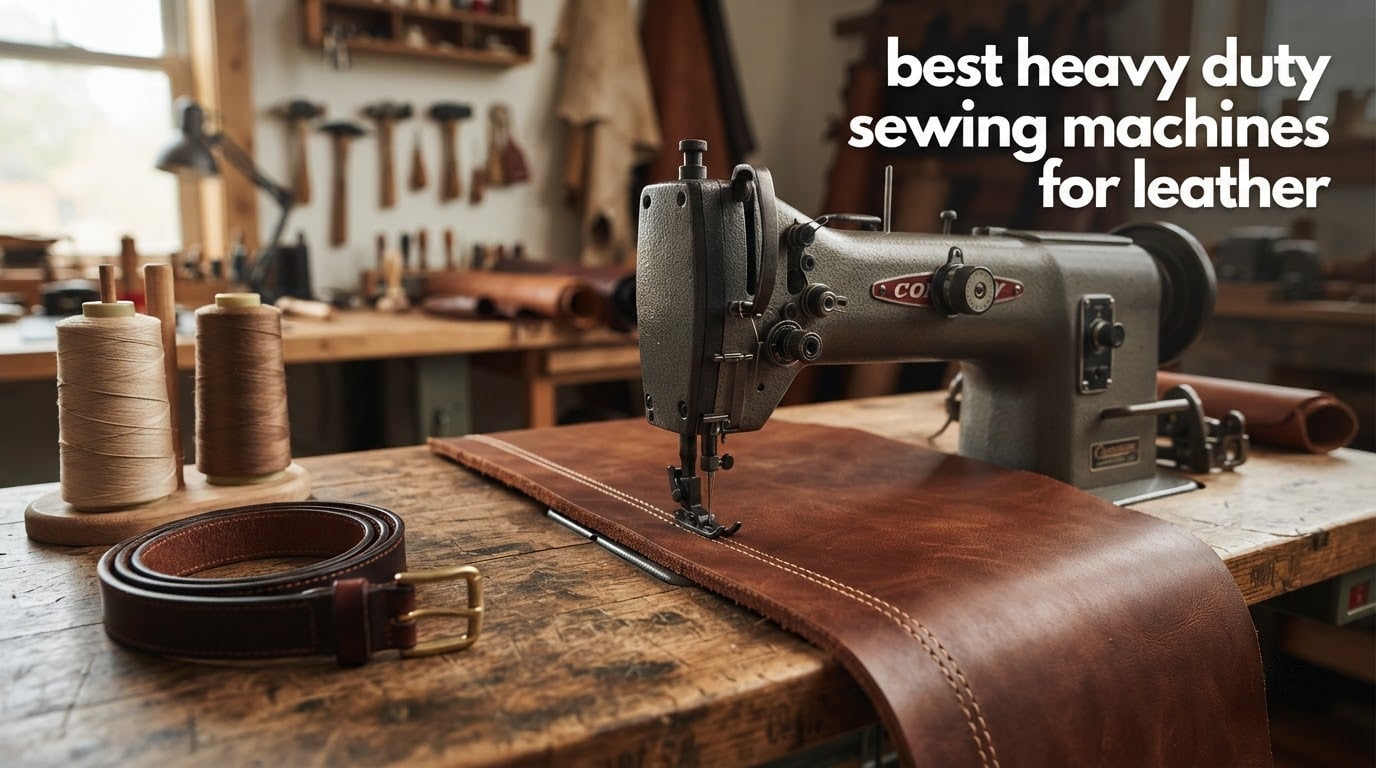
Leather does not forgive a weak machine. It has no stretch, no give, and every permanent needle hole stays visible on the finished piece. The best heavy duty sewing machines for leather fall into three classes: metal-framed home machines for garment-weight hide, industrial walking-foot machines for thick layers, and cylinder-arm or post-bed machines for bags, holsters and saddles. Two examples worth knowing before you read on are the SINGER 4423 for entry-level leatherwork and the Consew 206RB-5 walking foot for upholstery-grade hide.
Standard home machines fail on leather because their feed dogs let the hide shift while the needle is still descending. That single problem shows up as skipped stitches, bent or snapped needles, and thread breaking at the needle several inches into a seam. Motors without enough piercing torque stall on multi-layer work, and plastic housings crack or flex once the machine is under load.
We spent weeks working through the ten machines below, comparing torque, feed system, presser foot lift, bed shape, needle compatibility and the thickest hide each one actually handles. Every rating and review count here comes straight from owner reviews, and every limitation we list is one owners actually reported. If you want a broader view of the category first, our guide to the best heavy duty sewing machines is a useful baseline, and our picks for sewing machines for leather projects covers the small-goods end of the market in more depth.
Table of Contents
Key Features to Look For in a Leather Sewing Machine
These are the seven criteria that separate a machine that handles leather from a machine that merely claims to.
Torque, not top speed. What matters is the force at the needle when the foot is down. A machine that sews 5,000 stitches per minute but stalls on two layers is the wrong tool. Motor power quoted as a percentage over a standard home machine tells you more than revolutions per minute.
Compound feed or walking foot. Feed dogs push from below and cannot hold slippery hide. A walking foot adds a presser-foot feed above the material so the top and bottom layers advance at exactly the same rate. This is the single biggest upgrade you can make to a home machine for leather.
Presser foot lift. Foot lift decides how many layers you can get under the foot at once. Industrial walking-foot machines commonly quote 9/16 inch or 15 mm by knee lifter; home heavy-duty machines cannot reach that.
Needle system. Leather needs a blunt-tipped leather needle, not a sharp ballpoint. Home machines take 90/14, 100/16 and 110/18 sizes. Industrial units take DP by 17 or larger, and you cannot fit home-machine needles to them.
Servo motor rather than clutch motor. A servo gives quiet, smooth, instantly stoppable speed control from a dead stop. A clutch motor is louder, coasts, and gives no stitch-by-stitch speed control. For leather, slow speed on curves is the difference between a clean stitch and a hole.
Bed shape. A flat bed suits panels. A free arm suits cuffs and small cylinders. A post bed lifts the work above the table for bag gussets and three-dimensional seams. A cylinder arm handles shoes, boots and tight radii.
Stitch-by-stitch slow speed control. Leather punishes a fast needle entering material. Look for a lever or dial that lets you drive the machine one stitch at a time through a corner or a thick build-up.
One quick reference before we get into the machines. Leather is sold by ounce weight, and ounce weight maps fairly directly to the needle you need and the machine class that can push it.
2 to 3 oz (roughly 0.8 to 1.2 mm): 90/14 leather needle; a metal-framed home heavy-duty machine handles this comfortably.
3 to 4 oz (roughly 1.2 to 1.6 mm): 90/14 to 100/16; still within reach of a good home machine with a walking foot fitted.
4 to 5 oz (roughly 1.6 to 2 mm): 100/16; this is where an industrial walking-foot machine starts to pay for itself.
6 to 8 oz (roughly 2.4 to 3.2 mm): 110/18; tooling and harness territory. An industrial walking foot is the minimum.
8 oz and heavier (above 3.2 mm): 110/18 or larger; cylinder-arm and post-bed machines built for saddlery.
Top 3 Best Heavy Duty Sewing Machines for Leather in October

SINGER 4423 Heavy Duty
- 50 percent more piercing power
- 1100 stitches per minute
- Metal frame with stainless steel bedplate

SINGER Heavy Duty 4552
- 32 stitches and 110 applications
- Includes walking foot and non-stick foot
- New DC motor with speed control

Brother ST150HDH
- 50 built-in stitches and 5 buttonholes
- Advanced needle threader and drop-in bobbin
- 25 year limited warranty
All 10 Heavy Duty Sewing Machines for Leather at a Glance in 2026
| Product | Specifications | Action |
|---|---|---|
| SINGER 4423 Heavy Duty |
|
Check Latest Price |
| SINGER Heavy Duty 4552 |
|
Check Latest Price |
| Brother ST150HDH |
|
Check Latest Price |
 Janome HD1000 Black Edition Janome HD1000 Black Edition |
|
Check Latest Price |
 Janome HD 3000 Black Edition Janome HD 3000 Black Edition |
|
Check Latest Price |
 VEVOR Industrial Lockstitch Set VEVOR Industrial Lockstitch Set |
|
Check Latest Price |
 Consew 206RB-5 Walking Foot Consew 206RB-5 Walking Foot |
|
Check Latest Price |
 Juki DU-1181 Walking Foot Juki DU-1181 Walking Foot |
|
Check Latest Price |
 Juki DDL-8100 Lockstitch Juki DDL-8100 Lockstitch |
|
Check Latest Price |
 SINGER 6700C Heavy Duty SINGER 6700C Heavy Duty |
|
Check Latest Price |
1. SINGER 4423 Heavy Duty: Best Overall for Leather
SINGER® 4423 (Meltwater Blue) Heavy Duty Sewing Machine with Accessories
1100 stitches per minute
Metal frame with steel bedplate
50 percent more piercing power
17.1 lb
Pros
- Metal internal frame with stainless steel bedplate
- Roughly 50 percent more piercing power than a standard home machine
- 97 stitch applications from 23 stitches
- Automatic needle threader and drop-in bobbin
- Extra-high presser foot lift and adjustable foot pressure
Cons
- Housing and spool post are largely plastic
- Light foot pedal that drifts with the short cord
- Free-arm compartment swallows accessories
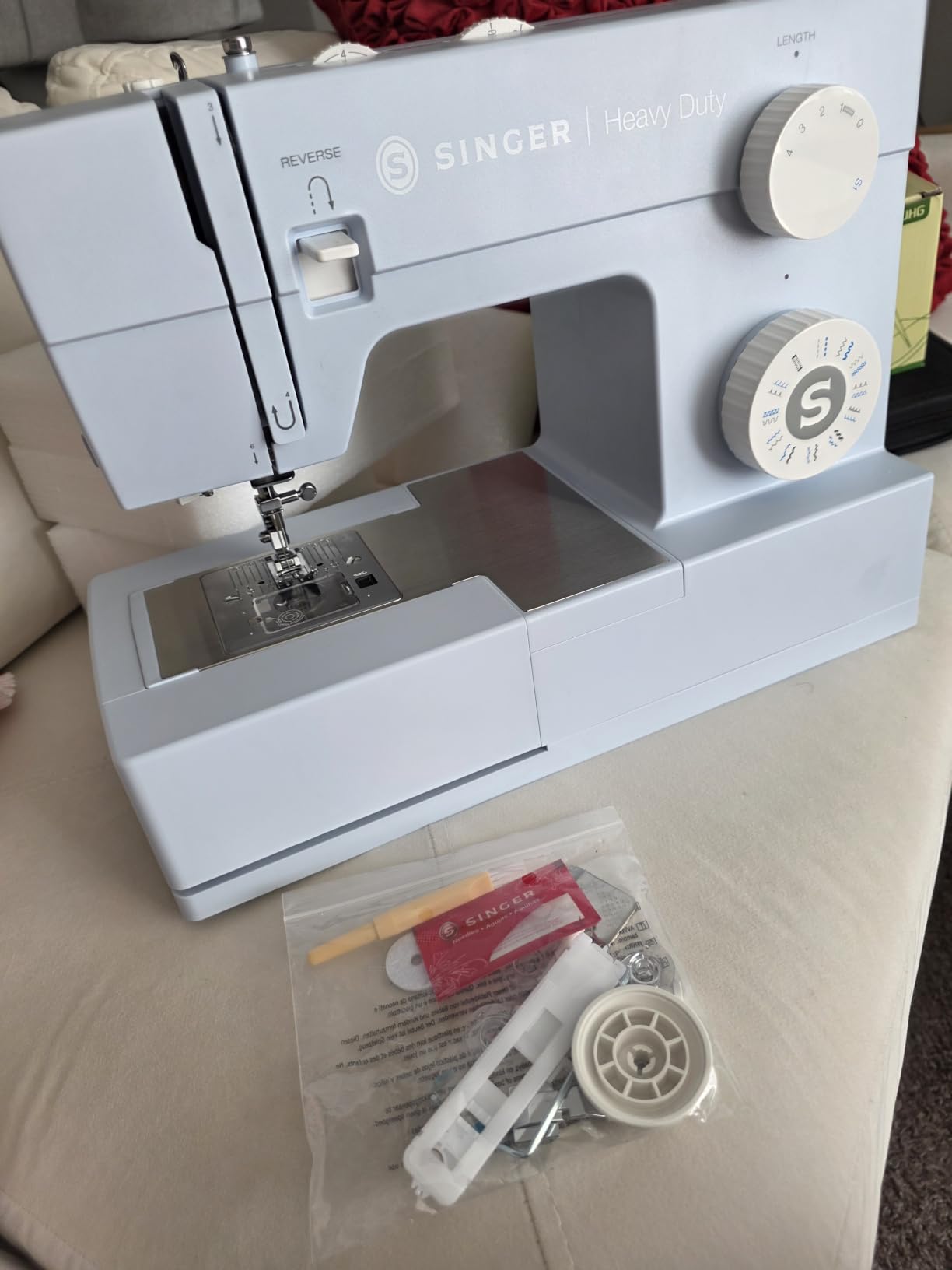
The 4423 has been the machine most beginners meet first, and it holds up better on leather than its reputation suggests. Over 21,000 reviews averaging 4.5 stars, owners repeatedly report sewing 10 oz vegetable-tanned leather, heavy webbing and stacked denim with a heavy-duty needle. That is a genuine capability, not a marketing line.
What earns it the top spot here is the combination of a metal internal frame, a stainless steel bedplate and roughly 50 percent more piercing power than a standard home machine. At 1,100 stitches per minute it runs at the top of the home heavy-duty speed range.
The feed is ordinary single feed dogs, which is the machine’s real limit. On slick veg-tan or coated leather you have to hold the material back yourself or fit an even-feed foot, and pushing leather forward rather than letting it feed is what snaps needles. Turn the handwheel by hand if the material stalls under the foot instead of forcing the pedal.
A recurring minority of complaints concerns plastic housing parts, the light foot pedal, and thread or needle breakage among high-volume users working current production units. Accessories also live inside the removable free-arm compartment, which is a real annoyance if you move the machine around.
Is 2 to 5 oz leather within its range?
Yes, comfortably. Owners sew straps, wallets, card holders, small holsters and layered panels on it daily. For garment-weight through mid-weight hide, change the needle to a leather point and slow the foot pedal down through corners.
Beyond roughly 6 oz you will feel the frame flex under the load. That is not a failure point, it is the boundary of the class.
Where it falls short of a walking-foot machine
Layered slipper leather, coated split leather and anything with a slick finish will shift between stitches without an even-feed foot. The extra-high foot lift helps clearance but cannot stop the top layer moving ahead of the bottom one.
If your work is mostly panels and straps, none of that matters. If it is bag gussets and shaped work, look at the 4552 or an industrial walking foot instead.
2. SINGER Heavy Duty 4552: Best Value with a Walking Foot in the Box
SINGER® Heavy Duty 4552™ Next Evolution Sewing Machine, Bonus Presser Feet
32 stitches and 110 applications
New DC motor
Speed control to 1000 spm
Walking foot and non-stick foot included
Pros
- Full metal interior frame with stainless steel bedplate
- New DC motor with strong piercing power
- Adjustable speed control capped at 1000 stitches per minute
- Bundle includes an even-feed foot and a non-stick foot
- Drop feed for free-motion work
Cons
- Mechanical dials only with no LCD screen
- Outer shell still largely plastic
- Top speed capped below some comparable heavy duty models
This is the model I keep coming back to for people who want one home machine that handles leather without a second purchase later. The 4552 arrives with an even-feed walking foot and a non-stick foot in the box, which is unusual at this level and removes the most common upgrade a leatherworker makes.
Its 32 built-in stitches deliver 110 applications, but the leather-relevant change is the new DC motor. Across roughly 11,450 reviews at 4.4 stars, owners single out stronger piercing power on thick and layered material compared with earlier heavy-duty models, plus a speed control they can actually dial down to a crawl.
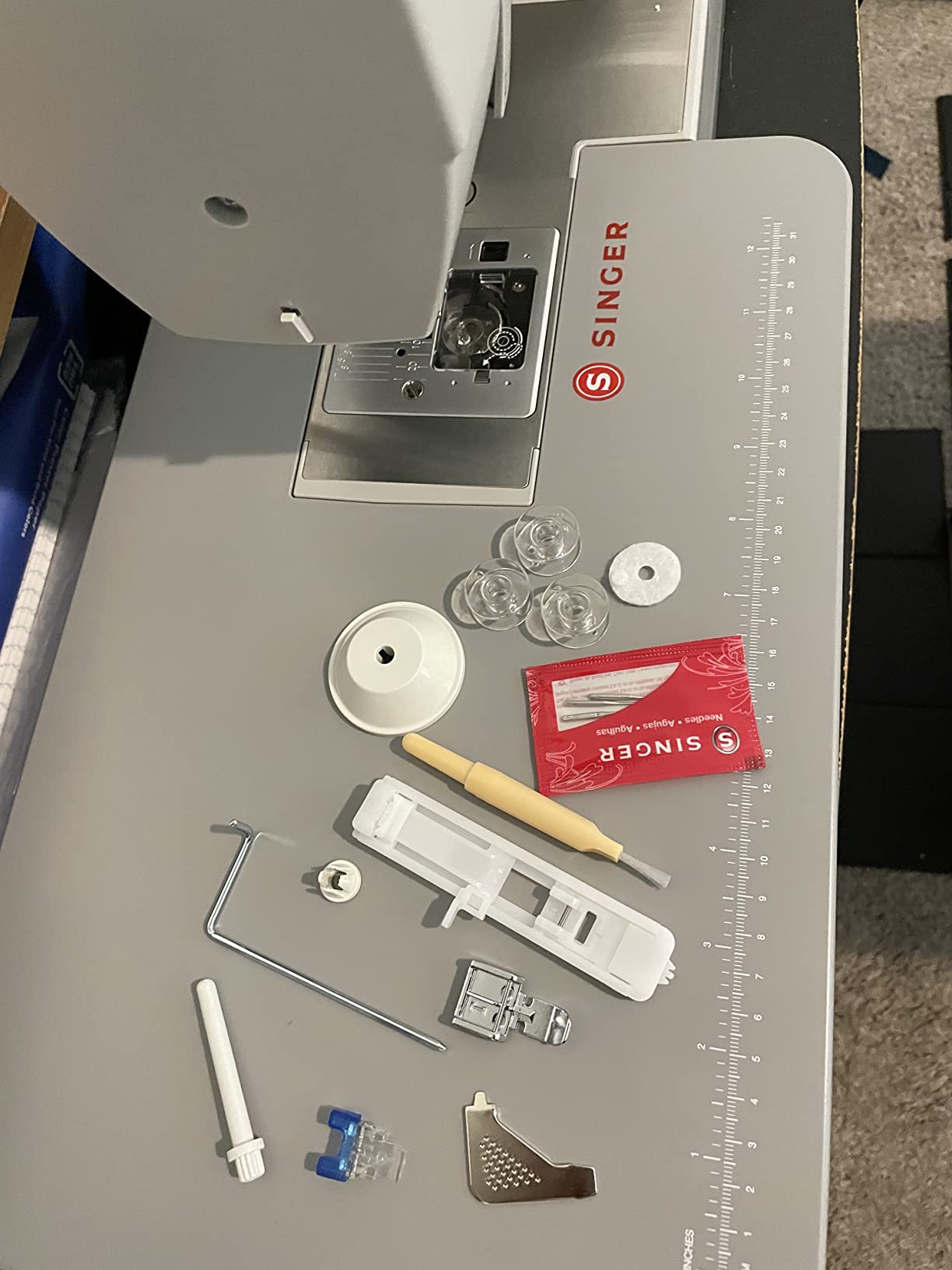
The walking foot is what changes behaviour on leather. Because the foot feed above the material matches the dogs below it, layers stay registered, and you can feed coated or slick leather instead of dragging it. The non-stick foot reduces the scuffing and drag marks that show up badly on full-grain surfaces.
The trade-off is control style. Everything is a mechanical dial with no screen, so you read settings off the machine rather than being told them. Some owners also note the speed cap sits below the 1,100 stitches per minute of comparable models, which is a fair criticism if you run long seams at speed.
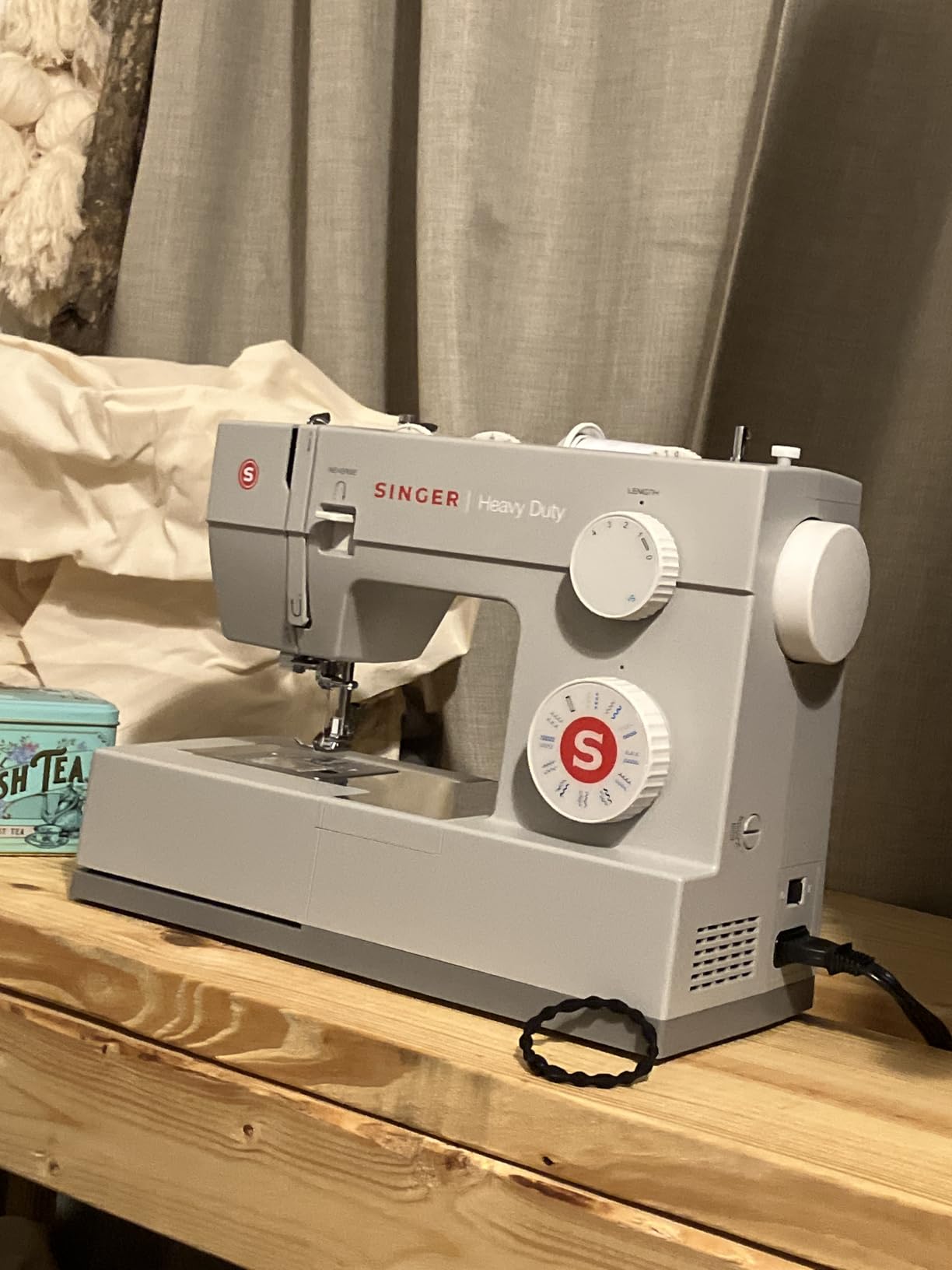
Does the included walking foot fix leather shifting?
Mostly. It removes the top-versus-bottom layer mismatch, which is the failure that causes skipped stitches on multi-layer work. It does not turn a home machine into an industrial one, but on 4 to 6 oz panels it changes the stitch quality noticeably.
The drop feed also lets you free-motion stitch on thick material for decorative work, which the 4423 cannot do.
Is the plastic shell a problem on leather?
Not where it matters. The load-bearing parts are metal: interior frame, bedplate, motor. The plastic is housing, spool post and levers, none of which carries the piercing force.
The metal frame is the reason this machine punches above its weight class on hide compared with lighter home models.
3. Brother ST150HDH: Best Rated for Detail Leather Work
Brother ST150HDH Strong and Tough Sewing Machine 50 Stitches
50 built-in stitches
LCD screen with stitch guidance
10.1 lb body
25 year limited warranty
Pros
- Highest average rating among the picks at 4.6 stars
- Advanced needle threader and jam resistant drop-in bobbin
- Quiet operation with no machine shake at speed
- Nine feet included plus heavy weight needles
- Speed control and needle up down buttons
Cons
- Built-in LED work light is dim
- No onboard thread cutter
- Foot lift and throat clearance get tight with maximum heavy layers
- No way to fit a large thread spool
The Brother earns its spot because it is the most refined machine here, and because its 4.6-star average across 1,213 reviews is the highest of the ten. Owners doing leather-specific work report success on welding gloves, multi-layer leather and heavy cotton duck.
What makes it pleasant on small leather goods is the computerized handling. The LCD screen shows the selected stitch, its size and the recommended presser foot, and the speed control plus needle up and down buttons let you sew curves without the foot pedal. On a small wallet gusset that control is worth more than raw torque.
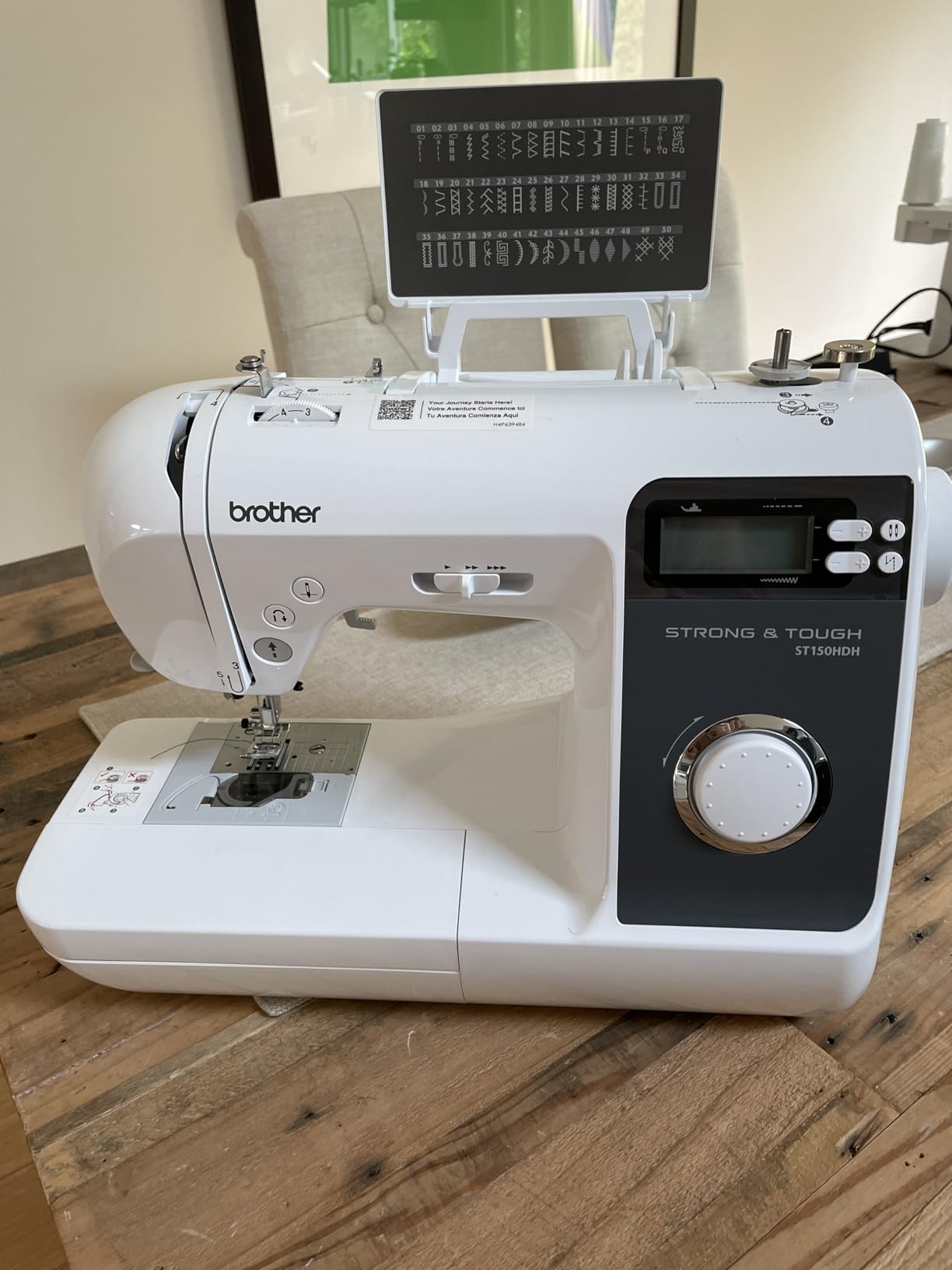
It ships with nine feet including a walking and even-feed foot, plus heavy weight needles. At 10.1 pounds it is also the lightest machine in this roundup, which matters if you carry it to a craft night or work on a lap desk.
The honest limitation is physical. When you stack the maximum number of heavy layers, the presser foot area and throat clearance get tight, and that is exactly where you need room in leatherwork. The dim LED and missing thread cutter are small annoyances.
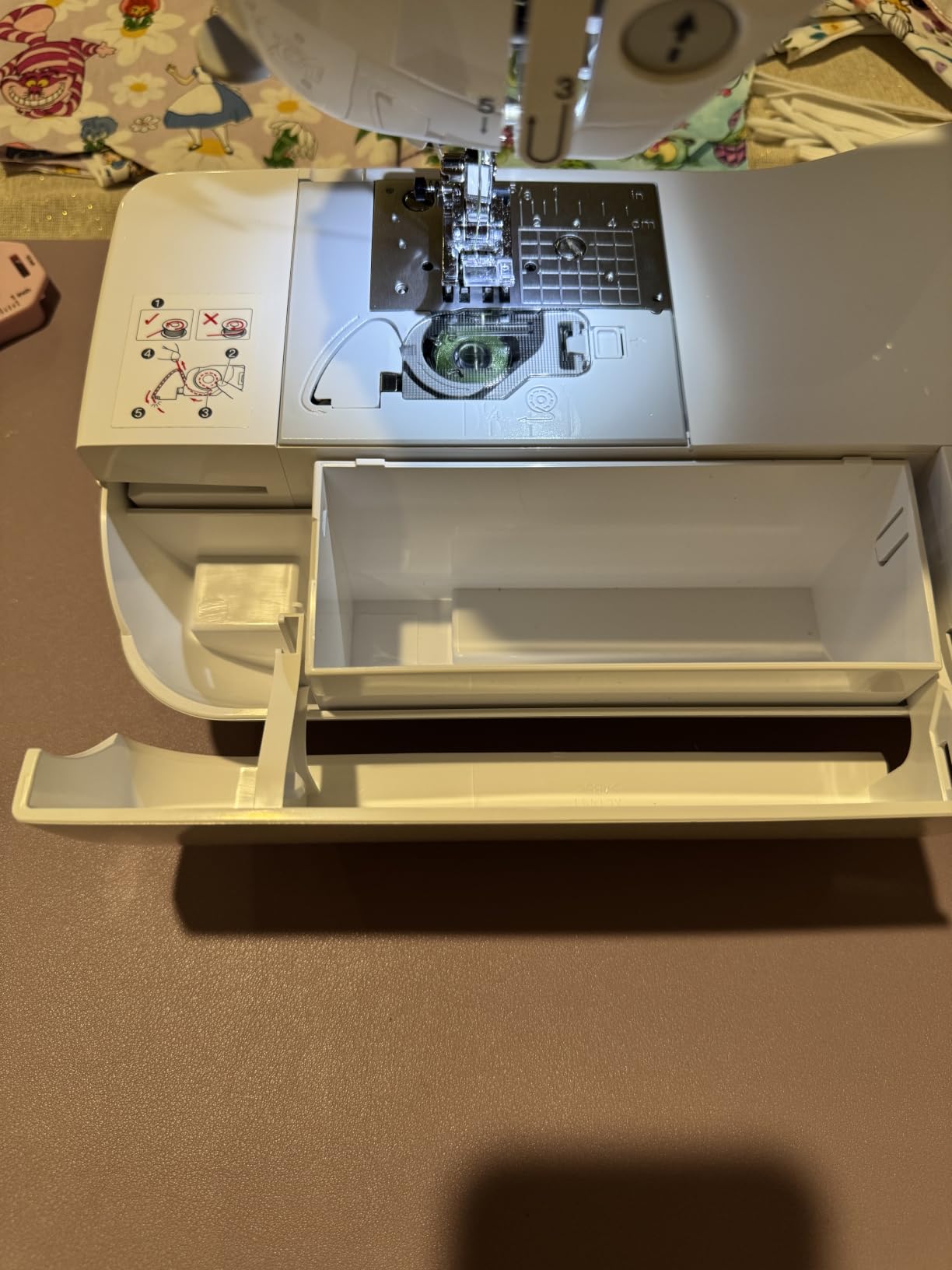
Is it strong enough for 6 oz hide?
At the upper end it is at its limit. Multi-layer leather up to about 5 oz is comfortable, and beyond that the tight foot area becomes the binding constraint before the motor does.
Its 25-year limited warranty is among the longest offered here and the real answer to longevity questions on a home machine.
Is the computerized screen worth it for leather?
Yes for small goods and garment work, where you are switching stitch types and working slow curves. On long straight seams in thick hide it adds nothing over a mechanical dial.
If you do only straight stitching on leather, the extra stitch library is bulk you will never touch.
4. Janome HD1000 Black Edition: Best All-Metal Home Body
Janome HD1000BE HD1000 Black Edition All Metal Body Sewing Machine, one size
Aluminum interior frame
Mostly metal outer body
All mechanical construction
25 year mechanical warranty
Pros
- Metal body resists the scratching common on plastic housings
- Sews through multiple layers including vinyl and foam with stable feed
- Very quiet operation
- All mechanical means no electronics to fail
- 25 year limited warranty on mechanical parts
Cons
- Automatic self-threader does not work reliably for one hand position
- Bobbin winding requires manually disengaging the drive belt
- Thread jams when the tail is cut too short
- Weighs 20 lb with no slow-start speed control
This listing is an Amazon Renewed unit, which shapes the expectations going in. Across 732 reviews averaging 4.0 stars, the metal construction and the layer capacity come up constantly, and so do descriptions of buying it used without accessories and needing replacement parts.
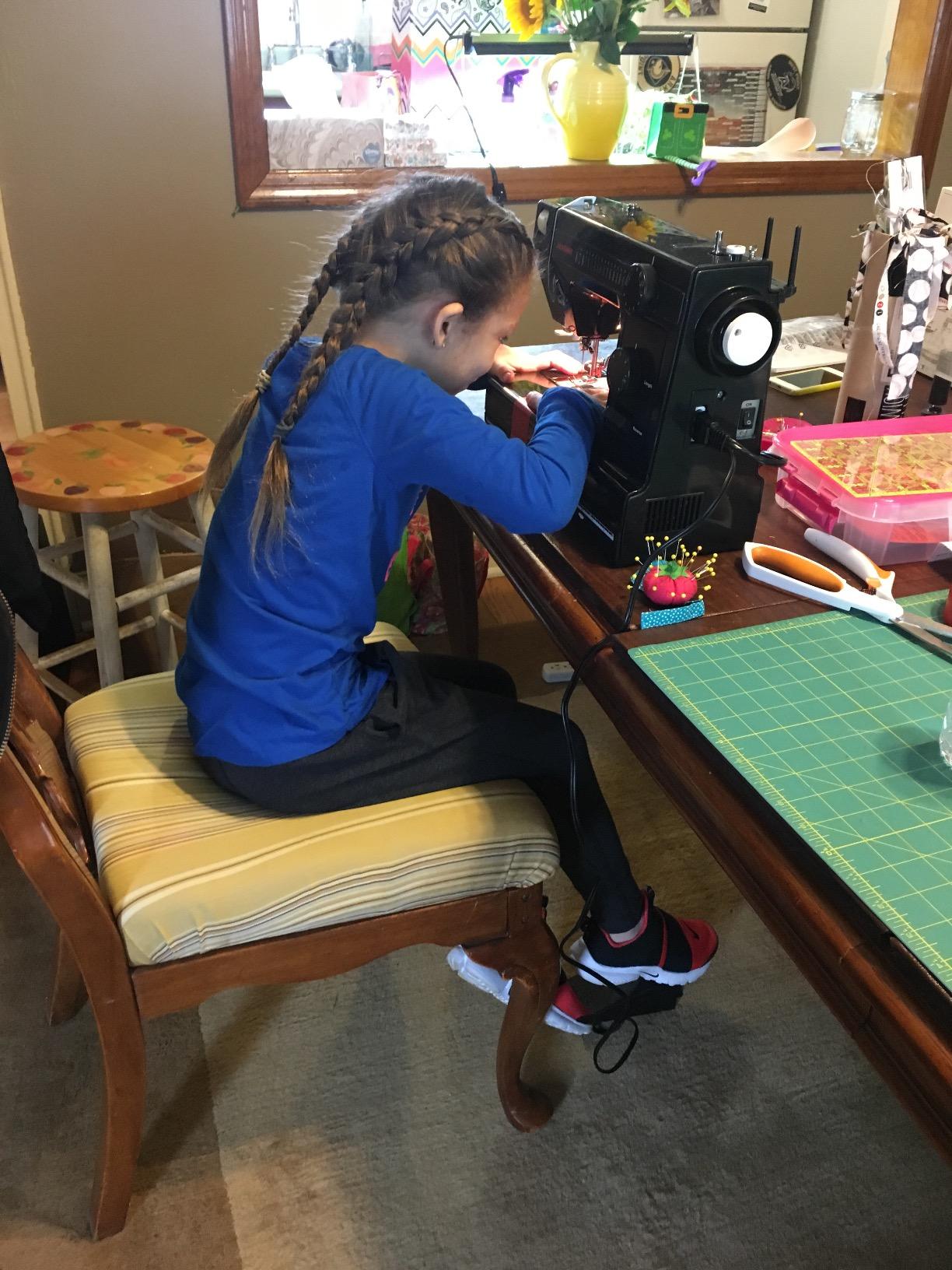
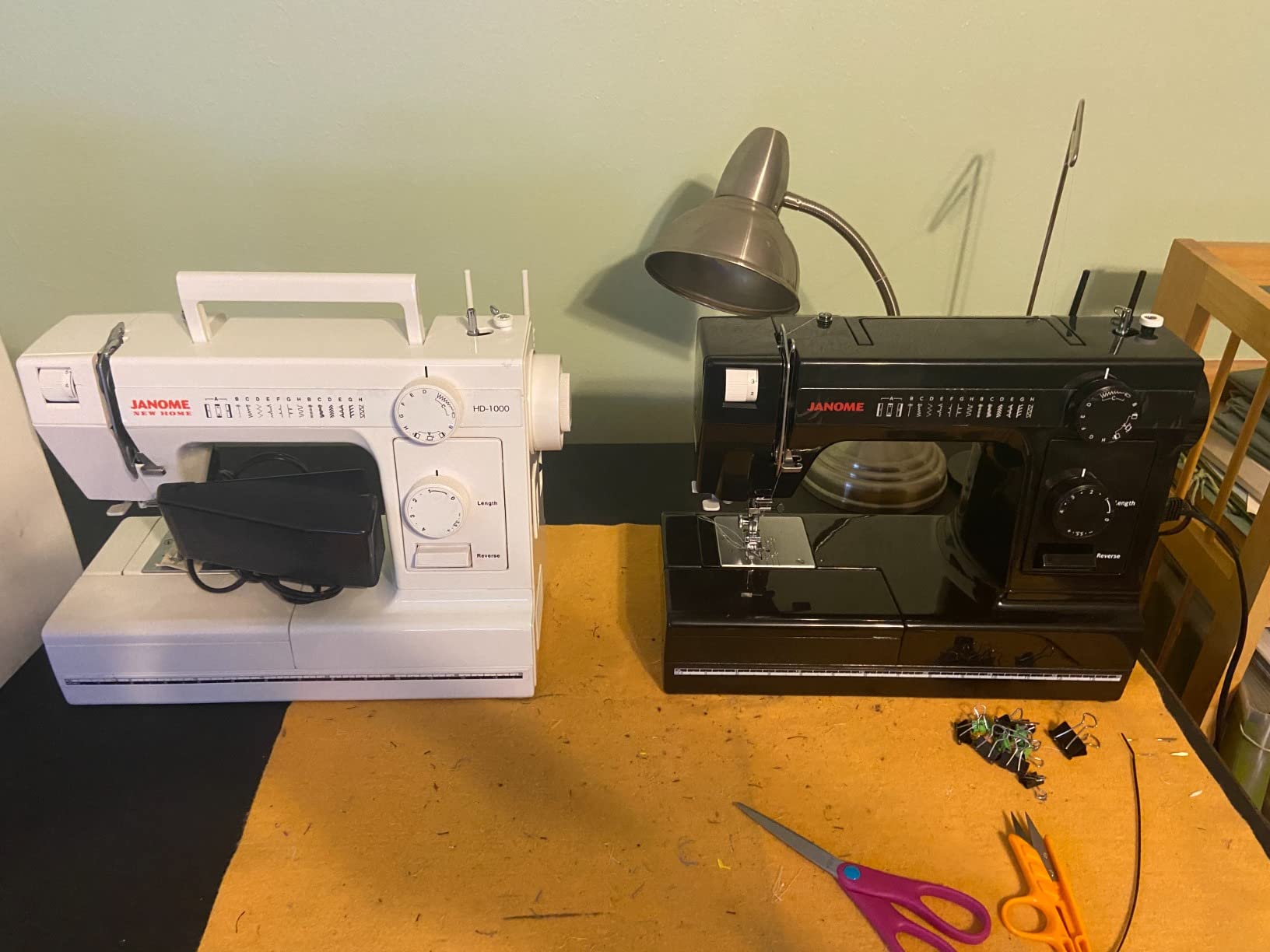
What makes it interesting for leather is the body. An aluminum interior frame with a mostly metal outer shell resists the scratching and flexing that plague plastic housings once you are pushing heavy material through under load. Owners report it sewing vinyl and foam stacks with stable feed, and it is quieter than most mechanical machines in the class.
Being entirely analog also means there are no electronics to fail, which matters for a machine you expect to keep for decades. The 25-year mechanical warranty is among the longest offered here.
The rating spread is the widest in the set, with 65 percent five-star and 15 percent one-star reviews. Three friction points cause most of it: the self-threader does not work reliably for one hand position, the bobbin winder needs the drive belt manually disengaged, and short thread tails cause jams. At 20 pounds it is the heaviest of the home machines listed here, with no slow-start ramp.
Is a renewed machine worth the risk for leather?
It can be, because leather work stresses a machine hard and metal internal frames survive that stress. The risk is not the head, it is missing accessories and unknown belt and bobbin condition.
Ask what is included before buying, and budget for a full needle and foot kit regardless.
Does it handle thick leather better than plastic-bodied rivals?
The frame does. Body rigidity reduces flex under load, which keeps needle penetration consistent on multi-layer stacks. Outer housing material alone does not change what the machine can sew, so pair this with a walking foot for best results.
It is also a US 120V plug, which matters if you are outside North America.
5. Janome HD 3000 Black Edition: Best Heavy Home Platform for Leather Panels
Janome HD 3000 BE Black Edition with Exclusive Bonus Bundle
All metal body construction
18.7 lb heavy duty platform
Mechanical HD line machine
Bundle with bonus accessories
Pros
- Solid metal construction on a heavy duty mechanical platform
- Sits in Janome's HD line above the entry home machines
- Deep and consistent stitch formation on multi-layer work
Cons
- Little published detail on stitch count and accessories
- No individual review text captured for this listing
- 18.7 lb body adds bulk for a home machine
The HD 3000 sits in Janome’s heavy duty line above the entry machines, and the all-metal body is the point. Owners generally describe a durable, capable mechanical machine that forms deep, consistent stitches on multi-layer work, which is the behaviour leather rewards.
Be aware of what we could not verify. This listing returned 332 reviews at 4.4 stars but no individual review text and only a handful of product images, so there is no stitch-by-stitch detail or accessory breakdown to cross-check here. If you need that, confirm the specification list with Janome before you commit.
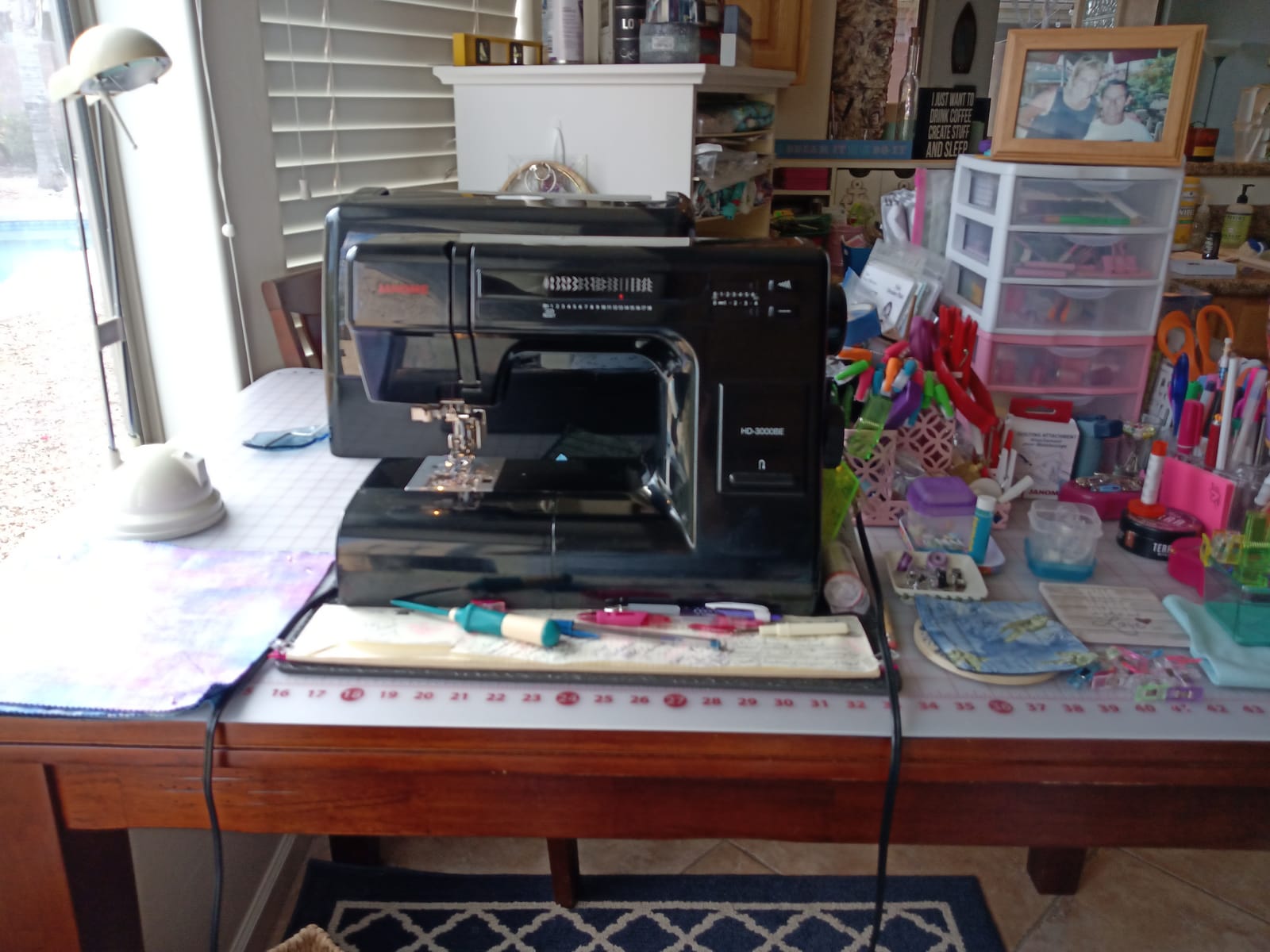
For garment-weight through mid-weight leather, panels, belts and bag bodies, a mechanical machine with a metal body and consistent feed is the right shape of tool. The decorative stitch count is irrelevant here; what you want is the same stitch, every time, without stalling.
At 18.7 pounds it is heavy for a home machine, so treat it as a permanent fixture on a table rather than something you carry between rooms.
How does it compare with the Janome HD1000?
The HD1000 has more published detail, a wider accessory footprint and captured owner reviews. The HD 3000 has a clearer all-metal body description and sits higher in the heavy duty line.
Neither listing gives you a stitch-by-stitch breakdown, so treat both as mechanical workhorses rather than feature-rich machines.
Is it the right choice for thick tooling leather?
No. This is a home heavy duty platform, and thick tooling or harness hide is where industrial walking-foot territory starts. Even with a walking foot fitted, a home frame will not hold piercing speed at 6 oz and above.
Use it on panels and reserve the industrial tier for saddlery work.
6. VEVOR Industrial Lockstitch Set: Best Industrial Starter Package
VEVOR Industrial Lockstitch Sewing Machine, 550W Commercial Set with Servo Motor & Table Stand, 5000 SPM High Speed, Metal Frame, LCD Panel, LED Light for Cotton Wool Denim Leather Canvas
550W servo motor
Up to 5000 stitches per minute
0.5 inch knee lifter
Table and stand included
Pros
- 550W servo motor reaches 5000 stitches per minute and sews up to 10 layers of denim
- Metal body with auto-lubrication pump system
- Table stand motor and accessories all included
- 0.5 inch knee lifter frees both hands
- Uses Juki DDL-5500 compatible parts
Cons
- Assembly is difficult and printed instructions are vague
- 130 lb head needs two people to lift into the table
- Some buyers received machines with damage or missing pieces
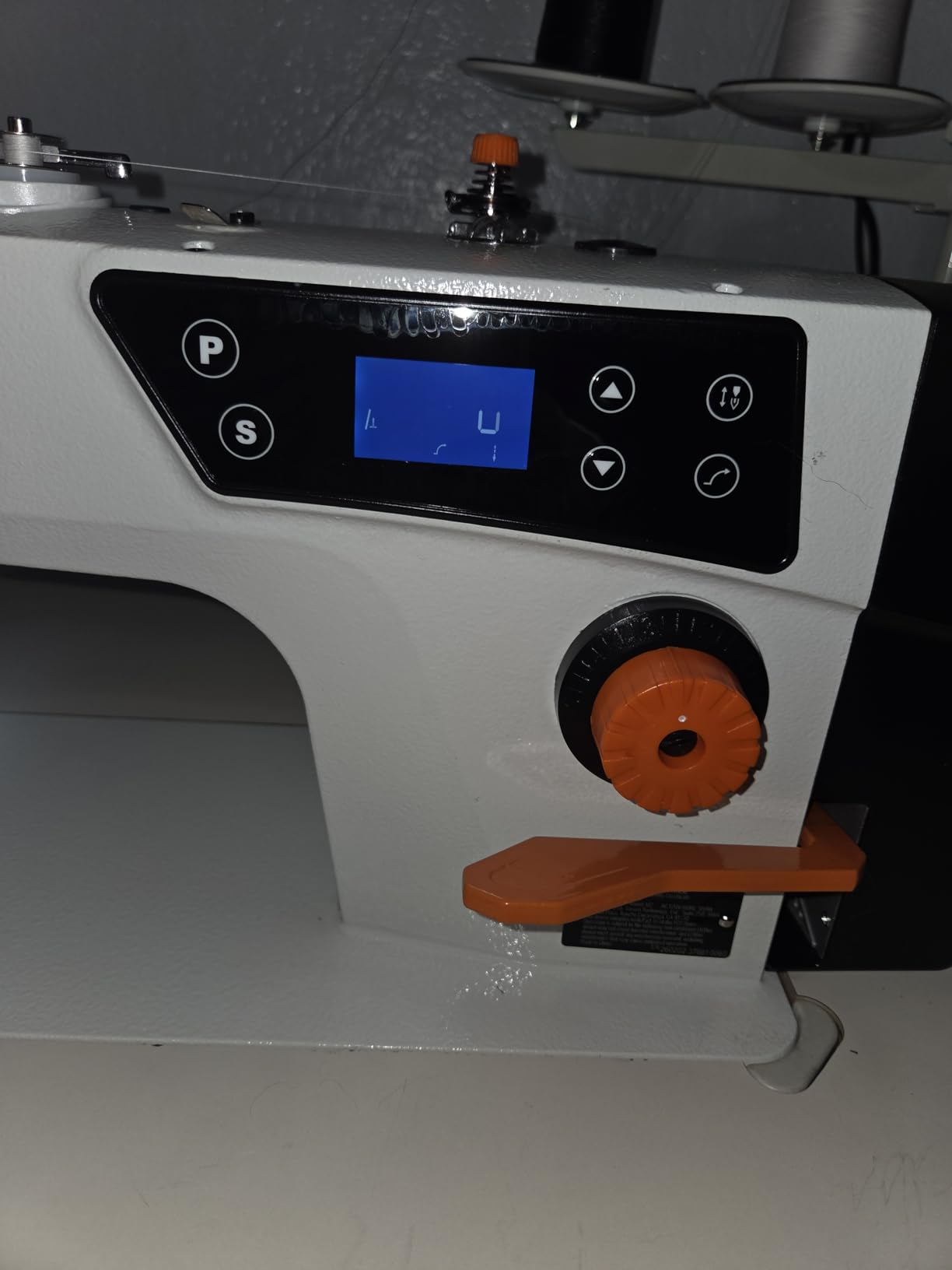
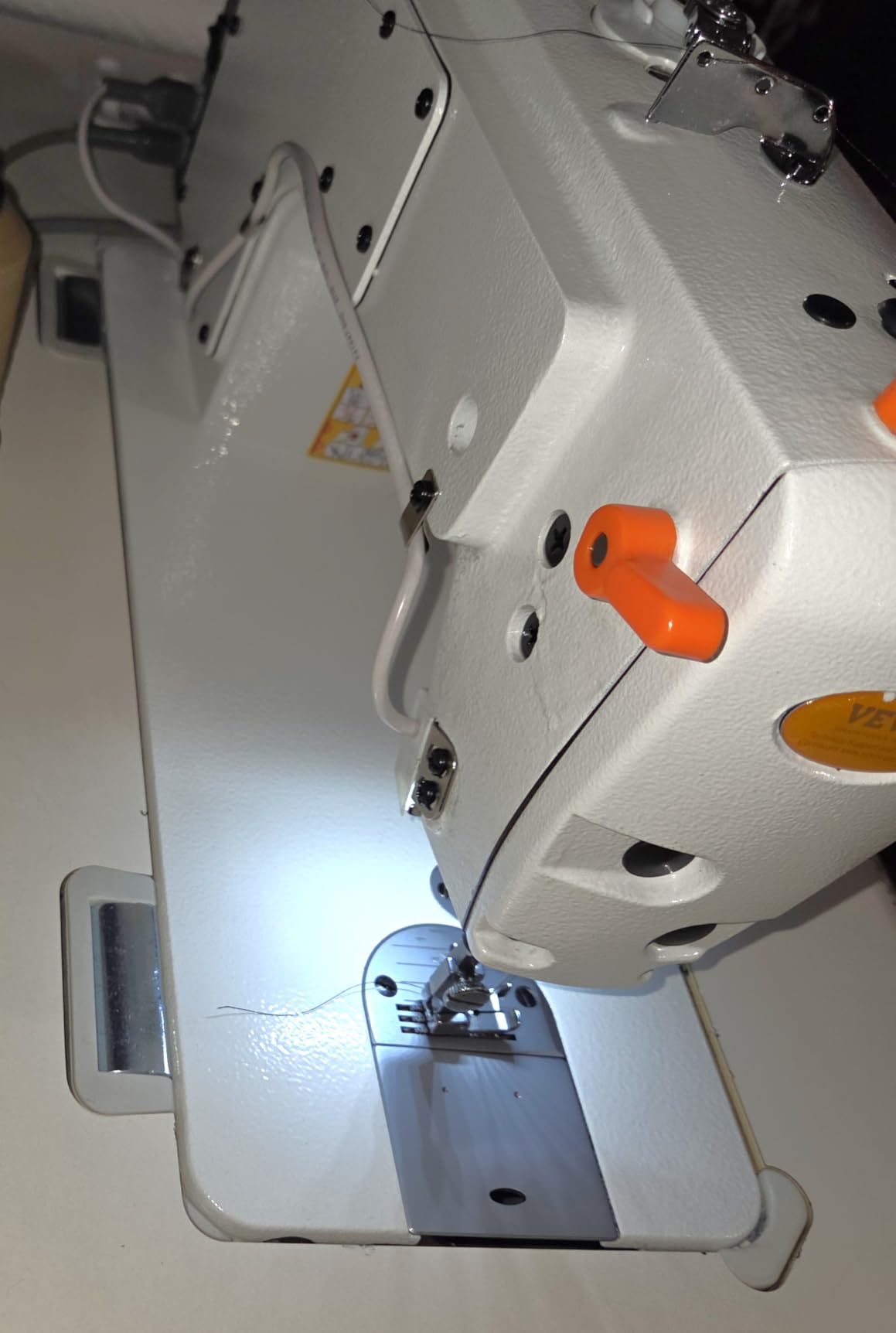
Most industrial machines are sold as a head only. This one arrives with the table, stand and motor in a single package, which removes the single most common reason beginners give up on an industrial purchase. For leather, the 550W servo motor is the headline: reviewers document it cutting through four layers of leather that a walking-foot machine could not pierce.
At 5,000 stitches per minute with a 0.5 inch knee lifter and 0.3 inch manual presser foot lift, it has the clearances you want for thick work. The LCD panel handles speed, needle position and soft start, and the table height adjusts from 22.4 to 29.1 inches.
Parts availability is the sleeper advantage. It uses Juki DDL-5500 compatible parts and accessories, so repair parts and feet are widely available long after this brand name stops being sold.
The rating of 4.1 stars across 128 reviews is the second lowest of the ten, and the cause is not performance. Complaints concentrate on assembly, with vague printed instructions that often require video tutorials or a second person, a 130 pound head that needs two people to lift, and a noticeable share of machines arriving with damage or missing pieces.
Is it a walking foot machine?
No, and this is the key distinction. It is a single-needle industrial lockstitch. It has the torque and the foot lift to pierce thick leather, but the layers are still advanced by feed dogs alone, so three-dimensional work needs careful handling.
It is a lockstitch with more power, not a compound feed machine.
Who should buy this package?
Someone who wants industrial torque without sourcing a table, a stand and a motor separately, and who has someone available to help assemble it. Owners with mechanical confidence report it running faster than anything else they own.
If assembly is a dealbreaker for you, budget for a technician or choose an assembled unit.
7. Consew 206RB-5 Walking Foot: Best for Thick Hide and Upholstery
Consew 206RB-5 Walking Foot Industrial Sewing Machine with Table and Servo Motor
Triple feed walking foot
9/16 inch foot lift
10 mm maximum stitch length
Table and servo motor included
Pros
- Walking foot triple feed keeps heavy and slippery layers moving together
- 9/16 inch foot lift gives clearance for thick hides and long seams
- Large bobbin capacity reduces changes on long runs
- Adjustable walking motion height for different thicknesses
- Table and servo motor included so it is ready to run
Cons
- Table has no assembly instructions at all
- Printed manual is largely unusable
- Needs correct timing before it will sew
- Bobbin case must be pushed firmly to seat
- 200 lb assembly is not portable
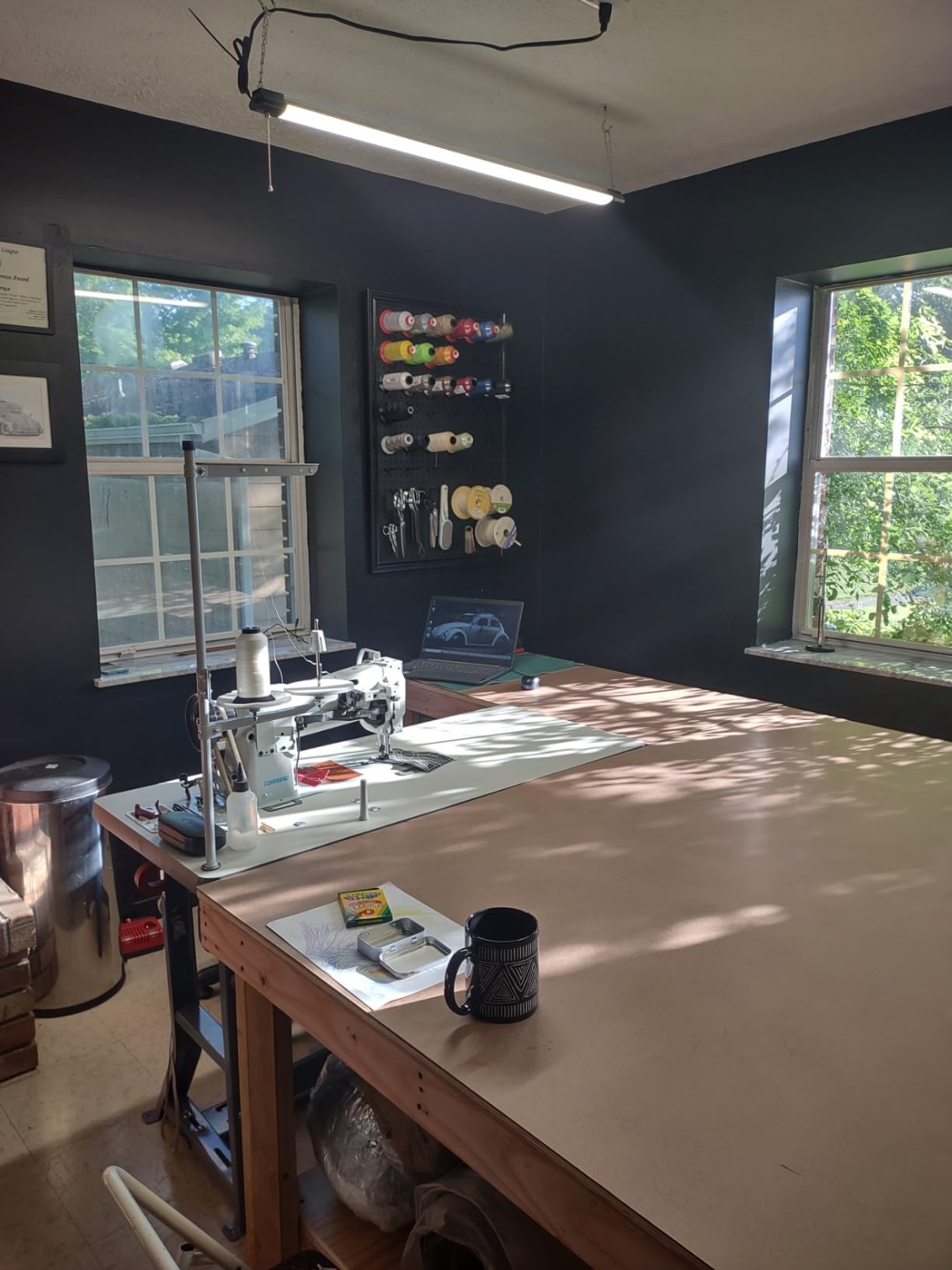
This is the machine that actually solves the problem leather creates. The walking foot triple-feed mechanism keeps heavy and slippery layers moving together without shifting, which is precisely the failure mode that ruins leather seams on home machines. If you sew upholstery, marine work, automotive interiors or thick hide, this is the class you want.
The numbers support it. A 9/16 inch foot lift gives real clearance under thick seams, a 10 mm maximum stitch length suits long runs, and the large bobbin cuts the mid-project bobbin changes that stop smaller industrial machines. Adjustable walking motion height lets you tune feed for different material thicknesses.
Owners with mechanical confidence describe it as an excellent, reliable machine that has run trouble-free for months, and several praise the seller’s willingness to walk them through setup by phone.
The overriding theme in reviews is setup. The table has no assembly instructions, the printed manual is effectively unusable, and the machine needs correct timing before it will sew. The bobbin case also has to be pushed in very firmly until it clicks. At 200 pounds it is a permanent fixture, not a portable machine.
What thickness of leather can it handle?
The 9/16 inch foot lift and the triple feed put it firmly in 6 to 8 oz territory, and beyond that into harness and tooling weight. That is a material class the home machines in this roundup do not reach.
On thick builds you can pivot under the foot at a corner without fighting the machine, which is where most leather frustration comes from.
Is it beginner friendly?
No. Reviewers consistently advise buying it already assembled, or budgeting several hours with video guides and a technician for timing. Prior walking-foot experience makes threading and handling much easier.
The cost is the machine and the setup time together. Judge the total, not the sticker.
8. Juki DU-1181 Walking Foot: Best Juki Walking Foot Package
NEW Juki DU-1181 SIngle Needle Walking Foot Complete w/ K.D. Stand & Servo Motor
2000 stitches per minute
15 mm knee presser foot lift
DP by 17 needles 14 to 23
Automatic lubrication
Pros
- Walking foot top and bottom feed holds multilayer material steady
- 15 mm knee presser foot lift gives thick leather clearance
- 9 mm maximum stitch length suits long seams
- Complete knockdown table with servo motor lamp drawer and tools
- Automatic lubrication cuts maintenance intervals
Cons
- Assembly required and may need professional help
- Feed cam adjustment requires opening three rubber caps
- 170 lb weight makes it not portable
- Only 37 reviews so long term feedback is limited
The DU-1181 is Juki’s single-needle walking foot, and the specification is the argument. The 15 mm knee presser foot lift is the highest quoted here, which matters more than speed when you are closing a thick seam or a multi-layer gusset. The top and bottom feed mechanism holds hard-to-handle and multilayered material with consistent stitch pitch.
The package is complete. It arrives sealed and unused with a knockdown table, an SMS-400 electronic DC servo motor rated at 3/4 horsepower single phase 110 volt, belt, tools, lamp, drawer and manual. That is the head, the motor and the furniture in one line item.
Automatic lubrication reduces maintenance intervals, and the horizontal feed cam plus top and bottom feed cams can be adjusted after removing the rubber caps on the head. Needle spec is DP by 17 in sizes 14 to 23, which is the industrial standard and not interchangeable with home-machine needles.
How does it compare with the Consew walking foot?
The Juki has a taller knee foot lift at 15 mm against 9/16 inch, and a larger published needle range. The Consew has a longer maximum stitch length at 10 mm and substantially more owner feedback.
Both are triple-feed class machines. Choose on availability of parts and service in your region as much as on spec.
What are the drawbacks of buying the knockdown package?
Assembly is required and may need professional help. The feed cam adjustments require opening three rubber caps on top of the head, which is normal industrial practice but not beginner territory.
At 170 pounds it is not portable, and with only 37 reviews the long-term reliability picture here is thinner than the spec sheet suggests. Weight the specifications over anecdotal reliability commentary at this level.
9. Juki DDL-8100 Lockstitch: Best High-Speed Lockstitch
Industrial Sewing Machine Juki DDL-8100 Lockstitch Servo Motor + Table Stand Cut Juki DDL8700 + LED Lamp+ Commercial Grade Sewing Machine
Up to 5500 stitches per minute
550W DC servo motor
13 mm knee foot lift
48 by 20 inch table top
Pros
- High-speed single-needle lockstitch running up to 5500 stitches per minute
- Direct replacement for DDL-8500 DDL-MS and DDL-888 platforms
- Quiet 550W DC servo motor with smooth start
- Auto-lubricating full rotary hook reduces maintenance
- Complete package with head table motor lamp and oil pan
Cons
- Assembly required
- Lockstitch only so it will not feed thick layers like a walking foot
- 5 mm maximum stitch length is short for heavy leather
- Large 48 by 20 inch industrial table footprint
The DDL-8100 is included here for a specific reason: it is what a great industrial lockstitch looks like, and knowing its limits tells you when to buy one. It runs up to 5,000 to 5,500 stitches per minute on a quiet 550W DC servo motor with a 13 mm knee foot lift and an auto-lubricating full rotary hook.
The practical advantage is continuity. It replaces the DDL-8500, DDL-MS and DDL-888 platforms, so if a shop already runs those, the timing knowledge, setup habits and parts familiarity all carry straight over. Owners consistently value that.
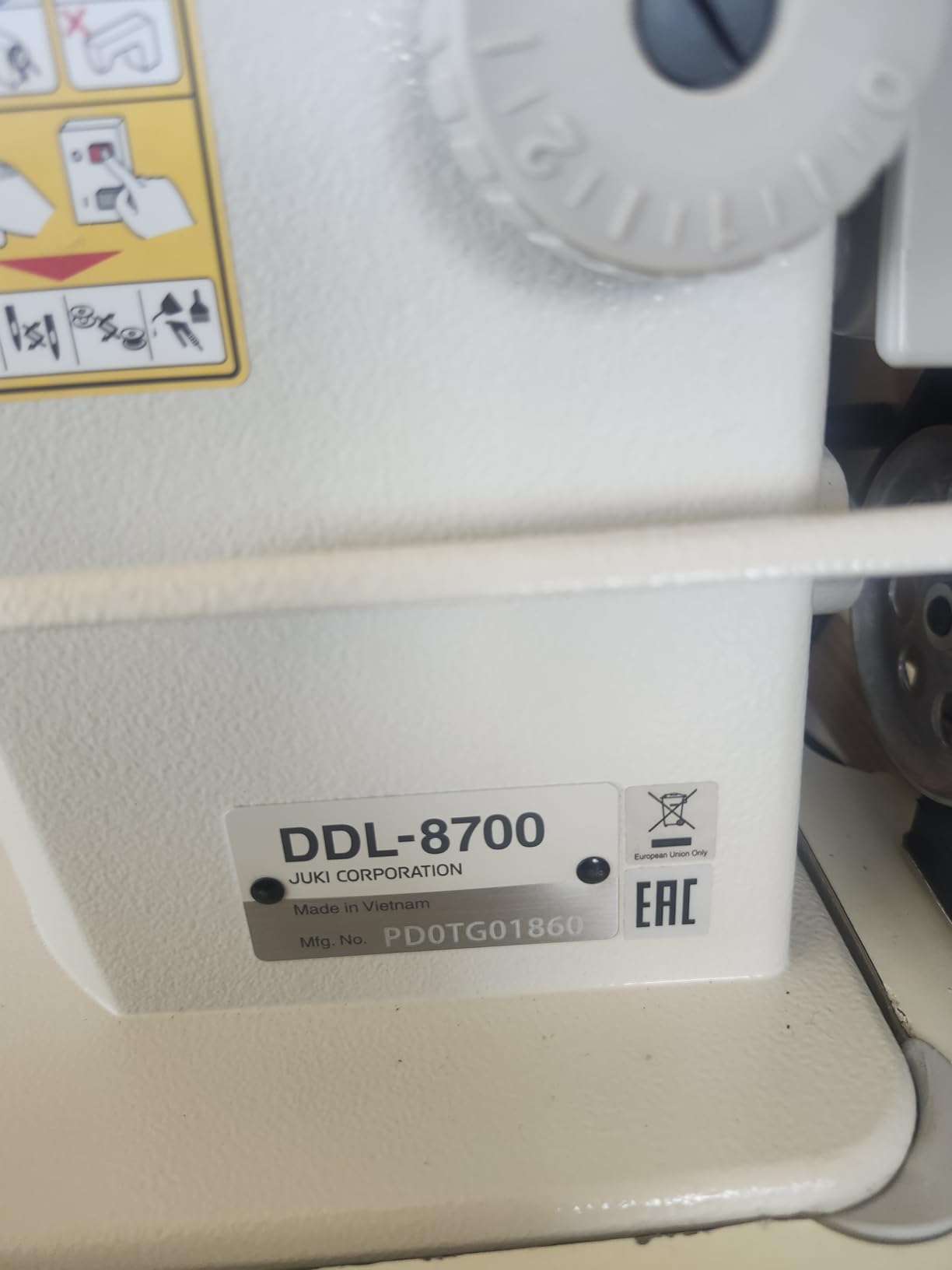
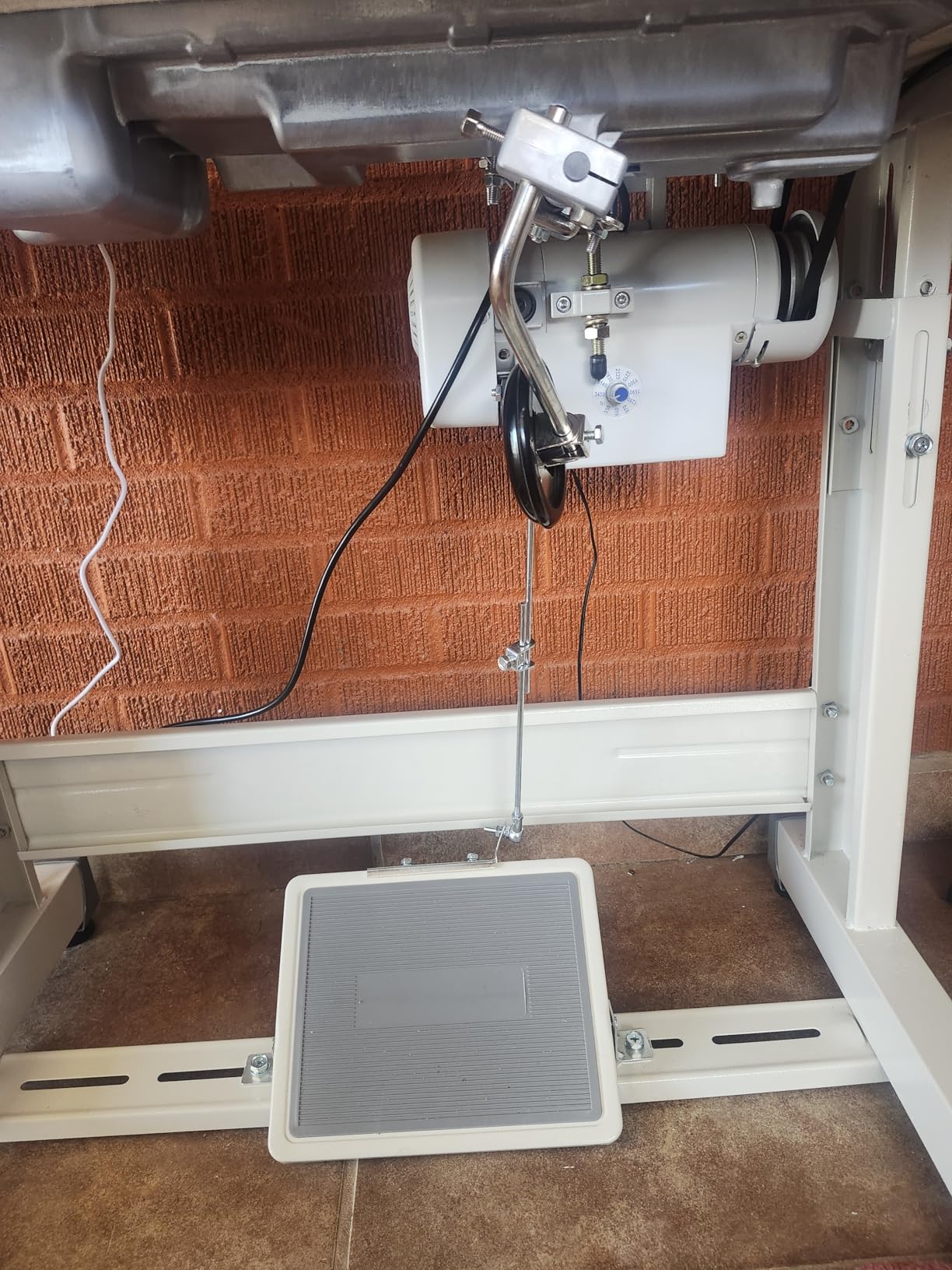
The package is a genuine full set: head, table, adjustable legs, motor, V-belt, thread stand, bobbin winder, oil pan and knee lifter, LED lamp, extra bobbins and needles. Table top is 48 by 20 inches.
For leather there is one hard limitation. It is a straight lockstitch, not a compound feed, so it will not hold thick or slippery layers the way a walking foot does, and its 5 mm maximum stitch length is short compared with the DU-1181 or the Consew 206RB-5.
Is it the right machine for leather?
For panels, straps, seams on structured items and production runs of lighter leather, yes. The speed and motor torque are excellent and stitches lay evenly.
For stacked, slick or thick hide, no. Choose the walking foot class instead.
What do the needle and stitch specs tell you?
DBX1 needles in sizes 9 to 18, and a 30.7 mm needle bar stroke. The 5 mm maximum stitch length tells you the machine is built for garment and light upholstery work rather than heavy leather, where longer basting and wider seams are useful.
Read the max stitch length spec before buying any industrial machine for leather. It is a more honest indicator than the speed number.
10. SINGER 6700C Heavy Duty: Best Computerized Home Machine with Leather Torque
SINGER® 6700C Heavy Duty Computerized Machine with Accessory Kit
411 stitch applications
LCD screen with speed control
Ten presser feet included
14.6 lb
Pros
- 411 stitch applications including decorative patterns and a lettering font
- Enhanced piercing power for denim leather and heavy quilting layers
- LCD screen with stitch length and width adjustment
- Ten included presser feet including an even feed walking foot
- Light metal and stainless steel build at 14.6 lb
Cons
- Stitch selection uses buttons rather than a dial
- Only a 1 year manufacturer warranty
- Decorative stitch library adds bulk without improving leather capability
- Slower to cycle through many patterns
The 6700C is the home machine to buy when you want computerized convenience without giving up leather torque. Across 975 reviews at 4.4 stars, owners like the combination of heavy-duty piercing power for denim, leather and quilting layers with a large stitch library and LCD guidance.
The feature that gets singled out most for leather is the included even-feed walking foot among ten supplied feet. Owners frequently highlight it as the reason leather work behaves on this machine rather than shifting. Enhanced piercing power handles multiple layers with consistent stitching, and the built-in speed control lets you drop the maximum speed for intricate or delicate work.
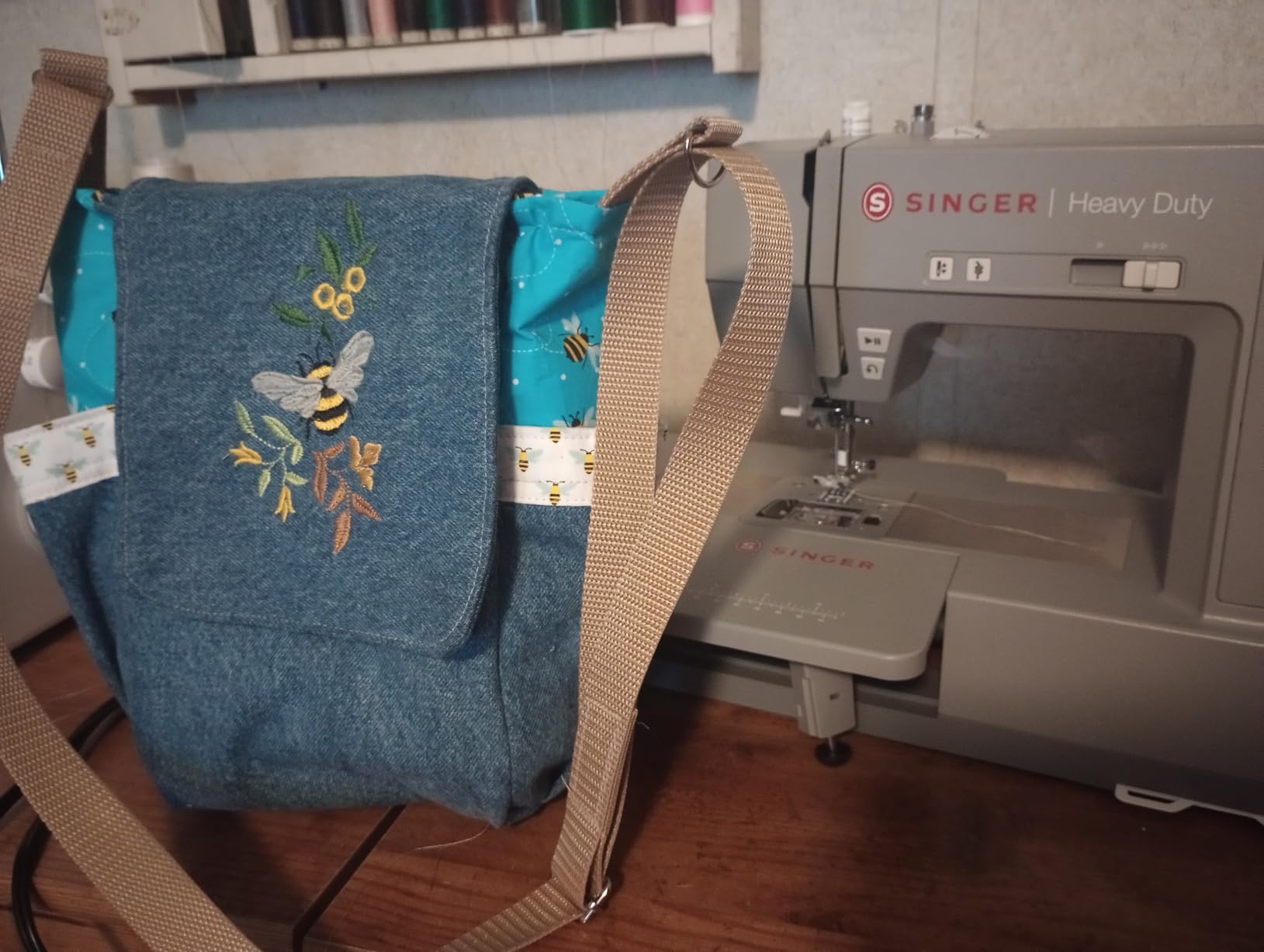
At 14.6 pounds it is the second lightest machine in this roundup while still carrying a metal and stainless steel build, and the lettering font is genuinely useful for custom leather labels and small goods.
Criticism here is about value framing rather than function. Stitch selection runs through buttons rather than a dial, so cycling through 411 applications is slower. The warranty is one year, far shorter than the 25-year terms offered by Brother and Janome, and buyers needing only straight stitching on leather find the mechanical models faster and cheaper.
Is it better for leather than the 4423?
On capability they are close. The 6700C adds the walking foot in the box, an LCD and speed control, so it is the more complete leather setup out of the box.
The 4423 is simpler, faster to reach a straight stitch and has a much larger review base behind it. Choose the 6700C if you sew small detailed goods, the 4423 if you sew straight seams all day.
Does the decorative stitch library help with leather?
Only occasionally. The lettering font for branded labels is the standout, and the rest of the library adds bulk without improving heavy-material capability.
Pay for the walking foot and the piercing power, not the pattern count.
How to Choose a Heavy Duty Sewing Machine for Leather
Flat bed, free arm, post bed or cylinder arm?
This is the most asked question in leather forums and the one most roundups skip. The bed shape decides what kind of object you can actually turn under the needle.
A flat bed gives you an open sewing surface and nothing to work around. Panels, straps, flat seams and anything rectangular are best on a flat bed.
A free arm is a flat bed with a narrow section that drops below the needle. It handles cuffs, hems and small cylinders. Useful, but on a heavy machine the free arm is usually small and you will still be fighting it on thick work.
A post bed lifts the needle area above the table on a narrow column. Because the material hangs free on all sides, you can feed bag gussets, side panels and three-dimensional shapes without the fabric bunching underneath. For anyone building totes, backpacks and luggage, this is the bed shape that saves the most frustration.
A cylinder arm is a short, wide arm with the needle at one end. The narrow arm reaches into shoes, boots, tight radii and the inside of small cylinders. It is the cobbler’s shape, and it reaches curved work that other bed shapes struggle with.
One practical note from leatherworkers: moving from a post bed to a cylinder arm does not change stitch quality. Both feed the material the same way. Choose on the shape of your projects, not on stitch character.
Which machine class matches your hide weight?
Match the class to the thickest leather you will touch regularly, not the thickest you might someday touch.
Metal-framed home heavy-duty machines handle 2 oz to about 4 oz well, and can reach 5 oz with a leather needle and a walking foot. That covers wallets, belts, watch straps, holsters, phone cases, garment leather trims and most bag panels.
Industrial walking-foot machines handle 4 oz through 8 oz and beyond. That is bag gussets, tool bags, motorcycle seats, leather upholstery, saddles and harness work.
Cylinder-arm and post-bed machines handle thick hide in shapes the flat bed cannot reach. If you repair shoes, sew boots or build saddle frames, that is the sensible class.
Servo motor or clutch motor?
A clutch motor spins up and coasts. It is loud, it runs hot, and its speed control gives you no stitch-by-stitch precision, which is exactly what leather corners require.
A servo motor delivers power on demand, starts and stops instantly, runs quiet, and lets you run the machine at one stitch per second through a thick build-up. Every industrial machine in this roundup uses a servo. Among home machines, the newer DC motors are a step in the same direction.
On leather specifically, this is not a preference. Slow, controllable speed at the moment of needle entry is what prevents skipped stitches and bent needles.
What does a leather sewing machine really cost in total?
The head is only part of the outlay, and this is where buyers get surprised. Budget for these extras.
Table and stand. Industrial heads are useless without a proper industrial table on legs. A knockdown table and stand are usually a separate line item.
Servo motor. Many packages include one, many do not. Verify the listing before assuming.
Assembly. Several machines in this roundup arrive unassembled, and reviews specifically warn that the Consew table has no instructions and the Juki knockdown needs help. Add technician time to the total.
Needles. Leather needles dull fast. Buy 90/14, 100/16 and 110/18 packs and replace them rather than fighting a dull point.
Thread. Bonded nylon or heavy polyester for structural seams, and a heavy needle for everything else.
Feet. An even feed foot, a non-stick foot and a leather foot set. The 4552 and 6700C include them, most machines do not.
Oil. Industrial machines are oil-bath lubricated. Budget for oil and the discipline of weekly checks.
Why does my leather machine skip stitches?
Almost always tension, not the machine. When a leather machine skips, back the top tension off by a quarter to a half turn and check the needle is fully inserted with the long side toward the direction of travel. A shallowly inserted or bent needle will skip on leather long after it stopped on fabric.
Next suspects: a dull leather needle, too short a stitch length for the material, and forcing the feed instead of letting the machine pull the leather through.
Why does my thread keep breaking at the needle?
Thread breaking several inches into a project usually points to the check spring or top tension. Leather is abrasive, so any sharp thread path will cut the thread as it moves under tension.
Check that the needle is the right size for the thread, that the needle plate hole is not burr-edged, and that the presser foot pressure is not pinching. Swapping to a new leather needle fixes a surprising share of these cases.
Should I consider a used or vintage industrial?
Yes, and it is the most-requested option in leather communities. Vintage Singer 29K and Juki 29K machines are widely recommended as the value route, with the small bobbin capacity as the main drawback. Juki 1341 cylinder arm owners describe them as handling the thickest leathers easily, though the speed is high enough that a speed reducer is often recommended.
When buying used, check the feed mechanism for wear, look for a machine that has been oiled, confirm the model number has serviceable parts, and ask whether the bobbin and hook are original. Forums repeatedly point out that the used market holds far more value than the sticker suggests for these platforms.
For non-US buyers, note that most industrial brands here are US-distributed. Check local service and parts availability before committing, because a machine you cannot service is a poor investment regardless of its specifications.
Frequently Asked Questions
What type of sewing machine is best for sewing leather?
A metal-framed home heavy duty machine handles 2 to 4 oz leather. An industrial walking-foot machine handles 4 oz to 8 oz and beyond, because its compound feed keeps layers moving together. A cylinder-arm or post-bed machine is best for shoes, saddles and thick hide in shapes a flat bed cannot reach.
Can the SINGER 4423 sew leather?
Yes. It has a metal internal frame and roughly 50 percent more piercing power than a standard home machine, and owners report sewing 10 oz vegetable-tanned leather, heavy webbing and stacked denim with a heavy-duty needle. Its limit is single feed dogs, so slick multi-layer leather benefits from an even-feed foot.
What is a cylinder arm sewing machine?
A cylinder arm sewing machine has a short, wide arm with the needle positioned at one end. The narrow arm reaches into shoes, boots, tight radii and the inside of small cylinders, which a flat bed cannot access. It is the standard shape for cobblers and for thick hide work on curved surfaces.
Can all sewing machines use a walking foot?
No. A walking foot needs a low-shank or high-shank machine with an exposed feed bar, and the foot has to match the shank type. Most metal-framed home heavy-duty machines accept an even feed foot. Cheap plastic-bed machines with an enclosed feed often cannot, and industrial machines use their own DP needle systems instead.
How thick of leather can a heavy duty sewing machine sew?
A metal-framed home heavy duty machine handles roughly 2 to 4 oz and can reach 5 oz with a leather needle and a walking foot. Industrial walking-foot machines with 9/16 inch or 15 mm foot lift handle 6 to 8 oz and thicker tooling and harness leather. Cylinder-arm and post-bed machines take it further.
Why does my leather sewing machine skip stitches?
Usually top tension is set too tight. Back the tension off a quarter to a half turn and make sure the needle is fully inserted with the long side facing the direction of travel. Also replace dull leather needles, keep stitch length long enough for the material, and let the machine feed the leather rather than pushing it forward by hand.
Conclusion: The Best Heavy Duty Sewing Machines for Leather by Project Type
For most people starting out, the SINGER 4423 is the best heavy duty sewing machine for leather you can buy today, backed by more than 21,000 reviews averaging 4.5 stars and owners who sew vegetable-tanned hide up to around 10 oz for panels and straps. If you want the same metal frame plus a walking foot and non-stick foot in the box, the SINGER Heavy Duty 4552 is the smarter single purchase, and for quiet computerized detail work the Brother ST150HDH leads on rating at 4.6 stars.
When you move past 5 oz or start on bag gussets and upholstery, you are shopping in a different category. The Consew 206RB-5 and the Juki DU-1181 walking-foot machines feed stacked hide properly and clear thick seams, and the Juki DDL-8100 shows you what a fast industrial lockstitch does well and where it stops.
Before you buy, check the bed shape against the shape of your projects, add the table, stand, motor, needles, thread and possible assembly time to your budget, and let the machine feed the leather rather than pushing it. That last habit removes more broken needles than any machine on this list.
These picks reflect the machines available as of 2026, and the fastest way to narrow them down is to sew a scrap of your actual hide first.