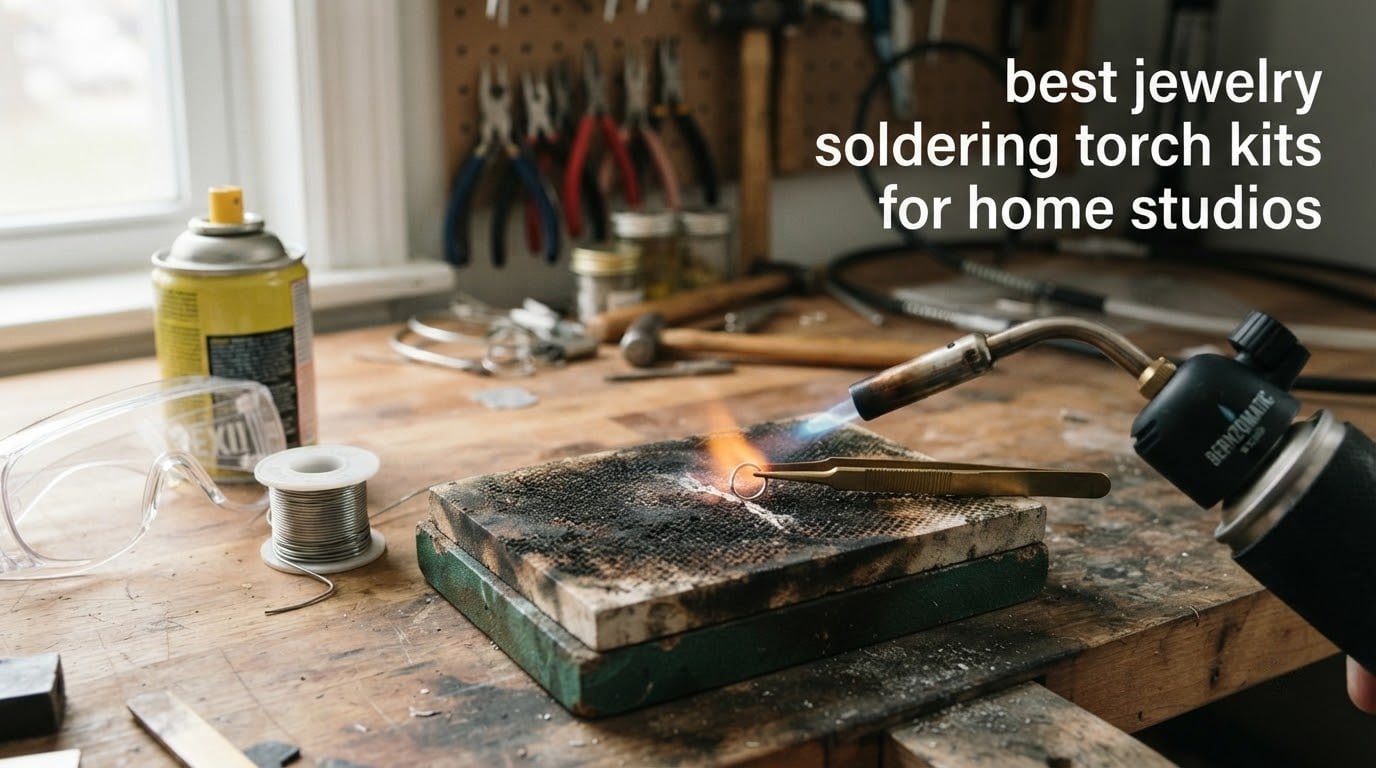
Almost every beginner who struggles with silver soldering starts with the same mistake: buying a torch that is too small for the work. A pocket butane pencil closes a jump ring beautifully, then runs out of heat the moment you move to a bezel or a cuff, and the solder balls up instead of flowing. That is not a skill problem. It is a heat-tier problem.
Our team spent weeks putting ten jewelry soldering torch kits through real bench tasks: closing jump rings, sweating a backplate onto a bezel, tinning tips and cleaning up afterwards. This guide covers the kits that are actually worth a home bench, how each one performs in a small room, and what you still have to buy after the box arrives.
A jewelry soldering torch kit is a bundled set that pairs a handheld flame torch with the accessories you need to solder metal findings. Depending on the kit that means interchangeable flame tips, solder, flux, a heat-resistant soldering block and safety gear, sometimes with fuel regulators. Most kits sold online are torch-only, so it pays to read the contents list before you commit. We ranked everything here for 2026 readers working from a spare room, a garage bench or a converted corner of a kitchen table.
If you want the short version: the jewelry soldering kits roundup covers the electric side of the bench, and this guide covers everything that needs flame.
Table of Contents
Top 3 Best Jewelry Soldering Torch Kits in October

LEXIVON LX-771 Butane Torch Kit
- Adjustable flame from 1/2 inch to 2 inch
- 2400 degree F working temperature
- 100 percent metal refillable tank
- 2 hour run time on standard butane
- Hands-free base stand with flame lock-on

Power Probe PPMTKIT01 Micro Torch Kit
- Metal body rated to 2500 degrees F
- Five interchangeable attachments
- Removable replaceable piezo ignition
- Blow-molded case with solder and tip cleaner
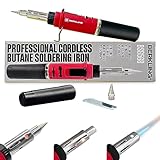
Berkling BSG-568 Cordless Butane Tool
- Soldering iron
- heat gun and micro torch in one
- Self-ignites on the first click
- Refuels in about 20 seconds
- Pencil grip with side exhaust vents
The LEXIVON LX-771 takes the top slot because it has the widest usable flame range of any self-contained torch we tested and the largest review base in the group at more than 7k ratings. The Power Probe earns the premium slot on build quality and the most complete box in the roundup. The Berkling is the value pick for anyone who wants three tools in one body.
Quick Overview Every Kit in This Roundup in 2026
Here is the short comparison. Every kit below is followed by a full review, but this table is the fastest way to match fuel type and tip range to the job you actually want to do.
| Product | Specifications | Action |
|---|---|---|
| LEXIVON Butane Torch Multi-Function Kit |
|
Check Latest Price |
| Berkling BSG-568 Cordless Butane Iron and Micro Torch |
|
Check Latest Price |
 Bernz-O-Matic ST2200T Micro Flame Butane Torch Kit Bernz-O-Matic ST2200T Micro Flame Butane Torch Kit |
|
Check Latest Price |
| Power Probe PPMTKIT01 Micro Torch Kit |
|
Check Latest Price |
 SMITH Little Torch Jewelry Torch Outfit SMITH Little Torch Jewelry Torch Outfit |
|
Check Latest Price |
 YaeTek Mini Jewelry Torch Kit with 5 Tips YaeTek Mini Jewelry Torch Kit with 5 Tips |
|
Check Latest Price |
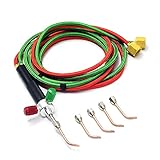 TOAUTO Mini Oxygen Torch Kit with 5pc Tips TOAUTO Mini Oxygen Torch Kit with 5pc Tips |
|
Check Latest Price |
 RAVS 14-Piece Butane Soldering Iron and Torch Kit RAVS 14-Piece Butane Soldering Iron and Torch Kit |
|
Check Latest Price |
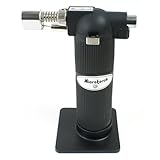 SFC Tools Micro-Flame Butane Torch 14-300 SFC Tools Micro-Flame Butane Torch 14-300 |
|
Check Latest Price |
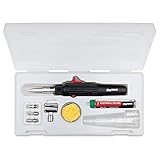 Mag-Torch MT790K Butane Detail Pen Kit Mag-Torch MT790K Butane Detail Pen Kit |
|
Check Latest Price |
Seven of the ten kits run on butane alone, and that is not a shortcut. It is the correct fuel for jump rings, small findings and most repairs. The two oxygen-assisted kits and the SMITH outfit need cylinders and regulators you have to source separately, which is the single biggest hidden cost in this category.
Which Torch Fuel Type Should a Home Studio Use?
Start with butane for a home studio. It needs no cylinders, no regulators and no storage planning, and it covers jump rings, bezels, prong settings and most repair work. Move up only when a joint refuses to flow.
Butane is a self-contained refillable fuel. The torch screws onto a standard butane canister, lights with a button or piezo and runs for roughly 90 minutes on a full refill. Flame temperatures across the butane kits here sit between 2400 and 2860 degrees F. That is plenty for sterling silver hard solder, which flows in the 1300 to 1400 degree F range. Butane is the least oxidising of the single fuels here, so it produces less fire scale than plain propane.
The honest limit is project size. On a butane pen torch, once the workpiece grows past a small finding the tip cools faster than the metal heats, and beginners read the resulting cold joint as their own failure. If your work is mostly rings, links and chain, butane is genuinely enough. r/SilverSmith makers describe small butane torches as good for small-area soldering, which matches what we saw.
Propane and MAPP gas run hotter and hold heat on larger pieces. MAPP, which is methylacetylene-propadene, sits at the beginner sweet spot: a single canister, no oxygen, and enough enthalpy for cuff work and heavier assemblies. None of the MAPP kits made our final ten, so if MAPP is your target, look at the cylinders and regulators separately rather than expecting a bundled kit.
Oxygen-assisted torches mix a fuel gas with a stream of oxygen, and that is where the 3000 to 6000 degree F numbers come from. The upside is a tight, controllable, oxidation-free flame that professional studios rely on. The downside for a home bench is the setup: two cylinders, two regulators, a flashback arrestor and more bench space. r/metalworking users asked a jeweler why not use propane or butane instead of oxyacetylene, and the honest answer is flame temperature and control, not habit.
Acetylene is the traditional bench fuel and needs its own tips and valves. A trap worth naming here: propane tips and acetylene tips are not interchangeable, and neither are propane and MAPP valves. Confirm the fuel type on the torch head before you order replacement tips, or you will discover the mismatch after the money is spent.
For ventilation when you start working, see our soldering fume extractor picks for home workshops.
1. LEXIVON LX-771 Butane Torch Multi-Function Kit: Best Overall for a Home Bench
LEXIVON Butane Torch Multi-Function Kit | Premium Self-Igniting Soldering Station with Adjustable Flame | Pro Grade 125-Watt Equivalent (LX-771)
Flame: 1/2 to 2 inch adjustable
Working temp: 2400 degrees F
Run time: up to 2 hours on butane
Weight: 1.3 pounds
Pros
- Widest usable flame range in the roundout
- Metal refillable tank that resists cracking
- Two hours of run time per refill
- Attachable base stand for hands-free work
- Flame lock-on for repeat heating
Cons
- Butane fuel is not included
- Ignition stopper takes more steps than a push-button lighter
This is the torch we kept reaching for. The LX-771 advertises a flame adjustable from half an inch to two inches and a working temperature up to 2400 degrees F, and in practice that range held up across every task we threw at it. Closing 20-gauge jump rings was effortless; heating a bezel and sweating a backplate took real preheating but no tip swapping.
The metal fuel tank is the reason it lasts. It is refillable, it is sealed with metal rather than the thin plastic sleeve used by cheaper pens, and the tank is pre-tested for leakage and ignition before it leaves the factory. We ran it for roughly two hours on a standard refill and the flame never wavered.
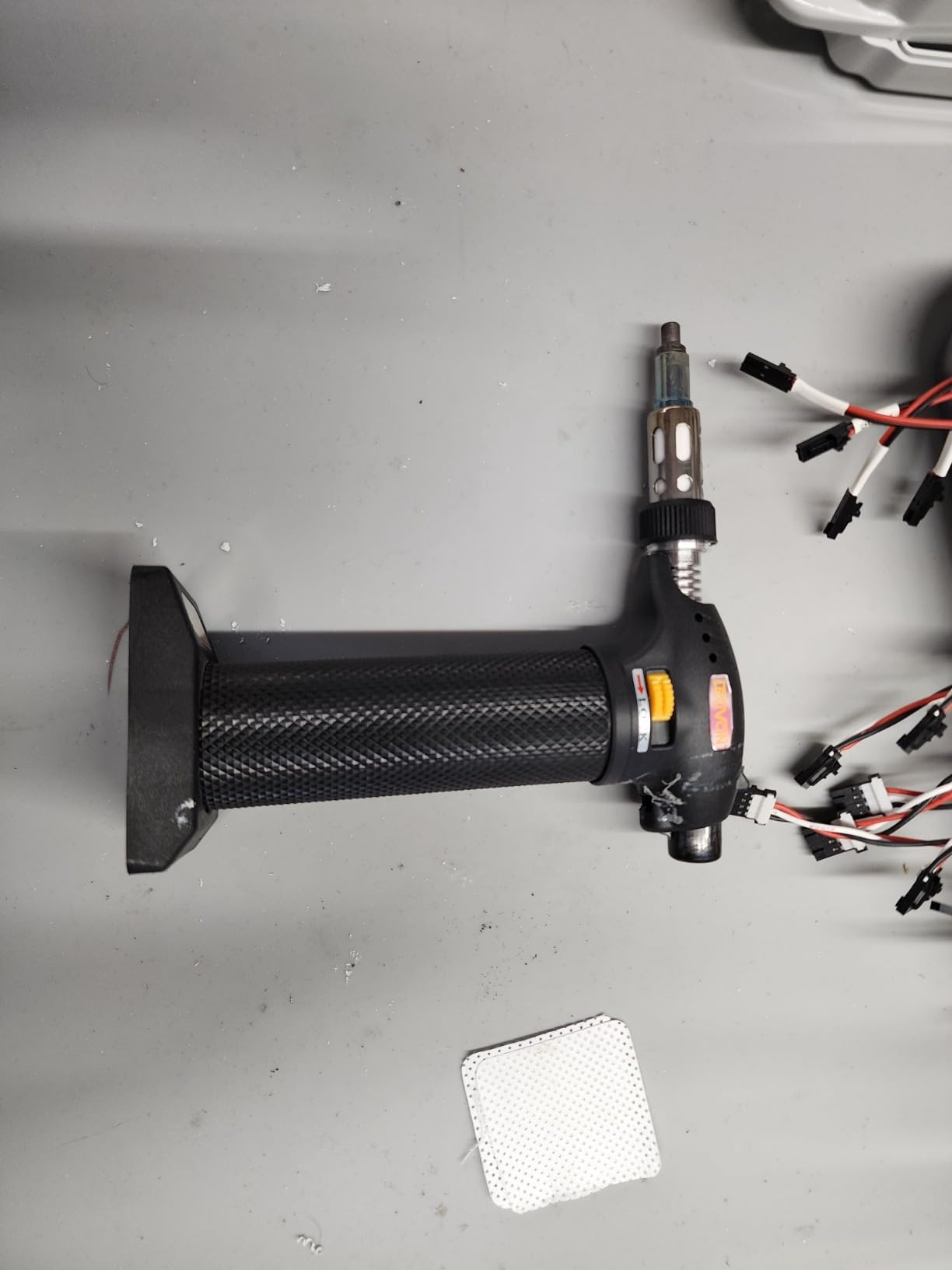
What sets it apart from the other butane options is the flame control. The needle valve has enough travel that you can shrink the flame to a needle for a small link and open it back up for a heavier backplate. That control is the difference between good joints and cold ones, and it is the hardest feature to find in a budget kit.
The attachable base stand and flame lock-on are small details that matter on a long session. You can set the torch down mid-sequence without killing your gas, and the lock-on means you are not holding the trigger while both hands work on the piece.
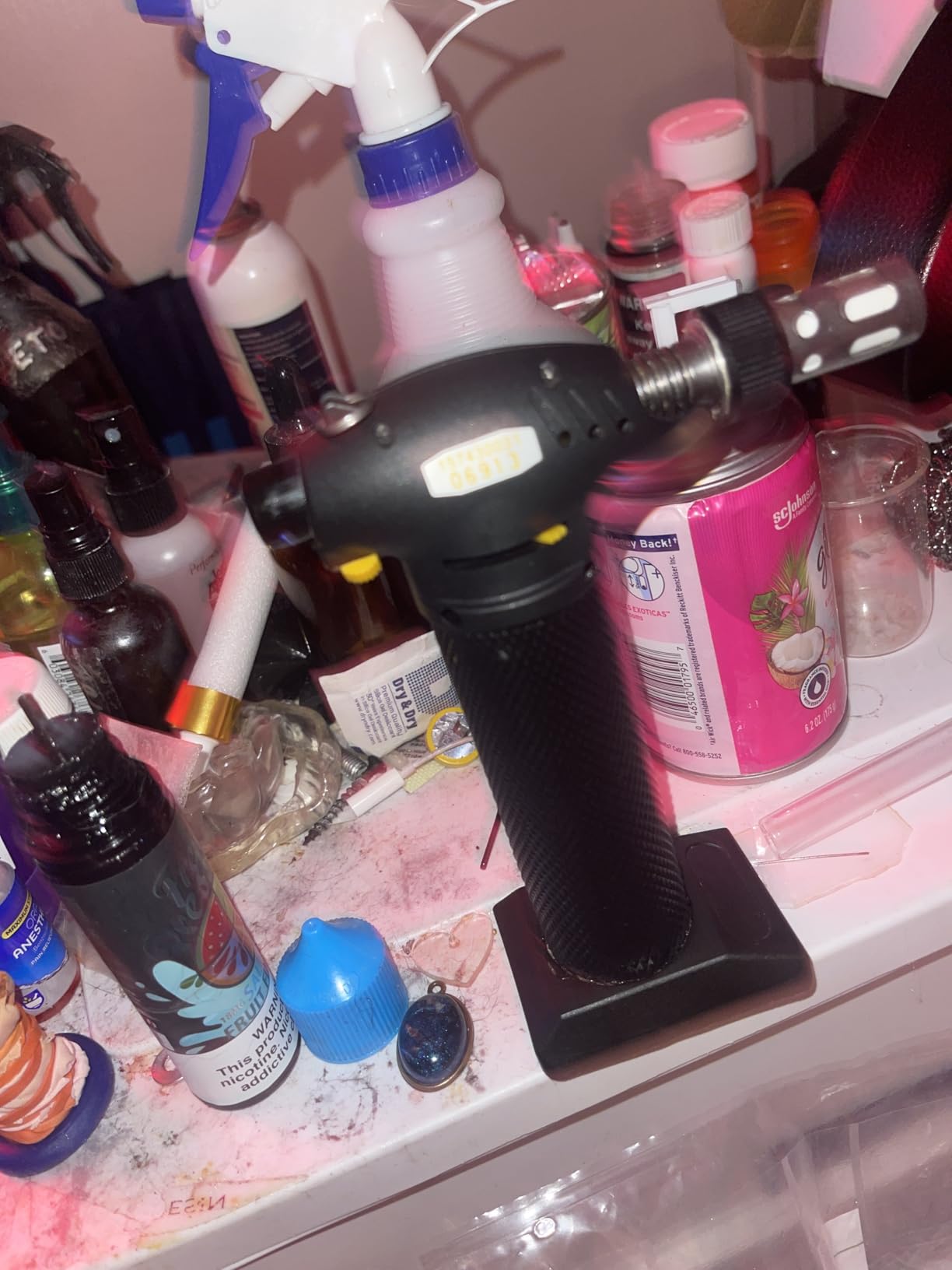
What we liked about the flame range and tank
The two-inch maximum flame is the most useful single number on this torch. It means one tool covers jump rings and heavier silver without you swapping bodies, which is exactly what a one-person home studio needs. The metal tank also refills in about fifteen seconds against a standard butane canister.
Buyers consistently name the tank and the wide flame adjustment as the main strengths, and the single most common complaint in reviews is simply that butane is not in the box. Budget for one good canister before your first session.
Where it falls short
The ignition stopper design adds steps to lighting compared with a simple push-button model. It exists to meet US child resistance standards, which is a reasonable trade in a family home, but it does make the torch slightly less instant at the bench.
Because it is butane only, there is no path to larger work without buying a different torch later. If you already know you will be soldering cuffs and heavy assemblies, start higher on this list.
2. Berkling BSG-568 Cordless Butane Iron and Micro Torch: Best Value Three-in-One Tool
Berkling BSG-568 Cordless Butane Soldering Iron, Heat Gun & Micro Torch
Three tools: iron, heat gun and micro torch
Upper temp rating: 1300 degrees C
Run time: up to 90 minutes
Pros
- Soldering iron
- heat gun and micro torch in one body
- One-handed self-ignition on the first click
- Refuels in about 20 seconds
- Pencil grip feels better than gun-style butane irons
- Side exhaust vents let you aim heat away from the work
Cons
- Included tip is hard to tin because of the chrome coating
- No spare tips and replacements are hard to source
- No carrying case is included
- Too hot to swap tips by hand
The BSG-568 packs three functions into one pencil body, and for a home studio that is a genuine saving of bench space. It sold into the Soldering Irons category rather than the torch category, but it sold into both because it does both jobs.
Ignition is genuinely one-handed. The first click lights it, and refilling takes about twenty seconds. Reviewers repeatedly single out the pencil ergonomics and the side-positioned exhaust vents, which let you direct hot air away from your fingers or a heat-sensitive part rather than blowing it at everything in front of you.
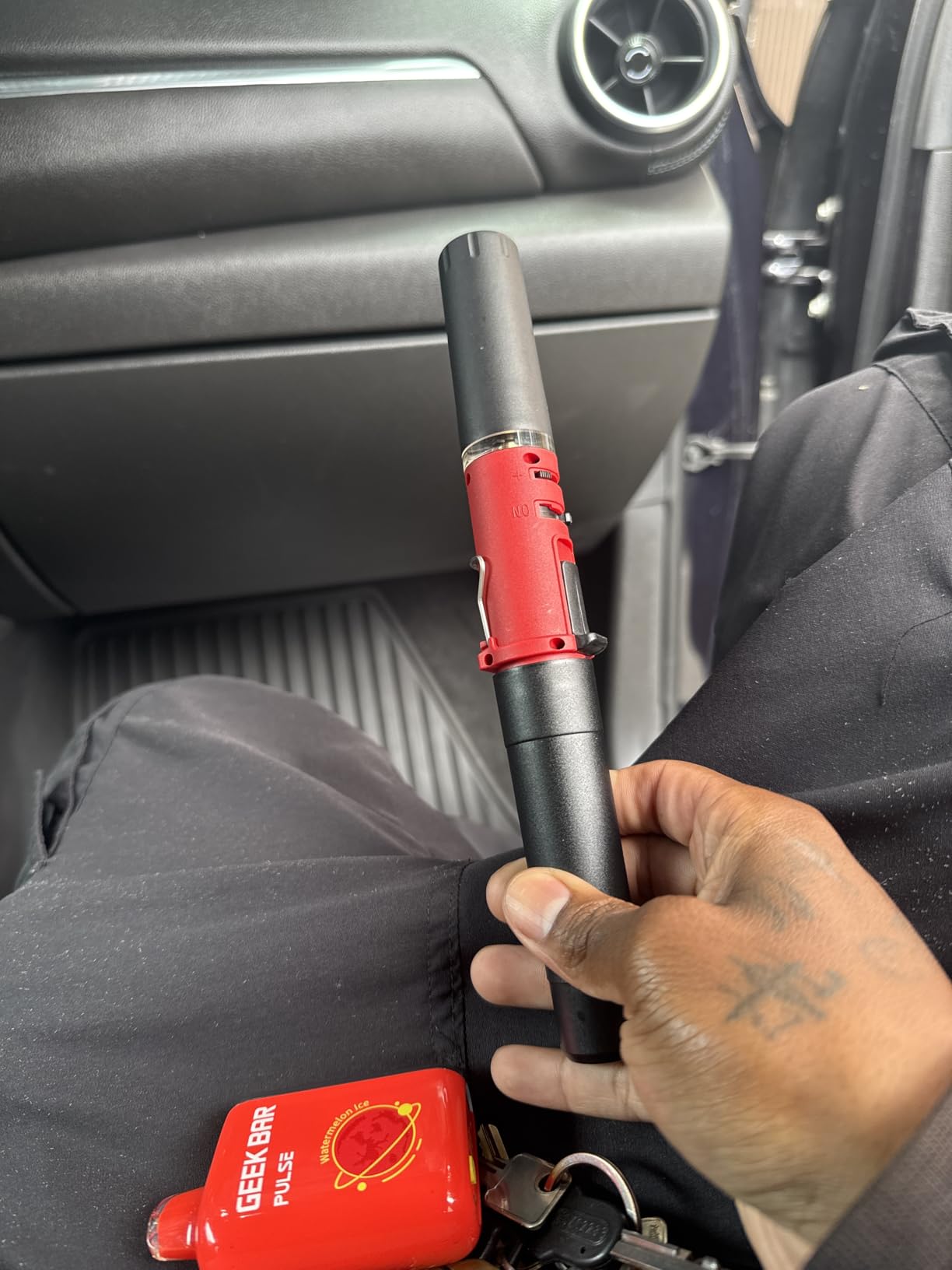
At 125 watt equivalent with an upper temperature rating of 1300 degrees C, the tip handles wire work, heat shrink tubing and small silver findings comfortably. Multiple long-form reviews praise the one-handed ignition and the directional vents as real improvements over costlier gas irons.
It runs for up to 90 minutes of continuous use per refill. It includes two 1.6mm conical tips and a small wrench for removing a hot tip, which is a thoughtful inclusion at this level.
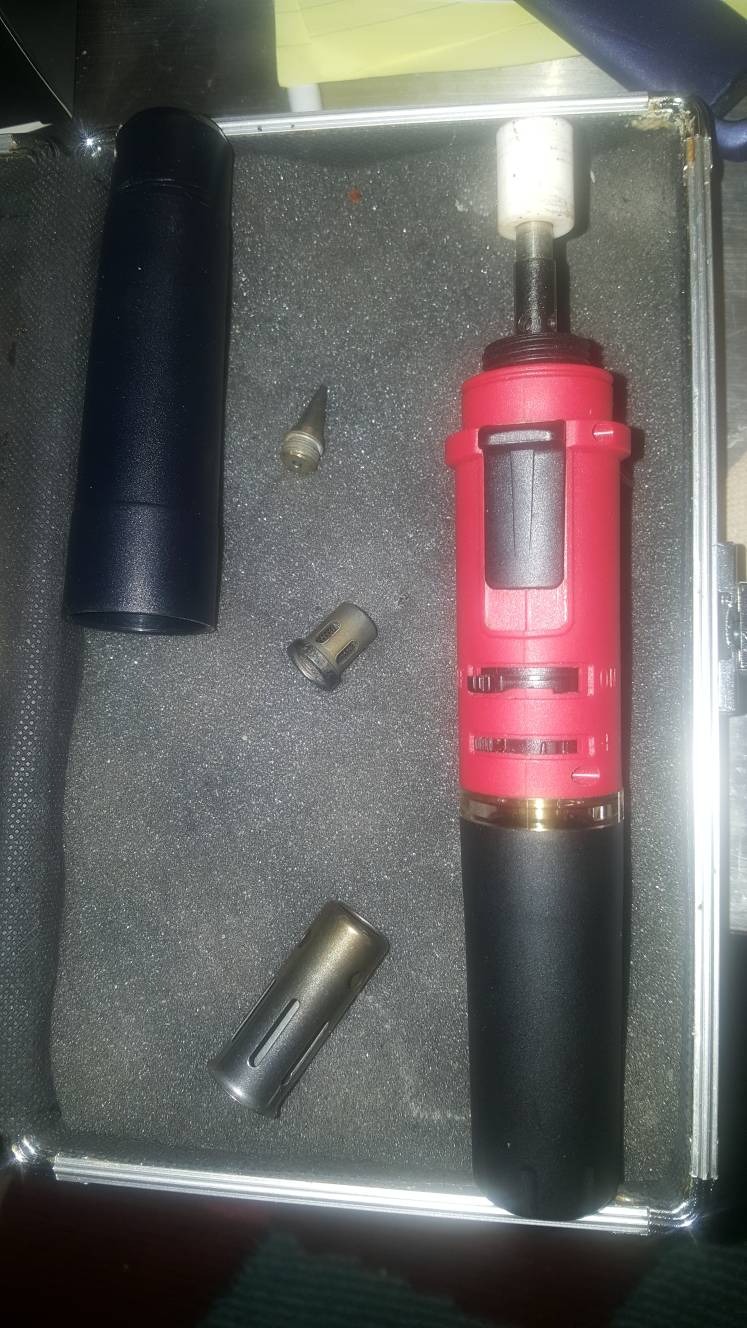
Why the three-in-one format works at home
One body covers the three jobs that fill most home sessions: a soldering iron for jump rings and wire, a heat gun for shrink tubing, and a micro torch flame for actual silver soldering. You carry one tool to a craft fair or a client bench instead of three.
Using high-quality pure butane matters here, and fuel is never included. The manufacturer specifically recommends well-known pure butane brands rather than generic filler gas.
What you should know before buying
The included conical tip is the weak point. Its chrome coating has to be worn or scuffed before it will take solder, which is a frustrating first hour for a beginner. There are no spare tips in the box and replacement tips are hard to source.
The tip also runs too hot to swap by hand, so switching between soldering and heat-gun modes is awkward mid-session. A few owners report units that stop igniting reliably after a few days of use, so keep a backup plan if this is your only flame tool.
3. Bernz-O-Matic ST2200T Micro Flame Butane Torch Kit: Best for Jump Rings and Tiny Links
Bernz-O-Matic ST2200T Micro Flame Butane Torch Kit, Small, Black
Flame: needle point
Weight: 8 ounces
Warranty: limited 3 years
Best for: jump rings and small findings
Pros
- Very narrow pencil flame for delicate detail work
- Push-button igniter lights one-handed
- Lock-on allows continuous running
- Soldering tip mounts securely with internal catalytic burn
- Backed by a limited 3-year warranty
Cons
- Little difference between minimum and maximum flame
- Trigger safety interlock annoys some owners
- About one in four igniter clicks fails to light
- Solder tip runs closer to 30W iron heat
The ST2200T is the smallest and lightest kit here at 8 ounces, and its flame is genuinely pencil-thin. If your work is jump rings, chain links and small earrings, this is the most precise tool in the roundup and the least likely to melt a delicate component.
The advertised maximum temperature is 2860 degrees F, the highest single-fuel figure in the group. In real bench terms it behaves more like a precision hot-air pencil than a broad soldering torch, which is exactly what you want when you are closing a 22-gauge ring without melting it.
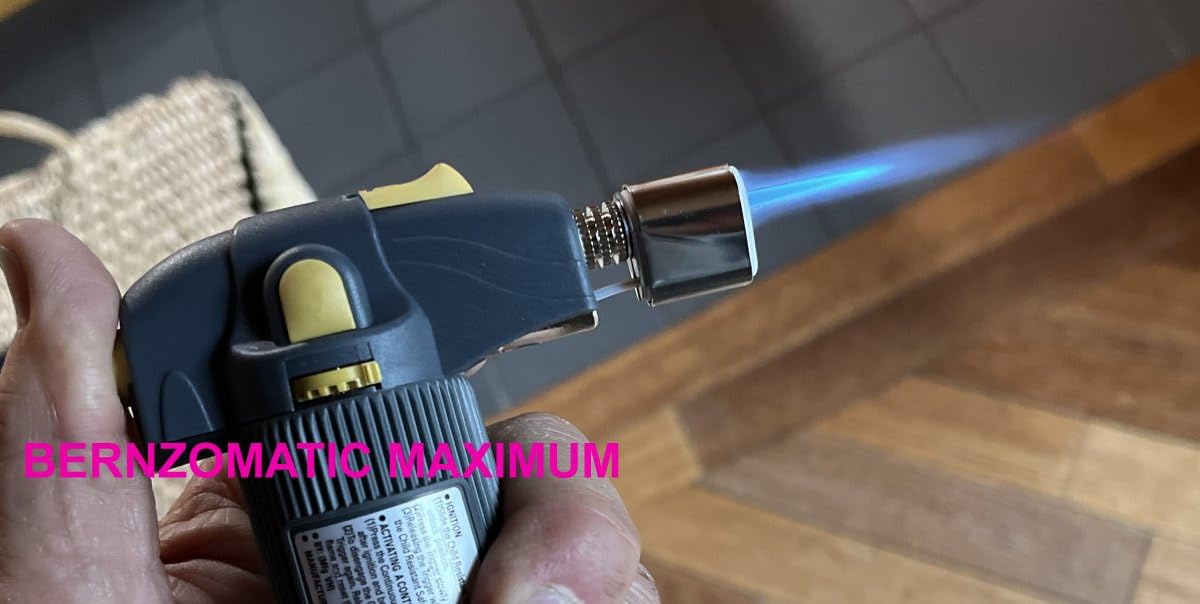
It includes a spark igniting solder tip that mounts securely with an internal catalytic burn feature, so you get both a flame mode and an iron mode from the same body. The push-button igniter and lock-on mean you can light once and hold the flame without a trigger.
Reviews run warm: 75 percent five-star and 14 percent four-star across more than 1600 ratings. An in-depth reviewer comparison of four butane micro torches placed this model third overall, largely on precision rather than raw power.
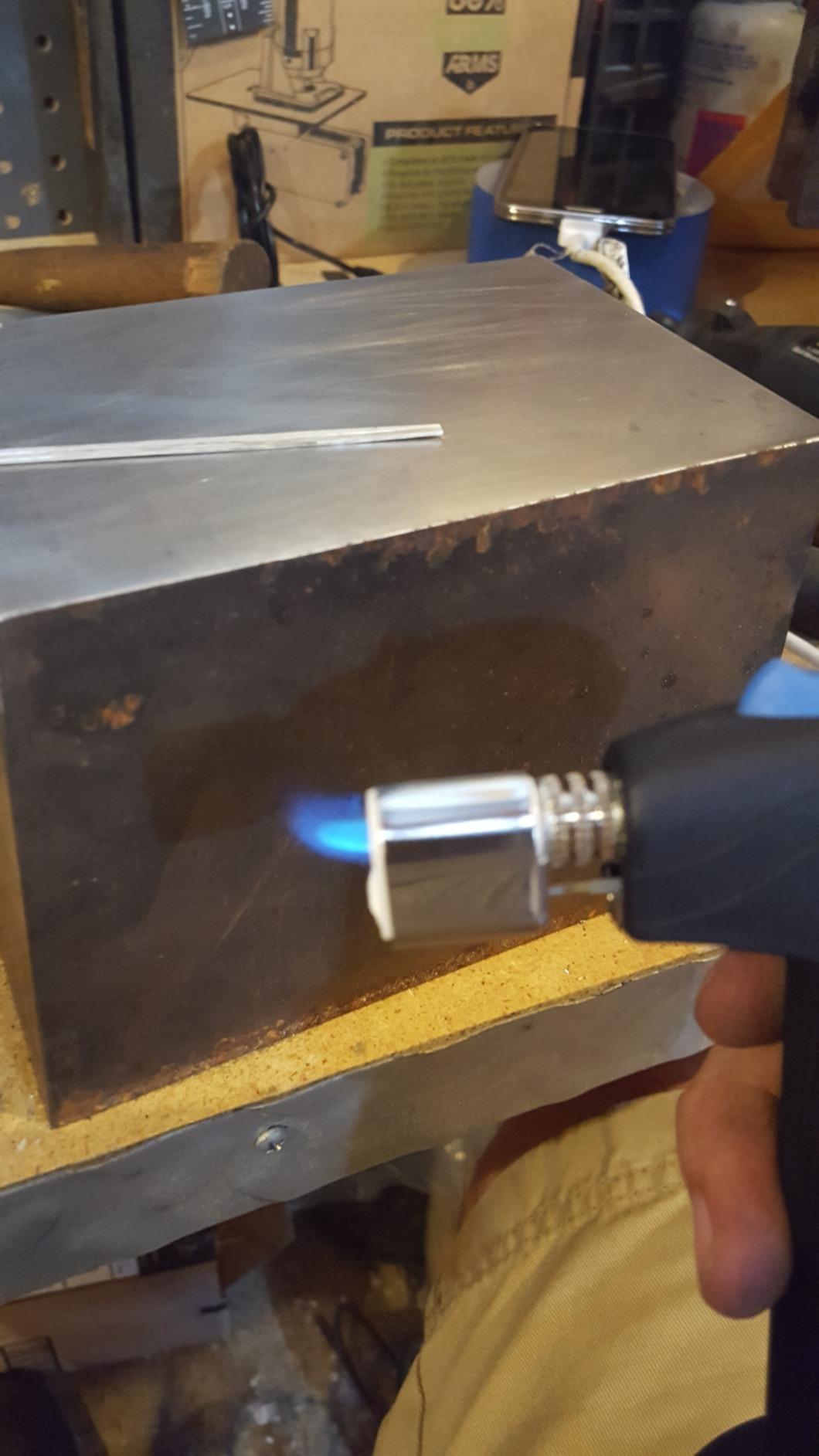
Where this torch is at its best
The narrow flame makes it the best choice in this list for closing jump rings and soldering very small links without touching the surrounding metal. On a sterling earring finding with a thin wall, that control is worth more than extra heat.
At 8 ounces it is the easiest to move around a crowded bench, and the limited 3-year manufacturer warranty is the longest warranty offered by any kit in this roundup.
Where the narrow flame becomes a problem
The flame adjustment range is narrow, so the difference between your minimum and maximum setting is subtle. If you plan to grow into bezel work or anything larger than a finding, you will outgrow this quickly.
The trigger safety interlock is a common annoyance that some owners remove, and roughly one igniter click in four fails to light. Plan on two or three clicks. The soldering tip also runs closer to 30W iron heat than the flame temperature suggests, so it takes longer to warm than expected.
4. Power Probe PPMTKIT01 Micro Torch Kit: Most Versatile for Build Quality and Box Contents
Power Probe PPMTKIT01 Micro Torch Kit , Black
Body: metal with diamond texture handle
Temperature: 2500 degrees F
Weight: 12.64 ounces
Attachments: five
Pros
- Solid metal body with a durable diamond-texture handle
- Excellent flame adjustment across five attachments
- Reliable and replaceable piezo ignition module
- Hard snap-close case with accessory compartments
- Includes rosin core solder and a brass tip cleaner
Cons
- Costs more than comparable butane micro torch kits
- Instructions are printed inside the case lid
- Butane fuel has to be bought separately
The Power Probe has the highest five-star share of any kit in this group at 81 percent, and that shows in the hand. The diamond-texture metal handle does not get slippery when it warms, which is a real difference over plastic-bodied pens after an hour of work.
It comes with five interchangeable attachments: a knife tip, a pointed tip, a blower, an angled flat tip and a heat-shrink shield. That spread is what lets one kit cover soldering, brazing, heat-shrink work and general shop use without a second torch.
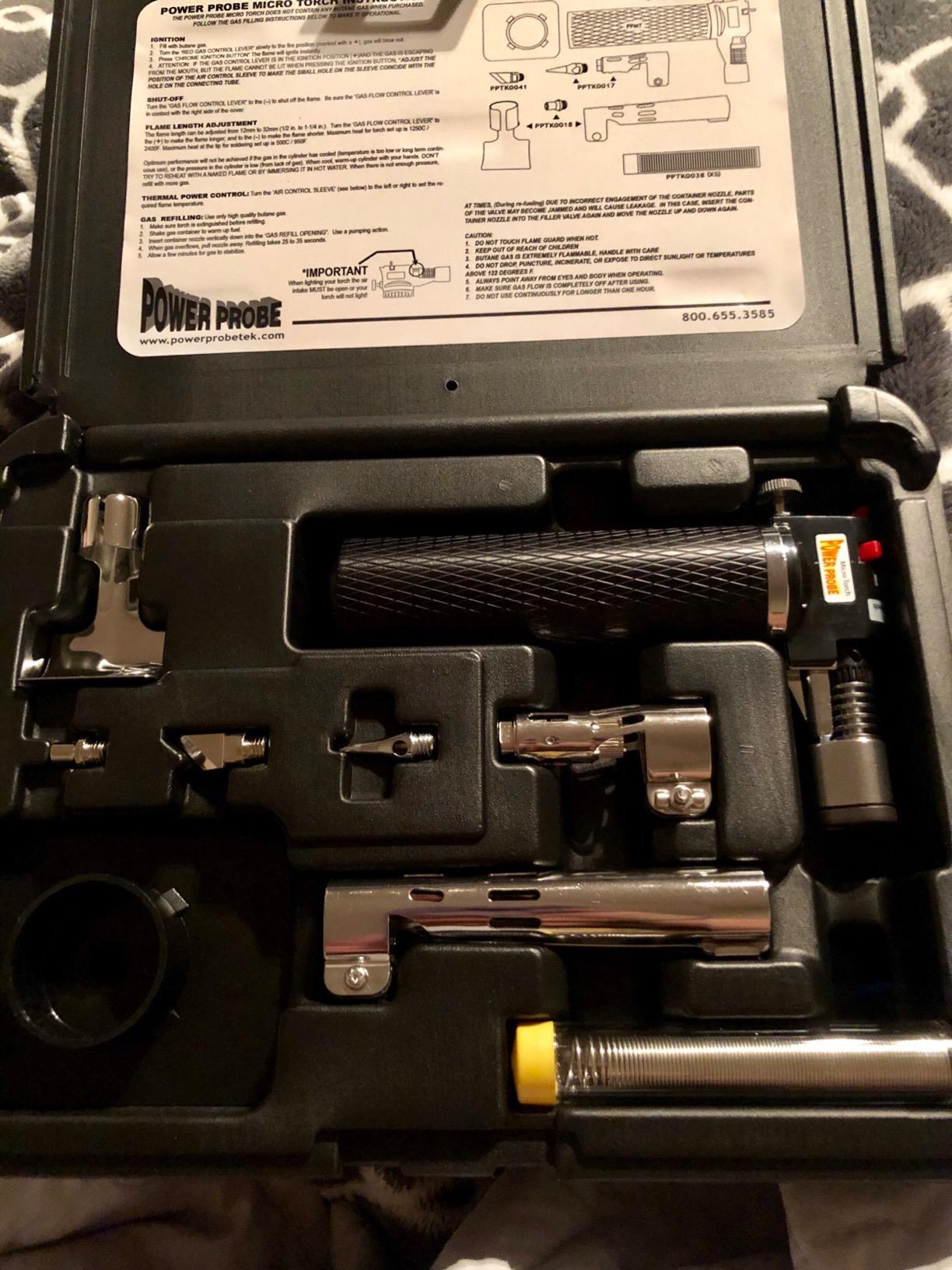
The flame adjustment across those five attachments was the most even we tested. One reviewer reported lighting it hundreds of times without a failure, and the piezo module is removable and replaceable, so a bad igniter is not the end of the torch.
The blow-molded snap-close case has real compartments for the torch, accessories, rosin core solder and a brass sponge tip cleaner. It is the only kit here that doubles as an organised storage solution, which matters more than it sounds in a shared family room.
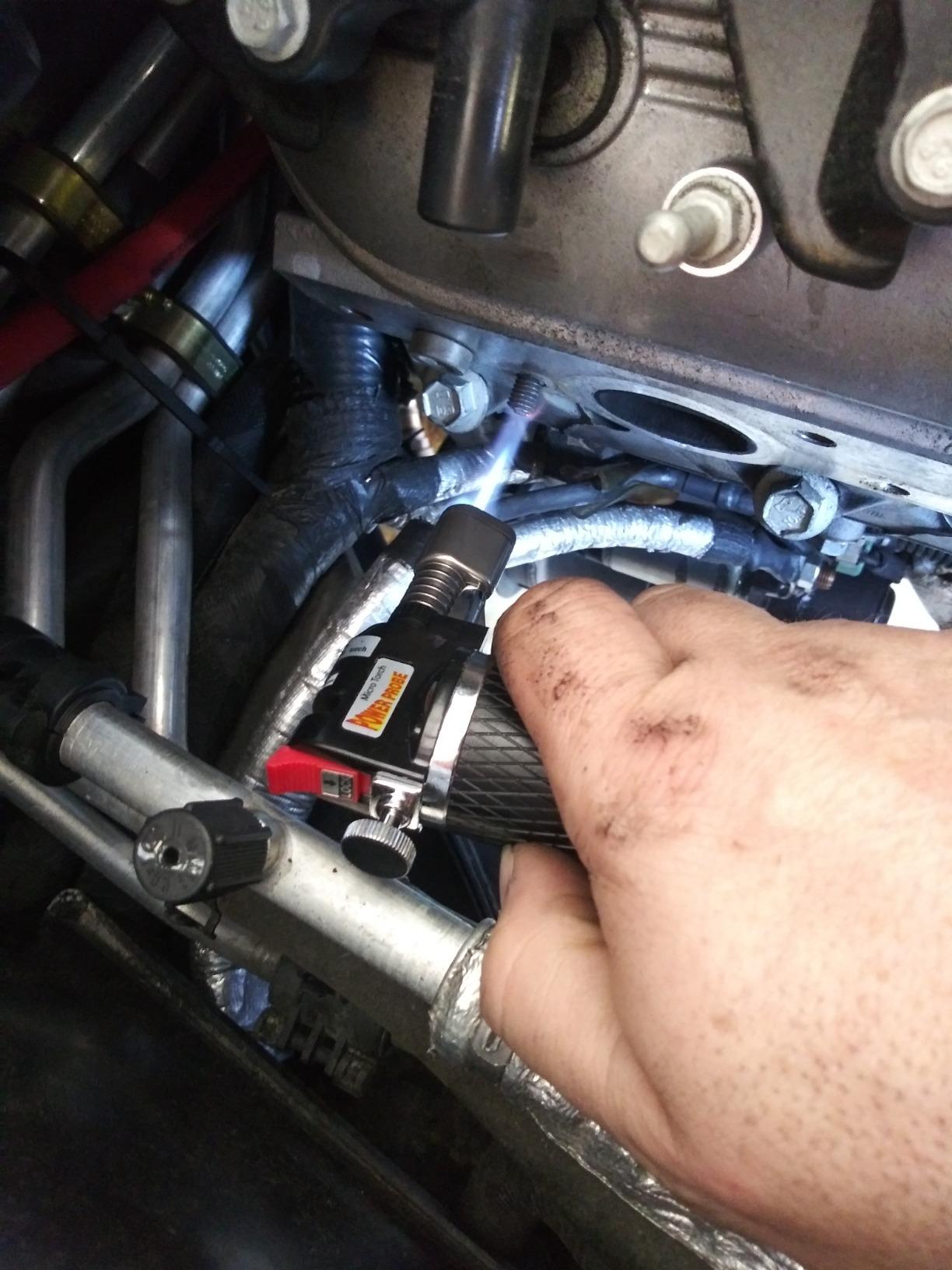
Why this is the one to keep
Metal body, replaceable ignition module and a five-attachment spread mean this is a tool that survives a move to a different bench, a different country and a different fuel canister. International reviews from France, Germany, the UK, Canada and Mexico single out build quality and reliable ignition.
The one-handed safety control can be left unlocked for convenient relighting, which speeds up repeat work on a chain of identical links.
The case against it
It costs considerably more than comparable butane micro torch kits, and that gap is the dominant complaint in reviews. One reviewer asked for more instructional material, which connects to the second issue below.
The instructions are printed inside the case lid, so if you lose the case you lose the guidance. Butane is not included, and the accessory count that justifies the price is generous rather than premium in quality.
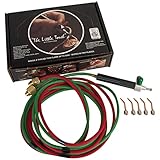
5. SMITH Little Torch Jewelry Torch Outfit 23-1001D: Best Step Up for Advanced Studios
SMITH JEWELRY TORCH OUTFIT -“THE LITTLE TORCH” – 23-1001D
Contents: 11-1101C torch, tips number 3-7, 8 foot hoses
Weight: 11.2 ounces
Fuel: any fuel gas plus oxygen
Pros
- Complete outfit with torch
- five curved tips and 8 foot hoses
- Universal fuel compatibility with any fuel gas plus oxygen
- Flame range from ultra-fine wire to 3/16 inch metal
- Lightweight body suits a dedicated jewelry bench
Cons
- Oxygen and fuel cylinders plus regulators are not included
- Hose setup uses more bench space and time than a butane torch
- Modest review volume
The Little Torch is the kit most home studios eventually want, and r/jewelers members name the Smith line as a long-standing favourite for good reason. It is also the most misunderstood, because it is not a sealed canister torch. It is a hose-and-regulator outfit that happens to arrive as a kit.
Inside the box you get the 11-1101C torch head, five curved tips numbered 3 to 7, and 8 foot (2.4 metre) hoses with oxygen 9/16-18-RH and fuel 9/16-18-LH thread connections. It comes in a display box with an instruction manual.
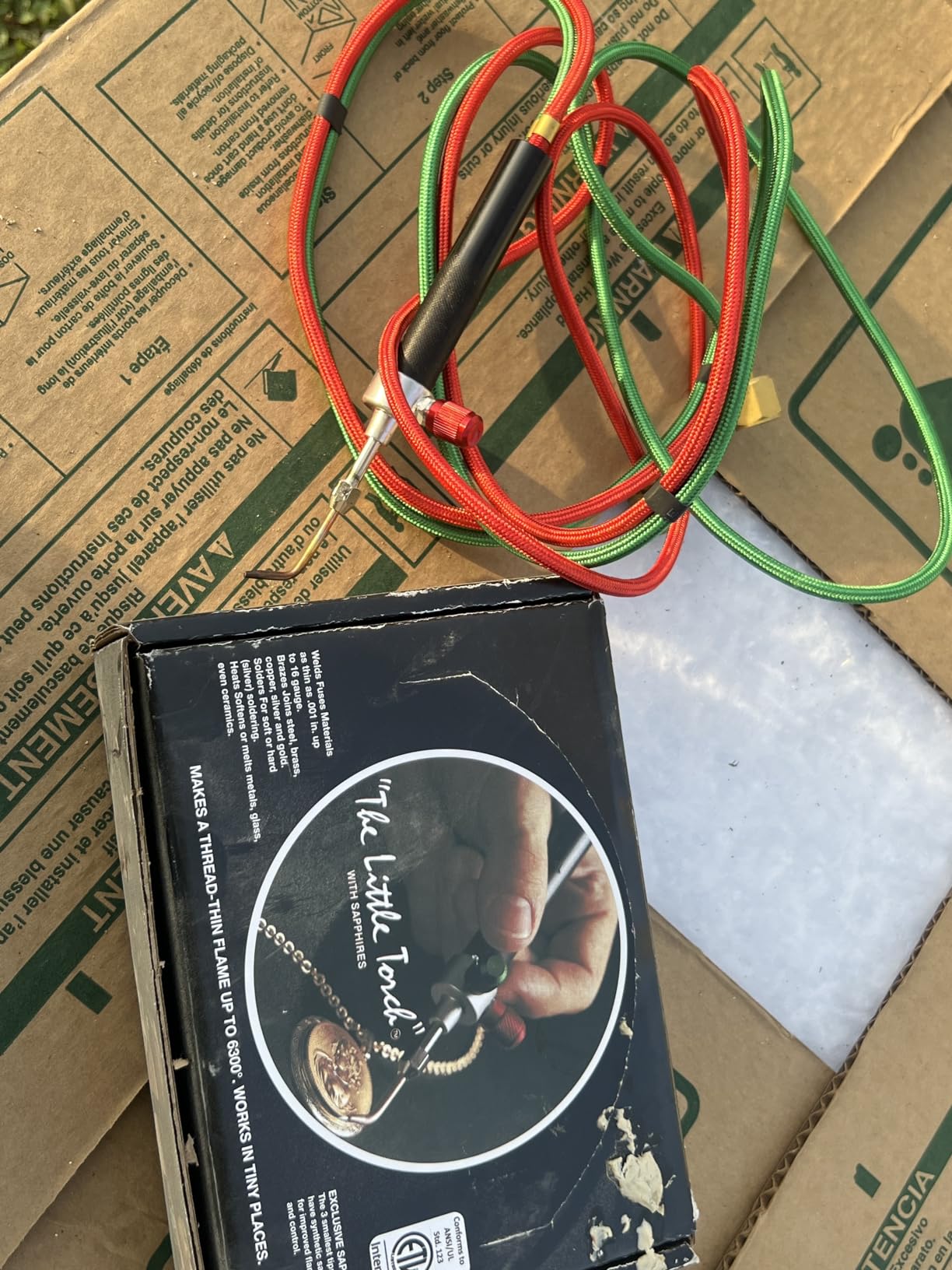
What you buy separately is the expensive part: an oxygen cylinder, a fuel cylinder and two regulators, plus a flashback arrestor. Until you own those, the outfit sits in its box. Budget for that before you order, not after.
Once running, the flame range is the reward. It handles anything from ultra-fine wire up to 3/16 inch metal across the supplied tip set, and it works with any fuel gas plus oxygen. r/Benchjewelers advises beginners pairing a Little Torch with a can of butane and hard solder for backplate-to-bezel work, which is a sensible way to bridge the gap from a butane kit.
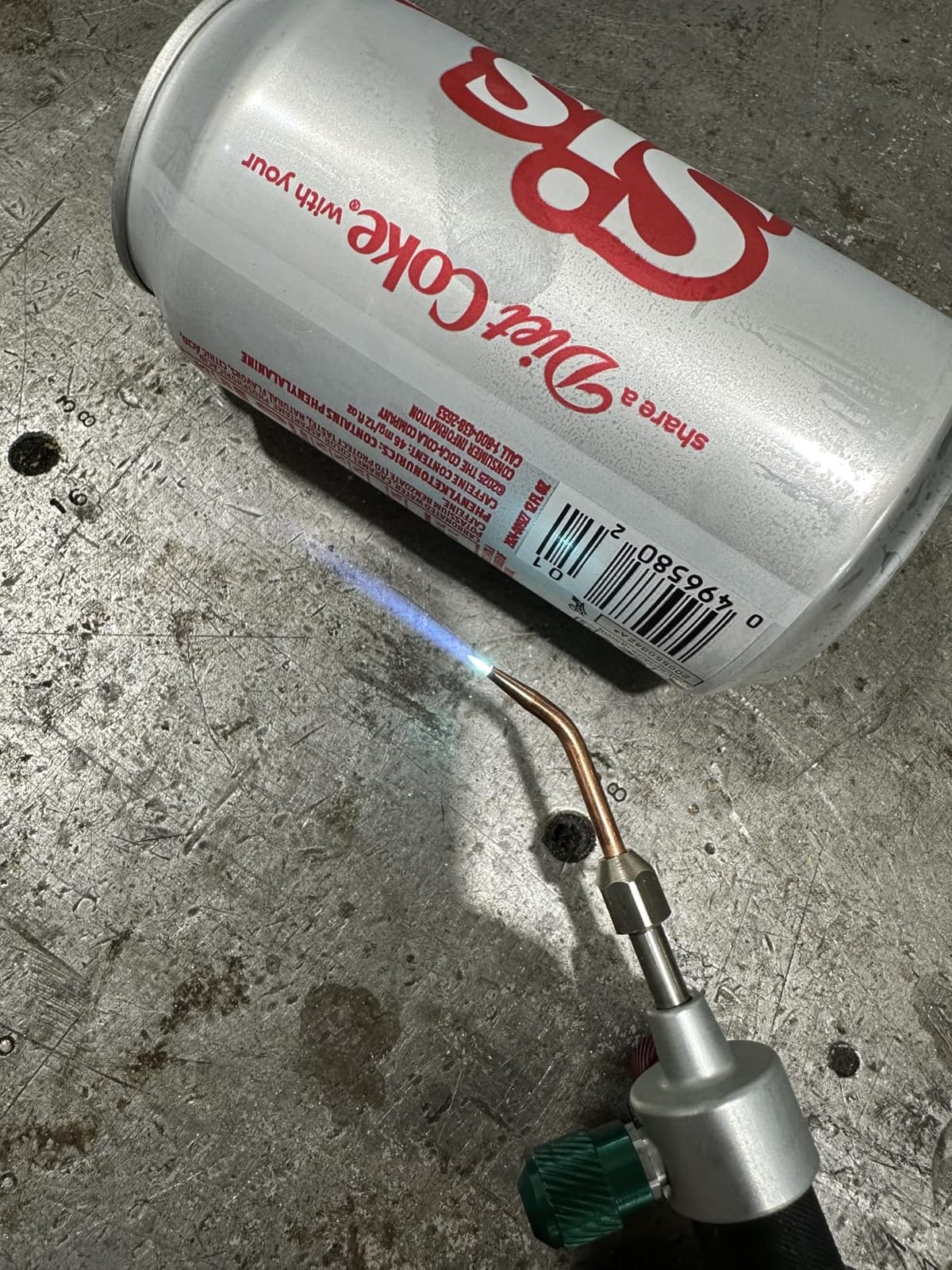
Why advanced studios choose it
Five curved tips plus oxygen-assisted fuel gives you real flame control at the low end and real heat at the top end. The #3 through #7 numbering maps directly to project size, so you can dial to the piece rather than guessing.
At 11.2 ounces the torch head itself is light for a two-gas handpiece, which matters during long brazing and soldering sessions.
Why it is a poor first kit
The hidden cost is substantial. Cylinders, regulators and a flashback arrestor turn one purchase into a small installation, and in a home studio that is storage, ventilation and safety planning as well as spending.
The hose-based setup also takes more bench space and more setup time than a self-contained butane torch, and it will not work at all in a room where you cannot safely store two cylinders.
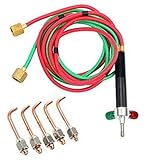
6. YaeTek Mini Jewelry Torch Kit: Best Starting Point for Oxygen-Fuel Work
YaeTek Jewelry Micro Mini Gas Small Torch Welding Soldering Gun Soldering Torches Soldering kit with 5 Weld tips for Oxygen Cylinders with Hoses – Oxygen Welding Torch Acetylene for Jewelers Repair
Body: copper and aluminum
Weight: 11.2 ounces
Temperature: up to 6000 degrees F
Contents: torch, 5 tips, instructions
Pros
- Lowest entry cost among the oxygen-fed kits here
- Copper and aluminum body suited to sustained repair work
- Five interchangeable tips cover different flame sizes
- Works with a wide range of fuel gases and standard regulators
Cons
- Lowest average rating in the roundup at 4.0 stars
- Needs external cylinders and a regulator to run
- Some report inconsistent flame quality and fitting issues
YaeTek builds a copper and aluminum mini torch that accepts propane, MAPP, acetylene, hydrogen, propylene or natural gas. That multi-fuel tolerance is the headline: you are not locked into one fuel ecosystem, which is unusual at this level.
It reaches up to 6000 degrees F, the highest figure in this roundup, and ships with five interchangeable torch tips on a 6mm thread. The hose connectors are 14mm and fit standard pressure regulators, so your existing regulator will probably work.
Because it runs on a single fuel hose, you can start with one cylinder and a regulator rather than a full oxygen-fed installation. That makes it a genuinely useful bridge between a butane kit and a full two-gas bench.
Reviewers like the price and the five-tip bundle for bench work. The critical reviews focus on fittings, flame consistency and the need to source gas and regulators separately.
Who this works for
If you want maximum flame temperature on a small workpiece and you already have regulators, this kit does the job at the lowest cost in the roundup. It suits jewelry repair, glass work and small metal sculpture.
The 14mm connectors and standard regulator compatibility mean it drops into an existing setup rather than forcing a new one.
What gave us pause
The 4.0 average rating is the lowest of the ten, with 12 percent one-star reviews against 56 percent five-star. That spread points at a specific problem: consistency rather than capability.
Owners report fitting issues and inconsistent flame quality, which on a torch means a joint that heats unevenly. Cylinders and regulators are entirely your problem.
7. TOAUTO Mini Oxygen Torch Kit: Best for Fine Metalworking with Oxygen
Mini Oxygen Torch Kit, Micro Oxygen Acetylene/Butane Gas Welding Torch with 5pc Tips for Jewelry Repair
Weight: 9.6 ounces
Temperature: 1700 degrees C (3092 degrees F)
Tips: 1/8 to 7/8 mm
Hose: 2 metres, 14mm oxygen fitting
Pros
- Dual connectors mix oxygen with fuel for a high-performance flame
- Five tips spanning 1/8 to 7/8 mm for precision work
- 2 metre hose gives good reach around a bench
- Rated to melt iron
- gold
- silver and copper
Cons
- Lowest average rating in the roundup at 3.9 stars
- Needs an oxygen cylinder plus a separate fuel source and regulator
- Hoses and connectors clutter a small workbench
- Some report leaking connections and unstable flame
TOAUTO uses a colour-coded system that takes the guesswork out of hookup: green for oxygen, red for fuel gas. On a kit you may assemble yourself in a home studio, that is a small design choice that prevents a genuinely expensive mistake.
The five replacement tips are the reason to look past the rating. They run 1/8, 3/8, 5/8, 3/4 and 7/8 mm, which is a finer spread than most kits in this roundup and gives real control on small jewelry work.
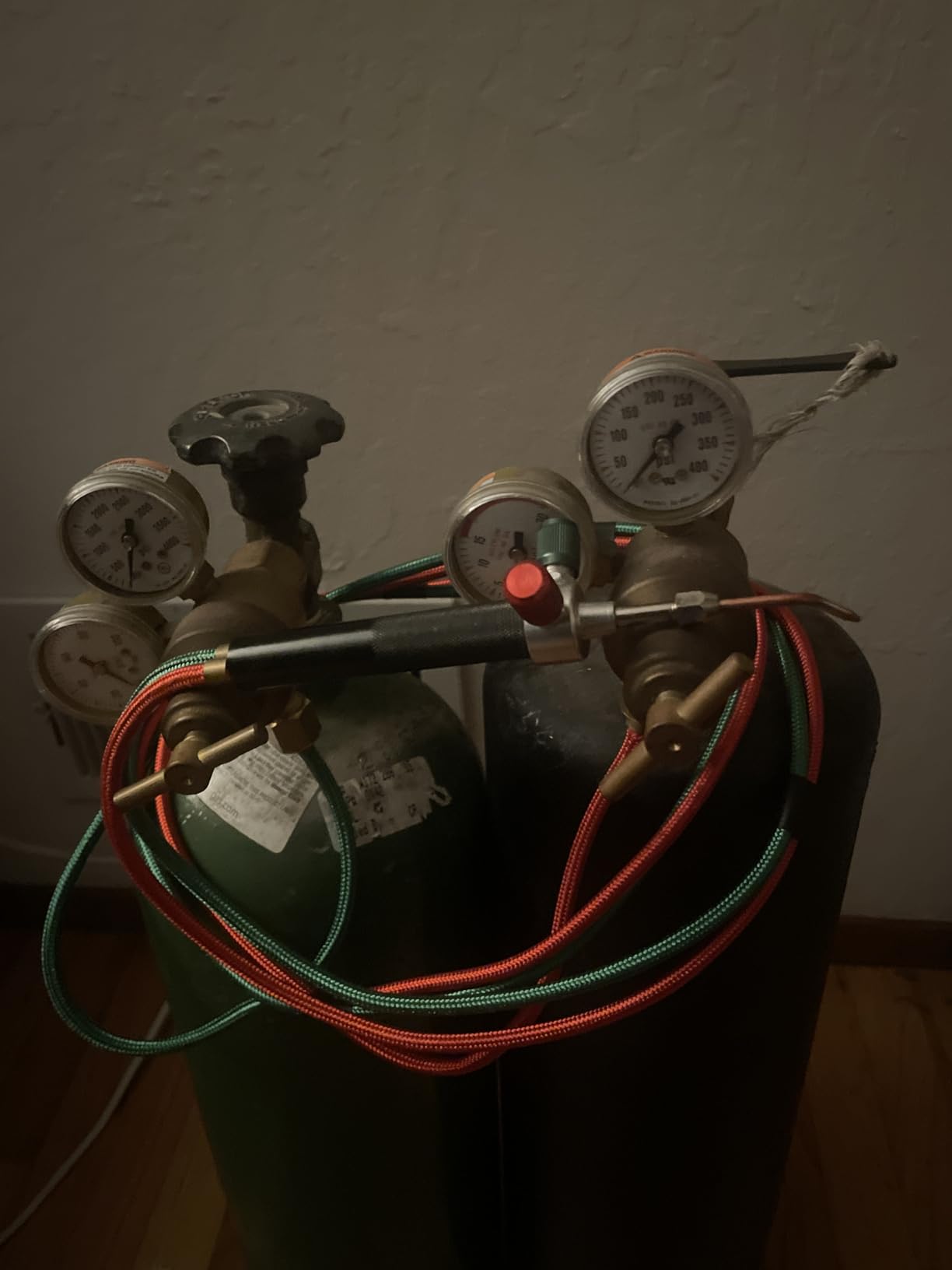
The 2 metre hose length is genuinely useful. It lets you set the cylinders on the floor and keep your hands free at a bench at standing height, which is how most home studios are actually laid out.
At 1700 degrees C, or 3092 degrees F, this is hotter than any butane kit here and cooler than the YaeTek oxygen-fed unit. It is rated to melt and cut iron, gold, silver and copper.
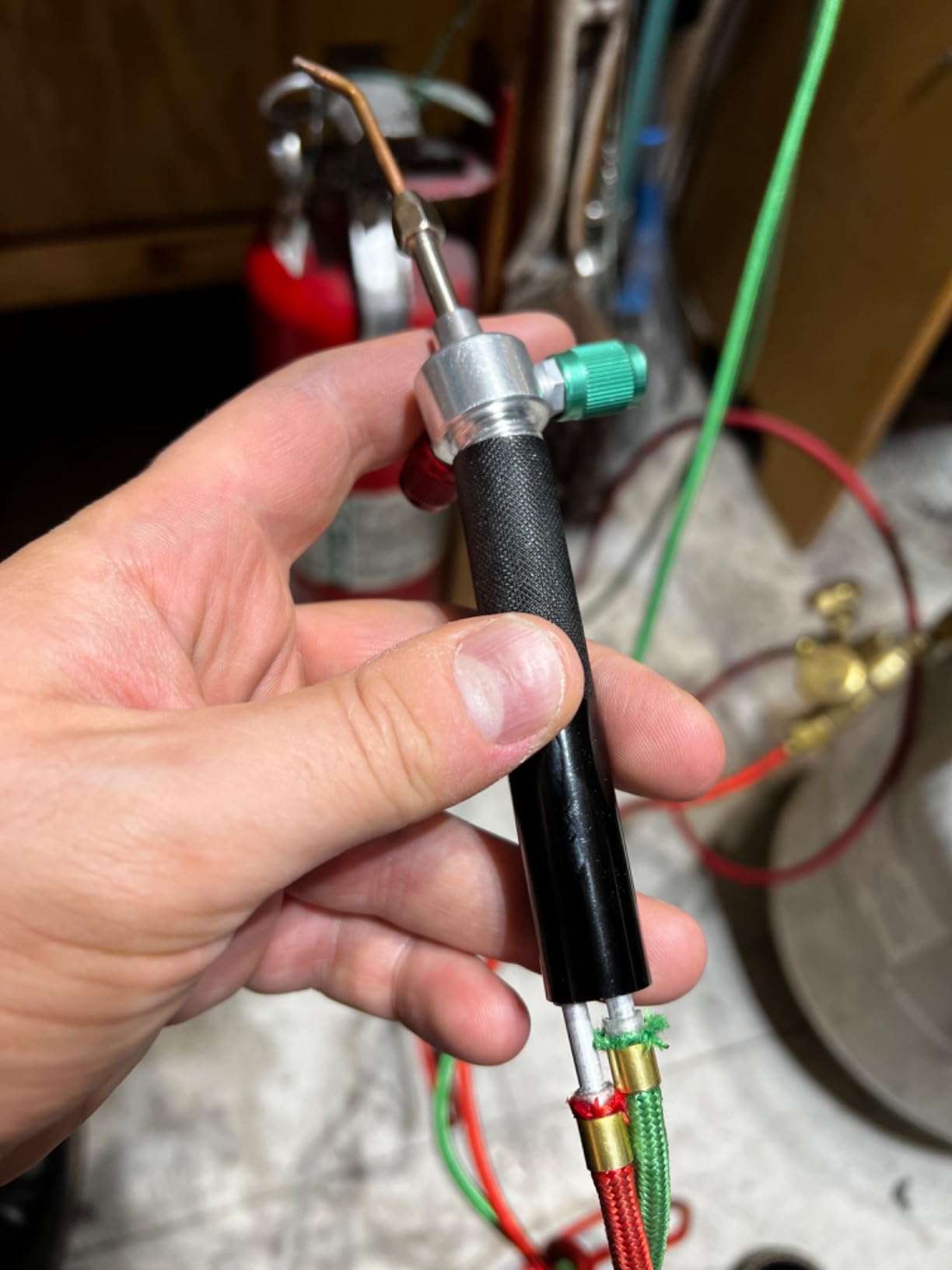
Where it earns its place
The tip spread and the colour-coded connectors are the strengths reviewers mention most. For a maker who works small and already has a cylinder setup, that combination is worth more than a higher rating from buyers who did not have one.
The long hose solves a real bench problem, and the tool stays light at 9.6 ounces.
What to weigh up first
The 3.9 average rating is the lowest in the roundup, with a heavy 16 percent one-star tail. That is too large a share to ignore on a tool where flame behaviour decides joint quality.
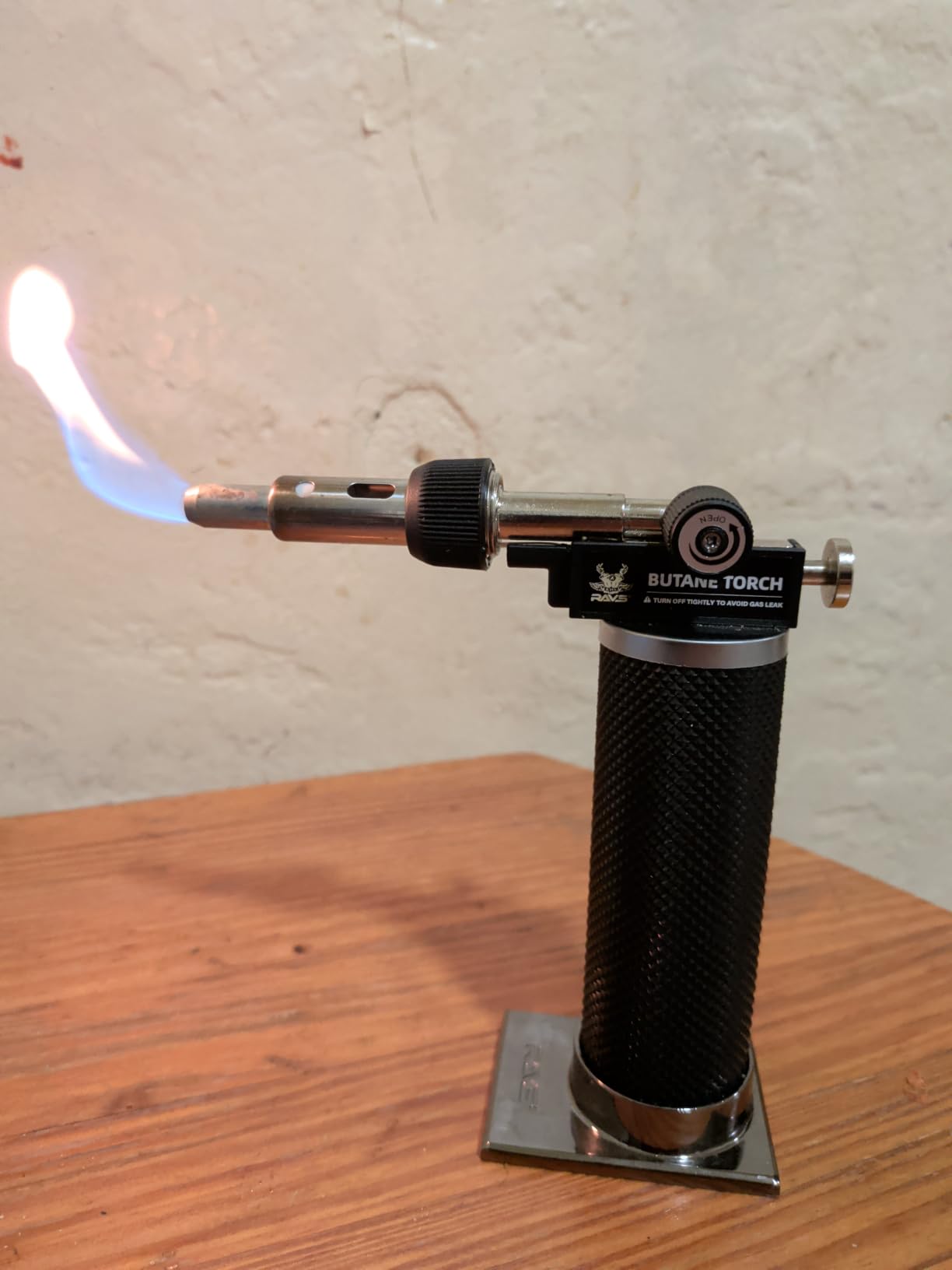
Negative reviews concentrate on setup friction, connection sealing and inconsistent flame performance. Leaking connections on an oxygen line are also a safety issue rather than only an inconvenience.
8. RAVS 14-Piece Butane Soldering Iron and Torch Kit: Best Accessory Count
RAVS Butane Soldering Iron Kit Cordless, 14-Piece Multi-Function Butane Torch Kit, Portable Brazing Torch with Adjustable Flame, Without Butane Fuel, Unique Gifts for Men Women Husband
Pieces: 14
Torch temp: 2400 degrees F
Soldering temp: 950 degrees F
Weight: 16 ounces
Pros
- 14-piece kit with 8 replacement tips and 2 wrenches
- All-metal body and refillable tank
- Stable wide copper base for hands-free work
- Grid-compartment zippered carry case
- Piezo one-touch ignition with 5 second refills
Cons
- Butane fuel is not included
- Generic listing photos give less buying confidence
- Small tips run out of gas quickly on larger jobs
- Accessory quality is functional rather than premium
RAVS wins on count. The box holds 14 pieces: a butane torch, eight replacement tips, two wrenches, a cleaning sponge, a storage box, a packaging box and a carry case. Nothing else in this roundup gives you eight tips at this level.
It also has two separate working temperatures. The torch reaches 2400 degrees F and the soldering side reaches 950 degrees F, so you are not heating a delicate assembly with a flame it cannot survive.
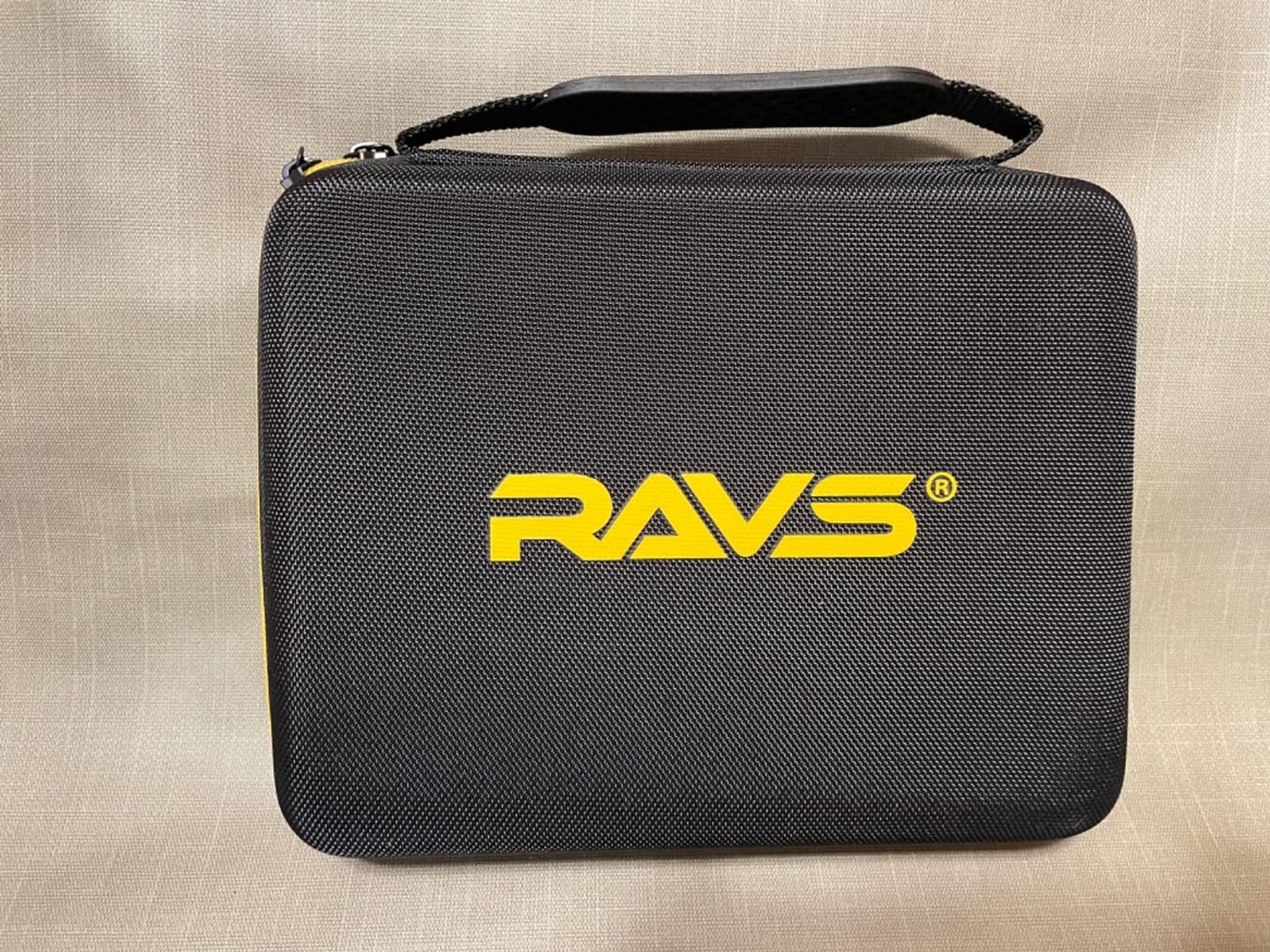
The all-metal body and refillable fuel tank are specified to resist corrosion and drops, and the wide copper base gives you a stable hands-free platform. Piezo one-touch ignition and a tank that refills in 5 seconds keep the bench moving.
It ranks strongly in both the Soldering Torches and the general Industrial and Scientific categories, which reflects how buyers actually use it: heat shrink tubing, wire welding, wood burning, cooking and gold and silver jewelry work.
Why the accessory count matters
Eight tips means you are not blocked the first time you lose a small tip or find you need a shape you did not expect. The two wrenches are for hot tip changes, and the sponge handles carbon build-up on the burner face.
The zippered case with grid compartments is the reason this kit travels well. You can move a whole station to a shared table or a craft fair without losing small parts.
What the count does not fix
Reviewers describe accessory quality as functional rather than premium. The tips do the job, but they are not in the same class as the SMITH curved tips.
Buyers also report that the smaller tips run out of gas quickly on larger jobs, which is the same butane ceiling as the other kits here. The generic listing photos also give less confidence at the decision stage than a well-photographed alternative.
9. SFC Tools Micro-Flame Butane Torch 14-300: Best for Enameling and Clay Firing
Micro-Flame Butane Torch Soldering Jewelry Hobbies Self Igniting SFC Tools14-300
Weight: 8.8 ounces
Temperature: 2500 degrees F
Burn time: up to 90 minutes
Size: 5.5 x 4.0 by 2.0 inches
Pros
- Purpose-built for jewelry metals
- PMC clay and enameling
- 2500 degree F flame with up to 90 minutes burn time
- Automatic self-ignition and easy butane refills
- Lightweight and compact for bench portability
Cons
- Lowest butane-only rating in the roundup at 4.1 stars
- Single-purpose body with no interchangeable tip array
- Specific reports the flame is not fine enough for detailed work
- No case or accessories included
This is the odd one out in the roundup, and that is its value. SFC Tools specifies the Micro-Flame for jewelry metal soldering, PMC clay firing and enameling, so it is not a general-purpose torch trying to cover every task.
The 2500 degree F flame with up to 90 minutes of continuous burn time is a genuinely useful combination for clay work, where you need repeated firings in one session and a long burn time matters more than fine flame control.
At 8.8 ounces and 5.5 by 4.0 by 2.0 inches, it is one of the smallest and lightest tools here, and it stores in a drawer without thinking about it.
Reviewers who work with PMC clay and jewelry soldering find the flame and runtime genuinely useful. Critical reviews focus on flame precision and the lack of interchangeable tips or accessories.
Who should pick this
If your work spans metalwork and clay or enamel, this torch is built for exactly that combination. The long burn time means fewer refills during a clay firing session, which is the metric that matters there.
The self-ignition and easy refill cycle also make it friendly for a beginner who does not want to fuss with a needle valve.
Why it is not our first recommendation
The 4.1 rating is the lowest among butane-only kits here, with a 12 percent one-star tail. Several buyers report the flame output is not fine enough for detailed jewelry work, which is the main reason we could not place it higher.
The single-purpose body has no interchangeable tip array and no case. If you plan to grow into bezel and prong work, you will replace it within a year.
10. Mag-Torch MT790K Butane Detail Pen Kit: Best Lightweight Detail Torch
Mag-Torch MT790K Butane Torch | Detail Pen Kit | 7 Tips + Solder + Case
Weight: 2.4 ounces
Tips: seven
Warranty: limited one year
Fuel: refillable butane
Pros
- Seven interchangeable tips including a pinpoint flame and blower
- Trigger start ignition with adjustable precision flame
- Includes rosin core solder and a storage case
- Very light at 2.4 ounces
- Refills from any standard butane cylinder
Cons
- Mixed feedback on flame consistency with a 9 percent one-star share
- Plenty of small tips but no wide spade for heavier wire
- Foam-cut case holds only the supplied accessories
- Butane only with no oxy-fuel capability
At 2.4 ounces the MT790K is the lightest kit here by a wide margin, and for long detail sessions that weight difference is not nothing. It is a pen, not a handpiece, and it disappears in the hand during delicate work.
The seven-tip array is unusual at this level. You get a pinpoint flame micro torch, a hot air blower, two fine solder tips, a chisel point, a large solder and heat-shrink tip, and it comes with rosin core electrical solder in the box.
Trigger start ignition and an adjustable precision flame give more control than the cheapest pens, and it refills from any standard butane cylinder through the base port rather than a proprietary fitting.
Buyers like the tip variety and the fact that solder and a case are included at this level. Negative reviews tend to focus on uneven flame control and missing larger tip sizes.
Where the seven tips earn their keep
The pinpoint flame and chisel point cover most small jewelry tasks, and the blower covers heat shrink on a batch without changing tools. Having solder in the box matters more than it sounds for a first-time buyer.
The bottom-port refill and light weight make it easy to move between a home bench and a shared classroom bench.
What to look out for
Flame consistency is the recurring complaint, with a 9 percent one-star share. On small work that matters, so test it on scrap sterling before you commit to client pieces.
There are plenty of small tips but no dedicated wide spade for heavier wire, and the foam-cut storage case holds only the supplied accessories. The warranty is a limited one-year cover.
Home Studio Safety: Ventilation, Cylinder Storage and Fire Gear
None of the ten kits is dangerous. The risk comes from the room, the fuel storage and the ventilation, and all three are decisions you make before you light anything.
Ventilation is the first question, not an afterthought. Flux fumes are the reason you open a window. Work near an open window with a cross-flow, or use a fume extractor with a HEPA and carbon filter. Our fume extractor guide for home workshops covers the small-room options in detail.
Store cylinders outside the living space if your kit uses them. A small apartment or condo studio generally should not hold a fuel cylinder in the work room, and a landlord conversation is better than a storage violation. Butane canisters are the easier case because they are small and you can keep one spare in a ventilated cupboard away from heat.
Keep a Class B fire extinguisher within reach of the bench, not in a hallway. Gas and solvent fires are Class B, and water is the wrong tool for them. Check the gauge every few months so you do not discover an empty canister on the day you need it.
Work on a soldering block or firebrick, never on a wooden bench or a cutting mat. Solder spatter and stray sparks will damage both. Keep a sheet of cheap steel or a ceramic tile as a sacrificial surface.
Wear eye protection, rated to the ANSI Z87.1 standard, plus heat-resistant gloves when you handle a hot block or quench. Keep your hair tied back and never reach across a lit torch.
Install a flashback arrestor on any two-gas setup. A flashback sends a flame back down the fuel line into the regulator or cylinder, and it is the reason the SMITH outfit and the oxygen kits need a proper installation rather than a quick hose connection.
Inspect hoses before every session. Pinholes, kinks and loose 14mm fittings are cheap to fix and expensive to ignore. Check the connection at the regulator with soapy water if you are unsure.
Never leave a lit torch unattended, even in lock-on mode. Lock-on exists for hands-free work at the bench, not for walking away.
How to Choose a Jewelry Soldering Torch Kit
Choose by the size of the smallest piece you solder most often, then work outward. A kit that is too small wastes your time; a kit that is too large wastes your money and your ventilation budget.
Match the heat tier to the work. A micro butane torch handles jump rings, links, small findings and light repair. A wider-flame butane torch handles bezels and backplates. A Little Torch or oxygen-fed kit handles cuffs, assemblies and heavy brazing. If 80 percent of your work is under half an inch, buy the small tier and add nothing.
Check the flame adjustment, not the temperature number. Marketing lists maximum flame temperature because it is the biggest number available, but what decides a good joint is whether you can shrink the flame and hold it steady. Kits with a wide adjustment range let you heat the metal rather than the solder, which is the difference between a flowing joint and a cold one.
Match tip size to project size. Tip numbering runs from small numbers to large, with larger numbers giving a hotter, broader flame. A #1 or #2 tip suits jump rings and small links; #3 to #4 suits bezels and prong work; #5 to #7 suit heavier assemblies. Buying the kit that includes a spread of tips saves you from a mismatched purchase later.
Read the box contents, not the category label. Most kits sold online are torch-only. Before buying, list what you do not have: solder, flux, a soldering block, safety goggles, a solder pick, a third hand and pickle solution. Eight of the ten kits here include no solder at all, and only two include any consumables at all.
Confirm the fuel type before you order anything else. Propane tips and acetylene tips are not interchangeable, and the same is true of propane and MAPP valves. If you buy cylinders later, check that the tips in the kit match the fuel you plan to use.
Match solder to the torch. Easy solder flows around 1100 to 1200 degrees F, medium around 1250 and hard solder in the 1300 to 1400 degree F range for sterling silver. A butane torch reaches all of those; an oxy-fuel kit is overkill for easy and medium solder and earns its keep on harder alloys and larger pieces.
Plan the upgrade path. Most makers move butane to MAPP or a Little Torch after six to twelve months, once they are soldering pieces that no longer fit the small tier. r/jewelrymaking users describe being tired of butane torches and moving up, and MAPP plus a Little Torch are the common next steps. Buying a self-contained butane kit now costs you nothing later because you can sell it or keep it for detail work.
Check what else your bench needs. A soldering station handles work that does not need flame, and many makers run both. Our soldering station kit guide covers the electric side, and precision soldering tip kits matter once you start doing beadwork or electronics-adjacent repairs.
Know when not to use flame. Jump rings, beading wire and heat shrink on delicate components are often better on an electric iron, where there is no flame to control. If you plan to cast or melt metal, a dedicated furnace is a different purchase entirely, and our jewelry casting kit guide covers that workflow.
Frequently Asked Questions
What is the best soldering torch for jewelry making?
For most home studios the best soldering torch for jewelry making is a self-contained butane kit with an adjustable flame rather than a fixed-pencil torch. The LEXIVON LX-771 is our top pick because its flame adjusts from half an inch to two inches, it has a 2400 degree F working temperature and the metal tank runs for up to two hours per refill. If your work stays at jump-ring size, the Bernz-O-Matic ST2200T gives you finer control in a lighter body.
What is the best jewelry soldering kit for beginners?
Beginners should start with a butane kit that is torch-only in the box but easy to expand. Most beginners solder jump rings and small findings, which a micro torch handles well, and the learning cost is the flame control rather than the equipment. Buy a good canister of pure butane first, add a soldering block, flux and eye protection, and resist buying an oxygen-fed kit until you are soldering pieces too large for butane.
Can I solder jewelry using a butane torch?
Yes. Butane reaches working temperatures above 2400 degrees F, and sterling silver hard solder flows between 1300 and 1400 degrees F, so a butane torch has more than enough heat. The real limit is project size rather than fuel: on anything larger than a small finding the workpiece pulls heat out of the tip faster than the flame replaces it, and that is where joints go cold.
Can I use a butane lighter instead of a proper jewelry torch?
Not for silver soldering. A lighter gives you a wide, wandering flame with no needle valve and no stable adjustment, so heat control is guesswork and repeatability is poor. A proper torch concentrates the flame, has a fine needle valve and holds a steady flame, which is what makes a good joint repeatable. A lighter is fine for annealing a pendant or softening a ring, but it will not teach you flame control.
Which is better for jewelry making, propane or acetylene?
For a home studio, propane is the easier choice because it needs one cylinder and one regulator. Acetylene burns hotter, needs its own valves and tips, and adds a second fuel to store. MAPP gas sits between the two as the beginner sweet spot. Whichever you pick, remember that propane tips and acetylene tips are not interchangeable, so confirm the fuel type before you order replacement tips.
Is oxygen necessary when using a gas torch for silver soldering?
No. Oxygen is necessary only for oxygen-assisted torches like the SMITH Little Torch outfit and the oxygen-fed kits in this roundup. Those run hotter and produce an oxidation-free flame, which matters for larger work and for builders who want the cleanest possible joint on sterling. For jump rings, small findings and most repairs, a single-fuel butane torch gives excellent results without the cylinder, regulator and ventilation overhead.
Why does my silver piece turn black while soldering?
Blackening usually means an oxidising flame or heat that sat on the piece too long, which burns fire scale into the silver. Work with a neutral flame, keep the flame moving rather than holding it in one spot, and clean up afterwards with pickle solution to remove the scale. Solder that balls up instead of flowing points to the opposite problem: not enough heat on the metal rather than too much.
What tools do professional jewelers use?
A professional bench combines a two-gas torch head such as the SMITH Little Torch with regulators and a flashback arrestor, plus a soldering block, a third hand, a solder pick, an eye loupe, a pickle pot, a flex shaft and a tumbler. Our picks above cover the torch tier. For the electric half of the bench, a soldering station and a good tip assortment fill in the work that does not need flame.
Final Verdict: Which Jewelry Soldering Torch Kit Should You Buy?
The best jewelry soldering torch kit for a home studio in 2026 is the LEXIVON LX-771. It has the widest usable flame range we tested, the most forgiving metal fuel tank, two hours of run time per refill and more than 7k ratings behind it. One torch, no cylinders, no regulators, and it covers everything from jump rings to a bezel backplate.
Pick the Berkling BSG-568 if you want three tools in one body and can live with tinning the supplied tip first. Pick the Bernz-O-Matic ST2200T if your work is jump rings and tiny links and you want the finest flame in the roundup.
Step up to the Power Probe PPMTKIT01 if you want the most complete, most durable butane kit with five attachments and a proper case. Move to the SMITH Little Torch outfit only when you are already soldering pieces too large for butane and you can store two cylinders safely outside the work room.
Whatever you choose, add a soldering block, flux, easy and hard solder, pickle solution and a Class B extinguisher on day one. Those five items turn a torch into a soldering station, and they are what turns a cold joint into a finished piece.