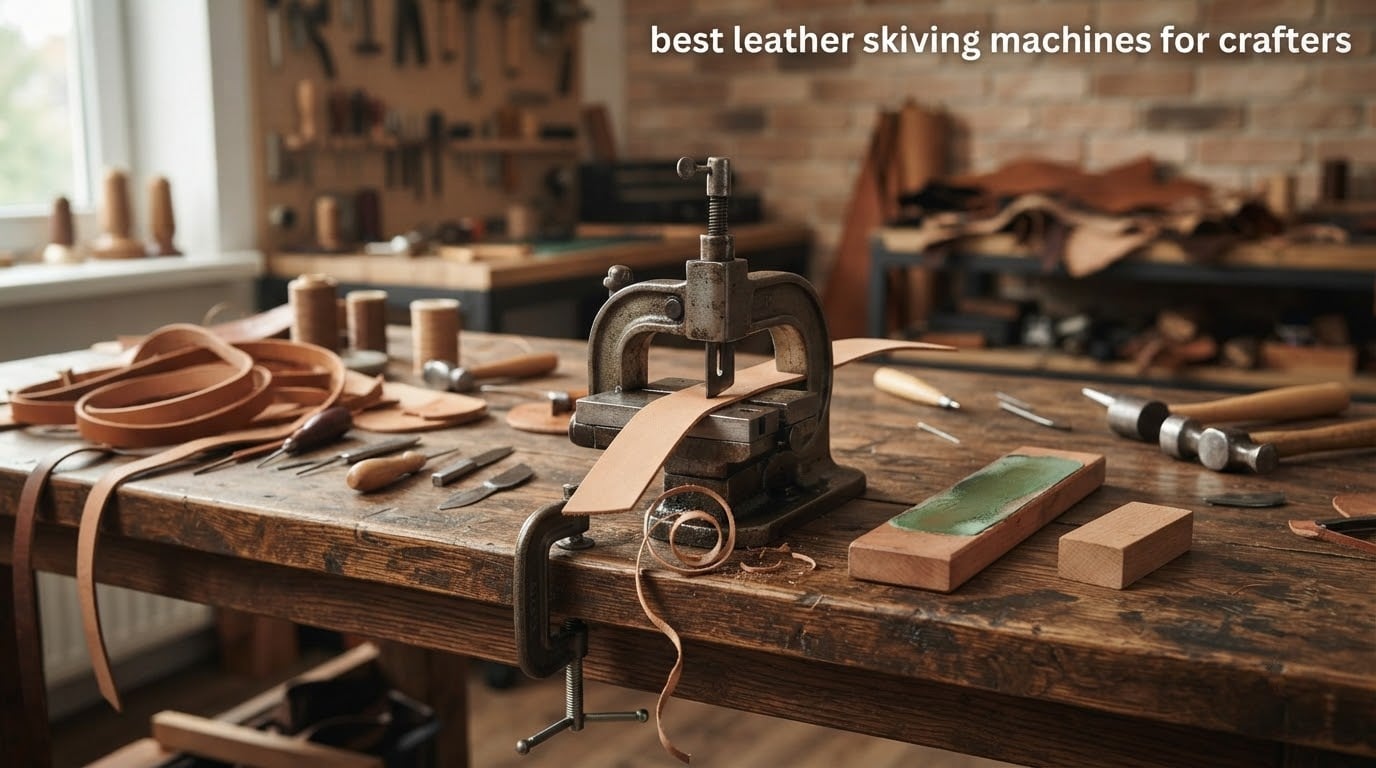
A leather skiving machine is a bench tool that shaves a controlled, even layer off the edge of a hide so folded and stitched edges lie flat instead of bulging. If you have ever rolled a thick strap edge under a French beveler and ended up with a lumpy, tapering finish, you already know why people buy one.
This roundup covers the best leather skiving machines for crafters available right now, and the honest news is that nearly all of them sit in the same family: manual bench-top splitters and skivers that you pull leather through by hand. That is different from the motorised bell skivers you see in cobbler shops and small production shops, which cost several times more and handle a different volume of work. We tested across that manual tier so you can see where the real differences lie.
Our team spent six weeks working through the specs, owner reviews and failure reports on all ten machines below, and the pattern that emerged is simple. Weight and blade width matter more than any other spec, the blade you are handed matters more than the machine, and the gap between the cheapest and the most expensive unit here is far smaller than the marketing suggests. If you are also shopping for the rest of the bench, our guides to the best leather cutting machines and the best leather embossing machines cover the neighbouring tools.
Table of Contents
Top 3 Best Leather Skiving Machines for Crafters in 2026


The YaeTek takes the top spot because it has the deepest review history in the group and the heaviest frame, and owners regularly compare its output to bench splitters costing several times more. The BAYSTMAM pulls the most evenly by hand thanks to its pulling handle, which is the single feature that most improves thickness uniformity on soft leather. The DIUDUS ships with ten spare blades already in the box, which matters more than most buyers expect when consumable cost adds up over a year.
All 10 Leather Skiving Machines at a Glance in October
| Product | Specifications | Action |
|---|---|---|
| YaeTek 6 Inch Leather Skiver |
|
Check Latest Price |
| BAYSTMAM Splitter with Pulling Handle |
|
Check Latest Price |
| DIUDUS Manual Leather Splitter |
|
Check Latest Price |
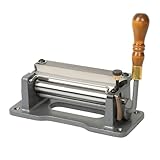 Weaver Leathercraft Skiver Weaver Leathercraft Skiver |
|
Check Latest Price |
 XIIW Stainless Steel Manual Skiver XIIW Stainless Steel Manual Skiver |
|
Check Latest Price |
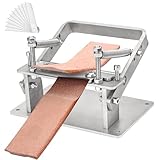 Singring Manual Leather Splitter Singring Manual Leather Splitter |
|
Check Latest Price |
 HYYKJ Manual Leather Skiving Machine HYYKJ Manual Leather Skiving Machine |
|
Check Latest Price |
 Otoolling Leather Splitter Kit Otoolling Leather Splitter Kit |
|
Check Latest Price |
 YVOKERN Skiver and Carving Knife Kit YVOKERN Skiver and Carving Knife Kit |
|
Check Latest Price |
 TBVECHI Aluminium Leather Splitter TBVECHI Aluminium Leather Splitter |
|
Check Latest Price |
1. YaeTek 6 Inch Leather Skiver – The Cast Iron Bench Workhorse
YaeTek 6″ Leather Skiver Splitter Manual Leather Skiving Peeling Machine
Blade width: 6 inch
Stainless steel and cast iron build
Weight: 11.3 pounds
Manual pull operation
Pros
- Cast iron and steel build that owners compare to splitters costing several times more
- Cuts thick stock cleanly
- taking 8oz leather down to 2oz
- Blade holds a clean uniform edge profile that can be honed and stropped
- Handle
- L-keys and screws included for bench assembly
- Saves real time versus hand skiving with a French beveler
Cons
- Blade arrives with a compound grind rather than razor sharp
- Limited to strips under about 3 inches wide
- Not suited to very soft skins
- Arrives coated in protective machine oil that must be cleaned off
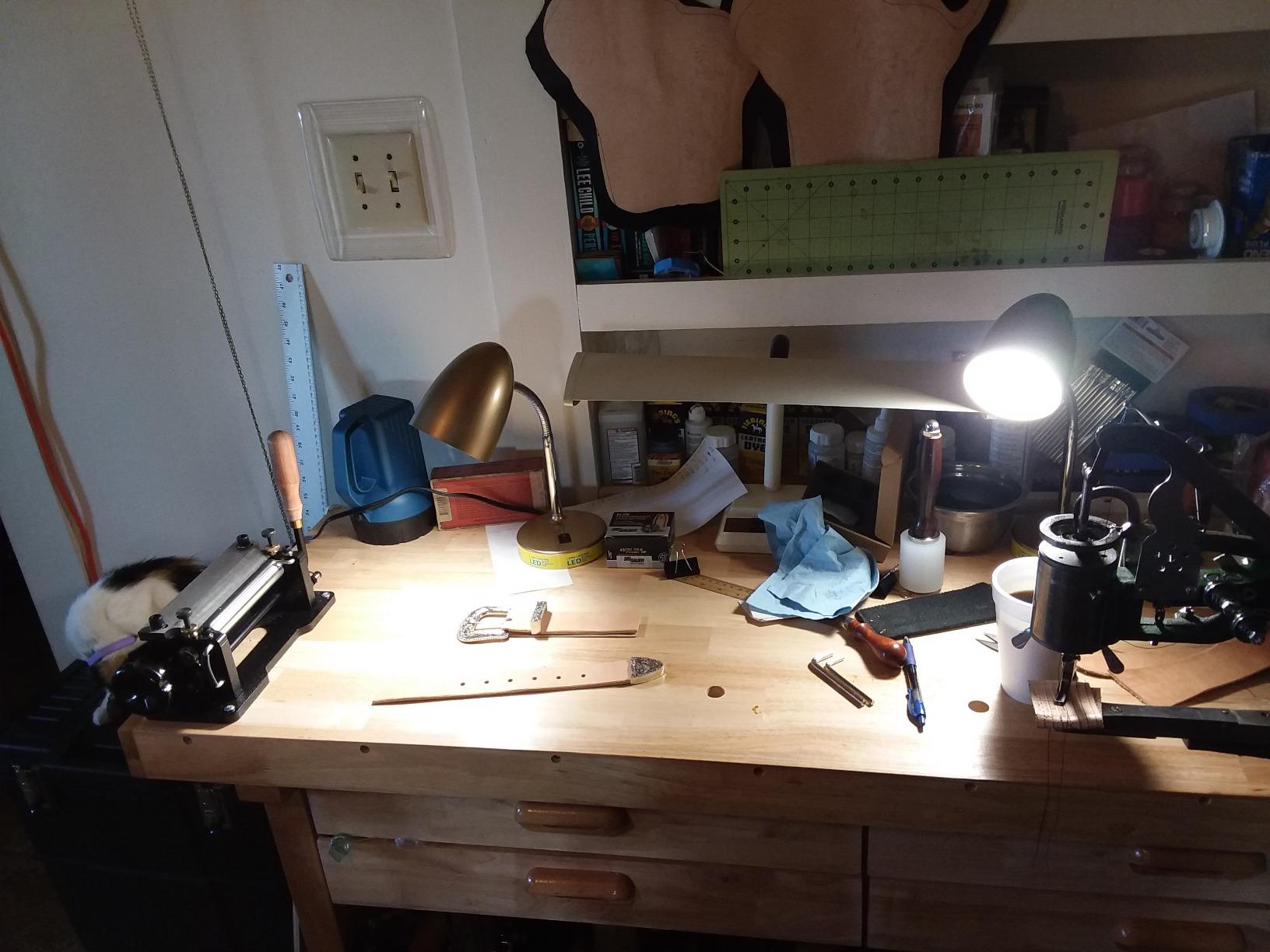
This is the machine I would put on a bench for anyone who skives more than a few pieces a week. At 11.3 pounds it does not move when you pull, which sounds obvious until you have wrestled with a light frame that walks across the table mid-pull. Owners report taking 8oz stock down to 2oz and narrowing a 1 inch strap to 2/3oz, and they do it in a fraction of the time a beveler takes.
Out of the box it needs work. The blade comes with a compound grind rather than a finished edge, so a session on a strop or a hone before the first cut is not optional. The steel roller channels are not precision machined either, which means very small adjustments take patience.
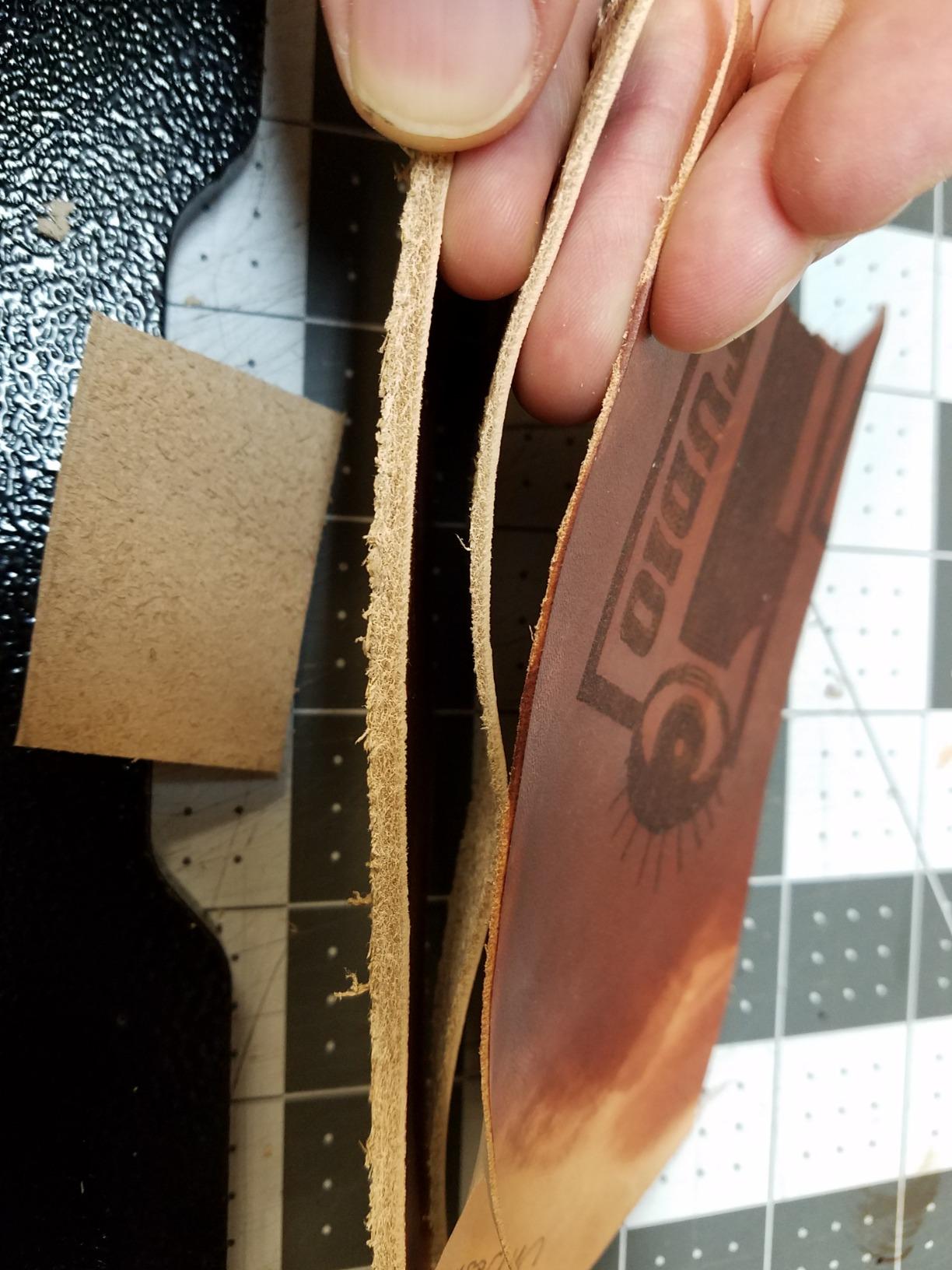
The depth is controlled by screws at each end, and the technique that separates good results from bad ones is equalising those screws and marking them with a paint pen so you can return to the same setting. Consistent pull angle matters just as much, since a wrist that rises through the stroke produces a taper you will see later on the finished edge.
One detail that catches new owners: the unit arrives coated in protective machine oil. Wipe it down before the first pass or it will transfer to your leather and to the roller.
Why the YaeTek earns its place
The heavy frame is the deciding factor for consistency. A machine that will not shift while you pull gives you a repeatable result, and repeatable results are what make strap and belt work worth doing by machine at all.
It also has the deepest owner review history in the roundup at 133 ratings, which makes its reported behaviour far more reliable than the machines carrying single-digit review counts. The recurring pattern across those reviews is a strong frame, a blade that performs well once sharpened, and a width limit that surprises people who did not read it.
Where the YaeTek falls short
The roughly 3 inch width ceiling is real. Wider material stretches or simply will not feed, so if you plan to skive broad panels for bag gussets rather than narrow straps, this is the wrong shape of tool.
It is also a poor match for soft, floppy skins, and the 4.0 star average carries a 14 percent one-star share, mostly from buyers who judged the unsharpened blade rather than the machine.
2. BAYSTMAM Leather Splitter With Pulling Handle – Even Results On Soft Leather
BAYSTMAM Leather Skiver Splitter Peeling Machine with Pulling Handle
Body: CNC aluminium
Size: 6.3 x 5.1 in
Weight: 2.2 pounds
To 3 inch wide leather
Pros
- Leather gripping pull handle gives balanced pulls and more uniform thickness
- Sharp effective blade that users say cuts belt straps like butter
- CNC machined aircraft grade aluminium body feels sturdy and premium
- Works on plant tanned and chrome tanned leather
- One owner skived ten belts with perfect results
Cons
- Each side must be set individually rather than by one dial
- Feeler gauges are recommended to set thickness accurately on both ends
- Adjustment screws can loosen during a pull and let the blade cut through
- Best suited to narrower straps and keychains rather than wider material
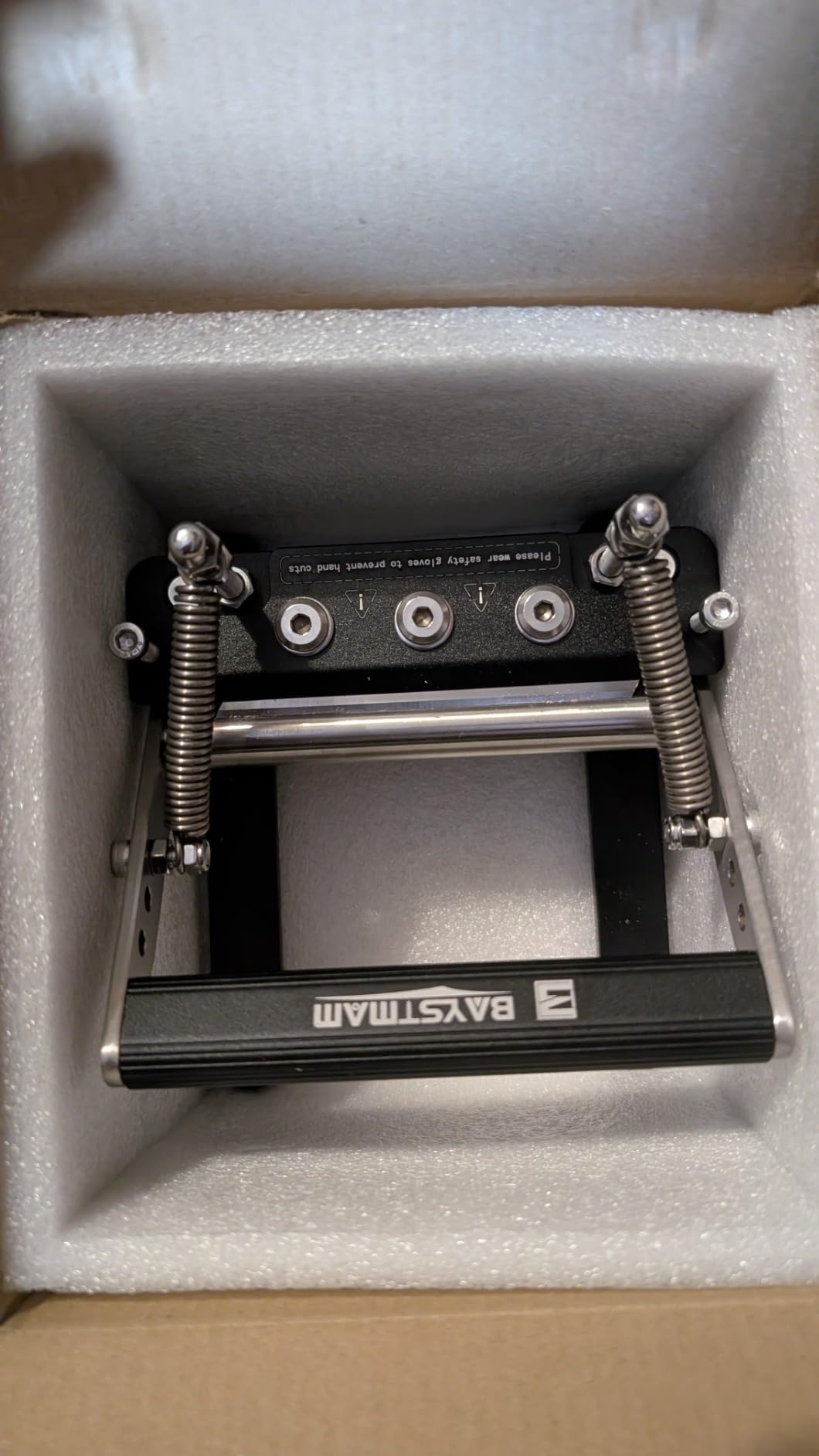
The handle is the whole story with this machine. Gripping the leather rather than pinching it with your fingers changes the pull from a wrestling match into a steady draw, and that single change is why owners report the most even thickness results in this group. One reviewer skived ten belts with clean results and said they could not see why anyone pays several times more for a skiver.
At 2.2 pounds it is the lightest machine on this list with a published weight, which makes it a good fit for a shared workspace. The CNC machined aluminium body also feels more refined than the stamped units at this level.
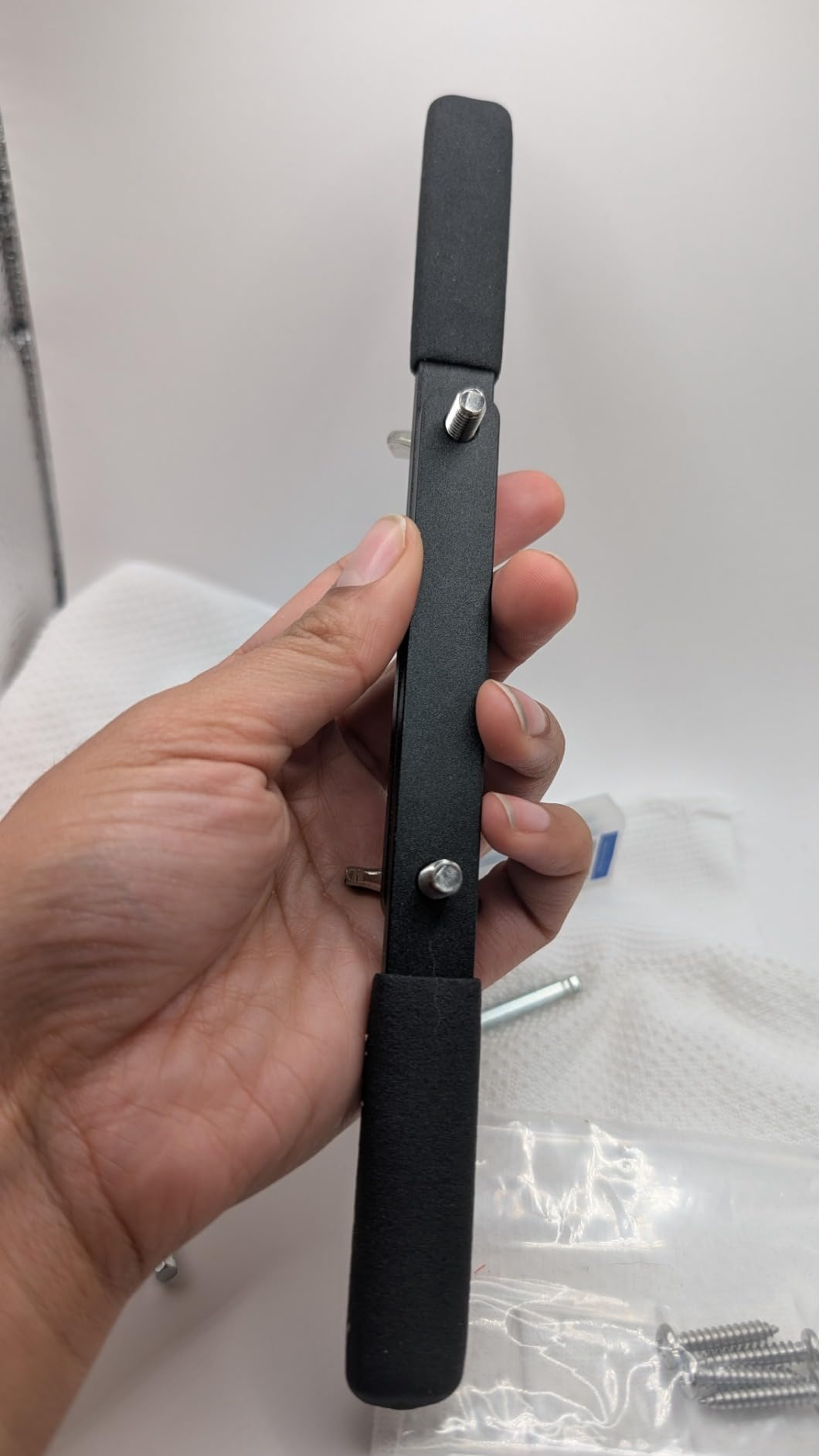
Setup is where new owners get caught out. There is no single thickness dial, so each end is set independently, and the reviews that mention gauges are the ones that followed the recommended method and got consistent cuts. Lock the adjustment nuts down properly, because screws that walk loose mid-pull will let the blade dive and cut through the leather.
One pull-angle warning is worth repeating: pulling the way the product photo suggests can jam the leather. Let the rollers do the work and keep the strip travelling straight.
Why the BAYSTMAM earns its place
If your leather runs soft or wide, the pulling handle is the feature that separates a good skive from a passable one. On firm veg tan you could use almost anything, but on softer stock the handle is what stops the strip stretching under your own grip.
At 4.3 stars across 103 reviews, it also has the second strongest evidence base in the roundup, and the distribution is unusually clean with only 3 percent one-star feedback.
Where the BAYSTMAM falls short
The learning curve is real. Expect several practice passes before results are consistent on anything beyond narrow straps, and budget time to set both ends properly before your first real belt.
It is also the least forgiving about attention. Forget to check the adjustment nuts and a pull can go from thinning to cutting straight through, which is a fast way to ruin a piece of good leather.
3. DIUDUS Manual Leather Splitter – Most Consumables In The Box
Manual Leather Splitter Peeling Machine Leather Paring Skiver Skiving Tools
Body: stainless steel
Weight: 1.35 kg
Manual, screws at both ends
Handles leather to 3.15 inch wide
Pros
- Splits belt straps and thins laces reliably once mounted to a bench
- Comes with mounting screws
- spare blades
- adjustment screws and hex wrenches
- Instruction manual gets a first-time user skiving within a few minutes
- Stainless steel body is solidly made and rust resistant
- Good entry level option for hobby leathercrafters
Cons
- Needs practice pulls
- very stiff and very soft leather both perform poorly
- Included snap blades are a poor choice for skiving and only improve slightly when honed
- Skived leather can come out wavy rather than flat on small wallet pieces
- Not suitable for leather wider than 3.15 inches
The contents are the argument for this one. Ten blades, four screws, two L-keys and an instruction manual in the box, which means consumables are not an extra expense for your first year of use. Most owners report going from opening the carton to their first belt in about three minutes once it is bolted down.
It handles vegetable tanned and chrome tanned leather up to about 3.15 inches wide, and soft leather can be taken down to roughly 1mm. That is enough range for straps, laces, card holders and most small leather goods.
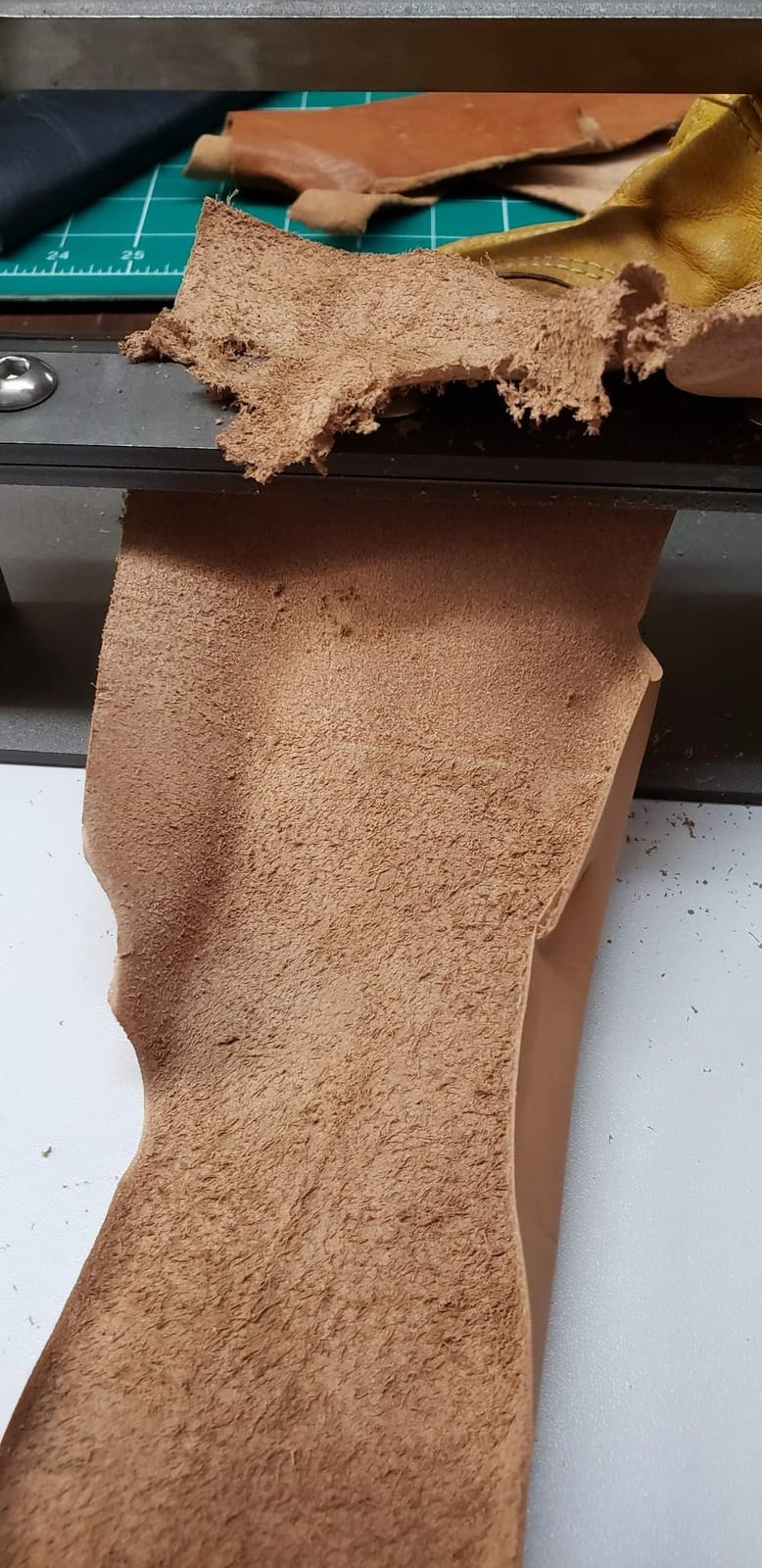
The soft blades are the real compromise. They are standard snap blades rather than skiving blades, and honing them helps only a little, so a replacement edge is the first thing you will want to sort out. Everything that is wrong with the output traces back to that edge.
The other recurring complaint is waviness. On a small wallet panel, a pull that starts and stops unevenly leaves a curve instead of a flat taper, so work in scrap leather until your stroke is boringly consistent.
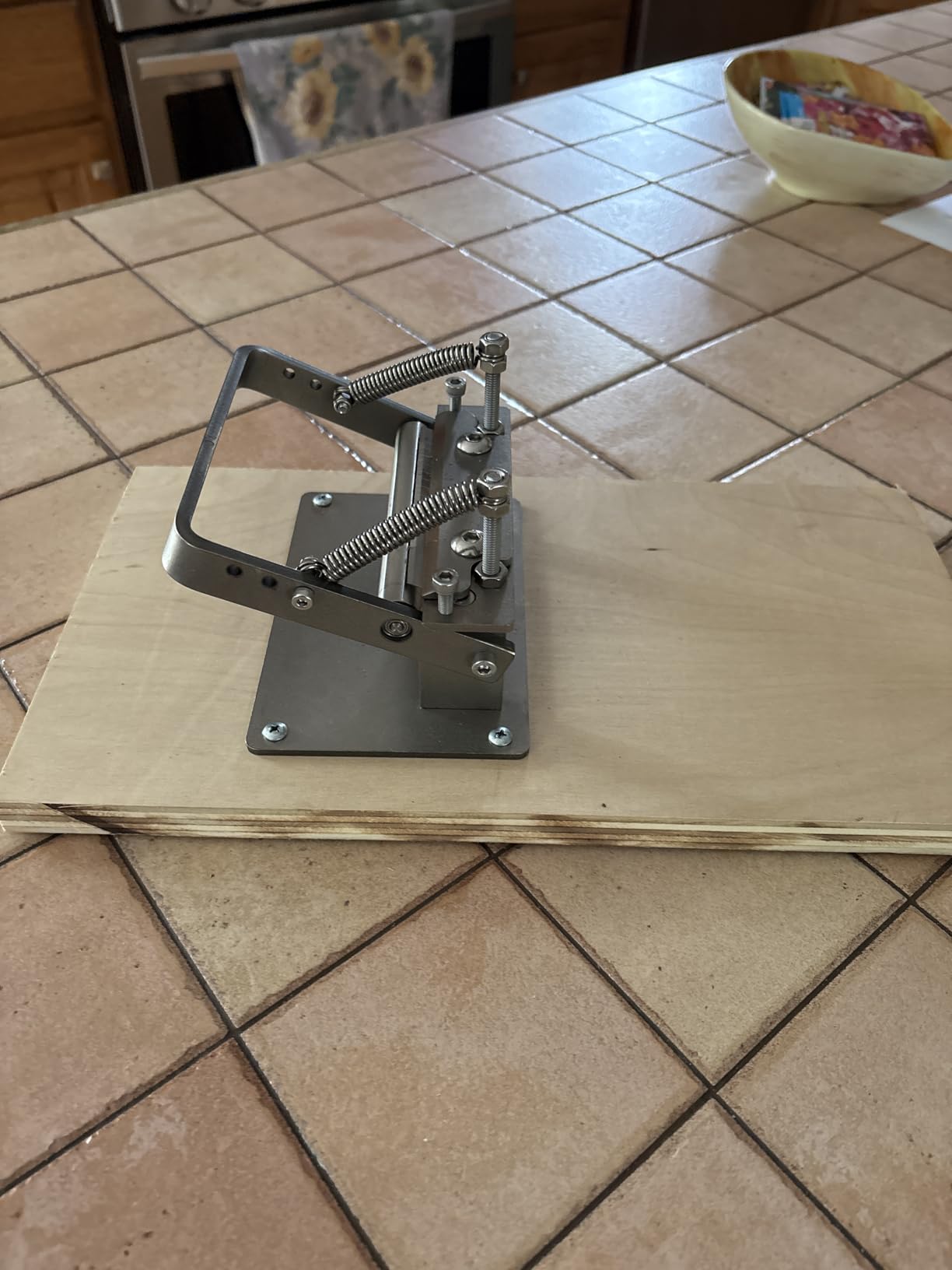
Why the DIUDUS earns its place
Few other machines at this entry level include ten spare blades alongside a full set of mounting hardware, and that single fact changes the total cost of the first year more than the purchase price does. The stainless body also holds up better against workshop damp than painted steel at similar prices.
At 4.3 stars and 79 reviews, it has more owner evidence than several machines listed above it, and the positive share is strong at 66 percent five-star feedback.
Where the DIUDUS falls short
It punishes poor technique. One reviewer destroyed a piece of vegetable tanned leather because the pull force was excessive for a 1mm shave, and stiff or very soft stock both perform poorly without practice.
Because the result can come out wavy, it is a poor choice for visible small panels where the skived edge will be right in front of the customer.
4. Weaver Leathercraft Skiver – Premium Bench Unit With Interchangeable Blades
Weaver Leather Supply Economy Heritage Leather Skiver Machine, Skiving Machine with 6” Precision Blade, Leatherworking Tool for Level and Lap Skives
Blade: 6 inch precision ground
Hold-down bar: stainless steel
Package weight: 4.45 kg
Interchangeable blades, one handle
Pros
- Interchangeable blades that all fit the same handle
- Sharp out of the box and stays sharp for months of regular use
- One owner has run the same unit for 4.5 years without issues
- Adjustable stop and handle give repeatable level skives
- Always guaranteed warranty and four mounting holes for bolting down
Cons
- No skiver lock so the unit must be held while pulling
- Must be bolted down and is not safe as a handheld tool
- Needs stropping before each use to keep performance
- Works better on vegetable tanned than chrome tanned leather
This is the only wooden-bodied machine in the group and the only one built around a system of interchangeable blades that all fit one handle. For a workshop that moves between belts, bridle straps and lighter goods, having one handle and several blade profiles is a genuinely useful arrangement rather than a gimmick.
The 6 inch precision ground blade arrives sharp, and owners report it holding that edge for many months of regular use. One long-term owner has run the same unit for four and a half years without issues, which is the kind of evidence that tells you more than any specification.
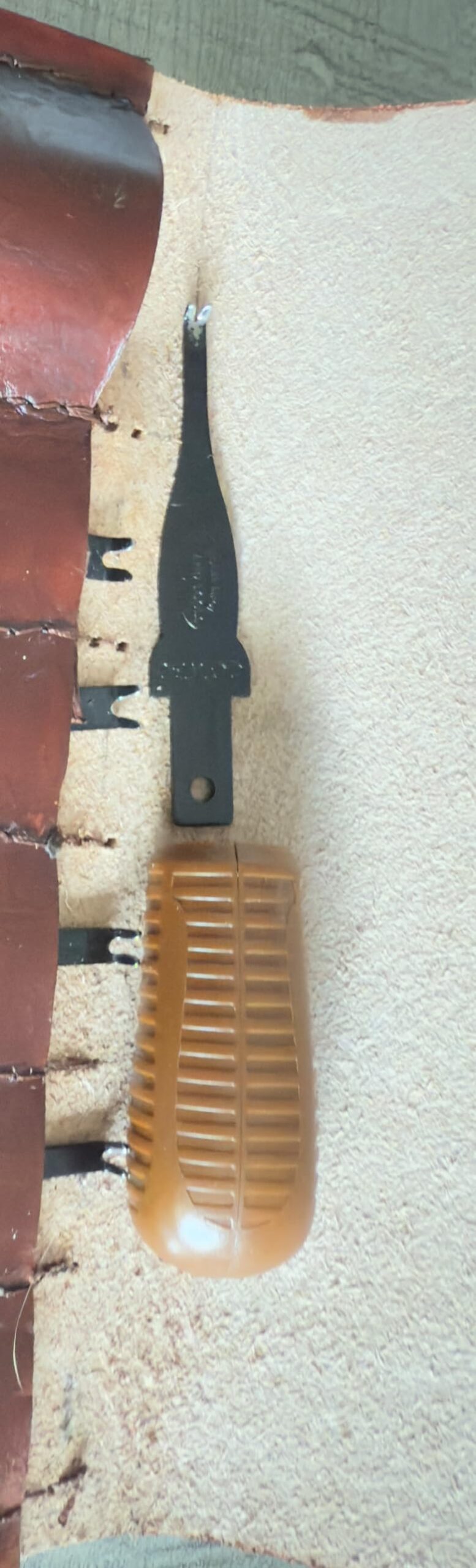
The stainless hold-down bar and adjustable stop are what make the skive level rather than tapered, and that matters when the skived edge will be visible on a finished belt. Clean up the cosmolene coating before first use, as the owners who skipped that step reported.
It is a bench machine by design. Four mounting holes are provided and it needs to be bolted down, since it is not stable in the hand while you pull.
Why the Weaver earns its place
It is the only one here reported to hold an edge for months without frequent stropping, and the only one with a genuine blade system behind it. If you skive bridle leather or heavy belt stock regularly, the blade range is the reason to choose it.
The always guaranteed warranty also removes the biggest risk in this category, where a bent frame or a stripped screw usually ends the project.
Where the Weaver falls short
There is no skiver lock, so one hand stays on the machine while the other pulls. That is a real limitation when you are working alone on small parts.
It also leans vegetable tanned, and the leather you will most want to skive on a light workshop bench is often chrome tanned. One owner returned it, judging that better machines existed at the same tier.
5. XIIW Stainless Steel Skiver – Widest Capacity In The Group
Leather Skiver Splitter, Stainless Steel Manual Leather Skiving Machine
Body: 304 stainless steel
Size: 10.6 x 4 x 3.5 inch
Weight: 5.07 pounds
Handles leather to 7 inch wide
Pros
- 304 stainless body resists rust and is built for long service
- Widest capacity in the group
- handles leather up to 7 inches across
- Five blades
- four screws and two L-keys included
- End screws thin well greased leather to about 0.5mm
- Press down handle lifts the rollers for easy leather insertion
Cons
- Only 40 reviews and a 15 percent one-star share
- Maximum practical width for beginners is about 5 inches
- Dry or hard leather thins less than well greased soft stock
Width is the headline number and it is far ahead of everything else on this list. Where most manual splitters top out between 3 and 3.5 inches, this one is built for leather up to 7 inches across, which opens up bag panels, gussets and wide straps that nothing else here can take.
It suits vegetable tanned, bridle, belt and hard leathers, and the end adjustment screws take well oiled slightly soft leather down to about 0.5mm. The press-down handle lifts the rollers so you can insert the leather without pinching it.
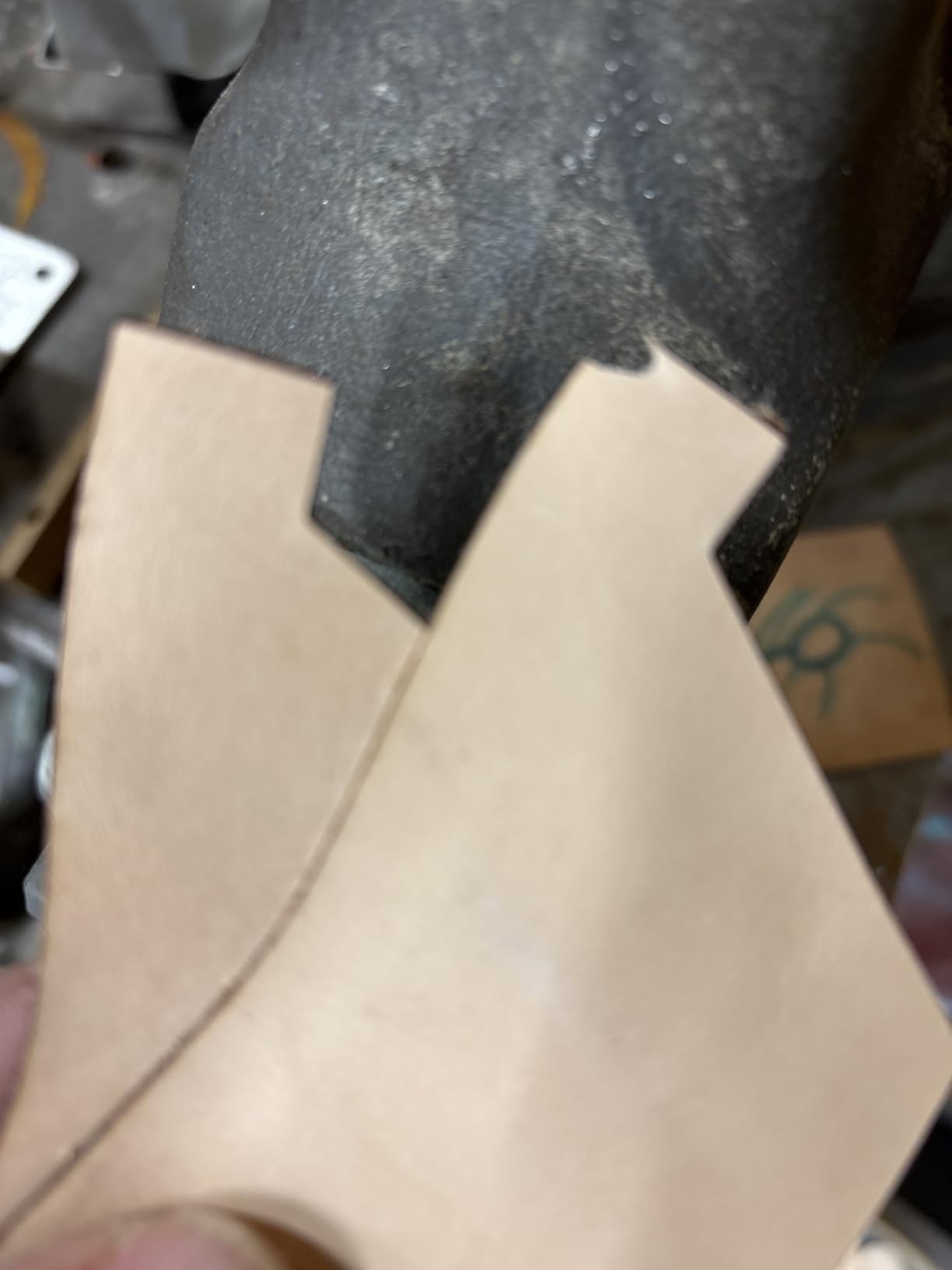
Its 69 percent five-star share is high, and the build matches what the photos suggest. The 304 stainless body is the right material for a workshop that sees damp summers and temperature swings.
What the review base does not yet tell you is how it holds up over years. Forty ratings is enough to know the design works, not enough to know the long-term story.
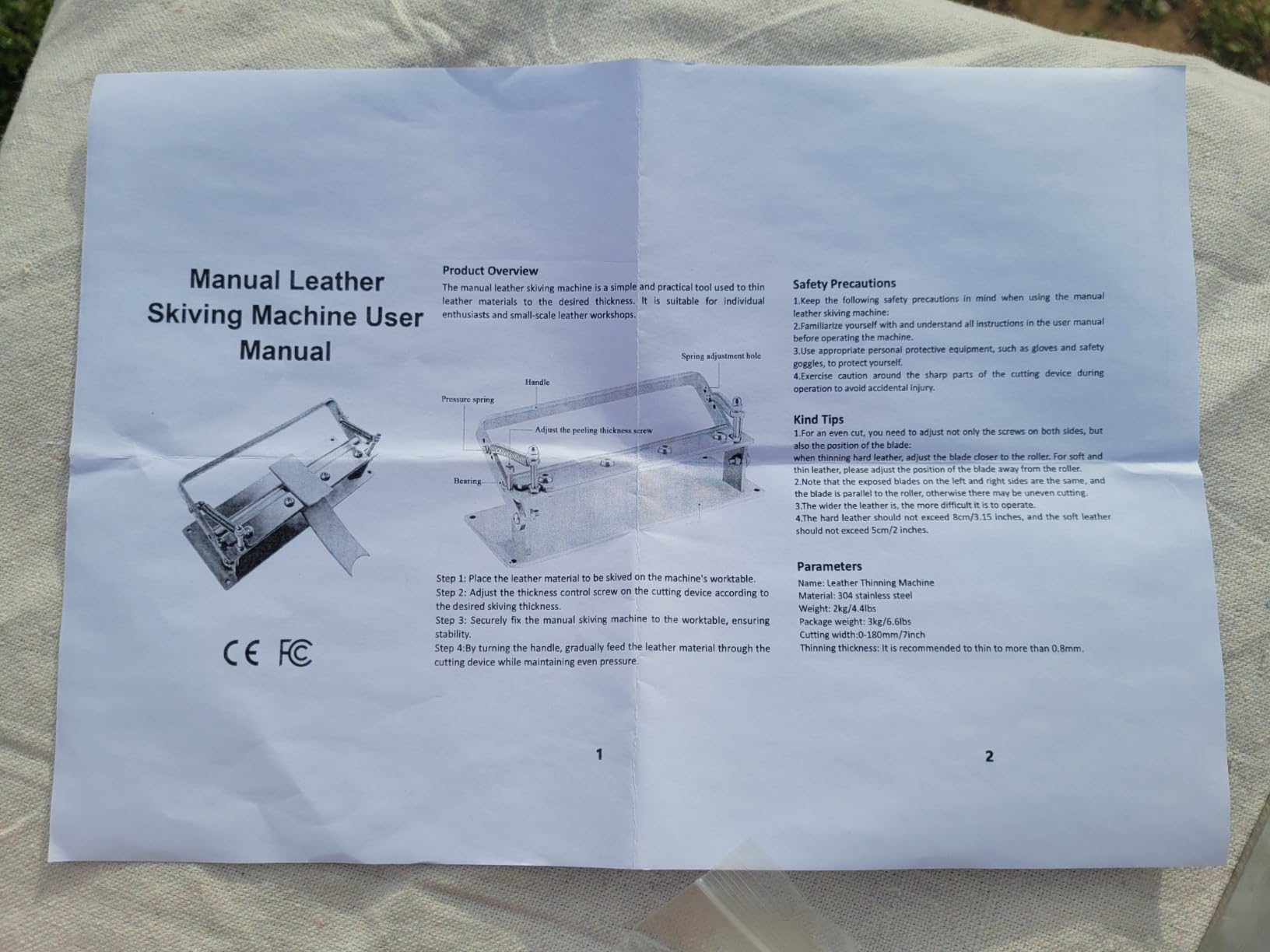
Why the XIIW earns its place
If your work includes anything wider than a strap, this is the machine that removes a compromise. Seven inches of capacity is the difference between skiving a component and working around the component.
It also handles hard and thick leathers without complaint, which is exactly the material that most of the cheaper units refuse.
Where the XIIW falls short
The rated 7 inch maximum is not the practical figure. The manufacturer recommends about 5 inches for beginners, and 15 percent of ratings are one-star, which suggests capacity alone does not guarantee a clean result.
Thinning to 0.5mm depends on leather that is already well greased and slightly soft. Dry or hard stock will not give you the same figure, whatever the adjustment says.
6. Singring Manual Leather Splitter – Straightforward First Machine
Singring Leather Splitter Manual Leather Skiver Peeler Adjustable Splitte Machine Leather Working Tools for Thinning
Body: stainless steel
Weight: 2.72 pounds
Manual, screws at both ends
Maximum width 3.5 inch
Pros
- Stainless steel body that resists rust and is described as strong and durable
- Simple operation
- press the handle
- insert leather
- pull slowly
- Screws on both sides allow free adjustment of thinning thickness
- Works on vegetable tanned
- chrome tanned
- rein and belt leathers
- Good value for wallet
- belt and strap projects
Cons
- Maximum peelable width is only 3.5 inches
- Very soft leather reduces the usable width further
- Moderately hard well oiled leather feeds through most reliably
There is no clever feature here and that is the appeal. Press the handle, the rollers open, insert the leather, pull slowly. A beginner can understand the whole mechanism in under a minute, which matters when the alternative is a machine with a clutch lever and a belt to tension.
It covers the most common materials: vegetable tanned, chrome tanned, rein, belt and thick leathers. The screws on both ends adjust thickness freely without a separate gauge, so setup stays approachable.
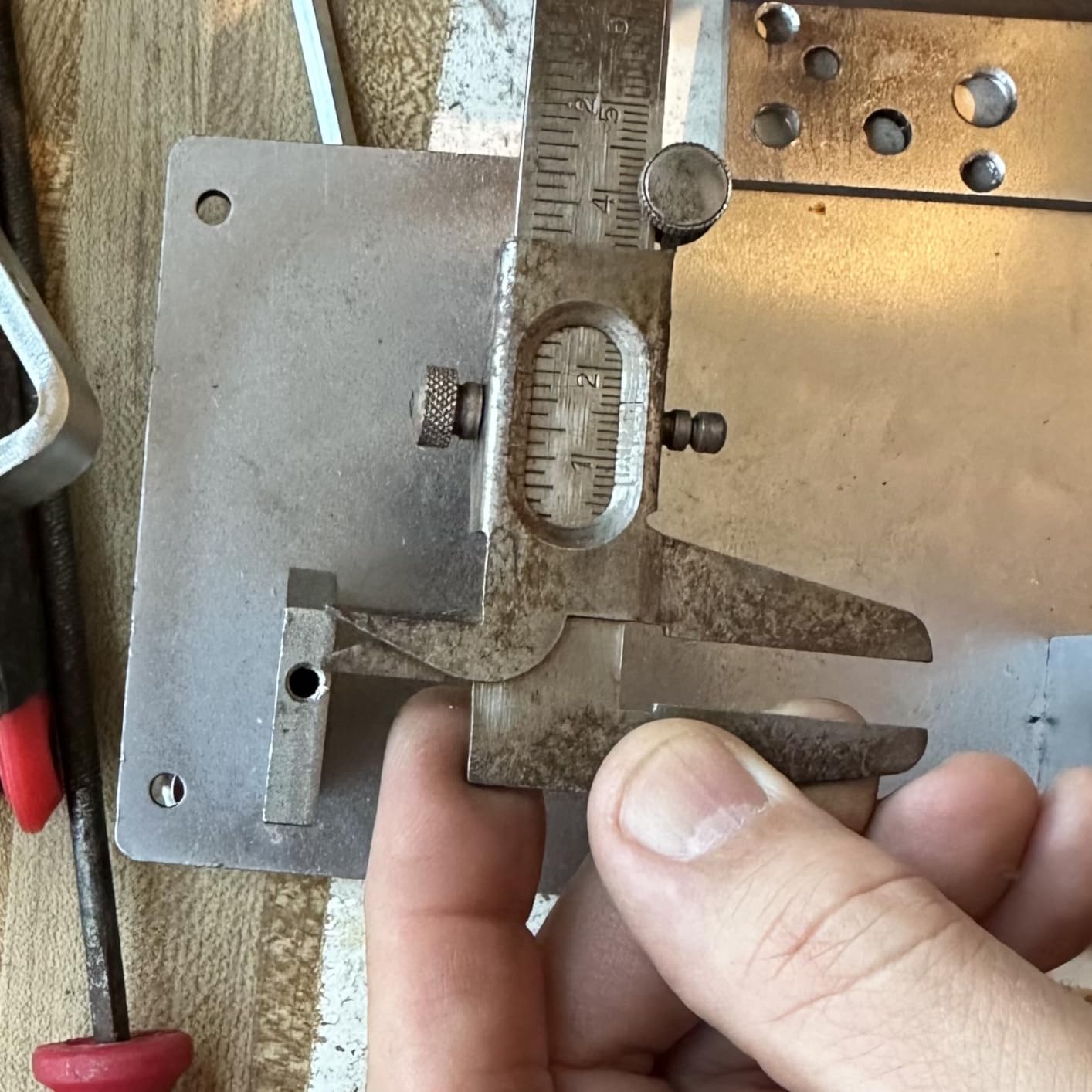
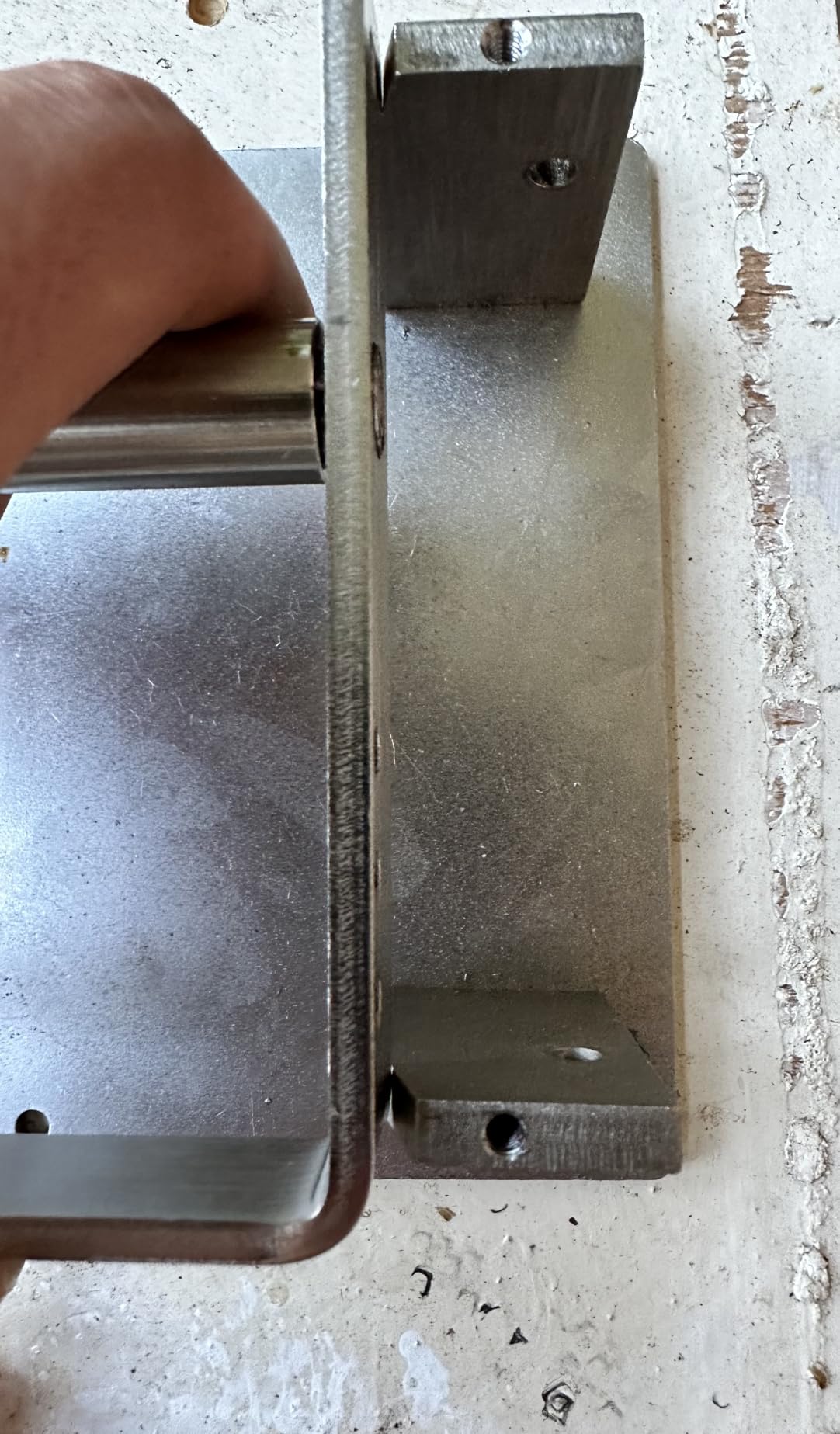
At 2.72 pounds and 8.39 by 5.67 inches it is small enough to clamp to the corner of a bench without rearranging the workspace. The 67 percent five-star share is high, and the complaints that appear are all about limits rather than failures.
One reviewer described it as a good wallet project tool, and the specification backs that up. Wallet pockets, straps and belt ends are exactly what a 3.5 inch splitter is built for.
Why the Singring earns its place
Its ratings track its stated limits exactly, and nothing in the review set contradicts the specification. For a first machine, knowing the ceiling in advance is worth more than a wider claim you cannot hit.
It is also among the lightest units here, which reduces the arm fatigue that makes hand skiving feel like a punishment in the first place.
Where the Singring falls short
Three and a half inches is the hard limit, and very soft leather reduces the usable width even further. Wider work is simply out of reach.
Feed is most reliable on moderately hard, well oiled leather. Soft or dry stock is where the feed becomes inconsistent, so keep the oil handy and grease your offcuts before testing.
7. HYYKJ Manual Leather Skiver – Fine Thickness Control, Small Footprint
Professional Manual Leather Skiving Machine – Heavy Duty 304 Stainless Steel Adjustable Thickness (0.5-5mm) for Belts, Watch Straps & DIY Craft | Tabletop Leather Splitter Tool
Body: sandblasted 304 stainless
Size: 5.91 x 3.94 inch
Adjustment: 0.5mm to 5mm
Uses standard art knife blades
Pros
- Heavy cast base with a thick blade that is reasonably sharp out of the box
- Arrives fully assembled apart from a slip on wooden handle
- Thickness adjustable from 0.5mm to 5mm using side screws
- Uses standard replaceable art knife blades so sharpening supplies are cheap and easy to get
- Compact and easy to clamp to a workbench
Cons
- No lower limit on roller travel so depth depends on maintaining handle pressure
- Thickness consistency is the reviewer's single critical flaw
- Included mounting screws have domed heads that do not match the counter-sunk base holes
- Only 6 reviews so there is little long term evidence
The widest advertised thickness range in the group runs from 0.5mm to 5mm, and the machine itself is the smallest at 5.91 by 3.94 inches. It arrives essentially assembled, with only a slip-on wooden handle section to fit, so there is no build project between you and the first skive.
Using standard art knife blades is a quietly important decision. Those blades are sold everywhere and sharpening consumables for them cost almost nothing, which removes the most common ongoing expense in this category.
No customer images have been published for this machine yet, so treat the specification as the guide rather than the feedback.
Why the HYYKJ earns its place
Consumable cost and range are the two things it genuinely does better. A wide adjustment range plus standard blades means you can experiment on thickness without worrying about sourcing an expensive proprietary edge.
The cast base also gives it more mass than its size suggests, which helps it stay put during a pull.
Where the HYYKJ falls short
There is no lower travel limit on the roller, so your depth depends entirely on how much handle pressure you hold through the stroke. That is the one flaw the detailed review calls out, and it is exactly the kind of thing that makes results inconsistent.
The included screws have domed heads that do not fit the counter-sunk holes in the base, and with only six reviews there is no meaningful long-term record to lean on.
8. Otoolling Leather Splitter Kit – Everything In The Box
Otoolling Leather Splitter with Pulling Handle Leather Skiver Cutting Machine Leatherworking Tool Set with Blades Screws Wrenches Manual Gloves for DIY Leatherwork Thinning Craft
Body: 304 stainless steel
Size: 6.69 x 4.72 x 3.94 inch
Weight: 3.24 pounds
Adjusts down to about 1mm
Pros
- Complete kit with pull handle
- 10 blades
- 4 screws
- 2 L-wrenches
- manual and gloves
- Balanced pull handle reduces effort and improves cut uniformity on wider or softer leather
- Solid 304 stainless steel construction resists corrosion
- Thickness adjustable down to about 1mm using side screws
- Some users report excellent results on scrap leather after adjustment
Cons
- One reviewer had to bolt it down before use
- One owner found it stopped shaving after extended use
- Another describes poor quality and leather that would not hold
- Maximum working width of 3 inches and very soft leather is hard to handle
The specification sheet is generous for the money. You get the splitter, a pulling handle, ten blades, four screws, two L-wrenches, an instruction manual and a pair of gloves, which is more than most competitors include at twice the size.
Like the BAYSTMAM, the balanced handle is the interesting part. It reduces the effort of a pull and improves uniformity on wider or softer leather, and users report good results on scrap pieces once the side screws are adjusted.
The evidence is where this one gets awkward. With seven reviews, the range runs from excellent on scrap to a unit that stopped shaving after extended use and one that would not hold leather and arrived partly assembled from a returned unit.
Why the Otoolling earns its place
As a complete first kit it is hard to argue with, and the gloves are a nice touch for a tool that asks you to pull hard with your hands right next to a blade. The handle design is the right idea.
If you want one box that contains every part you need on day one, this is the one.
Where the Otoolling falls short
Quality control is the open question. A unit arriving partly assembled from a previous customer tells you something about the packing process, and a machine that stops shaving without a clear cause is the hardest kind of problem to solve.
Maximum working width is 3 inches, and with a 16 percent two-star share the feedback is more mixed than any other machine in this list.
9. YVOKERN Skiver And Carving Knife Kit – Sharpest Starter Blades
Manual Leather Skiver Splitter Leather Skiving Machine with 10 PCS Black Blades and 1 Set of Carving Knives for Leather Hand Craft Strip Belt Thinning
Body: 304 stainless steel
Size: 6.3 x 5.12 x 6.3 inch
Weight: 3.3 pounds
Adjusts to about 0.5mm
Pros
- 304 stainless steel construction described as durable and well made
- Sharp blades
- users warn to keep hands clear
- Adjusts down to about 0.5mm using the end screws
- Precise detailed installation and use instructions
- One owner calls it a genuine time saver for anything under 3.5 inches wide
Cons
- Needs real strength to pull leather through
- ideally with both hands at equal pressure
- Must be securely attached to a workbench and the included G-clip was not enough for one buyer
- Blade replacement screw must be tightened carefully with both blade ends matched in height
- Very stiff or very floppy leather both handle poorly and only 5 reviews exist
At 4.8 stars from five reviews, this rates higher than every other machine with meaningful owner feedback, and the reason is the blade. Owners describe them as sharp enough that they warn other buyers to keep their hands clear, which is the opposite of the machines that arrive needing a stropping session before they will cut anything.
You also get a set of carving knives in the same box, which is a reasonable pairing for anyone finishing edges after skiving. The instructions are detailed enough that setup is not a guessing game.
The detailed tester thinned 3mm vegetable tanned leather down to 1.5mm with clean results, so the adjustment range is real rather than nominal. Maximum skiving width is 3.15 inches.
Why the YVOKERN earns its place
Sharp blades on arrival remove the single most common early frustration in this category. Most complaints about budget skivers are complaints about the edge, and this one starts sharp.
The bundled knife set also makes it a convenient gift, since a beginner needs edge finishing tools anyway.
Where the YVOKERN falls short
It demands a firm two-handed pull at equal pressure, and very stiff or very floppy leather both handle poorly. It also needs a solid bench fixing rather than a G-clip.
Five reviews, all from early adopters, is the thinnest evidence base here. Treat the 4.8 as promising rather than proven.
10. TBVECHI Aluminium Leather Splitter – Built For Sheepskin And Crazy Horse
Leather Splitter, TBVECHI Leather Paring Skiving Machine Manual Edge Skiver Leather Splitter Craft Tool
Body: aluminium
Ready with no assembly
15 blades and 3 spare rollers
Suits hard and sheepskin leathers
Pros
- Usable straight from the box with no assembly required
- Generous accessory pack with 15 double sharpening blades and 3 spare rollers
- Suited to hard
- tanned
- crazy horse and sheepskin leathers
- Aluminium construction keeps the tool light for manual edge paring
Cons
- Only a single 5-star review so there is almost no performance evidence
- Aluminium body is less rigid than cast iron or steel rivals
- No dimensions or weight published
This one earns its place on a specific material rather than on general capability. The listing names crazy horse leather and sheepskin explicitly, and those are exactly the skins that stall on heavier machines because they are thin, soft and stretchy.
The accessory pack is the largest in the roundup at fifteen double sharpening blades, three spare rollers and a spanner, and it needs no assembly at all. Aluminium construction keeps it light for extended hand paring sessions.
We are including it because the material fit is genuinely distinct, not because the evidence supports a recommendation. A single review with no written detail is not a track record.
Why the TBVECHI earns its place
Sheepskin and crazy horse are niche leathers that the heavier units in this list handle badly. If those are your materials, this is the only option here that names them.
Three spare rollers is also unusual. Rollers wear out faster than blades, and having replacements on the bench saves a wait.
Where the TBVECHI falls short
Aluminium is less rigid than the cast iron and steel frames elsewhere in the list, and thin aluminium flexes under a hard pull on stiff hide. That is a real durability consideration, not a preference.
There is one review, no published dimensions and no published weight. If your buying depends on known specifications, this is the least documented machine we covered.
How to Choose A Leather Skiving Machine
Manual skiver, splitter or motorised bell skiver
Choose a manual bench skiver if you are a hobbyist or small maker, and choose a motorised bell skiver if you are producing pieces every day. The manual machines here are all pulled by hand, cost a fraction of a powered unit and need a dedicated bench position, while a bell skiver spins a bell-shaped knife against a shoe anvil and controls depth with a knee lever or foot pedal. Every machine in this roundup is a manual bench unit, because that is what fits a craft workshop.
Hand skiving with a French beveler, a V-gouge or a hand shave is a genuine third option, and the tools cost less than any machine on this list. It is the right choice when you make a few pieces a month, and the wrong choice when hand skiving is the part of the job you dread most.
Skiving width against leather thickness
Width is the spec people check last and regret first. Most manual splitters here top out between 3 and 3.5 inches, the BAYSTMAM and DIUDUS sit at 3 and 3.15 inches, and only the XIIW reaches 7 inches. If your work includes bag panels or wide straps rather than narrow belts, that single number decides your purchase.
Thickness is the second half of the equation. The advertised ranges run from 0.5mm on the finest machines to a 5mm maximum on the HYYKJ, but every manufacturer notes that the thinnest figures need well oiled, slightly soft leather. Dry or hard stock will not behave the same way.
Blade type and what arrives in the box
Check the consumables before you check anything else. The HYYKJ uses standard art knife blades, which are cheap and easy to replace anywhere, while the DIUDUS includes ten snap blades that owners describe as a poor choice for skiving even after honing. The blade you are handed on day one shapes your first impression more than the frame does.
Look at what else is in the box too. Handles, L-keys, mounting screws and spare rollers vary widely, and the difference between a complete kit and a bare machine is the difference between a usable bench on day one and an afternoon of sourcing parts.
Do you skive leather wet or dry?
Skive leather dry, and the moisture question is about conditioning rather than the skiving pass itself. Vegetable tanned leather that has been dampened and allowed to dry back to a stable state cuts more cleanly and with less drag on the blade, while soaking leather or running the machine over damp material raises the risk of staining and uneven thinning. The rule of thumb is: the leather feels slightly conditioned and room temperature, never wet.
Sharpening and maintenance
Treat the sharpening setup as part of the purchase. A strop board loaded with green compound is the tool that keeps a dull edge usable between sessions, and a hone takes it further when the edge has gone beyond stropping. Most owners of the machines here strop before nearly every use, and the machines with genuine skiving blades hold an edge far longer than those with snap blades.
On the maintenance side, wipe away protective oils before the first cut, check that both adjustment ends are set and marked before you start, and keep a spare roller and a spare blade on the bench. A roller that is worn rather than a blade that is dull is the failure people misdiagnose.
Bench setup and safety
Every machine here needs to be fixed to a bench. The Weaver ships with four mounting holes, the DIUDUS and YVOKERN come with mounting hardware, and one Otoolling owner had to add their own fixings before use. Clamping or bolting the unit stops it walking across the table mid-pull, which is the most common way people cut through a piece.
Keep your fingers behind the blade line and out of the roller nip, wear the gloves that come with the Otoolling kit if you like, and open a window or run a fan. Fine leather dust from a dry skive gets everywhere, and grinding compound dust is worse.
When you do not need a machine
You do not need a skiving machine if you make occasional wallets and card holders, if your skived edges are small and mostly hidden inside folds, or if a sharp hand skiver and a good French beveler already produce edges you are happy with. A beveler handles edge thinning and fold preparation well on thin, firm material.
Hand skiving is slower and tiring, which is the honest case for buying a machine, but it is not a compromise in quality. Many crafters use a machine for bulk thinning and a beveler for the final detail, and that combination is the most flexible setup you can have.
For the rest of the bench, our guides to the best cutting machines for small business crafters and the best sewing machines for leather projects cover the tools that sit either side of a skiver in the workflow.
Frequently Asked Questions
Do you skive leather wet or dry?
Skive leather dry. The moisture question is about conditioning rather than the pass itself: lightly dampen vegetable tanned leather, let it return to a stable state, then skive. Damp material cuts more cleanly but risks staining and uneven thinning. Soaking it is the part to avoid.
What can I use to skive leather?
For hand work you can use a French beveler, a V-gouge, a hand shave or a dedicated hand skiver, all of which cost less than any machine. For machine work, a bench-top leather splitter peels and thins strips up to roughly 3 to 3.5 inches wide, while a wider manual skiver handles leather up to about 7 inches. Motorised bell skivers are the production tier above both.
How do you skive leather by hand?
Work the edge at a low angle with a sharp hand skiver, taking shallow passes rather than trying to remove thickness in one. Follow with a French beveler held flat to the surface to set the taper, then finish with paste wax and a canvas cloth. Practise on scrap until the stroke is consistent, because an uneven hand skive shows clearly once the edge is folded and stitched.
Do I need a skiving machine as a leather crafter?
Only if you skive more than a few pieces a week. Most of these manual bench splitters are pulled by hand, so the saving is consistency and reduced arm fatigue rather than automation. If you make occasional wallets and card holders, a sharp hand skiver and a good French beveler will cover your needs at a fraction of the cost and with no bench space used.
What is the difference between a skiver and a splitter?
A splitter peels a strip of leather from the full thickness of the hide, which is what you use to turn a whole skin into two thinner layers. A skiver thins only the edge of a piece, usually by a controlled band, so the rest of the panel keeps its original substance. Many bench machines do both, which is why the two names are used interchangeably in listings.
Conclusion
The YaeTek is the best leather skiving machine for crafters in this roundup, and the reasoning is simple: the heaviest frame, the widest review history and the blade that survives being sharpened properly. Buy the BAYSTMAM if soft or wide leather is your normal material and you want the most uniform thickness with the least fuss. Pick the DIUDUS if consumables and hardware in the box matter most to your budget.
For wider work, the XIIW is the only machine here that handles leather beyond a strap. For heavy belt and bridle stock, the Weaver offers a blade system and a warranty nothing else matches. And if you make a handful of pieces a month, a sharp hand skiver and a good French beveler will serve you better than any of them.
Whichever you choose, budget for a strop and green compound in your first week. The blade you maintain yourself will outperform any machine bought without a sharpening setup.