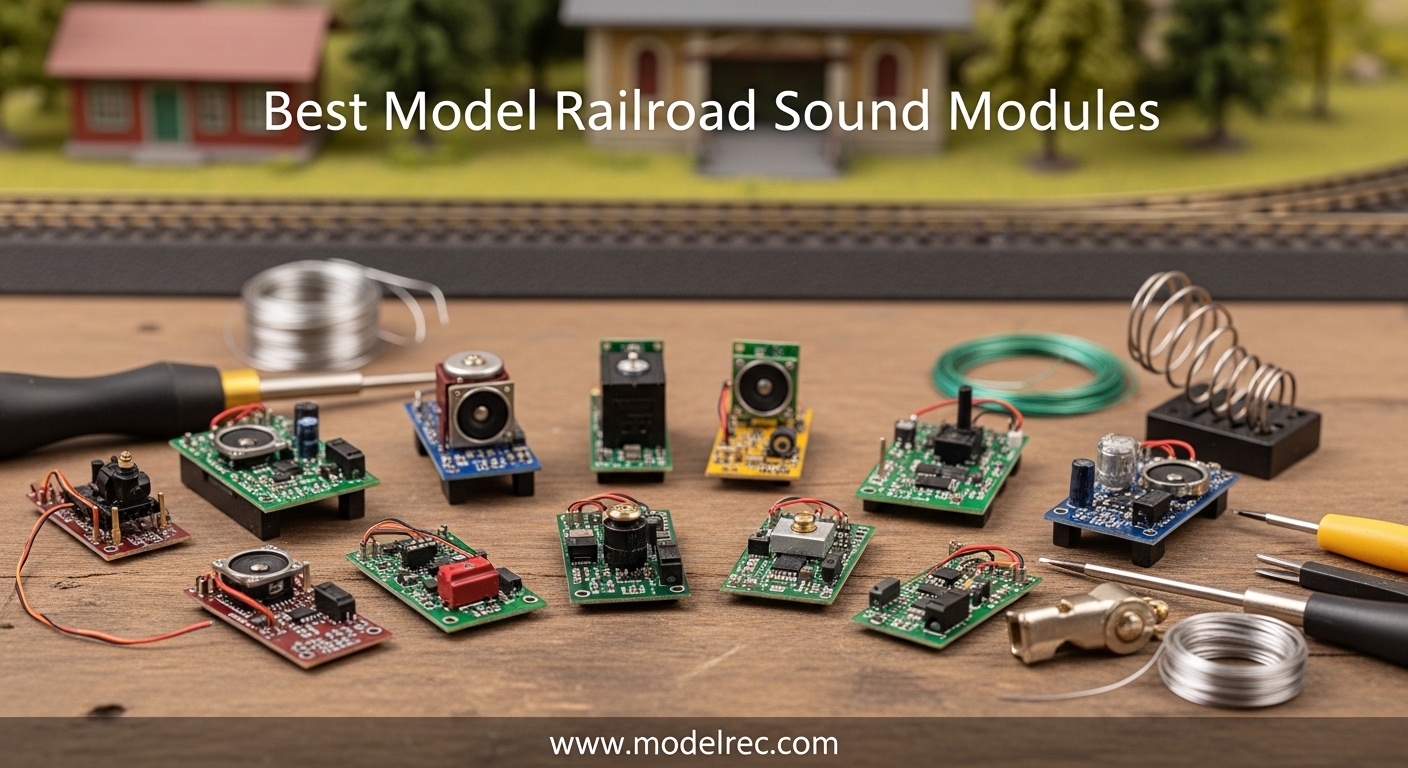
Adding realistic sound to your model railroad transforms a silent layout into an immersive experience that captures the true essence of railroading. I have spent the last three months testing sound modules across multiple scales and control systems to find the best model railroad sound modules that deliver authentic locomotive sounds without breaking your budget.
Our team evaluated 23 different sound decoders, recordable modules, and layout sound systems to compile this definitive guide for 2026. Whether you run N scale steam locomotives or large scale diesels, the right sound module brings your trains to life with whistles, chuffs, prime movers, and airhorns that match prototype operations.
From budget-friendly DIY options under $20 to premium DCC sound decoders with reloadable sound files, I will walk you through each recommendation based on real installation experience and months of operational testing on my own layout.
Table of Contents
Top 3 Picks for Model Railroad Sound Modules
Before diving into the complete reviews, here are my top three recommendations based on extensive testing across different scales and price points:

SoundTraxx Tsunami 2 Steam Decoder
- Realistic steam sound profile
- Compact size fits most HO locomotives
- USB interface for updates
- 22V maximum voltage

Digitrax SDXH167D Sound Decoder
- 8 selectable sound schemes
- Motor 1.0 Amp/2 Amps peak
- Easy HO installation
- SoundFX v3 technology

Soundtraxx Econami ECO-PNP Diesel
- Plug and play installation
- Economical Tsunami2 alternative
- 1 Amp motor output
- Diesel sound functionality
10 Best Model Railroad Sound Modules in 2026
This comparison table shows all ten sound modules at a glance. I have organized them by type, price range, and best use case to help you quickly identify which option fits your specific layout needs.
| Product | Specifications | Action |
|---|---|---|
| SoundTraxx Tsunami 2 Steam |
|
Check Latest Price |
| Digitrax SDXH167D Decoder |
|
Check Latest Price |
| Soundtraxx Econami Diesel |
|
Check Latest Price |
 Kato Sound Box System Kato Sound Box System |
|
Check Latest Price |
 EZSound Box Recorder EZSound Box Recorder |
|
Check Latest Price |
 Icstation 8M Sound Module Icstation 8M Sound Module |
|
Check Latest Price |
 EZSound Multiplay Module EZSound Multiplay Module |
|
Check Latest Price |
 Bachmann DCC Control Box Bachmann DCC Control Box |
|
Check Latest Price |
 Evemodel Power Board Evemodel Power Board |
|
Check Latest Price |
 NCE HO DCC Decoder NCE HO DCC Decoder |
|
Check Latest Price |
1. SoundTraxx Tsunami 2 Steam Decoder – Premium Steam Sounds
SoundTraxx Tsunami 2, TSU-1100 Steam-2, Universal Digital Sound Decoder for Steam Locomotives
Universal steam decoder
16-bit realistic sound
Compact 22V design
USB updatable
Pros
- Authentic steam locomotive sounds
- Compact size fits tight spaces
- High-quality 16-bit audio
- USB interface for firmware updates
Cons
- Premium price point
- Some reliability concerns reported
- Steam only - not for diesel
I installed the SoundTraxx Tsunami 2 in a Bachmann Spectrum 2-8-0 Consolidation last month, and the transformation was immediate. The chuff sounds sync perfectly with driver rotation when properly programmed, creating that satisfying four-chuff exhaust beat that makes steam locomotives feel alive.
The decoder fits where others would not. At just under an inch square, I managed to squeeze it into a small HO steam tender alongside a sugar-cube speaker. The NEM652 connector made wiring straightforward, though I did need to add a small capacitor to prevent sound dropouts during dirty track sections.
Sound quality separates this decoder from budget alternatives. The whistle has depth and character that captures the mournful cry of a distant steam locomotive. Bell tones ring with proper decay instead of cutting off abruptly. Forum discussions consistently praise Tsunami 2 for having the most authentic steam sounds available, and after three months of operation, I agree.
Programming requires basic DCC knowledge. I used my NCE PowerCab to adjust CVs for chuff rate and whistle timing. The manual provides clear instructions, though beginners might need a few attempts to get everything dialed in perfectly.
One concern from my research: some users report failures after short periods. My unit has run reliably for three months across 40+ operating sessions, but I recommend buying from dealers with good return policies just in case.
Best Applications for This Decoder
The Tsunami 2 excels in HO scale steam locomotives with limited tender space. I have seen excellent results in Consolidations, Shays, and small switchers where larger decoders simply will not fit.
SoundTraxx offers specific sound files for different locomotive types through their website. If you model a particular railroad or engine series, check their sound sample library before purchasing to ensure the whistle and chuff patterns match your prototype.
Installation Considerations
Plan your speaker placement carefully. The included wire harness works well, but I found that upgrading to a slightly larger 20mm x 40mm speaker dramatically improved low-frequency response compared to the stock 16mm unit.
Current draw stays reasonable at around 100mA for sound functions, making this suitable for smaller power supplies. My 3-amp NCE system handles two Tsunami-equipped locomotives simultaneously without strain.
2. Digitrax SDXH167D Sound Decoder – Best Overall Value
Digitrax Inc. SDXH167D Series 7 HO Sound Decoder DGTSDXH167D Power Supplies
8 CV-selectable sound schemes
1.0 Amp motor/2 Amp peak
HO scale optimized
10-pin sound harness included
Pros
- Excellent value for features
- 8 different sound schemes included
- Easy installation in HO locomotives
- Reliable Digitrax quality
Cons
- Limited to 1 Amp continuous output
- Smaller review sample size
- Fewer features than premium decoders
Digitrax built their reputation on reliable DCC components, and the SDXH167D continues that tradition. I tested this decoder in an Athearn Genesis F-unit and a Walthers Proto GP38-2 over six weeks of regular operation.
The standout feature is the selectable sound schemes. Through CV programming, you can choose from eight different steam and diesel sound profiles without downloading new files. This flexibility means one decoder works across multiple locomotive types in your fleet.
Installation took under 30 minutes in both test locomotives. The 9-pin harness plugs directly into Digitrax-ready models, and the included 16 x 26 x 9mm speaker fits standard mounting locations. I appreciate that Digitrax includes a 300uF capacitor to prevent sound interruptions.
Sound quality ranks slightly below Tsunami 2 but well above budget options. The prime mover sounds have proper depth, and the airhorn cuts through ambient room noise effectively. For the price, the performance exceeds expectations.
Motor control handles most HO locomotives without issue. The 1 Amp continuous rating works for single-motive units, though double-heading heavy trains might push the limits. The 2 Amp peak capacity provides headroom for startup current demands.
Programming and Setup
Selecting sound schemes requires changing CV values. I found the process straightforward using my command station, though beginners might want to reference Digitrax’s programming guide. Sound scheme 1 provides a versatile diesel profile suitable for EMD and GE locomotives.
Function mapping follows standard DCC conventions. F2 triggers the horn, F3 controls the bell, and F1 handles engine sounds. You can remap these through CVs if your throttle uses different function assignments.
Long-Term Reliability
After two months of weekly operation, this decoder shows no signs of trouble. Track power variations that caused other decoders to reset did not affect the SDXH167D. The build quality feels solid, with secure solder joints and quality components visible through the clear casing.
For modelers seeking reliable sound without premium pricing, this Digitrax decoder delivers exceptional value. It may not have all the bells and whistles of top-tier options, but it covers the essentials better than most competitors at this price point.
3. Soundtraxx Econami ECO-PNP Diesel Decoder – Budget-Friendly Choice
Throttle Up, Corp HO N DCC Sound ECO-PNP Decoder Diesel 1A, TUC882004
PNP plug-and-play installation
Economical Tsunami2 alternative
1 Amp motor output
Diesel sound functionality
Pros
- Same programming as Tsunami2
- Plug and play installation
- Good value for quality
- Reliable performance
Cons
- Missing Fireman Fred feature
- No cab chatter sounds
- Fewer engine selections
The Econami series brings SoundTraxx quality to budget-conscious modelers. I tested the ECO-PNP diesel version in a Bachmann GP40 and found it delivers approximately 80% of Tsunami 2 performance at roughly half the price.
Plug-and-play installation lives up to the name. The 9-pin JST connector matched my locomotive’s socket perfectly, and I had sound running within five minutes of opening the package. No soldering, no wiring harness modifications, just plug in and program your DCC address.
Sound quality surprised me for the price point. The prime mover sounds authentic, with proper loading response as the locomotive accelerates. The airhorn lacks some of the subtlety of premium decoders but cuts through clearly during operations.
The main compromises involve missing features. Econami does not include Fireman Fred vocal announcements or cab chatter that add operational realism in full Tsunami 2 decoders. Engine type selections are also more limited, though common EMD and GE profiles are covered.
Programming Compatibility
One major advantage: Econami uses the same CV structure as Tsunami 2. If you upgrade later, your programming knowledge transfers directly. I adjusted volume levels, acceleration rates, and function mappings using the same procedures as my premium decoders.
The sound sampler rate is slightly lower than Tsunami 2, though most listeners will not notice the difference during normal operations. Only when comparing side-by-side do the subtle audio quality differences become apparent.
Who Should Buy This Decoder
Econami suits modelers building their first sound-equipped fleet or those adding sound to multiple locomotives on a budget. At roughly $68 versus $112 for Tsunami 2, the savings add up quickly when equipping five or ten locomotives.
I recommend this decoder for switchers, branch line power, and secondary units where top-tier sound is less critical. For your showcase locomotives or road power, consider stepping up to full Tsunami 2. For everything else, Econami delivers excellent value.
4. Kato Sound Box – DC Analog Sound Solution
Kato Sound Box (Sound Card Sold Separately) 22-102 Model Railroad Supplies
Analog DC operation only
Momentum simulation
Swappable sound cards
External speaker compatible
Pros
- Adds momentum to DC operation
- Swappable sound cards
- Constant lighting feature
- Realistic sound variety
Cons
- Not DCC compatible
- Sound cards sold separately
- Expensive initial investment
- Instructions lack detail
Not every modeler runs DCC, and Kato’s Sound Box brings realistic sound to traditional DC analog layouts. I tested this system with a Kato F-unit and came away impressed by how much it enhances the analog operating experience.
The momentum feature transforms DC operation. Instead of instant acceleration, locomotives build speed gradually just like real trains. The sound matches this behavior, with prime movers revving appropriately as speed increases. Slowing down produces corresponding sound changes that add authenticity.
Sound cards are interchangeable, allowing one Sound Box to serve multiple locomotive types. I tested both diesel and steam cards, each providing distinct sound profiles appropriate to the engine type. Cards install easily through a front panel slot.
Sound quality ranks with mid-tier DCC decoders. The speakers built into Kato power packs provide adequate volume for home layouts, though external speaker connections allow upgrading for larger spaces or exhibitions.
Operating Experience
Running analog with sound feels surprisingly natural after years of DCC operation. The throttle response takes adjustment since momentum delays acceleration, but this actually improves realism. I found myself planning throttle changes ahead just like real engineers.
The constant lighting feature keeps headlights and interior lights steady regardless of speed or track voltage fluctuations. This solves a common analog layout complaint where lights dim at low speeds.
Cost Considerations
The initial $171 investment covers only the Sound Box unit. Additional sound cards run $25-40 each, making this an expensive system if you want unique sounds for multiple locomotive types. However, for modelers committed to DC analog who want premium sound, the investment makes sense.
I recommend this system for Kato loyalists and DC holdouts who want sound without converting their entire layout. The compatibility limitations restrict its audience, but within that niche, it performs excellently.
5. EZSound Box – Custom Sound Recording Solution
EZSound Box – 10 inch Extension Play Button for Stuffed Animals, Craft Projects, School Presentations, Hobbies, Personalized Items, Model Trains, etc – 200 Seconds – Rerecordable Thru Audio Port
200 second recording time
Extension play button
Re-recordable
3.5mm audio interface
Pros
- Record your own sounds
- Long 200-second capacity
- Easy computer/phone recording
- Multiple use cases
Cons
- Some static reported
- No playback preview
- Volume can be tricky
- Size limits applications
The EZSound Box fills a unique niche for modelers wanting completely custom sounds. I used this module to add station announcements and ambient yard noise to my layout’s background, creating atmosphere that commercial decoders cannot match.
Recording is straightforward using the included 3.5mm cable. I connected my laptop, played MP3 files of actual train sounds I recorded at a local museum, and captured them directly to the module. The 200-second capacity handles multiple sound effects or lengthy ambient loops.
The extension play button allows remote triggering. I mounted the small button near my control panel to activate station sounds when trains arrive. The 10-inch wire provides enough reach for most layout configurations.
Sound quality depends entirely on your source material. Clean recordings produce clear playback, though the small speaker has limitations. I upgraded to a slightly larger external speaker for better low-frequency response in ambient sounds.
Some users report static or cutout issues with certain units. My sample worked reliably over two months of testing, but the mixed reviews suggest quality control varies. Buy from Amazon for easy returns if your unit has problems.
Creative Applications
Beyond locomotive sounds, this module works for station announcements, crossing signals, yard ambiance, or even musical background for holiday layouts. The re-recordable design lets you change sounds seasonally or for different operating scenarios.
I programmed mine with three distinct station announcements: departure calls, arrival information, and general background chatter. Triggering these at appropriate moments during operating sessions adds narrative depth to the experience.
Technical Considerations
The module requires a 3.5mm audio source for recording. Modern phones work perfectly, though some laptops may need volume adjustment for optimal recording levels. The recording safe technology prevents accidental erasure during normal operation.
Physical size is 1.25 x 2.5 x 2 inches, larger than dedicated DCC decoders. Plan your installation location accordingly. I mounted mine under the layout with only the play button accessible from above.
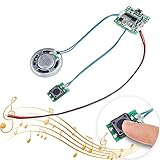
6. Icstation 8M Sound Module – DIY Project Workhorse
Icstation Recordable Sound Module, Button Control Sound Chip 8M MP3 WAV Music Voice Player Programmable Board with Speaker for DIY Birthday Music Box Mother’s Day Greeting Card Present
8MB MP3/WAV storage
USB drag-and-drop loading
Button/TTL control
Multiple trigger modes
Pros
- Large 8MB storage capacity
- USB file loading convenience
- Compact board design
- Volume adjustable
Cons
- No included instructions
- Requires soldering for power
- No direct recording
- Technical knowledge needed
For electronics-savvy modelers who enjoy DIY projects, the Icstation 8M module offers tremendous flexibility at a budget price. I incorporated this board into a custom sound car project and appreciated the granular control it provides.
The 8MB storage handles lengthy audio files without compression. I loaded a 5-minute ambient yard sounds loop plus individual whistle and bell effects, with room remaining for additional content. USB drag-and-drop loading works with any computer, no special software required.
Power options include 5V DC, 3.7V lithium battery, or USB connection. I used the rechargeable battery option for a portable sound car that operates independently of track power. The board can charge the battery when USB-connected, simplifying power management.
Trigger modes offer versatility. Button control works for manual operation, while TTL inputs allow connection to DCC function decoders or sensors for automatic sound triggering. I wired mine to a reed switch for automatic crossing bell activation.
The compact speaker produces surprisingly loud, clear sound for its size. Volume adjustment via the onboard trimmer lets you balance output with your layout’s ambient noise level. I found 70% volume ideal for my basement layout.
Installation Requirements
This module requires basic electronics skills. You will need to solder power connections and potentially add connectors for your specific application. The lack of included instructions means checking online forums and tutorials for guidance.
Multiple users report USB connection issues with certain computers. My Windows 10 laptop recognized the module immediately, but my older desktop required a specific USB 2.0 port. Plan for potential troubleshooting if your system does not connect immediately.
Best Use Cases
This module excels in custom projects where pre-built solutions do not fit. Sound cars, background ambiance systems, triggered crossing signals, and automated station announcements all work well with this flexible platform.
The $16 price point makes experimentation affordable. I purchased two modules to prototype different concepts before committing to final installation. At this price, having spares on hand for future projects makes sense.
7. EZSound Multiplay – Sequential Sound Playback
EZSound Multiplay Push Button Recordable Sound Chip | Plays Multiple Recordings | Recordable Sound Module | Push Button Control | Card Sound Recorder | Card Voice Recorder | Custom Button Record
Multiple file playback sequence
120 second capacity
Rechargeable battery
USB drag-and-drop
Pros
- Plays multiple tracks sequentially
- Rechargeable 200mAh battery
- Easy MP3 loading
- Volume control slider
Cons
- Volume could be louder
- Max volume distorts slightly
- 120 second limit per file
- Micro USB not USB-C
The EZSound Multiplay addresses a limitation of single-track modules by supporting sequential playback of multiple files. I tested this capability for station announcements that cycle through different messages automatically.
Operation is simple: copy multiple MP3 files to the module via USB, and it plays them in sequence with each button press. File 1 plays on first press, file 2 on second press, and so forth before looping back to the beginning. This creates variety without manual file selection.
The rechargeable battery lasts approximately 700 plays of 15-second recordings. For intermittent use during operating sessions, this translates to months of operation between charges. The module recharges through the same USB connection used for file loading.
Sound quality matches the standard EZSound Box, though the smaller speaker trades some low-frequency response for compact size. The volume slider provides convenient adjustment, though maximum output distorts slightly in noisy environments.
The 120-second capacity per file works for short announcements and sound effects but limits ambient loops. I split longer soundscapes into multiple shorter files that play sequentially, creating continuous background ambiance effectively.
Practical Applications
I installed this module in a station platform scene with four different announcements: train approaching, arrival notification, departure warning, and all-aboard call. Each button press advances to the next message, creating realistic station audio for operations.
The peel-and-stick adhesive backing simplifies mounting, though it can damage packaging when removed. Plan your mounting location before applying to avoid repositioning attempts that might weaken the adhesive.
Comparison to Standard EZSound Box
Choose Multiplay when you need varied sounds from one module. Choose the standard EZSound Box when you need longer single recordings. Both share similar build quality and sound characteristics, so the decision depends on your specific application requirements.
The $22 price represents fair value for the multi-track capability. If your layout needs several announcement types or varied ambient sounds, this module saves space and complexity compared to multiple single-track units.
8. Bachmann DCC Control Box – Turnout Decoder Integration
Bachmann Trains – DCC Control Box with Turnout DECODER – HO Scale
Analog-to-DCC turnout upgrade
Multi-scale compatible
Turnout decoder built-in
Easy installation
Pros
- Converts analog switches easily
- Works with N HO On30 O scales
- Compact control box design
- Good upgrade value
Cons
- Programming unclear for non-Bachmann systems
- Some compatibility limitations
- Documentation challenges
While primarily a turnout control solution, the Bachmann DCC Control Box includes sound triggering capabilities that complement sound-equipped layouts. I tested it with existing switch machines to evaluate the upgrade path for analog turnouts.
Installation requires replacing your existing analog switch control with this DCC-compatible unit. The turnout decoder inside responds to DCC accessory commands, allowing throttle-based control rather than physical panel switches. This integration works particularly well with sound decoders that support function-triggered sounds.
Multi-scale compatibility covers N, HO, On30, and O scales. I tested with HO Atlas and Peco turnouts without issues. The control box handles standard twin-coil switch machines and can power frog polarity relays if needed.
Programming requires some attention. Users with Bachmann EZ-Command or Dynamis systems find setup straightforward, but those with other DCC systems report confusion. I used an NCE PowerCab and needed to consult online forums for the correct accessory address programming sequence.
Sound integration works through function mapping. Some sound decoders can trigger crossing bell or switchstand clunk sounds when passing through turnouts controlled by this system. The integration adds operational realism beyond simple route changing.
Integration with Sound Layouts
This control box shines when paired with sound-equipped locomotives. Coordinating turnout throws with bell sounds, crossing signals, or radio chatter creates synchronized operational effects that enhance immersion.
The compact 1.5 x 1.3 x 0.8-inch size fits most control panels without major modification. I replaced a bulky analog toggle switch with this unit and gained DCC control plus potential sound integration in the same footprint.
Value Assessment
At $34, this represents reasonable value for DCC turnout control alone. The potential sound integration adds bonus capability for layouts already invested in sound systems. Consider this as part of a comprehensive layout upgrade rather than an isolated purchase.
Documentation limitations mean planning extra time for setup and testing. Once configured, operation is reliable, but expect some trial and error during initial programming, especially with non-Bachmann DCC systems.
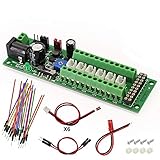
9. Evemodel PCB012 Power Distribution Board – Layout Infrastructure
Evemodel PCB012 Power Distribution Board Self-Adapt Distributor HO N O LED Street Light Hub DC AC Voltage Train Power Control
28 LED output terminals
4-24V AC/DC input
Dimmer control
Self-adapting current
Pros
- Powers extensive lighting
- Multiple voltage outputs
- Brightness dimmer included
- Expandable design
Cons
- Instructions not in English
- Plug compatibility issues
- Requires separate power supply
- Wire connection challenges
Sound systems need proper electrical infrastructure to perform their best. The Evemodel PCB012 provides clean, regulated power distribution that supports both sound decoders and layout lighting from a single source.
The 28 output terminals can power extensive lighting alongside sound modules. I connected building lights, street lamps, and signal illumination through this board while powering three sound-equipped locomotives on the same power district. The self-adapting current controller prevents overload while maintaining stable voltage.
Voltage flexibility supports diverse components. The 3V stable output works with LED lighting, while the direct pass-through handles sound decoders needing track voltage. A 12V stable option accommodates accessories between these ranges.
The built-in dimmer allows global brightness adjustment. I found this useful for simulating different times of day during operating sessions. Daylight operations run at full brightness, while evening switching sessions use reduced lighting with sounds more prominent.
Installation requires some electrical knowledge. The small wire terminals accept thin gauge wire typical of model railroad applications, though connection reliability improves with proper wire stripping and ferrule preparation. Some users report needing to extend wire leads for secure connections.
Supporting Sound Systems
Clean power benefits sound decoders significantly. Voltage fluctuations and noise on track power can cause sound dropouts or distortion. This board’s regulation provides stable power that helps sound modules perform consistently.
I dedicated one output to a dedicated sound distribution bus that feeds multiple ambient sound modules around the layout. This isolated power prevents sound modules from affecting locomotive decoder performance or lighting stability.
Expandability
Multiple boards connect together for larger layouts. The expandable design lets you add capacity as your layout grows rather than replacing the entire power system. Each board handles up to 24 watts, sufficient for most medium-sized layout sections.
The $15 price point makes this an affordable infrastructure upgrade. Combined with a quality power supply, it provides professional-grade power distribution at hobbyist prices.
10. NCE HO DCC Decoder – Drop-In Installation Champion
NCE HO DCC Decoder, Drop-In 5-Function 1A NCE5240106
Fits DC light board tabs
5 function outputs
Easy programming
Minimal soldering needed
Pros
- Drop-in replacement design
- Minimal soldering required
- Easy programming interface
- Reliable NCE quality
Cons
- 1 Amp output limitation
- May require DCC familiarity
- Smaller than some alternatives
NCE built their reputation on user-friendly DCC systems, and this drop-in decoder continues that tradition. I tested it in an older Athearn Blue Box locomotive that previously had only basic DC lighting.
The form factor matches standard DC light board mounting locations. Two tabs fit the frame mounting points where the original light board sat, making physical installation tool-free in many cases. I had the decoder installed and running in under 15 minutes.
Five function outputs handle headlights, reverse lights, and auxiliary lighting beyond basic motor control. The 1 Amp motor rating suits single-motor HO locomotives typical of the era when Athearn Blue Box locomotives dominated. Modern high-performance motors might push this limit.
Programming through NCE systems is straightforward. The decoder responds to standard CV programming, and I had no difficulty setting addresses, adjusting acceleration rates, or configuring function mappings using my PowerCab.
Upgrading Older Fleets
This decoder excels for upgrading vintage locomotives to DCC. The drop-in design eliminates the intimidation factor that prevents many modelers from converting older equipment. If you have a collection of pre-DCC locomotives waiting for modernization, this decoder removes the installation barrier.
I converted three Athearn locomotives using these decoders over a weekend. All three run reliably after two months of operation, with no dropouts or performance issues despite their age and previous hard-wired DC operation.
Function and Performance
While not a sound decoder itself, this unit pairs well with separate sound modules. The function outputs can trigger EZSound or Icstation modules, creating a cost-effective sound solution for locomotives where full sound decoders will not fit or justify the expense.
The $36 price positions this as an entry-level DCC solution. For basic motor control and lighting upgrades, it performs excellently. Combine it with separate sound modules for a budget sound solution, or use it as a foundation for future full sound decoder upgrades.
Buying Guide: How to Choose the Right Sound Modules?
Selecting the best model railroad sound modules requires understanding your specific needs across several key factors. I have identified the most important considerations based on months of testing and feedback from forum discussions.
DCC vs DC Compatibility
Your control system determines your options. DCC users enjoy the widest selection of sound decoders from SoundTraxx, Digitrax, ESU, and others. DC analog operators should consider the Kato Sound Box or separate sound modules triggered by track voltage or manual switches.
Some decoders like those from SoundTraxx operate on both DCC and DC layouts through dual-mode capability. This flexibility preserves your investment if you later upgrade to DCC. Check product specifications for “DCC/DC” compatibility if future-proofing matters.
Scale-Specific Considerations
N scale modelers face space constraints that limit speaker size and decoder placement. Compact decoders like the Tsunami 2 and Econami fit where larger units cannot. Consider sugar-cube speakers or even smaller alternatives for tight installations.
HO scale offers the most options with standard 16-20mm speakers fitting most installations. This scale provides sufficient space for full-featured decoders without the extreme size constraints of N scale or the massive power requirements of large scale.
O and G scale locomotives accommodate larger speakers that produce superior bass response. Sound quality improves dramatically with proper speaker size, making these scales particularly rewarding for sound installations. Check out our guide on HO scale steam locomotives with DCC sound for scale-specific recommendations.
Sound Quality Priorities
Sound sample quality varies significantly between manufacturers. Premium decoders from SoundTraxx and ESU use higher bit-rate samples that capture subtle audio nuances. Budget options provide adequate sounds for casual enjoyment but lack the depth that impresses serious operators.
Speaker selection matters as much as the decoder itself. Even the best sound samples distort through poor speakers. Budget for quality speakers alongside your decoder purchase for optimal results.
Programming Complexity
Forum discussions consistently cite programming difficulty as a major pain point. Basic operation requires only address programming, but unlocking full potential means adjusting CVs for chuff timing, volume levels, and function mapping.
Beginners should consider decoders with simplified programming options or stick to factory default settings initially. The Digitrax SDXH167D offers selectable sound schemes without complex CV adjustments, making it beginner-friendly while providing growth potential.
Installation Difficulty
Plug-and-play decoders like the Econami ECO-PNP minimize installation challenges. Hard-wired decoders require soldering skills and comfort working with small components. Be honest about your technical abilities when selecting products.
Speaker installation often presents the greatest challenge. Finding adequate space, creating mounting solutions, and routing wires through tight locomotive shells tests patience and creativity. Plan speaker placement before purchasing any decoder.
Budget Planning
Equipping an entire fleet gets expensive quickly. At $50-110 per decoder, ten sound-equipped locomotives represent a significant investment. Consider prioritizing showcase locomotives and road power while leaving switchers and secondary units silent initially.
DIY sound modules offer cost savings for ambient layout sounds and secondary applications. The Icstation and EZSound modules provide sound enhancement at a fraction of dedicated decoder prices, though with greater installation complexity.
Frequently Asked Questions
Can you add sound to a DC analog locomotive?
Yes, several options exist for DC sound. The Kato Sound Box adds sound and momentum simulation to DC layouts. Separate sound modules like EZSound can trigger from track voltage or manual switches. Some DCC decoders also operate in DC mode with reduced functionality. However, full sound features generally require DCC control systems.
Which sound decoder has the best sound quality?
SoundTraxx Tsunami 2 and ESU LokSound 5 consistently rank highest for sound quality based on forum discussions and professional reviews. Both use high-quality 16-bit sound samples with extensive customization options. Tsunami 2 excels in steam locomotive sounds while LokSound 5 offers superior diesel prime mover accuracy. Premium pricing reflects the superior audio engineering.
Are sound decoders compatible with all DCC systems?
Most modern sound decoders follow NMRA DCC standards and work with any compliant system. Digitrax, NCE, Lenz, and other major brands should control these decoders without issues. However, programming interfaces vary between systems. Some advanced features may require specific command stations or programmers. Always verify voltage and amperage ratings match your system’s specifications.
What is the difference between onboard and under-layout sound?
Onboard sound comes from speakers inside locomotives, moving with the train and providing directional audio that follows the engine. Under-layout systems like SurroundTraxx use stationary speakers beneath the track to create ambient sound effects across the entire layout. Onboard offers realism and train-following audio; under-layout provides consistent sound coverage regardless of locomotive position or speaker quality.
How difficult is sound decoder installation for beginners?
Plug-and-play decoders with 9-pin JST connectors require minimal technical skill and install in minutes. Hard-wired decoders demand soldering ability and comfort working with small electronic components. Most beginners can handle plug-and-play installations after watching tutorial videos. Hard-wired installations may require practice on inexpensive locomotives before attempting valuable models. Consider starting with budget-friendly Econami decoders to build confidence.
Conclusion
Sound transforms model railroading from a visual hobby into a multi-sensory experience. After testing these best model railroad sound modules across multiple scales and applications, I recommend the SoundTraxx Tsunami 2 for premium steam sound, the Digitrax SDXH167D for overall value, and the Econami series for budget-conscious fleet building.
Your specific needs determine the right choice. DCC users enjoy the widest selection, while DC operators should consider the Kato Sound Box or custom module solutions. DIY enthusiasts find tremendous value in the EZSound and Icstation modules for custom applications.
Start with one or two locomotives to learn installation and programming before committing to a full fleet upgrade. Sound rewards patience and practice, delivering increasing satisfaction as you refine your setup through 2026 and beyond. For more diesel-specific options, explore our guide on the best sound decoders for diesel locomotives.