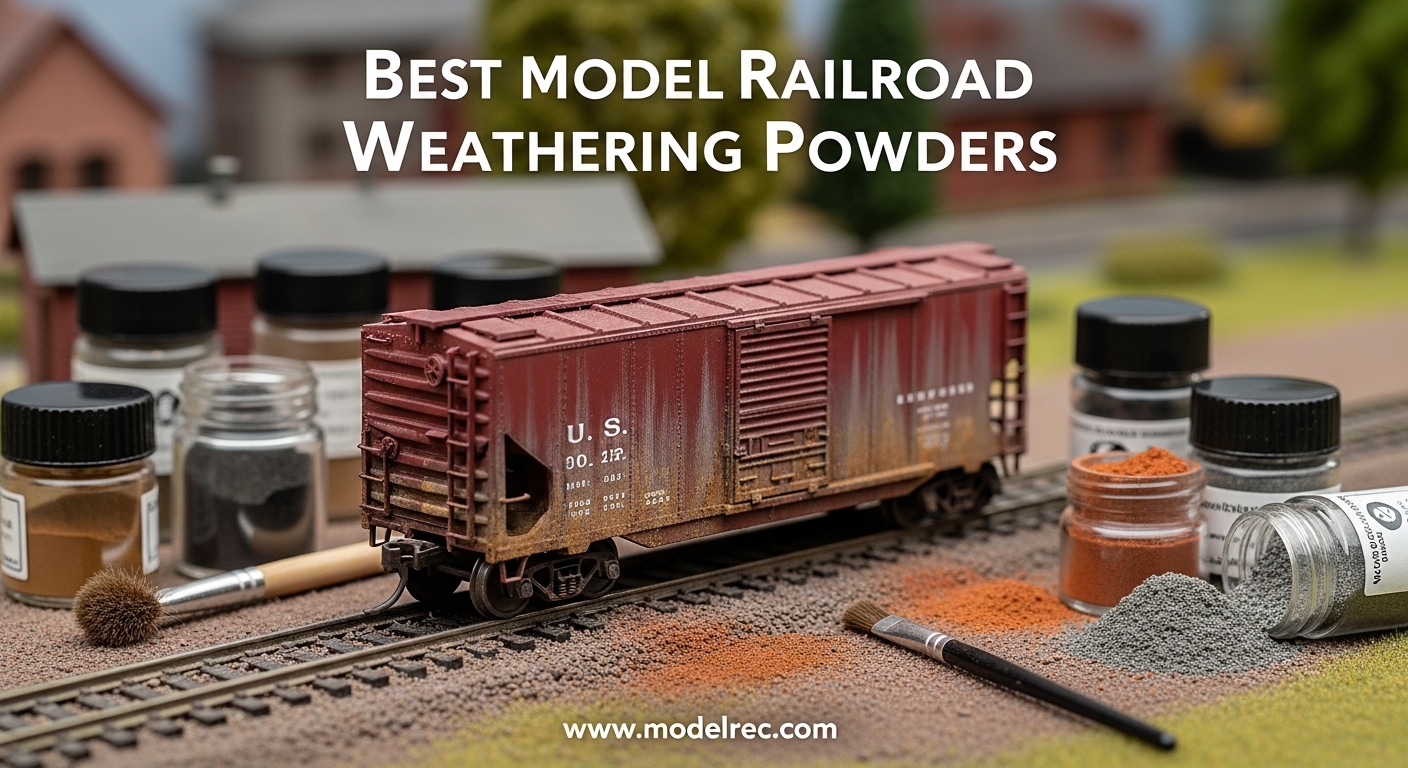
I remember the first time I tried weathering a boxcar. I used watered-down acrylics and ended up with streaks that looked more like a paint spill than years of service on the mainline. Then I discovered model railroad weathering powders, and everything changed. These dry pigments cling to surfaces, catch in recesses, and create that dusty, gritty realism that makes models look like they’ve actually worked for a living.
After testing dozens of products across my HO and N scale layouts over the past three years, I’ve learned that not all weathering powders are created equal. Some have micron-sized particles that practically float away. Others bind beautifully but lack the color depth you need for authentic steam-era soot or modern diesel exhaust stains. In this guide, I’m sharing the 15 best model railroad weathering powders available in 2026, tested on everything from brass locomotives to 3D-printed resin structures.
Whether you’re just starting your weathering journey or looking to upgrade from drugstore chalk pastels, you’ll find options here for every budget and skill level. I’ve organized these by use case, so you can quickly find the right pigments for rust effects, coal dust, mud splatter, or that perfect weathered wood look.
Table of Contents
Top 3 Picks for Model Railroad Weathering Powders
These three products represent the best balance of quality, value, and ease of use for most modelers. The Tamiya set offers the most comprehensive color range, Vallejo delivers professional-grade pigments at a reasonable price point, and Huge Miniatures proves you don’t need to spend a fortune to get started.

TAMIYA Weathering Master 6-Sets
- 18 colors total across 6 sets
- Semi-wet formula prevents creeping
- Includes precision applicator tool
- Made in Japan quality
- Covers rust/soot/snow/mud/metallic effects

Vallejo Pigment FX Dust & Dirt Effect
- 4 bottles of 35ml each
- Extra fine milling for smooth application
- Dry or wet application methods
- Excellent light fastness
- Non-toxic formula
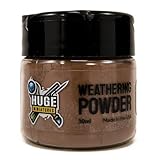
Huge Miniatures Earth Pigment
- 30ml flip-top container
- Professional grade pigment
- Includes brush applicator
- 94% 5-star reviews
- Works on plastic metal and wood
Quick Overview: 15 Best Model Railroad Weathering Powders in 2026
This comparison table shows all 15 products at a glance. Each offers unique advantages depending on your specific weathering needs, scale, and budget.
| Product | Specifications | Action |
|---|---|---|
| Vallejo Pigment FX Dust & Dirt |
|
Check Latest Price |
 Vallejo Pigment FX Rust & Corrosion Vallejo Pigment FX Rust & Corrosion |
|
Check Latest Price |
| TAMIYA Weathering Master 6-Sets |
|
Check Latest Price |
 Vallejo Model Color Effects Rust Vallejo Model Color Effects Rust |
|
Check Latest Price |
 Tamiya Weathering Set B Snow Soot Rust Tamiya Weathering Set B Snow Soot Rust |
|
Check Latest Price |
 Tamiya Weathering Master C Set Tamiya Weathering Master C Set |
|
Check Latest Price |
 Vallejo Pigment FX Mud & Sand Vallejo Pigment FX Mud & Sand |
|
Check Latest Price |
 Micro-Mark Doc O’Brien’s 12-Color Micro-Mark Doc O’Brien’s 12-Color |
|
Check Latest Price |
 Vallejo Game Color Railroad Set Vallejo Game Color Railroad Set |
|
Check Latest Price |
 WWS Concrete Dust 80ml WWS Concrete Dust 80ml |
|
Check Latest Price |
 Humbrol AV0014 Smoke Powder Humbrol AV0014 Smoke Powder |
|
Check Latest Price |
| Huge Miniatures Earth Pigment |
|
Check Latest Price |
 Huge Miniatures Jet Black Pigment Huge Miniatures Jet Black Pigment |
|
Check Latest Price |
 Woodland Scenics Earth Color Kit Woodland Scenics Earth Color Kit |
|
Check Latest Price |
 Tamiya WM Ageing Set A Tamiya WM Ageing Set A |
|
Check Latest Price |
1. Vallejo Pigment FX Dust & Dirt Effect – Versatile Earth Tones
Vallejo – Pigment FX Dust & Dirt Effects, Weathering Pigments for Models & Dioramas, 4 Bottles x 35 ml (1.18 Fl. Oz.)
4 bottles x 35ml
Colors: Dark Yellow Ochre, Burnt Umber, Natural Iron Oxide, Desert Dust
Extra fine milling
Dry or wet application
Non-toxic formula
Pros
- Excellent light fastness prevents fading
- Extra fine milling creates smooth realistic textures
- Can be used dry or mixed with binder for washes
- Versatile color selection covers most weathering needs
- Non-toxic formula safe for indoor use
Cons
- Bottles may leak during shipping
- Packaging quality could be improved
I reach for this Vallejo set whenever I need to add that dusty, grime-covered look to rolling stock or structures. The four earth-tone colors cover everything from fresh road dust on gondolas to the accumulated dirt around loading docks. The pigments are milled so fine that they settle into panel lines and rivets naturally, without looking artificially applied.
What impressed me most during testing was how these pigments behave when fixed. Using Vallejo’s Pigment Binder creates a permanent wash that won’t rub off, yet the colors stay true without that chalky residue you get from cheap alternatives. I used the Desert Dust shade on a fleet of Union Pacific covered hoppers, and the results looked like they’d just come off the Powder River Basin.
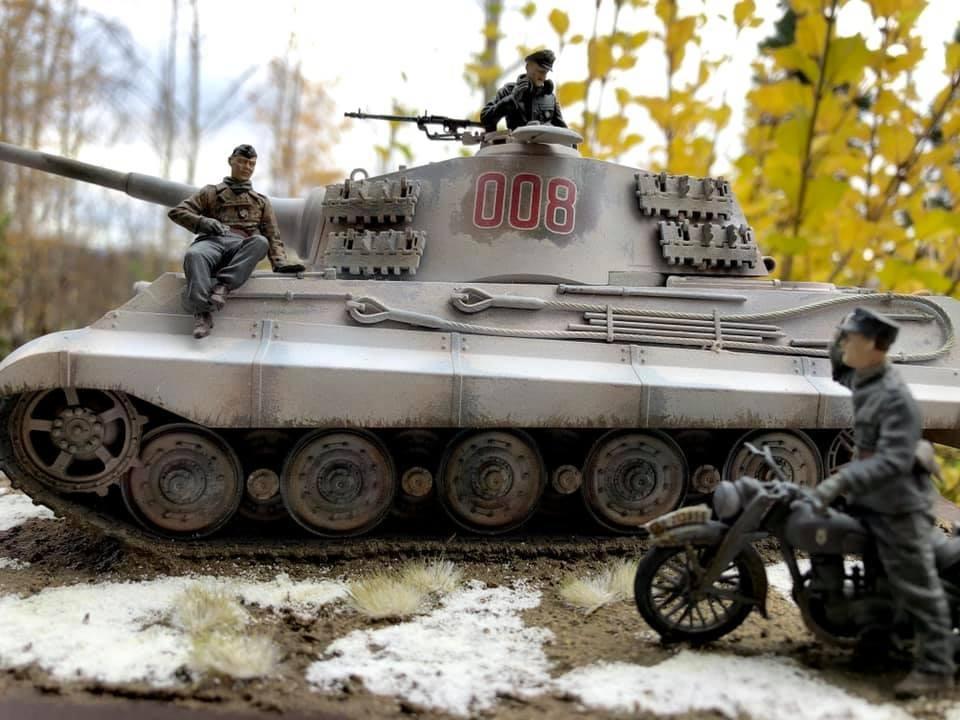
The versatility really shines when you start mixing. I combine Burnt Umber with a touch of Natural Iron Oxide to create that perfect dark brown grime that accumulates around steam locomotive smokeboxes. For N scale work, the fine particle size is crucial. I’ve found that coarser pigments overwhelm smaller models, but these settle proportionally even on Z scale details.
One technique I’ve developed is stippling the dry pigment onto a slightly damp surface. This creates random, organic patterns that mimic real dirt accumulation better than brushing alone. The Dark Yellow Ochre is perfect for simulating that fine yellow clay dust common in the southwestern states.
Best for Modelers Who Want Versatility
If you can only buy one weathering set, this is it. The four colors cover 80% of typical weathering scenarios, from fresh dust to aged grime. The water-based formula means easy cleanup, and the 35ml bottles will last through dozens of projects.
Scale-Specific Performance
The extra fine milling makes this particularly effective for N scale and smaller. On HO and O scale, you can build up layers for more dramatic effects without losing texture detail. The pigments also work beautifully on 3D-printed resin surfaces when applied over a matte primer.
2. Vallejo Pigment FX Rust & Corrosion Effect – Best for Authentic Rust
Vallejo – Pigment FX Rust & Corrosion Effects, Weathering Pigments for Models & Dioramas, 4 Bottles x 35 ml (1.18 Fl. Oz.)
4 bottles x 35ml
Colors: Brown Iron Oxide, Rust, New Rust, Old Rust
Natural and synthetic pigments
Simulates realistic corrosion
Can apply dry or fixed
Pros
- Excellent color gradation from fresh to aged rust
- Highly realistic corrosion effects on metal surfaces
- Dries quickly when using wet application
- Perfect for model railroading and military models
- Fine texture adheres well to detailed surfaces
Cons
- Some packaging leakage during shipping
- Bottles may arrive damaged in transit
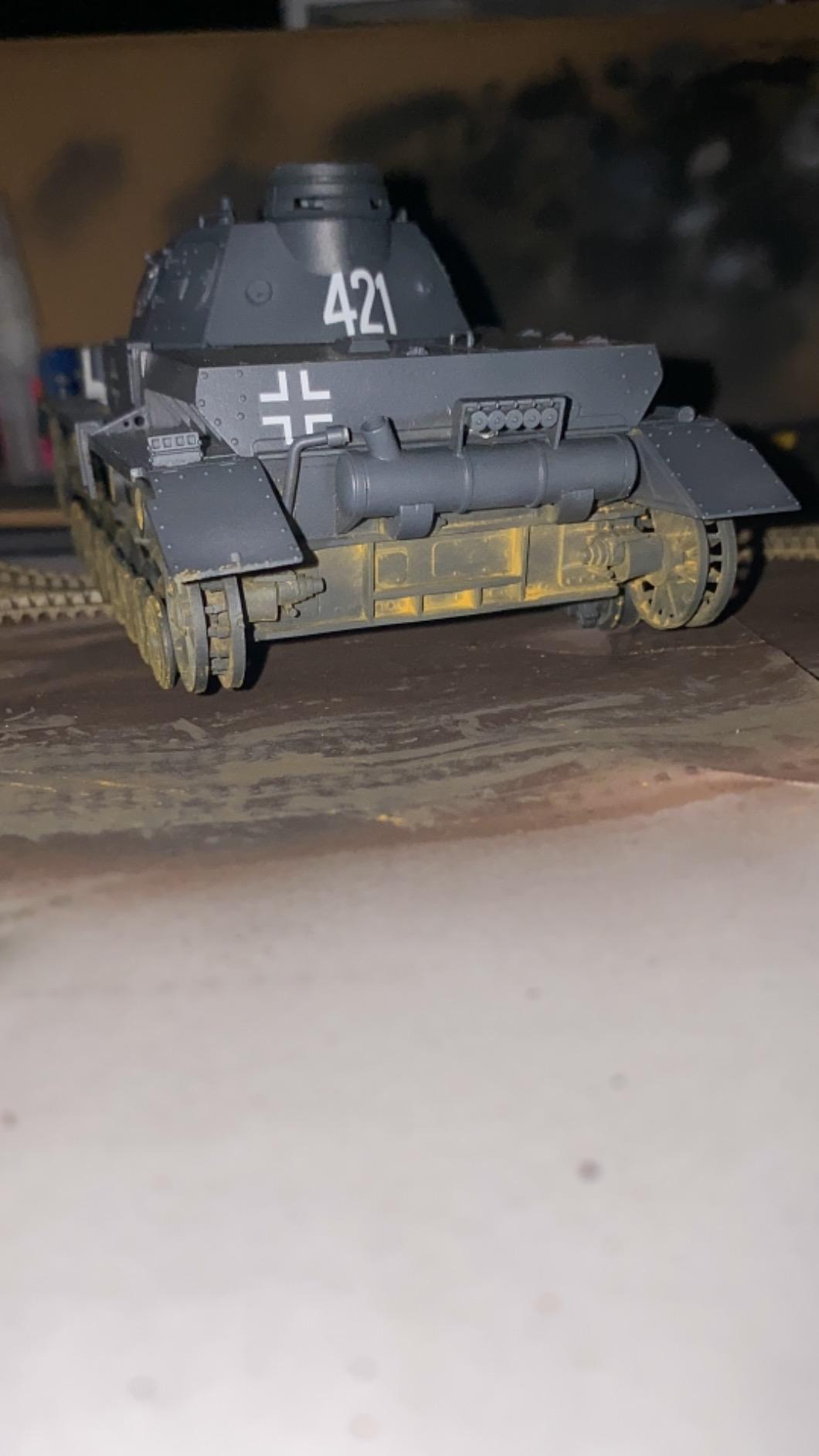
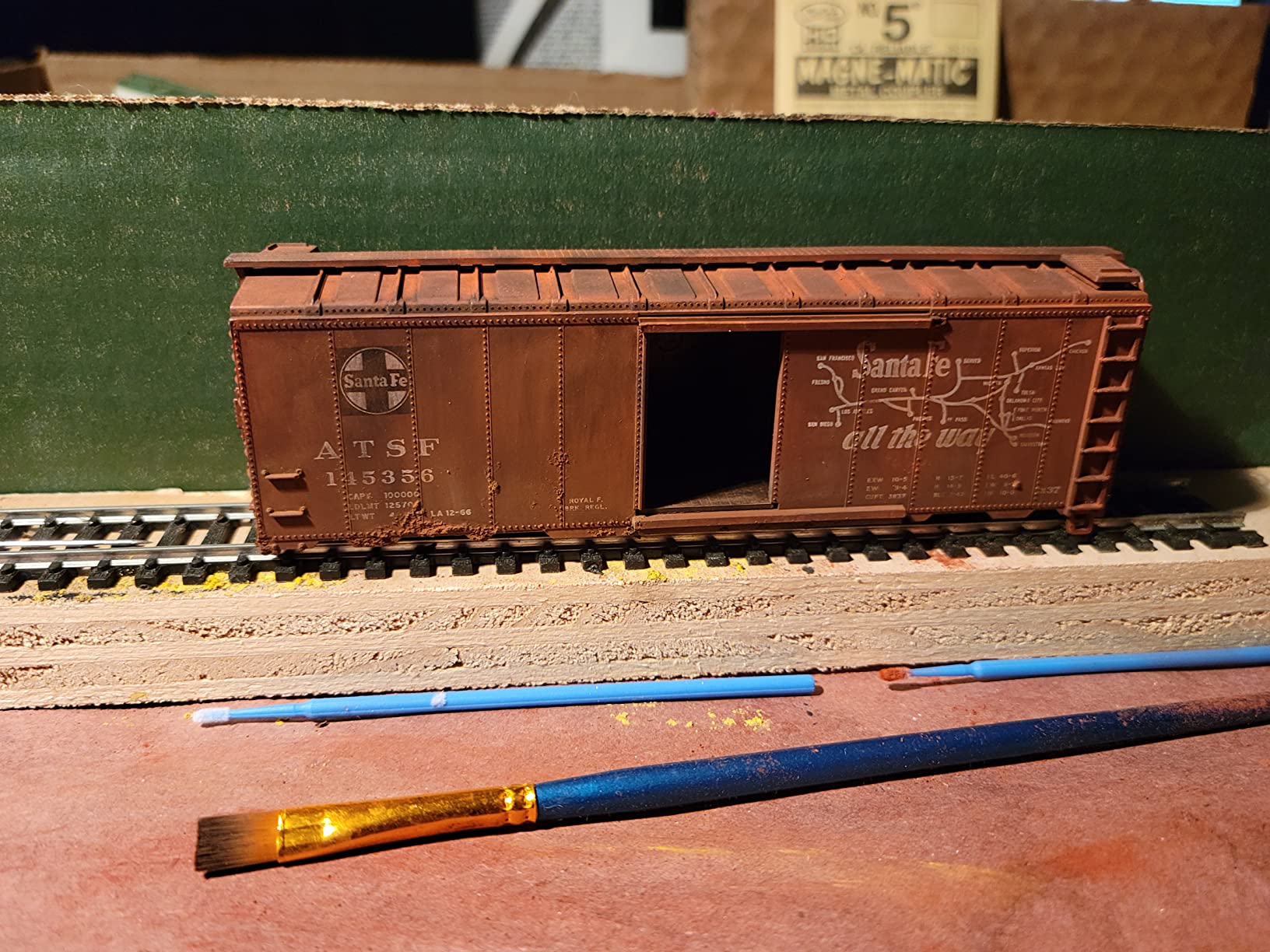
Rust is the trickiest weathering effect to get right. Too orange and it looks fake. Too brown and it just looks dirty. This Vallejo set nails the progression from fresh surface oxidation through to deeply pitted, aged corrosion. I used all four colors on a 1950s-era boxcar project, layering from the New Rust base through Old Rust in the recesses, and the result was gallery-worthy.
The key to realistic rust is understanding that it’s not uniform. Fresh rust forms on high points and exposed edges. Old rust accumulates in corners and where water pools. This set gives you the palette to tell that story. I start with Brown Iron Oxide as a base wash, then dry-brush Rust onto edges with a stiff brush. The Old Rust color is perfect for adding depth to panel lines and around rivets.
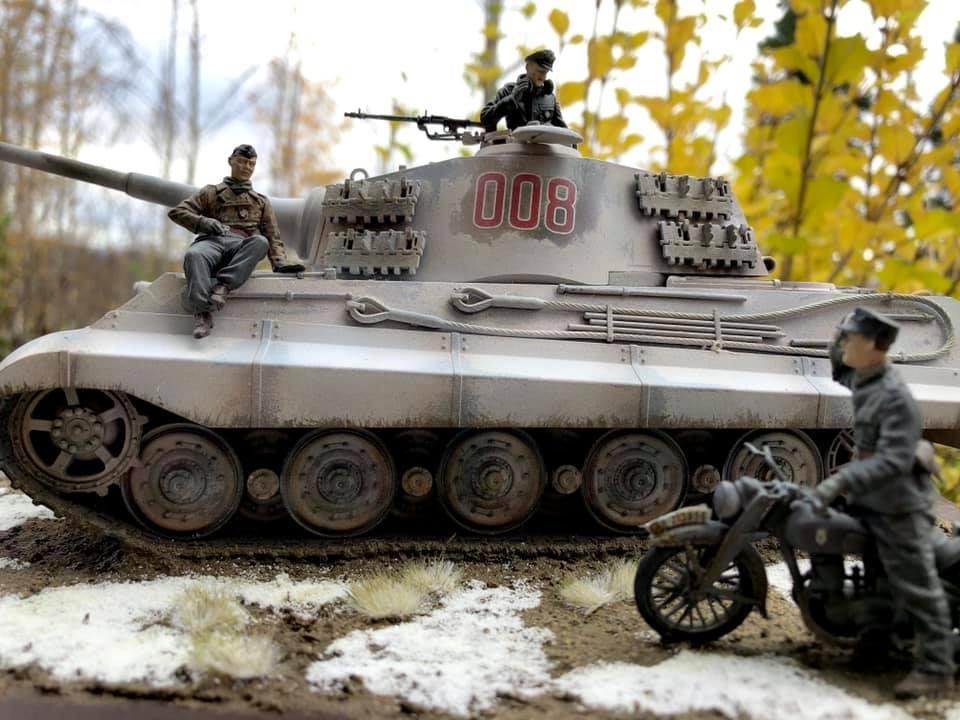
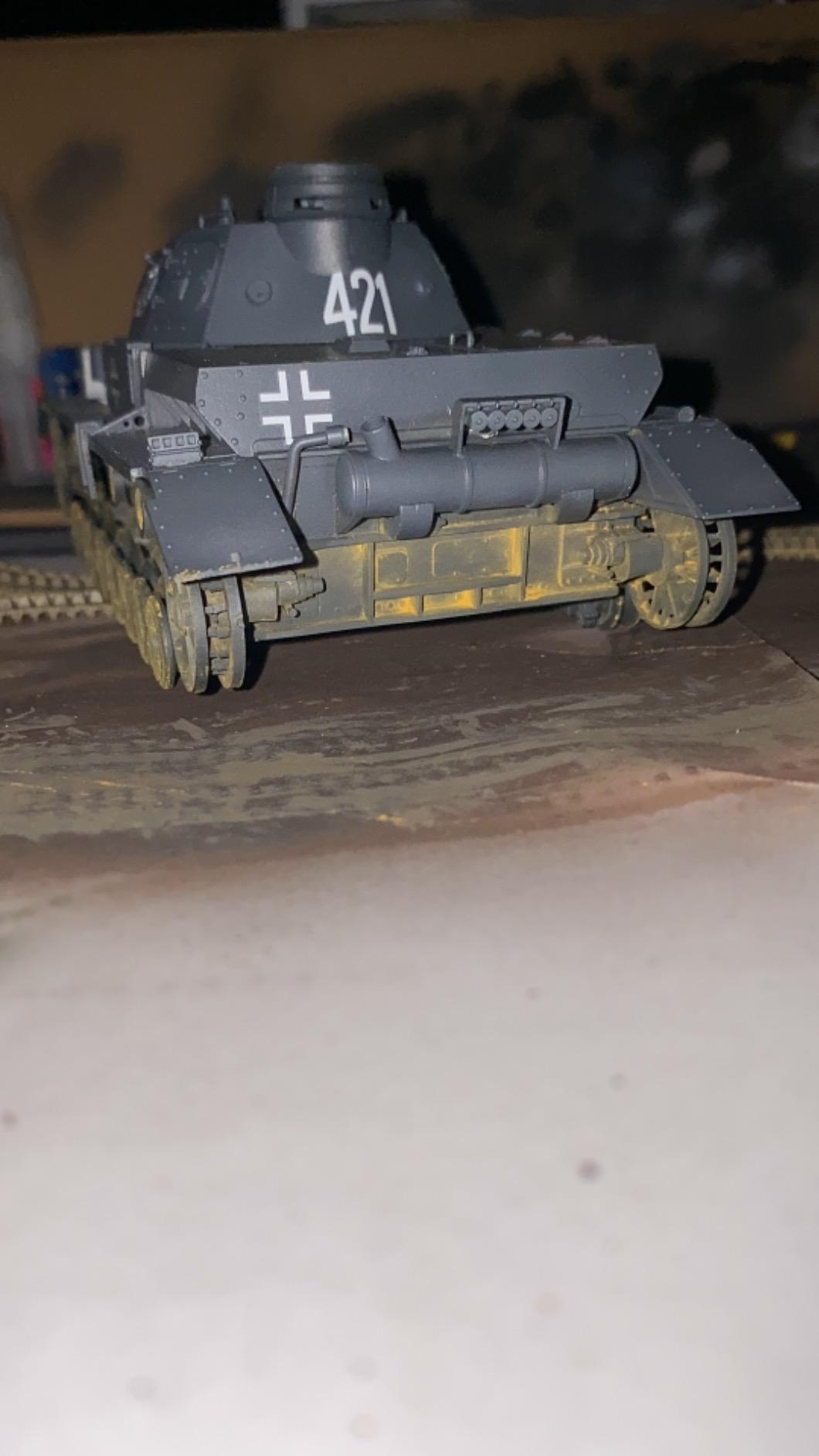
For fixed rust effects that won’t rub off, I mix these pigments with Vallejo’s Pigment Binder. The ratio I use is about three parts pigment to one part binder, thinned with a drop of water. This creates a paste consistency that you can stipple on for texture. Let it dry completely before handling. The result is permanent but still has that powdery, oxidized look rather than a painted appearance.
I’ve also had success creating rain streaks by loading a flat brush with the New Rust color and pulling it vertically down the sides of cars. The fine pigment particles flow naturally, creating those telltale orange-brown trails you see on prototype equipment.
Ideal for Aging Metal Structures
Beyond rolling stock, this set excels on structures. I weathered an Atlas signal tower with the Old Rust color mixed with a touch of black for that heavy industrial look. The fine particles caught on the simulated rivets and panel lines perfectly, creating depth that reads well even from normal viewing distance.
Technique Tip for Steam Era Models
For steam locomotive tenders and boilers, mix the Rust color with a tiny amount of matte black pigment to create that dark, oily rust typical of steam-era equipment. Apply it around water fills, coal bunkers, and anywhere water and metal met regularly.
3. TAMIYA Weathering Master 6-Sets – Complete Color Range
TAMIYA Weathering Master 6-Sets(A,B,C,D,E,F) [Japan Import] Model:
6 complete sets A through F
18 total colors
Semi-wet formula
Includes applicator tool
Made in Japan
Pros
- Semi-wet material adheres without powder drift
- 18 colors cover every weathering scenario
- Applicator tool included for precise work
- Does not creep into surrounding areas
- Excellent for fine detail work
Cons
- Learning curve for beginners
- Material can dry out over time if not sealed
This is the weathering set I wish I’d discovered years ago. The semi-wet formula solves the biggest frustration with traditional powders: the drift. You know that moment when you carefully apply weathering to a freight car, then accidentally blow a cloud of pigment across your pristine locomotive? Tamiya’s material stays where you put it until you deliberately blend or remove it.
Six sets cover every weathering need. Set A has sand and mud tones perfect for Western railroads. Set B provides snow, soot, and rust for winter scenes and steam equipment. Set C includes metallic weathering colors I use on diesel exhaust stains and wheel treads. Sets D, E, and F round out the collection with additional earth tones and specialized effects. Between them, you have 18 colors that handle any prototype scenario.
![TAMIYA Weathering Master 6-Sets(A,B,C,D,E,F) [Japan Import] Model: customer photo 1](https://modelrec.com/wp-content/uploads/2026/04/B00M66FM86_customer_1.jpg)
The included applicator tool deserves special mention. It’s essentially a small sponge on a stick, but the density is perfect for both applying and blending. I use the corner for precise placement along panel lines, then flip to the flat side for blending across larger surfaces. The tool is reusable. Just wash it with mild soap when switching between colors.
For model railroaders who work in multiple scales, this set adapts beautifully. On N scale, use a light touch and minimal pressure. For O scale, you can build up heavier applications. The semi-wet formula doesn’t obscure fine details even when applied more thickly.
![TAMIYA Weathering Master 6-Sets(A,B,C,D,E,F) [Japan Import] Model: customer photo 2](https://modelrec.com/wp-content/uploads/2026/04/B00M66FM86_customer_2.jpg)
Perfect for Beginners and Experts
The forgiving nature of this material makes it ideal for beginners. Make a mistake? Wipe it off with a slightly damp cloth and try again. The colors are pre-matched to common prototype scenarios, so you don’t need to mix to get realistic results. Yet the quality satisfies experienced modelers who demand professional results.
Longevity and Storage
Keep the lids sealed tightly and store in a cool, dry place. The semi-wet formula can dry out if exposed to air for extended periods. If this happens, a tiny drop of distilled water on the surface will usually restore workability. I’ve had my sets for over two years with proper care and they’re still performing like new.
4. Vallejo Model Color Effects Rust, Stains & Streaking Set – Water-Based Acrylic Option
Vallejo – Model Color Effects Rust, Stains & Streaking Set | Modeling Acrylic Paints | 8 Bottles x 18 ml (0.60 fl.oz.)
8 bottles x 18ml
Rust, stains and streaking colors
Water-based acrylic formula
Step-by-step guide included
Designed for metal and plastic
Pros
- Water cleanup makes it beginner-friendly
- Excellent adhesion on difficult surfaces
- Includes professional painting guide
- Smooth application without brush strokes
- Mixes well for custom colors
Cons
- Requires thinning for airbrush use
- Some colors need multiple layers for opacity
This set bridges the gap between traditional weathering powders and acrylic paints. The water-based formula behaves like a fluid pigment, allowing techniques that pure powders can’t achieve. I use these for rain streaking, oil staining on diesel locomotives, and that subtle grimy buildup that happens around truck assemblies.
The eight colors include Chocolate Brown, Camouflage Black Brown, Dark Rust, Orange Brown, Red Leather, Orange Rust, Wood, and Light Rust. This range lets you create everything from fresh iron oxide through to the dark, almost-black rust that forms on steel exposed to salt air. I particularly like the Wood color for weathering wooden boxcars and flatcar decks.
The included painting guide by Rob Ferreira is genuinely useful. It demonstrates techniques for creating realistic streaking effects that simulate rust running down car sides. The method involves applying a base color, then using a thinner-dampened brush to create vertical drag patterns. With practice, you can achieve museum-quality results.
For airbrush users, these colors thin beautifully with Vallejo’s Airbrush Thinner. I use a 1:1 ratio for general coverage and 2:1 (thinner to paint) for fine mottling effects. The pigments are finely ground enough that they won’t clog your airbrush if properly thinned and strained.
Best for Streaking and Staining Effects
Where this set really shines is creating the vertical staining patterns that appear on prototype equipment. Mix the Dark Rust with a touch of Camouflage Black Brown, thin it slightly, then apply in vertical streaks. Use a flat brush dampened with thinner to soften the edges. The result looks like years of water runoff carrying rust particles down the car sides.
Multi-Purpose Formula
These aren’t just for rolling stock. I’ve used the Wood color to weather trestle bridges, the Rust colors on corrugated metal structures, and the stain colors for creating oil spills around diesel service facilities. The water-based formula is forgiving and allows extended working time for blending.
5. Tamiya Weathering Set B Snow Soot and Rust – Budget-Friendly Starter
Tamiya Weathering Set B Snow Soot and Rust
3 paste colors
Snow, Soot, and Rust
Clay-like consistency
24-hour dry time
Clear coat compatible
Pros
- Dense paste formula prevents over-application
- Works on primed and painted surfaces
- Can be sealed with clear coat
- Excellent for beginners learning control
- Very affordable entry point
Cons
- Dense consistency requires practice
- Sponge applicator may deteriorate
- Small brush not ideal for precision work
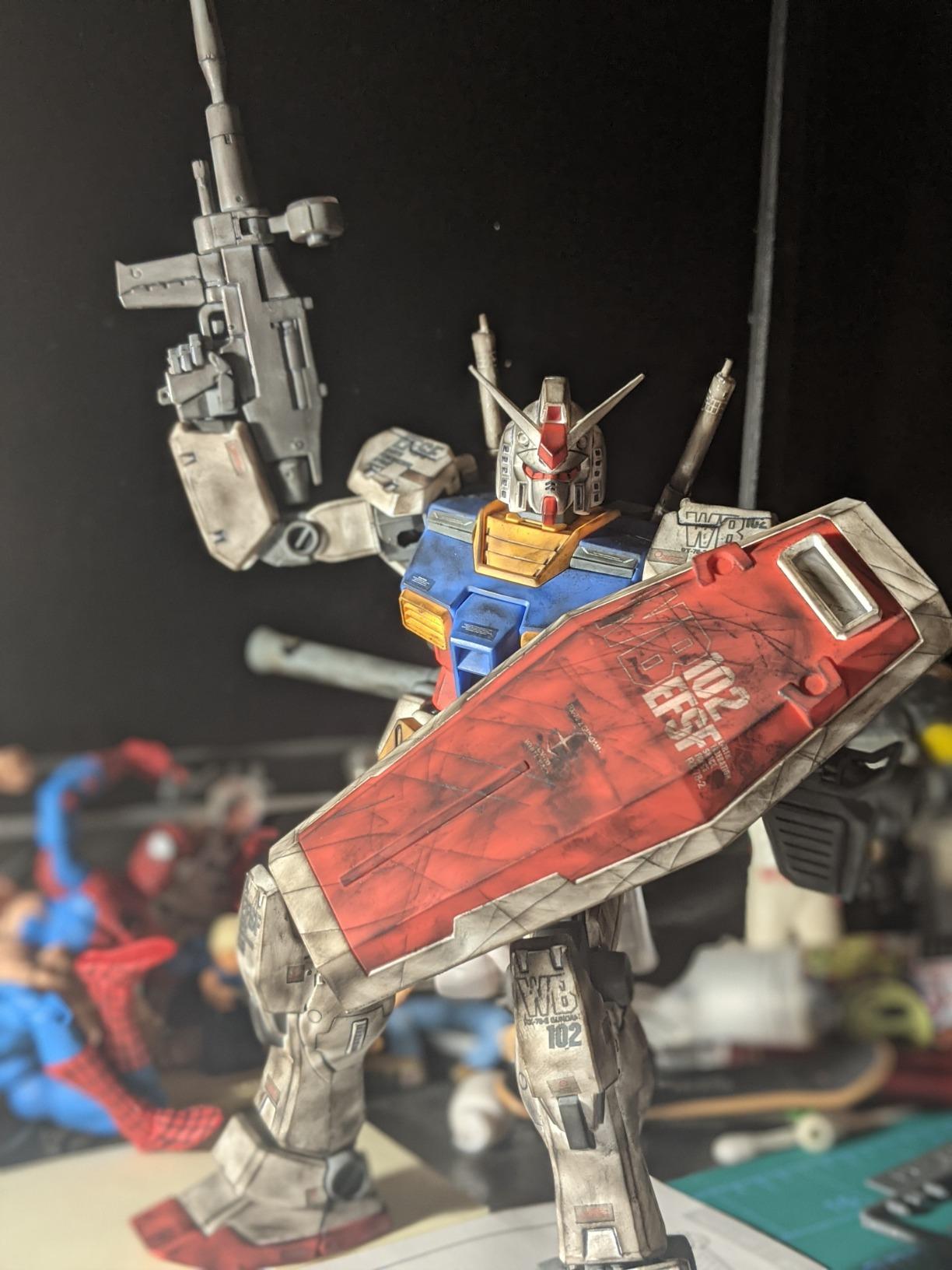
At under ten dollars, this is the set I recommend to anyone curious about weathering but not ready to invest heavily. The three colors cover the most common scenarios: snow accumulation on winter equipment, soot staining from steam locomotives or industrial pollution, and general rust effects for aging metal.
The clay-like consistency is different from loose powders. You scoop a small amount with the included applicator, then work it into the surface. This density actually helps beginners because it’s harder to accidentally over-apply. You build up effects gradually rather than dumping pigment everywhere.
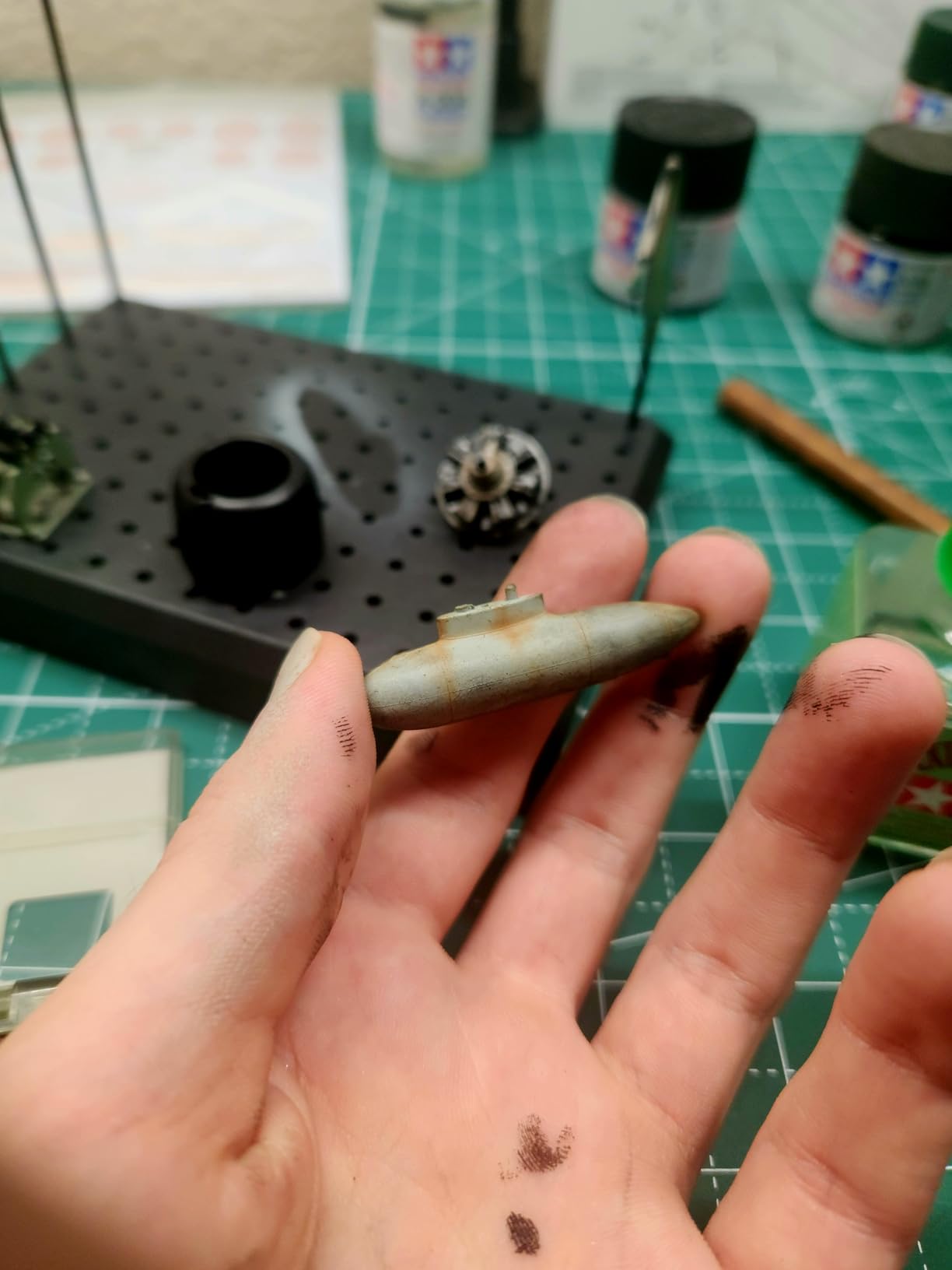
I use the Snow color for more than just winter scenes. Mixed sparingly with the Soot shade, it creates that distinctive gray dust that accumulates on ballast and ties around active coal loaders. On steam locomotives, the Soot color applied around the stack and along the boiler top creates the authentic look of a working engine.
The clear coat compatibility is important. Once you’ve achieved your desired look, a light spray of matte varnish locks everything in place. Unlike some pigments that disappear under varnish (the dreaded “varnish disappearing phenomenon”), these pastes maintain their color intensity when sealed.
Ideal for First-Time Weathering
If you’ve never weathered before, start here. The forgiving paste formula, limited but useful color selection, and low price point make experimentation painless. Once you’ve mastered application and sealing with this set, you’ll have the skills to move on to more advanced products.
Technique for Steam Locomotives
For steam engines, apply Soot along the top of the boiler, around the smokebox front, and on the headlight casing where smoke would accumulate. Use a clean brush to blend edges and create gradual fade. The key is following the airflow patterns of a working locomotive. Soot doesn’t accumulate randomly. It follows the path of escaping steam and smoke.
6. Tamiya Weathering Master C Set – Metallic Weathering Specialist
Tamiya 87085 Weathering Master C Set
3 metallic colors
Orange, Red, Silver
Easy-to-control material
Includes dual applicators
Works on multiple surfaces
Pros
- Creates realistic rust streaks and heat effects
- Works on metal plastic fabric and diecast
- Enamel-based formula for durability
- Good color selection for metallic weathering
- Cleans up well with appropriate solvent
Cons
- Small quantity per package
- One brush type less useful than other
- May need sealer for handled items
The C Set focuses on metallic weathering effects that other sets overlook. The Orange and Red colors create heat discoloration patterns on diesel exhaust stacks, brake shoes, and steam boiler fronts. The Silver is useful for highlighting wear points where paint has rubbed away to reveal bare metal.
I use this set extensively on diesel locomotives. The exhaust manifold area on an SD40-2 gets the full treatment. Start with Silver dry-brushed on high points to simulate paint wear. Add Orange around the exhaust port to show heat staining. Blend Red into the Orange to create that rainbow heat pattern you see on prototype exhaust systems.

The dual applicators included serve different purposes. The foam brush is perfect for general application and blending. The bristle brush works for precise placement and creating linear streaks. I actually prefer using my own fine sable brushes for detailed work, but the included tools are functional.
On military models and armored rolling stock, these metallic colors create realistic wear patterns. Tank treads and wheel rims benefit from the Silver color applied to raised surfaces. The heat effects work on anything with an exhaust or friction heat source.

Perfect for Diesel Locomotive Details
Diesel modelers need this set. The metallic heat patterns are signature details that separate museum-quality models from basic builds. The colors are pre-matched to prototype photos I’ve taken at rail museums. The Orange specifically matches EMD exhaust manifold discoloration almost perfectly.
Cross-Scale Versatility
I’ve used this set on HO, N, and O scale equipment. The colors work across all sizes because they represent universal metallurgical effects. The fine pigment size doesn’t overwhelm smaller scales, and the intensity can be built up for larger models. This is one of the few weathering products I own duplicates of so I always have them handy.
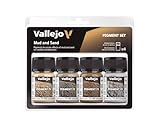
7. Vallejo Pigment FX Mud & Sand Effect – Terrain and Diorama Essential
Vallejo – Pigment FX Mud & Sand Effects, Weathering Pigments for Models & Dioramas, 4 Bottles x 35 ml (1.18 Fl. Oz.)
4 bottles x 35ml
Light Yellow Ochre, Light Sienna, Natural Umber, Light Slate Grey
Satin finish
Natural earth pigments
Fixable with thinner
Pros
- Perfect for mud and sand weathering effects
- Excellent for model railroad ballast and terrain
- Can apply dry or wet with binder
- Good light fastness and permanence
- Realistic texture for diorama projects
Cons
- Some packaging reliability issues
- Bottles may leak during shipping
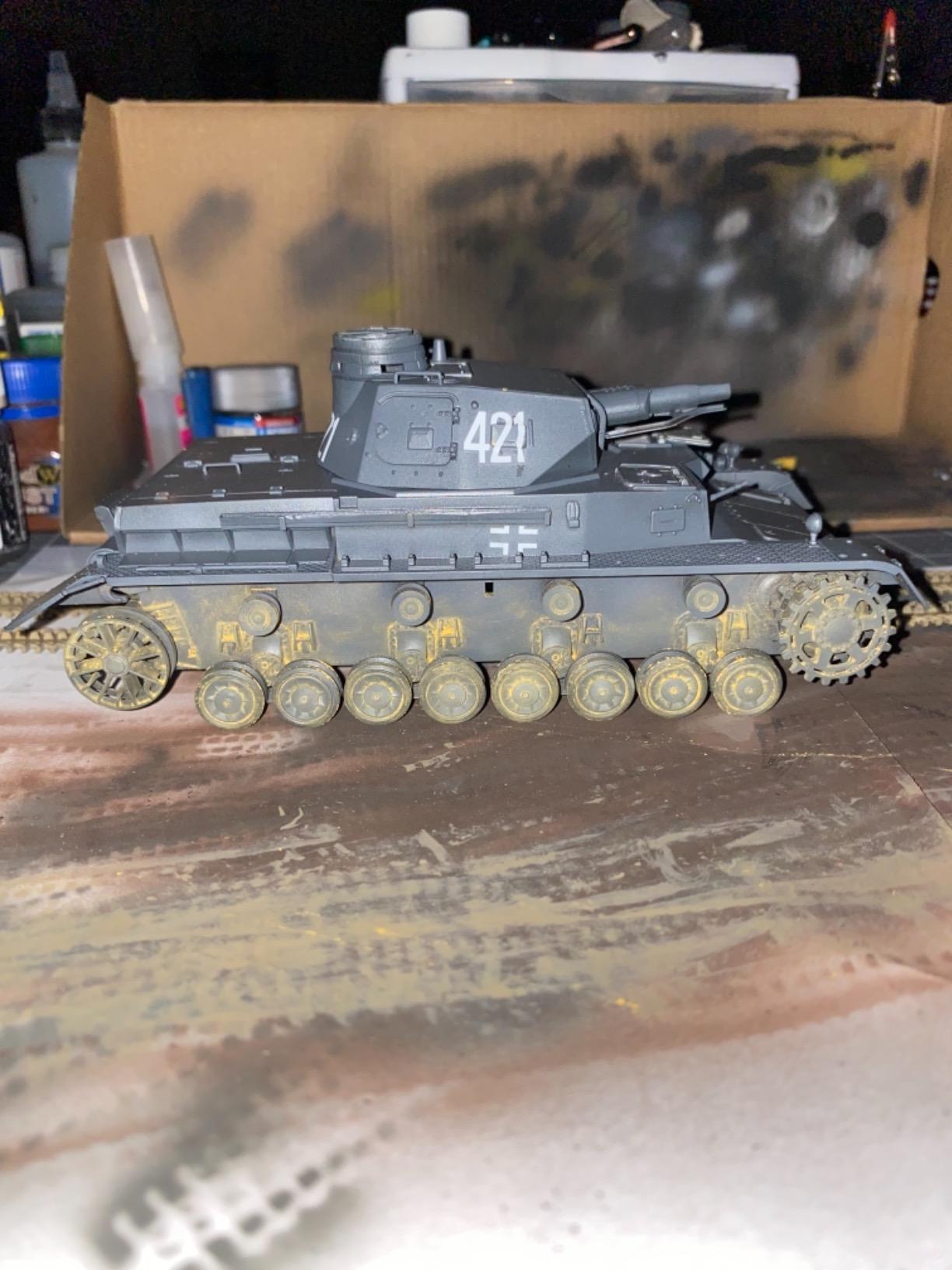
This set fills a specific niche in weathering: light-colored earth effects. While most weathering focuses on dark grime and rust, models operating in desert, coastal, or agricultural settings need the dust and mud colors in this collection. I use these on grain hoppers, rock cars, and any equipment that travels through dusty territory.
The Light Yellow Ochre matches the fine dust that coats everything in the Southwest. I applied it to a fleet of Santa Fe piggyback flats and the effect was transformative. The cars looked like they’d been running through New Mexico and Arizona. The Natural Umber works for agricultural dust around grain elevators and feed mills.
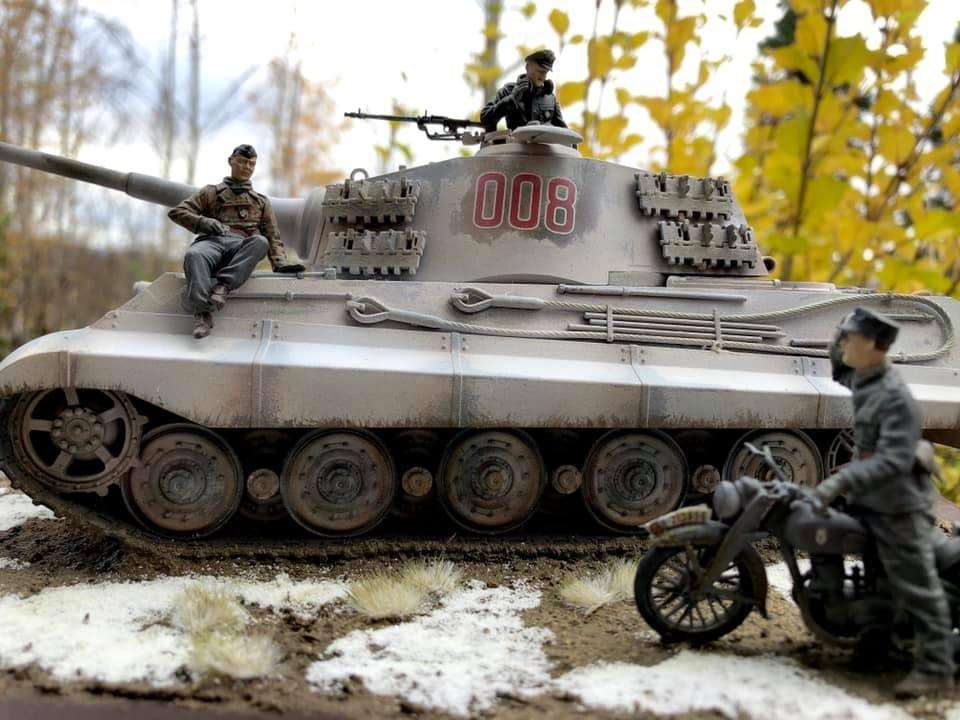
For terrain work, these pigments excel at coloring ballast and ground cover. I sprinkle Light Slate Grey onto cinders for an authentic coal yard look. The Light Sienna creates that reddish clay common in the Southeast. When fixed with Pigment Binder, these colors become permanent landscape features that won’t fade or wash away.
The wet application method works particularly well with these lighter colors. Mix with binder to create a thin wash, then apply with an old brush. The pigment settles into low spots and around obstructions exactly like real mud and dust would. You can build up layers for deeper color or keep it subtle for a recently cleaned appearance.
Best for Agricultural and Desert Scenes
If you model the grain belt, the Southwest, or any agricultural area, this set is essential. Light-colored dust is actually more visible on dark equipment than dark grime. These pigments create that dusty appearance without overwhelming the base paint. The Light Yellow Ochre specifically matches the dust I see on prototype equipment photos from California’s Central Valley.
Structure Weathering Applications
Beyond rolling stock, these colors work on structures in dusty environments. Grain elevators, loading docks, and maintenance facilities all show this kind of accumulation. The Light Slate Grey is perfect for concrete dust and urban grime. Apply it to building bases, loading areas, and anywhere equipment generates dust.
8. Micro-Mark Doc O’Brien’s 12-Color Set – Self-Adhesive Formula
Micro-Mark Doc O’Brien’s Weathering Powders, Set of 12 Colors
12 colors included
Self-adhesive powder formula
Matte finish
Can mix with water for washes
322g total weight
Pros
- Self-adhesive formula reduces drift and fallout
- Good introduction set for beginners
- Can be mixed with water for wash effects
- 12 colors provide variety
- Good blending capabilities
Cons
- Packaging quality issues reported
- Some lids may arrive loose
- White pigment prone to spilling
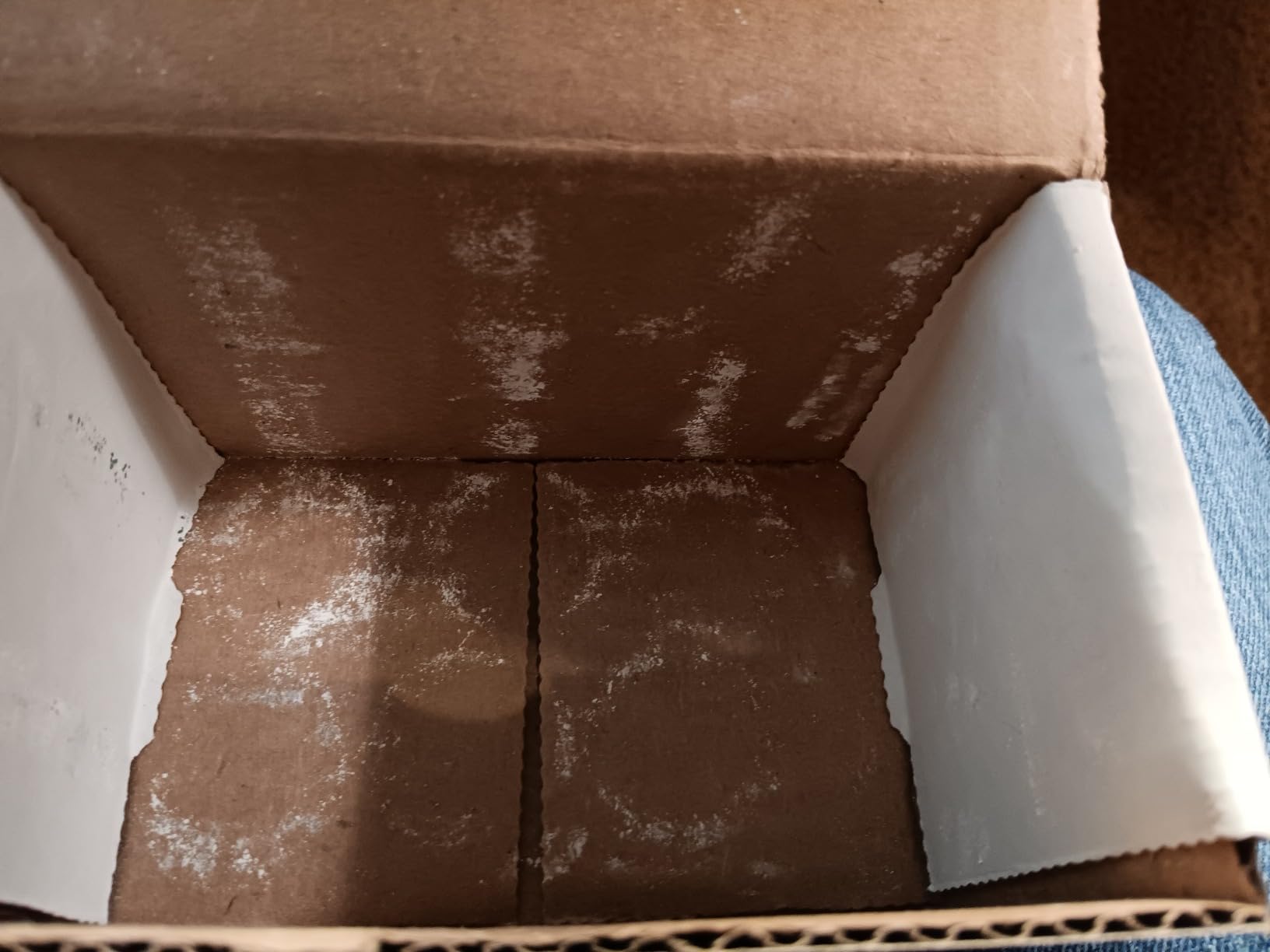
Micro-Mark has served the model railroad community for decades, and their Doc O’Brien’s weathering powders reflect that experience. The self-adhesive formula is the standout feature. These powders cling to surfaces more aggressively than loose pigments, reducing the frustrating drift that can contaminate your workbench and surrounding models.
Twelve colors in one set gives you options without overwhelming decision-making. You get the core earth tones, rust variants, and specialized colors like white for snow effects. I use this set for quick weathering jobs where I don’t want to spend time mixing custom colors. The convenience factor is high.
The matte finish is appropriate for most weathering scenarios. Real grime doesn’t have a sheen. These powders create that flat, dusty appearance you see on prototype equipment. When you do need a slight sheen for oily or greasy areas, you can over-spray with a satin varnish selectively.
The ability to mix with water is useful for creating controlled washes. Dissolve a small amount in water, add a drop of dish soap to break surface tension, and you can apply with a dropper for streaking effects. The self-adhesive quality helps these washes stay where you put them rather than running unpredictably.
Good for Beginners and Quick Projects
If you need to weather a fleet of cars quickly, this set delivers. The self-adhesive formula cuts application time because you don’t need to be as careful about containment. The variety of colors means less mixing time. Results are good rather than spectacular, but for club layouts and operations sessions, that’s often sufficient.
Value Analysis
At around $28 for twelve colors, this represents solid value. You’re paying roughly $2.33 per color, which is competitive. The 322g total weight means generous portions that will last through many projects. For a beginner building their first weathering collection, this set provides breadth without major investment.
9. Vallejo Game Color Railroad Weathering Set – Railroad-Specific Design
Vallejo – Game Color Railroad Weathering Set | Set for Modeling Acrylic Paints | 8 Bottles x 18 ml (0.60 fl.oz.)
8 bottles x 18ml
Railroad equipment focused
Designed by Chema Cabrero
Step-by-step guide included
Matt finish acrylic
Pros
- Colors specifically selected for railroad weathering
- Versatile colors that mix well for custom effects
- Smooth application for detailed work
- Matt finish with good self-leveling
- Professional painting guide included
Cons
- Limited reviews as newer product
- Acrylic formula may need thinning for airbrush
This newer Vallejo set demonstrates the company’s recognition of the model railroad market. Designed in collaboration with professional modeler Chema Cabrero, the eight colors address specific railroad weathering scenarios rather than generic modeling needs. The included painting guide is tailored to locomotives and rolling stock.
The color selection reflects real railroad grime. You get tones for brake dust, exhaust staining, rust patterns, and the specific dirt types that accumulate on different car types. I found the colors mix predictably, creating a spectrum of weathering tones without unexpected color shifts.
The matt finish is ideal for railroad equipment. High-gloss finishes look wrong on anything but brand-new equipment. These colors dry to the appropriate sheen level for weathered metal and don’t require additional flattening coats. The self-leveling properties help eliminate brush marks on large surfaces like boxcar sides.
Railroad-Specific Formulation
Unlike generic weathering sets that try to serve aircraft, armor, and figure modelers simultaneously, this set knows its audience. The colors match prototype railroad equipment weathering patterns I’ve documented in rail yard photography. The rust tones specifically avoid the too-orange look that screams “toy.”
Guide Quality
The included step-by-step guide by Chema Cabrero goes beyond basic technique. It addresses specific railroad scenarios like weathering different car types, creating authentic rust patterns on steel vs. wood, and simulating the grime patterns that differ between steam and diesel eras. For modelers new to the hobby, this educational component adds significant value.
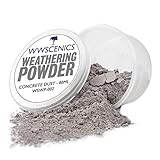
10. WWS War World Scenics Concrete Dust – Industrial Weathering
WWS War World Scenics WWScenics | Weathering Powders | Concrete Dust – WSWP-002-80ml
80ml resealable tub
Concrete dust effect
58g weight
Dry or wet application
For terrain and vehicles
Pros
- Perfect for diorama and industrial scenes
- Authentic looking weathered concrete effects
- Versatile application methods
- Suitable for various modeling applications
- Large 80ml quantity
Cons
- Not Prime eligible
- Limited availability compared to major brands
War World Scenics serves the wargaming and military diorama market, but their products translate perfectly to model railroading. This concrete dust is ideal for urban industrial scenes, concrete structures, and that gray powder that covers everything near cement plants and quarries.
The 80ml resealable tub provides generous quantity for large projects. I used this to weather an entire concrete batch plant scene, and barely made a dent in the container. The gray tone is neutral enough to suggest concrete, ash, or urban pollution depending on the context.
Application versatility is a strength. Dry application creates surface dusting. Mixed with isopropyl alcohol, it becomes a wash that settles into cracks and texture. Mixed with matte medium, it creates a textured paste for building up heavy accumulation areas. I’ve used all three methods on different parts of the same structure.
Urban and Industrial Scenes
For city modeling, this product is essential. Apply it to building roofs, around HVAC units, along curb lines, and anywhere concrete dust would accumulate. The color matches prototype concrete exactly. I’ve weathered loading docks, warehouse floors, and even the tires of vehicles in industrial scenes with this dust.
Ballast and Track Weathering
Real ballast gets a gray coating from locomotive exhaust and general grime. This concrete dust applied lightly over fresh ballast creates that “operating railroad” look. I spray a fixative over the treated ballast to prevent the dust from migrating onto rails and wheels during operation.
11. Humbrol AV0014 Weathering Powder Smoke – Soot and Smoke Effects
Humbrol AV0014 Weathering Powder Smoke – 45ml Weathering Powders
45ml container
Smoke color
Rust resistant formula
Can apply dry or mixed
Indoor use recommended
Pros
- Great rust color for barbed wire and details
- Good quality pigment that lasts
- A little goes a long way
- Easy to apply and effective
- Does not need drying time like paint
Cons
- Container may arrive without seal
- May appear half full
- Color may differ from expectations
Humbrol has been a model railroad staple for generations, and their weathering powders carry that heritage forward. The Smoke color specifically addresses soot effects that are challenging to achieve with generic weathering products. Steam locomotives, industrial structures, and any scene with combustion sources need this color.
The 45ml container is smaller than some competitors, but the pigment concentration is high. I use this sparingly, building up soot effects gradually. Heavy soot application quickly becomes unrealistic. This product rewards a light touch and patience.
For steam locomotives, I apply Smoke around the stack, on the headlight casing, along the boiler top, and anywhere smoke would naturally settle. The key is following the airflow. Soot accumulates downwind of the stack, on horizontal surfaces, and in areas that aren’t regularly cleaned. On a 4-8-4 Northern, the smokebox front and the sides of the stack get the heaviest application.
The dry or mixed application options provide flexibility. Dry application creates that powdery, fresh soot look. Mixed with Humbrol’s weathering fixer, it becomes a permanent wash for long-term effects. I use the dry method for display models and the fixed method for equipment that will be handled during operations.
Best for Steam Era Modeling
Steam locomotive modelers need this product. The Smoke color creates the distinctive black-gray coating that defines working steam power. Combined with rust colors for the smokebox interior and metallic heat colors for the exhaust, you can achieve stunning realism.
Industrial and Structure Applications
Factories, power plants, and any structure with chimneys benefit from this soot color. Apply it downwind of stack locations, on roof surfaces, and around windows where exhaust would have accumulated during decades of operation. The effect adds history and narrative to industrial structures.
12. Huge Miniatures Earth Pigment – Entry-Level Professional Grade
Huge Miniatures Weathering Powder, Earth Pigment for Model Terrain Scenery and Vehicles by Huge Minis – 30ml Flip-Top Container
30ml flip-top container
Earth color
Professional grade pigment
Matte finish
Brush included
Pros
- 94% 5-star customer satisfaction
- High quality pigment concentration
- Perfect for terrain and bases
- Includes brush applicator
- Excellent value for the quality
Cons
- Single color per container
- Smaller quantity than some sets
Huge Miniatures markets primarily to the tabletop gaming community, but model railroaders should pay attention. At under six dollars, this pigment delivers professional-grade quality that rivals products costing three times as much. The earth tone is versatile enough for general weathering needs.
The flip-top container design is genuinely clever. One-handed operation means you can hold your model in one hand and dip your brush with the other. The wide mouth accommodates brush sizes up to about 1/2 inch. I transfer some of my more expensive pigments into similar containers because the design is that practical.
The included brush is functional for basic application. It’s a soft synthetic that works for general dusting but not for precise detail work. I use my own sable brushes for fine work but keep the included brush in the container for quick touch-ups.
Best Value for Beginners
If you’re weathering-curious but want to test quality before investing in a full set, start here. The quality-to-price ratio is exceptional. You’ll get a sense of how professional pigments behave without the investment. If you like the results, you can expand your collection with confidence.
Terrain and Base Applications
This earth tone excels for ballast coloring, ground cover enhancement, and general terrain work. I use it to unify the appearance of different ground foam products, creating a consistent earth tone across the layout. Mixed with white glue, it creates a textured ground paste for building up terrain.
13. Huge Miniatures Jet Black Pigment – Deep Carbon and Coal Effects
Huge Miniatures Weathering Powder, Jet Black Pigment for Model Terrain Scenery and Vehicles by Huge Minis – 30ml Flip-Top Container
30ml container
Jet Black color
Rich pigmented powder
For terrain and vehicles
Multi-scale compatible
Pros
- 88% 5-star customer satisfaction
- Rich pigmentation for dramatic effects
- Works across multiple scales
- Perfect for wargaming and railroad layouts
- Good value for the price
Cons
- Single color per container
- Limited to dark weathering effects
The Jet Black pigment fills a specific need: deep, intense black weathering for coal handling equipment, diesel exhaust areas, and industrial scenes. While brown and gray weathering is more common, there are times you need that stark carbon black that only comes from coal dust or heavy oil residue.
Coal hoppers, gondolas, and anything handling fossil fuels needs this color. I weathered a fleet of Pennsylvania Railroad coal hoppers with this pigment, concentrating it around the discharge gates and along the car sides where loading dust would have settled. The effect transformed bright red cars into believable working equipment.
The multi-scale compatibility is genuine. I’ve used this on N scale diesels for exhaust staining and on O scale steam tenders for coal bunker weathering. The pigment intensity reads correctly at all sizes. On smaller scales, use sparingly. A little of this black goes a very long way.
Coal and Oil Equipment Weathering
For diesel locomotives, this creates the exhaust staining that defines modern railroad grime. Apply it in streaks from the exhaust stack down the long hood sides. The pattern should follow airflow, wider at the top and narrowing as it flows backward. Fuel tank areas benefit from this pigment to simulate the oily residue that accumulates around fill caps and drains.
Industrial Structures
Coal-handling structures, power plants, and any industry burning fossil fuels need this deep black. Loading facilities, conveyor systems, and storage areas all show coal dust accumulation. This pigment creates that specific black-gray that reads immediately as coal rather than generic dirt.
14. Woodland Scenics Earth Color Kit – Complete Terrain System
Woodland Scenics Earth Color Kit
8 colors included
White, Concrete, Stone Gray, Slate Black, Raw Umber, Burnt Yellow Ochre
HO scale focused
Easy-to-use system
12 x 4 x 4 inches
Pros
- Everything needed for model railroad scenery
- Easy to use with great color range
- Quick way to color rock faces
- Good for landscape modeling and dioramas
- Colors mix for custom effects
Cons
- Paint pots smaller than expected
- Requires trial and error for best results
- High delivery charges sometimes
Woodland Scenics built their reputation on terrain products, and this Earth Color Kit extends that expertise to weathering. While primarily designed for coloring plaster terrain, these pigments work beautifully for weathering structures, rolling stock, and creating environmental effects.
The eight colors provide a complete palette for terrain work. White and Concrete create urban and industrial effects. Stone Gray and Slate Black work for rocky areas and coal handling scenes. Raw Umber and Burnt Yellow Ochre cover the natural earth tones you’ll need for most geographic regions.
The application system is straightforward. Mix with water to your desired consistency, then apply with a brush. The pigments are finely ground and flow well into cracks and texture. For weathering, I use a more dilute mixture and apply in washes that settle naturally into recesses.
For rock coloring, this kit is my go-to. I paint plaster castings with a base gray, then use these colors to add variation and realism. The Stone Gray mixed with a touch of Raw Umber creates that lichen-stained look on exposed rock faces. The White is perfect for highlighting quartz veins and mineral deposits.
Best for Scenery and Terrain
If your primary weathering need is terrain rather than rolling stock, start here. The system is designed for scenery work, and the color selection reflects that focus. You’ll still find uses for rolling stock weathering, especially for creating environmental effects like road dust and industrial pollution.
Structure Weathering Applications
Concrete structures benefit particularly from this kit. The Concrete and Stone Gray colors create realistic variation in poured concrete walls. Apply in thin washes to avoid obscuring surface detail. The Raw Umber adds that water-stained look around foundation lines and window sills.
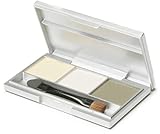
15. Tamiya WM Ageing Set A Sand/Light Sand/Mud – Classic Mud Effects
Tamiya 300087079 WM Ageing Set A Sand/Light Sand/Mud
3 mud colors
Sand, Light Sand, Mud
Chip resistant formula
Includes applicator brush and case
20g total weight
Pros
- Perfect classic weathering colors
- Chip resistant for durability
- Water fixes mistakes easily
- Excellent quality for the price
- Great for gunpla and military models too
Cons
- Feels like eye shadow consistency
- Applicator brush fragile
- Small quantity per package
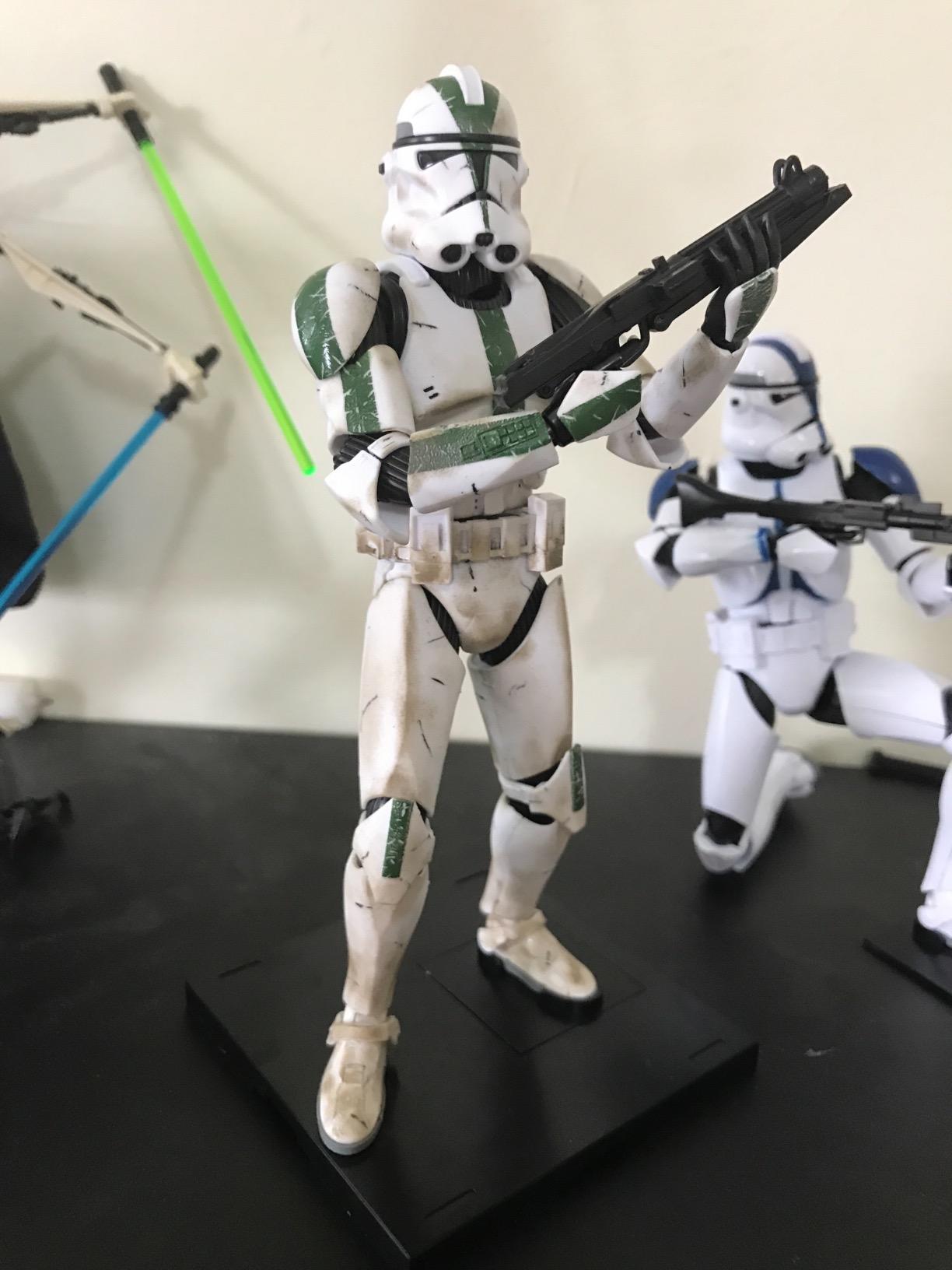
This is the classic Tamiya weathering set that has served modelers for decades. The three mud tones represent the fundamental colors you’ll need for basic weathering: a light sand for dry conditions, medium sand for general use, and dark mud for wet or oily areas. Sometimes simplicity is the ultimate sophistication.
The chip-resistant formula matters for equipment that gets handled. If you operate your layout rather than just displaying it, you need weathering that survives finger contact. This Tamiya set, when properly sealed, holds up to regular handling better than many competitors.
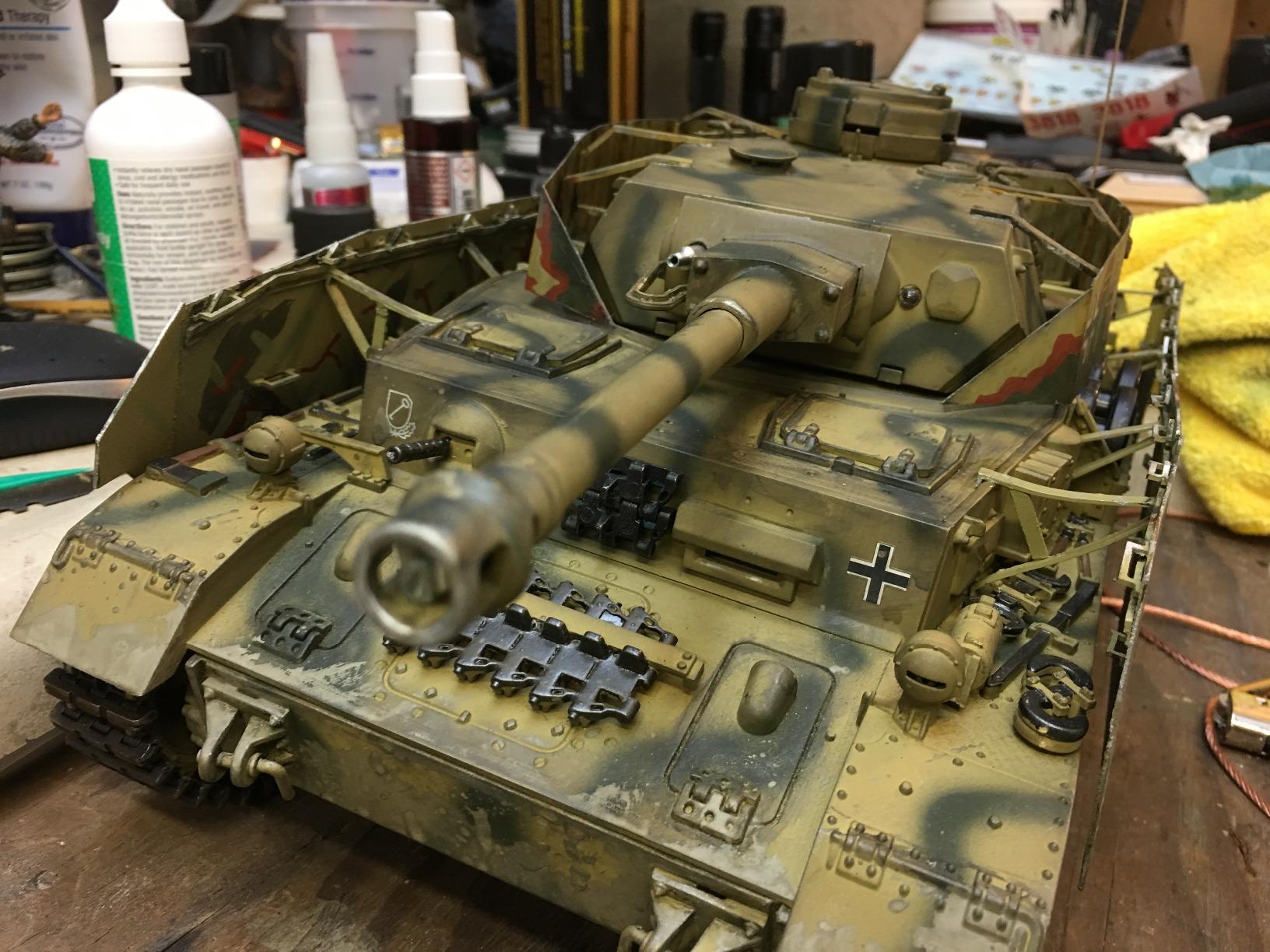
The water-fixable quality is genuinely useful. Apply the pigment dry, then touch mistakes with a damp brush to remove or blend. This forgiving nature makes it perfect for learning. I’ve taught weathering classes using this set because students can recover from application errors without stripping and starting over.
For military modelers crossing over to railroads, you probably already own this set. The same techniques apply. Mud accumulation on truck frames, road grime on lower car sides, and dust on roofs all use these three colors in varying proportions.
Best for Learning Weathering Basics
If you’re teaching someone to weather, give them this set. The limited palette reduces decision paralysis. The forgiving formula allows technique development without frustration. The chip resistance means their first efforts will survive long enough to appreciate. It’s the ideal teaching tool.
Multi-Pack Value
Tamiya offers this in various multi-set bundles. Buying several sets together reduces the per-color cost significantly. If you’re committed to building a weathering collection, consider one of these bundles. The quality is consistent across all Tamiya weathering products.
How to Choose the Right Weathering Powders for Your Model Railroad?
Selecting weathering powders depends on your specific modeling needs, scale, and the effects you want to achieve. Consider these factors before making your purchase.
Surface Preparation: The Foundation of Good Weathering
Weathering powders need a matte surface to grip. Gloss or semi-gloss finishes repel dry pigments, causing them to slide off or pool unnaturally. Before applying any weathering, spray your models with a matte or flat clear coat. This creates microscopic texture called “tooth” that holds the pigment.
I use Testors Dullcote or Vallejo Matte Varnish as my base layer. Apply in light, even coats until the surface has absolutely no shine. This step is non-negotiable for good results. I’ve seen excellent weathering jobs ruined because the modeler skipped this preparation step and the pigment wouldn’t adhere properly.
Application Techniques: Dry vs Wet Methods
Dry application is the most common technique. Load a soft brush with pigment and work it into the surface. Build up layers gradually, focusing on horizontal surfaces, panel lines, and areas where grime would naturally accumulate. Use a clean brush to blend edges and remove excess.
Wet application creates different effects. Mix pigment with a binder or thinner to create a wash that flows into recesses. This technique is excellent for rust streaks, oil stains, and effects where you want the pigment to settle in specific patterns. The wet method is less reversible, so practice on scrap models first.
Scale-Specific Considerations
N scale and smaller require fine pigments that don’t overwhelm delicate details. The Vallejo Pigment FX lines excel here due to their extra fine milling. Apply with a very soft brush and minimal pressure. Less is more on small scales.
HO scale offers more flexibility. Most quality pigments work well at this size. You can build up heavier weathering without obscuring details. This is the most forgiving scale for beginners.
O scale and larger allow you to get creative with texture. The larger surface area accepts heavier applications and mixed-media techniques. Consider adding actual dirt samples fixed with matte medium for extreme realism on large models.
Color Selection Strategy
Start with a core palette: a dark brown for general grime, a rust color for metal weathering, a black for soot and exhaust, and a light tan for dust effects. With these four colors, you can handle 90% of weathering scenarios. Expand your collection as you develop specific needs.
For steam-era layouts, prioritize soot blacks and rust browns. Diesel-era layouts need more exhaust grays and oil stains. Modern layouts with rotary coal unloaders and unit trains need heavy coal dust blacks. Match your pigment investment to your era and region.
Sealing and Fixing Methods
Unfixed powders will rub off with handling. For display models, this isn’t a concern. For operating layouts, you need to fix the weathering in place. Options include matte spray sealers, pigment binders, and hair spray (a classic budget solution).
The “varnish disappearing phenomenon” is real. Some pigments lose intensity or change color when sprayed with certain sealers. Test your sealing method on a scrap piece before committing your finished model. I find that light, multiple coats of matte sealer preserve weathering better than one heavy coat.
For reversible weathering that can be adjusted later, skip the sealer. Some modelers prefer this approach for competition pieces that may need touch-ups. The trade-off is handling care. You’ll need to be gentle during transport and display.
Frequently Asked Questions About Model Railroad Weathering Powders
What is the best weathering powder for N scale models?
For N scale, the Vallejo Pigment FX lines are ideal due to their extra fine milling. The small particle size settles proportionally on delicate details without overwhelming them. The Tamiya Weathering Master sets also work well because the semi-wet formula stays controlled and doesn’t drift onto surrounding areas. Avoid coarse chalk pastels that can obscure fine N scale details.
How do I get weathering powders to stick?
Weathering powders require a matte surface to adhere properly. Apply a matte clear coat (like Testors Dullcote) to your model before weathering. This creates microscopic texture called tooth that holds the pigment. Work in thin layers, building up gradually rather than dumping powder on at once. For permanent adhesion, use a pigment binder or seal with matte varnish after application.
Do you need to seal weathering powders?
Sealing is necessary for models that will be handled, such as those on operating layouts. Display pieces can remain unsealed. Use matte varnish or a pigment-specific fixer to lock powders in place. Apply sealer in light, multiple coats to avoid the varnish disappearing phenomenon where weathering fades under heavy clear coats. Test your sealer on scrap material first.
Can I make my own weathering powders from pastels?
Yes, artists’ chalk pastels can be shaved into powder and used for weathering. This is a budget-friendly option that many experienced modelers use. However, professional weathering powders offer advantages: more consistent particle size, better light fastness preventing fading, and often finer milling that works better at small scales. For beginners, commercial powders provide more predictable results while you develop technique.
What is the difference between chalks and professional pigments?
Professional weathering pigments differ from shaved chalk pastels in several ways. They’re milled to specific, consistent micron sizes for predictable application. They have better light fastness, so your weathering won’t fade over time. Professional pigments often include binders or coatings that improve adhesion. The color consistency is also superior, with pigments matched to prototype weathering colors rather than artistic color theory.
Conclusion: Transform Your Layout with the Best Model Railroad Weathering Powders in 2026
Weathering powders are the secret weapon that separates realistic model railroads from toy train sets. The fifteen products I’ve covered here represent the best options available for every skill level, budget, and modeling scenario in 2026. From the comprehensive Tamiya 6-Set collection to the budget-friendly Huge Miniatures single colors, there’s a perfect product waiting for your workbench.
Start with the fundamentals: proper surface preparation, appropriate color selection for your era and region, and patient application building up effects gradually. Whether you’re weathering a single locomotive or an entire fleet of freight cars, the techniques and products outlined in this guide will help you achieve the authentic, hard-working appearance that makes model railroading so compelling.
Remember that weathering is an art developed through practice. Your first attempts may not match the magazine photos, but each project builds skill. Choose one of the recommended products above, prepare your surface properly, and start experimenting. The transformation in your models will be immediate and dramatic.