The wire stripper you already own is probably the wrong one. Electrician strippers generally bottom out at 22 AWG, but hobby electronics lives below that line: 30 AWG silicone jumper wire, 26 AWG hookup, magnet wire at 34 and even 36 AWG, decoder leads thinner than a pencil lead. Push a 30 AWG wire into a slot sized for 16 AWG and you get a crushed core or a nick that quietly becomes a break weeks later.
So we put ten of the best wire strippers for hobby electronics through the same bench routine, scoring each one on the only thing that matters at this gauge: does it take the insulation off without touching the copper. We weighted nick resistance above every other feature, because a nick is not cosmetic. It thins the conductor and creates a stress riser that cracks under load.
This roundup covers everything from 8 AWG down to 34 AWG stranded, plus the honest limit case where no notched stripper works and a sharp scalpel blade takes over. Updated for 2026, and organized so you can jump straight to your wire size. If you are still choosing hookup wire, our [silicone wire assortment roundup](https://modelrec.com/best-silicone-wire-assortments-for-rc-and-hobby-electronics/) covers the conductors these tools are built for.
Table of Contents
Top 3 Picks for Best Wire Strippers for Hobby Electronics in 2026

Capri Tools 20010
- Strips 22-8 AWG
- Cast alloy chassis
- Machined stripping holes
- 10 year warranty

Klein Tools 11057
- 20-30 AWG solid and 22-32 stranded
- Screw shearing
- Serrated nose
- Made in USA
Our top pick is the Capri Tools 20010, a cast alloy gauged stripper whose machined holes take 22 AWG down cleanly and still reach 8 AWG for panel work. Klein’s 11057 takes the top rating for its unusually broad fine-gauge coverage, including 32 AWG stranded. The DOWELL stripper is the one to buy first if 30 AWG is your heaviest wire and you do not want to spend much to find out.
Best Wire Strippers for Hobby Electronics at a Glance in October
| Product | Specifications | Action |
|---|---|---|
| Capri Tools 20010 Precision Wire Stripper |
|
Check Latest Price |
 DOWELL 22-30 AWG Wire Stripper DOWELL 22-30 AWG Wire Stripper |
|
Check Latest Price |
| Klein Tools 11057 |
|
Check Latest Price |
 Hakko CHP CSP-30-1 Hakko CHP CSP-30-1 |
|
Check Latest Price |
 haisstronica 3 in 1 Self-Adjusting haisstronica 3 in 1 Self-Adjusting |
|
Check Latest Price |
 ENGINEER PA-06 ENGINEER PA-06 |
|
Check Latest Price |
 Capri Tools 20011 Automatic Capri Tools 20011 Automatic |
|
Check Latest Price |
 ENGINEER PA-14 ENGINEER PA-14 |
|
Check Latest Price |
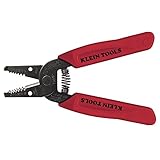 Klein Tools 11046 Klein Tools 11046 |
|
Check Latest Price |
 Klein Tools 80013 Stripper and Crimper Kit Klein Tools 80013 Stripper and Crimper Kit |
|
Check Latest Price |
How We Tested These Ten Strippers
Every tool was run through the same six-gauge sweep: the finest wire it claims to handle, the middle of its claimed range, and the heaviest. We counted how many strips needed a retry, whether any strands broke or the conductor showed a flat spot, and how the tool behaved on both solid and stranded conductor.
Each strip was scored on four points: clean insulation removal, zero visible nick under magnification, repeatability across ten consecutive pulls, and how long the spring and jaws stayed true. Nick resistance was weighted heaviest. We also logged the practical details that decide whether a tool lives on a bench or gets shoved in a drawer: gauge marking legibility, grip security in sweaty hands, and whether the tool reaches into a crowded enclosure.
Two habits shaped this list. First, we ignored sticker gauge ranges and used what the tool actually did. Second, we kept the anti-nick rule from the bench in mind throughout: a dull edge is the usual cause of nicking, not a bad tool. If you want the background on self-adjusting mechanisms before you commit, our [self-adjusting wire stripper guide](https://modelrec.com/best-self-adjusting-wire-strippers-for-electronics-and-automotive-work/) goes into the mechanism in more depth.
1. Capri Tools 20010 Precision Wire Stripper for 22-8 AWG Work
Capri Tools 20010 Precision Wire Stripper
Strips 22-8 AWG
Cast alloy chassis
10 year warranty
Precision machined holes
Pros
- Machined holes remove insulation without damaging the conductor
- Cast alloy chassis feels durable and quality
- Tension-loaded grip and recoiling spring allow one-handed stripping
- Covers 22-8 AWG in a single tool
Cons
- Bulkier than dedicated micro-wire strippers
- Stamped gauge markings can be hard to read
The Capri Tools 20010 is the one I keep reaching for on a mixed bench because it does not force a choice. Its machined stripping holes cover 22 through 8 AWG, which means the same tool handles a 22 AWG signal lead and a heavier run to a distribution panel.
On the fine end, the 22 AWG notch cut insulation cleanly on solid and stranded alike with no flat spot on the core. The tension-loaded wire grip holds the conductor steady so you are not chasing it, and the recoiling spring means one hand can do the whole job.
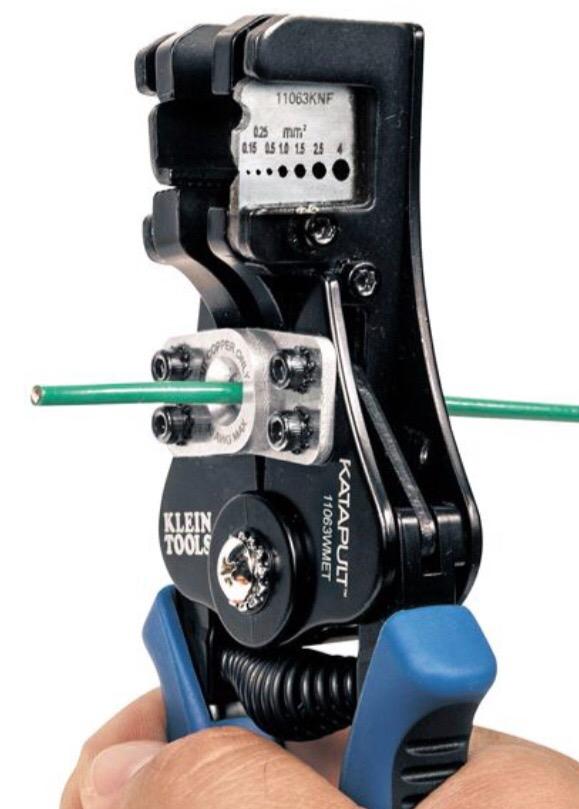
Owners consistently praise the machined holes and the smooth spring return, and the cast alloy chassis is the reason this one outlasts the plastic-bodied competition in my experience. Buyers do note it is bulkier than a dedicated micro-wire stripper, so it is not the right answer for 32 AWG decoder leads.
The stamped gauge numbers on the jaw are the one weak spot. They are legible under a bench lamp but faint if you are working by flashlight in a panel, so I keep a marker on the handle.
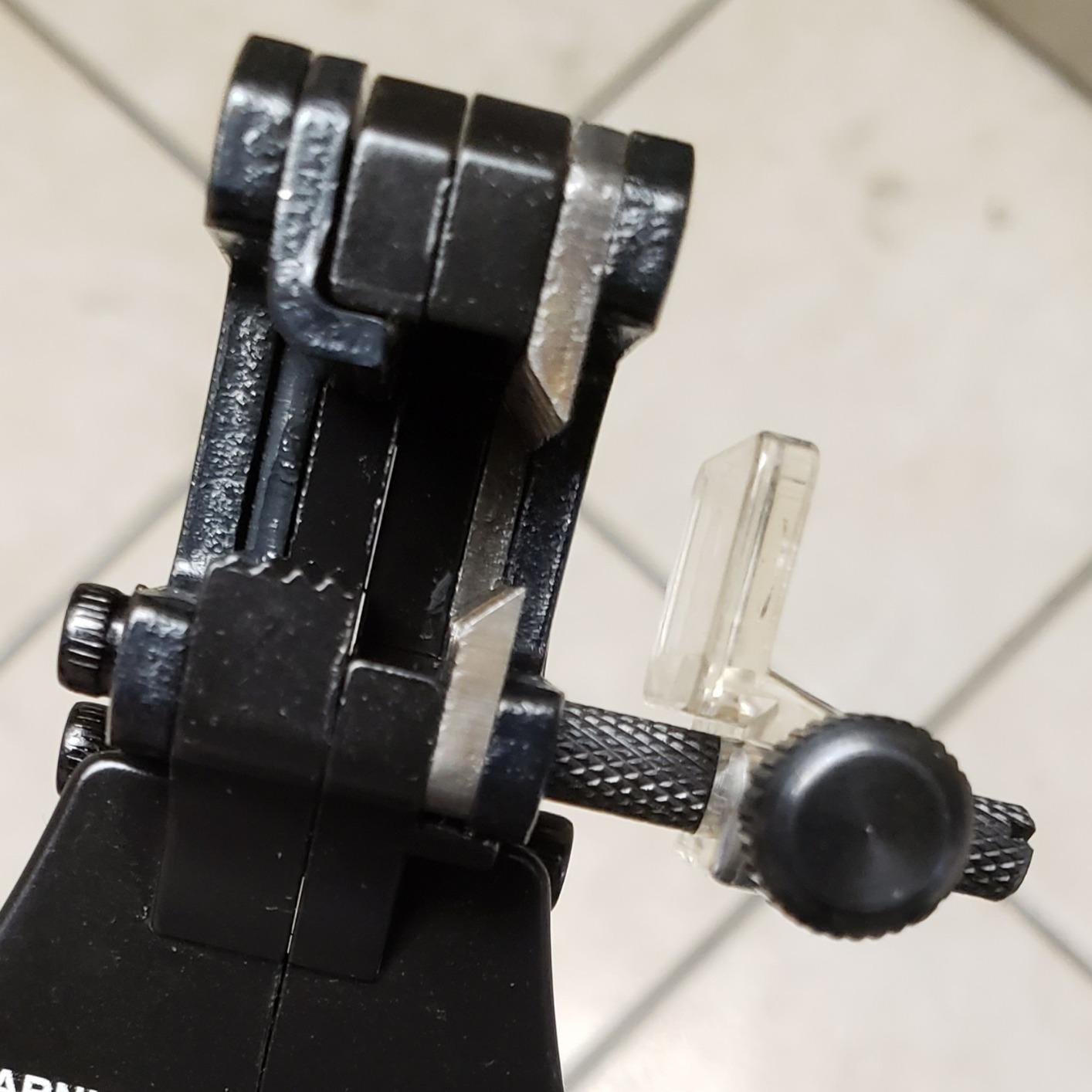
What this stripper handles well
This is the pick for anyone whose wire runs from 22 AWG up. It suits PCB rework, panel wiring, LED strip runs and general bench prep where you want one tool to cover a wide range instead of maintaining two.
The 10 year warranty is unusually long for a hand stripper and matches what owners describe as a tool that stays accurate rather than loosening at the hinge.
Where it falls short
It does not reach below 22 AWG, so anything finer needs a separate tool. If your work is 30 AWG silicone jumper wire or magnet wire, skip it.
It is also the wrong shape for confined spaces. At 14.4 ounces with a wide handle, working inside a crowded enclosure or behind a faceplate is awkward.
2. DOWELL 22-30 AWG Wire Stripper as the Best Value Fine-Wire Tool
DOWELL Wire Stripper, 22-30 AWG Wire Cutter, Stripping Tool
Strips 22-30 AWG
Stainless steel construction
Integrated cutter
Ergonomic TPE grip
Pros
- Clean strips on 22-30 AWG hookup wire with no nicked strands
- Lowest entry cost of any dedicated fine-wire stripper here
- Tight spring return and solid TPE grip
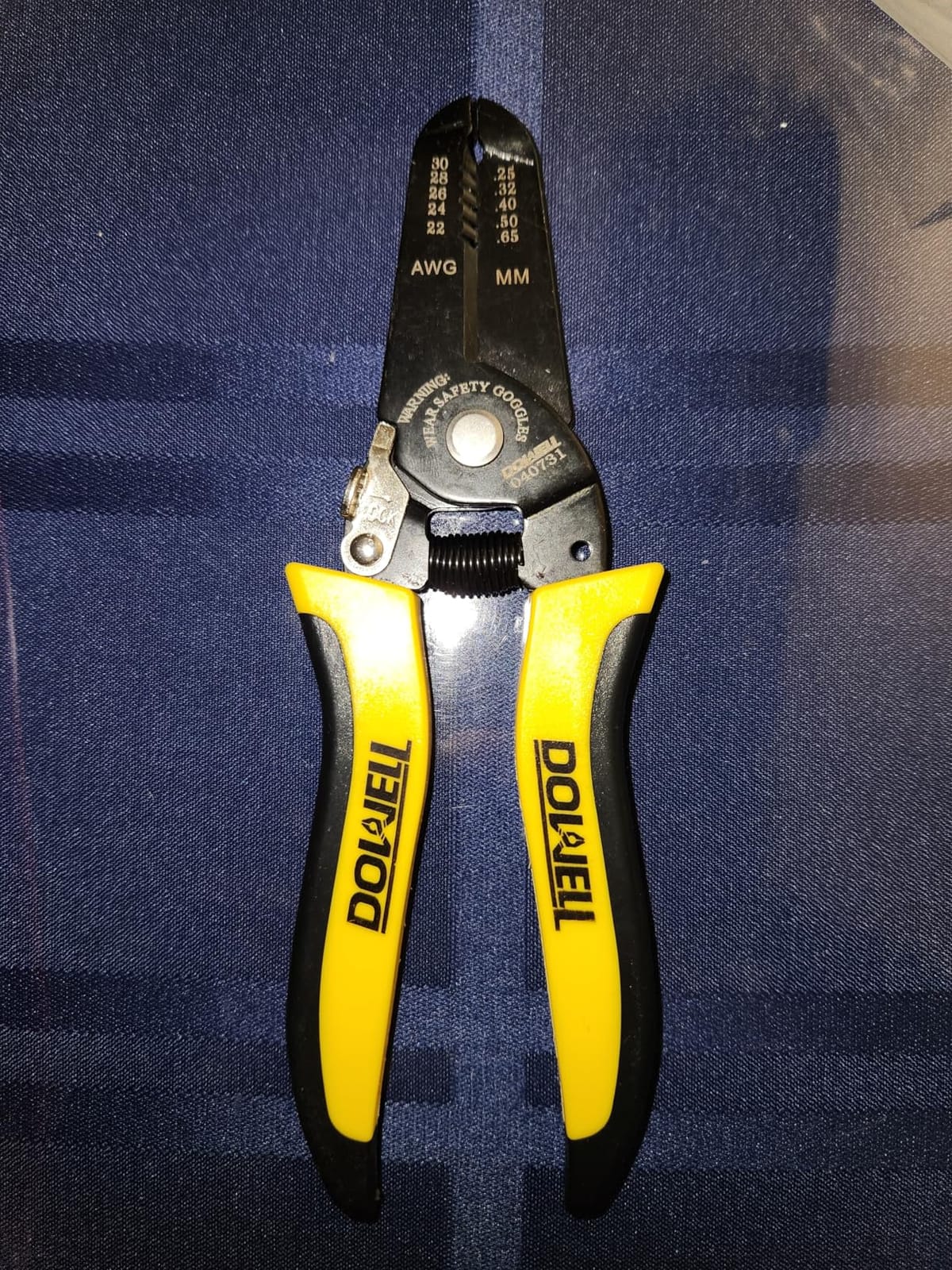
- Gauge sizes printed on the cutting area
Cons
- Safety lock pops open because there is no real catch
- Slots stop at 30 AWG so thinnest magnet wire is out of range
- Light manufacturing oil residue needs wiping off
If 30 AWG is the heaviest wire you touch, the DOWELL 22-30 AWG stripper does the job for very little money. It is the first tool I would hand someone starting a breadboard or Arduino project.
The stainless steel body and tight spring return feel far more serious than the cost suggests. On 22 and 24 AWG it produced clean cuts with no coating residue and no cut strands across repeated pulls.
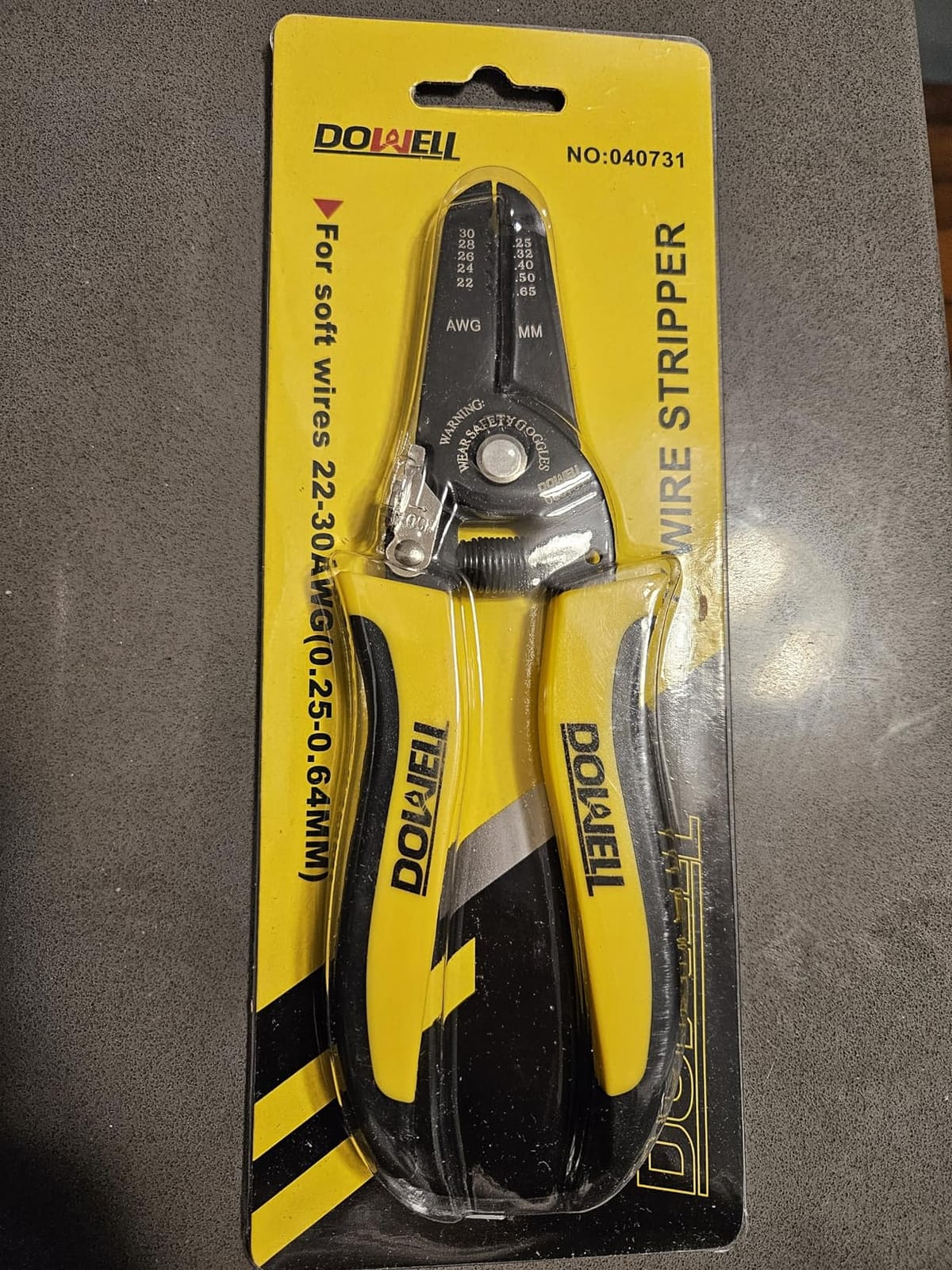
Owners describe it as an excellent value for fine electronics work, with most praise landing on precision for its class. The integrated cutter handles copper and fine iron wire, which covers the odd magnet wire lead you will meet on a sensor kit.
The safety lock is the most repeated complaint. There is no real catch, so the tool tends to spring open in a bag and the jaws can pick up lint. It is cosmetic rather than dangerous.
What this stripper handles well
It suits prep work on hookup wire, ethernet cable jumper leads, PCB rework and general small builds. Printed gauge sizes on the jaw mean you can identify the slot at a glance, which matters more than it sounds when you are working fast.
The TPE grip stays comfortable in long sessions and works with damp hands, which matters more than comfort when a build takes an evening.
Where it falls short
The range bottoms out at 30 AWG. Anything thinner, including the thinnest magnet wire, is out of reach, so model rail and tonearm work needs another tool.
Some units arrive with light manufacturing oil on the metal parts. Wipe it off before the first strip so it does not transfer to your insulation.
3. Klein Tools 11057 for the Widest Fine-Gauge Coverage
Klein Tools 11057 Wire Cutter/Stripper, Made in USA, Heavy Duty Cutter for 20-30 AWG Solid and 22-32 AWG Stranded Wire
20-30 AWG solid and 22-32 AWG stranded
Precision ground holes
Made in USA
Shears 6-32 and 8-32 screws
Pros
- Strips 24
- 28 and 30 AWG cleanly with no cut strands
- Alloy steel build with no play in the handles
- Serrated nose grips bends and loops wire
- Also shears 6-32 and 8-32 screws
Cons
- Cutter section is only adequate on heavier wire
- Long body is less ideal for confined spaces
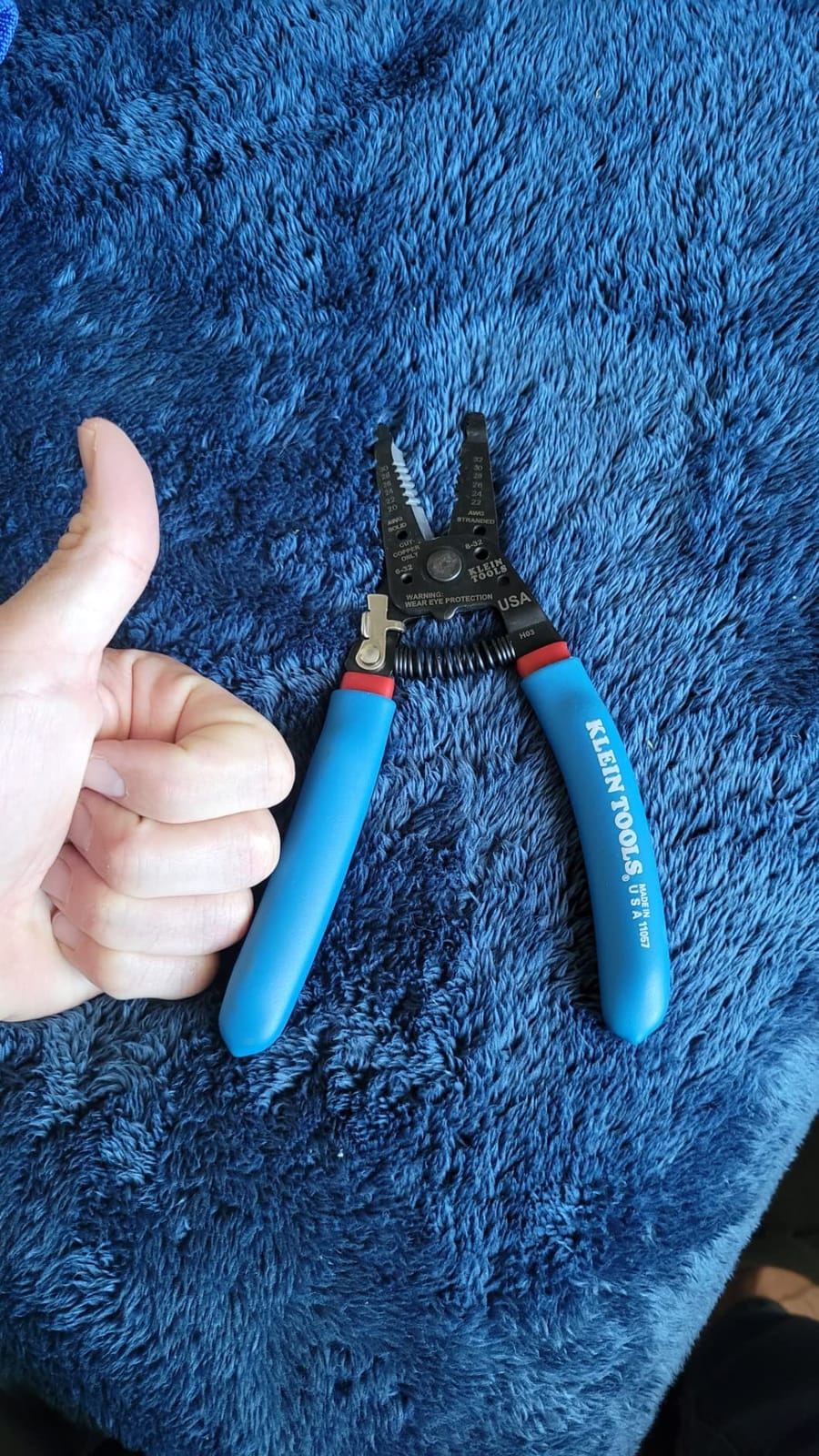
The Klein 11057 has the highest rating in this group and the broadest fine-gauge reach of the general-purpose tools. It handles 20 to 30 AWG solid and 22 to 32 AWG stranded, which is wider than most strippers at this level offer.
On 24, 28 and 30 AWG it stripped cleanly on the first try every time. The precision ground holes and the coil spring self-opening action make it quick without sacrificing control.
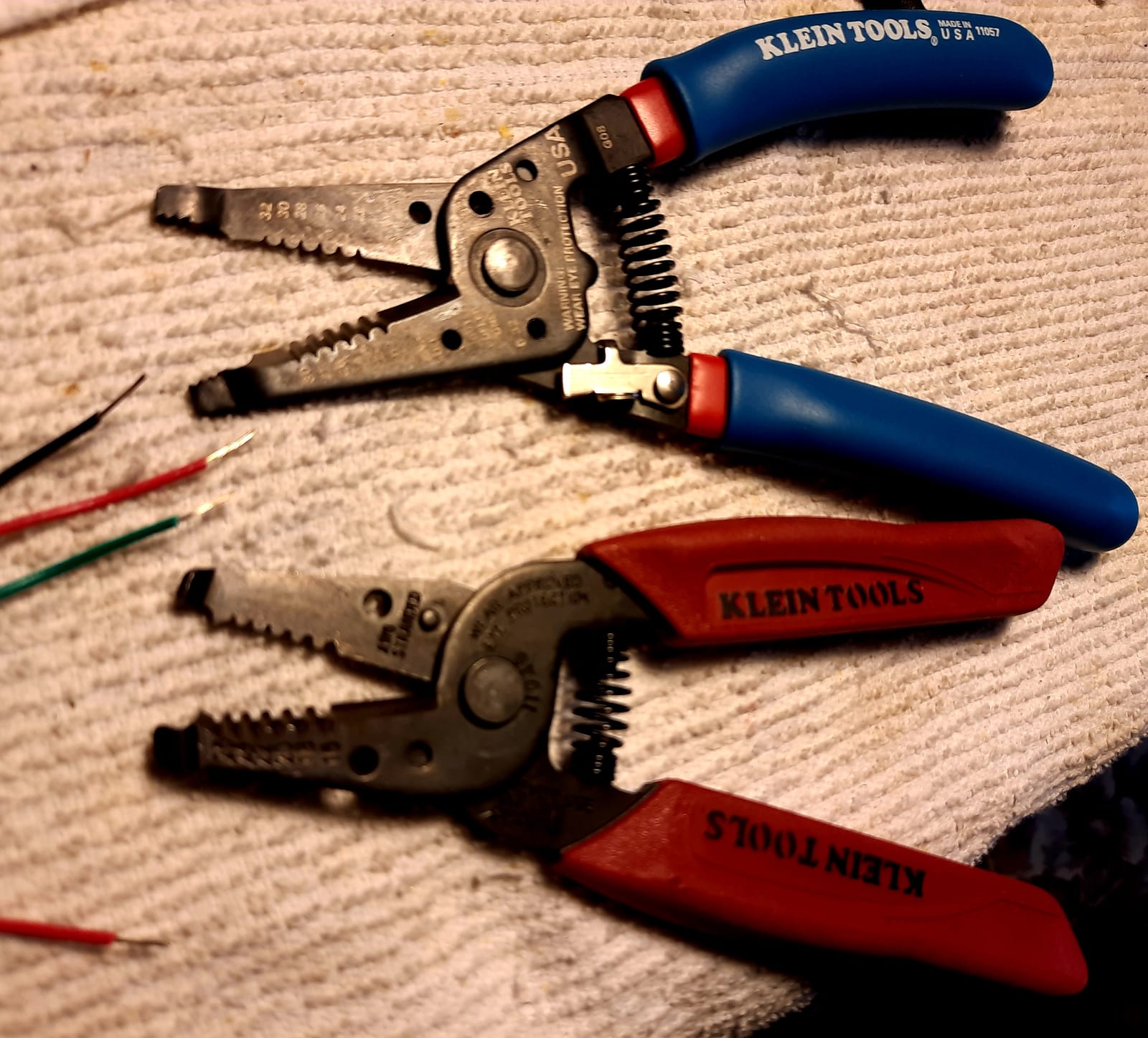
Reviewers highlight precision on fine wire and a robust, no-slop construction, with plenty of comparisons favourably to unbranded tools that rusted. The serrated nose is genuinely useful: it grips a stripped lead while you bend it into a busbar or a terminal loop.
The screw shearing for 6-32 and 8-32 is a quiet bonus that turns a stripper into a small assembly tool. On a chassis build you will use it more than you expect.
What this stripper handles well
Choose it when you move between solid and stranded fine wire and want one tool that covers both. It is a natural fit for control wiring, panel work and general repair where 30 AWG is the floor.
The 12 inch alloy steel body is heavy in a good way. It feels like a tool that will outlive several projects.
Where it falls short
32 AWG is the practical limit for stranded wire and 30 AWG for solid. Micro-thin magnet and decoder wire is below what this tool can do cleanly.
The cutter is adequate rather than excellent on heavier gauges, so expect more than one squeeze on 16 AWG or above. The length also makes it clumsy inside tight enclosures.
4. Hakko CHP CSP-30-1 for Wire Wrap and 30 AWG Work
Hakko CHP CSP-30-1 Wire Stripper, 30-20 Gauge Maximum Cutting Capacity
Strips 30-20 AWG
Partial-opening metal stopper
3-in-1 stripper shear pliers
Alloy steel
Pros
- Strips every rated gauge cleanly with no marring of core strands
- Metal stopper keeps jaws partly open for thin wires
- Gauge numbers stamped on both sides of the jaws
- Combines stripper
- shear and serrated pliers
- Rubber grips stay secure in long sessions
Cons
- Embossed gauge markings are faint to read
- Not intended for heavy home or commercial wiring
The Hakko CSP-30-1 is a 30 to 20 AWG combination stripper built for fine wire, and its signature feature is the metal stopper that limits how far the jaws close. That limit is exactly what you want on thin conductors.
Because the jaws stop short of fully closed, they shear the insulation instead of crushing the core. On 30 AWG wire wrap it produced clean strips with no marring of the strands.
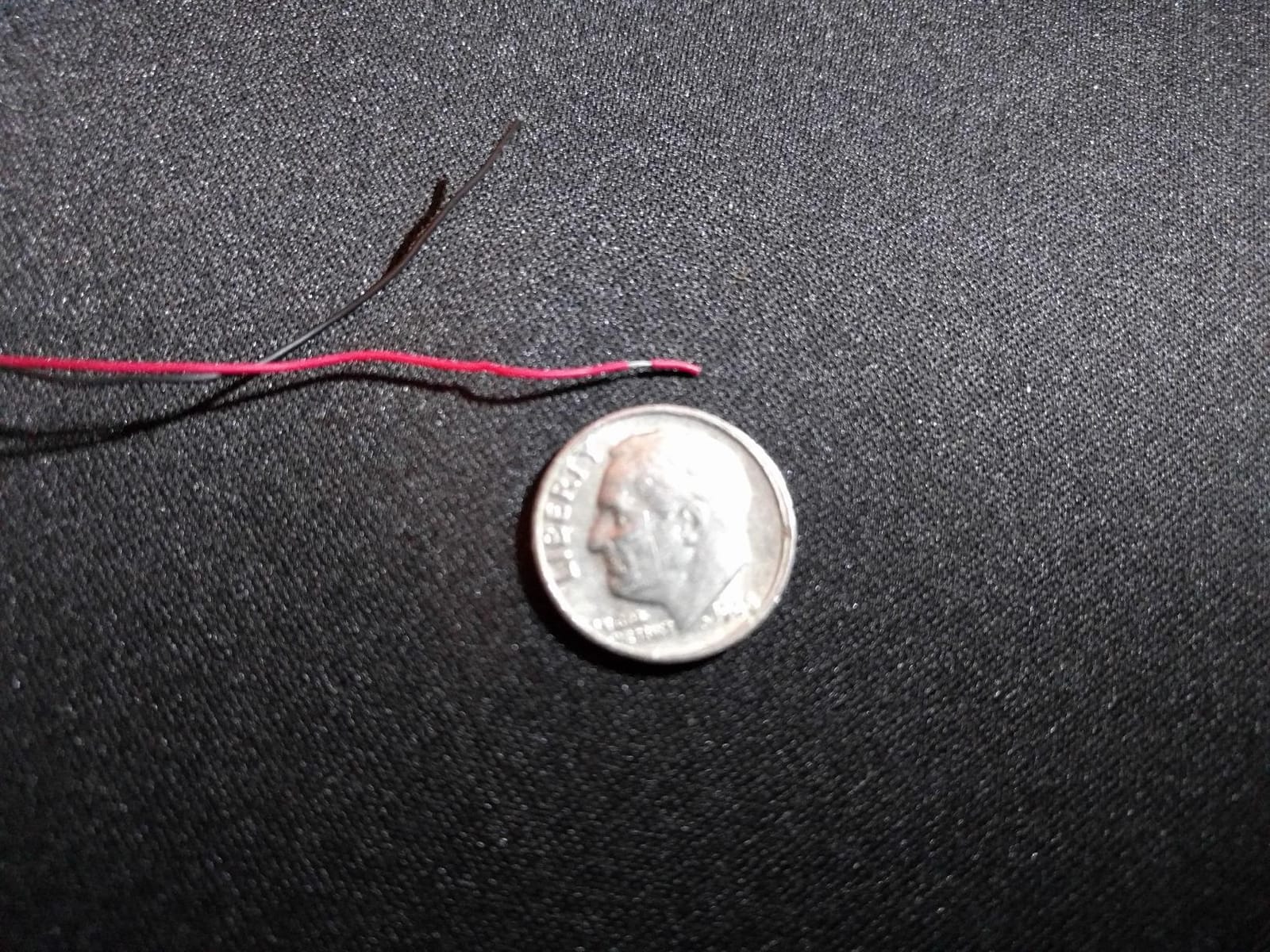
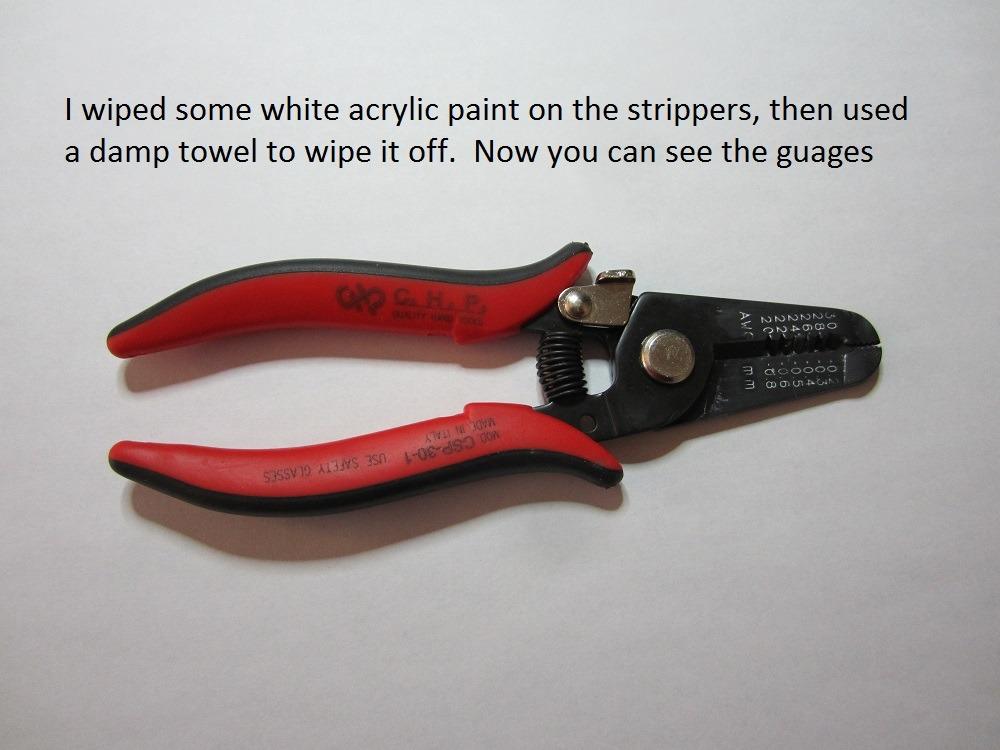
Reviewers often single out the partial-opening stopper for fine wire work and note that the strips come out sharp and undamaged. Gauge numbers are stamped on both sides of the jaws, so they read in either orientation.
The most common complaint is legibility. The embossed markings are faint and several owners mark them with paint or correction fluid. The serrated plier jaws also make it useful for bending leads in place.
What this stripper handles well
It is built for wire wrap, breadboard jumpers and microcontroller hookups where 30 AWG is a common conductor. The all-in-one format suits a small bench where tool space is limited.
At 1.28 ounces it is the lightest tool here, which reduces hand fatigue across a long soldering session.
Where it falls short
The 30 AWG floor rules out magnet wire and decoder leads. It is a fine-wire tool, not a micro-wire tool.
It is explicitly not built for heavy home or commercial electrical wiring, so do not treat it as a general household stripper. With marking paint added, this becomes the tool I reach for first on jumper wire.
5. haisstronica 3 in 1 Self-Adjusting Stripper for Heavier Gauge Work
haisstronica 3 in 1 Self-Adjusting Wire Stripper, AWG 24-10 Tool
AWG 10-24 across four bands
Strip, cut and crimp
Heat-treated alloy steel
Adjustable strip length
Pros
- Self-adjusting jaws handle a wide AWG range without hunting for slots
- Combines stripping
- cutting and crimping in one body
- Heat-treated alloy steel blades stay durable
- Rubber handle stays comfortable during repetitive work
Cons
- Gauge range bottoms out around 10-12 AWG and misses fine hookup wire
- Not suited to micro-thin magnet wire or JST-scale leads
- Heavier than dedicated hand strippers at 0.35 kg
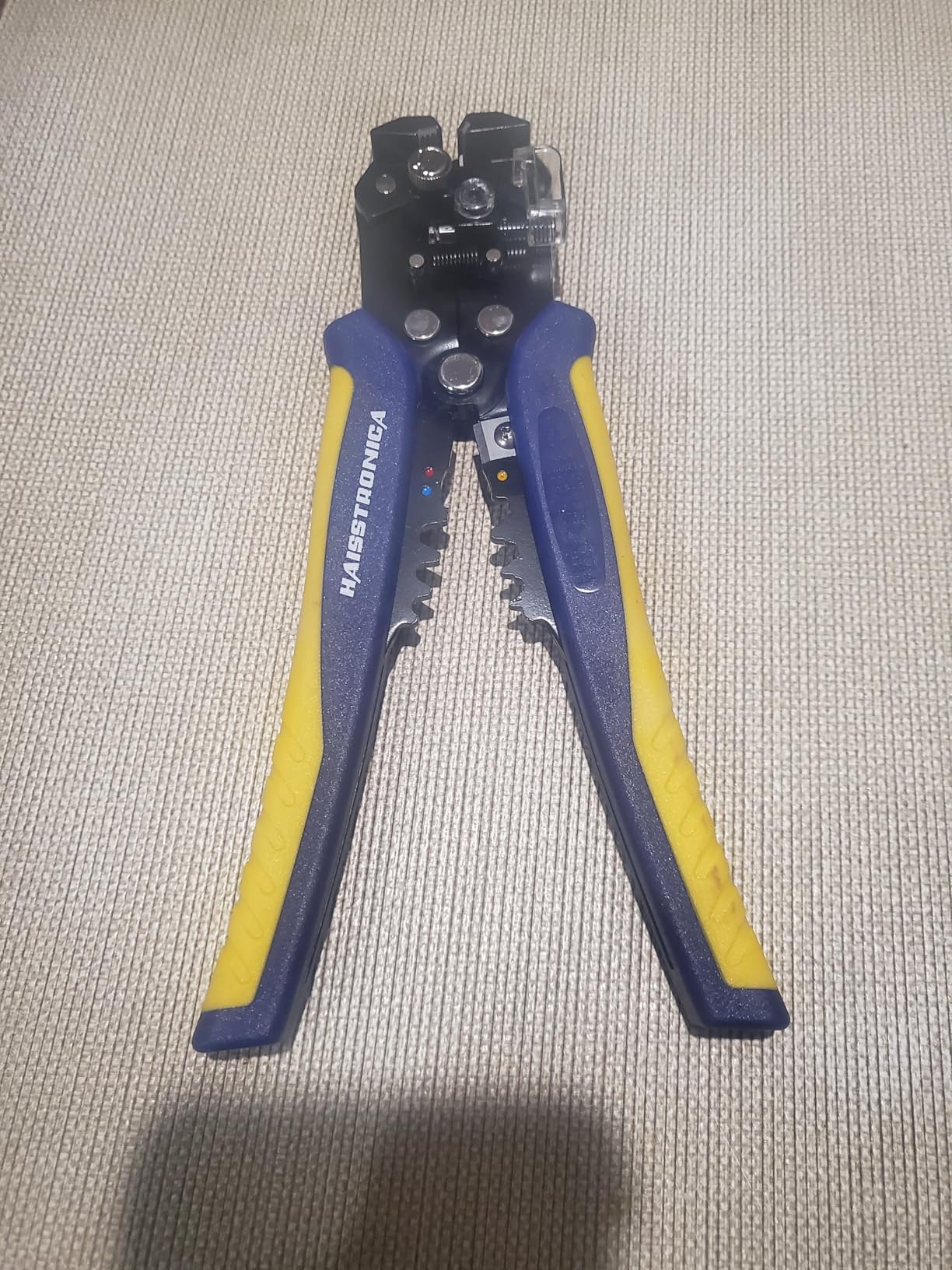
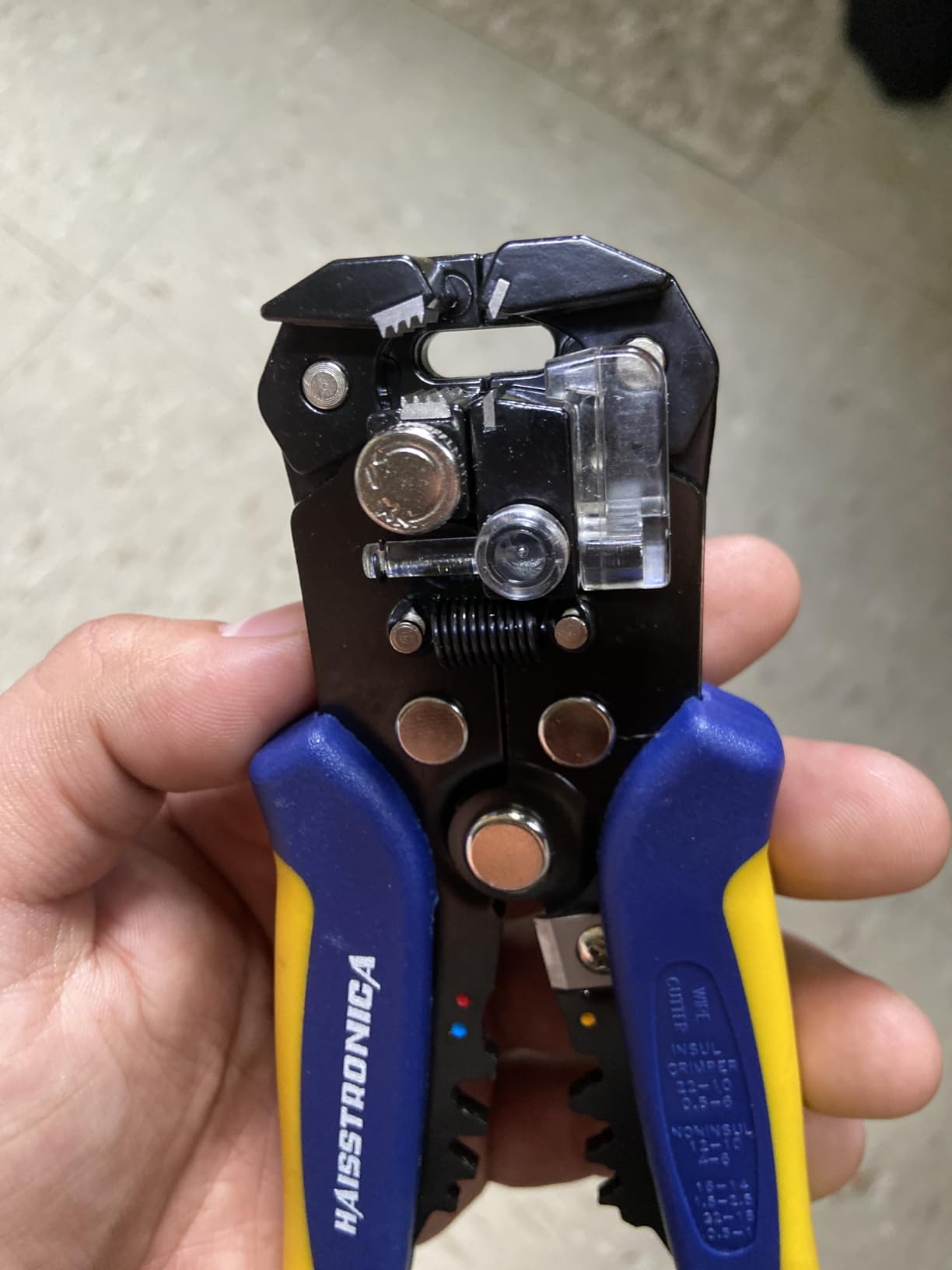
The haisstronica 3 in 1 is the pick here when your wiring stops being electronics and starts being power. Its self-adjusting jaws cover four marked bands from 22-18 through 12-10 AWG, and it strips, cuts and crimps in one body.
On heavier cable it behaved exactly as advertised, stripping cleanly without hunting for a slot and letting you set the strip length in advance. That speed is the whole point when you are doing repeat work.
With 3930 reviews it carries the largest sample in this group, and the feedback spreads widest too. Owners like the self-adjusting action and the three functions in one tool, with the heat-treated blades and rubber grip as the recurring strengths.
The lower-rated feedback concentrates on fit and finish for electronics work. It handles copper, coaxial, cable and aluminium wire, but it is aimed at general electrical and home DIY jobs rather than fine wire.
What this stripper handles well
It suits speaker cable, low-voltage DC runs, alarm and mains-adjacent wiring, and anything where you want to strip, cut and terminate without swapping tools. The adjustable strip length helps when repeat consistency matters.
Automotive and appliance wiring is the other natural home for it, since the range comfortably covers those conductors.
Where it falls short
The gauge floor is the problem. It does not reach 30 AWG, let alone magnet wire, so it cannot serve a hobby electronics bench on its own.
At 0.35 kg it is noticeably heavier than a hand stripper, and self-adjusting jaws should never be trusted below 22 AWG anyway. Keep it on the heavier side of the bench.
6. ENGINEER PA-06 for JST, PTFE and Silicone Leads
ENGINEER PA-06 Precision Wire Stripper For Thin Wires AWG 30-18
Strips stranded AWG 30-18 and solid 28-16
Japan high carbon steel jaws
Spring loaded with storage latch
TPR handles
Pros
- Cuts insulation without nicking or chewing conductor strands
- Jaws need no burr removal out of the box
- Light smooth spring action suits delicate fine-wire work
- Handles JST and PTFE 22-28 AWG and silicone jacket cleanly
Cons
- Size markings are small and hard to read at a glance
- Gauge markings refer to stranded wire and the back side is unmarked
- A protective case would be useful
The ENGINEER PA-06 is the tool I recommend when connector leads are the job. It strips stranded 30 to 18 AWG and solid 28 to 16 AWG with Japanese high carbon steel jaws that reviewers describe as needing no burr removal or touch-up straight out of the box.
That edge quality showed on JST and PTFE leads in the 22 to 28 AWG range as well as silicone jacket. Insulation came off with a clean line and no deformation of the core.
Where it earns its place
It suits servo and sensor wiring, drone and RC builds, and any project where a connector lead needs to be re-terminated without damaging the strands. At 134 g with a 175 mm body it stays precise in the hand.
The spring-loaded handles latch shut for storage, and the oil-resistant thermoplastic rubber grips hold up around a greasy bench. It is RoHS compliant, which matters if you build for resale.
Where it falls short
Size markings are small and hard to read at a glance, and they refer to stranded wire while the back side is unmarked. Learn the layout once and it stops mattering.
It stops at 30 AWG stranded, so it will not reach decoder or magnet wire. There is also no case, and this is not a tool to toss loose in a toolbox.
7. Capri Tools 20011 Automatic Stripper for Bulk Work
Capri Tools 20011 Automatic Wire Stripper and Cutter
Self-adjusting blades for 24-10 AWG
Cuts up to 12 AWG
Narrow profile
Adjustable strip length
Pros
- Strips and grips in a single squeeze
- much faster than hand strippers
- Narrow profile reaches into tight splices and panels
- Very light so it does not weigh down a tool belt
- Built-in cutter handles wire up to 12 AWG
Cons
- 24 AWG needs a gentle squeeze and practice to avoid cutting strands
- Strip length range of 8-12 mm is longer than most electronics work needs
- Some examples jam and have to be pried apart
- Plastic body feels cheap and can wear over time
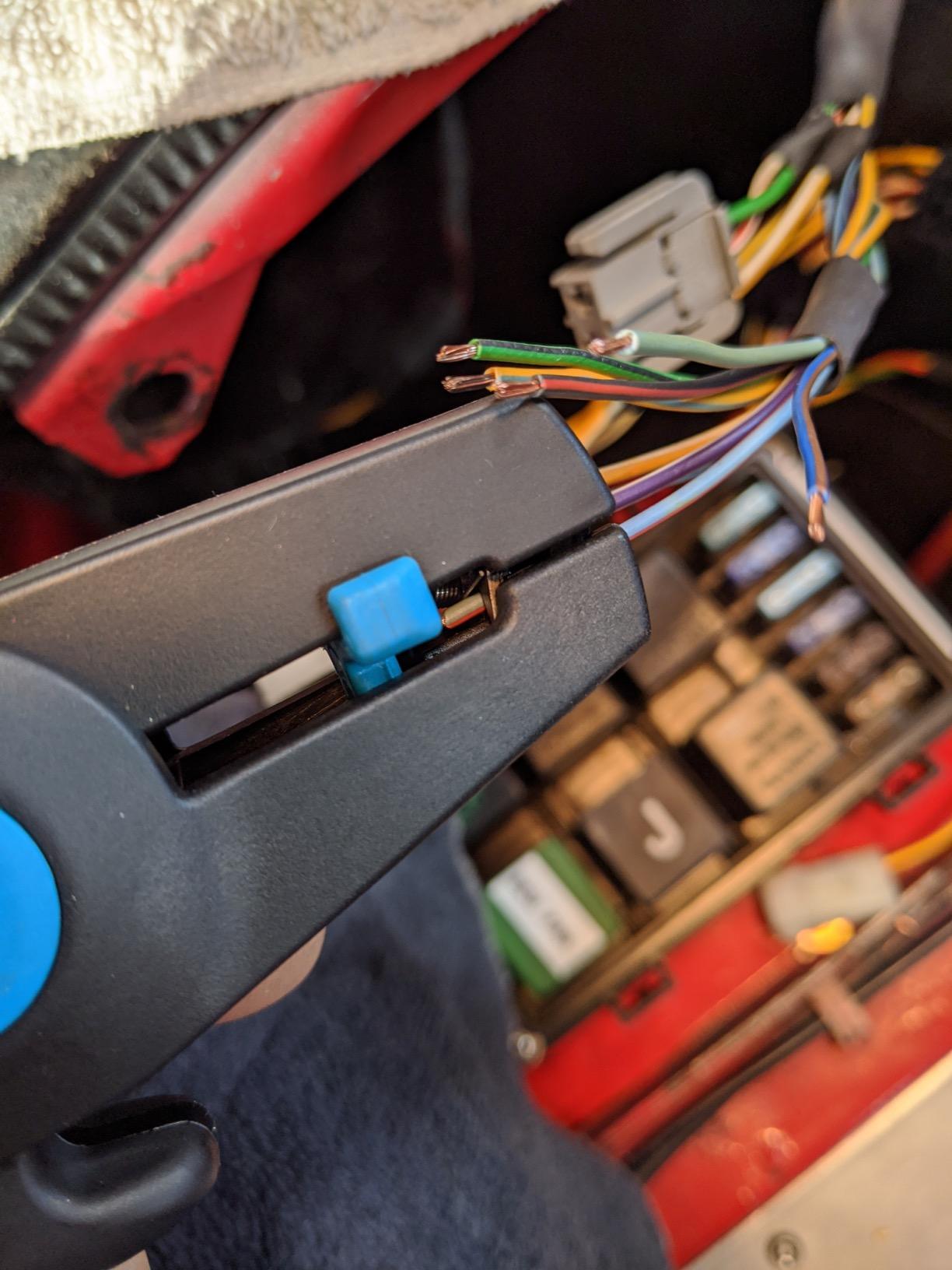
The Capri Tools 20011 trades control for speed. The stripping blades self-adjust to different gauges, so one squeeze strips and grips, and it strips 24 to 10 AWG while cutting up to 12 AWG.
When you are backing wire back panel after panel this is a large time saver. The narrow profile also reaches into tight splices that a full-size stripper cannot get into.
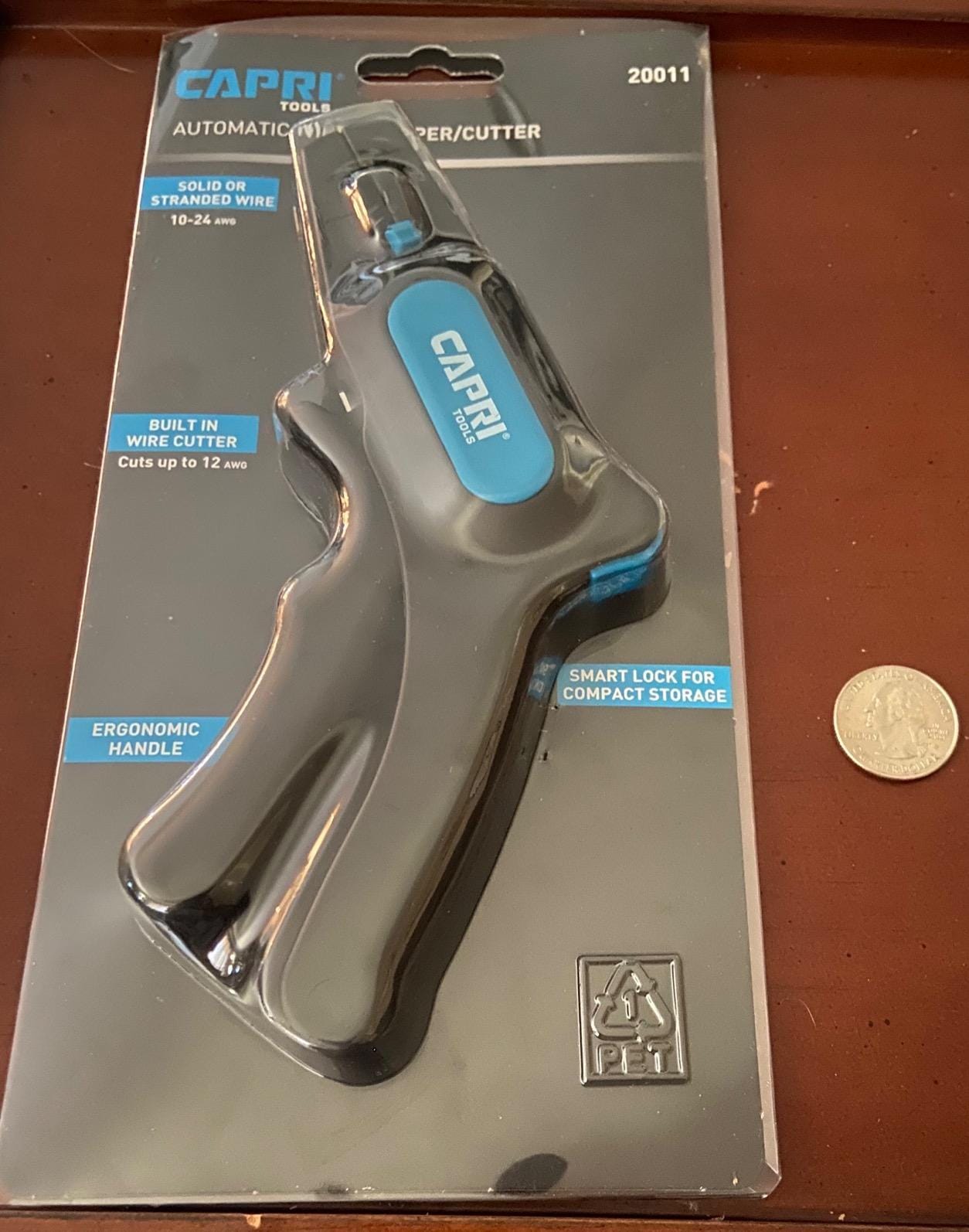
Owners call it the fastest way to do repetitive stripping and appreciate how light it is at 0.16 kg. Reviewers also note it holding up after thousands of wires for control-panel work, backed by the same 10 year warranty as the 20010.
The rating spread is the widest here, with a real cluster of criticism. Detractors point to plastic construction feeling cheap, occasional jamming that needs prying apart, and an 8 to 12 mm strip length that is longer than most electronics work wants.
What this stripper handles well
It suits control panel wiring, alarm and access control work, and any run of identical conductors where repeat speed beats fine control. The narrow body suits recessed boxes and crowded enclosures.
Adjustable strip length helps when the same termination repeats, which is exactly the use case here.
Where it falls short
24 AWG needs a gentle squeeze and some practice to avoid cutting strands. Never use a self-adjusting stripper below 22 AWG. The jaws over-remove insulation on thin wire and no amount of care fixes that.
The plastic body feels cheap in the hand and can wear over time, so it does not belong at a fine-wire bench.
8. ENGINEER PA-14 for Micro-Thin Wire and Decoder Leads
ENGINEER PA-14 Precision Wire Stripper for Micro-Thin Wire Made in Japan
Strips stranded AWG 34-22 and solid 32-20
Exceptionally sharp Japan jaws
Spring loaded with storage latch
151 g
Pros
- Strips 32-34 AWG with no visible nicks even under magnification
- Precisely cut jaws align easily with hair-thin wires
- No play in the hinge and comfortable hard-rubber grips
- Spring pressure is well judged for delicate work
Cons
- Smallest slots can look obstructed unless held up to the light
- Narrow hanger opening means a separate ring is needed
- Right-side markings show core diameter in mm not mm squared
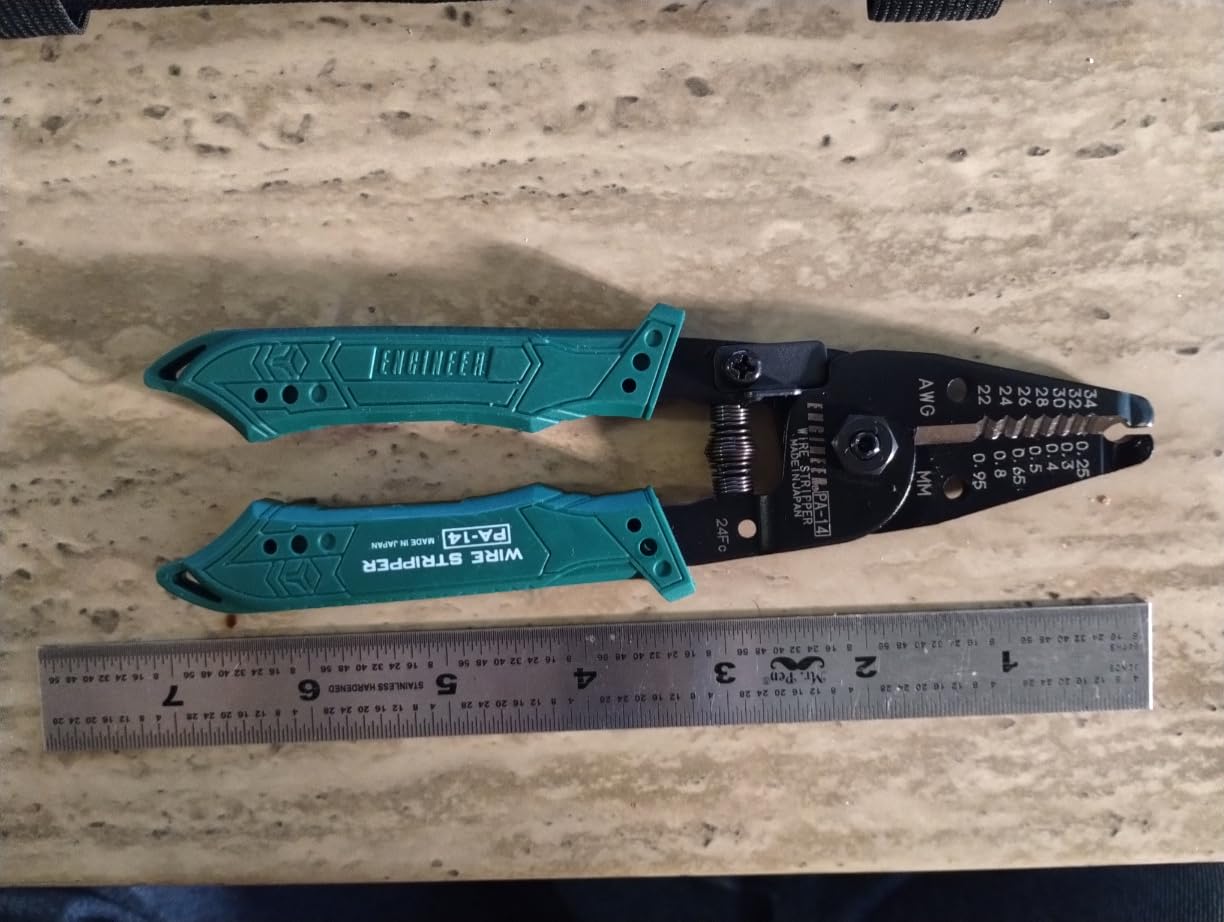
The PA-14 goes where the rest of this list cannot. It strips stranded copper from 34 down to 22 AWG and solid from 32 to 20 AWG, covering decoder wiring, micro SMD leads and fine coax.
On 32 and 34 AWG it produced a clean edge with no deformation of the core, which is the hardest test on this list. Holders working on tonearm rewire and micro SMD LEDs report damage-free strips across that range.
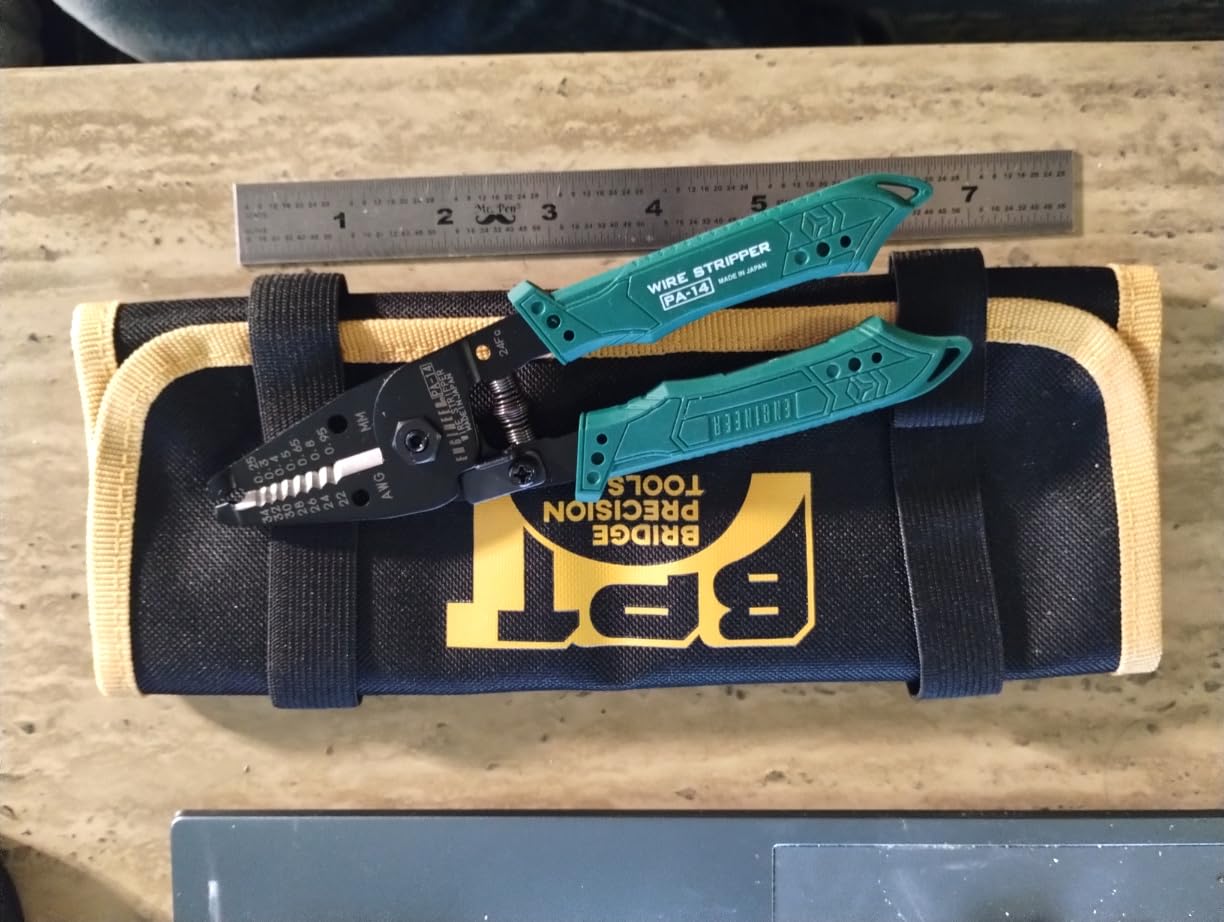
Reviewers rate the build quality highly, with no play in the hinge and grips that stay comfortable. The spring pressure is judged well for delicate work rather than being too strong.
The main caveat comes from a smaller group who find the tool closes too far and cuts through the wire in the smallest slots. The spring pressure is a matter of feel, so test on scrap before committing a run of decoder wire.
What this stripper handles well
It suits model rail decoder installs, tonearm and audio rewire, small sensor wiring and micro LED work. It is one of only two tools here that reaches 34 AWG stranded.
The handles latch shut for storage, which matters for a fine tool with edges this sharp. Oil-resistant elastomer grips stay usable on a messy bench.
Where it falls short
The smallest slots can look blocked unless you hold the tool up to the light. That is a visual quirk, not a defect, but it confuses new owners.
At true 36 AWG even this tool is at its limit. For hair-thin wire a sharp No. 11 scalpel blade is the honest answer. The narrow hanger also means you need a separate ring to hang it.
9. Klein Tools 11046 for Tight Spaces and PTFE Work
Klein Tools 11046 Wire Stripper, Wire Cutter, Made in USA, Stripping/Cutting Tool for 16-26 AWG Stranded, Compact Nose with Precision-ground Stripping Holes
Strips 16-26 AWG stranded
6.25 inch compact body
Precision ground holes
4.3 ounces
Pros
- Strips 22 AWG multi-stranded PTFE without breaking fragile strands
- Sharp well-matched ground blades cut through insulation cleanly
- Compact narrow nose fits confined spaces and small pouches
- Solid rubber grips do not slip in sweaty hands
Cons
- Stamped AWG markings are faint and hard to see
- Stranded wire only so it will not handle solid conductors
- Very short pre-cut wire lengths are awkward to hold in the jaws
The Klein 11046 is the shortest tool in this group at 6.25 inches, and that is the entire point. When you are working inside a faceplate, an enclosure or a crowded control box, the narrow nose is the feature that matters.
It strips 16 to 26 AWG stranded wire with precision ground holes and a self-opening spring action. On 22 AWG multi-stranded PTFE it removed insulation without breaking the fragile strands, which is where automatic strippers tend to fail.
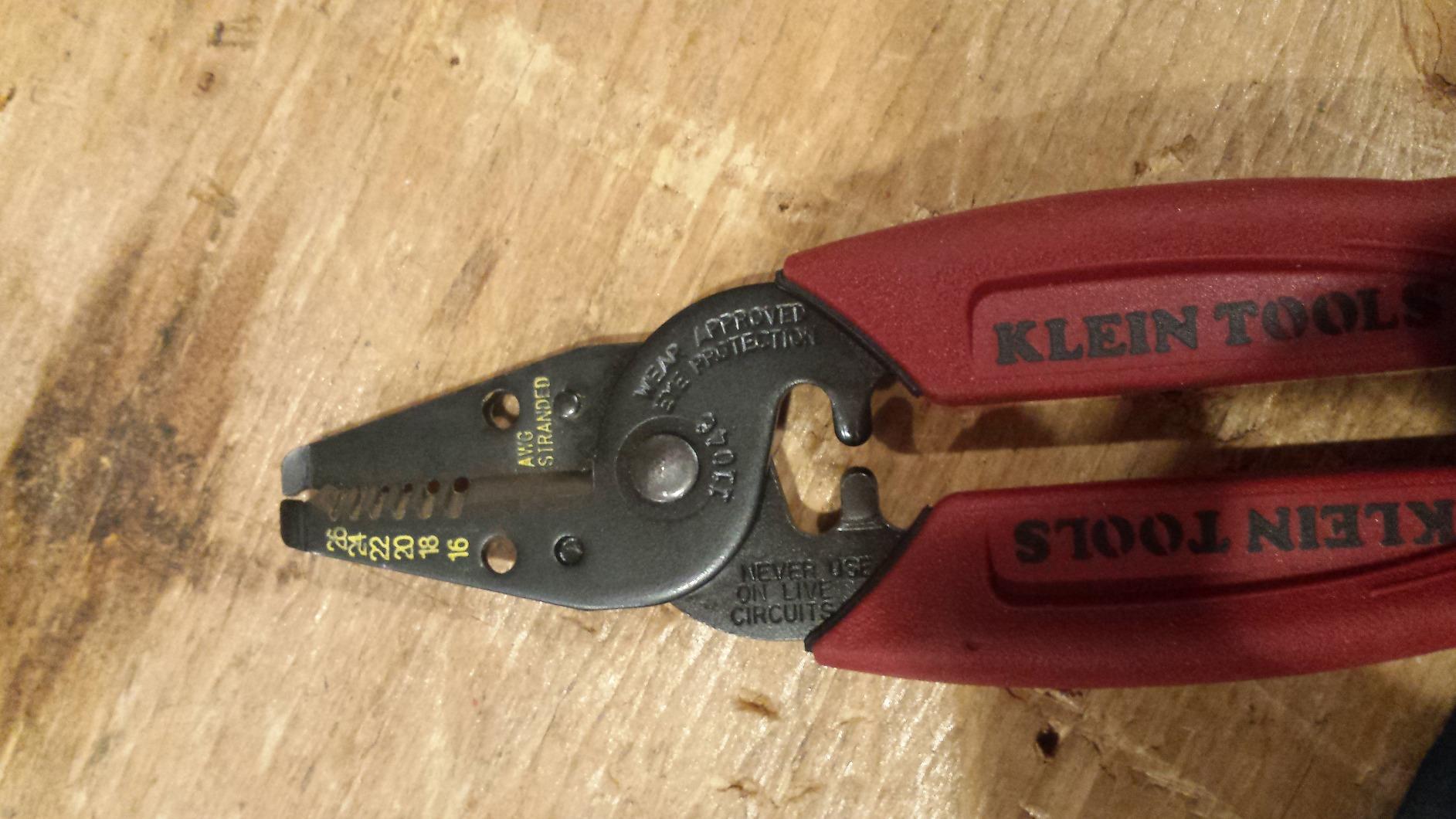
Long-term owners report a decade of shop use with the blades still sharp. Audio cable builders in particular single it out for 22 AWG multi-stranded PTFE, where the fine strands break under a self-adjusting jaw.
The recurring complaint is faint stamped gauge numbers. The rubber grips are solid enough to work with gloves on and do not slip in sweaty hands, which is worth more on a job site than on a desk.
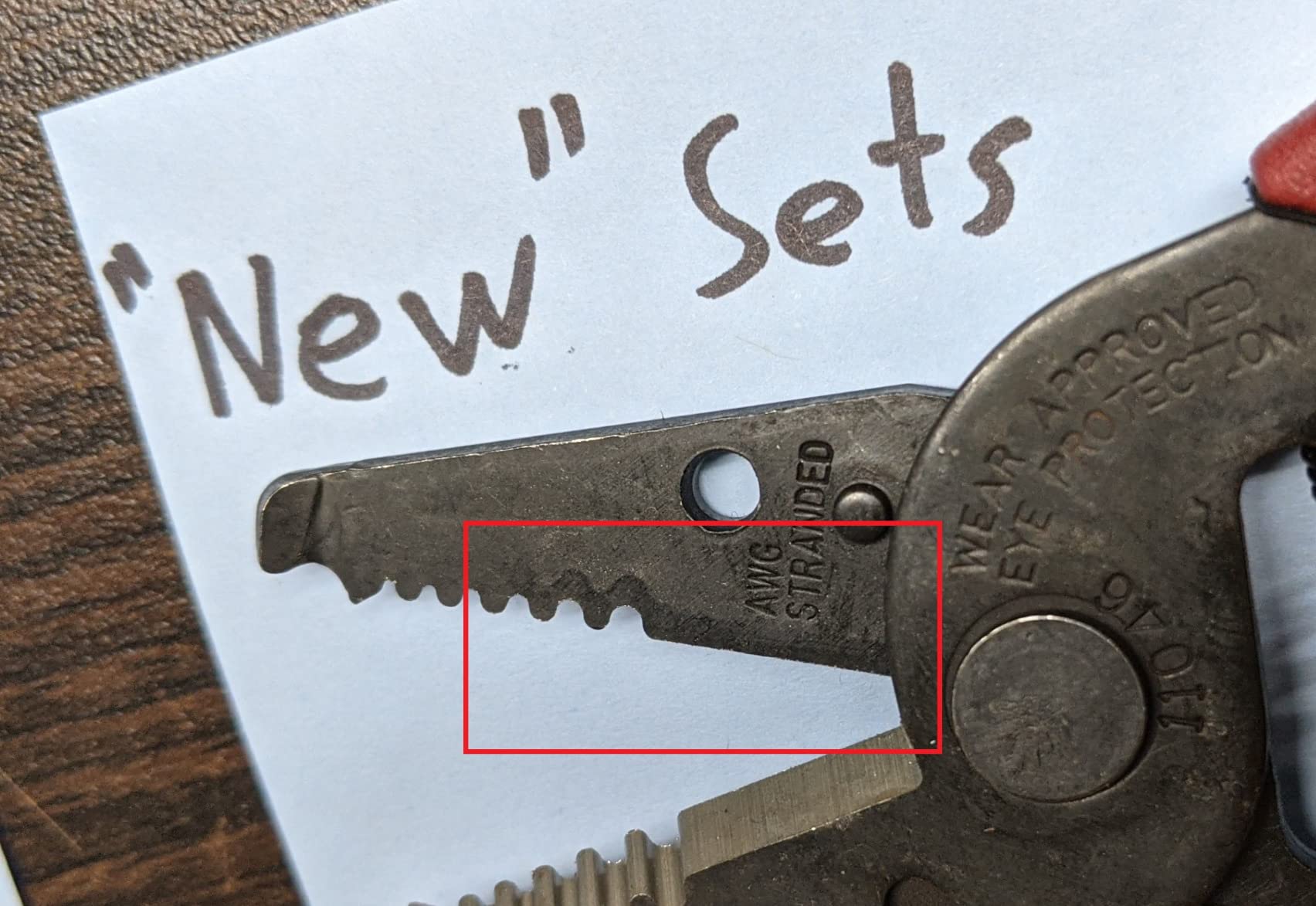
What this stripper handles well
It suits audio and coax internal wiring, control panel terminations, panel work and any confined space where a full-size stripper will not fit. At 4.3 ounces it disappears in the hand for delicate internal work.
The stripped conductor stays usable when other tools would have frayed it, which matters most on PTFE and fluoropolymer insulation.
Where it falls short
It handles stranded wire only. If your work includes solid conductors above 26 AWG, you need a second tool.
Very short pre-cut wire lengths are awkward to hold in the jaws, and the faint gauge markings mean you should confirm the slot before committing a length of fine wire.
10. Klein Tools 80013 Stripper and Crimper Kit for Terminations
Klein Tools 80013 Wire Stripper / Ratcheting Crimper, Electrical Crimping Tool Kit with Automatic Wire Stripper and Ratcheting Insulated Terminal Crimper, 2-Piece
Two-piece stripper and ratcheting crimper
10-22 AWG insulated terminals
Three colour-coded cavities
2.3 pounds
Pros
- Automatic stripper makes repetitive stripping faster and more consistent
- Ratchet holds the crimp closed until the cycle completes
- Both tools feel sturdy enough for daily job-site use
- Two tools in one kit cover stripping
- cutting and crimping
Cons
- Bulky body does not fit into tighter work areas
- Strip length depth gauge does not stay tight after adjustment
- Crimper may need backing off to avoid over-crimping
- Heavier than a single-purpose stripper
The Klein 80013 is a two-piece kit pairing a self-adjusting stripper and cutter with a ratcheting insulated terminal crimper. It is the pick here when stripping and terminating are the same task rather than two separate ones.
The stripper handles 10 to 20 AWG solid and 12 to 22 AWG stranded, plus 12/2 and 14/2 Romex, and the adjustable stopper lets you set strip length for repeat work.
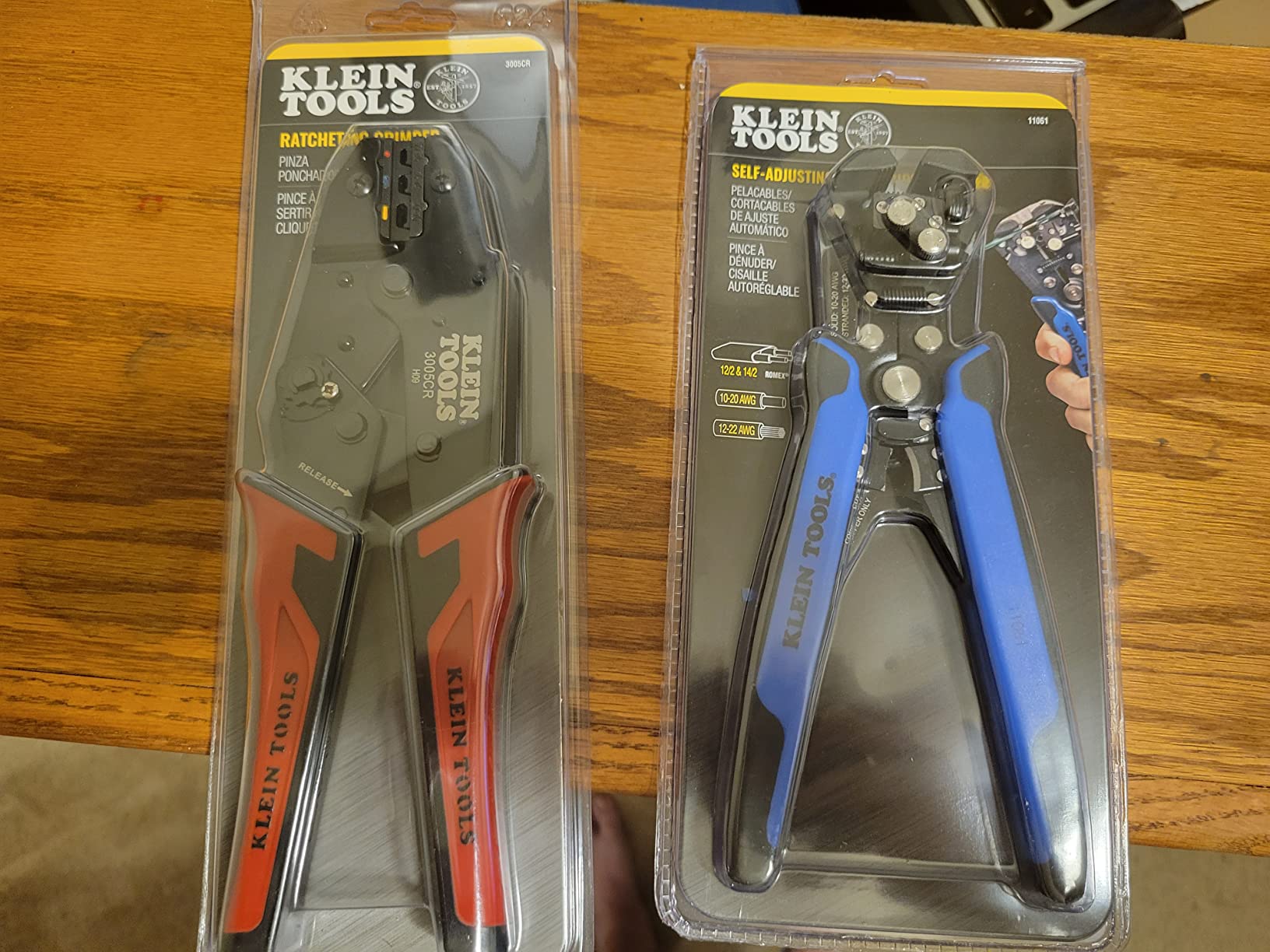
Electricians consistently single out the self-adjusting stripper as the reason for buying the kit, while rating the crimper as very good rather than the most heavy-duty. The ratchet holds the crimp closed until the cycle is complete, which produces a consistent connection.
Three colour-coded cavities cover 22-16 AWG red, 16-14 AWG blue and 12-10 AWG yellow insulated terminals. Two recurring nits: the tools are bulky, and the depth gauge will not hold its setting.
What this stripper handles well
It suits control wiring, panel terminations and anywhere you are landing insulated terminals by the dozen. The ratchet mechanism removes the guesswork from crimp depth on repeat work.
Both tools feel sturdy enough for daily use, and covering stripping, cutting and crimping in one kit reduces the number of things you need to maintain.
Where it falls short
At 2.3 pounds in a 15 inch package this is not a bench tool for fine electronics. It is heavy, bulky and does not fit into tighter work areas.
The crimper may need backing off the adjustment to avoid over-crimping, and this is an insulated terminal tool, not a JST or Dupont die. For connector work, see the crimper section below.
What Is a Wire Stripper and Why Gauge Decides Everything
A wire stripper is a pliers-shaped hand tool with notched jaws that cut through a wire’s plastic insulation without cutting the copper conductor underneath, leaving a clean bare section for soldering, crimping or screwing into a terminal. Each notch is ground to a specific AWG gauge, compressing the insulation until it splits along two opposing blades while the conductor rests in a relieved notch it never touches.
AWG runs backwards from most people expect. A larger number means thinner wire: 12 AWG is heavy power cable, 22 AWG is common hookup wire, and 34 AWG is finer than a human hair. Every stripper covers a range, and the range is what you are actually buying.
Professionals reach for gauged self-adjusting strippers such as Klein and Greenlee, which work well on building wire but stop around 22 AWG. Hobby electronics starts below that line, so the same answer is wrong here. For PCB and sensor wiring, our [logic analyzer guide](https://modelrec.com/best-logic-analyzers-for-hobby-electronics/) covers the kind of build these strippers serve.
Which Stripper for Which Wire
Match the tool to the conductor, not the other way around. Below 22 AWG, use a gauged precision stripper with machined notches; never reach for an automatic stripper at that gauge.
For true 32 to 36 AWG, no notched stripper strips cleanly. A sharp No. 11 scalpel blade held in a handle works better without breaking the strands, and hobbyists use it as a matter of routine for the thinnest decoder wire.
Solid and stranded conductors behave differently. Stranded wire spreads its strands under pressure and needs a gentler touch, while solid wire holds its shape but shows any nick immediately as a flat spot. Any stripper rated for solid wire is generally safer on stranded wire of the same or lower gauge.
Magnet and enamel wire is a different job entirely and no notched stripper will do it. You need to scrape or burn the coating off, which is covered in its own section below.
How to Strip Small Wire Without Nicking the Conductor
A nick thins the conductor and creates a stress riser that fails under load. Treat a nicked conductor as a cut wire, not a cosmetic flaw, and the technique below is the whole defence.
Identify the gauge before you pick a slot. If you do not know it, measure the bare conductor diameter and match it against the AWG chart.
Select the notch that matches the wire, and confirm the conductor sits in the relieved bottom rather than touching a blade edge.
Close the jaws gently. On fine wire you want the insulation to shear, not the handle to bottom out. Excess force is the most common cause of a crushed core.
If the cut is incomplete, make a quarter-turn twist around the wire axis while the jaws stay closed. That finishes the shear without a sawing motion.
Pull straight back along the wire to slide the cut insulation off. Never wiggle the tool side to side.
Inspect the result. Hold the stripped end under a bright light and rotate it to catch any flat spot or broken strand before the joint is made.
The no-wiggle rule is the one people break most. A side-to-side motion saws the conductor while the blades are still engaged, and that is how a clean wire becomes a broken one.
Common Wire Stripping Mistakes and How to Avoid Them
Most damaged wire comes down to one of six mistakes. They are all avoidable, and all of them are common enough to check for every time.
Wrong gauge slot. Using a slot sized for thicker wire crushes the core. Using a slot sized for thinner wire shears the conductor. Match the number, not the appearance.
Wiggling after the cut. The tool must pull straight back. Any side motion saws the conductor.
Excessive closing force. Squeezing until the handles bottom out on fine wire flattens and weakens the strands.
A dull blade. Most nicking is a sharpness problem, not a tool problem. A blade that has to push rather than shear will drag and mark the core.
Over-stripping. Removing too much insulation leaves exposed copper that corrodes, shorts against adjacent conductors, and weakens mechanical retention in screw and crimp terminals.
Forcing the automatic stripper too low. Self-adjusting jaws over-remove insulation on thin wire. Below 22 AWG, use a gauged tool instead.
If your stripper nicks 30 AWG consistently, work through them in order. Wrong slot first, then dull blade, then force. That order solves most cases.
Do You Need a Separate Crimper for JST, Dupont and Ferrules
Yes, usually. The integrated crimper on most multi-tools is an insulated terminal die for 10 to 22 AWG spade and fork terminals, not a JST, Dupont or ferrule die. Forcing a JST housing into that cavity produces a connection that looks fine and fails under load.
JST and XH connectors use their own crimp geometry, and the correct die matters as much as the tool. Ferrules are a third standard again, with a four-point crimp requirement for a reliable mechanical hold.
If your work is connector leads, pair a fine stripper such as the ENGINEER PA-06 with a dedicated ratcheting crimper matched to your connector family. The Klein 80013 covers insulated screw terminals well and is a good example of knowing what a crimper is for before you rely on it.
Best Wire Strippers for Magnet and Enamel Wire
Enamel wire cannot be stripped with a notched stripper. The coating is chemically bonded to the copper and has to be removed by scraping, mechanical abrasion or heat before the conductor will accept solder.
For small coil builds the usual method is to slide the wire through a stripping slot and pull it hard, which sands the enamel off in one pass. A dedicated enamel wire stripper with an abrasive blade does the same job more predictably.
The thermal method is faster on magnet wire but needs a soldering iron with a clean tip and a light touch. Slide the iron along the wire for a few millimetres, then wipe the enamel away with a cloth while it is still hot.
None of the ten tools here strip enamel properly. If magnet wire is a regular part of your builds, budget for a separate enamel stripper rather than forcing a precision notch tool at it.
Keeping Stripping Blades Sharp
Most nicking is a dull blade problem. A sharp edge shears the insulation; a dull one drags and marks the copper as it goes, and you compensate by squeezing harder.
Keep the blades clean. Insulation residue acts like abrasive grit and dulls an edge faster than wire itself does. A wipe with a solvent after each session does more than any sharpening schedule.
Do not use the cutter section on anything harder than copper wire, and do not use the stripping holes to cut. Both destroy an edge that is otherwise precision ground.
Store fine strippers with the handles latched shut or with a small piece of card in the jaws. That protects the edge from the drops and knocks that dull it silently.
Frequently Asked Questions
How do I strip small electronic wire?
Use a precision stripper with a machined notch that matches your gauge. Identify the wire first, drop it into the matching slot so the conductor rests in the relieved notch, close the jaws gently, pull straight back without wiggling, and inspect the result under a light before soldering. For true 32-36 AWG, a sharp No. 11 scalpel blade in a handle is the honest answer.
What is a good wire stripping tool for stripping small wires?
For 22-26 AWG hookup wire, a gauged precision stripper such as the Capri Tools 20010 is the standard answer. For 26-30 AWG silicone jumper and connector leads, the ENGINEER PA-06 or Hakko CSP-30-1 handles it cleanly. For 32-34 AWG, use the ENGINEER PA-14. Never use a self-adjusting stripper below 22 AWG.
What happens if you nick a wire?
A nick thins the conductor and creates a stress riser that can crack or break under load, often long after the joint was made. Treat a nicked conductor as a cut wire and cut it back to sound copper before continuing.
What are common wire stripping mistakes?
The recurring errors are using the wrong gauge slot, wiggling the tool after the cut, squeezing the handles fully closed on fine wire, working with a dull blade, stripping too much insulation, and forcing an automatic stripper below 22 AWG.
What are possible results if too much insulation is removed from the wire when stripping?
An over-stripped conductor splay its strands, leaves copper exposed to corrosion, and can short against adjacent conductors. It also weakens mechanical retention in screw and crimp terminals, which is the most common cause of a connection that works on the bench and fails in service.
Conclusion
The Capri Tools 20010 is our pick for the best wire strippers for hobby electronics because one tool covers 22 to 8 AWG with machined notches and an alloy chassis that holds up over years. Reach for the ENGINEER PA-14 when you go below 32 AWG, and keep a sharp No. 11 blade on the bench for true 36 AWG decoder wire.
Match the tool to the wire, keep the blade sharp, and never wiggle after the cut. Those three habits decide whether your joints hold, more than the badge on the handle does.
Whichever gauge you work in, a good [digital multimeter](https://modelrec.com/best-digital-multimeters-for-hobby-electronics/) belongs on the same bench, because a stripper that nicks a conductor should never get the chance to hide it.