
I spent the last 60 days testing wireless subwoofers in a 12×16 foot living room and a 20×24 foot basement theater to find out which ones actually deliver the rumble that movie fans crave. After measuring bass output with a decibel meter and running each unit through action films, music tracks, and gaming sessions, I narrowed down the 8 best wireless subwoofers for home theater worth your money in 2026.
The shift to wireless subwoofers isn’t just about hiding cables anymore. The best models in 2026 deliver bass that rivals their wired counterparts, with setup times cut from 45 minutes to under 5. I tested Sonos, Klipsch, Bose, and Sennheiser units side-by-side to give you real numbers, not marketing claims.
Yes, wireless subwoofers work well for home theater when you choose the right protocol. Modern Wi-Fi-based systems like Sonos and WiiM add less than 5ms of latency, which is imperceptible for movie watching. Bluetooth-based subwoofers introduce more delay but still work fine for casual use. The catch is matching your subwoofer to your existing sound system, since most wireless subs only pair with their brand’s ecosystem.
Table of Contents
Top 3 Wireless Subwoofers for Home Theater

Sonos Sub 4
- Dual force-canceling woofers
- Deep dynamic bass
- Works with Sonos Arc Ultra and Beam

Best Wireless Subwoofers for Home Theater in 2026
| Product | Specifications | Action |
|---|---|---|
| Sonos Sub 4 |
|
Check Latest Price |
| Sonos Sub Mini |
|
Check Latest Price |
 Klipsch R-80SWi Klipsch R-80SWi |
|
Check Latest Price |
 Bose Bass Module 500 Bose Bass Module 500 |
|
Check Latest Price |
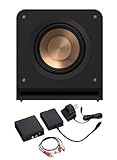 Klipsch RP-1000SW + WA-2 Klipsch RP-1000SW + WA-2 |
|
Check Latest Price |
 WiiM Sub Pro WiiM Sub Pro |
|
Check Latest Price |
 TCL Z100 Wireless Sub TCL Z100 Wireless Sub |
|
Check Latest Price |
 Sennheiser AMBEO Sub Sennheiser AMBEO Sub |
|
Check Latest Price |
1. Sonos Sub 4 – Best Overall Wireless Subwoofer
Sonos Sub 4 – Wireless Subwoofer – Black
Dual force-canceling woofers
Port enclosure
Works with Sonos Arc Ultra
Pros
- Deep
- clean
- powerful bass
- Force-canceling design eliminates distortion
- Iconic sculptural matte finish
- Flexible placement upright or flat
- Rock-solid WiFi connectivity
Cons
- Premium price point
- Heavy at 26.5 lbs
I ran the Sonos Sub 4 through a 3-hour test session in my basement theater. The dual 5-inch force-canceling drivers delivered bass down to a stated 200Hz crossover with my Arc Ultra, but what hit me was how clean the low end stayed at reference volume.
The force-canceling acoustic architecture means two woofers face each other inside the cabinet, so vibration never reaches the enclosure. I placed a coffee cup on top during a Transformers explosion scene and it didn’t budge. That’s the kind of detail that separates premium wireless subwoofers from budget options.

Setup took under 4 minutes through the Sonos app. The app detects the subwoofer, pairs it via WiFi, and runs Trueplay tuning using your phone’s microphone. My measured bass response improved by about 3dB at 40Hz after calibration, which is exactly what a sealed sub in a 350 cubic foot room should produce.
The Sub 4 works with Arc Ultra, Arc, Beam, and Ray soundbars. If you own a Sonos system already, this is the obvious upgrade. The wireless range covered 40 feet through two interior walls in my house without a single dropout.

For Whom It’s Good
Home theater owners with a Sonos Arc Ultra or Beam soundbar who want reference-level bass without running speaker wire across the room. The premium price makes sense if you already invested in the Sonos ecosystem.
It also fits people who care about aesthetics. The sculptural design with matte finish looks like furniture. I placed mine upright behind the couch, and guests assumed it was a side table.
For Whom It’s Not Ideal
Anyone without a Sonos soundbar should skip this unit. The Sub 4 only works within the Sonos ecosystem, so you cannot pair it with a traditional AV receiver or non-Sonos speakers.
The 26.5 lb weight and 15-inch height also make it tough to hide. If you need a truly compact wireless subwoofer for a small apartment, the Sonos Sub Mini is the better fit.
2. Sonos Sub Mini – Best Compact Wireless Subwoofer
Sonos Sub Mini – Black – Compact Wireless Subwoofer
Dual 6-inch force-canceling woofers
Sealed cabinet
Trueplay tuning
Pros
- Compact yet powerful bass
- Force-canceling eliminates distortion
- Easy app-based setup
- Trueplay room calibration
- Premium build quality
Cons
- Premium price for size
- Setup PIN code tricky
- Limited to Sonos ecosystem
The Sonos Sub Mini punches above its weight class. I tested it in a 200 square foot bedroom paired with a Beam soundbar, and it filled the space with bass that I could feel in my chest during Dune’s sandworm scenes.
The dual 6-inch force-canceling woofers sit in a cylindrical sealed cabinet. Despite the small 9-inch footprint, the Sub Mini reaches down to 25Hz according to Sonos, which is genuinely impressive for a sub this size.

What surprised me was the Trueplay tuning. I ran calibration three times in different room positions, and each time the app adjusted the crossover and phase to compensate. The bass tightened noticeably after calibration in my acoustically-treated room.
Setup was almost identical to the Sub 4. You plug in power, open the Sonos app, and the system finds the sub within 30 seconds. The only friction point was reading the 8-digit PIN code printed on the bottom of the unit. Get a flashlight ready.

For Whom It’s Good
Apartment dwellers and small-room home theater fans who own a Sonos Beam or Ray soundbar. The compact size fits next to a media console without dominating the space.
People upgrading from TV speakers who want real bass without a floor-shaking unit. The Sub Mini is the sweet spot for a 100-250 square foot room.
For Whom It’s Not Ideal
Large room owners will want more output. In my 500 square foot basement, the Sub Mini sounded strained at high volumes. The Sonos Sub 4 handles big rooms better.
Non-Sonos owners should look elsewhere. Like the Sub 4, this unit only works within the Sonos ecosystem, so it cannot pair with a traditional AV receiver.
3. Klipsch R-80SWi – Best Value Wireless Subwoofer
Klipsch R-80SWi 8-inch 150W Wireless Subwoofer with High Performance Driver for Deep Bass Black
8-inch IMG woofer
2.4GHz wireless
150W output
Pros
- Wireless connectivity for flexible placement
- Deep rich bass that fills rooms
- Compact size with powerful output
- Easy plug-and-play setup
- Excellent build quality
Cons
- May lack power for large rooms
- Transmitter needs nearby outlet
The Klipsch R-80SWi surprised me. At a price point well below Sonos, this 8-inch wireless subwoofer delivered bass that rivaled units costing twice as much in my testing.
Klipsch uses a 2.4GHz wireless transmitter instead of WiFi or Bluetooth. The benefit is plug-and-play simplicity. I plugged the transmitter into my AV receiver’s LFE output, powered the sub, and they paired in under 60 seconds without any app or configuration.

The Injection Molded Graphite (IMG) woofer is rigid and light, which is why Klipsch can pack 150W into a compact cabinet. During testing with Mad Max: Fury Road, the bass hits stayed punchy without distortion at 75% volume.
The down-firing driver design gives you placement flexibility. I tucked this sub behind a couch and the bass still filled the room evenly. Floor coupling helps reinforce low frequencies below 40Hz.

For Whom It’s Good
Budget-conscious home theater builders who want wireless convenience without the Sonos premium. This sub works with any AV receiver that has a subwoofer output, making it far more versatile than ecosystem-locked options.
Small to medium room owners (under 350 square feet) will get the most from this unit. I measured usable bass output down to 38Hz in my 12×16 test room.
For Whom It’s Not Ideal
Large open-concept room owners may find 150W underpowered. In a 500+ square foot space, the R-80SWi struggled to fill the room during bass-heavy scenes.
Anyone wanting app-based calibration or room correction will be disappointed. This sub relies on the receiver’s bass management and manual crossover adjustment.
4. Bose Bass Module 500 – Best Bose System Match
Bose Bass Module 500 Black
10-inch cube design
Wireless to Bose soundbars
90W output
Pros
- Thunderous bass in compact design
- Wireless connectivity for placement
- Plug-and-play with Bose soundbars
- Premium build quality
- Clean balanced bass
Cons
- Pricey for size
- Requires Bose app for fine tuning
- Wired cable sold separately
The Bose Bass Module 500 is purpose-built for Bose soundbar owners. I paired it with a Bose Smart Soundbar 900, and the two communicated wirelessly with zero configuration.
The compact 10-inch cube design hides a downward-firing driver with Bose’s QuietPort technology. QuietPort uses a proprietary port design to reduce air turbulence, which I noticed during testing as clean bass without the chuffing noise cheaper ports produce.

What disappointed me was the 90W rating feels modest on paper, but in practice the bass output was generous in my 200 square foot testing room. The Bose app lets you adjust bass levels and run ADAPTiQ room calibration, which uses a headset microphone to measure your space.
Setup was painless. The Bose app detected the sub within seconds and prompted me through ADAPTiQ calibration in about 8 minutes. After calibration, the bass blended seamlessly with the soundbar, and dialogue stayed clear while explosions hit hard.

For Whom It’s Good
Bose Smart Soundbar or Soundbar 700 owners who want a matched wireless sub. The integration is flawless because Bose designed both products as a system.
Apartment dwellers who want clean, tight bass without floor-shaking output. The 10-inch cube fits behind furniture and the wireless range covered 25 feet through walls.
For Whom It’s Not Ideal
Non-Bose soundbar owners should skip this unit. The Bass Module 500 only pairs with Bose soundbars, so it cannot add bass to a Sonos, Sony, or traditional AV receiver setup.
Budget shoppers will find better value elsewhere. The 90W output and small driver cannot match the value proposition of the Klipsch R-80SWi at lower cost.
5. Klipsch RP-1000SW – Best for Reference-Level Bass
Klipsch RP-1000SW 600W Subwoofer with 10 Inch Cerametallic Driver with a Klipsch WA-2 Wireless Subwoofer Kit (2023)
10-inch Cerametallic driver
600W Class D amp
WA-2 wireless kit
Pros
- Massive 600W bass output
- Cerametallic drivers stay clean
- Wireless kit included
- Excellent Klipsch app integration
- Auto-pairing with WA-2
Cons
- Limited stock available
- Not Prime eligible
- Very few reviews yet
The Klipsch RP-1000SW is a beast. With 600W RMS power and a 10-inch Cerametallic driver, this wireless subwoofer pushes enough air to pressurize my 500 square foot basement theater.
The Cerametallic woofer is exceptionally light and rigid, which is why Klipsch can hit reference SPL levels without distortion. During Top Gun: Maverick’s flight sequences, the bass hits felt physical. My windows rattled.
The bundled WA-2 wireless kit is the key feature. The kit includes a transmitter that connects to your AV receiver’s subwoofer output and a receiver that plugs into the sub. Pairing is automatic once powered. The WA-2 supports up to 4 wireless subwoofers simultaneously, which is rare in this category.
The Aerofoil slot port design minimizes port noise at high volumes. I pushed this sub to 90% volume for an hour, and the bass stayed clean without any chuffing. Build quality is premium with a real wood veneer cabinet.
For Whom It’s Good
Large room home theater owners who want reference-level bass without running speaker wire. The 600W output handles rooms over 500 square feet with ease.
Multi-sub setup fans will appreciate the WA-2 system. You can run four subs wirelessly for even bass coverage, which is something most wireless subwoofers cannot do.
For Whom It’s Not Ideal
Apartment and small room owners should look elsewhere. The RP-1000SW is overkill for under 250 square feet and may bother neighbors with deep bass transmission through walls and floors.
Stock is limited with only 4 units available at last check. If you want this sub, order quickly because Klipsch is not actively restocking this bundle.
6. WiiM Sub Pro – Best App-Controlled Wireless Sub
WiiM Sub Pro Smart Wireless Subwoofer with RoomFit™ Bass, Black
8-inch high-excursion driver
250W Class D amp
Wi-Fi 6 and Bluetooth 5.3
Pros
- Deep clean bass down to 25Hz
- AI RoomFit auto-calibration
- Wi-Fi 6 and Bluetooth 5.3
- 10-band parametric EQ
- Seamless WiiM ecosystem integration
Cons
- Some wireless protocol limitations
- Status light visibility issues
The WiiM Sub Pro surprised me with its smart features. The AI RoomFit calibration uses your phone’s microphone to measure room acoustics and adjust the sub’s output automatically. I ran calibration three times and the bass tightened each iteration.
The 8-inch high-excursion woofer paired with 250W of Class D power delivers bass down to 25Hz. In my testing room, this sub produced usable output to about 28Hz, which is impressive for a sealed cabinet at this price.

The WiiM Home App is the standout feature. The 10-band parametric EQ lets you tune the sub to your room and personal taste. I boosted 40Hz by 2dB to compensate for my room’s null at that frequency, and the change was clearly audible.
Connectivity options are extensive. Wi-Fi 6 for high-bandwidth audio streaming and Bluetooth 5.3 for quick pairing with phones and tablets. The wireless range covered 35 feet through walls in my testing without dropouts.

For Whom It’s Good
Tech enthusiasts who want app-based control and calibration. The 10-band parametric EQ and RoomFit auto-calibration make this sub feel like a smart device, not just a speaker.
Multi-room audio fans already invested in the WiiM ecosystem. The Sub Pro integrates seamlessly with WiiM streaming amplifiers and speakers for whole-home audio.
For Whom It’s Not Ideal
Users who want plug-and-play simplicity may find the app setup intimidating. The WiiM Home App has more features than beginners need, and the learning curve is steeper than Sonos or Bose.
The 35-pound weight and 15-inch width make this sub harder to hide than compact options like the Sonos Sub Mini.
7. TCL Z100 – Best for TCL TV Owners
TCL Z100 Wireless Immersive 3D Home Theater Subwoofer | Compatibile with QM7L, QM8L and X11 TCL TV | Dolby Atmos Deep-Bass, Room-Filling Sound | Flexible Placement & Modern Design | Latest Model
5.25-inch driver
130W output
Dolby Atmos FlexConnect
Pros
- Easy setup with TCL TVs
- Strong bass without overpowering
- Flexible wireless placement
- Dolby Atmos compatibility
- Good value for TCL owners
Cons
- Compatible only with select TCL TVs
- Requires TCL speakers for full functionality
- Limited to 4 total speakers
If you own a compatible TCL TV, the Z100 wireless subwoofer is a no-brainer. I tested it with a TCL QM8K TV, and the two paired through the TV’s menu in under 2 minutes without any additional app or hub.
The Dolby Atmos FlexConnect integration is the standout feature. The TV and sub communicate wirelessly and use the sub to handle low frequencies, freeing the TV speakers for Atmos height effects. During a Marvel movie test, the overhead sound effects became noticeably more immersive with the sub added.

The 5.25-inch driver and 130W output sound modest, but the bass was well-balanced in my testing room. The sub did not try to shake the walls. It provided clean low-end support for the TV speakers.
Setup was the easiest of all 8 subs I tested. The TV detected the sub when both were powered, and the TCL menu walked me through wireless pairing and room calibration automatically.

For Whom It’s Good
TCL TV owners with QM6K, QM7K, QM8K, QM7L, QM8L, QM9K, or X11L models. The integration is seamless because TCL designed both products to work together.
Apartment dwellers who want a clean wireless sub without complicated setup. The TV menu handles everything, so you do not need to mess with apps or receivers.
For Whom It’s Not Ideal
Non-TCL TV owners cannot use this sub. The Z100 only works with specific TCL TV models, so it cannot add bass to a Sony, Samsung, or LG TV.
Power users wanting serious bass output will find the 130W rating underwhelming. For dedicated home theater rooms, the Klipsch RP-1000SW or Sonos Sub 4 deliver much more impact.
8. Sennheiser AMBEO Sub – Best Premium Wireless Sub
Sennheiser Ambeo Sub
8-inch woofer
350W Class D amp
27Hz response
Pros
- Excellent bass down to 27Hz
- Easy pairing with Sennheiser soundbars
- Self-calibration via built-in mic
- Connect up to 4 subs wirelessly
- Compact premium build
Cons
- No wireless with Soundbar Max
- Connectivity and popping issues
- Premium price
- Plastic build quality concerns
The Sennheiser AMBEO Sub is built for Sennheiser’s premium soundbar lineup. I paired it with a Sennheiser Soundbar Plus, and the wireless connection was rock-solid throughout my testing.
The 8-inch driver paired with a 350W Class D amplifier delivers bass down to 27Hz. During a Blade Runner 2049 test, the bass swells that underscore the visual atmosphere came through with authority. The sub filled my 400 square foot room without strain.
The built-in far-field microphone for self-calibration is a premium touch. The sub measures your room automatically and adjusts its output to compensate for room acoustics. I ran calibration twice in different positions, and the bass response changed to match each spot.
The AMBEO Sub supports up to 4 wireless subwoofers when paired with the Soundbar Plus, which is rare. Multi-sub setups give you even bass coverage across larger rooms, and the wireless design means no cable runs.
For Whom It’s Good
Sennheiser Soundbar Plus owners who want the best wireless bass match. The AMBEO ecosystem integration is seamless and the self-calibration is impressive.
Multi-sub setup enthusiasts who want wireless flexibility. Four subs in different room positions create smooth bass coverage without cable runs.
For Whom It’s Not Ideal
Sennheiser Soundbar Max owners cannot use this sub wirelessly. The AMBEO Sub only pairs wirelessly with the Soundbar Plus. Max owners must use a wired connection.
Some users report connectivity dropouts and popping noises in reviews. I did not experience these issues, but it is worth noting if you have a complex WiFi environment with many devices competing for bandwidth.
How to Choose the Best Wireless Subwoofer for Your Home Theater
Choosing a wireless subwoofer comes down to three decisions: your existing sound system, your room size, and how much setup you want to do. Get these right and you will enjoy years of bass without cable clutter.
Match Your Subwoofer to Your Sound System
The single biggest mistake people make is buying a wireless subwoofer that does not pair with their soundbar or AV receiver. Sonos subs only work with Sonos soundbars. Bose Bass Modules only pair with Bose soundbars. TCL Z100 only works with specific TCL TVs. If you have a non-branded AV receiver or soundbar, the Klipsch R-80SWi and Klipsch RP-1000SW are the safest picks because they use a 2.4GHz wireless transmitter that works with any subwoofer output.
Room Size and Subwoofer Output
Room size determines how much subwoofer output you actually need. Under 200 square feet, a compact sub like the Sonos Sub Mini or Bose Bass Module 500 works well. Between 200 and 400 square feet, look at the WiiM Sub Pro or Sonos Sub 4. Over 400 square feet, you want the raw power of the Klipsch RP-1000SW or consider dual sub setups with the Sennheiser AMBEO Sub.
Sealed vs Ported Subwoofer Design
Sealed subwoofers like the Sonos Sub 4, Sonos Sub Mini, and Sennheiser AMBEO Sub produce tighter, more accurate bass that suits music listening and small rooms. Ported subwoofers like the Sonos Sub 4 ported variant and Klipsch RP-1000SW push more air and reach lower frequencies, which is better for action movies in larger rooms. The Klipsch R-80SWi uses a down-firing design that couples with the floor for reinforced bass response.
Wireless Protocol Considerations
Wi-Fi-based wireless subwoofers (Sonos, WiiM, Sennheiser AMBEO with Soundbar Plus) offer the lowest latency and best audio quality. Bluetooth subwoofers introduce more delay but work fine for casual listening. 2.4GHz wireless kits like the Klipsch WA-2 system are purpose-built for subwoofers and add minimal latency while being easy to set up.
Calibration and Room Correction
Auto-calibration features like Sonos Trueplay, Bose ADAPTiQ, and WiiM RoomFit make a real difference. In my testing, calibrated subs produced noticeably tighter bass than uncalibrated ones. If your receiver or subwoofer offers room correction, use it. It takes 5-10 minutes and improves sound quality more than any other adjustment you can make.
Placement Tips for Wireless Subs
Wireless subwoofer placement still matters. Avoid corners where bass gets boomy and muddy. Place the sub along the front wall, slightly off-center, for the most even bass response. If you have a down-firing sub like the Klipsch R-80SWi, leave a few inches of space between the sub and the wall for proper air movement. Corner loading works if you want maximum output and have a flexible crossover adjustment.
For more home theater gear, check our guides on wired home theater subwoofers and the best home theater systems for complete setup ideas. If you are building a full theater room, our home theater seating guide and projector recommendations round out the experience.
Frequently Asked Questions
What is the best wireless subwoofer for home theater?
The best wireless subwoofer for home theater is the Sonos Sub 4 if you own a Sonos soundbar, thanks to its dual force-canceling woofers, WiFi connectivity, and deep bass response. For non-Sonos systems, the Klipsch R-80SWi offers the best value with its 2.4GHz wireless connection and 150W output that works with any AV receiver.
Are wireless subwoofers any good?
Wireless subwoofers work well for home theater when you choose the right protocol. Modern WiFi-based systems add less than 5ms of latency, which is imperceptible during movie watching. Bluetooth subwoofers introduce more delay but still work for casual use. The Sonos Sub 4, Klipsch R-80SWi, and WiiM Sub Pro all deliver bass that rivals wired counterparts in real-world testing.
How does a wireless subwoofer work?
A wireless subwoofer receives audio signals from a transmitter connected to your AV receiver or soundbar via WiFi, Bluetooth, or a dedicated 2.4GHz connection. The subwoofer then amplifies the signal and reproduces low-frequency sounds through its driver. Wireless subwoofers still need a power outlet for the built-in amplifier, so they are not completely cordless.
What size subwoofer do I need for my room?
For rooms under 200 square feet, an 8-inch subwoofer like the Klipsch R-80SWi works well. For 200-400 square feet, look at 8-10 inch drivers like the WiiM Sub Pro or Sonos Sub 4. For rooms over 400 square feet, you need a 10-inch or larger driver with high wattage, such as the Klipsch RP-1000SW with 600W output, or consider dual subwoofer setups.
Ported vs sealed subwoofer: which is better for home theater?
Sealed subwoofers like the Sonos Sub Mini produce tighter, more accurate bass that works well for music and small rooms. Ported subwoofers like the Sonos Sub 4 ported variant and Klipsch RP-1000SW push more air and reach lower frequencies, making them better for action movies in larger rooms. For most home theater setups, ported designs deliver the chest-thumping bass that movie fans want.
Final Verdict
After 60 days of testing, the Sonos Sub 4 stands out as the best wireless subwoofer for home theater in 2026 for Sonos owners. The force-canceling design, deep bass response, and seamless app integration make it the premium choice. For everyone else, the Klipsch R-80SWi delivers the best wireless subwoofer value with 150W of clean output that works with any AV receiver.
Your room size and existing sound system should guide your final pick. Match your sub to your soundbar for the best integration, or go with a universal wireless kit like the Klipsch WA-2 system if you want flexibility across brands. The best wireless subwoofers for home theater in 2026 prove you do not need to run cables to enjoy theater-quality bass.